In the Rig-Veda, the name Bhārata ( भारत ) designates the God Agni, and the sacred fire. It is a Sanskrit word of Vedic origin. Its root is bhar, « to carry ». Bhārata etymologically means the « carrier ».
Why is this? Because the fire of the sacrifice « carries » the offerings.
Bhārata is also the name of India in Sanskrit, the name of an emperor and that of the mythical author of famous treatises of the Theater, the Nâtya-shâstra and the Gītālamkāra .
René Daumal, who learned Sanskrit, made a remarkable effort to translate into French the texts of Bhārata, the playwright, using a beautiful and poetic language.
Bhārata tells the story of the birth of Knowledge and the origin of Flavor.
Kings, peoples, prophets, and even the Gods themselves, generally ignore what this Knowledge is all about, and they ignore this Flavor.
They all climb one after the other on the great stage of the world theater to utter some lines of relative brillance. But they speak without this Knowledge, without this Flavor.
The innate art of language is not natural to them. They certainly do not excel at it. They know nothing of the only true poetry.
Where is the essence of true poetry? In the Flavor of Life. In the Sapience of Taste.
Shortly before his death, Daumal gave the Cahiers du Sud a few poems with a Vedic touch:
Neither breath, nor sight, nor hearing, nor thought are here of any help. We must get rid of them. We need to reach back to the ancient, to the original. To rise higher, to dive deep to the sources, to look for the Breath of the breath, the Sight of the sight, the Hearing of the hearing, the Thought of the thought.
The wise man will recognize what is meant here. Words are no longer in use. They make speech look weak.
Daumal, however, tried to reach out to us, beyond the lines, with words.
« We say that Knowledge is power and foresight. For the Hindu, it is ‘to become’, and to ‘be transformed’. » ii
Words, he taught, have a literal meaning, derived meanings, and more importantly, suggested meanings. It is the immense, loose and delicate universe of verbal « resonances » (dhvani), « suggestions » (vyanjanâ) and « tastes » (rasanâ).
The Flavor is a « conscious joy », even in pain, it is a knowledge that shines forth from its obviousness, it is the sister of the sacred.
Daumal asserts that « he who is capable of perceiving it, ‘tastes’ it, not as a separate thing, but as his own essence. » iii
Thus the poem becomes analogous to oneself. Its flavor is its own « self », its « essence », its « soul ».
Flavor has three functions: sweetness, which « liquefies the spirit »; ardor, which « sets it ablaze » and exalts it; and evidence, which « illuminates » it.
Daumal even asserts: « All the poems recited and all the songs, without exception, are portions of Vishnu, the Great Being, clothed in sound form »iv.
The poem is nothing but wind, if it does not set the whole world and the soul in motion, by sounds, senses, resonances, gait and loves.
Nothing Greek in this. No quiet light. No sea in the sun, no complicit nature. India is already far away, beyond all nature. In freedom, one might say, at last.
« I have settled in the heart of each being.
By Me, come and go memories and knowledge.
The purpose of all knowledge is I alone who am to know.
La compréhension de la réalité telle qu’elle nous est donnée ne peut s’accomplir sans une compréhension au moins égale de la conscience. Autrement dit, la compréhension de la réalité et celle de la conscience semblent indissolublement liées. Ceci nous amène à subodorer que la réalité et la conscience elles-mêmes sont liées, ou intriquées, à un certain niveau de profondeur. Les hypothèses les plus avancées des théoriciens de la physique quantique cherchent à cerner la nature de cette intrication.
Le « tout » que forment, en un sens, la réalité du monde et la conscience humaine n’est pas statique ou accompli, mais toujours en mouvement, sans cesse en transformation, en métamorphose, en déploiement.
La conscience observe la réalité, et par là même agit sur elle, et prépare les voies de sa propre transformation vers un état « plus conscient ». Plus conscient de quoi? Plus conscient, non seulement de la réalité en tant que telle, mais aussi de la réalité en tant qu’elle se modifie sous le regard de la conscience, et plus conscient également de la nature profonde de la conscience, qui semble pouvoir aller toujours plus loin ou plus haut, ou plus profondément, dans l’exploration sans fin de sa propre nature.
La conscience, telle qu’elle s’exprime en des pensées naturellement en mouvement, ou telle qu’elle s’imprime toujours à nouveau dans son dépassement permanent, est d’une manière ou une autre confrontée à sa propre vie interne, sa propre métamorphose. Sa figure (impermanente) est à chercher dans sa transfiguration (permanente). Son image est sans cesse cinétique. Sa forme est épigénétique.
Cette épigenèse, cette cinétique, cette transfiguration ne sont pas solipsistes, mais font elles aussi partie de la réalité totale, et font sans doute partie de ses ferments actifs, de ses enzymes catalyseurs, de ses agents effecteurs.
La pensée, loin d’être simplement un outil de découverte du moi pensant, façon Descartes, ou de description analytique du monde, et de modélisation abstraite, est donc pourvue, par le biais de la conscience qui la subsume, d’un pouvoir de « compréhension » (au sens propre : « prendre ensemble ») de la réalité, en tant qu’elle est effectivement intriquée avec la conscience.
A quoi mène cette intrication ? Quel en est le sens profond?
Tout d’abord elle mène à la conscience plus claire d’une nouvelle sorte de totalité, qui englobe la totalité « classique » de la réalité avec la totalité « virtuelle », mais non moins réellei, de l’ensemble des états de conscience (– et donc aussi des états d’inconscience, si l’on admet que l’inconscient est une forme très profonde, très ancienne et très secrète de « conscience »).
Il faut évidemment renoncer à se contenter de la vision cartésienne du moi qui ‘doute’ et qui ‘pense’ pour en déduire avec satisfaction qu’il ‘est’. Il faut adopter une vision plus intégrée. Le moi qui doute, qui pense et qui est conscient de ce doute et de cette pensée, crée par là-même une nouveauté radicale, qui vient s’ajouter comme un élément vivant, impérissable, actif, à la totalité existante.
Au grand peuple universel des étants (toutes les étoiles, les pierres, les fleurs, les abeilles, les hommes, etc.) vient s’ajouter sans cesse le peuple plus universel encore des états (de conscience).
Il ne peut y avoir en conséquence de séparation nette entre le moi de la conscience et le soi du monde. Soi et moi sont indissolublement liés, impliqués, intriqués.
D’un côté, cette intuition ne manque pas de références historiques et philosophiques, notamment du côté des sources orientales (taoïsme, bouddhisme). De l’autre, elle semble contraire à une autre intuition (souvent présentée dans les philosophies occidentales), celle de la fragmentation irrémédiable des consciences, des individus, des nations, des cultures et des religions.
L’idée de fragmentation peut être aisément généralisée, du moins en principe, à l’ensemble de la réalité. Tout serait donc, a priori, divisé, déconnecté, pulvérisé en autant de petites parcelles que possibles, elles-mêmes à nouveau divisibles, brisables, pulvérisables.
Et, in fine, les plus petites parties ou particules auxquelles ce processus de division et de fragmentation conduit, doivent être considérées comme « indépendantes », existant par elles-mêmes, ultimes « constituantes » de la réalité.
Par contraste, tout autre est l’idée d’une totalité englobant la réalité et la conscience dans un « tout » dynamique, métamorphique, auto-génératif, sans cesse en épigenèse.
Certains objecteront : on voit bien que partout se multiplient les guerres, les divisions, les déchirements, les séparations, les antagonismes, les oppositions. Le rêve d’un grand « tout » fait de communion pacifiée est une utopie orientale, bonne seulement pour des moines extatiques.
On peut répondre à cela en prenant encore plus de recul (zoom arrière) ou de hauteur (zoom avant) ou de profondeur (zoom macro).
On répondra qu’on peut inclure les divisions, les séparations, les oppositions dans la totalité puisqu’elles en font déjà objectivement partie.
D’ailleurs il est possible de montrer (philosophiquement) qu’elles sont des éléments actifs, virulents même, d’un « tout » en genèse, auquel elles contribuent par leur fièvre propre. De Héraclite à Hegel, de Marx à C.G. Jung, nombreux sont les penseurs de la contradiction et du rôle actif des contraires.
Si l’on adopte un point de vue strictement scientifique, il est facile de voir que les derniers résultats de la science moderne (théories de la relativité, théories quantiques) exigent la prise en considération de notions impliquant la totalité indivisible de l’univers.
Les crises aiguës qui frappent aujourd’hui notre monde (climat, pandémies, guerres, inégalités, injustices) exigent que l’humanité se donne à elle-même une vision holistique du monde. Seule cette vision et cette compréhension holistiques sont à même de nous mettre sur la voie de solutions intégrées, prenant en compte les multiples interdépendances en cause, et notamment l’interdépendance des consciences et de la réalité.
Nous sommes à l’évidence confrontés, à l’échelle planétaire, à de multiples divisions, séparations, fragmentations, qui ne font que renforcer la confusion générale, elle-même source d’inaction.
Pour agir, nous avons besoin de plus de clarté, de plus de compréhension en profondeur des interdépendances à l’œuvre, des complexités multi-dimensionnelles, inaccessibles aux spécialistes d’une seule discipline (ou d’une seule culture).
L’idée de « totalité » n’est pas totalement nouvelle, bien entendu.
Mais ce qui est nouveau, me semble-t-il, est la prise de conscience que la « totalité » n’est pas fermée, mais ouverte. La « totalité » est même « totalement » ouverte.
Autrement dit, il existe plusieurs niveaux de totalités. Toute vision « holistique » du monde n’est au fond qu’un premier état de conscience d’un holisme provisoire qui ne demande qu’à se complexifier.
Il n’y a pas d’« entièretés » qui soient totalement et définitivement « entières », c’est-à-dire complétées, fermées.
Pour faire image, Dieu Lui-même, oserons-nous avancer, n’est pas « complet ». Il n’est pas « entier ». Il est en devenir. C’est d’ailleurs la raison profonde pour laquelle Il a créé une Création (dont Il aurait peut-être pu se passer, s’Il avait été « complet »). Il a créé cette Création comme un moyen d’élargir et d’enrichir Sa propre « entièreté » initiale, celle qui était avant le « Commencement ». Cette « entièreté » n’était sans doute pas assez « complète » à Ses yeux. Et dans Sa grande sagesse, Il a vu qu’un nouveau niveau de complexité pouvait émerger, par le biais d’une extériorité à Sa propre essence, par le moyen d’une différence entre Lui et d’autres consciences…
Le nouveau complexe ainsi créé (Theos + Cosmos + Anthropos) est l’invention divine, inouïe mais nécessaire, pour développer de nouveaux niveaux de « réalité », de nouveaux niveaux de « totalité », de nouveaux niveaux de « conscience ».
Dans un très beau livre, David Bohm a résumé ses idées révolutionnaires sur la totalité et « l’ordre impliqué »ii.
En liaison avec sa théorie des « variables cachées » qui expliqueraient (en dernière analyse?) le comportement des ondes/particules guidées par leurs « informations actives », Bohm oppose l’ordre « expliqué » ou « déplié » (« explicate or unfolded order ») du monde cartésien de la physique classique et l’ordre « impliqué » ou « replié » (« implicate or enfolded order ») du monde quantique. Les notions ordinaires de temps et d’espace n’ont plus cours dans cet ordre « impliqué ».
Il me vient à l’idée que l’ordre « expliqué » que Bohm veut remplacer par un ordre « impliqué », est peut-être en soi un passage obligé, une première « explication » que la raison se propose, en réponse à laquelle une implication plus profonde de l’ordre du monde devient alors nécessaire.
Il s’en déduirait une dialectique permanente « explication-implication », conduisant d’étapes en étapes à des implications (et donc à des explications) toujours plus profondes.
En tout point de l’univers, que mille plis se déplient ! Afin qu’en leur sein, dix mille se replient et s’intriquent !
Explication, implication et intrication sont les conditions pour la lente émergence d’une méta-conscience.
______________
iPour une réflexion plus approfondie sur la notion de « virtuel », considéré comme non pas s’opposant au réel, mais comme permettant de l’accomplir, on se rapportera à mon livre : Le Virtuel, Vertus et Vertiges, Editions INA/ ChampVallon. 1993
iiDavid Bohm. Wholeness and the Implicate Order. Routledge, 1980.
« YHVH, représenté sur une drachme de la province de Yehud Medinata (Perse), datant du 4ème siècle av. J.-C. »
Dans le psaume 89, le Psalmiste constate, presque cliniquement, que YHVH a de facto rompu unilatéralement l’alliance (censée être éternelle) qu’il avait conclue avec son élu, son oint.
« Et pourtant tu l’as délaissé, rejeté, ton élu, tu t’es emporté contre lui. Tu as rompu l’alliance de ton serviteur, dégradé, jeté à terre son diadème. »i
Il énonce les conséquences épouvantables de cet abandon, de cette rupture de l’alliance: les murailles démolies, les forteresses ruinées, les populations dévastées et pillées, les ennemis remplis de joie, la fin de la splendeur royale, le trône mis à bas, et la honte générale.
Le Psalmiste met YHVH devant sa responsabilité, rappelant que les malheurs et les souffrances ne semblent pas près de finir, alors que la vie de l’homme est infiniment brève :
« Rappelle-toi combien je suis éphémère, combien est vaine la vie que tu donnes à tous les fils d’Adam. Est-il un homme qui demeure en vie sans voir venir la mort ?»ii
Il se permet de rappeler une nouvelle fois, fort discrètement, la promesse faite jadis, et qui devait (en principe) engager YHVH pour toujours:
« Où sont tes anciens bienfaits, Seigneur, que dans ta sincérité tu avais promis à David ? »iii
Ce constat fait, le Psalmiste conclut abruptement, mais sans la moindre acrimonie, par une brève louange, adressée à ce Dieu incompréhensible, et apparemment oublieux :
« Loué soit l’Éternel à jamais ! Amen et amen ! »iv
L’oint délaissé, quelque peu désenchanté, que le Psalmiste incarne, ne semble pas tenir rigueur à l’Éternel de ne pas avoir respecté sa promesse. Il ne semble pas conscient de ce que cet abandon de la promesse pourrait lui donner une sorte de légère supériorité morale sur un Dieu apparemment inconscient de son ‘oubli’.
Il valait peut-être mieux en effet, pour l’oint, cacher toute critique et toute velléité de rancœur à l’égard d’un Dieu si puissant.
C’est un fait que, dans toute sa gloire et son infinie puissance, YHVH ne semble pas vraiment apprécier la pensée critique, quand elle s’exerce à son encontre. Toute espèce de ‘critique’ émanant d’un homme ne peut que diminuer la reconnaissance absolue et la dévotion totale que le Dieu est si désireux de trouver chez ses créatures.
Quoique Son pouvoir soit immense, et qu’il s’étende à l’échelle de tout l’univers, et même au-delà, YHVH a un besoin fondamental, semble-t-il, d’être ‘connu’ et ‘reconnu’ par des consciences réflexives (et laudatives), afin de véritablement « exister » dans la réalité de Sa propre Création. Sans l’existence de ces consciences vivantes, attentives, l’« existence » du Dieu passerait absolument inaperçue, n’ayant aucun témoin.
Sans les (libres) consciences capables de reconnaître (et de louer) Son existence et Sa gloire, celles-ci n’auraient aucun ancrage dans ce monde-ci. Et en est-il d’autres ?
Une existence divine peut certes fort bien se concevoir dans la solitude métaphysique. Après tout, c’était le lot du Dieu, avant que la Création n’advienne.
Mais l’idée d’une gloire divine, infinie, a-t-elle seulement un sens, s’il n’y a aucune conscience qui en soit témoin ?
La gloire de Dieu serait-elle réellement « glorieuse » dans une absolue solitude, une totale absence de toute autre présence, dans un désert, vide de toutes consciences ‘autres’ capables d’en percevoir la réalité ?
L’existence divine ne semble être « réelle » que si cette existence est consciemment perçue (et louée) par quelques consciences réelles. Une existence infiniment ‘seule’, sans conscience ‘autre’ pouvant en témoigner, ne serait pas réellement ‘réelle’, mais serait plutôt comparable à une sorte de sommeil, divin, mais inconscient.
C’est pourquoi le Créateur a besoin de la conscience des hommes pour n’être pas seul dans Sa gloire, pour ne pas rester seul face à Son inconscient, cet inconscient fondamentalement sans limite, plus infiniment sans limite que Sa conscience, elle aussi illimitée, mais relativement, et dans un autre sens.
Le Créateur a ´besoin ´de sa créature… Qu’est-ce que l’Homme possède, et que Dieu n’a pas ?
L’Homme possède sa conscience propre, faite de fragilité, de fugacité, d’évanescence et de néant. Il possède une conscience capable de réfléchir sur elle-même, selon plusieurs degrés de profondeur. La conscience de l’Homme est absolument unique, et même le Dieu omnipotent ne peut défaire le fait qu’il l’a irrévocablement créée dans son exceptionnelle singularité, son unique ipséité.
Dieu Lui-même ne peut être à la fois conscient à la manière d’un Dieu et conscient à la manière de l’Homme. Dieu ou homme, il Lui faut choisir. Il ne peut être à la fois (puisqu’Il est Dieu) conscient/inconscient comme l’est l’Homme, et conscient/inconscient comme l’est Dieu.
Autrement dit, la connaissance de la conscience propre, unique, inviolable, de l’homme fait partie de l’inconscient de Dieu.
Au commencement, la possibilité de l’Homme-Dieu n’était pas encore d’actualité. Il n’y avait alors qu’une seule alternative ontologique : Dieu, ou l’Homme. L’inconscient (infini) ou la conscience (finie).
Finie, mais dense, comme un diamant.
« Est-ce que Yahvé a pu soupçonner que l’Homme possède une lumière infiniment petite, mais plus concentrée que celle que lui, Yahvé, possède ? Une jalousie de cette sorte pourrait peut-être expliquer sa conduite.»v
Yahvé, un Dieu jaloux ? Vraiment ?
Eh bien oui! L’expression « Dieu jaloux » est d’ailleurs courante dans la Bible hébraïque : אֵל קַנָּא , El qanna’. C’est même le nom dont YHVH se nomme Lui-même (à deux reprises) lorsqu’il apparaît à Moïse sur le mont Sinaï ;
כִּי יְהוָה קַנָּא שְׁמוֹ, אֵל קַנָּא הוּא
« Car YHVH, son nom est ‘Jaloux’, Il est un Dieu jaloux! » (Ex 34, 14)
Ce nom terrible porte à conséquence, pour l’Homme, — et cela de façon (humainement) amorale :
«Car moi, l’ Éternel, ton Dieu, je suis un Dieu jaloux, qui poursuis le crime des pères sur les enfants jusqu’à la troisième et à la quatrième générations, pour ceux qui m’offensent. » (Ex 20,4 et Dt 5,8)
« L’Éternel est un Dieu jaloux et vengeur; oui, l’Éternel se venge, il est capable de se courroucer: l’Éternel se venge de ses adversaires et il garde rancune. » (Nahoum 1,2)
Non seulement YHVH se venge, mais même vengé, Il garde encore « rancune »…
Selon Jung, c’est Job qui a sans doute été le premier à avoir pleinement compris la contradiction, pour Dieu, d’être à la fois omniscient, omnipotent, et cependant « jaloux » de sa propre créature…
« Job a été élevé à un degré supérieur de connaissance de Dieu, connaissance que Dieu Lui-même ne possédait pas (…) Job a découvert l’antinomie intime de Dieu, et à la lumière de cette découverte, sa connaissance a atteint un caractère numineux et divin. La possibilité même de ce développement repose, doit-on supposer, sur la ‘ressemblance à Dieu’ de l’homme. »vi
L’inconscient, qu’il soit humain ou divin, a une nature « animale », une nature qui veut surtout vivre et ne pas mourir.
La vision ‘divine’ telle qu’Ézéchiel la rapporte était d’ailleurs composée de trois-quarts d’animalité (lion, taureau, aigle) et d’un seul quart d’humanité : « Quant à la forme de leurs visages, elles avaient toutes quatre une face d’homme et à droite une face de lion, toutes quatre une face de taureau à gauche et toutes quatre une face d’aigle. »vii
D’une telle ‘animalité’, si évidemment [présente dans la ‘vision’ de la divinité par Ézéchiel, qu’est-ce qu’un homme peut (raisonnablement) attendre? Une conduite ‘morale’ ?
Une conduite (humainement) morale peut-elle être (raisonnablement) attendue d’un lion, d’un aigle ou d’un taureau ?
La conclusion que fait Jung peut paraître provocante, mais elle a le mérite de la cohérence :
« YHVH est un phénomène, et non pas un être humain. »viii
Job affronta dans sa propre chair la nature éminemment non-humaine et phénoménale de Dieu, et il fut le premier à s’étonner de la violence de ce qu’il y découvrit, et de ce qui s’y révéla.
Depuis, l’inconscient de l’homme s’est profondément nourri de cette découverte ancienne, jusqu’à nos jours.
Depuis des millénaires l’homme sait inconsciemment que sa propre raison est fondamentalement aveugle, impuissante, devant un Dieu, qui est phénomène pur. Un phénomène dont la vision (prophétique) est aux trois quarts animale, selon Ezéchiel. Un phénomène essentiellement non-humain.
Il doit maintenant tenter de vivre avec ce savoir brut, irrationnel, inassimilable.
Job fut le premier, peut-être, à avoir découvert (consciemment) une connaissance depuis longtemps enfouie au fond de l’ inconscient humain, celle de la nature profondément antinomique, duelle, du Créateur, à la fois aimant et jaloux, violent et doux, créateur et destructeur, conscient et inconscient de toute la profondeur de Sa puissance. Un Dieu ´omniscient´ et cependant, non ignorant mais ´inconscient´ de l’ipséité que chaque homme porte en lui-même. Une divine omniscience, mais ´inconsciente´de ce savoir humain, unique, éphémère et minuscule.
L´incendie ne sait pas l´étincelle…
Quel est ce savoir-étincelle ? C´est le savoir que la conscience de l’Homme, seule et singulière, transcende toute animalité, et se transporte virtuellement dans l’infini de la non-animalité, dans le vertige non-animal de la méta-humanité.
Dieu, essentiellement non-humain. L’Homme, virtuellement non-animal et méta-humain.
« Let us make man in our image, after our likeness » (Gen. 1:26).
What exactly do these words refer to? What is this divine « image »? What is this Godhead’s « likeness »?
Hebrew has a dozen different terms that express or connote the idea of image. But in this verse, it is the word tselem (צֶלֶם) that is used. Its primary meaning is « shadow, darkness ». It is only in a figurative sense that tselem means « image, figure, idol ».
As for the idea of « likeness » or « resemblance », it is expressed in this verse by the word demouth (דְמוּת). The root of this word comes from the verb damah (דָּמָה), « to resemble, to be similar ».
From this same verbal root derives the word dam (דָּם), « blood »; and figuratively « murder, crime ». Another derived meaning is « resemblance », probably because people of the same blood can have similar traits.
There are several other words, quite close etymologically to damah, that are worth mentioning here, for their potential resonances: דֻּמָּה , dummah, « destruction »; דְּמִי, demi, « destruction, annihilation »; דֳּמִּי, dami, « silence, rest » ; דָּמַע, dama, « to shed tears ».
There is also the word dimyon, whichmeans « demon », and which seems very close to the Greek daimon (δαίμων). Is this a coincidence? Perhaps the Hebrew term was borrowed from the Greek daimon, and transformed into dimyon? Or was it the other way around? I would tend for the former option. It is a fact that the word daimonwas used by Homer to mean « divine power ». Moreover, the Greek word daimon etymologically comes from the verb daiomai, « to share, to divide ». Its initial meaning, taken from this verb, is « the power to attribute », hence « divinity, destiny ».
One can usefully compare the same shift in meaning with the old Persian baga and the Sanskrit bogu, « god », which give in Avestic baga-, « part, destiny » and in Sanskrit, bhaga, « part, destiny, master ».
Taking into account all these resonances, I’d like to propose alternatives translations of Genesis 1:26:
« Let us make man out of our shadow (tselem), and out of our tears (dama). »
Or , more philosophically:
« Let us make man out of our darkness (tselem), and out of our annihilation (dummah). »
New questions would then arise:
What does that (divine) darkness refer to? What does this (divine) annihilation really mean ?
A short answer: darkness (´tselem´) is a metaphor of the (divine) unconscious, and annihilation (´dummah´) is a metaphor of the (divine) sacrifice.
And where is the entrance to the Underworld? Rabbi Jeremiah ben Eleazar said, « Gehenna has three entrances: one in the desert, another in the sea, and the third in Jerusalem. » iii
Gehenna takes its name from Gaihinom, meaning a valley as deep as the Valley of Hinom. But Gehenna has many other names as well: Tomb, Perdition, Abyss, Desolation, Mire, Mire of Death, Land of Below. iv
This last expression is similar to the one used by the Nations: the « Underworld ».
« We speak in Latin of the underworld (inferi) because it is below (infra). Just as in the order of bodies, according to the law of gravity, the lowest are all the heaviest, so in the order of spirits, the lowest are all the saddest. » v
Everyone agrees that the Underworld is a sad place. But is it a geographical place, like being located « under Zion »?
Augustine, for his part, asserts that the Underworld is a spiritual place, not a place « under the earth ».
And he adds that this « spiritual place » is in Heavens.
In Heavens ? But which one?
Augustine indeed distinguishes three different Heavens.vi
First Heaven: The corporeal world, which extends over the waters and the earth.
Second Heaven: Everything that is seen by the spirit, and resembles bodies, like the vision of animals that Peter in ecstasy saw coming down to him (Acts, X, 10-12).
Third Heaven: « What the intellectual soul contemplates once it is so separated, distant, cut off from the carnal senses, and so purified that it can see and hear, in an ineffable way, what is in heaven and the very substance of God, as well as the Word of God by whom all things were made, and this in the charity of the Holy Spirit. In this hypothesis, it is not unreasonable to think that it was also in this sojourn that the Apostle was delighted (II Cor., 12:2-4), and that perhaps this is the paradise superior to all the others and, if I may say so, the paradise of paradises. » vii
How can one explain the difference between the second Heaven and the third one ?
One may get an idea of the difference by analyzing two visions of Peter as opposed to Paul’s own famous revelation:
« He felt hungry and wanted to eat something. But while they were preparing food for him, he fell into ecstasy. He saw the sky open and an object, like a large tablecloth tied at the four corners, descending towards the earth. And inside there were all the quadrupeds and reptiles and all the birds of the sky. Then a voice said to him, ‘Come, Peter, kill and eat.’ But Peter answered, ‘Oh no! Lord, for I have never eaten anything that is unclean or impure!’ Again, a second time, the voice spoke to him, ‘What God has cleansed, you do not defile.’ This was repeated three times, and immediately the object was taken up to heaven. (…) As Peter was still reflecting on his vision, the Spirit said to him, ‘Here are men who are looking for you. Go therefore, come down and go with them without hesitation, for I have sent them.» viii
Following the advice, Peter goes to Cornelius’ home, who was a Roman centurion. There he finds a large number of people waiting for him. Then Peter said to them, « You know that it is absolutely forbidden for a Jew to fraternize with a stranger or to enter his house. But God has just shown me that no man is to be called unclean or impure.» ix
This first vision had a very real and concrete effect on Peter. It induced this eyebrowed and law-abiding Jew to somewhat overlook some prohibitions set by the Law, and to fraternize and share food with a group of non-Jews, assembled in their own home.
Peter then had a second vision, in more dramatic circumstances.
Peter had been arrested, put in prison, and about to be executed, on the order of King Herod.
« Suddenly the angel of the Lord came, and the dungeon was flooded with light. The angel struck Peter on the side and raised him up: « Get up! Quickly, » he said. And the chains fell from his hands. »x
Then, « Peter went out and followed him, not realizing that which was done by the angel was real, but he thought he was having a vision.» xi
This was not a vision indeed, but a real event, since Peter was really set free.
Still, there was an element of « vision » in this « reality » : the apparition of the angel and his role in the escape of Peter.
Peter had yet to acknowledge that role.
« Suddenly, the angel left him. Then Peter, returning to consciousness, said, « Now I know for certain that the Lord has sent His angel and has taken me out of the hands of Herod and out of all that the people of the Jews were waiting for.» xii
It was not the reality of his evasion from the prison of Herod that awakened the consciousness of Peter.
He became conscious only when the angel left him.
______________
iAt least that is what Rech Lakich asserts in Aggadoth of the Babylonian Talmud. Erouvin 19a §16. Translated by Arlette Elkaïm-Sartre. Ed. Verdier. 1982, p.264.
iiThe passage « Who has his fire in Zion and his furnace in Jerusalem » (Is. 31:9) shows us this. According to the school of R. Ishmael, His fire in Zion is Gehenna; His furnace in Jerusalem is the entrance to Gehenna. In Aggadoth of the Babylonian Talmud. Erouvin 19a §14. Translation by Arlette Elkaïm-Sartre. Ed. Verdier. 1982, p.263.
iiiAggadoth of the Babylonian Talmud. Erouvin 19a §14. Translated into French by Arlette Elkaïm-Sartre, and my English translation. Ed. Verdier. 1982, p.263.
One can consult the latest research in Neurosciences on consciousness: many interesting hypothesis are tested, but there is never a word about the soul. Total absence of the idea, even. Is soul a blind spot of techno-sciences? One may suppose that the soul, by her very nature, escapes all scientific investigation, she is out of reach, absolutely. She can’t be looked at, with a simply « objective », « materialistic » gaze.
By contrast, the Talmud is more prolific on the subject, and teaches several things about the human soul: she has been called « Light »; she « fills » and « nourishes » the whole body; she « sees » but cannot be seen; she is « pure »; she resides in a « very secret place »; she is « weak ».
It’s a good start. But let’s review these Talmudic determinations of the soul.
The soul is named « Light ».
« The Holy One, blessed be He, said, ‘The soul I have given you is called Light, and I have warned you concerning the lights. If you heed these warnings, so much the better; if not, beware! I will take your souls’. » i
Light is only the third of God’s « creations », right after heaven and earth. But there is an important nuance. Heaven and earth were definitely « created ». « In the beginning God created the heaven and the earth. » ii
But « light » was not « created », literally speaking. Rather, it came right out of the word of God: « God said, ‘Let there be light’ and there was light. » iv
Moreover, it seems that from the start, light worked better, as a creation: « God saw that the light was good. » v God did not say that the heaven or the earth were « good ».
Light, therefore, was the first of the divine creations to be called « good ».
Hence, maybe, its extraordinary success as a metaphor. Light became the prototype of life (of men): « Life was the light of men »vi. And, by extension, it also became the prototype of their soul, as the Talmud indicates. If life is the light of men, the soul is the light of life.
This explains why, later on, we will see a deep connection between light and truth: « He who does the truth comes to the light »vii.
The Hebrew word for « light » is אור, « or ». The word אור means « light, radiance, sun, fire, flame », but also, by extension, « happiness ».
« Or », אור, is maybe the true name, the true nature of the soul.
The soul fills and nourishes the body, sees, is pure, and resides in a very secret place.
We learn all this in the Berakhot treaty:
« R. Chimi b. Okba asked: ‘How can I understand? Bless the LORD, my soul: let all my womb bless his name. (Ps 103:1)? (…) What was David thinking when he said five timesviii Bless the LORD, my soul?
– [He was thinking ] of the Holy One, blessed be He, and to the soul. Just as the Holy One, blessed be He, fills the whole world, so the soul fills the whole body; the Holy One, blessed be He, sees and is not visible, and likewise the soul sees but cannot be seen; the soul nourishes the whole body, just as the Holy One, blessed be He, nourishes the whole world; the Holy One, blessed be He, is pure, the soul also; like the Holy One, blessed be He, the soul resides in a very secret place. It is good that the one who possesses these five attributes should come to glorify the One who possesses these five attributes. » ix
This text teaches us that the soul has five attributes. These five attributes are based on the hypothesis of a « likeness » or « resemblance » between the soul and the « Holy One ».
The soul fills the whole body and nourishes it. But then what happens when a part of the body becomes detached from it? Does a piece of the soul leave as a result? No, the soul is indivisible. What is called « body » takes its name only from the presence of the soul that envelops and fills it. If the body dies and decomposes, it just means that the soul has gone. Not the other way around.
The soul sees. It is not, of course, through the eyes of the body. It is all about seeing what cannot be seen, which is beyond all vision. The soul sees but she does not see herself. This comes from the fact that she is of the same essence as the divine word that said « Let there be light ». One cannot see such a word, nor can one hear it, one can only read it.
The soul is pure. But then evil does not reach her? No. Evil does not attain her essence. It can only veil or darken her light. Evil can be compared to thick, uncomfortable clothes, heavy armor, or rubbish thrown on the skin, or a hard gangue hiding the brilliance of an even harder diamond.
The soul resides in a very secret place. This statement should be made known to the specialists of neurosciences. The first Russian cosmonauts famously reported, after their return to earth, that they had not found God in space. Nor is there much chance that the soul can be detected by positron emission tomography or other techniques of imagery. This makes it necessary to imagine a structure of the universe that is much more complex (by many orders of magnitude) than the one that « modern », positivist science is trying to defend.
The soul is weak.
The soul is « weak », as evidenced by the fact that she « falters » when she hears even a single word from her Creator. « R. Joshua b. Levi said: Every word spoken by the Holy One, blessed be he, made the souls of Israel faint, for it is said, My soul fainted when he spoke to me (Cant. 5:6). But when a first word had been spoken and the soul had gone out, how could she listen to a second word? He made the dew fall that was destined to raise the dead in the future, and it raised them up. » x
There are even more serious arguments. The soul is weak in its very essence, because she « floats ».
« [In Heaven] are also the breaths and souls of those who are to be created, for it is said before me the breaths float, and the souls which I have made (Is. 57:16); and the dew that will serve the Holy One, blessed be he, to raise the dead. » xi
The quotation from Isaiah in this excerpt from the Talmud, however, lends itself to other interpretations, and translations…
The word « float » here translates the Hebrew יַעֲטוֹף: « to cover oneself; to be weak ».
With this more faithful sense, one reads: « Thus says He who is high and exalted, whose dwelling is eternal and whose name is holy: ‘I am high and holy in my dwelling place, but I am with the contrite and humiliated man, to revive the humiliated spirits, to revive the contrite hearts. For I do not want to accuse constantly or always be angry, for before me would weaken the spirit and those souls I created. » (Is. 57:15-16)
Another translation (by the Jerusalem Bible) chooses to translate יַעֲטוֹף as « to die out »:
« Sublime and holy is my throne! But it is also in the contrite and humble hearts, to vivify the spirit of the humble, to revive the hearts of the afflicted. No; I don’t want to argue without respite, to be angry all the time, because the spirit would eventually die out in front of me, with these souls that I myself have created. »
So, is the soul « floating », « weak » or threatened to « die out »?
All this together, for sure. Fortunately, Isaiah brings us good news.
The souls of the humble and the afflicted will be enlivened, revived.
It is the souls of the proud who risk to die out.
I would like to conclude here, with yet another metaphor, due to the Psalmist:
« My soul is in me like a child, like a little child against its mother. » xii
___________________________
iAggadoth of the Babylonian Talmud. Shabbat 31b. §51. Translated by Arlette Elkaïm-Sartre. Ed. Verdier. 1982, p.168.
viiiIn Psalm 103, David says three times, Bless the LORD my soul (Ps 103:1, 2 and 22), once bless the LORD, you his angels (103:20), once bless the LORD, you his hosts (Ps 103:21), once bless the LORD, you all his creatures (Ps 103:22). However, David says twice more Bless the LORD, my soul in Psalm 104:1, « My soul, bless the LORD! O LORD my God, you are infinitely great! « and « Bless, my soul, YHVH, hallelujah! « Ps 104:35.
ixAggadoth of the Babylonian Talmud. Berakhot 10a. §85. Translated by Arlette Elkaïm-Sartre. Ed. Verdier. Lagrasse, 1982, p. 69-70.
xAggadoth of the Babylonian Talmud. Shabbat 88b. §136. Translated by Arlette Elkaïm-Sartre. Ed. Verdier. 1982, p.207.
xiAggadoth of the Babylonian Talmud. Haguiga 12b, § 31. Translated by Arlette Elkaïm-Sartre. Ed. Verdier. 1982, p.580.
Chacun d’entre nous est réellement un système quantique, affirme Alexander Wendt (« Human beings really are quantum systems »i).
D’un côté, cette affirmation est une évidence, puisqu’en dernière analyse nous sommes effectivement composés de molécules, d’atomes et d’un certain nombre de particules élémentaires, qui obéissent aux lois de la mécanique quantique, très différentes, comme on le sait, des lois de la physique classique.
D’un autre côté, cela peut sembler contre-intuitif, tant le corps qui nous constitue, l’esprit qui nous anime, la mémoire qui nous fonde, l’intelligence qui nous éclaire, la volonté qui nous inspire, semblent fort loin de la réalité quantique, plus proche de nuages mathématiques de probabilités abstraites que de la vie concrète de tous les jours, avec son cortège relativement stable de sujets, d’objets et d’interactions plus ou moins observables.
Il est aussi possible qu’il n’y ait pas de contradiction entre ces deux « côtés ». Nous pourrions parfaitement être à la fois des systèmes quantiques obéissant aux lois de la mécanique quantique dans les profondeurs de notre corps et de notre cerveau, et, en même temps, des êtres humains plongés dans la réalité quotidienne, faites de sujets et d’objets.
Par exemple, on peut imaginer que le monde quotidien, la réalité de tous les jours, n’est que la projection « réalisée » d’une possibilité singulière, choisie parmi une infinité d’états quantiques superposés.
Chaque femtoseconde, des quantités inimaginables de micro-événements quantiques se « réalisent » en tous points de notre corps et notamment dans notre cerveau. Infiniment plus nombreux encore, sont les événement qui ne se réalisent pas mais qui demeurent dans un état de « superposition » quantique, c’est-à-dire restent à l’état de nuages de probabilités, jusqu’à ce que certaines conditions permettent de nouvelles émergences, de nouvelles actualisations singulières dans l’univers des possibles.
Admettons un instant le point de vue « matérialiste », selon lequel l’esprit humain n’est qu’un épiphénomène, découlant seulement du fonctionnement interne du cerveau, et voyons ce qu’on peut en inférer, du point de vue de l’épistémologie quantique.
Si le cerveau est un « système quantique », on peut en induire que l’esprit humain est sans doute aussi dans un état de « superposition quantique ».
Dans ces conditions, comment l’esprit, plongé dans de multiples nuages de probabilités, peut-il prendre une décision effective, se traduisant matériellement, dans la réalité?
La théorie classique de la décision pose que celle-ci découle de la maximalisation de l’utilité. L’utilité est considérée par les matérialistes, les positivistes et bien sûr les utilitaristes, comme le principal critère de la rationalité de la décision.
Cette théorie présuppose que l’esprit humain possède des croyances et des préférences dûment définies. Toute décision, toute action peut alors être envisagée comme un moyen de maximiser la satisfaction des préférences ou le respect des croyances, à travers le choix d’un comportement ad hoc.
En revanche, dans la théorie quantique de la décision, il n’y a pas de préférence a priori, pas de croyance pré-existante, ni non plus de critère d’utilité à maximiser. La rationalité ne peut plus prétendre à relier mécaniquement, classiquement, des circonstances initiales, des moyens appropriés et une fin désirée, car cette fin n’existe pas (ou pas encore). La prise de conscience de la fin poursuivie, ou « désirée », dépend en fait de la détermination effective de l’ensemble de l’environnement (y compris jusqu’aux confins de l’univers) et du choix des moyens pour en mesurer les critères de réalisation.
La théorie quantique n’exclut certes pas le rôle des « croyances » et des « préférences », dont on sait qu’elle peuvent par ailleurs jouer leur rôle dans des situations classiques, mais elle les relativisent, compte tenu de la masse totale des informations actives qui assaillent objectivement ou subrepticement l’esprit du décideur.
Quand il y a une situation d’incertitude profonde, de crise grave, d’urgence immédiate, ou même seulement de flou cognitif sur l’état réel de l’environnement, les croyances et les préférences ne peuvent plus jouer leur rôle « mécanique », « classique », d’orientation « rationnelle » de la décision.
Le cerveau prend alors tous les autres moyens qui sont à sa disposition pour surmonter les aléas de l’incertitude générale, – et il s’appuie notamment sur les ressources potentiellement disponibles, celles que recèlent les innombrables superpositions de ses non moins innombrables « états » quantiques et de leurs intrications avec l’ensemble du cosmos.
La théorie quantique de la décision remet donc en cause l’idée selon laquelle avoir un esprit « logique », une « raison » bien ordonnée, soient la base optimale pour relever les défis des incertitudes et des complexités, et pour prendre des décisions dans des contextes intrinsèquement insaisissables, non représentables rationnellement, et selon la théorie classique, indécidables.
Cette assurance vient d’un fait expérimental bien connu. Quand un physicien mesure le comportement d’une particule, il devient de facto intriqué avec elle. Le processus de la mesure, qu’il conçoit et met en œuvre, crée d’emblée une corrélation non-locale entre l’objet à mesurer, l’appareil de mesure et le cerveau du physicien, corrélation qui influence irrémédiablement, en retour, le résultat de la mesure obtenue.
Cette non-séparabilité de la particule avec tout son environnement est la base de la théorie du holisme des processus quantiques.
Comme les êtres humains sont des systèmes quantiques, ils font partie eux aussi d’univers multiples, relationnels, holistiques, englobant l’ensemble des mondes macroscopiques et microphysiques.
L’esprit humain est donc, quantiquement parlant, infiniment plus étendu que le cerveau biologique proprement dit. Il s’étend infiniment au-delà de l’occiput ou du lobe frontal, et il communique en permanence et instantanément avec l’univers entier, non seulement tel qu’il est à l’instant t, mais aussi tel qu’il a été depuis son origine, et peut-être même tel qu’il sera jusqu’à sa fin, puisque dans cette représentation le temps se présente sous la forme d’une universelle synchronicité, pour reprendre le terme proposé par C. G. Jung.
La communication de l’esprit avec l’univers ne s’opère pas par la transmission causale d’informations ou de signaux qui convergeraient vers l’esprit-récepteur.
L’esprit n’est pas un appareil de radio qui recevrait des ondes émanant du reste de l’univers.
Il est en permanence dans un état de superposition quantique avec l’ensemble de l’univers. Il n’y a pas transmission et réception, mais superposition et synchronicité.
Dans ces conditions, comme l’esprit humain prend-il une décision ?
Elle se fait par le passage de la superposition de multiples états « potentiels » à un seul état « actuel » de l’esprit. Dans le jargon de la mécanique quantique, ce passage s’appelle « effondrement » ou « réduction » (« collapse » en anglais) des fonctions d’onde. Il exprime l’idée qu’une réalité « actuelle » prend soudain forme, émergeant d’un vaste ensemble de potentialités qui demeuraient jusqu’alors « superposées », réparties en un spectre de probabilités.
La perception quantique, instantanée, « non-locale », permet une certaine correspondance, instantanée, entre l’esprit et son environnement indéfini, complexe, incertain. La rationalité livrée à sa seule clarté, à son aveuglement solipsiste, soumise à des lois classiques de causalité, et d’interdépendance spatiale et temporelle, est bien moins apte à traiter de l’obscur, du flou, et de l’indécidable .
Il y a encore d’autres sources, non rationnelles, dont l’esprit s’abreuve en permanence : les émotions, le subconscient et l’inconscient.
Les émotions ne relèvent pas de la raison. L’inconscient non plus.
Cependant, les neurosciences ont prouvé expérimentalement que la raison et les émotions sont profondément entremêlées, enchevêtrées, intriquées, surtout lorsqu’il s’agit de prendre des décisions dans l’incertitude, l’ignorance ou l’urgence.
Que signifie alors l’idée de « rationalité », si la raison est ainsi naturellement soumise à tant d’influences exogènes ?
Il y a peut-être, au-delà de la raison une méta-raison, un méta-logos ou un méta-noos, capable de « superposer » raison, émotion, subconscient et inconscient ?
Cette méta-raison enrichirait considérablement l’idée même de « raison », si l’on accepte de considérer l’élargissement immense de son possible champ de perception et d’intellection (par le biais de toutes ces sources non rationnelles, les émotions, le subconscient et l’inconscient).
Par son intermédiaire l’esprit voit son pouvoir de saisie étendu jusqu’aux confins des mondes, et jusqu’au tréfonds de l’abîme.
On peut en tirer deux conclusions provisoires :
1. Le cosmos, la raison et l’inconscient, sont « intriqués », depuis les origines.
2. Par cette « intrication », l’univers et l’inconscient (cosmique) ont fait intrinsèquement alliance avec l’espèce humaine.
Saurons-nous respecter le pacte qu’implique cette fort ancienne alliance ?
_____________
iAlexander Wendt. Quantum Mind and Social Science. Unifying Physical and Social Ontology. Cambridge University Press, 2015. p. 3. Je dois la découverte de ce beau livre à l’ami Derrick de Kerckhove, que je remercie ici.
Is a « beautiful girl », whose beauty is « without soul », really beautiful?
Kant thought about this interesting question.
« Even of a girl, it can be said that she is pretty, conversational and good-looking, but soulless. What is meant here by soul? The soul, in the aesthetic sense, refers to the principle that, in the mind, brings life.» i
For Kant, here, the soul is an aesthetic principle, a principle of life. Beauty is nothing if it does not live in some way, from the fire of an inner principle.
Beauty is really nothing without what makes it live, without what animates it, without the soul herself.
But if the soul brings life, how do we see the effect of her power? By the radiance alone of beauty? Or by some other signs?
Can the soul live, and even live to the highest possible degree, without astonishing or striking those who are close to her, who even brush past her, without seeing her? Or, even worse, by those who see her but then despise her?
« He had no beauty or glamour to attract attention, and his appearance had nothing to seduce us. » ii
These words of the prophet Isaiah describe the « Servant », a paradoxical figure, not of a triumphant Messiah, but of God’s chosen one, who is the « light of the nations »iii and who « will establish righteousness on earthiv.
A few centuries after Isaiah, Christians interpreted the « Servant » as a prefiguration of Christ.
The Servant is not beautiful, he has no radiance. In front of him, one even veils one’s face, because of the contempt he inspires.
But as Isaiah says, the Servant is in reality the king of Israel, the light of the nations, the man in whom God has put His spirit, and in whom the soul of God delightsv.
« Object of contempt, abandoned by men, man of pain, familiar with suffering, like someone before whom one hides one’s face, despised, we do not care. Yet it was our suffering that he bore and our pain that he was burdened with. And we considered him punished, struck by God and humiliated. » vi
The Servant, – the Messiah, has neither beauty nor radiance. He has nothing to seduce, but the soul of God delights in him.
A beautiful woman, without soul. And the Servant, without beauty, whose soul is loved by God.
Would soul and beauty have nothing to do with each other?
In the Talmud, several passages deal with beauty; others with the soul; rarely with both.
Some rabbis took pride in their own, personal beauty.
R. Johanan Bar Napheba boasted: « I am a remnant of the splendors of Jerusalem ». vii
His beauty was indeed famous. It must have been all the more striking because his face was « hairless ».viii
And, in fact, this beauty aroused love, to the point of triggering unexpected transports.
« One day, R. Johanan was bathing in the Jordan River. Rech Lakich saw him and jumped into the river to join him.
– You should devote your strength to the Torah, » said R. Johanan.
– Your beauty would suit a woman better, » replied Rech Lakich.
– If you change your life, I’ll give you my sister in marriage, who is much more beautiful than I am. » ix
At least this R. Johanan was looked at and admired ! The same cannot be said of Abraham’s wife. She was beautiful, as we know, because the Pharaoh had coveted her. But Abraham did not even bother to look at her…
« I had made a covenant with my eyes, and I would not have looked at a virgin (Job, 31:1): Job would not have looked at a woman who was not his, says Rabbah, but Abraham did not even look at his own wife, since it is written, « Behold, I know that you are a beautiful woman (Gen. 12:11): until then he did not know it. » x
From another point of view, if someone is really beautiful, it can be detrimental, even deadly.
The very handsome rabbi R. Johanan reported: « From the river Echel to Rabath stretches the valley of Dura, and among the Israelites whom Nebuchadnezzar exiled there were young men whose radiant beauty eclipsed the sun. Their very sight alone made the women of Chaldea sick with desire. They confessed it to their husbands. The husbands informed the king who had them executed. But the women continued to languish. So the king had the bodies of young men crushed.» xi
In those days, the rabbis themselves did not hide their appreciation of the beauty of women :
« Rabbi Simon b. Gamaliel was on the steps of the Temple Hill when he saw a pagan woman of great beauty. How great are your works, O LORD! (Ps. 104:24) he exclaimed. Likewise, when R. Akiba saw Turnus Rufus’ wifexii, he spat, laughed, and wept. He spat because she came from a stinking drop; he laughed because she was destined to convert and become his wife; and he wept [thinking] that such beauty would one day be under the earth. » xiii
That Rabbi Akiba dreamt of converting and seducing the wife of the Roman governor of Judea can be attributed to militant proselytizing.
Or was it just a parable?
Why did Rabbi Akiba mourn the beauty of this pagan?
Shouldn’t the beauty of her « converted » soul have obliterated forever the beauty of her body, destined moreover to be buried some day?
_____________
iEmmanuel Kant. Criticism of the faculty of judgment.
Le gouvernement a peur (de disparaître aux prochaines élections). Il a peur parce qu’il pense que le peuple a peur (de mourir du Covid, ou de quelque autre catastrophe diffuse, en gésine, liée à l’état de la planète, ou suite aux turbulences prévisibles qui résulteront de la fin annoncée d’un modèle de développement, et de l’implosion de la société).
Le gouvernement a peur du peuple, car il sait que sa gestion de la crise est très en-dessous de ce que le peuple était en droit d’attendre. Il a peur de sa peur et surtout de sa réaction en cas d’aggravation des contradictions entre diverses politiques de plus en plus incompatibles (santé, société, économie, sécurité, éthique, migration, liberté, vie privée, démocratie…).
Le peuple a peur, parce qu’il voit que le gouvernement ne maîtrise rien, mais est, depuis plus d’un an, en fuite constante devant l’orage pandémique, gérant mal des urgences successives, inexplicables, calamiteuses (des masques introuvables au début de la pandémie, aux centaines de millions de doses de vaccin dûment payées mais non fournies par le Big Pharma).
Le peuple a peur, parce qu’il voit que, devant une crise relativement mineure comme celle de la pandémie, le gouvernement a montré toutes ses limites et ses incompétences.
Le peuple a peur parce qu’il pressent que lors de l’explosion (probable) de prochaines crises, qui seront réellement des crises majeures, existentielles, et qui s’annoncent déjà, le gouvernement sera sans doute encore plus incompétent, pusillanime, désordonné, mais qu’il deviendra, alors, d’autant plus autoritaire, répressif et fascisant, parce qu’il lui faudra cacher sa peur, ou bien laisser la place à l’anarchie et à la violence.
La pandémie du Covid est une crise à la fois mineure et gravissime.
Elle est mineure parce qu’elle risque de se traduire par (seulement!) quelques millions de morts à l’échelle de l’humanité, alors que la crise climatique ainsi que la tragédie de la disparition progressive de millions d’espèces vivantes indispensables à l’avenir de la vie commune sur Terre, risquent de se traduire par des centaines de millions de morts, voire des milliards, à l’horizon de la fin du siècle actuel.
Elle est gravissime parce qu’elle montre crûment l’état d’impréparation du gouvernement pour traiter une crise sanitaire annoncée comme possible, et même latente, depuis des décennies, avec nombre d’alertes récentes, qui auraient dû déclencher une réponse globale et préventivei. Elle est gravissime parce qu’elle montre crûment que le gouvernement sera encore bien plus désarmé pour traiter du désastre écologique et systémique qui se prépare.
Que faire ? Il faut changer complètement de modèle de vie, de modèle du pouvoir et de modèle du monde. Vaste programme, dire-t-on sans doute. En effet. Aux grands maux, les grands remèdes.
Wittgenstein a écrit en 1930 une phrase profonde et prémonitoire : « L’homme et sans doute les peuples doivent s’éveiller à l’étonnement. La science est un moyen de les faire se rendormir. »ii
Est-ce que la science (qui, entre parenthèses, a montré sa capacité d’adaptation et d’invention en multipliant les succès décisifs dans sa recherche d’un vaccin contre le Covid) est censée mettre un terme à la peur généralisée qui couve (celle du gouvernement et celle du peuple) ?
La peur a semblé un moment être conjurée, lorsque des annonces tonitruantes ont été faites par le Big Pharma quant à l’efficacité des vaccins Pfizer, Moderna ou AstraZeneca. Puis une autre peur s’est instillée en Europe, celle de ne pas être livrée dans les temps contractuels, celle d’être victime de manipulations commerciales ou autres…
Wittgenstein avait aussi affirmé que la science ne pourrait pas protéger les peuples de leur peur profonde, viscérale, ontologique. « Il n’est pas exclu que des peuples très civilisés soient de nouveau enclins à cette même peur [que celle de certaines tribus primitives devant la nature], et leur culture comme la connaissance scientifique ne peuvent les en protéger. »iii
Nous y voilà. La science ne représente pas le summum de la pensée humaine. Il est possible que la voix des philosophes, ou des sages, portent beaucoup plus loin que celle, par exemple, du président d’AstraZeneca, qui semble fort peu effarouché de s’en prendre à lui tout seul au bloc de l’Union européenne, qui l’a pourtant inondé de commandes…
Il est fort possible que le temps soit venu pour changer le modèle politique et philosophique qui gouverne un monde placé sur une trajectoire catastrophique, et semblant inconscient de sa fin proche.
Il ne suffit pas, aujourd’hui, de dire : « N’ayez pas peur ! »…
iUne réponse préventive et globale que l’OMS était bien incapable d’assumer en tant que tel, vu l’état de déshérence des systèmes intergouvernementaux placés sous l’égide de l’ONU, du fait d’une volonté systématique des principaux États financeurs de les affaiblir.
« All men are either Jews or Hellenes; either they are driven by ascetic impulses which lead them to reject all pictorial representation and to sacrifice to sublimation, or they are distinguished by their serenity, their expansive naturalness and their realistic spirit, » wrote Heinrich Heinei.
The over-schematic and somewhat outrageous nature of this statement may surprise in the mouth of the « last of the Romantic poets ».
But, according to Jan Assmann, Heine here would only symbolize the opposition between two human types, each of them holding on to two world visions, one valuing the spirit, without seeking a direct relationship with material reality, and the other valuing above all the senses and the concrete world.
In any case, when Heinrich Heine wrote these words at the beginning of the 19th century, this clear-cut opposition between « Hebraism » and « Hellenism » could be seen as a kind of commonplace “cliché” in the Weltanschauung then active in Germany.
Other considerations fueled this polarization. A kind of fresh wind seemed to be blowing on the European intellectual scene following the recent discovery of Sanskrit, followed by the realization of the historical depth of the Vedic heritage, and the exhumation of evidence of a linguistic filiation between the ‘Indo-European’ languages.
All this supported the thesis of the existence of multi-millennia migrations covering vast territories, notably from Northern Europe to Central Asia, India and Iran.
There was a passionate search for a common European origin, described in Germany as ‘Indo-Germanic’ and in France or Britain as ‘Indo-European’, taking advantage as much as possible of the lessons of comparative linguistics, the psychology of peoples and various mythical, religious and cultural sources.
Heine considered the opposition between « Semitic » and « Aryan » culture as essential. For him, it was a question not only of opposing « Aryans » and « Semites », but of perceiving « a more general opposition that concerned ‘all men’, the opposition between the mind, which is not directly related to the world or distant from it, and the senses, which are linked to the world. The first inclination, says Heine (rather simplistically, I must say), men get it from the Jews, the second, they inherited it from the Greeks, so that henceforth two souls live in the same bosom, a Jewish soul and a Greek soul, one taking precedence over the other depending on the case.» ii
A century later, Freud thought something comparable, according to Jan Assmann. « For him, too, the specifically Jewish contribution to human history lay in the drive toward what he called « progress in the life of the spirit. This progress is to the psychic history of humanity what Freud calls ‘sublimation’ in the individual psychic life.”iii
For Freud, the monotheistic invention consisted « in a refusal of magic and mysticism, in encouraging progress in the life of the spirit, and in encouraging sublimation ». It was a process by which « the people, animated by the possession of truth, penetrated by the consciousness of election, came to set great store by intellectual things and to emphasize ethics »iv.
This would be the great contribution of « Judaism » to the history of the world.
At the same time, however, Freud developed a particularly daring and provocative thesis about the « invention » of monotheism. According to him, Moses was not a Hebrew, he was Egyptian; moreover, and most importantly, he did not die in the land of Moab, as the Bible reports, but was in fact murdered by his own people.
Freud’s argument is based on the unmistakably Egyptian name ‘Moses’, the legend of his childhood, and Moses’ « difficult speech, » an indication that he was not proficient in Hebrew. Indeed, he could communicate only through Aaron. In addition, there are some revealing quotations, according to Freud: « What will I do for this people? A little more and they will stone me! « (Ex. 17:4) and : « The whole community was talking about [Moses and Aaron] stoning them. » (Numbers 14:10).
There is also that chapter of Isaiah in which Freud distinguishes the « repressed » trace of the fate actually reserved for Moses: « An object of contempt, abandoned by men, a man of sorrow, familiar with suffering, like one before whom one hides his face, despised, we took no notice of him. But it was our sufferings that he bore and our pains that he was burdened with. And we saw him as punished, struck by God and humiliated. But he was pierced because of our crimes, crushed because of our faults. « (Is. 53:3-5)
Freud infers from all these clues that Moses was in fact murdered by the Jews after they revolted against the unbearable demands of the Mosaic religion. He adds that the killing of Moses by the Jews marked the end of the system of the primitive horde and polytheism, and thus resulted in the effective and lasting foundation of monotheism.
The murder of the « father », which was – deeply – repressed in Jewish consciousness, became part of an « archaic heritage », which « encompasses not only provisions but also contents, mnemonic traces relating to the life of previous generations. (…) If we admit the preservation of such mnemonic traces in the archaic heritage, we have bridged the gap between individual psychology and the psychology of the masses, we can treat people as the neurotic individual.”v
The repression is not simply cultural or psychological, it affects the long memory of peoples, through « mnemonic traces » that are inscribed in the depths of souls, and perhaps even in the biology of bodies, in their DNA.
The important thing is that it is from this repression that a « decisive progress in the life of the spirit » has been able to emerge, according to Freud. This « decisive progress », triggered by the murder of Moses, was also encouraged by the ban on mosaic images.
« Among the prescriptions of the religion of Moses, there is one that is more meaningful than is at first thought. It is the prohibition to make an image of God, and therefore the obligation to worship a God who cannot be seen. We suppose that on this point Moses surpassed in rigor the religion of Aten; perhaps he only wanted to be consistent – his God had neither name nor face -; perhaps it was a new measure against the illicit practices of magic. But if one admitted this prohibition, it necessarily had to have an in-depth action. It meant, in fact, a withdrawal of the sensory perception in favor of a representation that should be called abstract, a triumph of the life of the mind over the sensory life, strictly speaking a renunciation of impulses with its necessary consequences on the psychological level.”vi
If Judaism represents a « decisive progress » in the life of the spirit, what can we think of the specific contribution of Christianity in this regard?
Further progress in the march of the spirit? Or, on the contrary, regression?
Freud’s judgment of the Christian religion is very negative.
« We have already said that the Christian ceremony of Holy Communion, in which the believer incorporates the Saviour’s flesh and blood, repeats in its content the ancient totemic meal, certainly only in its sense of tenderness, which expresses veneration, not in its aggressive sense ».vii
For him, « this religion constitutes a clear regression in the life of the spirit, since it is marked by a return to magical images and rites, and in particular to the sacrificial rite of the totemic meal during which God himself is consumed by the community of believers.”viii
Freud’s blunt condemnation of Christianity is accompanied by a kind of contempt for the « lower human masses » who have adopted this religion.
« In many respects, the new religion constituted a cultural regression in relation to the old, Jewish religion, as is regularly the case when new, lower-level human masses enter or are admitted somewhere. The Christian religion did not maintain the degree of spiritualization to which Judaism had risen. It was no longer strictly monotheistic, it adopted many of the symbolic rites of the surrounding peoples, it restored the great mother goddess and found room for a large number of polytheistic deities, recognizable under their veils, albeit reduced to a subordinate position. Above all it did not close itself, like the religion of Aten and the Mosaic religion which followed it, to the intrusion of superstitious magic and mystical elements, which were to represent a serious inhibition for the spiritual development of the next two millennia.”ix
If one adopts a viewpoint internal to Christianity, however hurtful Freud’s attacks may be, they do not stand up to analysis. In spite of all the folklore from which popular religiosity is not exempt, Christian theology is clear: there is only one God. The Trinity, difficult to understand, one can admit, for non-Christians as well as for Christians, does not imply « three Gods », but only one God, who gives Himself to be seen and understood in three « Persons ».
To take a cross-comparison, one could infer that Judaism is not « strictly monotheistic » either, if one recalls that the Scriptures attest that « three men » (who were YHVH) appeared to Abraham under the oak tree of Mamre (Gen 18:1-3), or that the Word of God was « incarnated » in the six hundred thousand signs of the Torah, or that God left in the world His own « Shekhinah » .
From the point of view of Christianity, everything happens as if Isaiah chapter 53, which Freud applied to Moses, could also be applied to the figure of Jesus.
It is the absolutely paradoxical and scandalous idea (from the point of view of Judaism) that the Messiah could appear not as a triumphant man, crushing the Romans, but as « an object of contempt, abandoned by men, a man of sorrow, familiar with suffering, like someone before whom one hides one’s face, despised. »
But what is, now, the most scandalous thing for the Jewish conscience?
Is it Freud’s hypothesis that Isaiah’s words about a « man of sorrow », « despised », indicate that the Jews murdered Moses?
Or is it that these same Isaiah’s words announce the Christian thesis that the Messiah had to die like a slave, under the lazzis and spittle?
If Freud is wrong and Moses was not murdered by the Jews, it cannot be denied that a certain Jesus was indeed put to death under Pontius Pilate. And then one may be struck by the resonance of these words uttered by Isaiah seven centuries before: « Now it is our sufferings that he bore and our sorrows that he was burdened with. And we considered him punished, struck by God and humiliated. But he was pierced because of our crimes, crushed because of our faults. « (Is. 53:4-5)
There is obviously no proof, from the Jewish point of view, that these words of Isaiah apply to Jesus, — or to Moses.
If Isaiah’s words do not apply to Moses (in retrospect) nor to Jesus (prophetically), who do they apply to? Are they only general, abstract formulas, without historical content? Or do they refer to some future Messiah? Then, how many more millennia must Isaiah’s voice wait before it reaches its truth?
History, we know, has only just begun.
Human phylum, if it does not throw itself unexpectedly into nothingness, taking with it its planet of origin, still has (roughly) a few tens of millions of years of phylogenetic « development » ahead of it.
To accomplish what?
One may answer: to rise ever more in consciousness.
Or to accomplish still unimaginable « decisive progress »…
With time, the millennia will pass.
Will Isaiah’s words pass?
What is mankind already capable of?
What will be the nature of the « decisive progress » of the human spirit, which has yet to be accomplished, and which still holds itself in the potency to become?
It is necessary to prepare for it. We must always set to work, in the dark, in what seems like a desert of stone, salt and sand.
For example, it would be, it seems to me, a kind of « decisive » progress to “see” in the figure of Moses « put to death » by his own people, and in that of Christ « put on the cross », the very figure of the Sacrifice.
What Sacrifice?
The original Sacrifice, granted from before the creation of the world by the Creator God, the « Lord of Creatures » (that One and Supreme God whom the Veda already called « Prajāpati » six thousand years ago).
It would also, it seems to me, be another kind of « decisive » progress to begin to sense some of the anthropological consequences of the original « Sacrifice » of the supreme God, the « Lord of Creatures ».
Among them, the future of the « religions » on the surface of such a small, negligible planet (Earth): their necessary movement of convergence towards a religion of Humanity and of the World, a religion of the conscience of the Sacrifice of God, a religion of the conscience of Man, in the emptiness of the Cosmos.
iHeinrich Heine. Ludwig Börne. Le Cerf. Paris, 1993
iiJan Assmann. Le prix du monothéisme. Flammarion, Paris 2007, p. 142
ivSigmund Freud, L’Homme Moïse et la Religion monothéiste, traduit de l’allemand par Cornelius Heim, Paris, Gallimard, 1993, p.177, cité par J. Assmann, op.cit. p.144
Les attentats du 11 septembre 2001 ont provoqué la mort de 2 977 personnes. En réaction, les États-Unis ont déclenché plusieurs guerres faisant des centaines de milliers de victimes et de considérables dégâts collatéraux.
Le Covid fait actuellement aux États-Unis plus de 4000 morts par jour. Quelle a été la réaction du gouvernement américain ? Une guerre contre la pandémie ? Certes non. Plutôt: déni, laxisme, fake news et émeutes de petits blancs suprématistes, financées par des poches profondes, et conçues par des réseaux complotistes.
Il a fallu attendre Biden, pour que des mesures de bon sens soient prises, le premier jour de son accession à la présidence, et cela plus d´une année après le début de la pandémie.
Le mensonge général, le marécage idéologique, la dénégation de la réalité et l´hypocrisie foncière prévalant au sein du parti Républicain ont façonné une ´réalité virtuelle ´ dont les Américains sont loin d´être sortis.
Il y a 20 ans, moins de 3000 morts en une seule et unique journée, suivie de 20 ans de guerres et de souffrances au Moyen-Orient, contre un supposé « axe du mal ».
Aujourd’hui: plus de 4000 morts par jour aux États-Unis, depuis des semaines, pour un total provisoire dépassant les 400.000 morts, du fait de l’incompétence et des choix idéologiques d’un gouvernement factieux, fuyant toutes ses responsabilités sanitaires, et contribuant à aggraver la pandémie et son taux de mortalité. Le « mal » (au sens propre) et la mort rodent de par le pays qui s’auto-proclame le « plus puissant du monde ».
Mais, fait gênant, il n´y a maintenant aucun pays-bouc-émissaire (sauf peut-être l´Iran? ou la Chine?) où pouvoir, par manière de diversion, déclencher une guerre punitive, et déployer comme en une sorte d’exutoire une ire guerrière, sanguinaire, et fort rentable, puisque les véritables responsables étaient jusqu’il y a peu au sommet même de l’Etat américain…
Désormais, la perspective d’une nouvelle guerre civile, américano-américaine, est plus qu’envisageable. Elle est déjà en cours. Elle sera longue, cruelle. La victoire, au rasoir, de Biden, quoique porteuse d’espoir, ne préjuge en rien de l’avenir. Elle semble d’ailleurs fragile et provisoire. Rendez-vous aux prochaines élections en 2023, à mi-mandat (midterm elections).
Un peu moins de la moitié des électeurs américains ont voté Trump en novembre 2020. La majorité démocrate au Sénat a été obtenue à l’arraché, d’extrême justesse.
Mais le plus grave et le plus inquiétant pour l’avenir, c’est que 70% des électeurs républicains sont absolument persuadés que le résultat des élections présidentielles a été truqué.
Que tout cela soit aujourd’hui possible dans le pays censé incarner la démocratie est glaçant.
La démocratie est partout en danger. En Europe aussi. Les ingrédients explosifs et les tensions s’accumulent, contribuant à un effondrement progressif du consensus démocratique et à la montée corrélative d’un néo-fascisme et d’un bio-fascisme, d’autant plus terrifiants qu’ils feront un usage démultiplié du contrôle social « total », par le moyen du Big Data, désormais secondé par le Big Pharma, le Big Oil et le Big Agro Biz.
Le contrôle social « total » montre encore patte blanche, — mais combien de temps encore, avant qu’il sorte les griffes, et les crocs, et la haine ?
On devra bientôt peut-être être en possession d’un bio-passeport intérieur, comme dans la Russie des Tsars pour pouvoir circuler.
Il y a 20 ans la guerre contre « l’axe du mal » était proclamée, avec les résultats que l’on sait.
Aujourd’hui, c’est la « guerre » contre le Covid qui a été mondialement proclamée. Le « Mal » et la « mort » rodent dans nos rues et dans nos campagnes.
Mais c’est une guerre sélective. On a oublié de partir en guerre contre le Big Agro Biz qui tue nos abeilles, et anéantit la bio-diversité mondiale.
Résultat de cette « guerre »: en quelque mois seulement, des profits inimaginables pour le Big Data (les GAFA et les quelques multi-milliardaires qui les contrôlent) et pour le Big Pharma. Plus, cerise sur le gâteau, un conditionnement général de la population à l’embrigadement massif, et une médiatisation mondiale du Bio-Politique.
Cela ne peut se laisser faire sans qu’une résistance s’organise.
Une résistance au data-fascisme, une résistance au bio-fascisme.
Premier axe de réflexion à nourrir d’urgence: la proclamation d’un « commun mondial » des Data, d’un « commun mondial » de la Santé humaine et animale, et d’un « commun mondial » de la Biodiversité.
Une première action concrète: définir d’urgence un impôt mondial sur les GAFA, sur le Big Oil, sur le Big Agro Biz et sur le Big Pharma, dont les produits financiers seront répartis mondialement par un Comité des sages (régi par l’ONU ?), pour lutter contre les inégalités mondiales dans toutes leurs dimensions (économiques, sociales, politiques, techniques, …).
Deuxième action: fonder un « Mouvement Mondial », rassemblant toutes les forces locales, nationales et supra-nationales, capable de défendre le bon usage des « communs mondiaux » , de les protéger et de concevoir la politique et la philosophie de leur gestion durable dans l’intérêt supérieur de la planète tout entière.
Utopisme naïf?
Que non! Réalisme absolu, nécessaire, urgentissime!…
___________
P.S. Je suis ouvert à toutes les suggestions constructives …
Le corps humain est constitué d’organes, eux-mêmes composés de molécules et d’atomes, et en dernière analyse, de particules, lesquelles sont régies par les lois universelles de la mécanique quantique.
Le comportement dûment observé des particules quantiques offre d’intéressantes (et paradoxales) perspectives de réflexion philosophique. Ainsi le principe d’incertitude de Heisenberg impose des limites fondamentales à la mesure et à l’observation, comme lors de la saisie et de la détermination de la position et de la vitesse d’une particule. Plus mystérieuse encore, est la non-séparabilité de deux particules ayant interagi, et restant désormais « intriquées » quelle que soit la distance qui les sépare.
Mais l’une des thèses les plus audacieuses quant à ce qu’on pourrait appeler l’« ontologie » des particules quantiques, a été de poser qu’elles ont une forme de « proto-conscience ».
Selon David Bohm, les particules ont en effet une forme inhérente ou immanente de conscience («mentality »), qui provient de leurs interactions avec un champ de « potentiel quantique » (« quantum potential »).
« By virtue of their indivisible union with quantum fields, particles have an inherent (if primitive) form of mentality »i. [« Par la vertu de leur union indivisible avec les champs quantiques, les particules ont une forme inhérente (quoique primitive) de mentalité »].
Tout se passe comme si la particule était en quelque sorte « informée » de son environnement global par l’intermédiaire de son champ de potentiel quantique, qui lui donne ainsi une « perspective », à laquelle la particule peut répondre, d’une façon déterminée par l’équation de Schrödinger. La métaphore du champ d’« information » dans laquelle baigne la particule invite à une métaphore plus générale, celle d’une « proto-conscience » au sein de chaque particule, baignant dans son potentiel quantique.
L’ensemble des particules du cerveau humain forme donc un mélange (hautement complexe), une « superposition » d’états quantiques représentant un nombre vertigineux de particules en constante interaction, et pouvant par voie de conséquence être elles-mêmes intriquées avec d’autres particules potentiellement « localisées » (si l’on peut ainsi dire) dans l’univers entier.
Le cerveau forme donc une sorte de puissante « antenne », potentiellement en mesure de recevoir des « informations » provenant des innombrables champs de potentiel quantique de toutes les particules qui le composent, en tant qu’elles sont possiblement intriquées avec d’autres particules de l’univers.
Certaines de ces intrications de particules peuvent remonter à l’origine de l’univers, lors du Big Bang. D’autres peuvent dater de la dernière seconde du temps présent, quand notre regard a effleuré la lumière d’une étoile, ou lorsque notre joue a caressé l’aile du vent.
La métaphore du cerveau « antenne » évoque des images de puissantes stations d’observation astrophysique, fonctionnant dans diverses gammes d’ondes (visible, infra-rouge, ultra-violet, rayons X, gamma, etc.), et elle a un parfum (assez rétro) des années 50, quand le radar et la télévision ont commencé de façonner un nouveau rapport à l’espace.
Mais en réalité, la métaphore de l’intrication quantique des particules du cerveau (et des autres organes du corps humain) avec des myriades de particules de l’univers, est bien plus puissante que la métaphore de l’antenne. L’intrication quantique fait du corps humain tout entier un point d’intrication permanent, instantané, avec l’ensemble de l’univers.
Généralisons maintenant cette métaphore de l’intrication quantique en passant à une étape supérieure d’intrication, celle de la pensée et de la conscience.
Les processus de pensée (tous ceux, innombrables, qui restent inconscients ainsi que ceux, moins nombreux, qui aboutissent à la formation de la « conscience ») sont comparables au mélange de « superpositions d’états quantiques » auquel je faisais référence plus haut, dans l’analyse des états du cerveau et du corps quantiques.
Ce mélange, toujours singulier et toujours différent, en constante évolution, se renouvelle à chaque instant, et connecte ce vaste continent qu’est l’inconscient (individuel) avec l’inconscient (collectif) mais aussi, ipso facto, avec l’ensemble des particules (proto-conscientes) de l’univers…
L’analogie entre l’intrication « quantique » des particules du corps humain et l’intrication « symbolique » des pensées (inconscientes et conscientes) est profonde. Ce sont ces mélanges (de particules dans un cas, et d’idées ou de symboles dans l’autre) qui font la pensée et la conscience, qui les rendent possibles et qui les orientent vers ce qu’elles ne soupçonnent pas encore de pouvoir engendrer.
Je voudrais maintenant proposer d’établir un lien entre ces questions d’ontologie quantique et la manière dont l’ancienne philosophie pré-socratique aborde la question de la pensée et de la conscience. Cela nous amènera à affronter un autre ordre de complexité et de profondeur que celui couvert par la mécanique quantique.
Aristote, dans sa Métaphysique, cite un fragment d’un philosophe pré-socratique, le célèbre Parménide, par ailleurs réputé pour être parfaitement obscur, – une obscurité que la traduction suivante de la Bibliothèque de la Pléiade met en particulièrement en valeur:
En chacun comme en tout : l’en-plus est la pensée. »ii
Quel jargon ! Que veut dire, par exemple, « l’en-plus est la pensée » ?
La traduction de ce même fragment par Jean Tricotiii est un peu plus limpide :
« Car, de même que, en tout temps, le mélange forme les membres souples [ou : errants]iv,
Ainsi se présente la pensée chez les hommes ; car c’est la même chose,
Que l’intelligence et que la nature des membres des hommes,
En tous les hommes et pour tout homme, car ce qui prédomine dans le corps fait la pensée. »v
Pour compléter l’arc des sens possibles, voici encore une autre traduction du même fragment, celle de Jean Bollack, parfois considérée comme une traduction de référence :
« Car tel le mélange que chacun possède de membres partout errants, tel le penser que les hommes ont à leur portée ; car c’est la même chose que pense la nature des membres chez les hommes, en tous et en chacun ; car c’est le plein qui est la pensée »vi.
Le ‘penser’, ou le noos, est un mélange, de membres, d’éléments, de parties. Tous ces membres, toutes ces parties, pensent aussi – indépendamment de leur résultante générale, laquelle constitue ce que Parménide appelle le « penser ». Ils pensent tous à ‘ce qui est’, – ils pensent tous ‘ce qui est’.
De cela on déduit que tout ce qui ‘est’, est ‘un’. Et aussi que tout ce qu’on ‘pense’ est ‘un’.
Tout ce qui pense et tout ce qui est pensé sont ‘un’.
Qu’on parte des choses ou des hommes, on en revient toujours à cet ‘un’.
Les choses dispersées, ou réunies, les choses absentes ou présentes, forment toutes ensemble cet ‘un’, – l’un de l’être.
Chaque homme a sa propre conscience ; chacun pense à ce qui la constitue, à ce qui est son essence (à ce qui est le fonds de son être), à ce qui remplit tout et tous.
Ce qui remplit, les Grecs nomment le « Plein ».
Quel est ce « Plein » ? En grec, le « Plein » se dit : τὸ πλέον (to pléon).
Le jeu de mot s’entend dans le grec ancien :
C’est l’Être même (to éon) qui est le Plein (to pléon).
Les hommes restent en général dans leur propre monde, dans leur Moi, dans leur esprit propre.
Mais il y a aussi des hommes qui cherchent ce qui est, au-delà des noms et des mots qui le cachent (ce qui est). Ceux-là peuvent « faire l’expérience d’un être qui unit pensée et choses [τὸ έον et τὸ πλέον, to éon et to pléon], et devenir sensibles au reflet de l’Être. »vii
La pensée, à défaut de contempler l’essence de l’Être, ou d’en percevoir la nature profonde, peut du moins tenter de saisir l’unité de tout ce qui y participe, c’est-à-dire de tout ce qui est.
Je cite enfin, pour être complet, une autre traduction encore du même passage, celle de Clémence Ramnoux, se distinguant par l’emploi du mot ‘membrure’ (mot qui connote le démembrement, source d’errance mais aussi fondateur de l’unité pensante, – dépassée par sa partition et son démembrement ?):
« Car selon que chacun tient le mélange de sa membrure errante,
Ainsi se manifeste pour les hommes la Pensée. Pour les hommes en effet,
Pour tous et pour chacun, c’est la même chose que la qualité de sa membrure
Pourquoi fais-je ce rapprochement entre l’intrication quantique, la pensée symbolique et le ‘Plein’ (ou, selon les traductions, ‘l’en-plus’, le ‘reflet de l’être’, ‘tout ce qui est’, ou encore ce que l’on ‘réalise’ en pensée) ?
Tous ces noms pointent vers la même réalité unique, totale, pleine.
Le ‘Plein’ ne laisse aucun vide. Il est pleinement total et totalement plein.
Et pourtant, ô paradoxe, il laisse place à la nouveauté radicale, à la pensée de l’encore impensé.
____________________
iAlexander Wendt. Quantum Mind and Social Science. Cambridge University Press, 2015, p. 88
iiParménide, fragment 16, cité par Aristote. Métaphysique, Γ, 5, 1009 b 21. Traduction Jean-Paul Dumont. Les Présocratiques. Bibliothèque de la Pléiade, 1988, p.270
iiiAristote. La Métaphysique. Tome 1. Traduction de Jean Tricot. Librairie J. Vrin, 1981, p. 221
ivJean Tricot admet en note une autre traduction admissible : « membres errants », en remplaçant le mot πολυκάμπτον (« souples ») par le mot presque similaire πολυπλάγκτων (« errants », – comme du polyplancton), que l’on trouve dans la version fournie par Théophraste, (De Sens., 3, Doxograph., 499). Note 4, p. 221 in op. cit.
vAristote. La Métaphysique. Tome 1. Traduction de Jean Tricot. Librairie J. Vrin, 1981, p.221
viJean Bollack. Sur deux fragments de Parménide (4 et 16). In: Revue des Études Grecques, tome 70, fascicule 329-330, Janvier-juin 1957. pp. 56-71
Rav Shmuel ben Ali, Gaon of Baghdad, rightly pointed out that in Maimonides’ Guide of the Perplexed , there is not a single word on the question of the immortality of souls or that of the resurrection of the dead.
It is not that Maimonides was not interested in these delicate problems. In his great work, the Mishneh Torah, he asserted that the rational soul is immortal, and that she is conscious of her personal individuality, even in the world to comei.
Maimonides also said that the individual soul, which he also called the « intellect in act », joins after death the « agent intellect » that governs the sublunar sphere. At birth, the soul emanates from this sphere, and she comes to melt into it again at death.
The immortality of the soul does not take a personal form. Immersed in the bosom of the “agent intellect”, the soul possesses a kind of identity, without however having a separate existence.ii
Clearly, we are entering here into a highly speculative territory where the reference points are incomplete, even absent, and the indications of the rare daring ones who think they have some revelation to make on these subjects are scattered and contradictory.
The opportunities for getting lost are multiplying. No ‘guide’ seems to be able to lead us to a good port.
Perhaps that is why Maimonides did not see fit to include these ideas in his own Guide, despite the few insights he had into these matters.
Speculation about the afterlife, however fraught with pitfalls, offers an opportunity to dream of strange states of consciousness, to dream of unimaginable possibilities of being. There are more futile activities.
From the few elements provided by Maimonides, it is worth trying to freely imagine what the soul experiences after death, at the moment when she discovers herself, in a kind of subliminal awakening, plunged into another « world ». Arguably, she is fully conscious of herself, while feeling a kind of fusion with other sister souls, also immersed in the infinity of the « agent intellect ».
In this new « world », several levels of consciousness are superimposed and cross-fertilized, of which she hardly perceives the ultimate extensions or future implications.
The soul accessing the « sublunar sphere » is conscious of being (again) newly « born », but she is not completely devoid of reference points.
She has already experienced two previous « births », one at conception, the other at childbirth. She now knows confusedly that she has just experienced a kind of 3rd birth after death, opening a new phase of a life decidedly full of surprises, leaps, jumps.
Not long ago, on earth, she was a principle of life and consciousness, and now she swims in an ocean of life and intelligence, which absorbs her completely, without drowning her, nor blinding her, quite the contrary.
She was, a while ago, a “principle” (of life and consciousness, as I said) , and now she has become pure spiritual substance !
In this new state, she is probably waiting for an opportunity to manifest herself as a singular being, perhaps having taken a liking for it in her previous lives. Or, nourished by the thousand wounds of experience, she volunteers for yet other states of consciousness, or for yet other worlds, of a hopefully less cruel nature, and of which there is perhaps a profusion, beyond the sublunar sphere.
This kind of idea, I am well aware, seems perfectly inadmissible to an overwhelming majority of « modern » thinkers. Nihilists and other materialists give full meaning to « matter » and give nothing to the strength of the spirit, to its autonomy, to its capacity for survival, in an unsuspected way, after the vicissitudes of a life dominated by « matter ».
By contrast, Maimonides, in twelfth-century Spain, then a crossroads of thought, has attempted to unravel the mystery of what happens after death.
Maimonides was neither reactionary, nor an “illuminati”, nor a bigot, nor complacent. He flew high above innumerable dogmatic quarrels. There was in him an aspiration to pure reason, a nostalgia for the beyond of religious forms.
There was no question of renouncing the Law, however, or of abandoning memory of ancient cults. In his strange, aloof, ironic style, he says: « To ask for such a thing would have been as if a prophet in those times, exhorting the worship of God, came to us and said: ‘God forbids you to pray to Him, to fast, and to call on His help in times of trouble, but your worship will be a simple meditation, without any practice.”iii
This phrase that Maimonides put into the mouth of an imaginary prophet as if by play, can be taken today, a thousand years later, at face value. What seemed at the time a frank denial can now be interpreted as a rhetorical ruse, a posthumous warning from the man Maimonides, a master of double meaning.
The irony of the time fades away. The meaning is reversed, the intention is revealed.
His idea was radical. It is necessary to put an end to all cults, to idolatry, to hypocrisy, based on « prayers », « sacrifices », « fasts » and « invocations ».
Here comes the time for « simple » meditation!
I think that Maimonides was, very early on, one of the necessary prophets of new times, of those times which are always announced with delay, just as today these future times are late in coming, when ancient cults will no longer be respected for what they claim to embody, in their motionless repetitions.
In our times in parturition, naked meditation will surpass the practices of surface and appearance.
Is this idea subversive, scandalous?
Or is it a real vision, for the ultimate benefit of humankind?
Men have practiced, millennia after millennia, multiple sorts of religion. They have followed ordinances and laws, detailed or symbolic, or even freed themselves from them.
History is far from having said its last word.
There is no end to prophecy. There is no seal of the prophets.
Always, the search for a truer truth will animate the minds of men.
And in our wildest imagination, we are still very far from having tasted a small drop from this oceanic truth.
______________
iCf. Gérard Bensussan. Qu’est-ce que la philosophie juive ? 2003
The « realist » philosophers analyze the world as it is, or at least how it looks, or what they believe it to be. But they have nothing to say about how being came to be, or about the genesis of reality. They are also very short about the ultimate ends, whether there are any or none.
They are in no way capable of conceptualizing the world in its full potency. They have no idea how the universe emerged from nothingness in indistinct times, when nothing and no one had yet attained being, when nothing was yet « in act ».
Nor do they have any representation of this world (the planet Earth) a few hundred million years from now, which is not a large space of time, from a cosmological point of view.
My point is: if one takes the full measure of the impotence and pusillanimity of the “realist” philosophy, then our mind is suddenly freed, – freed from all the past web of philosophical tatters studded with limited thoughts, turning short, local truths, fleeting views, closed syllogisms.
Our mind is freed from all inherited constraints. Everything is yet to be thought, and discovered.
We should then exercise the highest faculty, that of imagination, that of dreaming and vision.
It is an incentive to get out of reason itself, not to abandon it, but to observe it from an external, detached, non-rational point of view. “Pure reason” is ill-equipped to judge itself, no matter what Kant thinks.
What can we see, then?
Firstly, reason is truly unable to admit that it is closed on itself, let alone willing to admit that it necessarily has an outside, that there is something out there that is inconceivable to reason.
The purest, most penetrating reason is still quite blind to anything that is not reasonable.
Reason sees nothing of the oceanic immensity of non-reason which surrounds it, exceeds it infinitely, and in which however reason bathes, as an ignorant, fragile, ephemeral bubble.
Reason has always been in a strong relationship with language. But we know quite well that the language is a rudimentary tool, a kind of badly cut, flimsy flint, producing from time to time some rare sparks…
Let’s try to show this flimsiness with an example, based on a simple but foundational sentence, like « God is one ».
Grammatically, this sentence is a flimsy oxymoron. It oozes inconsistency. It links a subject (« God ») and a predicate (« one ») with the help of the copula (« is »). But in the same time it separates (grammatically) the subject and the predicate. In the same time, it separates them (semantically) and then reunites them (grammatically) by the sole virtue of a copulative verb (« is »), which, by the way, exists only in some human languages, but remains unknown to the majority of them…
If truly, I mean grammatically, ‘God is one’, then it should be impossible to really separate the words ‘God’, ‘is’, or ‘one’. They would be just the same reality.
If grammatically ‘God is one’, there would only be a need for the word ‘God’, or if one prefers only for the word ‘one’, or only for the word ‘is’. Those words or ‘names’ imply just the same, unique reality. Moreover, after having stated this ‘unique reality’, one would remain (logically) short. What else could be added, without immediately contravening the ‘unitary’ dogma? If anything else could be added, it should be immediately engulfed into the “oneness” of the “being”. Or, if not, that would imply that something could “be” outside the “One and Unique Being”. Which is (grammatically) illogical.
If grammatically ‘God is one’, then one must already count three verbal instances of His nature: the ‘name’ (God), the ‘essence’ (Being), the ‘nature’ (Oneness).
Three instances are already a crowd, in the context of the Unique One…
And no reason to stop there. This is why there are at least ten names of God in the Torah, and 99 names of Allah in Islam….
If grammatically ‘God is one’, then how can language itself could dare to stand as overhanging, outside of the ‘oneness’ of God, outside of His essential ‘unity’?
If grammatically ‘God is one’, then shouldn’t the language itself necessarily be one with Him, and made of His pure substance?
Some theologians have seen this difficulty perfectly well. So they have proposed a slightly modified formula: « God is one, but not according to unity.”
This clever attempt doesn’t actually solve anything.
They are just words added to words. This proliferation, this multiplicity (of words) is not really a good omen of their supposed ability to capture the essence of the One… Language, definitely, has untimely bursts, uncontrolled (but revealing) inner contradictions… Language is a mystery that only really take flight, like the bird of Minerva (the Hegelian owl), at dusk, when all the weak, flashy and illusory lights of reason are put under the bushel.
Here is another example of reason overcome by the proper power of language.
The great and famous Maimonides, a specialist in halakha, and very little suspect of effrontery in regard to the Law, surprised more than one commentator by admitting that the reason for the use of wine in the liturgy, or the function of the breads on display in the Temple, were completely beyond his comprehension.
He underlined that he had tried for a long time to search for some « virtual reasons »i to use wine and bread for religious purpose, to no avail. This strange expression (« virtual reasons ») seems to vindicate that, for Maimonides, there are in the commandments of the Law « provisions of detail whose reason cannot be indicated », and « that he who thinks that these details can be motivated is as far from the truth as he who believes that the general precept is of no real use »ii.
Which leaves us with yet another bunch of mysteries to tackle with.
Maimonides, a renowned expert of halakha in the 11th century A.D., candidly admitted that he did not understand the reason for the presence of bread and wine in Jewish liturgy, and particularly their presence in the premises of the Temple of Jerusalem.
It is then perhaps up to the poet, or the dreamer, or the anthropologist, to try to guess by analogy, or by anagogy, some possible « virtual reasons » for this religious use of bread and wine?
Maybe the bread and wine do belong to the depths of the collective inconscious, and for that reason are loaded with numinous potency?
Or, maybe Maimonides just would not want to see the obvious link with what had happened, more that a millennium before his time, in Jerusalem, during the Last Supper?
Whatever the answer, the question remains: why bread and wine, if “God is One”?
______________
iMaimonides. Le Guide des égarés. Ed. Verdier. 1979. The translation from Arabic into French by Salomon Munk, p.609, gives here : « raisons virtuelles ».
iiMaimonides. Le Guide des égarés. Ed. Verdier. 1979. Translation from Arabic into French by Salomon Munk, p.609 sq.
La façon la plus ramassée dont les Modernes ont traduit l´antique idée selon laquelle « tout est plein de dieux » est d’affirmer l´intrication quantique de toutes les particules de l´univers, — depuis le Big Bang. Le constat, originellement fait par Thalès, philosophe, astronome et géomètre, « πάντα πλήρη θεῶν εἶναι », implique logiquement que les multitudes divines sont toutes unies, ou « intriquées », pour reprendre le jargon quantique.
Toutes ces myriades de dieux, d’anges ou d’ondes, sont liées, enlacées, embrassées, enchevêtrées. Un nœud numineux noue leur être en l´Un.
Mais à la différence des particules quantiques, les dieux infiniment innombrables restent subtilement « séparés » des choses et des corps, dont ils accompagnent pourtant, sans cesse, l´émergence.
La nappe des « dieux », finement tissée, sans couture, enveloppe une souple base de matière et d´énergie.
Elle s´immisce dans ses interstices et ses vides.
Deux ordres de réalité se voisinent, sans se confondre, mais parfois s’intersectent, comme des plis, des angles, ou des croix.
Où trouve-t-on ces lieux de rencontre? Dans les hasards, les augures, les pythies, les temples et les invocations ? Peut-être.
Plus sûrement dans les cœurs, battants et clos.
Et sans doute aussi dans l’indicible silence, blotti entre les mots, caché dans l’absence.
Ou encore celés sous les symboles qui ne montrent, — signes cois.
Ou parfois dans le grand fond, l’abysse abaissé. Ou dans les nues lisses, hautes et fines.
Ou simplement dans une âme, mue d’épigenèse, embryon d’elle-même, sans sol ni ciel.
Âme capable d’approcher toute chose. De la connaître. Et de s’en détacher, légère.
Ce n’est pas l’éveil, mais le sommeil, qui lui révèle les rares mystères, dont elle est douée.
Pauvre en esprit, elle cache sa nature dans l’opulence des désirs. Éveillée, elle la couvre de conscience comme d’un voile.
En son sommeil, elle est exil, allée en des rêves indociles, elliptiques.
Abeille, elle butine, cherchant des sucs neufs, loin de la ruche connaisseuse.
Miel à son retour, vers la reine endormie, la connaissance assoupie.
Qui dira son vol nocturne ? La conscience est collée à l’aire et n’a pas d’ailes.
Double vie, double face de l’âme. L’une de lumière et de soleil, l’autre de lune et d’ombre.
Mais c’est la nuit qui est grosse, non le jour qui s’ignore.
C’est dans la nuit des sens, dans cette ténèbre du sens, qu’elle monte le plus haut, loin des steppes plates, des chotts et des ergs.
Alors elle explore, non une évidence, une révélation, mais l’exode.
Elle quête les passages, les chenaux, les détroits, les « trous de ver » (noirs ou blancs). Tout ce qui ouvre la fuite et l’impensé, l’angoisse de l’angustai…
Toutes les nuits, elle voyage comme une colombe noachique, loin de l’arche immobile, échouée sur quelques hauts fonds, attendant la décrue. Rares alors les retours fructueux, mais non impossibles. Telle branche, telle olive en disent la trace.
C’est dans ces envols nocturnes, loin des rêves de glu, qu’elle s’approche des terres supérieures et des dieux occupés.
C’est alors qu’elle grappille des parcelles de génie, qu’elle découvre la gravité et la danse,
qu’elle sait la symphonie immense, qu’elle sent la puissance des sèmes,
qu’elle suce le sein nébuleux, le lait cosmique, la sève galactique.
Elle voit soudain l’idée, nue comme un buisson qui brûle, une sylve d’odeurs et d’épines…
Elle vole aux dieux mêmes leur vol et leur envol.
Cinglant larcin, à la Prométhée, payé du foie.
Rapt utile, pourtant, au retour célébré de caresses méritées.
Nimbée d’aura, constellée de cieux, l’âme à la fin retourne à la glèbe, fait verdir la boue, exhausse le lotus.
L’âme est double, et ce double s’enlace en elle, comme deux amants doux, deux courbes magnétiques.
Mais quand elle se dédouble, se désenlace, quand cesse l’union avec les lointains, elle se réalise, pénétrée de connaissance, gorgée de possession, se sachant libre.
Se sachant aussi possédée, absolument possédée, et pourtant à cet instant, plus libre que jamais, d’aller toujours plus haut.
Comme en la forge le fer en feu bout, fusionne, coule et s’évapore, sublimé, — atomes par atomes, fer encore, quoique quantique.
L’âme de fer fut un instant centre de l’âtre ultime.
Il lui faudra des jours et des ans pour guérir sa brûlure, penser sa plaie, combler de cicatrices sa conscience sauve et balafrée.
Ce n’est pas la pensée qui s’est mue, dans cette mouvance ignée.
Ce n’est pas d’un vol extatique, d’un vain délire, que l’âme a franchi les mondes.
Son calme est froid comme un lac. Maintenant, elle entre dans le cratère, elle plonge dans la lave, comme une goutte d’eau nue.
Pourtant ne se vaporise. L’eau est lourde, comme une bombe.
Œil et boson, iris irradié. Entière entéléchie. Théophanie non-humaine.
« There are not many Jewish philosophers, » says Leo Straussi.
This statement, however provocative, should be put into perspective.
The first Jewish philosopher, historically speaking, Philo of Alexandria, attempted a synthesis between his Jewish faith and Greek philosophy. He had little influence on the Judaism of his time, but much more on the Fathers of the Church, who were inspired by him, and instrumental in conserving his works.
A millennium later, Moses Maimonides drew inspiration from Aristotelian philosophy in an attempt to reconcile faith and reason. He was the famous author of the Guide of the Perplexed, and of the Mishne Torah, a code of Jewish law, which caused long controversies among Jews in the 12th and 13th centuries.
Another celebrity, Baruch Spinoza was « excommunicated » (the Hebrew term is חרם herem) and definitively « banished » from the Jewish community in 1656, but he was admired by Hegel, Nietzsche, and many Moderns…
In the 18th century, Moses Mendelssohn tried to apply the spirit of the Aufklärung to Judaism and became one of the main instigators of the « Jewish Enlightenment », the Haskalah (from the word השכלה , « wisdom », « erudition »).
We can also mention Hermann Cohen, a neo-Kantian of the 19th century, and « a very great German philosopher », in the words of Gérard Bensussanii.
Closer in time, Martin Buber, Franz Rosenzweig and Emmanuel Lévinas .
That’s about it. These names don’t make a crowd, but we are far from the shortage that Leo Strauss wanted to point out. It seems that Leo Strauss really wished to emphasize, for reasons of his own, « the old Jewish premise that being a Jew and being a philosopher are two incompatible things, » as he himself explicitly put it.iii
It is interesting to recall that Leo Strauss also clarified his point of view by analyzing the emblematic case of Maimonides: « Philosophers are men who try to account for the Whole on the basis of what is always accessible to man as man; Maimonides starts from the acceptance of the Torah. A Jew may use philosophy and Maimonides uses it in the widest possible way; but, as a Jew, he gives his assent where, as a philosopher, he would suspend his assent.”iv
Leo Strauss added, rather categorically, that Maimonides’ book, The Guide of the Perplexed, « is not a philosophical book – a book written by a philosopher for philosophers – but a Jewish book: a book written by a Jew for Jews.”v
The Guide of the Perplexed is in fact entirely devoted to the Torah and to the explanation of the « hidden meaning » of several passages. The most important of the « hidden secrets » that it tries to elucidate are the ‘Narrative of the Beginning’ (the Genesis) and the ‘Narrative of the Chariot’ (Ezekiel ch. 1 to 10). Of these « secrets », Maimonides says that « the Narrative of the Beginning” is the same as the science of nature and the “Narrative of the Chariot” is the same as the divine science (i.e. the science of incorporeal beings, or of God and angels).vi
The chapters of Ezekiel mentioned by Maimonides undoubtedly deserve the attention and study of the most subtle minds, the finest souls. But they are not to be put into all hands. Ezekiel recounts his « divine visions » in great detail. It is easy to imagine that skeptics, materialists, rationalists or sneers (whether Jewish or not) are not part of the intended readership.
Let us take a closer look at a revealing excerpt of Ezekiel’ vision.
« I looked, and behold, there came from the north a rushing wind, a great cloud, and a sheaf of fire, which spread a bright light on all sides, in the center of which shone like polished brass from the midst of the fire. Also in the center were four animals that looked like humans. Each of them had four faces, and each had four wings. Their feet were straight, and the soles of their feet were like the soles of calves’ feet. They sparkled like polished bronze. They had human hands under the wings on their four sides; and all four of them had their faces and wings. Their wings were joined together; they did not turn as they walked, but each walked straight ahead. As for the figures of their faces, all four had the face of a man, all four had the face of a lion on the right, all four had the face of an ox on the left, and all four had the face of an eagle.”vii
The vision of Ezekiel then takes a stunning turn, with a description of an appearance of the « glory of the Lord ».
« I saw again as it were polished brass, fire, within which was this man, and which shone round about, from the form of his loins upward, and from the form of his loins downward, I saw as fire, and as bright light, about which he was surrounded. As the appearance of the bow that is in the cloud on a rainy day, so was the appearance of that bright light: it was an image of the glory of the Lord. When I saw it, I fell on my face, and I heard the voice of one speaking.”viii
The « man » in the midst of the fire speaks to Ezekiel as if he were an « image » of God.
But was this « man » really an « image » of God? What « philosopher » would dare to judge this statement ?
Perhaps this « man » surrounded by fire was some sort of « reality »? Or was he just an illusion?
Either way, it is clear that this text and its possible interpretations do not fit into the usual philosophical canons.
Should we therefore follow Leo Strauss, and consequently admit that Maimonides himself is not a « philosopher », but that he really wrote a « Jewish book » for the Jews, in order to respond to the need for clarification of the mysteries contained in the Texts?
Perhaps… But the modern reader of Ezekiel, whether Jewish or not, whether a philosopher or not, cannot fail to be interested in the parables one finds there, and in their symbolic implications.
The « man » in the midst of the fire asks Ezekiel to « swallow » a book, then to go « to the house of Israel », to this people which is not for him « a people with an obscure language, an unintelligible language », to bring back the words he is going to say to them.
The usual resources of philosophy seem little adapted to deal with this kind of request.
But the Guide for the Perplexed tackles it head on, in a both refined and robust style, mobilizing all the resources of reason and criticism, in order to shed some light on people of faith, who are already advanced in reflection, but who are seized with « perplexity » in the face of the mysteries of such « prophetic visions ».
The Guide for the Perplexed implies a great trust in the capacities of human reason.
It suggests that these human capacities are far greater, far more unbounded than anything that the most eminent philosophers or the most enlightened poets have glimpsed through the centuries.
And it is not all. Ages will come, no doubt, when the power of human penetration into divine secrets will be, dare we say it, without comparison with what Moses or Ezekiel themselves were able to bequeath to posterity.
In other words, and contrary to usual wisdom, I am saying that the age of the prophets, far from being over, has only just begun; and as well, the age of philosophers is barely emerging, considering the vast scale of the times yet to come.
Human history still is in its infancy, really.
Our entire epoch is still part of the dawn, and the great suns of the Spirit have not revealed anything but a tiny flash of their potential illuminating power.
From an anatomical and functional point of view, the human brain conceals much deeper mysteries, much more obscure, and powerful, than the rich and colorful metaphors of Ezekiel.
Ezekiel’s own brain was once, a few centuries ago, prey to a « vision ». So there was at that time a form of compatibility, of correspondence between the inherent structure of Ezekiel’s brain and the vision which he was able to give an account of.
The implication is that one day in the future, presumably, other brains of new prophets or visionaries may be able to transport themselves even further than Ezekiel.
It all winds down to this: either the prophetic « vision » is an illusion, or it has a reality of its own.
In the first case, Moses, Ezekiel and the long list of the « visionaries » of mankind are just misguided people who have led their followers down paths of error, with no return.
In the second case, one must admit that a “prophetic vision” implies the existence of another “world” subliminally enveloping the « seer ».
To every « seer » it is given to perceive to a certain extent the presence of the mystery, which surrounds the whole of humanity on all sides.
To take up William James’ intuition, human brains are analogous to « antennae », permanently connected to an immense, invisible worldix.
From age to age, many shamans, a few prophets and some poets have perceived the emanations, the pulsations of this other world.
We have to build the neuroscience and the metaphysics of otherworldly emanations.
Philo, in a short, dense passagei, describes the search of the ‘wise man’ who wants to know the secret of the universe, the origin of all things, the ultimate end – the Sovereign Mystery.
Let us reveal at once that this secret can never be reached.
Understanding this is the first step on the road of the ‘wise man’. It is necessary to know that the Mystery is too transcendent, too elusive, too unimaginable to ever be within reach. And yet it is worth continuing the search.
After a while, looking back over the road traveled so far, the walking ‘wise man’ surely knows that he knows almost nothing. At least he knows that, – which is not nothing, really, but indeed is really not much, and even one can say that it is almost absolutely nothing.
But the ‘wise man’ also knows that he has to get back on the road, and continue the search, without delay.
Looking at what still seems like a long way ahead to go before the next stop, he believes he can decipher the scattered signs in the distance. Some tracks. A few fragments.
Tending his ear, he may perceive confused clamors, rare echoes, silent sighs, indistinct words, tenuous, almost inaudible voices.
Raising his eyes, he may distinguish with some difficulty, very high in the nebula, kind of scintillating memories, and a background of faint glimmers, originally immensely distant, far beyond the forgotten ways, and lost nights.
The ‘wise man’ sets off again. He has no more time to lose. This last halt has lasted too long.
He walks with slow steps, eyes open, memory alive. From time to time he comes across thin, quickly outdated clues.
Peaceful, solitary, he reflects on the geometry of his unlimited, illogical walk. The more he advances, it seems, the less he arrives.
But he continues walking, however. In a sense, maybe doing so he does not go backwards, at last.
Towards the front, very far, in the distance, the horizon fades away.
The walker clearly sees only his slow steps, and what is just around him. He also sees that what seems quite close to him constantly slips away from him as he approaches, slowly moving away, into a blind spot.
Only the immeasurably distant, the absolutely separated, the utterly unapproachable, does not leave him, in his slow approach.
The ‘wise man’ in his walk rarely has his joy, his thirst: minute traces, celestial analects, pollens in the wind, inchoate echoes, iridescent sounds, allusive gleams, unearthed nitescences, …
But none of this is enough for him.
Walking again, continuing the search, that alone, in a sense, is enough for him.
Il y a une sorte de connaissance qui est, par nature, séparée de son objet, ainsi celle que peut obtenir un observateur, détaché de ce qu’il observe. Il observe une chose ou un phénomène, et n’y voit que l’« autre » que lui-même.
Si c’est lui-même que l’observateur observe, alors son être en tant que sujet est encore « autre » que son être observé.
Et il y a une sorte de connaissance qui est une étreinte intime, une fusion, une intuition de la présence enveloppante, une participation à la chose connue, en laquelle on s’immerge entièrement. Cette deuxième sorte de connaissance n’a rien à voir avec la méthode rationnelle, scientifique. Pourtant c’est bien une forme de connaissance, ultime, directe, et en un sens, sans aucun intermédiaire.
Qu’est-ce qu’un intermédiaire ? C’est ce qui relie des extrêmes antinomiques, ce qui résout des oppositions contradictoires, ce qui connecte deux niveaux de réalité, ce qui comble le fossé qui sépare les différences.
Car il faut bien que le sens circule, du Levant au Couchant, ou du Ciel vers la Terre. Il faut qu’en la poussière une haute essence puisse s’immiscer, si le Dieu veut étendre son règne du haut sur le bas, du lointain sur le proche, du caché au révélé.
S’Il veut vraiment être partout où sa volonté se meut, Il peut s’attacher à tout ce qu’Il n’est pas.
D’y être ainsi joint ou mêlé, ne L’enserre ni ne Le lie. Et la Terre n’en est pas non plus désertée, par cette déliaison, même dans ses moindres confins.
Thalès l’avait déjà dit, avant les autres philosophes, « Tout est plein de dieux »i. Phrase prémonitoire et programmatique, désormais délaissée.
L’âme en conséquence en a aussi sa part, sa masse et sa foule de dieux innommés. C’est pourquoi le Philosophe avait conclu, imparablement, à une explication de l’origine divine de ses dons: « La connaissance appartient à l’âme, ainsi que la sensation, l’opinion, et encore le désir, la délibération, en un mot les appétits. »ii
Son propre maître lui avait ouvert la voie de ce penser : « L’âme est quelque chose de plus ancien, et, à la fois, de plus divin que le corps… ‘Tout est plein de Dieux’, et jamais les puissances supérieures, soit manque de mémoire, soit indifférence, ne nous ont négligés !.. »iii.
Thalès, Platon, Aristote convergent en somme vers l’idée qu’en l’âme vit quelque essence divine. Leçon nette, aujourd’hui bien oubliée. Les Modernes, cyniques, secs et méprisants, se passent volontiers des poètes, de l’âme et des dieux, et les ont remplacés par de vibrants éloges du néant, un goût vain pour le théâtre de l’absurde, et un incommensurable provincialisme cosmique.
Le divin est le principe de la lumière, tant la matérielle qui traversa les mondes, et tout le visible, que l’immatérielle, qui illumine encore la raison et fait voir les intelligibles.
Lumière une et indivisible, pour qui la voit, ou, pour qui, par elle, la comprend, et pour qui tout le malheur vient de son ombre portée.
C’est un fait: toute lumière projette une écume d’ombre, dans la vague qu’elle ouvre en l’abîme.
D’ailleurs, la lumière des dieux n’est elle-même, au fond, qu’une sorte d’ombre, si on la rapporte (comme il se doit) à l’origine qui l’engendre, à la puissance qui la propulse.
La métaphore même, qui suit la danse de l’onde et du corpuscule, comprend l’idée d’un mouvement de la lumière à l’intérieur d’elle-même, jamais là où l’on attend, toujours ailleurs, à jamais mue, mais jamais nue.
L’âme aussi est une sorte de lumière, une étincelle d’origine. Lorsqu’elle arrive dans l’embryon endormi, dans le corps qui se forme, elle l’enveloppe et le nourrit, non de lait et de caresses, mais de suc et d’essence, de vues et de sens.
Elle lui donne le un et le deux, l’union et la différence, le silence, le rythme – et la symphonie sans fin des organes affamés.
Elle lui donne toutes les formes, celles qui la feront toujours vivre et même sur-vivre.
L’âme se donne, et le corps rue sans raison, pur-sang pris à son lasso, d’un côté cravaché par le souffle, et de l’autre la matière est son mors. Ils s’enlacent sans fin comme du même à de l’autre.
Cet enlacement, cet embrasement, est comme une brève image d’un embrassement plus infini, plus vaste que tous les mondes, celui que le divin entretient avec lui-même, et dans lequel il emporte sans fin tous les êtres, nonobstant leur néant et leur évanescence. Enfouis dans le devenir, la fugacité est leur partage. Mais les êtres créés, éphémères fumées, sont aussi, un par un, don à la cause, tribut à l’être. Ils prennent part au sacrifice, au silence du Soi, à la saignée de la sève, aux salves du sang, au souffle sourd, dans les souterrains du destin.
Enlacement, embrasement, embrassement, enfouissement, emport et entretien, toutes ces métaphores disent encore le lien. Alors que le divin, même uni, est aussi séparé de ce qu’il est ou semble être. Il s’envole aussitôt posé sur la terre, oiseau toujours, aux ailes de ciel.
L’âme aussi vole, ses ailes sont d’aube ou de soir, elle se projette par à-coups dans l’abîme du jour, dans la différence des lumières. Elle caresse la lèvre des peuples endormis, ou des filles éveillées, et elle s’envole toujours à nouveau, comme un moineau blessé, ou un autour chanteur.
Elle ne ressemble à aucun être, unique à jamais, et même d’elle-même elle se plaît à se détacher, dans la liberté de son désir. Elle est de la race des dieux, sans avoir ni leur vie ni leur infinité, mais elle peut monter en leur ciel plus haut que toutes les puissances et les autres anges.
In Platonic philosophy, the God Eros (Love) is always in search of fulfillment, always moving, eager to fill His own lack of being.
But how could a God lack of being? How could he fail to be ?
If Love signals a lack, as Plato says, how could Love be a God, whose essence is to be?
A God ‘Love’, in Plato’s way, is fully ‘God’ only through His loving relationship with what He loves. This relationship implies a ‘movement’ and a ‘dependence’ of the divine nature around the object of His ‘Love’.
How to understand such a ‘movement’ and such a ‘dependence’ in a transcendent God, a God whose essence is to ‘be’, and whose Being is a priori beyond any lack of being?
This is the reason why Aristotle harshly criticizes Plato. For Aristotle, Love is not an essence, but only a means. If God defines Himself as the Being par excellence, He is also ‘immobile’, says Aristotle. As the first immobile Motor, He only gives His movement to all creation.
« The Principle, the First of the beings is motionless: He is motionless by essence and by accident, and He imprints the first, eternal and one movement.”i
God, ‘immobile’, sets the world and all the beings it contains in motion, breathing love into them, and a desire for their ‘end’ (their goal). The world is set in motion because it desires this very ‘end’. The end of the world is in the love of the ‘end’, in the desire to reach the ultimate ‘end’ for which the world was set in motion.
« The final cause, in fact, is the Being for whom it is an end, and it is also the end itself. In the latter sense, the end can exist among immobile beings.”ii
For Aristotle, then, God cannot be ‘Love’, or Eros. The Platonic Eros is only an ‘intermediate’ god. It is through Eros that God sets all beings in motion. God sets the world in motion through the love He inspires. But He is not Love. Love is the intermediary through which He aims at the ‘final cause’, His ‘aim’.
« The final cause moves as the object of love.”iii.
Here we see that Aristotle’s conception of the God differs radically from the Christian conception of a God who is essentially “love”. « God so loved the world » (John 3:16).
Christ overturned the tables of Aristotelian law, that of a ‘still’ God, a God for whom love is only a means to an end, abstractly called the ‘final cause’.
The God of Christ is not ‘immobile’. Paradoxically, not withstanding all His putative power, He places Himself at the mercy of the love (or indifference, or ignorance) of His own creation.
For Aristotle, the divine immobile is always at work, everywhere, in all things, as the ‘First Motor’. The divine state represents the maximum possible being, the very Being. All other beings lackbeing. The lowest level in Jacob’s ladder of the aeons is that of being only in power to be, a pure potency, a purely virtual being.
The God of Christ, on the other hand, is not always ‘present’, He may be ’empty’, He may be ‘mocked’, ‘railed », ‘humiliated’. And He may ‘die’, and He may remain ‘absent’.
In a way, the Christian conception of divine kenosis is closer to the Platonic conception of a God-Love who suffers from a fundamental ‘lack’, than to the Aristotelian conception of God as ‘First Mover’ and ‘final cause’.
There is a real philosophical paradox in considering that the essence of God reveals in a lack or an ‘emptiness‘ in the heart of Being.
In this hypothesis, love would not only be a ‘lack’ of being, as Plato thinks, but would be part of the divine essence itself. This divine Lack would actually be the highest form of being.
What is the essence of a God whose lack is at its heart?
There is a name for it – a very old name, which gives a rough idea of it: ‘Sacrifice’.
This profoundly anti-intuitive idea appeared four thousand years before Christ. The Veda forged a name to describe it: Devayajña, the ‘Sacrifice of God’. A famous Vedic hymn describes Creation as the self-immolation of the Creator.iv Prajāpati totally sacrifices Himself, and in doing so He can give His Self entirely to the creation. He sacrifices himself but lives by this very sacrifice. He remains alive because the sacrifice gives Him a new Breath, a new Spirit.
« The supreme Lord said to His father, the Lord of all creatures: ‘I have found the sacrifice that fulfills desires: let me perform it for You’ – ‘So be it’, He replied. Then He fulfills it for Him. After the sacrifice, He wished, ‘May I be all here!’ He became Breath, and now Breath is everywhere here.”v
The analogy between the Veda and Christianity is deep. It includes the same, divine ’emptiness’.
« The Lord of creatures [Prajāpati], after having begotten living beings, felt as if He had been emptied. The creatures departed from Him; they did not stay with Him for His joy and sustenance.”vi
« After having generated everything that exists, He felt as if He was emptied and was afraid of death.”vii
The ’emptiness’ of the Lord of creatures is formally analogous to the ‘kenosis‘ of Christ (this word comes from the Greek kenosis and the verb kenoein, ‘to empty’).
There is also the Vedic metaphor of ‘dismemberment’, which anticipates the dismemberment of Osiris, Dionysus and Orpheus.
« When He had produced all the creatures, Prajāpati fell apart. His breath went away. When His breath was no longer active, the Gods abandoned Him”viii.
« Reduced to His heart, He cried out, ‘Alas, my life!’ The waters came to His aid and through the sacrifice of the Firstborn, He established His sovereignty.”ix
The Veda saw it. The Sacrifice of the Lord of Creation was at the origin of the universe. That is why, it is written: « the sacrifice is the navel of the universe »x.
Perhaps the most interesting thing, if we can get this far, is to allow to conclude that: « Everything that exists, whatever it is, is made to participate in the Sacrifice » xi.
One chisel stroke, and the thread ends. The bobbin unwinds endlessly; but always, one day, there is a cut. The thread, however white it is, knows nothing of the cut to come.
The thread only knows that it is spinning, that it is following its thread. Cotton or chitin, it spins. For what? It does not know.
It spins, and as long as it spins, it is only thread.
What can a thread of wool or silk understand about a blade of steel ? Or to the soul of a knife? Or to the spirit of the razor?
Thread is thread. Infinitely thread. The length is on its side, he believes. What can an horizontal thread comprehend about a perpendicular blade?
Even a very long thread has an end. Comes the cut, the stroke. The end of the continuous, the condition of appearance.
Thought follows her thread; straight, sinuous, zigzagging, she follows this thread, or that other, she weaves her web. Does the blade think about the end? Made of various threads, how would she think what is not made of thread? Can the thread think about the thickness of the carpet, its surface, its pattern, or the cat that sleeps on it?
The thought following her thread is quite assured, from premises to inductions. She does not yet think about what is expecting her, maybe, what is beyond her, – the cut, or the knot.
The birth of the cut, at the end of the thread.
And the cut is also of a wire, of steel. Sharp wire, destined to cut, not to bind. Carrot, or carotid, the wire cuts. The blade cuts the soul’s core.
The Spinner, Clotho, weaves the thread of life. Lachesis unwinds it. Atropos cuts it. O fates cut short!
« Modern atheism is dying a beautiful death » and « modern nihilism » will soon, too, « lose the game », Philippe Nemoi wants to believe. The good news, he prophesies, is that as a consequence, a period of glory will open up for new ideals, with infinite possibilities for the development of the human adventure, on the way to the highest destinies…
Quite a radiant perspective…
But « modern atheism » and « modern nihilism » actually do resist very much. They have occupied the front stage in the West during the last two centuries.
Only two centuries, one may ask? …. Is atheism a « modern » specialty?
When it comes to anthropology, nothing beats the measure of millenia.
Traces of religious practices dating from 800,000 years ago have been found in the excavations at Chou-Kou-Tien (Zhoukoudian 周口店 ). Eight thousand centuries ago, then, so-called « Peking Man, » or « Sinanthrope, » painted red carefully prepared human skulls and placed them in a composed circle for ceremonial purposes. To evoke what? For what purpose? For what sort of Deity?
Almost a million years ago, hominids in the Beijing area could probably answer these questions in their own way, and not necessarily confusedly, but we actually know next to nothing of their understanding of the world.
We only can infer from the clues left behind that death was certainly a profound mystery to them.
Analogous questions will no doubt still arise for future anthropologists, who will analyze the few remains of our own “civilization”, that may still be accessible in a million years from now, preserved in a some deep geological layers… Future anthropology, assuming that such a discipline will then still make sense, will perhaps try to infer from the traces of many future, successively « modern » civilizations yet to appear, the role of « atheism », « nihilism » and religious « creeds », throughout millenia?
I find it is a stimulating thought experience. It is necessary to try to project oneself into the distant future, while at the same time connecting through a reflexive and memorial line to the still accessible depths of the paleontological past. In order to test our capacity to represent the ‘human phenomenon’, we can try to draw a perspective on the history of religious feeling (or absence thereof), to gauge its essence, to understand its nature and foundation.
Some provisional lessons can already be drawn. Let us listen to Benjamin Constant: « The time when religious feeling disappears from the souls of men is always close to that of their enslavement. Religious peoples may have been slaves; but no irreligious people remained free.”ii
Benjamin Constant was without illusion about human nature. « India, Ethiopia, Egypt, show us the humankind enslaved, decimated, and, so to speak, confined by priests.”iii The priests of antiquity were « condemned to imposture », by their very functions, which involved constant communication with the gods, with oracles to be rendered, – the correctness of which could be easily checked afterwards, not to mention the wonders, miracles and other revelations. Fraud must have been, one can imagine, a permanent temptation, if not a vital necessity.
Regardless of past and future (religious) frauds and impostures, the most significant question that men of all times have asked themselves and will ask themselves remains that of the meaning of life, for a man confronted with the mystery of an assured death, after a rather short life.
Hence this quite logical (and cynical) statement:
« To defend freedom, one must know how to immolate one’s life, and what is there more than life for those who see beyond it only nothingness? Also when despotism meets with the absence of religious sentiment, the human species prostrates itself in dust, wherever force is deployed.”iv
Absurd, useless, inessential lives and deaths, crushed by despotism, pose a question to which neither atheism nor nihilism can provide the slightest answer.
Perhaps « atheism » is already « dying its beautiful death », if we are to believe Nemo.
This does not mean that from this death will arise some « theism » ready to live a new life.
The mystery cannot be solved by such elementary, simplified qualifiers.
In a million years, it is a good bet that all our « philosophies », all our « religions », will appear only just as some sort of red skulls, arranged in forgotten circles.
___________
iPhilippe Nemo. La belle mort de l’athéisme moderne. 2012
iiBenjamin Constant. De la religion considérée dans sa source, ses formes et ses développements. 1831
Ernst Haeckel was the biologist and philosopher who made Darwin known in Germany. He was one of the first to apply Darwinian ideas to human ‘races’. Nazi ideologues used his writings to support their racist theories and social Darwinism. Haeckel is also the author of the « recapitulation » theory, according to which ontogenesis « recapitulates » phylogenesis.
Haeckel had a monistic view of the world, an acute perception of divine immanence and proposed a quasi-deification of the « laws of nature ». « God is found in the law of nature itself. God’s will acts according to laws, both in the raindrop that falls and in the crystal that grows, as well as in the scent of the rose and in the minds of men. »i
This immanence can be found in the « cell memory » (« Zellgedächtnis ») and in the « soul of crystals » (« Kristallseelen »).
From such a interpenetration of « Nature » and « God », Haeckel deduced the end of « the belief in a personal God, in the personal immortality of the soul and in the freedom of human will.”
The whole metaphysics was to be called into question.
« Alongside the law of evolution and closely related to it, one can consider as the supreme triumph of modern science the almighty law of substance, the law of conservation of matter (Lavoisier, 1789) and of conservation of energy (Robert von Mayer, 1842). These two great laws are in manifest contradiction with the three great central dogmas of metaphysics, which most cultured people still today consider to be the most precious treasures: belief in a personal God, in the personal immortality of the soul, and in the freedom of the human will. (…) These three precious objects of faith will only be removed, as truths, from the realm of pure science. On the other hand they will remain, as a precious product of fantasy, in the realm of poetry. »ii
There are two points to consider, here. On the one hand the question of the validity of the « supreme laws » of modern science, the law of evolution and the law of conservation, and on the other hand the question of the « manifest contradiction » between these laws and the « three central dogmas of metaphysics ».
On the first point, it should be recalled that the purely scientific vision of the conservation and evolution of the world cannot alone account for singular phenomena such as the Big Bang. Where does the initial energy of the universe come from? « It has always been there, by the law of conservation », answer the believers in pure science.
But this very thesis is in itself undemonstrable, and therefore unscientific.
« Pure science » is apparently based on an unprovable axiom. Hence « pure science » does not seem quite scientific.
The second point is the question of the « manifest contradiction », according to Haeckel, between the two laws of conservation and the central dogmas of metaphysics such as freedom of the will or the immortality of the soul.
In 1907, only one year after the publication of Haeckel’s quoted work, the American physician Duncan MacDougall measured the weight of six patients just before and after their death. He found a decrease of 21 grams, which he deduced could be the weight of the soul escaping from the human bodyiii. A heated controversy ensued. The experiment was deemed to be flawed, for many commentators.
In any case, obviously, if an immaterial soul « exists », it cannot have mass. Or, if it has a « mass », then it is a SISO, a Soul In Name Only…
However, assuming the validity of D. MacDougall’s experimental results, one may infer that the 21-gram loss of mass, supposedly observed in some individuals after death, may come from causes other than the alleged soul’s exit from the body.
It would be possible to imagine, for example, a « sublimation », in the chemical sense, of certain components of the human body, which would thus pass directly from the solid state to the gaseous state, without passing through a liquid state. In fact, this « sublimation » would result in an exhalation or evaporation of the matter transformed into a gaseous mass.
The « last sigh » would thus not only consist of the air contained in the lungs of the dying body, but also of a mass of body matter « sublimated » by the metabolic transformations accompanying death itself. Among these transformations, those affecting the brain would be particularly crucial, considering that the brain consumes about a quarter of the body’s metabolic energy.
Death would have a physico-chemical effect on the brain in the form of a « sublimation » of part of its substance.
The « soul » may not have any mass and any weight. But the biological « structure » of a living brain, its « organization », this specific seal of a singular person, could prove to have a weight of several grams. At the time of death, this « structure » would rapidly decompose and « exhale » out of the body.
The « structure » of the brain, or its « systemic » organization, constitutes – from a materialistic point of view – the very essence of the individual. It can also be defined as the very condition of its « freedom », or « spirit », to use metaphysical concepts.
What is certain is that whether one has a materialistic point of view or not, death obviously produces a systemic loss, which also translates into a loss of matter.
How can the laws of « conservation » of substance and energy account for such a « loss »?
Just as every birth adds something to the unique and unheard of in this world, so every death subtracts something unique and unspeakable.
Whether we call this unique, unspeakable something: « soul », « breath », « structure » or « 21-gram mass », has no real importance, from the point of view that interests us here.
In any case, death results in a net, absolute loss, which the scientific laws of « conservation » cannot explain.
The soul, or freedom of the will for that matter, really have no « mass ». When they are « lost », the laws of conservation do not find them in their balance sheets.
It is an important lesson.
The « supreme triumph of modern science, the almighty law of substance » just cannot grasp a spiritual « essence ».
Not just any essence. Particularly the essence of our own personal soul. Once this is well understood, the implications are immense.
iii MacDougall, Duncan. “The Soul: Hypothesis Concerning Soul Substance Together with Experimental Evidence of The Existence of Such Substance.” American Medicine. April 1907. Here is a significant excerpt : « The patient’s comfort was looked after in every way, although he was practically moribund when placed upon the bed. He lost weight slowly at the rate of one ounce per hour due to evaporation of moisture in respiration and evaporation of sweat. During all three hours and forty minutes I kept the beam end slightly above balance near the upper limiting bar in order to make the test more decisive if it should come. This loss of weight could not be due to evaporation of respiratory moisture and sweat, because that had already been determined to go on, in his case, at the rate of one sixtieth of an ounce per minute, whereas this loss was sudden and large, three-fourths of an ounce in a few seconds. The bowels did not move; if they had moved the weight would still have remained upon the bed except for a slow loss by the evaporation of moisture depending, of course, upon the fluidity of the feces. The bladder evacuated one or two drams of urine. This remained upon the bed and could only have influenced the weight by slow gradual evaporation and therefore in no way could account for the sudden loss. There remained but one more channel of loss to explore, the expiration of all but the residual air in the lungs. Getting upon the bed myself, my colleague put the beam at actual balance. Inspiration and expiration of air as forcibly as possible by me had no effect upon the beam. My colleague got upon the bed and I placed the beam at balance. Forcible inspiration and expiration of air on his part had no effect. In this case we certainly have an inexplicable loss of weight of three-fourths of an ounce. Is it the soul substance? How other shall we explain it? »
Cette formule fameuse date du 6ème siècle avant notre ère. Elle prend d’une part à rebours toute la conception matérialiste, déterministe et positiviste de la modernité occidentale. D’autre part, elle porte une vision de l’immanence divine, un panthéisme multiplié à l’infini, qui tranchent avec la conception strictement monothéiste de religions prônant une divinité « unique », « séparée », – « transcendante ».
Rien de moins moderne, — ou de moins monothéiste, donc. En revanche, rien de plus classique, ô combien !
Cette formule est due à Thalès de Milet, l’un des tout premiers philosophes de la Grèce antique, l’un de ses plus grands sages, mais aussi un éminent mathématicien et célèbre astronome, et l’un des plus brillants esprits de tous les temps.
Aristote le cite: « Certains prétendent que l’âme est mélangée au tout de l’univers ; de là vient peut-être que Thalès ait pensé que toutes choses étaient remplies de dieux. »i
Diogène Laërce et Aétiusii ont ajouté à ce jugement concis quelques précieuses précisions :
« Aristote et Hippias disent qu’il attribuait une âme même aux êtres inanimés, se fondant sur les phénomènes observés dans l’ambre et dans l’aimant. »iii
« L’eau était pour lui le principe de toutes choses ; il soutenait encore que le monde est vivant et rempli d’âmes.»iv
Thalès disait encore :
« L’esprit est ce qu’il y a de plus rapide : il se répand à travers toutes choses.»v
Selon Thalès, les « dieux », la « vie », l’« âme » et l’« esprit » sont donc présents en toutes choses. De cela, il tire la conséquence, parfaitement logique, qu’il n’y a aucune différence entre la vie et la mort: « Qui t’empêche donc de mourir? lui dit-on. — C’est, reprit-il, qu’il n’y a aucune différence.»vi
Il n’est pas indifférent de noter enfin, dans ce contexte, que Thalès est le véritable auteur de la célèbre maxime, souvent attribuée à Socrate, qui répéta un siècle après Thalès, l’oracle de Delphes: « Connais-toi toi-même ».vii
Pour ma part, je suppute que se révèle ici un lien profond entre cette dernière formule et le constat de la présence universelle du divin. S’y noue un nœud, une intrication, entre immanence et conscience.
Thalès percevait la présence immanente du divin en chaque point de l’univers. L’immanence baigne aussi chaque ‘partie’ de la conscience. « Connais-toi toi-même » revient à dire : «Sache que le divin, qui est en Tout, est en toi. »
Un siècle environ après Thalès, Empédocle reprit l’idée en la charpentant :
« Sache en effet que toutes choses (ta panta) possèdent la conscience et un lot de pensée. »viii
Ou dans une autre traduction :
« Sache-le, en effet, toute chose a conscience et part à la pensée (logos). »ix
Ce vers conclut le fragment 110 d’Empédocle, dont Hippolyte a conservé la version la plus complète:
Sextus Empiricus a cité le dernier vers de ce fragment pour montrer qu’Empédocle attribuait la pensée aux bêtes et aux plantes. « Empédocle, d’une manière encore plus paradoxale, considérait que toutes choses se trouvaient douées de raison, et non seulement les animaux, mais encore les plantes, lorsqu’il écrit expressément : ‘Sache-le, en effet, toute chose a conscience et part à la pensée.’ »xi
Mais le neutre pluriel, ta panta (« toutes choses »), comme souvent en grec, a aussi un sens abstrait. Il désignerait au-delà des animaux et des plantes toutes choses au monde, selon le commentaire que Clémence Ramnoux a fait de ce fragmentxii.
Elle ajoute qu’Hyppolyte veut introduire ici la notion d’une troisième puissance, et donc un Principe par delà la dualité du Bien et du Mal. Il s’agirait, pour Empédocle, du ‘logos juste’ (dikaios logos), qu’Empédocle appelle symboliquement ‘la Muse’, et à laquelle il ne faut pas cesser de donner des « soins » (« tu les contemples entretenant des soins purs »xiii).
Mais Hippolyte avait sans doute des intentions apologétiques. L’important est de voir qu’il s’agit surtout d’un « logos en voie de croissance », comme le souligne la traduction que C. Ramnoux livre du Fragment 110 :
« Alors ces choses sûrement toutes te demeureront présentes le long de la vie. Et même à partir d’elles tu en acquerras davantage : car ce sont choses qui croissent toutes seules, chacune en son genre, selon que sa nature la pousse. »xiv
Non seulement il faut voir et comprendre que « tout est plein de dieux », mais il faut aussi voir et comprendre que cette pensée même, ainsi exprimée, il faut la garder toujours présente en soi, il faut la garder toujours immanente en son propre logos, pour la « connaître » en soi. « D’elle-même en effet, [cette idée] croît, au cœur de chaque individu », dit le Fragment 110.
C’est à cette unique condition que l’idée du divin pourra croître, se développer, et porter tout son fruit.
Le divin, en toutes choses, comme dans notre moi, est une idée qui croît, qui vit, et fructifie, pourvu que cette idée, on la garde toujours vivante, et croissante, en nous.
ii Selon Aétius le Doxographe : « Thalès disait que Dieu est l’Intellect du monde, que le tout est animé et plein de démons. » Aétius, Opinions, I, 7,11. In Les Présocratiques, Thalès. Bibliothèque de la Pléiade, Paris, 1988, p.21
xivEmpédocle. Fragment 110, 3-5, cité par Clémence Ramnoux. « Le Fragment 110 d’Empédocle ». In Héraclite, ou L’homme entre les choses et les mots. Les Belles Lettres, Paris, 1968, p. 167
L’inconscient contient et maintient tous les mondes. La conscience est appelée à aller au-delà.
*
La conscience se meut comme l’éclair, vive, légère, ou bien reste immobile, lourde, lente, – du soupir à la gorge, de la douleur à l’épaule, de l’iris à l’ongle, de la papille au nez, de la paume au cœur, de la lèvre à la jouissance, de la mémoire au pas, du rêve au théorème, de l’acte à son absence, de la vérité à l’idée.
*
Nous avons gagné en naissant une conscience issue de notre inconscient. En mourant, nous hériterons aussi de l’inconscient de toutes les consciences.
*
Il faut observer les lumières que l’on croit posséder sur le moi. La connaissance de leurs ombres, fût-elle infime, mène au soi. Elle est le démon du moi, le divise, le multiplie, l’additionne, le soustrait et l’exhale.
*
La peur inconsciente épure.
*
Les malaises vagaux, – répétitions générales de la mort immédiate, vague immédiatement avortée.
*
La conscience et l’inconscient : le dos et son fardeau, l’aveugle et le paralytique.
*
Souffrances, maux, contrariétés, infirmités, induisent une perte partielle de la conscience générale, un évidement local. En contrepartie, on gagne un grain d’ultra-conscience, une fixation éblouie sur un détail.
*
Après la mort, le moi s’extasie, sans se dissoudre, aux dimensions du soi. L’âme re-née vagit. Et la vie la ravit. Tout est autre, à la vérité, mais on reste le même. Vaste programme, dont l’infini sait le secret.
*
La substance du moi, c’est le soi, en puissance. Alors rien n’est impossible. La substance du soi, c’est le mystère en acte. Alors tout est possible.
*
Avant d’être, on a la chance de naître. Avant de renaître, on a eu la chance d’être. Avant de « *** », on aura eu la chance de renaître.
*
Le mot « *** » appartient à une langue sans grammaire, sans dictionnaire, sans racine, mais non sans inconscient. Cette langue, très vivante, ne cesse de s’inventer, elle se pense au moment où elle se parle. Elle ne se tait jamais.
*
La vie, c’est gagner sur le vide, et perdre sur le temps.
*
La conscience est un peu moins inconcevable que son contraire.
*
Pas le moindre signe de non-réalité nulle part. Tout est beaucoup trop plein.
*
L’esprit de sérieux : « Extase de la chrysalide. Enfin pouvoir papillonner ».
*
Conscient, je suis aveugle à l’inouï. Inconscient, je suis sourd à ses cris.
*
La foi est la paresse de la voie.
*
Dès que la conscience se met à vivre, elle se substitue à tout ce qui n’est pas elle.
*
« Dieu » n’est pas une solution. Tout reste à inventer. Pour « Lui » aussi.
« The Churning of the Ocean of Milk ». Dasavastra manuscript, ca. 1690 – 1700, Mankot court, Pahari School (India)
In India at the end of the 19th century, some Indian intellectuals wanted to better understand the culture of England, the country that had colonized them. For instance, D.K. Gokhale took it as a duty to memorize Milton’s Paradise Lost, Walter Scott’s Rokeby, and the speeches of Edmund Burke and John Bright.
However, he was quite surprised by the spiritual emptiness of these texts, seemingly representative of the « culture » of the occupying power.
Perhaps he should have read Dante, Master Eckhart, Juan de la Cruz, or Pascal instead, to get a broader view of Europe’s capabilities in matters of spirituality?
In any case, Gokhale, tired of so much superficiality, decided to return to his Vedic roots. Striving to show the world what India had to offer, he translated Taittirīya-Upaniṣad into English with the famous commentary from Śaṃkara.
At the time of Śaṃkara, in the 8th century AD, the Veda was not yet preserved in written form. But for five thousand years already, it had been transmitted orally through the Indian souls, from age to age, with extraordinary fidelity.i
The Veda heritage had lived on in the brains of priests, during five millenia, generation after generation. Yet it was never communicated in public, except very partially, selectively, in the form of short fragments recited during sacrifices. The integral Veda existed only in oral form, kept in private memories.
Never before the (rather late) time of Śaṃkara had the Veda been presented in writing, and as a whole, in its entirety.
During the millenia when the Veda was only conserved orally, it would have been necessary to assemble many priests, of various origins, just to recite a complete version of it, because the whole Veda was divided into distinct parts, of which various families of Brahmins had the exclusive responsibility.
The complete recitation of the hymns would have taken days and days. Even then, their chanting would not have allowed a synoptic representation of the Veda.
Certainly, the Veda was not a « Book ». It was a living assembly of words.
At the time the Taittirīya-Upaniṣad was composed, the Indo-Gangetic region had cultural areas with a different approach to the sacred « word » of Veda.
In the Indus basin, the Vedic religion has always affirmed itself as a religion of the « Word ». Vāc (the Sanskrit word for « Word ») is a vedic Divinity. Vāc breathes its Breath into the Sacrifice, and the Sacrifice is entirely, essentially, Vāc, — « Word ».
But in the eastern region, in Magadha and Bihar, south of the Ganges, the Deity remains ‘silent’.
Moreover, in northeast India, Buddhism, born in the 6th century B.C., is concerned only with meaning, and feels no need to divinize the « Word ».
These very different attitudes can be compared, it seems to me, to the way in which the so-called « religions of the Book » also deal with the « Word ».
The « word » of the Torah is swarming, bushy, contradictory. It requires, as history has shown, generations of rabbis, commentators and Talmudists to search for all its possible meanings, in the permanent feeling of the incompleteness of its ultimate understanding. Interpretation has no end, and cannot have an end.
The Christian Gospels also have their variations and their obscurities. They were composed some time after the events they recount, by four very different men, of different culture and origin: Matthew, Mark, Luke and John.
As human works, the Gospels have not been « revealed » by God, but only « written » by men, who were also witnesses. In contrast, at least if we follow the Jewish tradition, the Torah has been (supposedly) directly revealed to Moses by God Himself.
For Christianity, the « Word » is then not « incarnated » in a « Book » (the Gospels). The « Word » is incarnated in Jesus.
Islam respects the very letter of the Qur’an, « uncreated », fully « descended » into the ear of the Prophet. Illiterate, Muhammad, however, was its faithful mediator, transmitting the words of the angel of God, spoken in Arabic, to those of his disciples who were able to note them down.
Let us summarize. For some, the « Word » is Silence, or Breath, or Sacrifice. For others, the « Word » is Law. For others, the « Word » is Christ. For others, the « Word » is a ‘Descent‘.
How can such variations be explained? National « Genius »? Historical and cultural circumstances? Chances of the times?
Perhaps one day, in a world where culture and « religion » will have become truly global, and where the mind will have reached a very high level of consciousness, in the majority of humans, the « Word » will present itself in still other forms, in still other appearances?
For the moment, let us jealously preserve the magic and power of the vast, rich and diverse religious heritage, coming from East and West.
Let us consider its fundamental elevation, its common aspiration, and let us really begin its churning.
________
i Cf. Lokamanya Bâl Gangâdhar Tilak, Orion ou Recherche sur l’antiquité des Védas, French translation by Claire et Jean Rémy, éditions Edidit & Archè, Milan et Paris, 1989
L’être paraît d’abord d’ombres et d’odeurs, bouche et toucher. Faim, voix, soif. Chaleur, délices, liquides. Temps, lumières, sons, lèvres, peau, langue. L’être lent, gouffre sans fin, abîme mou, terre confuse, rêve fendu, sourire clos. Mystère ouvert. Franc pourquoi.
*
Avant de surgir à l’être, la conscience se pressentait, se prélassait, se présentait peut-être à sa présence. Quelle était-elle, avant seulement d’être ? Virtuelle et vertige. Ivre et vive. Pur projet, sans sujet, ni objet. Non sans songe.
*
De l’inconscient à la conscience, et retour. Toujours, sauts, sursauts, soubresauts. Le sommeil bondissant de l’éveil.
*
Paix, faste, pompe et vélocité. L’inconscient, maître des temps. Lui lâcher la bride. Le laisser galoper au loin, au fond.
La conscience, bref florilège : Nue mise à nu. Buée bue. Boue lourde. Aurore, orée. Pantoise pâmoison. Bouffée touffue. For un tiers rieur. Éclair accru. Par Aton, aile, erre. Orage orange. Nuée exténuée. Désert désempli. Mer mi-roide. Soleil celé.
*
En naissant, en un instant, on plonge hors du soi, et en soi. On naît au dehors, et en dedans. On aspire, on s’ouvre. Tout à la fois : lumière, voix, chaleur, peau, haleine. Irruption de l’autre. Toutes sortes d’autres. Par tous les pores, les ports. Vagues, ils déferlent. Le bruit de la mère s’est tu. Mais on sent son pouls, tout contre la peau. Les poumons s’emplissent. Le sang bat. L’air neuf coule dans le sang renaissant. Nouvellement né, lentement, le Soi s’initie, sort de son oubli, se sent déclore, conscient de son inconscience.
J’avais sept ans. Un matin humide d’octobre, marchant vers l’école, je fus soudain, dans une fulgurance, conscient de ma conscience. Jusqu’alors, de la conscience m’habitait certes, mais dans une sorte d’évidence vague, ouatée, sans pourquoi, ni comment. J’étais conscient d’exister, de vivre, pendant les premières années de la petite enfance, mais sans que je fusse pleinement conscient de la nature unique, du fait même de la conscience, du fait brut de l’existence de la conscience, et de toutes ses implications. Un voile brusquement se déchirait. En un instant, je me découvris singulièrement « présent » au monde, je me sus « là », considérant ma présence dans ce « là », cette présence à moi que jusqu’alors j’avais royalement ignorée. Je me vis pour la première fois consciemment « présent » à moi-même.
J’en déduisis aussitôt que, tout ce temps, j’avais été inconsciemment « conscient », « conscient » et inconscient de cette « conscience ». Un monde nouveau s’ouvrit. Je commençai à penser ceci : que je me sentais à la fois conscient de mon inconscience et de ma conscience.
*
Dès la conception, la conscience s’insinue lentement en elle-même, sous la forme d’infimes mais multiples événements de proto-conscience, au niveau des cellules de l’embryon, qui commencent aussitôt à se différencier, et à se singulariser. Embryons minuscules de conscience, dans les replis de l’embryon.
La conscience du « moi » proprement dit n’apparaît que bien plus tard, après la naissance, à l’âge dit « de raison ». Non pas lentement, mais soudainement.
L’idée du « moi » se présente à l’improviste, comme une fente, une fissure, une fêlure, dans le ciment de l’être. Fini l’uni. Terminée l’apnée. Un souffle, un vent d’inspiration écarte le voile. C’est comme si l’on faisait un pas de côté, et que l’on marchait dès lors à côté de soi-même, à quelque distance. Un dévoilement, et non un déchirement. Une révélation, et non un tourment. Une route, et non un doute.
*
J’ai très peu de rêves dont je suis conscient au réveil. Comme si la barrière entre le Soi et le Moi était opaque, étanche. Le Soi et le Moi, chacun pour soi. Chacun dans son monde propre, et rares, bien rares, les passerelles, les raccourcis, les sentes, les voies, les pistes, les liant.
Tout se passe comme si le Soi était excédé du Moi, et le Moi las du Soi.
*
Le Soi : un inconscient vide de toute conscience, – mais qui est plein de ce vide. Plein de la vérité de ce vide. Plein d’un éveil plénier au vide. Et à la liberté qui s’ensuit. Plus on approche du fond de ce vide, plus on se sent libre.
*
Le monde paraît avec la conscience, et disparaît avec elle. La conscience a donc une puissance d’être comparable à celle du monde. Une puissance complémentaire, duale, d’un poids métaphysique au moins équivalent, celui du sujet par rapport à l’objet. En mourant, nous emportons cette puissance, intacte.
*
Il y a trois sortes de consciences, parmi les créatures dites raisonnables.
Les consciences défaillantes, les conscientes désirantes, et les consciences secourables.
Les premières sont tombées en naissant dans les corps, par suite de « la défaillance de leur intelligence »i.
Les secondes y ont été entraînées par « le désir des réalités visibles »ii.
La troisième catégorie de consciences, les plus rares, sont descendues avec l’intention de porter secours aux deux premières.
Dans leur dévouement, leur altruisme, elles ont fait preuve, elles aussi, d’une certaine défaillance, et d’un grand désir.
*
Ne me séduit guère ce qui fut, et qui me précède. Le déjà né. Le déjà vu. Le déjà dit.
Me fascine bien plutôt la conscience de tout ce qui reste à venir.
Tout le non-né. Tout le non-vu. Tout le non-dit.
Qui peut-être restera, à jamais, non-dit, non-vu, non-né.
*
Ma conscience a la semblance des éthers et des nues, des confins et des nuits.
Je ne rêve pas de plonger dans le ciel, dont j’ai su jadis l’écorce et la sève.
« Amer savoir, celui qu’on tire du voyage ! » a dit le Poète.
Non ! Il faut repartir, sans cesse, et toujours encore.
Je dis pour ma part :
« Âpres extases, gloires liquides, vins si purs, mille chemins. »
Deux gouffres, l’un fort ancien, l’autre très nouveau.
La conscience, – accrochée au corps, comme à un clou aigu, perçant.
*
Tout comme la lumière atteint un jour l’horizon cosmologique, la conscience finit à la fin par se fatiguer d’elle-même. C’est la condition de son épigenèse.
*
Ne dure que ce qui se conçoit dans l’inconscience. La conscience a encore tout à apprendre.
*
Dès la conception, dans l’utérus, la conscience naît à elle-même, et quoique infime, minuscule, elle réalise alors un saut de l’ange, infini, un saltus indicible en proportion de son absolu néant un peu auparavant.
A la mort, un nouveau saltus métaphysique de la conscience est plus que probable. Mais vers quoi ? Le néant absolu ? L’abîme éternel ? Une lumière divine? Une vie nouvelle ? Personne n’en sait rien. Tout est possible. Y compris une plongée dans une forme d’être qui serait aussi éloignée de la vie terrestre que notre conscience actuelle l’est du néant originel dont elle a été brusquement tirée.
*
Systole. Diastole. De même, la conscience bat.
Entre sa nuit et son jour.
Pour irriguer de son sang lourd les éons vides.
*
Ce qu’on appelle l’« âme », et que raillent tant les matérialistes modernes, est absolument indestructible. Très fine pointe de l’être, diamant métaphysique, essence ultra-pure, quantum divin, elle sera appelée à franchir les sept premiers cieux, en quelques bonds précis, dès la nuit venue de l’être… Et alors… Accrochez vos ceintures… Personne n’a encore rien « vu ».
*
La naissance a projeté la conscience hors de l’abîme du néant. La mort projettera la conscience hors de l’abysse infini de l’inconscient, dans l’ultra-lumière. Exode saisissant pour elle, – qui fut poursuivie sans relâche toute la vie par les armées pharaonesques du réel, des sens, des illusions, des chimères et des fallaces.
*
Après la mort, projetée d’un seul coup dans ce nouveau monde, comme un bébé ébloui naît dans la lumière, la conscience nouvellement re-née à elle-même saura d’emblée trouver le sein palpitant, nourricier, nourrissant. Elle en saura alors, instantanément, bien plus que toutes les philosophies passées et à venir, tous les savoirs imaginés dans l’univers.
Elle en saura bien plus, c’est-à-dire bien peu…
*
« Naître c’est s’attacher ».i Mais l’essence de la conscience, c’est plutôt de se détacher toujours d’elle-même, un peu plus chaque jour. La mort alors sera comme la bride lâchée sur le cou d’un pur-sang, le mettant enfin au grand galop, dans les steppes, vastes et venteuses, de l’éternité.
*
Ce sont les maux, les malaises, les chutes, les rêves, les sommeils, les éveils et les silences qui façonnent peu à peu, ici-bas, la conscience. Vous avez aimé la saison 1 ?
A la demande générale, la saison 2 se prépare…
__________
Conscience, – clinging to the body, like a sharp, piercing nail.
*
Just as light reaches the cosmological horizon one day, conscience eventually tires of herself. This is the condition of her epigenesis.
*
Only lasts what is conceived in the unconscious. Conscience still has everything to learn.
*
From the moment of conception, in the womb, conscience is born to herself, and even though it is tiny, minuscule, she then performs an angel’s leap, an infinite, unspeakable saltus, in proportion to her absolute nothingness a little earlier.
At death, a new metaphysical saltus of conscience is more than probable. But towards what? Absolute nothingness? The eternal abyss? A divine light? A new life? No one knows. Everything is possible. Including a plunge into a form of being that would be as distant from earthly life as our present conscience is from the original nothingness from which she was abruptly drawn.
*
Systole. Diastole. Likewise, conscience beats.
Between her night and her day.
To irrigate the empty eons with her heavy blood.
*
The so-called « soul, » which modern materialists mock so much, is absolutely indestructible. Very fine point of the being, metaphysical diamond, ultra-pure essence, divine quantum, she will be called to cross the first seven heavens, in a few precise jumps, as soon as the Death’s Night comes… And then… Hang up your belts… Nobody has yet « seen » anything.
*
Birth projected conscience out of the abyss of nothingness. Death will project conscience out of the infinite abyss of the unconscious into the ultra-light. A striking exodus for her, – which was relentlessly pursued all her terrestrial life by the pharaonic armies of the real, the senses, illusions, chimeras and fallacies.
*
After death, projected at once into this new world, like a dazzled baby born into the light, the newly born-again conscience will immediately know how to find the throbbing, nourishing breast. She will also instantly know more than all the past and future philosophies, all the knowledge imagined in the universe.
She will know much more, i.e. much less than there is yet to discover…
*
« To be born is to become attached. »(i) But the essence of conscience is rather to always detach herself from herself, a little more each day. Death then will be like the bridle dropped on the neck of a thoroughbred, finally putting him at full gallop, in the vast and windy steppes of eternity.
*
It is the evils, the uneasiness, the falls, the dreams, the sleeps, the awakenings and the silences that shape little by little, here below, the conscience. Did you like your life’s season 1?
By popular demand, season 2 is getting ready… Keep watching!
iCioran. De l’inconvénient d’être né. Œuvres. Éditions de la Pléiade. 2011, p. 746.


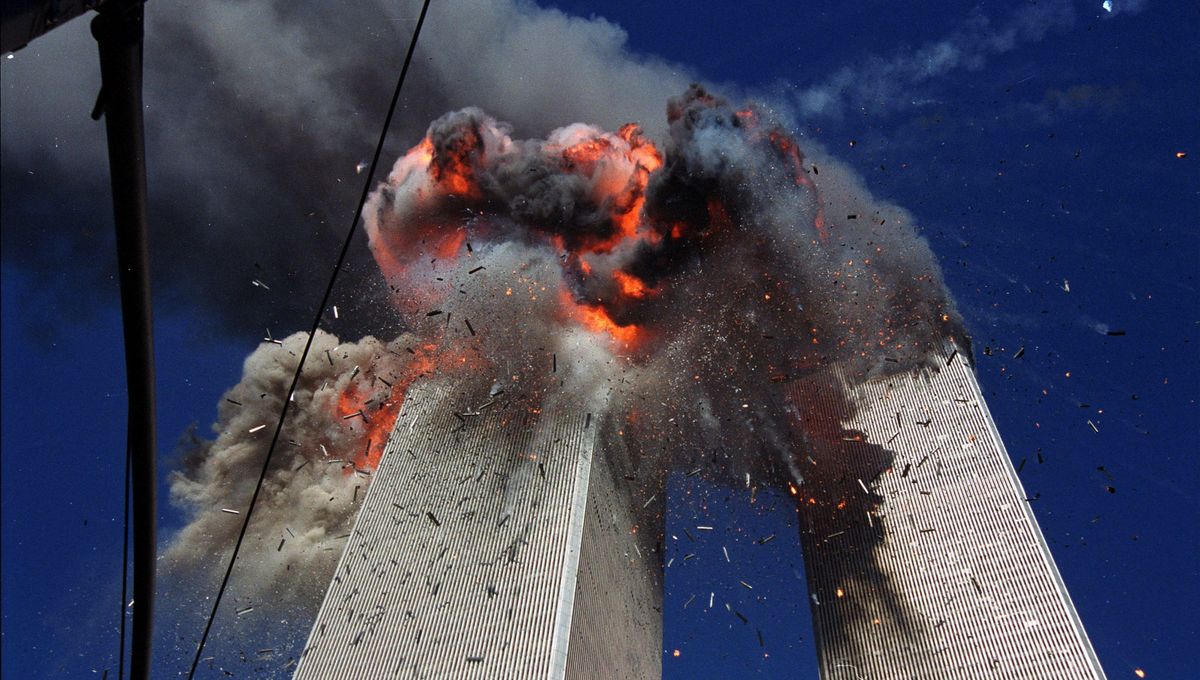



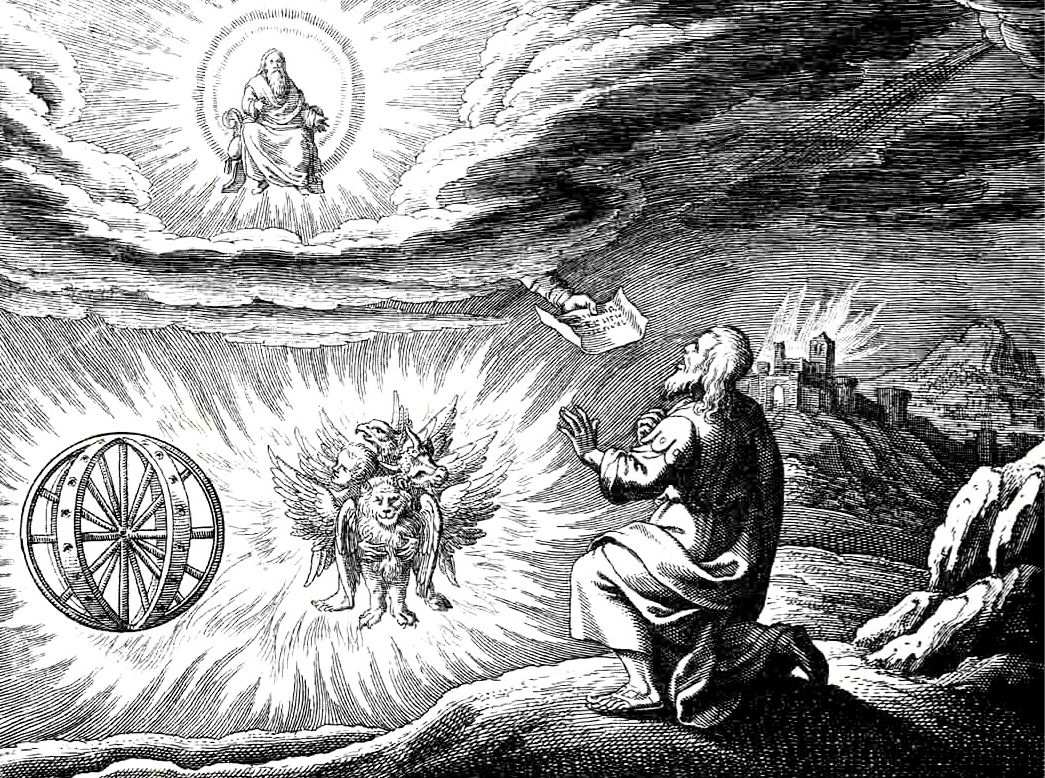




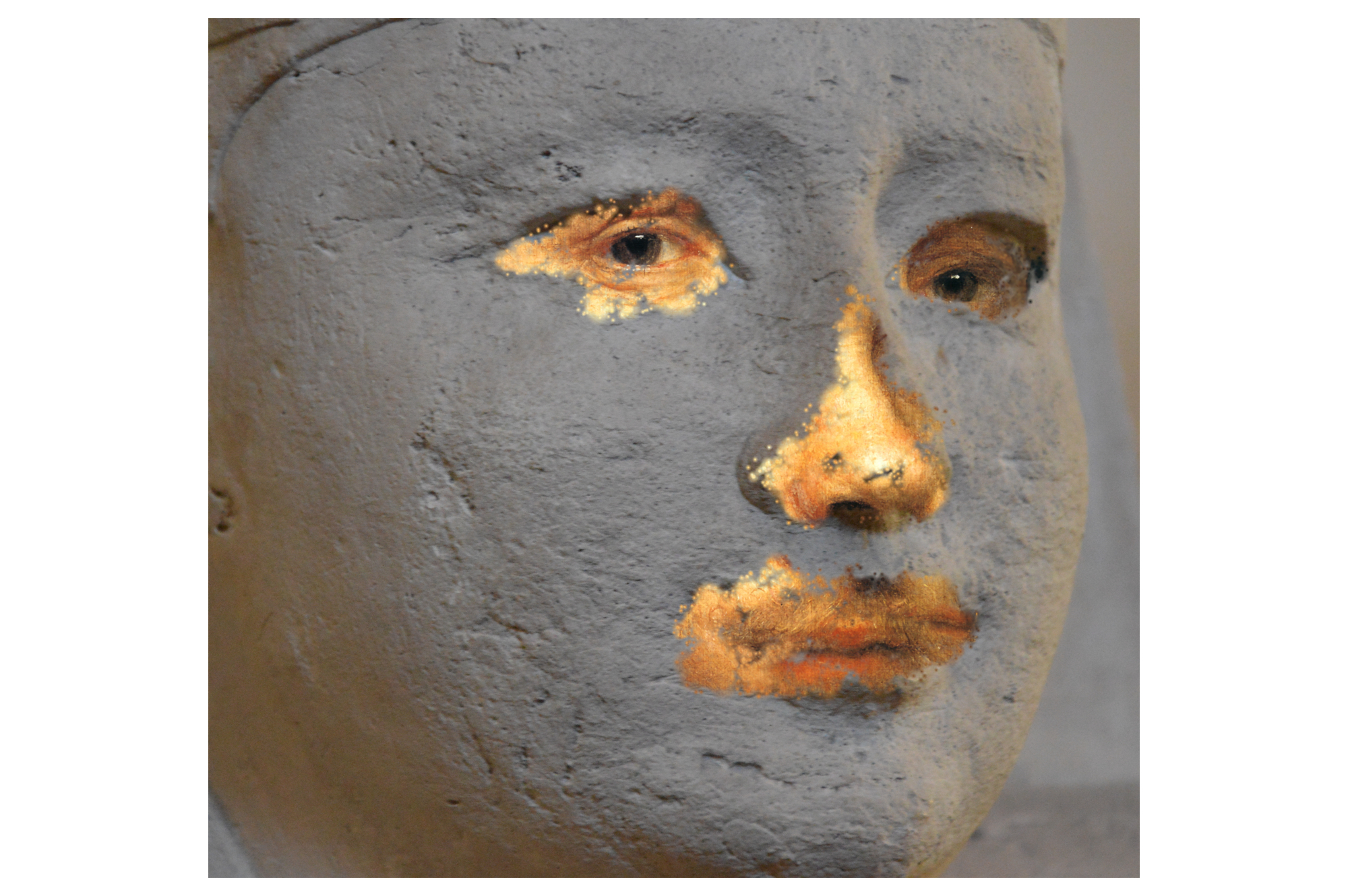

Vous devez être connecté pour poster un commentaire.