The Taittirya Brāhamaṇa thus describes what happened before the beginning of the universe :
« In the beginning, in truth, this universe was nothingness; there was no heaven, no earth, and no atmosphere. The non-being that alone was then made spirit, saying: I want to be! (…) From the non-being the spirit was emitted, the spirit emitted Prajāpati, Prajāpati emitted the beings. » i
The translation of the idea of creation by the word ’emit’ does not take into account the original meanings of the verbal root sṛj सृज्, which is much more colourful: « to let go, to spread, to let flow, to ejaculate; to create, to procreate, to engender, to give birth; to emit, to throw. » ii
In another account of the origins, the spermatic image is even more precise:
« In the beginning, in truth, there was only the Brahman; as the juice of his vigor overflowed, he became Brahma. Brahma meditated silently with the mind; his mind became Prajāpati. » iii
In both cases, the fundamental idea is that creation is the result of a kind of ‘sacrifice’ made by the Supreme Being – that is, a gift emanating from his very essence, from his inner juice. Prajāpati is the divine figure who embodies this original sacrifice, because he is the « Lord (pati) of creatures (prajā) », and has an intermediate nature, partly mortal, partly immortal.
« Prajāpati created the living beings. By his inspirations he created the gods, and by his expirations he created the mortal beings. Above the beings he created Death, to consume them. Now, from Prajāpati, one half was mortal, one half was immortal. With his mortal part he was afraid of death, and being afraid, he became double, clay and water (…) Five parts of his body were mortal, hair, skin, flesh, bones, marrow; and five immortal parts: spirit, speech, breath, sight, hearing. » iv
Prajāpati is the Lord of creatures, the primordial being, both mortal and immortal. He created the universe by his own Sacrifice, sharing his essence with Fire, Breath or the Word.
« That, Prajāpati wanted. Through Agni, He mated with the earth. An egg hatched. He touched it: ‘Let it grow! Let it grow and multiply,’ He said. And the embryo that was inside was created as Vāyu (the Wind) (…) By Vāyu, He mated with the air. An egg hatched. He touched it and said, ‘May you be glorified!’ By this Āditya (the Sun) was created (…) By Āditya he mated with Heaven (…) Having created these worlds, He desired, ‘May I create my own creatures in these worlds!’
By His Spirit (manas) he mated with the Word (vāc). He became pregnant with eight drops. They gave birth to the eight Vasus, which He placed on the earth.
By His Spirit, He mated with the Word. He became pregnant with eleven drops. They gave birth to the eleven Rudras, which He placed in the air.
By His Spirit, He mated with the Word. He became pregnant with twelve drops, which gave birth to the twelve Ādityas, which He placed in the sky.
By His Spirit He mated with the Word. He became pregnant. He created All the Gods and placed them in the place. » v
The Word (vāc) is the companion of Prajāpati. As the Satapatha-Brahamaṇa tells us, He mates with her four times. Another text, Kāṭhaka, presents things in a similar way: « Prajāpati was the universe. Vāc was His companion; He mated with Her. She conceived, separated from Him. She engendered the creatures, and then She returned to Prajāpati »vi.
Vāc is here the Word, which creates and generates. But elsewhere, she is not the divine and indefinite Word, which is the agent of creation, but short and precise words of one or two syllables: « After a year, Prajāpati wanted to speak: He said bhūḥ and the earth was; he said bhuvaḥ and space was, he said svaḥ and heaven was. » vii
These three worlds, earth, space, heaven, correspond to the three categories of sounds : vowels, consonants and spirals.
The process of creation by word then continues in all its logic, division and syllabary pulverization:
« Prajāpati was the entire universe. Vāc wasHis, Vāc was His companion. He considered: This Vāc, I want to emit her, she will be infinitely transformed into everything. He emitted Vāc, shewasgoing to be transformed into everything. She who was at the very top, she grew as the drop of water grows. Prajāpati cut off a third of her, ā, it was the earth (…) He cut off a third of her, ka, and it was the atmosphere (…) He threw up a third of her, ha, andit was heaven (…) He divided Vāc, which was one syllable, into three. » viii
Words, speeches, syllables are the matrix (and matter) from which the universe and all creatures are generated.
But all this has a price, – the Sacrifice of the Creator.
After having « emitted » all the worlds and all the beings, Prajāpati lost his intrinsic unity, it broke up. « When Prajāpati emitted the creatures, his members broke off. Now Prajāpati, certainly, is the year. His limbs are the two transitions of day and night [i.e. dawn and dusk], the full moon and the new moon, and the beginning of the seasons. ixHe had cast out the creatures, he fell in pieces.x Being nothing more than a heart, he lay there. He cried out: Ah, my life! The waters heard Him; with the agnihotra [the sacrifice of milk] they came to His aid, they brought Him the throne. » xi
Fortunately the gods are there, watching over Him. Agni, Vāyu, Āditya, Candramas recover his scattered limbs, and the pasus bring back the hair, skin, bones, marrow. « Prajāpati, when He had emitted the beings lay exhausted. The gods gathered the juice and vigor of the beings and used it to heal him. » xii
The supreme Creator, Prajāpati, the primordial God sacrificed himself entirely so that the universe, as well as all living creatures, could come to be. His sacrifice empties Prajāpati of all his substance. « When He had created all existing things, Prajāpati felt emptied; he was afraid of death. » xiii
This unique moment in the history of the theogonic representations, however, offers the opportunity to draw a parallel with other religious traditions, and specifically with the Passion of Christ, feeling « sadness and anguish » xiv(« My soul is sad to death »xv), and fear of death. He repeatedly asked God to spare him from his torment, but in the end he had to endure mockery, flogging, torture and crucifixion, right up to the final cry of abandonment by the Father (« My God, My God, why have you forsaken me? »xvi).
The term used by Christian theology to describe this ‘revelation’ of the divine was originally coined by St. Paul. It is ‘kenosis’, from the Greek kenosis, a word that comes from the verb κενόω, ‘to empty’. Another form of emptying of the divine was also conceptualized by Judaism, though later, with the concept of tsimtsum, ‘contraction’ [of the Divine], an idea forged by the Jewish cabal in the Middle Ages.
Although these analogies are worth strongly emphasizing, and would deserve to be the object of a comparative anthropological study, the idea of the Primordial Sacrifice, granted by the One and Supreme Creator, retains all its anteriority, strength and originality.
Prajāpati is not Christ, although it is a disturbing prefiguration of his metaphysical destiny. He is the God Creator of all worlds and all beings. His Sacrifice made possible the creation of the universe, and it continues in the continuation of time, and it is metaphorized in each of the existing beings throughout the world. In every moment of Time, the Supreme God continues to divide himself so that the World continues to be.
Prajāpati thought: « ‘How can I bring all these beings back into my body? How can I again become the body of all these beings? He divided his body into two parts. There were three hundred and sixty bricks on one side and as many on the other. He failed. « xvii
Then he divided it into three parts of two hundred and forty bricks. Another failure. Then into four parts of one hundred and eighty bricks. Fail again. Then into five parts of one hundred and forty-four bricks. Fail again. Then in six parts of one hundred and twenty bricks. Failure.
He did not attempt to divide it into seven. But he divided it into eight parts of ninety bricks. Failure. Then into nine parts of eighty bricks. It failed. Then into ten parts of seventy-two bricks. Failure. He made no attempt to divide it into eleven.
He divided it into twelve parts of sixty bricks. Failure. He did not attempt to divide it into thirteen or fourteen parts. He divided it into fifteen parts of forty-eight bricks. Failure. He divided it into sixteen parts of forty-five bricks. Failure.
He made no attempt to divide it into seventeen parts. He divided it into eighteen parts of forty bricks. Failure. He made no attempt to divide it into nineteen parts. It was divided into twenty parts of thirty-six bricks. Failure.
He did not attempt to be divided into twenty-one, twenty-two, or twenty-three parts. It was divided into twenty-four parts of thirty bricks.
There He stopped at the fifteenth part. And that is why there are fifteen forms of ascending moons and fifteen forms of descending moons. And it is also because He divided Himself into twenty-four parts that there are twenty-four half months.
Nevertheless, with these twenty-four parts of thirty bricks, it had not yet divided sufficiently. So he divided ṚgVeda into twelve thousand verses and he divided the other two Vedas in the same way, respectively eight thousand for the Yajur Veda and four thousand for the Sāma Veda. He further divided the three Weda into ninety times ten thousand eight hundred and eighty syllables.
Then He continued to divide Himself until He became the body of all things and beings, which are composed of meters, vital breaths or deities.
What we will remember is that the initial and continuous Sacrifice of the Supreme Creator reaches the height of primordial reality, and that it is palpable in Time and Space. The Sacrifice is before all beings. The Sacrifice is both theCreator and the Creation. All the phenomena of the universe owe its existence to it, and are the image of it indefinitely repeated. The Sacrifice is infinite, eternal, and it is Man’s task to accomplish it in order to resurrect it and make it live without end.
« The eternity of the Sacrifice is divided into infinitely numerous periods; whoever offers it kills him, and every death raises him up. The supreme Male, the Man par excellence (Puruṣa) dies and is reborn again and again. » xviii
This is why it is also up to man, who is in the image of the primordial Man (Puruṣa), to carry out for his part the « sacrifice » which is in the image of the primordial sacrifice of Prajāpati.
Some two millennia after those ideas were conceptualized in the Veda, Jesus of Galilea incarnated them on Golgotha.
_______________
iTaittirya Brāhamaṇa. 2,2,9,10: » asato ‘dhi mano’ sṛjyata, manaḥ Prajāpatim asṛjyata. Prajāpatiḥ prajā asṛjyata. « Quoted by Sylvain Lévi. The doctrine of sacrifice in the Brāhamaṇas. Ed. Ernest Leroux, Paris, 1898, p. 14.
ii The root sṛj is also the etymological origin of the word ‘source’.
Quand ils sont abattus, visiblement malades, se tenant à l’écart de leurs congénères, les chimpanzés ingurgitent sans les mastiquer certaines plantes (Ficus asperifolia, Ficus exasperata, Aneilema aequinoctiale, Rubia cordifolia) qui semblent avoir un effet salutaire. Richard Wranghami suggéra le premier que la raison était probablement autre que nutritionnelle ou gustative (ces plantes peu appétissantes ont un goût âpre, rugueux). Des études ont en effet confirmé l’hypothèse d’une utilisation « médicinale » par les chimpanzés, pour se débarrasser des nématodes parasites intestinaux.
On a répertorié plus de trente espèces de plantes consommées à des fins similaires par les bonobos, les gorilles et les chimpanzésii. Ces comportements d’auto-médication chez les grands singes africains relèvent d’une science appelée zoopharmacognosie.
Dans un ordre d’idées comparable,Terence Mc Kennaiii avança l’hypothèse que des plantes alcaloïdes, et spécifiquement celles d’entre elles qui possèdent des propriétés hallucinogènes dues à des composés chimiques comme la psilocybine, le diméthyltryptamine (DMT), et l’harmaline, font sans doute aussi partie des régimes alimentaires des grands singes (gibbon, orang-outan, gorille, chimpanzé), de la famille des Hominoïdes, lointains ancêtres des humains.
Parmi ces plantes, les champignons se distinguent comme étant particulièrement « mutagènes » dans l’environnement naturel, et donc capables de tester d’infinies combinaisons de mutations, comme le sont généralement tous les fungi et les moisissures, dont la science moderne ne connaît qu’une toute petite partie des espèces existantes.
Des céréales évoluant en symbiose avec des moisissures ont permis d’élargir les possibilités de ces espèces mutagènes en incitant les espèces animales à les consommer, les attirant par les effets puissants qu’elles peuvent opérer.
Suite à des séries de mutations et d’évolutions s’étendant sur des dizaines de millions d’années, et dont il n’est pas interdit de penser que des croisements génétiques entre règnes végétal et animal les ont favorisées, les Hominoïdes ont engendré successivement les Hominidésiv, les Homininés puis les Hominines, considérés désormais comme les plus récents précurseurs d’Homo sapiens, dont les plus anciens restes retrouvés sont datés de seulement 300.000 ans.
Les composés chimiques hallucinogènes de certaines plantes alcaloïdes, fort répandues de par le monde, ont donc été consommés vraisemblablement pendant de nombreuses générations d’ancêtres d’Homo sapiens puis par Homo sapiens lui-même. Par leurs puissants effets psychoactifs, ils ont pu influencer les capacités réflexives et cognitives des cerveaux des Hominoïdes et des Hominidés, puis des Humains. Ils ont pu faciliter, par cette symbiose alimentaire sur un grand nombre de générations, des mutations favorisant un impact plus efficace encore de ces substances psychoactives, améliorant les performances réactionnelles du cerveau, et ses capacités conceptuelles et imaginatives
Ils ont dans une certaine mesure catalysé l’évolution continuelle du cerveau, puis à un stade ultérieur, ils ont favorisé le développement de l’imagination, inopinément nourrie d’expériences sensorielles et psychiques radicalement différentes de celles de la vie courante. Dans un stade encore ultérieur, le caractère proprement indicible des expériences provoquées par les plantes hallucinogènes a sans doute eu un lien avec l’émergence du langage. L’extase chamanique, le sentiment de dissolution des frontières personnelles et tribales, ont durablement installé au centre de la conscience la perception rémanente du sentiment du mystère.
C’est un fait établi, vérifiable par quiconque en a fait l’expérience, que la psilocybine provoque brutalement une très intense stimulation du système nerveux central, suivie d’un état de conscience et d’éveil sans aucune commune mesure avec ce qui peut être ressenti dans l’état habituel de la conscience humaine.
L’irruption soudaine, fulgurante, d’une expérience totalement autre dans la proto-conscience d’hominidés ou dans la pré-conscience d’homininés, pas ou peu préparées à en comprendre la nature et la puissance, a sans doute fait beaucoup, lorsqu’elle a été répétée pendant des milliers de générations, pour engendrer l’émergence du sentiment du soi, et pour établir une distance symbolique entre le moi et la représentation du moi.
Les composés chimiques à base d’indoles naturels, puissamment hallucinogènes, ont vraisemblablement joué un rôle clé dans l’émergence de la capacité d’auto-réflexion, de la prise de conscience de soi, et de la prise de conscience du fait d’être humain, dont l’une des potentialités est de pouvoir être emporté consciemment jusqu’aux plus hauts sommets de l’extase métaphysique.
Les indoles hallucinogènes se répartissent en quatre groupes, caractérisées par diverses molécules.
1. Certaines molécules ont une structure similaire à celle du LSD. On les trouve par exemple dans l’Ergot de seigle, le Liseron (Gloire du matin, Belle de jour), et l’Ipomée (Volubilis). Assez rares dans la nature, il est nécessaire d’en consommer des doses élevées pour produire des hallucinations.
2. Les molécules de tryptamine (caractéristiques de la psilocine, la psilocybine, et de la N,N-diméthyltryptamine ou DMT) se trouvent dans des légumes et dans des champignons. Mais on trouve aussi de la DMT produite de façon endogène dans le cerveau humain, au niveau de la glande pinéale. Les hallucinations visuelles dues à la DMT sont brèves, intenses, spectaculaires, et peuvent être considéres comme non toxiques à faible dose.
3. Les béta-carbolines, comme l’harmine et l’harmaline, sont importantes pour les pratiques d’ingestion d’hallucinogènes dans le chamanisme parce qu’elles inhibent l’action des enzymes qui pourraient dégrader les molécules de DMT. Elles peuvent être consommées en corrélation avec le DMT pour prolonger et intensifier leur action. Cette combinaison est à la base de l’ayahuasca (ou « yage ») utilisé en Amazonie.
4. Les ibogaïnes de la plante Tabernanthe Iboga, que l’on trouve en Afrique de l’Ouest, sont aphrodisiaques et hallucinogènes. Elles ont une relation structurelle avec les beta-carbolines. L’ibogaïne est aussi une tryptamine, proche de la psilocine et de la psilocybine, psychostimulante et hallucinogène à forte dose. Cette molécule interagit avec des neurotransmetteurs, principalement la sérotonine et le glutamate.
La plupart des animaux, et même certains végétaux, émettent en permanence des phéromones, qui sont des molécules capables d’agir sur des individus de la même espèce. Pour traduire le fait que les molécules d’indoles peuvent être chimiquement actives dans plusieurs espèces, appartenant tant au règne végétal qu’au règne animal, Terence McKenna a forgé le néologisme d’exo-phéromonev. Mais à ce néologisme les scientifiques préfèrent aujourd’hui l’emploi du mot ectomonevi, qui en est en l’équivalent.
Les exo-phéromones ou ectomones se définissent comme des phéromones capables de servir de moyen de communication entre différences espèces.
Dans le contexte de la consommation de plantes hallucinogènes par un grand nombre de générations successives d’hominoïdes, d’hominidés et d’homininés, on peut en déduire que des ‘individus d’une espèce donnée peuvent affecter directement ou indirectement d’autres espèces, au sein de vastes aires biotiques, et même de biomes entiers, par la diffusion d’exo-phéromones ou d’ectomones.
Le fait que ces phéromones soient capables de relier intimement, biochimiquement, des espèces du règne végétal à des espèces spécifiques du règne animal, et d’en affecter le comportement à long terme, d’en faciliter l’évolution, encourage à faire une hypothèses de portée plus générale.
La nature pourrait être comparée à une totalité organique et planétaire qui rend possible la communication de signaux chimiques et moléculaires entre espèces, et en tire parti pour autoréguler son développement, en maximisant la coopération mutuelle, et la coordination des fins poursuivies.
Dans ce cadre très général, on peut considérer que les molécules des plantes hallucinogènes jouent elles aussi un rôle de messagers inter-espèces, dans une symbiose évolutive et comportementale qui a touché particulièrement les primates, mais sans s’y limiter.
De très nombreuses autres espèces d’animaux recherchent activement ce type de substances chimiquement actives, semble-t-il. Au Gabon, les éléphants, et de nombreuses variétés d’oiseaux consomment de l’iboga, tout comme les gorilles, et les humains eux-mêmes… Au Canada, les rennes raffolent de champignons comme l’amanite tue-mouches (Amanita muscaria), qui sont hallucinogènes pour les humains, et qui doivent aussi agir d’une façon analogue sur les cervelles de bovidés, peut-on supputer à partir de leurs comportements…
Le papillon sphinx à tête de mort ne peut vivre sans Datura et sans Atropa belladona. Le puma se shoote au Quinquina gris, les mouflons cherchent leurs doses quotidiennes de lichens psychotropes, les éléphants de l’Afrique subsahélienne exigent leurs noix de marula, les chimpanzés leur nicotine, et les chats cherchent l’extase dans leur herbe-à-chat (Nepeta cataria).
Enfin, on a pu tester l’impact spectaculaire du LSD sur des escargots et des poissons rouges. On en induit que ces derniers ont aussi une capacité latente à sortir de leur condition « naturelle ».vii
La puissance psycho-active de ces hallucinogènes naturels, fort répandus et ayant agi sur d’innombrables individus appartenant à de très nombreuses générations de primates, d’hominidés et d’homininés, a probablement favorisé ou même orienté certaines mutations génétiques, et permis peut-être de surcroît des transferts cumulatifs d’informations génétiques entre espèces différentes, mais proches dans l’arbre évolutif.
Ces évolutions continuelles ont pu favoriser une réactivité toujours plus accrue, plus spécifique, du cerveau des primates à ces molécules, en maximisant toujours davantage la synchronisation des cellules neuronales lors de l’ « extase » neurochimique.
Il y a quelques centaines de milliers d’années, lorsque des individus du genre Homo ont repris à leur compte la consommation de ces plantes hallucinogènes, déjà connues et appréciées depuis des millions d’années par les nombreux primates qui les avaient précédés, ils ont pour leur part ajouté à cette mémoire animale, collective, une contribution décisive. Ils ont fait de la consommation de ces plantes psycho-actives une pratique culturelle, lui ajoutant même une dimension sacrée, en en faisant la raison d’un culte pré-chamanique.
L’ingestion rituelle, codée socialement, d’hallucinogènes puissants, dans des petits groupes tribaux d’Homo, fut certainement facilitée par la présence d’aînés déjà expérimentés, les premiers chamanes, ce qui permettait d’accéder à moindre risque à ces expériences hors du commun, à ces visions intraduisibles dans les mots du langage, et à ces types d’extases absolument inimaginables pour tout non-initié à ces « mystères ».
Le choc psychologique, mental et spirituel, induit par la consommation rituelle de ces hallucinogènes, n’a pas pu ne pas provoquer dans l’esprit de nombreux individus, dans la suite des générations, couvrant des centaines de milliers d’années, des états toujours plus élevés de self-réflexion et une prise de conscience plus aiguë du soi.
Ces états peuvent aller jusqu’à des expériences de sortie du corps, ce qui est le sens premier du mot « extase », et jusqu’à des « visions » d’un ordre plus indicible encore, dont diverses traditions mystiques, plurimillénaires, ont témoigné, n’en donnant d’ailleurs qu’une idée assez approximative, pour quiconque n’a pu en faire l’expérience soi-même.
Car il s’agit là d’une rencontre inoubliable et intraduisible avec l’Autre Transcendantal.
Cet (absolument) Autre a d’abord pu être perçu initialement comme incarnant la Nature, se déployant et se révélant à ces occasions dans sa totalité, dans une synergie reliant tous les vivants. L’Autre se révélait comme la Vie même, la vie vivante d’une nature intelligente, globale, connectée.
Au long des générations successives, cette rencontre avec l’Autre put prendre de nouvelles formes, comme celle de l’union de l’esprit d’un individu particulier avec toutes les mémoires et les savoirs des esprits des générations passées, et avec une vue sur l’anticipation des futurs.
Dans ses rencontres avec l’extase hallucinatoire, l’Homo sapiens de la grotte de Lascaux, cet homme au visage d’oiseau, trouva peut-être une des clés lui ouvrant la question de l’être, lui présentant son mystère, en tant qu’individu, et en tant qu’espèce, dans un compagnonnage avec le bison agonisant, perdant ses entrailles.
De fait, la psilocybine des champignons hallucinogènes a sans doute eu un impact sur l’émergence de la conscience et sur l’apparition de formes de langage chez les pré-humains, les hominidés, les homininés, avant de se développer plus encore les premiers humains.
La puissance nue du choc extatique mettait en relief chez l’initié la nécessité d’une perception de l’aperception, elle exigeait de sa part une plus forte attention à l’attention, un éveil à l’éveil, sous peine de grave accident, en cas de surdose.
Elle l’invitait à de nouvelles associations et connections mentales et imaginatives.
L’impact neurologique des hallucinogènes sur le cerveau met soudainement en évidence, pour la conscience, la différence entre le « soi » et le « non-soi ». En cela cet impact est analogue à ce qui se passe lors d’une brutale réponse immunitaire affectant tout l’organisme.
Dans le système immunitaire, le complexe majeur d’histocompatibilité (CMH), présent chez la plupart des vertébrés, reconnaît aussi le « soi » et le « non-soi ».
Au niveau moléculaire, cette différence s’exprime à travers les protéines de surface. Les molécules de CMH I sont présentes sur toutes les cellules des vertébrés, à l’exception de certains tissus comme la cornée ou les glandes salivaires. Les molécules de CMH II sont présentes sur les cellules présentatrices de l’antigène (lymphocytes B, macrophages, cellules dendritiques et sur les cellules épithéliales thymiques), et jouent un rôle essentiel pour identifier et détruire les intrus (les antigènes).
Tout se passe donc comme si le cerveau, soumis à une dose conséquente de molécules hallucinogènes, réagissait brutalement en mobilisant toutes ses ressources immunitaires pour identifier au plus vite l’ensemble de ces molécules considérées comme des antigènes. Ce faisant, tout le cerveau devient pendant quelques instants capables de prendre « conscience » de l’entièreté de sa propre structure, et de la totalité des molécules « étrangères » venant la modifier.
L’analogie ici proposée entre le système immunitaire et la « prise de conscience » se fonde sur une capacité inhérente à reconnaître et à mémoriser ce qui est le « soi » et ce qui est le « non-soi » (pour provoquer une réaction adaptée).
La capacité du CMH à reconnaître la forme des molécules d’antigènes déclenche une réaction immunitaire globale. De même, l’attention du système neuronal à la réaction neurochimique provoquée dans le cerveau par des molécules d’hallucinogènes s’accompagne d’une augmentation vertigineuse de « conscience », ce qui prélude à la compréhension de sa puissance auto-réflexive, capable de s’augmenter sans cesse d’elle-même, par elle-même, pour se dépasser toujours plus.
Il n’y a sans doute pas de limites à la « quantité » de conscience que l’individu d’une espèce peut produire en lui-même, car la conscience n’est pas a priori figée, elle se nourrit non seulement de tout ce qui la stimule, mais elle se nourrit aussi d’elle-même, de ses propres orages neurochimiques, de ses éclairs imaginatifs et des révélations qui lui sont parfois données.
La conscience est analogue à une source de lumière. Plus la lumière est puissante, plus vaste est le monde qu’elle éclaire. Mais cette lumière n’épuise pas sa propre nuit. Plongeant en elle, la conscience se voit traversée d’éclairs, qui lui en révèle toute la profondeur, ou du moins lui en laisse deviner l’immensité latente. Après avoir connu cet immense embrasement, cette traînée de foudre, et être revenue à son état habituel, elle est ainsi encouragée à relier, à tisser, à nouer, moment après moment, tous les éléments de sa perception du monde , et à les joindre à l’histoire de sa découverte progressive d’elle-même.
La manière d’accomplir cette intégration, ce tissage, d’une façon plus ou moins efficace, créative ou personnelle, détermine la réponse plus ou moins adaptée de l’individu aux défis posés par l’existence en tant que « conscience ».
Habituellement, la « prise de conscience » de tel ou tel état du monde par un individu est le résultat d’un processus de compression et de filtration de données sensorielles, puis de leur intégration.
L’expérience des hallucinogènes sur la conscience se traduit de façon exactement opposée.
Aldous Huxley considérait que la fonction du cerveau, du système nerveux et des organes des sens, est principalement de « réduire » (les informations) plutôt que de les « produire ».
La fonction du cerveau et du système nerveux est de nous protéger d’une surabondance d’information, et de les filtrer pour prévenir la confusion qui résulterait d’une masse de données inutiles, non pertinentes
Elle est de limiter notre perception de ce que nous pouvons percevoir à chaque instant, et de nous laisser accéder seulement à une très petite partie de ces informations, celles qui peuvent être considérées comme essentielles, réellement utiles.
Le résultat de ce filtrage, de cette réduction, est que l’esprit s’incarne en nous de façon singulière, unique, concentrée. Cet esprit singulier, cet esprit à l’œuvre, cet esprit « personnel » est pourtant aussi une incarnation de l’esprit immanent, collectif, de l’espèce.
En première approximation, la priorité de tout animal est de survivre et de se reproduire. Pour assurer la survie biologique de l’espèce, l’esprit de l’individu doit se concentrer sur sa mission première; pour cela il lui faut sans cesse réduire, filtrer et finalement retenir, relier et intégrer les informations essentielles.
Ce faisant, les filtres du cerveau et du système nerveux ne cessent de produire un mince ruisseau de conscience, une quintessence éveillée, qui est la vie même, parce qu’elle permet de rester en vie.
Pour mieux exprimer les contenus de cette conscience réduite, focalisée, singulière, et les partager avec ses congénères, l’homme a inventé des systèmes symboliques, des langages, des grammaires, des philosophies, des représentations du monde.
Tout cet attirail possède des avantages, mais impose aussi ses contraintes, ses limites, ses défauts.
Les symboles, les langages, les grammaires, les philosophies n’offrent, malgré leur richesse relative, que des moyens d’expression limités de la conscience. La conscience n’a ici-bas qu’une vision restreinte, rognée, « pétrifiée » du monde réel.
Dans certaines circonstances, des humains ont pu effectivement établir des contacts avec d’autres mondes possibles, des mondes situés « au-delà » de ce monde, selon ce que de nombreuses traditions spirituelles enseignent.
Les sceptiques et les esprits forts en doutent, naturellement, spécialement dans notre époque matérialiste.
Nous n’en tiendrons pas compte, pour la suite de notre raisonnement, car ces sceptiques n’ont tout simplement pas « vu » ce qu’il y avait à « voir ». Seuls ceux qui ont « vu » peuvent témoigner.
Si ces mondes « au-delà » existent en effet, ils pourraient comprendre une multitude de consciences analogues à la nôtre, ou au contraire, foncièrement d’une autre nature. Toutes ces consciences, quelles qu’elles soient, devraient cependant vivre au sein de ce que l’on pourrait appeler l’Esprit universel, l’Esprit au sens large.
On peut alors conjecturer que l’impact, décrit plus haut, des substances psychoactives sur la conscience de ceux qui les consomment depuis des générations n’a pas été seulement d’ordre physiologique, cognitif ou psychologique. Elles ont pu mettre la conscience en contact avec un sur-monde, un méta-niveau de réalité. En catalysant la mise en résonance simultanée de l’ensemble des neurones du cerveau, elles ont pu libérer tout le potentiel de certaines fonctions très spécifiques du cerveau, rarement mobilisées, mais bien présentes, latentes. Elles ont permis à l’homme d’entrer en contact avec d’autres sphères de conscience, d’autres types de réalité, d’autres manières d’être, transcendant l’univers objectif, matériel, que nous connaissons bien, en apparence.
La conscience gagne un trésor en faisant l’expérience de se dissoudre momentanément dans cet hyperespace illimité, dans cet Autre, dans cette transcendance. Elle y gagne une nouvelle compréhension du sens du soi comme partie vivante du grand tout de la nature, comme atome insécable du Soi universel.
Lorsque l’Homo Sapiens a émergé dans l’aube de son histoire, il y a plusieurs centaines de milliers d’années, il y a eu sans doute un stade décisif où l’évolution de la conscience a bénéficié de la découverte des propriétés puissantes des plantes psychoactives. Cela a été une révélation pour lui, un véritable tempête au plus profond de son esprit, éveillant en lui des sentiments de crainte, de respect, d’admiration, au plus haut degré.
Il a vu en lui-même des visions que nul œil mortel ne peut voir.
Et ces visions ont depuis des millénaires fondé l’essence de toutes les civilisations successives.
Ces visions, dont les transes chamaniques, les cérémonies védiques célébrant la consommation du Soma, les mystères d’Éleusis, les thiases dionysiaques ou les nuits d’initiation au culte de Mithra témoignent, ont toutes un point commun: elles résultent de l’absorption de substances psycho-actives, donnant accès à un sur-monde spirituel.
Certains seront sans doute choqués que la clé ouvrant la voie des mystères les plus élevés des premières religions de l’humanité puisse n’être qu’une (relativement) simple substance chimique agissant sur le cerveau.
Mais les extases vécues lors de ces transes, ces initiations, ces envolées de l’esprit, n’ont rien de « simple ». Ce sont des expériences incroyablement intenses, puissantes, complexes. Elles sont liées à la nature la plus profonde de l’homme, et elles sont capables de changer fondamentalement l’idée qu’il se fait de lui-même.
Mircea Eliade a affirmé que l’extase est l’essence même du chamanisme.
« Dans toute cette zone [la Sibérie et l’Asie centrale] où l’expérience extatique est tenue pour l’expérience religieuse par excellence, le chaman, et lui seul, est le grand maître de l’extase. Une première définition de ce phénomène complexe, et peut-être la moins hasardeuse, sera: chamanisme = technique de l’extase. »viii
Le chaman est un « élu », capable d’abandonner son corps et d’entreprendre des voyages cosmiques » en esprit » (en transe).
Le but suprême du chaman est d’abandonner son corps et de s’élever au « ciel » ou de descendre en « enfer » (quel que soit le sens que l’on peut donner à ces métaphores). Le but prioritaire du chaman n’est donc pas de se laisser entraîner dans des manifestations spectaculaires, ou de se laisser « posséder » par des « esprits », des « démons » ou par les âmes des morts, comme on le lit trop souvent dans les études d’anthropologie superficielles, faites par des spécialistes qui n’ont jamais expérimenté eux-mêmes la réalité de ces extases, ni effectué de voyages aux confins de l’innommable et de l’indicible.
Gordon Wasson commente ainsi l’extase chamanique : « Dans sa transe, le chaman part pour un voyage lointain – le lieu des ancêtres disparus, ou le monde inférieur, ou le lieu où habitent les dieux – et ce pays des merveilles est, à mon avis, précisément celui où les hallucinogènes nous emmènent. Ils sont une passerelle vers l’extase. L’extase en elle-même n’est ni agréable ni désagréable. La félicité ou la panique dans laquelle elle vous plonge est accessoire à l’extase. Lorsque vous êtes en état d’extase, votre âme semble s’extraire de votre corps et s’envoler. Qui contrôle son vol : est-ce vous, votre « subconscient » ou une « puissance supérieure » ? Il fait peut-être nuit noire, mais vous voyez et entendez plus clairement que vous n’avez jamais vu ou entendu auparavant. Vous êtes enfin face à face avec la Vérité ultime : c’est l’impression (ou l’illusion) accablante qui vous saisit. Vous pouvez visiter l’enfer, ou les champs élyséens d’asphodèles, ou le désert de Gobi, ou les plaines arctiques. Vous connaissez l’émerveillement, la félicité et la peur, voire la terreur. Chacun vit l’extase à sa manière, et jamais deux fois de la même façon. L’extase est l’essence même du chamanisme. Le néophyte du grand monde associe les champignons principalement à des visions, mais pour ceux qui connaissent la langue indienne du chaman, les champignons « parlent » à travers le chaman. Le champignon est le Verbe : es habla. Le champignon confère au curandero ce que les Grecs appelaient Logos, le Vac aryen, le Kavya védique, la ‘puissance poétique’, comme le disait Louis Renou. »ix
En affirmant que le sentiment religieux a commencé d’apparaître lorsque les pré-humains et les humains ont expérimenté la puissance psychotrope des alcaloïdes hallucinogènes, Wasson prenait une position hérétique, du moins par rapport au consensus régnant alors parmi les anthropologues et ethnologues s’intéressant à l’origine du fait religieux.
Ainsi Mircea Eliade, qui a écrit une somme sur le chamanisme, considérait que le chamanisme utilisant des « narcotiques » était un chamanisme décadent, tombé dans la « déchéance ». Il estimait que si les chamans ou les initiés ne pouvaient pas atteindre l’extase sans drogues, alors ils avaient perdu le véritable sens de leur culture.
A la fin de son livre sur la transe chamanique, Mircea Eliade qualifie de pratique « aberrante » l’usage de ce qu’il appelle des « narcotiques » dans la transe chamanique.
« Bien que l’idéologie de l’ascension chamanique soit extrêmement cohérente et solidaire des conceptions mythiques que nous venons de passer en revue (« Centre du Monde », rupture des communications, déchéance de l’humanité, etc.) on a rencontré nombre de cas de pratiques chamaniques aberrantes: nous pensons surtout aux moyens rudimentaires et mécaniques d’obtenir la transe (narcotiques, danses jusqu’à épuisement, « possession », etc.). On peut se demander si, en dehors des explications « historiques » qu’on pourrait trouver à ces techniques aberrantes (déchéance à la suite d’influences culturelles extérieures, hybridation, etc.), elles ne peuvent être interprétées également sur une autre plan. On peut se demander, par exemple, si le côté aberrant de la transe chamanique n’est pas dû au fait que le chaman s’efforce d’expérimenter in concreto un symbolisme et une mythologie qui, de par leur nature même ne sont pas « expérimentables » sur le plan « concret »; si, en un mot, le désir d’obtenir à tout prix et par n’importe quel moyen une ascension in concreto, un voyage à la fois mystique et réel, au Ciel, n’a pas abouti aux transes aberrantes que nous avons vues. »x
Eliade oppose les transes du « grand chamanisme », atteintes spontanément, à ce qu’il nomme des « demi-transes » provoquées à l’aide de narcotiques.
« Dans la zone arctique, l’extase chamanique est un phénomène spontané et organique; c’est seulement dans cette zone qu’on peut parler du « grand chamanisme », c’est-à-dire de la cérémonie qui finit dans une transe cataleptique réelle, pendant laquelle l’âme est supposée avoir abandonné le corps et voyager vers les cieux ou les enfers souterrains. Dans les régions subarctiques, le chaman, n’étant plus victime de l’oppression cosmique, n’obtient pas spontanément une transe réelle et se voit forcé de provoquer une demi-transe à l’aide de narcotiques et de mimer dramatiquement de « voyage » de l’âme. »xi
Mais l’utilisation par Eliade du mot « narcotique » – un terme habituellement réservé aux soporifiques – pour décrire ces « demi-transes » chamaniques trahit une réelle erreur de jugement quant à la nature botanique et pharmacologique. des champignons hallucinogènes utilisés dans les zones subarctiques.
Comme on l’a vu, R. Gordon Wasson défend un point de vue précisément contraire : la consommation d’hallucinogènes indique que le chamanisme est authentique et vivant. Et le chamanisme tardif, caractérisé par des rituels élaborés, diverses épreuves d’ « initiation » et l’intervention de pseudo-chamanes aux personnalités pathologiques, est précisément la forme « décadente » du chamanisme originel. C’est alors seulement que le chamanisme a perdu tout sa puissance originaire de communication « concrète » avec le divin, et est en passe de devenir une simple mystification, se donnant pour une « religion ».
Les points de vue respectifs de Mircea Eliade et de R. Gordon Wasson sont parfaitement opposés. Il semble que la vraie différence est qu’Eliade ne sait pas de quoi il parle. Sa culture en la matière est livresque. Il n’a pas expérimenté lui-même l’effet de ces champignons hallucinogènes à la différence de Wasson qui a subi l’initiation chamanique et qui a réalisé dans son propre esprit la nature de l’extase ultime.
Mais il est certain qu’il est très difficile de traiter de la question de l’usage cultuel de ces plantes « sacrées » , dans une époque où la consommation de drogues « dures » domine l’actualité, et quand on constate les dégâts effrayants subis par d’innombrables personnes.
Il reste cependant qu’un accès privilégié, sans pareil, à l’inconscient et au sur-monde, a été facilité depuis des millénaires par l’ingestion rituelle de certaines plantes naturelles.
Cela témoigne, pour quiconque en a fait l’expérience, de notre lien originel, consubstantiel, avec la planète vivante, la planète Terre, mais aussi avec le vaste monde des esprits, ou de l’Esprit.
Dans le monde occidental, l’éloignement de la nature et de l’inconscient s’est accentué il y a environ deux mille ans, avec la suppression progressive des mystères païens et l’avènement du christianisme, qui a supplanté le culte de Mithra et mis fin aux mystères d’Eleusis dans l’Empire romain.
Le monothéisme n’était guère compatible, semble-t-il, avec l’immersion du moi dans les mystères archaïques de l’extase et dans le sentiment de la plénitude visionnaire induites par des plantes.
Mais il est très possible que la prochaine étape de l’évolution humaine doive impliquer non seulement un refus de la culture actuelle, mais aussi un renouveau de certaines intuitions archaïques autour des liens entre la conscience humaine et la nature comme totalité vivante.
La croissance continue de ses capacités réflexives a incité Homo sapiens à prendre toujours davantage conscience de sa conscience, puis à développer et utiliser un langage symbolique pour la partager avec ses congénères.
La prochaine étape de la croissance de la conscience humaine, à l’échelle des prochains millénaires, pourrait fleurir librement dans les paysages illimités de l’imagination, qu’elle surgisse en nous spontanément, ou qu’elle soit stimulée par une maîtrise nouvelle des techniques archaïques de l’extase.
L’enjeu futur sera celui de l’épanouissement de l’être humain par le développement de son « imagination divine », cette imagination dont William Blake fait la matière, la substance même du monde réel et éternel, et qu’il reconnaît aussi comme un don de l’Esprit à l’Homme.
« Je ne connais pas d’autre christianisme ni d’autre Évangile que la liberté du corps et de l’âme à exercer les Arts Divins de l’Imagination: Imagination, le monde réel et éternel dont cet univers végétal n’est qu’une ombre évanescente, et où nous vivrons dans nos corps réels ou imaginaires, lorsque ces corps végétaux et mortels ne seront plus. (…) Dieu est-il Esprit devant être adoré en esprit et en vérité? Les dons de l’Esprit ne sont-ils pas tout pour l’homme? »xii
Exerçant à notre tour notre Imagination, ne découvrons-nous pas que ses créations sont elles aussi comme des exo-phéromones ou des ectomones qui régulent notre relation symbiotique avec l’univers, avec les autres espèce du règne animal et avec les plus nombreuses espèces encore du règne végétal, dont certaines, comme le chanvre, le cannabis ou l’ayahuasca sont justement capables de faire exploser notre imagination et de lui permettre de fusionner avec la Divine Imagination.
Une compréhension plus profonde du rôle de l’imagination humaine comme contrepoint ou dialogue avec le déploiement parallèle de l’Imagination Divine (au sens de William Blake) pourrait être la principale contribution exigée de l’homme, dans ce moment de crise intellectuelle, religieuse et morale.
L’imagination humaine doit jouer sa partition propre dans le processus de l’évolution de l’Univers, bien que nous ne sachions pas d’où il vient, où il va, et quelles sont les fins qu’il est censé poursuivre.
C’est peut-être d’ailleurs à l’imagination humaine de répondre à cette dernière question, ou du moins de contribuer à y répondre, dans une tentative de symbiose cosmothéandriquexiii.
La prochaine grande étape de l’évolution humaine (en tant qu’elle s’intriquera toujours davantage, on le suppose, avec la nature tout entière, avec le cosmos et avec le monde infini des esprits) est sans doute de contribuer de façon plus consciente au développement de l’Imagination Divine, dont William Blake s’est voulu le Prophète, et le Poète.
L’imagination humaine pourrait être considérée comme l’un des songes vivants et incarnés de l’Imagination Divine, l’un des espoirs de sa renaissance, et de son renouvellement.
Un homme nouveau, — comme condition d’un Divin nouveau, par un renouvellement de l’Esprit, c’est-à-dire de l’Imagination?
Pour aller de l’avant, il faudrait assurer la fusion de l’intelligence et de l’imagination humaines, dans leur puissance naturelle et dans leurs extensions artificielles, avec l’ancienne matrice de l’inconscient collectif, la somme totale de la mémoire de toutes les formes de vie, animales et végétales.
Il faudrait aussi tenter de faire revivre (symboliquement) la mémoire accumulée de tous les hominoïdes, les hominidés, les homininés et toutes les générations d’Homo sapiens, depuis que des formes de proto-conscience ont commencé d’éclairer leur être-au-monde pour les uns, et que pour les autres, ils se soient risqués à accéder aux formes de conscience les plus élevées de l’extase archaïque.
Les premiers explorateurs humains qui en firent l’expérience, découvrirent abasourdis, il y a de cela des centaines milliers d’années déjà, que des formes d’intelligence végétale pouvaient faire alliance avec l’imagination humaine. En style moderne, on dirait que les neurotransmetteurs des cerveaux humains furent mis en résonance à l’échelle du cortex par l’action d’indoles venant des alcaloïdes. Par ce procédé neurochimique, aussi bizarre qu’inattendu, mais terriblement efficace, des cerveaux humains ont découvert au fond des grottes, au sommet des monts sacrés, ou dans l’ombre des forêts, qu’une communication bien réelle avec l’Esprit universel était possible, et qu’elle pouvait aller infiniment haut, jusqu’à faire jaillir comme une source éternelle, la vision de l’Autre absolu, et la connaissance de sa transcendance cachée.
Une exploration attentive des possibilités « enthéogènes » des hallucinogènes végétaux a été déjà entreprise par des pionniers comme R. Gordon Wasson.
Mais il reste, pour les générations futures, à chercher à sonder le mystère le plus archaïque et le plus fondamental, à savoir le phénomène inouï de l’émergence première de la conscience. Une relation quasi-symbiotique entre des plantes et des hommes a pu caractériser l’essence des sociétés et des cultes archaïques. Elle permet d’entrevoir comment le mystère numineux a été expérimenté concrètement, réellement, par Homo sapiens, dès l’origine.
Il nous reste surtout, et c’est le plus important pour le lointain avenir, à tirer toutes les conséquences philosophiques, politiques et métaphysiques de la triple alliance entre le monde végétal, Homo sapiens, et les attentes du numineux. Il reste à imaginer toutes les suites à donner à cette alliance, et à la décliner dans ses infinies virtualités.
La fin des Temps ne suffira pas à en épuiser la puissance.
______________________
iHerrmann E., Call J., Hernandez M.V., Hare B., Tomasello M. — Humans Have Evolved Specialized Skills of Social Cognition: 2007 The Cultural Intelligence Hypothesis. Science, 2007, 317 (5843) , 1360-1366 DOI: 10.1126/science.1146282
ii’Hladik C.M. Des relations d’attachement essentielles à la vie d’un groupe de chimpanzés. Primates, Nathan, 2010.
iiiTerence McKenna. The Food of the Gods.The Search for the Original Tree of Knowledge.A Radical History of Plants, Drugs and Human Evolution. Bantam New Age Books, 1992
ivHominidé : famille des Hominidae qui englobe toutes les formes humaines présentes et passées ainsi que de façon générale, les grands singes actuels et leurs ancêtres, et avant eux par les Hominoïdes Cf. G. Lecointre, H. Le Guyader, La classification phylogénétique du vivant ,cité par Cyril Langlois, https://planet-terre.ens-lyon.fr/ressource/hominides-hominines.xml
vTerence McKenna a suggéré que certains produits chimiques produits en abondance dans diverses plantes et champignons hallucinogènes , tels que la diméthyltryptamine et la psilocybine, peuvent agir comme des phéromones produites par un règne (le végétal) en attente d’absorption par d’autres règnes animaux (par exemple, les premiers primates ou les hominidés ). De cette façon, une sorte de système phéromonal écologique peut être à l’œuvre parmi les règnes biologiques et écosystèmes qui ont coévolué étroitement pendant de longues périodes de temps.
viiiMircea Eliade. Le chamanisme et les techniques archaïques de l’extase. Payot, Paris, 1968, p. 22
ixCf. R. Gordon Wasson. Persephone’s Quest. Entheogens and the Origins of Religion. Yale University Press. 1986
xMircea Eliade. Le chamanisme et les techniques archaïques de l’extase. Payot, Paris, 1968, p. 384
xiMircea Eliade. Le chamanisme et les techniques archaïques de l’extase. Payot, Paris, 1968, p. 37
xiiWilliam Blake. Jerusalem: The Emanation of the Giant Albion. Ed. A.H. Bullen, London, 1904, p.92. « I know of no other Christianity and of no other Gospel than the liberty both of body & mind to exercise the Divine Arts of Imagination: Imagination, the real & eternal World of which this Vegetable Universe is but a faint shadow, & in which we shall live in our Eternal or Imaginative Bodies, when these Vegetable Mortal Bodies are no more. The Apostles knew of no other Gospel. What were all their spiritual gifts? What is the Divine Spirit? is the Holy Ghost any other than an Intellectual Fountain? What is the Harvest of the Gospel & its Labours? What is that Talent which it is a curse to hide? What are the Treasures of Heaven which we are to lay up for ourselves, are they any other than Mental Studies & Performances? What are all the Gifts of the Gospel, are they not all Mental Gifts? Is God a Spirit who must be worshipped in Spirit & in Truth, and are not the Gifts of the Spirit Every-thing to Man? »
Cité dans sa traduction française par Osbert Burdett. William Blake. Parkstone International. 2009, p.129
xiiiJ’emprunte ce néologisme au travaux de Raimon Panikkar.
There are many kinds of beings, divine, human, natural, artificial, material, without forgetting the beings of reason and language, the ideal, symbolic and modal beings, etc.. From this multiplicity of types of beings, one can conjecture the existence of a rich assortment of possible ontologies. In the crowd of all these beings, man may have a special role. He does not know who he really is, and he knows that he does not; he also knows that he is not only what he knows he is. So there is still a lot of room for research. He becomes more what he is in particular when the question of being in general within him is revealed. He begins to understand his own nature when he understands that it is entirely within this questioning, that of its origin and that of its end.
How does he know all this? Considering the opaque mystery from which he emerges, and the even darker abyss into which death projects him, he draws inductions, builds hypotheses, formulates theories.
This is why it is said that man is a metaphysical animal, more apt than the sea urchin, the fly, the monkey or the angel, to ask himself the question of his specific being, and thus to attack without respite the question of being in general, the ontological question.
It was no small intuition to come to think of the passage from the particular to the general, that is to say, to conceive the abstraction of being, as emanating from the innumerable cohorts of concrete beings.
This intuition establishes a community of essence between all that « is », without setting aside a radical variation between the « levels of being » of the various beings. Some of them bathe in the super-luminous consciousness of their Self, others grope in twilight limbo, and still others crawl endlessly in the night of dead dreams.
Man is a being placed in a world that is also a being, and in the midst of other, different kinds of beings. These different kinds of beings manifest themselves in one way or another, but without ever revealing themselves completely. It is difficult, if not impossible, for man to penetrate the mystery of being in others beings than himself, since he already fails to penetrate this mystery in himself.
His consciousness manifests itself to him, too, and never ceases to reveal itself, always again, without ever being exhausted, by his questioning, except, of course, in death. And there, can we presume that the questions that the consciousness asks finally find an answer, final, complete, terminal? Doesn’t death lead either to a nothingness with no room for questions or answers, or is it only a passage towards a state where the Self continues, in other forms, to ask itself still other questions?
There is in the being of man a mixture of infinity (in potency) and finitude (in act). Forwards, backwards, upwards, downwards, and on all other sides, man is objectively surrounded by the finite, he is ‘confined’. His perspectives are quickly crushed. His ‘self’ is only a point, without dimension, and the unlimited that surrounds it in theory is only a conjecture, a phantasm, a representation without explicit content.
This point, this limit point, is a self without dictable content, but it is the basis of all metaphysics, the most laconic or the most talkative. Without this point, this raft of the being, everything dissolves quickly into a dreamless nothingness. But with it, we can begin to found, paradoxically, an ontology of unveiling. On this point, this single point, can we build worlds, chasms, firmaments, empyreas? We don’t really know, it is the human spirit that works, that weaves on its loom canvases and veils.
Why is the mind inclined to always weave? Because the point of consciousness is essentially naked. It needs linen, wool and words to dress its nudity, which is also solitude.
When man thinks that he is finished, that he is alone, he also thinks that he might not be, in theory.
When he believes in reality, dense and low, he also believes in mirages, ethereal, elevated, which the crowd and its time propagate.
Man is an infinitely finite and ultimately infinite being.
Penetrated by a finitude and solitude that surrounds him on all sides, man turns towards transcendence as a way out. But this does not give him any guarantee, any certainty. It is necessary to continue without assurance the search, a source of anguish, a fountain of worry. Afflictions of not knowing where one is going.
Anxiety is perhaps too strong a word, too dramatic. Faced with nothingness, the strong soul is not moved: if the great hole is an empty place, what does she have to fear, the soul that finds without a blow the blackness and the unconscious in which she has slept in non-existence, before appearing briefly on the scene of a world without meaning.
The alternative is much more stimulating naturally. This is why for thousands and thousands of generations man has continued to ask himself the metaphysical question without worrying about the laziness of the materialists, the sneers of the strong minds.
Anxiety is also called transcendental curiosity.
What can be the nature of a world whose meaning is neither given nor said?
It is the act of looking nothingness in the face that is the first victory of the mind. It is laid bare by its very question. And if he does not hasten to dress his metaphysical nakedness with some hasty veil, if he does not hurry to put an end to this skinning, then he can seize himself as such, naked, skinned, raw, between life and death, without knowing what will prevail.
This non-knowledge, this ignorance, this suffering, one may want to put an end to it. Religions such as Vedic, Buddhist, but also Jewish and Christian, theorize in their own way how to escape from it.
Religions don’t do metaphysics. They propose coded answers, forged over millennia. But every man is newly born: in a completely new way, he in turn asks himself very old questions.
He may adopt the lesson of the ancient masters, but he may also notice their metaphysical vanity, noting that their answers are based on unfounded assertions.
All things considered, a well-born man is worthy of a prophet or a sage of old, if he has intuitions of comparable strength or even visions superior to this or that ancient one.
For all these past geniuses also had to walk a narrow path. They all had to feel the precariousness, the fragility of their certainties.
Their faith has always been in a state of wavering.
Doubt founds man and gives him his irrefutable nobility.
It is this doubt that gives man’s time its eternal varnish. Because its truth is not in what it shows, but in what it hides. Behind the veil of time probably lies the great mystery of all times, – but perhaps there is nothing but the sneers of the disheveled matter.
Ontology of the doubt, ontology of the bet, ontology of the die and the Rubicon, royal and prophetic, which the well-born soul adopts as its only homeland, its only religion, its only metaphysics.
If time is the only real wealth, eminently limited, why do we spend our time wasting it, in nothingness?
It is only if it is not the only wealth, the only reality, that it is reasonable to waste time thinking about it, this time that veils the future, and everything that is above it, or after it.
It is there, in thought, that the well-born man, and reborn, pierces the wall of the presence to oneself. The horizon of time, so low, so blurred, so close, he rolls it up like a canvas, and sets out on his way to the stars.
For the being (of man) is not made of time. Once the tent is taken down, he migrates out of time. He opens, and discovers what is no longer time, what is above and outside of time, a timeless, a meta-time.
There is no more time. Does everything stop then?
No, the flow continues. Other dimensions are emerging. The world with three dimensions of space and one of time is replaced by a world with 17 or 256 dimensions of space and as much time.
The time is no longer temporal, but… gustatory or tactile.
Time is a strong and hollow intuition. It is constantly occupying the mind, and it is an empty form.
And man seeks the full, not the empty.
He has the intuition that only emptiness can come out of emptiness. There is no future in sight in the void. The man full of himself cannot imagine living his own emptiness. He continues to search for more fullness, which fills all the emptiness he experiences.
But does man have a full intuition? One can think so. Fetuses and lovers experience a relative fullness, which leaves unforgettable marks, working tirelessly in the unconscious, and giving hope for other plenitudes to come, less relative, more absolute perhaps.
Reason is of little use in the face of this mystery; it is incapable of discerning any path. It is too embarrassed by its weight of rules and logic.
Intuition here is more flexible, to guess the future and the potency not yet revealed. Less formal, but more founded, – in a sense.
Where does intuition come from? If it has the slightest validity, even if it is only that of a mustard seed, intuition comes from elsewhere, from the beyond and the unthinkable. It is a kind of antenna sensitive to all the noises, all the rumors that reason does not hear.
Of two things one.
Either intuition is actually in contact, in some unspeakable way, with the after-world, the beyond, the universe of the possible, the spheres of the unthinkable, and then the precious drops of meta-temporal elixir that it captures and exudes are more valuable than all the riches of the world.
Either intuition is not in contact with any of this, and then what is it worth? Not even the fabric from which dreams are made, aborted before they fly. And then, decidedly, man is a beast seized with torpor.
We must imagine a world where thought takes the form of pure intuition. Their immediacy, their sharpness is unparalleled. Time is suddenly abolished before the force of these intuitions. A fountain of understanding flows in great waves, it drowns the dazed mind, covers it with revelations, opens new paths, unveils worlds. Far behind intuition, the spirit takes flight, heavily but surely.
The mind is heavy, clayey. Intuition is burning, cherubic. Its light warms the distant ones, that thought, for its part, cools and freezes.
Not that thinking is not useful. It has its utility, at the back, in support, with the train. But not in the front, looking forward.
Above all, intuition has this generous, gushing, crackling character. Source or flare. Each drop, each spark, is the promise of an infinity to come, of which they are the humble and brilliant messengers.
It is a strange phenomenon that intuition, from the moment we see it, is not only for what it suggests, but what it implies. Its « beyond » signs the end of the narrow. It reveals doors opening onto myriads. It unveils worlds where the thin is loaded with thickness. The pollen announces the forest, the smell makes the forgotten Orients shimmer, the grain promises the premises.
Intuition is not a phenomenon. On the contrary, it is more real than the real.
Human knowledge comes from two sources: the ability to receive impressions, and the ability to represent forms. It is by associating these impressions (coming from the world) and these forms (coming from the mind) that the faculty of ‘knowing’ can blossom.
What are these forms that come from the mind, these concepts pre-positioned to interpret impressions?
They do not result from the activity of thought, but from the fullness of intuition. Intuition already inhabits the gaze of the newborn child, and sows its virgin brain.
Intuition reigns supreme in the most crucial, sublime, transcendental moments.
Intuition reveals in a tenuous and tenacious way what we are not yet conscious of being.
By a sparkle of intuition, man, being finite, surrounded on all sides, without vision, without perspective, suddendly discovers that he is infinitely more than he had ever imagined.
A ‘white mule’ (śvata aśvatara) gave its name to the famous Śvetāśvatara-Upaniṣad. Apart from the alliteration, why such a name?
Was Śvetāśvatara the putative name of the author, thus defined as alover of equine beauty, or of horseback riding?
Siddheswar Varma and Gambhīrānanda both prefer to understand this name as a metaphor for ‘One whose organs of sense are very pure’i.
Indeed, purity was probably needed to tackle the issues addressed by this Upaniṣad:
« Is Brahman thecauseii? Where did we come from? What do we live by? What do we rely on?» iii
The answer to all these questions may be found by considering the One.
The One, – i.e. the Brahman, manifests itself in the world through its attributes and powers (guṇa), which have been given divine names (Brahmā, Viṣṇu and Śiva). These three names symbolize respectively Consciousness (sattva, purity, truth, intelligence), Passion (rájas, strength, desire, action) and Darkness (támas, darkness, ignorance, inertia, or limitation).
The ‘Great Wheel of Brahman‘ iv gives life to the Whole, in the endless flow of rebirths (saṃsāra).
The individual soul ‘wanders here and there’ in the great Whole. She is like a ‘wild goose’ (haṃsa)v. In search of deliverance, this drifting fowl goes astray when she flies separate from the Self. But when she attaches herself to it, when she tastes its ‘joy’, she attains immortality.
The Whole is a great mixture, of mortals and immortals, of realities and appearances. The goose that flies free in it, without knowing where she is going, is in reality bound, garroted. She thinks she is a conscious subject, but she is a mere self, deaf and blind, unaware of joy, of the Self of the Brahman.
To get on her path, she must find within herself a Trinitarian image of the One, an inner triad, composed of her soul (jīva), her personal lord (Īśvara) and her nature (prakṛti). This triad is both ‘three’ and ‘one’, which is also a familiar image in Christianity, – appearing in John, more than two thousand years after the Veda.
This triadic soul is not just an image, she is already Brahman, she is in Brahman, she is with Brahman. She is the One.
The One governs the Whole, the perishable, the imperishable and the Self. It is by meditating on the One, and uniting with it, that the Self can deliver itself from the famous māyā, the ‘power of measure’ that rules the world.
Māyā originally and etymologically means ‘divine omnipotence’, – a power of creation, knowledge, intelligence, wisdom.
The meaning of māyā as ‘illusion’ is only derived. It takes on this (paradoxically) antonymous meaning of ‘deception’, of ‘mere appearance’, when the self does not recognize the immanent presence of power. When knowledge, intelligence and wisdom are absent, illusion takes their place and occupies the whole field.
Thus māyā can be (truly) understood as power, measure and wisdom, when one sees it at work, or (falsely) as an illusion, when one is blind to her.
It is not the māyā as such that is ‘illusion’. Illusion about the world only comes when the creative power of the māyā is not recognized as such, but one gets caught by the result of her operation.
By her dual nature, by her power of occultation and manifestation, the māyā hides but also reveals the divine principle, the Brahman who is her master and source.
To know the essence of māyā istoknow this principle, – Brahman. In order to reach her, it is necessary to untie oneself from all bonds, to leave the path of birth and death, to unite with the supreme and secret Lord, to fulfill His desire, and to dwell in the Self (Ātman).
The māyā may be compared to a netvi. It wraps everything. You can’t escape it. It is the cosmic power of the Lord, in act in the Whole. It is the All.
To finally escape māyā, you have to see her at work, understand her in her essence, make her a companion.
He presents a double face, therefore, a duality of truth and illusion. It is through māyā that one can get to know māyā, and her creator, the Brahman.
This is why it is said that there are two kinds of māyā, one that leads to the divine (vidhyā-māyā) and the other that leads away from it (avidhyā-māyā).
Everything, even the name of the Brahman, is doubly māyā, both illusion and wisdom.
« It is only through māyā that one can conquer the supreme Wisdom, the bliss. How could we have imagined these things without māyā? From it alone come duality and relativity.”vii
The māyā has also been compared to the countless colors produced by the One who is « colorless », as light diffracts in the rainbow.
« The One, the colourless One, by the way of its power produces multiple colors for a hidden purpose.”viii
Nature bears witness, with blue, green, yellow, the brilliance of lightning, the color of the seasons or the oceans. Red, white and black are the color of fire, water and earthix.
« You are the blue-night bee, the green [bird] with yellow eyes, [the clouds] bearing lightning, the seasons, the seas.”x
To see the māyā it is necessary to consider her under both her two aspects, inseparable at the same time.
One day Nārada said to the Lord of the universe: « Lord, show me Your māyā, which makes the impossible possible ».
The Lord agreed and asked him to fetch water. On his way to the river, he met a beautiful young girl by the shore and forgot all about his quest. He fell in love and lost track of time. And he spent his life in a dream, in ‘illusion’, without realizing that he had before his eyes what he had asked the Lord to ‘see’. He saw the māyā at work, but he was not aware of it, without being conscious of it. Only at the end of his days, perhaps he woke up from his dream.
To call māyā « illusion » is to see only the veil, and not what that veil covers.
A completely different line of understanding of the meaning of māyā emerges when one chooses to return it to its original, etymological meaning of « power (yā) of measurement (mā)« .
Everything is māyā, the world, time, wisdom, dreams, action and sacrifice. The divine is also māyā, in its essence, in its power, in its ‘measure’.
« The hymns, sacrifices, rites, observances, past and future, and what the Veda proclaims – out of him, the master of measure has created this All, and in him, the other is enclosed by this power of measure (māyā).
Let it be known that the primordial nature is power of measure (māyā), that the Great Lord is master of measure (māyin). All this world is thus penetrated by the beings that form His members.»xi
In these two essential verses from Śvetāśvatara-Upaniṣad (4.9 and 4.10) one may note important Sanskrit words :
माया māyā, « the power of measurement » or « illusion »,
महेश्वरम् maheśvaram, « the Great Lord »,
मायिनं māyin, « the master of measurement » or « of illusion »,
प्रकृति prakṛti, « the material or primordial nature ».
There is a real difference in interpretation between the translators who give māyā the meaning of « power of measurement », such as Alyette Degrâces, and those who give it the meaning of « illusion », as Michel Hulin does:
« Understand the material nature (प्रकृति prakṛti) as illusion (माया māyā) and the Great Lord (महेश्वरम् maheśvaram) as illusionist (मायिनं māyin).”xii
The famous Sanskritist Max Müller has chosen not to translate māyā, proposing only in brackets the word ‘Art’ :
« That from which the maker (māyin) sends forth all this – the sacred verses, the offerings, the sacrifice, the panaceas, the past, the future, and all that the Vedas declare – in that the other is bound up through that māyā.
Know then Prakṛiti (nature) is Māyā (Art), and the great Lord the Māyin (maker); the whole world is filled with what are his members.»xiii
In note, Müller comments :
« It’s impossible to find terms that match māyā and māyin. Māyā means ‘fabrication’ or ‘art’, but since any fabrication or creation is only a phenomenon or illusion, as far as the Supreme Self is concerned, māyā also carries the meaning of illusion. Similarly, māyin is the maker, the artist, but also the magician, the juggler. What seems to be meant by this verse is that everything, everything that exists or seems to exist, proceeds from akṣara [the immortal], which corresponds to Brahman, but that the actual creator, or author of all emanations is Īśa, the Lord, who, as creator, acts through māyā or devātmaśakti. It is possible, moreover, that anya, ‘the other’, is used to mean the individual puruṣa.» xiv
Following Max Müller, Alyette Degrâces refuses to use the words ‘illusion’ and ‘illusionist’. About the word māyin she explains, obviously inspired by the position of the German Sanskritist established in Oxford:
« This term is impossible to translate, and especially not as ‘illusionist’ as it is found in many translations (but not Max Müller or the Indian translators). The māyā, witha root MĀ « measure » means « a power of measurement », where measure means knowledge. If the measurement is bad, then we will speak of illusion, but not before. Brahman is here māyin « master of measurement, of this power of measurement », through which the world manifests itself. When the Brahman takes on a relative aspect and creates the world, maintains it or resorbs it, it is defined by attributes, it is said saguṇa, aparaṃ Brahman or the master of measure (māyin) by which the world is deployed and in relation to which the human being must actualize his power of measure in order not to superimpose or confuse the two levels of Brahman, one of which is the support of everything. » xv
Aparaṃ Brahman is the « inferior » (non supreme) Brahman, endowed with « qualities », « virtues » (saguṇa). He is the creative Brahman of theUniverse and is distinguished from the supreme Brahman, who is nameless, without quality, without desire.
By consulting Monier-Williams’ dictionary at māyā, one can see that the oldest meanings of the word have nothing to do with the notion of illusion, but refer to the meanings of « wisdom », « supernatural or extraordinary power ».
It is only in the Ṛg Veda, therefore later on, that the other notions appear, that Monier-Williams enumerates in this way : « Illusion, unreality, deception, fraud, trick, sorcery, witchcraft, magic. An unreal or illusory image, phantom, apparition. »
These later meanings are all frankly pejorative, and contrast sharply with the original meanings of the word, « wisdom », « power », based on the etymology of « measure » (MĀ-).
One can consider that there was, before the age of Ṛg Veda, itself already very old (more than a millennium before Abraham, Isaac and Jacob), an almost complete reversal of the meaning of the word māyā, going from « wisdom » to « deception, fraud, illusion ».
These considerations may help to answer a recurring question: « Why was this Creation created at all?”
Why did the Brahman ‘paraṃ’, thesupreme Brahman, the supreme ’cause’, delegate to the Brahman ‘aparaṃ’ (the non-supreme Brahman) thecare of creating a universe so full of evils and “illusions”?
In fact, māyā originally did not mean “illusion” but « Wisdom » and « Power ».
Then undertanding the universe as full of evils and illusions is still an illusion.
Brahman, as the master of Māyā, is really the master of Wisdom, Power, Measure.
And all Creation, – the Whole, has also vocation to appropriate this Wisdom, this Power, this Measure, this Māyā.
A millennium later, the (Hebrew) Scriptures took up the idea again.
Firstly, Wisdom is at the foundation and origin of the Whole.
« This God who does not manifest his own intelligence – in Him I, who desire deliverance, take refuge.”xviii
Then, the (Hebrew) Scriptures staged a kind of delegation of power comparable to the one we have just seen between the paraṃ brahman (the supreme brahman) and the aparaṃ brahman (the non supremebrahman).
In the Scriptures, YHVH plays a role analogous to that of the Brahman and delegates to Wisdom (ḥokhmah) thecare of founding the earth:
Job had understood the essence of Māyā, distinguishing it even hiddden under the cover of a swamp bird with black and white plumage. It was certainly not a ‘wild goose’, but the ibis could be advantageously compared to it on the banks of the Nile (or the Jordan River).
Citing the Ibis as an image of wisdom, Job was certainly not unaware that this bird was the symbol of the Egyptian God Thoth, God of Wisdom.
The God Thoth is a strange Egyptian prefiguration of the Creator Word, of which a text found in Edfu relates the birth and announces the mission:
« In the heart of the primordial ocean appeared the emerged land. On it, the Eight came into existence. They made a lotus appear from which Ra, assimilated to Shu, came out. Then came a lotus bud from which emerged a dwarf, a necessary woman, whom Ra saw and desired. From their union was born Thoth who created the world through the Word. » xxi
After this short detour through the ḥokhmah ofthe Scriptures, and through the Ibis and the Thoth God, figures of wisdom in ancient Egypt, let us return to Vedic wisdom, and its curious and paradoxical alliance with the notion of ignorance, in Brahman itself.
In the Veda, it is the Brahman aparaṃ that creates Wisdom. On the other hand, in the Brahman paraṃ, in Supreme Brahman, thereis not only Knowledge, there is also Ignorance.
« In the imperishable (akṣara), in the supreme Brahmanxxii, infinite, where both, knowledge and ignorance, stand hidden, ignorance is perishablexxiii, while knowledge is immortalxxiv. And He who rules over both, knowledge and ignorance, is another.”xxv
How is it that within the Supreme Brahman, can ‘ignorance’ be hidden?
Moreover, how could there be something ‘perishable’ in the very bosom of the ‘imperishable’ (akṣara), in the bosom of the ‘immortal’?
If one wishes to respect the letter and spirit of the Veda, one must resolve to imagine that even the Brahman is not and cannot be ‘omniscient’.
And also that there is something ‘perishable’ in the Brahman.
How to explain it?
One may assume that the Brahman does not yet know ‘at present’ the infinity of which It is the ‘potential’ bearer.
Let us imagine that the Brahman is symbolized by an infinity of points, each of them being charged with an another infinity of points, themselves in potency of infinite potentialities, and so on, let us repeat these recurrences infinitely. And let us imagine that this infinity with the infinitely repeated power of infinite potentialities is moreover not simply arithmetic or geometrical, but that it is very much alive, each ‘point’ being in fact a symbol for a ‘soul’, constantly developing a life of her own.
One can then perhaps conceive that the Brahman, although knowing Itself in potency, does not know Itself absolutely ‘in act’. The Brahman is unconscious of the extent of Its potency.
Its power, its Māyā, is so ‘infinitely infinite’ that even its knowledge, certainly already infinite, has not yet been able to encompass all that there is still to be known, because all that is yet to be and to become simply does not yet exist, and still sleeps in non-knowledge, and in ignorance of what is yet to be born, one day, possibly.
The ‘infinitely infinite’ wisdom of the Brahman, therefore, has not yet been able to take the full measure of the height, depth and breadth of wisdom that the Brahman can possibly attain.
There are infinites that go beyond infinity itself.
One could call these kinds of infinitely infinite, « transfinity », to adapt a word invented by Georg Cantor. Conscious of the theological implications of his work in mathematics, Cantor had even compared the « absolute infinite » to God , the infinity of a class like that of all cardinals or ordinals.
Identifying a set of “transfinite” Brahman should therefore not be too inconceivable a priori.
But it is the consequence of the metaphysical interpretation of these stacks of transfinite entities that is potentially the most controversial.
It invites us to consider the existence of a kind of ignorance ‘in act’ at the heart of Brahman.
Another verse accumulates clues in this sense.
It speaks of the Brahman, ‘benevolent’, who ‘makes non-existence’.
« Known by the mind, called incorporeal, He the benevolent one who makes existence and non-existence, He the God who makes creation with His parts – those who know Him have left their bodies.”xxvi
How can a supreme and benevolent God ‘make’ the ‘non-existent’?
What this God ‘makes’ is only done because He amputates certain ‘parts’ of Himself.
It is with this sacrifice, this separation of the divine from the divine, that what would have remained in non-existence can come into existence.
It is because God consents to a certain form of non-existence, in Himself, that the existing can come into existence.
It is interesting to compare the version of A. Degraces with Max Müller’s translation, which brings additional clarity to these obscure lines.
« Those who know him who is to be grasped by the mind, who is not to be called the nest (the body), who makes existence and non-existence, the happy one (Śiva), who also creates the elements, they have left the body.» xxvii
A few comments:
‘The nest (the body)‘. The Sanskrit word comes from the verb: nīdhā, नीधा, « to deposit, to pose, to place; to hide, to entrust to ». Hence the ideas of ‘nest’, ‘hiding place’, ‘treasure’, implicitly associated with that of ‘body’.
However, Müller notes that Śaṅkara prefers to read here the word anilākhyam, ‘that which is called the wind’, which is prāṇasya prāṇa, the ‘breath of the breath’.
The image is beautiful: it is through the breath, which comes and then leaves the body, that life continues.
‘Who also creates the elements’. Kalāsargakaram, ‘He who creates the elements. Müller mentions several possible interpretations of this expression.
That of Śaṅkara, which includes: ‘He who creates the sixteen kalās mentioned by the Âtharvaṇikas, beginning with the breath (prāṇa) and ending with the name (nāman). The list of these kalās is, according to Śaṅkarānanda: prāṇa,śraddhā, kha, vāyu, jyotih, ap, pṛthivī, indriya, manaḥ, anna, vīrya, tapah, mantra, karman, kalā, nāman.
Vigñānātman suggests two other explanations, ‘He who creates by means of kalā, [his own power]’, or ‘He who creates the Vedas and other sciences’.
The general idea is that in order to ‘know’ the Immortal, the Brahman, theBenevolent, the creator of existence and non-existence, one must leave the ‘nest’.
We must go into exile.
Abraham and Moses also went into exile.
The last part of Śvetāśvatara-Upaniṣad refers to the ‘Supreme Lord of Lords’, the ‘Supreme Divinity of Deities’, expressions that are, formally at least, analogous to the names YHVH Elohim and YHVH Tsabaoth, – which appeared among Hebrews more than a thousand years after the Veda was composed.
« He, the supreme Lord of lords, He the supreme God of deities, the supreme Master of masters, He who is beyond, let us find Him as the God, the Lord of the world who is to be praised.” xxviii
Once again, let’s compare with the version of Max Müller :
« Let us know that highest great Lord of lords, the highest deity of deities, the master of masters, the highest above, as God, the Lord of the world, the adorable.» xxix
The first verse can be read:
तमीश्वराणां परमं महेश्वरं
Tam īśvarāṇām paramam Maheśvaram.
‘He, of the lords, – the supreme Lord’.
Who are the ‘lords’ (īśvarāṇām)? Śaṅkara, in its commentary, quotes Death, the Son of the Sun and others (Cf. SUb 6.7).
And above all, who is this ‘He’ (tam)?
A series of qualifiers are listed:
He, the supreme God of gods (devatānām paramam Daivatam).
He, the Master (patīnām) of the Masters, the Master of Prajāpatis, – which are ten in number: Marīci, Atri, Aṅgiras, Pulastya, Pulaka, Kratu, Vasiṣṭa, Pracetas, Bhṛgu, Nārata.
He, who is ‘Higher’ (paramam) ‘than the High’ (parastāt)
He, the One God (ekaḥ devaḥ), hidden (gūḍhaḥ) in all beings (sarva-bhūteṣu), the All-pervading One (sarva-vyāpī), He is the inner self of all beings (sarva-bhūta-antarātmā), He is the Watcher of all acts (karma-adhyakṣaḥ), He resides in all beings (sarva-bhūta-adhivāsaḥ), He is the Witness or Seer (in Sanskrit sākṣī), the Knower, the one who gives intelligence (cetā), the unique Absolute (kevalaḥ), the one who is beyond qualities (nirguṇaḥ).
« He is the Eternal among the eternal, the Intelligent among the intelligent, the One who fulfills the desires of many”. xxxi
Once again, we must turn to Max Müller, to detect here another level of meaning, which deserves to be deepened.
Müller: « I have formerly translated this verse, according to the reading nityo ‘nityānām cetanaś cetanānām, the eternal thinker of non-eternal thoughts. This would be a true description of the Highest Self, who, though himself eternal and passive, has to think (jivātman) non-eternal thoughts. I took the first cetanah in the sens of cettā, the second in the sense of cetanam xxxii. The commentators, however, take a different, and it may be, from their point, a more correct view. Śaṅkara says : ‘He is the eternal of the eternals, i.e. as he possesses eternity among living souls (jīvas), these living souls also may claim eternity. Or the eternals may be meant for earth, water, &c. And in the same way, he is the thinker among thinkers.’
Śaṅkarānanda says: ‘He is eternal, imperishable, among eternal, imperishable things, such as the ether, &c. He is thinking among thinkers.’
Vigñānātman says : ‘The Highest Lord is the cause of eternity in eternal things on earth, and the cause of thought in the thinkers on earth.’ But he allows another construction, namely, that he is the eternal thinker of those who on earth are endowed with eternity and thought. In the end all these interpretations come to the same, viz. that there is only one eternal, and only one thinker, from whom all that is (or seems to be) eternal and all that is thought on earth is derived.» xxxiii
One reads in the commentary by Śaṅkara of this verses, translated by Gambhirananda :
« Nityaḥ, ‘the eternal’, nityānām, ‘among the eternal, among the individual souls’ – the idea being that the eternality of these is derived from His eternality; so also, cetanaḥ, the consciousness, cetanānām, among the conscious, the knowers. (…) How is the consciousness of the conscious ? » xxxiv
To this last question, – ‘How is the consciousness of the conscious?’ –, Śaṅkara answers with the following stanza from the Upaniṣad:
“There the sun does not shine, neither do the moon and the stars ; nor do these flashes of lightning shine. How can this fire ? He shining, all these shine; through His lustre all these are variously illumined.”xxxv
The meaning is that Brahman is the light that illuminates all other lights. Their brilliance is caused by the inner light of the Brahman’s self-consciousness, according to Śaṅkaraxxxvi.
Brahman illuminates and shines through all kinds of lights that manifest themselves in the world. From them it is inferred that the ‘consciousness of the conscious’, the consciousness of the Brahman is in essence ‘fulguration’, Brahman isthe ‘effulgent’ Self.
Max Müller initially decided to translate the verse SU 6.13 by reading it literally: nityo ‘nityānām cetanaś cetanānām, which he understands as follows: “the eternal thinker of non-eternal thoughts”.
It is indeed a paradoxical idea, opening at once a metaphysical reflection on the very nature of thought and on that of eternity…
However, given the almost unanimous agreement of various historical commentators, which he quotes contrary to his own intuition, Müller seems to renounce, not without some regret, this stimulating translation, and he finally translates, taking over the version from Śaṅkarānanda :
« He is the eternal among the eternals, the thinker among thinkers, who, though one, fulfills the desire of many.»xxxvii
However, I think that Müller’s first intuition is more promising. There is a lot to dig into in the idea of an ‘eternal thinker’ who would think ‘non-eternal thoughts’.
The literally staggering implication of this idea is that non-eternal thoughts of the Eternal would be constitutive of the existence of time itself (by nature non-eternal). They would also be, moreover, the condition of the possibility of the existence of (non-eternal) creations.
These ‘non-eternal’ thoughts and creations would be intrinsically growing, metamorphic, evolutionary, always in genesis, in potency.
Perhaps this would also be the beginning of an intuition of a metaphysics of pity and mercy, a recognition of the grace that God could feel for his Creation, considering its weakness, its fall and its eventual redemption?
In other words, the very fact that the God, the Brahman, could have non-eternal thoughts would be the necessary condition so that, by his renunciation of the absoluteness and eternity of hisjudgments, non-eternal creatures would be allowed to pass from non-eternity to eternity.
For if the Brahman‘s thoughts were to be eternal in nature, then there would be no way to change a closed world, predetermined from all eternity, and consequently totally lacking in meaning, – and mercy.
We may have an indication to support this view when we read :
« He, who first created Brahmā, who in truth presented him with the Veda, that God who manifests Himself by His own intelligencexxxviii – in Him I, who desire deliverance, seek refuge.” xxxix
‘This God who manifests Himself through His own intelligence.’
Śaṅkara gives several other interpretations of the original text.
Some read here in Sanskrit ātma-buddhi-prasādam, ‘He who makes the knowledge of the Self favorable’. For, when the Supreme Lord sometimes makes grace of it, the intelligence of the creature acquires valid knowledge about Him, then frees itself from its relative existence, and continues to identify itself with the Brahman.
Others read here ātma-buddhi-prakāśam, ‘He who reveals the knowledge of the Self’.
Yet another interpretation: ātmā(the Self) is Himself the buddhi (Wisdom, Knowledge). The one who reveals Himself as knowledge of the Self is ātma-buddhi-prakāśam. xl
“In Him, desiring deliverance (mumukṣuḥ) I seek (prapadye) refuge (śaraṇam)”: is this not the proven Vedic intuition of the Brahman‘s mercy towards his creature?
As we can see, the Veda was penetrated by the explosive power of several directions of research on the nature of Brahman. But history shows that the explicit development of these researches towards the idea of ‘divine mercy’ was to be more specifically part of the subsequent contribution of other religions, which were still to come, such as Judaism, Buddhism and Christianity.
However, the Veda was already affirming, as the first witness, its own genius. The Brahman: He is the ‘wild goose’. He is the Self, He is the ‘fire that has entered the ocean’, He is the ‘matrix’ and the ‘all-pervading’.
« He is He, the wild goose, the One in the middle of this universe. He is truly the fire that entered the ocean. And only when we know Him do we surpass death. There is no other way to get there.”xli
At the beginning of Upaniṣad we already encountered the image of the ‘wild goose’ (haṃsa)xlii, which applied to the individual soul, ‘wandering here and there’ in the great Whole. Now this goose is more than the soul, more than the Whole, it is the Brahman himself.
‘And only when we know Him do we surpass death. There is no other way to get there’.
Śaṅkara breaks down each word of the verse, which then reveals its rhythm 3-3 4-3 4 4-3 :
Viditvā, knowing; tam eva, He alone; atiyety, one goes beyond; mṛtyum, fromdeath; na vidyate, there is no; anyaḥ panthāḥ, another way; ayanā, where to go. xliii
The images of the ‘Matrix’ and ‘All-penetrating’ appear in the next two stanzas (SU 6.16 and 6.17):
« He is the creator of All, the connoisseur of All, He is the Self and the matrix, the connoisseur, the creator of time.”xliv
‘He is the Self and the Matrix‘, ātma-yoniḥ’.
Śaṅkara offers three interpretations of this curious expression: He is its own cause – He is the Self and the matrix (yoni) – He is the matrix (source), ofall things.
The Brahman is Yoni, and He is also the All-pervading One.
« He who becomes that [light]xlv, immortal, established as the Lord, the knower, the all-pervading, the protector of this universe, it is He who governs this world forever. There is no other cause for sovereignty.”xlvi
At the beginning and the end of the Upaniṣad of the ‘white mule’, we find thus repeated this image, white and black, of the goose – of the Self – flying in the sky.
The goose flies in a sky that veils.
What does this sky veil? – The end of suffering.
This is what one of the final verses says:
“When men have rolled up the sky like a skin, only then will the suffering end, in case God would not have been recognized.”xlvii
‘When men have rolled up the sky.‘
Further to the West, at about the same time, the prophet Isaiah used a metaphor similar to the one chosen by Śvetāśvatara :
There is indeed a common point between these two intuitions, the Vedic and the Jewish.
In a completely unorthodox way, I will use Hebrew to explain Sanskrit, and vice versa.
To say ‘to roll up’ the heavens, the Hebrew uses as a metaphor the verb גָּלָה galah, « to discover oneself, to appear; to emigrate, to be exiled”; and in the niphal form, “tobe discovered, to be naked, to manifest, to reveal oneself ».
When the heavens are ‘rolled up’, then God can ‘manifest, reveal Himself’. Or on the contrary, He can ‘exile Himself, go away’.
This ambiguity and double meaning of the word, can also be found in this other verse of Isaiah: « The (golden) time [of my life] is broken and departs from me.”xlix
The Jewish man rolls up the scrolls of Torah when he has finished reading it.
The Vedic man winds the scrolls of the heaven when he has finished his life of flying and wandering. That is to say, he rolls up his life, like a shepherd’s ‘tent’, when they decamp.
But this tent can also be ‘ripped off’ (נִסַּע nessa‘), and thrown away (וְנִגְלָה vé-niglah).l
These metaphors were spun by Isaiah:
“I used to say, ‘In the middle of my days I’m leaving, at the gates of Sheol I’ll be kept for the rest of my years’.
I said: ‘I will not see YHVH in the land of the living, I will no longer have a look for anyone among the inhabitants of the world’.
My time [of life] is plucked up, and cast away from me like a shepherd’s tent; like a weaver I have rolled up my life.” li
The Vedic sky, like man’s life, may be compared to a kind of tent.
And the wild goose shows the way.
At the end, one has to roll up the sky and your life, and go on an infinite transhumance.
__________________________
iŚvetāśvatara-Upaniṣad with the commentary of Śaṅkarācārya. Swami Gambhirananda. Ed. Adavaita Ashrama. Kolkata 2009, p. v
iiHere I slightly adapt Alyette Degrâces’ translation of the word karāṇa by adding the article “the”, based on Max Müller’s translation: « Is Brahman the cause? « which, according to Müller, is itself based on the preferences of Śaṅkara. See Max Muller. Sacred Books of The East. Śvetāśvatara-Upaniṣad 1.1.Oxford 1884.Vol XV, p.231, note 1. The Huet dictionary gives for karāṇa: ‘reason, cause, motive; origin; principle’. Gambhirananda translates as ‘source’: ‘What is the nature of Brahman, the source? »
xxiiBrahman param is what is beyond (para) Brahmā.
xxiiiPerishable: kṣara. Śaṅkara explains in Sub 5.1 that this ‘perishable’ character is the ’cause of existence in the world’ (saṃsṛtikārana). Immortal: akṣara. Śaṅkara explains that this character of immortality is the ’cause of deliverance’ (mokṣahetu).
xxivPerishable: kṣara. Śaṅkara explains in Sub 5.1 that this ‘perishable’ character is the ’cause of existence in the world’ (saṃsṛtikārana). Immortal: akṣara. Śaṅkara explains that this character of immortality is the ’cause of deliverance’ (mokṣahetu).
xxvŚvetāśvatara-Upaniṣad 5.1. Alyette Degrâces, Fayard, 2014, p. 411
xxviŚvetāśvatara-Upaniṣad 5.14. Alyette Degrâces, Fayard, 2014, p. 413
xxviiMax Muller. Sacred Books of The East. Śvetāśvatara-Upaniṣad 4.9-10.Oxford 1884.Vol XV, p.258-259
xxviiiŚvetāśvatara-Upaniṣad 6.7.Alyette Degrâces, Fayard, 2014, p. 415
xxixMax Muller. Sacred Books of The East. Śvetāśvatara-Upaniṣad 6.7.Oxford 1884.Vol XV, p.263
xxxŚvetāśvatara-Upaniṣad 6.9.Alyette Degrâces, Fayard, 2014, p. 416
xxxiŚvetāśvatara-Upaniṣad 6.13.Alyette Degrâces, Fayard, 2014, p. 416
xxxiiThese nuances correspond to two declined cases of the noun cetana, respectively, the first to the nominative (thinker) and the second to the genitive plural (of thoughts). The Sanskrit-English Dictionary of Monier Monier-Williams gives for cetana: ‘conscious, intelligent, feeling; an intelligent being; soul, mind; consciousness, understanding, sense, intelligence’. For cetas: ‘splendour; consciousness, intelligence, thinking soul, heart, mind’. In addition, the Sanskrit-French Dictionary of Huet gives for cetana: ‘intelligence, soul; consciousness, sensitivity; understanding, sense, intelligence’. The root is this, ‘to think, reflect, understand; to know, know. The root is this-, ‘thinking, thinking, thinking, understanding; knowing, knowing.’ For cetas: ‘consciousness, mind, heart, wisdom, thinking’.
xxxiiiMax Muller. Sacred Books of The East. Śvetāśvatara-Upaniṣad 6.13.Oxford 1884.Vol XV, p.264, note 4
xxxivŚvetāśvatara-Upaniṣad with the commentary of Śaṅkarācārya. Swami Gambhirananda. Ed. Adavaita Ashrama. Kolkata 2009, SU 6.13, p.193
xxxvŚvetāśvatara-Upaniṣad with the commentary of Śaṅkarācārya. Swami Gambhirananda. Ed. Adavaita Ashrama. Kolkata 2009, SU 6.14, p.193. See almost identical stanzas in MuU 2.2.11, KaU 2.2.15, BhG 15.6
xxxviiMax Muller. Sacred Books of The East. Śvetāśvatara-Upaniṣad 6.13.Oxford 1884.Vol XV, p.264
xxxviiiMax Muller traduit : » I go for refuge to that God who is the light of his own thoughts « . Sacred Books of The East. Śvetāśvatara-Upaniṣad 6.18.Oxford 1884.Vol XV, p.265
xxxixŚvetāśvatara-Upaniṣad 6.18.Trad. Alyette Degrâces, Fayard, 2014, p. 417
xlŚvetāśvatara-Upaniṣad with the commentary of Śaṅkarācārya. Swami Gambhirananda. Ed. Adavaita Ashrama. Kolkata 2009, SU 6.18, p.198
xliŚvetāśvatara-Upaniṣad 6.16. Alyette Degrâces, Fayard, 2014, p. 417
xliiiŚvetāśvatara-Upaniṣad with the commentary of Śaṅkarācārya. Swami Gambhirananda. Ed. Adavaita Ashrama. Kolkata 2009, SU 6.15, p.195
xlivŚvetāśvatara-Upaniṣad 6.16.Alyette Degrâces, Fayard, 2014, p. 417
xlvŚaṅkara includes here the word tanmayaḥ (‘made of it’) as actually meaning jyotirmaya, ‘made of light’, cf. Sub 6:17.
xlviŚvetāśvatara-Upaniṣad 6.17.Alyette Degrâces, Fayard, 2014, p. 417
xlvii« Only when men shall roll up the sky like a hide, will there be an end of misery, unless God has first been known. ». Max Muller. Sacred Books of The East. Śvetāśvatara-Upaniṣad 6.20.Oxford 1884.Vol XV, p.266
Śaṅkara, the very famous Indian scholar of the ninth century AD, wanted to clear the Creator of all the evil in the world. The existence of evil and suffering agitates spirits, encourages questioning and sows doubt about the Lord’s intentions and His very nature, – leading the most skeptical to question the role of the Brahman in Creation.
A first objection to his responsibility points to the lack of any motive strong enough to compel the Brahman to come out of his own bliss and get down to the task of creating the Universe.
« The conscious, supreme Self could not create this Universal Sphere. Why could it not? Because it would lack a motive for this action.»i
Why would the Brahman undertake such an effort? Wouldn’t the Whole of Creation be considerably less than his own Self anyway? The Whole is nothing compared to the Self, to the Brahman. Śaṅkara quotes a famous Upaniṣad in this regard to support his position: « Truly it is not for the sake of the Whole that the Whole is dear, but for the sake of the Self that the Whole is dear.”ii
Why then would the Self consent to divest itself of its beatitude, freed from all desire, to undertake the colossal task of creating a universe? If it had done so, then it would directly contradict the Veda, which describes the Self as « desireless ».
Or would the Brahman have temporarily lost his mind, would a moment of madness have led him astray, during which he would have committed the universe? But then this would also contradict the Veda’s view that the Brahman is omniscient.
Consequently, it is perfectly incongruous to posit that the universe was created by a supremely intelligent or blissful Being.
A second line of criticism is the hypothesis that the Brahman created the Universe simply to ‘pass the time’.
“Creation for Brahman is a mere pastime”iii. His power being infinite, and all his desires being fulfilled, Creation is just one game among others, without any real stakes or consequences, just as a king would indulge in some sports activity, or any other relaxation, without any particular reason, or even as a kind of reflex, automatic activity, such as breathing, which does not require any a priori reason, but simply takes place, without the consciousness taking part in it.
The third objection concerns the existence of evil in the universe, and the cruelty and injustice it would reveal in the Lord, the Brahman.
« Yet the Lord cannot be the cause of the universe.
– Why then?
– Because he would then have been biased and cruel, by procuring extreme happiness for some, such as gods, etc., and extreme misery for others, such as animals, and by reserving a mixed fate for others, including humans. He would have fabricated a world of inequalities, thus manifesting preferences and rejections, in the manner of an ordinary man. This would ruin the nature of the Lord, made of purity, etc., as Revelation and Tradition make it known to us. Moreover, by dispensing pain and death to beings, he would show a ‘cruelty’, a ferocity abhorred even by the dregs of the people.
– To this we answer: No, ‘because it takes into account (merit and demerit)’. If the Lord created this world of inequalities without taking anything into account, he would indeed be guilty of both sins […] but in reality, in composing this unequal creation, he has regard for merit and demerit. Just as Parjanya [god of rain] plays the role of general cause in the production of rice, barley, etc., while the particular potentialities contained in the seeds of these various grains account for their mutual differences, so the Lord is the general cause of gods, men and others (classes of living beings), while the unequal condition between these classes of beings has as its particular causes the acts (previously) performed by each individual soul.”iv
Everyone is responsible for his or her actions, and pays the price or reaps the benefit, age after age, in the cycle of reincarnations.
The Lord is not responsible for evil, it is the creatures who freely indulge in evil deeds, and who, as a result, are reborn endlessly to do more evil.
All this seems quite logical. The Lord created the Whole, but is responsible for nothing.
It is therefore that creatures are essentially, eminently free (and therefore responsible) for what they are, and what they become.
Two sets of questions then arise.
– Who is responsible for the intimate nature of each being? Of their very essence? That is to say, of the faculty of this or that being to act in accordance with the nature of ‘good’ or ‘evil’? Why is one called ‘good’ and the other ‘evil’? If it is not the Lord Creator Himself, who populated the world with good, bad, or intermediate creatures, and thus launched them into the endless cycle of transmigration, who is it?
– What is the purpose of Creation? Why was it created, with its seemingly inevitable procession of suffering and pain? What interests does this immense circus of samsara serve?
The theory of māyā (illusion) is one of the possible answers to these questions, at least it is the answer of Advaita, the »non-duality », as theorized by Śaṅkara.
Advaita says that the Whole has always been the Self itself. But the creatures who are part of the Whole ignore it. They do not know that their own self is the Self. The endless cycle of reincarnations only ends when awakening or liberation makes beings aware of the identity of their self with the Self.
By translating māyā as ‘illusion’, I am picking up a long tradition of translations.
A famous formula uses the word and applies it by extension to the Lord, who would then be an « illusionist ».
« Understand the material nature (prakṛti) as an illusion and the Great Lord (maheśvara) as an illusionist.”v
Despite the almost universal consensus, there is still serious doubt about the meaning of the very notion of māyā.
Alyette Degrâces for instance refuses the very idea of ‘illusion’ and she translates the verse as follows:
« Nature is the power of measurement and the Great Lord is the master of measurement.”vi
And in a note about the Lord « master of the māyā », she develops a tight argument to justify having thus departed from the usual translation of māyā by ‘illusion’.
« This term is impossible to translate, and especially not as an illusionist as it is found in many translations (but not Max Müller’s or the Indian translators). The māyā, witha root MĀ « measure » means « a power of measurement », where measure means “knowledge”. If the measurement is bad, then we will speak of illusion, but not before. Brahman is here māyin « master of measurement, of this power of measurement », through which the world manifests itself. When the Brahman takes on a relative aspect and creates the world, maintains it or absorbs it, it is defined by attributes, it is said saguṇa, aparaṃ Brahman or the master of measure (māyin) by which the world is deployed and in relation to which the human being must actualize his power of measure in order not to superimpose or confuse the two levels of Brahman, one of which is the support of everything.”vii
Aparaṃ Brahman is the « inferior », non supreme Brahman, endowed with « qualities », « virtues » (saguṇa). He is the creative Brahman of theUniverse and is distinguished from the supreme Brahman, who is nameless, without quality, without desire.
By consulting Monier-Williams’ dictionary at māyā, we can see that the oldest meanings of the word have nothing to do with the notion of illusion, but refer to the meanings of « wisdom », « supernatural or extraordinary power ». It is only in the ṚgVeda that other notions appear, that Monier-Williams enumerates in this way: « Illusion, unreality, deception, fraud, trick, sorcery, witchcraft, magic. An unreal or illusory image, phantom, apparition.”
These last meanings are all frankly pejorative, and are clearly in contrast with the original meaning of the word, « wisdom », itself based on the etymology of « measure ».
We can then consider that, before the age of ṚgVeda (i.e. more than a millennium before the time of Abraham), there has been a complete reversal of the meaning of the word, changing from « wisdom » to « deception, fraud, illusion ».
These considerations may put us in a position to answer the following question:
Why did the supreme Brahman delegate to the Brahman ‘aparaṃ’ the care of creating a universe so full of evils and illusions?
The reason is that evils and illusions, frauds and deceptions, are there for « wisdom » to live and flourish.
The world of māyā, originally, is not the world of evils and illusions but the world that « wisdom » founded, and that creatures must « measure ».
The Brahman is the master of wisdom.
And creation, the whole creation, therefore the Whole, also has the vocation of appropriating « wisdom ».
A millennium after ṚgVeda, other Scriptures took up the idea again.
After the Fall, Adam and Eve, deprived of their ‘garment of glory’, discovered that they were naked.
Before that, they were clothed with the light of divine glory.
Double light, double splendor, that of being in glory, and that of glory clothing oneself.
That is why, later on, Job and Justice (or Righteousness) could be said to « clothe » each other:
“I clothed myself with Justice and she clothed herself with me”i.
Isaiah speaks of a ‘garment’ that saves and delivers: « For He has clothed me with a garment of salvation and wrapped me in a cloak of deliverance.»ii
The Jewish cabal of the Middle Ages associated the idea of ‘clothing’ with the Shekinah and the Torah.
« The Torah of Creation (torah da beria) is the garment of the Presence (chekinah). And if man had not been created, the Presence would have been left unclothed, like a poor man. Therefore, whoever commits a fault, it is as if he stripped the Presence of her adornment, and this is what Adam’s punishment consisted of. »iii
The Torah herself unfolds like a veil, she is covered with black darkness, and she is clothed with white light.
« See: darkness is the blackness of the Torah [the written lines] and light is the white of the Torah [what is between the lines].”iv
It is by the splendor of her light, by what can be read between the lines, that she is dressed, more than by what she hides.
The Torah can be read, whether in darkness or in light, but the Presence does not reveal or unveil herself. If naked, she would be the figure of exile itself.
« For that is what exile (galout) is, it is the unveiling of the nakedness of the Presence, which is expressed in the verse, ‘Because of your outbursts, your mother has been repudiated’. (Is 50:1) Because of the unveiling of the nakedness Israel has been exiled and the Presence has also been exiled: the Presence is naked.»v
Christianity, too, has considered the metaphor of a garment of salvation and glory.
Reciprocally, Christ put on humanity like a garment (« induere hominem »), as wrote St. Augustinevii. Christ was clothed in the divine form (forma dei), and he annihilated himself « taking the form of the servant (forma servi)viii » in order to « clothe man ». « Have you forgotten that it was written about Christ Jesus that before he was clothed with humanity (‘hominem fuisset indutus‘) he was in forma deiix?
Death is a second nudity, after the nudity resulting from the Adamic fall. But baptism is a new garment, which announces and prepares « the garment of immortality ». « Baptism has erased death from the flesh; that which is mortal has dissipated into the garment of immortality ».x
From all this, seems to emerge the idea that Human nature is fundamentally « naked ».
And this very nudity is stripped off, like a used clothe, at the time of death.
For the Greeks whom nudity hardly frightened, and whose beauty they much valued, the body is ‘the clothing of the soul’.
Contrary to Jewish and Christian thinkers, Greek philosophers « impatiently await the moment when the soul puts off this garment to show herself in her nakedness »xi.
But for Paul, nudity symbolizes death. « When death robs us, we become naked in righteousness; in this robbery by death the laying off of the garment, which began at baptism, is finally accomplished. »xii
However, death is the occasion to put on a new « garment », a new « tent », a « heavenly dwelling »xiii.
It is this new garment that represents true ‘life’, a life beyond ‘death’. What is this new garment? It is the spirit.
Paul does not seek death, he wants life. He does not wish just a soul, bound to a mortal body. He wishes to possess something higher than the soul – and for him what is higher than the soul is the spirit, the pneuma.
In this sense, the garment is for Paul an overcoming of the primitive dualism between body and soul, between being clothed and being naked.
The metaphor of the garment thus becomes an expression of the supernatural, of the revelation of a divine reality that transcends the experiences of man’s life.
The water of baptism was already a kind of garment.
Yet we have to put on a second garment, – of glory, more radiant than the one worn by Adam and Eve in paradise.
It will « make the mortal element disappear in the garment of immortality.»xv
This ‘garment’ does not hide and cover, but reveals, illuminates, shines. It is made of glory, light, splendor.
In the beginning, when the Presence appeared, dressed in her splendor, then Word, Thought and Creation came on the great stage of the world. « He wrapped Himself in splendor – the supreme Right of Thought – to create the heavens. In that splendor, the beginning of all light, He created the heavens.» xvi
A passage from the Midrach Rabba evokes this moment of creative splendor, ‘the beginning of all light’, and of all thought:
« Tell me where was the light created? He replied, ‘The Holy One, blessed be He, wrapped himself in it as in a garment, and illuminated the whole world from one end to the other with all its glory. Then he added with a sigh: ‘There is a verse that says it explicitly: ‘You are clothed in splendor and majesty. You are clothed in light’xvii.» xviii
In the first chapter of Genesis, which recounts the first moments of creation, the word ‘light’, אוֹר, ‘or’, is mentioned five times in three of the opening verses (Gen 1:3-5).
These five quotations symbolically evoke the five books of the Torah according to the interpretation of the Midrach Rabbahxix. « God said, ‘Let there be light’xx » corresponds to Genesis. « And the light was » xxi refers to Exodus. « God saw that the light was good »xxii represents the Leviticus. « And God separated the light from the darkness » xxiii points to the Numbers. « God called the light day » xxiv refers to Deuteronomy.
Curiously, in the first chapter of his own Gospel, St. John mimics this repetition, with fifteen evocations of the ‘light’.
He uses seven times the word ‘light’, phôs (ϕῶς), in the first verses.
« Life was the light of men. » (Jn 1:4)
« The light shines in the darkness. » (Jn 1:5)
« He came to serve as a witness, to bear witness to the light. » (Jn 1:7)
« He was not the light, but he appeared to bear witness to the light. » (Jn 1:8)
« This light was the true light, which, when it comes into the world, enlightens every man. » (Jn 1:9)
Then, John evokes ‘light’ again eight more times, in a pronominal, personal or possessive form (in Greek αύτόν), or as the implicit subject of active verbs.
« She was (ἦν) in the world, and the world was made by her (αύτοῦ), and the world did not know her (αύτόν). » (Jn 1:10)
« She came to her family’s house, and her family did not receive her (αύτόν). » (Jn 1:11)
« But to all who have received her (αύτόν), to those who believe in her (αύτοῦ) name, she has given the power to become children of God. » (Jn 1:12)
What does such an accumulation of repetitions mean?
The light is one, but her shimmers, her glitters, her sparkles, her scintillation are legion.
Light, Or, is unique, but her true meaning is always in potency.
A passage from the Zohar sheds some light (if I may say) on this question, just by replacing the word ‘light’ with another question:
« When the abyssal light unfolded, her clarity gave hold to questioning, although it was still beyond the reach of all that is below. That is why she was called in an interrogative way, she was called Who. » xxv
We also read in Isaiah:
« Lift up your eyes to the heights, and see Who created this. » xxvi
מִי-בָרָא אֵלֶּה
Mi bara’ ellèh.
‘Who’ and ‘that’, these words are in a way ‘naked’, begging for a meaning.
« The words were elusive, for it was impossible to question the ultimate. Wisdom was composed of nothingness, she was so closed and so deep that she could not resist questioning, but no one could grasp anything of her.”xxvii
Le titre de cet article évoque de façon ramassée une proximité a priori presque incroyable et, pour beaucoup, probablement choquante, entre le divin, le scatologique, – et même la coprophagie.
Ce rapprochement n’est pourtant ni adventice ni artificiel.
Il se base sur des faits historiques, culturels et religieux avérés, dont nombre de témoignages hautement crédibles rendent compte.
Si l’on prend la peine de creuser un tant soit peu la matière, une documentation considérable se génère rapidement, dont il me serait bien difficile de rendre compte dans le cadre d’un article de ce blog. Et, en approfondissant la recherche, des tendances anthropologiques fondamentales semblent s’esquisser.
Le chercheur commence à percevoir des pulsions puissantes à l’œuvre dans l’inconscient collectif, touchant l’humanité tout entière, par-delà les âges, les continents et les spécificités culturelles, — pulsions qui sont d’ailleurs peut-être toujours à l’œuvre, aujourd’hui encore, dans les profondeurs.
Naturellement, je me représente l’émoi compréhensible de mes lecteurs putatifs, peu préparés à aborder sans précaution un sujet aussi scabreux, dans un siècle connu pour son hygiénisme, son horreur du sale, de la puanteur et des excrétions corporelles, mais aussi pour son conformisme normatif, aisément outragé.
Cependant, il me faut constater objectivement, du point de vue de l’anthropologie comparée, que la conjonction du divin et de la merde intéresse en fait de nombreuses cultures de par le monde, sur une période de plusieurs millénaires, et cela jusqu’à nos jours.
Pour nourrir cette thématique, on pourrait utilement convoquer une abondance d’exemples tirés de l’histoire des religions, impliquant notamment l’ancienne religion égyptienne, l’ancienne religion hébraïque, la religion des Moabites, les religions de Rome et de la Grèce, de l’Inde et du Tibet.
Cette liste est certes non exhaustive, puisque l’on pourrait encore y ajouter les sectes chrétiennes dites « stercoraires »i, qui sévissaient au XIe siècle, et qui ont donné du fil à retordre aux théologiens, puisqu’elles défendaient l’idée que les hosties consommées lors de l’eucharistie étaient digérées comme les autres aliments, avec les conséquences que l’on peut attendre de cette digestion, et les problèmes que pouvait donc rencontrer le « corps du Christ ».
On citera à ce propos l’opinion de l’abbé Bernier qui définit ainsi les Stercoraires, aussi appelés Stercoristeii ou Stercoranistes, dans sa Théologie portative:
Stercoranistes. « Opinion absurde de ceux qui supposeroient que le pain consacré dans l’Eucharistie, c’est-à-dire changé en Dieu, puisse être rendu par la selle. Les Théologiens ont longtems disputé pour savoir ce que devenoit le Dieu que l’on a reçu dans l’Eucharistie, maintenant il est enfin décidé qu’il n’y a que Dieu seul qui sache ce qui arrive à l’Eucharistie quand nous l’avons reçue. »iii
Mais sans plus attendre, commençons notre revue comparée du scatologique et du stercoraire dans les religions mondiales, par l’évocation d’un curieux culte moabite, sauvé de l’oubli par la mémoire juive.
Un jour, selon le Talmud de Jérusalem, cité par Georges Sorel, un nommé Sabbataï de Oulam entra dans le temple de Péor (une célèbre divinité des Moabites). « Il y accomplit un besoin et s’essuya au nez de Péor. Tous ceux qui l’apprirent louèrent l’homme pour cette action et dirent : Jamais personne n’a aussi bien agi que lui ».
Le Talmud de Jérusalem semble ici impliquer qu’il s’agissait en l’occurrence d’un acte hautement significatif et d’un grand courage, censé montrer le mépris d’un Israélite envers les idoles des Moabites. Le Juif Sabbataï va délibérément déféquer sur l’idole moabite et se torche ensuite sur le nez de l’idole, et il reçoit en conséquence les éloges de ses coreligionnaires pour cette extraordinaire démonstration de mépris.
Mais en réalité, il n’y avait là rien qui puisse choquer les Moabites. Au contraire ils ne pouvaient qu’applaudir la démarche de Sabbataï de Oulam, dont ils pouvaient penser qu’il se conformait parfaitement à la procédure standard du culte à rendre à Péor.
Le célèbre commentateur du Moyen Âge, Rachi, l’explique d’ailleurs fort bien : « PEOR. Ainsi nommé parce qu’on se déshabillait (פוערין ) devant lui et qu’on se soulageait : c’est en cela que consistait son culte. »iv
Une petite précision sur le dieu Péor est peut-être utile ici. Le « dieu Péor », autrement dit « Ba’al Pe’or », est plus connu en Occident sous le nom de Belphégor, qui n’en est que la transcription approximative. Ce nom vient de l’hébreu פָּעַר qui signifie « ouvrir la bouche largement ».
Péor signifie par son nom même qu’il était le « dieu de l’ouverture ».
Mais de quel type d’ouverture était-il réellement question?
Buccale? Anale? Mentale? Psychique? Spirituelle?
On verra dans un instant que toutes ces hypothèses sont en réalité admissibles, et qu’elles contiennent toutes une part de vérité.
Rachi, dans son Commentaire sur le livre des Nombres (chap. 25, verset 3), dont je viens de citer un extrait, confirme l’existence du culte moabite de Péor ou Belphégor, mais il ne nous renseigne guère sur sa raison d’être, ou son sens ultime.
Cependant, son très court commentaire sur Péor a été lui-même commenté à de multiples reprises, y compris par des auteurs chrétiens, qui y ajoutèrent d’autres détails, empruntés à S. Jérôme.
« Le rabin [sic] Salomon Jarchi [Rachi]v attribue au culte de Beel-Phégor une pratique fort indécente et plus ordurière encore. Il serait difficile de trouver dans les fastes des folies humaines, un genre d’adoration plus étrange et plus dégoûtant. L’adorateur, suivant ce rabin, présentait devant l’autel son postérieur nu, soulageait ses entrailles et faisait à l’idole une offrande de sa puante déjection. Saint Jérôme nous représente cette idole comme portant à la bouche le signe caractéristique de Priape. »vi
Ce texte de Jacques Antoine Dulaure ouvre une nouvelle piste encore, celle du culte phallique de Priapevii – c’est-à-dire le culte de la puissance génératrice en tant que don divin, suivant en cela d’ailleurs l’injonction faite par le Dieu de la Genèse: « Soyez féconds et multipliez-vous! » (Gn 1,28).
L’adoration d’idoles phalliques n’était certes pas réservée aux seuls Moabites, puisque l’un des rois de Juda la pratiqua, du moins selon le témoignage des Écritures bibliques.
En effet, Abiam, un descendant du roi David, devint lui-même roi de Juda dans la dix-huitième année du règne de Jéroboam sur Israël. Il adora une divinité phallique à Jérusalem, ayant subi l’influence de sa mère Maakha, fille d’Abichalom.
Mais cette pratique absolument hérétique, du point de vue du judaïsme, ne dura guère. Son fils Asa lui succéda bientôt.
« Asa fit ce qui est agréable au Seigneur, à l’exemple de son aïeul David. Il fit disparaître du pays ceux qui se prostituaient, et il en éloigna toutes les impures idoles faites par ses pères. Il destitua même de la régence sa mère Maakha, qui avait consacré une image (מִפְלֶצֶת miphlêtzêt) à Achéra; par l’ordre d’Asa, cette image (מִפְלַצְתָּהּ miphlatztah) fut abattue et brûlée dans la vallée de Cédron. »viii
On notera que la même divinité moabite est appelée successivement, dans le même mouvement de phrase, d’abord מִפְלֶצֶת, miphlêtzêt, ce qui dénote un nom masculin, puis מִפְלַצְתָּהּ miphlatztah, le même nom mis au féminin. Mais le plus révélateur est que ce mot est formé à partir de la racine Pha–La-Tsa, transcription approximative de « phallus » à l’aide de l’alphabet hébreu, à laquelle a été ajouté le préfixe mi– qui désigne habituellement des objets.
Le prophère Ezéchiel nous renseigne plus précisément sur l’aspect extérieur de cette idole:
« Tu as pris de tes vêtements, tu en as fait des hauts lieux bigarrés et tu t’es prostituée sur eux, ce qui ne devait pas arriver et ne devait pas être. Et tu as pris tes belles parures [faites] de mon or et de mon argent que je t’avais donnés et tu t’es confectionné des simulacres de sexes mâles (צַלְמֵי זָכָר , tsalmeï zakhar) et tu t’es prostituée à eux. »ix
Le mot hébreu zakhar est sans ambiguïté, il désigne le membre viril, le phallus.
Jacques Antoine Dulaure, déjà cité, fait un commentaire à ce propos qui tend à soutenir que ces pratiques idolâtriques étaient suivies par certains Israélites, depuis le temps de Moïse jusqu’à celui d’Ézéchiel:
« Ainsi les femmes Israëlites fabriquèrent, à l’exemple sans doute de quelques peuples voisins, des Phallus d’or et d’argent, et en abusèrent d’une étrange manière. (…) Ce culte, dont l’exercice était une contravention formelle aux lois de ce peuple, commença à se manifester du temps de Moïse, y reparut à différentes époques jusqu’au temps où vivait le prophète Ézéchiel »x.
Les formes de cette idolâtrie étaient diverses, et certaines étaient nettement scatologiques, comme en témoigne le 5ème livre de la Torah, le Deutéronome:
« Vous avez vu leurs abominations et leurs excréments (גִּלֻּלֵיהֶם guiloulei-hem, littéralement « leurs boules »), le bois et la pierre, l’argent et l’or déifiés chez eux »xi.
Ces pratiques pouvaient aller jusqu’à la coprophagie.
Un chapitre entier est consacré à cette question délicate dans le livre de John G. Bourke, Scatalogic Rites of all Nations, sous le titre: « Ordure alleged to have been used in food by the Israelites. »xii
Ce chapitre commence par évoquer, à titre d’introduction, l’initiation religieuse des Banians de l’Inde, qui sont obligés par les Brahmans de manger de la bouse de vache pendant six mois. Ils commencent avec une livre de bouse par jour, et ils diminuent ensuite progressivement leur consommation.
Puis Bourke évoque en manière de comparaison un célèbre épisode rapporté par le prophète Ézéchiel. Il s’agit d’une injonction divine qui lui est faite de manger une galette d’orge, après une cuisson assez spéciale puisqu’elle doit être cuite « avec » des excréments humains. Il est même écrit que les enfants d’Israël devront suivre ensuite son exemple et manger eux aussi ce « pain souillé », lors de leurs migrations partout dans le monde.
« Et tu en mangeras sous forme de galette d’orge, et cette galette, tu la feras cuire avec des boules d’excréments humains, à leurs yeux. Et l’Éternel dit: « Ainsi les enfants d’Israël mangeront leur nourriture souillée (לַחְמָם טָמֵא)xiii, chez les peuples où je les disperserai. » Et je dis: « Ah! Seigneur Dieu mais mon âme n’est point souillée, et je n’ai mangé de bête morte ni déchirée depuis mon enfance jusqu’à maintenant, et il n’est pas venu dans ma bouche de chair de rebut. » Et il me dit: « Vois! Je t’accorde des fientes de bœuf (צפועי (צְפִיעֵי) הַבָּקָר) au lieu des excréments de l’homme (גֶּלְלֵי הָאָדָם ), et tu feras ton pain là-dessus. »xiv
Dans sa grande générosité, le Seigneur Dieu consent donc à alléger considérablement l’épreuve à laquelle doit se soumettre le prophète. Au lieu de manger des galettes d’orge cuites avec des excréments humains, il ne doit plus en fin de compte que consommer des galettes d’orges,cuites au-dessus de fientes de bœuf.
Ce passage n’a pas échappé à Voltaire qui affirme à propos d’Ézéchiel: « Il doit manger du pain, du froment, d’orge, de fèves, de millet, et le couvrir d’excréments humains ».xv
Un autre commentateur du 18ème siècle, Bernard Picart, confirme cette interprétation:
« Disons un mot de la manière dont les Prosélytes des Banians sont obligés de vivre les premiers mois de leur conversion. Les Brahmines leur ordonnent de mêler de la fiente de la vache dans tout ce qu’ils mangent pendant ce temps de régénération… (un commentateur subtil pourrait comparer avec l’ordre de Dieu à Ézéchiel de mêler de la fiente de vache dans ses aliments.) »xvi
Il est indubitable que les excréments d’animaux étaient souvent utilisés par les nomades comme combustible pour cuire le pain, et continuent aujourd’hui de l’être, surtout en des lieux dépourvus de bois de combustion.
Mais si cette pratique était en effet coutumière, pourquoi Dieu commande-t-il d’abord à Ézéchiel d’utiliser des fèces humaines et non pas des bouses animales? C’est seulement après les protestations d’Ézéchiel que Dieu consent à ce qu’il n’utilise que des « fientes de bœuf au lieu d’excréments humains ».
Plus épineuse encore est la question de savoir si Dieu a effectivement demandé que les galettes d’orge soient cuites « avec » ces excréments, ou seulement « au-dessus » d’eux.
Le Professeur W. Robertson Smith, de l’université de Cambridge, a remis en cause les interprétations de Voltaire et de Picart, lesquelles seraient basées selon lui sur la traduction jugée inexacte de la Vulgate.
« Je crains que Voltaire ne puisse être pris comme une autorité en matières hébraïques. Je crois que le passage d’Ézéchiel est correctement rendu dans l’édition révisée, où, au verset 15, le mot « au-dessus » est substitué au mot « avec » de l’ancienne version. L’usage de bouse de vache séchée comme combustible est commun parmi les classes pauvres de l’Orient; et lors d’un siège, le combustible devait tellement manquer, que des excréments humains devaient être utilisés. Je ne pense pas qu’il soit besoin d’aller plus loin pour trouver l’explication des versets 15-17; les mots du verset 15 ne sont pas ambigus, et celui qui est utilisé pour ‘excrément’ est le même que celui que les Arabes emploient encore pour désigner les bouses de vache séchées employées comme combustibles. Voltaire et Picart semblent avoir utilisé la Vulgate, dans laquelle le verset 12 est mal traduit. »xvii
Si le Professeur W. Robertson Smith tentait ainsi au 19ème siècle de dégonfler des interprétations du 18ème siècle en proposant une lecture plus lénifiante, un autre Anglais, Richard F. Burton, exprima à la fin du 19ème siècle sa répulsion pour ce qu’il tenait comme des pratiques coprophages: « For mere filth, what can be fouler than 2 Kings xviii.27, Isaiah xxxvi.12, and Ezekiel iv. 12-15? » xviii
Qu’en est-il en réalité?
Il faut à l’évidence en revenir au texte hébreu de la Torah. Ce faisant, on est bien obligé de constater la nette différence des adverbes employés dans le texte biblique au verset 12 et au verset 15 du chapitre 4 d’Ézéchiel.
En effet le texte hébreu emploie l’adverbe bi– (בְּ, « avec ») au verset 12:
בְּגֶלְלֵי צֵאַת הָאָדָם
« bi-guélléi tséat ha-adam »,
[Tu feras cuire la galette] « avec des boules d’excréments humains ».
En revanche le texte hébreu utilise l’adverbe ‘ali (עֲלֵי , « au-dessus ») au verset 15.
« Je t’accorde des fientes de bœuf (tséfi’eï ha-baqar) au lieu des excréments de l’homme (guélleï ha-adam), et tu feras ton pain là-dessus. »
Il y a donc bien eu un adoucissement de l’épreuve infligée à Ézéchiel, suite à son indignation, indéniablement justifiée (à nos yeux?), mais qui serait parfaitement incompréhensible pour des Brahmines, plus habitués à ce genre de pratique.
Les Brahmines sont loin d’être les seul coprophages en Inde. Nombreux les fidèles qui, au début du 19ème siècle, en Inde, se livraient rituellement à la coprophagie.
Le récit suivant fait par un Français, témoin oculaire des faits qu’il rapporte, en donne une idée:
« A environ dix lieues au sud de Seringapatam, il y a un village appelé Nanjanagud, où il y a un temple fameux dans toute la région de Mysore. Parmi les pélerins de toutes castes qui le visitent, il y a une grande proportion de femmes stériles qui apportent des offrandes au dieu de l’endroit, et prient pour l’assurance de leur fécondité. Mais ce résultat n’est pas escompté des seules offrandes et prières, la partie la plus dégoûtante de la cérémonie reste à accomplir. En quittant le temple, la femme et son mari s’arrête aux latrines publiques, que tous les pèlerins visitent pour obéir aux nécessités de la nature. Là, le mari et la femme ramasse avec leurs mains une certaine quantité d’excréments, qu’ils mettent de côté, avec une marque pour qu’ils ne soient pas touchés par quiconque d’autre. Et leurs doigts étant ainsi maculés, ils prennent dans le creux de la main un peu de l’eau des latrines et la boive. Puis ils font leurs ablutions et s’en vont. Deux ou trois jours plus tard, ils retournent dans ces lieux de saleté, pour retrouver le tas de fèces qu’ils y ont laissé. Ils le retournent avec leurs mains, le dispersent et l’examinent attentivement. S’ils trouvent que quelques insectes ou vermines ont été générés dans ces matières, ils considèrent cela comme un présage favorable. Mais si aucun symptôme d’animation n’est observé dans cette masse, ils s’en vont désappointés et tristes, convaincus que la cause de la stérilité n’a pas disparu. »xix
Poursuivons notre panorama comparatif. Il y avait plusieurs déesses ou dieux liés aux excréments chez les Grecs et les Romains et, bien avant eux, chez les Égyptiens.
Au 5ème siècle avant notre ère, le poète grec Aristophane affirma dans une de ses pièces que le dieu Esculape était « coprophage » (ou « merdivore« , pour employer des racines latines, ou encore « merdophage », dans la traduction de Brotier qui n’hésita pas à forger un barbarisme).
Aristophane emploie ce qualificatif dans une scène de son Ploutos. Carion s’est mis à dévorer des gâteaux, des figues et autres offrandes dans le temple du dieu Esculape, suivant d’ailleurs l’exemple du prêtre officiant dans les lieux.
La femme de Chrémyle est franchement choquée de ces larcins et demande à Carion si le dieu n’a pas cherché à réagir pour défendre son bien:
LA FEMME DE CHRÉMYLE. Le dieu n’était-il pas encore venu à vous ?
CARION. Non, pas encore. Après tout cela, je me suis permis une bonne polissonnerie. Comme le dieu venait à nous, je lui ai fait une salve des plus bruyantes. Car j’avais le ventre tout enflé.
LA FEMME DE CHRÉMYLE. Sans doute que le dieu a eu horreur d’une pareille infamie.
CARION. Oh ! point du tout. Mais la Jaso qui le suivait a rougi, et Panacée s’est détournée en se prenant le nez, car je n’exhale pas de l’encens.
LA FEMME DE CHRÉMYLE. Et le dieu ?
CARION. Par ma foi, il ne s’en est pas embarrassé.
LA FEMME DE CHRÉMYLE. Tu veux donc dire que ce dieu est un grossier.
CARION. Eh ! parbleu non, mais c’est un merdophage.
La Biblioteca Scatologica, précieux ouvrage en ces matières (si j’ose dire), commente à ce propos:
« Dans Ploutos, Aristophane fait dire par Carion que le dieu Esculape aime et mange la merde ; il est merdivorus , comme écrit le traducteur latin . Brave Dieu, comme Sganarelle, qui a dit ce mot sacramentel et profond : ‘La matière est- elle louable ?’, il trouve dans les excréments le secret des souffrances humaines. »xx
La matière est-elle louable?
Grande et profonde question!
Furetière précise que le mot « louable » peut s’appliquer aux contenus de la digestion, pour en exprimer la qualité: «un signe de santé, c’est quand les matières sont louables, bien digérées».
Mais il est vrai que cette question de Sganarelle dans Le médecin malgré lui pourrait aussi prendre une portée nettement plus théologique ou même carrément métaphysique, pourvu qu’on prenne le mot louable dans un sens dévotionnel.
C’est précisément ce que faisaient les Romains. Ils adoraient une déesse des cloaques, portant le joli nom de Cloacina. Elle faisait partie des toutes premières déités du panthéon romain, et son nom lui avait été donné par Romulus lui-même. Cloacina a peut-être été aussi l’un des noms de la déesse Vénus. On a en effet retrouvé une statue attribuée à cette dernière, mais portant le nom Cloacina, dans le Cloaca Maxima de Rome.
Le (tristement célèbre) Torquemada, historien à ses heures, insista sur le fait que les Romains avaient emprunté la déesse Cloacina aux Égyptiens.
« J’affirme qu’ils adoraient (ainsi que l’écrit S. Clément à S. Jacques le Mineur) les lieux privés puants et dégoûtants, et ce qui est encore plus bas et abominable, déplorable, insupportable et innommable, ils adoraient le bruit et le vent de l’estomac quand il est expulsé comme flatulence ou comme rot, ainsi que d’autres choses de cette sorte que, selon le même saint, ce serait une honte de nommer ou décrire. »xxi
J’ajoute que l’on trouve également dans Arnobe un dieu Latrinus.xxii
Dans un même registre, et constatant la considération des Romains pour la divine puissance qui semble à l’œuvre dans les matières stercoraires et cloacales, saint Augustin évoque le dieu Stercus (on a déjà vu que ce mot latin signifie « fiente », « excrément »), qu’il identifie comme étant le dieu romain de l’agriculture.
Le fils du dieu Stercus fut Picus, décrit par Augustin comme un « habile agriculteur, qui imagina, dit-on, de féconder des champs par le fumier des animaux: d’où est venu à l’engrais le nom de stercus, et à l’inventeur, selon quelques-uns le nom de Stercutius. Or , pour quelque raison qu’on ait voulu l’appeler Saturne, il n’en est pas moins certain que ce fut Stercus ou Stercutius dont on fit avec raison le dieu de l’agriculture. »xxiii
« Horace et tous les poètes du temps d’Auguste, parlent de Stercus et de ses circonstances et dépendances en cent endroits de leurs ouvrages. Martial, Catulle, Pétrone, Macrobe, Lucrèce, en saupoudrent leurs poésies; Homère, Pline, Lampride en parlent à ciel et à cœurs couverts, saint Jérôme et saint Augustin ne dédaignent pas d’en entretenir leurs lecteurs. »xxiv
Quant aux Égyptiens, qu’il nous suffise seulement d’évoquer le culte rendu au bousier ou scarabée sacré, Scarabaeus sacer. Il était consacré au dieu Khépri, « Celui qui est apparu », le dieu du Soleil levant. Les égyptologues transcrivent son nom par ḫpr et ce nom pourrait signifier « apparaître », « devenir » ou « se transformer ».
« On sait que l’escarbot ou fouille-merde, qui naît dedans et qui s’en nourrit, était pour [eux] l’image du monde, du soleil, d’Isis, d’Osiris (Pline L. 30,c.11, n° 15; Kircher, Prodrom. aegypt. c.ult.) ».xxv
D’un point de vue plus philosophique, ou théologique, la métaphore du scarabée sacré traduisait pour les Égyptiens les concepts de transformation, de renouveau et de résurrection, toutes idées qui, en somme, peuvent parfaitement s’appliquer à des figures divines plus récentes, comme celle du Christ.
Tournons-nous maintenant vers un Orient plus lointain.
Le célèbre anthropologue britannique, Edward Burnett Tylor (1832 – 1917), propose cette analyse de la quête contradictoire de pureté chez ce qu’il appelle l’Hindou.
« L’Hindou a recours à la vache sacrée pour nombre de ses lustrations intimes, mais le moyen le plus fréquent qu’il utilise pour laver son corps et son âme de toute malpropreté, ce sont les eaux divines qu’il prie de cette manière: ‘Ô Eaux, enlevez tout ce qui est mal en moi, tout ce que j’ai commis comme violences, malédictions ou mensonges!’ La religion des Parsi prescrit un système de lustration qui montre ses origines communes avec l’hindouisme, par son usage d’urine de vache et d’eau. Le bain ou l’aspersion avec de l’eau, et l’application de ‘nirang’, lavé ensuite à l’eau, forme une partie des rites quotidiens, ainsi que lors de cérémonies spéciales, comme le jour où l’on nomme pour la première fois l’enfant nouveau-né, ou lors de la remise du cordon sacré, ou pour la purification de la mère après l’accouchement, la purification de quiconque touche un cadavre. Le démon de la malpropreté, entraîné par l’eau aspergée au sommet de la tête puis coulant le long des membres, et s’écoulant jusqu’au gros orteil gauche, s’envole alors comme une mouche vers la région maudite du Nord. C’est, peut-être, l’influence de cette religion ancestrale, bien plus que les règles actuelles de l’Islam, qui font du Persan un exemple si frappant de la manière dont le rite peut dépasser la réalité. C’est plus d’une manière formelle que factuelle que sa propreté le rapproche de la divinité. »xxvi
Plus proche de nous, Alexandra David-Néel, visitant au début du 20ème siècle l’Inde du Nord, le Sikkim, le Bhoutan et le Tibet, note l’emploi de matières fécales pour compléter le maquillage des brahmines.
Ainsi, le 30 décembre 1911, à Rajahmundry, elle écrit: « Sur la peau brune de leur front sont peintes les marques sectaires des Vishnouïtes; chez l’un d’eux la peinture a manifestement été empruntée à la substance très sacrée que les vaches émettent naturellement, les innocentes, sans se douter de la valeur très religieuse des résidus de leur digestion »xxvii.
Et quelques années plus tard, elle consigne le triste sort qui attend les brahmines lorsqu’ils ne se conforment pas à l’usage de ces peintures stercoraires, qui exigent non seulement d’être étalées sur la peau du visage, mais aussi que la langue même du brahmine les goutte savoureusement, sinon goulûment:
« Il a la vie triste de ceux qui se sont mis hors de leur caste religieuse. Il est brahmin de naissance et, revenant de l’Europe, a refusé de passer par les purifications répugnantes où l’on vous enduit jusqu’à la langue de bouse de vache (…) Même les domestiques hindous refusent de servir cet isolé, parce qu’il gagne sa vie en fabriquant des savons à la graisse et a refusé de se laisser enduire de bouse de vache. »xxviii
Ceci ne veut pas dire que tout le monde en Inde passe son temps à se vautrer dans les déjections pour rendre hommage aux divinités. Il y a quand même des limites à respecter.
On ne peut quand même pas se soulager n’importe où. Par exemple, Il ne convient pas de couvrir de ses propres excréments certaines herbes, considérées comme dangereuses:
« Si une bhikshuni laisse des excréments sur l’herbe croissante, c’est un pacittiya, etc. »xxix Les bhikshuni sont les nonnes du Tibet, et le mot pacittiya signifie « péché ».
Je ne peux conclure ce trop rapide panorama sans évoquer le fait que les « champignons magiques », contenant de la psilocybine, et qui ont été utilisés depuis des temps immémoriaux par les chamanes, sur les vastes territoires allant de la Sibérie extrême orientale et de la Mongolie extérieure jusqu’aux marais du pays Suomi, poussent de préférence dans la bouse de bovidés ou de cervidés.
Par quel étrange mystère chimique, des champignons comme le Stropharia cubensis entrent-ils en interaction avec les réseaux neuronaux des cerveaux humains, leur permettant la révélation des dieux qui s’y cachent, et qui s’y révèlent aussi soudainement, de manière irréfutable, lors de visions chamaniques au caractère indescriptible, indicible?
Il faut enfin rappeler que la plus ancienne religion du monde ayant conservé jusqu’à nos jours son immense corpus de textes, d’hymnes, de chants sacrés, célébrait jadis son rite principal, le sacrifice védique, c’est-à-dire le sacrifice du Soma, en mêlant du lait de vache et du beurre clarifié à diverses substances probablement hallucinogènes.
Beaucoup plus tard, lorsque l’antique religion du Véda eut laissé la place en Inde aux rites de l’Hindouisme, le sacrifice dit panchagavya, littéralement « les cinq dérivés de la vache », continua d’utiliser cinq produits corporels de la vache: trois excrétions directes: sa bouse, son urine, son lait, et deux productions indirectes, le lait caillé et le beurre clarifié.
Mais le plus étonnant est que le champignon Stropharia cubensis soit effectivement une espèce « coprophile », et qu’il pousse abondamment dans les bouses de vache et d’autres bovidés, et qu’il permette comme par hasard d’atteindre à une union intime avec la Divinité, et d’accéder à certains des plus profonds mystères que cet univers réserve.
En résumé, voici les principaux résultats que l’on peut donc énoncer quant au rôle de la merde dans les relations de l’homme avec le divin.
Les matières fécales favorisent l’agriculture, elle-même un don du dieu Stercus, du fait du rôle essentiel de la fumure.
Elles se montrent capables d’engendrer la vie en elles-mêmes, et de guérir la stérilité des femmes qui les consomment.
Elles se montrent capables d’engendrer un fungus très spécial, le champignon Stropharia cubensis, qui permet au cerveau d’accéder à la vision divine.
Leur consommation rituelle, telle qu’imposée aux brahmines, nous enseigne que si la Divinité est partout présente dans ce monde, elle doit l’être non seulement dans l’or ou la soie, mais aussi dans les matières les plus immondes, puisqu’elle est en mesure de les transcender par sa propre présence.
D’ailleurs, l’ancienne religion égyptienne l’enseignait déjà, plus de deux millénaires avant le temps d’Abraham: la Divinité régnant sur le Cosmos entier ne renaît-elle pas même dans la bouse que le scarabée roule sans fin dans le sable du désert?
_______________________
iStercoraire (adjectif): « Qui a rapport aux excréments, qui concerne les matières fécales » Synonyme: stercoral, scatologique. Le dictionnaire en ligne du CNRTL donne ces exemples: « Me voici (…) revenu aux origines, à la virginité du monde et à son prodigieux gaspillage de fécondations, de déchets, de matières stercoraires« (Arnoux, Rhône, 1944, p. 409). « Le grand plaisir de causerie de la société, ce sont les plaisanteries stercoraires (…). Oui, la merde, les pets, c’est le fond de la gaîté » (Goncourt, Journal, 1863, p. 1327).
iiUn Stercoriste ou stercoraniste est un membre d’une secte chrétienne soutenant que l’hostie avalée lors de l’eucharistie est soumise au métabolisme humain et donc, au même titre que les aliments proprement dits, digérée et excrétée (d’où le nom, dérivé du latin stercus, excréments). (Wikipédia)
xiiJohn G. Bourke, Scatalogic Rites of all Nations,The American Anthropological Society, New York, 1934, ch. XVIII, p.119
xiii L’adjectif טָמֵא , tamé‘, employé ici signifie « impur, immonde, souillé », et comme épithète de la « nourriture », לַחְמָ , il implique que l’orge a bien été mélangé aux excréments humains, et pas seulement cuit « au-dessus » de ces derniers.
xvVoltaire. Essai sur les mœurs, vol I, Paris 1795, p. 195
xviBernard Picart, Coutumes et cérémonies religieuses etc. Amsterdam, 1729, vol 7, p.15
xviiLettre du Prof. W. Robertson Smith à John G. Bourke, citée in Scatalogic Rites of all Nations,The American Anthropological Society, New York, 1934, p.120
xviiiRichard F. Burton. « Terminal Essay ». Arabian Nights. London, 1886, Vol X, p.181, note.
xixAbbé Jean-Antoine Dubois. Description of the Character, Manners and Customs of the People of India and of their Institutions, Religious and Civil. Translated from the French manuscript. London, 1817, p.411
xxBiblioteca Scatologica, Ou Catalogue Raisonné Des Livres Traitant Des Vertus Faits Et Gestes De Tres Noble Et Tres Ingenieux (1850) Traduit du prussien et enrichi de notes très congruantes au sujet par trois savants en us. By P. Jannet, J. F. Payen, and A. A. Veinant. p. 66
xxiTorquemada, Monarchia Indiana, lib. vi. chap. 13, Madrid, 1723. Cité in John G. Bourke, Scatalogic Rites of all Nations,The American Anthropological Society, New York, 1934, p.127
xxiiBiblioteca Scatologica, Ou Catalogue Raisonne Des Livres Traitant Des Vertus Faits Et Gestes De Tres Noble Et Tres Ingenieux (1850) Traduit du prussien et enrichi de notes très congruantes au sujet par trois savants en us. By P. Jannet, J. F. Payen, and A. A. Veinant. p. 2
xxiiiSt Augustin. La Cité de Dieu. Volume 3. Livre XVIII, chap. 15, Seuil, 1994, p.28
xxivBiblioteca Scatologica, Ou Catalogue Raisonne Des Livres Traitant Des Vertus Faits Et Gestes De Tres Noble Et Tres Ingenieux (1850) Traduit du prussien et enrichi de notes très congruantes au sujet par trois savants en us. By P. Jannet, J. F. Payen, and A. A. Veinant. p. 1-2
Why should we seek to become the bráhman, since the Veda states that we already are?
The revealed words, which later, after many centuries of oral tradition, became Scripture, seem to carry within them profound contradictions.
For example, the Veda affirms that, in brâhman, being and thinking are one, absolutely one.
How can there be then, on the one hand, very real and well hidden, the bráhman, absolutely one, being and thought, and on the other hand, in the world, men, who are also thinking, conscious beings, and who think of themselves as individual, finite, separate beings?
If men are not really bráhman, then what are they, since everything is in bráhman, and everything is bráhman? Are they only an illusion, or even just nothing, a mere nothingness?
If they really are bráhman, then why do they think of themselves as individuals and as separate from it/her? Or even, why do they think of themselves as the only existing and thinking ones, the bráhman her- or itself being in their eyes only an illusion…
Shouldn’t their thought and being be ‘naturally’ united with the thought and being of the bráhman because it/she is absolutely one?
If being and thinking are part of the essence of the bráhman, how is it that thinking beings, conscious beings, can so easily doubt that they are already, in some way, bráhman?
For it is a common observation. The individual soul (jīva) feels a thousand miles away from being bráhman because she is overwhelmed by her obvious narrowness, by her limits. She is suffocated by the consciousness of the determinations (upādhi) that she undergoes, by her incarnation in a body.
If one adopts the path, particularly developed by Śaṅkaraii, of the identity of the self (of man) and of the Self (of bráhman), then one must conclude that these limits, these narrownesses, these determinations are only illusion, they are only « names and forms projected in it by nescience » (avidyā–pratyupasthāpita nāma-rūpa).
Nescience is what best defines the human condition. Man, who is supposed to be bráhman, does not even suspect it, and his conscience is in full confusion. All planes (reality, illusion, names, forms) are superimposed. This superposition (adhyāsa) seems innate, natural, consubstantial.
Where does this metaphysical illusion, this confusion come from?
Could it have been deposited in man from the very beginning, by the Creator?
But then, why this deliberate deception, and to what end?
Another hypothesis: if the Creator is not at the origin of this illusion, this confusion, this ignorance, would they come from an even deeper source?
If the Creator is not responsible for them, it is because they are already there, came before Him, and are immanent, and present not only in creation, but also in Him.
What? How could bráhman be in such ignorance, such confusion, even partial? Isn’t It/He/She supposed to be omnipotent, omniscient?
It is however a path of reflection that must necessarily be considered if we want to exempt bráhman from having deliberately created confusion and ignorance in its/her/his Creation…
You have to face the alternative.
« Indeed, either the bráhman would be ‘affected’ by nescience, in the sense that the individual living being is affected, and it/she would then become a kind of super-jīva, the Great Ignorant, the Great Suffering and the Great Transmigrant. Or it/she would not be fooled by its/her own māyā, which it/she would use above all as an instrument to create, abuse and torment souls, which would then be like toys or puppets in its/her hands. »iii
This alternative led, from the 10th century onwards, to the creation of two schools of thought, the « school of Bhāmati » and the « school of Vivaraṇa ». Both are in the tradition of Śaṅkara and advocate respectively the idea that nescience is « rooted in the living individual » (jīvāśritā), or that the notion of nescience is « rooted in bráhman » (brahmāśritā).
Who is the bearer of nescience? Man or bráhman?
In fact we don’t know. Nobody decides. And speculation in this respect seems futile.
A famous formula sums up this vanity: sad-asad-anirvacanīyā, « impossible to determine (अनिर्वचनीय anirvacanīyā), either as existing (sad) or as non-existent (asad)« .
This idea that there is something inexplicable often comes up.
So is the illusion, māyā, real or not?
Answer: « It is neither real nor unreal. Since the world appears, māyā is not unreal. But since māyā is contradicted by the knowledge of the Self, it is not real either.
So what is she? As she cannot be both real and non-real, she is inexplicable, indeterminable, anirvacanīyā. iv
What is inexplicable, we must not stop there. It must be transcended. We must go higher.
If the body, the mind, the life itself are māyā, one must seek liberation (mokṣa), to reach the eternal nature of the Self.
» ‘The Self (ātman), who is free from evil, free from old age, free from death, free from suffering, free from hunger and thirst, whose desires are reality, whose intentions are reality, – it is He whom one should seek, He whom one should desire to understand. He obtains all the worlds and all the desires, the one who discovers the Self and understands it’, thus spoke Prajāpati. »v
But how do you do it in practice?
It is enough to be perplexed, enough to get lost…
« From this Self we can only say ‘neither… nor…’. It is elusive because it cannot be grasped. »vi
Famous formula, – one of the « great words », with « I am bráhman » ix.
You are the Self. You are That.
In its context: « It is what is the fine essence (aṇiman), the whole has it as its essence (etad-ātmaka), it is reality, it is the Self (ātman). You are that (tat tvam asi), Ṡvetaku. » x
You are That, and nothing else.
« But if someone worships another deity, thinking, ‘He is one, I am another,’ he doesn’t know. Like cattle, he is for the gods. » xi
This Vedic formula is reminiscent of that of the Psalmist: « Man in his luxury does not understand, he is like dumb cattle. »xii
But the nuance is a bit different. In the psalm, the mutity (of man) stems from his lack of understanding. In the Upaniṣad, the lack of knowledge (of man) leads to mutity (of the gods).
The logic of the absolute identity of the self and the Self leads us to ask the question again, in crude terms: What does the idea of the nescience of bráhman imply?
Could it be that its/her omniscience is fundamentally limited, for example to what has been, and to what is, leaving the space of possibilities wide open?
Could it be that Creation, still in the process of unfolding, has an essential role in the emergence of a future knowledge, not yet happened, not yet known?
Could it be that the great narrative of Cosmogenesis can only be understood by putting it in parallel with the development of a Psychogenesis (of the world)?
From another angle :
Does the Supreme Lord (parameśvara) use māyā as an instrument to unfold the universe, while remaining hidden, in His own order, in His own kingdom?
Or would He be the (sacrificial) « victim » of His own māyā?
Or, yet another hypothesis, would He be the « architect » of a māyā that would cover at the same time man, the world and Himself?
Would He have deliberately planned, as an essential condition of the great cosmo-theandric psychodrama, His own letting go?
In this case, would the determinations, names and forms (upādhi and nāma-rūpa) that are imposed on men and living beings have similar forms for bráhman?
For example, would His ‘clemency’, His ‘rigor’, His ‘intelligence’, His ‘wisdom’, which are all ‘names’ or ‘attributes’ of the supreme divinity (I am quoting here names and attributes which are found in Judaism) be the nāma-rūpa of bráhman?
Names and forms (nāma-rūpa) are supposed to be contained in bráhman like a block of clay that contains the infinity of shapes that the potter can draw from it.
There would therefore be names and forms in the latent state, and names and forms in the manifest state.
But why this radical difference?
In other words, what animates the ‘potter’? Why does he model this particular vase and not another one?
Does he make his choices freely, and just by chance?
And by the way, who is this potter? The bráhman? Or only one of its/her forms (rūpa)?
No. The bráhman created ‘in Herself’, – in Hebrew it sounds like: אַךְ בָּך, akh bakhxiii, the possibility of a Potter, and the power of Clay. Why is this? Because She does not yet know who She will be, nor what She would like to become?
Being « everything », She is infinitely powerful, but in order for acts to emerge from this infinite Power, a seed, a will is still needed. Where would this seed, this will come from?
Every will comes from a desire, which reveals a lack, Schopenhauer taught us.xiv
The bráhmanis everything, so what is It/She missing?
The only logical possibility that is left : the bráhman is missing « missing ».
It/She lacks desire.
In fact, one of Its/Her names is akāma, « without desire ».
« In It/Her », there is therefore this lack, this absence of desire, because It/She is fullness, because It/She is already Everything.
But if the bráhman were only akāma, « without desire », then there would be nothing, no act, no will, no world, no man, nothing.
Indeed, we need to understand akāma in another way.
If It/She is a-kāma, « without desire », It/She is also « a- » , « without » (the privative a- inSanskrit).
If It/She is « a- » or « without », it is because in It/Her there is a lack. A metaphysical lack.
It/She lacks Its/Her own lack.
Lacking of a lack, It/She desires to desire, It/She wishes to desire.
In It/She comes the desire, the will, wherever It/She is a-, wherever It/She is « without », wherever It/She is « not »-this or « not »-that, neti neti.
The bráhman, confronted with the immanent presence, « in It/Her », of that « lack », of that « a- » , is then confronted with the apparent separation of Its/Her being (sat) and Its/Her thought (cit).
In philosophical terms, « thought » finds in front of itself « being », a « being » in its raw state.
This raw being, which is not « thought », which is « unthought » (a-cit), having no or no more internal unity, fragments, dissolves, incarnates itself in an unlimited diversity of bodies.
These fragments of the being of the bráhman are like pieces of a hologram. Each one of them is the Whole, but less well defined, more blurred. But also, coming from the unlimited bráhman, each of them has its own unlimited power.
Thought does not divide, it augments, it multiplies itself, it generates.
Thoughts are alive. They are not like the inert pieces of a broken pot, but like the begotten children of living beings.
On the same question, Śaṅkara proposes yet another idea, that of gambling.
As happens in the life of an idle King, the Supreme Lord was able to create His Creation by play (līlā).
But this metaphor still brings us back to lack. The bráhman isthe only reality, but this reality possesses an emptiness, an idleness, – hence some room to play.
It is necessary to reinterpret the essential unity of the bráhman and theliving man (jīva), the unity of the Supreme Self and the Incarnate Self. It is the unity resulting from fullness and lack.
The incarnate self acts and suffers. The supreme Self is beyond « evil » and beyond « the other », – beyond any Other, therefore, but It is not beyond its own lack of lack.
The Self is creator, omniscient, omnipotent, in relation to all that was, and all that is, in act. But He is not omnipotent in relation to what is in potency, to all that will be or might be, and to all that will exist only because it is already and will continue to be part of His own lack, and of the desire that this lack will create. This lack, this desire, yet to come, will be like a means for the bráhman to surpass itself/herself,to surpass its/her own infinity.
The bráhman is like « a block of salt is, without interior or exterior, it is only a whole block of flavor (eka rasa). So is this Self (ātman), without interior or exterior, it is only a whole block of knowledge ».xv
It is a new confirmation. The bráhman is here three times « without ». Without interior. Without exterior. Without any taste other than the taste of salt alone.
It is a sad and dry infinity, frankly, deep down, that of an infinite block of salt.
In addition, the infinite thirst that such an infinite block of salt may generate, is obviously still missing here.
_______________
iThere may be other assumptions as well. After considering the impossibility of deciding on this first alternative, a third way will have to be considered, the one that man is the potential bráhman but not the actual bráhman. Conversely, the bráhman is also in potency, and in this potency he is man.
iiŚaṅkara. The Thousand Teachings. Transl. by Anasuya from the edition by A.J. Alston. Ed. Arfuyen. 2013
iiiMichel Hulin. Śaṅkara and non-duality. Ed. Bayard. Paris, 2001, p.92
ivŚaṅkara. The Thousand Teachings.Transl. by Anasuya from the edition by A.J. Alston. Ed. Arfuyen. 2013, p.30
vChāndogya-upaniṣad 8.7.1. Translation in French by Alyette Degrâces (adapted and modified by myself in English) . Ed. Fayard. 2014, p. 199
viBṛhadāraṇyaka-upaniṣad 3.9.26 and 4.5.15. Transl. by Alyette Degrâces. Ed. Fayard. 2014, p. 275 and p. 298.
viiBṛhadāraṇyaka-upaniṣad 3.9.26 cited by Śaṅkara. The Thousand Teachings. Trad. Anasuya from the edition by A.J. Alston. Ed. Arfuyen. 2013, p. 39.
viiiChāndogya-upaniṣad 6.8.7 cited by Śaṅkara. The Thousand Teachings. Trad. Anasuya from the edition by A.J. Alston. Ed. Arfuyen. 2013, p. 47.
Pour quiconque s’intéresse sérieusement à l’anthropologie de la conscience, à l’amplitude et à la diversité de ses incarnations, il y a une question essentielle, c’est sa raison d’être, et sa capacité de s’étonner de sa propre présence, la questionnant dans un monde qui semble être parfaitement indifférent…
L’homme pressent qu’il n’est rien, il croit savoir qu’il n’est que fumée ou néant, c’est là une chose entendue, dans notre époque matérialiste, positiviste et nominaliste.
Et pourtant cet abîme de rien, cette pure fumée, ce gouffre de néant, trouve, selon quelques prophètes et certains mystiques, une valeur essentielle aux yeux du Créateur omnipotent. Pourquoi?
La question a été ainsi formulée, fort simplement et très directement, par le Psalmiste:
Mah–énoch ki-tizkrênnou?
מָה-אֱנוֹשׁ כִּי-תִזְכְּרֶנּוּ
« Qu’est-ce que l’homme pour que tu penses à lui? »i
Qu’est ce que l’homme pour que Dieu « veille » sur lui?ii
La réponse d’Eckhart est nette, percutante. Elle tient à la nature même de l’âme.
L’âme de l’homme est faite non pas seulement d’après une « image », mais d’après Dieu lui-même; elle a été faite selon ce que Dieu est lui-même, en lui-même, selon ce qu’il est dans son être, ce qu’il est dans son fond le plus profond, ce qu’il est en essence.
« Dieu a fait toutes choses d’après l’image de toutes choses qu’il a en lui, et non d’après lui-même. Il en a fait particulièrement selon ce qui flue de lui, comme la bonté, la sagesse et ce qu’on dit de Dieu; mais il a fait l’âme, non seulement d’après l’image qui est en lui, ni d’après ce qui flue de lui et ce que l’on dit de lui; davantage: il l’a faite d’après lui-même, oui, d’après tout ce qu’il est, d’après sa nature, d’après son être, d’après son opération fluant de lui et demeurant en lui, et d’après le fond où il demeure en lui-même (…); c’est d’après cette opération qui flue de lui et demeure en lui que Dieu a créé l’âme. »iii
Eckhart affirme donc qu’il existe une très grande similitude entre Dieu et l’âme.
L’âme ressemble à Dieu en ceci qu’elle ne ressemble à rien de connu. Elle n’est « ni ceci ni cela ».
Dieu a créé l’âme humaine directement à partir de lui-même et non pas seulement d’après une « image ».
« Il est dans l’âme une chose où Dieu est dans sa nudité, et les maîtres disent que c’est innommé et n’a pas de nom particulier. Cela est et n’a cependant pas d’être propre, car ce n’est ni ceci ni cela, ni ici ni là, car c’est ce que c’est en un autre, et cela en ceci, car ce que c’est, ce l’est en cela, et cela en ceci, car cela flue en ceci, et ceci en cela ».iv
La question n’est donc pas de savoir ce qu’est l’âme, puisqu’elle n’a pas d’être propre et qu’elle « flue » sans cesse. La question est plutôt: comment doit-elle se disposer à être elle-même, intérieurement, pour « fluer » en un « autre », en « ceci » ou en « cela ».
Quel est ce « ceci »? Cette « nudité de Dieu » c’est le « ceci » qui « flue » sans cesse à la fois en cet un, et en ce qui (lui) est autre…
Grand mystère! Et belle perspective de réflexion!
« Je dis que Dieu, éternellement et sans cesse, a été présent en ceci et qu’en ceci l’homme est un avec Dieu; point n’est besoin ici de grâce, car la grâce est créée, et rien de créé n’a affaire ici, car dans le fond de l’être divin, où les trois Personnes sont un seul être, l’âme est une selon ce fond. C’est pourquoi, si tu le veux, toutes choses et Dieu sont à toi. C’est-à-dire, détache-toi de toi-même et de toutes choses, et de tout ce que tu es en toi-même, et saisis-toi selon ce que tu es en Dieu. »v
J’ai beaucoup insisté, dans des articles antérieurs, sur la particularité, l’individuation, la singularité pour définir l’essence de la conscience.
Eckhart invite au contraire à rejeter ce qui en l’homme est particulier, à s’en détacher, afin de rejoindre quelque chose de plus universel.
Le détachement permet à l’âme d’abandonner toutes choses et de s’abandonner à Dieu.
« Détache-toi de ce qui est homme en toi et de ce que tu es, et assume-toi seulement selon la nature humaine, ainsi tu seras dans le Verbe éternel ce que la nature humaine est en lui. Car ta nature humaine et la sienne n’ont pas de différence, elle est une. »vi
A mesure que l’on déconstruit son propre ego, que l’on s’en détache, on atteint son être propre, et au fond de cet être on rencontre… qui? ou quoi? La « nature humaine »? L’ensemble de l’humanité? La totalité de ce qui vit dans le cosmos? Et même la totalité de tout ce qui vivra dans tous les mondes que Dieu n’a pas encore créés?
Libéré de l’ego, on rencontre face à face la « plénitude du temps »vii.
Quelle est cette plénitude? Elle a pour nom « éternité ».
« Alors le temps a complètement pris fin: car là il n’y a ni avant ni après. Alors tout est actuel et nouveau, et tu as dans une contemplation actuelle tout ce qui fut et qui sera jamais. Il n’y a là ni avant ni après, tout est actuel, et dans cette contemplation actuelle, j’ai possédé toutes choses. »viii
Voilà un joli plan de carrière, pour toute conscience actuelle, effectivement consciente de son potentiel.
Marie-Louise von Franz, héritière spirituelle de C.G. Jung, a consacré un livre fort curieux aux « visions » de Nicolas de Flue, un mystique suisse du XVe siècle, « l’unique saint par la grâce de Dieu que la Suisse ait connu »i.
Von Franz commence son livre par le récit des visions prénatales de Nicolas de Flue, visions qu’il a donc eues dans le sein de sa mère, avant même d’être né, et qui ont été rapportées dans un texte étonnant:
Henry am Grund, ami et confident de Nicolas de Flue, a raconté comment frère Claus [le nom par lequel Nicolas de Flue était connu en Suisse] avait eu « une vision dans le sein de sa mère, avant même d’être né. » Il « avait vu dans le ciel briller une étoile qui éclairait le monde entier ; (…) aussi expliquait-il que cela signifiait que tout un chacun pouvait dire de lui qu’il brillait ainsi dans le monde. En outre, frère Claus lui avait dit avoir vu, avant sa naissance, dans le sein de sa mère, une grosse pierre qui représentait la fermeté et la constance de son être, dans lesquelles il devait persister afin de ne pas abandonner son entreprise (ou sa noblesse). Qu’il avait, dans la même occasion et toujours dans le sein de sa mère, vu le saint chrême ; puis, après être né et avoir vu le jour, il avait reconnu sa mère ainsi que ma sage-femme ; il avait également vu comment on le portait par la vallée du Ranft en direction de Kerns pour aller le baptiser, le tout avec une netteté telle qu’il ne l’avait plus jamais oublié et il en avait gardé une image aussi claire que lorsque la vision s’était produite. Dans les mêmes circonstances, il avait également vu un vieil homme se tenir à côté des fonts baptismaux, mais il ne le connaissait pas, alors qu’il reconnaissait fort bien le prêtre qui le baptisait »ii.
D’emblée, un dilemme se pose pour le lecteur contemporain. Ce texte doit-il être pris au sérieux, ou bien ne constitue-t-il pas plutôt un fatras de fallaces et de fantasmes sans objet?
Comment un fœtus pourrait-il avoir des « visions »?
« Ce récit de frère Claus est déconcertant au plus haut point et il nous place en face d’un problème des plus difficiles, car de deux choses l’une : ou il s’agit d’un miracle unique, inouï, où un fœtus ou un nouveau-né aurait eu des perceptions dont il aurait par la suite gardé le souvenir conscient, ou il faut conclure à la nature fallacieuse du récit »iii.
Quoi qu’il en soit, m’apparaît formidable l’intérêt psychique de ces visions (réelles ou fantasmées?) du seul saint suisse, mort en 1487 « en odeur de sainteté », célèbre et vénéré pour avoir évité à la Suisse une guerre fratricide. Il fut canonisé par l’Église catholique à l’issue de la Deuxième Guerre mondiale.
Je voudrais partir du commentaire que Marie-Louise von Franz développe à propos des quatre « symboles » et « archétypes » qui apparaissent dans le récit de Claus : l’étoile, la pierre, l’huile sacrée (désignée dans la vision de Nicolas comme « saint chrême ») et le vieil homme inconnu.
« Nous avons pour commencer l’étoile qui est l’image du Soi et de ‘la lumière intérieure’ projetée dans les régions de l’univers les plus lointaines. Vient ensuite la pierre qui représente l’étoile descendue sur terre, désormais devenue tangible, palpable, pour ainsi dire ; et, pour finir, nous sommes en présence de l’huile qui est d’une certaine manière ‘l’âme cachée de la pierre’, ou encore, dans le langage de l’Église, la substance dans laquelle le Saint-Esprit se manifeste. En foi de quoi l’on peut constater que l’huile est le symbole du sens qui oriente l’homme vers la présence numineuse de la divinité, sens qui se détache sur la toile de fond des phénomènes de synchronicité. »iv
L’interprétation de Von Franz est entièrement dans la ligne de Jung. Elle est même pimentée d’une référence allusive aux phénomènes de synchronicité, dont on sait qu’ils ont été l’objet d’une attention passionnée et partagée de la part de C.G. Jung et Wolfgang Pauli.v
Tentons à notre tour, et à leur suite, de faire briller l’étoile, de moudre la pierre, de nous oindre de son huile, et de humer les essences et les effluves qui s’en dégagent.
1. L’étoile.
Que l’étoile puisse servir d’image au Soi ne peut tout à fait nous surprendre, quand on se rappelle qu’en sumérien, le symbole cunéiforme de l’idée abstraite de « Dieu » se présente sous la forme d’une étoile à huit branches: 𒀭 (se lisant AN ou DINGIR en sumérien).
D’un point de vue graphique, le Soi pourrait être symbolisé par le centre de ce cunéiforme. Il peut alors être vu comme un ‘point’ d’intersection ou de convergence de quatre traits, ou bien au contraire comme la ‘source’ de huit rayonnements allant dans toutes les directions cardinales.
Il me semble que l’on peut aussi déceler dans ce dualisme graphique, porté par la figure de l’étoile à huit branches, une sorte de métaphore visuelle d’un autre dualisme, celui du dualisme quantique corpuscule/onde. Le point central symbolise le « corpuscule », et les huit rayons symbolisent l’idée des « ondes » qui en sont l’équivalent.
D’un point de vue plus psychologique, le centre de l’étoile symbolise le « Soi », et ses rayonnements figurent sa relation avec le monde extérieur, et notamment avec « l’autre », avec tel « toi » ou tel « tu ».
L’idée pourrait alors émerger que dans le Soi, le « moi » et le « toi » sont intriqués psychiquement, comme sont intriquées ondes et particules quantiques.
2. La pierre.
L’étoile est une « pierre » qui descend (ou qui choit?) sur terre dans l’interprétation que Von Franz fait de la vision du frère Claus. Cette image de descente ou de chute fait-elle penser à morceau d’étoile ou une météorite venant percuter la terre? Ou bien, dans un tout autre registre, fait-elle allusion à une « incarnation », à la venue d’une âme dans un corps ?
Cette pierre est-elle une pierre de fondation (אָבֶן , aven), « bien assise »vi, ou bien une pierre « rejetée par les bâtisseurs » mais devenue la « pierre de faîte »vii? Est-elle une pierre d’angleviii ou une pierre d’achoppementix, une pierre « obscure et sombre »x ou une pierre « vivante »xi ?
La pierre symbolise le moi, qui se fonde à partir du et dans le Soi. Parce qu’elle vient d’ailleurs, des lointains confins du cosmos, elle est aussi le symbole des obscures profondeurs de l’inconnu.
3. L’huile.
On trouve employée l’image de « l’huile de la pierre dure » dans le 5ème livre de la Torah, le Deutéronome. Dans le « Cantique de Moïse », YHVH fait goûter à son peuple « le miel du rocher et l’huile de la pierre dure » (Dt 32,13).
De cela on peut sans doute inférer que cette huile, douce, onctueuse, et sanctifiée, est métaphoriquement ‘l’âme cachée’ de la pierre.
Mais, peut-on se demander, y a-t-il vraiment de l’huile douce dans les pierres dures?
Ou bien cette huile n’apparaît-elle que parce qu’elle est exprimée par le moyen de la pierre ou de la meule?
La pierre broie l’olive et ou le raisin de la vigne et en exprime l’huile ou le vin.
Dans le Véda, ce livre sacré d’une tout autre culture, mais qui précède l’hébraïque de deux millénaires au moins, la pierre broie aussi la plante du soma, pour en extraire ce qui va devenir le précieux Soma du sacrifice védique, consommé par le prêtre lors du rite rendu au Créateur unique et suprême de toutes les créatures.
Qui ne voit là la permanence d’un paradigme, — mieux, une immanence?
Sous tous les cieux, la meule de pierre broie et transforme en liquide enivrant, en coulée gluante, ou en farine fine, ce qui fut un, le raisin mur et rubescent, la chair noire et nue de l’olive ou le grain dur et doré du blé.
Dans le rêve, ou le songe de Nicolas de Flue, si l’étoile symbolise le Soi, et la pierre le moi incarné, l’huile figure le moi transmué, transcendé.
Le moi stable, compact, résistant, se liquéfie. Malgré tout, malgré ce broyage, issu de la multiplicité récoltée, il reste un. Il est devenu une huile une.
4. Le quatrième élément qui complète ce quaternion de symboles est le « vieil homme inconnu », dont Jung écrit qu’il est l’archétype du vieux sage, c’est-à-dire de l’Esprit. Il correspond à « l’Ancien des jours », et dans la Kabbale au « Très Saint Vieillard » surnommé « Tête blanche ».xii
Jung suggère également que, dans le cas de Nicolas de Flue, ce personnage représente « la personnification du ‘grain de sel’ que reçoit le nouveau-né au cours du baptême, à savoir la Sapientia Dei, la Sagesse de Dieu, au sein de laquelle Dieu est Lui-même présent. »xiii
Ce Très Saint Vieillard, cette « Sagesse », devait revenir jouer un rôle tout au long de la vie du frère Claus, sous la forme de fréquentes apparitions, dans lesquelles il révéla d’autres aspects de son essence divine.
L’étoile, la pierre, l’huile et le « vieil homme inconnu » sont apparus dans le cerveau de l’enfant Nicolas, dès le moment où sa conscience s’éveilla. On peut considérer, avec Jung et Von Franz, que ces symboles témoignent du destin exceptionnel de frère Claus.
Aux yeux d’un rationaliste ou positiviste moderne, toute cette histoire de visions prénatales, et d’intuitions mystiques, est parfaitement irrecevable.
Et pourtant Nicolas de Flue est l’homme qui fut aussi, religieusement et politiquement, « prophète en son pays », et qui sauva par ses conseils avisés en 1481 la jeune Suisse qui allait se jeter dans une guerre fratricide.
Il y a des visions qui font de ceux qui les voient des agents de la paix dans le monde.
Mais toute vraie vision témoigne aussi d’un ordre plus profond, immanent. Il n’y a pas de raison que les visions de Nicolas de Flue ne contiennent une part subtile de cet ordre caché, pour nous précieuse à découvrir, — quelles que soient les interprétations qu’un siècle matérialiste, positiviste et sceptique puissent en faire.
En l’occurrence la séquence étoile-pierre-huile symbolise à l’évidence un processus de transformation, de transmutation, de métamorphose de la lumière (de la conscience?), en trois étapes, à partir de son origine (cosmique, ou divine?), puis sa matérialisation (ou son incarnation?) et enfin son dépassement ou sa sublimation, par son broyage (ou par son « sacrifice »?), qui en fait une huile sainte, un chrême consacré (du grec χρῖσμα / khrĩsma, « onguent, parfum »), comme celui dont les Hébreux oignaient leurs « oints », leurs prophètes et leurs rois.
Tout ce processus rêvé finit par être confirmé dans la réalité, après la naissance de l’enfant, par la présence silencieuse d’une figure divine, auprès du baptistère, et par le baptême dans l’eau.
L’étoile est, on l’a dit, la lumière intérieure du Soi, ou le symbole de la lumière divine qui a une vocation universelle à éclairer le cosmos tout entier et les consciences de tous les êtres doués d’une âme singulière.
La pierre représente le Soi devenu tangible, palpable, un « moi » incarné dans une chair vivante.
L’huile symbolise l’âme cachée de ce « moi », mais enfin révélée à elle-même, en tant qu’unité fluide, en tant que métamorphose d’un être solide, compact, en onguent, en parfum, en chrême faiseur de prêtres, de prophètes et de rois, et permettant à tout homme de trouver le chemin de son dépassement, de sa transcendance.
___________
iSelon une formule de C.G. Jung, citée par Jacqueline Blumer dans sa préface au livre de Marie-Louise von Franz. Les visions de saint Nicolas de Flue. Traduction de l’allemand par Jacqueline Blumer. Éditions La Fontaine de Pierre-Dervvy-Livres, Paris, 1988, p.7
iiR. Durrer, Bruder Klaus. Die ältesten Quellen über den seligen Niklaus von Flüe, sein Leben und sein Einsfluss. Sarnen, 1917-1921, pp. 465-466, cité par Marie-Louise von Franz. Les visions de saint Nicolas de Flue. Éditions La Fontaine de Pierre-Dervvy-Livres, Paris, 1988, pp.29-30
iiiMarie-Louise von Franz. Les visions de saint Nicolas de Flue. Traduction de l’allemand par Jacqueline Blumer. Éditions La Fontaine de Pierre-Dervvy-Livres, Paris, 1988, p.30
ivMarie-Louise von Franz. Les visions de saint Nicolas de Flue. Traduction de l’allemand par Jacqueline Blumer. Éditions La Fontaine de Pierre-Dervvy-Livres, Paris, 1988, p.39
ix« YHVH Sabaoth sera un rocher qui fait tomber, une pierre d’achoppement pour les deux maisons d’Israël » (Is 8,14); « Voici que je pose en Sion une pierre d’achoppement » (Rom 9,33)
Les définitions de la conscience, évoquées dans mon dernier article, Les soleils froids de la conscience, et la chaleur de ses abysses, ne permettent pas d’éclairer l’origine de la conscience, sa singularité, sa raison d’être. Elles s’efforcent de décrire la conscience comme phénomène, mais elles ne tentent pas de définir son essence, de saisir la nature de la lumière singulière qui illumine chaque être humain en particulier. L’existence de la conscience individuelle, cet étant singulier, reste inexpliquée en tant qu’elle est unique.
Une bonne définition de la conscience devrait avoir aussi une fonction heuristique, ouvrir des horizons à la recherche. Car la conscience n’est pas un phénomène statique. La recherche philosophique s’en saisit et s’en ressaisira sans cesse, mais d’autres lignes de recherches sont à l’œuvre, par exemple dans le cadre des neurosciences, en affrontant sous divers angles les questions de l’origine, de la spécificité et de la raison d’être des diverses sortes de consciences qui prolifèrent de par le monde, en toutes sortes d’étants. Mais, véritable défi pour ceux qui pensent qu’il n’y a de science que du général, la question fondamentale est de s’interroger sur l’essence à chaque fois irréductiblement singulière de la conscience de chaque étant.
La conscience est en effet un phénomène absolument universel, mais chaque conscience est, pour elle-même, un étant indicible, unique.
Cette alliance de l’universel et du singulier est en soi un mystère.
Une approche positiviste ou matérialiste est bien incapable de seulement percevoir l’existence même de ce mystère, dont la science moderne se détourne sans vergogne.
Il faut ouvrir la réflexion sur ce caractère à la fois universel et singulier de la conscience et tenter d’en saisir l’essence, ou du moins tracer quelques axes de recherche allant dans le sens de cette saisie.
Idéalement roborative et heuristique, une définition réellement programmatique de la conscience devrait pouvoir servir de point de départ à une réflexion anthropologique, philosophique et métaphysique quant à l’existence des innombrables formes de conscience, humaines et non-humaines, pénétrant tous les règnes.
Je propose de définir le phénomène de la conscience, du point de vue le plus général possible, comme la présence de la « chose en soi » pour elle-même. La « chose en soi » ne serait pas une « chose » en « soi », si elle n’était pas en quelque sorte « présente » à elle-même. La perception intime de cette « présence » à soi est déjà une « représentation », et cette première représentation constitue l’amorce de toute conscience ultérieure de la « chose en soi » pour elle-même.
C’est cette représentation de la présence à elle-même de la « chose en soi », que je définis comme « conscience ». Cette représentation n’est jamais statique. Comme représentation elle doit s’écarter de la chose en soi en tant que telle, et par cet écart même, elle augmente (et dépasse) cette présence à soi de la « chose en soi ».
On peut donc considérer cette représentation initiale, cette conscience inchoative, primale, comme un premier « dépassement » de la « chose en soi ».
Pour ramasser ce qui vient d’être dit en une formule: la conscience est ce qui « dépasse » le soi de ce qu’on appelle la « chose en soi ».
Toute chose en soi est « une », mais sa réalité concrète ne peut se révéler pleinement qu’à la toute fin (des temps?). Elle est « une », mais dans cette unité elle est aussi en devenir, et dès lors qu’elle se « dépasse » dans un incessant devenir, elle possède, ne serait-ce qu’inconsciemment, une certaine conscience de ce dépassement.
De la même manière que l’on peut affirmer avec Jung que l’inconscient est un facteur de la psyché qui « transcende » la conscience (et donc la « dépasse »)i, de même on peut affirmer que la conscience représente à sa façon, elle aussi, un « dépassement » de la « chose en soi ».
De même que la conscience « dépasse » le soi, l’inconscient « transcende » la conscience.
Bien avant Jung, Saint Augustin, on l’a dit, avait employé ce verbe pour l’appliquer à la conscience humaine:
« Transcende teipsum. Sed memento cum te transcendis, ratiocinantem animam te transcendere. »
« Va au-delà de toi-même, mais en te dépassant, souviens-toi que tu dépasses ton âme qui réfléchit… »ii
Transcender peut de nos jours sembler avoir une connotation surtout philosophique ou même métaphysique, mais le verbe latin transcendere signifie simplement « dépasser », dans un sens physique.
À l’évidence, cette notion de dépassement n’est pas seulement réservé à l’homme, c’est un phénomène général, universel.
Isaac Newton a fameusement établi la loi de l’attraction universelle qui régit tous les corps.
De même, on pourrait postuler l’existence d’une loi de « dépassement » universel, qui agit au cœur de tout étant, et qui pousse le soi à se mouvoir, à se dépasser proportionnellement à la nécessité de son devenir essentiel.
Toujours, et universellement, tout étant se dépasse, ne serait-ce qu’en continuant à être soi-même, à être cet étant-là qui est ce « soi ».
Toute chose en soi « est », et elle s’efforce d’être. Dans cet « effort », elle « dépasse » son propre étant, en assumant d' »être » dans la durée, en continuant à « être » l’étant que son essence la détermine à être, avec la persévérance et l’énergie que cela implique.
Tout étant « est » en acte, mais aussi en puissance. Tout étant « est », et par là il se projette dans l’avenir, il devient en puissance son propre « dépassement », il dépasse son étant–ici–et–maintenant.
Tout étant, quel qu’il soit, persévère dans son soi, et en cela il transcende l’essence de ce soi, en lui donnant une existence, en continuant d’exister(ex-sistere).
La loi du « dépassement » universel s’applique universellement à tout étant: le dépassement est ce qui donne continuellement son existence à l’essence du soi.
La conscience, dans tous ses états, dans tous ses modes, est donc, le plus généralement possible, ce qui pousse tout étant à « dépasser » son propre soi. L’essence de la conscience se trouve dans ce « dépassement » du soi.
En se « dépassant », toute conscience singulière fait de la « chose en soi » une « chose pour soi ». Elle transforme la « chose en soi » en chose en mouvement, en volonté à l’œuvre, en volonté en acte. Chez l’homme, cette chose en mouvement, cette chose pour soi, cette volonté en acte, c’est l’âme, l’anima.
Intuitivement, on peut admettre assez aisément que l’idée du dépassement s’applique à la conscience de l’homme, mais quid des formes de consciences non-humaines?
Nous reviendrons dans un instant sur ce point, qui est lié à la nature même de la « chose en soi », que cette chose soit une âme, un animal, un arbre, une moisissure, un gène, une protéine, un photon ou un quark.
Analysons pour le moment le rapport entre la conscience humaine et l’idée générale et universelle de dépassement.
En l’homme, la conscience incarne la pulsion d’un continuel « dépassement » du soi sur plusieurs plans : ontologique (lors de la conception et de l’embryogenèse), cognitif (par sa capacité de représentation et de critique), métaphysique (dans son pouvoir de dépasser « l’âme qui réfléchit », et de se concevoir détachée même de sa nature originelle pour atteindre à une sorte de surnature).
On le pressent, la cause initiale et matérielleiii de la conscience humaine est sa présence germinale, dès la conception, dans un « corps » biologique, embryonnaire. Ce germe incarne d’emblée un principe de croissance et de dépassement épigénétique.
Ce principe représente aussi une « volonté » unique, dédiée à son propre « être-en-dépassement ».
D’où vient cette puissance germinative initiale, cette volonté d’être?
Elle vient simplement du fait d’être, après n’avoir si longtemps rien été.
La cause formelle de la conscience est un incessant effort pour être son propre « soi » de façon toujours plus consciente. La conscience « veut » toujours être, et elle veut être « toujours plus consciente » d’elle-même, aller toujours au-delà de ce qu’elle sait ou de ce qu’elle connaît déjà d’elle-même, quel que soit le point de conscience antérieurement atteint. C’est un processus sans fin, et même la mort ne peut s’aborder sans qu’une curiosité ou une attente pointe quant à une autre forme possible de conscience dans l’au-delà.
La cause finale de la conscience est qu’elle cherche son essence en dehors de son soi : c’est une volonté métaphysique de dépasser le soi, de dépasser en puissance tout état du soi déjà atteint. Cette volonté de dépassement continu du soi vise même, dans sa forme absolue, sa propre pulsion de dépassement.
La place ainsi donnée à la volonté dans ces caractérisations de la conscience peut faire penser à la philosophie de Schopenhauer.
Mais dans son livre principal, Le monde comme volonté et comme représentation, Schopenhauer considère la « volonté » comme étant l’essence de la « chose en soi », — et non pas comme étant l’essence de la conscience.
Pour Schopenhauer, la conscience « connaît » mais elle ne « veut » pas, elle n’est en soi qu’une « représentation », qui dérive seulement de la « volonté », laquelle est censée être le fond et l’essence de toutes choses, le véritable principe de l’existence, et l’essence de la « chose en soi ».iv
.
Schopenhauer généralise cette idée (que la volonté est l’essence de la chose en soi) à l’ensemble des entités existantes, animaux, végétaux, minéraux, et il va jusqu’à trouver une volonté agissante au sein de la matière brute.
« La volonté est l’essence des phénomènes de la matière brute comme de la matière vivante (…) Tous les phénomènes, si divers, ont une seule et même essence, la volonté. C’est la force qui fait croître et végéter la plante et cristalliser le minéral ; qui dirige l’aiguille aimantée vers le nord ; dans la commotion qu’il éprouve au contact de deux métaux hétérogènes ; il la retrouvera dans les affinités électives des corps, se montrant sous forme d’attraction ou de répulsion, de combinaison ou de décomposition ; et jusque dans la gravité qui agit avec tant de puissance dans toute matière et attire la pierre vers la terre, comme la terre vers le soleil. C’est en réfléchissant à tous ces faits que, dépassant le phénomène, nous arrivons à la chose en soi. ‘Phénomène’ signifie représentation, et rien de plus ; et toute représentation, tout objet est phénomène. La chose en soi, c’est la volonté uniquement. »v
Partout, chez l’homme, dans les animaux, dans le règne végétal, et même dans la matière, on trouve une volonté « en soi » qui est à l’œuvre.
Les manifestations de cette volonté, qui présente au sein des « choses en soi », diffèrent sensiblement suivant leur nature propre.
Chez l’homme et les animaux, les phénomènes de la volonté sont accompagnés de conscience, et ils sont déterminés par des motifs, alors que les phénomènes de la volonté sont inconscients chez les êtres végétatifs, en lesquels ils proviennent de séries d’excitations. Il y a également, peut-on supputer, des phénomènes de volonté dans la matière, qui résultent alors de causes. Mais ces différences de qualification (motifs, excitations, causes) « n’empêchent pas la volonté d’être la même en tous, également libre en soi et déterminée dans ses manifestations partout. »vi
Les phénomènes de la nature se développent suivant des lois déterminées. Mais l’existence de ces lois ne doit pas nous empêcher de reconnaître aussi dans les choses une volonté en soi, un volonté qui peut être « aveugle », inconsciente, immanente, sans aucune connaissance claire ni d’elle-même ni du monde qui l’entoure.vii
Chez l’homme aussi, « la volonté est aveugle dans toutes les fonctions du corps, dans tous ses processus vitaux ou végétatifs, dans la digestion, la sécrétion, la croissance, la reproduction. Ce ne sont pas seulement les actions du corps, c’est le corps entier lui-même qui est, nous l’avons vu, l’expression phénoménale de la volonté, la volonté objectivée, la volonté devenue concrète : tout ce qui se passe en lui doit donc sortir de la volonté ; ici, toutefois, cette volonté n’est plus guidée par la conscience, elle n’est plus réglée par des motifs : elle agit aveuglément et d’après des causes qu’à ce point de vue nous appelons excitations. »viii
Schopenhauer ne voit qu’un différence de degré, non de nature, quant à la présence de la « volonté » dans l’essence intime de toutes choses, y compris dans la matière inorganique, dans les cristaux, dans les métaux, dans les solides et les liquides, dans les corps célestes, soumis à des lois universelles, comme celle de l’attraction, et en fin de compte, partout où des étants « s’efforcent » d’être ce qu’ils sont.ix
Une volonté est à l’œuvre au fond de tous les phénomènes.
Le fond de tous les phénomènes, pourrait-on aussi ajouter en manière de paradoxe, c’est d’être capable de faire paraître phénoménalement, par quelque aspect, l’essence de la chose existante. Mais cette essence reste en soi parfaitement inexplicable. On ne peut expliquer que tel étant est précisément ce qu’il est, et qu’il n’est pas tel autre étant de même essence, et donc a priori indistinguable.
» — Car il y a dans tous les objets de la nature un élément inexplicable, dont il est inutile de chercher la cause : c’est le mode spécifique de leur activité, c’est-à-dire le mode de leur existence, leur essence même. (…) Quand l’objet serait dépourvu de toute autre propriété, quand ce serait un grain de poussière, il manifesterait encore, par sa pesanteur et son impénétrabilité, ce quelque chose d’inexplicable, et ce quelque chose est à l’objet ce que la volonté est à l’homme ; comme elle, il n’est soumis à aucune sorte d’explication, et cela par son essence même : bref, il lui est identique. »x
La volonté constitue notre être en soi. Elle est d’une nature simple, mais essentielle : elle est seulement « vouloir ». Par contraste, nous avons aussi dans notre être, un sujet de la conscience et de la connaissance, mais le sujet de la conscience semble un phénomène secondaire. Il naît de la volonté. Il est le centre de la sensibilité du système nerveux et comme l’ego, il occupe le centre de la conscience. Le sujet réside dans la conscience, puisque c’est lui seul qui est capable de « connaître ». Il accompagne le développement du cerveau, et semble lié aux capacités mentales de celui-ci; il doit donc disparaître avec le cerveau, après la mort.
Le sujet de la conscience peut connaître, mais ce n’est pas lui qui « veut ». La volonté, — la volonté d’être et de continuer à être –, est plus originaire que la conscience elle-même ou que toute connaissance que le sujet peut avoir de lui-même.
« Le sujet est placé vis-à-vis de la volonté, comme le spectateur qui l’observe. Quoique né d’elle, il ne la connaît que comme une chose différente de lui-même et qui lui est étrangère. (…) Par là s’explique que notre être propre soit pour nous, c’est-à-dire justement pour notre intellect, une énigme véritable, et que l’individu se regarde comme né depuis peu et périssable, quoique son essence véritable soit indépendante du temps et par là éternelle. Or, si la volonté ne connaît pas, inversement l’intellect, ou sujet de la connaissance, seule et unique partie connaissante de nous, est à jamais incapable de vouloir. »xi
Pour employer une autre métaphore, la volonté et la conscience sont comme l’envers et l’endroit de la même médaille.
« La volonté est la chose en soi proprement dite. Chacun a conscience qu’il est lui-même cette volonté, volonté constitutive de l’être intime du monde ; chacun aussi, a conscience qu’il est lui-même le sujet connaissant, dont le monde entier est la représentation ; ce monde n’a donc d’existence que par rapport à la conscience, qui est son support nécessaire. Ainsi, sous ce double rapport, chacun est lui-même le monde entier, le microcosme ; chacun trouve les deux faces du monde pleines et entières en lui. Et ce que chacun reconnaît comme sa propre essence épuise aussi l’essence du monde entier, du microcosme : ainsi, le monde est comme l’individu, partout volonté, partout représentation, et, en dehors de ces deux éléments, il ne reste aucun résidu. »xii
La « volonté » est la « chose en soi », dit Schopenhauer. Toute chose « veut » être soi, elle veut continuer à être soi. Mais cette volonté, d’où vient-elle? Comment apparaît-elle, et pourquoi?
Est-elle immanente au soi? Est-elle une entité qui anime continuellement la chose en soi, et l’incite à « persévérer » dans son être, à « persévérer » dans sa volonté d’être?
Mais alors quid des « volontés » singulières qui surgissent dans toute leur nouveauté, dans leur spontanéité, chez l’homme ou l’animal?
D’où vient telle ou telle « volonté » qui soudain apparaît dans le soi ? Ce surgissement apparemment spontané se présente comme une discontinuité dans la continuité de l’en soi qui veut seulement et continûment être soi, et rien d’autre que soi.
Qu’est-ce qui explique l’apparition de cette discontinuité dans la continuité de l’en soi?
Quand Schopenhauer définit l’essence de la chose en soi comme « volonté », il reprend une idée de Spinoza, émise quelque deux siècles auparavant, mais sous un autre vocable, l’ « effort »:
« Chaque chose, autant qu’il est en elle, s’efforce de persévérer dans son être. » xiii
« L’effort par lequel toute chose tend à persévérer dans son être n’est rien de plus que l’essence actuelle de cette chose. »xiv
Schopenhauer utilise aussi, pour son compte, le mot « effort »:
« Ainsi, nous avons vu, au degré le plus bas, la volonté nous apparaître, comme une poussée aveugle, comme un effort mystérieux et sourd, éloigné de toute conscience immédiate. C’est l’espèce la plus simple et la plus faible de ses objectivations. En tant que poussée aveugle et effort inconscient, elle se manifeste dans toute la nature inorganique, dans toutes les forces premières ».xv
Selon Spinoza, l’être de tout être est de « persévérer dans son être ». Tout être « veut » être, et il veut continuer à être cet être-là, qui est le sien propre.
Il nomme conatus (« effort » en latin) cette puissance propre et singulière de tout étant à persévérer dans cet effort pour conserver son être et même augmenter sa capacité à être. Cet effort s’étend universellement à tout étant, vivant ou non.
L’être se définit essentiellement comme cet effort immanent de continuer à être, cette volonté de persévérer dans son être.
Quel est le rôle de la conscience dans cet effort, dans cette persévérance à être?
À la différence de la « chose en soi », qui ne cesse justement jamais d' »être en soi », la conscience n’est pas continuellement elle-même. Son « être pour soi » est discontinu dans le temps. La conscience n’est pas stable, immobile. Elle peut être brouillée, divisée, ou même chaotique dans son vécu. Elle se révèle à elle-même différente de ce qu’elle était il y a quelques instants. Elle sombre dans le sommeil toutes les nuits, et à la fin de ses jours elle disparaît dans la mort. Elle veut toujours continuer à être, comme toute « chose en soi », mais elle n’y parvient pas réellement, et elle connaît sa situation éphémère.
De plus, la conscience ne veut pas être une conscience au repos, statique. Elle veut connaître, grandir, évoluer, et pourquoi pas, se métamorphoser.
Elle espère continuer à devenir de plus en plus consciente, elle veut continuer de se « dépasser »….
La conscience n’est donc pas seulement « représentation », comme l’affirme Schopenhauer, elle est aussi une « volonté » de se dépasser.
Elle est représentation et volonté. Elle décide à chaque instant de n’être plus seulement la « représentation » d’une volonté qui lui serait étrangère, imposée du dehors. Elle se représente dans un mouvement de dépassement, ou de surpassement, ne serait-ce que pour continuer d’être et de vivre. Pour opérer continuellement ce dépassement, elle doit le vouloir intimement, elle doit l’avoir intériorisé « en soi ».
Il nous faut donc « dépasser » Schopenhauer en reliant et en intriquant la « volonté » (qu’il voyait seulement à l’œuvre dans la chose en soi) et la « représentation » dont la conscience est le sujet …
Contrairement à la manière dont Schopenhauer les hiérarchise et les oppose, représentation et volonté peuvent et doivent être intimement liées, nouées, intriquées, — à l’exemple de saint Augustin qui liait en un nœud serré la volonté, la mémoire et l’intelligencexvi.
La volonté et la représentation sont « liées » parce que la volonté est ce qui « dépasse » toute représentation actuelle que la conscience se fait d’elle-même ou du monde, pour en proposer une autre, tournée vers l’avenir.
Et réciproquement, la représentation « dépasse » aussi la volonté, en ce qu’elle est à la fois mémoire et intelligence en acte.
La conscience qui se « représente », c’est-à-dire la conscience qui comprend, qui connaît ou qui se souvient, est par là-même capable de se « représenter » et de « juger » la volonté. Elle considère les bases qui fondent la volonté, examinent ses moyens, et ses fins, et elle juge si ces fins sont bonnes, s’il faut s’en contenter, si elles sont atteintes ou s’il faut aller plus loin encore, beaucoup plus loin, toujours plus loin.
La volonté telle que Schopenhauer la met en scène n’est donc pas suffisante « en soi ». Elle ne peut se satisfaire d’elle-même, elle ne peut pas se passer de la capacité d’analyse de la conscience, et de sa capacité de jugement, en dernier ressort.
Car si la volonté est de l’ordre de l’ « en soi », du continu de l’ « être en soi », la conscience est de l’ordre du « pour soi », — du discontinu, du saut que rend possible l’ « être pour soi », l’être conscient.
Comme l’indique la suite des jours et des nuits, des éveils et des sommeils, la conscience est pour partie continue et pour partie discontinue, elle est rythmée par des cycles propres qui oscillent alternativement entre des moments de continuité consciente et des moments de discontinuité absolus.
On peut en inférer que la représentation et la volonté sont, elles aussi, dans la conscience, à la fois liées et déliées, de manière cyclique. Elles sont continûment en état de fusion et d’intrication, et en même temps, dans un autre registre, elles sont rythmiquement séparées, détachées, coupées l’une de l’autre, chacune à leur tour reprenant provisoirement son autonomie, son souffle propre.
La volonté ne se « connaît » ou ne se « représente » que comme volonté pure.
La conscience se « représente » elle aussi cette volonté qui semble surgir du soi. Elle se la « représente » comme volonté, mais pas à la façon dont la volonté pure se connaît seulement comme volonté, c’est-à-dire assez confusément. La volonté « pure » est en réalité une volonté plongée dans une sorte d’inconscience du pourquoi ou du comment de ses raisons et de ses fins.
Par contraste, la conscience se « représente » comme une volonté clairement consciente de ce qu’elle veut. Elle se voit vouloir; elle se « voit » et elle se « veut », dans une « représentation » consciente de sa propre volonté et de ses fins.
De fait, on ne peut séparer volonté et représentation. Ce sont les deux faces, interne et externe, de la conscience.
Dans un autre registre de métaphores encore, la « volonté » (la chose en soi) peut être assimilée à l’Esprit, dans sa force et sa puissance. La « représentation » renvoie à l’Intelligence, doublée de la Connaissance et de la Mémoire; elle est une incarnation de l’Esprit, — tout comme le Logos est en acte, et non pas seulement en puissance.
iC.G. Jung note que le Soi est une chose qui se transforme, indépendamment des « défaillances » du moi et de sa volonté, et il met en évidence « la transformation de l’inconscient aussi bien que de la conscience, effet qu’éprouve celui qui affronte méthodiquement son inconscient. Il y a deux buts, qui sont les deux transformations citées mais le salut est un (una salus), de même que la chose est une (una res): c’est la même chose au début et à la fin, une chose qui était là depuis toujours et qui n’apparaît pourtant qu’à la fin: c’est la réalité concrète du Soi, de cette indescriptible totalité de l’homme qui, si elle défie toute représentation, n’en est pas moins nécessaire comme idée intuitive. Sur le plan empirique, on peut seulement constater que le moi est entouré de tous côtés par un facteur inconscient. La preuve en est fournie par toute expérience d’association en ce qu’elle place sous les yeux les défaillances fréquentes du moi et de sa volonté. La psyché est une équation que l’on ne peut résoudre sans le facteur « inconscient », et qui représente une totalité embrassant d’une part le moi empirique, et d’autre part ses fondements transcendants par rapport à la conscience. » C.G. Jung. Mysterium Conjuctionis. Traduite de l’allemand par Etienne Perrot.Albin Michel. 1980, Tome I, p.203.
iiSaint Augustin, De vera religione, XXXIX, 72, Bibliothèque augustinienne, t. 8, p. 131.
iiiJe reprends ici les quatre sortes de « causes », initiale, matérielle, formelle et finale, définies par Aristote (Éthique à Nicomaque, I,1).
ivChacun sait, dit Schopenhauer, que sa propre volonté est « l’objet le plus immédiat de sa conscience, [et] constitue l’essence intime de son propre phénomène, se manifestant comme représentation aussi bien par ses actions que par leur substratum permanent, le corps ». Arthur Schopenhauer. Le monde comme volonté et comme représentation. § 21. Traduction en français de A. Burdeau.
vArthur Schopenhauer. Le monde comme volonté et comme représentation. § 21.
viArthur Schopenhauer. Le monde comme volonté et comme représentation. § 23.
vii« Jusqu’ici, on n’a considéré comme manifestation de la volonté que les modifications qui ont pour cause un motif, c’est-à-dire une représentation ; c’est pourquoi on n’attribuait la volonté qu’à l’homme et, à la rigueur, aux animaux (…) Mais nous ne voyons que trop, par l’instinct et le caractère industrieux de certains animaux, que la volonté agit encore là où elle n’est pas guidée par la connaissance. (…) Leur activité n’est pas réglée par un mobile, elle n’est pas accompagnée de représentation, et nous prouve clairement que la volonté peut agir sans aucune espèce de connaissance. La larve du cerf-volant creuse dans le bois le trou où doit s’accomplir sa métamorphose, deux fois plus grand s’il doit en résulter un mâle que si c’est une femelle, afin de ménager une place pour les cornes, dont la larve n’a évidemment aucune représentation. Dans cet acte particulier de ces animaux, l’activité se manifeste aussi clairement que dans tous les autres ; seulement c’est une activité aveugle, qui est accompagnée de connaissance, mais non dirigée par elle. » Arthur Schopenhauer. Le monde comme volonté et comme représentation. § 23.
viiiArthur Schopenhauer. Le monde comme volonté et comme représentation. § 23.
ix« Nous allons employer cette notion de l’essence intime des choses, que pouvait seule nous donner la connaissance immédiate de notre propre essence, à pénétrer ces phénomènes du monde inorganique, si éloignés de nous. — Si nous regardons d’un œil attentif, si nous voyons la poussée puissante, irrésistible, avec laquelle les eaux se précipitent vers les profondeurs, la ténacité avec laquelle l’aimant tourne toujours vers le pôle nord, l’attraction qu’il exerce sur le fer, la violence dont les deux pôles électriques tendent l’un vers l’autre, violence qui s’accroît avec les obstacles, comme les désirs humains ; si nous considérons la rapidité avec laquelle s’opère la cristallisation, la régularité des cristaux, qui résulte uniquement d’un mouvement dans diverses directions brusquement arrêté, et soumis, dans sa solidification, à des lois rigoureuses ; si nous observons le choix avec lequel les corps soustraits aux liens de la solidité et mis en liberté à l’état fluide se cherchent ou se fuient, s’unissent ou se séparent ; si enfin nous remarquons comment un fardeau dont notre corps arrête l’attraction vers le centre de la terre presse et pèse continuellement sur ce corps, conformément à la loi d’attraction, — nous n’aurons pas de grands efforts d’imagination à faire pour reconnaître là encore, — quoique à une grande distance, — notre propre essence, l’essence de cet être qui, chez nous, atteint son but, éclairé par la connaissance, mais qui ici, dans les plus faibles de ses manifestations, s’efforce obscurément, toujours dans le même sens, et qui cependant, parce qu’il est partout et toujours identique à lui-même, — de même que l’aube et le plein midi sont le rayonnement du même soleil, — mérite, ici comme là, le nom de volonté, par où je désigne l’essence de toutes choses, le fond de tous les phénomènes. »Arthur Schopenhauer. Le monde comme volonté et comme représentation. § 23. J’ai souligné dans ce texte le mot « s’efforce » pour une raison qui va paraître dans un instant.
xArthur Schopenhauer. Le monde comme volonté et comme représentation. § 24
xiArthur Schopenhauer. Le monde comme volonté et comme représentation. § 24
xiiArthur Schopenhauer. Le monde comme volonté et comme représentation. § 25
An (on purpose) unclear text of the Zohar evokes light, darkness, depth and night, and ties together these words in knots – in a web of warps and wefts.
Line after line, a veil of words is woven, – and, through the drifts that the Hebrew language encourages, this veil is also a sail, a wing, a shadow. i
Tight sentences, sealed signs, winged saltos.
A slow reading is required.
« It is said: ‘Light is sown for the righteous and for those who are upright in heart, it is joy’ii. The worlds will let their fragrance exhale and become one. But until the day of the world to come, the light will remain hidden, kept secret. This light came out of the heart of Darkness, which was carved by the onslaught of the All-Hidden One, so that from the hidden light a secret way to the darkness below took shape and the light could be deposited there. What is the darkness below? It is that which is called night and of which it is written, ‘As for that darkness, He called it night’.iii Tradition states the following verse: ‘He uncovers the depths from the darkness’.iv Rabbi Yossi explains it this way: For if you say that it is from this enclosed darkness that the depths are uncovered, know that all the supreme crowns are still hidden there and are also called ‘depths’. What then is ‘uncovered’? In fact, all the supreme things that are concealed are only revealed from the darkness of night, [and not from the Darkness Above]. Come and see: all the enclosed depths that emerge from the bosom of Thought and that the Voice grasps again are only revealed when the Word brings them to light. And what is the Word if not the Word? This Word is called Cessation (Sabbath) (…) This Word emanating from the dimension of darkness reveals the depths within it. It is written ‘From darkness’, that is, it comes from the dark realm, it has its source precisely ‘since’ the dark realm. » v
Gobbledygook? No. Dense compactness. And in this density, not everything is so sealed, so hidden, that no meaning emerge.
We discover that what is to be discovered here are not the supreme realities, but only the depths of the obscure Word, the depths that arise from Thought, brought to light by Words.
We also discover that darkness has more than one veil, and that every veil veils several nights.
There is the Darkness Below (which is ‘night’) and the Darkness Above (which is original darkness). There is the darkness of the depths and the darkness of emergence, the darkness of the sources, the darkness of the Word, the darkness of Thought, wrapped in their own abysses.
That is why it is written: « Let a veil separate for you the Holy Place from the Holy of Holies. »vi
All of what is unveiled veil, by the same token, what is not yet unveiled.
This is also why it is written: « He takes the clouds for His chariot. »vii
The Zohar explains, in his inimitable style, that « Rabbi Yissa Saba divides the word ‘clouds’ (avim) into ‘av (opacity) and iam (the sea). The opacity which is the darkness from the left covers the sea. ‘He is moving forward on the wings of the wind’viii. This is the breath of the sanctuary of the Above which is, in the esoteric sense, the ‘Two golden cherubs’ix. It is written elsewhere: ‘He rode on a cherub and flew, and hovered on the wings of the wind’.x»xi
Let us note here, in passing, the paronomase, which is only possible in Hebrew, יִּרְכַּב / כְּרוּב , yrkav / kerouv (it overlaps / cherub). The psalmist is intoxicated with a love for game of words.
The wind, in Hebrew, is also the spirit (ruaḥ). The next verse of the psalm reveals where this flight of the spirit, this cherubic ride, goes:
« He made darkness His veil, His tent, darkness of water, cloud upon cloud. xii
The spirit goes and flies into darkness, – to veil itself from it, like a tent, or like if it were a dark water, a dense opacity.
Again, the question: « What then is ‘discovered’? »
It has been discovered that wings fly and veil, and that the farther the flight goes, the deeper the darkness is woven in which the wing-canopy becomes covered.
It has also been discovered that the more the mind enters the darkness, the more mystery is woven.
Are we any further along ?, will we ask again.
In a verse, also compact and strange, Isaiah lifts another corner of the veil :
אַךְ בָּךְ אֵל וְאֵין עוֹד אֶפֶס אֱלֹהִים
akh bākh El, v-éin ‘od éfès Elohim
« Only in You God, – and no other, no gods ». xiii
But why does the text say: « only in You God »?
We might rather have expected to read: « only You God »…
Why « in You » (בָּךְ, bākh)?
The word « You » is yet another veil.
You have to go into or with this « You », bākh.
For the Holy of Holies is veiled, closed.
And now the Temple itself is no more.
The journey is ever just beginning.
We have to ride the cherub, « with You », – bākh.
___________________
iThe word אהפ means « wing, leaf, foliage, eyelid », אהופ « bird, plumage », hence, in derived form, « shadow », and עוף fly.
La conscience et l’inconscient sont des notions relatives, entremêlées. Il y a des états de conscience qui sont en réalité dominés par l’inconscient, et d’autres où la conscience l’emporte sur lui. On ne peut jamais être certain d’appréhender la véritable nature des contenus de la conscience, leur sens le plus profond, leurs implications possibles, et le réseau de leurs relations avec les autres contenus de l’inconscient. Des contenus se présentent à la conscience assurément, mais ils ne se dévoilent pas entièrement, et ils s’échappent bientôt, ils s’évaporent, ils s’enfuient, ils disparaissent sans retour, ou parfois reviennent à l’improviste, sous d’autres apparences.
On ne peut de ce fait espérer acquérir une conscience claire et totale de tout ce qui vit dans les profondeurs. Il n’y a pas de maîtrise possible de l’ensemble des contenus de la conscience, ni de chacun d’eux, tant ils sont liés aux abysses de l’inconscient.
« Il n’y a pas de contenu conscient dont on puisse affirmer avec certitude qu’on en a une conscience totale, car il faudrait pour cela une totalité de conscience impensable. »i
On peut interpréter cette observation de Jung de deux manières. D’une part, on ne peut jamais avoir une conscience « totale » de quelque contenu de la conscience que ce soit. D’autre part, l’idée même de « totalité de la conscience » ne se laisse pas saisir. Il est effectivement impensable que la conscience puisse être « totalisée ».
La conscience n’est jamais totale, elle ne peut se saisir comme un tout. Elle n’est jamais consciente par exemple de toutes ses puissances possibles, de tous ses devenirs en germe, ni de tout ce qu’elle a été, dont elle a perdu le souvenir, parfois provisoirement, et parfois sans retour et à jamais. La conscience la plus aiguë est encore dans une grande mesure inconsciente de ce qu’elle est vraiment, et de ce qu’elle pourrait être amenée à devenir. Aucune « lumière » de la conscience n’émerge sans révéler toujours davantage la profondeur de ses parts d’ombre.
Mais de ce constat plutôt négatif, de cette impuissance à pénétrer la nuit de ce qu’il y a d’inconscient dans la conscience, on peut tirer une conclusion stimulante. S’il n’y a pas de conscience qui ne soit baignée d’inconscience, on peut en inférer aussi qu’il n’y a pas d’inconscient qui ne soit en partie conscient.
« Nous en arrivons à la conclusion paradoxale qu’il n’y a pas de contenu de la conscience qui ne soit inconscient à un autre point de vue. Peut-être n’y a-t-il pas non plus de psychisme inconscient qui ne soit en même temps conscientii. »iii
Cette symétrie, ou cette intrication, entre psychisme conscient et psychisme inconscient n’est ici qu’hypothétique, mais elle ouvre d’immenses perspectives, en laissant entrevoir non seulement de multiples états « intermédiaires » entre la conscience et l’inconscient, mais aussi des états de « consciences approximatives ».iv
Ces idées de consciences « intermédiaires » ou « approximatives » incitent à aller plus loin encore. On pourrait supputer a priori l’existence de consciences d’une tout autre nature – par exemple des consciences sans moi, des consciences sans contenu, des consciences sans représentation ou sans volonté, ou des consciences sans « lumière ».
Un tel élargissement du champ des types de consciences est-il légitime?
C’est là une question clé. On peut en effet choisir de restreindre a priori la notion de conscience en la considérant seulement du point de vue humain.
C’est le choix fait par l’Académie française. Pour elle, la conscience est la « perception que nous avons de notre existence, des états et des actes de notre esprit, de ce qui se passe en nous, et de l’effet produit en nous par ce qui se passe hors de nous. »
Cette définition ne s’applique qu’à la conscience de l’homme, pris génériquement (comme le révèle l’emploi du pronom « nous »). Elle ne s’embarrasse pas de la difficulté d’identifier de possibles formes de conscience chez les autres êtres animés du règne animal, mais aussi dans le règne végétal.
Le Centre National de Ressources Textuelles et Littérales (CNRTL) prend plus de risques. Dans le spectre des définitions proposées, une allusion oblique est faite à la possible conscience des animaux ou des végétaux, en introduisant cette idée par le biais de quelques citations, sans toutefois en proposer de définition directe:
« Radicale aussi, (…) est la différence entre la conscience de l’animal, (…) et la conscience humaine. Car la conscience correspond exactement à la puissance de choix dont l’être vivant dispose; elle est coextensive à la frange d’action possible qui entoure l’action réelle : conscience est synonyme d’invention et de liberté. Or, chez l’animal, l’invention n’est jamais qu’une variation sur le thème de la routine. » (Henri Bergson, L’Évolution créatrice, 1907, p. 264.)
Plus généralement, d’autres auteurs envisagent que la Nature ou même l’Univers tout entier possèdent aussi une forme de conscience:
« Dans toute la Nature, il [l’artiste] soupçonne une grande conscience semblable à la sienne. » (Auguste Rodin, L’Art, 1911, pp. 218-219)
« Sache que tout connaît sa loi, son but, sa route; Que, de l’astre au ciron, l’immensité s’écoute; Que tout a conscience en la création… » (Victor Hugo, Les Contemplations, t. 3, La Bouche d’ombre, 1856, p. 435.)
Ces intuitions poétiques, animistes, ou pan-psychiques, font rêver bien sûr. On ne peut les écarter. Elles serviront d’étoiles, pour notre navigation future.
Mais à ce stade une définition plus précise de la conscience humaine reste indispensable, pour fixer une base de départ à notre réflexion sur la nature de la conscience. Elle servira de référence pour rappeler, le moment venu, tout ce qui devra alors être adapté dans cette première définition, si l’on veut ouvrir des perspectives plus générales, et imaginer sur cette terre ou dans les profondeurs de l’univers, la possibilité d’autres types de consciences, non-humaines.
Le CNRTL définit la conscience de l’homme comme une « organisation de son psychisme qui, en lui permettant d’avoir connaissance de ses états, de ses actes et de leur valeur morale, lui permet de se sentir exister, d’être présent à lui-même »v.
L’essence de la conscience (humaine) serait donc de « se sentir exister », d' »être présent à soi-même ».
Mais le protozoaire ou l’olivier, êtres vivants eux aussi, ne sont-ils pas en conséquence nécessairement présents à eux-mêmes, ne serait-ce que confusément? Ne se sentent-ils pas obscurément exister? Ne disposent-ils pas, a minima, d’une sorte de « conscience inconsciente »?
Il nous faudrait caractériser davantage la nature essentielle de la conscience humaine, si l’on veut la différencier de la conscience de l’amibe ou du cèdre.
Trois philosophes seront convoqués ici pour donner leurs vues à ce sujet.
Pour Maurice Blondel, la conscience est une « synthèse originale », elle se définit comme un « dépassement », effectué lors du passage à l’acte de ce qu’elle contient en puissance.vi Dans ce « dépassement », la conscience est déterminée par des appétits, des instincts, des automatismes souterrains, des mécanismes sous-jacents, mais elle arbore aussi une « spontanéité », qui pointe dans la clarté du jour subjectif, quand les « germes inconscients de la conscience » se manifestent et s’épanouissent dans la lumière de la conscience.vii
La conscience est essentiellement un phénomène dynamique. Elle se révèle sans cesse par l’action de « stimulants internes » qui se présentent en partie, mais qui restent aussi en partie voilés. Les contenus qui lui apparaissent continuent de recouvrir d’autres contenus, qu’ils « dominent » précisément en les occultant.
La conscience résulte de cette « domination » dynamique et incessante de tous ses propres « germes inconscients ». Elle s’apparaît à elle-même comme une « clarté intérieure », une clarté formée de tous les « rayons » qu’elle concentre et fait jaillir au-dehors de ses profondeurs.
Par contraste, pour Jean-Paul Sartre, « la conscience est conscience de part en part »viii. Il n’y a donc pas dans la conscience de zone d’ombre, il n’y a pas en elle comme un « demi-inconscient » ou une « passivité » qui pourraient la dénaturer. Il n’y a en elle qu’une seule conscience, dont l’essence est son existence même. Il n’y a pas d’un côté ce que Sartre appelle une « conscience (de) soi », et d’un autre côté des moments ou des actes particuliers de conscience, qui en seraient comme des attributs, ou des états passagers. Tous les contenus qui traversent la conscience, par exemple l’intention, le plaisir ou la douleur, sont immédiatement conscients d’eux-mêmes, et ils forment de ce fait la substance de la conscience elle-même. Ces contenus sont la « conscience (de) soi » elle-même, et ils ne s’en distinguent pas.ix
Le « de » a été mis délibérément entre parenthèses par Sartre dans l’expression « conscience (de) soi »x. Sartre pense que la grammaire nous met sur une fausse piste. Il n’y a pas de conscience de soi, car la conscience ne se réfléchit pas elle-même, elle n’a pas et n’est pas une « connaissance » d’elle-même. La « conscience (de) soi » ne se réfléchit pas. Elle est une « conscience/soi ». La réflexion relève du domaine du cogito, non de la conscience. Mais c’est pourtant la conscience, non-réfléchissante, qui assure le fondement de la réflexion, et la matière de la cogitation.xi
La « conscience (de) soi » est parfaitement, absolument, intimement, consciente d’elle-même. Elle est consciente qu’elle est véritablement, qu’elle existe. Elle est son soi, elle est son existence même.
La conscience étant « conscience de part en part », cela signifie qu’elle est toujours en acte, et non en puissance. Si la conscience est consciente de l’existence en elle de virtualités, elle réalise en pleine conscience que ce sont là ses propres virtualités. Ces virtualités lui apparaissent en pleine lumière consciente, et non comme des virtualités possibles, latentes, ou cachées.
Toutes les virtualités de la conscience ne sont pas « en puissance », elles sont déjà en acte, elles sont des « consciences de virtualités ».xii
La conscience est essentiellement « indivisible », « indissoluble », parce qu’elle est toute entière une « existence de part en part ». Il n’y a jamais d’arrière-monde, de virtualités celées, dans cette évidence (pour la conscience) de sa propre existence. La conscience est totalement consciente que son existence est son être même.xiii
C’est en réalisant sa propre existence que la conscience sartrienne accède elle aussi à la « lumière », non pas une lumière générique, universelle, mais une lumière qui lui est propre, constitutive, intrinsèque, — la lumière qui est singulièrement attachée à cette existence, cette unique existence.
Tout le raisonnement sartrien débouche sur un renversement complet de l’ontologie classique. Ce n’est pas une essence abstraite (platonicienne, métaphysique) qui précède l’existence de la conscience, c’est l’inverse. C’est l’existence même de la conscience qui constitue son essence. C’est sa « motivation » propre qui fait que la conscience est ce qu’elle est, et non pas telle autre conscience.
La conscience est entièrement pleine d’elle-même. Son caractère premier est qu’elle se détermine elle-même seulement par elle-même. « La conscience existe par soi ».xiv
Sartre précise qu’il faut éviter de dire que la conscience est « cause de soi », cette expression laissant entendre que la conscience serait à la fois sa propre cause et l’effet de cette cause. La conscience n’est pas le fondement de son être, car rien n’est cause de la conscience. L’être de la conscience est entièrement contingent, et la conscience n’est seulement « cause que de sa propre manière d’être »xv.
L’absolu, dit Sartre, se définit par le primat de l’existence sur l’essence. L’absolu n’est ni une essence, ni une substance, il n’est que le phénomène de son existence, — absolue. De même la conscience est « absolue », en tant que c’est son existence qui prime sur son essence.
Mais si elle n’a pas d’abord une essence, si elle n’est que son existence, elle n’a donc rien de substantiel non plus, elle est un pur phénomène, une pure ‘apparence’, en ce sens qu’elle n’existe pas « en soi », mais seulement « pour soi ». Elle n’existe que dans la mesure où elle s’apparaît à elle-même.
Comme « pure apparence », la conscience est donc un « vide total » (puisque le monde entier est en dehors d’elle), et, conclusion magistrale, sartrienne, « c’est à cause de cette identité en elle de l’apparence et de l’existence qu’elle peut être considérée comme l’absolu. »xvi
Cette conclusion, il faut le dire, est absolument paradoxale, une fois effacée la magie des formules sartriennes, et que nous revient la nécessité de l’analyse, l’effort de la critique.
Comment concevoir « l’absolu » comme un « vide total », sinon en le représentant en fait comme un « vide absolu »?
Et quel sens donner à un « absolu » qui serait essentiellement un « vide absolu », sinon le non-sens d’un absolue absence de sens, d’un non-sens absolument absurde?
Décidément la grammaire aime jouer ses propres tours, dans la langue scintillante de Sartre. Le substantif (l’absolu sartrien) s’y transforme impunément en un adjectif, dont il qualifie l’absolu de son propre vide.
Maurice Merleau-Ponty aura-t-il plus une vision moins absolument absurde, moins essentiellement vide (quoique existentiellement pleine) de la conscience ? Il semble que oui. Il associe à la conscience les idées de sa « construction », de sa « constitution », de sa « synthèse ».
Pour lui l’unitéde la conscience n’est pas donnée d’emblée, mais elle se « construit » toujours, de proche en proche, par des synthèses successives, qu’il appelle des « synthèses de transition ». La conscience est un « miracle », dit-il, un miracle qui fait apparaître des phénomènes, en synthétisant leur diversité, leur multiplicité, leurs éclatements et leurs brisures, et elle se sert de ces synthèses pour rétablir toujours à nouveau l’unité de son objet (d’attention).xvii
La conscience, lorsqu’elle prête « attention », constitue activement ses objets, les explicite et les thématise, elle les ressaisit et les pose devant elle, elle les place enfin sous sa dépendance.
L’acte de l’attention n’est pas une simple association d’images, ni la reprise d’une pensée entièrement maîtresse d’elle-même et de ses objets. L’acte de l’attention est fondé sur la vie propre de la conscience, laquelle, à chaque instant, fait paraître des sens nouveaux, s’en nourrissant tout en les élaborant, suite continue de sens qui constituent le cours de la pensée même.
La conscience doit sans cesse chercher à se mettre en « présence » de sa propre vie, vie qui peut être en partie irréfléchie, ensommeillée, et qu’il s’agit toujours à nouveau de réveiller, de sortir de son propre oubli de soi.xviii
L’effort incessant de la conscience de sortir de son oubli tacite, de son sommeil latent, est sa manière propre d’exister, non comme une « essence », mais comme une « réflexion », et une critique de toutes les pseudo-évidences.
Je peux me croire être dans mon corps, et croire ce corps pris dans ce monde. Ma conscience semble alors « entourée par mon corps », mais si j’ai conscience de cette prise, de cet embrassement, de cette enceinte, c’est que précisément j’en suis déjà sorti, je suis déjà détaché de son « inhérence ». Par la seule force de ma conscience je me suis échappé de mon corps au moment même où je me le représente comme me détenant, me retenant. C’est parce que je me sens provisoirement assigné à ce monde, que je m’en suis déjà délivré. Si je me représente comme une « chose pensante », c’est que je ne suis plus seulement une « chose », mais je suis avant tout « pensée pensante », et donc « conscience », — la conscience unique d’un être singulier, inouï, et qui n’est jamais, nulle part, irrévocablement arraisonné. Je suis un moi qui à sa guise peut naviguer dans tous les espaces de sens, quels qu’ils soient, jouer de toutes les miroitantes métaphores, louvoyer dans tous les rêves, et laisser exploser les désirs.xix
Le moi découvre une « pensée infinie » qui n’est pas immanente à la perception, aux nourritures terrestres dont elle se gave. Elle s’en libère, en s’en augmentant.
Mais cette pensée d’où vient-elle? Dénote-t-elle son origine d’une essence abstraite de la conscience, qui l’exsuderait comme les racines la sève (brute)? Ou ne représente-t-elle pas plutôt « une forme d’inconscience », dont il reviendrait à la conscience de la faire monter en son plus haut point de clarté, en passant du « voir » au « savoir », de la multiplicité à l’unité ?
Pour chercher l’origine de la conscience, on ne se satisfera pas de mots ou de définitions. Il faut pouvoir atteindre cette présence du moi au moi, si singulière, si unique, qu’elle est tout entière l’essence de notre propre mystère.
Le monde des phénomènes fonde a priori l’être de notre conscience et il en constitue la matière première, mais il n’en révèle pas la nature, l’essence ou la forme, dont il faut placer l’origine ailleurs, sans doute.
La conscience seule est capable de se donner à elle-même le sens dont elle a besoin pour ses propres fins. Mais ce sens ne paraît que sur un fond d’obscurité, un abîme de mystères, le mystère des origines, le mystère du monde, le mystère de la pensée, et le mystère du moi, unique et singulier.xx
—
Les philosophes que l’on vient d’évoquer emploient tous les trois des métaphores liées à la lumière, mais avec des divergences considérables de sens.
Pour Blondel, la conscience s’apparaît à elle-même comme une « clarté intérieure », illuminée par tous les « rayons » qu’elle concentre et fait jaillir.
Pour Sartre, en revanche, la conscience ne reçoit pas ses contenus conscients « comme un faisceau de lumière ».xxi Car elle est tout entière « conscience de part en part ». Elle constitue « un être indivisible, indissoluble ». Toute autre « lumière », on l’imagine alors, serait une sorte d’intruse qui troublerait la pureté de son soi « absolu ».
Quant à Merleau-Ponty, il emploie certes les métaphores de l’éclaircissementxxii, de la clarté et de la lumièrexxiii, mais selon lui la clarté de l’acte d’attention n’apporte rien de nouveau, et sa lumière n’éclaire pas la diversité ni la nature des intentions de la conscience.
La métaphore de la lumière et ses formes dérivées ne suscitent pas, on le voit, l’adhésion unanime de ces philosophes.
On le conçoit. Sporadiques ou continues, obscures ou illuminées, divisibles ou indivisibles, toutes les formes de conscience ne peuvent être décrites seulement par des images associées à la lumière, et à ses représentations dans le monde visible.
Il faut chercher autre chose que la lumière pour nous éclairer en cette matière.
Si la conscience était réellement une sorte de lumière, elle pourrait avoir de nombreux degrés de clarté, et différentes qualités de luminosités. Or toutes les lumières ne se ressemblent pas, il y a des lumières noires, d’autres infra-rouges, des lumières scintillantes, à éclats ou à occultations, pour rester dans les métaphores optiques.
Mais il est aussi vraisemblable que l’ombre et l’abîme font partie de l’essence de la conscience, ou de son existence. La lumière a ses propres limites, à commencer par sa vitesse, finie.
Il faudrait en toute hypothèse conjecturer l’existence de formes de conscience, qui iraient bien au-delà ou bien en-deçà du domaine métaphorique de la lumière physique qui baigne tant le règne végétal que le règne animal, mais pas forcément le monde psychique, et ce qu’il y a d’inconscient dans toute conscience.
Au stade infantile de la conscience humaine règne une conscience diffuse, fragmentée, dissociée, une conscience en forme d’ « île » ou d’ « archipel ».xxiv Il n’existe pas encore de véritable unité du moi. Le moi se fait sentir, comme par éclats fugaces, par brusques irruptions, lorsque des surprises, des chocs, des ébranlements le sortent de sa torpeur. La conscience n’est pas encore pour elle-même une totalité pleine, stable, intégrée. Elle est en mouvement, en épigenèse, elle semble pouvoir grandir, s’élargir et s’approfondir toujours davantage. Pourquoi s’arrêterait-elle en si bon chemin? D’île solitaire, elle se voit devenir bientôt un immense continent émergé. Mais alors, pourquoi ne rêverait-elle pas d’autres Amériques encore? Et combien de nébuleuses inimaginables n’attendent-elle pas encore d’être découvertes?
Malgré tout, la métaphore de la lumière est souvent prisée pour dénoter certains états de conscience. Des petits éclats de lumière correspondent à de petits phénomènes de conscience. De grands soleils aveuglants donnent l’idée d’une conscience dépassée par un afflux de lumière tel que la conscience tout entière en est submergée.
Ces soleils-là seraient-ils la limite supérieure de la conscience humaine, poussée dans son exaltation suprême? Mais ne peut-on imaginer des consciences bien plus hautes encore, qui se seraient affranchies de toute « lumière », et pour lesquelles la métaphore du soleil ne figurerait plus que la lumière d’une chandelle?
La question mérite examen. L’hypothèse semble à nos yeux, vite aveuglés par des lumières optiques, quasi fantastique. Pourtant, elle ouvre une piste prometteuse. La conscience n’est pas simplement une « lumière », asservie à des gammes d’éclairements qui vont du lumignon au grand éclat solaire. Des nébuleuses lointaines, invisibles attendent. Et le « trou noir », horizon indépassable de tous les « événements » de lumière, contient peut-être une métaphore plus éclairante que toute lumière.
Il faut imaginer des consciences illuminées autrement que par la lumière, quelle qu’elle soit.
La lumière peut être froide ou chaude, mais elle n’est pas chaleur. Elle éclaire, illumine, mais elle n’embrase pas.
Et ce que la conscience désire le plus au fond de son abîme, c’est peut-être d’abord de la chaleur.
Apollon Pythien enjoint de se connaître soi-même. Et cette connaissance est une sorte de lumière encore. Peut-être faut-il non seulement se connaître soi-même, mais aussi se résoudre à s’aimer d’abord, et ce serait là une sorte de chaleur, plus nécessaire encore que toute connaissance.
Husserl préfère une autre formule, plus pudique peut-être, en tout cas plus transcendantale.
« L’oracle delphique ‘Connais-toi toi-même’ a acquis un sens nouveau (…) Il faut d’abord perdre le monde par l’épochê pour le retrouver ensuite dans une prise de conscience universelle de soi-même. Noli foras ire, dit saint Augustin, in te redi, in interiore homine habitat veritas« .xxv
Pierre Hadot offre ce commentaire: « Cette phrase d’Augustin: « Ne t’égare pas au dehors, rentre en toi-même, c’est dans l’homme intérieur qu’habite la vérité » fournit à Husserl une formule commode pour exprimer et résumer sa propre conception de la prise de conscience. Il est vrai que Husserl donne à cette phrase un sens nouveau. L’ « homme intérieur » d’Augustin devient, pour Husserl, l’ « ego transcendantal » en tant que sujet de connaissance qui retrouve le monde « dans une conscience de soi universelle ». »xxvi
Selon certains commentateurs, l’expression d’Augustin « in interiore homine habitat veritas« est aussi une allusion à un passage de la Lettre aux Éphésiensxxvii, qui contient en effet ces mots, à l’exception du mot veritas, remplacé par Christus, et ces mots sont assemblés d’une manière un peu différente xxviii.
Il vaut surtout la peine de compléter la très courte citation que fait Husserl du texte d’Augustin. On y trouve de quoi nous inciter à comprendre que si l’essence de la conscience est de viser la vérité, elle est aussi de se dépasser toujours, pour enfin transcender tout ce qui seulement en elle pense et réfléchit…
Peut-être Husserl aurait-il dû lire Augustin jusqu’au bout, s’il avait rêvé de transcender l’ego même, fût-il transcendantal….
« Noli foras ire, in teipsum redi ; in interiore homine habitat veritas ; et si tuam naturam mutabilem inveneris, transcende et teipsum. Sed memento cum te transcendis, ratiocinantem animam te transcendere. »xxix.
« Au lieu d’aller dehors, rentre en toi-même; c’est dans l’homme intérieur qu’habite la vérité. Et, si tu ne trouves que ta nature, sujette au changement, va au-delà de toi-même, mais en te dépassant, souviens-toi que tu dépasses ton âme qui réfléchit… »
__________________
iC.G. Jung, Les Racines de la conscience, Trad. Yves Le Lay, Buchet/Chastel, Paris, 1971, p.581-582
iiNote de Jung : « L’inconscient psychoïde est expressément excepté, puisqu’il comprend en lui ce qui n’est pas susceptible de conscience et qui est seulement analogue à l’âme. » Ibid. Note 61, p.582
iiiC.G. Jung, Les racines de la réalité, Trad. Yves Le Lay, Buchet/Chastel, Paris, 1971, p.582
ivC.G. Jung, Les racines de la réalité, Trad. Yves Le Lay, Buchet/Chastel, Paris, 1971, p.583
vi« La conscience puise ses aliments dans l’immense milieu qu’elle résume en soi; mais elle ne le résume et ne le contient qu’en le dépassant, qu’en formant une synthèse originale, qu’en devenant l’actede toutes ces conditions et de ces puissancessubalternes. »Maurice Blondel. L’Action. 1893, p. 103
vii« Dès que [la conscience] apparaît sous la forme de l’appétit ou du besoin instinctif, [il y a] spontanéité victorieuse du déterminisme mécanique, automatisme déjà tout psychologique. Sans doute ces stimulants internes dépendent de causes plus profondes et pour ainsi dire souterraines comme des germes inconscients de la conscience ; mais dès l’instant où ils s’élèvent et s’épanouissent dans la vie subjective, ils dominent par ce qu’ils manifestent, tout ce qu’ils recèlent. Ainsi le principe même de tout phénomène conscient est un dynamisme ; et plus cette clarté intérieure se lève, mieux elle concentre les forces et les rayons de la nature. »Maurice Blondel. L’Action. 1893, p. 103
viii« Il est impossible d’assigner à une conscience une autre motivation qu’elle-même. Sinon il faudrait concevoir que la conscience, dans la mesure où elle est un effet, est non consciente (de) soi. Il faudrait que, par quelque côté, elle fût sans être conscience (d’) être. Nous tomberions dans cette illusion trop fréquente qui fait de la conscience un demi-inconscient ou une passivité. Mais la conscience est conscience de part en part. Elle ne saurait donc être limitée que par elle-même. » Jean-Paul Sartre. L’Être et le Néant. 1943. p.22
ix« Cette conscience (de) soi, nous ne devons pas la considérer comme une nouvelle conscience, mais comme le seul mode d’existence qui soit possible pour une conscience de quelque chose. De même qu’un objet étendu est contraint d’exister selon les trois dimensions, de même une intention, un plaisir, une douleur ne sauraient exister que comme conscience immédiate (d’) eux-mêmes. L’être de l’intention ne peut être que conscience, sinon l’intention serait chose dans la conscience. »Jean-Paul Sartre. L’Être et le Néant. 1943. p.20
x« C’est la nature même de la conscience d’exister ‘en cercle’. C’est ce qui peut s’exprimer en ces termes: toute existence consciente existe comme conscience d’exister. Nous comprenons à présent pourquoi la conscience première de conscience n’est pas positionnelle: c’est qu’elle ne fait qu’un avec la conscience dont elle est conscience. D’un seul coup elle se détermine comme conscience de perception et comme perception. Ces nécessités de la syntaxe nous ont obligé jusqu’ici à parler de la ‘conscience non positionnelle de soi’. Mais nous ne pouvons user plus longtemps de cette expression où le ‘de soi‘ éveille encore l’idée de connaissance. (Nous mettrons désormais le ‘de‘ entre parenthèses, pour indiquer qu’il ne répond qu’à une contrainte grammaticale.) » Jean-Paul Sartre. L’Être et le Néant. 1943. p.20
xi« C’est la conscience non-réflexive qui rend la réflexion possible: il y a un cogito préréflexif qui est la condition du cogito cartésien. » Jean-Paul Sartre. L’Être et le Néant. 1943. p.20
xii« Le plaisir ne peut exister ‘avant’ la conscience de plaisir — même sous la forme de virtualité, de puissance. Un plaisir en puissance ne saurait exister que comme conscience (d’)être en puissance, il n’y a de virtualités de conscience que comme conscience de virtualité. » Jean-Paul Sartre. L’Être et le Néant. 1943. p.21
xiii« [Le plaisir] n’est pas plus une qualité de la conscience (de) soi que la conscience (de) soi n’est une qualité du plaisir. Il n’y a pas plus d’abord une conscience qui recevrait ensuite l’affection ‘plaisir’, comme une eau qu’on colore, qu’il n’y a d’abord un plaisir (inconscient ou psychologique) qui recevrait ensuite la qualité de conscient, comme un faisceau de lumière. Il y a un être indivisible, indissoluble — non point une substance soutenant ses qualités comme de moindres êtres, mais un être qui est existence de part en part. » Jean-Paul Sartre. L’Être et le Néant. 1943. p.21
xiv« Cela signifie que la conscience n’est pas produite comme exemplaire singulier d’une possibilité abstraite, mais qu’en surgissant au sein de l’être elle crée et soutient son essence, c’est-à-dire l’agencement synthétique de ses possibilités. Cela veut dire aussi que le type d’être de la conscience est à l’inverse de celui que nous révèle la preuve ontologique: comme la conscience n’est pas possible avant d’être, mais que son être est la source et la condition de toute possibilité, c’est son existence qui implique son essence. (…) La conscience est un plein d’existence et cette détermination de soi par soi est une caractéristique essentielle. Il sera même prudent de ne pas abuser de l’expression ’cause de soi’, qui laisse supposer une progression, un rapport de soi-cause à soi-effet.. Il serait plus juste de dire, tout simplement: la conscience existe par soi. Et par là il ne faut pas entendre qu’elle se ‘tire du néant’. Il ne saurait y avoir de ‘néant de conscience’ avant la conscience. ‘Avant’ la conscience, on ne peut concevoir qu’un plein d’être dont aucun élément ne peut renvoyer à une conscience absente. Pour qu’il y ait néant de conscience, il faut une conscience qui a été et qui n’est plus et une conscience témoin qui pose le néant de la première conscience pour une synthèse de récognition. La conscience est antérieure au néant et ‘se tire’ de l’être. (…) En effet, d’où ‘viendrait’ la conscience, si elle pouvait venir de quelque chose? Des limbes de l’inconscient ou du physiologique. Mais si l’on se demande comment ces limbes, à leur tour, peuvent exister et d’où elles tirent leur existence, nous nous trouvons ramenés au concept d’existence passive, c’est-à-dire que nous ne pouvons absolument plus comprendre comment ces données non-conscientes, qui ne tirent pas leur existence d’elles-mêmes, peuvent cependant la perpétuer et trouver encore la force de produire une conscience. » Jean-Paul Sartre. L’Être et le Néant. 1943. p.22-23
xv« Cela ne signifie nullement que la conscience est le fondement de son être. Mais au contraire, comme nous le verrons plus loin, il y a une contingence plénière de l’être de la conscience. Nous voulons seulement indiquer: 1° Que rien n’est cause de la conscience; 2° Qu’elle est cause de sa propre manière d’être. » Ibid. note 1, p.22
xviJean-Paul Sartre. L’Être et le Néant. 1943. p.23
xvii« L’unité de la conscience se construit ainsi de proche en proche par une « synthèse de transition ». Le miracle de laconscience est de faire apparaître par l’attention des phénomènes qui rétablissent l’unité de l’objet dans une dimension nouvelle au moment où ils la brisent. » Maurice Merleau-Ponty. Phénoménologie de la perception, 1945, p. 39.
xviii« Il faut mettre la conscience en présence de sa vie irréfléchie dans les choses et l’éveiller à sa propre histoire qu’elle oubliait, c’est là le vrai rôle de la réflexion philosophique et c’est ainsi qu’on arrive à une vraie théorie de l’attention. » Maurice Merleau-Ponty. Phénoménologie de la perception, 1945, p. 40
xix« C’est un fait que je me crois d’abord entouré par mon corps, pris dans le monde, situé ici et maintenant. Mais chacun de ces mots quand j’y réfléchis est dépourvu de sens et ne pose donc aucun problème: m’apercevrais-je «entouré par mon corps» si je n’étais en lui aussi bien qu’en moi, si je ne pensais moi-même ce rapport spatial et n’échappais ainsi à l’inhérence au moment même où je me la représente? Saurais-je que je suis pris dans le monde et que j’y suis situé, si j’y étais vraiment pris et situé? Je me bornerais alors à être où je suis comme une chose, et puisque je sais où je suis et me vois moi-même au milieu des choses, c’est que je suis une conscience, un être singulier qui ne réside nulle part et peut se rendre présent partout en intention. Tout ce qui existe existe comme chose ou comme conscience, et il n’y a pas de milieu. La chose est en un lieu, mais la perception n’est nulle part, car si elle était située elle ne pourrait faire exister pour elle-même les autres choses, puisqu’elle reposerait en soi à la manière des choses. » Maurice Merleau-Ponty. Phénoménologie de la perception, 1945, p. 47
xx« Le monde phénoménologique n’est pas l’explicitation d’un être préalable, mais la fondation de l’être, la philosophie n’est pas le reflet d’une vérité préalable, mais comme l’art la réalisation d’une vérité. On demandera comment cette réalisation est possible et si elle ne rejoint pas dans les choses une Raison préexistante. Mais le seul Logos qui préexiste est le monde même, et la philosophie qui le fait passer à l’existence manifeste ne commence pas par être possible : elle est actuelle ou réelle, comme le monde, dont elle fait partie, et aucune hypothèse explicative n’est plus claire que l’acte même par lequel nous reprenons ce monde inachevé pour essayer de le totaliser et de le penser. La rationalité n’est pas un problème, il n’y a pas derrière elle une inconnue que nous ayons à déterminer déductivement ou à prouver inductivement à partir d’elle: nous assistons à chaque instant à ce prodige de la connexion des expériences, et personne ne sait mieux que nous comment il se fait puisque nous sommes ce nœud de relations. Le monde et la raison ne font pas problème; disons, si l’on veut, qu’ils sont mystérieux, mais ce mystère les définit, il ne saurait être question de le dissiper par quelque « solution », il est en deçà des solutions. »Maurice Merleau-Ponty. Phénoménologie de la perception, Gallimard, Collection TEL, 2005, Avant-propos, p.xv-xvi
xxi« Il n’y a pas plus d’abord une conscience qui recevrait ensuite l’affection ‘plaisir’, comme une eau qu’on colore, qu’il n’y a d’abord un plaisir (inconscient ou psychologique) qui recevrait ensuite la qualité de conscient, comme un faisceau de lumière. » Jean-Paul Sartre. L’Être et le Néant. 1943. p.21
xxii« Puisque j’éprouve dans l’attention un éclaircissementde l’objet, il faut que l’objet perçu renferme déjà la structure intelligible qu’elle dégage ». Maurice Merleau-Ponty. Phénoménologie de la perception, Gallimard, Collection TEL, 2005, p.5
xxiii« La conscience n’est pas moins intimement liée aux objets dont elle se distrait qu’à ceux auxquels elle s’intéresse, et le surplus de clarté de l’acte d’attention n’inaugure aucun rapport nouveau. Il redevient donc une lumière qui ne se diversifie pas avec les objets qu’elle éclaire et l’on remplace encore une fois par des actes vides de l’attention « les modes et les directions spécifiques de l’intention ». » Maurice Merleau-Ponty. Phénoménologie de la perception, Gallimard, Collection TEL, 2005, p.35
xxivC.G. Jung, Les racines de la réalité, Trad. Yves Le Lay, Buchet/Chastel, Paris, 1971, p.583
xxvE. Husserl. Méditations cartésiennes, Paris, Vrin, 1974, p.134, citant Augustin, De vera religione, 39, 72, citant à son tour Paul, Épître aux Ephésiens, 3, 16-17
xxviPierre Hadot. Éloge de la philosophie antique, p.52-53
xxviii« …Qu’Il daigne vous armer de puissance par son Esprit pour que se fortifie en vous l’homme intérieur, que le Christ habite en vos cœurs par la foi, et que vous soyez enracinés, fondés dans l’amour. Ainsi vous recevrez la force de comprendre, avec tous les saints, ce qu’est la Largeur, la Hauteur et la Profondeur, vous connaîtrez l’amour du Christ qui surpasse toute connaissance. » Eph. 3, 16-19
xxixLe texte d’Augustin continue ainsi: « Illuc ergo tende, unde ipsum lumen rationis accenditur. Quo enim pervenit omnis bonus ratiocinator, nisi ad veritatem? cum ad seipsam veritas non utique ratiocinando perveniat, sed quod ratiocinantes appetunt, ipsa sit. Vide ibi convenientiam qua superior esse non possit, et ipse conveni cum ea. Confitere te non esse quod ipsa est: siquidem se ipsa non quaerit; tu autem ad eam quaerendo venisti, non locorum spatio, sed mentis affectu, ut ipse interior homo cum suo inhabitatore, non infima et carnali, sed summa et spiritali voluptate conveniat. » Saint Augustin, De vera religione, XXXIX, 72, Bibliothèque augustinienne, t. 8, p. 131. Voir aussi le texte en ligne sur le site de l’Université de Zürich: http://mlat.uzh.ch/
The names of things are not reality. On the contrary, they veil it. The man who seeks the essence or nature of things will not find it in names that hide it, much more than they reveal it.
Hallâj developed this idea (deeper than it seems at first glance) in his theory of the « veil of name », ḥijâb al-ism.
The word « veil », ḥijâb (حِجاب), has a very general meaning here. It does not refer, as often in the media, to the woman’s veil, which is rather called burqa’ or sitâr, in classical Arabic.
The « veil of the name » placed on things is necessary. It is God Himself who is at the origin of it. The « veil » is there for the good of men. Reality without this « veil » would blind them, or make them lose consciousness.
Men need this « veil », and their own nature is itself covered in their eyes by another « veil ».
Hallâj formulates his theory as follows:
« He has clothed them (creating them) with the veil of their name, and they exist; but if He manifested to them the knowledge of His power, they would faint; and if He revealed to them the reality, they would die.»i
There was already the Jewish idea of assured death for the man who would see Godii. Here, death also awaits the man who would see, not God face to face, but only the world, nature or things, – without their veil.
What is this « veil of the name » placed over the world?
« The veil? It is a curtain, interposed between the seeker and his object, between the novice and his desire, between the shooter and his goal. One must hope that the veils are only for the creatures, not for the Creator. It is not God who wears a veil, it is the creatures he has veiled. » iii
And Hallâj here cracks a play on words, which does not lack wit, in Arabic, so fond of alliterations and paronomases: « i’jâbuka hijâbuka ».
Louis Massignon translates: « Your veil is your infatuation! » iv
I propose to translate rather, word for word: « Your wonder is your veil! ».
There is a real difference in nuance, and even meaning, between these two interpretations.
The translation of the word i’jâb by « wonder » is strictly in accordance with the translation found in dictionariesv . The word i’jâb, إِءْجاب , means « wonder, admiration ». It comes from the verbal root ‘ajiba,عَجِبَ, which means « to be amazed, to be seized with astonishment at the sight of something ».
It is the word ‘ujb ءُجْب, which also comes from the same root, but with a phonetization very different from i’jâb, which means « fatuity, sufficiency, admiration of oneself », the meaning chosen by Massignon to render the meaning of the word i’jâb.
From the semantic point of view, Massignon’s translation, which is lexically faulty, appears to be tinged above all with a certain ontological pessimism: man, by his « sufficiency », by his « infatuation », is supposed to have thus provoked a « veil » between himself and the object of his search, namely the divine. Man admires himself – how could he be concerned with anything else, for example, marveling at the divine?
Sticking to the dictionary, I translate i’jâb as « wonder », which opens up a very interesting and rich research avenue. Man has glimpsed a little of the divine splendor, a little of its glory, and he is « amazed » by it. But it is precisely for this reason that a « veil » is then placed over his mind to protect him from too much light, on the one hand, and to encourage him to continue his research, which is certainly infinite, on the other hand.
It is the wonder itself that must be veiled.
For it is wonder itself that is the veil.
Beyond wonder, which amazes and fills, there is astonishment, which incites, awakens, and sets in motion.
After his (mystical) joke Hallâj continued talking, and once again played with the verb ‘ajibtu (« I am surprised »): ‘ajibtu minka wa minni...
I translate: « I am seized with astonishment, by You, and by me. »
No trace of fatuity or vanity here. There is only astonishment there. The soul is overwhelmed by a double and dazzling intuition that Hallâj describes:
« I am seized with astonishment, by You, and by me, – O Vow of my desire!
You had brought me closer to You,
to the point that I thought You were my ‘me’,
Then You escaped in ecstasy,
to the point that you have deprived me of my ‘I’, in You.
O my happiness, during my life,
O my rest, after my burial!
It is no longer for me, outside of You, a jubilation,
if I judge by my fear and confidence,
Ah! in the gardens of Your intentions I have embraced all science,
The Jewish religion, like the Muslim religion, has a real problem with the Name. The problem is that the Name (of the One) is certainly not one, but multiple.
Ibn ‘Ata’ Allah writes: « He who invokes by this name Allah invokes by the same token the thousand names contained in all the revealed books. »vii
The name « Allah » comes from the contraction of the definite article al, ال, « the », and the common noun ilah, إِلَه , « god, divinity », plural âliha آلِهة.
In pre-Islamic times, a creator god named Allah already existed within the Arab polytheistic pantheon.
« The god », or « the deity », al ilah, merge into the word allah (the capital letter does not exist in Arabic), ٱللَّه which is traditionally written الله. viii
Henri Meschonnic, a serialpolemicist, never one to rest on sharp points and sarcastic persiflings, notes on this subject: « The very name of Allah, according to the commonly accepted etymology, has nothing that distinguishes it. It is by designating the god, that it signifies him. A name that is ‘a defect of a name’, where we have seen ‘repercussions on Islam whose mystical elements seem to create uncertainty as to the true name of God »ixx.
In this field, uncertainty seems to be universal. Thus, Jewish solutions as to the « true name of God » increase the number of questions by multiplying the nominalization of God’s attributes, or their antonyms. Or again by artificially presenting the word « name » שֵׁם (chem) for the Name of God (which one does not name):
וְקָרָאתִי בְשֵׁם יְהוָה, לְפָנֶיךָ
v’qarati bishem Adonai lefanikh
« And I will call by the ‘Name’ YHVH, in front of your face.»xi
What is that Name (chem) that the word YHVH can’t tell?
A little later, the Lord came down from the cloud, approached Moses, and : « He called by the Name, YHVH », וַיִּקְרָא בְשֵׁם, יְהוָה . xii
What is this Name? Not just « YHVH », only, – but rather a very long enumeration, beginning with a triple enunciation (twice YHVH and once EL), and continuing with a litany of attributes, the first of which are:
« And He calls YHVH YHVH God (El) Merciful Clement Slow to Anger Rich in Grace and Faithfulnessxiii.
And the Litany of Names continues, precise and contradictory, and extending endlessly through the generations: « Custodian of His grace to thousands, Tolerating fault, transgression and sin, Leaving nothing unpunished, Punishing the faults of fathers on children and grandchildren, until the third and fourth generation. » xiv
Let’s summarize. The real Name of YHVH is quite a long name:
iiiMs. London 888, f. 326 b. Quoted by Louis Massignon. The passion of Husayn Ibn Mansûr Hallâj. Volume III. Gallimard. 1975, p. 184
ivLouis Massignon. The passion of Husayn Ibn Mansûr Hallâj. Volume III. Gallimard. 1975, p. 184
vI consulted the Larousse Arab-French Dictionary, as well as Kazimirsky’s Arab-French Dictionary.
viLouis Massignon. The passion of Husayn Ibn Mansûr Hallâj. Volume III. Gallimard. 1975, p. 184
viiIbn ‘Ata’ Allah, Treatise on the Name Allah, p.106.
viiiThe Wikipedia article on Allah states: Most opinions converge on the view that the word is composed of al and ilāh (the deity, a definite case) and that the first vowel of the word (i) has been removed by apocope, because of the frequency of use of the word. This opinion is also attributed to the famous grammarian Sībawayh (8th century). The word consists of the article ال al, which marks the determination as the French article « le » and has an unstable hamza (letter), and ilāh إِلَاه or ilah إِلَه, which means « (un) god ». Al followed by ilāh is the determined form, would give Allāh (« the God »)2 by apocope of the second term. The word would then have been univerbé. The term Allah is etymologically related to the terms for the deity in the Semitic languages: He or El. Allah is the Arabic form of the generic divine invocation in the Bible: « Elijah, » « Eli » or « Eloi » meaning « My God » in Hebrew. The Akkadians already used the word ilu to say « god » between 4000 and 2000 BC. In pre-Islamic times, the Arabic term Ilâh was used to designate a deity2. The name Allâhumma, sometimes used in prayer, could be the counterpart of the name « Elohim » (plural of majesty of Eloha meaning « God » in the Bible). (…)
For some, this explanation is not valid and would be based on popular etymology. It would be all the more astonishing since the apocope of the i in ʾilāh is not very credible because it is the first vowel of the word really meaning « god ». They also put forward the fact that terms considered sacred are often preserved by taboo. On the other hand, the radical ʾel or ʾil designating a deity is frequent in other Semitic languages: in Hebrew, אל El (« god »), אלהים Elohim (« gods »), ʾāllāhā in Aramaic, could be at the origin of the Arabic word by borrowing then amuising the final ā (which is in Aramaic a disinential vowel, which are rarely pronounced in common Arabic) and finally shortening the first ā by metanalysis and confusion with the article ʾal. One approach would be to derive the name of Allah from another root than إِلَهٌ. For some, the name would derive from al and lâh, from the verb لَاهَ which means « veiled », « elevated », which could associate this name with the meaning of the « Most High ».
ixJ. Chelhod. The structures & of the sacred among the Arabs. Paris, 1964. p.98
xHenri Meschonnic. « God absent, God present in language « . In L’utopie du Juif. Edition Desclée de Brouwer. Paris, 2001, p. 198-199
Gershom Scholem immigrated to Israel in 1923 and settled in Jerusalem. He was very disappointed, there. With raw and disenchanted words, his poems testify to his feelings.
Under the title « Sad Redemption », Scholem wrote in 1926:
It is possible that these poems were also, maybe, the bearers of yet another hope, a secret one, – obviously a burning one, which could however not be formulated.
On June 23, 1930, he wrote another poem, which shows the depth of his dereliction, – and also opens a path, pierces every fence, projects himself in the broad, in the vast, – in the world, and exile himself, in thought, again.
How to interpret this radical change in his state of mind?
Should we understand it as the terrible disappointment of an idealistic soul, unable to bear the violence of the reality, the one he had before his eyes, or to stomach the repetition of yet another violence, known to him, under other forms, and under other longitudes?
Or should we understand it as a terrible naivety, not suspecting what was inevitably to come, and which was already looming in 1930, on the slimy, red and black threatening stage of History?
Two years before leaving for Israel, Gershom Scholem had addressed a poem to Walter Benjamin, on July 15, 1921, – entitled « The Angel’s Salute ».
At his friend’s request, he had kept on his behalf Paul Klee’s famous drawing (belonging to Walter Benjamin) at home and had placed it on the wall in his Berlin apartment.
Klee’s « Angelus Novus » was to be later on called the « Angel of History », by Walter Benjamin himself, shortly before his suicide in France.
In his poem, « The Angel’s Salute », Scholem made the « Angel of History » say :
Gershom Scholem obviously sees himself as this « good man », who houses the Angel in his « room », – but Scholem, apparently, was struck that he did not interest the « angelic man ».
In fact, Klee’s Angel really does not « look at anyone ».
But it was Scholem’s idea that the Angel allegedly did not « need any face »…
Why this angelic indifference?
Maybe because Klee’s Angel only sees Elyon’s Face?
Or maybe because any angel’s face is already « all faces » (panim)?
Or perhaps because any face, as the Hebrew word panim teaches it, is in itself a plurality.
And then all the faces of History form an infinite plurality of pluralities.
Or maybe the Angel does not need plurality, nor the plurality of pluralities, but only needs the One?
There is something overwhelming to imagine that the « Angel of History » is not interested in the « good man » in the 1930’s, and that he does not need to look at his good face, or at any other human face for that matter.
What does this jaded Angel come to do, then, on this wall, in this room, in the center of Berlin, in the 1920’s?
Thinking of it, a century later, I had to turn to yet another voice.
iGershom Scholem. The Religious Origins of Secular Judaism. From Mysticism to Enlightenment. Calmann-Lévy, 2000, p. 303.
iiGershom Scholem. « Media in Vita ». (1930-1933) The Religious Origins of Secular Judaism. From Mysticism to Enlightenment. Calmann-Lévy, 2000, p. 304.
iiiGershom Scholem. « Encounter with Zion and the World (The Decline) « . (June 23, 1930). The Religious Origins of Secular Judaism. From Mysticism to Enlightenment. Calmann-Lévy, 2000, p. 304.
ivGershom Scholem. « Hail from the angel (to Walter for July 15, 1921) ». The Religious Origins of Secular Judaism. From Mysticism to Enlightenment. Calmann-Lévy, 2000, p. 304
vPaul Éluard . Capitale de la douleur. XXIX – Poetry/Gallimard 1966 (my translation)
Charles Sanders Peirce affirma en 1893 l’idée d’un principe fondamental de continuité, gouvernant le champ tout entier de la réalité expérimentale, et jusqu’à la moindre de ses parties.i
Une conséquence de ce principe, s’il venait à être confirmé, serait que toute assertion, toute proposition, quelle qu’elle soit, devrait être considérée comme relativement indéfinie, c’est-à-dire impossible à qualifier de façon absolue. Comme notre expérience ne peut jamais dépasser ici-bas une certaine limite, en soi intangible, que l’on peut appeler l’Absolu, elle ne peut donc pas être absolument définissable. On sait qu’une proposition qui n’a aucune relation avec l’expérience est en général dépourvue de toute significationii. De là on peut déduire qu’une proposition qui n’a qu’une relation partielle avec l’expérience totale (ou l’expérience de l’Absolu), ne peut être que relative, et donc indéfinie.
Pour marquer les esprits, Peirce forgea un néologisme, celui de « synechism » à partir du mot grec συνεχισμός, tiré de συνεχής, « continu ». De même que le matérialisme est la doctrine selon laquelle tout est « matière », que tout est « idée » pour l’idéalisme, ou tout peut être divisé en deux pour les tenants du dualisme, de même, selon le synékhisme tout peut être considéré comme « continu ».
Appliqué aux questions métaphysiques, le principe du synékhisme induit des conséquences curieuses, paradoxales et même franchement énigmatiques.
On connaît la célèbre phrase de Parménide, ἒστι γὰρ εἶναι μηδέν δ’οὐκ ἒστιν, « l’être est et le non-être n’est pas »iii.
C’est là une assertion qui semble plausible, mais le synékhisme en nie tout bonnement la validité, affirmant plutôt qu’il y a seulement plus ou moins d’être, et que, à la marge, l’être se fond donc insensiblement avec le non-être.
Quand nous disons qu’une chose est, c’est aussi dire que, dans la perspective d’un progrès intellectuel ad hoc, cette chose pourrait atteindre un statut permanent dans le royaume des idées.
Cependant, comme aucune question relevant de l’expérience actuelle ne peut être traitée avec une absolue certitude, selon le synékhisme, de même on ne peut jamais être certain qu’une idée particulière restera établie éternellement, ou au contraire sera un jour absolument réfutée.
Cela revient à dire que quelque objet ou quelque étant que ce soit n’a qu’une existence imparfaite, et que l’on ne peut porter sur lui qu’un jugement a priori relatif.
Si ce principe de continuité, le synékhisme, a bien une valeur universelle, et pour quelle raison ne l’aurait-il pas?, alors il ne s’applique pas seulement à la petite province que nous appelons la « matière », mais il s’applique aussi à l’immense empire des idées, et à celui de l' »esprit ».
Ce principe ne peut pas non plus s’appliquer seulement aux phénomènes apparents, mais il s’étend aussi à la substance qui leur est sous-jacente, et qui leur donne d’être.
Le synékhisme ne peut traiter, à l’évidence, de ce qui est par nature inconnaissable, mais en l’occurrence, quoiqu’il ne puisse prétendre traiter de la substance en soi, il n’admettra pas une séparation nette entre les phénomènes et la substance dont ils émanent. Car cette substance qui est sous-jacente au phénomène et qui le détermine est elle-même, dans une certaine mesure, un phénomène.
Le synékhisme, en tant que principe du « continu », ne peut se conformer aux philosophie dualistes. Mais il ne tient pas pour autant à exterminer la notion du « deux ». Car le deux, ou la dyade, Platon nous l’a montré, est une émanation de l' »un ».
On sait que le dualisme, pris dans son sens large, est une philosophie qui opère ses analyses à la hache, laissant après coup, comme éléments ultimes, des brisures d’être ou des morceaux d’étants, désormais non reliés entre eux; ce résultat sanglant est parfaitement étranger à la conception synékhiste.
En particulier, le synékhisme refuse de considérer que les phénomènes physiques et psychiques sont entièrement distincts, qu’ils relèvent de deux catégories différentes de substance, et qu’ils sont séparés par une sorte de mur ontologique.
Pour le synékhisme, tous les phénomènes possèdent la même essence, bien que certains apparaissent plus spontanés et « psychiques », et d’autres plus « matériels » et réguliers. De fait, tous les phénomènes présentent un mélange de liberté et de déterminisme, qui leur permet d’être, et surtout d’êtreorientés (vers une fin).
C’est pourquoi jamais un synékhiste ne dira: « Je suis seulement moi-même, et pas du tout vous. » Le synékhisme abjure cette métaphysique de la différence, qui induit une philosophie du mal.
Pour le synékhisme, le prochain est dans une certaine mesure nous-même. Réellement, le « soi » que l’on aime s’attribuer, est pour une part essentielle, la vulgaire illusion résultant de notre propre vanité.
Tous les êtres qui nous ressemblent, ou qui se trouvent être dans des circonstances analogues aux nôtres, sont aussi, d’une certaine façon, nous-même, quoique pas tout-à-fait de la même façon que notre prochain est aussi nous-même.
Est tout-à-fait dans l’esprit du synékhisme, l’hymne brahmanique qui commence par ces mots: « Je suis le Soi, pur et infini, je suis la béatitude, l’éternel, le manifeste, j’emplis tout, je suis la substance de tout ce qui a nom et forme ».iv
Il exprime sans fards le rabaissement nécessaire, l’humiliation consentie du pauvre Soi individuel, emporté par l’esprit de la prière, et s’unissant continûment au Soi.
Tout homme est capable de jouer un rôle dans le grand drame de la Création, et s’il se perd dans ce rôle, quelle que soit son humilité, alors il s’identifie avec son Créateur.
Le synékhisme, bien compris, fait voir que toute communication d’esprit à esprit ne se fait que grâce à la continuité synékhiste de l’être, et surtout qu’elle est effectivement possible grâce à elle.
Le synékhisme nie qu’il y ait des différences absolues entre les phénomènes quels qu’ils soient, de même qu’il nie qu’il y a une différence absolue entre le sommeil et l’éveil. « Je dors, mais mon cœur veille »v…
Le synékhisme refuse de croire que la conscience charnelle disparaît aussitôt que la mort vient. Comment cela se peut-il? C’est difficile à dire, puisque nous manquons de données observées.
L’assurance synékhiste d’une vie après la mort peut sembler n’être qu’une sorte de proclamation oraculaire, aux fondements énigmatiques.
Shakespeare lui aussi l’a mise en scène, cette question, la seule question qui vaille d’être reposée sans cesse :
« …To die — to sleep —
To sleep! perchance to dream; – Ay, there’s the rub,
Oui, il faut faire ici une pause, une petite minute de silence au moins, avant la grande éternité de la Nuit. Nous sommes si pusillanimes, devant le grand saut dans l’Inconnu, et celui-ci pourrait se révéler bien différent de tout ce qu’on imagine:
« …Who would fardels bear, To grunt and sweat under a weary life, But that the dread of something after death The undiscover’d country, from whose bourn No traveller returns, puzzles the will, And makes us rather bear those ills we have Than fly to others that we know not of? »vii
Le synékhisme reconnaît comme évident que la conscience charnelle n’est qu’une petite partie de ce qui constitue l’homme.
Il y a aussi la conscience sociale, par laquelle l’homme s’incarne dans les autres hommes. Cette conscience sociale continue de vivre et de respirer après la mort pendant bien plus longtemps que ce que des observateurs superficiels pourraient croire.viii
Enfin, il y a la conscience spirituelle de l’homme. C’est elle qui le constitue comme vérité éternelle, comme idée de lui-même, et qui a vocation, après la mort, à être désormais incarnée dans l’Univers pris dans son infinie totalité. L’homme spirituel devient l’archétype de lui-même, et cet archétype est immortel et indestructible, il vit dans le monde à venir, et il est destiné à bénéficier d’une nouvelle incarnation, spirituelle, singulière, unique. Peut-être même glorieuse, en tout cas lumineuse.
Lorsque notre conscience charnelle passera à travers les portes de la mort, nous percevrons alors que nous avions aussi en nous, pendant toute notre vie, une conscience spirituelle, qui vivait de sa vie propre, secrète, dont nous n’étions pas vraiment conscient, et dont nous confondions les signes et les appels, avec ceux de notre conscience charnelle et ses désirs.
Le synékhisme n’est pas une religion, je tiens à le dire, c’est une hypothèse philosophique, dotée d’un fort degré de probabilité.
____________________
iCharles S. Peirce. « Immortality in the Light of Synechism » (4 Mai 1893) in The Essential Peirce. Selected Philosophical Writings. Vol.2. The Peirce Edition Project. Indiana University Press, 1998, p.1
ii« Continuity governs the whole domain of experience in every element of it. Accordingly, every proposition, except so far as it relates to an unattainable limit of experience (which I call the Absolute), is to be taken with an indefinite qualification; for a proposition which has no relation whatever to experience is devoid of all meaning. » Ibid.
iiiParménide, fragment B VI, Les Présocratiques, traduction du grec par Jean-Paul Dumont, Bibliothèque de la Pléiade, 1988, p.260
ivThe Metaphysics of the Upanishads, or Vichar Sagar, by Niscaladasa, trad. Lala Sreeram, Calcutta, Heeralal Dhole, 1885. p.1
viiiCf. Gustave Freytag. The Lost Manuscript. 1865, Préface à l’édition américaine: « A noble human life does not end on earth with death. It continues in the minds and the deeds of friends, as well as in the thoughts and the activity of the nation. » (Une noble vie humaine ne finit par sur terre avec la mort. Elle continue dans l’esprit et les actions des amis, et dans les pensées et les activités de la nation.)
Gustav Freytag a aussi écrit, dans son livre « Autobiographical Reminiscences »: « It is well that from us men usually remains concealed, what is inheritance from the remote past, and what the independent acquisition of our own existence; since our life would become full of anxiety and misery, if we, as continuations of the men of the past, had perpetually to reckon with the blessings and curses which former times leave hanging over the problems of our own existence. But it is indeed a joyous labor, at times, by a retrospective glance into the past, to bring into fullest consciousness the fact that many of our successes and achievements have only been made possible through the possessions that have come to us from the lives of our parents, and through that also which the previous ancestral life of our family has accomplished and produced for us. »
Ce passage a suscité le commentaire d’un préfacier, dont je donne l’extrait suivant parce qu’il propose une interprétation « sociale » de la transmigration des âmes, et forge de plus une intéressante métaphore « éditoriale » de la progression de la vie psychique:
« Is not this a revival of the old idea of the transmigration of souls? To be sure, the soul is not a material thing made of an invisible and airy substance, fluttering about after death and entering into another body. There are no material migrations of soul taking place, however tenuous the substance of the soul might be imagined to be. The memories of the present, our recollection of our past existence, depend on the fact that the living matter which is constantly replacing itself in us by other living matter, like the water in a wave rolling on the surface of the sea, always assumes the same form. It is the form that is constantly reproducing. In this sense, man (that is his soul) is the product of education. The soul of the future man stands in the same relation to our soul as the future edition of a book, revised and enlarged, stands to its present edition. One man impresses his modes of thought, his habits, his methods of action, his ideals upon his fellow men, and thus implants his very soul into their lives. In this sense a transmigration of souls is taking place constantly, and he who opens his eyes will see it. »
Le Cantique des cantiques a fait couler beaucoup d’encre, et suscité de multiples interprétations.
Parmi elles, beaucoup me chaut (du verbe chaloir) la figure de la Sulamite comme métaphore de la conscience, face à son propre mystère, et face à son Créateur.
« Je dors mais mon cœur veille ». Ani yéchnah, vé libbi ‘er.i
Quand la conscience est assoupie, une autre forme de conscience, — dont nous n’avons pas clairement conscience –, semble veiller encore.
Comment, et pourquoi? Existe-t-il d’autres formes de ‘conscience’ encore, dont nous n’aurions pas conscience, et qui par exemple opéreraient lors du sommeil profond?
Quand notre conscience active est apparemment « endormie », reste en éveil une conscience dans la nuit, qui semble résider dans le « cœur », et qui « veille » sur le sommeil de la conscience du jour. Cette conscience sise dans le « cœur » n’est pas de l’ordre du mental, puisqu’en l’occurrence le mental dort. Relève-t-elle alors de l’intuition, de la psyché, de l’âme, ou de quelque autre entité spirituelle?
Que signifie d’ailleurs le ‘cœur’ (levav, en hébreu, lev en chaldéen), particulièrement dans le contexte biblique?
A les examiner attentivement, il apparaît clairement que le cœur est lui-même bien plus profond et plus complexe qu’on ne saurait l’exprimer, et que son essence ne saurait être rendue par quelque acception que ce soit. Non seulement une formule singulière ne saurait le définir, mais toutes celles que l’on peut lui attribuer ouvrent incessamment de nouvelles pistes à la recherche.
Si le cœur veille sur la conscience qui sommeille, on peut en induire en principe la possible mise en parallèle de la conscience classique avec d’autres modalités plus cachées et plus diversifiées de conscience. D’autres formes de conscience, plus subtiles, peuvent habiter souterrainement le même moi…
Pour fixer les idées, et entamer le débat, je distinguerai ici cinq formes possibles de conscience.
Mais comme la conscience est un phénomène éminemment complexe, il pourrait y en avoir bien davantage. Des dizaines de niveaux de conscience pourraient être envisagés a priori.
On pourrait même postuler l’hypothèse d’une infinité de niveaux de conscience, si l’on se représente que la conscience divine est infiniment repliée sur elle-même, ou, ce qui revient au même, qu’elle se déplie infiniment elle-même dans l’infini de sa puissance. Dans ses plis, elle cache ce qu’elle fut (en puissance), et dans ses replis elle donne de la lumière à ce qu’elle est en train de devenir (en acte).
Les cinq formes possibles de conscience que j’énonce ici représentent diverses manières de conjuguer conscience et inconscient, ou au contraire de les séparer:
1.Il y a la conscience qui sent, pense, raisonne, cogite, veut, et qu’on appellera ‘conscience consciente’.
2.Il y a la conscience du ‘cœur’, pour reprendre l’image du Cantique des cantiques. Elle semble sub-consciente et elle ne se révèle que lorsque la ‘conscience consciente’ s’assoupit, montrant alors qu’elle veille, sur notre sommeil, nos rêves, et nos aspirations.
3.Il y a, comme l’enseignent Freud et Jung, chacun à sa manière, un inconscient (personnel) dont on a bien conscience qu’il existe en effet, sans avoir exactement conscience de la profondeur et de la nature de son contenu.
A propos de l’inconscient personnel, la ‘conscience consciente’ et la ‘conscience du cœur’ se forment une conscience sous-jacente, implicite, latente, et peu informée, en fait, de la réalité de l’inconscient cosmique.
4. Il y a dans cet ‘inconscient cosmique’, infini en soi, plusieurs niveaux de profondeurs et d’obscurité. On y trouve par exemple le ça, le Soi, et les archétypes de l’inconscient dit « collectif », auxquels on pourrait ajouter tous les archétypes du vivant non-humain, et même, pourquoi pas les archétypes du non-vivant animé (comme les virus, les prions, ou les particules élémentaires…).
Cet inconscient infini est pour partie ‘conscient’ du Soi. Cette conscience du Soi représente une quatrième forme de conscience.
5. Mais, et c’est là une hypothèse, il y a aussi une part infinie de l’inconscient cosmique qui reste ‘inconsciente’ du Soi.
Notons que ces cinq catégories hybrident de façon spécifique conscience et inconscient. Elles sont seulement indicatives, et elles seraient propres à de nouvelles hybridations, et dépassements, sur d’autres bases, restant à découvrir.
On pourrait d’ailleurs, comme on l’a dit, imaginer que Dieu Lui-même dispose d’une infinité de niveaux de conscience.
Pourquoi parler d’une infinité de niveaux et non pas d’une seule conscience (divine) puisque le Dieu unique est un Dieu Un?
Dans le contexte du judaïsme, pourtant peu suspect de renoncer facilement au principe du Dieu Un, la Cabale juive n’hésite pas à poser dix Sefirot, comme autant d’émanations du Dieu Un, susceptibles de le « représenter » dans le monde ici-bas, d’une manière plus singularisée.
Si le Dieu du monothéisme juif se fait représenter par dix Sefirot, et si la Torah enseigne que le Dieu unique est apparu à Abraham sous la forme de trois « hommes », on pourrait formuler l’idée que, après tout, certaines synthèses supérieures sont peut-être possibles entre monothéisme et polythéisme.
Les théologies de l’Un et du Multiple, de la transcendance ou de l’immanence, sont-elles irréconciliables? En apparence oui.
En réalité, il se pourrait que l’Un ne soit pas réellement « un », comme le disait déjà Damascios, citant Platon: « L’Un, s’Il est, n’est même pas un. »iii
L’Un, qu’il soit platonicien, plotinien ou hébraïque, dans sa pure transcendance, ne peut certes pas être limité par un attribut quantitatif, comme l’idée toute arithmétique de « l’un ». Et s’il n’est pas numériquement « un », c’est que le concept infiniment riche de « l’Un » inclut et intègre nécessairement le multiple dans son unitéiv.
Plutôt que d’employer la formule de « l’Un », Damascios préfère d’ailleurs l’expression grecque ‘panté aporêton‘, qui peut se traduire comme « l’absolument indicible ». Elle rend compte de l’idée de Platon selon laquelle l’Un est inconnaissable (agnostôn) et indicible (arrêton).v
Si la Divinité est « absolument indicible », peut-être n’est-Elle pas entièrement dicible pour Elle-même, et à Elle-même?
Elle serait donc en partie inconsciente d’Elle-même.
Certes il faudrait alors, provisoirement, renoncer au dogme de l’omniscience divine, et reporter la mise en acte de cette omniscience à quelque fin des Temps, éminemment reculée…
Mais ce dogme est fortement problématique, de toutes façons.
En effet si Dieu était effectivement absolument omniscient et omnipotent, Il aurait alors les moyens de prévenir dès avant la Création l’existence de tout Mal. Ce qu’Il n’a pas fait. C’est donc, soit qu’Il n’est pas Omniscient et Omnipotent, soit qu’Il n’est pas Bon.
Dans les deux cas, il y a place pour un Inconscient divin…
Autrement dit, et par contraste, il se pourrait que dans l’infinité en puissance de la Divinité, il y ait bien, latente, une infinité de niveaux de conscience et d’inconscient.
Mais revenons aux cinq niveaux de conscience que je décrivais un peu plus haut.
Dans la tradition védique, on trouve explicitement énoncés quatre niveaux de conscience, présentés comme les quatre états de l’Ātman, ou du Soi.
La Divinité, une et suprême, que les Upaniṣad appellent le brahman, se présente elle-même ainsi:
« Je suis le Voyant, pur, et par nature, Je ne change pas. Par nature, il n’y a pas d’objet pour Moi, étant l’Infini, complètement plein, de face, à travers, en haut, en bas et dans toutes les directions. Je suis non-né, et Je réside en Moi-même. »vi
Puis la Divinité décrit les trois niveaux de conscience des créatures rationnelles et humaines (éveil, rêve, sommeil profond) et indique qu’ils sont absolument incapables d’entrer en rapport avec Elle-même de manière signifiante.
Elle oppose en fait ces trois niveaux de la conscience humaine à un quatrième niveau de la conscience, qui correspond à la sienne propre, et qu’elle nomme elliptiquement « le Quatrième ».
« Que ce soit dans l’état de sommeil profond, d’éveil ou bien de rêve, aucune perception trompeuse n’apparaît dans ce monde-ci, qui puisse Me concerner. Comme ces trois états de conscience n’ont aucune existence, ni autonome ni dépendante, Je suis toujours le Quatrièmevii, le Voyant et le non-duel. »viii
Ces quatre états de la conscience sont finement explicités par la Māṇḍūkya-Upaniṣad.
« Car le brahman est ce Tout. Le brahman est ce Soi (ātman), et ce Soi a quatre quarts.
L’état de veille, connaissant ce qui est extérieur, ayant sept membres, dix-neuf bouches, faisant l’expérience du grossier, est Vaiśvānara « l’universel »ix — le premier quart.
L’état de rêve, connaissant ce qui est intérieur, ayant sept membres, dix-neuf bouches, faisant l’expérience du subtil, est Taijasa « le lumineux » — deuxième quart.
Lorsque, endormi, on ne désire aucun désir, on ne voit aucun rêve, c’est le sommeil profond. L’état de sommeil profond est un, il est un seul bloc de connaissance car, fait de félicité, il fait l’expérience de la félicité. Il est la bouche de la conscience, il est le connaissant (prājña) — troisième quart.
C’est lui le Seigneur de tout, lui le connaisseur de tout, lui le maître intérieur; il est la matrice de tout, car l’origine et la fin des êtres.
Ni connaissant ce qui est intérieur, ni connaissant ce qui est extérieur, ni connaissant l’un et l’autre ensemble, ni bloc de connaissance, ni connaissant ni non-connaissant, ni visible, ni lié à l’action, insaisissable, indéfinissable, impensable, innommable, essence de la connaissance du Soi unique, ce en quoi le monde se résorbe, tout de paix, bienveillant, non duel — on le considère comme le Quatrième. C’est lui, le Soi qu’il faut discerner. »x
Le « Quatrième » (état de conscience). En sanskrit: turīya. On voit qu’il ne se définit que par une série de négations, mais aussi deux affirmations positives: il est « tout de paix » et « bienveillant ».
Il est intéressant de s’arrêter un instant sur la racine du mot turīya(तुरीय): TṜ (तॄ) dont le sens est « traverser ». Louis Renouxi estime qu’elle révèle l’essence du mot « quatrième » (turīya), qu’il faut comprendre comme « ce qui traverse, ce qui est ou ce qui conduit au-delà ».
On ne peut résister au plaisir de rapprocher cette racine sanskrite TṜ (तॄ) de la racine hébraïque ‘abar (עבר) qui a le même sens: « passer, aller au travers, traverser; aller au-delà, franchir, dépasser », et qui est aussi la racine même du mot « hébreu »…
Comme on a vu, la Sulamite est consciente de deux états, celui de la veille et celui du sommeil, pendant lequel c’est le cœur qui veille.
Mais que se passe-t-il, pourrait-on demander, quand la Sulamite n’est même plus consciente que son cœur veille?
Que se passe-t-il pour elle quand elle entre dans le « sommeil profond »?
Un autre commentaire de Śaṅkara permet de cerner cette notion de sommeil profond, et ce qu’elle implique.
« Lorsque l’on pense: ‘Je n’ai rien vu du tout dans l’état de sommeil profond’, on ne dénie pas sa propre Vision, on nie seulement ses propres notions. »xii
Autrement dit, on ne nie pas sa capacité à voir, qui reste intacte dans le sommeil profond, on constate seulement qu’il n’y a alors rien à voir, du moins apparemment.
En effet on peut arguer qu’il reste à voir dans le sommeil profond qu’il n’y a rien à y voir, et aussi qu’il reste à observer la conscience en train de prendre conscience de sa singulière nature, qui est de continuer d’exister, alors qu’elle est censée n’être plus consciente d’elle-même, ce qui est un paradoxe, admettons-le, pour une « Pure Conscience »…
La Pure Conscience continue d’exister, bien qu’elle n’ait (momentanément) rien à considérer, mais comment prend-elle conscience de sa pure existence, sans avoir le moyen de l’exercer sur quelque réalité « visible »?
« Personne ne voit rien dans l’état de sommeil profond, mais ceci ne veut pas dire que dans le sommeil profond, la Pure Conscience cesse d’exister. C’est seulement parce qu’il n’y a aucun objet visible que rien n’est vu dans le sommeil profond, et non pas parce que la Pure Conscience cesse d’être. C’est grâce à la Pure Conscience que l’on peut dénier alors l’existence d’objets visibles. »xiii
Les Écritures (védiques) affirment « l’existence de la Conscience et son immuabilité, disant que telle personne atteint sa propre ‘illumination’xiv et que ‘il n’y a pas de disparition de la vision pour le voyant, à cause de son indestructibilité’xv, déclarant la périssabilité des notions. Ainsi les Écritures elles-mêmes séparent les notions de l’Éveil. »xvi
La tradition védique, on le voit, a longuement théorisé ces quatre états de la conscience: la veille, le rêve, le sommeil profond, et ce qu’elle appelle le « quatrième » [état], à savoir l’Éveil.
Il y a là une sorte d’échelle de Jacob de la conscience, avec quatre niveaux successifs.
Ceci n’épuise pas le tout du mystère.
On subodore que chacun de ces niveaux de conscience développe en lui-même des profondeurs propres.
Reprenant l’image de la conscience dont la Sulamite nous offre l’image inoubliable, on en vient à imaginer d’autres ordres de complexité encore.
Chaque niveau de conscience possède sa richesse propre, qui est développable horizontalement, en quelque sorte, et pas seulement verticalement, par intrication avec des niveaux supérieurs.
Pour aider à percevoir ces phénomènes d’intrication entre l’horizontal et le vertical, l’hébreu biblique peut fournir de précieuses indications, comme langue mémorielle, au moins autant que le sanskrit, langue sacrée, chacune avec son génie propre.
Partons du mot « veille »,עֵר, ‘er, employé par la Sulamite.
Ce mot vient du verbe hébreu עוּר, ‘iwer,« être éveillé, veiller, se réveiller ». Cette racine verbale possède un autre sens, particulièrement remarquable dans le contexte où nous nous situons: « aveugler, rendre aveugle ».
Tout se passe comme si « être éveillé » équivalait à une sorte de cécité.
Lorsque l’on cherche dans le texte biblique toutes les racines verbales associées d’une façon ou une autre à l’idée de ‘veille’, on en trouve principalement cinq:
Ces cinq racines représentent une espèce de spectrographie de la gamme des sortes de conscience que le génie hébraïque porte en lui, et qui peuvent se caractériser selon les thèmes suivants:
S’ÉVEILLER – DORMIR (La conscience dort ou s’éveille).
VOIR – ESPÉRER (La conscience voit, ou bien elle pressent, et si elle ne voit pas, elle espère).
VEILLER – PRÉVENIR (La conscience veille toujours, et elle peut de ce fait annoncer l’avenir au bénéfice de ce qui en elle dort encore).
GARDER – CONSERVER (La conscience conserve la mémoire. On peut ajouter qu’elle « crée » aussi le présent, car « conserver » = « créer » selon la 3ème Méditation métaphysique de Descartesxxi).
SURVEILLER – PROTÉGER (La conscience garde du mal et elle protège).
Philosophiquement, on en déduit ces caractérisations:
La conscience est une figure de la naissance et de la mort.
La conscience est intuition — de la réalité, ou des possibles.
La conscience (prémonitoire) relie l’avenir au présent.
La conscience (inductrice) noue mémoire et création.
La conscience protège l’homme du monde et de lui-même.
Sans la conscience, donc:
Pas de différence entre la vie et la mort; entre la réalité et le possible.
Pas de liens entre l’avenir et le présent; entre la mémoire et l’invention.
Pas de séparation entre l’homme et le monde, l’homme et le mal.
Autrement dit: l’inconscient relie la vie et la mort; la réalité et le possible; il sépare l’avenir du présent; et la création de la mémoire. Il assimile l’homme au monde et au mal.
Plus profondément encore, on voit que dans la conscience, comme dans l’inconscient, il y a à la fois une forme de séparation entre ce qui relève de la ‘séparation’ et ce qui ressort du ‘lien’, et une forme de continuité entre ce qui relève de la ‘séparation’ et ce qui ressort de la ‘continuité’.
Ceci peut être subsumé par l’idée d’intrication, non pas quantique, mais métaphysique.
Autrement dit:
Toute forme de conscience possède une part d’inconscient, et réciproquement.
Ceci s’applique aussi à la conscience divine, et à l’inconscient cosmique.
ii On relève dans le Sander-Trenel les acceptions suivantes: a) Le cœur comme incarnant la vie elle-même. « Vos cœurs vivront dans l’éternité » (Ps. 22,27). b)Le cœur comme siège des sens et des passions (joie, tristesse, confiance, mépris, amertume, colère, dureté), et surtout de l’amour. « (Aime Dieu) de tout ton cœur. » (…be-kal levev-ḥa, Dt 6,5). c) Le cœur comme siège des sentiments moraux. Un cœur ‘pur’, ‘fidèle’, ‘droit’, ‘simple’, ‘profond’, ‘impénétrable’, ‘fier’, ou au ‘contraire’, ‘pervers’, ‘corrompu’, ‘hypocrite’, ‘double’. d) Le cœur comme siège de la volonté et du jugement.
iiiDamascius dit que selon Platon « l’Un s’il est, n’est même pas un; et s’il n’est pas, aucun discours ne lui conviendra, de sorte que de lui il n’y a même aucune négation (apophasis), ni aucun nom, de sorte que l’Un est incomplètement inconnaissable (agnostôn) et indicible (arrêton) ». Damascius Pr. t.1, p.9, 3-8 . Cf. Platon, Parménide 141 e 10-12 , 142 a
ivDe tout ceci on pourrait aussi tirer l’idée que Dieu est un infini en puissance, non un infini en acte (comme le pensait Descartes). Si Dieu était un infini en acte, alors il n’y aurait aucune place en Lui pour du fini (ou du non-infini) ou encore pour de l’être en puissance, puisque tout en Lui serait infini et en acte. La kénose consisterait alors pour Dieu à se vider de son actualité infinie, pour laisser en dehors de Lui une possibilité d’existence à des créatures finies, toujours en puissance de se transformer.
vi« I am Seeing, pure and by nature changeless. There is by nature no object for me. Beeing the Infinite, completely filled in front, across, up, down, and in every direction, I am unborn, abiding in Myself. » Śaṅkara. A Thousand Teachings,traduit du sanskrit en anglais par Sengaku Mayeda. University of Tokyo Press, 1979. I, ch. 10, « Seeing », p.123 §2
viiLe commentaire de Śaṅkara explique ce terme de cette façon: « The ātman in the waking state is called vaiśvānara (Upad I, 17,65), that in the dreaming state taijasa (Upad I,15,24), and that in the state of deep sleep prājña(Upad I, 15,25).These three kinds of ātman are not the true Ātman. The true Ātman transcends all these three, and It is called Turīya (Upad I, 10,4). »
viii« Whether in the state of deep sleep or of waking or of dreaming, no delusive perception appears to pertain to Me in this world. As those [three states] have no existence, self-dependent or other-dependent, I am always the Fourth, the Seeing and the non-dual. » Ibid.§4
ixIl est Vaiśvānara « car il mène diversement tous les êtres (viśvā–nara) à leur bonheur » (MaUB 3)
xMāṇḍūkya-Upaniṣad. 2-7. Trad. du sanskrit par Alyette Degrâces. Les Upaniṣad, Ed. Fayard, 2014, p. 506-508
xi L. Renou. »Sur la notion de Brahman ». in L’Inde fondamentale, 1978, p.86
xiiŚaṅkara. A Thousand Teachings,traduit du sanskrit en anglais par Sengaku Mayeda. University of Tokyo Press, 1979. I, ch. 18, §97, p.182
xiiiŚaṅkara. A Thousand Teachings,traduit du sanskrit en anglais par Sengaku Mayeda. University of Tokyo Press, 1979. Introduction, p.45.
xiv« En vérité, cet Homme, le Puruṣa, a deux états: ce monde-ci et l’autre monde. L’état de rêve, un troisième, en est la jonction. Se tenant dans cet état de jonction, il voit les deux états, ce monde-ci et l’autre monde. Et quelle que soit l’approche par laquelle il advient dans l’autre monde, par cette approche il est entré et il voit l’un et l’autre, les maux et les joies. Quand il rêve, il reprend le matériel de ce monde en son entier, il le détruit par lui-même, il le crée par lui-même. Il rêve par son propre rayonnement, par sa propre lumière. En ce lieu, l’Homme devient sa propre lumière. » Bṛhadāraṇyaka Upaniṣad 4,3,9 (Trad. du sanskrit par Alette Degrâces)
xvBṛhadāraṇyaka Upaniṣad 4,3,23. Trad. du sanskrit par Alette Degrâces, in op.cit. p.288
xviŚaṅkara. A Thousand Teachings,traduit du sanskrit en anglais par Sengaku Mayeda. University of Tokyo Press, 1979. I, ch. 18, §98, p.182. J’ai employé ici le mot « Éveil » pour traduire le mot anglais « Awareness » employé par S. Mayeda.
xvii« Les yeux sur les nations, il veille » Ps 66,7
xviii« Voici, je vais veiller sur eux pour leur malheur » Jr 44,27
« Alors le Seigneur a veillé sur ces malheurs » Bar 2,9
« Je répondis, je vois une branche de veilleur » Jr 1,11
« YHVH a veillé à la calamité, il l’a fait venir sur nous » וַיִּשְׁקֹד יְהוָה עַל-הָרָעָה Dan 9,14
« je veille et je suis comme un oiseau seul sur un toit » Ps 102,8
« le gardien veille en vain » Ps 127,1
« je veille contre eux (pour leur faire du mal) » Jr 44,27
» tous ceux qui veillent pour commettre l’iniquité » Is 29,20
« Tu as bien vu que je veille sur ma parole pour l’accomplir » Jr 1,12
שָׁקֵד signifie aussi « amandier » (un arbre qui fleurit tôt dans l’année et donc veille à la venue du printemps)
xix « Plus que toute chose veille sur ton cœur » Pr 4,23
« toi qui veilles sur les hommes (notzer ha-adamah) » Job 7,20
« Veille sur ton âme (v-notzer nafchekh) » Pr 24,12
xx« Garde avec soin ton âme (vou-chmor nafchekh méor) » Dt 4,9
« Prenez garde à vos âmes (tichamrou b-nafchoutéikhem) » Jr 17,21
« Veilleur où en est la nuit? veilleur où en est la nuit?
שֹׁמֵר מַה-מִּלַּיְלָה chomer ma mi-laïlah ? שֹׁמֵר מַה-מִּלֵּיל chomer ma mi-leïl? » Is 21,11
« Tu veillais avec sollicitude sur mon souffle, ( שָׁמְרָה רוּחִי, chamrah rouḥi) » Job 10,12
« Ces jours où Dieu veillait sur moi, (אֱלוֹהַּ יִשְׁמְרֵנִי , Eloha yichmréni)« Job 29,2
xxi« Car tout le temps de ma vie peut être divisé en une infinité de parties, chacune desquelles ne dépend en aucune façon des autres; et ainsi, de ce qu’un peu auparavant j’ai été, il ne s’ensuit pas que je doive maintenant être, si ce n’est qu’en ce moment quelque cause me produise et me crée, pour ainsi dire, derechef, c’est-à-dire me conserve. » Descartes. Méditations métaphysiques. 3ème Méditation. GF Flammarion, 2009, p.134-135
The important differences of interpretation of Ishmael’s role in the transmission of the Abrahamic inheritance, according to Judaism and Islam, focused in particular on the question of the identity of the son of Abraham who was taken to the sacrifice on Mount Moriah. For the Jews, it is unquestionably Isaac, as Genesis indicates. Muslims claim that it was Ishmael. However, the Koran does not name the son chosen for the sacrifice. In fact, Sura 36 indirectly suggests that this son was Isaac, contrary to later reinterpretations of later Islamic traditions.
It may be that, contrary to the historical importance of this controversy, this is not really an essential question, since Ishmael appears as a sort of inverted double of Isaac, and the linked destinies of these two half-brothers seem to compose (together) an allegorical and even anagogical figure – that of the ‘Sacrificed’, a figure of man ‘sacrificed’ in the service of a divine project that is entirely beyond him.
The conflict between the divine project and human views appears immediately when one compares the relatively banal and natural circumstances of the conception of Abram’s child (resulting from his desire to ensure his descent ii, a desire favored by his wife Sarai), with the particularly improbable and exceptional circumstances of the conception of the child of Abraham and Sarah.
One can then sense the tragic nature of the destiny of Ishmael, the first-born (and beloved) son of Abraham, but whose ‘legitimacy’ cannot be compared to that of his half-brother, born thirteen years later. But in what way is it Ishmael’s ‘fault’ that he was not ‘chosen’ as the son of Abraham to embody the Covenant? Was he ‘chosen’ only to embody the arbitrary dispossession of a mysterious ‘filiation’, of a nature other than genetic, in order to signify to the multitudes of generations to come a certain aspect of the divine mystery?
This leads us to reflect on the respective roles of the two mothers (Hagar and Sarah) in the correlated destiny of Ishmael and Isaac, and invites us to deepen the analysis of the personalities of the two mothers in order to get a better idea of those of the two sons.
The figure of Ishmael is both tragic and ambiguous. I will attempt here to trace its contours by citing a few ‘features’ both for and against, by seeking to raise a part of the mystery, and to penetrate the ambiguity of the paradigm of election, which can mean that « the election of some implies the setting aside of others », or on the contrary, that « election is not a rejection of the other ».iii
Elements Against Ishmael :
a) Ishmael, a young man, « plays » with Isaac, a barely weaned child, provoking the wrath of Sarah. This key scene is reported in Genesis 21:9: « Sarah saw the son of Hagar mocked him (Isaac). » The Hebrew word מְצַחֵק lends itself to several interpretations. It comes from the root צָחַק, in the verbal form Piel. The meanings of the verb seem at first glance relatively insignificant:
Qal :To laugh, rto ejoice. As in : Gen 18,12 « Sara laughs (secretly) ». Gen 21:6 « Whoever hears of it will rejoice with me.
Piël : To play, to joke, to laugh. As in Gen 19:14 « But it seemed that he was joking, that he said it in jest. » Ex 32:6 « They stood up to play, or to dance ». Judge 16:25 « That he might play, or sing, before them ». Gen 26:8 « Isaac played or joked with his wife. Gen 39:14 « To play with us, to insult us ».
However, Rashi’s meanings of the word in the context of Gen 21:9 are much more serious: ‘idolatry’, ‘immorality’, and even ‘murder’. « Ridicule: this is idolatry. Thus, ‘they rose up to have fun’ (Ex 32:6). Another explanation: This is immorality. Thus ‘for my own amusement’ (Gen 39:17). Another explanation: this is murder. So ‘let these young men stand up and enjoy themselves before us’ (2 Sam 2:14). Ishmael was arguing with Isaac about the inheritance. I am the elder, he said, and I will take double share. They went out into the field and Ishmael took his bow and shot arrows at him. Just as in: he who plays the foolish game of brandons and arrows, and says: but I am having fun! (Prov 26:18-19).»
Rashi’s judgment is extremely derogatory and accusatory. The accusation of ‘immorality’ is a veiled euphemism for ‘pedophilia’ (Isaac is a young child). And all this derived from a special interpretation of the single word tsaḥaq, – the very word that gave Isaac his name… Yet this word comes up strangely often in the context that interests us. Four important biblical characters ‘laugh’ (from the verb tsaḥaq), in Genesis: Abraham, Sarah, Isaac, Ishmael – except Hagar, who never laughs, but cries. Abraham laughs (or smiles) at the news that he is going to be a father, Sarah laughs inwardly, mocking her old husband, Isaac laughs while wrestling and caressing his wife Rebecca (vi), but only Ishmael, who also laughs while playing, is seriously accused by Rashi of the nature of this laughter, and of this ‘game’.
b) According to the commentators (Berechit Rabbah), Ishmael boasted to Isaac that he had the courage to voluntarily accept circumcision at the age of thirteen, whereas Isaac underwent it passively at the age of eight days.
c) Genesis states that Ishmael is a ‘primrose’, a misanthropic loner, an ‘archer’ who ‘lives in the wilderness’ and who ‘lays his hand on all’.
d) In Gen 17:20 it says that Ishmael « will beget twelve princes. « But Rashi, on this point, asserts that Ishmael in fact only begat ‘clouds’, relying on the Midrash which interprets the word נְשִׂיאִים (nessi’im) as meaning ‘clouds’ and ‘wind’. The word nessi’im can indeed mean either ‘princes’ or ‘clouds’, according to the dictionary (vii). But Rashi, for his own reason, chooses the pejorative meaning, whereas it is God Himself who pronounces this word after having blessed Ishmael.
Elements in Favor of Ishmael:
a) Ishmael suffers several times the effects of Sarah’s hatred and the consequences of Abraham’s injustice (or cowardice), who does not defend him, passively obeys Sarah and remorselessly favors his younger son. This has not escaped the attention of some commentators. Ramban (the Nahmanides) said about sending Hagar and Ishmael back to the desert: « Our mother Sarai was guilty of doing so and Abram of having tolerated it ». On the other hand, Rashi says nothing about this sensitive subject.
Yet Abraham loves and cares for his son Ishmael, but probably not enough to resist the pressures, preferring the younger, in deeds. You don’t need to be a psychoanalyst to guess the deep psychological problems Ishmael is experiencing about not being the ‘preferred’, the ‘chosen’ (by God) to take on the inheritance and the Covenant, – although he is nevertheless ‘loved’ by his father Abraham, – just as Esau, Isaac’s eldest son and beloved, was later robbed of his inheritance (and blessing) by Jacob, because of his mother Rebekah, and despite Isaac’s clearly expressed will.
(b) Ishmael is the son of « an Egyptian handmaid » (Genesis 16:1), but in reality she, Hagar, according to Rashi, is the daughter of the Pharaoh: « Hagar was the daughter of the Pharaoh. When he saw the miracles of which Sarai was the object, he said: Better for my daughter to be the servant in such a house than the mistress in another house. » (Commentary of Genesis 16:1 by Rashi)
One can undoubtedly understand the frustrations of a young man, first-born of Abraham and grandson of the Pharaoh, in front of the bullying inflicted by Sarah.
c) Moreover, Ishmael is subjected throughout his childhood and adolescence to a form of disdain that is truly undeserved. Indeed, Hagar was legally married, by the will of Sarah, and by the desire of Abraham to leave his fortune to an heir of his flesh, and this after the legal deadline of ten years of observation of Sarah’s sterility had elapsed. Ishmael is therefore legally and legitimately the first-born son of Abraham, and of his second wife. But he does not have the actual status, as Sarah jealously watches over him.
d) Ishmael is thrown out twice in the desert, once when his mother is pregnant with him (in theory), and another time when he is seventeen years old (being 13 years old at the time of Isaac’s birth + 4 years corresponding to Isaac’s weaning). In both cases, his mother Hagar had proven encounters with angels, which testifies to a very high spiritual status, which she did not fail to give to her son. Examples of women in the Hebrew Bible having had a divine vision are extremely rare. To my knowledge, in fact, there are none, except for Hagar, who had divine visions on several occasions. Rashi notes of Gen 16:13: « She [Hagar] expresses surprise. Could I have thought that even here in the desert I would see God’s messengers after seeing them in the house of Abraham where I was accustomed to seeing them? The proof that she was accustomed to seeing angels is that Manoë when he first saw the angel said, « Surely we will die » (Jug 13:27). Hagar saw angels four times and was not the least bit afraid. »
But to this, we can add that Hagar is even more remarkable because she is the only person in all the Scriptures who stands out for having given not only one but two new names to God: אֵל רֳאִי , El Ro’ï, « God of Vision »viii , and חַי רֹאִי , Ḥaï Ro’ï, the « Living One of Vision »(ix). She also gave a name to the nearby well, the well of the « Living One of My Vision »: בְּאֵר לַחַי רֹאִי , B’ér la-Ḥaï Ro’ï. x
It is also near this well that Isaac will come to settle, after Abraham’s death, – and especially after God has finally blessed him, which Abraham had always refused to do (xii). One can imagine that Isaac had then, at last, understood the depth of the events which had taken place in this place, and with which he had, in spite of himself, been associated.
In stark contrast to Hagar, Sarah also had a divine vision, albeit a very brief one, when she participated in a conversation between Abraham and God. But God ignored Sarah, addressing Abraham directly, asking him for an explanation of Sarah’s behavior, rather than addressing her (xiii). She intervened in an attempt to justify her behavior because « she was afraid, » but God rebuked her curtly: « No, you laughed.
Making her case worse, she herself later reproached Ishmael for having laughed too, and drove him out for that reason.
e) Ishmael, after these events, remained in the presence of God. According to Genesis 21:20, « God was with this child, and he grew up (…) and became an archer. « Curiously, Rashi does not comment on the fact that « God was with this child. On the other hand, about « he became an archer », Rashi notes proudly: « He was a robber… ».
f) In the desire to see Ishmael die, Sarah twice casts spells on him (the ‘evil eye’), according to Rashi. The first time, to make the child carried by Hagar die, and to provoke his abortionxv, and the second time to make him sick, even though he was hunted with his mother in the desert, thus forcing him to drink much and to consume quickly the meager water resources.
g) At the time of his circumcision, Ishmael is thirteen years old and he obeys Abraham without difficulty (whereas he could have refused, according to Rashi, the latter counts to his advantage). Abram was eighty-six years old when Hagar gave birth to Ishmael (Gen 16:16). Rashi comments: « This is written in praise of Ishmael. Ishmael will therefore be thirteen years old when he is circumcised, and he will not object. »
h) Ishmael is blessed by God during Abraham’s lifetime, whereas Isaac is blessed by God only after Abraham’s death (who refused to bless him, knowing that he was to beget Esau, according to Rashi).xvi
i) Ishmael, in spite of all the liabilities of his tormented life, was reconciled with Isaac, before the latter married Rebekah. Indeed, when his fiancée Rebekah arrives, Isaac has just returned from a visitexvii to the Well of the Living of My Vision, near which Hagar and Ishmael lived.
Moreover, his father Abraham ended up « regularizing the situation » with his mother Hagar, since he married her after Sarah’s death. Indeed, according to Rashi, « Qeturah is Hagar. Thus, for the second time, Ishmael is « legitimized », which makes it all the more remarkable that he gives precedence to his younger brother at Abraham’s funeral.
(j) Ishmael lets Isaac take the precellence at the burial of their father Abraham, as we know from Gen 25:9: « [Abraham] was buried by Isaac and Ishmael, his sons. « The preferential order of the names testifies to this.
k) The verse Gen 25:17 gives a final positive indication about Ishmael: « The number of years of Ishmael’s life was one hundred thirty-seven years. He expired and died. « Rashi comments on the expression « he expired » in this highly significant way: « This term is used only in connection with the righteous. »
Let’s now conclude.
On the one hand, Islam, which claims to be a ‘purer’, more ‘native’ religion, and in which the figure of Abraham represents a paradigm, that of the ‘Muslim’ entirely ‘submitted’ to the will of God, – recognizes in Isaac and Ishmael two ‘prophets’.
On the other hand, Ishmael is certainly not recognized as a ‘prophet’ in Israel.
These two characters, intimately linked by their destiny (sons of the same father, and what a father!, but not of the same mother), are also, curiously, figures of the ‘sacrifice’, although in different ways, and which need to be interpreted.
The sacrifice of Isaac on Mount Moriah ended with the intervention of an angel, just as the imminent death of Ishmael in the desert near a hidden spring ended after the intervention of an angel.
It seems to me that a revision of the trial once held against Ishmael, at the instigation of Sarah, and sanctioned by his undeserved rejection outside the camp of Abraham, and the case againt Ishmael should be re-opened.
It seems indispensable, and not unrelated to the present state of the world, to repair the injustice that was once done to Ishmael.
_______________
i Qur’an 36:101-113: « So we gave him the good news of a lonely boy. Then when he was old enough to go with him, [Abraham] said, « O my son, I see myself in a dream, immolating you. See what you think of it. He said, « O my dear father, do as you are commanded: you will find me, if it pleases God, among those who endure. And when they both came together and he threw him on his forehead, behold, We called him « Abraham »! You have confirmed the vision. This is how We reward those who do good. Verily that was the manifest trial. And We ransomed him with a bountiful sacrifice. And We perpetuated his name in posterity: « Peace be upon Abraham. Thus do We reward those who do good, for he was of Our believing servants. And We gave him the good news of Isaac as a prophet of the righteous among the righteous. And We blessed him and Isaac. »
This account seems to indicate indirectly that the (unnamed) son who was taken to the place of the sacrifice is, in fact, Isaac, since Isaac’s name is mentioned twice, in verses 112 and 113, immediately after verses 101-106, which describe the scene of the sacrifice, – whereas the name Ishmael, on the other hand, is not mentioned at all on this occasion. Moreover, God seems to want to reward Isaac for his attitude of faith by announcing on this same occasion his future role as a prophet, which the Qur’an never does about Ishmael.
ii Gen 15, 2-4. Let us note that the divine promise immediately instils a certain ambiguity: « But behold, the word of the Lord came to him, saying, ‘This man shall not inherit you, but he who comes out of your loins shall be your heir. If Eliezer [« this one, » to whom the verse refers] is clearly excluded from the inheritance, the word of God does not decide a priori between the children to come, Ishmael and Isaac.
ivTranslation of the French Rabbinate, adapted to Rachi’s commentary. Fondation S. et O. Lévy. Paris, 1988
« v » Hagar raised her voice, and she cried. (Gen 21:16)
viGn 26.8. Rachi comments: « Isaac says to himself, ‘Now I don’t have to worry anymore because nothing has been done to him so far. And he was no longer on guard. Abimelec looked – he saw them together. »
viiHebrew-French Dictionary by Sander and Trenel, Paris 1859
ixGn 16, 14: Rachi notes that « the word Ro’ï is punctuated Qamets qaton, because it is a noun. He is the God of vision. He sees the humiliation of the humiliated. »
xvRachi comments on Gen 16:5 as follows: « Sarai looked upon Agar’s pregnancy with a bad eye and she had an abortion. That is why the angel said to Hagar, « You are about to conceive » (Gen 16:11). Now she was already pregnant and the angel tells her that she will be pregnant. This proves that the first pregnancy was not successful. »
xviRachi explains that « Abraham was afraid to bless Isaac because he saw that his son would give birth to Esau. »
Some Upaniṣad explain that the ultimate goal of the Veda, of its hymns, songs and formulas, is metaphysical knowledge.
What does this knowledge consist of?
Some wise men have said that such knowledge may fit in just one sentence.
Others indicate that it touches on the nature of the world and the nature of the Self.
They state, for example, that « the world is a triad consisting of name, form and action »i, and they add, without contradiction, that it is also « one », and that this One is the Self. Who is the Self, then? It is like the world, in appearance, but above all it possesses immortality. « The Self is one and it is this triad. And it is the Immortal, hidden by reality. In truth the Immortal is breath ; reality is name and form. This breath is here hidden by both of them. » ii
Why do we read ‘both of them’ here, if the world is a ‘triad’?
In the triad of the world, what ‘hides’ is above all the ‘name’ and the ‘form’. Action can hide, in the world, but it can also reveal.
Thus the One ‘acts’, as the sun acts. The divine breath also acts, without word or form. The weight of words differs according to the context…
We will ask again: why this opposition between, on the one hand, ‘name, form, action’, and on the other hand ‘breath’? Why reality on the one hand, and the Immortal on the other? Why this cut, if everything is one? Why is the reality of the world so unreal, so obviously fleeting, so little immortal, and so separated from the One?
Perhaps reality participates in some way in the One, in a way that is difficult to conceive, and therefore participates in the Immortal.
Reality is apparently separated from the One, but it is also said to ‘hide’ It, to ‘cover’ It with the veil of its ‘reality’ and ‘appearance’. It is separated from It, but in another way, it is in contact with It, as a hiding place contains what it hides, as a garment covers a nakedness, as an illusion covers an ignorance, as existence veils the essence.
Hence another question. Why is it all arranged this way? Why these grandiose entities, the Self, the World, Man? And why these separations between the Self, the World and Man, metaphysically disjointed, separated? What rhymes the World and Man, in an adventure that goes beyond them entirely?
What is the purpose of this metaphysical arrangement?
A possible lead opens up with C.G. Jung, who identifies the Self, the Unconscious, – and God.
« As far as the Self is concerned, I could say that it is an equivalent of God ».iiiiv
The crucial idea is that God needs man’s conscience. This is the reason for man’s creation. Jung postulates « the existence of a [supreme] being who is essentially unconscious. Such a model would explain why God created a man with consciousness and why He seeks His purpose in him. On this point the Old Testament, the New Testament and Buddhism agree. Master Eckhart says that ‘God is not happy in His divinity. So He gives birth to Himself in man. This is what happened with Job: the creator sees himself through the eyes of human consciousness.»v
What does it (metaphysically) imply that the Self does not have a full awareness of itself, and even that It is much more unconscious than conscious? How can this be explained? The Self is so infinite that It can absolutely not have a full, absolute consciousness of Itself. Consciousness is an attention to oneself, a focus on oneself. It would be contrary to the very idea of consciousness to be ‘conscious’ of infinitely everything, of everything at once, for all the infinitely future times and the infinitely past times.
An integral omniscience, an omni-conscience, is in intrinsic contradiction with the concept of infinity. For if the Self is infinite, it is infinite in act and potency. And yet consciousness is in act. It is the unconscious that is in potency. The conscious Self can realize the infinite in act, at any moment, and everywhere in the World, or in the heart of each man, but It cannot also put into act what unrealized potency still lies in the infinity of possibilities. It cannot be ‘in act’, for example, today, in hearts and minds of the countless generations yet to come, who are still ‘in potency’ to come into existence.
The idea that there is a very important part of the unconscious in the Self, and even a part of the infinite unconscious, is not heretical. Quite the contrary.
The Self does not have a total, absolute, consciousness of Itself, but only a consciousness of what in It is in act. It ‘needs’ to realize its part of the unconscious, which is in potency in It, and which is also in potency in the world, and in Man…
This is the role of reality, the role of the world and its triad ‘name, form, action’. Only ‘reality’ can ‘realize’ that the Self resides in it, and what the Self expects of it. It is this ‘realisation’ that contributes to the emergence of the part of the unconscious, the part of potency, that the Self contains, in germ; in Its infinite unconscious.
The Self has been walking on Its own, from all eternity, and for eternities to come (although this expression may seem odd, and apparently contradictory). In this unfinished ‘adventure’, the Self needs to get out of Its ‘present’, out of Its own ‘presence’ to Itself. It needs to ‘dream’. In short, the Self ‘dreams’ creation, the world and Man, in order to continue to make what is still in potency happen in act.
This is how the Self knows Itself, through the existence of that which is not the Self, but which participates in It. The Self thus learns more about Itself than if It remained alone, mortally alone. Its immortality and infinity come from there, from Its power of renewal, from an absolute renewal since it comes from what is not absolutely the Self, but from what is other to It (for instance the heart of Man).
The world and Man, all this is the dream of the God, that God whom the Veda calls Man, Puruṣa, or the Lord of creatures, Prajāpati, and whom Upaniṣads calls the Self, ātman.
Man is the dream of the God who dreams of what He does not yet know what He will be. This is not ignorance. It is only the open infinite of a future yet to happen.
He also gave His name: « I shall be who I shall be ». vi אֶהְיֶה אֲשֶׁר אֶהְיֶה, ehyeh acher ehyeh. If the God who revealed Himself to Moses in this way with a verb in an « imperfective aspect » ‘, it is because the Hebrew language allows one side of the veil to be lifted. God is not yet « perfective », as is the verb that names Him.
Pascal developed the idea of a ‘bet’ that man should make, to win infinity. I would like to suggest that another ‘bet’, this time divine, accompanies the human bet. It is the wager that God made in creating His creation, accepting that non-self coexists with Him, in the time of His dream.
What is the nature of the divine wager? It is the bet that Man, by names, by forms, and by actions, will come to help the divinity to accomplish the realization of the Self, yet to do, yet to create, the Self always in potency.
God dreams that Man will deliver Him from His absence (to Himself).
For this potency, which still sleeps, in a dreamless sleep, in the infinite darkness of His unconscious, is what the God dreams about.
In His own light, He knows no other night than His own.
Parmi les quelques principes logiques qui trouvent parfois une application fondamentale en philosophie ou en métaphysique, il y en a un qui me semble particulièrement puissant, et d’une portée extraordinaire.
Il se décrit avec une grande simplicité apparente, paraissant presque naïve, et peut se formuler sèchement, et logiquement, ainsi: « le Premier, le Second, le Troisième ».
On pourrait certes user d’une formule plus jargonnante, verbeuse, mais techniquement équivalente, comme: « Primauté, Secondarité, Tertiarité ».
Ou encore, pour user d’une métaphore agricole: « Prémisses, Moisson, Croissance », ou botanique: « Germination, Fruition, Efflorescence », — dans cet ordre même, au fondement logique, et non temporel.
Rien de plus général, de plus abstrait, de plus fondamental, que cette trinité « logique », ce triple empilement, cette successive augmentation de niveaux conceptuels, se nouant les uns aux autres en un nœud serré, systémique et évolutif.
Le « Premier » se conçoit comme tout ce qui est ou tout ce qui existe indépendamment de quoi que ce soit d’autre.
Le « Second » se conçoit comme tout ce qui est relatif à, ou dépend de quelque chose d’autre.
Le « Troisième » se conçoit comme tout ce par quoi une entité « première » et une entité « seconde » entrent en relation, c’est-à-dire tout ce qui remplit un rôle d’intermédiaire, tout ce qui agit en médiateur.
Illustrons notre dire par quelques exemples choisis, dans les champs de la cosmogonie, de la philosophie, de la psychologie, de la biologie, de l’anthropologie…
L’origine du monde, considérée en elle-même, contient évidemment l’idée « Première ».
La fin du monde, conjecturée dans sa probabilité inévitable, quoique lointaine, se dénote, en conséquence logique, comme étant une idée « Seconde ».
L’ensemble des processus intermédiaires qui se déroulent entre l’origine du monde et la fin de celui-ci se conçoivent (là aussi logiquement) comme des entités « Troisièmes ».
Une philosophie (ou une religion) qui met a priori l’accent sur l’idée de l’Un, est généralement (sans en être toujours consciente) d’essence dualiste.
L’idée de l’Un comme « unique » porte en effet en elle, bien malgré elle, mais inévitablement, une attention exagérée, une fixation obsessionnelle, à l’idée « Seconde », qu’elle s’efforce de nier et de refouler.
Car « l’Un », qui contient l’idée « Première », est nécessairement aussi déjà un « Autre », — l’Autre de la multiplicité qui, quant à elle, n’est certes pas « une ».
L’idée du « Multiple » est donc essentiellement et indirectement liée à l’idée « Première », parce que le divers, le multiple, le varié, sont en soi arbitraires, et que cet arbitraire est la négation même, l’antagoniste logique de l’idée « Seconde ».
Le Multiple fait son alliance avec l’Un, et donc avec l’idée « Première », tout en refoulant en quelque sorte l’idée « Seconde ». C’est-à-dire que le Multiple, en tant qu’il se rapporte à l’Un, renonce à son propre statut, essentiel, ontologique, qui est d’être une entité véritablement « relative », et ontologiquement « Seconde », entrant en relation « conséquente », logiquement et formellement, avec l’idée « Première ».
En psychologie, la Sensation est « Première ». Le Sentiment (le Sens ou la Conscience) est provoqué par la réaction à cette Sensation, et il est donc qualifié de « Second ». La Conception (ou l’Intellection) qui s’en dégage après coup est, quant à elle, « Troisième », en tant qu’elle représente la médiation ou le lien conçu a posteriori entre la Sensation et le Sentiment.
En biologie, l’idée de rencontres ou de copulations arbitraires et hasardeuses en vue de la reproduction est « Première ». L’hérédité qui en découle est « Seconde », et le processus par lequel des caractères accidentellement hérités finissent par se fixer génétiquement et durablement est « Troisième ».
On peut aussi reformuler le principe « le Premier, le Second, le Troisième » en termes plus anthropologiques:
Le Hasard est « Premier », la Loi est « Seconde », la Coutume (ou l’Habitus) est « Troisième ».
L’Esprit est « Premier », la Matière est « Seconde », l’Évolution est « Troisième ».
Ces diverses illustrations sont empruntées à Charles S. Peirce , qui a fait du principe « First, Second, Third » la base de sa propre représentation de l’état général de la connaissance au 19ème sièclei.
Il estimait que de cette conception pouvait émerger une nouvelle métaphysique, qu’il qualifiait de « Philosophie Cosmogonique » (Cosmogonic Philosophy).
Il fit l’hypothèse cosmogonique suivante: au Commencement, — un commencement se situant dans un temps infiniment éloigné de nous –, régnait un « chaos de sensation impersonnelle » (a chaos of unpersonalized feeling), qui « était », sans liens, sans interconnections, sans règles ni régularités, et donc qui n’ « existait » pas en tant qu’ensemble, en tant que « monde ».
Dans ce chaos de sensations, s’entrechoquant en tout arbitraire, est sans doute apparu le germe initial d’une tendance générale, d’une propension à s’orienter dans un certain sens. La multiple fugacité des chocs, des rencontres et des interactions a alors laissé progressivement la place à des formes d’agrégation, d’accrétion, d’habitudes, puis à des régularités et des croissances, d’où ont émergé enfin ce qu’on pourrait appeler des principes généraux d’évolution de l’univers tout entier.
Charles Peirce affirma que ce schéma, dans sa grande généralité, et dans son abstraction, peut rendre compte des principales caractéristiques de l’univers, comme le temps, l’espace, la matière, la gravitation, les forces électromagnétiques, etc. Il invita en conclusion les « étudiants » du futur à reprendre ce schéma interprétatif pour aller plus loin.
Répondant à cette généreuse invite, je soumets à l’attention du lecteur intéressé par ces spéculations à la fois gratuites et fondamentales, le prolongement possible que voici.
Après « le Premier, le Second, le Troisième », pourquoi ne pas considérer le « Quatre » ou le « Quaternion »?
Le Quaternion est d’ailleurs un terme employé par C.G. Jung dans son analyse des rapports entre les archétypes que les nombres naturels représentent et l’inconscient collectif.
Jung avait vu que les nombres naturels avaient une capacité immanente à ordonner le domaine de la psyché et à le relier à celui de la matière. Il avait décrit comment les nombres peuvent servir d’instrument à notre conscience pour rendre conscients de tels ordonnancements et de tels arrangements. Ces idées furent reprises et développées à sa demande par sa disciple, Marie-Louise von Franz. En ce qui concerne le Quatre, ou Quaternion, il fut particulièrement l’objet d’un chapitre de son livre Nombre et Temps, intitulé: « Le Quatre, modèle de totalité du continuum unitaire dans les structures relativement closes de la conscience humaine et du monde corporel. »ii
Dans son étude sur le symbole de la Trinitéiii, Jung avait donné une description des trois premiers degrés de la conscience (humaine):
« Au stade du un, l’être humain vit encore d’une façon inconsciente et dépourvue de critique au sein de son entourage, subissant les choses comme elles sont. Au stade du deux, on voit apparaître une image dualiste du monde et de Dieu, de la vie, de la nature et de soi-même. La condition du trois correspond à l’intelligence intérieure, la réalisation de la conscience, l’unité retrouvée à un niveau supérieur, bref, à la gnose, la connaissance. Toutefois le stade final n’est pas atteint pour autant: une dimension manque à la pensée trinitaire; celle-ci est plate, intellectuelle, et favorise par conséquent un penchant aux affirmations absolues et intolérantes. »iv
Mais pourquoi s’arrêter au trois, si l’on considère que l’aventure de la conscience (dans l’univers) est loin d’être terminée, et ne fait même que commencer?
Il faut envisager sérieusement le passage à une nouvelle étape de la conscience universelle, telle qu’incarnée en l’homme, et même à une nouvelle métaphysique, qui ne serait plus moniste, dualiste ou trinitaire, mais qui s’inscrirait sous les auspices du Quatre.
« L’attitude psychologique et spirituelle correspondant à ce problème du trois et du quatre est décrite par Jung comme le progrès de la conscience passant d’une image du monde seulement pensée à une autre image où l’observateur se sent impliqué en tant que pensant et vivant l’expérience. La pensée franchit ainsi le pas allant de la construction intellectuelle de théories à la ‘réalisation’ spirituelle. »v
Allons plus loin ! Projetons-nous vers le lointain futur de la pensée!
Comment ne pas imaginer qu’ultérieurement, dans un avenir plus apte à un déploiement d’abstractions plus formidables encore, l’on en viendra à étudier le rôle archétypique, mystérieux et insondable de l’infinie suite des autres nombres naturels, dans la constitution progressive, infiniment évolutive de la Conscience cosmique?
On le pressent aussi, il faudrait méditer sur le rôle cosmogonique et métaphysique de nombres irrationnels, tels que π, ou de nombres transcendants comme e, dans la constitution de l’essence même de la conscience, et de son évolution.
On a pu théoriser pendant des millénaires que la Divinité était essentiellement « une », ou encore « trinitaire ».
Pourquoi ne serait-elle pas également, et sans contradiction, π-tique, e-esque, ou mieux encore, ∞-taire?
Ne faudrait-il pas oser même la symboliser par un aleph à l’indice infini, ℵ∞ , pour reprendre la notation de Georg Cantor en matière de nombres transfinis, tout en l’amplifiant jusqu’à un nombre ‘infiniment transfini’, laissant loin derrière lui, on le conçoit, les premiers niveaux d’abstraction (comme le 1, le 2 ou le 3) conquis par l’Humanité dans ses premiers âges ?
____________
iCharles S. Peirce. Chance, Love and Logic; Philosophical Essays. Harcourt, Brace and Co. New York 1923.
iiMarie-Louise von Franz, Nombre et Temps. Psychologie des profondeurs et physique moderne. Editions La Fontaine de Pierre, 2012. Chapitre VII, pp. 124-143
iiiC.G. Jung. Essais sur la symbolique de l’esprit, pp. 220-221
ivMarie-Louise von Franz, Nombre et Temps. Psychologie des profondeurs et physique moderne. Editions La Fontaine de Pierre, 2012. Chapitre VII, pp. 134-135
vMarie-Louise von Franz, Nombre et Temps. Psychologie des profondeurs et physique moderne. Editions La Fontaine de Pierre, 2012. Chapitre VII, pp. 137
Henri Meschonnici was a formidable polemicist, and even, in this respect, a « serial killer », according to Michel Deguy. Meschonnic proposed « that we leave the word ‘Shoah’ in the dustbin of history. »ii This word was, according to him, « intolerable », it would represent « a pollution of the mind » and would aggravate a « generalized misunderstanding ». For this Hebrew word, which appears thirteen times in the Bible, refers only to thunderstorm, « a natural phenomenon, simply ». « The scandal is first of all to use a word that designates a natural phenomenon to refer to a barbarity that is all human. » Another scandal would be that Claude Lanzmann appropriated the highly publicized use of the word ‘shoah’, while diverting its meaningiii: « The author of the Shoah is Hitler, Lanzmann is the author of Shoah. »iv
Henri Meschonnic also attacked the « idolatry » of the Kabbalah: « Language is no longer anywhere in the Kabbalah. It is only an illusion, a utopia. It is replaced by the letters of the script taken for hieroglyphics of the world. A cosmism. And a theism. Then, paradoxically, one must recognize the sacred, more than the divine. A form of idolatry. »v
In a similar way, he attacked Leon Askenazi (the famous Rabbi ‘Manitou’), for his word games in the Torah, – this « idolatry that passes for thought »vi.
Idolatry. Idolettrism. Quite a sharp point. But, on the other hand, he tempers a little, hinting that this « idolatry » is also a « utopia »: « Kabbalah is a utopia of language. A utopia of the Jew. Since its indefinite and self-referential allegorisation is supposed to have the following effect: ‘A particular link is thus established between the letter yod, the 10th letter of the Hebrew alphabet, which represents the ten Sefirot, and the Jewish people, the Yehudim‘vii.» viii
What is this « utopia of the Jew »? A fuse formula summarizes it: Hebrew is the « holy language » par excellence (lechon ha-qodech).
We are here in heavy, very heavy stuff. Meschonnic quotes in support the famous medieval cabalist, Aboulafia, and one of his current thurifer, Elliot Wolfson:
« The cabal will be the exclusive property of the Jewish people, (…) the only nation to have real access to the sacred language of creation, revelation and redemption.»ix
For the comparatist, this type of formula (« the only nation to… », the « sacred language of »,…) seems to be an old cliché, to be found in all latitudes, at all times, in most cultures, so much so that exceptionalism seems really not that exceptional…
More than a thousand years before Abraham, and long before the Torah had even begun to be written down, the Vedic tradition already considered Sanskrit as a « perfect » language. Sanskrit holds its name from the word ‘samskṛta‘ , which means « perfect » in Sanskrit). Moreover, the Vedic tradition considered the entire Vedic corpus as pure, divine revelation.
More recently, for hundreds of millions of believers, the Quran, too, is considered « descended » directly from the Divinity into the Arabic language, which is considered by its locutors a « clear » and « perfect » language.
There is, therefore, obviously on this planet, a certain abundance of « perfect languages » and « divine revelations », seemingly indifferent to their putative concurrents.
What should we conclude from this rush? That these revelations, and these languages, contradict and exclude each other? That only one of them is the true one, the only one « chosen »? Or, should we adopt a more diplomatic formulation, that they all contain some truth? Or, to be more pessimistic, should we suppose that they all somehow lack their intended purpose, whose transcendence escapes them?
What strikes one, in these immense religious and intellectual adventures, which often display, in theory and in practice, ambitions of universal scope, is the paradoxically provincial, navel-gazing, somewhat narrow-minded side of their later commentators. There is no shortage of late voices, coming, a few millennia after the founders, to set themselves up as self-proclaimed defenders, arrogating to themselves the monopoly of exception and election.
In the Babel of languages, Hebrew certainly does not escape the shocking statements about its absolute specificity and its intrinsic superiority over all other languages.
« Divine consonants, human vowels, is the high revelation of Hebrew. »x
The « sanctity » of the Hebrew language is contagious. It extends to the people who speak it.
Hence a sharp alternative:
« The truth that Hebrew is the holy language of a holy people, and the untruth that it is the spoken language of a people like all peoples, seem irreconcilable. » xi
Franz Rosenzweig asked a binary question. There is no way out.
On one side a « holy language » and a « holy people », and on the other side « all peoples » and all other languages, immersed in the no-man’s-land of « untruth » (and un-holiness). Faced with this alternative, what is the answer?
The issue deserves attention.
Franz Rosenzweig seems very sure of his fact: he provides some elements of idiosyncratic argumentation, the scathing lesson of which could perhaps also be of interest to speakers of English, German or Latin – and why not, for good measure, Greek, Arabic or Sanskrit?
« To read Hebrew means: to be ready to gather the entire heritage of the language; to read German, English or Latin, one reaps only the harvest given by the furrows of the language of one season: of one generation. »xii
Franz Rosenzweig does not seem to suspect that the few ‘languages of a season’ he quotes are only the most recent, among a large and immemorial ‘harvest’ of other Indo-European languages, much more original, and some of them with sophisticated grammars, and incidentally with a vocabulary twenty times richer than the biblicalxiii lexicon. Among these languages, Avestic and Sanskrit go back to several millennia before our era, and have both served to compose « sacred » texts (respectively the Avesta and the Veda), which testify to very ancient « revelations », certainly older than the revelation « mosaic ».
It may be argued that Avestic and Sanskrit are nowadays only « dead languages », and that the Avesta or Veda no longer irrigate living times, but only celebrate forgotten Gods…
In contrast, it should also be noted, biblical Hebrew has « risen » again with modern Hebrew, while the Torah continues to live on through the people who bear it and the religions that draw inspiration from it.
These are indeed crucial points.
One could however answer that the Veda religion has not completely disappeared from the world consciousness… or from the depths of the collective unconscious. The history of the Spirit has only just begun. The Vedanta, the Upanishads, Baghavad Gîta, – forever under a bushel? The future, the distant future, will tell.
On the other hand, it can also be argued that the « spirit » of Sanskrit is not really dead, but that it is still very much alive today, and that it is constantly regenerating itself in the vast body of Indo-European languages that are spoken throughout the world, and through their own genius.
The « spirit » of Sanskrit. The « spirit » of Indo-European languages…
Is there a « spirit » of languages? And what does it mean?
Franz Rosenzweig asked this question in a lecture on « the spirit of the Hebrew language ».
« What is the spirit of the German language? Does a language have a ‘spirit’? The answer is: only the language has a spirit. As many languages we know, as many times we are a man. Can you ‘know’ more than one language? Our ‘knowledge’ is just as flat as French ‘savoir‘ (knowledge). We live in one language.» xiv
The word ‘knowledge’, – a ‘flat’ word?
To live is to react…
The French word ‘savoir’ comes from the Latin sapio, sapere, « to have flavor », and figuratively « to have taste, sense, reason ». This Latin word gave in French the words ‘sapience’, ‘saveur’, ‘sève’, ‘sapide’ (and its antonym ‘insipide’). Its etymological origin goes back to the Sanskrit सबर् sabar, « nectar, sap, milk », from which the words Saft in German, sap inEnglish, sapor in Latin also derive.
There is an irony here, a sort of ‘meta-linguistic’ irony, to note that the words ‘flavor’, ‘taste’, are translated ta’am inHebrew, in the plural te’amim.
Now it just so happens that Henri Meschonnic advocated a close attention to the presence in the biblical language of the signs of cantillation, the טְעָמִים, te’amim, supposed to enlighten the deep meaning of the verses by giving them their true rhythm, their melody. « The word, already used by Rabbi Akiva, of te’amim, (…) is the plural of ta’am, which means the taste, in the gustatory sense, the taste of what one has in the mouth.xv In medieval Hebrew, the word also referred to the ratio. It is of capital importance that this word, which designates the junctions-disjunctions, groupings and ungroupings of discourse, with for each ‘accent’ a melodic line, be a word of the body and the mouth. The mouth is what speaks. »xvi
The irony, then, is that the French word ‘savoir’ (which Rosenzweig found ‘flat’) and the Hebrew word te’amim share the same connotations, associating ‘taste’, ‘flavor’ and ‘ratio’...
We quickly return to provincialism and navel-gazing, as we see. One must resolve to understand, once and for all, that outside of Hebrew, there is no salvation. Literally. The Hebrew language holds the divine in it…
Rosenzweig puts it this way:
« The spirit of the Hebrew language is ‘the spirit of God’. (Es ist Geist Gottes). » xvii
Difficult to make more synthetic and more exclusive.
In search of this ‘spirit’ (of the Hebrew language), and interested in the interpretative power attributed to the te’amim, I looked for some possible examples of reference in Meschonnic’s writings.
He particularly emphasizes a verse from Isaiah, usually translated, for centuries, in the Gospels:
« A voice cries out in the desert: prepare a way for the Lord. « (Is. 40:3)
Meschonnic says of this translation: « It is the ‘Christian way’, as James Kugel says. The identification with John the Baptist in Matthew (3:3), Mark (1:3) and John (1:23) depended on it. »
It is true that there is a discrepancy of interpretation between the passages of the Gospels quoted and what we read in the Jerusalem Bible, which gives the following translation:
« A voice cries out, ‘In the desert, make way for the LORD’. »
So? What is the rigjht reading?
» A voice cries out in the desert »?
Or: « A voice cries out: ‘in the desert etc.' »?
Meschonnic notes that in the Hebrew original, there is a major disjunctive accent (zaqef qatan) after « a screaming voice » (qol qoré):
« So ‘in the desert’ is related to ‘make way’, not about the preceding verb. I translate: ‘A voice cries out in the desert make way for Adonaï’. This text is liked to the exile in Babylon, and calls for a return to Jerusalem. Its meaning is geographical and historical, according to its rhythm in Hebrew. But when cut after ‘desert’, it becomes the Christian and eschatological call. Quite another theology. It is the rhythm that makes, or undoes, the meaning.»xviii
Meschonnic concludes his development with a shock formula :
« Rhythm is not only the Jew of the sign, it is also the Jew of the Jew, and it shares the utopia of the poem by being the utopia of meaning. »xix
The rhythm, the ta’am, is the « Jew of the Jew ». Difficult to find a formulation less goy, and more irrefutable…
However, the rhythm is not enough.
If we place the same verse (Is 40:3) in the immediate context of the first ten verses of the « second » Isaiah (Is 40:1-10), we suddenly see a rich density of possible meanings, proliferating, allusive, elusive, carried by voices, words, utterances, cries, repetitions, variations, ellipses, obscurities and openings.
A textual criticism, aimed at semantics, syntax, allegories and anagogy, would encourage a multiplication of questions – far beyond what the ta’am ta’am is.
Why is God twice named « our God » (אלֹהֵינוּ Elohei-nou) xxin Is 40:3 and Is 40:8, and twice named « your God » (אֱלֹהֵיכֶם Elohei-khem)xxi in Is 40:1 and Is 40:9?
Is « ours » also « yours », or is it not?
Why is God named ‘YHVH’ five times in Isaiah 40:2, Isaiah 40:3, Isaiah 40:5 (twice), and Isaiah 40:7, but only once ‘YHVH Adonai’ in Isaiah 40:10xxii? In other words, why is God here named six times ‘YHVH’, and once ‘Adonai’?
In what way do the expression « all flesh » כָל-בָּשָׂר khol-bachar, in Is 40:5, and the expression « all flesh » כָּל-הַבָּשָׂר kol-ha-bachar, in Is 40:6, differ? xxiii
Why is the article defined in one case and not in the other?
Could it be that the expression « all flesh will see it » וְרָאוּ כָל-בָּשָׂר vé-raou khol-bachar, implies a universality (total, inclusive) of the vision of the glory of YHVH, – « all flesh » then meaning « all creatures made of flesh »?
Whereas the expression « all flesh, – grass », כָּל-הַבָּשָׂר חָצִיר kol-ha-bachar ḥatsir, only implies that « everything » in the flesh is like « grass »?
Why do two voices, undefined, come from unnamed mouths (Is 40:3 and Is 40:6), – when the spoken word is from « the mouth of YHVH », כִּי פִּי יְהוָה דִּבֵּר, ki pi YHVH dibber (Is 40:5), and « the word of our God »,וּדְבַר-אֱלֹהֵינוּ devar Elohenou, (Is 40:8), are they duly and by name attributed to God?
Why does the first of these two (undefined) voices shout :
« A voice cries out: ‘In the desert, make way for YHVH; in the wilderness, make a straight road for our God’. »(Isaiah 40:3)
Why does the second, undefined voice first say: ‘Cry out’, – before saying what to cry out?
« A voice said, ‘Cry out’, and I said, ‘What shall I cry out?’ – ‘All flesh is grass and all its grace is like the flower of the field. « (Isaiah 40:6)
To whom does « your God » address himself when Isaiah says :
iv Claude Lanzmann writes: « I fought to impose ‘Shoah’ without knowing that I was thus proceeding to a radical act of nomination, since almost immediately the title of the film became, in many languages, the very name of the event in its absolute singularity. The film was immediately eponymous, people everywhere began to say « the Shoah ». The identification between the film and what it represents goes so far that daring people speak of me as « the author of the Shoah, » to which I can only reply: « No, I’m « Shoah », the Shoah is Hitler. » Le Monde, February 26, 2005
vHenri Meschonnic. The Utopia of the Jew. Desclée de Brouwer. Paris, 2001, p.127
viHenri Meschonnic. The Utopia of the Jew. Desclée de Brouwer. Paris, 2001, p.132
viiH. Meschonnic quotes here Elliot R. Wolfson. Abraham Aboulafia cabalist and prophet. Hermeneutics, theosophy and theurgy. Trad. J.F. Sené. Ed. de l’Eclat, 1999, p.123.
viiiHenri Meschonnic. The Utopia of the Jew. Desclée de Brouwer. Paris, 2001, p.128
ixElliot R. Wolfson. Abraham Aboulafia cabalist and prophet. Hermeneutics, Theosophy and Theurgy. Trad. J.F. Sené. Ed. de l’Eclat, 1999, p. 57, quoted by H. Meschonnic, op. cit. p. 128.
xRaymond Abelio. In a soul and a body. Gallimard, 1973, p.259. Quoted by Henri Meschonnic. The Utopia of the Jew. Desclée de Brouwer. Paris, 2001, p.137
xiFranz Rosenzweig. New Hebrew ? On the occasion of the translation of Spinoza’s Ethics. Collected Writings III p. 725. Cité par Henri Meschonnic. L’utopie du Juif. Desclée de Brouwer. Paris, 2001, p.138
xiiFranz Rosenzweig. « Neo-Hebrew » in L’écriture, le verbe et autres essais. p.28. Quoted by Henri Meschonnic. The Utopia of the Jew. Desclée de Brouwer. Paris, 2001, p.138
xiiiTo get an idea of this, just compare the Sanskrit-English dictionary by Monier Monier-Williams and the Hebrew-English dictionary by Brown-Driver-Briggs, both considered as references in the study of Sanskrit and Biblical Hebrew.
xivFranz Rosenzweig. « On the Spirit of the Hebrew Language. – es a language have a ‘spirit’ ? The answer is: only the language has spirit. As many languages as one can, so much one can be human. Can one ‘know’ more than one language ? Our ‘can’ is as shallow as the French ‘savoir’. One lives in a language. « Collected Writings III p. 719. Cité par Henri Meschonnic. L’utopie du Juif. Desclée de Brouwer. Paris, 2001, p.139-140
xvMeschonnic notes that in Arabic, mat’am means « resaturant ».
xviHenri Meschonnic. The Utopia of the Jew. Desclée de Brouwer. Paris, 2001, p.147-148
xviiFranz Rosenzweig. « Vom Geist der hebräische Sprache. « Gesammelte Schriften III p. 721. Quoted by Henri Meschonnic. The Utopia of the Jew. Desclée de Brouwer. Paris, 2001, p. 140
xviiiHenri Meschonnic. The Utopia of the Jew. Desclée de Brouwer. Paris, 2001, p. 165
xixHenri Meschonnic. The Utopia of the Jew. Desclée de Brouwer. Paris, 2001, p. 171
xx« A way cries out: ‘In the desert, make way for YHVH; in the steppe, smooth a road for our God. « קוֹל קוֹרֵא–בַבַּמִּדְבָּר, פַּנּוּ דֶּרֶךְ יְהוָה; יַשְּׁרוּ, בָּעֲרָבָה, מְסִלָּה, לֵאלֹהֵינוּ (Is 40,3)
« The grass withers, the flower withers, but the word of our God endures forever. « יָבֵשׁ חָצִיר, נָבֵל צִיץ; וּדְבַר-אֱלֹהֵינוּ, יָקוּם לְעוֹלָם (Is 40,8)
xxi« Comfort, comfort my people, says your God. נַחֲמוּ נַחֲמוּ, עַמִּי–יֹאמַר, אֱלֹהֵיכֶם (Is 40,1)
« Lift up your voice, fear not, say to the cities of Judah, ‘Behold your God!' » הָרִימִי, אַל-תִּירָאִי, אִמְרִי לְעָרֵי יְהוּדָה, הִנֵּה אֱלֹהֵיכֶם (Is 40,9)
« A voice said, ‘Cry out’, and I said, ‘What shall I cry out?’ – ‘All flesh is grass and all its grace is like the flower of the field. « קוֹל אֹמֵר קְרָא, וְאָמַר מָה אֶקְרָא; כָּל-הַבָּשָׂר חָצִיר, וְכָל-חַסְדּוֹ כְּצִיץ הַשָּׂדֶה (Is 40,6)
xxiv« The grass withers, the flower withers, when the breath of YHVH passes over them; yes, the people are grass. »
The Latin word virus, of the neutral gender, has no plural. This word initially meant « juice » but also « sperm », « venom », « poison », « pungency », and « bitterness ».
The Greek word for virus is ῑός, « venom », but also « rust ».
The etymologyi of these two words goes back to the Sanskrit word विष viṣa, which means, in the neutral gender: « poison, venom ». But the root of this Sanskrit word, viṣ-,basically means « to be active, to act, to do, to accomplish »ii. It thus had originally no negative connotation. It rather implied an idea of action, efficiency, accomplishment. The word विष viṣa, when in the masculine gender, means « servant » (implying the idea of being « active, zealous »).
One may learn from these etymological roots a useful lesson.
As one knows, when viruses infect living beings, they transmit to their genome some bits of their RNA, for example in the form of plasmids.
The COVID-19 pandemic is actually infecting a huge percentage of the entire human race, which will now share fragments of this widely distributed and constantly mutating ‘genetic heritage’.
The virus and its variants are then partly contributing to the overall, on-going mutation of human genome, and are also forcing humankind to be « active and zealous », in order to politically mutate and adapt its global ‘governance’ to reach a level of efficiency that should be higher, hopefully, than the genetic efficiency of the virus itself.
What is happening before our eyes can be undersood as a real-time ‘mutation’ affecting potentially the whole of humanity, genetically, but also politically, and even metaphysically, I would try to argue.
On a metaphorical level, this global pandemic could be compared to a form of incarnation (etymologically, a ‘penetration into the flesh’, an ’embodiment’).
The plasmids that we may inherit from the COVID-19 embody not just an ‘infection’ but also a metaphysical metaphor at work, — that of a continuous, immanent process of symbiotic incarnationof the « inanimate-unconscious » viral reign into the « animate-conscious » human species.
While using the word ‘incarnation’, a quote comes to my mind:
« The true history of the world seems to be that of the progressive incarnation of the divinity »iii.
It is certainly not my intention to compare the putative incarnation of the « divinity » in world ‘true history’ to a slow viral infection, but this metaphor offers some food for thought.
It links in a single knot the « inanimate-unconscious » viral reign, the « animate-conscious » human species, and the « animate-unconscious » divine reign.
The ‘progressive incarnation’ of the virus has its own way and timeline. Likewise the ‘progressive incarnation’ of the divinity. The word incarnation, in both cases, reveals an analogous process at work, in the respective natures of the divinity, the humankind and the allegedly ‘inanimate’, material world.
Undoubtedly, at a given moment, for some reasons of Her own, the Divinity has, in a way, resolved to come out of Herself, if only to allow Her own ‘Creation’ to exist, more or less independently from Her.
Was the eternal « confinement » of the Divinity no longer suitable, at one point? Did Her absolute, compact, total perfection appear to Her somewhat incomplete, notwithstanding Her apparent completeness?
One may conjecture that the Divinity got out of Herself, in order to break the tautology of her Being alone, the repetition of the Sublime, the circularity of the Supreme, the loneliness of the Holiness.
Before the world was even created, what did the Godhead do? She was, one may assume, bathed in an holy, infinite Unconscious. For what is called ‘consciousness’, and of which Man is so proud, is really a term that is not worthy of the supreme Divinity.
The Divinity is so infinite that She cannot know Herself like a mere ‘consciousness’ would. If the Divinity fully knew Herself in such a conscious way, then She would in some subtle manner be limited by this very ‘knowledge’ of Herself, by this projected ‘consciousness’ of Herself that would infringe on Her absolute freedom. This limitation is not conceivable in a divine context.
The Divinity must be beyond any form of consciousness. In other words, She is ‘unconscious’ of Her own, absolute infinity.
To put it another way, before the world or time was created, the Divinity did not yet know the scope of Her own Wisdom, let alone the sound of Her own Word, which had never been uttered (since there was really no ear up there and then to hear).
This is expressed in the Kabbalah’s image of the Divine Wisdom as standing ‘near’, besides the Divinity. There is not identity, but a separation.
In the unconsciousness (of the infinity of Her own Wisdom), the Divinity stood in a state of absolute timelessness.
She stood as a living Entity.
Ignoring Death.
Ignoring Darkness.
This ‘ignorance’ hid the mystery of Her unconsciousness from the Light of Her otherwise absolute knowledge.
________
iSee Alfred Ernout and Antoine Meillet. Etymological dictionary of the Latin language. Klincksieck, Paris, 2001, p.740, and cf. Pierre Chantraine. Etymological Dictionary of the Greek Language. Klincksieck, Paris, 1977, p.466.
iiGérard Huet. Sanskrit-French dictionary. 2013. p. 559
iiiC.G. Jung. The Divine in man. Albin Michel. 1999, p.134
One day, according to the Bhagavadgītā (भगवद्गीता), the Supreme Lord came down to reveal to a man named Arjuna, the « most secret wisdom », the « secret of secrets », the « purest knowledge », a « knowledge, queen among all sciences ».
In a few decisive words, human reason was then stripped of everything and reduced to begging. Human nature was compared to « dust », but, more inexplicably, it was also promised to a very high destiny, a putative glory, though still infinitely distant, embryonic, potential. Faced with these impassable mysteries, she was invited to scrutinize endlessly her own background, and her own end.
« This entire universe is penetrated by Me, in My unmanifested form. All beings are in Me, but I am not in them. At the same time, nothing that is created is in Me. See My supernatural power! I sustain all beings, I am everywhere present, and yet, I remain the very source of all creation.»i
We also learn from Bhagavadgītā that the supreme God may descend in person into this world, taking on human form. « Fools denigrate Me when I come down to this world in human form. They know nothing of My spiritual and absolute nature, nor of My total supremacy.»ii
It is not without interest to recall here that the Hebrew Bible, for its part, repeatedly expressed a strangely similar idea. Thus, three « men », posing as « envoys » of the Lord, came to meet Abraham under the oak tree of Mamre. One of them, called YHVH in the Genesis text, spoke to Abraham face to face.
In the Veda, the supreme God is infinitely high, transcendent, absolute, but He is also tolerant. He recognizes that multiple modes of belief can coexist. There are men for whom God is the supreme, original Person. There are those who prostrate themselves before God with love and devotion. There are those who worship Him as the One, and others who worship Him in Immanence, in His presence among the infinite diversity of beings and things, and there are still others who see Him in the Universal. iii
In the Veda, the supreme God is at once unique, absolute, transcendent, immanent, universal; He is All in all.
« But I am the rite and the sacrifice, the oblation to the ancestors, the grass and the mantra. I am the butter, and the fire, and the offering. Of this universe, I am the father, the mother, the support and the grandfather, I am the object of knowledge, the purifier and the syllable OM. I am also the Ṛg, the Sāma and the Yajur. I am the goal, the support, the teacher, the witness, the abode, the refuge and the dearest friend, I am the creation and the annihilation, the basis of all things, the place of rest and the eternal seed (…) I am immortality, and death personified. Being and non-being, both are in Me, O Arjuna ». iv
In his third lecturev on Vedanta given in London in 1894, Max Müller recalled that the Supreme Spirit, the bráhman, ( ब्रह्मन्, a name of the neutral gender, with the tonic accent on the verbal root BRAH-, taken to the full degree – ‘guṇa’) said: « Even those who worship idols worship Me », as reported by Bhagavadgītā.
And Müller added that, within the framework of Vedanta philosophy, the bráhman, this supreme principle, must be distinguished from the brahmán (with the tonic accent on the second syllable), who represents amale agent name meaning « Creator ». According to the Vedanta philosophy, the bráhman could even state of himself: « Even those who worship a personal God in the image of an active creator, or a King of kings, worship Me or, at least, think of Me ».
In this view, the brahmán (the Creator) would be, in reality, only a manifestation of the bráhman (the Supreme Principle). The bráhman also seems to hint here, not without a certain irony, that one could perfectly well support the opposite position, and that would not bother Him…
Here again, with the famous opening of the first verse of Genesis: Bereshit bara Elohim (Gen 1:1), Judaism professed an intuition strangely comparable.
This verse could be read, according to some commentators of the Bereshit Rabbah: » ‘Be-rechit’ created the Elohim« (i.e. » ‘In the principle‘ created the Gods »).
Other commentators even proposed to understand: « With the Most Precious, *** created the Gods ».
I note here by means of the three asterisks the ineffability of the Name of the Supreme Principle (unnamed but implied).
Combining these interpretations, one could understand the first verse of Genesis (berechit bara elohim) in this way:
« The Principle, ‘with‘ the ‘Most Precious’, created the Elohim. »
The Principle is not named but implied.
The particle be- in the expression be-rechit can mean ‘with’.
One of the possible meanings of the word rechit can be ‘primal fruit’ or ‘most precious’.
For the comparatist, these possibilities (however slight) of convergence between traditions as different as Vedic and Hebrew, are sources of endless meditation and tonic inspiration…
One of the greatest commentator on Vedic heritage, Ādi Śaṅkara (आदि शङ्कर ) explained: « When bráhman is defined in the Upanishads only in negative terms, excluding all differences in name and form due to non-science, it is the superior [bráhman]. But when it is defined in terms such as: « the intelligence whose body is spirit and light, distinguished by a special name and form, solely for the purpose of worship » (Chand., III, 14, 2), it is the other, the lower brahmán. » vi
If this is so, Max Müller commented, the text that says that bráhman has no second (Chand., VI, 2, 1) seems to be contradicted.
But, « No, answers Śaṅkara, because all this is only the illusion of name and form caused by non-science. In reality the two brahman are one and the same brahman, oneconceivable, the other inconceivable, one phenomenal, the other absolutely real ». vii
The distinction made by Śaṅkara is clear. But in the Upanishads, the line of demarcation between the bráhman (supreme) and the brahmán (creator) is not always so clear.
When Śaṅkara interprets the many passages of the Upanishads that describe the return of the human soul after death to ‘brahman‘ (without the tonic accent being distinguished), Sankara always interprets it as the inferior brahmán.
Müller explained: « This soul, as Śaṅkara strongly says, ‘becomes Brahman by being Brahman’viii, that is, by knowing him, by knowing what he is and has always been. Put aside the non-science and light bursts forth, and in that light the human self and the divine self shine in their eternal unity. From this point of view of the highest reality, there is no difference between the Supreme Brahman and the individual self or Ātman (Ved. Sutras, I, 4, p. 339). The body, with all the conditions, or upadhis,towhich it is subordinated, may continue for some time, even after the light of knowledge has appeared, but death will come and bring immediate freedom and absolute bliss; while those who, through their good works, are admitted to the heavenly paradise, must wait there until they obtain supreme enlightenment, and are only then restored to their true nature, their true freedom, that is, their true unity with Brahman. » ix
Of the true Brahman, the Upanishads still say of Him: « Verily, friend, this imperishable Being is neither coarse nor fine, neither short nor long, neither red (like fire) nor fluid (like water). He is without shadow, without darkness, without air, without ether, without bonds, without eyes, without eyes, without ears, without speech, without spirit, without light, without breath, without mouth, without measure, He has neither inside nor outside ».
And this series of negations, or rather abstractions, continues until all the petals are stripped off, and only the chalice, the pollen, the inconceivable Brahman, the Self of the world, remains.
« He sees, but is not seen; He hears, but is not heard; He perceives, but is not perceived; moreover, there is in the world only Brahman who sees, hears, perceives, or knows. » x
Since He is the only one to ‘see’, the metaphysical term that would best suit this Being would be ‘light’.
But this does not mean that Brahman is, in itself, « light », but only that the whole light, in all its manifestations, is in Brahman.
This light is notably the Conscious Light, which is another name for knowledge, or consciousness. Müller evokes the Mundaka Upanishad: « ‘It is the light of lights; when it shines, the sun does not shine, nor the moon nor the stars, nor lightning, much less fire. When Brahman shines, everything shines with Him: His light illuminates the world. Conscious light represents, as best as possible, Brahman’s knowledge, and it is known that Thomas Aquinas also called God the intelligent sun (Sol intelligibilis). For, although all purely human attributes are taken away from Brahman, knowledge, though a knowledge without external objects, is left to Him.»xi
The ‘light’ of ‘knowledge’ or ‘wisdom’ seems to be the only anthropomorphic metaphor that almost all religions dare to apply to the Supreme Being as the least inadequate.
In doing so, these religions, such as Vedic, Hebrew, Buddhist or Christian, often forget what the narrow limits of human knowledge or wisdom are, even at their highest level of perfection, and how unworthy of Divinity these metaphors are in reality.
There is indeed in all knowledge as in all human wisdom an essentially passive element.
This ‘passivity’ is perfectly incompatible with the Divinity… At least, in principle.
One cannot help but notice in several religions the idea of a sort of (active) passivity of the supreme Divinity, who takes the initiative to withdraw from being and the world, for the sake of His creature.
Several examples are worth mentioning here, by order of their appearance on world stage.
-The Supreme Creator, Prajāpati, प्रजापति, literally « Father and Lord of creatures », felt « emptied » right after creating all worlds and beings.
-Similarly, the Son of the only God felt his « emptiness » (kenosis, from the Greek kenos, empty, opposing pleos, full) and his « abandonment » by God just before his death.
-In the Jewish Kabbalah, God also consented to His own « contraction » (tsimtsum) in order to leave a little bit of being to His creation.
In this implicit, hidden, subterranean analogy between the passivity of human wisdom and the divine recess, there may be room for a form of tragic, sublime and overwhelming irony.
The paradox is that this analogy and irony, then, would also allow the infinitesimal human ‘wisdom’ to approach in small steps one of the deepest aspects of the mystery.
iii« Others, who cultivate knowledge, worship Me either as the unique existence, or in the diversity of beings and things, or in My universal form. « Bhagavadgītā 9,15
vF. Max Müller. Introduction to the Vedanta philosophy. Three lectures given at the Royal Institute in March 1894. Translated from English by Léon Sorg. Ed. Ernest Leroux, Paris 1899.
viiF. Max Müller, op. cit. 3rd conference, p.39-40
viiiIt should probably be specified here, thanks to the tonic accents: « The soul becomes Brahman by being Brahman. « But one could also write, it seems to me, by analogy with the ‘procession’ of the divine persons that Christian theology has formalized: « The spirit becomes Brahman by beingBrahman. »
It is said that Being is. Apart from being a tautology, nothing is less certain. Rather, one should say that Being is also whatisbecoming, and therefore what it is not, yet. One could also say that it is, at least partly, what has been, and therefore what it is no longer. We should not, therefore, just say that Being is (strictly speaking).
Being is indeed all that it is in essence, and in potency, including all that it will be and all that it has been.
The essence of Being is not only to be, but to have been, in some ways that may be not fully understood, and also to contain some potentialities that may be revealed sometime in the future. Now, admittedly, ‘being in potency’ or ‘having been’ are not, strictly speaking, ‘being’, but one can however think and say that ‘being in potency’ or ‘having been’ are a certain way of being.
From that I infer that a part of the essence of Being lies in what is ‘thought‘ and ‘said‘ about it. The essence of Being has something to do with thought and words.
One may then expand this idea and state that there is no unspeakable Being, just as there is no Being without essence and existence, and just as there is no abstract Being.
A ‘mere’ Being, a Being that would be absolutely unthinkable, and absolutely unspeakable, is just a play on words, a mental chimera.
A ‘mere’ Being would necessarily refer to some other prior entity that would be ‘before’ it, — an entity that would be also in essence unspeakable and would moreover not be called ‘Being’, because this would be a name, – and there could not be any speakable name, starting with the name ‘Being’, for an entity that would be in essence unspeakable.
Hence, I assume that Being can only be conceived by the word, and with the word. A ‘Being without word’, or ‘before all words’, would not be ‘Being’, but something more original than ‘Being’, an entity without the need for any words (even the word ‘Being’), an entity for which no word exists, for which no word is suitable.
No word can designate what is before or beyond Being. Words can only suit what is, what has been or what will be, — not what is beyond Being.
Being and Wording are therefore linked. Said otherwise, Being and the Word make a couple. They are of the same essence. A reciprocal essence links these two entities. One constitutes a part of the essence of the other. The Word is part of the essence of Being, and Being is part of the essence of the Word.
Is the Word first? No, because if the Word were first, if it were before Being, then it would be before Being is, which is a logical contradiction.
Is Being first? No, for how could it be called ‘Being’ before the Word was? If we can say that Being is, if we can say that the Being is Being, then it implies that the Word is also already present, — in the presence of Being. The presence of the Word would be necessary to say the existence of Being.
As I said, Being and Word are linked to each other, they are and they say together.
From the outset, Being is not just Being, but is to be this whole, this linked, compact couple of Being and Word.
Being is to be from the outset all that is implied in being Being and being Word.
Being is to be from the outset the whole of Being, ‘all’ the essence of Being, all that is Being, all that constitutes it.
Being implies being ‘con-sistent‘ (from the Latin cum-sistere).
Being implies to be ‘co-existent‘ with all that is proper to being.
Being is with itself, it is in the presence of itself, in the presence of everything that constitutes its essence, including the Word that tells this essence.
Being involves Being-With-Oneself and Being-Word. If Being is consistent, and it has to be, it coexists with all that is ‘being’ in itself and all that is « thoughtable » and »speakable » in it.
The coexistence of Being with the whole of Being and all its parts constitutes the immanent ‘self’ of Being. This immanent ‘self’ resonates with itself. It is this resonance that constitues the Word.
Hence the deepest origin of consciousness.
Hence also the origin of transcendence, which is constituted by the consciousness of immanence.
Being implies the immanence of Being, and immanence implies immanent consciousness, and the consciousness of immanence.
The immanent consciousness and the consciousness of immanence are already potential steps towards transcendent consciousness (in relation to Being).
The fact for Being to be-with-oneself carries in potency the appearance of the consciousness of being, of the awareness of the self by the self.
Being implies a fold of Being upon itself. This fold is an implication-explanation, which is also the beginning of a reflection, to move on to an optical metaphor.
At the beginning of Being, then, is this fold, this reflection, which can also be called ‘spirit’ (in Sanskrit manas), because the spirit is what ‘unfolds’, or what ‘reflects’.
And in this unfolding fold, the Vedic Word (वाच् vāc) was born.
A un moment crucial de l’Exode, juste après que Moïse lui eut lu le « livre de l’Alliance », le peuple d’Israël, tout entier rassemblé, prononça d’une voix ces paroles : נַעֲשֶׂה וְנִשְׁמָע na’assèh vé-nichma’, « Nous ferons et nous entendrons » (Ex 24,7).
Quelque temps auparavant, le peuple avait déjà utilisé, seule, l’expression: vé-nichma’, « Nous entendrons » (Ex 20,15).
Elohim venait de dire les « Dix Paroles » au mont Sinaï, au milieu des tonnerres, des feux et des fumées. Pris de peur, le peuple avait demandé à Moïse de servir désormais d’intermédiaire : « Toi, parle-nous et nousentendrons, mais qu’Elohim ne nous parle plus car nous en mourrions. » (Ex 20,15).
Peu après, le peuple avait clamé d’une voix l’autre expression : na’assèh, « Nous ferons » (Ex 24,3).
Moïse était revenu vers le peuple, après sa rencontre solitaire avec YHVH, et il lui avait transmis « toutes les paroles de YHVH » : כָּל-דִּבְרֵי יְהוָה kol dibri Adonaï.
« Et tout le peuple (כָּל-הָעָם, kol ha-’am) cria d’une seule voix (קוֹל אֶחָד , qol éḥad), et ils dirent : toutes les paroles que YHVH a dites (kol ha-devarim acher dibber Adonaï), nous ferons (נַעֲשֶׂה , na’asseh) » (Ex 24,3).
Lorsque le peuple d’Israël fut confronté directement, une première fois, aux paroles de YHVH, il demanda la médiation de Moïse pour pouvoir les entendre. Et lorsqu’il les entendit une deuxième fois, Moïse lui ayant communiqué oralement toutes les paroles de YHVH, le peuple dit qu’il ferait.
C’est seulement lorsque Moïse mit toutes ces paroles divines parécrit (Ex 24,4), constituant ainsi le livre de l’Alliance, סֵפֶר הַבְּרִית , sefer ha-brit, que le peuple s’écria : na’asséh vé-nichma’, « nous ferons et nous entendrons » (Ex 24,7).
« Nous entendrons », d’abord, « nous ferons », ensuite, « nous ferons et nous entendrons » enfin…
Le verset Ex 24,7 fait partie de ceux qui condense et résume le mieux l’essence de la foi juive, – de laquelle on dit souvent qu’elle prône une orthopraxie plutôt qu’une orthodoxie. Autrement dit, le judaïsme se caractériserait d’abord par la fidélité envers la pratique.
Ce verset est l’un des plus scrutés par les générations successives de commentateurs, sans doute parce qu’il donne apparemment la précellence au verbe עָשָׂה, ‘assah « faire, accomplir » sur le verbe שָׁמַע, chama’ « entendre, comprendre, obéir », – ce dernier verbe n‘étant pas d’ailleurs dénué d’une certaine ambiguïté sémantique.
L’ordre choisi pour énoncer les deux verbes peut être interprété comme privilégiant le ‘faire’ (l’accomplissement de la Loi) sur son ‘écoute’ ou sa ‘compréhension’, qui s’en déduirait donc a posteriori.
Abraham ibn Ezra (1089-1164), célèbre commentateur du Moyen âge, a livré quatre explications possibles de l’ordre d’énonciation de ces deux verbesi.
-La mise en pratique de la loi écrite doit s’accompagner de sa répétition orale : ‘nous ferons’ tout ce qui est écrit et ‘nous écouterons’ en permanence la loi prononcée de notre bouche, pour ne pas l’oublier.
-Autre explication: ‘nous ferons’ les commandements plantés dans notre cœur, et ‘nous écouterons’ les commandements reçus de la tradition.
-Autre explication: ‘nous ferons’ tous les commandements qui nous ont été ordonnés jusqu’à présent, et ‘nous écouterons’ tous les commandements futurs.
-Autre explication: ‘nous ferons’ les commandements positifs, et ‘nous écouterons’ les commandements négatifs.
Ces quatre interprétations ouvrent des pistes fort différentes, et qui vont bien au-delà du primat du ‘faire’ sur le ‘comprendre’. Elles jouent sur les diverses dialectiques de la mémoire écrite et de la mémoire orale, des injonctions venant du cœur et de la tradition, des lois déjà données et de celles à venir, et encore sur la différence entre lois positives, à ‘faire’, et négatives, à ‘ne pas faire’.
Abraham ibn Ezra ouvrit encore une autre question, aux répercussions profondes: faut-il donner un poids équivalent à toutes les lois ? Autrement dit, faut-il considérer que le serment de ‘faire’ et ‘entendre’ (ou ‘comprendre’) s’applique à l’intégralité des lois mosaïques, ou bien faut-il séparer ces dernières en plusieurs catégories, notamment celles qu’il faut ‘faire’, et celles qu’il faut ‘entendre’ (ou ‘comprendre’) ?
Une lignée de commentateurs relève à ce sujet une différence de nature entre les lois (michpatim) qu’ils jugent ‘rationnelles’ et les commandements (ḥouqim), considérés comme ‘irrationnels’ ou du moins ‘difficiles à comprendre’. A ces derniers appartiennent par exemple les lois sur la pureté, la référence à la vache rousse, l’interdiction de mêler la laine et le lin dans un habit, etc.
D’autres commentateurs, y compris des auteurs contemporains comme Yeshayahou Leibowitz, ne font pas acception de ces nuances entre divers types de lois. Ils considèrent que si la religion juive peut en effet être considérée comme ritualiste, le système des commandements pratiques (les mitsvot) ne relève pas d’une logique déterminée. Les mitsvot doivent simplement être respectés en tant que tels, pour eux-mêmes, de façon totalement désintéressée, sans y mettre l’attachement ‘affectif’ ou même ‘idolâtrique’ que la Kabbale ou les courants de pensée équivalents, ainsi qu’une certaine piété populaire, leur accordent. L’essence du système des mitsvot ne doit pas se chercher dans ses détails ou dans son improbable logique. Ce système doit être accepté comme tel, et ‘compris’ comme un tout. Sa légitimité réside surtout dans le fait qu’il a été jadis reçu par les fidèles, qui ont choisi, génération après génération, de reproduire la manière de vivre qui lui est associée, et qui est transmise par la loi orale.
« La spécificité du judaïsme ne se situe pas dans un système de mitsvot et règles établies a priori, mais dans le fait qu’il adopte ce système. […] On peut donc dire que le judaïsme historique n’existe que dans la mesure où il impose au fidèle un certain mode de vie quotidien, même si sa traduction dans les actes découle directement de la tradition orale, qui émane elle-même de la perception et de la connaissance d’hommes qui ont choisi de vivre selon la Torah – et de ce fait, elle est loin d’être un code rigide. […] Les mitsvot pratiques sont le judaïsme et le judaïsme n’existe pas sans elles ».ii
Ajoutons que des commentateurs ont suggéré que les Anciens n’ont en fait vu et ‘compris’ qu’une partie seulement de la vérité qui leur a été révélée. C’est pourquoi s’il faut faire ce qu’édicte la loi écrite, il faut aussi toujours à nouveau écouter la loi orale, et la comprendre, dans son essence plurielle, vivante, évolutive.
La loi écrite et la loi orale ont un point commun, elles demandent à être entendues et comprises. ‘Entendre’ et ‘comprendre’ se dénotent par un même verbe en hébreu, chama’, verbe qui doit lui-même être entendu et compris à son propre niveau de profondeur, qui est plus abyssal que ce que l’on imagine a priori.
La formule na’asséh vé-nichma’ exprime en apparence seulement la primauté du faire sur le comprendre, mais aussi, dans sa spontanéité et sa compacité, un lien consubstantiel entre la foi et la Loi.
Par foi, le peuple juif s’engage dans la Loi, – en action et en esprit.
Il y a encore autre chose à en dire, selon le rabbin Chaoul, disciple du rabbin Gamaliel.
Chaoul, aussi connu sous le nom de Paul, niait la primauté des actes (les mitsvot) sur la foi. Il se référait à la promesse faite à Abraham, plus ancienne que celle faite à Moïse, et surtout plus universelle, puisque adressée à travers Abraham à sa descendance et à l’ensemble des Nations : « En effet, ce n’est pas par la loi que l’héritage du monde a été promis à Abraham ou à sa postérité, c’est par la justice de la foi. Car, si les héritiers le sont par la loi, la foi est vaine, et la promesse est anéantie ».iii
L’interprétation de Chaoul était radicale, révolutionnaire, — et aux yeux des Juifs ses contemporains, tant pharisiens que sadducéens, elle fleurait l’hérésie.
A quoi sert exactement la Loi ? La Loi est un joug et un fardeau. Elle est si difficile que personne n’est en mesure de la suivre intégralement, ce qui implique qu’elle est toujours occasion de susciter la colère de Dieu, puisqu’il est impossible de la respecter, tant formellement qu’en esprit.
La Loi est trop lourde pour l’homme. Elle ne fait que l’écraser de son poids. Elle le rend pécheur, sans cesse.
« Par la pratique de la Loi, personne ne deviendra juste devant Dieu. En effet, la Loi fait seulement connaître le péché. »iv
C’était là, d’ailleurs, reprendre une ancienne leçon du Psalmiste : « N’entre pas en jugement avec Ton serviteur, nul vivant n’est justifié devant Toi » (Ps 143,2). Ou encore: « Si tu retiens les fautes, Adonaï, Seigneur, qui subsistera ? » (Ps 130,3)
Il y avait aussi ce paradoxe. Les nations, qui n’ont pas reçu la Loi, ne peuvent être jugées coupables de la transgresser.
« Car la Loi aboutit à la colère de Dieu, mais là où il n’y a pas de Loi, il n’y a pas non plus de transgression. »v
C’était une question d’une portée universelle. La foi seule peut-elle servir à justifier l’homme qui n’a pas reçu la Loi?
« En effet, nous estimons que l’homme est justifié par la foi, sans la pratique de la Loi. Ou bien, Dieu serait-il seulement le Dieu des Juifs ? N’est-il pas aussi le Dieu des nations ? Bien sûr, il est aussi le Dieu des nations.»vi
Dieu est en effet le Dieu des nations, du moins si l’on se réfère à la promesse jadis faite à Abraham.
« Voilà pourquoi on devient héritier par la foi : c’est une grâce, et la promesse demeure ferme pour tous les descendants d’Abraham, non pour ceux qui se rattachent à la Loi seulement, mais pour ceux qui se rattachent aussi à la foi d’Abraham, lui qui est notre père à tous. »vii
Il ne s’agit pas de renoncer à la Loi, mais d’invoquer à la fois la Loi (écrite par Moïse) et la foi, bien plus originelle, d’Abraham.
La Loi, certes, est ce qu’il y a de plus haut : « Ainsi, la Loi est sainte ; le commandement est saint, juste et bon ».viii
Mais cette sainteté, cette justice et cette bonté se situent bien au-delà des capacités de l’Homme.
De plus, si la Loi est ce qu’il y a de plus saint, de plus juste et de meilleur, il y a quelque chose d’encore plus saint, de plus juste et de bien meilleur…
Quoi? — La grâce.
« Vous n’êtes plus sujets de la Loi, vous êtes sujets de la grâce de Dieu ».ix
La Loi doit-elle être remplacée par la grâce ? Non. Les deux sont indissolublement liées. De même, d’ailleurs, que le sort des Juifs et des Nations.
« Ainsi, entre les Juifs et les païens, il n’y a pas de différence : tous ont le même Seigneur, généreux envers tous ceux qui l’invoquent ».x
Des païens qui ne cherchaient pas à devenir des justes ont obtenu de le devenir, par la foi. Israël qui a gardé et qui cherche à observer la Loi, pour devenir « juste », n’y est pas toujours parvenu, apparemment. Il y avait une pierre d’achoppement…
« Au lieu de compter sur la foi, ils comptaient sur les œuvres. Ils ont buté sur la pierre d’achoppementdont il est dit dans l’Écriture : Voici que je pose en Sion une pierre d’achoppement, un roc qui fait trébucher. Celui qui met en lui sa foi ne connaîtra pas la honte ».xi
Isaïe avait déjà prophétisé que YHVH serait « un piège, un rocher qui fait tomber, une pierre d’achoppement pour les deux maisons d’Israël, un filet et un piège pour les habitants de Jérusalem. »xii
Mais Isaïe avait aussi parlé d’une autre pierre que le Seigneur allait poser en Sion, non pas une pierre d’achoppement cette fois, mais une pierre de fondation.
« Ainsi parle le Seigneur YHVY : Voici que je vais poser en Sion une pierre, une pierre de granite, pierre angulaire, précieuse, pierre de fondation bien assise : celui qui s’y fie ne sera pas ébranlé. »xiii
Ces deux pierres, l’une d’achoppement, l’autre de fondation, ne sont-elles pas comme deux métaphores? Qui en révélera le sens?
Le rabbin Chaoul, disciple du rabbin Gamaliel, admira « l’audace » d’Isaïe admonestant Israël. Cela lui donna peut-être le désir d’être « audacieux », lui aussi, par une autre provocation bien dans sa façon:
« Je pose encore la question : Israël n’aurait-il pas compris ? Moïse, le premier, dit : Je vais vous rendre jaloux par une nation qui n’en est pas une, par une nation stupide je vais vous exaspérer.xiv Et Isaïe a l’audace de dire : ‘Je me suis laissé trouver par ceux qui ne me cherchaient pas, je me suis manifesté à ceux qui ne me demandaient rien’xv, tandis qu’il dit à l’adresse d’Israël : ‘Tout le jour j’ai tendu les mains vers un peuple désobéissant et rebelle’xvi. »xvii
Dans son audace, Chaoul a l’intuition d’un mystère plus profond.
« C’est ainsi qu’Israël tout entier sera sauvé, comme dit l’Écriture : De Sion viendra le libérateur, il fera disparaître les impiétés du milieu de Jacob. Certes, par rapport à l’Évangile, ils sont des adversaires, et cela, à cause de vous ; mais ils sont, selon l’Élection, des bien-aimés, et cela, à cause de leurs pères. Les dons gratuits de Dieu et son appel sont sans repentance. »xix
Ce mystère scelle la communauté de destin entre les Juifs et la totalité des Nations.xviii
Les Juifs et les Nations, un jour, proclameront d’une voix commune l’abasourdissante, insondable et impénétrable vérité:
« Quelle profondeur la sagesse et la connaissance de Dieu ! Ses décisions sont insondables, ses chemins sont impénétrables ! »xx…
iiY. Leibowitz, Judaïsme, peuple juif et État d’Israël, Paris, Jean-Claude Lattès, 1985. Cité in Sylvie Anne Goldberg, « Na‘assé vé-nishma. Nous ferons et nous entendrons ». De la croyance dans le judaïsme. P. Gisel, S. Margel (éds), Le Croire au cœur des sociétés et des cultures, Bibliothèque des Sciences Religieuses, Turnhout, Brepols, 2011, p. 43-63
xivDt 32,21 : « Ils m’ont rendu jaloux avec un néant de dieu (בְלֹא-אֵל, littéralement « avec un non-dieu ») , ils m’ont irrité par leurs êtres de rien (בְּהַבְלֵיהֶם ) ; eh bien ! Moi, je les rendrai jaloux avec un néant de peuple (בְּלֹא-עָם) , je les irriterai avec une nation stupide (בְּגוֹי נָבָל) . »
Victor, thoughtful, once stood near the dolmen of Rozel. A dark and talkative ghost appeared to him. From his mouth of night flowed a powerful, agitated stream, mixing raw and chosen words, where dead trunks and black silt layed. The nyctalope poet was even more loquacious, and his verses sprang, in hurried theories, out of their grassy, wordy bushes.
The images added up, like glasses at the bar:
The immense can be heard. Everything speaks. Everything has consciousness. The tombs are dressed in grass and night. The abyss prays. All lives. The depth is imperfect. Evil is in the universe. Everything goes to the worst, always, without ceasing. The soul chooses. The tree is religious. The pebble is vile, blind, hideous. Matter is evil, – fatal fruit. The incontinent poet rhymes ‘ombre‘ (shadow) with ‘sombre‘ (dark) several times without any shame. And, to compensate, ‘vivant‘ (alive) with ‘en avant‘ (forward).
He had a sad forehead, this great man, this exile with sad sweats, funeral impulses. He bent, this poet, from the weight of the infinite, nothing less, and from the silly light of the gloomy suns.
God is here. Are we so sure? Of course we are! He is not out of anything, by the way. The azure, and the rays, hide His wingspan.
Interpelled in vain, the Spirit continues his way, without wanting to hear Man alone, despising his ‘vile flesh’. The word ‘vile’ returns like an antiphon. The enormous life always continues, it enters the invisible, it ascends to the heavens, it travels ‘millions of leagues’, it reaches even to the ‘radiant toe’ of the ‘archangel sun’ and vanishes in God. Yes ‘in God’! That is, in the depths! Jacob and Cato have already passed through these ladders, with their future of duty, mourning, and exile. They have passed through these precipices and abysses, where the larvae and the mysteries, the vapors and the hydrants, are hurried.
Following them, the seers and angels plunged, towards the winged souls.
But for the banished who remain stuck in the nadir, shipwreck is promised, and the ‘rimless abyss’, full of ‘rain’, opens up.
« Of all that lived rains unceasingly the ashes;
And one sees everything at the bottom, when the eye dares to go down there,
Beyond the life, and the breath and the noise, An ugly black sun from which the night radiates! »i
The Spirit thunders and threatens. As a prophet, he says: the top goes down, the ideal goes to matter, the spirit falls to the animal, the great crashes into the small, the fire announces the ashes, blindness is born of the seer, and darkness of the flamboyant.
But the rhymes save! ‘Azure’ goes with ‘pure’.
Above is joy, below is filth and evil.
It’s perfectly binary. Structurally binary.
In the infinite, one goes up, – or one falls.
Every being is in balance, and weighs its own weight. For elevation, or fall.
Let man contemplate, then, the cesspool or the temple!
Underneath even the worst of the rough ones, there are still the plants without eyelids, and under the stones, there is chaos.
But, always, the soul must continue to descend, towards the dungeon, the punishment and the scaffold.
Ah! Victor! How your hard and funny verses judge worlds and History!
With a light gesture, you cut down your cleaver, soaked with unbelievable alexandrines!
« Once, without understanding it and with a dazed eye
India has almost glimpsed this metempsychosis. »ii
‘India has almost glimpsed this metempsychosis’. Seriously ???
You Victor, you saw! You Clarified Poet, young Genius of Jersey! You, Seer, you knew, much better than her, this old India, that the bramble becomes a claw, and the cat’s tongue becomes a rose leaf, – to drink the blood of the mouse, in the shadows and the shouts !
Ah, Victor, seeing from your higher heaven, you contemplate the unheard-of spectacle of the lower regions, and you listen to the immense cry of misfortune, the sighs of the pebbles and the desperate.
You see ‘everywhere, everywhere, everywhere’, angels ‘with dead wings’, gloomy larvae, and ragged forests. Punishment seeks darkness, and Babel, when it is overthrown, always flees into the depths of the night. The man for you, O Victor, full of victories, glory and knowledge, is never but a brute drunk with nothingness, who empties the drunken glass of his sleeps, night after night.
But there is a but. When you think twice, man is in prison but his soul remains free. The magi thought that legions of unknown and enslaved souls were constantly trampled underfoot by men who denied them. The ashes in the hearth, or the sepulchre, also claim that a heap of evil sleeps in them.
Man says: No! He prostitutes his mouth to nothingness, while even his dog lying in the night (that sinister constellation) sees God. This is because man is nothing, even if the starry beast is little. He denies, he doubts, in the shadow, the dark and gloomy, the vile and hideous, and he rushes into this abyss, this universal sewer.
Ah! Victor! Why didn’t you crush, with a heavy foot, that immortal worm that was gnawing at your overripe soul?
Alas! Alas! Alas! All is alive! Everything thinks!
Triple complaint, quintuple exclamation. One must cry over all the hideous ugliness of the world.
The spider is filthy, the slug is wet, the aphid is vile, the crab is hideous, the bark beetle is awful (like the sun!), the toad is scary.
But there is still hope at the end!
The underworld will refer to itself as eden. It will be the real day. Beauty will flood the night. The pariah universe will stutter in praise. Mass graves will sing. The mud will palpitate.
The pains will end, – as this poem ends: with the ‘Beginning’!
To Victor, however, I would like to address a short message from beyond time, a brief word from beyond the age, a distant sign from India, who ‘glimpsed’ something that Hugo neither saw nor suspected:
Before the very Beginning, there was neither being nor non-being, and ‘all darkness was enveloped in darkness.’ iii
Wise men commented: the spirit (in Sanskrit: manas) is the one and only thing that can be both existing and non-existent. The spirit exists, they said, only in things, but things, if they have no spirit, then they are non-existentiv.
The seers have long sought wise views on these difficult questions.
They thought, for example, that there was a hidden, deep, obscure link between Being and Non-Being. And they asked themselves: What link? And who could really know anything about it?
They replied ironically: « He certainly knows it – or maybe He Himself doesn’t even know it ! »v
_____________
i Victor Hugo. Contemplations. XXVI , « What the Mouth of Shadow Says ».
The anthropology of the ‘beginning’ is quite rich. A brief review of three traditions, Vedic, Jewish and Christian, here cited in the order of their historical arrival on the world stage, may help to compare their respective myths of ‘beginning’ and understand their implications.
1. The Gospel of John introduced the Greek idea of logos, ‘in the beginning’.
« In the beginning was the Word, and the Word was with God, and the Word was God ». (Jn 1:1)
It is certainly worth digging a little deeper into the meaning of the two words ἀρχῇ (arkhè) and λόγος (logos), given their importance here.
Ἐν ἀρχῇ. En arkhè.
What is the real (deep) meaning of this expression?
Should one translate by « In the beginning »? Or « In the Principle »? Or something else?
The original meaning of the verb arkho, arkhein, commonly used since Homer, is ‘to take the initiative, to begin’. In the active sense, the word means ‘to command’.i With the preverb en-, the verb en-arkhomai means ‘to begin the sacrifice’, and later ‘to exercise magistracy’. The notion of sacrifice is very present in the cloud of meanings associated with this word. Kat-arkho : ‘to begin a sacrifice’. Pros-arkho, ‘to offer a gift’. Ex-arkho means ‘to begin, to sing (a song)’. Hup-arkho, ‘to begin, to be in the beginning’, hence ‘to be fundamental, to exist’, and finally ‘to be’.
Many compounds use as first term the word arkhè, meaning either ‘who starts’ or ‘who commands’. The oldest meaning is ‘who takes the initiative of’. There is the Homeric meaning of arkhé-kakos, ‘who is at the origin of evils’. The derived word arkhosgave rise to the formation of a very large number of compounds (more than 150 have been recordedii), of which Chantraine notes that they all refer to the notion of leading, of command, — and not to the notion of beginning.
The feminine noun arkhe, which is the word used in the Gospel of John, can mean ‘beginning’, but philosophers use it to designate ‘principles’, ‘first elements’ (Anaximander is the first to use it in this sense), or to mean ‘power, sovereignty’.
Chantraine concludes that the meanings of arkhè whicharerelated to the notions of ‘taking the initiative’, of ‘starting’, are the oldest, but that meanings that express the idea of ‘command’ also are very old, since they already appear in Homer. In all the derivations and subsequent compositions, it is the notion of ‘commanding’ that dominates, including in a religious sense: ‘to make the first gesture, to take the initiative (of sacrifice)’.
One may conjecture from all this, that the Johannine expression ‘en arkhè‘does not contain the deep idea of an ‘absolute beginning’. Rather, it may refer to the idea of a (divine) sacrificial initiative or inauguration (of the divine ‘sacrifice’), which presupposes not an absolute, temporal beginning, but rather an intemporal, divine decision, – and the pre-existence of a whole background necessary for the conception and execution of this divine, inaugural and atemporal ‘sacrifice’.
Now, what about λόγος, logos ? How to translate this word with the right nuance? Does logos mean here ‘verb’ ? ‘Word’ ? ‘Reason’ ? ‘Speech’ ?
The word logos comes from the Greek verb lego, legein, whose original meaning is ‘to gather, to choose’, at least in the ways Homer uses this word in the Iliad. This value is preserved with the verbal compounds using the preverbs dia– or ek– (dia-legeinor ek-legein,‘to sort, to choose’), epi-legein ‘to choose, to pay attention to’, sul-legein ‘togather’. Legeinsometimes means ‘to enumerate’ in the Odyssey, and ‘to utter insults’, or ‘to chat, to discourse’ in the Iliad. This is how the use of lego, legein in the sense of ‘to tell, to say’ appeared, a use that competes with other Greek verbs that also have the meaning of ‘to say’: agoreuo, phèmi.
The noun logos is very ancient and can be found in the Iliad and Odyssey with the meaning of ‘speech, word’, and in Ionic and Attic dialects with meanings such as ‘narrative, account, consideration, explanation, reasoning, reason’, – as opposed to ‘reality’ (ergon). Then, much later, logos has come to mean ‘immanent reason’, and in Christian theology, it started to mean the second person of the Trinity, or even God.iii
Usually Jn 1:1 is translated, as we know : ‘In the beginning was the Word’. But if one wants to remain faithful to the most original meaning of these words, en arkhè and logos, one may choose to translate this verse in quite a different way.
I propose (not as a provocation, but for a brain-storming purpose) to tranlate :
« At the principle there was a choice. »
Read: « At the principle » — [of the divine sacrifice] — « there was a [divine] choice ».
Explanation: The divine Entity which proceeded, ‘in the beginning’, did not Itself begin to be at the time of this ‘beginning’. It was necessarily already there,before any being andbefore any beginning, in order toinitiate and make the ‘beginning’ and the ‘being’ possible. The ‘beginning’ is thus only relative, since the divine Entity was and is always before and any beginning and any time, out of time and any beginning.
Also, let’s argue that the expression ‘en arkhe‘ in Jn 1:1 rather refers to the idea and initiative of a ‘primordial sacrifice‘ or a primal ‘initiation’, — of which the Greek language keeps a deep memory in the verb arkhein, whencompounded with the preverb en-: en-arkhomai, ‘to initiate the sacrifice’, a composition very close to the Johannine formula enarkhe.
As for the choice of the word ‘choice‘ to translate logos, it is justified by the long memory of the meanings of the word logos. The word logos only meant ‘word’ at a very late period, and when it finally meant that, this was in competition with other Greek words with the same meaning of ‘to say’, or ‘to speak’, such as phèmi, or agoreuo. as already said.
In reality, the original meaning of the verb lego, legein,is not ‘to speak’ or ‘to say’, but revolves around the ideas of ‘gathering’ and ‘choosing’, which are mental operations prior to any speech. The idea of ‘speaking’ is basically only second, it only comes after the ‘choice’ made by the mind to ‘gather’ [its ideas] and ‘distinguish’ or ‘elect’ them [in order to ‘express’ them].
2. About a thousand years before the Gospel of John, the Hebrew tradition tells yet another story of ‘beginning’, not that of the beginning of a ‘Word’ or a ‘Verb’, but that of a unity coupled with a multiplicity in order to initiate ‘creation’.
« In the beginning God created heaven and earth ».
The word אֱלֹהִים , elohim, is translated by ‘God’. However, elohim is grammatically a plural (and could be, — grammatically speaking –, translated as »the Gods »), as the other plural in this verse, ha-chamayim, should be translated by ‘the heavens’. The fact that the verb bara (created) is in the singular is not a difficulty from this point of view. In the grammar of ancient Semitic languages (to which the grammar of classical Arabic still bears witness today, for it has preserved, more than Hebrew, these ancient grammatical rules) the plurals of non-human animated beings that are subjects of verbs, put these in the 3rd person singular. Elohim is a plural of non-human animated beings, because they are divine.
Another grammatical rule states that when the verb is at the beginning of the sentence, and is followed by the subject, the verb should always be in the singular form, even when the subject is plural.
From these two different grammatical rules, therefore, the verb of which elohim is the subject must be put in the singular (bara).
In other words, the fact that the verb bara is a 3rd person singular does not imply that the subject elohim should grammatically be also a singular.
As for the initial particle, בְּ be, in the expression be-rechit, it has many meanings, including ‘with’, ‘by’, ‘by means of’.
In accordance with several midrachic interpretations found in the Bereshit Rabbah, I propose not to translate be-rechit by ‘in the beginning’, but to suggest quite another translation.
By giving the particle בְּ be- the meaning of ‘with‘ or ‘by‘, be-rechit may be translatedby: « with [the ‘rechit‘] ».
Again in accordance with several midrachic interpretations, I also suggest giving back to ‘rechit‘ its original meaning of ‘first-fruits‘ (of a harvest), and even giving it in this context not a temporal meaning but a qualitative and superlative one: ‘the most precious‘.
It should be noted, by the way, that these meanings meet well with the idea of ‘sacrifice’ that the Greek word arkhé in theJohannine Gospel contains, as we have just seen.
Hence the proposed translation of Gn 1.1 :
« By [or with] the Most Precious, the Gods [or God] created etc… »
Let us note finally that in this first verse of the Hebrew Bible, there is no mention of ‘speaking’, or ‘saying’ any ‘Verb’ or ‘Word’.
It is only in the 3rd verse of Genesis that God (Elohim) ‘says’ (yomer) something…
וַיֹּאמֶר אֱלֹהִים, יְהִי אוֹר; וַיְהִי-אוֹר
Va-yomer Elohim yéhi ‘or vé yéhi ‘or.
Literally: « Elohim says ‘let there be light’, and the light is [and will be]. »
Then in the 5th verse, God (Elohim) ‘calls’ (yqra), i.e. God ‘gives names’.
וַיִּקְרָא אֱלֹהִים לָאוֹר יוֹם
Va-yqra’ Elohim la-‘or yom
« And Elohim called the light ‘day’. »
The actual « word » of God will come only much later. The verb דָּבַר davar ‘to speak’ or the noun דָּבָר davar ‘word’ (as applied to YHVH) only appeared long after the ‘beginning’ had begun:
« All that YHVH has said » (Ex 24:7).
« YHVH has fulfilled his word » (1 Kings 8:20).
« For YHVH has spoken » (Is 1:2).
3. Let us now turn to the Vedic tradition, which dates (in its orally transmitted form) to one or two millennia before the Hebrew tradition.
In the Veda, in contrast to Genesis or the Gospel of John, there is not ‘one’ beginning, but several beginnings, operating at different levels, and featuring various actors …
Here are a few examples:
« O Lord of the Word (‘Bṛhaspati’)! This was the beginning of the Word. » (RV X, 71,1)
« In the beginning, this universe was neither Being nor Non-Being. In the beginning, indeed, this universe existed and did not exist: only the Spirit was there.
The Spirit was, so to speak, neither existing nor non-existent.
The Spirit, once created, desired to manifest itself.
This Spirit then created the Word. « (SB X 5, 3, 1-2)
« Nothing existed here on earth in the beginning; it was covered by death (mṛtyu), by hunger, because hunger is death. She became mental [she became ‘thinking’]: ‘May I have a soul (ātman)‘. »(BU 1,2,1).
Perhaps most strikingly, more than two or three millennia before the Gospel of John, the Veda already employed formulas or metaphors such as: the ‘Lord of the Word’ or ‘the beginning of the Word’.
In Sanskrit, the ‘word’ is वाच् Vāc. In the Veda it is metaphorically called ‘the Great’ (bṛhatī), but it also receives many other metaphors or divine names.
The Word of the Veda, Vāc, ‘was’ before any creation, it pre-existed before any being came to be.
The Word is begotten by and in the Absolute – it is not ‘created’.
The Absolute for its part has no name, because He is before the word. Or, because He is the Word. He is the Word itself, or ‘all the Word’.
How then could He be called by any name? A name is never but a single word: it cannot speak the‘whole Word’, – all that has been, is and will be Word.
The Absolute is not named. But one can name the Supreme Creator, the Lord of all creatures, which is one of its manifestations, – like the Word, moreover.
The Ṛg Veda gives it the name प्रजापति Prajāpati,: ‘Lord (pati) of Creation (prajā)‘. It also gives itthe name ब्र्हस्पति Bṛhaspati, which means ‘Lord of the Word‘iv,‘Lord (pati) of the Great (bṛhatī )’.
For Vāc is the ‘greatness’ of Prajāpati: « Then Agni turned to Him with open mouth; and He (Prajāpati) was afraid, and his own greatness separated from Him. Now His very greatness is His Word, and this greatness has separated from Him. »v
The Sanskrit word bṛhat, बृहत् means ‘great, high; vast, abundant; strong, powerful; principal’. Its root ब्र्ह bṛha means‘to increase, to grow; to become strong; to spread’.
The Bṛhadāraṇyaka-upaniṣad comments: « It is also Bṛhaspati: Bṛhatī [‘the great one’] is indeed the Word, and he is its Lord (pati). « vi
The Word is therefore also at the « beginning » in the Veda, but it precedes it, and makes it possible, because the Word is intimately linked to the (divine) Sacrifice.
The Ṛg Veda explains the link between the supreme Creator, the Word, the Spirit, and the Sacrifice, a link that is unraveled and loosened ‘in the beginning’:
« O Lord of the Word! This was the beginning of the Word,
– when the seers began to name everything.
Excellence, the purest, the profoundly hidden
in their hearts, they revealed it through their love.
The Seers shaped the Word by the Spirit,
passing it through a sieve, like wheat being sifted.
Friends recognized the friendship they had for each other,
and a sign of good omen sealed their word.
Through sacrifice, they followed the way of the Word,
and this Word which they found in them, among them,
– they proclaimed it and communicated it to the multitude.
In the Śatapatha brāhmaṇa which is a later scholarly commentary, the Word is presented as the divine entity that created the « Breath of Life »:
« The Word, when he was created, desired to manifest himself, and to become more explicit, more incarnated. He desired a Self. He concentrated fervently. He acquired substance. These were the 36,000 fires of his own Self, made of the Word, and emerging from the Word. (…) With the Word they sang and with the Word they recited. Whatever rite is practiced in the Sacrifice, the sacrificial rite exists by the Word alone, as the utterance of voices, as fires composed of the Word, generated by the Word (…) The Word created the Breath of Life. »viii
In the Bṛhadāraṇyaka-upaniṣad, one of the oldest upaniṣad, the Vedic Word is staged as born of death, or rather of the soul (ātman)of death.
This Word is the prayer or hymn (ṛc), or ritual recitation (arc, — of the same root as ṛc). Through the play of assonances, homophonies and metaphors, it is associated with arca, the‘fire’ and ka, the‘water’ (both essential elements of the sacrifice), and also with ka, the ‘joy’ it brings.
« Nothing existed here on earth in the beginning; it was covered by death (mṛtyu), by hunger, for hunger is deathix. She made herself mental [thinking]: ‘May I have a soul (ātman)‘. She engaged in a ritual recitation [bow, a prayer]. While she was in the ritual recitation the water was bornx. She thought] ‘Truly, while engaged in this ritual recitation (arc), the water [or joy] (ka) came’. This is the name and being (arkatva) of the ritual recitation [or fire] (arka). Water [or joy] (ka) really happens to the one who knows the name and being of the virtual recitation [or fire]. »xi
From these quotations, one sees clearly that, in the Vedic tradition, the Word is not « in the beginning », but he is « the beginning ». The beginning of what? — The beginning of Sacrifice.
The Word ‘begins’ to reveal, he ‘initiates’, but he also hides all that he does not reveal.
What is it that he does not reveal? – He does not reveal all the depth, the abyss of the (divine) Sacrifice.
The Word is a ‘place’ where is made possible an encounter between clarity, light, brilliance (joy) and Man. But the Word also makes heard, through his silence, all the immensity of the abyss, the depth of the darkness, the in-finite before any beginnings.
__________
iCf. The Greek Etymological Dictionary of Chantraine
vi Cf. BU,1,3,30. This Upaniṣad further explains that the Word is embodied in the Vedas in the Vedic hymn (Ṛc), in theformula of sacrifice (yajus) and in the sacred melody (sāman). Bṛhatī is also the name given to the Vedic verse (ṛc) and the name of the Brahman (in the neutral) is given to the sacrificial formula (yajus). As for the melody (sāman) it is ‘Breath-Speech’: « That is why it is also Bṛhaspati (Ṛc). It is also Bhrahmaṇaspati. The Brahman is indeed the Word and he is the lord (pati) of the [Word]. That is why he is also Bhrahmaṇaspati (= Yajus). He is also the melody (sāman). The melody is truly the Word: ‘He is she, Sā (the Word) and he is Ama (the breath). This is for the name and nature of the melody (sāman). Or because he is equal (sama) to a gnat, equal to a mosquito, equal to an elephant, equal to the three worlds, equal to this all, for this reason he is sāman, melody. It obtains the union with the sāman , theresidence in the same world, the one that knows the sāman. »(BU 1,3,20-22)
ix A. Degrâces thus comments this sentence: « The question of cause is raised here. If nothing is perceived, nothing exists. Śaṅkara is based on the concepts of covering and being covered: ‘What is covered by the cause is the effect, and both exist before creation… But the cause, by destroying the preceding effect, does not destroy itself. And the fact that one effect occurs by destroying another is not in opposition to the fact that the cause exists before the effect that is produced….Manifestation means reaching the realm of perception… Not being perceived does not mean not existing… There are two forms of covering or occultation in relation to the effect… What is destroyed, produced, existing and non-existing depends on the relation to the manifestation or occultation… The effort consists in removing what covers… Death is the golden embryo in the condition of intelligence, hunger is the attribute of what intelligence is… ». (BAUB 1.2) Alyette Degrâces. The Upaniṣad. Fayard, 2014, p.222, note n° 974.
x Water plays an essential role in the Vedic sacrifice.
xiBU 1,2,1 (My adaptation in English from a French translation by Alyette Degrâces. The upaniṣad. Fayard, 2014, p.222)
xvVerlaine use à l’occasion de clichés, sans trop de modération, mais pour s’en détacher aussitôt, en une pirouette. Voici quelques exemples de clichés choisis (« franc comme l’or », « rouler sur l’or », « le veau d’or », « le silence d’or »), et de leurs envols ultérieurs:
» (…) franche
Comme l’or, comme un bel oiseau sur une branche ».
Bonheur, Œuvres complètes, Tome II.
« Tu nageais dans l’argent et tu roulais sur l’or,
Et, pour te faire heureuse et belle mieux encor,
Une passion vraie et forte t’avait prise,
Qui t’exalta longtemps comme un bon vin qui grise. »
Élégies, Œuvres complètes, Tome III.
« Vous voulez tuer le veau gras
Et qu’un sonnet signe la trêve.
Très bien, le voici, mais mon rêve
Serait, pour sortir d’embarras
Et nous bien décharger les bras
De la manière la plus brève,
— Tel un lourd fardeau qu’on enlève—
Que ce veau fût d’or et très gras. »
Dédicaces, A Léon Vanier, Œuvres complètes, Tome III.
« Le bruit de ton aiguille et celui de ma plume
Sont le silence d’or dont on parla d’argent.
Ah ! cessons de nous plaindre, insensés que nous fûmes,
Il y a plus de deux millions d’années, – bien avant Homo sapiens donc –, les hominidés appartenant aux espèces Homo abilis, puis Homo erectus, considéraient déjà, attentivement, le monde dangereux et changeant dans lequel ils étaient plongés, et n’agissaient pas impunément sans quelque réflexion préalable, ni sans chercher à tirer avantage, avant toute initiative, des leçons des expériences passées. Ces examens attentifs, constants, ces pensées nourries de perceptions aiguës, d’émotions fortes ou mêlées, et corsées d’anticipations nécessaires, représentaient pour eux un effort conscient d’organiser le monde, et de s’y placer favorablement, afin d’agir le mieux possible, du point de vue de la survie de l’individu et de la tribu.
Les plus doués parmi eux, – certains jeunes à l’esprit particulièrement délié, ou quelques vieillards à la longue expérience –, notèrent sans doute, jour après jour, des régularités, des répétitions, des associations et des enchaînements d’événements successifs, ou concomitants.
Ces corrélations, certaines évidentes, d’autres plus cachées, n’étaient peut-être pas encore pour eux interprétables comme ce qu’on appela bien plus tard des ‘causes’ et des ‘effets’, mais elles finirent par leur faire une impression durable, et les induisirent à transformer leurs pratiques, leurs habitudes, et peut-être même à donner des perspectives neuves à ce qui leur tenait de ‘vision du monde’.
Ils percevaient, plus ou moins confusément, mais assez clairement cependant pour faire la différence avec les espèces concurrentes, des ensembles de faits et d’observations. Ils les mémorisaient, instruits par le succès ou l’échec, et ils tentaient peut-être de les ordonner ou de les classer, suivant les principaux genres de préoccupations qui les animaient alors, – la nourriture, le danger, la vie de la tribu, et même l’espoir d’un meilleur futur, dans un monde immense et ouvert.
Dans une expérience de pensée analogue à celle que je viens de brosser à grands traits, mais seulement réduite à une simple formule, « l’aube première de la cognition » (the first dawn of cognition), émise lors d’une conférence à l’automne 1872, Charles S. Peircei proposa une hypothèse particulièrement stimulante.
Stimulante certainement, – et aussi susceptible d’une éventuelle généralisation et application à notre propre époque, qualifiée si improprement de « moderne », et dont on ne sait encore si elle est l’aube de quelque ère radieuse, ou le crépuscule d’un âge à l’agonie.
Cette hypothèse est que la conscience a un jour pris ‘conscience’ qu’elle constituait un « résidu », inexplicable et inentamable par la pensée même.
Nul doute que, dans la multitude chaotique des expériences et des événements vécus par eux, les hominidés connurent à leur manière les prémisses d’une « aube première de la cognition ». Celle-ci leur permit de commencer à ordonner et à classer cettemultitude chaotique, – selon des catégories sans doute beaucoup plus simples que celles dont Aristote se servit, quelques vingt mille siècles plus tard.
Lorsque tout ce qui était à ordonner et à classer le fut en effet, alors il resta encore, planant dans la conscience de Homo abilis ou de Homo erectus, ce que Peirce appela un « résidu » (residuum) , – qui n’entrait dans aucune des classifications ou des catégories à la mode dans ces époques fort reculées.
Ce « résidu », inclassable par la pensée, était la pensée elle-même.
Après que la pensée d’Homo abilis, oud’Homo erectus, eut considéré toutes choses pertinentes et accessibles selon leurs points de vue respectifs, elle s’accorda un peu de loisir, et se mit à penser à vide.
Alors, il resta sans doute à ces Homo pré-sapiens encore un peu de force mentale et de disponibilité psychique pour réfléchir au phénomène de la pensée elle-même, ou si l’on préfère, au mystère patent de leur propre conscience, en tant qu’elle pouvait se révéler à la fois en éveil, consciente, perplexe et inoccupée.
Car, de la conscience, ils n’en manquaient certes pas. Comment auraient-ils pu survivre sans une conscience alerte, vigilante, informée et adaptée à la réalité les cernant de toute part ?
Et comment ne pas croire que ces Homo, possédant déjà des formes opérationnelles de conscience, ou tout au moins de proto-conscience, n’ont pas commencé, après quelques millénaires, à avoir aussi conscience de l’existence même de leur propre (proto-)conscience ?
Faisons une hypothèse.
Quand un Homo commença à penser à sa propre pensée, dans un temps d’inoccupation pratique, il était déjà presque cartésien. En tout cas il était déjà philosophe, ne serait-ce qu’en entr’apercevant la nature double de sa pensée réfléchissant sur elle-même.
Il découvrit que sa propre pensée pouvait être, dès lors, à la fois le moyen de la réflexion et son objet même, l’outil de la recherche et la finalité de cette recherche même.
L’on dira : Un Homo erectus pré–cartésien ? Quel anachronisme !
Je ne crois pas que cela soit un anachronisme. A partir du moment où quelque forme de conscience dispose précisément de la capacité d’être consciente de quelque chose, elle est en mesure, par nature, d’être aussi consciente d’elle-même, fût-ce de façon subliminale.
Il me semble que le point essentiel à souligner dans le phénomène, sans cesse émergent de la conscience, à travers les âges, et parmi d’innombrables espèces, c’est son infinie variété phénoménale, cependant marquée du même sceau, et concentrée dans le même paradigme : un sujet conscient commence toujours par être conscient de quelque chose.
Ce dont il est conscient peut ensuite s’élargir, s’approfondir, s’affiner, autant que l’on voudra. Mais ce qui reste absolument constant, c’est que cette puissance de la conscience d’être consciente de quelque chose doit pouvoir aussi s’appliquer à elle-même.
Tout forme de conscience, aussi émergente soit-elle, a pour horizon certain, d’être, en puissance, consciente de sa propre capacité de conscience.
En quoi cette affirmation, dont les sceptiques douteront qu’elle puisse s’appliquer à la conscience d’Homo erectus, peut-elle servir de leçon aux « modernes », comme je le suggérais un peu plus haut ?
Il me faut, là encore, citer Charles Peirce, qui m’ouvrit tout un champ prometteur par le moyen d’une seule formule, frappante, et résolument anti-hégélienne: « Il n’y a pas d’accomplissement concevable de quelque vie rationnelle, sinon un progrès vers un accomplissement ultérieur. » (‘There is no conceivable fulfillment of any rational life except progress towards further fulfillment’.)ii Cette phrase vient en conclusion d’une attaque éclair contre le système d’Hegeliii, que C.S. Peirce jugea fondamentalement « anti-évolutionnaire » et « anti-progressiste » parce qu’il représente la pensée comme pouvant atteindre un ‘accomplissement parfait’. Si la pensée peut ‘s’accomplir parfaitement’, c’est qu’elle n’est plus alors un ‘penser’, – en tant qu’elle ne pense désormais plus, prétendant avoir pensé tout le pensable. A toutes les époques, on est tenté, me semble-t-il, de reproduire l’erreur d’Hegel, et de croire que tout ce qui est pensable peut se laisser prendre aux filets des raisonnements du moment.
Il faut maintenant être un peu prophète, et certainement assez poète, pour humer l’odeur capiteuse mais lointaine des possibles.
Tout bien réfléchi, la pensée, rationnelle ou poétique, intellectuelle ou prophétique, ne vaut en fin de compte que par sa seule puissance d’ouverture au futuriv, son saut (impensé) de l’ange, l’esquisse de son bond de mille lieux vers d’innommables génies restant à venir, et qui sauront, eux, découvrir en nos balbutiements, un signe sincère, à eux adressés, pour qu’ils s’en saisissent, et qu’ils continuent, relais eux-mêmes, bien plus loin encore, la course à la lettre infinie de l’Esprit. Comme quelque éclat d’os d’un unique Homo ergaster ou la dent rare d’un Homo georgicus ouvrent au paléontologue des perspectives inouïes vers le passé lointain du genre Homo, il faut rêver, encore et encore, que nos pensers courts, nos raisons molles, nos rêves étroits, porteront, sans doute bien malgré nous, vers l’avenir indécelable, quelque semence précieuse à la cosmique panspermie, et que la chaleur infime de nos âmes sans flamme réchauffera un peu les doigts gourds des dieux…
____________________
iCharles S. Peirce. Third Lecture [How can Thought Think of Itself?].MS 192 (Robin 395): Writings 3, 10-11,Summer-Fall 1872. Un passage m’a particulièrement inspiré , et m’a donné le moyen d’introduire cet article: « At the first dawn of cognition we began to compare and consider the objects about us. Our thought first assigned to things their right places and reduced the wild chaos of sensuous impressions to a luminous order. But after thought had classified everything a residuum was left over, which had no place in the classification. This was thought itself. What is this which is left over? After thought has considered everything, it is obliged next to think of itself. Here it is at once means and end. The question is, what is thought,—and the question can only be answered by means of thought. » Je remercie particulièrement Nathalie Van Bockstaële (Cambridge, MA) d’avoir attiré récemment mon attention sur les travaux de Charles S. Pierce, et sur leurs liens possibles avec mes propres préoccupations sur la question de la nature de la conscience et les conditions de son émergence.
ii Charles S. Peirce, Contributions to The Nation 3, p. 124 (1903).
iii« Where Hegel went wrong – [Hegel’s] system, not in its deeper and truer spirit, but as it is worked out, and notwithstanding a sop tossed in one of the closing sections, is anti-evolutionary, anti-progressive, because it represents thought as attaining perfect fulfillment. There is no conceivable fulfillment of any rational life except progress towards further fulfillment. » Charles S. Peirce, Contributions to The Nation 3, p. 124 (1903).
ivCf. C.S. Peirce. «That The Significance Of Thought Lies In Its Reference To The Future ».« It appears then that the intellectual significance of all thought ultimately, lies in its effect upon our actions. Now in what does the intellectual character of conduct consist? Clearly in its harmony to the eye of reason; that is in the fact that the mind in contemplating it shall find a harmony of purposes in it. In other words it must be capable of rational interpretation to a future thought. Thus thought is rational only so far as it recommends itself to a possible future thought. Or in other words the rationality of thought lies in its reference to a possible future. » MS 239 (Robin 392, 371): Writings 3, 107-108, Summer 1873.
An innate sense of ‘mystery’ has always been one of the defining features of the human condition. The appearance of this trait, a long time ago, – say a few thousand centuries ago –, coincided, one must assume, with an obscure and progressive emergence of the consciousness itself, – mixed with a certain consciousness of the presence of the unconscious, – or of what was still lying unknown, hidden behing the veil of consciousness.
These two phenomena, the intuition of the mystery and the intuition of the unconscious, also opened the way to the progressive bursting of the consciousness of the Ego itself, – and of the ‘Self’.
The appearance of consciousness itself has undoubtedly been particularly favored by the repetition (encouraged by rituals) of many individual, acute, unprecedented, ‘proto-mystical’ experiences, – some of them with literally unspeakable implications, and whose essence was to reveal unexpectedly some of the depths of the Self, to some ‘initiated’ minds.
The accumulation of these experiences, by countless successive generations, not only by individuals but also by tribal groups during collective trances, suggests that these ecstatic states of consciousness must have been described and shared according to socialized forms (proto-religions, cult rites, initiation ceremonies).
The progressive experience of self-awareness and the proto-mystical experience are in fact indissolubly linked and reinforce each other. Both must have been made possible and encouraged by clusters of favorable conditions (environment, surroundings, climate, fauna, flora).
Moreover, through the effect of epigenesis, they must have had an impact on the neuronal, synaptic, neurochemical evolution of the brain (in hominids, then in humans), producing an organic and psychic terrain more and more adapted to a continuous increase in ‘levels of consciousness’.
For innumerable generations, and during multiple trance experiences, whether deliberate or hazardous, prepared or undergone, provoked during religious rites, or melting like lightning following personal discoveries, the mental ground of Homo brains never stops sowing, then sprouting, as if under the action of a psychic yeast intimately mixed with the neuronal dough.
Powerful proto-mystical experiments accelerated the neurochemical and neuro-synaptic adaptation of the brains of Paleolithic man, and thus revealed the incalculable immensity and radical unspeakability of the underlying, immanent, deep-seated ‘mysteries’.
These mysteries manifestly dwelled not only in the brain itself, and in a human consciousness that seemed to be barely awake, but also all around, inNature, in the vast world of Cosmos, and beyond the Cosmos itself, deep in the Night of Origins.
Mysteries seemed to be hiding, not only in the ‘Self’, but also in the ‘Other’ , in the ‘Everywhere’ and in the ‘Elsewhere’.
The neuronal, synaptic and neurochemical evolution was, and still is, obviously, the essential condition for a mental, psychic and spiritual evolution.
This evolution was accelerated by increasingly powerful and complex feedback loops, intertwining the sudden physiological modifications available, and the ‘neuro-systemic’, cultural and psychic effects that they could cause in individuals, by genetic propagation within human groups, and by catalyzing the potential exploration of unfathomable, unresolved, abyssmal depths.
We can safely postulate the existence of an immanent and constantly evolving epigenetic link between the evolution of the brain’s structure, the network of its neurons, synapses and neurotransmitters, their inhibitory and agonizing factors, and its increasing capacity to support proto-mystical, spiritual and religious experiences.
What is a proto-mystical experience?
There are undoubtedly many of them… But to fix the ideas, we can evoke the experience reported by many shamans of an exit from the body (‘ecstasy’ or ESPs), followed by the perception of a great lightning bolt, then accompanied by surreal visions, coupled with an acute development of Self-consciousness, and the inner spectacle created by the simultaneous excitement of all parts of the brain.
Let us imagine a Homo erectus, hunter-gatherer in some region of Eurasia, who consumes, by chance or by tradition, such and such a mushroom, among the dozens of species possessing psychotropic properties, in his living environment. Suddenly, a ‘great flash of consciousness’ invades and stuns him, following the simultaneous stimulation of a massive quantity of neurotransmitters affecting the functioning of his neurons and his cerebral synapses. In a few moments, there is a radical difference between his usual state of ‘consciousness’ (or ‘subconsciousness’) and the suddenly occurring state of ‘over-consciousness’. The novelty and the incredible vigor of the experience will mark him for life.
He will now have the certainty of having lived a moment of double consciousness, a moment when his usual consciousness was as if transcended by an over–consciousness. In him, a true ‘dimorphism’ of consciousness has been powerfully revealed, which is not without comparison with the daily dimorphism of wakefulness and sleep, and the ontological dimorphism of life and death, two categories undoubtedly perfectly perceptible by Homo erectus’ brain.
Let us add that, since ancient times, probably dating back to the beginning of the Paleolithic, more than three million years ago, hunter-gatherers of the Homo genus must already have known the use of psycho-active plants, and consumed them regularly. Long before the appearance of Homo, many animal species (such as reindeer, monkeys, elephants, mouflons or felines…) also knew their effects themselvesi.
Their daily example was to intrigue and disturb humans living in close symbiosis with them, and, if only to increase their hunting performance, to incite them to imitate the so strange behavior of animals putting themselves in danger by indulging in the grip of psychoactive substances – otherwise (and this in itself is an additional mystery) widespread in the surrounding nature, and throughout the world …
There are still about a hundred species of psychoactive fungi in North America today, and the vast territories of Eurasia must have had at least as many in the Paleolithic, – although nowadays there are only about ten species of fungi with hallucinogenic properties.
Paleolithic Homo was thus daily confronted with the testimony of animals undergoing the effect of psychoactive substances, regularly renewing the experience of their ingestion, affecting their ‘normal’ behavior, and thus putting themselves in danger of being killed by hunters on the lookout, quick to seize their advantage.
There is no doubt that Homo has imitated these animals ‘delighted’, ‘drugged’, ‘stunned’ by powerful substances, and ‘wandering’ in their own dreams. Wanting to understand their indifference to danger, Homo ingested the same berries or mushrooms, if only to ‘feel’ in turn what these so familiar prey could ‘feel’, which, against all odds, then offered themselves easily to their flints and arrows…
Even today, in regions ranging from northern Europe to far-eastern Siberia, reindeer still consume a lot of fly-agarics during their migrations – just like the shamans who live on the same territories.
This is certainly not a coincidence.
In Siberia, the reindeer and the hunter-breeder both live, one could say, in close symbiosis with the Amanita muscaria fungus.
The same molecules of Amanita muscaria (muscimoleii, and ibotenoque acid) that affect man and beast so intensely, how can they be produced by such seemingly elementary life forms, by ‘simple’ fungi? And moreover, why do these fungi produce these molecules, for what purpose?
This is a mystery worthy of consideration, for it is a phenomenon that objectively – and mystically – links the fungus and the brain, lightning and light, animal and human, heaven and earth, by means of a few molecules, common and active, though belonging to different kingdoms?
It is a well-documented fact that in all continents of the world, in Eurasia, America, Africa, Oceania, and since time immemorial, shamans have been consuming psychoactive substances that facilitate the entry into trance, – a trance accompanied by deep psychological effects, such as the experience of ‘divine visions’.
How can we imagine that these incredible experiences can be so mysteriously ‘shared’, if only by analogy, with animals? How can it be explained that these powerful effects, so universal, are simply due to the consumption of humble mushrooms, and that the active ingredients are one or two types of molecules acting on neurotransmitters?
R. Gordon Wasson, in his book Divine Mushroom of Immortality iii, has skillfully documented the universality of these phenomena, and he did not hesitate to establish a link between these ‘original’, shamanic practices and the consumption of Vedic Soma (from the 3rd millennium BC), whose ancient hymns of Ṛg Veda accurately describe the rites, and celebrate the divine essence, – occupying the heart of the Vedic sacrifice.iv
During several thousand years, shamanism naturally continued to be part of the sacred rites and initiation ceremonies of the wandering peoples who migrated from the North of Eurasia to the « South »,
In the course of time, Amanita muscaria has probably had to be replaced by other plants, endemically available in the various geographical environments crossed, but with similar psychotropic effects.
These migrating peoples referred to themselves as āryas, a word meaning ‘nobles’ or ‘lords’. This very old Sanskrit term, used since the 3rd millennium BC, has nowadays become sulphurous, since its misuse by Nazi ideologues.
These peoples spoke Indo-European languages, and were slowly but surely moving from Northern Europe to India and Iran, but also to the Near and Middle East, via Southern Russia. Some of them passed through the Caspian and Aral Sea, through Bactria and Margiana (as the remains of the ‘Oxus civilization’ attest), through Afghanistan, and finally settled permanently in the Indus Valley or on the Iranian highlands.
Others went to the Black Sea, Thrace, Macedonia, present-day Greece and to Phrygia, Ionia (present-day Turkey) and the Near East.
Arriving in Greece, the Hellenic branch of these Indo-European peoples did not forget the ancient shamanic beliefs. The mysteries of Eleusis and the other mystery religions of ancient Greece can be interpreted as ancient Hellenized shamanic ceremonies, during which the ingestion of beverages with psychotropic propertiesv induced mystical visions.
At the time of the Great Mysteries of Eleusis, this beverage, kykeon, made from goat’s milk, mint and spices, probably also contained as active ingredient a parasitic fungus, the rye spur, or an endophytic fungus living in symbiosis with herbs such as Lolium temulentum, better known in English as ‘ryegrass’ or ‘tares’. Rye ergot naturally produces a psychoactive alkaloid, lysergic acid, from which LSD is derived.vi
Albert Hofmann, famous for synthesizing LSD, wrote in TheRoad to Eleusis that the priests of Eleusis had to treat the rye spur Claviceps purpurea by simply dissolving it in water, thus extracting the active alkaloids, ergonovine and methylergonovine. Hofmann suggested an alternative hypothesis, namely that kykeon could be prepared using another species of rye spur, Claviceps paspali, which grows on wild herbs such as Paspalum distichum, and whose ‘psychedelic’ effects are even more intense, and indeed similar to those of the Aztec ololiuhqui plant, endemic to the Western Hemisphere.
Our mind, in a state of awakening, is constantly torn between two very different (and complementary) forms of consciousness, one turned towards the external world, that of physical sensations and action, and the other turned towards the internal world, reflection and unconscious feelings.
There are, of course, varying degrees of intensity for these two types of ‘consciousness’, external and internal. Dreaming with your eyes open is not the same as ‘dreaming’ under the influence of fly agaric, peyote or any of the many hallucinogenic plants containing psilocybin.
Upon ingestion of these powerful psychoactive principles, these two forms of consciousness seem to be simultaneously excited to the last degree, and may even alternate very quickly. They ‘merge’ and enter into ‘resonance’ at the same time.
On the one hand, the sensations felt by the body are taken to extremes, because they are not relayed by the nervous system, but are produced directly in the very center of the brain.
On the other hand, mental, psychic, or intellectual effects are also extremely powerful, because countless neurons can be stimulated or inhibited simultaneously. Under the sudden effect of psychoactive molecules, the action of inhibitory neurotransmitters (such as GABA) is massively increased. The action potential of post-synaptic neurons or glial cells is just as suddenly, and sharply, diminished.
This massive inhibition of post-synaptic neurons translates, subjectively, into a kind of radical decoupling between the usual level of consciousness, that of the consciousness of the external reality, and an entirely different level of consciousness, ‘internal’, completely detached from the surrounding reality, but by this very fact, also more easily sucked into a psychic, independent universe, which C.G. Jung calls the ‘Self’, and to which innumerable traditions refer under various names.
The set of complex neurochemical processes that occur in the brain at these times can be summarized as follows.
Psychoactive molecules (such as psilocybin) are structurally very close to organic compounds (indolesvii) that occur naturally in the brain. They suddenly put the entire brain in a state of almost absolute isolation from the immediately nearby world of external sensations.
The usual consciousness is suddenly deprived of any access to its own world, and the brain is almost instantaneously plunged into a universe infinitely rich in forms, movements, and especially ‘levels of consciousness’ absolutely unequalled with those of daily consciousness.
But there is even more surprising…
According to research by Dr. Joel Elkes at Johns Hopkins Hospital in Baltimore, a person’s subjective awareness under the influence of psilocybin can ‘alternate’ between two states – an ‘external’ state of consciousness and an ‘internal’ state of consciousness.
The alternation of the two states of consciousness is commonly observed, and it can even be provoked simply when the subject opens and closes his or her eyes…
We can therefore hypothesize that the original emergence of consciousness, in hominids and developed even more in Paleolithic man, may have resulted from an analogous phenomenon of ‘resonance’ between these two types of consciousness, a resonance that was itself strongly accentuated when psychoactive substances were ingested.
The back and forth between an ‘external’ consciousness (based on the world of perception and action) and an ‘internal’ consciousness, ‘inhibited’ in relation to the external world, but consequently ‘uninhibited’ in relation to the ‘surreal’ or ‘meta-physical’ world, also reinforces the ‘brain-antenna’ hypothesis proposed by William James.
Psilocybin, in this case, would make the consciousness ‘blink’ between two fundamental, totally different states, and by the same token, it would make the very subject capable of these two kinds of consciousness appear as overhanging, a subject capable of navigating between several worlds, and several states of consciousness…
In the tares hides the spur of (divine) drunkenness…
« As the people slept, the enemy came and sowed tares among the wheat, and departed. When the grass had grown and yielded fruit, then the tares also appeared. « viii
Should it be uprooted? No. « Lest you pick up the tares and uproot the wheat with it. Let the two grow together until the harvest. And at harvest time, I will say to the reapers, ‘Gather the tares first and bind it into bundles to consume it; but the wheat will be gathered into my granary. « ix
The interpretation is rather clear, on the one hand. The tares must remain in the wheat until the ‘harvest’. It is also obscure, on the other hand, for the tares must be burned, and then it is as an image of the fire that consumes the spirit and opens a world of visions.
And there is the parable of the leaven, which is ‘hidden’ in the flour, but of which a tiny quantity ferments the whole doughx…
The leaven ferments and makes the dough ‘rise’. In the same way the rye spur, the tares, ferment the spirit, and raise it in the higher worlds…
Spirits can just burn in the way of tares.
Or they may become infinitely drunk with the divine.
They can then understand within themselves how consciousness came to be, through the humble and radiant power of plants, the potency of grass linked to the potency of cosmos, uniting the secret depths of roots and what may be beyond the heights of heavens…
______________
iDavid Linden, The Compass of Pleasure: How Our Brains Make Fatty Foods, Orgasm, Exercise, Marijuana, Generosity, Vodka, Learning, and Gambling Feel So Good. Penguin Books, 2011
iiMuscimole is structurally close to a major neurotransmitter of the central nervous system: GABA (gamma-aminobutyric acid), whose effects it mimics. Muscimole is a powerful agonist of GABA type A receptors. Muscimole is hallucinogenic at doses of 10 to 15 mg.
iiiRichard Gordon Wasson, Soma : Divine Mushroom of Immortality, Harcourt, Brace, Jovanovich Inc, 1968
ivThe article Amanite fly killers of Wikipediaquotesthat anthropologist Peter T. Furst’s Hallucinogens and Culture, (1976) survey analyzed the elements that may or may not identify fly killers as Vedic Soma, and (cautiously) concluded in favor of this hypothesis.
vi In their book The Road to Eleusis, R. Gordon Wasson, Albert Hofmann and Carl A. P. Ruck estimate that hierophant priests used the rye ergot Claviceps purpurea, available in abundance around Eleusis.


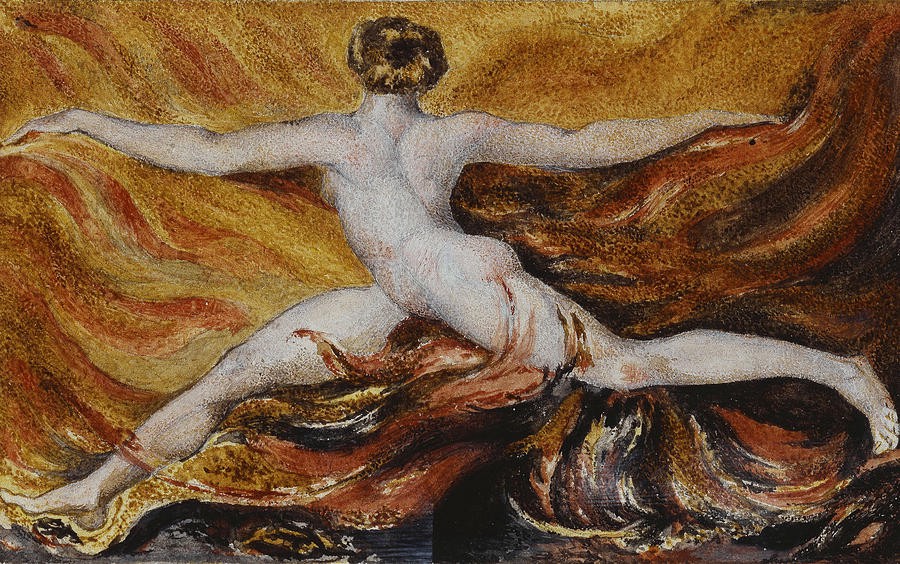




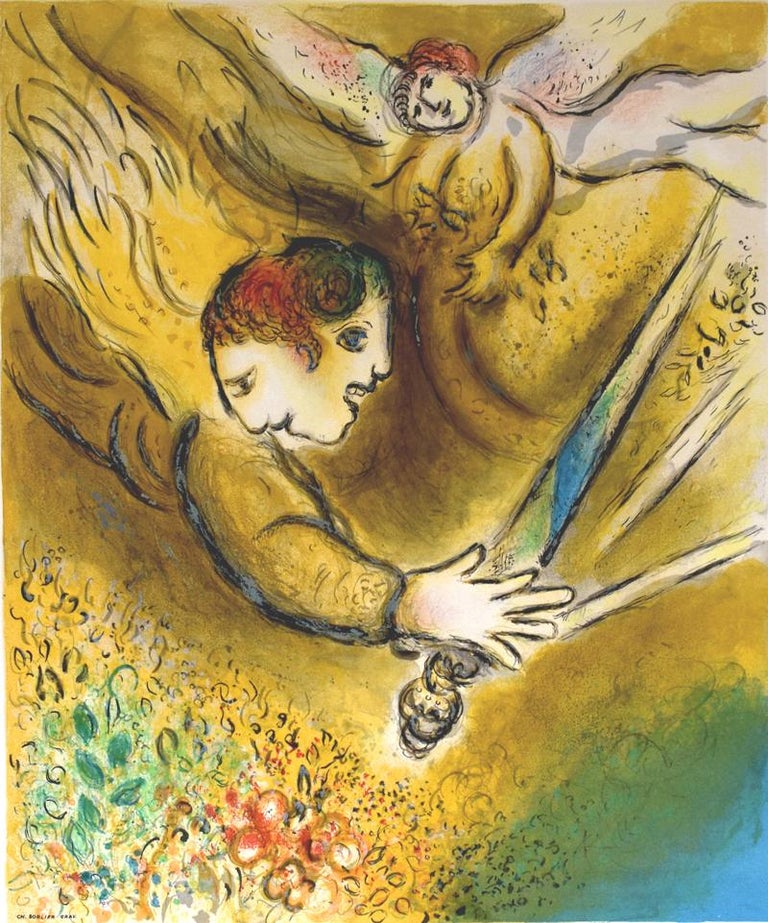

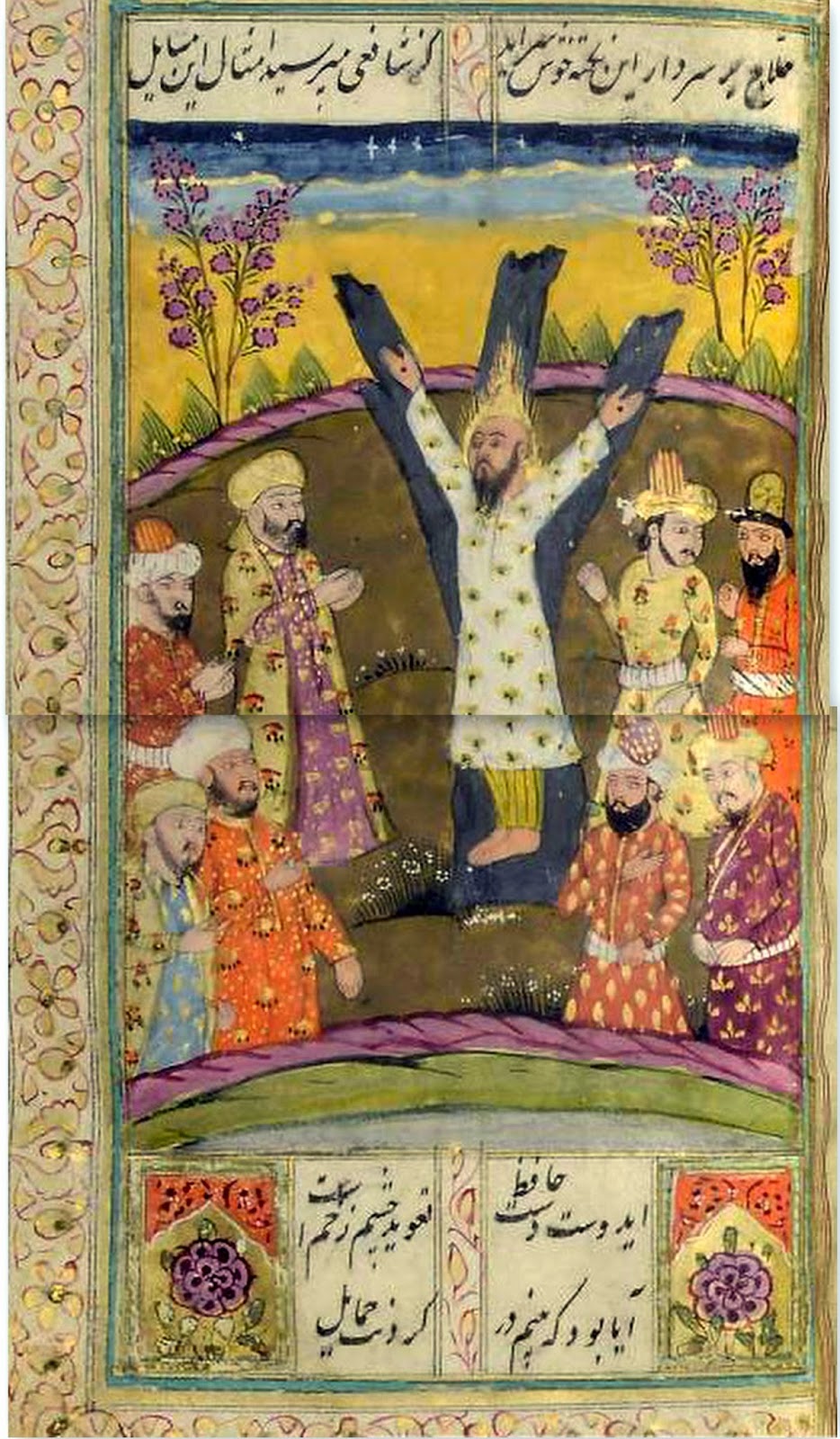







Vous devez être connecté pour poster un commentaire.