Man is an « intermediary being » between the mortal and the immortal, says Plato. This enigmatic phrase, rather inaudible to modern people, can be understood in several senses,.
One of these is the following. « Intermediary » means that man is in constant motion. He goes up and down, in the same breath. He ascends towards ideas that he does not really understand, and he descends towards matter that he does not understand at all. Inhaling, exhaling. Systole of the spirit, diastole of the soul.
Ancient words still testify to these outward movements of the soul. « Ecstasy », from the Greek ἒκστασις (ekstasis), means firstly « coming out of oneself ». The spirit comes out of the body, and then it is caught up in a movement that takes it beyond the world.
Ekstasis is the opposite of stasis, ‘contemplation’, — which is immobile, stable, and which Aristotle called θεωρία (theoria). The meaning of θεωρία as ‘contemplation, consideration’ is rather late, since it only appears with Plato and Aristotle. Later, in Hellenistic Greek, this word took on the meaning of ‘theory, speculation’ as opposed to ‘practice’.
But originally, θεωρία meant ‘sending delegates to a religious festival, religious embassy, being a theorist’. The ‘theorist’ was the person going on a trip to consult the oracle, or to attend a religious festival. A ‘theory’ was a religious delegation going to a holy place.
The words ekstasis and theoria have something in common, a certain movement towards the divine. Ekstasis is an exit from the body. Theoria is a journey out of the homeland, to visit the oracle of Delphi.
These are images of the free movement of the soul, in the vertical or horizontal direction. Unlike the theoria, which is a journey in the true sense of the word, ekstasis takes the form of a thought in movement outside the body, crossed by lightning and dazzle, always aware of its weakness, its powerlessness, in an experience which goes far beyond its capacities, and which it knows it has little chance of really grasping, few means of fixing it and sharing it on its return.
The word ekstasis seems to keep the trace of a kind of experience that is difficult to understand for those who have not lived it. When the soul moves to higher lands, generally inaccessible, it encounters phenomena quite different from those of the usual life, life on earth. Above all, it runs an infinitely fast race, in pursuit of something that is constantly ahead of it, that draws it ever further away, to an ever-changing elsewhere, which probably stands at an infinite distance.
Human life cannot know the end of this race. The soul, at least the one that is given the experience of ekstasis, can nevertheless intuitively grasp the possibility of a perpetual search, a striking race towards an elusive reality.
In his commentaries on the experience of ecstasyi, Philo considers that Moses, despite what his famous visionii, reported in the Bible, did not actually have access to a complete understanding of the divine powers.
But Jeremiah, on the other hand, would testify to a much greater penetration of these powers, according to Philo. However, despite all his talent, Philo has difficulty in consolidating this delicate thesis. The texts are difficult and resistant to interpretation.
Philo cautiously suggests extrapolating certain lines from Jeremiah’s text to make it an indication of what may have been an ecstasy. « This is how the word of God was addressed to Jeremiah”iii. This is rather thin, admittedly. But another line allows us to guess God’s hold, God’s domination over Jeremiah: « Dominated by your power, I have lived in isolation »iv.
Other prophets have also declared to have lived in ecstasy, using other metaphors. Ezekiel, for example, says that « the hand of God came »v upon him, or that the spirit « prevailed »vi.
When the ecstasy is at its height, the hand of God weighs more than usual: « And the spirit lifted me up and carried me away, and I went away sad, in the exaltation of my spirit, and the hand of the Lord weighed heavily on me.”vii
In a cynical, materialistic and disillusioned time, like our time, one cannot be content with just words, even prophetic ones, to interest the reader. Facts, experiments, science, rationality are needed.
Let’s start with a ‘technical’ definition of ecstasy according to the CNRTL :
« A particular state in which a person, finding herself as if transported out of herself, is removed from the modalities of the sensible world by discovering through a kind of illumination certain revelations of the intelligible world, or by participating in the experience of an identification, of a union with a transcendent, essential reality. »
This definition evokes enlightenment, identification or union with transcendental realities. This vocabulary is hardly less obscure than the biblical expressions ‘dominion by power’, or ‘hand of God’.
Moreover, this definition cautiously employs what appears to be a series of euphemisms: ‘to be as if transported’, ‘to be removed from the sensitive world’, ‘to discover a kind of enlightenment’, ‘to participate in an experience’.
If we return to the memories of ecstasy bequeathed to us by the prophets, the true ‘experience’ of ecstasy seems infinitely more dynamic, more overwhelming, ‘dominated’ by the immediate, irrefutable intuition of an infinite, transcendent ‘power’.
Bergson, a true modernist, if ever there was one, and philosopher of movement, paradoxically gives a rather static image of ecstasy: « The soul ceases to turn on itself (…). It stops, as if it were listening to a voice calling out to it. (…) Then comes an immensity of joy, an ecstasy in which it is absorbed or a rapture it experiences: God is there, and it is in him. No more mystery. Problems fade away, obscurities dissipate; it is an illumination.”viii
Can ecstasy only be associated with a moment when the soul ‘stops’, when it ‘stops spinning’? Is it not rather carried away without recourse by a fiery power, which suddenly sweeps away all certainty, all security? Bergson certainly falls far short of any essential understanding of ecstasy, perhaps because he has never experienced one.
Who will report today in audible words, in palpable images, the infinite and gentle violence of ecstasy? Who will say in raw terms the light that invades the intelligence, as in love the whole body? Who will explain the narrow bank from which the pulse of death is measured? Who will tell us how to kiss the lips of infinity? Who will grasp in one stroke the face of which time is but a slice, and the world, but a shadow?
The first kind of nudity: the head uncovered, the face unveiled, or the body dressed in torn clothing.
Moses said to Aaron, and to Eleazar and Ithamar his sons: « Do not uncover your heads or tear your clothes, unless you want to die and bring divine wrath upon the whole community. « (Lev. 10:6)
In this episode, sadness and mourning take hold of Aaron and his sons because a divine fire has just fatally burned two other sons. But Moses does not allow them to express their sorrow in the agreed forms (uncovered head, torn clothes).
In another episode, it is the unveiled face of Abraham’s wife that poses a problem, not as such, but because it arouses the Pharaoh’s desire, and incites Abraham to lie to him about his wife whom he presents as his sister.
« When he was about to arrive in Egypt, he said to Sarai his wife: « I know that you are a woman with a gracious face. It will happen that when the Egyptians see you, they will say, ‘This is his wife’, and they will kill me and keep you alive. « (Gen. 12:11-12)
Second kind of nudity: that of the drunk man, who does not have his full conscience. Thus Noah: « He drank of his wine and became drunk, and laid himself bare in the midst of his tent. Ham, the father of Canaan, saw his father’s nakedness and went outside to tell his two brothers. « (Gen. 9:21-22)
Third kind of nudity, the proud nudity of Adam and Eve in the Garden of Eden. « Now they were both naked, the man and his wife, and they were not ashamed. « (Gen. 2:25).
The fourth kind of nakedness is that of the shameful body. « And the LORD God called the man and said to him, « Where are you? » He answered, « I heard your voice in the garden; I was afraid, because I am naked, and I hid myself. » Then he said, « Who told you that you were naked? » (Gen. 3:9-11)
These different sort of nakedness can be interpreted, it seems to me, as various allegories of the Mystery, as various ways of being confronted with it, partially or totally, seeing it without understanding it, or somewhat understanding it, but then being excluded from it.
Not everyone is allowed to “see” the mysteries of heaven and earth. There are several levels of unveiling, reserved for those who have the capacity to face them face to face, according to their own merits.
“Seeing” the nakedness of the mystery is in principle excluded. But there are cases where this is more or less possible, with certain consequences.
If the mystery is laid bare, if it is looked at without a veil, without precaution, this implies taking risks.
The first kind of nudity is an image of the risk taken. Uncovering one’s head or tearing off one’s clothes against time, like Aaron did, can arouse divine anger.
Noah’s nakedness is another parable. One is sometimes led to surreptitiously discover a hidden aspect of the Mystery. Ham accidentally saw his father’s nudity (nudity which is admittedly a figure, a metaphor, of the Mystery). Ham will be punished above all for having immediately ‘revealed’ it to his brothers Shem and Japheth instead of having taken the necessary measures (covering the nudity, protecting the nakedness of the Mystery). It was the latter brothers who then carefully covered it, walking backwards and turning their face, not taking any glance at the scene.
They were to be rewarded later on for having preserved the invisible aura of the Mystery.
The third nudity, the happy nudity of Adam and Eve, is that of the origin. One may see the entire Mystery, without any veil, but the paradox is that one is not aware of its real nature. The whole Mystery is fully disclosed, but everything happens as if there was no awareness of it, as if there was nothing special to see, to understand, as is there was nothing mysterious in fact. Trap of the visible. Laces of un-exercised intelligence. Adam and Eve do not “see” and even less understand the Mystery that surrounds them, and they are not even aware of their own mystery, the mystery of their existence, their own consciousness. The Mystery is present in them, around them, but they know nothing of it.
The fourth kind of nudity is shameful nudity. Adam finally knows and sees his own nakedness as it is. The mystery is revealed to the consciousness. The consciousness has knowledge of the existence of the Mystery, but to no avail. The presence of the Mystery is immediately covered, buried in the unconscious, by the consciousness.
Four kind of nudity, four ways of perceiving the Mystery, and four ways blinding oneself to its true nature.
The biblical nudity carries four lessons about the veil and its unveiling.
One has to make an effort to understand the true nature, the true nudity, the true essence of the Mystery.
The Greek word logos means « reason » or « discourse, speech ».
In Plato’s philosophy, the Logos is the Principle and the Word. It is also the Whole of all the Intelligible, as well as the link between the divine powers, and what founds their unity. Finally, it is the « intermediary » between man and God.
For Philo of Alexandria, a Neo-Platonist Jew, the Logos takes two forms. In God, the Logos is the divine Intelligence, the Eternal Thought, the Thoughtful Thought. In its second form, the Logos resides in the world, it is the Thought in action, the Thought realized outside God.
Written shortly after Philo’s active years, the Gospel of John says that « in the beginning » there was the Logos who was God, and the Logos who was with God i. There was also the Logos who was made fleshii.
Does this mean that there are three instances of the Logos? The Logos who is God, the Logos who is with Him and the Logos who became flesh?
In Christian theology, there is only one Logos. Yet the three divine ‘instances’ of the Logos quoted by John have also been personified as Father, Son, Spirit.
For the structuralist philosopher, it is possible to sum up these difficult theses in a pragmatic way. The Logos comes in three forms or aspects: Being, Thinking, Speaking. That what is, that what thinks and that what speaks. These three forms are, moreover, fundamental states, from which everything derives, and with which anybody can find an analogy pointing to the fundamental human condition (existence, intelligence, expression).
Philo, who is both a Jew and a Neoplatonist, goes quite far with the theory of the Logos, despite the inherent difficulty of reconciling the unity of God and the multiplication of His ‘instances’ (that the Kabbalah, much later on, called ‘sefirot‘). For Philo, the Logos is the totality of God’s Ideas. These Ideas act “like seals, which when approached to the wax produce countless imprints without being affected in any way, always remaining the same.”iii
All things that exist in the universe derive from an Idea, a « seal ». The Logos is the general seal whose imprint is the entire universe.iv
Philo’s Logos is not « personified ». The Logos is the Organ of God (both His Reason and His Word) playing a role in the Creation. Philo multiplies metaphors, analogies, drawing from divine, human and natural images. The Logos is creation, engendering, speech, conception, or flow, radiation, dilatation. Using a political image, God « reigns », the Logos « governs ».
Philo’s thinking about the Logos is complex and confusing. A 19th century commentator judged that « a tremendous confusion is at the basis of Philo’s system »v. Allegedly, Philo seems to mix up Logos (Word), Pneuma (Spirit), Sophia (Wisdom) and Epistemus (Knowledge).
Wisdom seems to play the same role in relation to the Logos as the thinking Thought (Spirit) of God plays in relation to the world of the Intelligible. Wisdom is the deep source of this world of the Intelligible, and at the same time it is identical with it.
There is no logical quirk in this paradox. Everything comes from the nature of the divine Spirit, in which no distinction can be made between « container » and « content ».
The Logos is thus both the Author of the Law and the Law itself, the spirit and the letter of its content. The Logos is the Law, and the Logos is also its enunciator, its revelator.vi
The Logos is, in the universe, the Divine brought back to unity. He is also the intermediary between this unity and God. Everything which constitutes the Logos is divine, and everything which is divine, apart from the essence of God, is the Logos.
These ideas, as has been said, have been sometimes described as a « philosophical hodgepodge »; they seem to demonstrate a « lack of rigor »vii on the part of Philo, according to certain harsh judgments.
However, what strikes me is that Philo and John, at about the same historical period, the one immediately preceding the destruction of the Second Temple of Jerusalem, and independently of each other, specified the contours of a theophany of the Logos, with clear differences but also deep common structures.
What is even more striking is that, over the centuries, the Logos of the Stoics, the Platonic Noos, the Biblical Angel of the Eternal, the Word of YHVH, the Judeo-Alexandrine Logos, or the ‘Word made flesh‘, the Messiah of the first Christian Church, have succeeded one another. All these figures offer their analogies and differences.
As already said, the main difficulty, however, for a thinker like Philo, was to reconcile the fundamental unity of God, the founding dogma of Judaism, and His multiple, divine emanations, such as the Law (the Torah), or His Wisdom (Hokhma).
On a more philosophical level, the difficulty was to think a Thought that exists as a Being, that also unfolds as a living, free, creative entity, and that finally ´reveals´ herself as the Word — in the world.
There would certainly be an easy (negative) solution to this problem, a solution that « modern » and « nominalist » thinkers, cut off from these philosophical roots, would willingly employ: it would be to simply send the Logos and the Noos, the Angel and the incarnate Wisdom, the Torah and the Gospel back into the dustbin of empty abstractions, of idealistic chimera.
I do not opt for such an easy solution. It seems to me contrary to all the clues accumulated by History.
I believe that the Spirit, as it manifests itself at a very modest level in each one of us, does not come from biochemical mechanisms, from synaptic connections. I believe it is precisely the opposite.
Our brain multiplies cellular and neuronal networks, in order to try to grasp, to capture at our own level, what the Spirit can let us see of its true, inner nature, its fundamental essence.
The brain, the human body, the peoples of different nations and, as such, the whole of humanity are, in their own unique way, immense collective ´antennae´, whose primary mission is to capture the diffuse signs of a creative Intelligence, and build a consciousness out of it.
The greatest human geniuses do not find their founding ideas at the unexpected crossroads of a few synapses, or thanks to haphazard ionic exchanges. Rather, they are « inspired » by a web of thoughtful Thoughts, in which all living things have been immersed since the beginning.
As a clue, I propose this image : When I think, I think that I am; then I think that this thought is part of a Thought that lives, and endless becomes; and I think of this Thought, which never stops thinking, never ceases to think, eternally, the Thought that continues « to be », and that never stops being without thinking, and that never stops thinking without being.
Can God have an ‘image’ or a ‘shadow’? According to the Torah, the answer to this question is doubly positive. The idea that God can have an ‘image’ is recorded in Genesis. The text associates ‘image’ (‘tselem‘) and ‘likeness’ (‘demut‘) with Genesis 1:26: בְּצַלְמֵנוּ כִּדְמוּתֵנוּ , b-tsalmenou ki-demutenou (‘in our image and likeness’), and repeats the word ‘image’ in Genesis 1:27 in two other ways: בְּצַלְמוֹ b-tsalmou (‘in his image’) and בְּצֶם אֱלֹהִים b-tselem elohim (‘in the image of Elohim’).
As for the fact that God may also have a ‘shadow’, this is alluded to in a verse from Exodusi, which quotes the name Betsalel, which literally means ‘in the shadow of God’1. The word צֵל tsel means ‘shadow’. This word has the same root as the word צֶלֶם tselem, which we have just seen means ‘image’. Moreover, tselem also has as its primary meaning: ‘shadow, darkness’, as in this verse: ‘Yes, man walks in darkness’, or ‘he passes like a shadow’ii.
One could therefore, theoretically, question the usual translation of Gen 1:26, and translate it as follows: « Let us make man in our shadow », or « in our darkness ». What is important here is, above all, to see that in Hebrew ‘image’, ‘shadow’ and ‘darkness’ have the same root (צֵל ).
This lexical fact seems highly significant, and when these words are used in relation to God, it is obvious that they cry out: « Interpret us! ».
Philo, the Jewish and Hellenophone philosopher from Alexandria, proposes this interpretation: « The shadow of God is the Logos. Just as God is the model of His image, which is here called shadow, so the image becomes the model of other things, as is showed at the beginning of the Law (Gen. 1:27) (…) The image was reproduced after God and man after the image, who thus took the role of model.”iii
Philo, through the use of the Greek word logos, through the role of mediator and model that the Logos plays between God and man, seems to prefigure in some way the Christian thesis of the existence of the divine Logos, as introduced by John: « In the beginning was the Logos, and the Logos was with God, and the Logos was God.”iv
Man is therefore only the shadow of a shadow, the image of an image, or the dream of a dream. For the word shadow can evoke a dream, according to Philo. He quotes the verse: « God will make himself known to him in a vision, that is, in a shadow, and not in all light » (Num. 12:6).
In the original Hebrew of this verse, we read not ‘shadow’ (tsal), but ‘dream’ (halom). Philo, in his commentary, therefore changed the word ‘dream’ for ‘shadow’. But what is important for us is that Philo establishes that the words ‘vision’, ‘dream’ and ‘shadow’ have similar connotations.
The text, a little further on, reveals a clear opposition between these words (‘vision’, ‘dream’) and the words ‘face-to-face’, ‘appearance’, ‘without riddles’, and ‘image’.
« Listen carefully to my words. If he were only your prophet, I, the Lord, would manifest myself to him in a vision, I would speak with him in a dream. But no: Moses is my servant; he is the most devoted of all my household. I speak to him face to face, in a clear apparition and without riddles; it is the very image of God that he contemplates. Why then were you not afraid to speak against my servant, against Moses? » v
God manifests Himself to a simple prophet in ambiguous and fragile ways, through a vision (ba-mar’ah בַבַּמַּרְאָה ) or a dream (ba–halom בַּחֲלוֹם ).
But to Moses, God appears ‘face to face’ (pêh el-pêh), ‘in a clear appearance and without riddles’ (v-mar’êh v-lo b-hidot וּמַרְאֶה וְלֹא בְחִידֹת ). In short, Moses contemplates ‘the image of God himself’ (temounah תְּמוּנָה).
Note here the curious repetition of the word mar’ah מַּרְאָה, ‘vision’, with a complete change in its meaning from negative to positive… God says in verse 6: « If he were only your prophet, I, the Lord, would manifest Myself to him in a vision (ba-mar’ah בַּמַּרְאָה ) ». And it is the same word (מַרְאֶה), with another vocalization, which he uses in verse 8: « I speak to him face to face, in a clear apparition (ou-mar’êh וּמַרְאֶה ) ». The online version of Sefarim translates the same word as ‘vision’ in verse 6 and ‘clear appearance’ in verse 8. The ‘vision’ is reserved for the simple prophets, and the ‘clear appearance’ for Moses.
How can this be explained?
Verse 6 says: ba-mar’ah, ‘in a vision’. Verse 8 says: ou-mar’eh, ‘and a vision’. In the first case God manifests himself ‘in‘ a vision. In the second case, God speaks with Moses, not ‘through’ a vision, but making Himself as « a vision ».
Moses has the great privilege of seeing God face to face, he sees the image of God. This image is not simply an image, or a ‘shadow’, because it ‘speaks’, and it is the very Logos of God, according to Philo.
Rashi is somewhat consistent with Philo’s point of view, it seems to me. He comments on this delicate passage as follows: « A vision and not in riddles. ‘Vision’ here means ‘clarity of speech’. I explain my words clearly to him and I don’t hide them in riddles like the ones Ye’hezqèl talks about: ‘Propose a riddle…’. (Ye’hezqèl 17, 2). I might have thought that the ‘vision’ is that of the shekhina. So it is written: ‘You cannot see my face’ (Shemoth 33:20) (Sifri). And he will contemplate the image of Hashem. It is the vision from behind, as it is written: ‘You will see me from behind’ (Shimot 33:23) (Sifri). »
If God only manifests Himself ‘in a vision’, it is because He does not ‘speak’. The important thing is not the vision, the image or the shadow of God, but His word, His Logos, the fact that God « speaks ». Read: פֶּה אֶל-פֶּה אֲדַבֶ-בּוֹ, וּמַרְאֶה pêh al-pêh adaber bo, ou-mar’êh: ‘I speak to him face to face, – a vision’.
It is necessary to understand: ‘I speak to him and I make him see clearly my word (my Logos, my Dabar)’…
Philo, a Hellenophone, probably gives the word Logos some Platonic connotations, which are not a priori present in the Hebrew word Dabar (דָּבָר). But Philo makes the strong gesture of identifying the Logos, the Image (of God) and Dabar.
Philo is also a contemporary of Jesus, whom his disciple John will call a few years later Logos and « Image » of God.
Between the Dabar of Moses and the Logos as Philo, John and Rashi understand it, how can we not see continuities and differences?
The Spirit (or the Word) is more or less incarnated. As in the ‘image’ and the ‘clear appearance’ of the Logos. Or as in being the Logos itself.
____
1In Hebrew, tsal means « shadow » and Tsalel : « shadow of God »
The Descent from Mount Sinai, by Cosimo Rosselli, the Sistine Chapel, Rome
Under Tiberius, in the year 16, soothsayers, astrologers and magi were expelled from Italy. Divination had become a capital crime that one would pay with one’s life. A new millennium had begun, but no one suspected it. Times were changing faster than people’s minds. And the Roman religion had to defend itself foot to foot against barbaric ideas from elsewhere.
Long gone was then the time of Moses, who saw in the light what thought could not embrace. Long gone, the time of the prophets, who received dreams and visions, images and words.
Long gone also, was the time of the Chaldean magi and the Avestic and Vedic priests. Possessed of a divine madness, they could, it is said, predict the future by their power of enthusiasm, their capacity for ecstasy.
The words ‘enthusiasm’ and ‘ecstasy’ translate by means of Greek words and roots experiences of a probably universal nature. But do these words adequately reflect the variety of ‘visions’ and the diversity of ‘seers’ throughout the world and throughout history? How can this be ascertained? How can we organize the timeless archaeology of enthusiasm, launch the worldwide excavations of the ecstatic states?
When the divine penetrates the human, it overturns all that is known, all that is acquired, all that can be expressed, all that can be dictated. Everything is overturned, but it also seems that the mind receives, if we believe the testimonies, a capacity for understanding, comprehension and conviction, without any possible comparison. The prophet ‘hears’ or ‘sees’ in an instant thoughts which he considers ‘divine’ but which he makes his own, and to a certain extent he can communicate them to others and find attentive ears. This is where the true prophet is revealed.
After God breathed thoughts and laws into Moses’ mind, Moses in turn repeated them to Aaron. This double operation (first through divine breath, then through human speech) can be understood as an allegory. Moses is above all God’s interpreter. Firstly, he represents His Intelligence, then His Word. The Intelligence first grasps Moses entirely. What can be said of this? The texts are opaque, difficult to interpret. As for the Word that Moses repeated to Aaron, it represented the prophetic act itself, the decisive leap out of the sanctuary of ecstasy into freedom.
Free, the prophet is also bound, from above and below, – bound to heaven by Intelligence, bound to earth by the Word. Philo sums up: « The soul has an earthly base, but it has its summit in pure Intelligence.”i
For my part, I would add that the most important thing is not in fact to be found in Intelligence, which assails the soul entirely and subjugates it, nor in the Word, whose task is to give meaning to the unspeakable and then bring the worlds together.
What is really important, for the rest of the ages, and for its truly unspeakable implications, is the absolute freedom of the soul (here the soul of Moses) which has been able to free itself from ecstasy, then to transcend the innumerable constraints of the human word, and finally to launch a bridge over unfathomable chasms.
The sun was created on the fourth day of Genesis. Before the sun was created, what did the first « mornings » and « evenings » look like? In what sense was a “dawn” without a morning sunbeam? An “evening” without twilight?
Genesis speaks of « evenings » and « mornings »i, but not of « nights », except at the very beginning. « God called the light Day, and the darkness he called Night. And there was evening and there was morning, one day.”ii
Why? Perhaps to suggest that the « Night » cannot be entirely given over to « Darkness ». Or because the Night, being absolutely devoid of any « light », cannot have an existence of its own. Nights = Darkness = Nothingness?
There is another possibility. The Night does exist, but the angels of light cannot have « knowledge » of it. Being made of light, they are incompatible with night. Therefore they cannot talk about it, let alone pass on its existence to posterity.
This is the reason why one passes, immediately, from evening to morning. « There was an evening, there was a morning”iii.
Another question arises, that of the nature of the « day ». Since the sun had not yet been created, perhaps we should imagine that « day » implied another source of light, for example an « intelligible light », or metaphorically, the presence of « angels of light », as opposed to « night », which would shelter the « angels of darkness »?
In any case, before the sun was born, there were three days – three mornings and three evenings – that benefited from a non-solar light and a quality of shadow that was intermediate and not at all nocturnal.
When the angels « knew » the creation (waters, heavens, lands, seas, trees, grasses…) in the first three days, they did not « see » it, nor did they get attached to it. They would have run the risk of sinking into the darkness of the night, which they did not « see », and for good reason.
In those evenings and mornings, they could also « know » the light of the spirit.
Only the “night angels” could remain in the night, this “night” which Genesis avoids naming six timesiv.
Nothing can be said about this night and this occultation of the spirit. Besides, the Bible does not even mention the word itself, as has already been said.
What is certain is that during the first three days there were no lights other than those of the spirit. Nor were there any nights other than those of the spirit.
During these three days and nights, creation received the original, founding memory of this pure light and this deep darkness.
We can also derive these words (mornings, evenings, days, nights) into other metaphors: the « mornings » of consciousness, the « nights » of the soul, – as S. Augustine who wrote about the « knowledge of the morning » and the « knowledge of the evening »v.
S. Thomas Aquinas also took up these expressions and applied them to the « knowledge of the angel »: « And as in a normal day morning is the beginning of the day, and evening is the end of the day, [St. Augustine] calls morning knowledge the knowledge of the primordial being of things, a knowledge which relates to things according to the way they are in the Word; whereas he calls evening knowledge the knowledge of the created being as existing in its own nature.” vi
Philosophically, according to Thomistic interpretation, ‘morning’ is a figurative way of designating the principle of things, their essential idea, their form. And the « evening » then represents what follows from this essence subjected to the vicissitudes of existence, which results from the interaction of the principle, the idea, the form, with the world, reality or matter.
“Morning knowledge” is a knowledge of the primordial being of things, a knowledge of their essence. “Evening knowledge” represents the knowledge of things as they exist in their own nature, in the consciousness of themselves.
Let us take an example. A tiger, an eagle or a tuna, live their own lives, in the forest, the sky or the sea. Perhaps one day we will be able to write about the unique experience of a particular tiger, a particular eagle or a particular tuna. We will have taken care to arm them with sensors from their birth, and to scrupulously record all the biological data and their encephalograms every millisecond of their existence. In a sense, we will be able to « know » their entire history with a luxury of detail. But what does « knowing » mean in this context? Over time, we will surely acquire the essence of their vision of the world, their grammars, their vocabularies, as a result of systematic, tedious and scholarly work. But will we ever discover the Dasein of a particular animal, the being of this tiger, this tuna or this eagle?
Since Plato, there has been this idea that the idea of the animal exists from all eternity, but also the idea of the lion, the idea of the dove or the idea of the oyster.
How can we effectively perceive and know the essence of the tiger, the tigerness? The life of a special tiger does not cover all the life possibilities of the animals of the genus Panthera of the Felidae family. In a sense, the special tiger represents a case in point. But in another sense, the individual remains enclosed in its singularity. It can never have lived the total sum of all the experiences of its congeners of all times past and future. It sums up the species, in one way, and it is overwhelmed on all sides by the infinity of possibilities, in another way.
To access the « morning knowledge », one must be able to penetrate the world of essences, of paradigms, of « Logos« . This is not given to everyone.
To access the « evening knowledge », one must be ready to dive into the deep night of creatures. It is not given to everyone either, because one cannot remain there without damage. This is why one must « immediately » arrive in the morning. S. Augustine comments: « But immediately there is a morning (as is true for each of the six days), for the knowledge of the angels does not remain in the ‘created’, but immediately brings it [the created] to the glory and love of the One in whom the creature is known, not as something done, but to be done.”vii
We can see that there are in fact three kinds of knowledge: diurnal knowledge, vesperal knowledge and morning knowledge.
The diurnal knowledge here is that of daylight, but one has yet to further distinguish between a daylight without the “sun” (like in the first three days of Creation), and a daylight bathing in sunlight.
As for the difference between vesperal and matutinal knowledge, it is the same as the difference between knowledge of things already done and knowledge of things yet to be accomplished.
.
iGn 1,5. Gn 1,8. Gn 1,13. Gn 1,19. Gn 1,23. Gn 1,31
According to Genesis, taken literally, man was created twice.
Genesis, in chapter 1, describes a first creation of « man » called ha-adam. The word ha-adam includes the definite article ha and literally means « the earth », metaphorically « the red » (for the earth is red), and by extension « man ».
In Chapter 2, Genesis describes a second creation of man (ish), accompanied by a creation of woman (isha). These two words are not preceded by the article ha.
The most immediately noticeable differences between the two creations are as follows.
First of all, the names given to the man differ, as we have just seen: ha-adam on the one hand, ish and isha on the other.
Secondly, the verbs used to describe the act of creation are not the same. In the first chapter of Genesis we read: « God said, ‘Let us make man in our image, in our likeness' » (Gen. 1:26). The Hebrew word for ‘let us make’ is נַעֲשֶׂה from the verb עֲשֶׂה, ‘asah, to do, to act, to work. In the second chapter of Genesis we read: « And the Eternal God planted a garden in Eden toward the east, and there he placed the man whom he had fashioned. « (Gen. 2:8) The Hebrew word for ‘fashioning’ is יָצָר , yatsara, to make, to form, to create.
Thirdly, in Genesis 1, God created man « male and female » (zakhar and nqebah). Man is apparently united in a kind of bi-sexual indifferentiation or created with « two faces », according to Rashi.
In contrast, in Genesis 2, the creation of woman is clearly differentiated. She is created in a specific way and receives the name ‘isha‘, which is given to her by the man. The man, ‘ha-adam‘, then calls himself ‘ish‘, and he calls his wife ‘isha‘, « because she was taken from ‘ish‘ ».
Rashi comments on this verse: « She shall be called isha, because she was taken from ish. Isha (‘woman’) is derived from ish (‘man’). From here we learn that the world was created with the holy language, [since only the Hebrew language connects the words ‘man’ and ‘woman’ with a common root]. (Berechith raba 18, 4).”
I don’t know if it can be said with impunity that only the Hebrew language connects the words « man » and « woman » to a common root. English, for example, displays such a link with « man » and « woman ». In Latin, « femina » (woman) would be the feminine counterpart of « homo » (« hemna« ).
But this is a secondary issue. However, it shows that Rashi’s interest is certainly not exercised here on the problem of double creation and on the triple difference between the stories of Genesis 1 and Genesis 2: two nouns (adam/ish), two verbs to describe creation (‘asah/yatsara), and two ways of evoking the difference between genders, in the form ‘male and female’ (zakhar/nqebah) and in the form ‘man and woman’ (ish/isha).
The double narrative of the creation of man and woman could be interpreted as the result of writing by independent authors at different times. These various versions were later collated to form the text of Genesis, which we have at our disposal, and which is traditionally attributed to Moses.
What is important here is not so much the identity of the writers as the possible interpretation of the differences between the two stories.
The two ‘ways’ of creating man are rendered, as has been said, by two Hebrew words, עֲשֶׂה ‘to make’ and יָצָר ‘to form’. What does this difference in vocabulary indicate?
The verb עֲשֶׂה ‘asah (to do) has a range of meanings that help to characterize it more precisely: to prepare, to arrange, to take care of, to establish, to institute, to accomplish, to practice, to observe. These verbs evoke a general idea of realization, accomplishment, with a nuance of perfection.
The verb יָצָר yatsara (to shape, to form) has a second, intransitive meaning: to be narrow, tight, embarrassed, afraid, tormented. It evokes an idea of constraint, that which could be imposed by a form applied to a malleable material.
By relying on lexicon and semantics, one can attempt a symbolic explanation. The first verb (עֲשֶׂה , to do) seems to translate God’s point of view when he created man. He « makes » man, as if he was in his mind a finished, perfect, accomplished idea. The second verb (יָצָר , to form) rather translates, by contrast, the point of view of man receiving the « form » given to him, with all that this implies in terms of constraints, constrictions and limits.
If we venture into a more philosophical terrain, chapter 1 of Genesis seems to present the creation of man as ‘essence’, or in a ‘latent’ form, still ‘hidden’ to some extent in the secret of nature.
Later, when the time came, man also appears to have been created as an existential, natural, visible, and clearly sexually differentiated reality, as chapter 2 reports.
S. Augustine devoted Part VI of his book, Genesisin the literal sense, to this difficult question. He proposes to consider that God first created all things ‘simultaneously’, as it is written: ‘He who lives for eternity created everything at the same time. « (Ecclesiasticus, 18,1) The Vulgate version says: « inaeternum, creavit omnia simul« . This word ‘simul‘ seems to mean a ‘simultaneous’ creation of all things.
It should be noted in passing that neither Jews nor Protestants consider this book of Ecclesiasticus (also called Sirach) to belong to the biblical canon.
For its part, the Septuagint translates from Hebrew into Greek this verse from Ecclesiasticus: » o zon eis ton aiôna ektisen ta panta koinè « . (« He who lives for eternity has created everything together. »)
This is another interpretation.
So shall we retain ‘together’ (as the Greek koinè says) or ‘simultaneously’ (according to the Latin simul)? It could be said that it amounts to the same thing. However it follows from this difference that Augustine’s quotation from Sirach 18:1 is debatable, especially when it is used to distinguish between the creation of man in chapter 1 of Genesis and his second creation in chapter 2.
According to Augustine, God in the beginning created all things ‘in their causes’, or ‘in potency’. In other words, God in chapter 1 creates the idea, essence or principle of all things and everything in nature, including man. « If I say that man in that first creation where God created all things simultaneously, not only was he not a man in the perfection of adulthood, but was not even a child, – not only was he not a child, but was not even an embryo in his mother’s womb, but was not even the visible seed of man, it will be believed that he was nothing at all.”
Augustine then asks: what were Adam and Eve like at the time of the first creation? « I will answer: invisibly, potentially, in their causes, as future things are made that are not yet.”
Augustine takes the side of the thesis of the double creation of man, firstly in his ‘causal reason’, ‘in potency’, and secondly, ‘in act’, in an effective ‘existence’ which is prolonged throughout history.
This is also true of the soul of every man. The soul is not created before the body, but after it. It does not pre-exist it. When it is created, it is created as a ‘living soul’. It is only in a second stage that this ‘living soul’ may (or may not) become ‘life-giving spirit’.
Augustine quotes Paul on this subject: « If there is an animal body, there is also a spiritual body. It is in this sense that it is written: The first man, Adam, was made a living soul, the last Adam, the ‘newest Adam’ (novissimusAdam), was a life-giving spirit. But it is not what is spiritual that was made first, it is what is animal; what is spiritual comes next. The first man, who came from the earth, is earthly; the second man, who came from heaven, is heavenly. Such is the earthly, such are also the earthly; and such is the heavenly, such are also the heavenly. And just as we have put on the image of the earthly, so shall we also put on the image of him who is of heaven.”
And Augustine adds: « What more can I say? We therefore bear the image of the heavenly man from now on by faith, sure that we will obtain in the resurrection what we believe: as for the image of the earthly man, we have clothed it from the origin of the human race. »
This basically amounts to suggesting the hypothesis of a third ‘creation’ that could affect man: after adam, ish or isha, there is the ‘last Adam‘, man as ‘life-giving spirit’.
From all of this, we will retain a real intuition of the possible metamorphoses of man, certainly not reduced to a fixed form, but called upon to considerably surpass himself.
It is interesting, at this point, to note that Philo of Alexandria offers a very different explanation of the double creation.
Philo explains that in the beginning God « places » (וַיָּשֶׂם שָׁם ) in the Garden of Eden a « fashioned » man (‘The Eternal God planted a garden in Eden towards the east and placed the man he had fashioned in it’). Gen. 2:8). A little later he ‘established’ (וַיַּנִּח ) a man to be the worker and the guardian (‘The Eternal-God therefore took the man and established him in the Garden of Eden to cultivate and care for it’. Gen. 2:15).
According to Philo, the man who cultivates the garden and cares for it is not the « fashioned » man, but « the man [that God] has made« . And Philo says: « [God] receives this one, but drives out the other.”i
Philo had already made a distinction between the heavenly man and the earthly man, by the same verbal means. « The heavenly man was not fashioned, but made in the image of God, and the earthly man is a being fashioned, but not begotten by the Maker.”ii
If we follow Philo, we must understand that God drove the ‘fashioned‘ man out of the garden, after having placed him there, and then established the ‘made‘ man there. The man whom God ‘fashioned‘ was ‘placed‘ in the garden, but it seems that he was not considered worthy to cultivate and keep it.
Moreover, in the text of Genesis there is no evidence to support Philo’s thesis of a cross between a ‘fashioned’ man and a ‘made’ man.
Philo specifies: « The man whom God made differs, as I have said, from the man who was fashioned: the fashioned man is the earthly intelligence; the made man is the immaterial intelligence.”iii
Philo’s interpretation, as we can see, is metaphorical. It must be understood that there are not two kinds of men, but that there are rather two kinds of intelligence in man.
« Adam is the earthly and corruptible intelligence, for the man in the image is not earthly but heavenly. We must seek why, giving all other things their names, he did not give himself his own (…) The intelligence that is in each one of us can understand other beings, but it is incapable of knowing itself, as the eye sees without seeing itself »iv.
The ‘earthly’ intelligence can think of all beings, but it cannot understand itself.
God has therefore also ‘made‘ a man of ‘heavenly’ intelligence, but he does not seem to have had a happier hand, since he disobeyed the command not to eat of the fruit of the ‘tree of the knowledge of good and evil’.
But was this tree of ‘the knowledge of good and evil’ really in the Garden of Eden? Philo doubts it. For if God says, « But of the tree of the knowledge of good and evil, you shall not eat of it », then « this tree was not in the garden »v.
« You shall not eat of it.” This should not be interpreted as a prohibition, but as a simple prediction of an all-knowing God.
This can be explained by the nature of things, Philo argues. The tree could have been present in « substance », but not in « potency »…
The man ‘in the image’ could have eaten the substance of a fruit of this tree. But he did not digest all its latent potency, and therefore he did not benefit from it in any real way.
There is yet another possible interpretation. Knowledge is not found in life. It is found only in potency, not in life, but in death.
The day in which one eats from the fruit of the tree of knowledge is also the day of death, the day in which the prediction is fulfilled: « Thou shalt die of death » מוֹת תָּמוּת (Gen. 2:17).
In this strange verse the word « death » is used twice. Why is this?
« There is a double death, that of man, and the death proper to the soul; that of man is the separation of soul and body; that of the soul is the loss of virtue and the acquisition of vice. (…) And perhaps this second death is opposed to the first: this one is a division of the compound of body and soul; the other, on the contrary, is a meeting of the two where the inferior, the body, dominates and the superior, the soul, is dominated.”vi
Philo quotes fragment 62 of Heraclitus: « We live by their death, we are dead to their life.”vii He believes that Heraclitus was « right to follow the doctrine of Moses in this ». As a good Neoplatonist, Philo also takes up Plato’s famous thesis of the body as the ‘tomb of the soul’.
« That is to say that at present, when we live, the soul is dead and buried in the body as in a tomb, but by our death, the soul lives from the life that is proper to it, and is delivered from evil and the corpse that was bound to it, the body.”viii
There is nevertheless a notable difference between the vision of Genesis and that of the Greek philosophers.
Genesis says: « You shall die of death! «
Heraclitus has a very different formula: « The life of some is the death of others, the death of some, the life of others.”
Paul Klee’s Angelus novus has an undeniably catchy title. « The new angel », – two simple words that sum up an entire programme. But does the painting live up to the expectation created by its title? A certain ‘angel’, with a figure like no other, seems to float graphically in the air of mystery, but what is he? What does he say? It is said that there are billions of angels on the head of a single pin. Each boson, each prion, has its angel, one might think, and each man too, say the scholastics. How, under these conditions, can we distinguish between new and old angels? Aren’t they all in service, in mission, mobilised for the duration of time? And if there are « old angels », are they not nevertheless, and above all, eternal, timeless, always new in some way?
Walter Benjamin has commented on this painting by Klee, which undoubtedly ensured its paper celebrity more than anything else.
« There is a painting by Klee entitled Angelus novus. It depicts an angel who seems to have the intention of moving away from what his gaze seems to be riveted to. His eyes are wide open, his mouth open, his wings spread. Such is the aspect that the angel must necessarily have of history. His face is turned towards the past. Where a sequence of events appears before us, he sees only one and only one catastrophe, which keeps piling up ruins upon ruins and throwing them at his feet. He would like to linger, awaken the dead and gather the defeated. But a storm is blowing from paradise, so strong that the angel can no longer close its wings. This storm is constantly pushing him towards the future, to which he turns his back, while ruins are piling up all the way to heaven before him. This storm is what we call progress.”i
Striking is the distance between Benjamin’s dithyrambic commentary and Klee’s flatter, drier work. Klee’s angel actually appears static, even motionless. No sensation of movement emanates from him, either backwards or forwards. No wind seems to be blowing. His ‘wings’ are raised as if for an invocation, not for a flight. And if he were to take off, it would be upwards rather than forwards. Its « fingers », or « feathers », are pointed upwards, like isosceles triangles. His eyes look sideways, fleeing the gaze of the painter and the spectator. His hair looks like pages of manuscripts, rolled by time. No wind disturbs them. The angel has a vaguely leonine face, a strong, sensual, U-shaped jaw, accompanied by a double chin, also U-shaped. His nose seems like another face, whose eyes would be his nostrils. His teeth are wide apart, sharp, almost sickly. It even seems that several of them are missing. Do angels’ teeth decay?
Klee’s angel is sickly, stunted, and has only three fingers on his feet. He points them down, like a chicken hanging in a butcher’s shop.
Reading Benjamin, one might think he’s talking about another figure, probably dreamt of. Benjamin has completely re-invented Klee’s painting. No accumulated progress, no past catastrophe, seems to accompany this angelus novus, this young angel.
But let us move on to the question of substance. Why should history have only one ‘angel’? And why should this angel be ‘new’?
Angelology is a notoriously imperfect science. Doctors rarely seem to agree.
In Isaiah (33:7) we read: « The angels of peace will weep bitterly. » Do their renewed tears testify to their powerlessness?
In Daniel (10:13) it is said that an archangel appeared and said to Daniel: « The Prince of the Persians resisted me twenty-one days ». This archangel was Gabriel, it is said of him, and the Prince of Persia was the name of the angel in charge of the Persian kingdom.
So the two angels were fighting against each other?
It was not a fight like Jacob’s fight with the angel, but a metaphysical fight. S. Jerome explains that this angel, the Prince of the Persian kingdom, opposed the liberation of the Israelite people, for whom Daniel prayed, while the archangel Gabriel presented his prayers to God.
S. Thomas Aquinas also commented on this passage: « This resistance was possible because a prince of the demons wanted to drag the Jews who had been brought to Persia into sin, which was an obstacle to Daniel’s prayer interceding for this people.”ii
From all this we can learn that there are many angels and even demons in history, and that they are brought to fight each other, for the good of their respective causes.
According to several sources (Maimonides, the Kabbalah, the Zohar, the Soda Raza, the Maseketh Atziluth) angels are divided into various orders and classes, such as Principalities (hence the name « Prince » which we have just met for some of them), Powers, Virtues, Dominations. Perhaps the best known are also the highest in the hierarchy: the Cherubim and the Seraphim. Isaiah says in chapter 6 that he saw several Seraphim with six wings « shouting to one another ». Ezekiel (10:15) speaks of Cherubim.
The Kabbalists propose ten classes of angels in the Zohar: the Erelim, the Ishim, the Beni Elohim, the Malakim, the Hashmalim, the Tarshishim, the Shinanim, the Cherubim, the Ophanim and the Seraphim.
Maimonides also proposes ten classes of angels, arranged in a different order, but which he groups into two large groups, the « permanent » and the « perishable ».
Judah ha-Levi (1085-1140), a 12th century Jewish theologian, distinguishes between « eternal » angels and angels created at a given time, for a certain duration.
Among the myriads of possible angels, where should we place Klee’s Angelus novus, the new angel whom Benjamin called the « angel of history » with authority? Subsidiary question: is a « new angel » fundamentally permanent or eminently perishable?
In other words: is History of an eternal essence or is it made up of a series of moments with no sequel?
Benjamin thinks, as we have seen, that History is represented, at every moment, at every turning point, by a « new Angel ». History exists only as a succession of phases, it is a wireless and random necklace of moments, without a sequel.
Anything is always possible, at any moment, anything can happen, such seems to be the lesson learned, in an age of absolute anguish, or in a serene sky.
But one can also, and without any real contradiction, think that History is one, that it builds its own meaning, that it is a human fabrication, and that the divine Himself must take into account this fundamental freedom, always new, always renewed, and yet so ancient, established since the origin of its foundation.
—–
iWalter Benjamin, Thèses sur la philosophie de l’histoire. Œuvres III, Paris, Gallimard, 2000, p. 434
The Vedic rite of sacrifice required the participation of four kinds of priests, with very specific functions.
The Adhvaryu prepared the altar, lit the fire and performed the actual sacrifice. They took care of all the material and manual aspects of the operations, during which they were only allowed to whisper a few incantations specific to their sacrificial activity.
The Udgatṛi were responsible for singing the hymns of SâmaVeda in the most melodious way.
The Hotṛi, for their part, had to recite in a loud voice, but without singing them, the ancient hymns of Ṛg Veda, respecting the traditional rules of pronunciation and accentuation. They were supposed to know by heart all the texts of the Veda in order to adapt to all the circumstances of the sacrifices. At the end of the litanies, they uttered a kind of wild cry, called vausat.
Finally, remaining silent throughout, an experienced Brahmin, the ultimate reference for the smooth running of the sacrifice and guarantor of its effectiveness, supervised the various phases of the ceremony.
These four kinds of priests had a very different relationship to the word (of the Veda), according to their ranks and skills.
Some murmured it, others sang it, others spoke it loudly, – and finally the most senior among them kept silent.
These different regimes of expression could be interpreted as so many modalities of the relationship of speech to the divine. One could also be content to see in them an image of the different stages of the sacrifice, an indication of its progress.
In the Vedic imagination, murmurs, songs, words, cries, and finally silence fill and increase the divine, like great rivers wind ‘safe to the sea’.
The recitation of Ṛg Veda is an endless narrative, weaving itself, according to various rhythms. One can recite it word for word (pada rhythm), or mime a path (krama) according to eight possible varieties, such as the « braid » (jatā rhythm) or the « block » (ghana rhythm).
In the « braid » (jatā ) style, a four-syllable expression (noted: abcd) became the subject of a long, repetitive and obsessive litany, such as: ab/ba/abc/cba/bc/cb/bcd/dcb/bcd…
When the time came, the recitation would « burst out » (like thunder). Acme of sacrifice.
In all the stages of the sacrifice, there was a will to connect, a linking energy. The Vedic word is entirely occupied with building links with the Deity, weaving close, vocal, musical, rhythmic, semantic correlations.
In essence, it represents the mystery of the Deity. It establishes and constitutes the substance of a link with her, in the various regimes of breath, in their learned progression.
A hymn of the Atharvaveda pushes the metaphor of breath and rhythm as far as possible. It makes us understand the nature of the act in progress, which is similar to a sacred, mystical union.
« More than one who sees has not seen the Word; more than one who hears does not hear it.
To the latter, she has opened her body
like her husband a loving wife in rich attire. »
It is interesting, I think, to compare some of these Vedic concepts to those one can find in Judaism.
In Genesis, there is talk of a « wind » from God (רוּח, ruah), at the origin of the world.i A little later, it is said that God breathed a « breath of life » (נשׁמה neshmah) so that man became a « living being » (נפשׁ nefesh).ii
God’s « wind » evokes the idea of a powerful, strong hurricane. In contrast, the « breath of life » is light as a breeze, a peaceful and gentle exhalation.
But there is also the breath associated with the word of God, which « speaks », which « says ».
Philo of Alexandria thus commented about the « breath » and « wind » of God, : « The expression (He breathed) has an even deeper meaning. Indeed three things are required: what blows, what receives, what is blown. What blows is God; what receives is Intelligence; what is blown is Breath. What is done with these elements? A union of all three occurs.”iii
Breath, soul, spirit and speech, in the end, unite.
Beyond languages, beyond cultures, from the Veda to the Bible, a profound analogy transcends worlds.
The murmurs of the Adhvaryu, the songs of Udgatṛi, the words of Hotṛi, and the very silence of the Brahmin, aim at an union with the divine.
The union of these various breaths (murmured, spoken, sung, silent breaths) is analogous in principle, it seems to me, to the union of the wind (ruah), the soul (neshmah), and the spirit (nefesh).
In the Veda and in the Bible, — across the millennia, the union of the word and the breath, mimics the union of the divine and the human.
Esther before Ahasuerus. Giovanni Andrea Sirani (1630)
The « Hidden Jew » is an ancient figure. Joseph and Esther hid for a time. Esther’s name (אֶסְתֵּר) means « I will hide ». But, somewhat paradoxically, it is because she revealed her secret to Ahasuerus, that she saved her people.
Forced to hide under the Inquisition, and again paradoxically, the Marranos were « adventurers », « pioneers who can be counted among the first modern men », according to Shmuel Triganoi. They were the ferment of Jewish modernity. They are even said to be at the origin and the foundations of modernity in general.
« The Marrano experience reveals the existence in Judaism of a potentiality of Marranism, of a predisposition to Marranism, which has nothing to do with the fact that it also represents a decay of Judaism. The ambivalence is greater: imposed by force, it is also a high fact of the courage and perseverance of the Jews. The real question is this: is Marranism structurally inherent to Judaism, was it inscribed in Judaism from the beginning? (…) How could Jews have thought that they were becoming even more Jewish by becoming Christians (basically this is what Jewish-Christians have thought since Paul)?”ii
This question goes beyond the scope of Jewish-Christian relations alone. It goes further back to the origins. Did not Moses live for a time in ambivalence at the court of the Pharaoh?
Philo of Alexandria died around 50 AD. He had no connection with Christianity, of which he was a contemporary. Of Greek and Jewish culture, he knew the Greek philosophers and was well-learned in the texts of Judaism, which he interpreted in an original way. He was also interested in the religions of the Magi, the Chaldeans and the Zoroastrians.
A man of crossroads, he sought higher syntheses, new ways, adapted to the mingling of peoples, whose progress he observed.
Philo was certainly not a « hidden Jew ». But he pushed the analysis of tradition and its interpretation to the point of incandescence. Neither a Pharisee, a Sadducee nor an Essene, what kind of Judaism was he then representing?
Philo, two thousand years ago, and the Spanish and Portuguese marranos, five centuries ago, represent two unorthodox ways of claiming Judaism among the Gentiles. They seem to be moving away from it, but only to better return to it, by another kind of fidelity, more faithful perhaps to its spirit than to its letter. In this way they serve as bridges, as links, with the world of nations, offering broad perspectives.
Royaly ignored by the Synagogue, living in a troubled period, just before the destruction of the Second Temple, Philo professed advanced opinions, which could shock the orthodox traditionalists, and which bordered on heresy. Moreover, it was the Christian philosophers and theologians of the first centuries who preserved Philo’s writings, finding a posteriori in his synthetic thinking enough to feed their own reflections.
There was clearly then a difference in perspective between the Jews of Jerusalem, who prayed every day in the Temple, unaware of its imminent destruction, and the Jews of the Diaspora, whose freedom of thought was great.
Let us find an indication of such freedom of research by this line of Philo, typical of his style :
« God and Wisdom are the father and mother of the world, but the spirit cannot bear such parents whose graces are far greater than those it can receive; it will therefore have as its father the right Logos and as its mother the education more appropriate to its weakness.”iii
Philo clarifies the scope of the metaphor: « The Logos is image and eldest son. Sophia is the bride of God, whom God makes fruitful and who generates the world.”
The Logos, « image and eldest son of God »? This was written by a Jew from Alexandria, a few years after the death on a cross of an obscure rabbi from Nazareth, a self-called Messiah? It is not difficult to imagine the reaction of the Doctors of Jewish Law to these stirring words. It is also easy to understand why the Judeo-Christians of the 1st and 2nd centuries decided that Philo would be a precious ally for them, because of his audacity and philosophical interpersonal skills.
In another writing, Philo evokes Wisdom, both a « spouse of God »iv, and a « virgin », of an undefiled nature. How is it possible? It is precisely because the union with God gives the Soul its virginity. Other metaphors abound: the Logos is father and husband of the Soul.
The idea of a mother-virgin wife was not so new. It can be found in various spiritual traditions of Antiquity, especially among the Orphics. The symbolic fusion between the wife and daughter of God corresponds to the assimilation between Artemis and Athena among the latter. Korah, a virgin, daughter of Zeus and Demeter, unites with Zeus and is the life-giving source of the world. She is the object of the mysteries of Eleusis. In the Osiriac tradition, Osiris is the « principle », Isis the « receptacle » and Horus the « product », which is translated philosophically by the triad of the intelligible, the material and the sensible.
Tempted by daring syntheses, Philo was certainly not an orthodox Jew. So what was he then the symbol, the prefiguration of? Of the eternal vigour of Marranism? Of the temptation of an effluence of the spirit? Of an avid search for universals?
Is Marranism so absolutely modern, that it becomes universal? Shmuel Trigano writes: « The dual identity of the modern Jew may well be akin to the Marrano score.”v
But the « Marrano score » is not reserved for « hidden Jews ». It is much more general. It touches on the very identity of modern man. « Marranism was the laboratory of Jewish modernity, even among the Jews who escaped Marranism. Let us go further: Marranism was the very model of all political modernity. »v
A political Marranism? But why not go further, and postulate the possibility of an anthropological attitude fundamentally « Marrano« , potentially touching everyone, and hiding in the heart of all human groups?
What, in fact, does Marranism bear witness to? It testifies to the profound ambivalence of the worldview of messianic belief. « Messianic consciousness encourages the Jew to live the life of this world while waiting for the world to come and thus to develop a cantilevered attitude towards this world.”vi
This feeling of strangeness in the world, of being put off, is not specific to Judaism, it seems to me.
Hinduism and Buddhism, for example, see this world as an illusion, as Māyā. This has also been the feeling of shamans since the dawn of time. The feeling of strangeness to the world is so universal, that it can be considered as a foundation of human consciousness. Man’s heart remains hidden from himself, and from this concealment he has a restless and troubled conscience. Man is for himself a mystery, that the magnificence of this world and its wonders verges on it without really reaching it, and certainly without ever filling it.
Man, shall we say, is fundamentally, anthropologically a « marrano« , torn between his inner and outer selves, his ego and his id, his soul and his abyss. Here is man, apparently complete, in « working order », and he is also aware confusely of all what he is lacking of. A Dasein pursued by doubt.
He discovers, again and again, that the world denies him, that the immense, eternal cosmos welcomes him, one day, we don’t know why or how, and makes a fleeting consciousness emerge from nowhere, which will end up broken, humiliated, by the tumult of unanswered questions. But over time, he also discovers the means to resist alienation, the necessary tricks, and acquires the ability to thwart the game of illusions.
This is a political lesson and a philosophical lesson.
Politics, first of all. At a time when the most « democratic » nations are actively preparing the means of mass surveillance, intrusive to the last degree, at a time when the prodromes of totalitarianism are rising on a planetary scale, we will always need this very ancient lesson of duplicity to survive, simply to remain human.
Philosophical, too. In order to prepare a better, more universal world, we will have to follow Philo’s example, navigate freely among religions and nations, thoughts and languages, as if they all belonged to us and were our own.
—–
iShmuel Trigano. Le Juif caché. Marranisme et modernité, In Press Eds, 2000
The translation of this famous verse is not easy. Here are a few attempts:
« There was no being, there was no non-being at that time. « (Renou)
« Nothing existed then, neither being nor non-being. « (Müller)
« Nothing existed then, neither visible nor invisible. « (Langlois)
« Then even nothingness was not, nor existence. « (Basham)
« Not the non-existent existed, nor did the existent then » (Art. Nasadiya Sukta. Wikipedia).
“Then was not non-existent nor existent.” (Griffith)
How to render with words what was before words? How to say a « being » that « is » before « being » and also, moreover, before « non-being »? How to describe the existence of what existed before existence and before non-existence?
We also begin to think by analogy: how can we hope to think what is obviously beyond what is thinkable? How can we think possible even to try to think the unthinkable?
How can we know whether words like sát, ásat, āsīt, mono- or bi-syllabic messengers, which have reached us intact over the millennia, and which benefit from the semantic precision of Sanskrit, still live a real, meaningful, authentic life?
The Nasadiya Sukta anthem is at least 4000 years old. Long before it was memorized in writing in the Veda corpus, it was probably transmitted from generation to generation by a faithful oral tradition. Its verses are pure intellectual delight, so much so that they stand slightly, far above the void, beyond common sense, a frail bridge, a labile trace, between worlds :
Louis Renou translates these two verses as follows:
« There was no being, there was no non-being at that time. There was no space or firmament beyond. What was moving? Where, under whose guard? Was there deep water, bottomless water?
Neither death was at that time, nor undead, no sign distinguishing night from day. The One breathed breathlessly, moved by himself: nothing else existed beyond.”ii
Ralph Griffith:
“Then was not non-existent nor existent: there was no realm of air, no sky beyond it. What covered in, and where? And what gave shelter? Was water there, unfathomed depth of water?
Death was not then, nor was there aught immortal: no sign was there, the day’s and night’s divider. That One Thing, breathless, breathed by its own nature: apart from it was nothing whatsoever.”iii
Max Müller :
« Nothing existed then, neither being nor non-being; the bright sky was not yet, nor the broad canvas of the firmament stretched out above it. By what was everything wrapped, protected, hidden? Was it by the unfathomable depths of the waters?
There was no death, no immortality. There was no distinction between day and night. The One Being breathed alone, taking no breath, and since then there has been nothing but Him. “iv
Alexandre Langlois :
« Nothing existed then, neither visible nor invisible. Point of upper region; point of air; point of sky. Where was this envelope (of the world)? In which bed was the wave contained? Where were these impenetrable depths (of air)?
There was no death, no immortality. Nothing announced day or night. He alone breathed, forming no breath, enclosed within himself. He alone existed.”v
From these various versions, it appears that the translators share a certain consensus on the following points:
Before there was nothing, there was « the One », also called « Him ».
Before the world was, the One existed, alone, and He breathed – without breath.
The Rig Veda claimed that « the One is », long before the time came of any Genesis, long before a « wind of God » came over the waters.
The following verses then take flight, using words and images that may evoke memories of the Genesis in the Bible (- which appeared later than the Veda by at least two millennia, it should be noted):
Renou :
« Originally darkness covered darkness, everything we see was just an indistinct wave. Enclosed in the void, the One, accessing the Being, was then born by the power of heat.
Desire developed first, which was the first seed of thought; searching thoughtfully in their souls, the wise men found in non-being the bond of being.
Their line was stretched diagonally: what was the top, what was the bottom? There were seed bearers, there were virtues: below was spontaneous energy, above was the Gift.”vi
Griffith:
“Darkness there was: at first concealed in darkness this All was indiscriminated chaos. All that existed then was void and formless: by the great power of Warmth was born that Unit.
There after rose Desire in the beginning. Desire, the primal seed and germ of spirit. Sages, who searched with their heart’s thought discovered the existent’s kinship in the non-existent.
Tranversely was their severing line extended: what was above it then, and what below it? There were begetters, there were mighty forces, free action here and energy up yonder.”vii
Müller :
« The seed, which was still hidden in its envelope, suddenly sprang up in the intense heat.Then love, the new source of the spirit, joined it for the first time.
Yes, the poets, meditating in their hearts, discovered this link between created things and what was uncreated. Does this spark that gushes out everywhere, that penetrates everything, come from the earth or the sky?
Then the seeds of life were sown and great forces appeared, nature below, power and will above.”viii
Langlois :
« In the beginning the darkness was shrouded in darkness; the water was without impulse. Everything was confused. The Being rested in the midst of this chaos, and this great All was born by the force of his piety.
In the beginning Love was in him, and from his spirit the first seed sprang forth. The wise men (of creation), through the work of intelligence, succeeded in forming the union of the real being and the apparent being.
The ray of these (wise men) went forth, extending upwards and downwards. They were great, (these wise men); they were full of a fruitful seed, (such as a fire whose flame) rises above the hearth that feeds it.”ix
Note that, for some translators, in the beginning « darkness envelops darkness ». Others prefer to read here a metaphor, that of the « seed », hidden in its « envelope ».
Is it necessary to give a meaning, an interpretation to the « darkness », or is it better to let it bathe in its own mystery?
Let us also note that some translators relate the birth of the All to « warmth », while others understand that the origin of the world must be attributed to « piety » (of the One). Material minds! Abstract minds! How difficult it is to reconcile them!
So, « piety » or « warmth »? The Sanskrit text uses the word « tapas« : तपस्.
Huet translates « tapas » by « heat, ardour; suffering, torment, mortification, austerities, penance, asceticism », and by extension, « the strength of soul acquired through asceticism ».
Monier-Williams indicates that the tap– root has several meanings: « to burn, to shine, to give heat », but also « to consume, to destroy by fire » or « to suffer, to repent, to torment, to practice austerity, to purify oneself by austerity ».
Two semantic universes emerge here, that of nature (fire, heat, burning) and that of the spirit (suffering, repentance, austerity, purification).
If we take into account the intrinsic dualism attached to the creation of the « Whole » by the « One », the two meanings can be used simultaneously and without contradiction.
An original brilliance and warmth probably accompanied the creation of some inchoate Big Bang. But the Vedic text also underlines another cause, not physical, but metaphysical, of the creation of the world, by opening up to the figurative meaning of the word « tapas« , which evokes « suffering », « repentance », or even « asceticism » that the One would have chosen, in his solitude, to impose on himself, in order to give the world its initial impulse.
This Vedic vision of the suffering of the One is not without analogy with the concept of kenosis, in Christian theology, and with the Christic dimension of the divine sacrifice.
The Judaic concept of tsimtsum (the « contraction » of God) could also be related to the Vedic idea of « tapas« .
From this hymn of the Rig Veda, the presence of a very strong monotheistic feeling is particularly evident. The Veda is fundamentally a « monotheism », since it stages, even before any « Beginning » of the world, the One, the One who is « alone », who breathes « without breath ».
Furthermore, let us also note that this divine One can diffract Himself into a form of divine « trinity ». Dominating darkness, water, emptiness, confusion and chaos, the One Being (the Creator) creates the Whole. The Whole is born of the Being because of his « desire », his « Love », which grows within the « Spirit », or « Intelligence ».x
The idea of the One is intimately associated with that of the Spirit and that of Love (or Desire), which can be interpreted as a trinitarian representation of divine unity.
The last two verses of the Nasadiya Sukta finally tackle head-on the question of origin and its mystery.
Renou :
« Who knows in truth, who could announce it here: where did this creation come from, where does it come from? The gods are beyond this creative act. Who knows where it emanates from?
This creation, from where it emanates, whether it was made or not, – he who watches over it in the highest heaven probably knows it… or whether he did not know it? “xi
Langlois :
« Who knows these things? Who can say them? Where do beings come from? What is this creation? The Gods were also produced by him. But who knows how he exists?
He who is the first author of this creation, supports it. And who else but him could do so? He who from heaven has his eyes on all this world, knows it alone. Who else would have this science?”xii
Griffith:
“Who verily knows and who can here declare it, whence it was born, and whence comes this creation? The Gods are later than this world’s production. Who knows then whence it first came into being?
He, the first origin of this creation, whether he formed it all or did not form it, whose eye controls this world in highest heaven, he verily knows it, or perhaps he knows not.”xiii
Müller:
« Who knows the secret? Who here tells us where this varied creation came from? The Gods themselves came into existence later: who knows where this vast world came from?
Whoever has been the author of all this great creation, whether his will has ordered it or whether his will has been silent, the Most High « Seer » who resides in the highest of the heavens, it is he who knows it, – or perhaps He Himself does not know it? »xiv
The final pun (« Perhaps He Himself does not know it? ») carries, in my opinion, the essence of the intended meaning.
That the Gods, as a whole, are only a part of the creation of the Most High, again confirms the pre-eminence of the One in the Veda.
But how can we understand that the « Seer » may not know whether He Himself is the author of the creation, how can He not know whether it was made – or not made?
One possible interpretation would be that the Whole received an initial impulse of life (the « breath »). But this is not enough. The world is not a mechanism. The Whole, though ‘created’, is not ‘determined’. The Seer is not « Almighty », nor « Omniscient ». He has renounced his omnipotence and omniscience, through assumed asceticism. His suffering must be understood as the consequence of risk taking on the part of the One, the risk of the freedom of the world, the risk involved in the creation of free essences, essentially free beings created freely by a free will.
This essential freedom of the Whole is, in a sense, « an image » of the freedom of the One.
The most remote historical traces of the appearance of monotheistic feeling date back to the time of Amenophis IV, born around 1364 BC. This Egyptian pharaoh, worshipper of the unique God Aten, took the name of Akhenaten, as a sign of the religious revolution he initiated in the Nile valley. The abbreviated fate of his monotheistic « heresy » is known.
Around two centuries later, monotheism reappeared in history with the strange figure of Melchisedech (in Hebrew מַלְכֵּי־צֶדֶק ), high priest of El-Elyon (‘God the Most High’) and king of Salem. It was Melchisedech who gave his blessing to Abram (Abraham), when Abram came to pay him homage and tribute.i
Coming long after Akhenaten, neither Melchisedech nor Abraham obviously « invented » monotheism. The monotheistic idea had already penetrated the consciousness of peoples for several centuries. But they can be credited with having embodied the first « archived » trace of it in the biblical text.
The pure, hard, monotheistic idea has an austere beauty, a shimmering, icy or burning one, depending on the point of view. Taken philosophically, it is the intuition of the One mingled with the idea of the Whole. This simplicity of conception and abstraction reduced to the essential have something restful and consoling about them. Without doubt, the mineral lines of the deserts helped to overshadow the confused and abundant vegetal multiplicity of animism or polytheism, which had blossomed in less severe, greener, landscapes.
A simple idea, monotheism has a revolutionary power. The idea of a single God inevitably leads to the idea of a universal God, which can disturb acquired habits, hinder power interests. In principle, the idea of the « universal » may also have as an unintended consequence the crush of more « local » cultures and traditions.
But Abraham and Moses were able to combine the idea of a single, transcendent, « universal » God with the idea of a « tribal », « national » God, committed to a “chosen” people as « Lord of Hosts », Yahweh Tsabaoth.
The covenant of a “universal” God with a particular, « chosen » people may seem a priori an oxymoron. The election of Israel seems to contradict the universal vocation of a God who transcends human divisions. There is one possible explanation, however. This seemingly contradictory idea was, according to all appearances, the very condition for its deployment and epigenesis, as witnessed in history. It was necessary for a specific people – rather than any particular people – to embody and defend the idea, before it was finally accepted and defended in the rest of the nations.
The monotheistic idea also leads, by an almost natural derivation, to the idea of a personal God, a God to whom man may speak and say « you », a God who also speaks, hears and answers, who may appear or remain silent, present all His glory, or remain desperately absent. The idea of a “personal” God, through its anthropomorphism, is opposed to that of an abstract God, an inconceivable, perpendicular, inalienable principle, transcending everything that the human mind can conceive. What could be more anthropomorphic, in fact, than the concept of « person »? Isn’t this concept, therefore, fundamentally at odds with the essence of a God who is absolutely « Other »?
When, within Judaism, a young village carpenter and rabbi, a good orator and versed in the Scriptures, appeared in Galilee two thousand years ago, Abrahamic monotheism took a seemingly new direction. The One God could also, according to Rabbi Yehoshua of Nazareth, become incarnate freely, « otherwise », through a new understanding of His revelation, His Essence, His Spirit.
But to be fair, from ancient times, other people of different lore had already been thinking about the idea of a Deity with multiple manifestations – without contradiction.
The Indian grammarian Yāska reports in his Nirukta, which is the oldest treatise on the language of the Veda, that according to the original Vedic authors, the deity could be represented by three gods, Savitri, Agni and Vâyu. Savitri means « producer » or « Father ». His symbol is the Sun. Agni, his « Son », has the Fire as his symbol. Vâyu is the Spirit, with Wind as its symbol.
The oldest historically recorded form in which the idea of the divine trinity appears is therefore based on an analogy, term by term, between the material world (the Sun, Fire and Wind) and the metaphysical world (the Father, Son and Spirit).
The Sanskritist Émile Burnouf reports that when the Vedic priest pours clarified butter on Fire (Agni), “Agni” then takes the name of « Anointed One » (in Sanskrit: akta).
Note that « Anointed » is translated in Hebrew as mashia’h, meaning « messiah ».
Agni, the Fire who became the Anointed One, becomes, at the moment of the « anointing », the very mediator of the sacrifice, the one who embodies its ultimate meaning.
Burnouf noted the structural analogy of the Vedic sacrifice with the figure of the Christic sacrifice. « The center from which all the great religions of the earth have radiated is therefore the theory of Agni, of which Christ Jesus was the most perfect incarnation.”ii
Agni, – universal paradigm, « mother idea »? Agni is for the Aryas the principle of all life. All the movements of inanimate things proceed from heat, and heat proceeds from the Sun, which is the « Universal Engine », but also the « Celestial Traveller ». During the Vedic sacrifice, a sacred fire is lit which is the image of the universal agent of Life, and by extension, the image of Thought, the symbol of the Spirit.
Long after the first Vedic prayers had been chanted to Savitri, Agni, Vâyu, some (Judeo-)Christians believers said in their turn and in their own way, even before the destruction of the Second Temple in Jerusalem had occurred: « I believe in the Father, the Son and the Spirit ».
However this Trinitarian formula was admittedly not “Jewish”, since Judaism presented itself as fiercely monotheistic.
But from the point of view of its formal structure, we can say with some level of credibility that it was partly the result of Zoroastrian, Avestic and, more originally, Vedic influences.
In yet another cultural area, the Chinese, the ancient Trinitarian intuition of the divine is also proven. The highest gods of the Tao form a trinity, the « Three Pure Ones » (Sān Qīng , 三清 ).
The first member of the supreme triad is called the Celestial Venerable of the Original Beginning (元始天尊 Yuanshi Tianzun). This God has other names that it is interesting to list: Supreme God Emperor of Jade (玉皇上帝 Yuhuang Shangdi), Great God Emperor of Jade (玉皇大帝 Yuhuang Dadi), or Celestial Treasure (天寶 Tianbao) and finally God of Mystery (玄帝 Xuandi), which is an abbreviation of Supreme God Celestial Mystery (玄天上帝 Xuantian Shangdi).
From these various names it can be deduced that this God is at the « beginning », that He is at the « origin », that He is « supreme », that He is « mystery ».
By analogy with the Christian trinitarian system, this first God of the Taoist trinity could appear as the « Father » God.
The second member of the supreme triad, the Venerable Heavenly One of the Spiritual Treasure (靈寶天尊 Lingbao Tianzun), is also called Lord of the Way (道君 Daojun).
In Christianity, God the « Son » said of Himself that He is « the Way, the Truth, the Life ». The analogy of the « Son » with the « Lord of the Way » is obvious.
The third God of the supreme triad is the Venerated Heavenly One of the Divine Treasure (神寶天尊 Shenbao Tianzun). He is also called the Most High Patriarch Prince or the Old Lord of Supreme Height (太上老君 Taishang Laojun), better known as the Old Child (老子 Laozi).
In Christian symbolism, the Holy Spirit is represented by a dove, flying through the air. The analogy allows for a certain approximation of the Holy Spirit with the Lord of Supreme Height.
Vedism, Taoism and Christianity share, as can be seen, the intuition of a supreme and unique divine entity which diffracts into three representationsiii.
iii In my opinion, it may be possible to also find a possible equivalent to this trinitarian intuition in Judaism, with the Eternal (YHVH), the Torah and the Shekhinah. The Torah is « divine ». It is said that the Torah existed before the world was even created. And the Torah was also able to « incarnate » itself in some specific way. The Zohar ‘Hadach (Shir haShirim 74b) teaches that there are 600,000 letters in the Torah. If we do an exact count, we find that the Torah actually contains 304,805 letters. In any case, it is certain that the divine Torah has allowed itself to « incarnate » in a « certain number » of Hebrew letters… The Shekhinah also incarnates the divine « presence ». A single divine entity, therefore, and three representations.
L’origine du nom « Israël » repose sur quelques passage de la Genèse consacrés à Jacob. On y découvre pourquoi il fut d’abord nommé « Jacob », puis la façon dont il fut renommé « Israël ».
Cette célèbre histoire, commentée tout au long des siècles, est évoquée lapidairement par le prophète Osée, de la façon suivante : « L’Éternel va donc mettre en cause Juda, il va faire justice de Jacob selon sa conduite et le rémunérer selon ses œuvres. Dès le sein maternel, il supplanta son frère et dans sa virilité il triompha d’un Dieu. Il lutta contre un ange et fut vainqueur, et celui-ci pleura et demanda grâce. »i
Osée affirme que l’Éternel va faire justice de Jacob. Pourquoi ? Parce qu’il a « supplanté son frère », il a « lutté contre Dieu », et il en a été« vainqueur », le réduisant à « pleurer » et lui demander grâce.
Voyons ces points.
Dès avant sa naissance, dans le sein de sa mère, il est écrit que « Jacob supplanta » son frère. On lui donna ce nom, Jacob, parce qu’il était sorti du ventre de sa mère en tenant le talon de son frère. « Le premier sortit entièrement roux pareil à une pelisse ; on lui donna le nom d’Esaü. Ensuite sortit son frère, et sa main tenait le talon d’Esaü, et on le nomma Jacob. »ii
En hébreu le mot Jacob est tiré du verbe עָקַב, qui signifie « il supplanta », « il trompa », « il frauda ». « Jacob » semble un nom difficile à porter, même si on peut euphémiser son sens propre en lui donnant une signification dérivée, tirée du passage de la Genèse : « celui qui a attrapé (son frère) par les talons », au moment de sa naissance.
Mais Jacob mérita à nouveau son nom en supplantant une deuxième fois Esaü, par « l’achat » de son droit d’aînesseiii et une troisième fois, en se substituant à lui pour obtenir la bénédiction de son père Isaac, sur son lit de mort.
Jacob est conscient du sens négatif attaché à son nom, et il est aussi conscient de la portée de ses actes. « Peut-être mon père me tâtera et je serai à ses yeux comme un trompeur, et je ferai venir sur moi la malédiction et non la bénédiction »iv, s’inquiète-t-il auprès de Rebecca. Jacob craint d’être vu « comme un trompeur ». C’est donc qu’il ne se considère pas vraiment comme tel, malgré les apparences et les faits. Il pense sans doute avoir réglé l’aspect juridique de la supplantation par l’acquisition du droit d’aînesse pour une soupe « rouge ». Il se repose aussi sur sa mère Rebecca qui lui dit : « Je prends sur moi ta malédiction, mon fils. Obéis-moi. »v
Mais ce sont des soucis mineurs. Jacob finit par assumer personnellement la fraude lorsque son père, aveugle et mourant, lui demande : « Qui es-tu, mon fils ? » et qu’il répond : « C’est moi, Esaü, ton premier-né. »viIsaac le bénit alors, mais saisi par le doute, demande une seconde fois : « C’est toi, là, mon fils Esaü ? » Jacob répond : « C’est moi. »viiAlors Isaac le bénit une deuxième fois, le confirmant dans son héritage : « Sois le chef de tes frères, et que les fils de ta mère se prosternent devant toi ! Malédiction à qui te maudira, et qui te bénira sera béni ! »viii.
Esaü survient sur ces entrefaites et demande : « Est-ce parce qu’on l’a nommé Jacob qu’il m’a supplanté deux fois déjà ? Il m’a enlevé mon droit d’aînesse et voici que maintenant il m’enlève ma bénédiction ! »ix
On voit par là que le nom de Jacob portait tout son destin en résumé, du moins pour la première partie de sa vie.
Maintenant voyons comment Jacob changea de nom, pendant la scène du combat nocturne.
« Jacob étant resté seul, un homme lutta avec lui, jusqu’au lever de l’aube. »xJacob est seul, mais un homme est avec lui. Comment concilier cette apparente contradiction ? Est-ce que cet « homme » n’est qu’une apparition, un mirage ? Ou bien est-ce un ange ? Un esprit divin?
Il pourrait y avoir une troisième piste. Il pourrait s’agir d’une présence intérieure, ou d’un combat de Jacob avec sa propre conscience.
Mais alors comment expliquer ce combat forcené contre lui-même? Délire nocturne ? Crise mystique ? Il faut se raccrocher à des détails infimes. « Voyant qu’il ne pouvait le vaincre, il le toucha à la hanche et la hanche de Jacob se luxa tandis qu’il luttait avec lui. »xiLe texte hébreu dit que Jacob fut touché au creux de la « hanche » : כַּף-יֶרֶךְ, kaf yérek. Mais ce mot peut prendre plusieurs sens. Si l’on adopte l’idée qu’il s’agit d’une lutte physique, virile, il se pourrait que ce soit là un euphémisme pour « parties génitales ». Un bon coup dans les parties peut donner un avantage.
Mais si l’on adopte l’interprétation d’une lutte intérieure, mystique, il faut trouver autre chose. Or, cette expression composée peut aussi vouloir dire, prise mot-à-mot : « le creux (kaf) du fond (yarkah) », c’est-à-dire le « fond du fond », ou le « tréfonds ».
Si Jacob s’est livré à un combat intérieur, il a atteint à ce moment le fond extrême, abyssal, de son âme.
A cet instant l’homme, ou l’ange, (– ou ce qui demeure dans le tréfonds abyssal de son âme?) supplie Jacob : « Laisse-moi partir, car l’aube est venue. » Jacob répondit : « Je ne te laisserai pas que tu ne m’aies béni. » Il lui dit alors : « Quel est ton nom ? » Il répondit : « Jacob ». Il reprit : « Jacob ne sera plus désormais ton nom, mais bien Israël ; car tu as lutté avec Dieu et avec des hommes, et tu as triomphé. »xiiIsraël : ki-sarita ‘im elohim ve ‘im enoshim va toukhal.
Selon cette interprétation, « Israël » signifierait donc: « Il a lutté contre Dieu », en prenant comme base du mot Israël le verbe שָׂרָה, sarah, lutter.
Mais le «très savant » Philon d’Alexandrie, commentant le même passage, est, pour sa part, d’opinion que le nom « Israël » signifie « Voyant Dieu », s’appuyant sur le verbe רָאָה, raah, « voir, avoir des visions ».
Quelle interprétation semble la meilleure ?
S’il s’est agi d’une bataille mystique, l’interprétation de Philon paraît nettement préférable, dans le contexte d’une « vision mystique ». Mais pour avancer, on peut aussi se rapporter à Rachi, qui ne traite pas directement de cette question, mais l’aborde cependant par un autre biais.
Rachi commente le verset « Jacob ne sera plus désormais ton nom, mais bien Israël » de la façon suivante: « Il ne sera plus dit que tu as obtenu ces bénédictions par ruse et supplantation (עקבה, même racine que יעקב), mais en toute dignité et ouvertement. Le Saint bénit soit-Il Se révélera un jour à toi à Béthel, il y changera ton nom et te bénira. J’y serai et je te les confirmerai. C’est ce que dira le Prophète Osée : Il a lutté avec un ange et a eu le dessus, il a pleuré et l’a supplié (Os 12,5). C’est l’ange qui a pleuré et a supplié. Que lui demandait-il ? A Béthel Il nous trouvera et là Il nous parlera (ibid.). Accorde-moi un délai jusqu’à ce qu’il nous parle là-bas. Mais Jacob n’a pas voulu et l’ange a dû, malgré lui, lui donner confirmation des bénédictions. C’est ce que signifie ici au verset 30, ‘Il le bénit sur place’. Il l’avait supplié d’attendre, mais Jacob avait refusé. »
Rachi s’appuie pour ce commentaire sur l’autorité d’Osée. Osée lui-même cite simplement un texte de la Genèse, qui indique que Dieu apparut encore à Jacob à son retour du territoire d’Aram, au lieu qui devait être ensuite nommé Béthel, et qu’il le bénit là, en lui disant : « Tu te nommes Jacob ; mais ton nom, désormais, ne sera plus Jacob, ton nom sera Israël. »xiii
A l’occasion de ce nouveau récit du changement du nom de Jacob en Israël, Rachi se livre à sa propre interprétation du sens du nom Israël. « ‘Ton nom ne sera plus Jacob.’ Ce nom désigne un homme qui se tient aux aguets pour prendre quelqu’un par surprise ( עקבה ), mais tu porteras un nom qui signifie prince (שׂר) et noble. »
Rachi propose donc là une troisième interprétation du sens du nom « Israël ». Après la ‘lutte’ (contre Dieu), la ‘vision’ (de Dieu), voici la ‘royauté’ ou la ‘principauté’ (en Dieu, ou par Dieu?).
Immédiatement après ces événements, le récit reprend avec un nouvel épisode, fort mystérieux. « Le Seigneur disparut d’auprès de lui, à l’endroit où il lui avait parlé. Jacob érigea un monument dans l’endroit où il lui avait parlé, un monument de pierre. »xiv Pourquoi dis-je que ce fut ‘un épisode mystérieux’ ? Parce que Rachi lui-même avoue au sujet de ce verset : « Je ne sais pas ce que ce texte veut nous apprendre. »
Tentons cependant notre chance. On lit après l’expression « d’auprès de lui », une autre expression circonstancielle de lieu : « à l’endroit où il lui avait parlé ».
A Béthel, Dieu se tient « auprès » de Jacob, alors que sur la rive du Jaboc, lors de son « combat », au lieu nommé Pénïêl, Jacob tient son adversaire étroitement enlacé, dans une lutte au corps à corps.
C’est une première différence. Mais ce qui est surprenant, c’est que Dieu disparaît « d’auprès de lui » (c’est-à-dire s’éloigne de l’endroit proche de Jacob) pour aller « à l’endroit où il lui avait parlé » (bi maqom asherdiber itou). Tout se passe comme si Dieu disparaissait, non pas « de », mais « dans » l’endroit où il venait de parler.
Élaborons. Il faut distinguer ici le lieu où Dieu se tenait « auprès » de Jacob, – et le « lieu où Dieu avait parlé », qui n’est pas un lieu géographique, mais plus vraisemblablement l’âme même de Jacob. Ce que le texte nous apprend, c’est donc que Dieu a disparu « dans » l’âme de Jacob, en s’y fondant, s’y mélangeant intimement.
Après ce détour anticipatif par Béthel, revenons à la scène de Pénïêl, près du gué de Jaboc. Jacob vient d’y être nommé pour la première fois « Israël ». Il veut alors savoir le nom de celui qui vient de l’appeler ainsi : « ‘Apprends-moi, je te prie, ton nom.’ Il répondit : ‘Pourquoi t’enquérir de mon nom ?’ Et il le bénit sur place. »xv
L’homme, ou l’ange, bénit Jacob, mais ne lui révèle pas son propre nom. En revanche, on peut inférer du texte qu’il lui montra sa face. On lit en effet : « Jacob appela ce lieu Penïêl : ‘Parce que j’ai vu un ange de Dieu face à face, et que ma vie est restée sauve’. »xviPenïel signifie en effet, mot-à-mot, « face de Dieu », ce qui semble en faveur du fait que Jacob-Israël a bien « vu » Dieu, lors de son combat nocturne.
C’est ici l’occasion de noter une sorte de symétrie inversée entre l’expérience de Jacob et celle de Moïse. Jacob a « vu » Dieu, mais il ne lui a pas été donné d’entendre son nom. Pour Moïse c’est le contraire, Dieu lui a révélé l’un de ses noms, ‘Eyehasher Eyeh’, « Je suis qui je suis», mais Il ne lui a pas montré sa « face », — seulement son « dos ».
Qu’est-ce qui est le signe le plus manifeste de l’élection et de la grâce : voir la face de Dieu ou entendre son nom ? Les interprétations de cette difficile question sont légion. On ne les évoquera pas ici.
On relèvera seulement un autre mystère, devant lequel Rachi lui-même a dû s’avouer vaincu: pourquoi Dieu a-t-il disparu là où Il avait parlé ?
Pourquoi le lieu de ce qui fut Sa présence est-il désormais le lieu de Son absence ?
Et qu’est-ce ce que cela nous apprend sur la nature de Sa ‘parole’, qui semble concilier à la fois la présence (au passé), et l’absence (au présent) ?
The fables that people tell each other, the myths they construct for themselves, the stories that clothe their memory, help them to build their supposed identity, and enable them to distinguish themselves from other peoples.
Through the magic of words, « barbarians », « idolaters », « savages » and « infidels » appear in the imaginations of some peoples.
But with the hindsight of history and anthropology, we sometimes find strange similarities, disturbing analogies, between peoples who are so diverse, so distant, separated from each other by a priori ostracisms.
Many peoples resemble each other in that they all believe that they only are « unique », « special ». They believe that they are the only people in the world who are who they are, who believe in what they believe, who think what they think.
We can apply this observation to the religious fact.
The « monotheistic » religion, for example, has not appeared in a single culture, a single people. If the primacy of monotheistic worship is often associated with the ancient religion of the Hebrews, it is because we often forget that another form of monotheism was invented in Egypt by Amenophis IV (Akhenaten), several centuries before Abraham. Moses himself, according to Freud, but also according to the recent conclusions of some of the best informed Egyptologists, would have been, in his first life, a defrocked priest of the God Aten, and would have taken advantage of the Exodus to claim the laws and symbols of what was to define Judaism.
The idea of monotheism, far from being reserved for the Nile valley or the foothills of the Sinai, appeared in other cultures, in Vedic India or in the Avesta of ancient Iran.
In Max Müller’s Essay on the History of Religion (1879), which devotes a chapter to the study of the Zend Avesta, but also in Martin Haug’s Essays on the Sacred Language, Scriptures and Religion of the Parsis (Bombay, 1862), one finds curious and striking similarities between certain avestic formulas and biblical formulas.
In the Zend Avesta, we read that Zarathustra asked Ahura Mazda to reveal his hidden names. The God accepted and gave him twenty of them.
The first of these names is Ahmi, « I am ».
The fourth is Asha-Vahista, « the best purity ».
The sixth means « I am Wisdom ».
The eighth translates into « I am Knowledge ».
The twelfth is Ahura, « the Living One ».
The twentieth is Mazdao, which means: « I am He who is ».
It is easy to see that these formulas are taken up as they are in different passages of the Bible. Is it pure chance, an unexpected meeting of great minds or a deliberate borrowing? The most notable equivalence of formulation is undoubtedly « I am He who is », taken up word for word in the text of Exodus (Ex. 3:14).
Max Müller concludes: « We find a perfect identity between certain articles of the Zoroastrian religion and some important doctrines of Mosaism and Christianity.”
It is also instructive to note the analogies between the conception of Genesis in the Bible and the ideas that prevailed among the Egyptians, Babylonians, Persians or Indians about « Creation ».
Thus, in the first verse of Genesis (« In the beginning God created the heavens and the earth »), the verb « to create » is translated from the Hebrew בָּרַא, which does not mean « to create » in the sense of « to draw out of nothing », but rather in the sense of « to cut, carve, sculpt, flatten, polish », from a pre-existing substance. Similarly, the Sanskrit verb tvaksh, which is used to describe the creation of the world in the Vedic context, means « to shape, to arrange », as does the Greek poiein, which will be used in the Septuagint version.
Some proper nouns, too, evoke borrowings across language barriers. The name Asmodeus, the evil spirit found in the biblical book of Tobit, was certainly borrowed from Persia. It comes from the parsi, Eshem-dev , which is the demon of lust, and which is itself borrowed from the demon Aeshma-daeva, mentioned several times in the Zend Avesta.
Another curious coincidence: Zoroaster was born in Arran (in avestic Airayana Vaêga, « Seed of the Aryan »), a place identified as Haran in Chaldea, the region of departure of the Hebrew people. Haran also became, much later, the capital of Sabaism (a Judeo-Christian current attested in the Koran).
In the 3rd century BC, the famous translation of the Bible into Greek (Septuagint) was carried out in Alexandria. In the same city, at the same time, the text of the Zend Avesta was also translated into Greek. This proves that at that time there was a lively intellectual exchange between Iran, Babylonia and Judeo-Hellenistic Egypt.
It seems obvious that several millennia earlier, a continuous stream of influences and exchanges already bathed peoples and cultures, circulating ideas, images and myths between India, Persia, Mesopotamia, Judea and Egypt.
And the very names of these countries, if they mean so much to us, it is probably because, by contrast, the cultures of earlier, « pre-historic » ages have left precisely little trace. But it is easy to imagine that the thinkers, prophets and magi of the Palaeolithic also had an intuition of the Whole and the One.
In a short, strange, visionary book, « Bible of Mankind », Jules Michelet wrote in 1864 about the future of religions, considered as a whole. His angle? The comparison, in this respect, between East and West.
« My book is born in the sunlight among the sons of light, the Aryas, Indians, Persians and Greeks”, says Michelet.
Goodbye fogs, goodbye dark clouds. The light! The light!
It’s all about returning to the dawn of the world, which is perhaps best celebrated in the Vedas. It is about evoking a « Bible of light », not a Bible of words.
For Michelet, who was stuck in a colonialist and imperialist century, it was above all a question of escaping as far as possible from the conceptual prison of stifling ideas, of escaping from too many conventional clichés.
« Everything is narrow in the West. Greece is small: I’m suffocating. Judea is dry: I am panting. Let me look a little at the side of high Asia, towards the deep East.”
Michelet, panting!
He was, though, a man who had a lot of breath. But no more. His ode to light came from an asthma of the soul.
One hundred and fifty years after Michelet, his naive cry is still moving. His panting signals a deep shortness of breath, for our entire era.
One hundred and fifty years after Michelet, we too are panting. We too are suffocating.
We would like to breathe. To fill our retinas with light.
But where are the sea winds? Where are the promised dawns?
The West is today, much more than yesterday, in crisis. But the East is probably not much better off. We are more or less persuaded of the absence of an enlightened horizon west of Eden. But one does not believe either in the supposed depths of Asia.
One may only be sure of the thinness of the earth’s crust, under which a sun of lava roars.
Everything is narrow in this world. The planet is too small. And we are all suffocating. The West? The East? Eurasia? Old-fashioned clichés. Simple and false slogans.
Where are the thinkers ? Where are the prophets?
We are suffocating. The breathing of the people is wheezy, hoarse, corseted… Everything is dry, cracked, dusty.
Water is lacking, air is scarce.
No depths in the crowded pools, where the crocodiles kindly bite themselves, while the fry wriggle.
Instruit par des cabalistes comme Élie del Medigo, juif averroïste, Pic de la Mirandole, qui avait étudié entre autres langues l’hébreu, l’arabe et l’araméen, rapporte que Moïse a reçu, en plus de la Loi, un enseignement secret, qui en est la véritable explication.
Mais cet enseignement est assorti d’une obligation de silence à son sujet. La Kabbale révèle ce secret ancien, mais ce secret, il faut le taire. « Sile, cela, occulta, tege, tace, mussa ». « Garde le silence, tiens secret, dissimule, voile, tais-toi, murmure », résume Johannis Reuchlin, humaniste et premier hébraïste allemand non-juif, auteur du De Verbo Mirifico (1494) et du De Arte cabalistica (1517).
Les publications abondèrent pourtant, tant l’attrait de la question était irrésistible. Le rabbin Abraham Levita publia en 1584 une Historica Cabbale. Gedaliah ben Jedaïa suivit avec la « chaîne de la Kabbale», Catena Kabbala en 1587. La Kabbala Denudata de Christian Knorr von Rosenroth parût un siècle plus tard en 1677. Il s’agissait de « dénuder » la Kabbale devant le public européen de la Renaissance, et d’en proposer une interprétation chrétienne.
Jacques Gaffarel, principal représentant de la Kabbale « chrétienne » au 17ème siècle, édita un Catalogus manuscriptorum cabalisticorum. Il avait aussi publié plusieurs ouvrages savants dont Nihil, ferè nihil, minus nihilo : seu de ente, non ente, et medio inter ens et non ens, positiones XXVI (« Rien, presque rien, moins que rien : de l’être, du non-être et du milieu entre l’être et le non-être en 26 thèses ») à Venise en 1634, et Curiositez inouyes sur la sculpture talismanique des Persans, Horoscope des Patriarches et Lecture des Estoilles (1650) dans lequel il se moque avec esprit du faible niveau de connaissance de ses contemporains en ces hautes matières, et particulièrement dans le domaine de l’exégèse biblique : « Que pouvait-on concevoir de plus grotesque, après n’avoir compris que le mot קרן keren était équivoque à corne et à lueur, ou splendeur, que de dépeindre Moyse avec des cornes, qui sert d’étonnement à la plus part des Chrestiens, & de risée aux Juifs et Arabes ! »
On trouve dans cet ouvrage un étrange « alphabet hébreu céleste » qui affecte des signes alphabétiques aux étoiles, et qui glose sur les « talismans » des Chaldéens, des Égyptiens et des Persans. Gaffarel explique : « Le mot chaldéen Tselmenaiya vient de l’hébreu צלם Tselem qui signifie image ; Et l’arabe Talisman en pourrait être pareillement descendu en cette façon, que Talisman fut corrompu de צלמם Tsalimam. »
Tout cela était pittoresque et instructif, mais la grande affaire était d’accéder réellement au mystère même, non de collectionner ses images ou ses symboles. On se rappelait, pour s’encourager, que cela avait été déjà réalisé, dans l’Histoire, par quelques élus.
Il y avait le témoignage de Daniel à qui « le secret fut découvert » (Dan. 2,19). Le Rituel parlait aussi des « secrets du monde » (רָזַי עוֺלָם). La Kabbale revendiquait un prestigieux héritage de recherches à ce sujet, avec le Sefer Ha Zohar (Livre de la Splendeur), et le Sefer Yetsirah (Livre de la Formation). Dans le Siphra di-Tzeniutha, le « Livre du secret », est utilisée une expression, mystérieuse au carré : le « mystère dans le mystère » (Sithra go sithra).
Le « mystère dans le mystère » est comme le Saint des saints de la Kabbale, – un secret (רָז raz) qui réside dans le nom même du Dieu d’Israël.
Dans le Tétragramme YHVH, יהוה, les deux premières lettres, י et ה, se rapprochent l’une de l’autre « comme deux époux qui s’embrassent » dit sans fards le Siphra di-Tzeniutha. Aux lettres sacrées, il est donné la puissance d’évoquer par leurs formes mêmes les concepts supérieurs, et les plus profonds mystères.
Dans le chapitre 4 du Siphra di-Tzeniutha, on apprend qu’il y a en sus des vingt deux lettres « visibles » de l’alphabet hébreu, vingt deux autres lettres, supplémentaires et invisibles. Par exemple, il y a un י (Yod) visible, révélé, mais il y a aussi un י (Yod) invisible, mystérieux. En fait, ce sont les lettres invisibles qui portent le véritable sens. Les lettres révélées, visibles, ne sont que les symboles des lettres invisibles. Considéré seul, le י (Yod) symbolise le masculin, le Père, la Sagesse (la 2ème sefira Hokhmah). De même, le ה (Hé) symbolise le féminin, la Mère, l’Intelligence (la 3ème sefira, Binah).
On peut chercher à creuser encore. D’où vient la lettre ה (Hé) elle-même? Observez-la bien. Elle est formée d’un י (Yod) qui « féconde » un ד (Daleth), pour former le ה (Hé). C’est pourquoi l’on dit que le principe masculin et le principe féminin émanent du Yod. Car la lettre « Yod » s’écrit elle-même יוד, soit : Yod, Vav, Daleth. Le Yod résulte donc de l’union du Yod et du Daleth, par le biais du Vav. Et l’on voit graphiquement que cette union produit le ה (Hé).
De ce genre de considérations, que pouvait-on vraiment conclure ?
Le Siphra di-Tzeniutha l’assure : « L’Ancien est caché et mystérieux . Le petit Visage est visible et n’est pas visible. S’il se révèle, il est écrit en lettres. S’il ne se manifeste pas, il est caché sous des lettres qui ne sont pas disposées à leur place. » Il y a ce qui se voit, ce qui s’entend, ce qui s’écrit et ce qui se lit. Mais il y a aussi tout ce qui ne se voit pas, tout ce que l’on ne peut entendre, tout ce qui ne peut s’écrire, et tout ce qui ne peut pas se lire, – parce que tout cela reste caché, absent ou invisible, et bien ailleurs que dans des livres. D’où l’ambiguïté. Le « petit Visage » se voit et ne se voit pas, s’entend et ne s’entend pas, s’écrit et ne s’écrit pas, se lit et ne se lit pas. Il se manifeste, ou bien il ne se manifeste pas. Mais « l’Ancien », quant à lui, reste absolument caché. De lui, on ne saura rien. C’est une tout autre histoire, que la Kabbale même a renoncé à raconter.
The word “plagiarism originally meant « the act of selling or buying a free person as a slave ». The word comes from the Latin plagiarius or plagiator, « thief of man ». This meaning is unused today. The word is now only used in a literary, artistic or scientific context. Plagiarism is the act of appropriating someone else’s ideas or words by passing them off as one’s own.
The Latin plagiator and plagiarists have one thing in common, and that is that they attack the very being of man. To steal a man’s ideas is to steal him as a being, to steal his substance.
« Plagiarising » means enslaving a man’s thought, putting it under the control of another man, making it a « slave ».
A Palestinian bishop, Eusebius of Caesarea (265-339), recognised as the « Father of the Church », brought a severe charge against the many plagiarisms and borrowings made by the Greeks at the expense of the many peoples who had preceded them in the history (of ideas).
Eusebius’ intention was apologetic. It was intended to diminish the prestige of Greek philosophy at a time when the development of the Christian religion needed to be reinforced.
« The Greeks took from the Barbarians the belief in multiple gods, mysteries, initiations, and furthermore the historical relations and mythical accounts of the gods, the allegorising physiologies of the myths and all idolatrous error ».i
Pillage is permanent, universal. The Greeks steal from everyone and steal from each other.
« The Greeks monopolised Hebrew opinions and plundered the rest of the sciences from the Egyptians and Chaldeans as well as from the other barbarian nations, and now they are caught stealing each other’s reputation as writers. Each of them, for example, stole from his neighbor passions, ideas, entire developments and adorned himself with them as his own personal labor.”ii
Eusebius quotes the testimony of Clement of Alexandria: « We have proved that the manifestation of Greek thought has been illuminated by the truth given to us by the Scriptures (…) and that the flight of truth has passed to them; well! Let us set the Greeks against each other as witnesses to this theft.»iii
The most prestigious names in Greek thought are put on the pillory of dishonor.
Clement of Alexandria quotes « the expressions of Orpheus, Heraclitus, Plato, Pythagoras, Herodotus, Theopompus, Thucydides, Demosthenes, Eschina, Lysias, Isocrates and a hundred others that it would be superfluous to enumerate.”iv
Porphyrus, too, accuses Plato of being a plagiarist in his Protagoras.
The accusation is clear, precise and devastating. « All the famous philosophical culture of the Greeks, their first sciences, their proud logic were borrowed by them from the Barbarians.”v
The famous Pythagoras himself went to Babylon, Egypt and Persia. He learned everything from the Magi and the priests. He even went to learn from the Brahmins of India, it is said. From some he was able to learn astrology, from others geometry and from others arithmetic and music.vi
Even the Greek alphabet was invented in Phoenicia, and was introduced to Greece by Cadmos, a Phoenician by birth.
As for Orpheus, he borrowed from the Egyptians his rites, his « initiations into the mysteries », and his « affabulations » about Hades. The cult of Dionysus is entirely modelled on that of Osiris, and the cult of Demeter on that of Isis. The figure of Hermes Psychopompe, the conductor of the dead, is obviously inspired by Egyptian myths.
It must be concluded, says Eusebius, that Hebrew theology must be preferred to the philosophy of the Greeks, which must be given second place, since it is nothing but a bunch of plagiarism.
The Greek gods form a cohort of second-hand gods, of eclectic borrowings, from Egypt to Mesopotamia and from India to Persia. Moses predates the capture of Troy and thus precedes the appearance of the majority of the gods of the Greeks and their sages.
Eusebius aims to magnify the Hebrew heritage by completely discrediting « Greek wisdom » and the pantheon of its imported gods.
So, Greek thought, — a plagiary thought?
First of all, the ideas of the Persian magi, the Egyptian priests and the Brahmins of India were not copied as such. Pythagoras or Plato digested them, transformed, even transmuted them into something entirely original.
Greek thought also added a level of freedom of thought by copying, augmenting, criticizing.
Then the so- called « Greek loans » represent a very long chain, which goes back to the dawn of time. And everyone was doing that. It is not at all certain, for example, that Moses himself was entirely free of plagiarism. Raised at the court of Pharaoh Amosis, – according to Tatian and Clement of Alexandria, it is very likely that Moses benefited from many Egyptian ideas about the hidden God (Ammon) and the one God (Aten).
Ammon, the ‘hidden’ God, had been worshipped in Egypt for more than two millennia before Moses. As for the « one » God Aten, he was celebrated by Amenophis IV, who took the name of Akhenaten in his honour several centuries before the Exodus. Several religious rites established by Moses seem to have been copied from the Egyptian rites, by means of a deliberate « inversion », taking the direct opposite side, which is, it is true, an original form of plagiarism. Thus the biblical sacrifice of sheep or cattle was instituted by Moses, as it were, as a reaction against the Egyptian cult which banned precisely blood sacrifices. It is not by chance that Moses had adopted as a « sacred » rite what seemed most « sacrilegious » to the Egyptians — since they accorded the bull Apis the status of a sacred, and even « divine » figure, and for whom it was therefore out of the question to slaughter cows, oxen or bulls on altars.
It is interesting to recall that this prohibition of bloody sacrifices had also been respected for several millennia by the Vedic cult in the Indus basin.
What can we conclude from this? That the essential ideas circulate, either in their positive expressions, or by provoking negative reactions, direct opposition.
As far as ideas are concerned, let us say provocatively, nothing is more profitable than plagiarism, in the long term. And as far as religion is concerned, the more we plagiarize, the closer we come, in fact, to a common awareness, and to a larval consensus, but one can hope for a slowly growing one, on the most difficult subjects.
World religion began more than 800,000 or a million years ago, as evidenced by the traces of religious activity found at Chou Kou Tien, near Beijing, which show that Homo sapiens already had an idea of the afterlife, of life after death, and therefore of the divine.
Moses and Plato are milestones in the long history of world religion. The shamans who officiated 40,000 years ago in the cave of Pont d’Arc, those who later took over in Altamira or Lascaux, were already human in the full sense of the word.
From the depths of the centuries, they have been announcing the coming of the prophets of the future, who will emerge, it is obvious, in the heart of an overpopulated planet, threatened by madness, death and despair.
iEusebius of Caesarea. Praeparatio Evangelica, X, 1,3
In the ancient Umbrian language, the word « man » is expressed in two ways: ner– and veiro-, which denote the place occupied in society and the social role. This differentiation is entirely consistent with that observed in the ancient languages of India and Iran: nar– and vīrā.
In Rome, traces of these ancient names can also be found in the vocabulary used in relation to the Gods Mars (Nerio) and Quirinus (Quirites, Viriles), as noted by G. Dumézili.
If there are two distinct words for « man » in these various languages, or to differentiate the god of war (Mars) and the god of peace (Quirinus, – whose name, derived from *covirino– or *co-uirio-, means « the god of all men »), it is perhaps because man is fundamentally double, or dual, and the Gods he gives himself translate this duality?
If man is double, the Gods are triple. The pre-capitoline triad, or « archaic triad » – Jupiter, Mars, Quirinus -, in fact proposes a third God, Jupiter, who dominates the first two.
What does the name Jupiter tell us?
This name is very close, phonetically and semantically, to that of the Vedic God Dyaus Pitar, literally « God the Father », in Sanskrit द्यौष् पिता / Dyauṣ Pitā or द्यौष्पितृ / Dyauṣpitṛ.
The Sanskrit root of Dyaus (« God ») is दिव् div-, « heaven ». The God Dyau is the personified « Heaven-Light ».
The Latin Jupiter therefore means « Father-God ». The short form in Latin is Jove, (genitive Jovis).
The linguistic closeness between Latin, Avestic and Vedic – which is extended in cultural analogies between Rome, Iran and India – is confirmed when referring to the three words « law », « faith » and « divination », – respectively, in Latin: iūs, credo, augur. In the Vedic language, the similarity of these words is striking: yōḥ, ṡṛad-dhā, ōjas. In Avestic (ancient Iranian), the first two terms are yaoš and zraz-dā, also quite similar.
Dumézil states that iūs is a contraction of *ioves-, close to Jove /Jovis. and he adds that this word etymologically refers to Vedic yōḥ (or yos) and Avestic yaoš.
The three words yaoš, yōḥ (or yos) and iūs have the same etymological origin, therefore, but their meanings have subsequently varied significantly.
In Avestic, the word yaoš has three uses, according to Dumézil :
-To sanctify an invisible entity or a mythical state. Thus this verse attributed to Zoroaster: « The religious conscience that I must sanctify [yaoš-dā].”ii
-To consecrate, to perform a ritual act, as in the expression: « The consecrated liquor » [yaoš-dātam zaotram].iii
-To purify what has been soiled.
These concepts (« sanctification », « consecration », « purification ») refer to the three forms of medicine that prevailed at the time: herbal medicine, knife medicine and incantations.
Incidentally, these three forms of medicine are based respectively on the vitality of the plant world and its power of regeneration, on the life forces associated with the blood shed during the « sacrifice », and on the mystical power of prayers and orations.
In the Vedic language, yōḥ (or yos) is associated with prosperity, health, happiness, fortune, but also with the mystical, ritual universe, as the Sanskrit root yaj testifies, « to offer the sacrifice, to honor the divinity, to sanctify a place ».
But in Latin, iūs takes on a more concrete, legal and « verbal » rather than religious meaning. Iūs can be ´said´: « iū-dic« , – hence the word iūdex, justice.
The Romans socialised, personalised, legalised and ‘secularised’ iūs in a way. They make iūs an attribute of everyone. One person’s iūs is equivalent to another person’s iūs, hence the possible confrontations, but also the search for balance and equilibrium, – war or peace.
The idea of « right » (jus) thus comes from a conception of iūs, founded in the original Rome, but itself inherited from a mystical and religious tradition, much older, and coming from a more distant (Indo-Aryan) East. But in Rome it was the juridical spirit of justice that finally prevailed over the mystical and religious spirit.
The idea of justice reached modern times, but what about the spirit carried in three Indo-Aryan languages by the words iūs, yaoš-dā, yōs, originally associated with the root *ioves– ?
One last thing. We will notice that the words yōḥ and Jove, seem to be phonetically and poetically close to two Hebrew names of God: Yah and YHVH (Yahweh).
More than two millennia B.C., in the middle of the Bronze Age, so-called « Indo-Aryan » peoples were settled in Bactria, between present-day Uzbekistan and Afghanistan. They left traces of a civilisation known as the Oxus civilisation (-2200, -1700). Then they migrated southwards, branching off to the left, towards the Indus plains, or to the right, towards the high plateau of Iran.
These migrant peoples, who had long shared a common culture, then began to differentiate themselves, linguistically and religiously, without losing their fundamental intuitions. This is evidenced by the analogies and differences between their respective languages, Sanskrit and Zend, and their religions, the religion of the Vedas and that of Zend-Avesta.
In the Vedic cult, the sacrifice of the Soma, composed of clarified butter, fermented juice and decoctions of hallucinogenic plants, plays an essential role. The Vedic Soma has its close equivalent in Haoma, in Zend-Avesta. The two words are in fact the same, if we take into account that the Zend language of the ancient Persians puts an aspirated h where the Sanskrit puts an s.
Soma and Haoma have a deep meaning. These liquids are transformed by fire during the sacrifice, and then rise towards the sky. Water, milk, clarified butter are symbols of the cosmic cycles. At the same time, the juice of hallucinogenic plants and their emanations contribute to ecstasy, trance and divination, revealing an intimate link between the chemistry of nature, the powers of the brain and the insight into divine realities.
The divine names are very close, in the Avesta and the Veda. For example, the solar God is called Mitra in Sanskrit and Mithra in Avesta. The symbolism linked to Mitra/Mithra is not limited to identification with the sun. It is the whole cosmic cycle that is targeted.
An Avestic prayer says: « In Mithra, in the rich pastures, I want to sacrifice through Haoma.”i
Mithra, the divine « Sun », reigns over the « pastures » that designate all the expanses of Heaven, and the entire Cosmos. In the celestial « pastures », the clouds are the « cows of the Sun ». They provide the milk of Heaven, the water that makes plants grow and that waters all life on earth. Water, milk and Soma, all liquid, have their common origin in the solar, celestial cows.
The Soma and Haoma cults are inspired by this cycle. The components of the sacred liquid (water, clarified butter, vegetable juices) are carefully mixed in a sacred vase, the samoudra. But the contents of the vase only take on their full meaning through the divine word, the sacred hymn.
« Mortar, vase, Haoma, as well as the words coming out of Ahura-Mazda‘s mouth, these are my best weapons.”ii
Soma and Haoma are destined for the Altar Fire. Fire gives a life of its own to everything it burns. It reveals the nature of things, illuminates them from within by its light, its incandescence.
« Listen to the soul of the earth; contemplate the rays of Fire with devotion.”iii
Fire originally comes from the earth, and its role is to make the link with Heaven, as says the Yaçna.iv
« The earth has won the victory, because it has lit the flame that repels evil.”v
Nothing naturalistic in these images. These ancient religions were not idolatrous, as they were made to believe, with a myopia mixed with profound ignorance. They were penetrated by a cosmic spirituality.
« In the midst of those who honor your flame, I will stand in the way of Truth « vi said the officiant during the sacrifice.
The Fire is stirred by the Wind (which is called Vāyou in Avestic as in Sanskrit). Vāyou is not a simple breath, a breeze, it is the Holy Spirit, the treasure of wisdom.
» Vāyou raises up pure light and directs it against the dark ones.”vii
Water, Fire, Wind are means of mediation, means to link up with the one God, the « Living » God that the Avesta calls Ahura Mazda.
« In the pure light of Heaven, Ahura Mazda exists. »viii
The name of Ahura (the « Living »), calls the supreme Lord. This name is identical to the Sanskrit Asura (we have already seen the equivalence h/s). The root of Asura is asu, “life”.
The Avestic word mazda means « wise ».
« It is you, Ahura Mazda (« the Living Wise One »), whom I have recognized as the primordial principle, the father of the Good Spirit, the source of truth, the author of existence, living eternally in your works.”ix
Clearly, the « Living » is infinitely above all its creatures.
« All luminous bodies, the stars and the Sun, messenger of the day, move in your honor, O Wise One, living and true. »x
I call attention to the alliance of the three words, « wise », « living » and « true », to define the supreme God.
The Vedic priest as well as the Avestic priest addressed God in this way more than four thousand years ago: « To you, O Living and True One, we consecrate this living flame, pure and powerful, the support of the world.”xi
I like to think that the use of these three attributes (« Wise », « Living » and « True »), already defining the essence of the supreme God more than four thousand years ago, is the oldest proven trace of an original theology of monotheism.
It is important to stress that this theology of Life, Wisdom and Truth of a supreme God, unique in His supremacy, precedes the tradition of Abrahamic monotheism by more than a thousand years.
Four millennia later, at the beginning of the 21st century, the world landscape of religions offers us at least three monotheisms, particularly assertorical: Judaism, Christianity, Islam…
« Monotheisms! Monotheisms! », – I would wish wish to apostrophe them, – « A little modesty! Consider with attention and respect the depth of the times that preceded the late emergence of your own dogmas!”
The hidden roots and ancient visions of primeval and deep humanity still show to whoever will see them, our essential, unfailing unity and our unique origin…
The world would have been created about 6000 years ago, according to Jewish tradition. However, modern science estimates that the Big Bang took place 13.8 billion years ago. These both claims seem contradictory. But it is easy to retort that the biblical years could just be metaphors. Moreover, the alleged age of the Big Bang is itself questionable. Our universe may have had earlier forms of existence, impossible to observe from our present position in space-time, because the cosmological horizon forms an impenetrable barrier.
Science has its own intrinsic limits. It can definitely not go beyond the walls of the small cosmological jar in which we are enclosed, apparently. What about the meta-cosmic oceans which undoubtedly exist beyond the horizons perceived by current science?
For those who nevertheless seek to contemplate the possibility of origins, there are other ways of meditation and reflection. Among these is the exploration of the depth of the human soul, which in a sense goes beyond the dimensions of the cosmological field.
When Abraham decided to emigrate from Ur in Chaldea, around the 12th century BC, it was already more than two thousand years that Egypt observed a religion turned towards the hope of life after death. Ancient Egyptians worshiped a unique God, Sovereign of the Universe, Creator of the world, Guardian of all creation. Archaeological traces of funerary rites testify to this, which have been discovered in Upper Egypt, and which date from the 4th millennium BC.
But can we go even further back into the past of mankind?
Can we question the traces of prehistoric religions in order to excavate what is meta-historical, and even meta-cosmic?
In the caves of Chou-Kou-Tien, or Zhoukoudian according to the Pinyin transcription, 42km from Beijing, archaeologists (including Pierre Teilhard de Chardin) discovered the remains of hominids in 1926. They were given the name Sinanthropus pekinensis, then Homo erectus pekinensis. Dating is estimated at 780,000 years. These hominids mastered hunting, tool making and fire. They managed to live for hundreds of thousands of years and to face successive periods of glaciation and warming. The successive geological strata that contain their remains and those of animals from those distant times bear witness to this.
The geological earth is like a memorial and trans-generational Noah’s Ark.
Skulls have been found at the Chou-Kou-Tien site, but none of the other bones of the human skeleton. According to some interpretations, these are therefore the remains of cannibal feasts, carried out for religious purposes.
“The bodies had been decapitated after death, buried until they had decomposed, and the heads were then carefully preserved for ritual purposes, doubtless, as in Borneo today, because in them it was supposed that soul’substance resided having the properties of a vitalizing agent. As the skulls show signs of injuries they may have been those of victims who had been killed and their crania broken open in order to extract the brain for sacramental consumption. If this were so, probably they represent the remains of cannibal feasts, organized cannibalism in that case having been an established feature of the cult of the dead in the Mid-Pleistocene in North China in which the cutting off and preservation of the head, skull or scalp was a prominent feature during or after the sacred meal, either to extract its soul substance or as a trophy.”i
This theory takes on more weight if we consider a number of other discoveries in other parts of the world.
In the caves of Ofnet in Bavaria, 33 prehistoric skulls have been discovered, arranged « like eggs in a basket », as one of the discoverers put it. Of these skulls, 27 of them were covered in red ochre and facing west. It has been established that the skulls were detached from the bodies with the help of carved flints.
The manner in which the skulls were detached from the skeleton and the traces of trepanation suggest that the brains were ritually extracted and probably consumed during funeral meals, as a sign of « communion » with the dead.
This cannibalism would therefore not be directed against enemy hordes. Moreover, on the same site, 20 children’s skeletons adorned with snail shells, 9 women’s skeletons with deer tooth necklaces, and 4 adult men’s skeletons were found. This reinforces the idea of funeral ceremonies.
In Jericho, 7 skulls were found whose features had been cast in plaster and then carefully decorated with shells (cowries and bivalves representing the eyelids, vertical slits simulating the pupil of the eye).ii
In Switzerland, in the Musterian Caves of Drachenloch, a set of bear heads looking to the east has been found, and in Styria, in Drachenhöhle, a Musterian pit with 50 bear femurs also looking to the east.
Similar traces of ritual burial have been found in Moustier (Dordogne), La Chapelle-aux-Saints (Corrèze) and La Ferrassie (Dordogne).iii
It can be deduced from these and many other similar facts, that in the Palaeolithic, for probably a million years, and perhaps more, the cult of the dead was observed according to ritual forms, involving forms of religious belief. Certain revealing details (presence of tools and food near the buried bodies) allow us to infer that hominids in the Palaeolithic believed in survival after death.
In these caves and caverns, in China or Europe, Palaeolithic men buried their dead with a mixture of veneration, respect, but also fear and anxiety for their passage into another world.
From this we can deduce that, for at least a million years, humanity has been addressing an essential question: what does death mean for the living? How can man live with the thought of death?
For a thousand times a thousand years these questions have been stirring the minds of men. Today’s religions, which appeared very late, what sort of answers do they bring ?
From a little distanced point of view, they bring among other things divisions and reciprocal hatreds, among peoples packed into the narrow anthropological space that constitutes our cosmic vessel.
None of today’s religions can reasonably claim the monopoly of truth, the unveiling of mystery. It is time to return to a deeper, more original intuition.
All religions should take as their sacred duty the will to ally themselves together, to face in common the mystery that surpasses them entirely, encompasses them, and transcends them.
Utopia? Indeed.
iE.O. James, Prehistoric Religion, (1873), Barnes and Nobles, New York, 1957, p.18
iiKinyar. Antiquity, vol 27, 1953, quoted by E.O. James, Prehistoric Religion, (1873), Barnes and Nobles, New York, 1957
iiiE.O. James, Prehistoric Religion, (1873), Barnes and Nobles, New York, 1957
The high antiquity of the Zend language, contemporary to the language of the Vedas, is well established. Eugène Burnoufi even considers that it presents certain characteristics of anteriority, which the vocal system testifies to. But this thesis remains controversial. Avestic science was still in its infancy in the 19th century. It was necessary to use conjectures. For example, Burnouf tried to explain the supposed meaning of the name Zarathustra, not without taking risks. According to him, zarath means « yellow » in zend, and uchtra, « camel ». The name of Zarathustra, the founder of Zoroastrianism, would thus mean: « He who has yellow camels »?
Burnouf, with all his young science, thus contradicts Aristotle who, in his Treatise on Magic, says that the word Ζωροάστρην (Zoroaster) means « who sacrifices to the stars ».
It seems that Aristotle was right. Indeed, the old Persian word Uchtra can be related to the Indo-European word ashtar, which gave « astre » in French and « star » in English. And zarath can mean « golden ». Zarathustra would then mean « golden star », which is perhaps more appropriate to the founder of a thriving religion.
These questions of names are not so essential. Whether he is the happy owner of yellow camels, or the incarnation of a star shining like gold, Zoroaster is above all the mythical author of the Zend Avesta, of which the Vendidad and the Yaçna are part.
The name Vendidad is a contraction of Vîdaêvo dâta, « given against demons (dêvas) ».
The Yaçna (« sacrifice with prayers ») is a collection of Avestic prayers.
Here is an extract, quite significant.
« As a worshipper of Mazda [Wisdom], a sectarian of Zoroaster, an enemy of the devils [demons], an observer of the precepts of Ahura [the « Lord »], I pay homage to him who is given here, given against the devils, and to Zoroaster, pure, master of purity, and to the yazna [sacrifice], and to the prayer that makes favorable, and to the blessing of the masters, and to the days, and the hours, and the months, and the seasons, and the years, and to the yazna, and to the prayer that makes favorable, and to the blessing!”
This prayer is addressed to the Lord, Ahura. But it is also addressed to the prayer itself.
In a repetitive, self-referential way, it is a prayer to the yaçna, a ‘prayer praying the prayer’, an invocation to the invocation, a blessing of the blessing. A homage from mediation to mediation.
This stylistic formula, « prayer to prayer », is interesting to analyze.
Let us note from the outset that the Zend Avesta clearly recognises the existence of a supreme God, to whom every prayer is addressed.
« I pray and invoke the great Ormuzd [= Ahura Mazda, the « Lord of Wisdom »], brilliant, radiant with light, very perfect, very excellent, very pure, very strong, very intelligent, who is purest, above all that which is holy, who thinks only of the good, who is a source of pleasure, who gives gifts, who is strong and active, who nourishes, who is sovereignly absorbed in excellence.”ii
But Avestic prayer can also be addressed not only to the supreme God, but also to the mediation that make it possible to reach Him, like the sacred Book itself: « I pray and invoke the Vendidad given to Zoroaster, holy, pure and great.”iii
The prayer is addressed to God and all his manifestations, of which the Book (the Vendidad) is a part.
« I invoke and celebrate you Fire, son of Ormuzd, with all the fires.
I invoke and celebrate the excellent, pure and perfect Word that the Vendidad gave to Zoroaster, the sublime, pure and ancient Law of the Mazdeans.”
It is important to note that it is the Sacred Book (the Vendidad) that gives the divine Word to Zoroaster, and not the other way round. The Zend Avesta sees this Book as sacred and divine, and recognizes it as an actor of divine revelation.
It is tempting to compare this divine status of the Book in the Zend Avesta with the divine status of the Torah in Judaism and the Koran in Islam.
The divine status of sacred texts (Zend Avesta, Torah, Koran) in these monotheisms incites to consider a link between the affirmation of the absolute transcendence of a supreme God and the need for mediation between the divine and the human, – a mediation which must itself be « divine ».
It is interesting to underline, by contrast, the human origin of evangelical testimonies in Christianity. The Gospels were written by men, Matthew, Mark, Luke, John. The Gospels are not divine emanations, but human testimonies. They are therefore not of the same essence as the Torah (« revealed » to Moses), or the Koran (« dictated » to Muhammad, who was otherwise illiterate) or the Zend Avesta (« given » to Zoroaster).
In Christianity, on the other hand, it is Christ himself who embodies divine mediation in his person. He, the Anointed One, Christ, the Messiah, incarnates the divine Word, the Verb.
Following this line of thought, one would have to conclude that Christianity is not a « religion of the Book », as the oversimplified formula that usually encompasses the three monotheisms under the same expression would suggest.
This formula certainly suits Judaism and Islam, as it does Zend Avesta. But Christianity is not a religion of the « Book », it is a religion of the « Word ».
iEugène Burnouf, Commentaire sur le Yaçna, l’un des livres religieux des Parses. Ouvrage contenant le texte zend. 1833
Mais Osiris a d’autres attributs encore, d’autres ‘noms’, qui définissent son statut royal, – et qui précisent la nature de son essence divine. Osiris est, par exemple:
« Celui qui a reçu la double couronne, dans l’allégresse, à son arrivée dans la demeure royale de l’Enfant. »i
Le Livre des Morts précise en effet dans sa glose : « Celui qui a reçu la double couronne, dans l’allégresse, à son arrivée dans la demeure royale de l’Enfant, c’est Osiris »ii.
Qui est « l’Enfant » ? C’est Horus, l’enfant d’Osiris et d’Isis, qui assure la continuation de la puissance divine après la mort de son Père. C’est le Seigneur universel qui l’a chargé de cette haute responsabilité.
« Celui qui a reçu l’ordre de régner sur les dieux, dans ce jour où le monde a été constitué, par le Seigneur universel. »iii
Le Livre des Morts explique : « Celui qui a reçu l’ordre de régner sur les dieux, c’est Horus, fils d’Osiris, qui a pris le gouvernement à la place de son père Osiris. Le jour de constituer les deux mondes, c’est le complément des mondes, à l’ensevelissement d’Osiris, l’âme bienfaisante, dans la royale demeure de l’Enfant. »
La puissance, divine et royale, la charge de régner sur les dieux, passe d’Osiris à Horus, au jour de l’ensevelissement d’Osiris, qui est aussi le jour où se constituent définitivement ce monde-ci et l’autre monde. Mais le premier verset avait déjà révélé deux autres noms du Dieu unique, – son nom Atoum, qui dit qu’Il est créateur de tous les êtres, – et son nom Ra, qui désigne celui qui était « au commencement » et qui gouverne le monde. L’Osiris N. avait alors répété ces paroles éternelles du Dieu, dûment transmises par le premier verset du Livre des Morts : « Je suis Atoum, qui a fait le ciel, qui a créé tous les êtres, qui est apparu dans l’abîme céleste. Je suis Ra à son lever dans le commencement, qui gouverne ce qu’il a fait. Je suis Atoum, existant seul dans l’abîme céleste.»iv
Après les noms Atoum, Ra, Osiris, Horus incarne encore un autre des noms du Dieu : l’Enfant. Il faut revenir sur le moment originel, que symbolise la mort d’Osiris. Osiris, cette « âme bienfaisante », a alors révélé son pouvoir, divin et royal, de régénération, incarné par Horus, l’Enfant.
La mort et la résurrection d’Osiris peuvent s’interpréter comme un drame cosmogonique, à l’échelle de l’univers, – un drame qui incarne la fin de la Nuit éternelle et du chaos primitif, et l’apparition de lois nouvelles destinées à assurer l’harmonie future des « deux mondes », et d’une certaine manière, à les « réunir »v.
Ce nouvel état des choses est symbolisé dans le Livre des Morts par la figure de la « demeure royale de l’Enfant » (Suten-ha senen).vi
Osiris N. révèle maintenant un autre nom encore du Dieu :
« Celui qui donne les existences et qui détruit les maux, qui dispose le cours du temps ! »vii
Le Livre des Morts ajoute cette glose : «Il l’explique : C’est le dieu Ra lui-même. »viii
C’est à ce Dieu qu’Osiris N. adresse sa prière insistante:
« Sauve Osiris N. de ce dieu qui saisit les âmes, qui avale les cœurs, qui se repaît de cadavres…….., qui terrifie les faibles. »
« Il l’explique : C’est Set. Autrement, l’exécuteur c’est Horus, fils de Sev.»ix
Le Dieu suprême est invoqué pour sauver l’âme du mort des conséquences du jugement. La glose cite les noms des boureaux, Set, assassin d’Osiris, ou Horus, — non le Horus fils d’Osiris, mais le Horus, fils de Sev et frère d’Osiris, le Horus aîné, qui a aussi pour nom Harouëri.x
Dans une nouvelle supplication, Osiris N. invoque encore d’autres noms du Dieu, qui possèdent une portée symbolique, philosophique ou théologique : « Scarabée », « Celui dont la substance existe par elle-même », « Seigneur des esprits » :
« O! Dieu, scarabée dans sa barque ! Celui dont la substance existe par elle-même, autrement dit, éternellement! Sauve Osiris N. de ces gardiens sagaces à qui le Seigneur des esprits a confié la surveillance de ses ennemis, qu’il leur a livré pour les immoler au lieu de l’annihilation; à la garde desquels personne ne peut échapper. Que je ne tombe pas sous leurs glaives, que je n’entre pas dans leur boucherie, que je ne m’arrête pas dans leurs demeures, que je ne tombe pas sur leurs billots, que je ne me prenne pas dans leurs pièges, qu’il ne me soit rien fait de ce que détestent les dieux. Car je suis un prince dans la grande salle, Osiris N. le justifié. Celui qui a passé pur dans le Mesek; celui qui a donné la matière de la nuée dans Ta-nen. »xi
Le Livre des Morts livre cette glose :
« Il l’explique : Le Dieu scarabée qui est dans sa barque, c’est le Dieu Ra, Har-em-achou lui-même. Les gardiens habiles, ce sont les singes Benne; c’est Isis, c’est Nephthys. Les choses que détestent les dieux, c’est le compte de sa malice. Celui qui a passé pur dans le Mesek, c’est Anubis, qui est derrière le coffret qui renferme les entrailles d’Osiris. Celui qui a donné la matière de la nuée dans Ta-nen, c’est Osiris. Autrement dit, la matière de la nuée dans Ta-nen, c’est le ciel, c’est la terre. Autrement, c’est la victoire de Schou sur les deux mondes dans Ha-souten-senen. La nuée, c’est l’œil d’Horus. Le lieu de Ta-nen, c’est le lieu de la réunion d’Osiris. »xii
E. de Rougé ajoute une explication indispensable:
« Le mot chepera, scarabée, signifie, au figuré, être et générateur, d’après le symbolisme bien connu que la doctrine égyptienne attachait à cet insecte. Cette formule, d’une haute importance est rendue un peu différemment dans le manuscrit blanc du Louvre : ‘Celui dont la substance est un être double, éternellement’ , pau-ti ta-w teta. C’est une expression nouvelle de la génération éternelle en Dieu.Ta, que je traduis d’une manière générale par substance, se prend aussi quelque fois dans l’acception restreinte de corps. Suivant la glose, cette substance, source éternelle de son propre être, ne serait autre que Ra, le soleil. Le nom d’Har-em-achou, ou ‘Horus dans les deux horizons’ (du levant et du couchant), était un surnom solaire dont le grand sphinx de Gizeh était spécialement doté. »xiii
La dernière phrase du verset 34 (‘Celui qui a passé pur dans le Mesek; celui qui a donné la matière de la nuée dans Ta-nen.’) est jugée « extrêmement obscure » par Rougé, qui offre cependant cette explication :
« Le mot mesi, que je traduis conjecturalement par matière première, est déterminé tantôt par les ténèbres, tantôt par un pain, symbole des aliments (ou pâtes?). Osiris est indiqué ici dans son action cosmogonique, puisque la glose explique ces mots par la victoire de Schou, qui consistait dans le soulèvement de la voûte liquide du ciel. C’était la fin du chaos; aussi cet événement est-il placé au même lieu céleste que la première naissance du soleil, Ha-souten-senen. Ta-nen est un nom de lieu qui peut s’interpréter les pains de la forme. Osiris serait donc considéré comme ayant donné la matière première du ciel et de la terre. Le lieu (de la réunion?) d’Osiris peut indiquer l’endroit où le corps d’Osiris avait été reconstitué, après le succès des recherches d’Isis; nous avons déjà vu en effet que l’accomplissement des funérailles d’Osiris était le symbole de la constitution définitive du monde.»xiv
De cela, on retiendra l’idée que la mort d’Osiris est considérée comme un sacrifice du Dieu suprême lui-même, un sacrifice de portée cosmique, et qui d’une certaine façon achève la constitution de l’univers. La momification et les funérailles d’Osiris, dont les membres avaient été découpés et éparpillés dans toute l’Égypte par Set, mais ensuite reconstitués par Isis, en est le point d’orgue, à la fois fin d’un état originel des choses, et commencement d’un nouvel ordre du monde.
Il y a aussi l’idée que le Dieu suprême, quel que soit son nom, Ra, Osiris ou Horus, est un Dieu dont l’essence est de se renouveler toujours.
Hiéroglypes de NuTeR, « Dieu »
Le mot NuTeR, ‘Dieu’, a d’ailleurs le sens de ‘se renouveler’.
On le trouve par exemple au verset 35 du Livre des Morts, employé avec ce sens:
« Atoum construit ta maison, les deux lions fondent ta demeure. Ils accourent, ils accourent; Horus te purifie, Set te renouvelle, tour à tour. L’Osiris N. vient dans ce monde, il a repris ses jambes. Il est Toum et il est dans son pays. Arrière, lion lumineux qui est à l’extrémité ! Recule devant la valeur de l’Osiris N. le justifié, recule devant la valeur d’Osiris. »xv
E. de Rougé justifie sa traduction ainsi :
« Je traduis par ‘renouveler’ le mot NuTeR. Comme substantif, nouter signifie ‘dieu’; comme verbe, au sens propre, il reçoit pour déterminatif la ‘pousse de palmier’ [le 2ème signe à partir de la droite], déterminatif de la germination, de la jeunesse, et le ‘volume’ [le 1er signe à partir de la droite] qui s’applique entre autres choses aux idées de calcul. Je pense que l’idée qui a présidé au choix de ce mot pour désigner un dieu est l’éternelle jeunesse renouvelée périodiquement. Les rois sont représentés au milieu d’une scène où les dieux Horus et Set leur versent sur la tête les symboles de la purification et de la divinité ou du rajeunissement. Ce doit être la représentation de quelque rite d’initiation, enseignant la transfiguration de l’âme. En disant de l’homme ressuscité qu’il est Toum, le texte joue sur le nom de ce dieu; on trouve en effet le groupe TeMu, comme un des noms des hommes, de la race humaine (homo). »xvi
Le Dieu suprême, unique, de l’Égypte ancienne a plusieurs noms, dont chacun met en évidence un de ses attributs. L’un de ces noms est ‘Celui qui s’engendre Lui-même, éternellement’.
Deux mille ans après que cette idée ait émergé sur les bords du Nil, elle est apparue à nouveau sur les pentes du mont Horeb, dans une formule célèbre, lors du face-à-face de YHVH avec Moïse (Ex. 3,14) :
אֶהְיֶה אֲשֶׁר אֶהְיֶה
Ehyéh achêr éhyéh.
Les traductions habituelles en français, « Je suis qui je suis » ou « Je suis celui qui est », sont grammaticalement fautives, car le verbe être אֶהְיֶה est ici employé à l’inaccompli, mode verbal qui décrit un état qui, précisément, reste « inaccompli », donc toujours en train d’évoluer. Il implique un devenir, une ouverture au nouveau, à l’à-venir.
Le Dieu Ra des Anciens Égyptiens et le Dieu YHVH des Hébreux ont deux points en commun : Ils sont tous deux « Un » et Ils se renouvellent éternellement.
Ils ne « sont » pas. Ils « deviennent ».
iVerset 30 du Chapitre XVII du Livre des morts. Trad.Emmanuel de Rougé. Études sur le rituel funéraire des anciens Égyptiens. Librairie académique Didier, Paris, 1860, p.63
iiiVerset 31 du Chapitre XVII du Livre des morts. Trad.Emmanuel de Rougé. Études sur le rituel funéraire des anciens Égyptiens. Librairie académique Didier, Paris, 1860, p.63
ivVerset 1 du Chapitre XVII du Livre des morts. Trad.Emmanuel de Rougé. Études sur le rituel funéraire des anciens Égyptiens. Librairie académique Didier, Paris, 1860, p.41
vDans le vieux manuscrit ‘à l’encre blanche’, on lit : « Celui qui a reçu la double couronne, dans l’allégresse, à son entrée dans Ha-suten-senen, c’est Osiris, quand il lui a été donné de réunir les deux mondes par le Seigneur universel. Le jour de la réunion des deux mondes, c’est l’action de compléter les deux mondes, c’est l’ensevelissement d’Osiris, etc. » Trad. Emmanuel de Rougé. Études sur le rituel funéraire des anciens Égyptiens. Librairie académique Didier, Paris, 1860, p.64
viCf. Emmanuel de Rougé. Études sur le rituel funéraire des anciens Égyptiens. Librairie académique Didier, Paris, 1860, p.64
viiVerset 32 du Chapitre XVII du Livre des morts. Trad.Emmanuel de Rougé. Études sur le rituel funéraire des anciens Égyptiens. Librairie académique Didier, Paris, 1860, p.64
ixVerset 33 du Chapitre XVII du Livre des morts. Trad.Emmanuel de Rougé. Études sur le rituel funéraire des anciens Égyptiens. Librairie académique Didier, Paris, 1860, p.65
xiVerset 34 du Chapitre XVII du Livre des morts. Trad.Emmanuel de Rougé. Études sur le rituel funéraire des anciens Égyptiens. Librairie académique Didier, Paris, 1860, p.65-66
xivIbid. p.67-68 Le Professeur Buydens (ULB) a attiré ici mon attention sur l’analogie profonde entre ces « pains » (de la forme) qui sont « donnés » par le Dieu Osiris et le « pain » que l’on demande d’être « donné » par Dieu dans la prière chrétienne du Notre Père, — pain qui est par ailleurs appelé « sur-essentiel » (hyperousion) dans la version grecque de cette prière.
xvVerset 35 du Chapitre XVII du Livre des morts. Trad.Emmanuel de Rougé. Études sur le rituel funéraire des anciens Égyptiens. Librairie académique Didier, Paris, 1860, p.68
« The earth was tohu and bohu, darkness covered the abyss, a wind of God (וְרוּחַ אֱלֹהִים , ruah Elohim) was moving over the waters.”i
Tohu means « astonishment, amazement » and bohu means « emptiness, loneliness », explains Rashi, who adds: « Man is seized with amazement and horror in the presence of emptiness.”
Man was amazed and horrified? But how could this be done? Man was only created on the 6th day, when the emptiness had already been partly filled by light, the firmament, the land and the seas, the light fixtures and a multitude of living beings. But this is not necessarily contradictory. It is inferred that Rashi is referring to the « astonishment and horror » that man felt long after the tohu and bohu were created, when man began to reflect on the origins.
However, this reflection has not ceased and is still relevant today.
So there are two kinds of men, if we follow the path indicated by Rashi. Those who feel « amazement and horror » when they think about the hustle and bustle of the origins, and those who are in no way moved by this kind of thinking.
Above the emptiness, above the abyss, above the bohu, « a wind of God » was moving. The word רוּחַ, ruah, is very ambivalent and can mean wind, breath, spirit, soul, depending on the context. Translating here as « a wind » as the Jerusalem Bible does seems to favour a more meteorological or geo-physical approach to these original times. This translation uses the indefinite article (« a wind ») which indicates a certain non-differentiation, a possible multiplicity of other « winds » that God would not have put into action.
The Bible of the French Rabbinate translates ruah Elohim as « the breath of God ». Rashi comments: « The throne of the Divine Majesty stood in the air and hovered on the surface of the waters by the sole force of the breath of the word of the Holy One, and by His order. Like a dove hovering over its nest.”
This comment by Rashi calls for another comment, – from my modest part.
To explain just one word, ruah, Rashi uses four more words. First an expression of three words: « the strength of the breath of the word » of the Holy One, blessed be He, and a fourth word that clarifies its meaning: « by His order ». To this are added two more images, that of the « Throne of the Divine Majesty », and a comparison of the ruah with « the dove hovering over its nest ». The « wind of God » hovering in front of the loneliness of the bohu is thus well surrounded.
It is generally one of the roles of the commentator to multiply the possible outbursts of meaning, and to make promises glimmer. It is apparent from Rashi’s commentary that not only was the ruah not alone in the beginning, but that it bore, so to speak, the Throne of God, in His Majesty, and that it was accompanied by His Word and His Order (i.e. His Power). A curious trinity, for a monotheism that claims to be pure of all kind of trinitarian idolatry.
Now let us change era, and air. Let’s go East.
The same idea of « original breath » is expressed in Chinese by the two caractères元气 , yuánqì. The two ideograms used are: 元 , yuán, origin and 气 , qì, breath.
The qì is the vital breath. It is the fundamental principle of life, which animates all beings. After death, the qì continues to live in the afterlife. The qì embodies the essence of a universe that is constantly changing. It constantly circulates and connects things and beings.
Qì takes different forms. We can distinguish the original qì ( yuánqì,元气), the primordial qì (yuánqì 元氣), the prenatal qì (jīng 精), the qì of the mind and the qì of the soul (shén 神), etc.
Archaeological traces of the qì character have been found, engraved on turtle shells. It was originally represented by three horizontal bars, supposed to evoke steam or mist. The qì also appears on a jade jewel dating from the period of the Fighting Kingdoms (-403 to -256), in the form of the sinogram 炁 , composed of the radical 灬, which refers to fire (huǒ 火). During the Han Dynasty (from -206 to 220), qì is represented by a sinogram combining steam 气 and fire 火.
In the Song Dynasty (960 – 1279) the qì is represented by the sinogram 氣 which refers to the steam emanating from the cooking of rice. It is still used today, and illustrates the material and immaterial nature of the concept. Its key is the pictogram 气 (qì) which represents a cloud.
The lower part of the sinogram is the pictogram 米 (mǐ), which represents grains of rice and means « rice ». The character 氣 expresses the idea of rice boiling in the pot.
The sinogram writes qì as a mixture, immaterial and ethereal (steam), dense and material (rice).
In Genesis, the movement of the divine breath precedes the separation of heaven and earth, and then the creation of living beings; in Chinese cosmology, too, the breath (qì 气) precedes the separation of yin and yang, which is itself the origin of the « ten thousand beings » (wànwù 万物), that is to say all beings and indirectly the things that make up the world.
In Chinese thought, qì is at work in the reign of the living and in the mineral reign. For example, the veins of jade are considered to be organized by qì just like the veins of the human body. Chinese painting depicts the geological strata of mountains, which are one of the macro-cosmic manifestations of qì, and the aesthetics of a canvas depends on the capture of this breath.
Qì nourishes thought and spiritual life and has a certain relationship with the divine shén 神, whose deep meaning is etymologically linked to the characters « to say » and « to show, to reveal ». The divine is not in the qì , that is to say, but the qì can be used by the divine.
The qì is ‘breath, wind’, the divine (shén) is ‘word, revelation’.
The divine is not in the ‘wind’ or the ‘breath’, it is in the ‘word’, – far from any materialism of cloudy emanations, or cooking vapors.
Throughout the ages, cultures and languages, the ancient metaphors of wind and breath still inspire us.
Energy comes from the world and brings it to life. But for the Hebrews and the Chinese, the divine is not of the world. The divine is not in the wind.
The Divine, or the Word, may be in the world, but they are not of the world…
Quite early in history, the idea of a « universal religion » appeared in various civilisations – despite the usual obstacles posed by tradition and the vested interests of priests and princes.
This idea did not fit easily into the old frames of thought, nor into the representations of the world built by tribal, national religions, or, a fortiori, by exclusive, elitist sects, reserved for privileged initiates or a chosen few.
But, for example, five centuries before the Prophet Muhammad, the Persian prophet Mani already affirmed out of the blues that he was the « seal of the prophets ». It was therefore up to him to found and preach a new, universal religion. Manichaeism then had its hour of glory. Augustine, who embraced it for a time, testifies to its expansion and success in the territories controlled by Rome at the time, and to its lasting hold on the spirits.
Manichaeism promoted a dualist system of thought, centred on the eternal struggle between Good and Evil; it is not certain that these ideas have disappeared today.
Before Mani, the first Christians also saw themselves as bearers of a really universal message. They no longer saw themselves as Jews — or Gentiles. They thought of themselves as a third kind of man (« triton genos« , « tertium genus« ), « trans-humans » ahead of the times. They saw themselves as the promoters of a new wisdom, « barbaric » from the Greek point of view, « scandalous » for the Jews, – transcending the power of the Law and of Reason.
Christians were not to be a nation among nations, but « a nation built out of nations » according to the formula of Aphrahat, a Persian sage of the 4th century.
Contrary to the usual dichotomies, that of the Greeks against the Barbarians, or that of the Jews against the Goyim, the Christians thus thought that they embodied a new type of « nation », a « nation » that was not « national », but purely spiritual, a « nation » that would be like a soul in the body of the world (or according to another image, the « salt of the earth »i).
The idea of a really « universal » religion then rubbed shoulders, it is important to say, with positions that were absolutely contrary, exclusive, and even antagonistic to the last degree, like those of the Essenes.
A text found in Qumran, near the Dead Sea, advocates hatred against all those who are not members of the sect, while insisting on the importance that this « hatred » must remain secret. The member of the Essene sect « must hide the teaching of the Law from men of falsity (anshei ha-‘arel), but must announce true knowledge and right judgment to those who have chosen the way. (…) Eternal hatred in a spirit of secrecy for men of perdition! (sin’at ‘olam ‘im anshei shahat be-ruah hasher!)ii « .
G. Stroumsa comments: « The peaceful conduct of the Essenes towards the surrounding world now appears to have been nothing more than a mask hiding a bellicose theology. »
This attitude is still found today in the « taqqiya » of the Shi’ites, for example.
It should be added that the idea of « holy war » was also part of Essene eschatology, as can be seen in the « War Scroll » (War Scroll, 1QM), preserved in Jerusalem, which is also known as the scroll of « The War of the Sons of Light against the Sons of Darkness ».
Philo of Alexandria, steeped in Greek culture, considered that the Essenes had a « barbaric philosophy », and « that they were in a sense, the Brahmins of the Jews, an elite among the elite. »
Clearch of Soles, a peripatetic philosopher of the 4th century BC, a disciple of Aristotle, had also seriously considered that the Jews were descended from Brahmins, and that their wisdom was a « legitimate inheritance » from India. This idea spread widely, and was apparently accepted by the Jews of that time, as evidenced by the fact that Philo of Alexandriaiii and Flavius Josephusiv naturally referred to it.
The « barbaric philosophy » of the Essenes and the « barbaric wisdom » of the early Christians have one thing in common: they both point to ideas emanating from a more distant East, that of Persia, Oxus and even, ultimately, the Indus.
Among oriental ideas, one is particularly powerful. That of the double of the soul, or the double soul, depending on the point of view.
The text of the Rule of the Community, found in Qumran, gives an indication: « He created man to rule the world, and assigned to him two spirits with which he must walk until the time when He will return: the spirit of truth and the spirit of lie (ruah ha-emet ve ruah ha-avel).”v
There is broad agreement among researchers to detect an Iranian influence in this anthropology. Shaul Shaked writes: « It is conceivable that contacts between Jews and Iranians led to the formulation of a Jewish theology, which, while following traditional Jewish motifs, came to resemble closely the Iranian worldview. »
G. Stroumsa further notes that such duality in the soul is found in the rabbinic idea of the two basic instincts of good and evil present in the human soul (yetser ha-ra’, yetser ha-tov)vi.
This conception has been widely disseminated since ancient times. Far from being reserved for the Gnostics and Manicheans, who seem to have found their most ancient sources in ancient Persia, it had, as we can see, penetrated Jewish thought in several ways.
But it also aroused strong opposition. Christians, in particular, held different views.
Augustine asserts that there can be no « spirit of evil », since all souls come from God.vii In his Counter Faustus, he argues: « As they say that every living being has two souls, one from the light, the other from the darkness, is it not clear that the good soul leaves at the moment of death, while the evil soul remains?”viii
Origen has yet another interpretation: every soul is assisted by two angels, an angel of righteousness and an angel of iniquityix. There are not two opposing souls, but rather a higher soul and another in a lower position.
Manichaeism itself varied on this delicate issue. It presented two different conceptions of the dualism inherent in the soul. The horizontal conception put the two souls, one good and one bad, in conflict. The other conception, vertical, put the soul in relation to its celestial counterpart, its ‘guardian angel’. The guardian angel of Mani, the Paraclete (« the intercessor angel »), the Holy Spirit are all possible figures of this twin, divine soul.
This conception of a celestial Spirit forming a « couple » (suzugia) with each soul was theorised by Tatian the Syrian in the 2nd century AD, as Erik Peterson notes.
Stroumsa points out that « this conception, which was already widespread in Iran, clearly reflects shamanistic forms of thought, according to which the soul can come and go outside the individual under certain conditions.”x
The idea of the soul of Osiris or Horus floating above the body of the dead God, the angels of the Jewish tradition, the Greek « daimon », the split souls of the Gnostics, the Manicheans, or the Iranians, or, even more ancient, the experiences of the shamans, by their profound analogies, testify to the existence of « anthropological constants », of which the comparative study of ancient religions gives a glimpse.
All these traditions converge in this: the soul is not only a principle of life, attached to an earthly body, which would be destined to disappear after death.
It is also attached to a higher, spiritual principle that guards and guides it.
Science has recently taken a step in this direction, foreseen for several millennia, by demonstrating that man’s « spirit » is not only located in the brain itself, but that it is also « diffused » all around him, in the emotional, symbolic, imaginary and social spheres.
Perhaps one day we will be able to objectify in a tangible way this intuition, so ancient, and so « universal ». In the meantime, let us conclude that it is difficult to be satisfied with a narrowly materialistic, mechanical description of the world.
« Il l’explique : Osiris entre dans Tatou, il y trouve l’âme de Ra ; alors ils s’unissent l’un à l’autre et ils deviennent son âme, ses jumeaux. Ses deux jumeaux, c’est Horus vengeur de son père et Hor-went-an
Autrement dit : l’âme en ses deux jumeaux, c’est l’âme de Ra avec l’âme d’Osiris, c’est l’âme de Schou avec l’âme de Tewnou-t; ce sont les âmes qui résident dans Tatou. »ii
Une difficulté de traduction se présente ici, ainsi que le fait remarquer E. de Rougé. Le verset 22 du Livre des Morts pourrait aussi être traduit : « une âme entre ses deux jumeaux », comme le permettent les divers sens possibles de la préposition HeRi, « en, dans, entre, au milieu de ».
La nuance est importante, car dans ce cas le verset ne ferait pas simplement référence à une dualité représentant l’union de deux âmes divines, mais impliquerait une triade, représentant l’union de trois âmes, celle de Ra, celle d’Osiris et celle d’Osiris N.
E. de Rougé opte pour la dualité, parce que d’autres gloses y font souvent référence. Ce qui paraît certain, c’est qu’il y a bien ici allusion à l’union de l’âme de Ra et de celle d’Osiris, qui entretiennent un rapport de Père à Fils, ou d’Engendreur à Engendré.
Mais si l’on veut rester en phase avec la logique de la montée progressive de l’âme d’Osiris N. vers la Divinité suprême, on peut aussi défendre l’interprétation triadique comme décrivant l’union ou l’assimilation de l’âme d’Osiris N avec « ses deux jumeaux », à savoir Ra et Osiris.
Le lieu de cette union divine est nommé Tatou, nom présent dans tous les textes ayant rapport avec les mystères d’Osiris.
Quant à Schou et Tewnou-t, ils forment aussi un couple, une autre instance de l’union divine, exprimant une autre forme de dualité, non plus selon la symbolique du Père et du Fils, mais selon celle de l’Époux et de l’Épouse. Le papyrus de Turin montre à cet endroit un Dieu Ra à tête d’épervier et une déesse à tête de lionne. Le papyrus Cadet montre à cette place deux figures divines exactement semblables, et superposées l’une à l’autre.iii
Le verset suivant montre l’âme d’Osiris N. sous un autre jour encore, incarnant la lutte contre le mal, et la nouvelle dualité qui en résulte.
« Je suis ce grand chat qui était à Perséa dans An (Héliopolis), dans la nuit du grand combat ; celui qui a gardé les impies dans le jour où les ennemis du Seigneur universel ont été écrasés. »iv
Le Livre des Morts commente :
« Il l’explique : Le grand chat du Perséa dans An, c’est Ra lui-même. On l’a nommé chat en paroles allégoriques ; c’est d’après ce qu’il a fait qu’on lui a donné le nom de chat. Autrement c’est Schou quand il fait……….. de Sev et d’Osiris. Celui qui est du Perséa dans An, c’est celui qui rend justice aux fils de la défection pour ce qu’ils ont fait. La nuit du combat c’est quand ils sont arrivés à l’orient du ciel et dans le monde entier.»
L’image qui accompagne cette glose dans le papyrus Cadet montre un chat auprès d’un arbre tenant sous sa patte un serpent. Dans le manuscrit de Dublin, le chat tranche la tête du serpent avec un sabre.
Le Dieu Ra (le Chat) coupe la tête du Mal (le Serpent) Papyrus de Dublin.
Dans le papyrus du Louvre un lion est figuré à la place du chat.
Le chat et le lion sont des symboles du soleil. Horapollon rapporte que le Soleil était représenté à Héliopolis par une statue en forme de chatv.
Le chat, le lion et le soleil symbolisent en fait, dans l’ancienne Égypte, un concept plus abstrait qu’animalier ou astronomique, – celui de la victoire sur le mal et l’impiété.
En prononçant la formule « Je suis une âme en [ou entre] ses deux jumeaux », l’Osiris N., parvenu à ce point crucial dans son anabase vers les hauteurs divines, déclarait par là vouloir s’identifier à la Divinité, – conçue comme une unité duelle (Ra-Osiris, Père-Fils, Époux-Épouse), ou encore conçue comme étant une lumière de justice absolue (dont le soleil est un pâle reflet), capable de terrasser le Mal. Le verset suivant donne des renseignements à cet égard:
« O ! Ra, dans son œuf ! Qui rayonne par son disque, qui luit à son horizon, qui nage dans sa matière, qui a horreur du retard, qui marche sur les supports du dieu Schou ! Celui qui n’a pas son second parmi les dieux ; qui produit les vents par les feux de sa bouche et qui éclaire le double monde par ses splendeurs ! Sauve l’Osiris N. de ce dieu dont la nature est un mystère et dont les sourcils sont les bras de la balance, dans la nuit où se fait le compte d’Aouaï.
Il l’explique : C’est celui étend le bras [ou bien : C’est celui qui vient à son heure]; la nuit du compte d’Aouaï, c’est la nuit où la flamme tombe sur les condamnés.»vi
E. de Rougé commente le verset et sa glose de cette façon : « La dualité divine se montre ici sous une nouvelle forme : Ra, le Dieu visible est invoqué comme médiateur auprès du Dieu caché qui est Osiris, le souverain juge, ou le Dieu vengeur, exécuteur du jugement (…) La déesse Aouaï est le châtiment personnifié ; son nom signifie discuter, vérifier, et, dans un autre sens, nuire, faire du mal ; ce n’est pas la flamme qui réconcilie, comme celle de Hotepeschous, le feu d’Aouaï saisit les maudits (cheri-u, les frappés), après le compte redoutable établi devant Osiris. »vii
Le Dieu unique et suprême des Égyptiens révèle ici un nouvel aspect de la dualité profonde de sa nature (dualité compatible avec son unité essentielle). Après la dualité de l’engendrement et de la filiation, la dualité de l’aimé et de l’aimant, il y a la dualité de la clémence et de la miséricorde s’opposant à au jugement et au châtiment.
Rien de tout cela ne devrait surprendre les connaisseurs de religions comme le judaïsme ou le christianisme. Ces monothéismes relativement récents (par rapport à l’ancienne religion égyptienne) font eux aussi preuve d’une souplesse comparable, en attribuant à un Dieu Un, et cela sans contradiction, diverses formes de dualités, par exemple de terribles capacités de jugement et de châtiment, tempérées par la bonté, la clémence et la miséricorde.
Sous l’un de ses aspects, le Dieu se révèle impitoyable, renvoyant dans une mort éternelle le pécheur ou l’impie.
Il devient alors « Celui qui pousse les impies sur le lieu du billot, pour détruire leurs âmes. »viii
Selon les gloses, cette persona du Dieu est « Smu l’annihilateur d’Osiris », ou Sapi « qui porte la justice », ou encore Horus, qui a deux têtes, « l’une qui porte la justice, l’autre l’iniquité, et qui rend le mal à celui qui l’a fait, la justice à qui l’apporte avec soi.» Ou alors « c’est Thoth, c’est Nofre-Toum, fils de Bast, ce sont les chefs qui repoussent partout les ennemis du Seigneur universel. »ix
On voit que le Dieu unique, le Seigneur universel, est entouré de puissances supplétives qui sont là pour exécuter ses jugements et exterminer les « ennemis du Seigneur ».
On voit sur plusieurs sarcophages et dans les peintures des tombeaux Horus qui décapite lui-même les damnés et les condamne à une mort éternelle, à un néant sans fin, sans rémission possible.
Osiris N. est prévenu. Il sait que cette phase du jugement est essentielle, et peut l’envoyer à nouveau à la mort, pour toujours. D’où la prière d’angoisse qui s’élève de son âme :
« Sauvez l’Osiris N. de ces gardiens qui amènent les bourreaux, qui préparent les supplices et l’immolation ; on ne peut échapper à leur vigilance ; ils accompagnent Osiris. Qu’ils ne s’emparent pas de moi, que je ne tombe pas dans leurs creusets. Car je le connais, je sais le nom du Matat qui est parmi eux, dans la demeure d’Osiris, le trait invisible qui sort de son œil, circule dans le monde par le feu de sa bouche. Il donne ses ordres au Nil sans être visible. L’Osiris N. a été juste dans le monde, il aborde heureusement auprès d’Osiris. Que ceux qui siègent sur leurs autels ne me fassent pas d’opposition, car je suis un des serviteurs du Seigneur suprême (suivant la Loi du Scarabée). L’Osiris N. s’envole comme un épervier, il se nourrit comme (l’oie) Smen, il ne sera jamais détruit comme (le serpent) Nahav-ka. »x
Qui est le Matat, l’exécuteur impitoyable du châtiment ? C’est Horus ou bien Anubis. Quant aux supplétifs, exécuteurs des basses-œuvres, ils sont parfois décrits comme des « gardiens à l’odeur fétide, aux doigts acérés, qui torturent et qui immolent ». L’oie Smen est le symbole d’Ammon. Le serpent Nahav-ka est représenté par un serpent monté sur deux jambes humaines, ou par un corps humain à tête de vipère.
Selon E. de Rougé, le nom Nahav-ka semble « se rapporter au rajeunissement de l’existence par la résurrection »xi, ce qui peut paraître paradoxal pour un être incarnant le mal et promis à la destruction. Il s’agit peut-être d’une antonomase par métalepse, sans vouloir être pédant : la victoire sur le Serpent est la cause efficace de la conséquence, dont il porte le nom, qui est la résurrection et la nouvelle jeunesse, éternelle.
L’imploration continue :
« Ah ! Seigneur de la grande demeure, roi suprême de dieux ! Sauve l’Osiris N. de ce dieu qui a le visage du Tesem et les sourcils d’un homme, et qui se repaît des maudits, et sauve-le de l’esprit du bassin de feu, qui détruit les corps, vomit les cœurs et les rejette en excréments. »xii
Le Tesem est un félin, peut-être un loup cervier.
« Ah ! Seigneur de la victoire dans les deux mondes ! Seigneur du sang rouge, qui commande au lieu du supplice (le billot), qui se repaît des entrailles ! Sauve l’Osiris N. !
Il l’explique : c’est le cœur d’Osiris, c’est lui qui est dans toute immolation.»xiii
Le « Seigneur de la victoire » est Osiris.
Le martyre d’Osiris se révéla en effet être une victoire sur la Mort et une victoire contre le Mal, une double victoire, dans deux mondes, celui d’en-bas, où la mort fut vaincue, et celui d’En-haut, où le Bien doit régner.
Les sacrifices sanglants de la religion de l’Égypte ancienne étaient faits en mémoire de ce sacrifice initial, fondateur, – la mise à mort d’Osiris et son démembrement sanglant par Seth.
Grâce à Isis, Horus et Thoth, la mort d’Osiris devait mener à sa résurrection, et au salut des nomes de l’Égypte tout entière.
La dernière phrase du verset 29 du Livre des Morts qui évoque « le cœur d’Osiris », son « sang » et son « immolation » possède une résonance étonnamment christique, bien que formulée plus de trois millénaires avant le supplice de Jésus de Galilée.
L’image du cœur d’Osiris évoque irrésistiblement le Sacré-Cœur, expression utilisés dans la dévotion chrétienne, et faisant référence au cœur (mystique) de Jésus-Christ, considéré comme personne divine.
Cinq millénaires après le Livre des Morts, une prière conçue par le pape Jean-Paul II reprend l’idée du Cœur du Dieu comme métonymie de la divinité, et évoque le « Divin Cœur » de Jésus Christ, un Cœur qui est aussi un « soleil qui éclaire nos horizons »xiv. Cette dernière métaphore pourrait être considérée (je le dis sans malice) comme « osirienne », si l’on se souvient que le soleil sert de symbole au Dieu unique et suprême, sous ses deux noms, Ra et Osiris, associés respectivement à sa forme diurne ou nocturne.
La religion juive utilise aussi la métaphore du Cœur de Dieu.
Moïse Maïmonide explique :
« Leb est un homonyme qui désigne primitivement le cœur, je veux dire le membre dans lequel, pour tout être qui en est doué, réside le principe de la vie (…) Leb (cœur) signifie aussi ‘volonté’ (ou ‘intention’) ; p.ex. : ‘Et je vous donnerai des pasteurs selon Mon cœur’ (Jér. 3,15)xv [c’est YHVH qui parle] (…)
On l’emploie quelquefois métaphoriquement en parlant de Dieu ; p.ex. : ‘Je m’instituerai un prêtre fidèle. Il fera selon ce qui est dans mon cœur et dans mon âme’ (1 Sam 2,35)xvi, c’est-à-dire il agira selon ma volonté ; ‘Et Mes yeux et mon cœur y seront toujours’(1 R 9,3) : c’est-à-dire ma Providence et ma volonté. »xvii
Le mot Leb (cœur) peut signifier aussi « intelligence ». « C’est dans cette signification qu’il doit être pris partout où il est métaphoriquement appliqué à Dieu, je veux dire comme désignant ‘l’intelligence’, sauf les rares expressions où il désigne la ‘volonté’. »xviii
On trouve le mot cœur associé à YHVH dans d’autres versets bibliques :
בִּקֵּשׁ יְהוָה לוֹ אִישׁ כִּלְבָבוֹ (1 Sa 13,14)
biqqech YHVH lō ich kalbabō
« YHVH s’est choisi un homme selon Son cœur »
Et dans Ézéchiel, le mot cœur est associé à Elohim, à deux reprises:
וַתִּתֵּן לִבְּךָ כְּלֵב אֱלֹהִים (Ez 28,2)
va-titten libbékh kelev Elohim
« Tu te fais un cœur semblable au cœur de Dieu »
תִּתְּךָ אֶת-לְבָבְךָ, כְּלֵב אֱלֹהִים (Ez 28,6)
« Tu t’es fait un cœur semblable au cœur de Dieu »
Le cœur sanglant d’Osiris arraché de son corps divin par Seth, le לֵב אֱלֹהִים, le Lev Elohim, évoqué par Ezéchiel. et le divin ‘Sacré-Cœur’ de Jésus Christ…
Trois formes d’une constante anthropologique et théologique, qui associe une représentation du Dieu unique et suprême à l’organe qui bat chaque seconde, en chaque homme.
iVerset 22 du Chapitre XVII du Livre des morts. Trad.Emmanuel de Rougé. Études sur le rituel funéraire des anciens Égyptiens. Librairie académique Didier, Paris, 1860, p.55
ivVerset 23 du Chapitre XVII du Livre des morts. Trad.Emmanuel de Rougé. Études sur le rituel funéraire des anciens Égyptiens. Librairie académique Didier, Paris, 1860, p.56
vHorapollon, Hieroglyphica, Livre I, ch. 10, cité par E. de Rougé, op.cit. p.57
viVerset 24 du Chapitre XVII du Livre des morts. Trad.Emmanuel de Rougé. Études sur le rituel funéraire des anciens Égyptiens. Librairie académique Didier, Paris, 1860, p.58
viiiVerset 25 du Chapitre XVII du Livre des morts. Trad.Emmanuel de Rougé. Études sur le rituel funéraire des anciens Égyptiens. Librairie académique Didier, Paris, 1860, p.59
xVerset 26 du Chapitre XVII du Livre des morts. Trad.Emmanuel de Rougé. Études sur le rituel funéraire des anciens Égyptiens. Librairie académique Didier, Paris, 1860, p.60
xiEmmanuel de Rougé. Études sur le rituel funéraire des anciens Égyptiens. Librairie académique Didier, Paris, 1860, p.61, note 1
xiiVerset 27 du Chapitre XVII du Livre des morts. Trad.Emmanuel de Rougé. Études sur le rituel funéraire des anciens Égyptiens. Librairie académique Didier, Paris, 1860, p.62
xiiiVerset 29 du Chapitre XVII du Livre des morts. Trad.Emmanuel de Rougé. Études sur le rituel funéraire des anciens Égyptiens. Librairie académique Didier, Paris, 1860, p.63
xivLa prière du pape Jean Paul II au Sacré-Cœur est la suivante : « Seigneur Jésus, Tu es notre Sauveur et notre Dieu ! Fais que notre regard ne se fixe jamais sur d’autre étoile que celle de l’Amour et de la Miséricorde qui brille sur ta poitrine. Que ton Cœur soit donc, ô notre Dieu, le phare lumineux de la foi, l’ancre de notre espérance, le secours toujours offert dans notre faiblesse, l’aurore merveilleuse d’une paix inébranlable, le soleil qui éclaire nos horizons. Jésus, nous nous confions sans réserve à ton Divin Cœur. Que ta grâce convertisse nos cœurs. Par ta miséricorde soutiens les familles, garde-les dans la fidélité de l’amour. Que ton Évangile dicte nos lois. Que tous les peuples et les nations de la terre se réfugient en ton Cœur très aimant et jouissent de la Paix que Tu offres au monde par la Source pure, d’amour et de charité, de ton Cœur très miséricordieux. Amen »
The ancient Jewish religion, from its origin, favored the oblation of blood, the animal sacrifice to God. A lamb, a goat, a heifer or a dove could do the trick. The Egyptologist Jan Assmann argues that the sacrifice of sheep or cattle was conceived by Moses as a way of affirming the symbolism of a « counter-religion », in order to stand out as far as possible from the ancient Egyptian religion. In fact, the ancient Egyptian religion considered the Bull (Serapis) as a divine avatar, which it was obviously a “sacrilege” to sacrifice. Taking the exact opposite side by choosing the sacrifice of blood was an effective way of cutting all bridges with the past.
Much further to the East, in the Indus basin, and long before the time of Abraham or Moses, the even older religion of the Veda excluded any animal sacrifice. On the contrary, the Cow was (and still is) sacred. This is why only the milk of the cow was sacrificed, not its blood.
The Cow was considered as a divine symbol, because it represented the cosmic cycle of life. And milk embedded its essence.
How so?
The sunlight floods the earth, makes the grass grow, which feeds the cow, which produces the milk. In the final analysis, this milk comes from cosmic, solar forces. It is then used in the sacrifice in the form of « clarified butter ». Sôma is composed of this liquid, flammable butter and other psychotropic vegetable juices. By burning in the sacred fire, the butter from the cosmos returns to its origin, in the form of flame, smoke and odor, and embodies the homage paid to the universal Divinity.
The 9th Mandala of the Rig Veda is dedicated to this Vedic worship of the Sôma. It contains hymns and prayers to the Divine Sôma:
« You who flows very gently, perfectly liquid, light up, O Sôma, you who has been poured out as a libation to the Burning One ». (Hymn I,1)
“Burning” or “Ardent” is one of the Names of the Divine.
The Sôma flows to regale Heaven, it flows for « comfort » and for the « voice » (« abhi vajam uta çravah« ). The Sôma is divine. The sacrifice of Sôma is an image of the union of the divine with the divine through the divine: « O Sôma, unite with you through you. »
The sacrifice of the Sôma is a metaphor of life, which is transmitted incessantly, constantly diverse, eternally mobile.
« The daughter of the sun lights the Sôma, which comes out of the fleece and flows around what remains constant and what develops.”
The « daughter of the sun » is a figure of the sacred fire. The « fleece » is the envelope of skin that was used to preserve the Sôma. What is « constant » and what « develops » are metaphors of the sacred fire, or a figure of the sacrifice itself, an image of the link between the Divinity and mankind.
The Sacred Fire is also divine. It is a God, who manifests the sacrifice and transcends it. It flies towards the woods of the pyre, before rising ever higher, towards the sky.
« This undead God flies, like a bird, to the woods to sit down. « (Rig Veda, 9th Mandala, Hymn III, 1)
« This God, who is on fire, becomes a chariot, becomes a gift; he manifests himself by crackling. « (Ibid. III,5)
The liquid Sôma is given to the Sôma that catches fire. Having become a flame, it gives itself to the Fire.
The Veda sees libation, the liquid Sôma, as a « sea ». This sea in flames « crackles », and the Fire « neighs like a horse ». The Fire gallops towards the divine, always further, always higher.
« By going forward, this has reached the heights of the two Brilliant Ones, and the Rajas which is at the very top. « (Ibid. XXII, 5).
The « Two Brillant » and the « Rajas » are other Names of God.
« This flows into Heaven, liberated, through darkness, lit with generous oblations. This God poured out for the Gods, by a previous generation, of gold, flows into that which enflames it. » (Ibid. III,8-9).
The marriage of somatic liquor and burning fire represents a divine union of the divine with itself.
« O you two, the Ardent and the Sôma, you are the masters of the sun, the masters of the cows; powerful, you make the crackling [the thoughts] grow ». (Ibid. XIX, 2)
The meanings of words shimmer. The images split up. The flames are also « voices ». Their « crackling » represents the movement of thought, which is synonymous with them.
« O Fire, set in motion by thought [the crackle], you who crackle in the womb (yoni), you penetrate the wind by means of the Dharma (the Law) ». (Ibid. XXV,2)
Erotic metaphor ? No more and no less than some images of the Song of Songs.
They are rather figures of thought referring to a philosophical, or even theological system. In the Veda, Fire, Thought, Word, Cry, Wind, Law are of the same essence.
But the yoni also puts us on the trail of Vedic mysticism. The yoni, the womb, is the name given to the stone crucible that receives the burning liquor. The yoni, by its position in the sacrifice, is the very cradle of the divine.
A Vedic Divine, born of a yoni bathed in divine liquor and set ablaze with divine flames.
« This God shines from above, in the yoni, He, the Eternal, the Destroyer, the Delight of the Gods » (Ibid. XXVIII, 3).
God is the Highest and He is also in the yoni, He is eternal and destructive, He is gold and light, He is sweet and tasty.
« They push you, you Gold, whose flavour is very sweet, into the waters, through the stones, – O Light, libation of Fire. « (Ibid. XXX, 5).
Light born from light. God born of the true God.
These images, these metaphors, appeared more than a thousand years before Abraham, and more than two thousand years before Christianity.
L’âme de N. relate ses expériences par le truchement des versets du Livre des morts.
« Je suis Men dans ses manifestations, celui à qui l’on met deux plumes sur la tête. »i
Dans son commentaire, le Livre des morts explique que Men, « c’est Horus, vengeur de son père Osiris » et que « sa manifestation c’est sa naissance »ii.
Quand aux deux plumes posées sur sa tête, le Livre des morts indique trois interprétations possibles. « C’est Isis et Nephthys qui viennent se placer sur lui comme ses deux sœurs jumelles »iii.
Ou alors, « ce sont les deux grandes vipères qui sont devant la face du père Atoum »iv.
Atoum est le grand Dieu, originel, unique et éternel, qui se définit comme négation de tout ce qu’Il n’est pas, et qui était avant que tout fût.
Une autre interprétation encore : « Ce sont ses deux yeux », qui sont comme les « plumes de sa tête »v.
Men, ou Min, et en translittération Hannig, Mnw, est l’une des divinités les plus anciennes de l’Égypte. Il est représenté dès l’époque de la 1ère dynastie comme une figure ithyphallique. Il a forme humaine, et le phallus en érection. Il est enveloppé d’un linceul osiriaque qui lui donne l’aspect d’une momie. Il tient un fléau dans sa main droite, et porte en effet deux hautes et larges plumes, dressées sur sa tête.
Emmanuel de Rougé estime que nous restons « dans une véritable ignorance sur le sens originel de ce bel ornement »vi qui caractérise aussi le dieu Ammon. Les deux yeux pourraient renvoyer aux deux yeux d’Horus, les uraeus, qui sont également « une expression de ce dualisme mystérieux dont la doctrine égyptienne est si complètement pénétrée. »vii
Tout se passe comme si N., sous la forme divinisée de l’Osiris N., pouvait s’intérioriser dans diverses figures divines successives, lors de sa montée vers l’Amenti.
N. reprend la parole :
« Je suis du monde ; je viens dans mon pays. »viii
Le Livre des morts explique : « C’est la montagne de l’horizon de son père Atoum. »
Mais E. de Rougé reste perplexe. Il ne sait s’il faut traduire la préposition em par « hors de » ou « en, dans ». « Il est possible qu’il s’agisse de l’arrivée de l’homme dans le monde ou bien de son départ. »ix
On peut donc comprendre que ce « monde » et ce « pays » font référence au monde divin, et que Osiris N., fils d’Atoum, déclare y revenir, après sa mort.
Mais on pourrait aussi supputer que N. déclare avoir été du monde (des mortels) et qu’il affirme revenir désormais en son pays (celui des dieux).
Quant à l’horizon d’Atoum, c’est l’Orient, et c’est l’horizon de la naissance.
« Il efface les péchés, il détruit les souillures. »x
Le Livre des morts ajoute : « Il l’explique : c’est le retranchement de la honte de l’Osiris N. »
Ces deux phrases peuvent s’interpréter comme une préfiguration égyptienne, il y a bien longtemps, de deux traits caractéristiques que l’on retrouve par la suite dans les deux religions juive et chrétienne, qui semblent a posteriori avoir été fort influencées par les idées égyptiennes.
Le verset 11 possède à l’évidence une étrange résonance christique, avec l’effacement des « péchés », et la destruction des « souillures ». Quant au « retranchement de la honte d’Osiris N. » il s’agit là d’une allusion à la circoncision, qui fut adoptée dans toute l’aire sémitique, à partir d’Abraham, mais dont on voit qu’elle était déjà connue dans la civilisation égyptienne depuis au moins deux millénaires auparavant.
« Le mot schepu, que je traduis par honte (en copte chipi, latin ‘pudor’) [euphémisme pour « prépuce »], a pour déterminatifs, suivant les manuscrits, soit corruption, soit membres humains. Je crois qu’il s’agit de la circoncision, considérée comme un rite purificatoire ».xi
Ce verset se relie logiquement au suivant :
V. 12 – « Il enlève toutes les taches qui lui restaient. »
« Il l’explique : L’Osiris N. a été purifié au jour de sa naissance. »
N. est « re-né » en tant qu’Osiris N., lorsqu’il a été « justifié » et qu’il a été admis en présence des Dieux. Il n’était certes pas sans péchés ni sans souillures. Et alors, parce qu’il a été justifié, il aussi été purifié, dès le jour de sa nouvelle naissance.
Les analogies avec le judaïsme (en ce qui concerne la signification du rite de la circoncision) et avec le christianisme (avec la référence à l’effacement des péchés de l’homme par le Dieu) sont flagrantes.
Il est plus que jamais nécessaire de rétablir un aspect de cette vérité historique que les adorateurs plus tardifs des monothéismes officiels n’ont eu que trop tendance à occulter. Sigmund Freud avait déjà opéré un pas courageux et déterminant dans ce sens, dans la première moitié du 20ème siècle avec son livre sur Moïse. Il devait sans doute disposer des résultats des recherches égyptologiques, qui au 19ème siècle avaient largement mis au jour les preuves patente et probantes du monothéisme de l’ancienne religion égyptienne, monothéisme affirmé dès les premières dynastie, de la façon la plus directe et irréfutable, comme en témoignent entre autres les Textes des Pyramides.
E.A. Wallis Budge résume : « Nous avons montré combien le côté monothéiste de la religion égyptienne ressemble à celui des nations chrétiennes modernes, et il apparaîtra comme une surprise à certains qu’un peuple comme le peuple égyptien, qui possédait des idées de Dieu aussi exaltées, ait pu ensuite incarner une soi-disant adoration de multiples ‘dieux’ de formes variées (…) En Égypte, les classes éduquées n’ont jamais placé les ‘dieux’ au même haut niveau que ‘Dieu’, et ils n’auraient jamais imaginé que leurs vues sur ce point puissent être mal interprétées.»xii
Quel est ce Dieu unique ? Son nom est Râ, appelé le ‘Père des dieux’. Comment concilier l’unicité de ce Dieu et la multitude des ‘dieux’ ? Les ‘dieux’ ne représentent en fait qu’un certain aspect du Dieu, ainsi que le montre un texte relevé sur les murs du corridor en pente qui mène au tombeau de Seti 1er (vers 1370 av. J.-C.), et dont voici des extraits :
« Louange à Toi, Râ, Puissance suprême, Toi qui entres dans la demeure de l’Amenti, vois, Ton corps est Atoum.
Louange à Toi, Râ, Puissance suprême, Toi qui entres dans le lieu caché d’Anubis de l’Amenti, vois, Ton corps est Kheper.
Louange à Toi, Râ, Puissance suprême, Toi dont la vie est plus longue que celle des formes cachées, vois, Ton corps est Shou.»xiii
L’Hymne à Râ continue d’égrener de façon similaire les autres noms du Dieu, Tefnout, Seb (la Puissance qui donne la vie), Nout (la Puissance qui juge), Isis, Nephthys, puis Horus et Nu.
« Louange à Toi, Râ, Puissance suprême, Toi l’origine des membres divins, Toi l’Un, qui donnes l’être à ce qui a été engendré, dont la vie est plus longue que celle des formes cachées, vois, Ton corps est Horus.
Louange à Toi, Râ, Puissance suprême, Toi qui demeures dans l’abîme céleste et l’illumines, vois, Ton corps est Nu. »xiv
L’âme de N. proclame maintenant en face de la société de dieux qu’il fait partie des leurs.
« Vous qui êtes en présence du Dieu, tendez vers moi vers bras, car je deviens l’un de vous. »xv
Le Livre des Morts commente :
« Il l’explique : c’est le sang qui est sorti du membre du Dieu Râ lorsqu’il a voulu se couper lui-même. Il s’en est formé des dieux ; ce sont ceux qui sont en présence de Râ, c’est Hou, c’est Sau ; ils sont avec leur père Toum chaque jour.
D’après E. de Rougé, Hou est la personnification du goût, et plus généralement de la sensation. Sau est l’intelligence.
« Dans la barque du soleil, Sau est le chef d’équipage, Hou est le pilote. Un fonctionnaire dit à Ramsès II, dans la stèle des mineurs d’or, publiée par M. Prisse : ‘Hou est dans ta bouche, Sau est dans ton cœur’. »xvi
Le sang qui surgit du membre de Râ est celui résultant de la circoncision. Et de celle-ci émergent donc les deux principales faculté de l’âme, sentir et comprendre. Elles émanent en dernier ressort du Dieu unique et suprême, Râ, aussi nommé Toum ou Atoum.
De cela on peut en induire une leçon plus générale, qui transcende les cultures et les religions.
Il y a là une constante anthropo-théologique : le sacrifice, celui du Dieu, comme celui de l’homme à son exemple, conduit toujours vers des formes de réalités plus hautes, plus mystérieuses.
iEmmanuel de Rougé. Études sur le rituel funéraire des anciens Égyptiens. Librairie académique Didier, Paris, 1860, p.46 . Verset 9 du Chapitre XVII du Livre des morts
viiiEmmanuel de Rougé. Études sur le rituel funéraire des anciens Égyptiens. Librairie académique Didier, Paris, 1860, p.47 . Verset 10 du Chapitre XVII du Livre des morts
xEmmanuel de Rougé. Études sur le rituel funéraire des anciens Égyptiens. Librairie académique Didier, Paris, 1860, p.47 . Verset 11 du Chapitre XVII du Livre des morts
xiiE.A. Wallis Budge. Egyptian Ideas of the Future Life. 1900. Ed. Global Grey Books, 2018, ch. 3, p. 58 : « We have already shown how much the monotheistic side of the Egyptian religion resembles that of modern Christian nations, and it will have come as a surprise to some that a people, possessing such exalted ideas of God as the Egyptians, could ever have become the byword they did through their alleged worship of a multitude of « gods » in various forms (…) The educated classes in Egypt at all times never placed the « gods » on the same high level as God, and they never imagined that their views on this point could be mistaken. »
xiiiAnnales du Musée Guimet: Le Tombeau de Seti I. (ed. Lefébure), Paris, 1886, pl. v
xivAnnales du Musée Guimet: Le Tombeau de Seti I. (ed. Lefébure), Paris, 1886, pl. v
xvEmmanuel de Rougé. Études sur le rituel funéraire des anciens Égyptiens. Librairie académique Didier, Paris, 1860, p.50 . Verset 16 du Chapitre XVII du Livre des morts
Towards the end of the 15th century, Marsilius Ficinus summed up the whole of « ancient theology » in six emblematic names: Hermes Trismegistus, Orpheus, Aglaophemus, Pythagoras, Philolaos, and Plato. In his mind, these characters formed one and the same ‘sect of initiates’, transmitting knowledge, wisdom and secrets to each other.
The first link in this long chain of initiation was Hermes Trismegistus, « three times very great », of whom Plato himself is only a distant disciple.
Well after Plato, in the 2nd century AD, the Corpus Hermeticum appeared, supposedly bringing back the essence of this ancient knowledge. The first Book of the Corpus is called after Poimandres, a Greek name meaning « the shepherd of man ».
In this Book, Hermes tells of his encounter with Poimandres:
« Who are you then?
– I am Poimandres (the « shepherd of man »), the Sovereign Intelligence. I know what you desire, and I am with you everywhere.”
Poimandres then enlightens the mind of Hermes, who expresses himself in the first person to recount his vision: « I am living an indefinable spectacle. Everything became a soft and pleasant light that charmed my sight. Soon afterwards, a frightful and horrible darkness descended in a sinuous form; it seemed to me as if this darkness was changing into some kind of damp and troubled nature, exhaling a smoke like fire and a kind of gloomy noise. Then there came out an inarticulate cry which seemed to be the voice of light.”
« Have you understood what this vision means? » asks Poimandres. « This light is me, the Intelligence, – your God, who precedes the wet nature out of darkness. The luminous Word that emanates from Intelligence is the Son of God.
– What do you mean, I replied.
– Learn this: what you see and hear in you is the Word, the word of the Lord; intelligence is the Father God. They are not separated from one another, for the union is their life.
– I thank you, I replied.
– Understand the light, he said, and know it. »
We can deduce from the words of Poimandres that « vision » is only a glimpse of the mystery, not its end. Understanding is not knowing, and knowing is not understanding. This is an essential principle of Gnosis.
At the time when the Corpus Hermeticum was composed, the Roman Empire reached its apogee. The Pax romana reigned from Brittany (England) to Egypt, from Tingitan Mauritania to Mesopotamia. The emperor was considered a god. Marcus Aurelius had to fight against the Barbarians on the Danube front, but the invasions and serious crises of the 3rd century had not begun.
Christianity was still only a ‘superstition’ (superstitio illicita) among many others. The cult of Mithra dominated in the Roman armies, and the influence of the Eastern and Gnostic cults was significant. Hermeticism took its place in this effervescence.
Hermetic formulas undoubtedly originated several centuries earlier, and thus well before the Gospel of John, written at the end of the 1st century AD.
But as transcribed in the Poimandres, these formulas are striking in the simplicity and ease with which they seem to prefigure (or repeat?) some of the formulas of the Gospel of John. According to John, Christ is the Word of God, His Logos. Christ is the Son of God, and he is also « One » with Him. Would John have been sensitive to any hermetic influence? Or was it the opposite, the hermeticism of Poimandres mimicking Christian ideas?
Hermetic formulas do not copy the Johannine metaphors, nor do they duplicate them in any way. Under the apparent analogy, significant discrepancies emerge.
Hermeticism, however heraldable it may be to certain aspects of Christian theology, is certainly distinguished from it by other features, which belong only to it, and which clearly refer to Gnosis – from which Christianity very early wanted to distance itself, without, moreover, totally escaping its philosophical attraction.
Poïmandres says, for example, that the Sovereign of the world shows the image of his divinity to the « inferior nature ». Nature falls in love with this image, an image that is none other than man. Man too, seeing in the water the reflection of his own form, falls in love with his own nature (or with himself?) and wants to possess it. Nature and man are therefore closely united by mutual love.
Poïmandres explains: « This is why man, alone among all the beings living on earth, is double, mortal in body and immortal in essence. Immortal and sovereign of all things, he is subject to the destiny that governs what is mortal; superior to the harmony of the world, he is captive in his bonds; male and female like his father, and superior to sleep he is dominated by sleep.”
Then comes man’s ascent among the powers and towards God. By uniting with man, nature successively generates seven « men » (male and female), who receive their soul and intelligence from « life » and « light », in the form of air and fire.
This succession of « men » is an allegory of the necessary evolution of human nature. Various human natures must succeed one another through the historical ages.
Man must finally reach the stage where he/she strips him/herself of all the harmonies and beauties of the world. With only his/her own power left, he/she reaches an « eighth nature ».
In this eighth stage the « powers » reign, « ascending » towards God, to be reborn in Him.
Poimandres concluded his speech to Hermes with the following words: « This is the final good of those who possess Gnosis, – to become God. What are you waiting for now? You have learned everything, you only have to show the way to men, so that through you God may save the human race.”
Then began the mission of Hermes among Humankind: « And I began to preach to men the beauty of religion and Gnosis: peoples, men born of the earth, immersed in the drunkenness, sleep and ignorance of God, shake off your sensual torpor, wake up from your foolishness! Why, O men born of the earth, do you surrender yourselves to death, when you are allowed to obtain immortality? Come back to yourselves, you who walk in error, who languish in ignorance; depart from the dark light, take part in immortality by renouncing corruption ».
Who was Hermes Trismegistus really? A syncretic entity? A Ptolemaic myth? A pagan Christ? A Gnostic philosopher? A theological-political creation?
Through his ideas, Hermes Trismegistus embodied the fusion of two cultures, Greek and Egyptian. He is both the god Hermes of the Greeks, messenger of the gods and conductor of souls (psychopompos), and the god Thoth of ancient Egypt, who invented hieroglyphics and helped Isis to gather the scattered members of Osiris.
I stand by the interpretation of Marsilius Ficinus. Hermes is the first of the « ancient theologians ».
One lends only to the rich. In the 4th century B.C., Hecateus of Abatea had written that Thot-Hermes was the inventor of writing, astronomy and the lyre.
Artapan, in the 2nd century BC, even saw in him a figure of Moses.
Hermes in fact spoke, like Moses, with God. He too was given the mission of guiding mankind towards the Promised Land, the land that has a name: the knowledge of immortality.
The Song of songs, at the core of the Hebraic Bible, has accustomed the faithful, in Judaism and in Christianity, to the idea that the celebration of love, with human words and not without quite crude images, could also be a metaphor for the Love between the soul and God.
However, this very idea can also be found in the Veda, – with an anteriority of at least one thousand years over the Bible. This incites us to consider why, for so many millennia, persisted the metaphor of human love as applied to the union of the human soul with the Divinity.
The Veda is the oldest text, conserved for the benefit of mankind, that testifies to the idea of the Divinity’s love for the human soul, – as improbable as it may be thought, considering the nothingness of the latter.
« As the creeper holds the tree embraced through and through, so embrace me, be my lover, and do not depart from me! As the eagle strikes the ground with its two wings, so I strike your soul, be my lover and do not depart from me! As the sun on the same day surrounds heaven and earth, so do I surround your soul. Be my lover and do not depart from me! Desire my body, my feet, desire my thighs; let your eyes, your hair, in love, be consumed with passion for me!”i
A comparative anthropology of the depths is possible. Its main advantage is that it allows us to give some relativity to much later, idiosyncratic and ‘provincial’ assertions, and above all to confirm the fruitfulness of research into the very essence of common human intuition.
This research is one of the bases of the Future Dream, whose’ absence crushed, wounded modernity suffers so much from.
Ayahuasca has always been used as a hallucinogenic drink by the shamans of Amazonia to enter a trance, during sacred divination or healing rituals. This extremely ancient practice was already proven in pre-Colombian times.
In the Quechua language, aya means « spirit of the dead » and huasca means « liana ». Many Amazonian tribes know ayahuasca by other names: caapi in Tupi, natem in Jivaro, yajé in Tukano.
Ayahuasca is prepared as a decoction of a mixture of the bark and stems of a vine of the Banisteriopsis genus and rubiaceae of the Psychotria genus.
The psychotropic principle is due to these rubiaceae. Chemically, it is DMT (the alkaloid N,N-dimethyltryptamine), which is generally inactive when ingested orally, as it is degraded by the monoamine oxidases in the digestive tract. But the bark of the Banisteriopsis vine contains powerful inhibitors of these monoamines. The ayahuasca decoction releases the potency of DMT’s effects on the brain through the combination of two distinct substances working synergistically. It took the first shamans some knowledge of the pharmacopoeia.
DMT is highly hallucinogenic. Its chemical structure is close to psilocin and serotonin. It has been shown that the human body can also produce DMT naturally, through the pineal gland.
Shamanism, the first natural religion of mankind and widespread throughout the world, very early on found a link between certain natural substances, hallucinatory visions and the experience of imminent death. It was not until the 1960s that specialists in brain chemistry were able to objectify this link, identify the neurochemical mechanisms and neurotransmitters involved – without, however, answering the most important question.
Is the brain a purely self-centred organ, entirely immersed in its neurochemical microcosm? Or is it open to a back world, a world above, an elsewhere? Is the brain a simple machine operating locally, or is it also an interface, serving as an antenna, a gateway, a link with a higher universe?
From the facts reported above, two interpretations can reasonably be drawn.
The first interpretation is materialistic. Everything is chemical and electrical in the brain, dreams, visions, life, death. The brain, in its complexity, is essentially made up of a tangle of physico-chemical links, referring only to themselves, and produced by a kind of spontaneous generation.
The second interpretation, the one followed by the oldest religions of humanity, including shamanism and Vedism, is that the brain occupies the privileged place as the frontier between nature and the supernatural.
DMT is only a molecule, but it is also a kind of key that opens the door to the supernatural, and above all reveals the continuity and congruence of the links between the plants of the Amazonian forest, the brain cells, and the vision of the divine.
The materialist vision is content to note that the chemistry of the brain, in its complexity, can under certain conditions provoke extreme experiences.
This would be explained by the powerful affinity between certain molecules and neuroreceptors in the brain. Thus it is established that the active principle of Cannabis, THC (tetrahydrocannabinol), has a very high affinity for the CB1 receptor found on the membranes of brain cells (in the hippocampus, associative cortex, cerebellum, basal ganglia), spinal cord, heart, intestines, lungs, uterus and testicles.
But this explanation, all mechanical, does not reveal the link between this neurochemical affinity and the nature of the worlds revealed to the initiates, and also revealed to those who have actually experienced imminent death.
There is a priori no congruence between the experience of orgasmic pleasure, which James Olds showed as early as 1952 that it could be provoked ad libitum by stimulating the septal area of the brain, and the experience of a divine vision, or the certainty of having had a glimpse, however fleeting, of the beyond.
Yet both phenomena can be reduced, according to the materialist approach, to neurochemical mechanisms.
There are many other possible theories as to the origin of the higher phenomena of which the brain is capable, and in particular the appearance of consciousness. In a short, visionary book, the great American psychologist William James proposed a theory of the « transmission » of consciousness, as opposed to the theory of the « production » of consciousness by the brain alone.i
William James likens the brain to an ‘antenna’ capable of perceiving sources of consciousness located in the beyond. Of course, this option may seem fantastical to materialistic minds. It is today experimentally unprovable. But it is a promising research option, it seems to me. It allows us to draw a line, admittedly imprecise, but productive, between the primary forest, the neural interlacing, the galactic depths, and even between all that precedes them, perhaps explains them, and the whole world of phenomena.
Above all, this research option is not incompatible but, on the contrary, perfectly coherent with the immense fund of experiences, resources, testimonies, accumulated by all the religions of humanity since the origins of human consciousness.
All religions have prided themselves on contemplating the most intimate links of the mind and soul with higher realities. This is, for example, the theory of Zohar, which dates back to the Middle Ages, and which explicitly links the root of the human soul to the « Root of All Roots », that is to say, to the Master of all worlds.
iWilliam James. Human Immortality: Two Supposed Objections to the Doctrine. The Ingersoll Lectures. Cambridege, 1898.“But in the production of consciousness by the brain, the terms are heterogeneous natures altogether; and as far as our understanding goes, it is as great a miracle as if we said, Thought is ‘spontaneously generated,’ or ‘created out of nothing.’ The theory of production is therefore not a jot more simple or credible in itself than any other conceivable theory. It is only a little more popular. All that one need do, therefore, if the ordinary materialist should challenge one to explain how the brain can be an organ for limiting and determining to a certain form a consciousness elsewhere produced, is to retort with a tu quoque, asking him in turn to explain how it can be an organ for producing consciousness out of whole cloth. For polemic purposes, the two theories are thus exactly on a par. But if we consider the theory of transmission in a wider way, we see that it has certain positive superiorities, quite apart from its connection with the immortality question.Just how the process of transmission may be carried on, is indeed unimaginable; but the outer relations, so to speak, of the process, encourage our belief. Consciousness in this process does not have to be generated de novo in a vast number of places. It exists already, behind the scenes, coeval with the world. The transmission-theory not only avoids in this way multiplying miracles, but it puts itself in touch with general idealistic philosophy better than the production-theory does. It should always be reckoned a good thing when science and philosophy thus meet. »


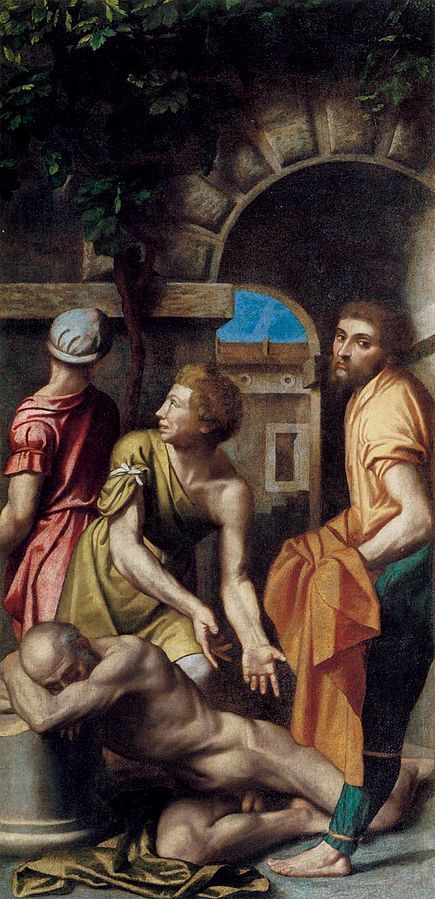


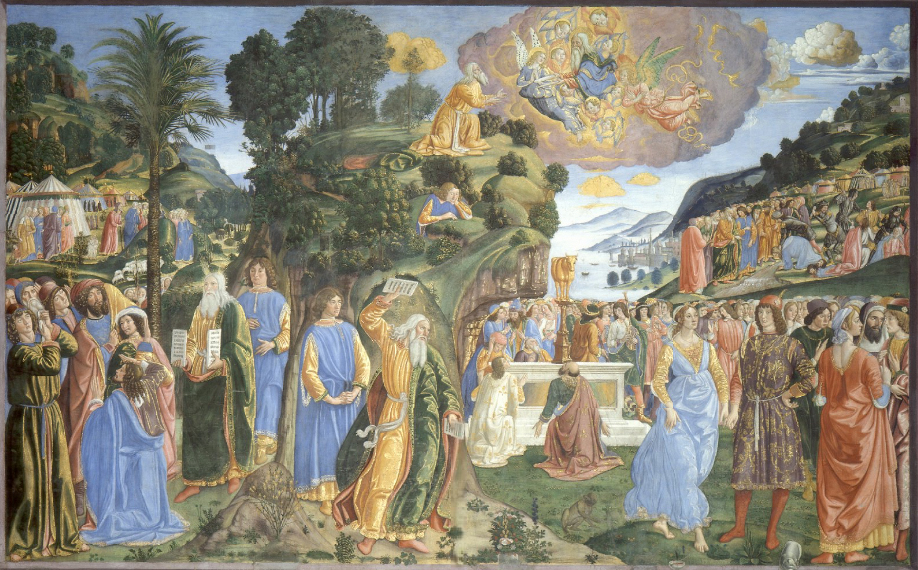


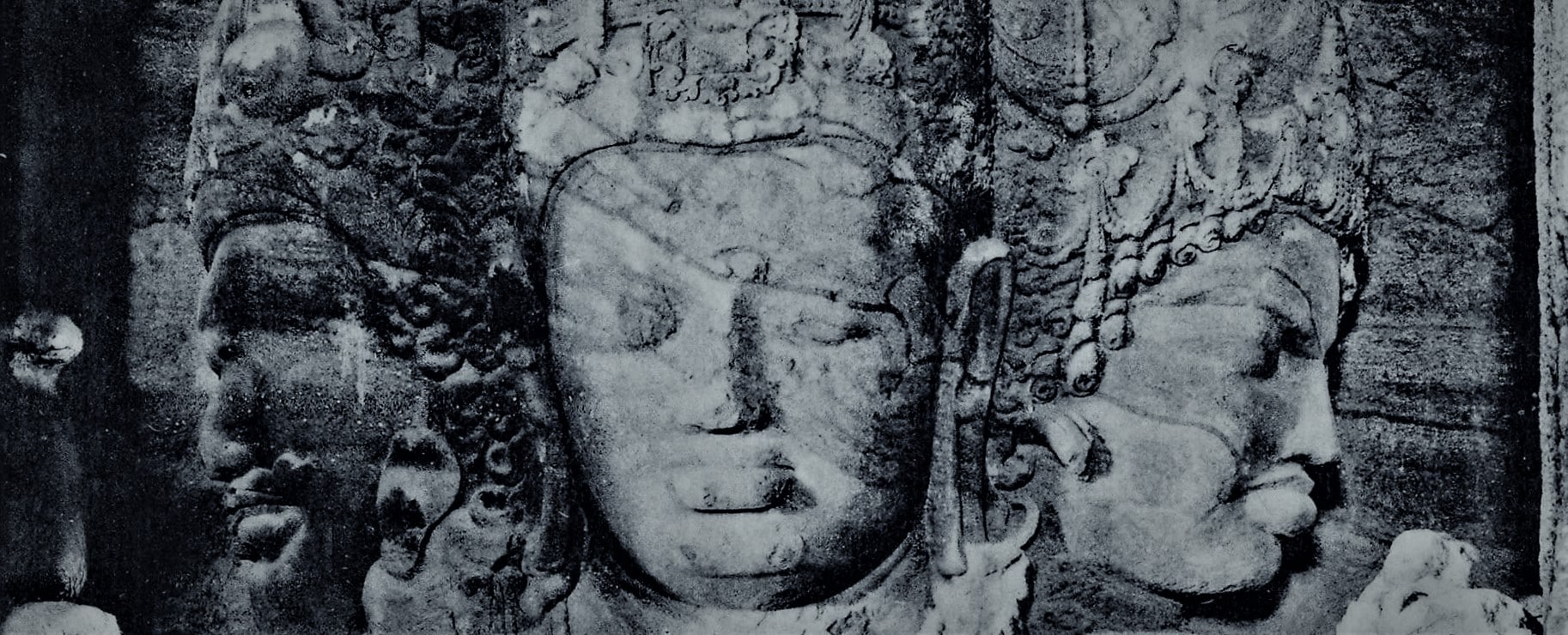







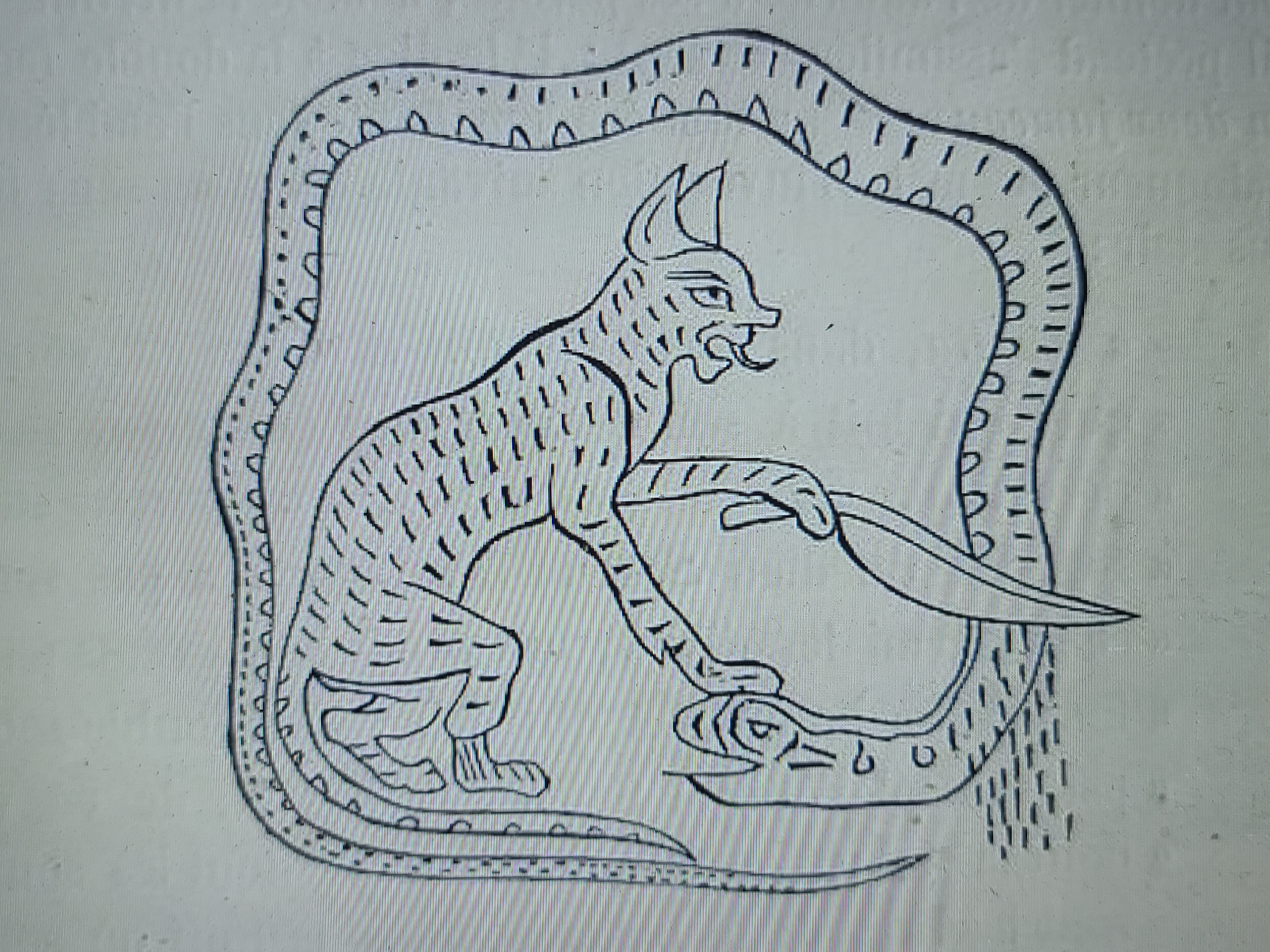

Vous devez être connecté pour poster un commentaire.