Soma is a flammable liquid, composed of clarified butter and various hallucinogenic plant juices. On a symbolic level, Soma is both a representation of the living God, the embodiment of the essence of the cosmos, and the sacrifice par excellence to the supreme God.
Vedic hymns, composed to accompany the sacrifice of the Soma, abound in metaphors, attributes and epithets of the divinity. Verbs such as to pour, to flow, to come, to abide, to embrace, to beget are used to describe the action of God.
Many hymns evoke, in a raw or subliminal way, the dizziness of (divine) love. Words such as lover, woman, womb, ardour, pleasure. But here again, they are metaphors, with hidden meanings, which must be carefully interpreted.
The sacrifice of the divine Soma can be summed up as follows: a mixture of oil, butter and milk flows in flames towards the « matrix » (the crucible where the fire blazes with all its strength), then rises in smoke and fragrance towards Heaven, where it participates in the generation of the divine.
The 9th Mandala of the Rig Veda, entirely dedicated to the sacrifice of the Soma, considered as a God, explains the profound meaning of what is at stake and its cosmic effects. Here are a few quotes, which, I believe, capture the essence of what’s at stake:
« The poured Soma flows for the Ardent, for the Wind, for that which envelops, for the Spirits, for the Active.»i
« This golden light, support, flows into that which ignites it; that which crackles flows into the matrix.”ii
« He who is here [the Soma] has come like an eagle to take up his abode, like the lover to the woman.”iii
« This gold that one drinks, and which flows rumbling towards the matrix, towards pleasure.”iv
« That which flows from desire, comes from that which moves away and from that which comes near, – the sweetness poured out for the Ardent.”v
« Those who go together shouted. They made the gold flow with the stone. Take up residence in the matrix where it flows.”vi
« The sound of the burning Ardent, like the sound of rain; lightning goes into the sky.”vii
« Bringing forth the lights of the sky, generating the sun in the waters, gold envelops milk and waters.”viii
« Coming from the original milk, He flows into the hearth, embracing it, and by crying He generates the Gods.”ix
« Soma, as He lights up, flows towards all the treasures, towards the Gods who grow through the oblation.”x
Other mystical traditions, the Jewish for example, share with the Vedic language comparable semantic elements, similar metaphors (oil, honey, milk, entrails, bosom, matrix, water, wine or liquor, pouring out, flowing into, ).
Particularly interesting in this respect is the Song of Songs, composed between six and eight centuries after the Rig Veda.
We can see that the Rig Veda and the Song of Songs, centuries apart, share, despite their distance, a comparable atmosphere of loving fusion with the divine.
This should come as no surprise. There is no doubt that this is an indication of the existence of an extremely profound anthropological constant.
The traces left in the Palaeolithic by prehistoric religions, which show comparable metaphors, bear witness to this.
The Venus of Laussel is 25,000 years old. Naked, she brandishes a horn to drink it. This gesture, always young, reminds us that in the oldest ages of humanity, the divine was already perceived in the guise of love, – and (infinite) drunkenness, a spiritual one of course, but in a strange sort of way, associated to a more mundane one.
iRig Veda. Mandala9.Hymn 34,.2. For reference, the translation of Ralph T.H. Griffith (1889) gives : « Poured forth to Indra, Varuṇa, to Vāyu and the Marut host, to Viṣṇu, flows the Soma juice. »
iiIbid. Hymn 37,2. For reference, the translation of Ralph T.H. Griffith (1889) gives : « Far-sighted, tawny-coloured, he flows to the sieve, intelligent, bellowing, to his place of rest. »
iiiIbid. Hymn 38,4. For reference, the translation of Ralph T.H. Griffith (1889) gives : « He like a falcon settles down amid the families of men. Speeding like lover to his love. »
ivIbid. Hymn 38,6. For reference, the translation of Ralph T.H. Griffith (1889) gives : « Poured for the draught, this tawny juice flows forth, intelligent, crying out, unto the well-beloved place. »
vIbid. Hymn 39,5. For reference, the translation of Ralph T.H. Griffith (1889) gives : « Inviting him from far away, and even from near at hand, the juice for Indra is poured forth as meath. »
viIbid. Hymne 39,6. Ralph T.H. Griffith (1889) translates: « In union they have sung the hymn ; with stones they urge the Tawny One. Sit in the place of sacrifice. »
viiIbid. Hymn 41,3. Ralph T.H. Griffith (1889) translates: « The mighty Pavamāna’s roar is heard as ‘twere the rush of rain. Lightnings are flashing to the sky. »
viiiIbid. Hymn 42,1. Ralph T.H. Griffith (1889) translates: « Engendering the Sun in floods, engendering heaven’s lights, green-hued, robed in the waters and the milk. »
ixIbid. Hymn 42,4. Ralph T.H. Griffith (1889) translates: « Shedding the ancient fluid He is poured into the cleansing sieve ; He, thundering, hath produces the Gods. »
xIbid. Hymn 42,5. Ralph T.H. Griffith (1889) translates: « Soma, while purifying, sends hither all things to be desired, He sends the Gods who strenghten Law. »
The world would have been created about 6000 years ago, according to Jewish tradition. However, modern science estimates that the Big Bang took place 13.8 billion years ago. These both claims seem contradictory. But it is easy to retort that the biblical years could just be metaphors. Moreover, the alleged age of the Big Bang is itself questionable. Our universe may have had earlier forms of existence, impossible to observe from our present position in space-time, because the cosmological horizon forms an impenetrable barrier.
Science has its own intrinsic limits. It can definitely not go beyond the walls of the small cosmological jar in which we are enclosed, apparently. What about the meta-cosmic oceans which undoubtedly exist beyond the horizons perceived by current science?
For those who nevertheless seek to contemplate the possibility of origins, there are other ways of meditation and reflection. Among these is the exploration of the depth of the human soul, which in a sense goes beyond the dimensions of the cosmological field.
When Abraham decided to emigrate from Ur in Chaldea, around the 12th century BC, it was already more than two thousand years that Egypt observed a religion turned towards the hope of life after death. Ancient Egyptians worshiped a unique God, Sovereign of the Universe, Creator of the world, Guardian of all creation. Archaeological traces of funerary rites testify to this, which have been discovered in Upper Egypt, and which date from the 4th millennium BC.
But can we go even further back into the past of mankind?
Can we question the traces of prehistoric religions in order to excavate what is meta-historical, and even meta-cosmic?
In the caves of Chou-Kou-Tien, or Zhoukoudian according to the Pinyin transcription, 42km from Beijing, archaeologists (including Pierre Teilhard de Chardin) discovered the remains of hominids in 1926. They were given the name Sinanthropus pekinensis, then Homo erectus pekinensis. Dating is estimated at 780,000 years. These hominids mastered hunting, tool making and fire. They managed to live for hundreds of thousands of years and to face successive periods of glaciation and warming. The successive geological strata that contain their remains and those of animals from those distant times bear witness to this.
The geological earth is like a memorial and trans-generational Noah’s Ark.
Skulls have been found at the Chou-Kou-Tien site, but none of the other bones of the human skeleton. According to some interpretations, these are therefore the remains of cannibal feasts, carried out for religious purposes.
“The bodies had been decapitated after death, buried until they had decomposed, and the heads were then carefully preserved for ritual purposes, doubtless, as in Borneo today, because in them it was supposed that soul’substance resided having the properties of a vitalizing agent. As the skulls show signs of injuries they may have been those of victims who had been killed and their crania broken open in order to extract the brain for sacramental consumption. If this were so, probably they represent the remains of cannibal feasts, organized cannibalism in that case having been an established feature of the cult of the dead in the Mid-Pleistocene in North China in which the cutting off and preservation of the head, skull or scalp was a prominent feature during or after the sacred meal, either to extract its soul substance or as a trophy.”i
This theory takes on more weight if we consider a number of other discoveries in other parts of the world.
In the caves of Ofnet in Bavaria, 33 prehistoric skulls have been discovered, arranged « like eggs in a basket », as one of the discoverers put it. Of these skulls, 27 of them were covered in red ochre and facing west. It has been established that the skulls were detached from the bodies with the help of carved flints.
The manner in which the skulls were detached from the skeleton and the traces of trepanation suggest that the brains were ritually extracted and probably consumed during funeral meals, as a sign of « communion » with the dead.
This cannibalism would therefore not be directed against enemy hordes. Moreover, on the same site, 20 children’s skeletons adorned with snail shells, 9 women’s skeletons with deer tooth necklaces, and 4 adult men’s skeletons were found. This reinforces the idea of funeral ceremonies.
In Jericho, 7 skulls were found whose features had been cast in plaster and then carefully decorated with shells (cowries and bivalves representing the eyelids, vertical slits simulating the pupil of the eye).ii
In Switzerland, in the Musterian Caves of Drachenloch, a set of bear heads looking to the east has been found, and in Styria, in Drachenhöhle, a Musterian pit with 50 bear femurs also looking to the east.
Similar traces of ritual burial have been found in Moustier (Dordogne), La Chapelle-aux-Saints (Corrèze) and La Ferrassie (Dordogne).iii
It can be deduced from these and many other similar facts, that in the Palaeolithic, for probably a million years, and perhaps more, the cult of the dead was observed according to ritual forms, involving forms of religious belief. Certain revealing details (presence of tools and food near the buried bodies) allow us to infer that hominids in the Palaeolithic believed in survival after death.
In these caves and caverns, in China or Europe, Palaeolithic men buried their dead with a mixture of veneration, respect, but also fear and anxiety for their passage into another world.
From this we can deduce that, for at least a million years, humanity has been addressing an essential question: what does death mean for the living? How can man live with the thought of death?
For a thousand times a thousand years these questions have been stirring the minds of men. Today’s religions, which appeared very late, what sort of answers do they bring ?
From a little distanced point of view, they bring among other things divisions and reciprocal hatreds, among peoples packed into the narrow anthropological space that constitutes our cosmic vessel.
None of today’s religions can reasonably claim the monopoly of truth, the unveiling of mystery. It is time to return to a deeper, more original intuition.
All religions should take as their sacred duty the will to ally themselves together, to face in common the mystery that surpasses them entirely, encompasses them, and transcends them.
Utopia? Indeed.
iE.O. James, Prehistoric Religion, (1873), Barnes and Nobles, New York, 1957, p.18
iiKinyar. Antiquity, vol 27, 1953, quoted by E.O. James, Prehistoric Religion, (1873), Barnes and Nobles, New York, 1957
iiiE.O. James, Prehistoric Religion, (1873), Barnes and Nobles, New York, 1957
The high antiquity of the Zend language, contemporary to the language of the Vedas, is well established. Eugène Burnoufi even considers that it presents certain characteristics of anteriority, which the vocal system testifies to. But this thesis remains controversial. Avestic science was still in its infancy in the 19th century. It was necessary to use conjectures. For example, Burnouf tried to explain the supposed meaning of the name Zarathustra, not without taking risks. According to him, zarath means « yellow » in zend, and uchtra, « camel ». The name of Zarathustra, the founder of Zoroastrianism, would thus mean: « He who has yellow camels »?
Burnouf, with all his young science, thus contradicts Aristotle who, in his Treatise on Magic, says that the word Ζωροάστρην (Zoroaster) means « who sacrifices to the stars ».
It seems that Aristotle was right. Indeed, the old Persian word Uchtra can be related to the Indo-European word ashtar, which gave « astre » in French and « star » in English. And zarath can mean « golden ». Zarathustra would then mean « golden star », which is perhaps more appropriate to the founder of a thriving religion.
These questions of names are not so essential. Whether he is the happy owner of yellow camels, or the incarnation of a star shining like gold, Zoroaster is above all the mythical author of the Zend Avesta, of which the Vendidad and the Yaçna are part.
The name Vendidad is a contraction of Vîdaêvo dâta, « given against demons (dêvas) ».
The Yaçna (« sacrifice with prayers ») is a collection of Avestic prayers.
Here is an extract, quite significant.
« As a worshipper of Mazda [Wisdom], a sectarian of Zoroaster, an enemy of the devils [demons], an observer of the precepts of Ahura [the « Lord »], I pay homage to him who is given here, given against the devils, and to Zoroaster, pure, master of purity, and to the yazna [sacrifice], and to the prayer that makes favorable, and to the blessing of the masters, and to the days, and the hours, and the months, and the seasons, and the years, and to the yazna, and to the prayer that makes favorable, and to the blessing!”
This prayer is addressed to the Lord, Ahura. But it is also addressed to the prayer itself.
In a repetitive, self-referential way, it is a prayer to the yaçna, a ‘prayer praying the prayer’, an invocation to the invocation, a blessing of the blessing. A homage from mediation to mediation.
This stylistic formula, « prayer to prayer », is interesting to analyze.
Let us note from the outset that the Zend Avesta clearly recognises the existence of a supreme God, to whom every prayer is addressed.
« I pray and invoke the great Ormuzd [= Ahura Mazda, the « Lord of Wisdom »], brilliant, radiant with light, very perfect, very excellent, very pure, very strong, very intelligent, who is purest, above all that which is holy, who thinks only of the good, who is a source of pleasure, who gives gifts, who is strong and active, who nourishes, who is sovereignly absorbed in excellence.”ii
But Avestic prayer can also be addressed not only to the supreme God, but also to the mediation that make it possible to reach Him, like the sacred Book itself: « I pray and invoke the Vendidad given to Zoroaster, holy, pure and great.”iii
The prayer is addressed to God and all his manifestations, of which the Book (the Vendidad) is a part.
« I invoke and celebrate you Fire, son of Ormuzd, with all the fires.
I invoke and celebrate the excellent, pure and perfect Word that the Vendidad gave to Zoroaster, the sublime, pure and ancient Law of the Mazdeans.”
It is important to note that it is the Sacred Book (the Vendidad) that gives the divine Word to Zoroaster, and not the other way round. The Zend Avesta sees this Book as sacred and divine, and recognizes it as an actor of divine revelation.
It is tempting to compare this divine status of the Book in the Zend Avesta with the divine status of the Torah in Judaism and the Koran in Islam.
The divine status of sacred texts (Zend Avesta, Torah, Koran) in these monotheisms incites to consider a link between the affirmation of the absolute transcendence of a supreme God and the need for mediation between the divine and the human, – a mediation which must itself be « divine ».
It is interesting to underline, by contrast, the human origin of evangelical testimonies in Christianity. The Gospels were written by men, Matthew, Mark, Luke, John. The Gospels are not divine emanations, but human testimonies. They are therefore not of the same essence as the Torah (« revealed » to Moses), or the Koran (« dictated » to Muhammad, who was otherwise illiterate) or the Zend Avesta (« given » to Zoroaster).
In Christianity, on the other hand, it is Christ himself who embodies divine mediation in his person. He, the Anointed One, Christ, the Messiah, incarnates the divine Word, the Verb.
Following this line of thought, one would have to conclude that Christianity is not a « religion of the Book », as the oversimplified formula that usually encompasses the three monotheisms under the same expression would suggest.
This formula certainly suits Judaism and Islam, as it does Zend Avesta. But Christianity is not a religion of the « Book », it is a religion of the « Word ».
iEugène Burnouf, Commentaire sur le Yaçna, l’un des livres religieux des Parses. Ouvrage contenant le texte zend. 1833
Mais Osiris a d’autres attributs encore, d’autres ‘noms’, qui définissent son statut royal, – et qui précisent la nature de son essence divine. Osiris est, par exemple:
« Celui qui a reçu la double couronne, dans l’allégresse, à son arrivée dans la demeure royale de l’Enfant. »i
Le Livre des Morts précise en effet dans sa glose : « Celui qui a reçu la double couronne, dans l’allégresse, à son arrivée dans la demeure royale de l’Enfant, c’est Osiris »ii.
Qui est « l’Enfant » ? C’est Horus, l’enfant d’Osiris et d’Isis, qui assure la continuation de la puissance divine après la mort de son Père. C’est le Seigneur universel qui l’a chargé de cette haute responsabilité.
« Celui qui a reçu l’ordre de régner sur les dieux, dans ce jour où le monde a été constitué, par le Seigneur universel. »iii
Le Livre des Morts explique : « Celui qui a reçu l’ordre de régner sur les dieux, c’est Horus, fils d’Osiris, qui a pris le gouvernement à la place de son père Osiris. Le jour de constituer les deux mondes, c’est le complément des mondes, à l’ensevelissement d’Osiris, l’âme bienfaisante, dans la royale demeure de l’Enfant. »
La puissance, divine et royale, la charge de régner sur les dieux, passe d’Osiris à Horus, au jour de l’ensevelissement d’Osiris, qui est aussi le jour où se constituent définitivement ce monde-ci et l’autre monde. Mais le premier verset avait déjà révélé deux autres noms du Dieu unique, – son nom Atoum, qui dit qu’Il est créateur de tous les êtres, – et son nom Ra, qui désigne celui qui était « au commencement » et qui gouverne le monde. L’Osiris N. avait alors répété ces paroles éternelles du Dieu, dûment transmises par le premier verset du Livre des Morts : « Je suis Atoum, qui a fait le ciel, qui a créé tous les êtres, qui est apparu dans l’abîme céleste. Je suis Ra à son lever dans le commencement, qui gouverne ce qu’il a fait. Je suis Atoum, existant seul dans l’abîme céleste.»iv
Après les noms Atoum, Ra, Osiris, Horus incarne encore un autre des noms du Dieu : l’Enfant. Il faut revenir sur le moment originel, que symbolise la mort d’Osiris. Osiris, cette « âme bienfaisante », a alors révélé son pouvoir, divin et royal, de régénération, incarné par Horus, l’Enfant.
La mort et la résurrection d’Osiris peuvent s’interpréter comme un drame cosmogonique, à l’échelle de l’univers, – un drame qui incarne la fin de la Nuit éternelle et du chaos primitif, et l’apparition de lois nouvelles destinées à assurer l’harmonie future des « deux mondes », et d’une certaine manière, à les « réunir »v.
Ce nouvel état des choses est symbolisé dans le Livre des Morts par la figure de la « demeure royale de l’Enfant » (Suten-ha senen).vi
Osiris N. révèle maintenant un autre nom encore du Dieu :
« Celui qui donne les existences et qui détruit les maux, qui dispose le cours du temps ! »vii
Le Livre des Morts ajoute cette glose : «Il l’explique : C’est le dieu Ra lui-même. »viii
C’est à ce Dieu qu’Osiris N. adresse sa prière insistante:
« Sauve Osiris N. de ce dieu qui saisit les âmes, qui avale les cœurs, qui se repaît de cadavres…….., qui terrifie les faibles. »
« Il l’explique : C’est Set. Autrement, l’exécuteur c’est Horus, fils de Sev.»ix
Le Dieu suprême est invoqué pour sauver l’âme du mort des conséquences du jugement. La glose cite les noms des boureaux, Set, assassin d’Osiris, ou Horus, — non le Horus fils d’Osiris, mais le Horus, fils de Sev et frère d’Osiris, le Horus aîné, qui a aussi pour nom Harouëri.x
Dans une nouvelle supplication, Osiris N. invoque encore d’autres noms du Dieu, qui possèdent une portée symbolique, philosophique ou théologique : « Scarabée », « Celui dont la substance existe par elle-même », « Seigneur des esprits » :
« O! Dieu, scarabée dans sa barque ! Celui dont la substance existe par elle-même, autrement dit, éternellement! Sauve Osiris N. de ces gardiens sagaces à qui le Seigneur des esprits a confié la surveillance de ses ennemis, qu’il leur a livré pour les immoler au lieu de l’annihilation; à la garde desquels personne ne peut échapper. Que je ne tombe pas sous leurs glaives, que je n’entre pas dans leur boucherie, que je ne m’arrête pas dans leurs demeures, que je ne tombe pas sur leurs billots, que je ne me prenne pas dans leurs pièges, qu’il ne me soit rien fait de ce que détestent les dieux. Car je suis un prince dans la grande salle, Osiris N. le justifié. Celui qui a passé pur dans le Mesek; celui qui a donné la matière de la nuée dans Ta-nen. »xi
Le Livre des Morts livre cette glose :
« Il l’explique : Le Dieu scarabée qui est dans sa barque, c’est le Dieu Ra, Har-em-achou lui-même. Les gardiens habiles, ce sont les singes Benne; c’est Isis, c’est Nephthys. Les choses que détestent les dieux, c’est le compte de sa malice. Celui qui a passé pur dans le Mesek, c’est Anubis, qui est derrière le coffret qui renferme les entrailles d’Osiris. Celui qui a donné la matière de la nuée dans Ta-nen, c’est Osiris. Autrement dit, la matière de la nuée dans Ta-nen, c’est le ciel, c’est la terre. Autrement, c’est la victoire de Schou sur les deux mondes dans Ha-souten-senen. La nuée, c’est l’œil d’Horus. Le lieu de Ta-nen, c’est le lieu de la réunion d’Osiris. »xii
E. de Rougé ajoute une explication indispensable:
« Le mot chepera, scarabée, signifie, au figuré, être et générateur, d’après le symbolisme bien connu que la doctrine égyptienne attachait à cet insecte. Cette formule, d’une haute importance est rendue un peu différemment dans le manuscrit blanc du Louvre : ‘Celui dont la substance est un être double, éternellement’ , pau-ti ta-w teta. C’est une expression nouvelle de la génération éternelle en Dieu.Ta, que je traduis d’une manière générale par substance, se prend aussi quelque fois dans l’acception restreinte de corps. Suivant la glose, cette substance, source éternelle de son propre être, ne serait autre que Ra, le soleil. Le nom d’Har-em-achou, ou ‘Horus dans les deux horizons’ (du levant et du couchant), était un surnom solaire dont le grand sphinx de Gizeh était spécialement doté. »xiii
La dernière phrase du verset 34 (‘Celui qui a passé pur dans le Mesek; celui qui a donné la matière de la nuée dans Ta-nen.’) est jugée « extrêmement obscure » par Rougé, qui offre cependant cette explication :
« Le mot mesi, que je traduis conjecturalement par matière première, est déterminé tantôt par les ténèbres, tantôt par un pain, symbole des aliments (ou pâtes?). Osiris est indiqué ici dans son action cosmogonique, puisque la glose explique ces mots par la victoire de Schou, qui consistait dans le soulèvement de la voûte liquide du ciel. C’était la fin du chaos; aussi cet événement est-il placé au même lieu céleste que la première naissance du soleil, Ha-souten-senen. Ta-nen est un nom de lieu qui peut s’interpréter les pains de la forme. Osiris serait donc considéré comme ayant donné la matière première du ciel et de la terre. Le lieu (de la réunion?) d’Osiris peut indiquer l’endroit où le corps d’Osiris avait été reconstitué, après le succès des recherches d’Isis; nous avons déjà vu en effet que l’accomplissement des funérailles d’Osiris était le symbole de la constitution définitive du monde.»xiv
De cela, on retiendra l’idée que la mort d’Osiris est considérée comme un sacrifice du Dieu suprême lui-même, un sacrifice de portée cosmique, et qui d’une certaine façon achève la constitution de l’univers. La momification et les funérailles d’Osiris, dont les membres avaient été découpés et éparpillés dans toute l’Égypte par Set, mais ensuite reconstitués par Isis, en est le point d’orgue, à la fois fin d’un état originel des choses, et commencement d’un nouvel ordre du monde.
Il y a aussi l’idée que le Dieu suprême, quel que soit son nom, Ra, Osiris ou Horus, est un Dieu dont l’essence est de se renouveler toujours.
Hiéroglypes de NuTeR, « Dieu »
Le mot NuTeR, ‘Dieu’, a d’ailleurs le sens de ‘se renouveler’.
On le trouve par exemple au verset 35 du Livre des Morts, employé avec ce sens:
« Atoum construit ta maison, les deux lions fondent ta demeure. Ils accourent, ils accourent; Horus te purifie, Set te renouvelle, tour à tour. L’Osiris N. vient dans ce monde, il a repris ses jambes. Il est Toum et il est dans son pays. Arrière, lion lumineux qui est à l’extrémité ! Recule devant la valeur de l’Osiris N. le justifié, recule devant la valeur d’Osiris. »xv
E. de Rougé justifie sa traduction ainsi :
« Je traduis par ‘renouveler’ le mot NuTeR. Comme substantif, nouter signifie ‘dieu’; comme verbe, au sens propre, il reçoit pour déterminatif la ‘pousse de palmier’ [le 2ème signe à partir de la droite], déterminatif de la germination, de la jeunesse, et le ‘volume’ [le 1er signe à partir de la droite] qui s’applique entre autres choses aux idées de calcul. Je pense que l’idée qui a présidé au choix de ce mot pour désigner un dieu est l’éternelle jeunesse renouvelée périodiquement. Les rois sont représentés au milieu d’une scène où les dieux Horus et Set leur versent sur la tête les symboles de la purification et de la divinité ou du rajeunissement. Ce doit être la représentation de quelque rite d’initiation, enseignant la transfiguration de l’âme. En disant de l’homme ressuscité qu’il est Toum, le texte joue sur le nom de ce dieu; on trouve en effet le groupe TeMu, comme un des noms des hommes, de la race humaine (homo). »xvi
Le Dieu suprême, unique, de l’Égypte ancienne a plusieurs noms, dont chacun met en évidence un de ses attributs. L’un de ces noms est ‘Celui qui s’engendre Lui-même, éternellement’.
Deux mille ans après que cette idée ait émergé sur les bords du Nil, elle est apparue à nouveau sur les pentes du mont Horeb, dans une formule célèbre, lors du face-à-face de YHVH avec Moïse (Ex. 3,14) :
אֶהְיֶה אֲשֶׁר אֶהְיֶה
Ehyéh achêr éhyéh.
Les traductions habituelles en français, « Je suis qui je suis » ou « Je suis celui qui est », sont grammaticalement fautives, car le verbe être אֶהְיֶה est ici employé à l’inaccompli, mode verbal qui décrit un état qui, précisément, reste « inaccompli », donc toujours en train d’évoluer. Il implique un devenir, une ouverture au nouveau, à l’à-venir.
Le Dieu Ra des Anciens Égyptiens et le Dieu YHVH des Hébreux ont deux points en commun : Ils sont tous deux « Un » et Ils se renouvellent éternellement.
Ils ne « sont » pas. Ils « deviennent ».
iVerset 30 du Chapitre XVII du Livre des morts. Trad.Emmanuel de Rougé. Études sur le rituel funéraire des anciens Égyptiens. Librairie académique Didier, Paris, 1860, p.63
iiiVerset 31 du Chapitre XVII du Livre des morts. Trad.Emmanuel de Rougé. Études sur le rituel funéraire des anciens Égyptiens. Librairie académique Didier, Paris, 1860, p.63
ivVerset 1 du Chapitre XVII du Livre des morts. Trad.Emmanuel de Rougé. Études sur le rituel funéraire des anciens Égyptiens. Librairie académique Didier, Paris, 1860, p.41
vDans le vieux manuscrit ‘à l’encre blanche’, on lit : « Celui qui a reçu la double couronne, dans l’allégresse, à son entrée dans Ha-suten-senen, c’est Osiris, quand il lui a été donné de réunir les deux mondes par le Seigneur universel. Le jour de la réunion des deux mondes, c’est l’action de compléter les deux mondes, c’est l’ensevelissement d’Osiris, etc. » Trad. Emmanuel de Rougé. Études sur le rituel funéraire des anciens Égyptiens. Librairie académique Didier, Paris, 1860, p.64
viCf. Emmanuel de Rougé. Études sur le rituel funéraire des anciens Égyptiens. Librairie académique Didier, Paris, 1860, p.64
viiVerset 32 du Chapitre XVII du Livre des morts. Trad.Emmanuel de Rougé. Études sur le rituel funéraire des anciens Égyptiens. Librairie académique Didier, Paris, 1860, p.64
ixVerset 33 du Chapitre XVII du Livre des morts. Trad.Emmanuel de Rougé. Études sur le rituel funéraire des anciens Égyptiens. Librairie académique Didier, Paris, 1860, p.65
xiVerset 34 du Chapitre XVII du Livre des morts. Trad.Emmanuel de Rougé. Études sur le rituel funéraire des anciens Égyptiens. Librairie académique Didier, Paris, 1860, p.65-66
xivIbid. p.67-68 Le Professeur Buydens (ULB) a attiré ici mon attention sur l’analogie profonde entre ces « pains » (de la forme) qui sont « donnés » par le Dieu Osiris et le « pain » que l’on demande d’être « donné » par Dieu dans la prière chrétienne du Notre Père, — pain qui est par ailleurs appelé « sur-essentiel » (hyperousion) dans la version grecque de cette prière.
xvVerset 35 du Chapitre XVII du Livre des morts. Trad.Emmanuel de Rougé. Études sur le rituel funéraire des anciens Égyptiens. Librairie académique Didier, Paris, 1860, p.68
« The earth was tohu and bohu, darkness covered the abyss, a wind of God (וְרוּחַ אֱלֹהִים , ruah Elohim) was moving over the waters.”i
Tohu means « astonishment, amazement » and bohu means « emptiness, loneliness », explains Rashi, who adds: « Man is seized with amazement and horror in the presence of emptiness.”
Man was amazed and horrified? But how could this be done? Man was only created on the 6th day, when the emptiness had already been partly filled by light, the firmament, the land and the seas, the light fixtures and a multitude of living beings. But this is not necessarily contradictory. It is inferred that Rashi is referring to the « astonishment and horror » that man felt long after the tohu and bohu were created, when man began to reflect on the origins.
However, this reflection has not ceased and is still relevant today.
So there are two kinds of men, if we follow the path indicated by Rashi. Those who feel « amazement and horror » when they think about the hustle and bustle of the origins, and those who are in no way moved by this kind of thinking.
Above the emptiness, above the abyss, above the bohu, « a wind of God » was moving. The word רוּחַ, ruah, is very ambivalent and can mean wind, breath, spirit, soul, depending on the context. Translating here as « a wind » as the Jerusalem Bible does seems to favour a more meteorological or geo-physical approach to these original times. This translation uses the indefinite article (« a wind ») which indicates a certain non-differentiation, a possible multiplicity of other « winds » that God would not have put into action.
The Bible of the French Rabbinate translates ruah Elohim as « the breath of God ». Rashi comments: « The throne of the Divine Majesty stood in the air and hovered on the surface of the waters by the sole force of the breath of the word of the Holy One, and by His order. Like a dove hovering over its nest.”
This comment by Rashi calls for another comment, – from my modest part.
To explain just one word, ruah, Rashi uses four more words. First an expression of three words: « the strength of the breath of the word » of the Holy One, blessed be He, and a fourth word that clarifies its meaning: « by His order ». To this are added two more images, that of the « Throne of the Divine Majesty », and a comparison of the ruah with « the dove hovering over its nest ». The « wind of God » hovering in front of the loneliness of the bohu is thus well surrounded.
It is generally one of the roles of the commentator to multiply the possible outbursts of meaning, and to make promises glimmer. It is apparent from Rashi’s commentary that not only was the ruah not alone in the beginning, but that it bore, so to speak, the Throne of God, in His Majesty, and that it was accompanied by His Word and His Order (i.e. His Power). A curious trinity, for a monotheism that claims to be pure of all kind of trinitarian idolatry.
Now let us change era, and air. Let’s go East.
The same idea of « original breath » is expressed in Chinese by the two caractères元气 , yuánqì. The two ideograms used are: 元 , yuán, origin and 气 , qì, breath.
The qì is the vital breath. It is the fundamental principle of life, which animates all beings. After death, the qì continues to live in the afterlife. The qì embodies the essence of a universe that is constantly changing. It constantly circulates and connects things and beings.
Qì takes different forms. We can distinguish the original qì ( yuánqì,元气), the primordial qì (yuánqì 元氣), the prenatal qì (jīng 精), the qì of the mind and the qì of the soul (shén 神), etc.
Archaeological traces of the qì character have been found, engraved on turtle shells. It was originally represented by three horizontal bars, supposed to evoke steam or mist. The qì also appears on a jade jewel dating from the period of the Fighting Kingdoms (-403 to -256), in the form of the sinogram 炁 , composed of the radical 灬, which refers to fire (huǒ 火). During the Han Dynasty (from -206 to 220), qì is represented by a sinogram combining steam 气 and fire 火.
In the Song Dynasty (960 – 1279) the qì is represented by the sinogram 氣 which refers to the steam emanating from the cooking of rice. It is still used today, and illustrates the material and immaterial nature of the concept. Its key is the pictogram 气 (qì) which represents a cloud.
The lower part of the sinogram is the pictogram 米 (mǐ), which represents grains of rice and means « rice ». The character 氣 expresses the idea of rice boiling in the pot.
The sinogram writes qì as a mixture, immaterial and ethereal (steam), dense and material (rice).
In Genesis, the movement of the divine breath precedes the separation of heaven and earth, and then the creation of living beings; in Chinese cosmology, too, the breath (qì 气) precedes the separation of yin and yang, which is itself the origin of the « ten thousand beings » (wànwù 万物), that is to say all beings and indirectly the things that make up the world.
In Chinese thought, qì is at work in the reign of the living and in the mineral reign. For example, the veins of jade are considered to be organized by qì just like the veins of the human body. Chinese painting depicts the geological strata of mountains, which are one of the macro-cosmic manifestations of qì, and the aesthetics of a canvas depends on the capture of this breath.
Qì nourishes thought and spiritual life and has a certain relationship with the divine shén 神, whose deep meaning is etymologically linked to the characters « to say » and « to show, to reveal ». The divine is not in the qì , that is to say, but the qì can be used by the divine.
The qì is ‘breath, wind’, the divine (shén) is ‘word, revelation’.
The divine is not in the ‘wind’ or the ‘breath’, it is in the ‘word’, – far from any materialism of cloudy emanations, or cooking vapors.
Throughout the ages, cultures and languages, the ancient metaphors of wind and breath still inspire us.
Energy comes from the world and brings it to life. But for the Hebrews and the Chinese, the divine is not of the world. The divine is not in the wind.
The Divine, or the Word, may be in the world, but they are not of the world…
Quite early in history, the idea of a « universal religion » appeared in various civilisations – despite the usual obstacles posed by tradition and the vested interests of priests and princes.
This idea did not fit easily into the old frames of thought, nor into the representations of the world built by tribal, national religions, or, a fortiori, by exclusive, elitist sects, reserved for privileged initiates or a chosen few.
But, for example, five centuries before the Prophet Muhammad, the Persian prophet Mani already affirmed out of the blues that he was the « seal of the prophets ». It was therefore up to him to found and preach a new, universal religion. Manichaeism then had its hour of glory. Augustine, who embraced it for a time, testifies to its expansion and success in the territories controlled by Rome at the time, and to its lasting hold on the spirits.
Manichaeism promoted a dualist system of thought, centred on the eternal struggle between Good and Evil; it is not certain that these ideas have disappeared today.
Before Mani, the first Christians also saw themselves as bearers of a really universal message. They no longer saw themselves as Jews — or Gentiles. They thought of themselves as a third kind of man (« triton genos« , « tertium genus« ), « trans-humans » ahead of the times. They saw themselves as the promoters of a new wisdom, « barbaric » from the Greek point of view, « scandalous » for the Jews, – transcending the power of the Law and of Reason.
Christians were not to be a nation among nations, but « a nation built out of nations » according to the formula of Aphrahat, a Persian sage of the 4th century.
Contrary to the usual dichotomies, that of the Greeks against the Barbarians, or that of the Jews against the Goyim, the Christians thus thought that they embodied a new type of « nation », a « nation » that was not « national », but purely spiritual, a « nation » that would be like a soul in the body of the world (or according to another image, the « salt of the earth »i).
The idea of a really « universal » religion then rubbed shoulders, it is important to say, with positions that were absolutely contrary, exclusive, and even antagonistic to the last degree, like those of the Essenes.
A text found in Qumran, near the Dead Sea, advocates hatred against all those who are not members of the sect, while insisting on the importance that this « hatred » must remain secret. The member of the Essene sect « must hide the teaching of the Law from men of falsity (anshei ha-‘arel), but must announce true knowledge and right judgment to those who have chosen the way. (…) Eternal hatred in a spirit of secrecy for men of perdition! (sin’at ‘olam ‘im anshei shahat be-ruah hasher!)ii « .
G. Stroumsa comments: « The peaceful conduct of the Essenes towards the surrounding world now appears to have been nothing more than a mask hiding a bellicose theology. »
This attitude is still found today in the « taqqiya » of the Shi’ites, for example.
It should be added that the idea of « holy war » was also part of Essene eschatology, as can be seen in the « War Scroll » (War Scroll, 1QM), preserved in Jerusalem, which is also known as the scroll of « The War of the Sons of Light against the Sons of Darkness ».
Philo of Alexandria, steeped in Greek culture, considered that the Essenes had a « barbaric philosophy », and « that they were in a sense, the Brahmins of the Jews, an elite among the elite. »
Clearch of Soles, a peripatetic philosopher of the 4th century BC, a disciple of Aristotle, had also seriously considered that the Jews were descended from Brahmins, and that their wisdom was a « legitimate inheritance » from India. This idea spread widely, and was apparently accepted by the Jews of that time, as evidenced by the fact that Philo of Alexandriaiii and Flavius Josephusiv naturally referred to it.
The « barbaric philosophy » of the Essenes and the « barbaric wisdom » of the early Christians have one thing in common: they both point to ideas emanating from a more distant East, that of Persia, Oxus and even, ultimately, the Indus.
Among oriental ideas, one is particularly powerful. That of the double of the soul, or the double soul, depending on the point of view.
The text of the Rule of the Community, found in Qumran, gives an indication: « He created man to rule the world, and assigned to him two spirits with which he must walk until the time when He will return: the spirit of truth and the spirit of lie (ruah ha-emet ve ruah ha-avel).”v
There is broad agreement among researchers to detect an Iranian influence in this anthropology. Shaul Shaked writes: « It is conceivable that contacts between Jews and Iranians led to the formulation of a Jewish theology, which, while following traditional Jewish motifs, came to resemble closely the Iranian worldview. »
G. Stroumsa further notes that such duality in the soul is found in the rabbinic idea of the two basic instincts of good and evil present in the human soul (yetser ha-ra’, yetser ha-tov)vi.
This conception has been widely disseminated since ancient times. Far from being reserved for the Gnostics and Manicheans, who seem to have found their most ancient sources in ancient Persia, it had, as we can see, penetrated Jewish thought in several ways.
But it also aroused strong opposition. Christians, in particular, held different views.
Augustine asserts that there can be no « spirit of evil », since all souls come from God.vii In his Counter Faustus, he argues: « As they say that every living being has two souls, one from the light, the other from the darkness, is it not clear that the good soul leaves at the moment of death, while the evil soul remains?”viii
Origen has yet another interpretation: every soul is assisted by two angels, an angel of righteousness and an angel of iniquityix. There are not two opposing souls, but rather a higher soul and another in a lower position.
Manichaeism itself varied on this delicate issue. It presented two different conceptions of the dualism inherent in the soul. The horizontal conception put the two souls, one good and one bad, in conflict. The other conception, vertical, put the soul in relation to its celestial counterpart, its ‘guardian angel’. The guardian angel of Mani, the Paraclete (« the intercessor angel »), the Holy Spirit are all possible figures of this twin, divine soul.
This conception of a celestial Spirit forming a « couple » (suzugia) with each soul was theorised by Tatian the Syrian in the 2nd century AD, as Erik Peterson notes.
Stroumsa points out that « this conception, which was already widespread in Iran, clearly reflects shamanistic forms of thought, according to which the soul can come and go outside the individual under certain conditions.”x
The idea of the soul of Osiris or Horus floating above the body of the dead God, the angels of the Jewish tradition, the Greek « daimon », the split souls of the Gnostics, the Manicheans, or the Iranians, or, even more ancient, the experiences of the shamans, by their profound analogies, testify to the existence of « anthropological constants », of which the comparative study of ancient religions gives a glimpse.
All these traditions converge in this: the soul is not only a principle of life, attached to an earthly body, which would be destined to disappear after death.
It is also attached to a higher, spiritual principle that guards and guides it.
Science has recently taken a step in this direction, foreseen for several millennia, by demonstrating that man’s « spirit » is not only located in the brain itself, but that it is also « diffused » all around him, in the emotional, symbolic, imaginary and social spheres.
Perhaps one day we will be able to objectify in a tangible way this intuition, so ancient, and so « universal ». In the meantime, let us conclude that it is difficult to be satisfied with a narrowly materialistic, mechanical description of the world.
« Il l’explique : Osiris entre dans Tatou, il y trouve l’âme de Ra ; alors ils s’unissent l’un à l’autre et ils deviennent son âme, ses jumeaux. Ses deux jumeaux, c’est Horus vengeur de son père et Hor-went-an
Autrement dit : l’âme en ses deux jumeaux, c’est l’âme de Ra avec l’âme d’Osiris, c’est l’âme de Schou avec l’âme de Tewnou-t; ce sont les âmes qui résident dans Tatou. »ii
Une difficulté de traduction se présente ici, ainsi que le fait remarquer E. de Rougé. Le verset 22 du Livre des Morts pourrait aussi être traduit : « une âme entre ses deux jumeaux », comme le permettent les divers sens possibles de la préposition HeRi, « en, dans, entre, au milieu de ».
La nuance est importante, car dans ce cas le verset ne ferait pas simplement référence à une dualité représentant l’union de deux âmes divines, mais impliquerait une triade, représentant l’union de trois âmes, celle de Ra, celle d’Osiris et celle d’Osiris N.
E. de Rougé opte pour la dualité, parce que d’autres gloses y font souvent référence. Ce qui paraît certain, c’est qu’il y a bien ici allusion à l’union de l’âme de Ra et de celle d’Osiris, qui entretiennent un rapport de Père à Fils, ou d’Engendreur à Engendré.
Mais si l’on veut rester en phase avec la logique de la montée progressive de l’âme d’Osiris N. vers la Divinité suprême, on peut aussi défendre l’interprétation triadique comme décrivant l’union ou l’assimilation de l’âme d’Osiris N avec « ses deux jumeaux », à savoir Ra et Osiris.
Le lieu de cette union divine est nommé Tatou, nom présent dans tous les textes ayant rapport avec les mystères d’Osiris.
Quant à Schou et Tewnou-t, ils forment aussi un couple, une autre instance de l’union divine, exprimant une autre forme de dualité, non plus selon la symbolique du Père et du Fils, mais selon celle de l’Époux et de l’Épouse. Le papyrus de Turin montre à cet endroit un Dieu Ra à tête d’épervier et une déesse à tête de lionne. Le papyrus Cadet montre à cette place deux figures divines exactement semblables, et superposées l’une à l’autre.iii
Le verset suivant montre l’âme d’Osiris N. sous un autre jour encore, incarnant la lutte contre le mal, et la nouvelle dualité qui en résulte.
« Je suis ce grand chat qui était à Perséa dans An (Héliopolis), dans la nuit du grand combat ; celui qui a gardé les impies dans le jour où les ennemis du Seigneur universel ont été écrasés. »iv
Le Livre des Morts commente :
« Il l’explique : Le grand chat du Perséa dans An, c’est Ra lui-même. On l’a nommé chat en paroles allégoriques ; c’est d’après ce qu’il a fait qu’on lui a donné le nom de chat. Autrement c’est Schou quand il fait……….. de Sev et d’Osiris. Celui qui est du Perséa dans An, c’est celui qui rend justice aux fils de la défection pour ce qu’ils ont fait. La nuit du combat c’est quand ils sont arrivés à l’orient du ciel et dans le monde entier.»
L’image qui accompagne cette glose dans le papyrus Cadet montre un chat auprès d’un arbre tenant sous sa patte un serpent. Dans le manuscrit de Dublin, le chat tranche la tête du serpent avec un sabre.
Le Dieu Ra (le Chat) coupe la tête du Mal (le Serpent) Papyrus de Dublin.
Dans le papyrus du Louvre un lion est figuré à la place du chat.
Le chat et le lion sont des symboles du soleil. Horapollon rapporte que le Soleil était représenté à Héliopolis par une statue en forme de chatv.
Le chat, le lion et le soleil symbolisent en fait, dans l’ancienne Égypte, un concept plus abstrait qu’animalier ou astronomique, – celui de la victoire sur le mal et l’impiété.
En prononçant la formule « Je suis une âme en [ou entre] ses deux jumeaux », l’Osiris N., parvenu à ce point crucial dans son anabase vers les hauteurs divines, déclarait par là vouloir s’identifier à la Divinité, – conçue comme une unité duelle (Ra-Osiris, Père-Fils, Époux-Épouse), ou encore conçue comme étant une lumière de justice absolue (dont le soleil est un pâle reflet), capable de terrasser le Mal. Le verset suivant donne des renseignements à cet égard:
« O ! Ra, dans son œuf ! Qui rayonne par son disque, qui luit à son horizon, qui nage dans sa matière, qui a horreur du retard, qui marche sur les supports du dieu Schou ! Celui qui n’a pas son second parmi les dieux ; qui produit les vents par les feux de sa bouche et qui éclaire le double monde par ses splendeurs ! Sauve l’Osiris N. de ce dieu dont la nature est un mystère et dont les sourcils sont les bras de la balance, dans la nuit où se fait le compte d’Aouaï.
Il l’explique : C’est celui étend le bras [ou bien : C’est celui qui vient à son heure]; la nuit du compte d’Aouaï, c’est la nuit où la flamme tombe sur les condamnés.»vi
E. de Rougé commente le verset et sa glose de cette façon : « La dualité divine se montre ici sous une nouvelle forme : Ra, le Dieu visible est invoqué comme médiateur auprès du Dieu caché qui est Osiris, le souverain juge, ou le Dieu vengeur, exécuteur du jugement (…) La déesse Aouaï est le châtiment personnifié ; son nom signifie discuter, vérifier, et, dans un autre sens, nuire, faire du mal ; ce n’est pas la flamme qui réconcilie, comme celle de Hotepeschous, le feu d’Aouaï saisit les maudits (cheri-u, les frappés), après le compte redoutable établi devant Osiris. »vii
Le Dieu unique et suprême des Égyptiens révèle ici un nouvel aspect de la dualité profonde de sa nature (dualité compatible avec son unité essentielle). Après la dualité de l’engendrement et de la filiation, la dualité de l’aimé et de l’aimant, il y a la dualité de la clémence et de la miséricorde s’opposant à au jugement et au châtiment.
Rien de tout cela ne devrait surprendre les connaisseurs de religions comme le judaïsme ou le christianisme. Ces monothéismes relativement récents (par rapport à l’ancienne religion égyptienne) font eux aussi preuve d’une souplesse comparable, en attribuant à un Dieu Un, et cela sans contradiction, diverses formes de dualités, par exemple de terribles capacités de jugement et de châtiment, tempérées par la bonté, la clémence et la miséricorde.
Sous l’un de ses aspects, le Dieu se révèle impitoyable, renvoyant dans une mort éternelle le pécheur ou l’impie.
Il devient alors « Celui qui pousse les impies sur le lieu du billot, pour détruire leurs âmes. »viii
Selon les gloses, cette persona du Dieu est « Smu l’annihilateur d’Osiris », ou Sapi « qui porte la justice », ou encore Horus, qui a deux têtes, « l’une qui porte la justice, l’autre l’iniquité, et qui rend le mal à celui qui l’a fait, la justice à qui l’apporte avec soi.» Ou alors « c’est Thoth, c’est Nofre-Toum, fils de Bast, ce sont les chefs qui repoussent partout les ennemis du Seigneur universel. »ix
On voit que le Dieu unique, le Seigneur universel, est entouré de puissances supplétives qui sont là pour exécuter ses jugements et exterminer les « ennemis du Seigneur ».
On voit sur plusieurs sarcophages et dans les peintures des tombeaux Horus qui décapite lui-même les damnés et les condamne à une mort éternelle, à un néant sans fin, sans rémission possible.
Osiris N. est prévenu. Il sait que cette phase du jugement est essentielle, et peut l’envoyer à nouveau à la mort, pour toujours. D’où la prière d’angoisse qui s’élève de son âme :
« Sauvez l’Osiris N. de ces gardiens qui amènent les bourreaux, qui préparent les supplices et l’immolation ; on ne peut échapper à leur vigilance ; ils accompagnent Osiris. Qu’ils ne s’emparent pas de moi, que je ne tombe pas dans leurs creusets. Car je le connais, je sais le nom du Matat qui est parmi eux, dans la demeure d’Osiris, le trait invisible qui sort de son œil, circule dans le monde par le feu de sa bouche. Il donne ses ordres au Nil sans être visible. L’Osiris N. a été juste dans le monde, il aborde heureusement auprès d’Osiris. Que ceux qui siègent sur leurs autels ne me fassent pas d’opposition, car je suis un des serviteurs du Seigneur suprême (suivant la Loi du Scarabée). L’Osiris N. s’envole comme un épervier, il se nourrit comme (l’oie) Smen, il ne sera jamais détruit comme (le serpent) Nahav-ka. »x
Qui est le Matat, l’exécuteur impitoyable du châtiment ? C’est Horus ou bien Anubis. Quant aux supplétifs, exécuteurs des basses-œuvres, ils sont parfois décrits comme des « gardiens à l’odeur fétide, aux doigts acérés, qui torturent et qui immolent ». L’oie Smen est le symbole d’Ammon. Le serpent Nahav-ka est représenté par un serpent monté sur deux jambes humaines, ou par un corps humain à tête de vipère.
Selon E. de Rougé, le nom Nahav-ka semble « se rapporter au rajeunissement de l’existence par la résurrection »xi, ce qui peut paraître paradoxal pour un être incarnant le mal et promis à la destruction. Il s’agit peut-être d’une antonomase par métalepse, sans vouloir être pédant : la victoire sur le Serpent est la cause efficace de la conséquence, dont il porte le nom, qui est la résurrection et la nouvelle jeunesse, éternelle.
L’imploration continue :
« Ah ! Seigneur de la grande demeure, roi suprême de dieux ! Sauve l’Osiris N. de ce dieu qui a le visage du Tesem et les sourcils d’un homme, et qui se repaît des maudits, et sauve-le de l’esprit du bassin de feu, qui détruit les corps, vomit les cœurs et les rejette en excréments. »xii
Le Tesem est un félin, peut-être un loup cervier.
« Ah ! Seigneur de la victoire dans les deux mondes ! Seigneur du sang rouge, qui commande au lieu du supplice (le billot), qui se repaît des entrailles ! Sauve l’Osiris N. !
Il l’explique : c’est le cœur d’Osiris, c’est lui qui est dans toute immolation.»xiii
Le « Seigneur de la victoire » est Osiris.
Le martyre d’Osiris se révéla en effet être une victoire sur la Mort et une victoire contre le Mal, une double victoire, dans deux mondes, celui d’en-bas, où la mort fut vaincue, et celui d’En-haut, où le Bien doit régner.
Les sacrifices sanglants de la religion de l’Égypte ancienne étaient faits en mémoire de ce sacrifice initial, fondateur, – la mise à mort d’Osiris et son démembrement sanglant par Seth.
Grâce à Isis, Horus et Thoth, la mort d’Osiris devait mener à sa résurrection, et au salut des nomes de l’Égypte tout entière.
La dernière phrase du verset 29 du Livre des Morts qui évoque « le cœur d’Osiris », son « sang » et son « immolation » possède une résonance étonnamment christique, bien que formulée plus de trois millénaires avant le supplice de Jésus de Galilée.
L’image du cœur d’Osiris évoque irrésistiblement le Sacré-Cœur, expression utilisés dans la dévotion chrétienne, et faisant référence au cœur (mystique) de Jésus-Christ, considéré comme personne divine.
Cinq millénaires après le Livre des Morts, une prière conçue par le pape Jean-Paul II reprend l’idée du Cœur du Dieu comme métonymie de la divinité, et évoque le « Divin Cœur » de Jésus Christ, un Cœur qui est aussi un « soleil qui éclaire nos horizons »xiv. Cette dernière métaphore pourrait être considérée (je le dis sans malice) comme « osirienne », si l’on se souvient que le soleil sert de symbole au Dieu unique et suprême, sous ses deux noms, Ra et Osiris, associés respectivement à sa forme diurne ou nocturne.
La religion juive utilise aussi la métaphore du Cœur de Dieu.
Moïse Maïmonide explique :
« Leb est un homonyme qui désigne primitivement le cœur, je veux dire le membre dans lequel, pour tout être qui en est doué, réside le principe de la vie (…) Leb (cœur) signifie aussi ‘volonté’ (ou ‘intention’) ; p.ex. : ‘Et je vous donnerai des pasteurs selon Mon cœur’ (Jér. 3,15)xv [c’est YHVH qui parle] (…)
On l’emploie quelquefois métaphoriquement en parlant de Dieu ; p.ex. : ‘Je m’instituerai un prêtre fidèle. Il fera selon ce qui est dans mon cœur et dans mon âme’ (1 Sam 2,35)xvi, c’est-à-dire il agira selon ma volonté ; ‘Et Mes yeux et mon cœur y seront toujours’(1 R 9,3) : c’est-à-dire ma Providence et ma volonté. »xvii
Le mot Leb (cœur) peut signifier aussi « intelligence ». « C’est dans cette signification qu’il doit être pris partout où il est métaphoriquement appliqué à Dieu, je veux dire comme désignant ‘l’intelligence’, sauf les rares expressions où il désigne la ‘volonté’. »xviii
On trouve le mot cœur associé à YHVH dans d’autres versets bibliques :
בִּקֵּשׁ יְהוָה לוֹ אִישׁ כִּלְבָבוֹ (1 Sa 13,14)
biqqech YHVH lō ich kalbabō
« YHVH s’est choisi un homme selon Son cœur »
Et dans Ézéchiel, le mot cœur est associé à Elohim, à deux reprises:
וַתִּתֵּן לִבְּךָ כְּלֵב אֱלֹהִים (Ez 28,2)
va-titten libbékh kelev Elohim
« Tu te fais un cœur semblable au cœur de Dieu »
תִּתְּךָ אֶת-לְבָבְךָ, כְּלֵב אֱלֹהִים (Ez 28,6)
« Tu t’es fait un cœur semblable au cœur de Dieu »
Le cœur sanglant d’Osiris arraché de son corps divin par Seth, le לֵב אֱלֹהִים, le Lev Elohim, évoqué par Ezéchiel. et le divin ‘Sacré-Cœur’ de Jésus Christ…
Trois formes d’une constante anthropologique et théologique, qui associe une représentation du Dieu unique et suprême à l’organe qui bat chaque seconde, en chaque homme.
iVerset 22 du Chapitre XVII du Livre des morts. Trad.Emmanuel de Rougé. Études sur le rituel funéraire des anciens Égyptiens. Librairie académique Didier, Paris, 1860, p.55
ivVerset 23 du Chapitre XVII du Livre des morts. Trad.Emmanuel de Rougé. Études sur le rituel funéraire des anciens Égyptiens. Librairie académique Didier, Paris, 1860, p.56
vHorapollon, Hieroglyphica, Livre I, ch. 10, cité par E. de Rougé, op.cit. p.57
viVerset 24 du Chapitre XVII du Livre des morts. Trad.Emmanuel de Rougé. Études sur le rituel funéraire des anciens Égyptiens. Librairie académique Didier, Paris, 1860, p.58
viiiVerset 25 du Chapitre XVII du Livre des morts. Trad.Emmanuel de Rougé. Études sur le rituel funéraire des anciens Égyptiens. Librairie académique Didier, Paris, 1860, p.59
xVerset 26 du Chapitre XVII du Livre des morts. Trad.Emmanuel de Rougé. Études sur le rituel funéraire des anciens Égyptiens. Librairie académique Didier, Paris, 1860, p.60
xiEmmanuel de Rougé. Études sur le rituel funéraire des anciens Égyptiens. Librairie académique Didier, Paris, 1860, p.61, note 1
xiiVerset 27 du Chapitre XVII du Livre des morts. Trad.Emmanuel de Rougé. Études sur le rituel funéraire des anciens Égyptiens. Librairie académique Didier, Paris, 1860, p.62
xiiiVerset 29 du Chapitre XVII du Livre des morts. Trad.Emmanuel de Rougé. Études sur le rituel funéraire des anciens Égyptiens. Librairie académique Didier, Paris, 1860, p.63
xivLa prière du pape Jean Paul II au Sacré-Cœur est la suivante : « Seigneur Jésus, Tu es notre Sauveur et notre Dieu ! Fais que notre regard ne se fixe jamais sur d’autre étoile que celle de l’Amour et de la Miséricorde qui brille sur ta poitrine. Que ton Cœur soit donc, ô notre Dieu, le phare lumineux de la foi, l’ancre de notre espérance, le secours toujours offert dans notre faiblesse, l’aurore merveilleuse d’une paix inébranlable, le soleil qui éclaire nos horizons. Jésus, nous nous confions sans réserve à ton Divin Cœur. Que ta grâce convertisse nos cœurs. Par ta miséricorde soutiens les familles, garde-les dans la fidélité de l’amour. Que ton Évangile dicte nos lois. Que tous les peuples et les nations de la terre se réfugient en ton Cœur très aimant et jouissent de la Paix que Tu offres au monde par la Source pure, d’amour et de charité, de ton Cœur très miséricordieux. Amen »
The ancient Jewish religion, from its origin, favored the oblation of blood, the animal sacrifice to God. A lamb, a goat, a heifer or a dove could do the trick. The Egyptologist Jan Assmann argues that the sacrifice of sheep or cattle was conceived by Moses as a way of affirming the symbolism of a « counter-religion », in order to stand out as far as possible from the ancient Egyptian religion. In fact, the ancient Egyptian religion considered the Bull (Serapis) as a divine avatar, which it was obviously a “sacrilege” to sacrifice. Taking the exact opposite side by choosing the sacrifice of blood was an effective way of cutting all bridges with the past.
Much further to the East, in the Indus basin, and long before the time of Abraham or Moses, the even older religion of the Veda excluded any animal sacrifice. On the contrary, the Cow was (and still is) sacred. This is why only the milk of the cow was sacrificed, not its blood.
The Cow was considered as a divine symbol, because it represented the cosmic cycle of life. And milk embedded its essence.
How so?
The sunlight floods the earth, makes the grass grow, which feeds the cow, which produces the milk. In the final analysis, this milk comes from cosmic, solar forces. It is then used in the sacrifice in the form of « clarified butter ». Sôma is composed of this liquid, flammable butter and other psychotropic vegetable juices. By burning in the sacred fire, the butter from the cosmos returns to its origin, in the form of flame, smoke and odor, and embodies the homage paid to the universal Divinity.
The 9th Mandala of the Rig Veda is dedicated to this Vedic worship of the Sôma. It contains hymns and prayers to the Divine Sôma:
« You who flows very gently, perfectly liquid, light up, O Sôma, you who has been poured out as a libation to the Burning One ». (Hymn I,1)
“Burning” or “Ardent” is one of the Names of the Divine.
The Sôma flows to regale Heaven, it flows for « comfort » and for the « voice » (« abhi vajam uta çravah« ). The Sôma is divine. The sacrifice of Sôma is an image of the union of the divine with the divine through the divine: « O Sôma, unite with you through you. »
The sacrifice of the Sôma is a metaphor of life, which is transmitted incessantly, constantly diverse, eternally mobile.
« The daughter of the sun lights the Sôma, which comes out of the fleece and flows around what remains constant and what develops.”
The « daughter of the sun » is a figure of the sacred fire. The « fleece » is the envelope of skin that was used to preserve the Sôma. What is « constant » and what « develops » are metaphors of the sacred fire, or a figure of the sacrifice itself, an image of the link between the Divinity and mankind.
The Sacred Fire is also divine. It is a God, who manifests the sacrifice and transcends it. It flies towards the woods of the pyre, before rising ever higher, towards the sky.
« This undead God flies, like a bird, to the woods to sit down. « (Rig Veda, 9th Mandala, Hymn III, 1)
« This God, who is on fire, becomes a chariot, becomes a gift; he manifests himself by crackling. « (Ibid. III,5)
The liquid Sôma is given to the Sôma that catches fire. Having become a flame, it gives itself to the Fire.
The Veda sees libation, the liquid Sôma, as a « sea ». This sea in flames « crackles », and the Fire « neighs like a horse ». The Fire gallops towards the divine, always further, always higher.
« By going forward, this has reached the heights of the two Brilliant Ones, and the Rajas which is at the very top. « (Ibid. XXII, 5).
The « Two Brillant » and the « Rajas » are other Names of God.
« This flows into Heaven, liberated, through darkness, lit with generous oblations. This God poured out for the Gods, by a previous generation, of gold, flows into that which enflames it. » (Ibid. III,8-9).
The marriage of somatic liquor and burning fire represents a divine union of the divine with itself.
« O you two, the Ardent and the Sôma, you are the masters of the sun, the masters of the cows; powerful, you make the crackling [the thoughts] grow ». (Ibid. XIX, 2)
The meanings of words shimmer. The images split up. The flames are also « voices ». Their « crackling » represents the movement of thought, which is synonymous with them.
« O Fire, set in motion by thought [the crackle], you who crackle in the womb (yoni), you penetrate the wind by means of the Dharma (the Law) ». (Ibid. XXV,2)
Erotic metaphor ? No more and no less than some images of the Song of Songs.
They are rather figures of thought referring to a philosophical, or even theological system. In the Veda, Fire, Thought, Word, Cry, Wind, Law are of the same essence.
But the yoni also puts us on the trail of Vedic mysticism. The yoni, the womb, is the name given to the stone crucible that receives the burning liquor. The yoni, by its position in the sacrifice, is the very cradle of the divine.
A Vedic Divine, born of a yoni bathed in divine liquor and set ablaze with divine flames.
« This God shines from above, in the yoni, He, the Eternal, the Destroyer, the Delight of the Gods » (Ibid. XXVIII, 3).
God is the Highest and He is also in the yoni, He is eternal and destructive, He is gold and light, He is sweet and tasty.
« They push you, you Gold, whose flavour is very sweet, into the waters, through the stones, – O Light, libation of Fire. « (Ibid. XXX, 5).
Light born from light. God born of the true God.
These images, these metaphors, appeared more than a thousand years before Abraham, and more than two thousand years before Christianity.
The poet was guided in his long quest by Virgil, then by Beatrice, to the threshold of the Empyrean. The supreme vision, he has not yet seen it, however. What appears to him then, in the shape of a white rose, is the « holy militia that Christ espoused in his blood ». And in this great flower, plunges, like a swarm of bees, another army of angels, flying and singing the glory of him who sets them ablaze with love. And all these angels « had faces of bright flame, and wings of gold, and the rest so white that no snow comes to this end ».i
Dante marveled at the « triple light », divine, penetrating, which shines « like a star » in this quiet kingdom, – and he thought back on all the road he had already traveled, from the human to the divine, from time to eternity, from corruption to justice, and on what still awaits him…
« I, who had come to the divine
from the human, from time to eternity,
and from Florence to the just and healthy people,
of what astonishment I should be filled with! »
Mute with stupor, indeed, Dante sees « eyes, inviting to love, shining with the light of another and their own laughter ». He also sees with a single glance « the general shape of Paradise ». He turns to Beatrice, to question her, but she is no longer there! In her place, an old man, dressed in glory.
« Where is she? « asks Dante at once. The old man replies that Beatrice has brought him down in her place, to bring Dante’s desire « to an end ».
But, adds the old man, – who is, in reality, St. Bernard:
« If you look at the third row
from the highest tier, you will see her again.
on the throne won by her merits. »
Dante looks up and sees her, « who made herself a crown of eternal rays reflected in her. »
Beatrice was at an immeasurable distance from Dante; she was very high, far beyond the reach of a mortal eye, – but it was like nothing, « for her image came down to me unmixed ».
From his abyss of remoteness, Dante addresses Beatrice:
« O lady, in whom my hope comes alive,
and who suffered for my salvation
to leave in Hell the trace of your footsteps,
of so many things I have seen
by your power and kindness,
I recognize grace and virtue.
You pulled me from bondage to freedom
by all these ways, by all these modes
that you had the power to use.
Preserve in me your magnificence,
that my soul, which thou hast healed,
is untied from my body by pleasing you. »
The tone is high, the prayer urgent, the love burning. The poet already despairs of his misfortune. He has just been abandoned by his lover at the very moment when he thought he was reaching Paradise, in her company.
What happens then? Three verses say it, – « the most pathetic verses that literature has ever given us », according to J.L. Borgèsii.
« Cosi orai; e quella, si lontana
come parrea, sorrise e riguaradommi ;
poi si torno a l’etterna fontana. »
« I prayed like this, and so far away
that she seemed, she smiled and looked at me ;
then she turned back to the eternal fountain. »
Beatrice smiles at Dante one last time, then turns her back on him to devote herself to the divine vision.
Borgès was so moved by these verses, that he collected comments about them from various authors. For Francesco Torraca: « Last glance, last smile but a sure promise ». Luigi Pietrobono, in the same vein: « She smiles to tell Dante that her prayer has been answered; she looks at him to prove once again the love she has for him. «
Ozanam goes in another direction and considers these verses to be a modest description of « Beatrice’s apotheosis ». But Borgès is not satisfied. He wants to go further. It is really a question for Dante, he says, to let us glimpse the « nightmares of delight ».
The « nightmare », in the Empyrean, on the threshold of ultimate happiness? What a strange idea, that this Borgesean incision!
At this point, a little biographical reminder is perhaps necessary.
One day, in a street in Florence, Beatrice de Folco Portinari did not respond to a greeting from Dante. Did she only love him? It must be thought that she did not. She had already married Bardi. And shortly after this incident she died, at the age of twenty-four.
Dante had always loved her, but in vain.
And now he had found her again, a little later, in his long literary quest. He even thought he had found her again forever, before the eternity of Paradise opening up to him, in his close company.
Suddenly, « horror »… Beatrice smiles at him but turns around and prefers the eternal fountain of light.
Francesco De Sanctis, for his part, had commented on this passage as follows: « When Beatrice walks away, Dante does not let a complaint escape; all earthly residue has been burnt in him and destroyed. »
But this interpretation is false, says Borgès. Nothing has been destroyed, and all the « horror » of the situation is contained in the expression: « so far away that she seemed ».
The smile seems close, like the last glance, but Beatrice is in fact so far away that she becomes forever inaccessible, once again sending Dante back to his solitude.
I would like to propose yet another interpretation, which has nothing romantic about it, but rather aims at metaphysics. Dante’s love for Beatrice, however high it may be, is only a metaphor, it seems to me. Beatrice died in 1290, and Dante wrote The Divine Comedy from 1307 to 1321. The last pages, the very ones that are commented on here, were therefore written more than thirty years after the death of the beloved.
For Dante, the Beatrice in The Divine Comedy is a figure, an image, a trope, a vision at last, which refers not to the memory of a certain Florentine of the Middle Ages, but to his own soul.
Dante is not guided by the appearance of an imaginary and inaccessible Beatrice, descended from the Empyrean, but by his soul, which brings her back to life and is inspired by her.
Dante’s soul, at the end of his quest, is already burning with divine fire. Suddenly, he sees her moving away. She separates from him. She leaves him! But Dante is not dead. He has crossed Hell, Purgatory and here he is in the Empyrean. He is alive, like Aeneas, Orpheus, and other explorers of the beyond. Not being dead, Dante’s soul is still united to his body. And yet she rises, on the advice of Saint Bernard.
In this strange, intermediate state, Dante’s soul lacks the mobility proper to souls who have actually passed to the other side of the experience of death.
Dante describes Beatrice’s departure as if it were the flight of her own soul. The last smile, the last glance, are not “”promises: they are rather delicate metaphors (of death).
Why does Dante confide such ringing certainties, confronting Florentine cynicism and the indifference of the world, unhesitatingly revealing his secret?
Dante has written a work that is not only the product of his creative imagination, but which also recounts Dante’s experience of death, his journey beyond what can be told.
But which can be somewhat evoked, however.
« Such is he who sees in dreams,
and, the dream being over, the impregnated passion
stays, and he doesn’t remember anything else,
such as I am now, for my vision
almost completely ceases, and in my heart
still flows the softness that was born from her.”iv
The vision almost has ceased. In the light leaves the sentence of Sibyl was lost. But Dante did not forget everything.
On the brink of death, Dante was very bold. He resisted. He knew how to « unite his gaze with the infinite value ». He planted his eyes in the eternal fire.
How well I understand these verses! How faithfully I follow Dante in the memory of his journey!
Dante! Very human brother! Discoverer of heights! You have not failed in any way, you have been able to transmit the spark that remained to the people of the Future.
Like Dante’s, from now on my words will be « short compared to what I remember ».
O how little is enough to say! How the look afterwards laughs! I myself was bound in the night to this eternal view, and « for this flight my wing was too weak ». My wing, yes, but not my soul.
O Dante! Hail to thee through the ages. You have given me the strength to say again, in veiled words, what you proclaim in incandescent verses! Your « high fantasy » has lost none of its power! You have propelled my desire through the ages like a wheel wider than any world!
L’âme de N. relate ses expériences par le truchement des versets du Livre des morts.
« Je suis Men dans ses manifestations, celui à qui l’on met deux plumes sur la tête. »i
Dans son commentaire, le Livre des morts explique que Men, « c’est Horus, vengeur de son père Osiris » et que « sa manifestation c’est sa naissance »ii.
Quand aux deux plumes posées sur sa tête, le Livre des morts indique trois interprétations possibles. « C’est Isis et Nephthys qui viennent se placer sur lui comme ses deux sœurs jumelles »iii.
Ou alors, « ce sont les deux grandes vipères qui sont devant la face du père Atoum »iv.
Atoum est le grand Dieu, originel, unique et éternel, qui se définit comme négation de tout ce qu’Il n’est pas, et qui était avant que tout fût.
Une autre interprétation encore : « Ce sont ses deux yeux », qui sont comme les « plumes de sa tête »v.
Men, ou Min, et en translittération Hannig, Mnw, est l’une des divinités les plus anciennes de l’Égypte. Il est représenté dès l’époque de la 1ère dynastie comme une figure ithyphallique. Il a forme humaine, et le phallus en érection. Il est enveloppé d’un linceul osiriaque qui lui donne l’aspect d’une momie. Il tient un fléau dans sa main droite, et porte en effet deux hautes et larges plumes, dressées sur sa tête.
Emmanuel de Rougé estime que nous restons « dans une véritable ignorance sur le sens originel de ce bel ornement »vi qui caractérise aussi le dieu Ammon. Les deux yeux pourraient renvoyer aux deux yeux d’Horus, les uraeus, qui sont également « une expression de ce dualisme mystérieux dont la doctrine égyptienne est si complètement pénétrée. »vii
Tout se passe comme si N., sous la forme divinisée de l’Osiris N., pouvait s’intérioriser dans diverses figures divines successives, lors de sa montée vers l’Amenti.
N. reprend la parole :
« Je suis du monde ; je viens dans mon pays. »viii
Le Livre des morts explique : « C’est la montagne de l’horizon de son père Atoum. »
Mais E. de Rougé reste perplexe. Il ne sait s’il faut traduire la préposition em par « hors de » ou « en, dans ». « Il est possible qu’il s’agisse de l’arrivée de l’homme dans le monde ou bien de son départ. »ix
On peut donc comprendre que ce « monde » et ce « pays » font référence au monde divin, et que Osiris N., fils d’Atoum, déclare y revenir, après sa mort.
Mais on pourrait aussi supputer que N. déclare avoir été du monde (des mortels) et qu’il affirme revenir désormais en son pays (celui des dieux).
Quant à l’horizon d’Atoum, c’est l’Orient, et c’est l’horizon de la naissance.
« Il efface les péchés, il détruit les souillures. »x
Le Livre des morts ajoute : « Il l’explique : c’est le retranchement de la honte de l’Osiris N. »
Ces deux phrases peuvent s’interpréter comme une préfiguration égyptienne, il y a bien longtemps, de deux traits caractéristiques que l’on retrouve par la suite dans les deux religions juive et chrétienne, qui semblent a posteriori avoir été fort influencées par les idées égyptiennes.
Le verset 11 possède à l’évidence une étrange résonance christique, avec l’effacement des « péchés », et la destruction des « souillures ». Quant au « retranchement de la honte d’Osiris N. » il s’agit là d’une allusion à la circoncision, qui fut adoptée dans toute l’aire sémitique, à partir d’Abraham, mais dont on voit qu’elle était déjà connue dans la civilisation égyptienne depuis au moins deux millénaires auparavant.
« Le mot schepu, que je traduis par honte (en copte chipi, latin ‘pudor’) [euphémisme pour « prépuce »], a pour déterminatifs, suivant les manuscrits, soit corruption, soit membres humains. Je crois qu’il s’agit de la circoncision, considérée comme un rite purificatoire ».xi
Ce verset se relie logiquement au suivant :
V. 12 – « Il enlève toutes les taches qui lui restaient. »
« Il l’explique : L’Osiris N. a été purifié au jour de sa naissance. »
N. est « re-né » en tant qu’Osiris N., lorsqu’il a été « justifié » et qu’il a été admis en présence des Dieux. Il n’était certes pas sans péchés ni sans souillures. Et alors, parce qu’il a été justifié, il aussi été purifié, dès le jour de sa nouvelle naissance.
Les analogies avec le judaïsme (en ce qui concerne la signification du rite de la circoncision) et avec le christianisme (avec la référence à l’effacement des péchés de l’homme par le Dieu) sont flagrantes.
Il est plus que jamais nécessaire de rétablir un aspect de cette vérité historique que les adorateurs plus tardifs des monothéismes officiels n’ont eu que trop tendance à occulter. Sigmund Freud avait déjà opéré un pas courageux et déterminant dans ce sens, dans la première moitié du 20ème siècle avec son livre sur Moïse. Il devait sans doute disposer des résultats des recherches égyptologiques, qui au 19ème siècle avaient largement mis au jour les preuves patente et probantes du monothéisme de l’ancienne religion égyptienne, monothéisme affirmé dès les premières dynastie, de la façon la plus directe et irréfutable, comme en témoignent entre autres les Textes des Pyramides.
E.A. Wallis Budge résume : « Nous avons montré combien le côté monothéiste de la religion égyptienne ressemble à celui des nations chrétiennes modernes, et il apparaîtra comme une surprise à certains qu’un peuple comme le peuple égyptien, qui possédait des idées de Dieu aussi exaltées, ait pu ensuite incarner une soi-disant adoration de multiples ‘dieux’ de formes variées (…) En Égypte, les classes éduquées n’ont jamais placé les ‘dieux’ au même haut niveau que ‘Dieu’, et ils n’auraient jamais imaginé que leurs vues sur ce point puissent être mal interprétées.»xii
Quel est ce Dieu unique ? Son nom est Râ, appelé le ‘Père des dieux’. Comment concilier l’unicité de ce Dieu et la multitude des ‘dieux’ ? Les ‘dieux’ ne représentent en fait qu’un certain aspect du Dieu, ainsi que le montre un texte relevé sur les murs du corridor en pente qui mène au tombeau de Seti 1er (vers 1370 av. J.-C.), et dont voici des extraits :
« Louange à Toi, Râ, Puissance suprême, Toi qui entres dans la demeure de l’Amenti, vois, Ton corps est Atoum.
Louange à Toi, Râ, Puissance suprême, Toi qui entres dans le lieu caché d’Anubis de l’Amenti, vois, Ton corps est Kheper.
Louange à Toi, Râ, Puissance suprême, Toi dont la vie est plus longue que celle des formes cachées, vois, Ton corps est Shou.»xiii
L’Hymne à Râ continue d’égrener de façon similaire les autres noms du Dieu, Tefnout, Seb (la Puissance qui donne la vie), Nout (la Puissance qui juge), Isis, Nephthys, puis Horus et Nu.
« Louange à Toi, Râ, Puissance suprême, Toi l’origine des membres divins, Toi l’Un, qui donnes l’être à ce qui a été engendré, dont la vie est plus longue que celle des formes cachées, vois, Ton corps est Horus.
Louange à Toi, Râ, Puissance suprême, Toi qui demeures dans l’abîme céleste et l’illumines, vois, Ton corps est Nu. »xiv
L’âme de N. proclame maintenant en face de la société de dieux qu’il fait partie des leurs.
« Vous qui êtes en présence du Dieu, tendez vers moi vers bras, car je deviens l’un de vous. »xv
Le Livre des Morts commente :
« Il l’explique : c’est le sang qui est sorti du membre du Dieu Râ lorsqu’il a voulu se couper lui-même. Il s’en est formé des dieux ; ce sont ceux qui sont en présence de Râ, c’est Hou, c’est Sau ; ils sont avec leur père Toum chaque jour.
D’après E. de Rougé, Hou est la personnification du goût, et plus généralement de la sensation. Sau est l’intelligence.
« Dans la barque du soleil, Sau est le chef d’équipage, Hou est le pilote. Un fonctionnaire dit à Ramsès II, dans la stèle des mineurs d’or, publiée par M. Prisse : ‘Hou est dans ta bouche, Sau est dans ton cœur’. »xvi
Le sang qui surgit du membre de Râ est celui résultant de la circoncision. Et de celle-ci émergent donc les deux principales faculté de l’âme, sentir et comprendre. Elles émanent en dernier ressort du Dieu unique et suprême, Râ, aussi nommé Toum ou Atoum.
De cela on peut en induire une leçon plus générale, qui transcende les cultures et les religions.
Il y a là une constante anthropo-théologique : le sacrifice, celui du Dieu, comme celui de l’homme à son exemple, conduit toujours vers des formes de réalités plus hautes, plus mystérieuses.
iEmmanuel de Rougé. Études sur le rituel funéraire des anciens Égyptiens. Librairie académique Didier, Paris, 1860, p.46 . Verset 9 du Chapitre XVII du Livre des morts
viiiEmmanuel de Rougé. Études sur le rituel funéraire des anciens Égyptiens. Librairie académique Didier, Paris, 1860, p.47 . Verset 10 du Chapitre XVII du Livre des morts
xEmmanuel de Rougé. Études sur le rituel funéraire des anciens Égyptiens. Librairie académique Didier, Paris, 1860, p.47 . Verset 11 du Chapitre XVII du Livre des morts
xiiE.A. Wallis Budge. Egyptian Ideas of the Future Life. 1900. Ed. Global Grey Books, 2018, ch. 3, p. 58 : « We have already shown how much the monotheistic side of the Egyptian religion resembles that of modern Christian nations, and it will have come as a surprise to some that a people, possessing such exalted ideas of God as the Egyptians, could ever have become the byword they did through their alleged worship of a multitude of « gods » in various forms (…) The educated classes in Egypt at all times never placed the « gods » on the same high level as God, and they never imagined that their views on this point could be mistaken. »
xiiiAnnales du Musée Guimet: Le Tombeau de Seti I. (ed. Lefébure), Paris, 1886, pl. v
xivAnnales du Musée Guimet: Le Tombeau de Seti I. (ed. Lefébure), Paris, 1886, pl. v
xvEmmanuel de Rougé. Études sur le rituel funéraire des anciens Égyptiens. Librairie académique Didier, Paris, 1860, p.50 . Verset 16 du Chapitre XVII du Livre des morts
In a short dialogue, Hermes addresses his son Tati to summarize some ancient, and quite essential ideas. We learn that man is made up of separate envelopes, body, mind, soul, reason, intelligence. As he gradually emerges from these envelopes, man is called upon to « know » better and better. His final vocation is « apotheosis », a word that must be taken literally i.e. to go « above the gods ».
Hermes:
– The energy of God is in His will. And God wants the universe to be. As Father, as Good, He wants the existence of that which is not yet. This existence of beings, there is God, there is the Father, there is the Good, it is no other thing. The world, the sun, the stars participate in the existence of beings. But they are not, however, for the living the cause of their life, or the origin of the Good. Their action is the necessary effect of the will of the Good, without which nothing could exist or become.
[My comment: Hermes does not believe in the immanence of the divine in the world. The divine is absolutely transcendent, and only His Will, whose effect can be observed through the existence of His creation, bears witness to this transcendent remoteness.]
Hermes:
It must be recognized that the vision of the Good is above our strength. The eyes of our intelligence cannot yet contemplate its incorruptible and incomprehensible beauty. You will see it a little, perhaps, when you at least know that you can say nothing about it. For true knowledge is found in the silence and rest of every sensation. Whoever achieves it can no longer think of anything else, nor look at anything, nor hear anything, nor even move his body. There is no more sensation or movement for him.
[My comment: There are two kinds of spirits. Those who have « seen » the Good, but cannot say anything about it, and those who have not « seen » it, but who will perhaps one day see it, under certain conditions. Hermes belongs to the first group. He can only express himself by allusion. He cannot say anything about it, which is already a lot …].
Hermes:
– The splendor that inundates all his thought and his soul tears man from the bonds of the body and transforms him entirely into divine essence. The human soul reaches the apotheosis when he has contemplated this beauty of Good.
Tat :
– What do you mean by « apotheosis », Father?
[My comment: Tat’s question is not a lexicographical one. He is waiting for a full description of the phenomenon. The word « apotheosis » is not a neologism, a word invented by Hermes. The word was used, for example, previously by Strabo to describe the death of Diomedes, which he also describes as « apotheosis », but in a sense that seems to transcend the reality of his « death ». « Some authors add to the subject of Diomedes that here he had begun to dig a canal leading to the sea, but having been called back to his homeland he was surprised by death and left this and many other useful undertakings unfinished. This is a first version about his death; another makes him stay until the end and die in Daunie; a third, purely fabulous, and which I have already had occasion to recall, speaks of his mysterious disappearance in one of the islands that bear his name; finally, one can look at this claim of the Henetians to place in their country, if not death, at least the apotheosis of the hero, as a fourth version…. « (Strabo, Geogr. VI, 3,9)].
Hermes:
– Every unfulfilled soul, my son, is subject to successive changes. The blinded soul, knowing nothing of beings, neither their nature nor the Good, is enveloped in bodily passions. The unfortunate soul, unaware of herself, is enslaved to foreign and abject bodies. She carries the burden of the body. Instead of commanding, she obeys. This is the evil of the soul. On the contrary, the good of the soul is knowledge. He who knows is good, and already divine.
[My comment: The body is a veil whose envelope prevents access to knowledge. In the body, the soul is enslaved. Not only can she not ‘see’, but she cannot ‘know’. She can only know her slavery, her enslavement. Which is already a lot, because it is the beginning of her liberation].
Hermes:
– Beings have sensations because they cannot exist without them; but knowledge is very different from sensation. Sensation is an influence that one undergoes. Knowledge is the end of a search, and the desire to search is a divine gift. For all knowledge is incorporeal.
[My comment: The sensation is imposed from the outside. Knowledge is first and foremost a desire for knowledge. To know is first of all a desire to know. But where does this desire come from, if one has no knowledge of what one can desire? « The desire to seek is a divine gift ». But isn’t it unfair to those who are deprived of the grace of this desire? No, this desire is in everyone, in latent form. The desire to know only asks to be born. It only needs to be set in motion, and it grows stronger with every step].
Hermes:
– All knowledge is a form, which grasps the intelligence, just as the intelligence uses the body. Thus both use a body, either intellectual or material. Everything comes down to this combination of opposites, form and matter, and it cannot be otherwise.
[My comment: Form and matter can be considered, as Hermes does, as a « combination of opposites ». One could also say « alliance of opposites », to mean that their whole is more than the sum of their parts. There is also the idea that intellectual representations can be described as having a « body », which itself is endowed with a spirit and perhaps a soul. This leads us to imagine a whole ascending hierarchy, of souls and spirits, up to a supreme root, of all souls and spirits. Two thousand years after these ideas began to be formulated, the Jewish Kabbalah of the European Middle Ages took up exactly the same ideas ].
Tat:
– What is this material God?
Hermes:
– The world is beautiful but it is not good, because it is material and passive. It is the first of the ‘passive’, but the second of the beings, and is not self-sufficient. It is born, though it is always, but it is in birth, and it becomes perpetual. Becoming is a change in quality and quantity – like any material movement.
[My comment: Here the influence of Gnosis is revealed. The world is beautiful, but it is not good. The assertions of Genesis are therefore contradicted head-on: ‘And God saw that it was good.’ (Cf. Gen. 1:4, Gen. 1:10, Gen. 1:12, Gen. 1:25). The first chapter of Genesis even concludes as follows: ‘And God saw everything that He had made, and it was very good.’ (Gen. 1:31). But this Gnosis can be interpreted. The world is not « good », admittedly, but it does not necessarily mean that it is « bad » either. If it is not « good » it is because it is always « becoming », it is always being « born ». Besides, one can argue that ‘Only God is good’, as Jesus said. This Gnosticism is therefore not incompatible with an interpretation of Creation as a living process, as an eschatological aim].
Hermes:
– The world is the first of the living. Man is second only to the world, and first among mortals. Not only is man not good, but he is evil, being mortal. Nor is the world not good, since it is mobile; but being immortal, it is not evil. Man, being both mobile and mortal, is evil. »
[My comment: Here, the vision of Gnosis becomes even more precise. The world is not evil, but Man is. The difference between the world and Man is that the world is always born, it is always alive and reborn, whereas Man is mortal. The only possibility, however, of escaping this fundamental evil is resurrection. If it is possible, then Man is also reborn, again, he escapes death, – and evil].
Hermes:
– It is necessary to understand how man’s soul is constituted: intelligence is in reason, reason in the soul, the soul in the mind, the mind in the body. The spirit, penetrating through veins, arteries and blood, moves the animal and carries it, so to speak. The soul infuses the spirit. Reason is at the bottom of the soul. And it is Intelligence that makes reason live.
[My comment: Man is a kind of metaphysical onion, containing deep down within him, in his inner core, a divine principle, – Intelligence, which is another name for Divine Wisdom.]
Hermes:
– God does not ignore man; on the contrary, He knows him and wants to be known by him. The only salvation of man is in the knowledge of God; this is the way of ascent to Olympus; only by this alone does the soul become good, not sometimes good, sometimes bad, but necessarily good.
[My comment: The ascent to Olympus is another metaphor for apotheosis].
Hermes:
“Contemplate, my son, the soul of the child; the separation is not yet complete; the body is small and has not yet received full development. It is beautiful to see the child, not yet sullied by the passions of the body, still almost attached to the soul of the world. But when the body has developed and holds her [the soul] in its mass, separation is accomplished, oblivion occurs in her, she ceases to participate in the beautiful and the good.”
[My comment: the loss of innocence of the soul begins from the first days of her apprenticeship in the body she has inherited. This loss of innocence can also be interpreted as the first steps in the long « ascent » that still awaits her].
Hermes:
« The same thing happens to those who come out of their body. The soul enters into herself, the spirit withdraws into the blood, the soul into the spirit. But the Intelligence, purified and freed from its envelopes, divine by nature, takes a body of fire and travels through space, abandoning the soul to its tribulations. »
[My comment: These words are a striking summary of the highest wisdom attained over tens of thousands of years by shamans, visionaries, prophets, poets, all over the world. They must be taken for what they are: a naked revelation, destined only to those souls predisposed, by their abysmal and primordial desire, to understand what it is all about].
Tat:
– What do you mean, O Father? Does intelligence separate from the soul and the soul from the spirit, since you said that the soul is the envelope of intelligence and the spirit is the envelope of the soul?
[My comment: Tat listens to his father very well, and he remains faithful to logic itself. His question is a request for clarification. The difference between the spirit and the soul and the difference between the soul and the intelligence may need to be explained more clearly. But how to explain “intelligence” to those who cannot imagine the power of its infinite possibilities? Hermes knows this difficulty well. He will try another way of explanation].
Hermes:
– It is necessary, my son, that the listener follow the thought of the speaker and associate himself with it; the ear must be finer than the voice. This system of envelopes exists in the earthly body. The naked intelligence could not be established in a material body, and that body could not contain such immortality or carry such virtue. The intelligence takes the soul as its envelope; the soul, which is divine itself, is enveloped in spirit, and the spirit is poured into the animal. »
[My comment: The key expression here is « naked intelligence ». What is revealed in these words is that even intelligence, in its highest, most divine form, can still remain « veiled ». Nothing can be said about this here, for the moment. We are only alluding to the fact that the process of ascension, of apotheosis, is certainly not finished, but that it is itself susceptible to other, even more radical forms of spiritual nakedness, unclothing].
Hermes:
– When the intelligence leaves the earthly body, it immediately takes its tunic of fire, which it could not keep when it inhabited this earthly body; for the earth cannot withstand fire, of which a single spark would be enough to burn it. This is why water surrounds the earth and forms a rampart that protects it from the flame of fire. But intelligence, the most subtle of divine thoughts, has the most subtle of elements, fire, as its body. It takes it as an instrument of its creative action.
[My comment: One of the garments of intelligence, described here under the metaphor of the « tunic of fire », is a way of describing one of its essential attributes: creative ability. But there are certainly many others. Other metaphors, other « garments » would be needed to try to account for them].
Hermes:
– The universal intelligence uses all the elements, that of man only the earthly elements. Deprived of fire, it cannot build divine works, subject as it is to the conditions of humanity. Human souls, not all of them, but pious souls, are « demonic » and « divine ».
[My comment: The idea that the soul is « demonic » is an idea that Plato communicated to us through the speech of Diotima in the Symposium. There can be found also another fundamental idea, to which I have been attached all my life – the idea of metaxu].
Hermes:
– Once separated from the body, and after having sustained the struggle of piety, which consists in knowing God and harming no one, such a soul becomes all intelligence. But the unholy soul remains in its own essence and punishes herself by seeking to enter into an earthly body, a human body, for another body cannot receive a human soul, it cannot fall into the body of an animal without reason; a divine law preserves the human soul from such a fall.
[My comment: Here we find the idea of metempsychosis. Since ages, these ideas circulated from the Far East to Greece].
Hermes:
– The punishment of the soul is quite different. When the intelligence has become a « daimon », and by God’s command has taken on a body of fire, she [the intelligence] enters the ungodly soul and is scourged with the whip of its sins. The unholy soul then rushes into murder, insults, blasphemy, violence of all kinds and all human wickedness. But by entering the pious soul, the intelligence leads her to the light of knowledge. Such a soul is never satiated with hymns and blessings for all men.
[My comment: A distinction must therefore be made between light, knowledge and the « light of knowledge ». The latter form of consciousness is the possible source of a meta-apotheosis, – for the moment, this word is a neologism, which I propose, because here it is very necessary].
Hermes:
– This is the universal order, the consequence of unity. Intelligence penetrates all the elements. For nothing is more divine and more powerful than intelligence. She unites Gods with men and men with Gods. It is the intelligence that is the good « daimon« ; the blessed soul is full of her, the unhappy soul is empty of her.
[My comment: intelligence is the « metaxu » par excellence. The Hebrews gave it the name neshamah. But what a name is, it is its essence that we must try to understand].
Hermes:
– The soul without intelligence could neither speak nor act. Often intelligence leaves the soul, and in this state the soul sees nothing, hears nothing, and looks like an animal without reason. Such is the power of intelligence. But it does not support the vicious soul and leaves it attached to the body, which drags it down. Such a soul, my son, has no intelligence, and in this condition a man can no longer be called a man. For man is a divine animal which must be compared, not to other terrestrial animals, but to those in heaven, who are called Gods.
[My comment: Aristotle said that « man is an animal who has reason (logos) ». We can see that Hermes rises several notches above Aristotle in his intuition of what man is, in essence. Aristotle is the first of the moderns. Plato is the last of the Ancients. But in these difficult matters, the Ancients have infinitely more to teach us, with their million years of experience, than the Moderns, really out of their depths in these matters].
Hermes:
– Or rather, let’s not be afraid to tell the truth, the real man is above them, or at least equal to them. For none of the heavenly Gods leaves his sphere to come to earth, while man ascends into heaven and measures it. He knows what is above and what is below; he knows everything accurately, and what is better is that he does not need to leave the earth in order to ascend. Such is the greatness of his condition. Thus, dare we say that man is a mortal God and that a heavenly God is an immortal man. All things will be governed by the world and by man, and above all is the One.
My comment : There is a strikingly equivalent intuition in the Veda. In the Veda, Puruṣa, devanāgarī : पुरुष, means « man, person, hero, vital principle, spirit » but also and foremost : « the Soul of the Universe »…


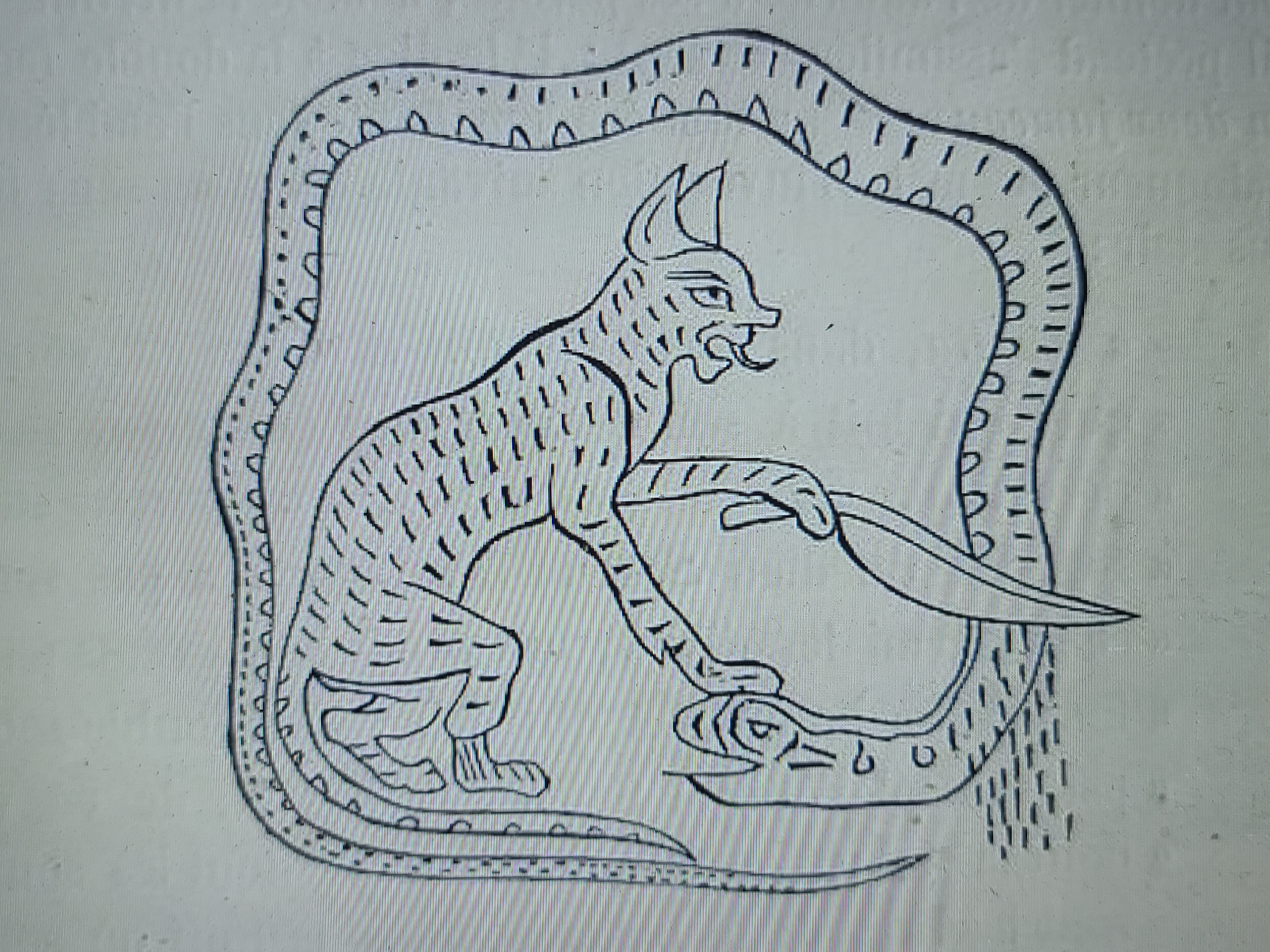

Vous devez être connecté pour poster un commentaire.