Man is an « intermediary being » between the mortal and the immortal, says Plato. This enigmatic phrase, rather inaudible to modern people, can be understood in several senses,.
One of these is the following. « Intermediary » means that man is in constant motion. He goes up and down, in the same breath. He ascends towards ideas that he does not really understand, and he descends towards matter that he does not understand at all. Inhaling, exhaling. Systole of the spirit, diastole of the soul.
Ancient words still testify to these outward movements of the soul. « Ecstasy », from the Greek ἒκστασις (ekstasis), means firstly « coming out of oneself ». The spirit comes out of the body, and then it is caught up in a movement that takes it beyond the world.
Ekstasis is the opposite of stasis, ‘contemplation’, — which is immobile, stable, and which Aristotle called θεωρία (theoria). The meaning of θεωρία as ‘contemplation, consideration’ is rather late, since it only appears with Plato and Aristotle. Later, in Hellenistic Greek, this word took on the meaning of ‘theory, speculation’ as opposed to ‘practice’.
But originally, θεωρία meant ‘sending delegates to a religious festival, religious embassy, being a theorist’. The ‘theorist’ was the person going on a trip to consult the oracle, or to attend a religious festival. A ‘theory’ was a religious delegation going to a holy place.
The words ekstasis and theoria have something in common, a certain movement towards the divine. Ekstasis is an exit from the body. Theoria is a journey out of the homeland, to visit the oracle of Delphi.
These are images of the free movement of the soul, in the vertical or horizontal direction. Unlike the theoria, which is a journey in the true sense of the word, ekstasis takes the form of a thought in movement outside the body, crossed by lightning and dazzle, always aware of its weakness, its powerlessness, in an experience which goes far beyond its capacities, and which it knows it has little chance of really grasping, few means of fixing it and sharing it on its return.
The word ekstasis seems to keep the trace of a kind of experience that is difficult to understand for those who have not lived it. When the soul moves to higher lands, generally inaccessible, it encounters phenomena quite different from those of the usual life, life on earth. Above all, it runs an infinitely fast race, in pursuit of something that is constantly ahead of it, that draws it ever further away, to an ever-changing elsewhere, which probably stands at an infinite distance.
Human life cannot know the end of this race. The soul, at least the one that is given the experience of ekstasis, can nevertheless intuitively grasp the possibility of a perpetual search, a striking race towards an elusive reality.
In his commentaries on the experience of ecstasyi, Philo considers that Moses, despite what his famous visionii, reported in the Bible, did not actually have access to a complete understanding of the divine powers.
But Jeremiah, on the other hand, would testify to a much greater penetration of these powers, according to Philo. However, despite all his talent, Philo has difficulty in consolidating this delicate thesis. The texts are difficult and resistant to interpretation.
Philo cautiously suggests extrapolating certain lines from Jeremiah’s text to make it an indication of what may have been an ecstasy. « This is how the word of God was addressed to Jeremiah”iii. This is rather thin, admittedly. But another line allows us to guess God’s hold, God’s domination over Jeremiah: « Dominated by your power, I have lived in isolation »iv.
Other prophets have also declared to have lived in ecstasy, using other metaphors. Ezekiel, for example, says that « the hand of God came »v upon him, or that the spirit « prevailed »vi.
When the ecstasy is at its height, the hand of God weighs more than usual: « And the spirit lifted me up and carried me away, and I went away sad, in the exaltation of my spirit, and the hand of the Lord weighed heavily on me.”vii
In a cynical, materialistic and disillusioned time, like our time, one cannot be content with just words, even prophetic ones, to interest the reader. Facts, experiments, science, rationality are needed.
Let’s start with a ‘technical’ definition of ecstasy according to the CNRTL :
« A particular state in which a person, finding herself as if transported out of herself, is removed from the modalities of the sensible world by discovering through a kind of illumination certain revelations of the intelligible world, or by participating in the experience of an identification, of a union with a transcendent, essential reality. »
This definition evokes enlightenment, identification or union with transcendental realities. This vocabulary is hardly less obscure than the biblical expressions ‘dominion by power’, or ‘hand of God’.
Moreover, this definition cautiously employs what appears to be a series of euphemisms: ‘to be as if transported’, ‘to be removed from the sensitive world’, ‘to discover a kind of enlightenment’, ‘to participate in an experience’.
If we return to the memories of ecstasy bequeathed to us by the prophets, the true ‘experience’ of ecstasy seems infinitely more dynamic, more overwhelming, ‘dominated’ by the immediate, irrefutable intuition of an infinite, transcendent ‘power’.
Bergson, a true modernist, if ever there was one, and philosopher of movement, paradoxically gives a rather static image of ecstasy: « The soul ceases to turn on itself (…). It stops, as if it were listening to a voice calling out to it. (…) Then comes an immensity of joy, an ecstasy in which it is absorbed or a rapture it experiences: God is there, and it is in him. No more mystery. Problems fade away, obscurities dissipate; it is an illumination.”viii
Can ecstasy only be associated with a moment when the soul ‘stops’, when it ‘stops spinning’? Is it not rather carried away without recourse by a fiery power, which suddenly sweeps away all certainty, all security? Bergson certainly falls far short of any essential understanding of ecstasy, perhaps because he has never experienced one.
Who will report today in audible words, in palpable images, the infinite and gentle violence of ecstasy? Who will say in raw terms the light that invades the intelligence, as in love the whole body? Who will explain the narrow bank from which the pulse of death is measured? Who will tell us how to kiss the lips of infinity? Who will grasp in one stroke the face of which time is but a slice, and the world, but a shadow?
The first kind of nudity: the head uncovered, the face unveiled, or the body dressed in torn clothing.
Moses said to Aaron, and to Eleazar and Ithamar his sons: « Do not uncover your heads or tear your clothes, unless you want to die and bring divine wrath upon the whole community. « (Lev. 10:6)
In this episode, sadness and mourning take hold of Aaron and his sons because a divine fire has just fatally burned two other sons. But Moses does not allow them to express their sorrow in the agreed forms (uncovered head, torn clothes).
In another episode, it is the unveiled face of Abraham’s wife that poses a problem, not as such, but because it arouses the Pharaoh’s desire, and incites Abraham to lie to him about his wife whom he presents as his sister.
« When he was about to arrive in Egypt, he said to Sarai his wife: « I know that you are a woman with a gracious face. It will happen that when the Egyptians see you, they will say, ‘This is his wife’, and they will kill me and keep you alive. « (Gen. 12:11-12)
Second kind of nudity: that of the drunk man, who does not have his full conscience. Thus Noah: « He drank of his wine and became drunk, and laid himself bare in the midst of his tent. Ham, the father of Canaan, saw his father’s nakedness and went outside to tell his two brothers. « (Gen. 9:21-22)
Third kind of nudity, the proud nudity of Adam and Eve in the Garden of Eden. « Now they were both naked, the man and his wife, and they were not ashamed. « (Gen. 2:25).
The fourth kind of nakedness is that of the shameful body. « And the LORD God called the man and said to him, « Where are you? » He answered, « I heard your voice in the garden; I was afraid, because I am naked, and I hid myself. » Then he said, « Who told you that you were naked? » (Gen. 3:9-11)
These different sort of nakedness can be interpreted, it seems to me, as various allegories of the Mystery, as various ways of being confronted with it, partially or totally, seeing it without understanding it, or somewhat understanding it, but then being excluded from it.
Not everyone is allowed to “see” the mysteries of heaven and earth. There are several levels of unveiling, reserved for those who have the capacity to face them face to face, according to their own merits.
“Seeing” the nakedness of the mystery is in principle excluded. But there are cases where this is more or less possible, with certain consequences.
If the mystery is laid bare, if it is looked at without a veil, without precaution, this implies taking risks.
The first kind of nudity is an image of the risk taken. Uncovering one’s head or tearing off one’s clothes against time, like Aaron did, can arouse divine anger.
Noah’s nakedness is another parable. One is sometimes led to surreptitiously discover a hidden aspect of the Mystery. Ham accidentally saw his father’s nudity (nudity which is admittedly a figure, a metaphor, of the Mystery). Ham will be punished above all for having immediately ‘revealed’ it to his brothers Shem and Japheth instead of having taken the necessary measures (covering the nudity, protecting the nakedness of the Mystery). It was the latter brothers who then carefully covered it, walking backwards and turning their face, not taking any glance at the scene.
They were to be rewarded later on for having preserved the invisible aura of the Mystery.
The third nudity, the happy nudity of Adam and Eve, is that of the origin. One may see the entire Mystery, without any veil, but the paradox is that one is not aware of its real nature. The whole Mystery is fully disclosed, but everything happens as if there was no awareness of it, as if there was nothing special to see, to understand, as is there was nothing mysterious in fact. Trap of the visible. Laces of un-exercised intelligence. Adam and Eve do not “see” and even less understand the Mystery that surrounds them, and they are not even aware of their own mystery, the mystery of their existence, their own consciousness. The Mystery is present in them, around them, but they know nothing of it.
The fourth kind of nudity is shameful nudity. Adam finally knows and sees his own nakedness as it is. The mystery is revealed to the consciousness. The consciousness has knowledge of the existence of the Mystery, but to no avail. The presence of the Mystery is immediately covered, buried in the unconscious, by the consciousness.
Four kind of nudity, four ways of perceiving the Mystery, and four ways blinding oneself to its true nature.
The biblical nudity carries four lessons about the veil and its unveiling.
One has to make an effort to understand the true nature, the true nudity, the true essence of the Mystery.
The Greek word logos means « reason » or « discourse, speech ».
In Plato’s philosophy, the Logos is the Principle and the Word. It is also the Whole of all the Intelligible, as well as the link between the divine powers, and what founds their unity. Finally, it is the « intermediary » between man and God.
For Philo of Alexandria, a Neo-Platonist Jew, the Logos takes two forms. In God, the Logos is the divine Intelligence, the Eternal Thought, the Thoughtful Thought. In its second form, the Logos resides in the world, it is the Thought in action, the Thought realized outside God.
Written shortly after Philo’s active years, the Gospel of John says that « in the beginning » there was the Logos who was God, and the Logos who was with God i. There was also the Logos who was made fleshii.
Does this mean that there are three instances of the Logos? The Logos who is God, the Logos who is with Him and the Logos who became flesh?
In Christian theology, there is only one Logos. Yet the three divine ‘instances’ of the Logos quoted by John have also been personified as Father, Son, Spirit.
For the structuralist philosopher, it is possible to sum up these difficult theses in a pragmatic way. The Logos comes in three forms or aspects: Being, Thinking, Speaking. That what is, that what thinks and that what speaks. These three forms are, moreover, fundamental states, from which everything derives, and with which anybody can find an analogy pointing to the fundamental human condition (existence, intelligence, expression).
Philo, who is both a Jew and a Neoplatonist, goes quite far with the theory of the Logos, despite the inherent difficulty of reconciling the unity of God and the multiplication of His ‘instances’ (that the Kabbalah, much later on, called ‘sefirot‘). For Philo, the Logos is the totality of God’s Ideas. These Ideas act “like seals, which when approached to the wax produce countless imprints without being affected in any way, always remaining the same.”iii
All things that exist in the universe derive from an Idea, a « seal ». The Logos is the general seal whose imprint is the entire universe.iv
Philo’s Logos is not « personified ». The Logos is the Organ of God (both His Reason and His Word) playing a role in the Creation. Philo multiplies metaphors, analogies, drawing from divine, human and natural images. The Logos is creation, engendering, speech, conception, or flow, radiation, dilatation. Using a political image, God « reigns », the Logos « governs ».
Philo’s thinking about the Logos is complex and confusing. A 19th century commentator judged that « a tremendous confusion is at the basis of Philo’s system »v. Allegedly, Philo seems to mix up Logos (Word), Pneuma (Spirit), Sophia (Wisdom) and Epistemus (Knowledge).
Wisdom seems to play the same role in relation to the Logos as the thinking Thought (Spirit) of God plays in relation to the world of the Intelligible. Wisdom is the deep source of this world of the Intelligible, and at the same time it is identical with it.
There is no logical quirk in this paradox. Everything comes from the nature of the divine Spirit, in which no distinction can be made between « container » and « content ».
The Logos is thus both the Author of the Law and the Law itself, the spirit and the letter of its content. The Logos is the Law, and the Logos is also its enunciator, its revelator.vi
The Logos is, in the universe, the Divine brought back to unity. He is also the intermediary between this unity and God. Everything which constitutes the Logos is divine, and everything which is divine, apart from the essence of God, is the Logos.
These ideas, as has been said, have been sometimes described as a « philosophical hodgepodge »; they seem to demonstrate a « lack of rigor »vii on the part of Philo, according to certain harsh judgments.
However, what strikes me is that Philo and John, at about the same historical period, the one immediately preceding the destruction of the Second Temple of Jerusalem, and independently of each other, specified the contours of a theophany of the Logos, with clear differences but also deep common structures.
What is even more striking is that, over the centuries, the Logos of the Stoics, the Platonic Noos, the Biblical Angel of the Eternal, the Word of YHVH, the Judeo-Alexandrine Logos, or the ‘Word made flesh‘, the Messiah of the first Christian Church, have succeeded one another. All these figures offer their analogies and differences.
As already said, the main difficulty, however, for a thinker like Philo, was to reconcile the fundamental unity of God, the founding dogma of Judaism, and His multiple, divine emanations, such as the Law (the Torah), or His Wisdom (Hokhma).
On a more philosophical level, the difficulty was to think a Thought that exists as a Being, that also unfolds as a living, free, creative entity, and that finally ´reveals´ herself as the Word — in the world.
There would certainly be an easy (negative) solution to this problem, a solution that « modern » and « nominalist » thinkers, cut off from these philosophical roots, would willingly employ: it would be to simply send the Logos and the Noos, the Angel and the incarnate Wisdom, the Torah and the Gospel back into the dustbin of empty abstractions, of idealistic chimera.
I do not opt for such an easy solution. It seems to me contrary to all the clues accumulated by History.
I believe that the Spirit, as it manifests itself at a very modest level in each one of us, does not come from biochemical mechanisms, from synaptic connections. I believe it is precisely the opposite.
Our brain multiplies cellular and neuronal networks, in order to try to grasp, to capture at our own level, what the Spirit can let us see of its true, inner nature, its fundamental essence.
The brain, the human body, the peoples of different nations and, as such, the whole of humanity are, in their own unique way, immense collective ´antennae´, whose primary mission is to capture the diffuse signs of a creative Intelligence, and build a consciousness out of it.
The greatest human geniuses do not find their founding ideas at the unexpected crossroads of a few synapses, or thanks to haphazard ionic exchanges. Rather, they are « inspired » by a web of thoughtful Thoughts, in which all living things have been immersed since the beginning.
As a clue, I propose this image : When I think, I think that I am; then I think that this thought is part of a Thought that lives, and endless becomes; and I think of this Thought, which never stops thinking, never ceases to think, eternally, the Thought that continues « to be », and that never stops being without thinking, and that never stops thinking without being.
The Descent from Mount Sinai, by Cosimo Rosselli, the Sistine Chapel, Rome
Under Tiberius, in the year 16, soothsayers, astrologers and magi were expelled from Italy. Divination had become a capital crime that one would pay with one’s life. A new millennium had begun, but no one suspected it. Times were changing faster than people’s minds. And the Roman religion had to defend itself foot to foot against barbaric ideas from elsewhere.
Long gone was then the time of Moses, who saw in the light what thought could not embrace. Long gone, the time of the prophets, who received dreams and visions, images and words.
Long gone also, was the time of the Chaldean magi and the Avestic and Vedic priests. Possessed of a divine madness, they could, it is said, predict the future by their power of enthusiasm, their capacity for ecstasy.
The words ‘enthusiasm’ and ‘ecstasy’ translate by means of Greek words and roots experiences of a probably universal nature. But do these words adequately reflect the variety of ‘visions’ and the diversity of ‘seers’ throughout the world and throughout history? How can this be ascertained? How can we organize the timeless archaeology of enthusiasm, launch the worldwide excavations of the ecstatic states?
When the divine penetrates the human, it overturns all that is known, all that is acquired, all that can be expressed, all that can be dictated. Everything is overturned, but it also seems that the mind receives, if we believe the testimonies, a capacity for understanding, comprehension and conviction, without any possible comparison. The prophet ‘hears’ or ‘sees’ in an instant thoughts which he considers ‘divine’ but which he makes his own, and to a certain extent he can communicate them to others and find attentive ears. This is where the true prophet is revealed.
After God breathed thoughts and laws into Moses’ mind, Moses in turn repeated them to Aaron. This double operation (first through divine breath, then through human speech) can be understood as an allegory. Moses is above all God’s interpreter. Firstly, he represents His Intelligence, then His Word. The Intelligence first grasps Moses entirely. What can be said of this? The texts are opaque, difficult to interpret. As for the Word that Moses repeated to Aaron, it represented the prophetic act itself, the decisive leap out of the sanctuary of ecstasy into freedom.
Free, the prophet is also bound, from above and below, – bound to heaven by Intelligence, bound to earth by the Word. Philo sums up: « The soul has an earthly base, but it has its summit in pure Intelligence.”i
For my part, I would add that the most important thing is not in fact to be found in Intelligence, which assails the soul entirely and subjugates it, nor in the Word, whose task is to give meaning to the unspeakable and then bring the worlds together.
What is really important, for the rest of the ages, and for its truly unspeakable implications, is the absolute freedom of the soul (here the soul of Moses) which has been able to free itself from ecstasy, then to transcend the innumerable constraints of the human word, and finally to launch a bridge over unfathomable chasms.
Emmanuel Lévinas, in a short autobiographyi, briefly recounts his childhood in Lithuania and Ukraine, his arrival in Strasbourg in 1923, his university career culminating in a professorship at the Sorbonne in 1973. This « disparate inventory » is dominated, he stresses, « by the presentiment and memory of Nazi horror ».
He then evokes, without any transition, the work of Husserl, whose method, he explains, consists of « respecting the intentions that animate the psyche », and seeing how it appears.
Surprising angel leap. Coagulation of extremes. From one line to the other, an unexpected change of subject – the passage from « Nazi horror » to « phenomenology ». Levinas links the pain of History, the praise of intention and the putting into perspective of what he calls « the unsuspected horizons where the real lies ».
Calm style of thought, through a succession of powerful jolts.
Time abounds in intimate fractures, in a thousand vacillations, constantly « presented » and « represented ». In each of them, the consciousness can decide to display its own will, a desire for rupture, or a refusal.1
From this capacity for rupture, from this refusal of abstraction, from this reflex of negation, from this scathing feeling of imminence, Levinas deduces the existence of beings of consciousness, who tear themselves away from the totality, who do not associate themselves with it, do not encompass it.
From these consciousnesses, from the pluralism of subjectivities and the myriad of experiences – he infers the necessity of the « other », the necessity of the relation of the being with other beings, and with the Other.
Nice ideal.
From the same premises, however, a much more pessimistic lesson could be drawn.
The rupture with the present, the gaping of the imminent, the uprooting from nature, the refusal of the principle, the execution of the impersonal and the negation of the totality do not necessarily lead to the apotheosis of the relation, the revelation of the being in front of the being.
Why would the refusal of the Whole certainly open the way to the Other?
The refusal of the Whole could rather imply a certain, absolute, assured solitude. The observation of Hegelian failure, the flight from totalizations, are not sufficient conditions for a new Exodus. Moreover, if there were a new Exodus, who would be its Moses, and to what Earth, with what people?
A Promised Land, where one could meet Angeli Novi, à la Klee? Or a wounded land, traversed in all directions by angels of Death, furious demons, incubi and succubi, — a land of Hell?
A disputed, bruised, bloodless land, where black clouds, funeral mounds, mass graves, and putrid smells spread out?
Which new prophet will tell us what the future Promised Lands still in the making will be?
For the addicts to phenomenology, the name of one of these putative prophets would be: Intention !…
Following this lesson, we should listen to the « intention » lurking in the depths, we should watch out for the « psyche » at work in ourselves. We must not stop being even more attentive to what could, coming unexpectedly, « appear » in the world, or in our consciousness, at any moment.
We must give consciousness this unique credit: to be able to sense in due time the imminence of disaster.
____
1« Le temps ne doit pas être vu comme »image » et approximation d’une éternité immobile, comme mode déficient de la plénitude ontologique. Il articule un mode d’existence où tout est toujours révocable, où rien n’est définitif, mais est à venir – où le présent même n’est pas une simple coïncidence avec soi, mais encore imminence. Ce qui est la situation de la conscience. Avoir conscience, c’est avoir du temps, c’est être en deçà de la nature, dans un certain sens ne pas être encore né. Un tel arrachement n’est pas un moindre être, mais la façon du sujet. Elle est pouvoir de rupture, refus de principes neutres et impersonnels, refus de la totalité hégélienne et de la politique, refus de rythmes ensorceleurs de l’art. » E. Lévinas. Difficile liberté, 1976, p.375
The sun was created on the fourth day of Genesis. Before the sun was created, what did the first « mornings » and « evenings » look like? In what sense was a “dawn” without a morning sunbeam? An “evening” without twilight?
Genesis speaks of « evenings » and « mornings »i, but not of « nights », except at the very beginning. « God called the light Day, and the darkness he called Night. And there was evening and there was morning, one day.”ii
Why? Perhaps to suggest that the « Night » cannot be entirely given over to « Darkness ». Or because the Night, being absolutely devoid of any « light », cannot have an existence of its own. Nights = Darkness = Nothingness?
There is another possibility. The Night does exist, but the angels of light cannot have « knowledge » of it. Being made of light, they are incompatible with night. Therefore they cannot talk about it, let alone pass on its existence to posterity.
This is the reason why one passes, immediately, from evening to morning. « There was an evening, there was a morning”iii.
Another question arises, that of the nature of the « day ». Since the sun had not yet been created, perhaps we should imagine that « day » implied another source of light, for example an « intelligible light », or metaphorically, the presence of « angels of light », as opposed to « night », which would shelter the « angels of darkness »?
In any case, before the sun was born, there were three days – three mornings and three evenings – that benefited from a non-solar light and a quality of shadow that was intermediate and not at all nocturnal.
When the angels « knew » the creation (waters, heavens, lands, seas, trees, grasses…) in the first three days, they did not « see » it, nor did they get attached to it. They would have run the risk of sinking into the darkness of the night, which they did not « see », and for good reason.
In those evenings and mornings, they could also « know » the light of the spirit.
Only the “night angels” could remain in the night, this “night” which Genesis avoids naming six timesiv.
Nothing can be said about this night and this occultation of the spirit. Besides, the Bible does not even mention the word itself, as has already been said.
What is certain is that during the first three days there were no lights other than those of the spirit. Nor were there any nights other than those of the spirit.
During these three days and nights, creation received the original, founding memory of this pure light and this deep darkness.
We can also derive these words (mornings, evenings, days, nights) into other metaphors: the « mornings » of consciousness, the « nights » of the soul, – as S. Augustine who wrote about the « knowledge of the morning » and the « knowledge of the evening »v.
S. Thomas Aquinas also took up these expressions and applied them to the « knowledge of the angel »: « And as in a normal day morning is the beginning of the day, and evening is the end of the day, [St. Augustine] calls morning knowledge the knowledge of the primordial being of things, a knowledge which relates to things according to the way they are in the Word; whereas he calls evening knowledge the knowledge of the created being as existing in its own nature.” vi
Philosophically, according to Thomistic interpretation, ‘morning’ is a figurative way of designating the principle of things, their essential idea, their form. And the « evening » then represents what follows from this essence subjected to the vicissitudes of existence, which results from the interaction of the principle, the idea, the form, with the world, reality or matter.
“Morning knowledge” is a knowledge of the primordial being of things, a knowledge of their essence. “Evening knowledge” represents the knowledge of things as they exist in their own nature, in the consciousness of themselves.
Let us take an example. A tiger, an eagle or a tuna, live their own lives, in the forest, the sky or the sea. Perhaps one day we will be able to write about the unique experience of a particular tiger, a particular eagle or a particular tuna. We will have taken care to arm them with sensors from their birth, and to scrupulously record all the biological data and their encephalograms every millisecond of their existence. In a sense, we will be able to « know » their entire history with a luxury of detail. But what does « knowing » mean in this context? Over time, we will surely acquire the essence of their vision of the world, their grammars, their vocabularies, as a result of systematic, tedious and scholarly work. But will we ever discover the Dasein of a particular animal, the being of this tiger, this tuna or this eagle?
Since Plato, there has been this idea that the idea of the animal exists from all eternity, but also the idea of the lion, the idea of the dove or the idea of the oyster.
How can we effectively perceive and know the essence of the tiger, the tigerness? The life of a special tiger does not cover all the life possibilities of the animals of the genus Panthera of the Felidae family. In a sense, the special tiger represents a case in point. But in another sense, the individual remains enclosed in its singularity. It can never have lived the total sum of all the experiences of its congeners of all times past and future. It sums up the species, in one way, and it is overwhelmed on all sides by the infinity of possibilities, in another way.
To access the « morning knowledge », one must be able to penetrate the world of essences, of paradigms, of « Logos« . This is not given to everyone.
To access the « evening knowledge », one must be ready to dive into the deep night of creatures. It is not given to everyone either, because one cannot remain there without damage. This is why one must « immediately » arrive in the morning. S. Augustine comments: « But immediately there is a morning (as is true for each of the six days), for the knowledge of the angels does not remain in the ‘created’, but immediately brings it [the created] to the glory and love of the One in whom the creature is known, not as something done, but to be done.”vii
We can see that there are in fact three kinds of knowledge: diurnal knowledge, vesperal knowledge and morning knowledge.
The diurnal knowledge here is that of daylight, but one has yet to further distinguish between a daylight without the “sun” (like in the first three days of Creation), and a daylight bathing in sunlight.
As for the difference between vesperal and matutinal knowledge, it is the same as the difference between knowledge of things already done and knowledge of things yet to be accomplished.
.
iGn 1,5. Gn 1,8. Gn 1,13. Gn 1,19. Gn 1,23. Gn 1,31
According to Genesis, taken literally, man was created twice.
Genesis, in chapter 1, describes a first creation of « man » called ha-adam. The word ha-adam includes the definite article ha and literally means « the earth », metaphorically « the red » (for the earth is red), and by extension « man ».
In Chapter 2, Genesis describes a second creation of man (ish), accompanied by a creation of woman (isha). These two words are not preceded by the article ha.
The most immediately noticeable differences between the two creations are as follows.
First of all, the names given to the man differ, as we have just seen: ha-adam on the one hand, ish and isha on the other.
Secondly, the verbs used to describe the act of creation are not the same. In the first chapter of Genesis we read: « God said, ‘Let us make man in our image, in our likeness' » (Gen. 1:26). The Hebrew word for ‘let us make’ is נַעֲשֶׂה from the verb עֲשֶׂה, ‘asah, to do, to act, to work. In the second chapter of Genesis we read: « And the Eternal God planted a garden in Eden toward the east, and there he placed the man whom he had fashioned. « (Gen. 2:8) The Hebrew word for ‘fashioning’ is יָצָר , yatsara, to make, to form, to create.
Thirdly, in Genesis 1, God created man « male and female » (zakhar and nqebah). Man is apparently united in a kind of bi-sexual indifferentiation or created with « two faces », according to Rashi.
In contrast, in Genesis 2, the creation of woman is clearly differentiated. She is created in a specific way and receives the name ‘isha‘, which is given to her by the man. The man, ‘ha-adam‘, then calls himself ‘ish‘, and he calls his wife ‘isha‘, « because she was taken from ‘ish‘ ».
Rashi comments on this verse: « She shall be called isha, because she was taken from ish. Isha (‘woman’) is derived from ish (‘man’). From here we learn that the world was created with the holy language, [since only the Hebrew language connects the words ‘man’ and ‘woman’ with a common root]. (Berechith raba 18, 4).”
I don’t know if it can be said with impunity that only the Hebrew language connects the words « man » and « woman » to a common root. English, for example, displays such a link with « man » and « woman ». In Latin, « femina » (woman) would be the feminine counterpart of « homo » (« hemna« ).
But this is a secondary issue. However, it shows that Rashi’s interest is certainly not exercised here on the problem of double creation and on the triple difference between the stories of Genesis 1 and Genesis 2: two nouns (adam/ish), two verbs to describe creation (‘asah/yatsara), and two ways of evoking the difference between genders, in the form ‘male and female’ (zakhar/nqebah) and in the form ‘man and woman’ (ish/isha).
The double narrative of the creation of man and woman could be interpreted as the result of writing by independent authors at different times. These various versions were later collated to form the text of Genesis, which we have at our disposal, and which is traditionally attributed to Moses.
What is important here is not so much the identity of the writers as the possible interpretation of the differences between the two stories.
The two ‘ways’ of creating man are rendered, as has been said, by two Hebrew words, עֲשֶׂה ‘to make’ and יָצָר ‘to form’. What does this difference in vocabulary indicate?
The verb עֲשֶׂה ‘asah (to do) has a range of meanings that help to characterize it more precisely: to prepare, to arrange, to take care of, to establish, to institute, to accomplish, to practice, to observe. These verbs evoke a general idea of realization, accomplishment, with a nuance of perfection.
The verb יָצָר yatsara (to shape, to form) has a second, intransitive meaning: to be narrow, tight, embarrassed, afraid, tormented. It evokes an idea of constraint, that which could be imposed by a form applied to a malleable material.
By relying on lexicon and semantics, one can attempt a symbolic explanation. The first verb (עֲשֶׂה , to do) seems to translate God’s point of view when he created man. He « makes » man, as if he was in his mind a finished, perfect, accomplished idea. The second verb (יָצָר , to form) rather translates, by contrast, the point of view of man receiving the « form » given to him, with all that this implies in terms of constraints, constrictions and limits.
If we venture into a more philosophical terrain, chapter 1 of Genesis seems to present the creation of man as ‘essence’, or in a ‘latent’ form, still ‘hidden’ to some extent in the secret of nature.
Later, when the time came, man also appears to have been created as an existential, natural, visible, and clearly sexually differentiated reality, as chapter 2 reports.
S. Augustine devoted Part VI of his book, Genesisin the literal sense, to this difficult question. He proposes to consider that God first created all things ‘simultaneously’, as it is written: ‘He who lives for eternity created everything at the same time. « (Ecclesiasticus, 18,1) The Vulgate version says: « inaeternum, creavit omnia simul« . This word ‘simul‘ seems to mean a ‘simultaneous’ creation of all things.
It should be noted in passing that neither Jews nor Protestants consider this book of Ecclesiasticus (also called Sirach) to belong to the biblical canon.
For its part, the Septuagint translates from Hebrew into Greek this verse from Ecclesiasticus: » o zon eis ton aiôna ektisen ta panta koinè « . (« He who lives for eternity has created everything together. »)
This is another interpretation.
So shall we retain ‘together’ (as the Greek koinè says) or ‘simultaneously’ (according to the Latin simul)? It could be said that it amounts to the same thing. However it follows from this difference that Augustine’s quotation from Sirach 18:1 is debatable, especially when it is used to distinguish between the creation of man in chapter 1 of Genesis and his second creation in chapter 2.
According to Augustine, God in the beginning created all things ‘in their causes’, or ‘in potency’. In other words, God in chapter 1 creates the idea, essence or principle of all things and everything in nature, including man. « If I say that man in that first creation where God created all things simultaneously, not only was he not a man in the perfection of adulthood, but was not even a child, – not only was he not a child, but was not even an embryo in his mother’s womb, but was not even the visible seed of man, it will be believed that he was nothing at all.”
Augustine then asks: what were Adam and Eve like at the time of the first creation? « I will answer: invisibly, potentially, in their causes, as future things are made that are not yet.”
Augustine takes the side of the thesis of the double creation of man, firstly in his ‘causal reason’, ‘in potency’, and secondly, ‘in act’, in an effective ‘existence’ which is prolonged throughout history.
This is also true of the soul of every man. The soul is not created before the body, but after it. It does not pre-exist it. When it is created, it is created as a ‘living soul’. It is only in a second stage that this ‘living soul’ may (or may not) become ‘life-giving spirit’.
Augustine quotes Paul on this subject: « If there is an animal body, there is also a spiritual body. It is in this sense that it is written: The first man, Adam, was made a living soul, the last Adam, the ‘newest Adam’ (novissimusAdam), was a life-giving spirit. But it is not what is spiritual that was made first, it is what is animal; what is spiritual comes next. The first man, who came from the earth, is earthly; the second man, who came from heaven, is heavenly. Such is the earthly, such are also the earthly; and such is the heavenly, such are also the heavenly. And just as we have put on the image of the earthly, so shall we also put on the image of him who is of heaven.”
And Augustine adds: « What more can I say? We therefore bear the image of the heavenly man from now on by faith, sure that we will obtain in the resurrection what we believe: as for the image of the earthly man, we have clothed it from the origin of the human race. »
This basically amounts to suggesting the hypothesis of a third ‘creation’ that could affect man: after adam, ish or isha, there is the ‘last Adam‘, man as ‘life-giving spirit’.
From all of this, we will retain a real intuition of the possible metamorphoses of man, certainly not reduced to a fixed form, but called upon to considerably surpass himself.
It is interesting, at this point, to note that Philo of Alexandria offers a very different explanation of the double creation.
Philo explains that in the beginning God « places » (וַיָּשֶׂם שָׁם ) in the Garden of Eden a « fashioned » man (‘The Eternal God planted a garden in Eden towards the east and placed the man he had fashioned in it’). Gen. 2:8). A little later he ‘established’ (וַיַּנִּח ) a man to be the worker and the guardian (‘The Eternal-God therefore took the man and established him in the Garden of Eden to cultivate and care for it’. Gen. 2:15).
According to Philo, the man who cultivates the garden and cares for it is not the « fashioned » man, but « the man [that God] has made« . And Philo says: « [God] receives this one, but drives out the other.”i
Philo had already made a distinction between the heavenly man and the earthly man, by the same verbal means. « The heavenly man was not fashioned, but made in the image of God, and the earthly man is a being fashioned, but not begotten by the Maker.”ii
If we follow Philo, we must understand that God drove the ‘fashioned‘ man out of the garden, after having placed him there, and then established the ‘made‘ man there. The man whom God ‘fashioned‘ was ‘placed‘ in the garden, but it seems that he was not considered worthy to cultivate and keep it.
Moreover, in the text of Genesis there is no evidence to support Philo’s thesis of a cross between a ‘fashioned’ man and a ‘made’ man.
Philo specifies: « The man whom God made differs, as I have said, from the man who was fashioned: the fashioned man is the earthly intelligence; the made man is the immaterial intelligence.”iii
Philo’s interpretation, as we can see, is metaphorical. It must be understood that there are not two kinds of men, but that there are rather two kinds of intelligence in man.
« Adam is the earthly and corruptible intelligence, for the man in the image is not earthly but heavenly. We must seek why, giving all other things their names, he did not give himself his own (…) The intelligence that is in each one of us can understand other beings, but it is incapable of knowing itself, as the eye sees without seeing itself »iv.
The ‘earthly’ intelligence can think of all beings, but it cannot understand itself.
God has therefore also ‘made‘ a man of ‘heavenly’ intelligence, but he does not seem to have had a happier hand, since he disobeyed the command not to eat of the fruit of the ‘tree of the knowledge of good and evil’.
But was this tree of ‘the knowledge of good and evil’ really in the Garden of Eden? Philo doubts it. For if God says, « But of the tree of the knowledge of good and evil, you shall not eat of it », then « this tree was not in the garden »v.
« You shall not eat of it.” This should not be interpreted as a prohibition, but as a simple prediction of an all-knowing God.
This can be explained by the nature of things, Philo argues. The tree could have been present in « substance », but not in « potency »…
The man ‘in the image’ could have eaten the substance of a fruit of this tree. But he did not digest all its latent potency, and therefore he did not benefit from it in any real way.
There is yet another possible interpretation. Knowledge is not found in life. It is found only in potency, not in life, but in death.
The day in which one eats from the fruit of the tree of knowledge is also the day of death, the day in which the prediction is fulfilled: « Thou shalt die of death » מוֹת תָּמוּת (Gen. 2:17).
In this strange verse the word « death » is used twice. Why is this?
« There is a double death, that of man, and the death proper to the soul; that of man is the separation of soul and body; that of the soul is the loss of virtue and the acquisition of vice. (…) And perhaps this second death is opposed to the first: this one is a division of the compound of body and soul; the other, on the contrary, is a meeting of the two where the inferior, the body, dominates and the superior, the soul, is dominated.”vi
Philo quotes fragment 62 of Heraclitus: « We live by their death, we are dead to their life.”vii He believes that Heraclitus was « right to follow the doctrine of Moses in this ». As a good Neoplatonist, Philo also takes up Plato’s famous thesis of the body as the ‘tomb of the soul’.
« That is to say that at present, when we live, the soul is dead and buried in the body as in a tomb, but by our death, the soul lives from the life that is proper to it, and is delivered from evil and the corpse that was bound to it, the body.”viii
There is nevertheless a notable difference between the vision of Genesis and that of the Greek philosophers.
Genesis says: « You shall die of death! «
Heraclitus has a very different formula: « The life of some is the death of others, the death of some, the life of others.”
Paul Klee’s Angelus novus has an undeniably catchy title. « The new angel », – two simple words that sum up an entire programme. But does the painting live up to the expectation created by its title? A certain ‘angel’, with a figure like no other, seems to float graphically in the air of mystery, but what is he? What does he say? It is said that there are billions of angels on the head of a single pin. Each boson, each prion, has its angel, one might think, and each man too, say the scholastics. How, under these conditions, can we distinguish between new and old angels? Aren’t they all in service, in mission, mobilised for the duration of time? And if there are « old angels », are they not nevertheless, and above all, eternal, timeless, always new in some way?
Walter Benjamin has commented on this painting by Klee, which undoubtedly ensured its paper celebrity more than anything else.
« There is a painting by Klee entitled Angelus novus. It depicts an angel who seems to have the intention of moving away from what his gaze seems to be riveted to. His eyes are wide open, his mouth open, his wings spread. Such is the aspect that the angel must necessarily have of history. His face is turned towards the past. Where a sequence of events appears before us, he sees only one and only one catastrophe, which keeps piling up ruins upon ruins and throwing them at his feet. He would like to linger, awaken the dead and gather the defeated. But a storm is blowing from paradise, so strong that the angel can no longer close its wings. This storm is constantly pushing him towards the future, to which he turns his back, while ruins are piling up all the way to heaven before him. This storm is what we call progress.”i
Striking is the distance between Benjamin’s dithyrambic commentary and Klee’s flatter, drier work. Klee’s angel actually appears static, even motionless. No sensation of movement emanates from him, either backwards or forwards. No wind seems to be blowing. His ‘wings’ are raised as if for an invocation, not for a flight. And if he were to take off, it would be upwards rather than forwards. Its « fingers », or « feathers », are pointed upwards, like isosceles triangles. His eyes look sideways, fleeing the gaze of the painter and the spectator. His hair looks like pages of manuscripts, rolled by time. No wind disturbs them. The angel has a vaguely leonine face, a strong, sensual, U-shaped jaw, accompanied by a double chin, also U-shaped. His nose seems like another face, whose eyes would be his nostrils. His teeth are wide apart, sharp, almost sickly. It even seems that several of them are missing. Do angels’ teeth decay?
Klee’s angel is sickly, stunted, and has only three fingers on his feet. He points them down, like a chicken hanging in a butcher’s shop.
Reading Benjamin, one might think he’s talking about another figure, probably dreamt of. Benjamin has completely re-invented Klee’s painting. No accumulated progress, no past catastrophe, seems to accompany this angelus novus, this young angel.
But let us move on to the question of substance. Why should history have only one ‘angel’? And why should this angel be ‘new’?
Angelology is a notoriously imperfect science. Doctors rarely seem to agree.
In Isaiah (33:7) we read: « The angels of peace will weep bitterly. » Do their renewed tears testify to their powerlessness?
In Daniel (10:13) it is said that an archangel appeared and said to Daniel: « The Prince of the Persians resisted me twenty-one days ». This archangel was Gabriel, it is said of him, and the Prince of Persia was the name of the angel in charge of the Persian kingdom.
So the two angels were fighting against each other?
It was not a fight like Jacob’s fight with the angel, but a metaphysical fight. S. Jerome explains that this angel, the Prince of the Persian kingdom, opposed the liberation of the Israelite people, for whom Daniel prayed, while the archangel Gabriel presented his prayers to God.
S. Thomas Aquinas also commented on this passage: « This resistance was possible because a prince of the demons wanted to drag the Jews who had been brought to Persia into sin, which was an obstacle to Daniel’s prayer interceding for this people.”ii
From all this we can learn that there are many angels and even demons in history, and that they are brought to fight each other, for the good of their respective causes.
According to several sources (Maimonides, the Kabbalah, the Zohar, the Soda Raza, the Maseketh Atziluth) angels are divided into various orders and classes, such as Principalities (hence the name « Prince » which we have just met for some of them), Powers, Virtues, Dominations. Perhaps the best known are also the highest in the hierarchy: the Cherubim and the Seraphim. Isaiah says in chapter 6 that he saw several Seraphim with six wings « shouting to one another ». Ezekiel (10:15) speaks of Cherubim.
The Kabbalists propose ten classes of angels in the Zohar: the Erelim, the Ishim, the Beni Elohim, the Malakim, the Hashmalim, the Tarshishim, the Shinanim, the Cherubim, the Ophanim and the Seraphim.
Maimonides also proposes ten classes of angels, arranged in a different order, but which he groups into two large groups, the « permanent » and the « perishable ».
Judah ha-Levi (1085-1140), a 12th century Jewish theologian, distinguishes between « eternal » angels and angels created at a given time, for a certain duration.
Among the myriads of possible angels, where should we place Klee’s Angelus novus, the new angel whom Benjamin called the « angel of history » with authority? Subsidiary question: is a « new angel » fundamentally permanent or eminently perishable?
In other words: is History of an eternal essence or is it made up of a series of moments with no sequel?
Benjamin thinks, as we have seen, that History is represented, at every moment, at every turning point, by a « new Angel ». History exists only as a succession of phases, it is a wireless and random necklace of moments, without a sequel.
Anything is always possible, at any moment, anything can happen, such seems to be the lesson learned, in an age of absolute anguish, or in a serene sky.
But one can also, and without any real contradiction, think that History is one, that it builds its own meaning, that it is a human fabrication, and that the divine Himself must take into account this fundamental freedom, always new, always renewed, and yet so ancient, established since the origin of its foundation.
—–
iWalter Benjamin, Thèses sur la philosophie de l’histoire. Œuvres III, Paris, Gallimard, 2000, p. 434
Wittgenstein famously wrote in his Philosophical Investigations that if a lion could speak we could not understand him.
Why only a lion? Isn’t it also true of the tuna, the dragonfly or a rattlesnake’s nest? Or even of a pile of dust, a block of granite or a cluster of galaxies? Or a prion, a plasmid, a boson? Or an angel, a seraphim, and even God himself?
The living, the non-living or the beyond-living speak languages that cannot be translated into each other. They live or non-live in their own worlds, – while living or non-living side by side in the common world. The lion smells the blood of the impala, hears its terror, feeds on its scent, and the whole surrounding savanna learns an immemorial lesson from this feast.
God fills the world with His subtle grammar, but a single boson, too, fills the universe, in its own very tenuous way.
It is an ancient dream to speak all languages, past, present and all those yet to come.
But it is an unspeakable dream to desire to speak the language of all the aeons, all the universes.
One might say: but a stone doesn’t speak, nor a proton or a star! Only beings endowed with reason do speak.
This is, of course, a short view. Can we conceive what we are not?
The Leonine language seems closer to the Human language than to a mineral language, because there is no lack of animal metaphors, that could bind the two worldviews.
Isn’t the crushing of bones in the jaws a kind of sentence? Isn’t the agony of the victim, the smell of fear and death part of the universal volapük?
The lion « leonises ». The snake « snakes ». Man « anthropomorphizes ».
What about the aborted dream of the fly? What about the photon’s fatigue? The angel’s grief?
All these lives, these feelings, — outside of all syntax, all lexicon, but not totally out of all intuition.
If we put a million Champollions on the spot, to finally decipher the roar of the panther, the cry of the whale or the vibrato of the lizard, wouldn’t we be able to determine non-thought of structures, shapes, meaning? Wouldn’t there be some hope of establishing correspondences between languages eminently « other » than, say, Greek, Hebrew or Sanskrit? Is it certain that we will never find a new Rosetta Stone one day revealing that the languages of the living are living their own lives?
And life is not reserved for the living, by the way. The non-living, or at least what the living call it, also lives a life that is undoubtedly more secret and more fundamental, initiated at the borders of time and space…
All languages have one thing in common. They survive those who speak them. They form a world apart, which also lives its own life.
How can we understand ourselves if we cannot even understand the nature of the language we think we speak?
If we could really understand ourselves, and our language itself, would we understand better all the infinite otherness in the silent worlds, all that is obscure (to us) in the universe?
There is talking and talking. There is speaking without saying anything, and there is speaking without looking like it; there is speaking with covered words, or between the lines.
There is the music of words and there are tones. The high tone, the firm tone, the beautiful tone, the warm tone, the acid tone, the fat tone. So many tones! You need the ear, you need sensitivity.
In the slightest breath, there are ignored palimpsests, impassive, waiting for their time. And the stars also breathe.
‘Words’ are also the dark and shiny reflections, the muffled flashes of a latent fire, a fire of meaning, inaudible, unhoped for, smouldering under the ashes of appearances.
Are we essentially alone in the face of the porous mysteries of the unconscious? Are we always alone in front of what could suddenly be discovered or revealed there, after long and slow maturation? Are we alone in front of the flagrant repression of what will remain buried there forever?
Many wander in sorrow in the deserts of their own minds, they wander lonely in the ergs of understanding. Fleeing the austerity of the silent void, they flee to the hubbub.
Others think alone, against the norm, against opinion, against the crowd. « I cross the philosophical space in absolute solitude. As a result, it no longer has any limits, no walls, it doesn’t hold me back. This is my only chance.”i
But if it is difficult to think alone, it is even more difficult to think with others.
The common brings us closer and warms us up. It doesn’t encourage people to try to reach cold peaks. The community compensates for isolation, and offers fusion in the mass. But something resists. It is the haunting, extreme, demanding feeling that the ‘self’ is not the ‘us’. The ideological, collective, social ‘us’ does not intersect with the inner, personal, singular ‘self’…
Cultures, religions and civilizations are ‘us’, fleeting in essence.
They fictitiously envelop billions of solitary ‘selves’, in essence. All these ‘us’ become lifeless shells, skinless drums, after a few millennia.
The mystery is that only the ‘self’ will survive them.
A deeper mystery yet: how to survive our Self?
______
iCatherine Malabou, Changer de différence, – cit. in Frédéric Neyrat , Atopies.
The Vedic rite of sacrifice required the participation of four kinds of priests, with very specific functions.
The Adhvaryu prepared the altar, lit the fire and performed the actual sacrifice. They took care of all the material and manual aspects of the operations, during which they were only allowed to whisper a few incantations specific to their sacrificial activity.
The Udgatṛi were responsible for singing the hymns of SâmaVeda in the most melodious way.
The Hotṛi, for their part, had to recite in a loud voice, but without singing them, the ancient hymns of Ṛg Veda, respecting the traditional rules of pronunciation and accentuation. They were supposed to know by heart all the texts of the Veda in order to adapt to all the circumstances of the sacrifices. At the end of the litanies, they uttered a kind of wild cry, called vausat.
Finally, remaining silent throughout, an experienced Brahmin, the ultimate reference for the smooth running of the sacrifice and guarantor of its effectiveness, supervised the various phases of the ceremony.
These four kinds of priests had a very different relationship to the word (of the Veda), according to their ranks and skills.
Some murmured it, others sang it, others spoke it loudly, – and finally the most senior among them kept silent.
These different regimes of expression could be interpreted as so many modalities of the relationship of speech to the divine. One could also be content to see in them an image of the different stages of the sacrifice, an indication of its progress.
In the Vedic imagination, murmurs, songs, words, cries, and finally silence fill and increase the divine, like great rivers wind ‘safe to the sea’.
The recitation of Ṛg Veda is an endless narrative, weaving itself, according to various rhythms. One can recite it word for word (pada rhythm), or mime a path (krama) according to eight possible varieties, such as the « braid » (jatā rhythm) or the « block » (ghana rhythm).
In the « braid » (jatā ) style, a four-syllable expression (noted: abcd) became the subject of a long, repetitive and obsessive litany, such as: ab/ba/abc/cba/bc/cb/bcd/dcb/bcd…
When the time came, the recitation would « burst out » (like thunder). Acme of sacrifice.
In all the stages of the sacrifice, there was a will to connect, a linking energy. The Vedic word is entirely occupied with building links with the Deity, weaving close, vocal, musical, rhythmic, semantic correlations.
In essence, it represents the mystery of the Deity. It establishes and constitutes the substance of a link with her, in the various regimes of breath, in their learned progression.
A hymn of the Atharvaveda pushes the metaphor of breath and rhythm as far as possible. It makes us understand the nature of the act in progress, which is similar to a sacred, mystical union.
« More than one who sees has not seen the Word; more than one who hears does not hear it.
To the latter, she has opened her body
like her husband a loving wife in rich attire. »
It is interesting, I think, to compare some of these Vedic concepts to those one can find in Judaism.
In Genesis, there is talk of a « wind » from God (רוּח, ruah), at the origin of the world.i A little later, it is said that God breathed a « breath of life » (נשׁמה neshmah) so that man became a « living being » (נפשׁ nefesh).ii
God’s « wind » evokes the idea of a powerful, strong hurricane. In contrast, the « breath of life » is light as a breeze, a peaceful and gentle exhalation.
But there is also the breath associated with the word of God, which « speaks », which « says ».
Philo of Alexandria thus commented about the « breath » and « wind » of God, : « The expression (He breathed) has an even deeper meaning. Indeed three things are required: what blows, what receives, what is blown. What blows is God; what receives is Intelligence; what is blown is Breath. What is done with these elements? A union of all three occurs.”iii
Breath, soul, spirit and speech, in the end, unite.
Beyond languages, beyond cultures, from the Veda to the Bible, a profound analogy transcends worlds.
The murmurs of the Adhvaryu, the songs of Udgatṛi, the words of Hotṛi, and the very silence of the Brahmin, aim at an union with the divine.
The union of these various breaths (murmured, spoken, sung, silent breaths) is analogous in principle, it seems to me, to the union of the wind (ruah), the soul (neshmah), and the spirit (nefesh).
In the Veda and in the Bible, — across the millennia, the union of the word and the breath, mimics the union of the divine and the human.
The WISEA J171227.81-232210.7 black hole — several billion times as massive as our sun, exploding in Ophiuchus galaxy cluster,
Claude Lévi-Strauss is a good representative of contemporary thought. He displays its salient characteristics: despair of thought, insignificance of being, erection of non-knowledge as the ultimate « knowledge », universal doubt (doubt of meaning and doubt of doubt itself), all this in a sardonic and cheerful tone. « Let humanity disappear and the earth disappear, nothing will be changed in the march of the cosmos. Hence a final paradox: we are not even sure that this knowledge that reveals our insignificance has any validity. We know that we are nothing or not much, and, knowing this, we no longer even know if this knowledge is one. To think of the universe as immeasurable to thought forces us to question thought itself. We don’t get out of it.”i
What will be the thought of the universe in a thousand or two thousand years from now, who can claim to know it today? And who can think in the languages of the day what will be thought here and there, in the universe, in eight hundred thousand years or in a hundred million centuries? These ages seem distant only because of a lack of imagination.
We are really tired of the old marquis who are tired of dreaming. Post-modern doubt is a paper origami. We yearn for fresh and lively intuitions, for other universes, for horizons with naked orients, for stars without north, and the worn-out metaphors of extra-galactic confines or exo-biological chimeras already bore us with their brash roundness and frank blandness.
To think far away, however, little is enough. We need to change the signs, to swap the senses, and to dream of hurricanes. Everything quickly becomes different then. The thoughts of the day seem like slow caterpillars, far from the butterfly that is sensed, and very unworthy of the pensive eagle, high in the cloud.
It is tempting to believe that thought is immeasurable to the universe, and, diagonally agonistic, line of fire, that it transcends it easily. The humblest thought goes further than the white dwarves stars, and it pierces the fabric of the world with a hole blacker than the whole dark matter.
Any thought that is a little audacious obliges us to question the universe itself, its meaning and its essence. Every thought then cries out: « We are getting out of it immediately », – and not: « we are not getting out of it ».
The whole universe is in itself « insignificant ». By contrast, thought “means”, it has “meaning”, and it gives “meaning”.
If the entire universe ever receives one day some meaning, that meaning will not come from cosmic background noise, the shape of nebulae, or the sanctification of the boson (the so-called « God’s particle »).
If a demiurge created the world, the cosmos has no meaning of its own. Its meaning is obviously to be found elsewhere than in it.
And if the world created itself, by some kind of automatism, how could it give itself its own meaning, suck its own blood? Does the baby child at the breast suck herself?
The cognitive and ontological pessimism of post-modernism is equivalent to its opposite, from the point of view of the free play of radical hypotheses. The pessimism of insignificance has no logical weight of its own.
The existence of human consciousness, the irrefutable manifestation of being, must be placed far above the imperfect dreams of putative multiverse.
Universe, multiverse, it doesn’t matter what they are or how many they are, because in reality « you can’t get out of it ».
Consciousness, in essence, its deepest mystery, is that the deeper you get into it, the more you « come out », — as from an eternal Egypt.
iClaude Lévi-Strauss, De près et de loin. Ed. O. Jacob, Paris, 1988
Esther before Ahasuerus. Giovanni Andrea Sirani (1630)
The « Hidden Jew » is an ancient figure. Joseph and Esther hid for a time. Esther’s name (אֶסְתֵּר) means « I will hide ». But, somewhat paradoxically, it is because she revealed her secret to Ahasuerus, that she saved her people.
Forced to hide under the Inquisition, and again paradoxically, the Marranos were « adventurers », « pioneers who can be counted among the first modern men », according to Shmuel Triganoi. They were the ferment of Jewish modernity. They are even said to be at the origin and the foundations of modernity in general.
« The Marrano experience reveals the existence in Judaism of a potentiality of Marranism, of a predisposition to Marranism, which has nothing to do with the fact that it also represents a decay of Judaism. The ambivalence is greater: imposed by force, it is also a high fact of the courage and perseverance of the Jews. The real question is this: is Marranism structurally inherent to Judaism, was it inscribed in Judaism from the beginning? (…) How could Jews have thought that they were becoming even more Jewish by becoming Christians (basically this is what Jewish-Christians have thought since Paul)?”ii
This question goes beyond the scope of Jewish-Christian relations alone. It goes further back to the origins. Did not Moses live for a time in ambivalence at the court of the Pharaoh?
Philo of Alexandria died around 50 AD. He had no connection with Christianity, of which he was a contemporary. Of Greek and Jewish culture, he knew the Greek philosophers and was well-learned in the texts of Judaism, which he interpreted in an original way. He was also interested in the religions of the Magi, the Chaldeans and the Zoroastrians.
A man of crossroads, he sought higher syntheses, new ways, adapted to the mingling of peoples, whose progress he observed.
Philo was certainly not a « hidden Jew ». But he pushed the analysis of tradition and its interpretation to the point of incandescence. Neither a Pharisee, a Sadducee nor an Essene, what kind of Judaism was he then representing?
Philo, two thousand years ago, and the Spanish and Portuguese marranos, five centuries ago, represent two unorthodox ways of claiming Judaism among the Gentiles. They seem to be moving away from it, but only to better return to it, by another kind of fidelity, more faithful perhaps to its spirit than to its letter. In this way they serve as bridges, as links, with the world of nations, offering broad perspectives.
Royaly ignored by the Synagogue, living in a troubled period, just before the destruction of the Second Temple, Philo professed advanced opinions, which could shock the orthodox traditionalists, and which bordered on heresy. Moreover, it was the Christian philosophers and theologians of the first centuries who preserved Philo’s writings, finding a posteriori in his synthetic thinking enough to feed their own reflections.
There was clearly then a difference in perspective between the Jews of Jerusalem, who prayed every day in the Temple, unaware of its imminent destruction, and the Jews of the Diaspora, whose freedom of thought was great.
Let us find an indication of such freedom of research by this line of Philo, typical of his style :
« God and Wisdom are the father and mother of the world, but the spirit cannot bear such parents whose graces are far greater than those it can receive; it will therefore have as its father the right Logos and as its mother the education more appropriate to its weakness.”iii
Philo clarifies the scope of the metaphor: « The Logos is image and eldest son. Sophia is the bride of God, whom God makes fruitful and who generates the world.”
The Logos, « image and eldest son of God »? This was written by a Jew from Alexandria, a few years after the death on a cross of an obscure rabbi from Nazareth, a self-called Messiah? It is not difficult to imagine the reaction of the Doctors of Jewish Law to these stirring words. It is also easy to understand why the Judeo-Christians of the 1st and 2nd centuries decided that Philo would be a precious ally for them, because of his audacity and philosophical interpersonal skills.
In another writing, Philo evokes Wisdom, both a « spouse of God »iv, and a « virgin », of an undefiled nature. How is it possible? It is precisely because the union with God gives the Soul its virginity. Other metaphors abound: the Logos is father and husband of the Soul.
The idea of a mother-virgin wife was not so new. It can be found in various spiritual traditions of Antiquity, especially among the Orphics. The symbolic fusion between the wife and daughter of God corresponds to the assimilation between Artemis and Athena among the latter. Korah, a virgin, daughter of Zeus and Demeter, unites with Zeus and is the life-giving source of the world. She is the object of the mysteries of Eleusis. In the Osiriac tradition, Osiris is the « principle », Isis the « receptacle » and Horus the « product », which is translated philosophically by the triad of the intelligible, the material and the sensible.
Tempted by daring syntheses, Philo was certainly not an orthodox Jew. So what was he then the symbol, the prefiguration of? Of the eternal vigour of Marranism? Of the temptation of an effluence of the spirit? Of an avid search for universals?
Is Marranism so absolutely modern, that it becomes universal? Shmuel Trigano writes: « The dual identity of the modern Jew may well be akin to the Marrano score.”v
But the « Marrano score » is not reserved for « hidden Jews ». It is much more general. It touches on the very identity of modern man. « Marranism was the laboratory of Jewish modernity, even among the Jews who escaped Marranism. Let us go further: Marranism was the very model of all political modernity. »v
A political Marranism? But why not go further, and postulate the possibility of an anthropological attitude fundamentally « Marrano« , potentially touching everyone, and hiding in the heart of all human groups?
What, in fact, does Marranism bear witness to? It testifies to the profound ambivalence of the worldview of messianic belief. « Messianic consciousness encourages the Jew to live the life of this world while waiting for the world to come and thus to develop a cantilevered attitude towards this world.”vi
This feeling of strangeness in the world, of being put off, is not specific to Judaism, it seems to me.
Hinduism and Buddhism, for example, see this world as an illusion, as Māyā. This has also been the feeling of shamans since the dawn of time. The feeling of strangeness to the world is so universal, that it can be considered as a foundation of human consciousness. Man’s heart remains hidden from himself, and from this concealment he has a restless and troubled conscience. Man is for himself a mystery, that the magnificence of this world and its wonders verges on it without really reaching it, and certainly without ever filling it.
Man, shall we say, is fundamentally, anthropologically a « marrano« , torn between his inner and outer selves, his ego and his id, his soul and his abyss. Here is man, apparently complete, in « working order », and he is also aware confusely of all what he is lacking of. A Dasein pursued by doubt.
He discovers, again and again, that the world denies him, that the immense, eternal cosmos welcomes him, one day, we don’t know why or how, and makes a fleeting consciousness emerge from nowhere, which will end up broken, humiliated, by the tumult of unanswered questions. But over time, he also discovers the means to resist alienation, the necessary tricks, and acquires the ability to thwart the game of illusions.
This is a political lesson and a philosophical lesson.
Politics, first of all. At a time when the most « democratic » nations are actively preparing the means of mass surveillance, intrusive to the last degree, at a time when the prodromes of totalitarianism are rising on a planetary scale, we will always need this very ancient lesson of duplicity to survive, simply to remain human.
Philosophical, too. In order to prepare a better, more universal world, we will have to follow Philo’s example, navigate freely among religions and nations, thoughts and languages, as if they all belonged to us and were our own.
—–
iShmuel Trigano. Le Juif caché. Marranisme et modernité, In Press Eds, 2000
It is important to know whether the world is one or not. On this difficult matter Henri Michaux is quite assertive: « There are four worlds (apart from the natural world and the alienated world). Only one appears at a time. These worlds categorically exclude the normal world, and exclude each other. Each of them has a clear, unique correspondence with a place in your body, which is taken to another level of energy, and receives instantaneous nourishment, rejuvenation and warmth.”i
Why only four worlds then, and not many more ?
The human body possesses, in several precise points within the spinal cord, energy nodes, moose nests, areas of illumination, seats of pleasure, sacred vertebrae, unfolded plexuses, where perhaps some special and subtle gateways, wirelessly connected to other worlds, are initiated. In India, these points are known as chakras.
The spinal column is not alone, moreover, in concealing mysteries (in this case medullary ones). The human brain welcomes other secrets, lodged between the medulla oblongata and the thalamus. But there is not enough room to describe them here, and the words are too worn and connoted.
Misunderstood, Michaux the poet is too much elsewhere, dilated, honest. He is really elsewhere than in an Orient or an Occident of paper. He pays with his person, takes risks, puts himself in danger.
Michaux has taken drugs like a taxi. How can one go higher than the stars when the meter is running, when time is running out, when the arteries are congested?
How to describe what has never been put into words, the unstoppable?
There are undoubtedly other ways than spinal or synaptic, freer, less congested.
Michaux knew this, in a sense. He kept a cool head when the force rose. He went very far, very high, and came back. He wandered for a long time in the tangled infinity, slipped into the sealed space. Others would have perished, got lost. He drew some maps of it. He thickened his blood, he marked his trace, accumulated reminiscence, then came back to lay down his nights on paper.
« There are still two other ‘beyond’, equally exclusive, closed, where one only enters thanks to a kind of cyclone, and to arrive at a world that is itself a cyclone, but the center of a cyclone, where it is liveable and where even it is Life par excellence. You get there by transport, by trance.”ii
One transport for two ‘beyond’. What a masterstroke.
The « cyclone » is a meteorological phenomenon whose characteristic feature is the whirlwind.
« Life » is a biological phenomenon whose image is the spiral, such as that of DNA, or the kundalini.
« Trance » is a psychological phenomenon whose trajectory can take the form of a parable, hyperbola or ellipse, among others. These mathematical figures are also figures of speech. This leads to a more difficult question: what is the trance itself the figure of?
Trance is a ‘transport’, Michaux asserts.
Every expanse requires a means of transport. Trance meets this need. It is a means of transport, a figure of tension towards transcendence. « If the expanse is one of the characters of the divine, much more so is the tension.”iii
It’s a desire to see the truth, to see the whole of nothingness. « The insignificance of the constructions of the mind appears. Contemplation without mixing. We no longer think about affiliations, designations, determinations, we can do without them; the wind has passed over them, a psychic wind that undoes them before determinations, categories are born. “iv
A finding of sarcastic impotence. The spirit means nothing by itself. It is free like a whip antenna.
A « wind » passes far above the human brain, undoing everything that is not born, everything that is content with the static. In exchange, without mixing, what Michaux calls « contemplation ». Undoing rather than doing, the lot of the poet on the hunt.
« Every man is a « yes » with « no ». After the unheard of and somehow unnatural acceptances, one must expect returns of « no », while something continues to act, which cannot be erased, nor can it go back, living in the shadows of the Unforgettable. Ongoing evolution… »v
Man is a « yes », with « no », and perhaps with « maybe », and no doubt with doubts. But surely there is something else again, that neither « yes » nor « no » can say, and « perhaps » even less so, and doubt, not at all.
Man is also, without knowing it, that « something » living in secret.
This living « something » separated from the unforgettable.
That unforgettable, which we have never seen, and which we have forgotten, and which is alive.
In close order, on the white sheet of paper, many small pieces of black diamonds. Badly cut, they vibrate in obtrusive variations, they play with accents and margins. This is all that remains of « mescaline speed »:
« Drugs, let us remember, are more revealing than creative.”vi
The poet dreams alone, but we can think, being many.
Let’s go back for a moment: « I would like to unveil the ‘normal’, the unknown, the unsuspected, the incredible, the enormous normal. The abnormal has made it known to me (…) I would like to unveil the complex mechanisms that make man above all an operator.”vii
« Normal »… « Operator »… « Mechanisms »…
How do these standard, normal words fit in with the mescaline experience?
« It was always about going beyond, superhumanizing, transmuting, transubstantiating everything, sometimes opening up to the sacred, the sacred is a mode, the one according to which we receive.”viii
The poet is a mystery to himself and to others. He opens doors and worlds, takes away their veils from the heavens, strips the spirit from his herds, fills the books with black and ochre battalions, and sets up his fame as an ascetic. And yet nothing, really nothing of what really matters, shows through the tidy fog of the pages.
Man, poet or not, still has a long way to go, before reaching parallel universes, which are far beyond « icy skies »ix, and which no language has ever touched.
—–
iHenri Michaux Les Grandes Épreuves de l’Esprit. Œuvres complètes, tome III .Gallimard, 2004. p.418
ii« Il existe encore deux autres « au-delà », tout aussi exclusifs, fermés, où l’on n’entre que grâce à une sorte de cyclone, et pour arriver à un monde qui est lui-même un cyclone, mais centre de cyclone, là où c’est vivable et où même c’est par excellence la Vie. On y accède par transport, par transe. » Henri Michaux Les Grandes Épreuves de l’Esprit, et les innombrables petites. Œuvres complètes, III .Gallimard, 2004. p.422
Not only prophets have visions. Poets also are « seers ». Thus, Henri Michaux. He has gone up to the « silent theater of the heights (…) towards the beyond that appears, disappears and reappears.”i
But what did Michaux really « see »?
The afterlife is not within everyone’s reach. One needs calm eyes, gentle nerves. Rare are the direct witnesses, those who have seen the beyond of the world, the infinite, acute, nascent, initial abyss, rising straight up beyond the heavens, effortlessly eluding all known peaks.
The effort is above all in coming back. The memory is overwhelmed. Intelligence wavers in its doubt. Faith is blind. Returning, whoever has seen it recognizes it here and there, in obscure verses, heard silences, allusive sentences.
In the middle of a page, a word, an echo perhaps, an infinitesimal resonance.
« Perhaps the heavens are opening up.”ii This is not a hypothesis, it is an observation. « An Auguste Presence came to the destitute.” The following question is not formal:
Michaux, who knows the weight of words, finally gives up and multiplies the « suspension points », as many points as it takes to equal the last line.
Perhaps they are more suitable than ‘unzipping’?
The poet takes the risk of words. He tries to say what he may not have seen, what he may have sensed. He embarks on a narrow path, in the Paris of the avenues, the city of lights. He calls for his help, the skilful writer, words in capital letters:
Capital letters, again, this is a serious matter. Michaux found his mistress in vision, without mescaline, — and he asks questions:
« To whom does the supernatural appear?
Commonly to children, not at all brilliant, far from the cities, from the walls. Not very enviable, one would not distinguish them, neither too studious, nor very pious, without any special quality, from a modest environment, knowing especially the discomfort, in a small lost village. They are not liars.”viii
But the appearance does not stop there. The vision is only a step. There is the rest. The healing, which strikes the crowds, and even the devious clergymen:
« And who heals? In whom does the supernatural healing take place? »
We are no longer in the realm of convention. Already in their afterlife.
« In a multi-religious country, while many pious people pray in vain near the tomb of a Catholic monk, as they themselves are, a Shiite woman who knows nothing about the Christian religion is healed in the moment (but does not convert). She had confidence and a faith as one should have it, overwhelming, a rare, exceptional treasure.”ix
Michaux wonders: « In whom exactly did she have faith? Secret.”x
Can « modern » people help to see things clearly?
« What about scientists?
One day perhaps, taking the embarrassing problem from another angle, science will find in the brain, thanks to a more precise location of a point in the organism that controls a self-healing function (under the effect of intense emotion), and will in turn approach the miracle with its own means and will even want to produce it coldly, in some cases replacing in its own way the exaltation of faith. Spoiling here, improving there in the unexpected, opening the door to new mysteries.”xi
Miracle, exaltation, unexpected, mystery: all the words point to still other questions. There is never an end to it. It’s better this way. The victories (in this case putative) of science would be, in this matter, pyrrhic. Or a miracle point nested at the bottom of the pineal gland. What if it is? Why does this point activate? Under the effect of an « intense emotion »? But where does this emotion come from? What creates it, what gives it its energy? The body is not an island. The soul is linked to the body, a little, and to the beyond, even more so, if we believe the « daughter of the mountain ».
Not that she said anything later. She discouraged questions. She avoided declarations of faith. Her silence still speaks.
An improbable line linking worlds, times. This great poet, lost in the century, wanders for a long time in « abysses », and recognizes the strength of what is born of the mountain.
_____
iHenri Michaux. Fille de la montagne. (1984) [Text dedicated to Lokenath Bhattacharya]. (in Œuvres complètes, t.3, Gallimard, 2004, p.1290)
A French antiriot police officer tries to prevent illegal migrants from hiding in trucks heading for England in the French northern harbour of Calais, on June 17, 2015. AFP PHOTO / Philippe Huguen
A little over two thousand years ago, Philo of Alexandria advocated radical emigration. He did not care about land borders, historical nations, geographical territories. « You must emigrate, in search of your father’s land, the land of the sacred word, the land of the father of those who practice virtue. This land is wisdom. « i
He was looking for access to another world, whose foreboding had come to him in a strange way, and whose presence seemed irrefutable to him. « Sometimes I would come to work as if I were empty, and suddenly I was full, ideas fell invisible from the sky, spread out inside me like a shower. Under this divine inspiration I was so excited that I no longer recognized anything, neither the place where I was, nor those who were there, nor what I was saying or writing.”ii
Philo had been seized several times by divine inspiration, he had « seen » it. « To see », at that time, was « to know ». In the old days in Israel, when people went to God for advice, they would say, « Come, let us go to the seer! For the one we call the prophet today was once called the seer.”iii
After his long fight in the dark night, Jacob too had wanted to « see ». He had wanted to hear the name of the one he had fought, to finally « see » him. But the name he asked for was not revealed to him. He only heard his own name, what was to be his new name. A name given by the one who kept his own name silent. Only then did Jacob « see ». But what did he see? A name? An idea? A future?
All we know is that he heard a voice in the night that gave him his name, his new and true name.
This voice is a light in the night. A voice of wisdom, no doubt, which sees itself, a splendour, of which the sun would never be but a faint image.
Jacob heard his « name », and he was no longer Jacob. He heard, – and then he « saw ». The important thing was not the name, but that he « saw ».
Philo explains this: « If the voice of mortals is addressed to the hearing, the oracles reveal to us that the words of God are, like light, things seen. It is said, ‘All the people sawthe voice‘ (Ex. 20:15) instead of ‘heard the voice’. For indeed there was no shaking of the air due to the organs of the mouth and tongue; there was the splendor of virtue, identical with the source of reason. The same revelation is found in this other form: ‘You have seen that I have spoken to you from heaven’ (Ex. 20:18), instead of ‘you have heard‘, always for the same reason. There are occasions when Moses distinguishes between what is heard and what is seen, hearing and sight. ‘You heard the sound of the words, and you saw no form but a voice’ (Deut. 4:12).”iv
Seeing the voice, hearing the word, the « sound of the word ». These words have a double meaning.
In the original Hebrew we read: « kol debarim atem shome’im » ( קוׄל דְּבָרׅים אַתֶּם שֺׁמְעׅים ), which literally translates as : « you have heard the voice of the words ». This is a veiled indication that the « words » in question are like living beings, since they have a « voice ». This voice is not embodied in « air shaking », but is given to be « seen ». This « voice » inhabits the interior of the words, it makes their immanent nature, their « secret » dimension visible, it reveals an enigmatic background, of which they are the living mirror.
Whether they are Kabbalists, Vedic or Sufi, the mystics all know their own path towards this nature, this secret. Rûmî, John of the Cross or Jacob Boehme have followed this path of discovery as far as possible. Great writers of language, they showed how the language of the gods (or of God) could marry with that of men, and give birth to manifest secrets. Everything that is, everything that is said, everything that is presented to reason, has a background. These mystics have shown, as far as men can do it, that part of the essence of the world is in language, or, better said: « is » language.
The translation of this famous verse is not easy. Here are a few attempts:
« There was no being, there was no non-being at that time. « (Renou)
« Nothing existed then, neither being nor non-being. « (Müller)
« Nothing existed then, neither visible nor invisible. « (Langlois)
« Then even nothingness was not, nor existence. « (Basham)
« Not the non-existent existed, nor did the existent then » (Art. Nasadiya Sukta. Wikipedia).
“Then was not non-existent nor existent.” (Griffith)
How to render with words what was before words? How to say a « being » that « is » before « being » and also, moreover, before « non-being »? How to describe the existence of what existed before existence and before non-existence?
We also begin to think by analogy: how can we hope to think what is obviously beyond what is thinkable? How can we think possible even to try to think the unthinkable?
How can we know whether words like sát, ásat, āsīt, mono- or bi-syllabic messengers, which have reached us intact over the millennia, and which benefit from the semantic precision of Sanskrit, still live a real, meaningful, authentic life?
The Nasadiya Sukta anthem is at least 4000 years old. Long before it was memorized in writing in the Veda corpus, it was probably transmitted from generation to generation by a faithful oral tradition. Its verses are pure intellectual delight, so much so that they stand slightly, far above the void, beyond common sense, a frail bridge, a labile trace, between worlds :
Louis Renou translates these two verses as follows:
« There was no being, there was no non-being at that time. There was no space or firmament beyond. What was moving? Where, under whose guard? Was there deep water, bottomless water?
Neither death was at that time, nor undead, no sign distinguishing night from day. The One breathed breathlessly, moved by himself: nothing else existed beyond.”ii
Ralph Griffith:
“Then was not non-existent nor existent: there was no realm of air, no sky beyond it. What covered in, and where? And what gave shelter? Was water there, unfathomed depth of water?
Death was not then, nor was there aught immortal: no sign was there, the day’s and night’s divider. That One Thing, breathless, breathed by its own nature: apart from it was nothing whatsoever.”iii
Max Müller :
« Nothing existed then, neither being nor non-being; the bright sky was not yet, nor the broad canvas of the firmament stretched out above it. By what was everything wrapped, protected, hidden? Was it by the unfathomable depths of the waters?
There was no death, no immortality. There was no distinction between day and night. The One Being breathed alone, taking no breath, and since then there has been nothing but Him. “iv
Alexandre Langlois :
« Nothing existed then, neither visible nor invisible. Point of upper region; point of air; point of sky. Where was this envelope (of the world)? In which bed was the wave contained? Where were these impenetrable depths (of air)?
There was no death, no immortality. Nothing announced day or night. He alone breathed, forming no breath, enclosed within himself. He alone existed.”v
From these various versions, it appears that the translators share a certain consensus on the following points:
Before there was nothing, there was « the One », also called « Him ».
Before the world was, the One existed, alone, and He breathed – without breath.
The Rig Veda claimed that « the One is », long before the time came of any Genesis, long before a « wind of God » came over the waters.
The following verses then take flight, using words and images that may evoke memories of the Genesis in the Bible (- which appeared later than the Veda by at least two millennia, it should be noted):
Renou :
« Originally darkness covered darkness, everything we see was just an indistinct wave. Enclosed in the void, the One, accessing the Being, was then born by the power of heat.
Desire developed first, which was the first seed of thought; searching thoughtfully in their souls, the wise men found in non-being the bond of being.
Their line was stretched diagonally: what was the top, what was the bottom? There were seed bearers, there were virtues: below was spontaneous energy, above was the Gift.”vi
Griffith:
“Darkness there was: at first concealed in darkness this All was indiscriminated chaos. All that existed then was void and formless: by the great power of Warmth was born that Unit.
There after rose Desire in the beginning. Desire, the primal seed and germ of spirit. Sages, who searched with their heart’s thought discovered the existent’s kinship in the non-existent.
Tranversely was their severing line extended: what was above it then, and what below it? There were begetters, there were mighty forces, free action here and energy up yonder.”vii
Müller :
« The seed, which was still hidden in its envelope, suddenly sprang up in the intense heat.Then love, the new source of the spirit, joined it for the first time.
Yes, the poets, meditating in their hearts, discovered this link between created things and what was uncreated. Does this spark that gushes out everywhere, that penetrates everything, come from the earth or the sky?
Then the seeds of life were sown and great forces appeared, nature below, power and will above.”viii
Langlois :
« In the beginning the darkness was shrouded in darkness; the water was without impulse. Everything was confused. The Being rested in the midst of this chaos, and this great All was born by the force of his piety.
In the beginning Love was in him, and from his spirit the first seed sprang forth. The wise men (of creation), through the work of intelligence, succeeded in forming the union of the real being and the apparent being.
The ray of these (wise men) went forth, extending upwards and downwards. They were great, (these wise men); they were full of a fruitful seed, (such as a fire whose flame) rises above the hearth that feeds it.”ix
Note that, for some translators, in the beginning « darkness envelops darkness ». Others prefer to read here a metaphor, that of the « seed », hidden in its « envelope ».
Is it necessary to give a meaning, an interpretation to the « darkness », or is it better to let it bathe in its own mystery?
Let us also note that some translators relate the birth of the All to « warmth », while others understand that the origin of the world must be attributed to « piety » (of the One). Material minds! Abstract minds! How difficult it is to reconcile them!
So, « piety » or « warmth »? The Sanskrit text uses the word « tapas« : तपस्.
Huet translates « tapas » by « heat, ardour; suffering, torment, mortification, austerities, penance, asceticism », and by extension, « the strength of soul acquired through asceticism ».
Monier-Williams indicates that the tap– root has several meanings: « to burn, to shine, to give heat », but also « to consume, to destroy by fire » or « to suffer, to repent, to torment, to practice austerity, to purify oneself by austerity ».
Two semantic universes emerge here, that of nature (fire, heat, burning) and that of the spirit (suffering, repentance, austerity, purification).
If we take into account the intrinsic dualism attached to the creation of the « Whole » by the « One », the two meanings can be used simultaneously and without contradiction.
An original brilliance and warmth probably accompanied the creation of some inchoate Big Bang. But the Vedic text also underlines another cause, not physical, but metaphysical, of the creation of the world, by opening up to the figurative meaning of the word « tapas« , which evokes « suffering », « repentance », or even « asceticism » that the One would have chosen, in his solitude, to impose on himself, in order to give the world its initial impulse.
This Vedic vision of the suffering of the One is not without analogy with the concept of kenosis, in Christian theology, and with the Christic dimension of the divine sacrifice.
The Judaic concept of tsimtsum (the « contraction » of God) could also be related to the Vedic idea of « tapas« .
From this hymn of the Rig Veda, the presence of a very strong monotheistic feeling is particularly evident. The Veda is fundamentally a « monotheism », since it stages, even before any « Beginning » of the world, the One, the One who is « alone », who breathes « without breath ».
Furthermore, let us also note that this divine One can diffract Himself into a form of divine « trinity ». Dominating darkness, water, emptiness, confusion and chaos, the One Being (the Creator) creates the Whole. The Whole is born of the Being because of his « desire », his « Love », which grows within the « Spirit », or « Intelligence ».x
The idea of the One is intimately associated with that of the Spirit and that of Love (or Desire), which can be interpreted as a trinitarian representation of divine unity.
The last two verses of the Nasadiya Sukta finally tackle head-on the question of origin and its mystery.
Renou :
« Who knows in truth, who could announce it here: where did this creation come from, where does it come from? The gods are beyond this creative act. Who knows where it emanates from?
This creation, from where it emanates, whether it was made or not, – he who watches over it in the highest heaven probably knows it… or whether he did not know it? “xi
Langlois :
« Who knows these things? Who can say them? Where do beings come from? What is this creation? The Gods were also produced by him. But who knows how he exists?
He who is the first author of this creation, supports it. And who else but him could do so? He who from heaven has his eyes on all this world, knows it alone. Who else would have this science?”xii
Griffith:
“Who verily knows and who can here declare it, whence it was born, and whence comes this creation? The Gods are later than this world’s production. Who knows then whence it first came into being?
He, the first origin of this creation, whether he formed it all or did not form it, whose eye controls this world in highest heaven, he verily knows it, or perhaps he knows not.”xiii
Müller:
« Who knows the secret? Who here tells us where this varied creation came from? The Gods themselves came into existence later: who knows where this vast world came from?
Whoever has been the author of all this great creation, whether his will has ordered it or whether his will has been silent, the Most High « Seer » who resides in the highest of the heavens, it is he who knows it, – or perhaps He Himself does not know it? »xiv
The final pun (« Perhaps He Himself does not know it? ») carries, in my opinion, the essence of the intended meaning.
That the Gods, as a whole, are only a part of the creation of the Most High, again confirms the pre-eminence of the One in the Veda.
But how can we understand that the « Seer » may not know whether He Himself is the author of the creation, how can He not know whether it was made – or not made?
One possible interpretation would be that the Whole received an initial impulse of life (the « breath »). But this is not enough. The world is not a mechanism. The Whole, though ‘created’, is not ‘determined’. The Seer is not « Almighty », nor « Omniscient ». He has renounced his omnipotence and omniscience, through assumed asceticism. His suffering must be understood as the consequence of risk taking on the part of the One, the risk of the freedom of the world, the risk involved in the creation of free essences, essentially free beings created freely by a free will.
This essential freedom of the Whole is, in a sense, « an image » of the freedom of the One.
The most remote historical traces of the appearance of monotheistic feeling date back to the time of Amenophis IV, born around 1364 BC. This Egyptian pharaoh, worshipper of the unique God Aten, took the name of Akhenaten, as a sign of the religious revolution he initiated in the Nile valley. The abbreviated fate of his monotheistic « heresy » is known.
Around two centuries later, monotheism reappeared in history with the strange figure of Melchisedech (in Hebrew מַלְכֵּי־צֶדֶק ), high priest of El-Elyon (‘God the Most High’) and king of Salem. It was Melchisedech who gave his blessing to Abram (Abraham), when Abram came to pay him homage and tribute.i
Coming long after Akhenaten, neither Melchisedech nor Abraham obviously « invented » monotheism. The monotheistic idea had already penetrated the consciousness of peoples for several centuries. But they can be credited with having embodied the first « archived » trace of it in the biblical text.
The pure, hard, monotheistic idea has an austere beauty, a shimmering, icy or burning one, depending on the point of view. Taken philosophically, it is the intuition of the One mingled with the idea of the Whole. This simplicity of conception and abstraction reduced to the essential have something restful and consoling about them. Without doubt, the mineral lines of the deserts helped to overshadow the confused and abundant vegetal multiplicity of animism or polytheism, which had blossomed in less severe, greener, landscapes.
A simple idea, monotheism has a revolutionary power. The idea of a single God inevitably leads to the idea of a universal God, which can disturb acquired habits, hinder power interests. In principle, the idea of the « universal » may also have as an unintended consequence the crush of more « local » cultures and traditions.
But Abraham and Moses were able to combine the idea of a single, transcendent, « universal » God with the idea of a « tribal », « national » God, committed to a “chosen” people as « Lord of Hosts », Yahweh Tsabaoth.
The covenant of a “universal” God with a particular, « chosen » people may seem a priori an oxymoron. The election of Israel seems to contradict the universal vocation of a God who transcends human divisions. There is one possible explanation, however. This seemingly contradictory idea was, according to all appearances, the very condition for its deployment and epigenesis, as witnessed in history. It was necessary for a specific people – rather than any particular people – to embody and defend the idea, before it was finally accepted and defended in the rest of the nations.
The monotheistic idea also leads, by an almost natural derivation, to the idea of a personal God, a God to whom man may speak and say « you », a God who also speaks, hears and answers, who may appear or remain silent, present all His glory, or remain desperately absent. The idea of a “personal” God, through its anthropomorphism, is opposed to that of an abstract God, an inconceivable, perpendicular, inalienable principle, transcending everything that the human mind can conceive. What could be more anthropomorphic, in fact, than the concept of « person »? Isn’t this concept, therefore, fundamentally at odds with the essence of a God who is absolutely « Other »?
When, within Judaism, a young village carpenter and rabbi, a good orator and versed in the Scriptures, appeared in Galilee two thousand years ago, Abrahamic monotheism took a seemingly new direction. The One God could also, according to Rabbi Yehoshua of Nazareth, become incarnate freely, « otherwise », through a new understanding of His revelation, His Essence, His Spirit.
But to be fair, from ancient times, other people of different lore had already been thinking about the idea of a Deity with multiple manifestations – without contradiction.
The Indian grammarian Yāska reports in his Nirukta, which is the oldest treatise on the language of the Veda, that according to the original Vedic authors, the deity could be represented by three gods, Savitri, Agni and Vâyu. Savitri means « producer » or « Father ». His symbol is the Sun. Agni, his « Son », has the Fire as his symbol. Vâyu is the Spirit, with Wind as its symbol.
The oldest historically recorded form in which the idea of the divine trinity appears is therefore based on an analogy, term by term, between the material world (the Sun, Fire and Wind) and the metaphysical world (the Father, Son and Spirit).
The Sanskritist Émile Burnouf reports that when the Vedic priest pours clarified butter on Fire (Agni), “Agni” then takes the name of « Anointed One » (in Sanskrit: akta).
Note that « Anointed » is translated in Hebrew as mashia’h, meaning « messiah ».
Agni, the Fire who became the Anointed One, becomes, at the moment of the « anointing », the very mediator of the sacrifice, the one who embodies its ultimate meaning.
Burnouf noted the structural analogy of the Vedic sacrifice with the figure of the Christic sacrifice. « The center from which all the great religions of the earth have radiated is therefore the theory of Agni, of which Christ Jesus was the most perfect incarnation.”ii
Agni, – universal paradigm, « mother idea »? Agni is for the Aryas the principle of all life. All the movements of inanimate things proceed from heat, and heat proceeds from the Sun, which is the « Universal Engine », but also the « Celestial Traveller ». During the Vedic sacrifice, a sacred fire is lit which is the image of the universal agent of Life, and by extension, the image of Thought, the symbol of the Spirit.
Long after the first Vedic prayers had been chanted to Savitri, Agni, Vâyu, some (Judeo-)Christians believers said in their turn and in their own way, even before the destruction of the Second Temple in Jerusalem had occurred: « I believe in the Father, the Son and the Spirit ».
However this Trinitarian formula was admittedly not “Jewish”, since Judaism presented itself as fiercely monotheistic.
But from the point of view of its formal structure, we can say with some level of credibility that it was partly the result of Zoroastrian, Avestic and, more originally, Vedic influences.
In yet another cultural area, the Chinese, the ancient Trinitarian intuition of the divine is also proven. The highest gods of the Tao form a trinity, the « Three Pure Ones » (Sān Qīng , 三清 ).
The first member of the supreme triad is called the Celestial Venerable of the Original Beginning (元始天尊 Yuanshi Tianzun). This God has other names that it is interesting to list: Supreme God Emperor of Jade (玉皇上帝 Yuhuang Shangdi), Great God Emperor of Jade (玉皇大帝 Yuhuang Dadi), or Celestial Treasure (天寶 Tianbao) and finally God of Mystery (玄帝 Xuandi), which is an abbreviation of Supreme God Celestial Mystery (玄天上帝 Xuantian Shangdi).
From these various names it can be deduced that this God is at the « beginning », that He is at the « origin », that He is « supreme », that He is « mystery ».
By analogy with the Christian trinitarian system, this first God of the Taoist trinity could appear as the « Father » God.
The second member of the supreme triad, the Venerable Heavenly One of the Spiritual Treasure (靈寶天尊 Lingbao Tianzun), is also called Lord of the Way (道君 Daojun).
In Christianity, God the « Son » said of Himself that He is « the Way, the Truth, the Life ». The analogy of the « Son » with the « Lord of the Way » is obvious.
The third God of the supreme triad is the Venerated Heavenly One of the Divine Treasure (神寶天尊 Shenbao Tianzun). He is also called the Most High Patriarch Prince or the Old Lord of Supreme Height (太上老君 Taishang Laojun), better known as the Old Child (老子 Laozi).
In Christian symbolism, the Holy Spirit is represented by a dove, flying through the air. The analogy allows for a certain approximation of the Holy Spirit with the Lord of Supreme Height.
Vedism, Taoism and Christianity share, as can be seen, the intuition of a supreme and unique divine entity which diffracts into three representationsiii.
iii In my opinion, it may be possible to also find a possible equivalent to this trinitarian intuition in Judaism, with the Eternal (YHVH), the Torah and the Shekhinah. The Torah is « divine ». It is said that the Torah existed before the world was even created. And the Torah was also able to « incarnate » itself in some specific way. The Zohar ‘Hadach (Shir haShirim 74b) teaches that there are 600,000 letters in the Torah. If we do an exact count, we find that the Torah actually contains 304,805 letters. In any case, it is certain that the divine Torah has allowed itself to « incarnate » in a « certain number » of Hebrew letters… The Shekhinah also incarnates the divine « presence ». A single divine entity, therefore, and three representations.
There are cultures that value prose, argument, dialectics and rhetoric in the search for clear truths. Others prefer hymns, psalms, symbols, enigma, and seek first of all to praise and honor mystery.
Some peoples have pushed reason, wisdom and philosophy as far as possible – as maieutic powers.
Other peoples have preferred revelation, prophecy and mystery, subordinating the work of the spirit to transcendence, to its criticism and interpretation.
The paths of truth are multiple.
Perhaps one day one will describe how favorable climates, comfortable summers, open landscapes may help change worldviews. Scattered archipelagos, alluvial plains, secret deserts, wide and ample valleys, have respective affinities for different ways of thinking. Do the plains of the Indus have the same light than the islands of Greece? Does the Nile valley compare with the Jordan valley?
The tribes of Noah, Shem, Cham or Japhet each had their own way of seeing the sea and the stars, the sun, the mountains, the cow, the lamb and the night, fire, milk and sacrifice. These are only facts and images for some, but metaphors, intuitions, for others. The arid desert fits in with a mineral religion. The linear, naked horizon leads geometrically to monotheism. The smiling myriads of sea waves and the profusion of scattered islands probably may evoke more easily polytheistic thoughts – the solar unit diffracts into billions of labile splinters, and the earth crumbles into the sea.
The idea of a single God does not belong to the mind alone; the climate also exudes it, the landscape shapes it, and a suitable language is needed to exalt it.
The Semitic religions did not recognize the divine essence of variety; they did not admire the plurality of the divine within them. The names El, Eloh, YHVH, Adonai, Baal, Elion, El Shaddai, or Allah concentrate all the intuition, all the meaning, in the One.
But the multiple names of the One proclaim it, they repeat it in all tones: their number bears witness to this: – all these names of the One are not themselves one.
All these names of the One are as many multiple veils.
The Elohim, a plural noun of the One – proclaimed this in the language itself.
Of pure and clear monotheism, one can undoubtedly say that it requires, to put it bluntly, intransigence. One, only one, not two, three, twelve, a thousand or billions. How could one be the two? Or the three? Or infinity?
But is God only One? Isn’t He also Infinite? If He is One and Infinite, then He is also Two, at least conceptually-wise. And One, and Two and Infinite make Three. Etc.
The world is wider than flat deserts, deeper than open seas. Over there, towards the Indus, or near the banks of the Oxus, people have for millennia seen the divine wherever they looked, wherever the spirit set its wing.
The complexity of grammar, the richness of words, the spirit of research, the freedom of thought, the critical capacity, were not an obstacle, but other wings still, making the divine glimmer through many other prisms.
Finesse is not useless in these matters. The mind must become tolerant when one becomes aware of human destiny, of its variegated unity.
Only the north makes the south possible. East and west stand together at both ends of the day. The one and the multiple find their complement, their inner duality in each other.
The infinity of possibilities is said to be found in the unity of being.
If God is really One, why is humanity not yet One? For what reason? For what purpose?
Renan said in his provoking style: “Who will dare to say that by revealing the divine unity and definitively suppressing local religions, the Semitic race has not laid the fundamental stone for the unity and progress of humanity?”i
In the Semitic system, God, in essence, is far from mankind, immensely far. But God chose a Nabi, a prophet, an anointed one, and revealed Himself to him, and through the Nabi to mankind. The Semites see in the world, always, everywhere, only the fulfillment of this unique revelation, the revealed will of a unique Being infinitely transcendent to those multiple beings to whom the revelation of unity is made.
The One revealed the “Oneness”.
And yet, by essence, the multiple, the diverse, the far, the near, are not « one ». They are here and now, or there and far. And the here and there are essentially multiple. Only the One is not “multiple”.
Fundamental contrast. One must then recognize a double state of being, the multiple here or there, and the One elsewhere.
Mankind in the future will no doubt try again to « unify » by some transcendental intuition, this double state of being, the One and the Multiple, the far and the near, transcendence and immanence.
The earth and the stars, the desert and the seas, the mountain and the plain – are all multiple metaphors of this unique intuition, – the universe is also a multi-verse, i.e. it hides its essence.
By analogy, we may infer that a unique and diverse humanity is bound to be, in essence, trans-human.
iErnest Renan. Histoire générale et système comparé des langues sémitiques. (1863)
The fables that people tell each other, the myths they construct for themselves, the stories that clothe their memory, help them to build their supposed identity, and enable them to distinguish themselves from other peoples.
Through the magic of words, « barbarians », « idolaters », « savages » and « infidels » appear in the imaginations of some peoples.
But with the hindsight of history and anthropology, we sometimes find strange similarities, disturbing analogies, between peoples who are so diverse, so distant, separated from each other by a priori ostracisms.
Many peoples resemble each other in that they all believe that they only are « unique », « special ». They believe that they are the only people in the world who are who they are, who believe in what they believe, who think what they think.
We can apply this observation to the religious fact.
The « monotheistic » religion, for example, has not appeared in a single culture, a single people. If the primacy of monotheistic worship is often associated with the ancient religion of the Hebrews, it is because we often forget that another form of monotheism was invented in Egypt by Amenophis IV (Akhenaten), several centuries before Abraham. Moses himself, according to Freud, but also according to the recent conclusions of some of the best informed Egyptologists, would have been, in his first life, a defrocked priest of the God Aten, and would have taken advantage of the Exodus to claim the laws and symbols of what was to define Judaism.
The idea of monotheism, far from being reserved for the Nile valley or the foothills of the Sinai, appeared in other cultures, in Vedic India or in the Avesta of ancient Iran.
In Max Müller’s Essay on the History of Religion (1879), which devotes a chapter to the study of the Zend Avesta, but also in Martin Haug’s Essays on the Sacred Language, Scriptures and Religion of the Parsis (Bombay, 1862), one finds curious and striking similarities between certain avestic formulas and biblical formulas.
In the Zend Avesta, we read that Zarathustra asked Ahura Mazda to reveal his hidden names. The God accepted and gave him twenty of them.
The first of these names is Ahmi, « I am ».
The fourth is Asha-Vahista, « the best purity ».
The sixth means « I am Wisdom ».
The eighth translates into « I am Knowledge ».
The twelfth is Ahura, « the Living One ».
The twentieth is Mazdao, which means: « I am He who is ».
It is easy to see that these formulas are taken up as they are in different passages of the Bible. Is it pure chance, an unexpected meeting of great minds or a deliberate borrowing? The most notable equivalence of formulation is undoubtedly « I am He who is », taken up word for word in the text of Exodus (Ex. 3:14).
Max Müller concludes: « We find a perfect identity between certain articles of the Zoroastrian religion and some important doctrines of Mosaism and Christianity.”
It is also instructive to note the analogies between the conception of Genesis in the Bible and the ideas that prevailed among the Egyptians, Babylonians, Persians or Indians about « Creation ».
Thus, in the first verse of Genesis (« In the beginning God created the heavens and the earth »), the verb « to create » is translated from the Hebrew בָּרַא, which does not mean « to create » in the sense of « to draw out of nothing », but rather in the sense of « to cut, carve, sculpt, flatten, polish », from a pre-existing substance. Similarly, the Sanskrit verb tvaksh, which is used to describe the creation of the world in the Vedic context, means « to shape, to arrange », as does the Greek poiein, which will be used in the Septuagint version.
Some proper nouns, too, evoke borrowings across language barriers. The name Asmodeus, the evil spirit found in the biblical book of Tobit, was certainly borrowed from Persia. It comes from the parsi, Eshem-dev , which is the demon of lust, and which is itself borrowed from the demon Aeshma-daeva, mentioned several times in the Zend Avesta.
Another curious coincidence: Zoroaster was born in Arran (in avestic Airayana Vaêga, « Seed of the Aryan »), a place identified as Haran in Chaldea, the region of departure of the Hebrew people. Haran also became, much later, the capital of Sabaism (a Judeo-Christian current attested in the Koran).
In the 3rd century BC, the famous translation of the Bible into Greek (Septuagint) was carried out in Alexandria. In the same city, at the same time, the text of the Zend Avesta was also translated into Greek. This proves that at that time there was a lively intellectual exchange between Iran, Babylonia and Judeo-Hellenistic Egypt.
It seems obvious that several millennia earlier, a continuous stream of influences and exchanges already bathed peoples and cultures, circulating ideas, images and myths between India, Persia, Mesopotamia, Judea and Egypt.
And the very names of these countries, if they mean so much to us, it is probably because, by contrast, the cultures of earlier, « pre-historic » ages have left precisely little trace. But it is easy to imagine that the thinkers, prophets and magi of the Palaeolithic also had an intuition of the Whole and the One.
In a short, strange, visionary book, « Bible of Mankind », Jules Michelet wrote in 1864 about the future of religions, considered as a whole. His angle? The comparison, in this respect, between East and West.
« My book is born in the sunlight among the sons of light, the Aryas, Indians, Persians and Greeks”, says Michelet.
Goodbye fogs, goodbye dark clouds. The light! The light!
It’s all about returning to the dawn of the world, which is perhaps best celebrated in the Vedas. It is about evoking a « Bible of light », not a Bible of words.
For Michelet, who was stuck in a colonialist and imperialist century, it was above all a question of escaping as far as possible from the conceptual prison of stifling ideas, of escaping from too many conventional clichés.
« Everything is narrow in the West. Greece is small: I’m suffocating. Judea is dry: I am panting. Let me look a little at the side of high Asia, towards the deep East.”
Michelet, panting!
He was, though, a man who had a lot of breath. But no more. His ode to light came from an asthma of the soul.
One hundred and fifty years after Michelet, his naive cry is still moving. His panting signals a deep shortness of breath, for our entire era.
One hundred and fifty years after Michelet, we too are panting. We too are suffocating.
We would like to breathe. To fill our retinas with light.
But where are the sea winds? Where are the promised dawns?
The West is today, much more than yesterday, in crisis. But the East is probably not much better off. We are more or less persuaded of the absence of an enlightened horizon west of Eden. But one does not believe either in the supposed depths of Asia.
One may only be sure of the thinness of the earth’s crust, under which a sun of lava roars.
Everything is narrow in this world. The planet is too small. And we are all suffocating. The West? The East? Eurasia? Old-fashioned clichés. Simple and false slogans.
Where are the thinkers ? Where are the prophets?
We are suffocating. The breathing of the people is wheezy, hoarse, corseted… Everything is dry, cracked, dusty.
Water is lacking, air is scarce.
No depths in the crowded pools, where the crocodiles kindly bite themselves, while the fry wriggle.
« Already long before 1933, something like a scorching smell was in the air », recalled Carl Gustav Jung shortly after the Second World War, when a collection of his texts from the 1920s, 30s and 40s was republishedi.
A scorched smell? What a euphemism!
In the trenches of the Great War, smells hovered over the dead and the living, but to smell the air then was to die.
Human memory is short and long. Short, in its race to the immediate, its fascination for the event of the moment. Long by its roots in the humus of cultures, in the unconscious of peoples, it even penetrates the memorable, un-forgetting DNA.
All the horrors in History, all the massacres, all the wars, all the infamies committed in the world, leave deep, mnemonic traces in the soul of the species and in the DNA of each man.
Jung attests to this: « An ugly thing generates something vile in our soul. We become indignant, we cry out for the punishment of the murderer, all the more vividly, passionately and hatefully, as the sparks of evil bawl more furiously within us.
It is an undeniable fact that the evil committed by others has quickly become our own vileness, precisely by virtue of the formidable power it has to ignite or fan the evil that lies dormant in our souls.
In part, the murder was committed on the person of each one of us, and in part, each one of us perpetrated it. Seduced by the irresistible fascination of evil, we have helped to make possible this moral attack on the collective soul […].
Are we morally outraged? Our indignation is all the more venomous and vengeful as the flame lit by evil burns more strongly within us.
No one can escape it, for everyone is so steeped in the human condition and so drowned in the human community, that any crime secretly causes a flash of the most intimate satisfaction to shine in some fold of our soul, with her innumerable facets… and – if the moral constitution is favorable – triggers also a contrary reaction in the surrounding compartments.”ii
When hundreds of thousands of dead, in the recent wars, begin to haunt the unconscious consciousness, the terrible soil of horror slowly prepares future germination.
When, day after day, migrants, chased away by wars waged elsewhere, drown in the blue waters of the Mediterranean or in any other of the Seven Seas, in deaf and blind indifference, a deleterious mutation operates its silent and deep chemistry in the stuffed souls of the weighed down peoples.
Yet the world migrants will arrive, whatever happens, and they will camp forever in the collective memory, – and no Styx will be wall, or barbed wire for them.
A wave of impotent pessimism has been sweeping the Western world since the beginning of the century. There is nothing to be done. TINA. « There Is No Alternative”, they say. The fall of confidence, the corruption of minds, the betrayal of politicians, the pursuit of lucre, the absence of meaning, are killing people’s souls, ill-informed, lost in complexity, deprived of light.
There is no national solution to global problems. But nationalist populism proliferates. The planet is too small, and they want to make it even smaller, to strangle it with partitions, with narrow stacks.
During the last centuries of the Roman Empire, paganism began to decline, along with virtues. A strange ideology, coming from the East, occupied people’s minds. The Gnostics preached the end of the ancient world. They proclaimed themselves « a chosen foreign people », they claimed « foreign knowledge » and wanted to live in a « foreign », « new » land.
The Epistle to Diognetus evokes the « strangeness » in a world that is coming to an end: « They reside each in their own country, but as foreigners in their own land, and every foreign land is a homeland to them, and every homeland is a foreign land.”
O prophetic words! And Rome was on the move, soon to succumb.
There is no more Rome now, nor virtues to destroy. Only smells, deadly, putrefied.
And the whole world is plugging its nose, thinking that it will pass.
i C.G. Jung. Aspects du drame contemporain (1947).
The word “plagiarism originally meant « the act of selling or buying a free person as a slave ». The word comes from the Latin plagiarius or plagiator, « thief of man ». This meaning is unused today. The word is now only used in a literary, artistic or scientific context. Plagiarism is the act of appropriating someone else’s ideas or words by passing them off as one’s own.
The Latin plagiator and plagiarists have one thing in common, and that is that they attack the very being of man. To steal a man’s ideas is to steal him as a being, to steal his substance.
« Plagiarising » means enslaving a man’s thought, putting it under the control of another man, making it a « slave ».
A Palestinian bishop, Eusebius of Caesarea (265-339), recognised as the « Father of the Church », brought a severe charge against the many plagiarisms and borrowings made by the Greeks at the expense of the many peoples who had preceded them in the history (of ideas).
Eusebius’ intention was apologetic. It was intended to diminish the prestige of Greek philosophy at a time when the development of the Christian religion needed to be reinforced.
« The Greeks took from the Barbarians the belief in multiple gods, mysteries, initiations, and furthermore the historical relations and mythical accounts of the gods, the allegorising physiologies of the myths and all idolatrous error ».i
Pillage is permanent, universal. The Greeks steal from everyone and steal from each other.
« The Greeks monopolised Hebrew opinions and plundered the rest of the sciences from the Egyptians and Chaldeans as well as from the other barbarian nations, and now they are caught stealing each other’s reputation as writers. Each of them, for example, stole from his neighbor passions, ideas, entire developments and adorned himself with them as his own personal labor.”ii
Eusebius quotes the testimony of Clement of Alexandria: « We have proved that the manifestation of Greek thought has been illuminated by the truth given to us by the Scriptures (…) and that the flight of truth has passed to them; well! Let us set the Greeks against each other as witnesses to this theft.»iii
The most prestigious names in Greek thought are put on the pillory of dishonor.
Clement of Alexandria quotes « the expressions of Orpheus, Heraclitus, Plato, Pythagoras, Herodotus, Theopompus, Thucydides, Demosthenes, Eschina, Lysias, Isocrates and a hundred others that it would be superfluous to enumerate.”iv
Porphyrus, too, accuses Plato of being a plagiarist in his Protagoras.
The accusation is clear, precise and devastating. « All the famous philosophical culture of the Greeks, their first sciences, their proud logic were borrowed by them from the Barbarians.”v
The famous Pythagoras himself went to Babylon, Egypt and Persia. He learned everything from the Magi and the priests. He even went to learn from the Brahmins of India, it is said. From some he was able to learn astrology, from others geometry and from others arithmetic and music.vi
Even the Greek alphabet was invented in Phoenicia, and was introduced to Greece by Cadmos, a Phoenician by birth.
As for Orpheus, he borrowed from the Egyptians his rites, his « initiations into the mysteries », and his « affabulations » about Hades. The cult of Dionysus is entirely modelled on that of Osiris, and the cult of Demeter on that of Isis. The figure of Hermes Psychopompe, the conductor of the dead, is obviously inspired by Egyptian myths.
It must be concluded, says Eusebius, that Hebrew theology must be preferred to the philosophy of the Greeks, which must be given second place, since it is nothing but a bunch of plagiarism.
The Greek gods form a cohort of second-hand gods, of eclectic borrowings, from Egypt to Mesopotamia and from India to Persia. Moses predates the capture of Troy and thus precedes the appearance of the majority of the gods of the Greeks and their sages.
Eusebius aims to magnify the Hebrew heritage by completely discrediting « Greek wisdom » and the pantheon of its imported gods.
So, Greek thought, — a plagiary thought?
First of all, the ideas of the Persian magi, the Egyptian priests and the Brahmins of India were not copied as such. Pythagoras or Plato digested them, transformed, even transmuted them into something entirely original.
Greek thought also added a level of freedom of thought by copying, augmenting, criticizing.
Then the so- called « Greek loans » represent a very long chain, which goes back to the dawn of time. And everyone was doing that. It is not at all certain, for example, that Moses himself was entirely free of plagiarism. Raised at the court of Pharaoh Amosis, – according to Tatian and Clement of Alexandria, it is very likely that Moses benefited from many Egyptian ideas about the hidden God (Ammon) and the one God (Aten).
Ammon, the ‘hidden’ God, had been worshipped in Egypt for more than two millennia before Moses. As for the « one » God Aten, he was celebrated by Amenophis IV, who took the name of Akhenaten in his honour several centuries before the Exodus. Several religious rites established by Moses seem to have been copied from the Egyptian rites, by means of a deliberate « inversion », taking the direct opposite side, which is, it is true, an original form of plagiarism. Thus the biblical sacrifice of sheep or cattle was instituted by Moses, as it were, as a reaction against the Egyptian cult which banned precisely blood sacrifices. It is not by chance that Moses had adopted as a « sacred » rite what seemed most « sacrilegious » to the Egyptians — since they accorded the bull Apis the status of a sacred, and even « divine » figure, and for whom it was therefore out of the question to slaughter cows, oxen or bulls on altars.
It is interesting to recall that this prohibition of bloody sacrifices had also been respected for several millennia by the Vedic cult in the Indus basin.
What can we conclude from this? That the essential ideas circulate, either in their positive expressions, or by provoking negative reactions, direct opposition.
As far as ideas are concerned, let us say provocatively, nothing is more profitable than plagiarism, in the long term. And as far as religion is concerned, the more we plagiarize, the closer we come, in fact, to a common awareness, and to a larval consensus, but one can hope for a slowly growing one, on the most difficult subjects.
World religion began more than 800,000 or a million years ago, as evidenced by the traces of religious activity found at Chou Kou Tien, near Beijing, which show that Homo sapiens already had an idea of the afterlife, of life after death, and therefore of the divine.
Moses and Plato are milestones in the long history of world religion. The shamans who officiated 40,000 years ago in the cave of Pont d’Arc, those who later took over in Altamira or Lascaux, were already human in the full sense of the word.
From the depths of the centuries, they have been announcing the coming of the prophets of the future, who will emerge, it is obvious, in the heart of an overpopulated planet, threatened by madness, death and despair.
iEusebius of Caesarea. Praeparatio Evangelica, X, 1,3
In the ancient Umbrian language, the word « man » is expressed in two ways: ner– and veiro-, which denote the place occupied in society and the social role. This differentiation is entirely consistent with that observed in the ancient languages of India and Iran: nar– and vīrā.
In Rome, traces of these ancient names can also be found in the vocabulary used in relation to the Gods Mars (Nerio) and Quirinus (Quirites, Viriles), as noted by G. Dumézili.
If there are two distinct words for « man » in these various languages, or to differentiate the god of war (Mars) and the god of peace (Quirinus, – whose name, derived from *covirino– or *co-uirio-, means « the god of all men »), it is perhaps because man is fundamentally double, or dual, and the Gods he gives himself translate this duality?
If man is double, the Gods are triple. The pre-capitoline triad, or « archaic triad » – Jupiter, Mars, Quirinus -, in fact proposes a third God, Jupiter, who dominates the first two.
What does the name Jupiter tell us?
This name is very close, phonetically and semantically, to that of the Vedic God Dyaus Pitar, literally « God the Father », in Sanskrit द्यौष् पिता / Dyauṣ Pitā or द्यौष्पितृ / Dyauṣpitṛ.
The Sanskrit root of Dyaus (« God ») is दिव् div-, « heaven ». The God Dyau is the personified « Heaven-Light ».
The Latin Jupiter therefore means « Father-God ». The short form in Latin is Jove, (genitive Jovis).
The linguistic closeness between Latin, Avestic and Vedic – which is extended in cultural analogies between Rome, Iran and India – is confirmed when referring to the three words « law », « faith » and « divination », – respectively, in Latin: iūs, credo, augur. In the Vedic language, the similarity of these words is striking: yōḥ, ṡṛad-dhā, ōjas. In Avestic (ancient Iranian), the first two terms are yaoš and zraz-dā, also quite similar.
Dumézil states that iūs is a contraction of *ioves-, close to Jove /Jovis. and he adds that this word etymologically refers to Vedic yōḥ (or yos) and Avestic yaoš.
The three words yaoš, yōḥ (or yos) and iūs have the same etymological origin, therefore, but their meanings have subsequently varied significantly.
In Avestic, the word yaoš has three uses, according to Dumézil :
-To sanctify an invisible entity or a mythical state. Thus this verse attributed to Zoroaster: « The religious conscience that I must sanctify [yaoš-dā].”ii
-To consecrate, to perform a ritual act, as in the expression: « The consecrated liquor » [yaoš-dātam zaotram].iii
-To purify what has been soiled.
These concepts (« sanctification », « consecration », « purification ») refer to the three forms of medicine that prevailed at the time: herbal medicine, knife medicine and incantations.
Incidentally, these three forms of medicine are based respectively on the vitality of the plant world and its power of regeneration, on the life forces associated with the blood shed during the « sacrifice », and on the mystical power of prayers and orations.
In the Vedic language, yōḥ (or yos) is associated with prosperity, health, happiness, fortune, but also with the mystical, ritual universe, as the Sanskrit root yaj testifies, « to offer the sacrifice, to honor the divinity, to sanctify a place ».
But in Latin, iūs takes on a more concrete, legal and « verbal » rather than religious meaning. Iūs can be ´said´: « iū-dic« , – hence the word iūdex, justice.
The Romans socialised, personalised, legalised and ‘secularised’ iūs in a way. They make iūs an attribute of everyone. One person’s iūs is equivalent to another person’s iūs, hence the possible confrontations, but also the search for balance and equilibrium, – war or peace.
The idea of « right » (jus) thus comes from a conception of iūs, founded in the original Rome, but itself inherited from a mystical and religious tradition, much older, and coming from a more distant (Indo-Aryan) East. But in Rome it was the juridical spirit of justice that finally prevailed over the mystical and religious spirit.
The idea of justice reached modern times, but what about the spirit carried in three Indo-Aryan languages by the words iūs, yaoš-dā, yōs, originally associated with the root *ioves– ?
One last thing. We will notice that the words yōḥ and Jove, seem to be phonetically and poetically close to two Hebrew names of God: Yah and YHVH (Yahweh).
A French, self-styled “philosopher”, Michel Onfray, affirmed recently that « the Judeo-Christian civilisation is in a terminal phase.”i
His statement is ruthless, definitive, without appeal: « Judeo-Christianity has reigned for almost two millennia. An honourable length of time for a civilisation. The civilization that will replace it will also be replaced. A question of time. The ship is sinking: we still have to sink with elegance »ii.
Onfray uses the metaphor of « sinking ». The ship “sinks”. This is not, I think, a good image to depict « decadence ». The sinking is sudden, rapid, terminal. Decadence is long, soft, indecisive, and sometimes it even generates rebirths.
It is precisely the possible rebirth of our civilization that deserves reflection. History is teeming with « decadent » periods. Rebirths are rarer, but possible, and merit attention.
A century ago, Oswald Spengler famously glossed over The Decline of the West, a two-volume book published in 1918 and 1922.
In the previous century, Nietzsche had powerfully erupted against the « decadence » of Western culture. He had a piercing vision, and according to him, Euripides was the first to detect the premises of this, with the « decadence of the Greek tragedy », which was a sign of what was to follow.
The metaphor of decadence, as we can see, easily flourishes under the pen of « thinkers ».
But what seems more interesting to me, assuming that decadence is effective, is what may happen afterwards. After the darkening of the misleading suns, is a new dawn conceivable? After the general collapse, what renewal is possible? Where to find the forces, the energy, the resources, the ideas, to invent another world?
Onfray, a convinced atheist, and aggressively anti-Christian, thinks on this subject that Islam has a role to play. « Islam is strong with a planetary army made up of countless believers ready to die for their religion, for God and his Prophet.”iii
Alongside this strength, what Jesus represents is only « a fable for children », says Onfray.
In Moscow, when I lived there, on assignment for UNESCO, I sometimes met real tough Russians, of the kind FSB or ex-KGB, who spoke directly : » You Westerners, you are like children.”
Is Russia herself decadent? I don’t know. What is certain is that Russians are proud of their history and geography. They stopped the Mongol invasions, beat Napoleon, resisted at Stalingrad, and hunted Hitler down in his bunker. And their country covers eleven time zones, giving meaning to the political and philosophical utopia of a « Eurasia » of which Russia would be the soul.
The West, condemned by Mr. Onfray to its impending demise, also has some occasions for pride. It has a number of inventions, several masterpieces, and social and political institutions, which are apparently healthier and more « democratic » than elsewhere. And yet, decadence is on the horizon, says Mr. Onfray.
That may be possible. There are some worrying signs. But the world is changing fast, and it is shrinking rapidly, as we all know. The metaphor of decadence, because it is a metaphor, is not very original. What is most lacking today is not to shed crocodile tears over the past, but to propose new ideas, a new breath of fresh air, not for the benefit of the « West », but on a whole human scale. The world needs a « great narrative », a global vision, and a credible utopia, for urgent global issues, such as that of a world union of governments, and finances fair taxation, on a global scale. “Childish dreams” as would say FSB guys?
Planet Earth is overpopulated, in a state of accelerated compression. Massive urbanization, climate change, and the phenomenal impoverishment of the world’s fauna and flora deserve a reflection of planetary scope.
The challenges are also economic and social. The 4th industrial revolution has begun. Massive unemployment due to the ubiquitous applications of artificial intelligence, to large-scale robotization, to deficient or misguided policies based without shame on misinformation or systematic lies, to sidereal inequalities: all the components of a global civil war are there, in potency.
Unless….
Unless an astounding, superior, unheard of idea emerges, bearing a common vision for Humankind as a whole.
Yesterday, socialism, communism, the idea of equality, fraternity or solidarity could make the « masses » dream for a few decades. On the other hand, conservatism, individualism, capitalism, entrepreneurial freedom, have played their cards in the world liar’s poker.
What does the future hold? More and more conservatism, capitalism and individualism? Or openly fascist forms of social control? We know today more than yesterday the limits, the deviations, the diversions and excesses of the old ideals.
Threats are rising on all sides. The old ideologies have failed. What can be done?
Humanity must become aware of its nature and its strength. It must become aware of its destiny. Humanity has a vocation for ultra-humanity, surpassing itself in a new synthesis, a new emergence, a mutation of world civilization.
General unemployment, for example, could be excellent news: it signals the assured end of the current model, the establishment of a universal income, and the end of predatory capitalism. Billions of unemployed and increasingly educated people cannot be ignored. They will not let themselves starve at the doors of banks and ultra-rich ghettos. There is bound to be a reaction.
The immense and global massa damnata, created by a lawless capitalism, will necessarily regain « common » control over the world’s wealth, which is immense but now monopolized by the 0.01%, and will find a way to distribute it equitably in order to provide a human income for all.
The enormous amounts of time freed up by the « end of work » will then be able to be mobilized to do everything that machines, algorithms and capital cannot do: better educate, care for people, freely invent, really create, humanely socialize, sustainably develop, obviously love.
The promiscuity of religions, races and peoples will impose – by force – a new ultra-human, meta-philosophical, meta-religious civilization.
Buddhism, Judaism, Christianity, Islam, will have to move together to a higher level of understanding of their respective doctrines, to reach their essential and already common core, the unique core of what still stands as the “mystery” of the universe.
All this will happen in the coming decades. Let there be no doubt about it. Not that men will become wiser. But the osmotic pressure of necessity will make the eyes open, make the scales fall off, will circumcise the minds.
iMichel Onfray.Décadence. De Jésus au 11 septembre, vie et mort de l’Occident. Flammarion. 2017
Aristotle says that happiness lies in contemplationi. Contemplation is for man the highest possible activity. It allows him to reach an otherwise unreachable level of consciousness, by fully mobilizing the resources of his own « noos ».
Greek philosophy places the « noos » or “noûs” (νοῦς ) well above the « logos » (λόγος), just as it privileges intuition over reason.
The νοῦς represents the faculty of vision, contemplation, – of the mind.
The word contemplation comes from the Latin templum, which originally means « the square space delimited by the augur in the sky and on earth, within which he collects and interprets omens ».ii
By extension, the templum can mean the entire sky (templa caeli, literally: « the temples of the sky »), but also the infernal regions, or the plains of the sea.
« To contemplate » initially means, therefore, « to look at the sky », — in order to watch for signs of the divine will.
Christianity has not hesitated to value the idea of contemplation, even though it is borrowed from Greek and Latin « paganism ». S. Augustine proposed a classification of the degrees of growth and consciousness of the soul. In a scale of seven levels, he places contemplation at the pinnacleiii.
Degree 1: The soul « animates » (plants).
Degree 2 : The soul « feels and perceives » (animals).
Degree 3 : The soul produces « knowledge, reason and the arts » (men).
Degree 4: The soul gains access to the « Virtus » (virtue, moral sense).
Degree 5: The soul obtains « Tranquillitas » (a state of consciousness in which death is no longer feared).
Degree 6: The soul reaches the « Ingressio » (« the approach »).
Degree 7 : The soul surrenders to the « Contemplatio » (the final « vision »).
Ingressio implies an appetite for knowledge and understanding of higher realities. The soul directs its gaze upwards, and from then on, nothing agitates it or distracts it from this search. It is taken by an appetite to understand what is true and sublime (Appetitio intellegendi ea quae vere summeque sunt).
At the very top of this ladder of consciousness is « contemplation », that is, the « vision of the divine ».
Modern thought is rather incapable of accounting for this « contemplation » or « vision ». But this does not prevent some “modern” thinkers from being somewhat titillated by the general idea of contemplation.
For example, Gilles Deleuze said a few words about contemplation in one of his courses, -though in a rather clumsy style, which I am rendering here as faithfully as possible: « This is exactly what Plotinus tells us: everything rejoices, everything rejoices in itself, and it rejoices in itself because it contemplates the other. You see, – not because it rejoices in itself. Everything rejoices because it contemplates the other. Everything is a contemplation, and that is what makes everything happy. That is to say, joy is full contemplation. Joy rejoices in itself as its contemplation is filled. And of course it is not itself that joy contemplates. As joy contemplates the other thing, it fills itself up. The thing fills with itself as it contemplates the other thing. And he [Plotinus] says: and not only animals, not only souls, but you and I, we are self-filled contemplations. We are small joys.”iv
“Self-filled contemplations »? Small joys »? Is that it?
Deleuze is far more modest in his ambition than any past auguries, or Augustine! Quite shy of ever contemplating the divine!
From this, I infer that ´modernity´ is not well equipped, no doubt, to take up the thread of a meditation that has continuously obsessed seers since the dawn of humanity.
The shamans of the Palaeolithic, in the cave of the Pont d’Arc, known as the Chauvet cave, painted inspired metaphors by the glow of trembling torches. From which imagined vision, from which cervical lobe, did their inspiration come from?
Feminine Sex. Chauvet Cave
The prophets of the Aurignacian « contemplated » under their fingers the appearance of « ideas » with a life of their own… They also saw the power that they had received, – to create worlds, and to share them, beyond tenths of millennia.
These ideas, these worlds, come now to move us, forty thousand years later.
How many “images” our own “modernity”, how many contemporary “ideas”, I ask, will still « move » humanity in forty thousand years from now?
Epicurus said: « We must laugh and philosophize at the same time »i.
In ancient Greek, the words « laugh » and « laughter » are rendered by γέλᾶν, from which derives the noun γαλήνη, which metaphorically denotes « the calm of the sunny sea », and more generally an aura of quiet brilliance.
It also denotes, by metonymic shift, the « silvery galena » (lead sulphide), but also the « serenity of the soul ».
It seems significant that the Greek language has a precise word, to remind the men that the sea laughs in the sun, calmly, and that the serene soul then resembles it.
By consulting Chantraine’s Greek Dictionary of Etymology, we also learn that γέλᾶν, « laugh », has its origin in the notion of brightness.
In ancient Greek when the earth « shakes », one also says that it « laughs », that it « bursts » (out of laughing ).
The word γέλᾶν, therefore, is ambivalent. It can evoke the calm of the sea, or the fury of the earth, the peaceful smile of the waves, and the chthonian forces that are unleashed.
The ancient Greek name of the earth, chtonos, had no relation to the nourishing land, a cultivable expanse. It was used in a religious sense, to refer to what was felt to be the outer shell of the world of the dead and the underground powers. When the earth trembles, the underworld, the world of the dead “laughs”.
These forgotten words depict a vision of the world. They remind us that when they were spoken, they also were summoning the trace and the deeds of the gods, and they were making them glimmer.
« The gods exist, the knowledge we have of them is clear evidence.”ii
The Epicureans really believed in the gods, and banished all fear of Hadesiii. So did the Stoics, who lived in accordance with the cosmic God.
As for the Skeptics, such as Pyrrho of Elis, Timo of Phlius or Aenesidemus, they believed in nothing. They doubted everything. Indifference, apathy, ataraxy. Detachment. That were their words.
Pyrrho said: « The generations of men are like the ephemeral leaves of the woods.”
Menander said: « Do you want to know who you are? Cast your eyes on the tombs that line the path. There are the bones and light ashes of kings, tyrants, wise men and all those men, who were swollen with the pride of their nobility, their fortune, their reputation or their beauty. This is the last term to which all mortals end. When you see this, you will know what you are. »
Timo of Phlius used the epicurean metaphor of the « smiling calm of the sea » (γαλήνη) to depict the peace of the wise Skeptic.
But Timo’s « smiling » or « sunny calm » was not really similar to Epicurus’ laughing wisdom…
For Epicurus believed in the gods. Timo believed in nothing.
« The end, according to the Skeptics, is the suspension of judgment, which is followed like a shadow by ataraxy, according to Timo and Aenesidemus.”iv
Diogenes Laërtius explained that Pyrrho had gone to India, and that, influenced by Indian gymnophists and Persian magi, he had brought back to Greece this philosophy of ataraxy, acatalepsy and « suspension of judgement ».
He also relates this anecdote:
One day a dog attacked Pyrrho.
He could not help but move backward to protect himself. He was reproached for this inconsistency, – in relation to his stated philosophy of ataraxy. He replied that it was difficult to completely strip oneself of one’s humanity, but that every effort should be made to bring one’s behavior into harmony with the world.
It is better to laugh about that rather tepid answer.
« Scientific revolutions are in fact metaphorical revolutions. »i
I´d like to reverse this assertion and to generalize it. Any metaphorical revolution opens the door to scientific, philosophical and political revolutions.
Any truly new and powerful metaphor bears a vision, a projected, imaginary view of the world, and therefore, in favorable circumstances, can engender new changes in the real world, or even new worlds.
A good metaphor carries the seeds of a new « narrative », of which it is only the first image, the initial élan. Any truly revolutionary vision is the first sign of an archipelago of new concepts in the making, with their potentially disruptive power.
For example, the idea of a « noosphere »ii, coined by Teilhard de Chardin, reveals an « envelope » of thoughts, bathing humanity with its flows and energies, and will have unimaginable implications on the social and political level.
The metaphor of the « transhuman » (trasumanar), first used by Dante in the Divine Comedy, is perhaps even more brilliant, since it points to the actual existence of a « meta-sphere » of consciousness and life.
“Trans-humanity » is in perpetual transhumance. It has a vocation to reach unheard of worlds.
Dantesque « transhuman » and modern « transhumanism » should not be confused. “Transhumanism », a recent word, embedding a new ideology, has nothing to do with the metaphor initially proposed by Dante more than seven centuries ago.
There is nothing metaphysical about “transhumanism”. It only contains the idea that technical and scientific evolution will, it is assumed, favor the appearance of a « singularity ». Vernor Vinge and Ray Kurzweil are its prophets. This « singularity » will embody a tipping point towards an intellectually and physically « augmented » humanity.
This « transhumanism », it seems to me, is flatly reductive. Science and technology are the bearers of considerable openings, but it is naïve to believe that they alone will determine the conditions for a transformation of humanity, its leap, its passage towards transhumanity.
More than forty thousand years ago, the caves of the Palaeolithic were already secret, deep sanctuaries, frequented by shamans, some of whom were also artists.
The Palaeolithic religion, to which the cave paintings bear witness, still escapes the best informed analyses today (the enlightening work of Alain Testart show the intrinsic limits of the modern approach of paleo-anthropology).
All of these paintings, whose execution is spread out without discontinuity over a period of many thousands years, testify to an assumed perception of a ´transcendence´ by men in the Palaeolithic. Cro-Magnon Man, already a Homo Sapiens, was perhaps wiser than modern man, in this regard, — wiser by a wisdom of which the world today has no idea.
BirdMan Lascaux
The former President of the French Republic, François Hollande, was not known to be a specialist in transcendence. But, in a speech delivered before a Freemasonic Lodge, he ventured into a few considerations on the future of humanity.
He declared in particular :
« You also wanted to think about the incredible mutations that the new technologies of the living allow us to guess: this is what is called transhumanism or augmented man. This is a formidable question: how far to allow progress, because progress must not be suspected, we must encourage it. How can we master these serious ethical questions? What is at stake is the very idea of humanity, of choice, of freedom. So in the face of these upheavals that some people hope for, that others fear, the vision of Freemasonry is a very precious compass in these times, and a light that helps to grasp the issues and to respond to them. »
When it comes to metaphors, there is a great deal of freedom allowed, of course, but it is important to maintain a minimum of coherence.
Comparing the « vision » to a « compass » and a « light » seems to be a somewhat twisted trope.
The « gaze » of the pilot is guided in the direction indicated by the « compass ».
But the compass depends on the law of magnetism, not optics.
It is then strange, baroque, to suggest that a « gaze » or a « vision » may be a « compass », as if it could create an imaginary North, at will, and as if it could moreover and ipso facto generate an illuminating light.
Throwing metaphors around without care, just brings more disorder in the great circus of the world.
iMichaël Arbib, Mary Hesse. The Constructions of Reality. 1986
A famous « mystic », possessed by « transcendence », – Ludwig Wittgenstein – , once wrote: « The meaning of the world must be outside it. In the world everything is as it is, and everything happens as it happens; there is no value in it – and if there were, it would be worthless. If there is a value that has value, it must be outside everything that happens, and outside any particular state. For everything that happens and every particular state is accidental.
What makes it non-accidental cannot be in the world, because it would be accidental again.
It has to be out of the world.
That is why there can be no ethical proposals. Proposals cannot express anything superior.
It is clear that ethics cannot be expressed. Ethics is transcendental. (Ethics and aesthetics are one and the same thing).
How the world is, this is for the Superior perfectly indifferent. God does not reveal Himself in the world.(…)
There is certainly something unspeakable. It shows itself, it is the Mystic.”i
Terre, eau, feu
Starting from these radical phrases, I come to aspire to a kind of exit, an exodus of thought from the world, a rush to the elsewhere – not a suspension of belief, like Husserl and the phenomenologists, but a sudden plunge upwards, an incredible angelic leap, a Pascal-like flight (« Fire! Fire! »).
The Unspeakable interests me, like a higher point. Of the Unspeakable, nothing can be said about it. But one can at least say that it cannot be silenced. We can at least say this: « It shows itself ».
It’s meager, but it’s a beginning, tiny, and somewhat tangible.
You have to hold on to this hold, start climbing, initiate the climb, without a guide or a rope.
All religions, all of them, are based in their origin on something that, one day, « showed » itself.
It is useless to prioritize today the ancient outpourings of meaning, which made them so confident in their destiny. It is even more useless to use them, these same outpourings, to justify long afterwards the hatred and the self-stated difference that their followers « show » to “others”.
However, in order to show what was « shown » then, and what is still « shown » now, words are not completely useless.
But words are not enough. To attempt an anthropology of the sacred, which would cover a vast space of time, we must also rely on the clues found in the caves of the Palaeolithic, add to them the concomitant revelations of Akhenaten, Zoroaster, Hermes Trismegistus, Moses, Buddha or Jesus, and integrate in addition the dreams of a universal religion, the intuition of the emergence of a “Noos-scene”ii.
If nothing unspeakable is indeed to be found in the world, humanity as a whole has, however, for at least a million years now, been welcoming in its bosom continuous evidence of the subtle monstration of who cannot be designated otherwise than by this epithet.
Reality is therefore not « nothing », it is not « empty », without any « value ». It is, to be sure, very short of its own meaning. But it is also capable, fertile breast, warm belly, of welcoming what is decidedly not speakable. Reality is easily pierced by the presence of an absence, or only its signs.
Karl Barth once had this rather arrogant formula:
« I hold the analogia entis for an invention of the Antichrist.”iii
To refuse the « analogy of being » is to refuse the essential principle of medieval theology, that of believing that an « analogy » between nature and the supernatural, the lower and the higher, is possible.
Karl Barth thus reveals the essence of his own soul: he is a « Gnostic », – like so many other so-called « modern » thinkers, moreover.
A brief reminder: for « Gnosis », the world is separated, divided. The « good », the « evil ». The « chosen ones » who know, and the « rest », blind and doomed to nothingness. No links, no possible analogies. Relentless cut, a metaphysical wall.
I, myself, am not a Gnostic. I don’t believe in Gnosis.
On the other hand, it seems to me as clear as a thousand Milky Ways, as luminous as a million Orions, that if the world does not contain any meaning in it, and does not seem to have any, it nevertheless incarnates, in spite of itself, by its existence and its entirety, a hidden evidence.
i Ludwig Wittgenstein, Tractatus logico-philosophicus (6.41, 6.42, 6.432, 6.522)
The world would have been created about 6000 years ago, according to Jewish tradition. However, modern science estimates that the Big Bang took place 13.8 billion years ago. These both claims seem contradictory. But it is easy to retort that the biblical years could just be metaphors. Moreover, the alleged age of the Big Bang is itself questionable. Our universe may have had earlier forms of existence, impossible to observe from our present position in space-time, because the cosmological horizon forms an impenetrable barrier.
Science has its own intrinsic limits. It can definitely not go beyond the walls of the small cosmological jar in which we are enclosed, apparently. What about the meta-cosmic oceans which undoubtedly exist beyond the horizons perceived by current science?
For those who nevertheless seek to contemplate the possibility of origins, there are other ways of meditation and reflection. Among these is the exploration of the depth of the human soul, which in a sense goes beyond the dimensions of the cosmological field.
When Abraham decided to emigrate from Ur in Chaldea, around the 12th century BC, it was already more than two thousand years that Egypt observed a religion turned towards the hope of life after death. Ancient Egyptians worshiped a unique God, Sovereign of the Universe, Creator of the world, Guardian of all creation. Archaeological traces of funerary rites testify to this, which have been discovered in Upper Egypt, and which date from the 4th millennium BC.
But can we go even further back into the past of mankind?
Can we question the traces of prehistoric religions in order to excavate what is meta-historical, and even meta-cosmic?
In the caves of Chou-Kou-Tien, or Zhoukoudian according to the Pinyin transcription, 42km from Beijing, archaeologists (including Pierre Teilhard de Chardin) discovered the remains of hominids in 1926. They were given the name Sinanthropus pekinensis, then Homo erectus pekinensis. Dating is estimated at 780,000 years. These hominids mastered hunting, tool making and fire. They managed to live for hundreds of thousands of years and to face successive periods of glaciation and warming. The successive geological strata that contain their remains and those of animals from those distant times bear witness to this.
The geological earth is like a memorial and trans-generational Noah’s Ark.
Skulls have been found at the Chou-Kou-Tien site, but none of the other bones of the human skeleton. According to some interpretations, these are therefore the remains of cannibal feasts, carried out for religious purposes.
“The bodies had been decapitated after death, buried until they had decomposed, and the heads were then carefully preserved for ritual purposes, doubtless, as in Borneo today, because in them it was supposed that soul’substance resided having the properties of a vitalizing agent. As the skulls show signs of injuries they may have been those of victims who had been killed and their crania broken open in order to extract the brain for sacramental consumption. If this were so, probably they represent the remains of cannibal feasts, organized cannibalism in that case having been an established feature of the cult of the dead in the Mid-Pleistocene in North China in which the cutting off and preservation of the head, skull or scalp was a prominent feature during or after the sacred meal, either to extract its soul substance or as a trophy.”i
This theory takes on more weight if we consider a number of other discoveries in other parts of the world.
In the caves of Ofnet in Bavaria, 33 prehistoric skulls have been discovered, arranged « like eggs in a basket », as one of the discoverers put it. Of these skulls, 27 of them were covered in red ochre and facing west. It has been established that the skulls were detached from the bodies with the help of carved flints.
The manner in which the skulls were detached from the skeleton and the traces of trepanation suggest that the brains were ritually extracted and probably consumed during funeral meals, as a sign of « communion » with the dead.
This cannibalism would therefore not be directed against enemy hordes. Moreover, on the same site, 20 children’s skeletons adorned with snail shells, 9 women’s skeletons with deer tooth necklaces, and 4 adult men’s skeletons were found. This reinforces the idea of funeral ceremonies.
In Jericho, 7 skulls were found whose features had been cast in plaster and then carefully decorated with shells (cowries and bivalves representing the eyelids, vertical slits simulating the pupil of the eye).ii
In Switzerland, in the Musterian Caves of Drachenloch, a set of bear heads looking to the east has been found, and in Styria, in Drachenhöhle, a Musterian pit with 50 bear femurs also looking to the east.
Similar traces of ritual burial have been found in Moustier (Dordogne), La Chapelle-aux-Saints (Corrèze) and La Ferrassie (Dordogne).iii
It can be deduced from these and many other similar facts, that in the Palaeolithic, for probably a million years, and perhaps more, the cult of the dead was observed according to ritual forms, involving forms of religious belief. Certain revealing details (presence of tools and food near the buried bodies) allow us to infer that hominids in the Palaeolithic believed in survival after death.
In these caves and caverns, in China or Europe, Palaeolithic men buried their dead with a mixture of veneration, respect, but also fear and anxiety for their passage into another world.
From this we can deduce that, for at least a million years, humanity has been addressing an essential question: what does death mean for the living? How can man live with the thought of death?
For a thousand times a thousand years these questions have been stirring the minds of men. Today’s religions, which appeared very late, what sort of answers do they bring ?
From a little distanced point of view, they bring among other things divisions and reciprocal hatreds, among peoples packed into the narrow anthropological space that constitutes our cosmic vessel.
None of today’s religions can reasonably claim the monopoly of truth, the unveiling of mystery. It is time to return to a deeper, more original intuition.
All religions should take as their sacred duty the will to ally themselves together, to face in common the mystery that surpasses them entirely, encompasses them, and transcends them.
Utopia? Indeed.
iE.O. James, Prehistoric Religion, (1873), Barnes and Nobles, New York, 1957, p.18
iiKinyar. Antiquity, vol 27, 1953, quoted by E.O. James, Prehistoric Religion, (1873), Barnes and Nobles, New York, 1957
iiiE.O. James, Prehistoric Religion, (1873), Barnes and Nobles, New York, 1957


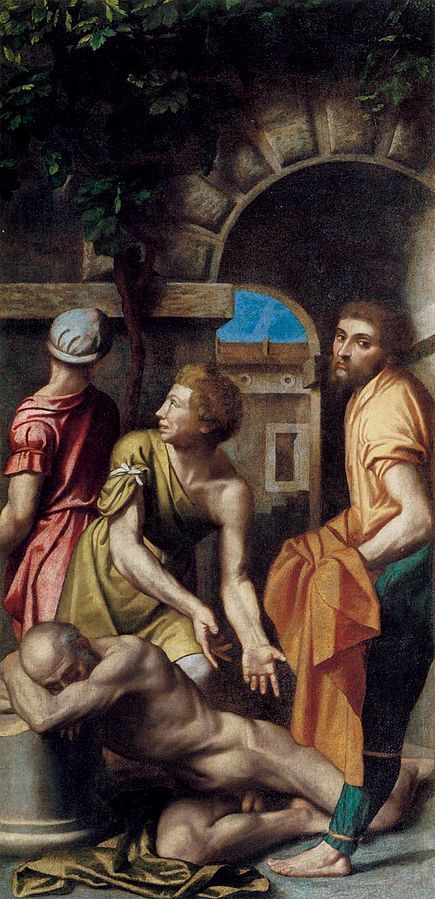

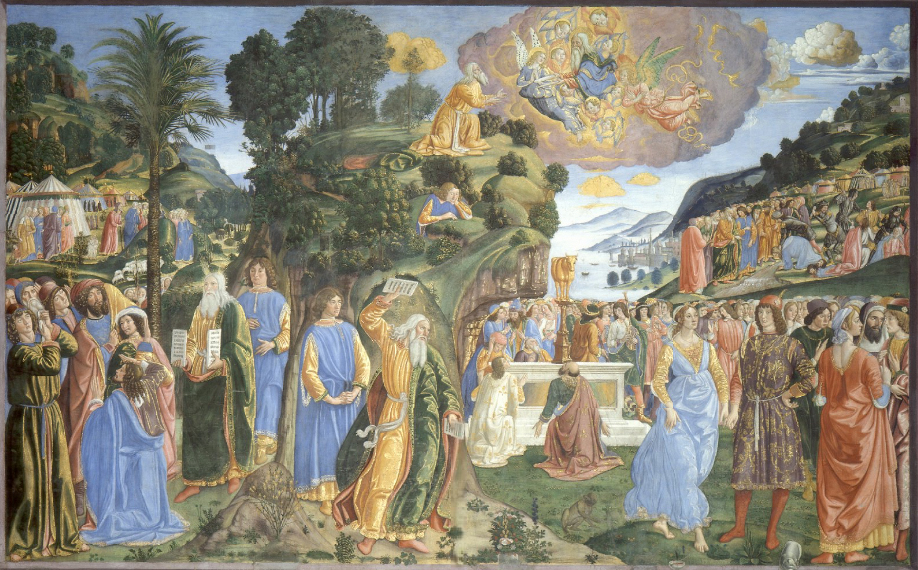


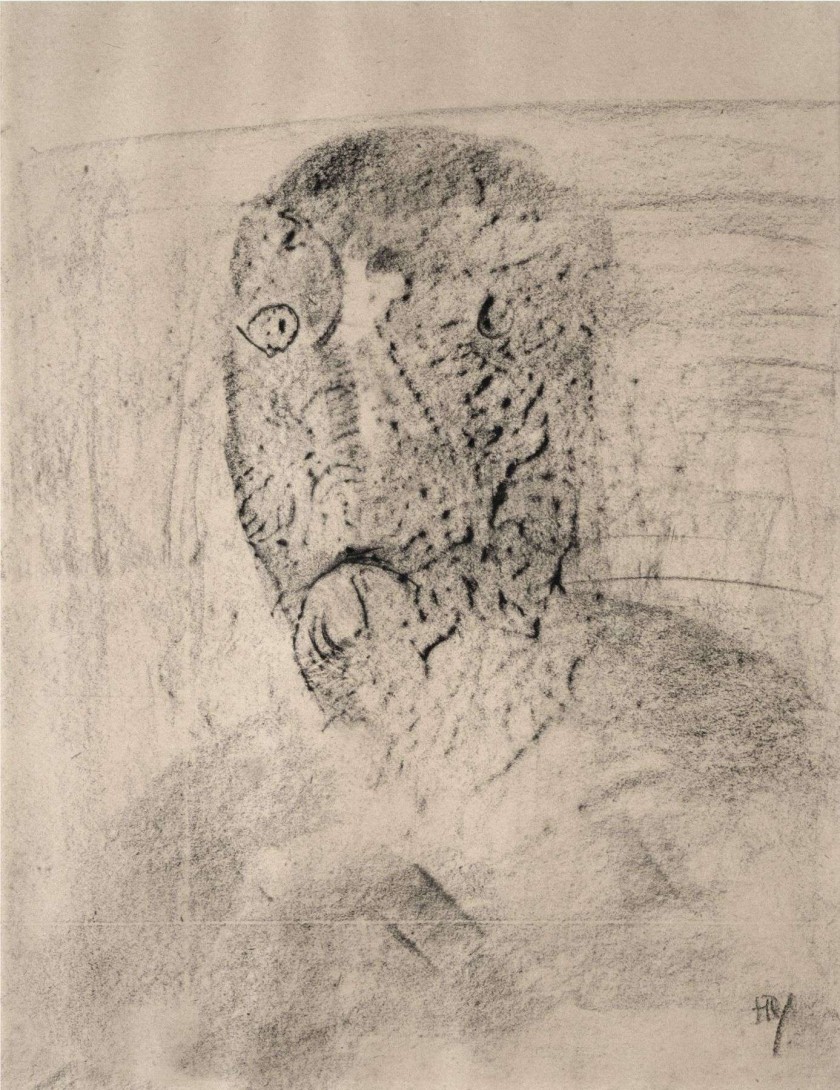
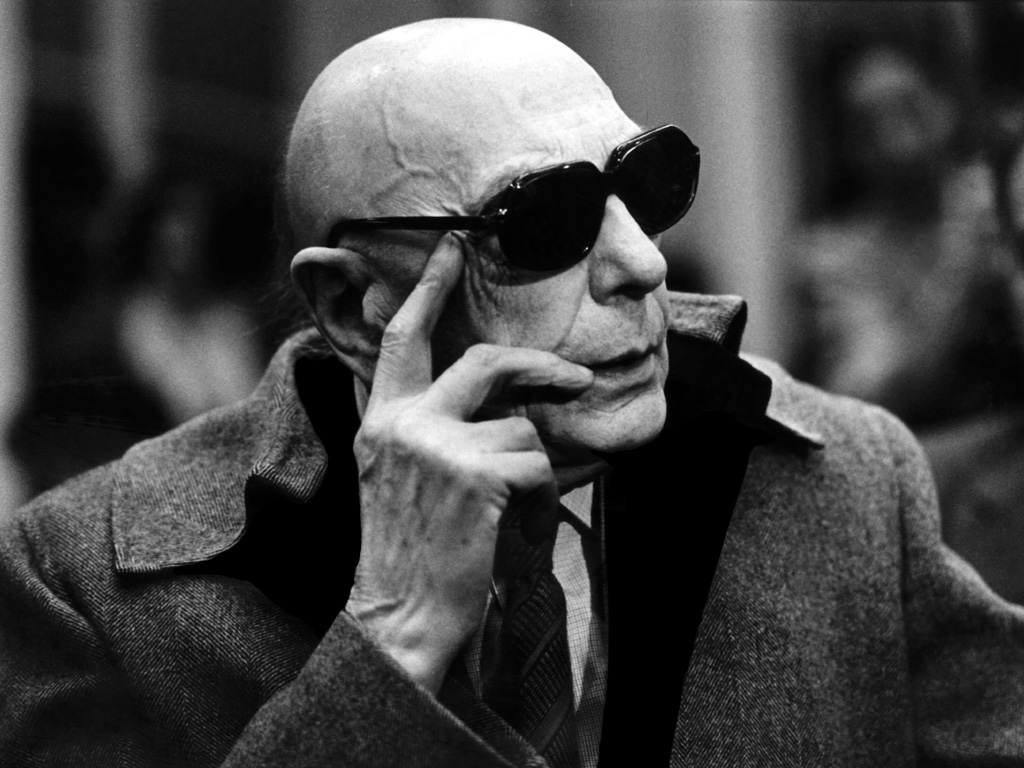
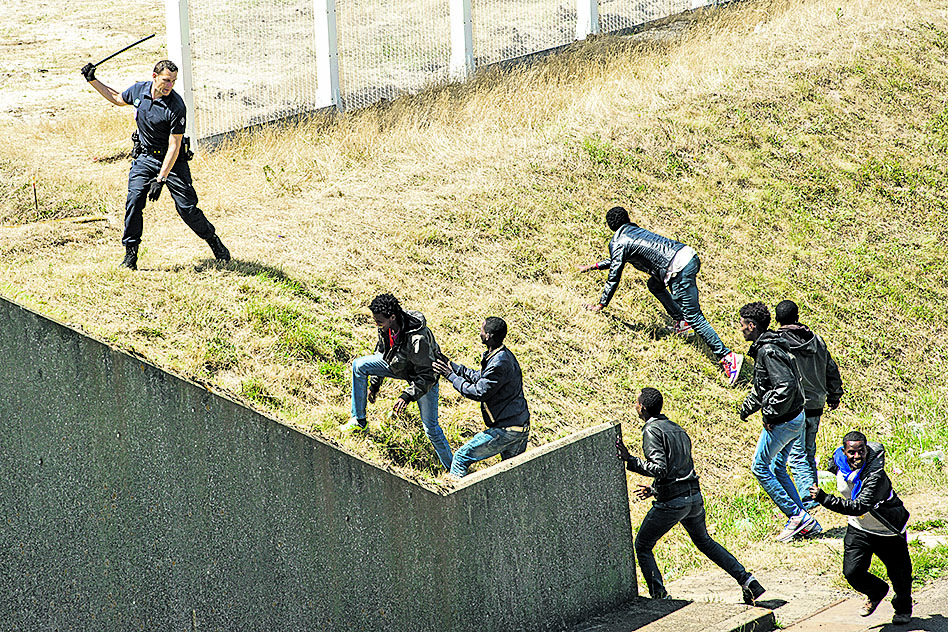
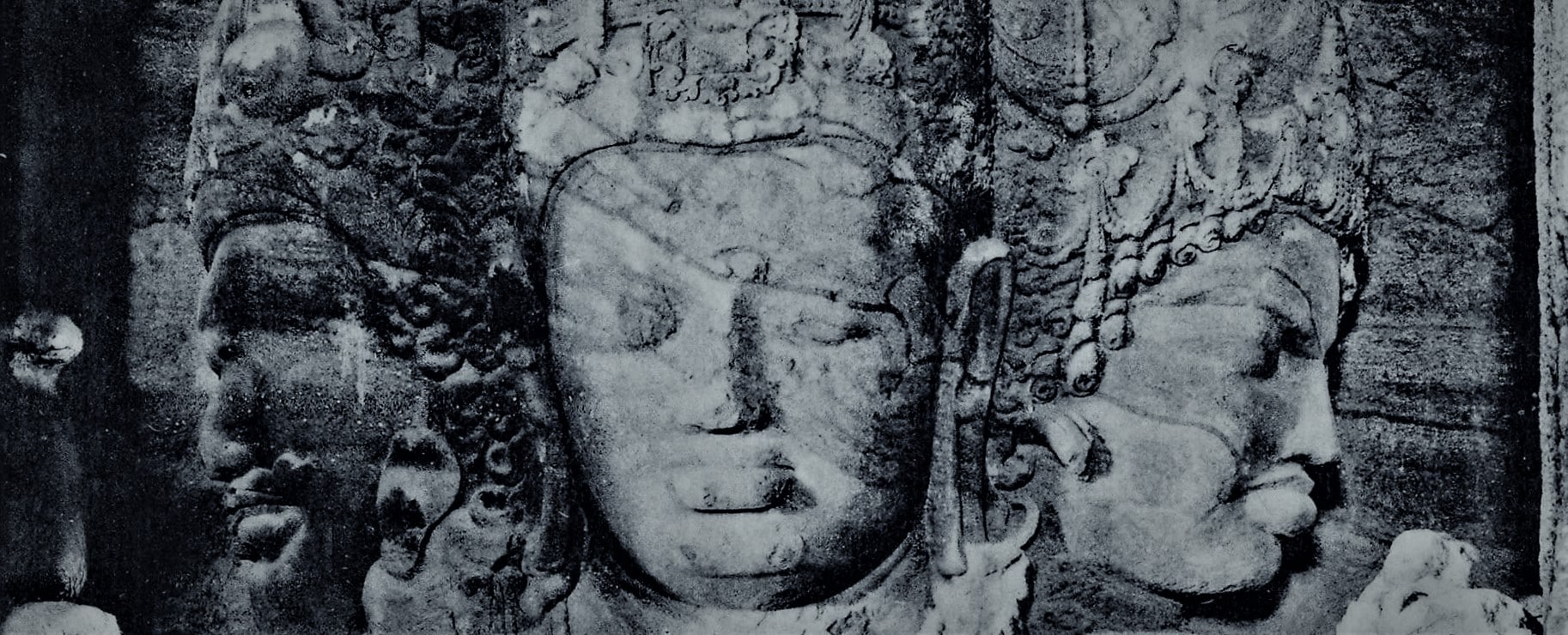
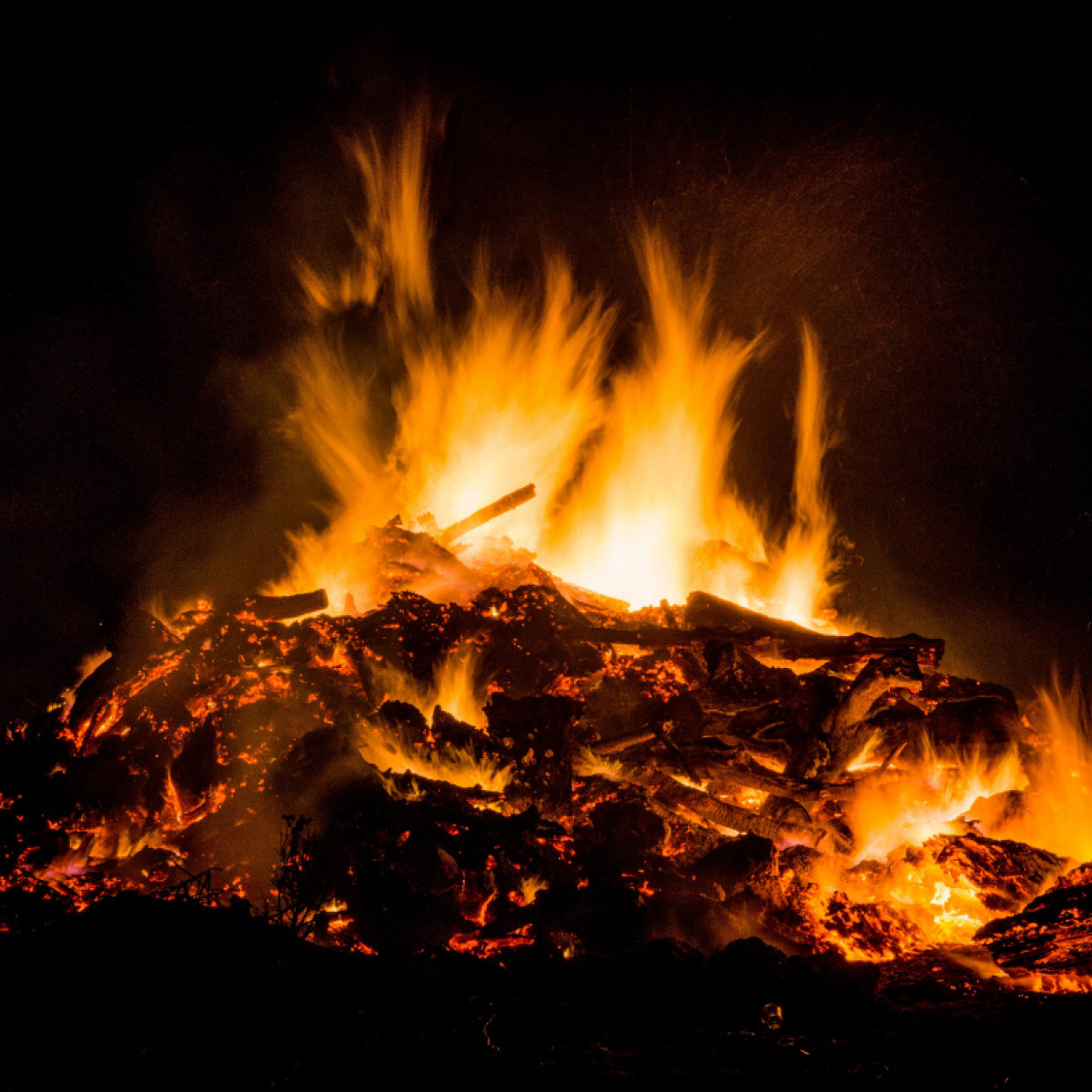









Vous devez être connecté pour poster un commentaire.