God indeed is one, – but His forces and His powers (i.e. His elohim and His sefirot) are more than multiple, according to the Jewish Kabbalah.
This idea unites without contradiction monotheistic and polytheistic intuitions.
In contrast, one cannot say that man is really one, – nor the world or the cosmos for that matter. But neither can we say that their abundant multiplicities are a substitute for unity.
Men and worlds are certainly diverse, divided, mixed, undefined and indefinable.
But this diversity, this division, this mixing, this indefinition, are relative. They find their limits, if only in time and space. Men, like worlds, are indefinite, but certainly not infinite.
In the apparent profusion of innumerable beings and the even more abundant moments that compose them, forms of singularities emerge, for a time. Here and there appear strange quarks, galactic clusters, people and consciousnesses…
But are these singularities units? To put it another way, are these singularities as ‘one’ as God is said to be ‘one’?
Busy, unconscious and composite crowds swarm at all times in every and each one man. They are molecular, chromosomal, microbial, neuronal, synaptic, parasitic crowds, you name it.
What will remain of them at the end of time?
If man thinks he will ever be one, death always takes charge, in the end, of testing this dubious sense of unitive dream.
Conversely, if man is not one, if he is other than one, what is he in reality?
Several hypotheses are worth considering.
Man is a diachronic being.
The immanent multiplicity is revealed, over long periods of time, by the accumulation of the diversity. What we were fetus, will we lose it as we die ? Or will we not rather summarize it?
Does the flower of youth lose only its petals and its radiance in the shadows of maturity, or in the night of agony, or does it not rather reveal its subtle, invisible and irradiant perfumes?
Let’s change metaphors.
If man was a kind of vast library, which book would summarize him best? Or could we only pick out a few scattered ‘good excerpts’? Or, even, shouldn’t we be satisfied with a single chosen line, at the corner of a forgotten paragraph, or a hallucinated word, to finally express his supposed unity, his only essential meaning?
2. Man is a synchronic being.
Just as a (infinite) mathematical curve can be summarized at each of its points by the (itself infinite) set of its derivatives, so one could suppose that at any moment of his life, the being of man could contain the (apparently infinite) set of his virtualities in the making. Always still in epigenesis, man is neither his sex nor his brain, neither his spleen nor his pancreas, neither his heart nor his blood, neither his very soul nor his faulty memory, but all this simultaneously.
Reason is road, cunning and cog, and blood is place and sense. The soul animates, and elevates, she borders on drunkenness, but often sleeps in the darkness of memories. In the lymph bathes the light of hope. Saliva drowns the suns of taste, the breath tempers the twilights of consciousness.
3. Man is a distributed (or swarming) being.
A more fantastic hypothesis assumes a ‘self’ which doubts itself. It is equivalent to the idea that any ‘I’ could be defined by the sum of all the ‘you’ encountered throughout life, as well as by the sum of all the ‘us’ felt, and even the anonymous crowd of all the ‘them’ surrounding the ‘I’, be they effective or only conceived. The human ‘I’ is still alone, singular, but mainly made of indissoluble pluralities, external multitudes, and produced by entire societies, and immemorial histories.
Whether man is diachronic, synchronic, distributed, swarming, or all of them in turn, or all of them simultaneously, winds down to being the same. It is at the time of death that the ‘I’ gets to know what he really is: either ‘nothing’, just ‘nothing’, or some entity allowed to continue ‘being’ in an yet unknown, sublimated form.
There is no point in arguing about this sort of conjecture, nobody knows the end of the story, but we will all know that end, when the evening comes.
To conclude with an opening, I would like to quote a fragment from the pre-Socratic philosopher Gorgias :
« There is nothing obvious about being because it doesn’t appear [dokein]. To appear is weak, since it does not succeed in being. »i
To put it another way, perhaps more clearly, and to fit this ancient and lively thought into a long perspective :
« The way in which God has been thought of for centuries no longer convinces anyone; if something is already dead, it can only be the traditional way of thinking about God. What is really dead is the fundamental distinction between the sensory domain and the supra-sensory domain. »ii
Really dead ?
Then we need to follow up with an essential intuition of Nietzsche, which Martin Heidegger (quoted by Hannah Arendt) re-ormulated as follows:
« The destruction of the supra-sensible also suppresses the purely sensible, and thus the difference between the two.»iii
If the supra-sensible and the sensible are, in the final analysis, no different, then there is also no essential difference between transcendence and immanence.
And, consequently, there is no essential difference between the Creator (either immanent or transcendant) and the Creation…
_____________________________
iDie Fragmente des Vorsokratiker. Vol. II, B 26. Hermann Diels and Walther Kranz, 1959. Quoted by Hannah Arendt. The life of the spirit. Thought. The will. Translated by Lucienne Lotringer. PUF, 1981, p.45
iiHannah Arendt. The life of the spirit. The thought. The will. Translation by Lucienne Lotringer. PUF, 1981, p.28
iiiMartin Heidegger. Paths that lead nowhere. Trad. W. Brokmeier. Paris 1962, p.173. Quoted by Hannah Arendt. The life of the spirit. Thought. The will. Translated by Lucienne Lotringer. PUF, 1981, p.29
Franz Rosenzweig is a prophet of the 20th century (there are not so many), whose name means ‘branch of roses’. Zebrased with inchoate intuitions, and seraphic brilliance, a short text of him astonishes me by its searing audacity:
« Redemption delivers God, the world and man from the forms and morphisms that Creation has imposed on them. Before and after, there is only the « beyond ». But the in-between, Revelation, is at the same time entirely beyond, for (thanks to it) I am myself, God is God, and the world is world, and absolutely beyond, for I am with God, God is with me, and where is the world? (« I do not desire the earth »). Revelation overcomes death, creates and institutes in its place the redeeming death. He who loves no longer believes in death and believes only in death.» i
The ambiguity of Revelation in relation to the Redemption, but also its invitations to openness, to invention, are staged here.
On the one hand, Revelation is addressed to the man of the earth, to the children of the clay, immersed in worldly immanence, immersed in the closed orbs of their minds.
On the other hand, it affirms the absolute transcendence of the Creator, opening worlds, flaring very backwards towards unheard-of beginnings, and accelerating very forwards towards an unthinkable afterlife.
Can we connect these two poles, seemingly opposite?
For Rosenzweig, Revelation is situated in time, that time which is the proper time of the world, between Creation and Redemption – the two figures, original and eschatological, the two ‘moments’ of the ‘beyond’ of time.
The unique role of Creation is inexplicable if we consider it only as a divine fiat. Why inexplicable? Because such a fiat displays neither its reason nor its why. It is more consistent with the anthropological structure of human experience (and probably with the very structure of the brain) to consider that even God does nothing for nothing.
An ancient answer to this riddle may be found in the Vedic idea of Creation.
In the Veda, Creation is thought as being a sacrifice of God.
Two thousand years later, this sacrifice will be called kenosis by Christians, and even later (in the Kabbalah of the Middle Age) Jews will call it tsimtsum.
The Vedic idea of God’s sacrifice – is incarnated in the sacrifice of Prajāpati, the supreme God, the Creator of the worlds, at the price of His own substance.
It is certainly difficult to conceive of God’s holocaust by (and for) Himself, willingly sacrificing His own glory, His power and His transcendence, – in order to transcend Himself in this very sacrifice.
How can a human brain understand God transcending Himself!
It is difficult, of course, but less difficult than understanding a Creation without origin and without reason, which refers by construction to the absolute impotence of all reason, and to its own absurdity.
With or without reason, with or without sacrifice, Creation obviously represents a ‘beyond’ of our capacity to understand.
But reason wants to reason and tries to understand.
In the hypothesis of God’s sacrifice, what would be the role of Creation in this divine surpassing?
Would God make a covenant with His Creation, ‘giving’ it, by this means, His breath, His life, His freedom, His spirit?
Would God give the responsibility for the World and Mankind to multiply and make this Breath, this Life, this Freedom, this Spirit bear fruit throughout time?
At least there is in this view a kind of logic, though opaque and dense.
The other pole of the cosmic drama – Redemption – is even more ‘beyond’ human intelligence. But let us have a try to understand it.
Redemption « frees God, the world and man from the forms imposed on them by Creation, » Rosenzweig suggests.
Does Redemption deliver God from God Himself? Does it deliver Him from His infinity, if not from His limit? from His transcendence, if not from His immanence? from His righteousness, if not from His goodness?
It is more intuitive to understand that it also liberates the world (i.e. the total universe, the integral Cosmos) from its own limits – its height, width and depth. But does it free it from its immanence?
It frees man, at last.
Does that mean Redemption frees man from his dust and clay?
And from his breath (nechma), which binds him to himself?
And from his shadow (tsel) and his ‘image’ (tselem), which binds him to the light?
And from his blood (dam) and his ‘likeness’ (demout), which structure and bind him (in his DNA itself)?
What does Rosenzweig mean when he says: « Redemption delivers God (…) from the forms that Creation has imposed »?
It is the role of Revelation to teach us that Creation has necessarily imposed certain structures. For example, it imposes the idea that the ‘heavens’ (chammayim) are in essence made of ‘astonishment’, and perhaps even ‘destruction’ (chamam).
But the truth is that we don’t know what ‘to redeem’ means, – apart from showing the existence of a link between Death, the Exodus from the world, and man.
We must try to hear and understand the voice of this new prophet, Rosenzweig.
He says that to believe in Redemption is to believe only in love, that is, to believe « only in death ».
For it has been said that « strong as death is love » (ki-‘azzah kham-mavêt ahabah), as the Song saysii.
Revelation is unique in that it is ‘one’ between two ‘moments’, two ‘beyond’.
It is unique, being ‘below’ between two ‘beyond’.
Being ‘below’ it is not inexpressible, – and being ‘revealed’ it is not as inexpressible as the ‘beyond’ of Creation and Redemption, which can only be grasped through what Revelation wants to say about it.
The Revelation is told, but not by a single oracular jet.
She is not given just at once. She is continuous. She spreads out in time. She is far from being closed, no doubt. No seal has been placed on her moving lips. No prophet can reasonably claim to have sealed her endless source foreveriii.
Time, time itself, constitutes all the space of Revelation, which we know has once begun. But we don’t know when Revelation will end. For now, Revelation is only ‘below’, and will always remain so, – as a voice preparing the way for a ‘beyond’ yet to come.
And besides, what is really known about what has already been ‘revealed’?
Can we be sure at what rate the Revelation is being revealed?
Can we read her deep lines, hear her hidden melodies?
Does she appear in the world only in one go or sporadically, intermittently? With or without breathing pauses?
Won’t her cannon thunder again?
And even if she were « sealed », aren’t the interpretations, the glosses, part of her open breath?
And what about tomorrow?
What will Revelation have to say in six hundred thousand years from now?
Or in six hundred million years?
Will not then a cosmic Moses, a total Abraham, a universal Elijah, chosen from the stars, come in their turn to bring some needed Good News?
________________
iFranz Rosenzweig. The Man and His Work. Collected writings 1. letters and diaries, 2 vol. 1918-1929. The Hague. M.Nijhoft, 1979, p.778, quoted by S. Mosès. Franz Rosenzweig. Sous l’étoile. Ed. Hermann. 2009, p. 91.
iiiThe Torah itself, who can claim to have really read it?
« Although Thorah was quite widespread, the absence of vowel points made it a sealed book. To understand it, one had to follow certain mystical rules. One had to read a lot of words differently than they were written in the text; to attach a particular meaning to certain letters and words, depending on whether one raised or lowered one’s voice; to pause from time to time or link words together precisely where the outward meaning seemed to demand the opposite (…) What was especially difficult in the solemn reading of the Thorah was the form of recitative to be given to the biblical text, according to the modulation proper to each verse. The recitative, with this series of tones that rise and fall in turn, is the expression of the primitive word, full of emphasis and enthusiasm; it is the music of poetry, of that poetry that the ancients called an attribute of the divinity, and which consists in the intuition of the idea under its hypostatic envelope. Such was the native or paradisiacal state, of which only a few dark and momentary glimmers remain today. « J.-F. Molitor. Philosophy of tradition. Trad Xavier Duris. Ed. Debécourt. Paris, 1837. p.10-11
After a short life-walk, standing on some high ground, I did not discover any ‘Land’, in truth never promised, I just took a glimpse at perspectives, and at the assured prospect of continued exile.
Not an infinite exile, only bordered by death. But at least a never finished exodus, no matter what happens, so vast are the surrounding deserts.
Literature, and philosophy itself, as they appear, are like dry lakes, under the sun, when one is really dying for living water, and poetry even is a mule loaded with empty gourds, or a thirsty camel.
As for the arts, they no longer light up the days. The theater of sanctification does not call for applause. Divine names offer little certainty. The angels disappear as soon as they move. True theologies are negative. Exegeses are never meant to be completed.
I remember, rather disenchanted, the past soothsayers of the future. Some wide open doors, leading to tightly closed ways, were tentatively described by these unaccountable prophets, but for sure, they did not no propose any real way out, any effective exits, they were at best just supplying asymptotes.
New angels kept falling down, wave after wave.
The Kabbalah says that at every moment of our lives, multitudes of angels are created, only to disappear. Their role is brief as much as their songs.
They praise with lilac hallelujahs the serene lordship, the gray sound of the skies. And they then dilute themselves in thin air with no return.
My patience was waning under the short luminosity of nocturnal stars.
A somber angel then unexpectedly attacked me.
Her sharp wings barely shuddered. The air was shivering. I stepped aside.
The dodge, always the dodge.
I kissed her with my eyes. She advanced surreptitiously, leapt forward on the path of escape.
Was running away an option? But where?
Towards the future from which she seemed to have come, I did not see any encouragement.
I saw her gaze turned towards what she was already no longer, or was it towards what she already thought she could no longer be?
So I took this opportunity to pluck out one of her feathers, which I dipped incontinently in a transparent ink mixed with black tears.
La religion naturelle de l’humanité est le chamanisme. Depuis des temps immémoriaux, et sur toute la surface de la Terre, en Sibérie, en Amazonie, en Afrique ou en Laponie, des chamanes de toutes ethnies, langues et cultures, ont mis en lumière la puissance latente du numineux dans la conscience d’Homo Sapiens.
Mais c’est au Ṛg Veda (en devanāgarī : ऋग्वेद) que revient d’incarner sous une forme hautement élaborée et conceptualisée une des traditions spirituelles les plus anciennes de l’humanité. Les livres (ou mandalas) du Ṛg Veda ont d’abord été fidèlement transmis par oral depuis le début du 2ème millénaire avant notre ère, dans la langue savante et raffinée du sanskrit, avant d’être enfin fixés par écrit.
Le passé est l’une des puissances de l’avenir. Par sa position ancienne, unique et originaire, dans la suite des spiritualités humaines, le Ṛg Veda éclaire en partie ce que furent les rêves de l’humanité, jadis, — songes qui continuent de hanter aujourd’hui les âmes non-mortes.
De l’étude attentive et comparative de ses versets, il me semble que l’on peut imaginer comment de nouveaux rêves, sans doute nécessaires, émaneront des braises passées, et brûleront d’incandescence l’âme des générations à venir.
Le Ṛg Veda portait déjà des idées métaphysiques de portée universelle, à travers les concepts de Parole, de Pensée, d’Infini, d’Amour, de Sacrifice, et d’Alliance (du Divin et de l’Humain), — et tout cela plusieurs millénaires avant que les monothéismes judaïque et chrétien ne leur donne des formes sinon équivalentes, du moins comparables.
La Parole.
Plus de trois mille ans avant que l’Évangile de Jean ne célèbre la divinité du Verbe (« Au commencement était le Verbe »), la Parole (vāc) était déjà au cœur du Ṛg Veda. Elle y possède une essence divine, et se présente comme une ‘Personne’, non pas celle d’un Messie christique, mais s’incarnant sous les espèces d’une ‘Femme’, aimante. « Plus d’un qui voit n’a pas vu la Parole. Plus d’un qui entend ne l’entend pas. A celui-ci, Elle a ouvert son corps comme à son mari une femme aimante aux riches atours.»iv
La Pensée
Dans le Ṛg Veda, la Pensée (manas) est l’une des hautes métaphores du Divin. D’autres philosophies et religions célébrèrent aussi la Pensée divine, par exemple en tant qu »Intellect’, en tant que ‘Saint-Esprit’ ou encore sous le nom de ‘Binah’ (l’une des sefiroth des Kabbalistes). Mais dans le Ṛg Veda, l’intuition de la Pensée divine possède d’emblée une force originaire, une puissance de création propre au Divin même.
« Celle en qui reposent prières, mélodies et formules, comme les rais au moyeu du char, celle en qui est tissée toute la réflexion des créatures, la Pensée : puisse ce qu’Elle conçoit m’être propice ! »v
L’Infini
Le Ṛg Veda possède l’idée d’un Dieu infini, caché, sur qui l’univers tout entier repose. Ce Dieu a pour nom l’ « Ancien », — ce qui rappelle le nom donné à Dieu par la cabale juive trois mille ans plus tard: l’ « Ancien des jours ».
« Manifeste, il est caché. Antique est son nom. Vaste son concept. Tout cet univers est fondé sur lui. Sur lui repose ce qui se meut et respire. (…) L’Infini est étendu en directions multiples, l’Infini et le fini ont des frontières communes. Le Gardien de la Voûte céleste les parcourt en les séparant, lui qui sait ce qui est passé et ce qui est à venir. (…) Sans désir, sage, immortel, né de soi-même, se rassasiant de sève vitale,, ne souffrant d’aucun manque – il ne craint pas la mort celui qui a reconnu l’Ātman sage, sans vieillesse, toujours jeune. »vi
L’Amour
Dans la Bible hébraïque, le Cantique des Cantiques montre avec un éclat sans pareil que la célébration de l’amour humain peut s’interpréter comme une métaphore vivante et crue de l’amour entre l’âme et Dieu. Cette même idée se trouve déjà dans le Ṛg Veda, qui présente l’amour incandescent de la Divinité et de l’âme humaine.
« Comme la liane tient l’arbre embrassé de part en part, ainsi embrasse-moi, sois mon amante, et ne t’écarte pas de moi ! Comme l’aigle pour s’élancer frappe au sol de ses deux ailes, ainsi je frappe à ton âme, sois mon amante et ne t’écarte point de moi ! Comme le soleil un même jour entoure le ciel et la terre, ainsi j’entoure ton âme. Sois mon amante et ne t’écarte pas de moi ! Désire mon corps, mes pieds, désire mes cuisses ; que tes yeux, tes cheveux, amoureuse, se consument de passion pour moi ! »vii
Cela invite à considérer, me semble-t-il, une question d’ordre anthropologique. La célébration de l’amour comme image de la procession divine dans l’âme humaine, a pu jaillir dans les profondeurs de l’inconscient collectif, dans l’Inde védique, mais aussi dans l’Egypte ancienne, puis dans les Écritures juives et les Prophètes.
Pourquoi, depuis tant de millénaires, une telle convergence des spiritualités originaires?
Le Sacrifice
Dans les temps anciens, les nuits étaient claires. Ce qui frappait l’imagination des hommes, c’était d’abord l’immensité du voile étoilé, la profondeur du cosmos, au-dessus de leurs têtes, mais aussi la complexité des liens qui alliaient ces puissances lumineuses, démesurées et lointaines à leurs chétives et obscures existences.
Bien avant qu’Abraham consente au sacrifice du sang, celui de son fils, remplacé à l’ultime moment par le sang d’un animal innocent, les prêtres védiques sacrifiaient aussi à la divinité, — non par le sang du fils ou du bouc, mais par le lait de la vache.
Dans le sacrifice védique, le beurre fondu (ghṛita) représentait symboliquement le miracle cosmique. Il incarnait l’alliance du soleil, de la nature et de la vie. Le soleil est la source de toute vie dans la nature, il fait pousser l’herbe, laquelle nourrit la vache, qui exsude son suc, le lait, lequel devient ‘beurre’ par l’action de l’homme (qui le baratte). Le beurre, mêlé d’eau pure et de sucs végétaux, et fondant sous l’action de la chaleur, vient couler librement comme sôma sur l’autel du sacrifice. Il s’embrase par le feu sacré, sur la pierre appelée yoni. Cette vive flamme engendre la lumière, et répand une odeur capable de monter aux cieux, concluant symboliquement le cycle. Cérémonie simple et profonde, prenant son origine dans la nuit des temps, et possédant une vision sûre de l’universelle cohésion entre le divin, le cosmos et l’humain.
« De l’océan, la vague de miel a surgi, avec le sôma, elle a revêtu, la forme de l’ambroisie. Voilà le nom secret du Beurre, langue des Dieux, nombril de l’immortel. (…) Disposé en trois parts, les Dieux ont découvert dans la vache le Beurre que les Paṇi avaient caché. Indra engendra une de ces parts, le Soleil la seconde, la troisième on l’a extraite du sage, et préparée par le rite. (…) Elles jaillissent de l’océan de l’Esprit, ces coulées de Beurre cent fois encloses, invisibles à l’ennemi. Je les considère, la verge d’or est en leur milieu. (…) Elles sautent devant Agni, belles et souriantes comme des jeunes femmes au rendez-vous ; les coulées de Beurre caressent les bûches flambantes, le Feu les agrée, satisfait. »i
Il n’est pas inintéressant de noter ici que l’idée d’une sacralité condensée dans le ‘beurre’ a été reprise plus tard en Israël même.
Les Prêtres, les Prophètes et les Rois d’Israël n’ont pas craint de se faire oindre d’une huile sacrée, d’un chrême, concentrant le sens et la puissance. Dans l’huile sainte, l’huile d’onction, convergent aussi, magiquement, le produit du Cosmos, le travail des hommes, et la puissance vivifiante du Dieu.
L’Alliance
L’idée d’un lien entre l’homme et le divin vient d’au-delà des âges. Et parmi les métaphores que l’idée du ‘lien’ rendent désirables, il y a celle du ‘cheveu’. C’est d’ailleurs à la fois une métaphore et une métonymie. Les cheveux sont sur la tête, couvrant le cerveau de l’homme, voltigeant au-dessus de ses pensées. Comment ne pas penser qu’ils peuvent adéquatement figurer autant de liens avec la sphère divine?
Cheveux et poils poussent sans cesse, depuis la naissance, et jusque après la mort. Ils accompagnent la transformation en profondeur du corps, pour la vie, l’amour et la génération. La terre féconde, elle-même, se couvre d’une sorte de chevelure quand la moisson s’annonce. Le génie des anciens voyait dans cette image un ‘lien’ réel entre la nature, l’homme et le divin.
Un hymne du Ṛg Veda allie ces trois mondes dans une seule formule : « Fais pousser l’herbe sur ces trois surfaces, ô Indra, la tête du Père, et le champ que voilà, et mon ventre ! Ce Champ là-bas qui est le nôtre, et mon corps que voici, et la tête du Père, rends tout cela poilu ! »ii
Le cheveu, dans le Ṛg Veda, sert aussi à décrire l’action du divin. Il est l’une des métaphores qui permet de le qualifier indirectement. « Le Chevelu porte le Feu, le Chevelu porte le Sôma, le Chevelu porte les mondes. Le Chevelu porte tout ce qu’on voit du ciel. Le Chevelu s’appelle Lumière. »iii
Que conclure du fait qu’il y a plus de cinq millénaires, le Ṛg Veda incarnait déjà une spiritualité de la Parole, de la Pensée, de l’Infini, de l’Amour, du Sacrifice, de l’Alliance?
L’ancienneté de ces archétypes donne à penser qu’une anthropologie de l’esprit et de la conscience, par-delà les cultures et les âges, est plus que jamais nécessaire, et qu’elle ouvre des perspectives éblouissantes.
Une telle anthropologie de la conscience éclairerait d’une lumière spéciale l’essence même de l’âme humaine, sa puissance universelle, et esquisserait l’étendue putative de ses futures métamorphoses.
Dans notre époque étrécie, sans horizon, sans vision, quelle recherche pourrait être plus féconde?
S’appuyant sur une archéologie comparée du rêve humain, cette recherche future pourrait en particulier s’attacher à imaginer de nouveaux Récits, dont la modernité écrasée, blessée, souffre tant de l’absence.
De nouveaux Grands Récits, qui n’oblitéreraient pas les anciens mythes, mais s’attacheraient à mieux déployer leurs harmoniques impensées, inouïes, ouvriraient sans doute des avenues accélérées, et des chemins de traverse, dans le sens d’une Histoire universelle et sans fin, qui reste à accomplir.
__________________
iṚgVéda IV,58. Trad. Louis Renou. Hymnes et prières du Véda. 1938
Dans ses carnets, sans doute pour affûter son bistouri social, Tolstoï collectionnait les types d’hommes dont il se sentait capable de ressentir la vie en lui : le « savant », l’« écrivain épris de gloire », « l’ambitieux », « l’homme cupide », le « conservateur croyant », le « fêtard », « le brigand dans des limites admises », « le brigand dans des limites non admises », le « véridique honnête, mais dans la supercherie », le « socialiste révolutionnaire », le « gaillard gai luron », le « chrétien parfait », le « lutteur »,…
Ces « types » sentent la poudre ou la vodka, la poussière ou le renfermé, l’encens orthodoxe ou l’encre sèche. Ce sont en un sens les « stéréo-types » de quelques idées toutes faites, ripolinées par les répétitions, mais évoquant immédiatement pour le lecteur certaines images de la vie, réelle ou supposée, dans la Russie d’alors.
De ce point de vue, les « types » ennuient et fatiguent d’avance les blasés du roman, ceux qui ont lu tous les livres. Ils les ont déjà trop vus.
Pour ma part, dans la fiction comme dans la théorie, je préfère l’atypique, la forme première, l’idée nue, en genèse.
Quand la plume du créateur dessine une image neuve, libre, sans attache, sans ficelle, sans lien matériel, psychologique ou historique avec le déjà-vu, la surprise l’émeut sans doute, mais l’embarras l’étreint peut-être.
Y a-t-il en elle réelle matière à roman, outil philosophique, ou métaphore théologique ? Une idée qui se tient toute seule, sans pareille, est-elle viable dans un monde avide de conformité, enivré d’« a priori » ?
Une image unique, palpitante, vagissante, risque de mourir-née, couchée dans son berceau de papier, faute de reconnaissance, de soins, et d’amour pour la vie qu’elle porte.
Qu’est-ce que la vie d’une image, la puissance d’une idée?
Qu’est-ce que la vie dans la pensée?
Surtout, qu’est-ce que la vie?
Un écrivain russe, barbu, comte et désabusé, décrit sa manière de voir, à ce propos:
« Je marche et je pense : Quelle est la fortune des enfants des Soukhotine, combien y a-t-il de pas en faisant le tour du parc, vais-je dès en rentrant prendre le café ? Et il m’est clair qu’aussi bien ma marche que toutes ces pensées – ne sont pas la vie. Qu’est-ce donc qui est la vie ? Et de réponse je n’en connais qu’une : La vie est la libération du principe spirituel – de l’âme, d’avec le corps qui la limite. Et c’est pourquoi il est manifeste que les conditions mêmes que nous considérons comme des calamités, des malheurs, dont nous disons : Ce n’est pas une vie, c’est cela même seulement qui est la vie, ou au moins sa possibilité. C’est seulement dans les situations que nous appelons calamités, et dans lesquelles commence la lutte de l’âme contre le corps, que se manifeste la possibilité de la vie, et la vie même, si nous luttons consciemment et si nous sommes vainqueurs, c’est-à-dire si l’âme est victorieuse du corps. »i
Le penchant idéaliste est évident.
Aujourd’hui, à la question : « Qu’est-ce qui est la vie ? », bien d’autres réponses sont données, dont la modernité, dans sa morosité, se délecte: matérialistes, déterministes, ou encore épigénétiques, électro-chimiques, neuro-synaptiques, …
Mais que valent ces réponses pour des hommes affrontant le malheur ou la calamité, faisant pourtant face à une vie qui n’est pas une vie ?
Quels que soient les mécanismes vivants, les engrenages déterminés ou déterminants, qui nous animent, convenons au moins de ceci : le vrai malheur, qu’il soit matériel, accidentel, spirituel ou ontologique, ne peut pas être une vie.
Si ce n’est pas une vie, alors: « Qu’est-ce qui est la vie ? »
Loin de l’agitation des neurones et des synapses, sourde aux réverbérations observées dans le fond du sillon intra-pariétal, insensible à la loi de Weber-Fechner, non détectable par imagerie IRM, la vie, la vraie vie, la seule vie, c’est celle que la conscience, sans cesse tisse, soie tendre, signe sûr, ciel en soi.
_____________
i Tolstoï. Carnets et feuilles isolées. 16 août 1910, in Journaux et carnets III, p. 988
Born in 1886 into an assimilated Jewish family, Franz Rosenzweig decided to convert to Christianity in the 1910s, after numerous discussions with his cousins, Hans and Rudolf Ehrenberg, who had already converted, and with his friend Eugen Rosenstock, also a converted Jew. But he renounced the conversion after attending the Yom Kippur service in a Berlin synagogue in 1913.
Shortly afterwards, he wrote in the trenches of the First World War his masterpiece, The Star of Redemption, which offers a kind of parallelism between Judaism and Christianity.
Parallels that do not meet, except perhaps at the end of Time.
I find Rosenzweig’s essay truly significant for a double distance, for a constitutive split, the outcome of which is difficult to see, unless there is a total change of paradigm – which would perhaps be the real issue, in some future.
Rosenzweig asserts that Christianity faces three « dangers » that it « will never overcome ». These « dangers » are essentially of a conceptual nature: « the spiritualization of the concept of God, the apotheosis granted to the concept of man, the panthetization of the concept of the world ». i
The Christian concept of God, the Christian concept of man, the Christian concept of the world, are wrong and dangerous, according to Rosenzweig, because they imply an attack on the absolute transcendence of God, to which, by contrast, Judaism is supposed to be fundamentally attached.
« Let the Spirit be the guide in all things, and not God; let the Son of Man, and not God, be the Truth; let God one day be in all things, and not above all; these are the dangers. »ii
Rosenzweig cannot accept that the absolutely transcendent God of Judaism can be represented by His « Spirit », even though this Spirit is « holy ».
Why not? Is God not His own Spirit?
No. God’s transcendence is probably so absolute that the use of the word « spirit » is still too anthropomorphic in this context. From the point of view of Judaism, as interpreted by Rosenzweig, to use the word « spirit » as an hypostasis of God is an attack on its absolute transcendence.
But, is not God called in the Torah the « God of spirits » (Num 16:22), because He is the Creator? Could the spirit, as created by God, then be a « substance » which God and man would then have in common? No. This is not acceptable. The very principle of the absolute transcendence of God excludes any idea of a community of substance between the divine and the human, even that of the « spirit ».
Nor can Rosenzweig accept that the absolutely transcendent God of Judaism could be represented here below by a « Son », or horresco referens, could lower Himself to humiliation by consenting to a human « incarnation », to whom He would further delegate, ipso facto, the care and privilege of revealing His Truth to men.
Finally, and a fortiori, Rosenzweig obviously cannot accept that the absolutely transcendent God can condescend to any immanence whatsoever, and in particular by coming into the « world » to dwell « in all ».
Judaism will not compromise.
The absolute transcendence of God, of His revelation, and of Redemption, are infinitely beyond the spirit, infinitely beyond the human, infinitely beyond the world.
Rosenzweig’s attack on Christianity focuses on its supposed « concepts ».
Concepts are positive attempts by the human mind to capture the essence of something.
The dogma of the absolute transcendence of God excludes from the outset any attempt whatsoever to « conceptualize » it, whether through names, attributes or manifestations.
The only acceptable conceptualization is the concept of the impossibility of any conceptualization. The only possible theology is an absolutely negative theology, rigorously and infinitely apophatic.
But then what about the revelation of His Name, made to Moses by God Himself?
What about the theophanies found in the Torah?
What about God’s dialogues with the Prophets?
Or in another vein, what about the granting of a Covenant between God and his People?
What about thewandering of the Shekhina in this world, and her « suffering »?
Or, on yet another level, how to understand the idea that heaven and earth are a « creation » of God, with all that this entails in terms of responsibility for the content of their future and the implications of their inherent potentialities?
Are these not notable exceptions, through word or spirit, to thevery idea of God’s absolute, radicaltranscendence? Are they not in fact so many links, so many consensual interactions between God Himself and all that is so infinitely below Him, – all that is so infinitely nothing?
These questions are not dealt with by Rosenzweig. What is important to him is to reproach Christianity for « exteriorizing itself in the Whole, » for « dispersing its rays » in the march through time, with the spiritualization [of the concept of God], the divinization [of the concept of man] and the mondanization [of transcendence].
But Rosenzweig’s reproaches do not stop there. For good measure, he also criticizes the « dangers » peculiar to Judaism.
Where Christianity sins by « dispersing », by « externalizing » the idea of God, Judaism sins on the contrary by « shrinking », by confinement in « the narrow », by refuge in « a narrow home »iii. To sum up: « The Creator has shrunk to the creator of the Jewish world, Revelation has only taken place in the Jewish heart.» iv
Franz Rosenzweig analyzes the « Jewish dangers » in this manner :
« Thus, in the depths of this Jewish feeling, any split, anything that encompasses Jewish life, has become very narrow and simple. Too simple and too narrow, that is what should be said, and in this narrowness, as many dangers should be fanned as in Christian dilatation. Here it is the concept of God that was in danger: in our midst, it is His World and His Man who seem to be in danger (…) Judaism, which is consumed within, runs the risk of gathering its heat in its own bosom, far from the pagan reality of the world. In Christianity, the dangers were named: spiritualization of God, humanization of God, mondanization of God; here [in Judaism] they are called denial of the world, contempt for the world, suffocation of the world.
Denial of the world, when the Jew, in the proximity of his God, anticipated the Redemption for his own benefit, forgetting that God was Creator and Redeemer, that, as Creator, He conserved the whole world and that in the Revelation He ultimately turned His face to mankind at large.
Contempt for the world, when the Jew felt himself to be a remnant, and thus to be the true man, originally created in the image of God and living in the expectation of the end within this original purity, thus withdrawing from man: yet it was precisely with his hardness, forgetting God, that the Revelation of God’s love had come about, and it was this man who now had to exercise this love in the unlimited work of Redemption.
Choking of the world, finally, when the Jew, in possession of the Law revealed to him and becoming flesh and blood in his spirit, now had the nerve to regulate the being there at every renewed moment and the silent growth of things, even to pretend to judge them.
These three dangers are all necessary consequences of the interiority that turned away from the world, just as the dangers of Christianity were due to the exteriorization of the self turned towards the world. » v
Not being able to resolve to elect a single champion, Rosenzweig concludes that Jews and Christians are in fact working at the same task, and that God cannot deprive Himself of either of them: « He has bound them together in the closest reciprocity. To us [Jews] He has given eternal life by lighting in our hearts the fire of the Star of His truth. He has placed Christians on the eternal path by making them follow the rays of the Star of His truth throughout the centuries to the eternal end.»vi
The life, the truth, the way. The Anointed One from Nazareth, the Christian Messiah, had already designated himself by these three words, identifying them with his own Person.
Shrinkage, narrowness, suffocation.
Dispersion, expansion, paganization.
Let the millennia flow, let the eons bloom.
What will the world be like in three hundred billion years? Will it be Jewish? Christian? Buddhist? Nihilist? Gnostic? Or will the world be All Other?
Will we one day see the birth of a non-Galilean Messiah or a non-Anointed Anointed One, far away in galaxies at the unimagined borders of the known universes, revealing in clear language a meta-Law as luminous as a thousand billion nebulae assembled in one single point?
Or is it the very message of the Scriptures that, by some miracle, will be repeated, word for word, letter for letter, breath for breath, in all the multiverse, crossing without damage the attraction and translation of multiple black holes and vertiginous wormholes?
The path before us is infinitely, obviously, open.
We only know that at the very end there will be life – not death.
What kind of life? We don’t know.
We know that with life, there will also be truth.
Truth and life are indissolubly linked, as are transcendence and immanence.
« What is truth? » asked Pilatus once, famously.
One could also ask : « What is life? »
Since transcendence is so infinitely above the human mind, how can one dare to ask even these kinds of questions?
That’s exactly the point.
Daring to ask these questions is already, in a way, beginning to answer them.
I have no doubt that in six hundred million years, or thirty-three billion years, some truth will still be there to be grasp, – if there are still, of course, eyes to see, or ears to hear.
_________________
iFranz Rosenzweig. The Star of Redemption. Alexandre Derczanski and Jean-Louis Schlegel, Seuil , 1882, p.474.
iiFranz Rosenzweig. The Star of Redemption. Alexandre Derczanski and Jean-Louis Schlegel, Seuil , 1882, p.474.
iiiFranz Rosenzweig. The Star of Redemption. Alexandre Derczanski and Jean-Louis Schlegel, Seuil , 1882, p.478.
ivFranz Rosenzweig. The Star of Redemption. Alexandre Derczanski and Jean-Louis Schlegel, Seuil , 1882, p.476.
vFranz Rosenzweig. The Star of Redemption. Alexandre Derczanski and Jean-Louis Schlegel, Seuil , 1882, p.479-480.
viFranz Rosenzweig. The Star of Redemption. Alexandre Derczanski and Jean-Louis Schlegel, Seuil, 1882, p. 490.
The theurgic, creative power of men has always manifested itself through the ages.
Religious anthropology bears witness to this.
« No doubt, without the Gods, men could not live. But on the other hand, the Gods would die if they were not worshipped (…) What the worshipper really gives to his God is not the food he puts on the altar, nor the blood that flows from his veins: that is his thought. Between the deity and his worshippers there is an exchange of good offices which condition each other. »i
The Vedic sacrifice is one of the most ancient human rite from which derives the essence of Prajāpati, the supreme God, the Creator of the worlds.
« There are rites without gods, and there are rites from which gods derive ».ii
Unexpectingly, Charles Mopsik, in his study of the Jewish kabbalah, subtitled TheRites that Make God, affirms the « flagrant similarity » of these ancient theurgical beliefs with the Jewish motif of the creative power of the rite.
Mopsik readily admits that « the existence of a theme in Judaism, according to which man must ‘make God’, may seem incredible.»iii
Examples of Jewish kabbalistic theurgy abound, involving, for example, man’s ‘shaping’ of God, or his participation in the ‘creation’ of the Name or the Shabbath. Mopsik evokes a midrash quoted by R. Bahya ben Acher, according to which « the man who keeps the Shabbath from below, ‘it is as if he were doing it from above’, in other words ‘gave existence’, ‘fashioned the Sabbath from above. »iv
The expression ‘to make God’, which Charles Mopsik uses in the subtitle of his book, can be compared to the expression ‘to make the Shabbath’ (in the sense of ‘to create the Shabbath’) as it is curiously expressed in the Torah (« The sons of Israel will keep the Shabbath to make the Shabbath » (Ex 31,16)), as well as in the Clementine Homilies, aJudeo-Christian text that presents God as the Shabbath par excellencev, which implies that ‘to make the Shabbath’ is ‘to make God’…
Since its very ancient ‘magical’ origins, theurgy implies a direct relationship between ‘saying’ and ‘doing’ or ‘making’. The Kabbalah takes up this idea, and develops it:
« You must know that the commandment is a light, and he who does it below affirms (ma’amid) and does (‘osseh) that which isabove. Therefore, when man practices a commandment, that commandment is light.»vi
In this quotation, the word ‘light’ is to be understood as an allusive way of saying ‘God’, comments Mopsik, who adds: « Observances have a sui generis efficacy and shape the God of the man who puts them into practice.»
Many other rabbis, such as Moses de Leon (the author of the Zohar), Joseph Gikatila, Joseph of Hamadan, Méir ibn Gabbay, or Joseph Caro, affirm the power of « the theurgic instituting action » or « theo-poietic ».
The Zohar explains :
« ‘If you follow my ordinances, if you keep my commandments, when you do them, etc.' ». (Lev 26:3) What does ‘When you do them’ mean? Since the text already says, « If you follow and keep, » what is the meaning of « When you do them »? Verily, whoever does the commandments of the Torah and walks in its ways, so to speak, it is as if he makes Him on high (‘avyd leyh le’ila), the Holy One blessed be He who says, ‘It is as if he makes Me’ (‘assa-ny). In this connection Rabbi Simeon said, ‘David made the Name’. » vii
« David made the Name » ! This is yet another theurgical expression, and not the least, since the Name, the Holy Name, is in reality God Himself !
‘Making God’, ‘Making the Shabbath’, ‘Making the Name’, all these theurgic expressions are equivalent, and the authors of the Kabbalah adopt them alternately.
From a critical point of view, it remains to be seen whether the kabbalistic interpretations of these theurgies are in any case semantically and grammatically acceptable. It also remains to be ascertained whether they are not rather the result of deliberately tendentious readings, purposefully diverting the obvious meaning of the Texts. But even if this were precisely the case, there would still remain the stubborn, inescapable fact that the Jewish Kabbalists wanted to find the theurgic idea in the Torah .
Given the importance of what is at stake, it is worth delving deeper into the meaning of the expression « Making the Name », and the way in which the Kabbalists understood it, – and then commented on it again and again over the centuries …
The original occurrence of this particular expression is found in the second book of Samuel (II Sam 8,13). It is a particularly warlike verse, whose usual translation gives a factual, neutral interpretation, very far in truth from the theurgic interpretation:
« When he returned from defeating Syria, David again made a name for himself by defeating eighteen thousand men in the Valley of Salt. »
David « made a name for himself », i.e. a « reputation », a « glory », in the usual sense of the word שֵׁם, chem.
The massoretic text of this verse gives :
וַיַּעַשׂ דָּוִד, שֵׁם
Va ya’ass Daoud shem
« To make a name for oneself, a reputation » seems to be the correct translation, in the context of a warlord’s glorious victory. Biblical Hebrew dictionaries confirm that this meaning is widespread.
Yet this was not the interpretation chosen by the Kabbalists.
They prefer to read: « David made the Name« , i.e. « made God« , as Rabbi Simeon says, quoted by the Zohar.
In this context, Charles Mopsik proposes a perfectly extraordinary interpretation of the expression « making God ». This interpretation (taken from the Zohar) is that « to make God » is equivalent to the fact that God constitutes His divine fullness by conjugating (in the original sense of the word!) « His masculine and feminine dimensions ».
If we follow Mopsik, « making God » for the Zohar would be the equivalent of « making love » for both male and female parts of God?
More precisely, as we will see, it would be the idea of YHVH’s loving encounter with His alter ego, Adonaï?
A brilliant idea, – or an absolute scandal (from the point of view of Jewish ‘monotheism’)?
Here’s how Charles Mopsik puts it:
« The ‘Holy Name’ is defined as the close union of the two polar powers of the divine pleroma, masculine and feminine: the sefira Tiferet (Beauty) and the sefira Malkhut (Royalty), to which the words Law and Right refer (…) The theo-poietic action is accomplished through the unifying action of the practice of the commandments that cause the junction of the sefirot Tiferet and Malkhut, the Male and Female from Above. These are thus united ‘one to the other’, the ‘Holy Name’ which represents the integrity of the divine pleroma in its two great poles YHVH (the sefira Tiferet) and Adonay (the sefira Malkhut). For the Zohar, ‘To make God’ therefore means to constitute the divine fullness [or pleroma] by uniting its masculine and feminine dimensions. » viii
In another passage of the Zohar, it is the (loving) conjunction of God with the Shekhina, which is proposed as an equivalence or ‘explanation’ of the expressions « making God » or « making the Name »:
« Rabbi Judah reports a verse: ‘It is time to act for YHVH, they have violated the Torah’ (Ps.119,126). What does ‘the time to act for YHVH’ mean? (…) ‘Time’ refers to the Community of Israel (the Shekhinah), as it is said: ‘He does not enter the sanctuary at all times’ (Lev 16:2). Why [is it called] ‘time’? Because there is a ‘time’ and a moment for all things, to draw near, to be enlightened, to unite as it should be, as it is written: ‘And I pray to you, YHVH, the favourable time’ (Ps 69:14), ‘to act for YHVH’ [‘to make YHVH’] as it is written: ‘David made the Name’ (II Sam 8:13), for whoever devotes himself to the Torah, it is as if he were making and repairing the ‘Time’ [the Shekhinah], to join him to the Holy One blessed be He. » ix
After « making God », « making YHVH », « making the Name », here is another theurgical form: « making Time », that is to say « bringing together » the Holy One blessed be He and the Shekhina…
A midrach quoted by R. Abraham ben Ḥananel de Esquira teaches this word attributed to God Himself: « Whoever fulfills My commandments, I count him as if they had made Me. » x
Mopsik notes here that the meaning of the word ‘theurgy’ as ‘production of the divine’, as given for example in the Liturgy, may therefore mean ‘procreation’, as a model for all the works that are supposed to ‘make God’. xi
This idea is confirmed by the famous Rabbi Menahem Recanati: « The Name has commanded each one of us to write a book of the Torah for himself; the hidden secret is this: it is as if he is making the Name, blessed be He, and all the Torah is the names of the Saint, blessed be He. » xii
In another text, Rabbi Recanati brings together the two formulations ‘to make YHVH’ and ‘to make Me’: « Our masters have said, ‘Whoever does My commandments, I will count him worthy as if he were making Me,’ as it is written, ‘It is time to make YHVH’ (Ps 119:126)xiii.
One can see it, tirelessly, century after century, the rabbis report and repeat the same verse of the psalms, interpreted in a very specific way, relying blindly on its ‘authority’ to dare to formulate dizzying speculations… like the idea of the ‘procreation’ of the divinity, or of its ‘begetting’, in itself and by itself….
The kabbalistic image of ‘procreation’ is actually used by the Zohar to translate the relationship of the Shekhina with the divine pleroma:
« ‘Noah built an altar’ (Gen 8:20). What does ‘Noah built’ mean? In truth, Noah is the righteous man. He ‘built an altar’, that is the Shekhina. His edification (binyam) is a son (ben) who is the Central Column. » xiv
Mopsik specifies that the ‘righteous’ is « the equivalent of the sefira Yessod (the Foundation) represented by the male sexual organ. Acting as ‘righteous’, the man assumes a function in sympathy with that of this divine emanation, which connects the male and female dimensions of the sefirot, allowing him to ‘build’ the Shekhina identified at the altar. » xv
In this Genesis verse, we see that the Zohar reads the presence of the Shekhina, represented by the altar of sacrifice, and embodying the feminine part of the divine, and we see that the Zohar also reads the act of « edifying » her, symbolized by the Central Column, that is to say by the ‘Foundation’, or the Yessod, which in the Kabbalah has as its image the male sexual organ, and which thus incarnates the male part of the divine, and bears the name of ‘son’ [of God]…
How can we understand these allusive images? To say it without a veil, the kabbalah does not hesitate to represent here (in a cryptic way) a quasi-marital scene where God ‘gets closer’ to His Queen to love her…
And it is up to ‘Israel’ to ensure the smooth running of this loving encounter, as the following passage indicates:
» ‘They will make me a sanctuary and I will dwell among you’ (Ex 25:8) (…) The Holy One blessed be He asked Israel to bring the Queen called ‘Sanctuary’ to Him (…) For it is written: ‘You shall bring a fire (ichêh, a fire = ichah, a woman) to YHVH’ (Lev 23:8). Therefore it is written, ‘They will make me a sanctuary and I will dwell among you’. » xvi
Let’s take an interested look at the verse: « You will approach a fire from YHVH » (Lev 33:8).
The Hebrew text gives :
וְהִקְרַבְתֶּם אִשֶּׁה לַיהוָה
Ve-hiqravttêm ichêh la-YHVH
The word אִשֶּׁה , ichêh, means ‘fire’, but in a very slightly different vocalization, ichah, this same word means ‘woman’. As for the verb ‘to approach’, its root is קרב, qaraba, « to be near, to approach, to move towards » and in the hiphilform, « to present, to offer, to sacrifice ». Interestingly, and even disturbingly, the noun qorban, ‘sacrifice, oblation, gift’ that derives from it, is almost identical to the noun qerben which means ‘womb, entrails, breast’ (of the woman).
One could propose the following equations (or analogies), which the Hebrew language either shows or implies allusively:
Fire = Woman
Approaching = Sacrifice = Entrails (of the woman)
‘Approaching the altar’ = ‘Approaching a woman’ (Do we need to recall here that, in the Hebrew Bible, « to approach a woman » is a euphemism for « making love »?)
The imagination of the Kabbalists does not hesitate to evoke together (in an almost subliminal way) the ‘sacrifice’, the ‘entrails’, the ‘fire’ and the ‘woman’ and to bring them formally ‘closer’ to the Most Holy Name: YHVH.
It should be noted, however, that the Kabbalists’ audacity is only relative here, since the Song of Songs had, long before the Kabbalah, dared to take on even more burning images.
In the thinking of the Kabbalists, the expression « to make God » is understood as the result of a « union » of the masculine and feminine dimensions of the divine.
In this allegory, the sefira Yessod connects God and the Community of believers just as the male organ connects the male body to the female body. xvii
« ‘Time to make YHVH’ (Ps 119:126). Explanation: The Shekhinah called ‘Time’ is to be made by joining her to YHVH after she has been separated from Him because one has broken the rules and transgressed the Law. » xviii
For his part, Rabbi Joseph Caro (1488-1575) understood the same verse as follows: « To join the upper pleroma, masculine and divine, with the lower pleroma, feminine and archangelical, must be the aim of those who practice the commandments (…) The lower pleroma is the Shekhinah, also called the Community of Israel ». xix
It is a question of magnifying the role of the Community of Israel, or that of each individual believer, in the ‘divine work’, in its ‘reparation’, in its increase in ‘power’ or even in its ‘begetting’….
Rabbi Hayim Vital, a contemporary of Joseph Caro, comments on a verse from Isaiah and relates it to another verse from the Psalms in a way that has been judged « extravagant » by literalist exegetesxx.
Isaiah’s verse (Is 49:4) reads, according to R. Hayim Vital: « My work is my God », and he compares it with Psalm 68: « Give power to God » (Ps 68:35), of which he gives the following comment: « My work was my God Himself, God whom I worked, whom I made, whom I repaired ».
Note that this verse (Is 49:4) is usually translated as follows: « My reward is with my God » (ou-féoulati êt Adonaï).
Mopsik comments: « It is not ‘God’ who is the object of the believer’s work, or action, but ‘my God’, that God who is ‘mine’, with whom I have a personal relationship, and in whom I have faith, and who is ‘my’ work. »
And he concludes that this ‘God who is made’, who is ‘worked’, is in reality ‘the feminine aspect of the divinity’.
The Gaon Elijah of Vilna proposed yet another way of understanding and designating the two ‘masculine’ and ‘feminine’ aspects of the Deity, calling them respectively ‘expansive aspect’ and ‘receiving aspect’:
« The expansive aspect is called havayah (being) [i.e. HVYH, anagram of YHVH…], the receiving aspect of the glorification coming from us is called ‘His Name’. In the measure of Israel’s attachment to God, praising and glorifying Him, the Shekhinah receives the Good of the expanding aspect. (…) The Totality of the offices, praise and glorification, that is called Shekhinah, which is His Name. Indeed, ‘name’ means ‘public renown’ and ‘celebration’ of His Glory, the perception of His Greatness. (…) This is the secret of ‘YHVH is one, and His Name is one’ (Zac 14:9). YHVH is one’ refers to the expansion of His will. ‘His Name is one’ designates the receiving aspect of His praise and attachment. This is the unification of the recitation of the Shema.» xxi
According to the Gaon of Vilna, the feminine dimension of God, the Shekhina, is the passive dimension of the manifested God, a dimension that is nourished by the Totality of the praises and glorifications of the believers. The masculine dimension of God is Havayah, the Being.
Charles Mopsik’s presentation on the theurgical interpretations of the Jewish Kabbalah (‘Making God’) does not neglect to recognize that these interpretations are in fact part of a universal history of the religious fact, particularly rich in comparable experiences, especially in the diverse world of ‘paganism’. It is thus necessary to recognize the existence of « homologies that are difficult to dispute between the theurgic conceptions of Hellenized Egyptian hermeticism, late Greco-Roman Neoplatonism, Sufi theology, Neoplatonism and Jewish mystagogy. » xxii
Said in direct terms, this amounts to noting that since the dawn of time, there has been among all ‘pagan’ people this idea that the existence of God depends on men, at least to a certain degree.
It is also striking that ideas seemingly quite foreign to the Jewish religion, such as the idea of a Trinitarian conception of God (notoriously associated with Christianity) has in fact been enunciated in a similar way by some high-flying cabbalists.
Thus the famous Rabbi Moses Hayim Luzzatto had this formula surprisingly comparable (or if one prefers: ‘isomorphic’) to the Trinitarian formula:
« The Holy One, Blessed be He, the Torah and Israel are one. »
But it should also be recalled that this kind of « kabbalistic » conception has attracted virulent criticism within conservative Judaism, criticism which extends to the entire Jewish Kabbalah. Mopsik cites in this connection the outraged reactions of such personalities as Rabbi Elie del Medigo (c. 1460- 1493) or Rabbi Judah Arie of Modena (17th century), and those of equally critical contemporaries such as Gershom Scholem or Martin Buber…
We will not enter into this debate. We prefer here to try to perceive in the theurgic conceptions we have just outlined the clue of an anthropological constant, an archetype, a kind of universal intuition proper to the profound nature of the human spirit.
It is necessary to pay tribute to the revolutionary effort of the Kabbalists, who have shaken with all their might the narrow frames of old and fixed conceptions, in an attempt to answer ever-renewed questions about the essence of the relationship between divinity, the world and humanity, the theos, the cosmos and the anthropos.
This titanic intellectual effort of the Jewish Kabbalah is, moreover, comparable in intensity, it seems to me, to similar efforts made in other religions (such as those of a Thomas Aquinas within the framework of Christianity, around the same period, or those of the great Vedic thinkers, as witnessed by the profound Brahmanas, two millennia before our era).
From the powerful effort of the Kabbalah emerges a specifically Jewish idea of universal value:
« The revealed God is the result of the Law, rather than the origin of the Law. This God is not posed at the Beginning, but proceeds from an interaction between the superabundant flow emanating from the Infinite and the active presence of Man. » xxiii
In a very concise and perhaps more relevant way: « You can’t really know God without acting on Him, » also says Mopsik.
Unlike Gershom Scholem or Martin Buber, who have classified the Kabbalah as « magic » in order to disdain it at its core, Charles Mopsik clearly perceives that it is one of the signs of the infinite richness of human potential in its relationship with the divine. We must pay homage to him for his very broad anthropological vision of the phenomena linked to divine revelation, in all eras and throughout the world.
The spirit blows where it wants. Since the dawn of time, i.e. for tens of thousands of years (the caves of Lascaux or Chauvet bear witness to this), many human minds have tried to explore the unspeakable, without preconceived ideas, and against all a priori constraints.
Closer to us, in the 9th century AD, in Ireland, John Scot Erigenes wrote:
« Because in all that is, the divine nature appears, while by itself it is invisible, it is not incongruous to say that it is made. » xxiv
Two centuries later, the Sufi Ibn Arabi, born in Murcia, died in Damascus, cried out: « If He gave us life and existence through His being, I also give Him life, knowing Him in my heart.» xxv
Theurgy is a timeless idea, with unimaginable implications, and today, unfortunately, this profound idea seems almost incomprehensible in our almost completely de-divinized world.
___________________
iE. Durckheim. Elementary forms of religious life. PUF, 1990, p.494-495
iiE. Durckheim. Elementary forms of religious life. PUF, 1990, p. 49
iiiCharles Mopsik. The great texts of the cabal. The rites that make God. Ed. Verdier. Lagrasse, 1993, p.551
vClementine Homilies, cf. Homily XVII. Verdier 1991, p.324
viR. Ezra de Girona. Liqouté Chikhehah ou-féah. Ferrara, 1556, fol 17b-18a, cited in Charles Mopsik. The great texts of the cabal. The rites that make God. Ed. Verdier. Lagrasse, 1993, p.558
viiiCharles Mopsik. The great texts of the cabal. The rites that make God. Ed. Verdier. Lagrasse, 1993, p.561-563.
ixZohar, I, 116b, cited in Charles Mopsik. The great texts of the cabal. The rites which make God. Ed. Verdier. Lagrasse, 1993, p.568
xR. Abraham ben Ḥananel de Esquira. Sefer Yessod ‘Olam. Ms Moscow-Günzburg 607 Fol 69b, cited in Charles Mopsik. The great texts of the cabal. The rites that make God. Ed. Verdier. Lagrasse, 1993, p.589
xiSee Charles Mopsik. The great texts of the cabal. The rites that make God. Ed. Verdier. Lagrasse, 1993, p.591
xiiR. Menahem Recanati. Perouch ‘al ha-Torah. Jerusalem, 1971, fol 23b-c, quoted in Charles Mopsik. The great texts of the cabal. The rites which make God. Ed. Verdier. Lagrasse, 1993, p.591
xiiiR. Menahem Recanati. Sefer Ta’amé ha-Mitsvot. London 1962 p.47, cited in Charles Mopsik. The great texts of the cabal. The rites which make God. Ed. Verdier. Lagrasse, 1993, p.591
xivZohar Hadach, Tiqounim Hadachim. Ed. Margaliot. Jerusalem, 1978, fol 117c quoted in Charles Mopsik. The great texts of the cabal. The rites which make God. Ed. Verdier. Lagrasse, 1993, p.591
xvCharles Mopsik. The great texts of the cabal. The rites that make God. Ed. Verdier. Lagrasse, 1993, p.593
xviR. Joseph de Hamadan. Sefer Tashak. Ed J. Zwelling U.M.I. 1975, p.454-455, cited in Charles Mopsik. The great texts of the cabal. The rites which make God. Ed. Verdier. Lagrasse, 1993, p.593
xviiSee Charles Mopsik. The great texts of the cabal. The rites that make God. Ed. Verdier. Lagrasse, 1993, p. 604
xviiiR. Matthias Délacroute. Commentary on the Cha’aré Orah. Fol 19b note 3. Quoted in Charles Mopsik. The great texts of the cabal. The rites which make God. Ed. Verdier. Lagrasse, 1993, p. 604
xixCharles Mopsik. The great texts of the cabal. The rites that make God. Ed. Verdier. Lagrasse, 1993, p. 604
xxiGaon Elijah of Vilna. Liqouté ha-Gra. Tefilat Chaharit, Sidour ha-Gra, Jerusalem 1971 p.89, cited in Charles Mopsik. The great texts of the cabal. The rites which make God. Ed. Verdier. Lagrasse, 1993, p. 610
xxiiCharles Mopsik. The great texts of the cabal. The rites that make God. Ed. Verdier. Lagrasse, 1993, p. 630
xxiiiCharles Mopsik. The great texts of the cabal. The rites that make God. Ed. Verdier. Lagrasse, 1993, p. 639
xxivJean Scot Erigène. De Divisione Naturae. I,453-454B, quoted by Ch. Mopsik, Ibid. p.627
Words are devious. Language is treacherous, and grammars are vicious. Willingly ignorant of these deficiencies, men have been sailing for millennia in oceans of sentences, drifting above the depths of meanings, equipped with broken compasses, falsified sextants, under the fleeting stars.
How accurately, then, can men understand a « divine revelation » when it is made of « words », clothed in their unfathomable depths, their ambiguous abysses?
Error lurks for the wise. The study never ends. Who can pretend to grasp the ultimate meaning of any revelation?
Let us start with a single verse of the Psalms, which opened worlds of interpretation, during millenia.
« It is time to make YHVH » (Ps. 119:126).
« Making YHVH? » Really? Yes, this is the meaning that some Jewish Kabbalists, in Medieval Spain, decided was the true sense conveyed by Ps. 119:126.
Most versions of the Bible, today, give more ‘rational’ translations of Ps. 119:126, such as:
Why then, did some medieval rabbis, most of them Kabbalists, chose to deviate from the obvious, traditional meaning carried by the Massoretic text? Why did they dare to flirt with scandal? Were they not aware that they were shocking the Jewish faith, or even just simple common sense, by pretending to « make » YHVH?
Many centuries before the Jewish Kabbalists tried their wits on this particular verse, manuscripts (and interpretations) already differed greatly about its true meaning.
The obvious meaning was indeed: « It is time for God to act ».
Other interpretations prefered : « It is time to act for God », – i.e. men should finally do for God what they had to do.
Has the time come (for the LORD) to act, or has the time come (for men) to act for the LORD?
Forsaking these two possible (and indeed differing) readings, the Kabbalists in early medieval Spain chose yet another interpretation: « It is time [for men] to make God. » iii
Why this audacity, rubbing shoulders with blasphemy, shaving the abyss?
The Hebrew Bible, in the Massoretic version which was developed after the destruction of the Second Temple, and which therefore dates from the first centuries of our era, proposes the following text:
עֵת, לַעֲשׂוֹת לַיהוָה
‘èt la’assot la-YHVH
This can be translated as: « It is time to act for God », if one understands לַיהוָה = for YHVH
But the Kabbalists refused this reading. They seem not to have used the Massoretic text, but other, much older manuscripts which omit the preposition for (לַ).
The word ‘God’ (or more precisely יהוָה, ‘YHVH’) thus becomes the direct object complement of the verb ‘to do, to act’. Hence the translation : ‘It is time to make God’.
The Bible of the French Rabbinate follows the Massoretic version and translates :
« The time has come to act for the Lord ».
The Jerusalem Bible (Ed. Cerf, 1973) translates: « It is time to act, Yahweh ».
In this interpretation, the Psalmist seems to somehow admonish YHVH and gives Him a pressing request to « act ». The translators of the Jerusalem Bible note that the Massoretic text indicates « for Yahweh », which would imply that it is up to man to act for Him. But they do not retain this lesson, and they mention another handwritten (unspecified) source, which seems to have been adopted by S. Jerome, a source which differs from the Massoretic text by the elision of the preposition ל. Hence the adopted translation: « It is time to act, Yahweh », without the word for.
But, again, the lessons vary, depending on how you understand the grammatical role of the word ‘Yahweh’…
S. Jerome’s version (the Vulgate) gives :
Tempus is ut facias Domine.
The word ‘Lord’ is in the vocative (‘Domine!’): the Psalmist calls upon the Lord to ask Him to act. « It is time for You to act, Lord! »
However, in the text of the Clementine Vulgate, finalized in the 16th century by Pope Clement VIII, and which is the basis of the ‘New Vulgate’ (Nova Vulgata) available online on the Vatican website, it reads:
Tempus faciendi Domino
The word ‘Lord’ is in the dative (‘Domino’), and thus plays the role of a complement of attribution. « It is time to act for the Lord ».
The Septuagint (that is, the version of the Bible translated into Greek by seventy-two Jewish scholars gathered in Alexandria around 270 B.C.E.) proposes, for its part
καιρὸς τοῦ ποιῆσαι τῷ κυρίῳ-
Kairos tou poïêsai tô kyriô
Here too the word ‘Lord’ is in the dative, not in the vocative. « It is time to act for the Lord ».
This ancient lesson of the Septuagint (established well before the Massoretic text) does not, however, resolve a residual ambiguity.
One can indeed choose to emphasize the need to act, which is imparted to the Lord Himself:
« For the Lord, the time to act has come ».
But one can just as easily choose to emphasize the need for men to act for the Lord:
« The time has come to act for the Lord ».
In relation to these different nuances, what I’d like to emphasize here is the radically different understanding chosen by the Kabbalists in medieval Spain:
« It is time to make God ».
Rabbi Meir Ibn Gabbay wrote:
« He who fulfills all the commandments, his image and likeness are perfect, and he is like the High Man sitting on the Throne (Ez. 1:26), he is in his image, and the Shekhinah is established with him because he has made all his organs perfect: his body becomes a throne and a dwelling for the figure that corresponds to him. From there you will understand the secret of the verse: « It is time to make YHVH » (Ps. 119:126). You will also understand that the Torah has a living soul (…) It has matter and form, body and soul (…) And know that the soul of the Torah is the Shekhinah, the secret of the last he [ה ], the Torah is its garment (…) The Torah is therefore a body for the Shekhinah, and the Shekhinah is like a soul for her. » iv
Charles Mopsik notes that « this expression [« making God »], roughly stated, can surprise and even scandalize ».
At least, this is an opportunity to question the practices and conceptions of the Jewish Kabbalah in matters of ‘theurgy’.
The word ‘theurgy’ comes from the Latin theurgia, « theurgy, magic operation, evocation of spirits », itself borrowed by Augustine from the Greek θεουργία , « act of divine power », « miracle », « magic operation ». E. des Places defines theurgy as « a kind of binding action on the gods ». In Neoplatonism, « theurgy » means « the act of making God act in oneself », according to the Littré.
E. R. Dodds devotes an appendix of his work The Greeks and the Irrationalvto the theurgy, which he introduces as follows: « The theologoi ‘spoke of the gods’, but [the theourgos] ‘acted upon them’, or perhaps even ‘created them' », this last formula being an allusion to the formula of the famous Byzantine scholar Michel Psellus (11th century): « He who possesses the theurgic virtue is called ‘father of the gods’, because he transforms men into gods (theous all anthropous ergazetai). » vi
In this context, E.R. Dodd cites Jamblichus’ treatise De mysteriis, which he considers ‘irrational’ and a testimony to a ‘culture in decline’: « De mysteriis is a manifesto of irrationalism, an affirmation that the way to salvation is not in human reason but in ritual. It is not thought that links theurgists to the gods: what else would prevent philosophical theorists from enjoying the theurgical union? But this is not the case. Theurgic union is achieved only by the efficacy of ineffable acts performed in the proper way, acts that are beyond understanding, and by the power of ineffable symbols that are understood only by gods… without intellectual effort on our part, signs (sunthêmata) by their own virtue perform their own work’ (De myst. 96.13 Parthey). To the discouraged spirit of the pagans of the fourth century such a message brought seductive comfort. « vii
But the result of these attitudes, privileging ‘rite’ over ‘intellectual effort,’ was « a declining culture, and the slow thrust of that Christian athéotês whoall too obviously undermined the very life of Hellenism. Just as vulgar magic is commonly the last resort of the desperate individual, of those who have been lacking in both man and God, so theurgy became the refuge of a desperate ‘intelligentsia’ that already felt the fascination of the abyss. » viii
The modes of operation of the theurgy vary notoriously, covering a vast domain, from magical rites or divination rites to shamanic trances or phenomena of demonic or spiritual ‘possession’.
E.R. Dodds proposes to group them into two main types: those that depend on the use of symbols (symbola) or signs (sunthêmata), and those that require the use of a ‘medium’, in ecstasy. The first type was known as telestikê, and was mainly used for the consecration and animation of magical statues in order to obtain oracles. The making of magical statuettes of gods was not a ‘monopoly of theurgists’. It was based on an ancient and widespread belief of a universal sympatheiaix, linking the images to their original model. The original center of these practices was Egypt.
Dodds cites Hermes Trismegistus’ dialogue with Asclepius (or Aesculapius), which evokes « animated statues, full of meaning and spirit » (statuas animatas sensu et spiritu plenas), which can predict the future, inflict or cure diseases, and imprison the souls of deer or angels, all the theurgic actions summarized by Hermes Trismegistus’ formula: sic deorum fictor est homo, (« this is how man makes gods »)x.
« To make gods »: this expression was there to prefigure, with more than a thousand years of anteriority, the formula put forward later by R. Meir ibn Gabbay and other Kabbalists: « to make YHVH », – although undoubtedly with a different intention. We shall return to this.
In his book The City of God, S. Augustinexi had quoted large excerpts from this famous dialogue between Hermes Trismegistus and Asclepius, including these sentences:
« As the Lord and the Father, God in a word, is the author of the heavenly gods, so man is the author of those gods who reside in temples and delight in the neighborhood of mortals. Thus, humanity, faithful to the memory of its nature and origin, perseveres in this imitation of its divinity. The Father and the Lord made the eternal gods in his likeness, and humanity made its gods in the likeness of man. » xii
And Hermes added: « It is a marvel above all wonder and admiration that man could invent and create a divinity. The disbelief of our ancestors was lost in deep errors about the existence and condition of the gods, forsaking the worship and honors of the true God; thus they found the art of making gods. »
The anger of St. Augustine exploded at this very spot against Hermes. « I don’t know if the demons themselves would confess as much as this man! »
After a long deconstruction of the Hermetic discourse, Augustine concludes by quoting a definitive sentence of the prophet Jeremiah:
« Man makes himself gods (elohim)? No, of course, they are not gods (elohim)! » xiii
Attempting to combat the « sarcasm » of Christian criticism, Jamblichus strove to prove that « idols are divine and filled with the divine presence. « xiv
This art of making divine statues had to survive the end of the « dying pagan world » and find its way into « the repertoire of medieval magicians, » Dodds notesxv.
One could add, without seeing any malice in it, that the idea was also taken up by the Spanish Jewish cabal in the Middle Ages, and later still, by the rabbis who made Golem, such as the Maharal of Prague, nicknamed Yehudah-Leib, or Rabbi Loew…
This is at least the suggestion proposed by E.R. Dodds: « Did the theurgical telestikê suggest to medieval alchemists their attempts to create artificial human beings (« homunculi« )? (…) Curious clues to some historical relationship have recently been put forward by Paul Kraus. (…) He points out that the vast alchemical corpus attributed to Jâbir b. Hayyan (Gebir) not only alludes to Porphyry’s (apocryphal?) Book of the Generation, but also uses neo-Platonic speculations about images. » xvi
The other operational mode of theurgy is trance or mediumnic possession, of which Dodds notes « the obvious analogy with modern spiritism. xvii
I don’t know if the « modern spiritism » that Dodds spoke of in the 1950s is not a little outdated today, but it is certain that the rites of trance and possession, whether they are practiced in Morocco (the Gnaouas), Haiti (Voodoo), Nepal, Mongolia, Mexico, and everywhere else in the world, are still worth studying. One can consult in this respect the beautiful study of Bertrand Hell, Possession and Shamanismxviii, whose cover page quotes the superb answer of the Great Mughal Khan Güyük to Pope Innocent IV in 1246: « For if man is not himself the strength of God, what could he do in this world? »
Many are the skeptics, who doubt the very reality of the trance. The famous Sufi philosopher al-Ghazali, in his 12th century Book of the Proper Use of Hearing and Ecstasy, admits the possibility of « feigned » ecstasy, but he adds that deliberately provoking one’s « rapture » when participating in a cult of possession (dikhr) can nevertheless lead the initiate to a true encounter with the divine. xix
Bertrand Hell argues that simulations and deceptions about ecstasy can open up a fertile field of reflection, as evidenced by the concepts of « para-sincerity » (Jean Poirier), « lived theater » (Michel Leiris) or « true hallucination » (Jean Duvignaud). xx
In the definitions and examples of theurgies we have just gone through, it is a question of « making the divinity act » in itself, or « acting » on the divinity, and much more exceptionally of « creating » it. The only examples of a theurgy that « creates gods » are those evoked by Hermes Trismegistus, who speaks of man as the « maker of gods » (fictor deorum), and by Michel Psellus, with the somewhat allegorical sense of a theurgy that exercises itself on men to « transform them into gods ».
This is why Charles Mopsik’s project to study the notion of theurgy as it was developed in the Jewish cabal has a particularly original character. In this case, in fact, theurgy does not only mean « to make the god act upon man », or « to act upon the god » or « to make man divine », but it takes on the much more absolute, much more radical, and almost blasphemous meaning, particularly from a Jewish point of view, of « creating God », of « making God »xxi.
There is a definite semantic and symbolic leap here. Mopsik does not hesitate to propose this leap in the understanding of theurgy, because it was precisely the radical choice of the Spanish Jewish Kabbalah, for several centuries…
___________________
iAccording to the Masoretic Text and the JPS 1917 Edition.
iiiCf. the long and learned study devoted to this last interpretation by Charles Mopsik. The great texts of the cabal. The rites that make God. Ed. Verdier. Lagrasse, 1993
ivR. Méir Ibn Gabbay. Derekh Emounah. Jerusalem, 1967, p.30-31, cited in Charles Mopsik. The great texts of the cabal. The rites that make God. Ed. Verdier. Lagrasse, 1993, p. 371-372.
vE.R. Dodds. The Greeks and the irrational. Flammarion, 1977, p.279-299
viMichel Psellus. Greek patrology. 122, 721D, « Theurgicam virtutem qui habet pater divinus appellatur, quoniam enim ex hominibus facit deos, illo venit nomine. »
viiE.R. Dodds. The Greeks and the irrational. Flammarion, 1977, p.284.
viiiE.R. Dodds. The Greeks and the irrational. Flammarion, 1977, p.284.
ixE.R. Dodds. The Greeks and the irrational. Flammarion, 1977, p.289
xAsclepius III, 24a, 37a-38a. Corpus Hermeticum. Trad. A.J. Festugière. t. II. Les Belles Lettres. Paris, 1973, p.349, quoted by E.R. Dodds. The Greeks and the irrational. Flammarion, 1977, p.291.
The Jews, fierce defenders of the monotheistic idea, are also the faithful guardians of texts in which appear, on several occasions, what could be called ‘verbal trinities’, or ‘triple names’ of God, such as: « YHVH Elohenou YHVH » (Deut 6:4), « Ehyeh Asher Ehyeh » (Ex 3:14), or « Kadosh Kadosh Kadosh « , expressed as a triple attribute of YHVH (Is 6:3).
The Zohar commented upon the first of these three-part names, « YHVH Elohenou YHVH », making a link with the « divine secret » embedded in the first sentence of the Torah: « Until now, this has been the secret of ‘YHVH Elohim YHVH’. These three names correspond to the divine secret contained in the verse ‘In the beginning created Elohim’. Thus, the expression ‘In the beginning’ is an ancient secret, namely: Wisdom (Hokhmah) is called ‘Beginning’. The word ‘created’ also alludes to a hidden secret, from which everything develops. » (Zohar 1:15b).
One could conclude that the One God does not therefore exclude a ‘Trinitarian’ phenomenology of His essential nature, which may be expressed in the words that designate Him, or in the names by which He calls Himself….
Among the strangest ‘triplets’ of divine names that the One God uses to name Himself is the expression, « I, I, Him », first mentioned by Moses (Deut 32:39), then repeated several times by Isaiah (Is 43:10; Is 43:25; Is 51:12; Is 52:6).
In Hebrew: אֲנִי אֲנִי הוּא ani ani hu’, « I, I, Him ».
These three pronouns are preceded by an invitation from God to ‘see’ who He is:
רְאוּ עַתָּה, כִּי אֲנִי הוּא
reou ‘attah, ki ani ani hu’.
Literally: « See now that: I, I, Him ».
This sentence is immediately followed by a reaffirmation of God’s singularity:
וְאֵין אֱלֹהִים, עִמָּדִי
v’éin elohim ‘imadi
« And there is no god (elohim) with Me ».
Throughout history, translators have endeavored to interpret this succession of three personal pronouns with various solutions.
The Septuagint chose to translate (in Greek) this triplet as a simple affirmation by God of his existence (ego eimi, « I am »), and transformed the original doubling of the personal pronoun in the first person singular (ani ani, « I I ») into a repetition of the initial imperative of the verb ‘to see’, which is used only once in the original text:
ἴδετε ἴδετε ὅτι ἐγώ εἰμι
idete, idete, oti ego eimi
« See, see, that I am ».
On the other hand, the third person singular pronoun disappears from the Greek translation.
The second part of the verse gives :
καὶ οὐκ ἔστιν θεὸς πλὴν ἐμοῦ-
kai ouk estin theos plén emou.
« and there is no God but Me. »
In the translation of the French Rabbinate adapted to Rashi’s commentary, one reads:
« See now, it is Me, I, I am Him, no god beside Me! »
We see that « ani ani hu’ » is translated as « It is Me, I, I am Him ».
Rashi comments on this verse as follows:
« SEE NOW. Understand by the chastisement with which I have struck you and no one could save you, and by the salvation I will grant you and no one can stop Me. – IT IS ME, I, I AM HIM. I to lower and I to raise. – NO GOD, BESIDE ME. Rises up against Me to oppose Me. עִמָּדִי: My equal, My fellow man. » i
Let’s try to comment on Rashi’s comment.
Rashi sees two « I’s » in God, an « I » that lowers and an « I » that raises.
The ‘I’ that lowers seems to be found in the statement ‘It is Me’.
The ‘I’ that raises is the ‘I’ as understood in the formula ‘I am Him’.
Rashi distinguishes between a first ani, who is the ‘I’ who lowers and punishes, and a second ani who is an ‘I’ who ‘raises’ and who is also a hu’, a ‘Him’, that is to say an ‘Other’ than ‘I’.
We infer that Rashi clearly supports the idea that there are two « I’s » in God, one of which is also a « Him », or that there are two « I’s » and one « Him » in Him…
As for the formula v’éin elohim ‘imadi (‘no god beside Me’, or ‘no god with Me’), Rashi understands it as meaning : ‘no god [who is my equal] is against me’.
Let us note that Rashi’s interpretation does not exclude a priori that God has an equal or similar God ‘with him’ or ‘beside him’, but that it only means that God does not have a God [similar or equal] ‘against him’.
In the translation of the so-called « Rabbinate Bible » (1899), the three pronouns are rendered in such a way as to affirm the emphasis on God’s solitary existence:
« Recognize now that I am God, I alone, and there is no God (Elohim) beside me! » ii
In this translation, note that the personal pronoun in the 3rd person singular (hu’) has completely disappeared. There is, however, a repeated affirmation of God’s ‘loneliness’ (‘I alone’, and ‘no God beside me’).
This translation by the French Rabbinate raises several questions.
Why has the expression ani hu’, « I Him », been translated by a periphrase (« it is I who am God, I alone »), introducing the words « God », « am » and « alone », not present in the original, while obliterating the pronoun hu’, « He »?
On the other hand, there is the question of the meaning of the 2nd part of the verse: if there is « no Elohim » beside God, then how to interpret the numerous biblical verses which precisely associate, side by side, YHVH and Elohim?
How can we understand, for example, the fact that in the second chapter of Genesis we find the expression יְהוָה אֱלֹהִים , YHVH Elohim, onnumerous occasions, if, as Deuteronomy states, that there is no Elohim « beside » YHVH?
Some elements of clarity may be gained from Isaiah’s use of the same curious expression.
Is 43,10 : כִּי-אֲנִי הוּא ki ani hu’, ‘that I Him’
Is 43, 11: אָנֹכִי אָנֹכִי, יְהוָה anokhi anokhi YHVH, ‘I, I, YHVH’
Is 43, 25: אָנֹכִי אָנֹכִי הוּא anokhi anokhi hu’, ‘I, I, Him’
Is 51,12 : אָנֹכִי אָנֹכִי הוּא anokhi anokhi hu‘, ‘I, I, Him’
Is 52,6 : כִּי-אֲנִי-הוּא הַמְדַבֵּר הִנֵּנִי ki ani hu’ hamdaber hinnéni, ‘that I, He, I speak, there’, sometimes translated as ‘that I who speak, I am there’.
In the light of these various verses, the personal pronoun hu’, ‘He’ can be interpreted as playing the role of a relative pronoun, ‘Him’.
But why should this personal pronoun in the 3rd person singular, hu’, « He », this pronoun which God calls Himself, somehow descend from a grammatical level, and become a relative pronoun, simply to comply with the requirement of grammatical clarity ?
In this context, it is necessary to preserve the difficulty and face it head on.
God, through the voice of Moses and Isaiah, calls Himself « I I He ».
What lesson can we get out of it?
First we can see the idea that God carries within His intrinsic unity a kind of hidden Trinity, here translated grammatically by a double « I » followed by a « He ».
Another interpretation, could be to read ‘I I He’ as the equivalent of the Trinity ‘Father Son Spirit’.
One could also understand, considering that the verb tobe is implicitly contained in the personal pronouns ani and hu’, inaccordance with Hebrew grammar: « I, [I am] an ‘I’ [who is] a ‘Him’ « .
In this reading, God defines Himself as an I whose essence is to be an Other I, or an Him.
As confirmed by His name revealed to Moses « Ehyeh Asher Ehyeh » (Ex 3:14), God is an I that is always in the process of becoming, according to the grammatical use of the imperfect in Ehyeh, ‘I will be’.
One learns from that that God is always in potentia. He always is the One who will be Other than who He is.
Never static. Always alive and becoming. The One who is the Other.
I know : that sounds pretty unacceptable for the general theological opinion.
But grammatically, this interpretation stands up.
More importantly, it is faithful to the letter of the Torah.
__________________
iThe Pentateuch, accompanied by Rachi’s commentary. Volume V. Deuteronomy. Translated by Joseph Bloch, Israël Salzer, Elie Munk, Ernest Gugenheim. Ed. S. and O. Foundation. Lévy. Paris, 1991, p. 227
Two years before his own death, C.G. Jung evoked as a strong possibility the prospect of the « definitive destruction » of the « Christian myth ».
However, psychology could still help « saving » this myth. Through a better understanding of mythology and its role in intrapsychic processes, « it would be possible to arrive at a new understanding of the Christian myth, and especially of its apparently shocking and unreasonable statements. If the Christian myth is not finally to become obsolete, which would mean a liquidation of unpredictable scope, the idea of a more psychologically oriented interpretation is necessary to save the meaning and content of the myth. The danger of definitive destruction is considerable. » i
Christianity, from the beginning, had already been considered « scandal for the Jews and folly for the Greeks »ii. Now, it had even become « shocking » and « unreasonable » for the Swiss and « obsolete » for psychologists.
The fall in religious vocations, the desertion of the faithful and the decline of the denarius were already beginning to be felt at the end of the 1950s of the last century. All this seemed to give some consistency to these Jungian prophecies of the « destruction » and « liquidation » of the « Christian myth » as a logical consequence of its supposed « obsolescence ».
The movement of disaffection with Christianity has not stopped growing over the last six decades, one might add, at least if we look at the indicators already mentioned.
Is the « Christian myth », to use Jung’s expression, now dying, or even « dead »?
And if so, can it still be « resurrected »?
And if it could indeed be resurrected, in what form, and for what purpose?
Like a Saint George slaying the dragon of obsolescence, an obsolescence less flamboyant than sneaky, silent, but swallowing credence, Jung brandishes in his time the victorious spear of psychology, the only one capable, according to him, of reviving the Christian myth.
To understand Jung’s idea of the assimilation of Christianity to a « myth » – and to a myth in the process of becoming obsolete, one must return to what underlies his entire understanding of the world, the existence of the unconscious, and the « creative » character of the psyche.
For Jung, any « representation » is necessarily « psychic ». « When we declare that something exists, it is because we necessarily have a representation of it (…) and ‘representation’ is a psychic act. Nowadays, however, ‘only psychic’ simply means ‘nothing’. Apart from psychology, only contemporary physics has had to recognize that no science can be practiced without the psyche. » iii
This last assertion seems to allude to the opinion of the Copenhagen Schooliv, hard fought by Einstein et al., but an opinion to which the latest conceptual and experimental developments seem to be giving reason today.
Despite such assurances, at the highest theoretical and experimental level of contemporary science, and despite the flattering successes of analytical psychology, C.G. Jung, while at the peak of his brilliant career, seemed bitter about having to fight again and again against the outdated cliché (typical of modern times) that « only psychic » means « nothing ».
No doubt cruelly wounded in the depths of his soul, C.G. Jung may have wanted to take a terrible revenge, by showing that this « nothing » can still, and in a short time, put down one of the most important foundations of European, and even world civilization…
The unconscious exists, it is a certainty for Jung, and for many people. But few have understood the immense power, almost divine, or even divine at all, of this entity.
« No one has noticed, » explains Jung, « that without a reflexive psyche, there is virtually no world, that therefore consciousness represents a second creator, and that cosmogonic myths do not describe the absolute beginning of the world, but rather the birth of consciousness as a second creator ». v
Before Jung: In the beginning God created the earth, etc.
After Jung: The Unconscious Mind created the idea that « God created the earth etc. ».
Myths correspond to psychic developments. They can grow and die, just like the latter. « The archetypes all have a life of their own that unfolds according to a biological model. » vi
This metaphor of the « biological model » must be taken literally, including birth, maturity and death.
« A myth is still a myth, even if some consider it to be the literal revelation of an eternal truth; but it is doomed to death if the living truth it contains ceases to be an object of faith. It is necessary, therefore, to renew one’s life from time to time through reinterpretation. Today Christianity is weakened by the distance that separates it from the spirit of the times, which is changing (…). It needs to re-establish the union or relationship with the atomic age, which represents an unprecedented novelty in history. The myth needs to be told anew in a new spiritual language ». vii
All the nuances of the biological model can be subsumed under a much broader concept of life, a much more global power of meaning, including in particular the idea of resurrection (– an idea, it will be recalled, « scandalous », « crazy » and « shocking »).
If we apply the idea of resurrection in particular to the Christian myth itself, it is possible that the latter in fact escapes its natural, « biological » destiny and its inevitable death, provided that it is subjected to a total « renovation », to an unprecedented reinterpretation, a sine qua non condition for its « resurrection« .
The idea of the « resurrection » of a myth incarnated by a dead Savior, and whose apostles based their faith on the certainty of his own resurrection (as Paul reminds us), is not lacking in salt.
But in order to taste this salt, it would be necessary to be able to reinterpret the resurrection of Christ under the species of a new « resurrection », which is more in accordance with the spirit of the (atomic) time.
The idea of an ‘atomic’ zeitgeist was probably obvious to a psychologist living in the 1950s, after Hiroshima, Nagasaki, and the rise of nuclear winter threats made tangible by Cold War arsenals.
Nowadays, the ‘spirit of the time’ of our time is a little less ‘atomic’, it seems, and more ‘climatic’ or ‘planetary’. It is inclined to let itself be influenced by new global threats, those towards which global warming and the foreseeable extinction of entire sections of the biosphere are pointing.
In this new context, what does it mean to « renovate » or « resurrect » the Christian myth of the « resurrection » (as distinct, for example, from the myths of the resurrection of Osiris or Dionysus)?
A first response would be to apply it (quite literally) to the putative resurrection of the millions of animal and plant species now extinct.
But would the idea of an « ecological » Christianity, relying for its own rebirth on the effective resurrection of billions of insects or amphibians, be enough to bring the faithful back to the parishes and to resurrect vocations?
This is doubtful.
It is not that we should not strive to bring back to life the dead species, if this is still humanly (or divinely?) possible. The modern myth that is being constituted before our eyes lets us imagine that one day a few traces of DNA will be enough to recreate disappeared worlds.
Such a re-creation by a few future learned priests, packed into their white coats and their spiritual laboratories, would then in itself be a kind of miracle, capable of melting the hardest, most closed hearts.
But one can also assume that this would still be insufficient to extricate the « Christian myth » from its spiral of obsolescence, in which accumulated millennia seem to lock it up.
But what? Will the resurrection of an immense quantity of fauna and flora, abolished from the surface of the globe, not be like a sort of living symbol of the resurrection of a Savior who died two thousand years ago?
Wouldn’t that be enough to announce to the world, urbi et orbi, that the very idea of resurrection is not dead, but alive again?
No, that would not be enough, one must argue with regret.
How can the resurrection of only half of the Earth’s biodiversity be weighed against the resurrection of the one universal Messiah?
The bids are going up, we can see it.
If Jung is right, the majority of humanity can no longer believe in the very myth of salvation and resurrection (as embodied by Christ in history two thousand years ago).
Why is that? Because this Messiah seems too dated, too local, too Galilean, too Nazarene even.
The story of that Messiah no longer lives on as before.
Why is that? The spirit of the times « has changed ».
And it is not the tales of the agony of the world’s fauna and flora, however moving they may be, that will be able to « convert » minds deprived of any cosmic perspective, and even more so of eschatological vision, to the call of a « renewed » Christian myth.
In the best of cases, the rescue and (momentary?) resurrection of half or even nine-tenths of the Anthropocene could never be more than a short beep on the radar of the long times.
We no longer live in Roman Judea. To be audible today, it would take a little more than the multiplication of a few loaves of bread, the walking on still waters or the resurrection of two or three comatose people; it would even take much more than the resurrection (adapted to the spirit of the time) of a Son of Man, a Son of God, both descended into Hell and ascended into Heaven.
After Season 1, which apparently ended with a sharply declining audience, Christianity’s Season 2, if it is to attract a resolutely planetary audience, must start again on a basis that is surprising for the imagination and fascinating for the intellect.
Reason and faith must be truly overwhelmed, seized, petrified with stupor, and then transported with « enthusiasm » by the new perspectives that want to open up, that must open up.
So one has to change words, worlds, times and perspectives.
The little Galilea must now compete with nebulous Galaxies.
The resurrected Carpenter must square black holes, plane universal constants and sweep away dark energy, like a simple cosmic sawdust.
The once dead Messiah must now truly live again before us, and at once tear all the veils, – the veils of all Temples, of all Ages, of all spirits, in all times, whether in the depths of galactic superclusters, or in the heart of quarks.
Quite an extensive program. But not unfeasable.
_______________________
iLetter from C.G. Jung to Pastor Tanner Kronbühl (February 12, 1959). In C.G. Jung. The Divine in Man. 1999. p.136
« The Lord sent death upon Jacob and it came upon Israel. » (Isaiah 9:7)
Death, really? Upon Jacob? And upon Israel? Sent by the Lord Himself ?
The word « death » is in fact used in this verse in the famous translation of the Septuagint, made around 270 B.C. by seventy Jewish scholars in Alexandria at the request of Ptolemy II. The Septuagint (noted LXX) uses the Greek word θάνατον, thanaton, which means « death ».
But in other translations, disregarding this catastrophic lesson of the LXX, Isaiah’s verse is translated much more neutrally as « word ».i
The Jerusalem Bible gives thus: « The Lord hath cast a word into Jacob, it is fallen upon Israel. »
In the original version, Hebrew uses the word דָּבָר , davar, whose primary meaning is « word ».
The dictionary also tells that this same word, דָּבָר , davar, can mean « plague » or « death », as in Exodus 9:3: « A very strong plague » or « a very deadly plague ». Here, the LXX gives θάνατος μέγας, « a great death ». In Hosea 13:14 the word davar means « plagues ».
If the noun דָּבָר , davar, carries this astonishing duality of meaning, the verb דָּבַר , davara, confirms it by adding a nuance of excess. Davara means « to speak, to say; to speak evil, to speak against », but also « to destroy, to exterminate ».
It seems that in Hebrew the sphere of meanings attached to davar and davara is not only potentially full of threats or (verbal) aggression, as in Numbers 12:1 (« Miriam and Aaron spoke against Moses ») or in Ps 78:19 (« They spoke against God »), but also full of potential, fatal and deadly action, as in II Chr 22:10 (« She wiped out the whole royal race ») or in Ps 2:5 (« In his wrath he will destroy their mighty ones »).
Davar. Word. Plague. Death.
Davara. To speak. To exterminate.
Such ambivalence, so radical, implies that one can really decide on the meaning, – « word » or « extermination » ? – only by analyzing the broader context in which the word is used.
For example, in the case of Isaiah’s verse: « The Lord sent death upon Jacob and it came upon Israel », it is important to emphasize that the prophet continues to make terrible predictions, even darker:
« The Lord will raise up against them the enemies of Rezin. And he will arm their enemies. Aram on the east, the Philistines on the west, and they will devour Israel with full mouths » (Isaiah 9:10-11).
« So YHVH cut off from Israel head and tail, palm and rush, in one day » (Isaiah 9:13).
« By the wrath of YHVH Sabaoth the earth has been burned and the people are like the prey of fire » (Isaiah 9:18).
The context here clearly gives weight to an interpretation of davar as « death » and « extermination » and not simply as « word ».
The lesson in LXX appears to be correct and faithful to the intended meaning.
Another question then arises.
Is this use of the word davar in Isaiah unique in its kind?
Another prophet, Ezekiel, also reported terrible threats from God against Israel.
« I will make you a desolation, a derision among the nations that are round about you, in the sight of all who pass by » (Ez 5:14).
« I will act in you as I have never acted before and as I will never act again, because of all your abominations » (Ez 5:9).
« You shall be a mockery and a reproach, an example and a stupefaction to the nations around you, when I shall do justice from you in anger and wrath, with furious punishments. I, YHVH, have said » (Ez 5:15).
« And I will put the dead bodies of the Israelites before their filthiness, and I will scatter their bones around your altars. Wherever you dwell, the cities shall be destroyed and the high places laid waste » (Ez 6:5).
We find in Ezekiel the word davar used in the sense of « plague » or « pestilence »:
« Thus says the Lord YHVH: Clap your hands, clap your feet and say, ‘Alas,’ over all the abominations of the house of Israel, which will fall by the sword, by famine and by pestilence (davar). He who is far away will die by the pestilence (davar). He who is near shall fall by the sword. That which has been preserved and spared will starve, for I will quench my fury against them » (Ez 6:11-12).
God is not joking. Davar is not « only » a plague. It is the prospect of an extermination, an annihilation, the final end.
« Thus says the Lord YHVH to the land of Israel: Finished! The end is coming on the four corners of the land. It is now the end for you. I will let go of my anger against you to judge you according to your conduct. (…) Thus says the Lord YHVH: Behold, evil is coming, one evil. The end is coming, the end is coming, it is awakening towards you, and behold, it is coming » (Ez 7:2-5).
Faced with this accumulation of threats of exterminating the people of Israel uttered by the Lord YHVH, an even deeper question arises.
Why does a God who created the worlds, and who has « chosen » Israel, decide to send « death », threatening to ensure the « end » of His Chosen People?
There is a question of simple logic that arises.
Why does an omnipotent and all-knowing God create a world and people that seem, in retrospect, so evil, so perverse, so corrupt, that He decides to send a word of extermination?
If God is omniscient, He should always have known that His creation would eventually provoke His unquenchable fury, shouldn’t he?
If He is omnipotent, why did He not immediately make Israel a people sufficiently satisfying in His eyes to at least avoid the pain of having to send death and extermination a few centuries later?
This is in fact a question that goes beyond the question of the relationship between God and Israel, but touches on the larger problem of the relationship between God and His Creation.
Why is a « Creator »-God also led to become, afterwards, an « Exterminator »-God ?
Why can the « Word » of God mean « Creation », then also mean « Extermination »?
There are only two possible answers.
Either God is indeed omniscient and omnipotent, and then He is necessarily also cruel and perverse, as revealed by His intention to exterminate a people He has (knowingly) created « evil » and « corrupt » so that He can then « exterminate » them.
Either God is not omniscient and He is not omnipotent. But how come ? A possible interpretation is that He renounced, in creating the world, a part of His omniscience and omnipotence. He made a kind of « sacrifice », the sacrifice of His omnipotence and omniscience.
He made this sacrifice in order to raise His creatures to His own level, giving them real freedom, a freedom that in some strange way escapes divine « science » and « knowledge ».
Let us note that this sort of sacrifice was already a deep intuition of the Veda, as represented by the initial, primal, sacrifice of Prajāpati, the supreme God, the Lord of Creatures.
But why does a supreme God, the Creator of the Worlds, decide to sacrifice His omnipotence and omniscience for creatures who, as we can see, end up behaving in such a way that this supreme God, having somehow fallen back to earth, must resolve to send them « death » and promise them the « end »?
There is only one explanation, in my humble opinion.
It is that the Whole [i.e. God + Cosmos + Humanity] is in a mysterious way, more profound, more abysmal, and in a sense infinitely more « divine » than the divinity of a God alone, a God without Cosmos and without Anthropos.
Only the sacrifice of God, the sacrifice of God as not being anymore the sole « Being », in spite of all the risks abundantly described by Isaiah or Ezekiel, makes possible an « increase » of His own divinity, which He will then share with His Creation, and Humankind.
This is a fascinating line of research. It implies that Humanity has a shared but also « divine » responsibility about the future of the world, and to begin with, about the future of this small planet.
________________
iThis debate over the meaning to be given to davar in this particular verse has been the subject of many commentaries. Théodoret de Cyr notes: « It should be noted that the other interpreters have said that it is a « word » and not « death » that has been sent. Nevertheless, their interpretation does not offer any disagreement: they gave the name of « word » to the decision to punish. « Basil adopts λόγον (« word »), and proposes another interpretation than Theodoret: it would be the Divine Word sent to the poorest, symbolized by Jacob. Cyril also gives λόγον, but ends up with the same conculsion as Theodoret: the « word » as the announcement of punishment. See Theodoret of Cyr, Commentaries on Isaiah. Translated by Jean-Noël Guinot. Ed. Cerf. 1982, p.13
Although they belong to very distant planets, Paul Valéry and Franz Kafka have at least one thing in common. Both had the honor of a celebration of their respective birthday and anniversary by Walter Benjamini .
Why did Benjamin want to give to such different writers such a symbolic tribute?
He was sensitive, I believe, to the fact that they both sought to formulate a kind of a « negative theology » in their work.
For Valéry, this negative theology is embodied in the figure of Monsieur Teste.
Benjamin explains: « Mr. Teste is a personification of the intellect that reminds us a lot of the God that Nicholas of Cusa’s negative theology deals with. All that one can suppose to know about Teste leads to negation. » ii
Kafka, for his part, « has not always escaped the temptations of mysticism »iii according to Benjamin, who quotes Soma Morgenstern on this subject: « There reigns in Kafka, as in all founders of religion, a village atmosphere»iv.
Strange and deliberately provocative sentence, which Benjamin immediately rejects after quoting it: « Kafka also wrote parables, but he was not a founder of religion.» v
Kafka indeed was not a Moses or a Jesus.
But was he at least a little bit of a prophet, or could he pass for the gyrovague apostle of an obscure religion, working modern souls in the depths?
Can we follow Willy Haas who decided to read Kafka’s entire work through a theological prism? « In his great novel TheCastle, Kafka represented the higher power, the reign of grace; in his no less great novel TheTrial, he represented the lower power, the reign of judgment and damnation. In a third novel, America, he tried to represent, according to a strict equalization, the earth between these two powers … earthly destiny and its difficult demands.»vi
Kafka, painter of the three worlds, the upper, the lower and the in-between?
W. Haas’ opinion also seems « untenable » in Benjamin’s eyes. He is irritated when Haas specifies: « Kafka proceeds […] from Kierkegaard as well as from Pascal, one can well call him the only legitimate descendant of these two thinkers. We find in all three of them the same basic religious theme, cruel and inflexible: man is always wrong before God.»vii
Kafka, – a Judeo-Jansenist thinker?
« No » said Benjamin, the wrathful guardian of the Kafkaesque Temple. But he does not specify how Haas’s interpretation would be at fault.
Could it be that man is always wrong, but not necessarily « before God »? Then in front of whom? In front of himself?
Or would it be that man is not always « wrong », and therefore sometimes right, in front of a Count Westwestviii?
Or could it be that man is really neither right nor wrong, and that God himself is neither wrong nor right about him, because He is already dead, or indifferent, or absent?
One cannot say. Walter Benjamin does not give the definitive answer, the official interpretation of what Kafka thought about these difficult questions. In order to shed light on what seems to be the Kafkaesque position, Benjamin is content to rely on a « fragment of conversation » reported by Max Brod :
« I remember an interview with Kafka where we started from the current Europe and the decline of humanity. We are, he said, nihilistic thoughts, ideas of suicide, which are born in the mind of God. This word immediately reminded me of the Gnostic worldview. But he protested: ‘No, our world is simply an act of bad humor on the part of God, on a bad day’. I replied: ‘So apart from this form in which the world appears to us, there would be hope…’ He smiled: ‘Oh, enough hope, an infinite amount of hope – but not for us’. »ix
Would God then have suicidal thoughts, for example like Stefan Zweig in Petropolis twenty years later, in 1942? But unlike Zweig, God doesn’t seem to have actually « committed suicide », or if He did, it was only by proxy, through men, in some way.
There is yet another interpretation to consider: God could have only « contracted » Himself, as the Kabbalah of Isaac Luria formulates it (with concept of tsimtsum), or « hollowed out » Himself, according to Paul’s expression (concept of kenosis).
Since we are reduced to the imaginary exegesis of a writer who was not a « founder of religion », can we assume the probability that every word that falls out of Franz Kafka’s mouth really counts as revealed speech, that all the tropes or metaphors he has chosen are innocent, and even that what he does not say may have more real weight than what he seems to say?
Kafka indeed did not say that ideas of suicide or nihilistic thoughts born « in the mind of God » actually apply to Himself. These ideas may be born in His mind, but then they live their own lives. And it is men who live and embody these lives, it is men who are (substantially) the nihilistic thoughts or suicidal ideas of God. When God « thinks », His ideas then begin to live without Him, and it is men who live from the life of these ideas of nothingness and death, which God once contemplated in their ‘beginnings’ (bereshit).
Ideas of death, annihilation, self-annihilation, when thought of by God, « live » as absolutely as ideas of eternal life, glory and salvation, – and this despite the contradiction or oxymoron that the abstract idea of a death that « lives » as an idea embodied in real men carries with it.
Thought by God, these ideas of death and nothingness live and take on human form to perpetuate and self-generate.
Is this interpretation of Kafka by himself, as reported by Max Brod, « tenable », or at least not as « untenable » as Willy Haas’ interpretation of his supposed « theology »?
Perhaps it is.
But, as in the long self-reflexive tirades of a K. converted to the immanent metaphysics of the Castle, one could go on and on with the questioning.
Even if it risks being heretical in Benjamin’s eyes!
Perhaps Max Brod did not report with all the desired precision the exact expressions used by Kafka?
Or perhaps Kafka himself did not measure the full significance of the words he uttered in the intimacy of a tête-à-tête with his friend, without suspecting that a century later many of us would be religiously commenting on and interpreting them, like the profound thoughts of a Kabbalist or an eminent jurist of Canon Law?
I don’t know if I myself am a kind of « idea », a « thought » by God, a « suicidal or nihilistic » idea, and if my very existence is due to some divine bad mood.
If I were, I can only note, in the manner of Descartes, that this « idea » does not seem to me particularly clear, vibrant, shining with a thousand fires in me, although it is supposed to have germinated in the spirit of God himself.
I can only observe that my mind, and the ideas it brings to life, still belong to the world of darkness, of twilight, and not to the world of dark night.
It is in this sense that I must clearly separate myself from Paul Valéry, who prophesied:
« Here comes the Twilight of the Vague and the reign of the Inhuman, which will be born of neatness, rigor and purity in human things. »x
Valéry associates (clearly) neatness, rigor and purity with the « Inhuman », – but also, through the logical magic of his metaphor, with the Night.
I may imagine that « the Inhuman » is for Valéry another name of God?
To convince us of this, we can refer to another passage from Tel Quel, in which Valéry admits:
« Our insufficiency of mind is precisely the domain of the powers of chance, gods and destiny. If we had an answer for everything – I mean an exact answer – these powers would not exist.»xi
On the side of the Insufficient Mind, on the side of the Vague and the Twilight, we therefore have « the powers of chance, of gods and of fate », that is to say almost everything that forms the original substance of the world, for most of us.
But on the side of « neatness », « rigor » and « purity », we have « the Inhuman », which will henceforth « reign in human things », for people like Valery.
Farewell to the gods then, they still belonged to the setting evening, which the Latin language properly calls « Occident » (and which the Arabic language calls « Maghreb »).
Now begins the Night, where the Inhuman will reign.
Thank you, Kafka, for the idea of nothingness being born in God and then living in Man.
Thank you, Valery, for the idea of the Inhuman waiting in the Night ahead of us.
In these circumstances, do we need any more prophets ?
____________________
iWalter Benjamin. « Paul Valéry. For his sixtieth birthday ». Œuvres complètes t. II, Gallimard, 2000, pp. 322-329 , and « Franz Kafka. For the tenth anniversary of his death ». Ibid. pp. 410-453
iiWalter Benjamin. « Paul Valéry. For his sixtieth birthday ». Œuvres complètes t. II, Gallimard, 2000, p. 325
iiiWalter Benjamin. « Franz Kafka. On the tenth anniversary of his death ». Ibid. p. 430
ivWalter Benjamin. « Franz Kafka. On the tenth anniversary of his death ». Ibid. p. 432
vWalter Benjamin. « Franz Kafka. On the tenth anniversary of his death ». Ibid. p. 432-433
viW. Haas, op.cit., p.175, quoted by W. Benjamin, in op.cit. p.435
viiW. Haas, op. cit., p. 176, quoted by W. Benjamin, in op. cit. p. 436.
viiiI make here an allusion to Count Westwest who is the master of Kafka’s Castle.
ixMax Brod. Der Dichter Franz Kafka. Die Neue Rundschau, 1921, p. 213. Quoted by W. Benjamin in op. cit. p. 417
xPaul Valéry. As is. « Rumbs ». Œuvres t. II. Paris, Gallimard, Bibliothèque de La Pléiade. 1960, p. 621
xiPaul Valéry. As is. « Rumbs ». Œuvres t. II. Paris, Gallimard, Bibliothèque de La Pléiade. 1960, p. 647
I’d like to compare here the use of various « grammatical » names of God, in the Veda and in the Zohar.
The idea of a « One » God is extremely old. More than four thousand years ago, long before Abraham left Ur in Chaldea, the One God was already celebrated by nomadic peoples transhumant in Transoxiana to settle in the Indus basin, as attested by the Veda, and then, a few centuries later, by the peoples of ancient Iran, as reported by the sacred texts of the Avesta.
But the strangest thing is that these very diverse peoples, belonging to cultures thousands of years and thousands of miles apart, have called God by the interrogative pronoun. They named God by the name « Who ?» and other grammatical variations.
Even more surprisingly, some three thousand five hundred years after this innovation appeared, the Jewish Kabbalah, in the midst of the European Middle Ages, took up this same idea of using the interrogative pronoun as a Name of God, developed it and commented on it in detail in the Zohar.
It seems that there is rich material for a comparative anthropological approach to various religions celebrating the God named « Who? »
The Vedic priests prayed to the one and supreme God, creator of the worlds, Prajāpati, – the « Lord (pati) of creatures (prajā) ». In the Rig Veda, Prajāpati is referred to as क (Ka, « who »), in hymn 121 of the 10th Mandala.
« In the beginning appears the golden seed of light.
Only He was the born sovereign of the world.
He fills the earth and the sky.
– To ‘Who? »-God will we offer the sacrifice?
He who gives life and strength,
He whose blessing all the gods themselves invoke,
immortality and death are only His shadow!
– To ‘Who? »-God will we offer the sacrifice?
(…)
He whose powerful gaze stretched out over these waters,
Max Müller asserts the pre-eminence of the Veda in the invention of the pronoun « Who » as a name of God: « The Brâhmans did indeed invent the name Ka ofGod. The authors of Brahmaṇas have broken so completely with the past that, forgetting the poetic character of the hymns and the poets’ desire for the unknown God, they have promoted an interrogative pronoun to the rank of deityii.
In the Taittirîya-samhitâiii, the Kaushîtaki-brâhmaṇaiv, the Tâṇdya-brâhmaṇavand the Satapatha-brâhmaṇavi , whenever a verse is presented in interrogative form, the authors say that the pronoun Ka which carries the interrogation designates Prajāpati. All hymns in which the interrogative pronoun Ka was found were called Kadvat, i.e., ‘possessing the kad‘, – or ‘possessing the who?
The Brahmans even formed a new adjective for everything associated with the word Ka. Not only the hymns but also the sacrifices offered to the God Ka were referred to as « Kâya »’vii.
The use of the interrogative pronoun Ka to designate God, far from being a kind of limited rhetorical artifice, had become the equivalent of a theological tradition.
Another question arises. If we know that Ka actually refers to Prajāpati, why use (with its burden of uncertainty) an interrogative pronoun, which seems to indicate that one cannot be satisfied with the expected and known answer?
Further west to the highlands of Iran, and half a millennium before the Exodus of the Hebrews from Egypt, the Yashts, among the oldest hymns of the Avesta, also proclaim this affirmation of the One God about himself: « Ahmi yat ahmi » (« I am who I am »)viii.
God is named this way in Avestic language through the relative pronoun yat, « who », which is another way of grammatically dealing with the uncertainty of God’s real name.
A millennium before Moses, Zarathushtra asked the one God: « Reveal to me Your Name, O Ahura Mazda, Your highest, best, most just, most powerful Name ».
Then Ahura Mazda answered: « My Name is the One, – and it is in ‘question’, O holy Zarathushtra! « »ix .
The Avestic text literally says: « Frakhshtya nâma ahmi« , which can be translated word for word: « He who is in question (Frakhshtya), as for the name (nâma), I am (ahmi)« . x
Curiously enough, long after the Veda and the Avesta, the Hebrew Bible also gives the One God these same « grammatical » names, « Who » or « He Who ».
We find this use of the interrogative pronoun who (מִי , mi ) in the verse from Isaiahxi: מִי-בָרָא אֵלֶּה (mi bara éleh), « Who created that? ».
As for the relative pronoun « who, whom » (אֲשֶׁר , asher), it is staged in a famous passage from Exodusxii: אֶהְיֶה אֲשֶׁר אֶהְיֶה (ehyeh asher ehyeh), « I am who I am », or more acurately, « I will be who I will be », taking into account the imperfect tense of ‘ehyeh’.
The latter option leaves open the possibility of a future revelation, of another Name yet, or of a divine essence whose essence would have no grammatically formulable essence, but could be rendered only approximately, for example by means of a relative pronoun and a verbal form in the future .
Two millennia after Isaiah, in the midst of the European Middle Ages, the famous book of the Jewish Kabbalah, the Zohar, attributed to Moses de Leon, focused on a detailed study of the name Mi (« Who? ») of God.
One of the tracks that emerges from this interrogation is the intrinsically divine relationship of Mi (Who) to Mâ(What) and to Eleh (That).
« It is written: « In the beginning ». Rabbi Eleazar opened one of his lectures with the following exordium: « Lift up your eyes (Is 40:28) and consider who created this ». « Lift up your eyes up, » to what place? To the place where all eyes are turned. And what is that place? It is the « opening of the eyes ». There you will learn that the mysterious Elder, the eternal object of research, created this. And who is He? – Mi » (= Who). He is the one who is called the « Extremity of Heaven », above, for everything is in his power. And it is because he is the eternal object of research, because he is in a mysterious way and because he does not reveal himself that he is called « Mi » (= Who); and beyond that we must not go deeper. This upper end of the Heaven is called « Mi » (= Who). But there is another end at the bottom, called « Mâ » (= What). What is the difference between the two? The first, mysterious one, called « Mi », is the eternal object of search; and, after man has searched, after he has tried to meditate and to go up from step to step until he reaches the last one, he finally arrives at « Mâ » (= What). What did you learn? What did you understand? What did you look for? Because everything is as mysterious as before. This mystery is alluded to in the words of Scripture: ‘Mâ (= What), I will take you as a witness, Mâ (= What), I will be like you' ». xiii
What are we learning, indeed? What have we understood?
Mi is a Name of God. It is an eternal object of research.
Can it be reached? No.
One can only reach this other noun, which is still only a pronoun, Mâ (= What).
You look for « Who » and you reach « What ».
This Mâis not the sought-after Mi, but of Mâ we can say, as Scripture testifies: « Mâ, I will take you as a witness, Mâ, I will be like you. » xiv
The Zohar indicates indeed:
« When the Temple of Jerusalem was destroyed, a heavenly voice came and said, « Mâ (= What) will give you a testimony, » for I have testified every day from the first days of creation, as it is written, « I take heaven and earth as my witness this day. « And I said, « Mâ will be like you, » that is, He will give you sacred crowns, very much like His own, and make you ruler over the world. » xv
The God whose Name is Mi is not the God whose Name is Mâ, and yet they are one.
And above all, under the Name of Mâ, He will one day be the ‘equal’ of anyone who seeks Him in all things, at least according to the Zohar:
« Just as the sacred people no longer enter the holy walls today, so I promise you that I will not enter my dwelling place above until all the troops have entered your walls below. May this be your consolation, for in this form of « What » (Mâ) I will be your equal in all things. » xvi
The man who ‘seeks’ God is placed between Mi and Mâ, in an intermediate position, just as Jacob was once.
« For Mi, the one who is the upper echelon of the mystery and on whom all depends, will heal you and restore you; Mi, the end of heaven from above, and Mâ, the end of heaven from below. And this is Jacob’s inheritance that forms the link between the upper end Mi and the lower end Mâ, for he stands in the midst of them. This is the meaning of the verse: « Mi (= Who) created that » (Is 40:26). » xvii
But that’s not all. Isaiah’s verse has not yet delivered its full weight of meaning. What does « that » mean?
« Rabbi Simeon says, « Eleazar, what does the word ‘Eleh‘ (= That) mean? It cannot refer to the stars and other heavenly bodies, since they are always seen and since the heavenly bodies are created by « Mâ« , as it is written (Ps 33:6): « By the Word of God the heavens were created. » Neither can it refer to secret objects, since the word « Eleh » can only refer to visible things. This mystery had not yet been revealed to me until the day when, as I stood by the sea, the prophet Elijah appeared to me. He said to me, « Rabbi, do you know the meaning of the words, ‘Who (Mi) created that (Eleh)? «
I answered him, « The word ‘Eleh‘ means the Heavens and the heavenly bodies, and Scripture commands man to contemplate the works of the Holy One, blessed be he, as it is written (Ps 8:4): « When I consider your heavens, the work of your fingers, etc ». and a little further on (Ibid., 10): « God, our master, how wonderful is your name on all the earth. «
Elijah replied: Rabbi, this word containing a secret was spoken before the Holy One, blessed be He, and its meaning was revealed in the Heavenly School, here it is: When the Mystery of all Mysteries wished to manifest itself, He first created a point, which became the Divine Thought; then He drew all kinds of images on it, engraved all kinds of figures on it, and finally engraved on it the sacred and mysterious lamp, an image representing the most sacred mystery, a profound work coming out of the Divine Thought. But this was only the beginning of the edifice, existing but not yet existing, hidden in the Name, and at that time called itself only « Mi« . Then, wanting to manifest Himself and be called by His Name, God put on a precious and shining garment and created « Eleh » (That), which was added to His Name.
« Eleh« , added to inverted « mi » [i.e. ‘im’], formed « Elohim« . Thus the word « Elohim » did not exist before « Eleh » was created. It is to this mystery that the culprits who worshipped the golden calf alluded when they cried out (Ex 32:4): « Eleh » is your God, O Israel. » xviii
We learn in this passage from the Zohar that the true essence of the golden calf was neither to be a calf nor to be made of gold. The golden calf was only a pretext to designate « that ».
It was only there to designate the essence of « Eleh » (That), the third instanciation of the divine essence, after that of « Mi » and that of « Mâ » …
As the Zohar indicates, this can be deduced by associating the Name « Mi » (Who?) with the Name « Eleh » (That), which allows us to obtain the Name « Elohim » (God), after inverting mi into im, ...
The Name Mi, the Name Mâ and the Name Eleh were not primarily divine nouns, but only pronouns (interrogative, relative, demonstrative).
These divine pronouns, in which lies a powerful part of mystery because of their grammatical nature, also interact between themselves. They refer to each other a part of their deeper meaning. The « Who » calls the « What », and they both also refer to a grammatically immanent « That ».
The grammatical plane of interpretation is rich. But can a more theological reading be attempted? I think so.
These three Divine Names, « Who », « What » and « That », form a kind of proto-trinity, I’d like to suggest.
This proto-trinity evokes three attributes of God:
He is a personal God, since we can ask the question « Who? » about Him.
He is a God who may enter in relation, since relative pronouns (« Whom », « What ») can designate Him.
Finally He is an immanent God, since a demonstrative pronoun (« That ») can evoke Him.
Even if Judaism claims an absolute « unity » of the divine, it cannot help but hatch within itself Trinitarian formulations – here, in grammatical form.
This Trinitarian phenomenology of the divine in Judaism, in the grammatical form it borrows, does not make it any less profound or any less eternally perennial. For if there is indeed an ever-present symbol, always at work, of the original wiring of the human mind, it is grammar…
In a million years, or even in seven hundred million years from now, and whatever idea of the divine will reign then, I guess that there will still be a transhuman or posthuman grammar to evoke the categories of the Who, the What, and the That, and to make them look as aspects or ‘faces’ of the Divine.
vii The word Kâya is used in Taittirîya-samhitâ (I, 8, 3, 1) and Vâgasaneyi-samhitâ (XXIV, 15).
viii Max Müller, Theosophy or Psychological Religion. Ed. Longmans, Green. London, 1895, p.52
ix » My name is the One of whom questions are asked, O Holy Zarathushtra ! ». Quoted by Max Müller, Theosophy or Psychological Religion. Ed. Longmans, Green & Co. London, 1895, p. 55
x Cf. this other translation proposed by Max Müller: « One to be asked by name am I », in Max Müller. Theosophy or Psychological Religion. Longmans, Green & Co. London, 1895, p. 55.
Les peuples, les cultures, les philosophies, les religions, sous l’apparence de leurs multiplicités, de leurs différences, laissent deviner une unité profonde, originaire. Pour la trouver, il faut partir en voyage, comme jadis Pythagore, qui « s’en fut à Babylone, en Égypte, dans toute la Perse, s’instruisant auprès des mages et des prêtres ; on rapporte qu’il s’entendit aussi avec les Brahmanes. »i.
Toujours, où que ce ce soit, les mêmes questions traversent l’esprit des hommes.
« Où est le souffle, le sang, la respiration de la terre ? Qui est allé le demander à qui le sait ? » demande le Ṛg Veda. ii
Mille ans plus tard, un peu plus à l’ouest, YHVH interrogea Job : « Où étais-tu quand je fondai la terre ? Parle, si ton savoir est éclairé. Qui en fixa les mesures, le saurais-tu, ou qui tendit sur elle le cordeau ? (…) Raconte, si tu sais tout cela. De quel côté habite la lumière, et les ténèbres où résident-elles ?»iii
On reconnaît là une familiarité instinctive, une ressemblance de ton.
Dans les Védas, Agni est appelé « Dieu du feu ». Mais ce n’est que l’un de ses noms, et le feu n’est qu’une image. Agni est le Divin sous bien d’autres aspects, que d’autres noms désignent: « Agni, tu es Indra, le dispensateur du bien ; tu es l’adorable Viṣṇu, loué par beaucoup ; tu es Brahmānaspati… tu es toute sagesse. Agni tu es le royal Varuṇa, observateur des vœux sacrés, tu es l’adorable Mitra, le destructeur. »
Agni incarne à la fois la multiplicité innombrable et l’unité du Divin.
La religion des Védas peut sembler polythéiste, par l’accumulation myriadique des noms du Dieu. Mais c’est un monothéisme dans son intuition essentielle.
Les Védas chantent, psalmodient, invoquent et crient le Divin, – sous toutes ses formes. Ce Divin s’incarne toujours dans la Parole, – sous toutes ses formes. « Par le Chant et à côté de lui, il produit le Cri; par le Cri, l’Hymne ; au moyen de la triple invocation, la Parole. »iv
Agni est le Feu divin, qui illumine, il est la libation du Soma, qui crépite. Il est celui-ci, et celui-là, et leur union. Par le sacrifice, le Feu et le Soma s’unissent. Le Feu et le Soma concourent à leur supérieure union, dont Agni est le nom.
Les anciens Hébreux, peuple consacré à l’intuition de l’Un, recherchaient et louaient ses noms divers, tout comme pourrait-on dire, les multiples noms et les attributs védiques de la Divinité célébraient son essence unique.
Dieu « crie » trois fois son nom à l’adresse de Moïse « YHVH, YHVH, EL » (יְהוָה יְהוָה, אֵל)v. Un Dieu unique prononce un triple nom. Que signifie le premier nom YHVH ? Qu’apporte le second nom YHVH ? Qu’exprime le troisième nom, EL ?
Mille années avant Moïse, des versets du Ṛg Veda évoquaient déjà les trois noms divins d’un Dieu unique: « Trois Chevelus brillent à tour de rôle : l’un se sème dans le Saṃvatsara ; l’un considère le Tout au moyen des Puissances ; et d’un autre, on voit la traversée, mais non pas la couleur. »vi
Les trois « Chevelus » représentent le Dieu unique, Agni, dont la chevelure est de flammevii.
Le premier « Chevelu » se sème dans le Soma, en tant que germe primordial, non-né. Le second « Chevelu » considère le Tout grâce au Soma, qui contient les puissances et les forces. Le troisième « Chevelu » est l’être obscur d’Agni (l’Agni « aja », – ce qui signifie « non-né »), obscurité que le Dieu « traverse », lorsqu’il passe de l’obscur au brillant, de la nuit à la lumière.
Agni déploie à trois reprises le feu de sa « chevelure » buissonneuse et brillante, pour signifier sa puissance créatrice, sa sagesse et sa révélation.
De l’intérieur du buisson ardent, Yahvé crie trois fois son nom à Moïse.
Le Dieu « Un » se montre sous « trois » aspects dans le Véda, Il s’appelle Lui-même « trois » fois dans la Torah.
La même métaphore, trine, étrange, lie l’un et le trois. Elle relie l’Inde, Israël, et aussi, par cette présence de l’image trinitaire, l’Occident gréco-latin et chrétien.
Hasard ? Coïncidence ? Le nombre trois paraît désigner une sorte de constante anthropologique, il incarne un archétype, dont la structure profonde dérive de la nature même de l’Un.
Dans La symbolique de l’esprit Jung présente le Trois comme découlant de la tension entre l’Un et l’Autre. « Toute tension d’opposés suscite un déroulement duquel naît le trois. Dans le trois la tension se dénoue, en tant que l’Un perdu réapparaît. L’Un absolu est ‘innombrable’, indéterminable, inconnaissable ; c’est seulement quant il apparaît dans le nombre un qu’il devient connaissable, car ‘l’Autre’ indispensable pour un tel acte fait défaut dans l’état de l’Un. Le trois est donc un déploiement de l’Un qui rend celui-ci connaissable. Le trois est ‘l’Un’ devenu connaissable, qui, s’il ne s’était pas résolu dans l’opposition de ‘l’Un’ et de ‘l’Autre’, serait demeuré dans un état de détermination quelconque. La relation du trois à l’unité peut s’exprimer par un triangle équilatéral : a=b=c, c’est-à-dire par l’identité des trois, le trois étant contenu en totalité dans chacun des trois angles. L’idée intellectuelle du triangle équilatéral est un modèle conceptuel logique de la Trinité. »viii
Un parallèle peut être fait avec la conception chinoise des nombres : « L’Unité ne peut pas valoir Un parce qu’elle est Tout, et d’ailleurs elle ne peut se distinguer de Deux, car c’est en elle que se résorbent tous les aspects contrastants qui s’opposent, mais aussi s’unissent : la Gauche et la Droite, le Haut et le Bas, l’Avant et l’Arrière, le Rond et le Carré, le Yang et le Yin. Tout ensemble Unité et Couple, l’Entier, si on veut lui donner une expression numérique, se trouve dans tous les Impairs, et d’abord dans le 3 (1 plus 2). »ix
Établissant un rapport avec la doctrine alchimique sur la naissance du quatre, et surtout avec la naissance de la conscience, Marie-Louise von Franz dit à propos du trois : « Du un vient le deux, et du deux vient le un comme troisième. Ici également, la ‘progression’ s’accomplit d’une façon rétrograde, en se reportant mentalement à l’unité et en hypostasiant cette dernière en un nouveau contenu de conscience (…). Entendu comme rythme ou dynamisme, le trois introduit un élément de direction dans le rythme oscillatoire du deux, ce qui permet la formation de paramètres spatiaux ou temporels. Ce pas implique l’adjonction d’une conscience qui observe. »x
Si l’Un est seul, il reste inconscient du Tout qu’il contient en puissance, et se coupe plus encore de l’Infini, dont il constitue la base. En tant qu’il est Un, il se prive de l’altérité du Deux, et sans elle, Il ne peut être Tout. En reconnaissant l’Autre comme ce qu’Il n’est pas, l’Un s’ouvre à la différence de fait et d’essence. Et par là, il s’ouvre à la conscience de son identité de son essence et de sa différence.
Le trois est l’Un rendu conscient de l’altérité qui l’unit à l’Autre.
En cela, il est le principe dynamique par excellence.xi
Chlomo ben Jehuda Ibn Gabirol, philosophe et poète juif dans l’Espagne du 11ème siècle, déclare pour sa part, frisant l’hérésie, dans une étrange synthèse judéo-platonico-aristotélicienne : « L’Unité n’est pas la racine de tout, puisque l’Unité n’est qu’une forme et que tout est à la fois forme et matière, mais 3 est la racine de tout, c’est-à-dire que l’unité représente la forme et deux représente la matière. »xii
Si l’on prend un point de vue psychologique sur ces questions, à la suite de Jung et Von Franz, l’on dira que le trois ou la « triade » est un archétype qui habite le préconscient. Le trois réalise symboliquement l’union de l’un avec son opposé interne, le deux, et il représente cette union réalisée dans l’espace-temps des formes et de la matière, c’est-à-dire dans la conscience.
Le Trois incarne la conscience de l’Un.
________________
i Eusèbe de Césarée. Préparation évangélique, 4,15
vii Notons ici incidemment que l’un des attributs d’Apollon, Xantokomès (Ξανθόκομης), en fait aussi un Dieu « à la chevelure rouge-feu »
viiiC.G. Jung. Essais sur la symbolique de l’esprit. Albin Michel, Paris, 1991, p.157
ixMarcel Granet, La Pensée chinoise, Paris 1968, pp.229,233
xMarie-Louise von Franz, Nombre et temps – Psychologie des profondeurs et physique moderne. Ed. La Fontaine de pierre. 2012, p.117
xiR. Allendy, Le symbolisme des nombres, Paris, 1948. p. 41-43. « Trois est bien le principe dynamique par excellence. » « Trois, dit Balzac, est la formule des mondes créés ». Cité par M.-L. Von Franz, op.cit., p. 117, note 9
The Jewish Kabbalah pits the Prophet against the Wise man, and puts the Wise man above the Prophet. Why this hierarchical order? Is it justified? What does it teach us? What can we expect from this vision of things?
Let’s start with some elements of argumentation, against prophetism.
« The Wise man always prevails over the Prophet, for the Prophet is sometimes inspired and sometimes not, while the Holy Spirit never leaves the Wise men; they have knowledge of what has happened Up-There and Down-Here, and they are under no obligation to reveal it. » i
The Wise men « know ». Their wisdom is such that they even dispense with the risk of speaking about it publicly. There would only be blows to be taken, trouble guaranteed. And for what benefit? In their great wisdom, the Wise men are careful not to « reveal » what they « know ». It is precisely because they are « wise » that they do not reveal what is the basis of their « wisdom ».
What do they do then, if they do not reveal their knowledge to the world? Well, they continue to deepen it, they study to climb the ladder of knowledge constantly.
« Those who study the Torah are always preferable to the prophets. They are indeed of a higher level, for they hold themselves Above, in a place called Torah, which is the foundation of all faith. Prophets stand at a lower level, called Netsah and Hod. Therefore, those who study the Torah are more important than the prophets, they are superior to them. » ii
This frontal antagonism between sages and prophets has a long history. It can be summed up in the age-old rivalry between prophetic Judaism and rabbinic Judaism.
Gershom Scholem, who has studied the great currents of Jewish mysticism, notes « an essential point on which Sabbatianism and Hasidism converge, while moving away from the rabbinic scale of values, namely: their conception of the ideal type of man to whom they attribute the function of leader. For rabbinic Jews, especially at that time, the ideal type recognized as the spiritual leader of the community was the scholar, the Torah student, the educated Rabbi. From him, no inner rebirth is required. (…) In place of these masters of the Law, the new movements gave birth to a new type of leader, the seer, the man whose heart was touched and changed by God, in a word, the prophet. » iii
The rivalry between the scholar and the seer can be graduated according to a supposed scale, which would symbolically link the Below and the Above. For rabbinic Judaism, the talmudic scholar, the student of the Torah, is « superior » to the seer, the prophet, or the one whose heart has been changed by God.
Once a sort of scale of comparison is established, other hierarchies proliferate within the caste of the « masters of the Law ». They are based on the more or less proper way of studying the Law, on the more or less proper way of approaching the Torah.
The texts testify to this.
« Why is it written on the one hand, ‘For thy grace is exalted to the heavens’? (Ps 57:11) and on the other hand: ‘Your grace is greater than the heavens’ (Ps 108:5)? There is no contradiction between these two verses. The first refers to those who do not care about the Torah in a selfless way, while the second applies to those who study in a selfless way. » iv
One might conclude (probably too hastily) that it is therefore in one’s interest to be disinterested (as to the purpose of the study), and to be disinterested in any interest (for the purpose of the Torah), if one wants to know the grace that « transcends the heavens ».
But another avenue of research opens up immediately.
Rather than only concerning those who ‘study the Torah’, the grace that ‘ascends to heaven’ and the grace that ‘transcends heaven’ could apply respectively to the masters of the Law and the prophets, – unless it is the other way around? How do we know?
We have just seen that the Zohar resolutely takes sides with the superiority of the masters of the Law over the seers and the prophets. But the ambivalence of the texts of the Hebrew Bible undoubtedly allows for many other interpretations.
Perhaps we can draw on the sayings of the Prophets themselves to form an opinion about them, and try to see if what they have to say can « reach beyond the heavens »?
Isaiah states about his own prophetic mission:
« Yes, so spoke YHVH to me when his hand grasped me and taught me not to follow the path of this people, saying :
‘You will not call a conspiracy all that this people calls a conspiracy, you will not share their fears and you will not be terrified of them. It is YHVH Tsebaot whom you will proclaim holy; it is He who will be the object of your fear and terror.
He will be a sanctuary, a rock that brings down, a stumbling block for the two houses of Israel, a net and a snare for the inhabitants of Jerusalem. Many will stumble, fall and break, and they will be trapped and captured.
Enclose a testimony, seal an instruction in the heart of my disciples’.
I hope in YHVH that hides His face from Jacob’s house. » v
According to Isaiah’s testimony, YHVH declares that He himself is a ‘rock that makes fall’, a ‘stumbling block’, a ‘net and snare’. But a little further on Isaiah radically reverses this metaphor of the ‘stone’ and gives it the opposite meaning :
« Thus says the Lord YHVH:
Behold, I am going to lay in Zion a stone, a granite stone, a cornerstone, a precious stone, a well-established foundation stone: he who trusts in it shall not be shaken. » vi
Contradiction? No.
To paraphrase what was said above about self-serving and selfless study of the Torah, let us argue that the ‘well-grounded foundation stone’ applies to true prophets.
On the other hand, the ‘stumbling block’ refers to the ‘insolent’, those who have ‘made a covenant with death’, who have made ‘lies’ their ‘refuge’ and who have ‘hidden in falsehood’vii, as well as false prophets, priests and all those who claim to ‘teach lessons’ and ‘explain doctrines’….
Isaiah eructs and thunderstruck. His fury bursts out against the pseudo-Masters of the Law.
« They, too, were troubled by the wine, they wandered about under the effect of the drink. Priest and prophet, they were troubled by drink, they were taken with wine, they wandered with drink, they were troubled in their visions, they wandered in their sentences. Yes, all the tables are covered with abject vomit, not a clean place! » viii
The false prophets and priests are drunk and roll around in their abject vomit… Their visions are troubled… Their sentences are rambling… They stutter, they donkey absurd sentences, but YHVH will give them their derisory lessons and knock them off their pedestals :
« Who does He teach the lesson to? To whom does He explain the doctrine? To children barely weaned, barely out of the teat, when He says: ‘çav laçav, çav laçav; qav laqav, qav laqav; ze ‘êr sham, ze ‘êr sham‘ ix. Yes, it is with stuttering lips and in a foreign language that He will speak to this people (…) Thus YHVH will speak to them thus: çav laçav, çav laçav; qav laqav, qav laqav; ze ‘êr sham, ze ‘êr sham‘, so that as they walk they may fall backwards, be broken, be trapped, be imprisoned. » x
As we can see, Isaiah had, more than a millennium beforehand, already warned of the subtle contempt and the self-satisfaction of the Kabbalistic scholars, and of the pseudo-sapiential sentences of rabbinic masters.
Today, what has become of the ancient bipolarity of prophetic and rabbinic Judaism?
It seems that rabbinic Judaism now occupies almost all the ideological terrain. The time of the (true) prophets has indeed been over for more than two millennia. The (false) prophets have been particularly discredited since the recurrent proliferation of multiple « Messiahs » (ranging from Jesus Christ to Isaac Luria, Sabbatai Zevi and Nathan of Gaza…).
There is little hope that the Messiah will risk to come again on the world stage any time soon. We know now what it cost the daring ones who ventured to take the role.
What future, then, for the Eternal People? What future for Judaism in a shrinking, suffering planet, threatened from all sides, especially by war, injustice, biological death?
I don’t know, not being wise enough.
I only know that, in truth, probably only a prophet would be able to answer these questions…
_________________
iZohar II 6b (Shemot). Quoted by Rabbi Hayyim of Volozhyn. The soul of life. Fourth portico: Between God and man: the Torah. Verdier 1986, p.215.
iiZohar III 35a (Tsav). Quoted by Rabbi Hayyim of Volozhyn. The soul of life. Fourth portico: Between God and man: the Torah. Verdier 1986, p.215.
iiiGershom Scholem. The great currents of Jewish mysticism. Trad. M.-M. Davy. Ed. Payot et Rivages, Paris, 2014, pp.483-484
ivRabbi Hayyim of Volozhyn. The soul of life. Fourth portico: Between God and man: the Torah. Ed. Verdier 1986, p.210.
ixLiterally: « Order to order…measure to measure…a little here, a little there ». This can be interpreted as a derogatory imitation of the self-nominated « masters of the Law ».
Les Oracles chaldaïques datent du 2ème siècle de notre ère. C’est un texte court, calme, brûlant, attribué à Julien. Ses formules oraculaires ouvrent des voies brèves, œuvrant d’un éclat ancien ; elles brillent comme un feu sec, – ou des pépites d’or vieux, précieuses, luisantes, usées.
Dont ici quelques étincelles.
(Entre parenthèses, j’en dis ce que j’en perçois, comme d’un halo).
« De l’Esprit, en effet, l’esprit » (νοῦ γάρ νόος).
(Non de la matière, des quarks ou des neurones.)
« Le silence des pères, dont Dieu se nourrit. »
(Non de leurs paroles ou de leurs lois. Il a faim, semble-t-il, de l’errance et du silence de ceux qui le cherchent, comme en un puits sans fond, et non sous les convenances, qu’elles soient montagnes, sacrifices, bois ou temples.)
« Vous qui connaissez, en le pensant, l’abîme paternel, au-delà du cosmos. »
(Il faut sortir du monde, l’horizon est prison et les abîmes des barres. L’esprit ne se veut pas immobile. L’âme ne reste pas là où elle donne la vie. L’un court là où il pense, l’autre vole au-delà, là où elle aime.)
« Tout esprit pense ce Dieu. »
(L’ange et la mouche ont ceci de commun).
« L’Esprit n’existe pas seul, privé de ce à quoi il pense, et ce qu’il pense ne subsiste pas sans l’Esprit. »
(Un peu d’imagination fait voir la puissance de l’esprit. L’Esprit, par anagogie, crée ce qu’Il pense).
« Artisan, ouvrier du monde en feu. »
(Tout ce qui est créé se hâte de monter, comme la bûche en flamme devient lumière, et le charbon chaleur).
« L’orage, s’élançant impétueux, atténue peu à peu la fleur de son feu, en se jetant dans les cavités du monde. »
(Grottes et creux, caves et cuves, gouffres et cavités, – métaphores de l’âme, devant l’éclair et la foudre, l’illumination et l’inondation. Comme dans son ouverture et dans sa nuit, Moïse même se cacha dans la fentei.)
« Pensées intelligentes, qui butinent en abondance, à la source, la fleur du feu, au plus haut point du temps, sans repos. »
(L’intelligence comme une abeille, fait son miel de toutes fleurs. Entrée dans le feu, comme dans sa source, elle s’y consume et se fait miel même.)
« Le feu du soleil, il le fixa à l’emplacement du cœur. »
(Tout ce qui est dans l’homme est caché, – le feu, le ciel, le soleil, le cœur. Tout en lui est en puissance – de mouvement. La conscience toujours s’éveille, avec son essence et sa nature, comme le soleil se lève, elle sort de sa nuit, cherche sa place, change de lieu, et migre loin au-dessus d’elle-même.)
« Aux fulgurations intellectuelles du feu intellectuel, tout cède. »
(La foudre fulgure, éclatante elle illumine, le ciel se vide, et tombe en torrents la pluie qui féconde, unifiant les profondeurs du sein.)
Mille ans après la parution de ces Oracles, Michel Psellus (1018-1098) en a commis ses Commentaires, faisant ressortir leurs influences assyriennes et chaldéennes.
Et mille ans après Psellus, Hans Lewy leur a consacré son grand œuvre, Chaldean Oracles and Theurgy. Mysticism magic and platonism in the later Roman Empire (Le Caire, 1956).
D’autres savants, tels W. Kroll, E. Bréhier, F. Cumont, E.R. Dodds, H. Jonas se sont penchés sur ces textes, entre la fin du 19ème siècle et le début du siècle dernier. Bien avant eux, une chaîne antique de penseurs, Eusèbe, Origène, Proclus, Porphyre, Jamblique, avait tracé quelques pistes de recherche. Il ressortait qu’il fallait remonter à Babylone, et plus avant encore, aux sources du zoroastrisme, pour tenter de comprendre le sens de ces poèmes magico-mystiques, qui obtinrent chez les néo-platoniciens le statut de révélation sacrée.
Qu’en reste-t-il aujourd’hui?
On peut trouver inspirantes des idées comme celle du voyage de l’âme à travers les mondes, et peut-être utiles des mots comme « anagogie » ou « Aïon », dont Jung fit le titre d’une des œuvres majeures, et qui est un autre nom de l’éternité.
Il y aussi l’hypothèse, assez époustouflante si l’on y prend goût, de la révélation d’une « hypostase noétique de la Divinité », formulée par Hans Lewy.
G. Durand eut un jour une formule fameuse: « Le symbole est l’épiphanie d’un mystère. »iii
Ces Oracles, ces symboles de Babylone, ces épiphanies zoroastriennes, semblent mystifier le monde, et leurs charbons éclairent la nuit.
Salomon a dit, non de lui-même, mais sous l’influence de quelque haute inspiration: « Moi, la Sagesse, j’ai habité au Conseil, j’ai appelé à moi la connaissance et la pensée. »iv
Les « modernes » n’habitent plus de tentes au désert, et ils n’ont rien à dire des mystères, de la Sagesse, des sources de la pensée et des « fulgurations de l’esprit ».
Classical Sanskrit is a language which allows a lot of verbal games (śleṣa), and double entendres. This semantic duplicity is not simply linguistic. It has its source in the Veda itself, which gives it a much deeper meaning.
« The ‘double meaning’ is the most remarkable process of the Vedic style (…) The objective is to veil the expression, to attenuate direct intelligibility, in short to create ambiguity. This is what the presence of so many obscure words contributes to, so many others that are likely to have (sometimes, simultaneously) a friendly side, a hostile side. » i
The vocabulary of Ṛg Veda is full of ambiguous words and puns.
For example, the word arí means « friend; faithful, zealous, pious » but also « greedy, envious; hostile, enemy ». The word jána refers to the men of the tribe or clan, but the derived word jánya means « stranger ».
On the puns side, let us quote śáva which means both « force » and « corpse », and the phonetic proximity invites us to attribute it to God Śiva, giving it these two meanings. A representation of Śiva at the Ethnographic Museum in Berlin shows him lying on his back, blue and dead, and a goddess with a fierce appearance, multiple arms, a ravenous mouth, ecstatic eyes, makes love to him, to gather the divine seed.
Particularly rich in contrary meanings are the words that apply to the sphere of the sacred.
Thus the root vṛj- has two opposite senses. On the one hand, it means « to overthrow » (the wicked), on the other hand « to attract to oneself » (the Divinity) as Louis Renouii notes. Huet’s Sanskrit dictionary proposes two pallets of meanings for this root: « to bend, to twist; to tear out, to pick, to take away, to exclude, to alienate » and « to choose, to select; to reserve for oneself », which we can see that they can be applied in two antagonistic intentions: rejection or appropriation.
The keyword devá plays a central role, but its meaning is particularly ambiguous. Its primary meaning is « brilliant », « being of light », « divine ». But in RV I,32,12, devá designates Vṛta, the « hidden », the god Agni hid himself as « the one who took human form »iii. And in later texts the word devá is clearly used to refer to ‘demons’iv.
This ambiguity is accentuated when it is prefixed like in ādeva or ádeva: « The word ādeva is different: sometimes it is a doublet of ádeva – ‘impious’ – which is even juxtaposed with in RV VI 49:15; sometimes the word means ‘turned towards the gods’. It is significant that two terms of almost opposite meanings have merged into one and the same form. » v
This phonetic ambiguity of the word is not only ‘significant’, but it seems to me that it allows to detect a crypto-theology of the negative God, of the God « hidden » in his own negation…
The ambiguity installed at this level indicates the Vedic propensity to reduce (by phonetic shifts and approximations) the a priori radical gap between God and Non-God.
The closeness and ambiguity of the meanings makes it possible to link, by metonymy, the clear negation of God (ádeva) and what could be described as God’s ‘procession’ towards Himself (ādeva).
The Sanskrit language thus more or less consciously stages the potential reversibility or dialectical equivalence between the word ádeva (« without God » or « Non-God ») and the word ādeva which, on the contrary, underlines the idea of a momentum or movement of God « towards » God, as in this formula of a hymn addressed to Agni: ā devam ādevaṃ, « God turned towards God », or « God devoted to God » (RV VI, 4,1) .
This analysis is confirmed by the very clear case of the notion of Asura, which combines in a single word two extreme opposite meanings, that of « supreme deity » and that of « enemy of the deva« vi.
The ambiguity of the words reflects on the Gods by name. Agni is the very type of the beneficent deity, but he is also evoked as durmati (foolish) in a passage from RV VII, 1,22. Elsewhere he is accused of constant deceit (RV V,19,4). The God Soma plays a prominent role in all Vedic rites of sacrifice, but he is also described as deceitful (RV IX 61,30), and there are several instances of a demonized Soma identified at Vṛtra. vii
What interpretation should be given to these opposing and concurrent meanings?
Louis Renou opts for the magic idea. « The reversibility of acts as well as formulas is a feature of magical thinking. One puts deities into action against deities, a sacrifice against one’s sacrifice, a word against one’s word ». (MS II, 1,7) »viii.
Anything that touches the sacred can be turned upside down, or overturned.
The sacred is at the same time the source of the greatest goods but also of panic terror, by all that it keeps of mortal dread.
If we turn to the specialist in comparative myth analysis that was C. G. Jung, another interpretation emerges, that of the « conjunction of opposites », which is « synonymous with unconsciousness ».
« The conjuctio oppositorum occupied the speculation of the alchemists in the form of the chymic marriage, and also that of the Kabbalists in the image of Tipheret and Malchut, of God and the Shekinah, not to mention the marriage of the Lamb. » ix
Jung also makes the link with the Gnostic conception of a God ‘devoid of consciousness’ (anennoetos theos). The idea of the agnosia of God psychologically means that God is assimilated to the ‘numinosity of the unconscious’, which is reflected in the Vedic philosophy of Ātman and Puruṣa in the East as well as in that of Master Eckhart in the West.
« The idea that the creator god is not conscious, but that perhaps he is dreaming is also found in the literature of India:
Who could probe it, who will say
Where was he born and where did he come from?
The gods came out of him here.
Who says where they come from?
He who produced the creation
Who contemplates it in the very high light of the sky,
Similarly, Master Eckhart’s theology implies « a ‘divinity’ of which no property can be asserted except that of unity and being, it ‘becomes’, it is not yet Lord of oneself, and it represents an absolute coincidence of opposites. But its simple nature is formless of forms, without becoming of becoming, without being of beings. A conjunction of opposites is synonymous with unconsciousness, because consciousness supposes a discrimination as well as a relation between subject and object. The possibility of consciousness ceases where there is not yet ‘another’. » xi
Can we be satisfied with the Gnostic (or Jungian) idea of the unconscious God? Isn’t it a contradiction for Gnosis (which wants to be supremely ‘knowledge’) to take for God an unconscious God?
Jung’s allusion to the Jewish Kabbalah allows me to return to the ambiguities in biblical Hebrew. This ambiguity is particularly evident in the ‘names of God’. God is supposed to be the One par excellence, but in the Torah there are formally ten names of God: Ehyeh, Yah, Eloha, YHVH, El, Elohim, Elohe Israel, Zevahot, Adonai, Chaddai. xii
This multiplicity of names hides in it an additional profusion of meanings deeply hidden in each of them. Moses de Leon, thus comments on the first name mentioned, Ehyeh:
« The first name: Ehyeh(‘I will be’). It is the secret of the proper Name and it is the name of unity, unique among all His names. The secret of this name is that it is the first of the names of the Holy One blessed be He. And in truth, the secret of the first name is hidden and concealed without any unveiling; therefore, it is the secret of ‘I will be’ because it persists in its being in the secret of mysterious depth until the Secret of Wisdom arises, from which there is unfolding of everything. » xiii
A beginning of explanation is perhaps given by the comment of Moses de Leon about the second name :
« The secret of the second name is Yah. A great principle is that Wisdom is the beginning of the name emerging from the secret of Clear Air, and it is he, yes he, who is destined to be revealed according to the secret of ‘For I will be’. They said: » ‘I will be’ is a name that is not known and revealed, ‘For I will be’. « Although the secret of Yah [YH] is that it is half of the name [the name YHVH], nevertheless it is the fullness of all, in that it is the principle of all existence, the principle of all essences. » xiv
Judaism uncompromisingly affirms the absolute unity of God and ridicules the Christian idea of the ‘divine Trinity’, but it does not, however, refrain from some incursions into this very territory:
« Why should the Sefirot be ten and not three, in accordance with the secret of Unity that lies in three? You have already treated and discussed the secret of Unity and dissected the secret of : YHVH, our God, YHVH’ (Deut 6:4). You have dealt with the secret of His unity, blessed be His name, concerning these three names, as well as the secret of His Holiness according to the riddle of the three holinesses: ‘Holy, Holy, Holy’ (Is 6:3).
(…) You need to know in the secret of the depths of the question you asked that ‘YHVH, our God, YHVH’ is the secret of three things and how they are one. (…) You will discover it in the secret: ‘Holy, holy, holy’ (Is 6:3) which Jonathan ben Myiel said and translated into Aramaic in this way: ‘Holy in the heavens above, dwelling place of His presence, Holy on earth where He performs His deeds, Holy forever and for all eternity of eternities’. In fact, the procession of holiness takes place in all the worlds according to their descent and their hierarchical position, and yet holiness is one. » xv
The idea of the ‘procession of the three Holies’ is found almost word for word in the pages of the book On the Trinity written by St. Augustine, almost a thousand years before the Sheqel ha-Qodeshof Moses de Leon… But what does it matter! It seems that our time prefers to privilege sharp and radical oppositions rather than to encourage the observation of convergences and similarities.
Let us conclude. The Veda, by its words, shows that the name devá of God can play with its own negation (ádeva), to evoke the « procession » of God « towards God » (ādeva).
A thousand years later, God revealed to Moses His triple name ‘Ehyeh Asher Ehyeh‘. Then, three thousand years after the Ṛg Veda, the Jewish Kabbalah interpreted the mystery of the name Ehyeh, as an ‘I will be’ yet to come – ‘For I will be’. A pungent paradox for radical monotheism, it also affirms the idea of a « procession » of the three « Holinesses » of the One God.
Language, be it Vedic or biblical, far from being a museum of dead words and frozen concepts, has throughout the ages constantly presented the breadth, depth and width of its scope. It charges each word with meanings, sometimes necessarily contrary or contradictory, and then nurtures them with all the power of intention, which is revealed through interpretation.
Words hold in reserve all the energy, wisdom and intelligence of those who relentlessly think of them as being the intermediaries of the absolute unthinkable and unspeakable.
_____________________
iLouis Renou. Choice of Indian studies. EFEO Press. Paris, 1997, p.36-37
iiLouis Renou. Choice of Indian studies. §16. EFEO Press. Paris, 1997, p. 58
xiiCf. The Gate of the Ten Names that are not erased », in Moses de Leon. Sheqel ha-Qodesh. Translated by Charles Mopsik. Verdier. 1996. pp. 278-287.
xiii« The Gate of the Ten Names that are not erased, » in Moses de Leon. Sheqel ha-Qodesh. Translated by Charles Mopsik. Verdier. 1996. p. 280.
xiv« The Gate of the Ten Names that are not erased, » in Moses de Leon. Sheqel ha-Qodesh. Translated by Charles Mopsik. Verdier. 1996. p. 281-282
xv« The Gate of the Ten Names that are not erased, » in Moses de Leon. Sheqel ha-Qodesh. Translated by Charles Mopsik. Verdier. 1996. pp. 290, 292, 294.
Le « torcol » est un drôle d’oiseau. Il a deux doigts en avant et deux en arrière, selon Aristote. Il pousse des petits cris aigus. Il est capable de tirer longuement sa langue, à la manière des serpents. Il tire son nom, « torcol », de sa capacité à tourner le cou sans que le reste de son corps ne bouge. Et surtout il est capable de faire tomber les femmes et les hommes en amour.
Lorsque Jason partit à la recherche de la Toison d’or, il dut affronter mille difficultés. Heureusement la déesse Aphrodite décida de lui venir en aide, en rendant Médée amoureuse de lui, par le truchement d’un torcol, ou « bergerette ». En grec, cet oiseau se nomme ἴϋγξ, transcrit en « iynge ».
« Alors la déesse aux flèches acérées, Cyprine, ayant attaché un torcol aux mille couleurs sur les quatre rayons d’une roue inébranlable, apporta de l’Olympe aux mortels cet oiseau du délire, et apprit au sage fils d’Éson des prières et des enchantements, afin que Médée perdit tout respect pour sa famille, et que l’amour de la Grèce agitât ce cœur en feu sous le fouet de Pitho. » i
La magie opéra. L’« oiseau du délire » remplit Médée d’amour pour Jason, et « tous deux conviennent de s’unir par les doux liens du mariage. »
Le torcol a une autre qualité encore, celle de « transmetteur de messages », décrite dans un texte de la fin du 2ème siècle ap. J.-C., les Oracles chaldaïquesii. Le fragment 78 évoque les « iynges », qui « transmettent des messages comme le font les « intermédiaires » (metaxu) et les « démons » (daimon) platoniciens. Le « feu », métaphore de « l’âme du monde », est aussi l’un de ces intermédiaires.
Les âmes sont reliées au feu, parce qu’elles viennent de lui: « L’âme humaine, étincelle du Feu originel, descend par un acte de sa volonté les degrés de l’échelle des êtres, et vient s’enfermer dans la geôle d’un corps. »iii
Comment cette descente s’opère-t-elle ? Quels rôles respectifs jouent le Feu originel, « âme du monde », et l’étincelle des âmes ?
C’est une vieille croyance orientale que les âmes portent des voiles, des vêtements. Les âmes, dans leur descente depuis le Feu originel, se revêtent des qualités des plans intermédiaires comme autant de tuniques successives,.
Chaque âme incarnée est en réalité un dieu tombé, dira-t-on « déchu » ?
Elle doit s’efforcer de sortir de l’oubli (d’elle-même) dans lequel elle a ainsi sombré. Il lui faut pour cela proférer une certaine parole, en souvenir de son origine.
Il lui faut quitter le « troupeau », soumis au destin « intraitable, pesant, sans part à la lumière », afin « d’éviter l’aile impudente du sort fatal ».iv
Ces idées « orientales », « chaldaïques », ont grandement influencé des penseurs grecs comme Porphyre, Jamblique, Syrianus et Proclus. Elles leur permettaient de décrire la « remontée de l’âme », l’ἀναγωγηv. Elles se substituaient aux idées de la philosophie grecque, pratiquée encore par Plotin, et ouvraient la voie à la théurgie.
La théurgie est « un système religieux qui nous fait entrer en contact avec les dieux, non pas seulement par la pure élévation de notre intellect vers le Noûs divin, mais au moyen de rites concrets et d’objets matériels ».vi
La théurgie chaldaïque est pleine de signes admirables. On y côtoie l’indicible, qui s’exprime en symboles ineffables. « Les noms sacrés des dieux et les autres symboles divins font monter vers les dieux. »vii
La prière chaldaïque est efficace, car « les supplications hiératiques sont les symboles des dieux mêmes »viii.
Au 11ème siècle, Michel Psellus expliqua que « ce sont les anges de l’ascension qui font monter les âmes vers eux, en les tirant du devenir. Ils les soustraient pour cela aux « liens qui les lient », c’est-à-dire aux natures vengeresses des démons et aux épreuves des âmes humaines. »
Les Oracles chaldaïques donne ce conseil aux amateurs d’ascension spirituelle: « Que s’ouvre la profondeur immortelle de l’âme, et dilate bien en haut tous tes yeux ! ». ix
Dans son commentaire des Oracles chaldaïques, Psellus précise la nature du défi à relever: « Dieu est au-delà de l’intelligible et de l’intelligible en soi. Car il est supérieur à toute parole, à toute pensée, comme entièrement impensable et inexprimable, et mieux honoré par le silence, qu’il ne serait glorifié par des mots d’admiration. Car il est au-dessus même de la glorification, de l’expression, de la pensée. »x
Du point de vue comparatif, il est fort frappant de trouver dans les cérémonies védiques une approche structurellement équivalente des mystères de la Divinité. Au côté des prêtres qui opèrent le sacrifice védique, se tiennent des prêtres qui récitent les hymnes divins, d’autres qui les psalmodient et d’autres enfin qui les chantent. Surveillant l’ensemble, il y a un autre prêtre encore, le plus élevé dans la hiérarchie, qui se tient immobile et reste en silence, pendant toute la cérémonie.
Hymnes, psaumes, chants, doivent le céder en tout au silence même, dans la religion chaldaïque comme dans la religion védique.
L’autre point commun est l’importance primordiale du symbole du feu.
Les deux traditions, par ailleurs fort éloignées l’une de l’autre à maints égards, transmettent le souvenir d’une lumière venue d’une ancienne et profonde nuit. Elles se réfèrent toutes deux à la puissance d’un Feu originaire, et l’opposent à la faiblesse de la flamme qu’il a été donné à l’homme de faire vivre :
« Le Feu a la force d’un glaive lumineux qui brille de tranchants spirituels. Il ne faut donc pas concevoir cet Esprit avec véhémence, mais par la flamme subtile d’un subtil intellect, qui mesure toutes choses, sauf cet Intelligible. »xi
L’esprit mesure et comprend toutes choses, sauf l’Intelligible même, qui lui permet cette mesure et cette intellection.
Il y a dans l’esprit une puissance de connaissance, qui peut s’appliquer à tout, sauf à elle-même. L’esprit ne peut se mesurer lui-même, et ni comprendre la puissance de sa propre capacité d’intellection.
Une troisième tradition s’est aussi intéressée à la question de l’intelligence dans l’esprit, en tant qu’elle s’applique à elle-même. Mais elle va notablement plus loin que les Oracles Chaldaïques ou que les Védas, sur ce chemin difficile et escarpé.
Paul de Tarse lui donne cette forme :
« Vous devez être renouvelés dans votre esprit (τῷ πνεύματι, tôpneuma), en tant qu’il est intelligence (νοὸς, noos) » :
Comment l’esprit peut-il se renouveler, par sa propre intelligence, cachée dans la profondeur même de son être ?
Maître Eckhart a cherché à expliquer cette puissance interne de renouvellement par la métaphore de l’étincelle, singulière et fécondante.
« Quand l’homme se détourne de lui-même et de tout le créé – dans la mesure où tu fais ça, tu es amené à l’unité et à la béatitude dans la petite étincelle de l’âme qui n’a jamais eu rien à faire avec l’espace et le temps. Cette étincelle s’oppose à toutes les créatures (…) Oui, j’affirme : il ne suffit pas non plus à cette lumière que la nature divine, fécondante, s’engendre en elle. Je vais plus loin encore, et cela semble encore plus extraordinaire : j’affirme en toute gravité qu’à cette lumière ne suffit pas non plus l’essence divine unique, reposant en soi, qui ne donne ni ne reçoit : elle veut savoir d’où vient cet être ; dans le fond simple, dans le désert tranquille où jamais quelque chose de distinct n’a jeté un regard, dans le pli intime de l’être, là où personne n’est chez soi, là seulement cette lumière se tient pour satisfaite, et elle lui appartient plus intérieurement qu’elle ne s’appartient à elle-même. »xiii
Il y a dans l’esprit, pouvons-nous penser, une puissance inconsciente, emplie de formes, ou d’images de formes, – ces formes que Platon nommait « idées » et que C.G. Jung proposa d’appeler « archétypes ». Cette puissance archétypale est immémoriale, originaire, elle est chargée de toutes les richesses de l’inconscient collectif, dont notre mémoire, consciemment ou inconsciemment, répand à tout moment le trésor vivant dans les autres facultés de l’esprit.
L’âme s’y renouvelle dans la mesure où, comme l’esprit, elle se détache librement de l’ici et du maintenant et de tout ce qui est dans le monde ou la nature, pour se replonger dans son origine.
iiLa plus ancienne collection des Oracles chaldaïques qui nous soit parvenue est due à Pléthon (1360-1452) et s’intitulait alors: « Oracles magiques des disciples de Zoroastre. » Par là, à nouveau, on voit s’établir un lien entre le monde égypto-judéo-grec d’Alexandrie avec les centres mésopotamien et iranien de pensée.
viiSynésius de Cyrène (370-413) énonce un certain nombre de ces noms efficaces. Άνθος est la « fleur de l’Esprit », Βένθος est le « profond », Κολπος est le « Sein ineffable » (de Dieu), Σπινθήρ est « l’Étincelle de l’âme, formée de l’Esprit et du Vouloir divins, puis du chaste Amour » : « Je porte en moi un germe venu de Toi, une étincelle de noble intelligence, qui s’est enfoncée dans les profondeurs de la matière. » Ταναός est la « flamme de l’esprit tendué à l’extrême », et Τομή est « la coupure, la division », par laquelle se produit « l’éclat du Premier Esprit qui blesse les yeux ».Proclus s’empara de ces thèmes nouveaux pour éveiller la « fleur », la « fine pointe de l’âme ». Cf. Édouard des Places, dans son introduction à sa traduction des Oracles chaldaïques (1971)
viiiÉdouard des Places, dans son introduction à sa traduction des Oracles chaldaïques (1971)
xiiiMaître Eckhart. Sermons-Traités. « De la sortie de l’esprit et de son retour chez lui ». Traduction de l’allemand par Paul Petit. Gallimard. 1942, p.122
Hegel puts science far above religion in the final chapter of Phenomenology of the Mind.
Why? Because only science is capable of true knowledge.
What is true knowledge ? It is the knowledge that the mind has of itself.
« As long as the spirit has not been fulfilled in itself, fulfilled as a spirit of the world (Weltgeist), it cannot reach its perfection as a self-conscious spirit. Thus in time, the content of religion expresses earlier than science what the spirit is, but science alone is the true knowledge that the spirit has of itself ». i
Today, we are nearing the end of the Hegelian « system ». We are at the end of the book. But there are still a few crucial steps to be taken…
First of all, the spirit must be « self-fulfilling », that is to say, it must be « fulfilled as the spirit of the world ». After this accomplishment, we could say that it has reached its perfection.
This perfection can be measured as follows: it has become a self-conscious mind.
But how can we be aware of this accomplishment as « spirit of the world », of this accomplishment of the mind as « self-awareness »?
How can we get some knowledge about the mind becoming self-aware?
By religion? No.
Religion does not yet express true knowledge about the spirit. Religion expresses what the spirit is, when it is finally fulfilled as « spirit of the world ». But this is not enough. What religion expresses (by its content) is not yet true knowledge.
So what is true knowledge about the self-conscious mind?
True knowledge is not what the mind is, but what the mind has, – true knowledge is the knowledge that the mind has of itself.
Religion, by its content, can give an idea of what the mind is, but it remains somehow outside the mind, it does not penetrate the essence of the mind.
In order to really know, we must now enter into the spirit itself, and not be satisfied with the content of religion, which gives only an external image of it.
To reach true knowledge, one can only rely on « science alone ».
How does this « science » work?
« Science alone » makes it possible to go beyond the content ofreligion and finally penetrate the mysteries of the mind.
By entering the mind itself, « science alone » accesses what the mind knows of itself, it accesses the knowledge that the mind has of itself, which alone is true knowledge.
That is the goal, the absolute knowledge: the mind knowing itself as mind.
Given the emphasis thus placed on « absolute knowledge » as the final goal, one might be tempted to describe the Hegelian approach as « Gnostic ».
Gnosis (from the Greek gnosis, knowledge) flourished in the first centuries of our era, but it undoubtedly had much more ancient roots. Gnosticism was intended to be the path to the absolute ‘knowledge’ of God, including the knowledge of the world and of history. Ernest Renan noted incidentally that the word ‘Gnostic’ (Gnosticos) has the same meaning as the word ‘Buddha’, « He who knows ».
Some specialists agree on Simon the Magician as being at the origin of Gnosticism among Judeo-Christians, as early as the first century AD. Who was Simon the Magician? Renan, with a definite sense of provocation, but armed with considerable references, speculates that Simon the Magician may well have been the apostle Paul himself. Adolf von Harnack, more cautious, also puts forward this hypothesis but does not settle the question.
Was Paul a « Gnostic »? Or at least, was his doctrine a Gnostic one, in some respects?
Perhaps. Thus, as Hegel will do later, long after him, Paul used a formula with Gnostic resonances : the « spirit of the world ».
But unlike Hegel, who identifies the « spirit of the world » (Weltgeist) with the « accomplished » spirit, the « self-conscious » spirit, Paul radically contrasts the « spirit of the world » (« pneuma tou kosmou ») with the spirit of God (« pneuma tou theou »).
« We have not received the spirit of the world, but the Spirit which comes from God, that we may know the good things which God has given us by his grace »ii.
Not only is the « spirit of the world » nothing like the « Spirit that comes from God, » but the « knowledge » we derive from it is never more than the « knowledge of the blessings » that God has given us. It is not, therefore, the intimate knowledge of the « self-conscious mind » that Hegel seeks to achieve.
One could infer that Hegel is in this respect much more Gnostic than Paul.
For Hegel, the « spirit of the world » is already a figure of the fulfillment of the « self-conscious mind, » that is, a prefiguration of the mind capable of attaining « absolute knowledge ». One could even add that « the spirit of the world » is for Hegel a hypostasis of Absolute Knowledge, that is, a hypostasis of God.
However, the idea of « absolute knowledge » as divine hypostasis does not correspond in any way to Paul’s profound feeling about the « knowledge » of God.
This feeling can be summarized as follows:
On the one hand, people can know the « idea » of God.
On the other hand, men can know the « spirit ».
Let’s look at these two points.
– On the one hand, people can know the « idea » of God.
« The idea of God is known to them [men], God has made it known to them. What He has had unseen since creation can be seen by the intellect through His works, His eternal power and divinity ». iii
Men cannot see God, but ‘His invisible things’ can be seen. « This vision of the invisible is the idea of God that men can ‘know’, the idea of his « invisibility ».
It is a beginning, but this knowledge through the idea is of no use to them, « since, having known God, they have not given him as to a God of glory or thanksgiving, but they have lost the sense in their reasoning and their unintelligent heart has become darkened: in their claim to wisdom they have gone mad and have changed the glory of the incorruptible God against a representation. » iv
The knowledge of the invisibility of God, and the knowledge of the incomprehensibility and insignificance of our lives, do not add up to a clear knowledge. In the best of cases, this knowledge is only one « light » among others, and these « lights » that are ours are certainly not the light of « Glory » that we could hope to « see » if we had really « seen » God.
It is as much to say then that these human « lights » are only « darkness », that our intelligence is « vain » and that our heart is « unintelligent ». We are limited on all sides. « Empty of meaning, left to his own resources, man faces the forces which, empty of meaning, reign over the world (…) Heartless, understanding without seeing, and therefore vain, such has become thought; and without thought, seeing without understanding, and therefore blind, such has become the heart. The soul is alien to the world and the world is without a soul when they do not meet in the knowledge of the unknown God, when man strives to avoid the true God, when he should lose himself and the world, in order to find himself and the world again in this God. » v
The only sure knowledge we have, therefore, is that we always walk in the night.
– On the other hand, men can have a knowledge of the mind.
Here, two things:
If the spirit has always been silent, if it is still silent, or if it has never just existed, then there is nothing to say about it. The only possible « way » then is silence. A silence of death. There is nothing to know about it.
But if the spirit means, if it speaks, however little, then this sign or word necessarily comes into us as from someone Other than ourselves.
This sign or word is born in us from a life that was certainly not in us until then, not in the least. And this life that was not in us could even die, before us, and like us.
Words, writings, acts, silences, absences, refusals, life, death, all of this always refers us back only to ourselves, to extensible « I’s » whose tour we make indefinitely, – a potentially cosmic tour (in theory), but really always the same (deep down).
Only the spirit has the vocation to burst in, to suddenly melt into us as the very Other, with its breath, its inspiration, its life, its fire, its knowledge.
Without this blatant breath, this inspiration, this living life, this fire of flame, this knowledge in birth, I would never be but me. I would not find, alone, helpless by myself, any clue whatsoever, from the path to the abyss, from the bridge over the worlds, from Jacob’s ladders to heaven.
It is certainly not the man who enters of himself into the knowledge of the Spirit « conscious of himself », on his way to « absolute knowledge ». It is rather the opposite, according to testimonies.
It is the Spirit, « conscious of itself », which enters, of itself, into the spirit of man to make itself known there. Man, if he is vigilant, then knows the Spirit, not as a « self-conscious » Spirit, but only as a « grace », – the grace of « knowing » that there is an « Other consciousness ».
Another name for the « Other » is « truth ». The Spirit is « Other » and it is « truth » (in this, Hegel is no different). But it is not we who can see the truth, who can consider it objectively. It is the opposite. It is the truth that sees us, from its own primal point of view. Our own point of view is always subjective, fragmented, pulverized.
But the true cannot be subjective, exploded, pulverized.
As for what the true is, one can only say (negatively) that it is hidden, unknown, foreign, unfathomable, beyond all knowledge.
The true is beyond life and death, beyond all life and death. If truth were not beyond life and death, it would not be « true ».
It would be life, and death, that would be « true » instead of the « true ».
We don’t know what the True is. We do not know what the Spirit is.
We can only hope to find out one day.
Hoping for what we don’t see is already a bit like knowing it.
And we are not necessarily alone in this expectation.
If the Spirit is not pure nothingness, it is not impossible to hope for a sign of it one day.
If it is « breath », some breeze can be expected (as the prophet Elijah testifies):
« And after the hurricane there was a hurricane, so strong and so violent that it split the mountains and broke the rocks, but the Lord was not in the hurricane; and after the hurricane there was an earthquake, but the Lord was not in the earthquake; and after the earthquake there was a fire, but the Lord was not in the fire, and after the fire there was the murmur of a gentle breeze. »vi
From the Spirit, we can always expect the « unexpressed »:
« The Spirit also comes to meet our weakness. For we do not know what we should be praying for as we should. But the Spirit himself, in his overpowering power, intercedes for us with unspoken sighs, and he who searches the hearts knows what the Spirit’s thought is (‘to phronèma tou pneumatos’), andthat his intercession for the saints corresponds to God’s views. » vii
Even prayer is useless in this waiting, in this hope. You never know how to pray.
Man does not know how to get out of himself, he does not know the way out of what he has always been.
He knows nothing of the encounter with the living God.
And even if he met Him, he knows nothing of what the Spirit thinks.
But that doesn’t mean that man can never get out of himself. He can – if the circumstances are right, or if he gets a little help.
We don’t even know that yet. We are only waiting without impatience.
We look into the distance. Or beyond. Or within. Or below.
There are in us two men, one from the earth, the other from heavenviii.
And it is the latter, the man from heaven in us, who can feel the light breath, and hear the murmur.
_______________
iHegel. Phenomenology of the mind, II. Trad. J. Hyppolite. Aubier, 1941, p.306
The one « who was once great » and « ready for all battles » is Ouranos (the God of Heaven).
And the one who « found his conqueror and vanished » is Chronos, God of time, father of Zeus, and vanquished by him.
Of these two Gods, one could say at the time of the Trojan War, according to the testimony of Aeschylus, that the first (Ouranos) was already considered to have « never existed » and that the second (Chronos) had « disappeared » …
From those ancient times, there was therefore only ‘God alone’ (πλὴν Διός) who reigned in the hearts and minds of the Ancients…
The ‘victory’ of this one God, ‘Zeus’, this supreme God, God of all gods and men, was celebrated with songs of joy in Greece in the 5th century BC.
But one also wondered about its essence – as the formula ‘whatever He is’ reveals -, and one wondered if this very name, ‘Zeus’, could really suit him….
Above all, they were happy that Zeus had opened the path of ‘wisdom’ to mortals, and that he had brought them the consolation of knowing that ‘from suffering comes knowledge’.
Martin Buber offers a very concise interpretation of the last verses quoted above, which he aggregates into one statement:
« Zeus is the All, and that which surpasses it. » iii
How to understand this interpretation?
Is it faithful to the profound thought of Aeschylus?
Let us return to Agamemnon’s text. We read on the one hand:
« He who celebrates Zeus with all his soul will seize the Whole of the heart« .
and immediately afterwards :
« He [Zeus] has set mortals on the path of wisdom. »
Aeschylus uses three times in the same sentence, words with the same root: προφρόνως (prophronos), φρενῶν (phronōn) and φρονεῖν (phronein).
To render these three words, I deliberately used three very different English words: soul, heart, wisdom.
I rely on Onians in this regard: « In later Greek, phronein first had an intellectual sense, ‘to think, to have the understanding of’, but in Homer the sense is broader: it covers undifferentiated psychic activity, the action of phrenes, which includes ’emotion’ and also ‘desire’. » iv
In the translation that I offer, I mobilize the wide range of meanings that the word phren can take on: heart, soul, intelligence, will or seat of feelings.
Having said this, it is worth recalling, I believe, that the primary meaning of phrēn is to designate any membrane that ‘envelops’ an organ, be it the lungs, heart, liver or viscera.
According to the Ancient Greek dictionary of Bailly, the first root of all the words in this family is Φραγ, « to enclose », and according to the Liddell-Scott the first root is Φρεν, « separate ».
Chantraine believes for his part that « the old interpretation of φρήν as « dia-phragm », and phrassô « to enclose » has long since been abandoned (…) It remains to be seen that φρήν belongs to an ancient series of root-names where several names of body parts appear ». v
For us, it is even more interesting to observe that these eminent scholars thus dissonate on the primary meaning of phrēn…vi
Whether the truly original meaning of phrēnis « to enclose » or « to separate » is of secondary importance, since Aeschylus tells us that, thanks to Zeus, mortal man are called to « come out » of this closed enclosure, the phrēnes,and to « walk out » on the path of wisdom…
The word « heart » renders the basic (Homeric) meaning of φρενῶν (phrēn) ( φρενῶν is the genitive of the noun φρήν (phrēn), « heart, soul »).
The word « wisdom » » translates the verbal expression τὸν φρονεῖν (ton phronein), « the act of thinking, of reflecting ». Both words have the same root, but the substantive form has a more static nuance than the verb, which implies the dynamics of an action in progress, a nuance that is reinforced in the text of Aeschylus by the verb ὁδώσαντα (odôsanta), « he has set on the way ».
In other words, the man who celebrates Zeus « reaches the heart » (teuxetai phronein) « in its totality » (to pan), but it is precisely then that Zeus puts him « on the path » of « thinking » (ton phronein).
« Reaching the heart in its entirety » is therefore only the first step.
It remains to walk into the « thinking »…
Perhaps this is what Martin Buber wanted to report on when he translated :
« Zeus is the All, and that which surpasses him »?
But we must ask ourselves what « exceeds the Whole » in this perspective.
According to the development of Aeschylus’ sentence, what « surpasses » the Whole (or rather « opens a new path ») is precisely « the fact of thinking » (tonphronein).
The fact of taking the path of « thinking » and of venturing on this path (odôsanta), made us discover this divine law:
« From suffering is born knowledge », πάθει μάθος (pathei mathos)...
But what is this ‘knowledge’ (μάθος, mathos) of which Aeschylus speaks, and which the divine law seems to promise to the one who sets out on his journey?
Greek philosophy is very cautious on the subject of divine ‘knowledge’. The opinion that seems to prevail is that one can at most speak of a knowledge of one’s ‘non-knowledge’…
In Cratylus, Plato writes:
« By Zeus! Hermogenes, if only we had common sense, yes, there would be a method for us: to say that we know nothing of the Gods, neither of themselves, nor of the names they can personally designate themselves, because these, it is clear, the names they give themselves are the true ones! » vii
Léon Robin translates ‘εἴπερ γε νοῦν ἔχοιμεν’ as ‘if we had common sense’. But νοῦς (or νοός) actually means ‘mind, intelligence, ability to think’. The metaphysical weight of this word goes in fact much beyond ‘common sense’.
It would therefore be better to translate, in this context, I think :
« If we had Spirit [or Intelligence], we would say that we know nothing of the Gods, nor of them, nor of their names. »
As for the other Greek poets, they also seem very reserved as for the possibility of piercing the mystery of the Divine.
Euripides, in the Trojans, makes Hecuba say:
« O you who bear the earth and are supported by it,
whoever you are, impenetrable essence,
Zeus, inflexible law of things or intelligence of man,
The translation given here by the Bibliothèque de la Pléiade does not satisfy me. Consulting other translations available in French and English, and using the Greek-French dictionary by Bailly and the Greek-English dictionary by Liddell and Scott, I finally came up with a result more in line with my expectations:
« You who bear the earth, and have taken it for your throne,
Whoever You are, inaccessible to knowledge,
Zeus, or Law of Nature, or Spirit of Mortals,
I offer You my prayers, for walking with a silent step,
You lead all human things to justice. »
Greek thought, whether it is conveyed by Socrates’ fine irony that nothing can be said of the Gods, especially if one has Spirit, or whether it is sublimated by Euripides, who sings of the inaccessible knowledge of the God named « Whoever You Are », leads to the mystery of the God who walks in silence, and without a sound.
On the other hand, before Plato, and before Euripides, it seems that Aeschylus did indeed glimpse an opening, the possibility of a path.
Which path?
The one that opens « the fact of thinking » (ton phronein).
It is the same path that begins with ‘suffering’ (pathos) and ends with the act of ‘knowledge’ (mathos).
It is also the path of the God who walks « in silence ».
___________________
iΖεύς (‘Zeus’) is nominative, and Διός (‘God’) is genitive.
iiAeschylus. Agammemnon. Trad. by Émile Chambry (freely adapted and modified). Ed. GF. Flammarion. 1964, p.138
iiiMartin Buber. Eclipse of God. Ed. Nouvelle Cité, Paris, 1987, p.31.
ivRichard Broxton Onians. The origins of European thought. Seuil, 1999, pp. 28-29.
vPierre Chantraine. Etymological dictionary of the Greek language. Ed. Klincksieck, Paris, 1968.
Let’s begin with this verse from the Psalmist: « The foundation of your word is truth »i. In the original Hebrew: רֹאשׁ-דְּבָרְךָ אֱמֶת, roch devar-ka emét.
Another translation gives: « Truth, the principle of your word! » ii
In yet another translation, the word רֹאשׁ, roch, is translated as « essence »: « Truth is the essence of your word. »iii
The words used here, « foundation », « principle », « essence » are quite abstract. They belong to the philosophical language, and they seem somewhat removed from the spirit of ancient Hebrew, an eminently concrete, realistic language.
Originally, the word רֹאשׁ, rochmeans: 1) head, person, man. Then, by derivation, metonymy or metaphor: 2) head, top, point, main thing; 3) sum, number, troop; 4) beginning, the first; 5) a poisonous plant (the hemlock, or poppy), poison, venom, gall.
It is from the 4th meaning of roch thatthe word reshit, « beginning », derives, this word which one finds precisely at the very beginning of the Torah: Be-rechit, « in the beginning ».
If one wanted to render exactly all the connotations of the word רֹאשׁ, rosh in the verse of Psalm 119, one would have to resolve to translate it into a sum of formulations, – a swarm of meanings:
-At the head of your word, the truth.
-The tip of your word is truth.
-The sum of your word is truth.
-Truth is the beginning of your word.
-The truth is the venom of your word.
Each of these formulas is clearly unsatisfactory, but as a whole they open up new questions and new perspectives.
For example, if truth is « at the head » of the word, or in its « tip », or in its « beginning », does this mean that in all the « rest » of the word there is something other than truth?
If it is the « sum » of the word that is the « truth », does this imply that each of the parts of the « word » does not really contain it?
How can we understand that the word (of God) can contain a « venom »?
The more modern translations that have been cited (« foundation, principle, essence ») seem to escape these difficulties of interpretation. They immediately give the verse a veneer of depth and a kind of philosophical allure.
But this « abstract » veneer and this « philosophical » appearance are undoubtedly the indications of a real deviation from the original meaning, intended by the Psalmist, which was to be much more « concrete ».
If one wants to remain faithful to the genius of ancient Hebrew, the essence of the word roch must rather be sought in one of its main derivative, the word rechit (« beginning »).
This word is indeed part of the description of a key moment of Creation, the « Beginning », and it derives a special prestige from it.
This eminent moment is described by Zohar 1:15a in a surprisingly vivid way, in a passage full of dark light, particularly delicate to « translate », even for the best specialists and the most learned rabbis who have worked on it.
One may judge the difficulty from four very different translations of this strange text which will now be presented.
Gershom Scholem offers :
« In the beginning, when the King’s will began to act, he drew signs in the divine aura. A dark flame gushes forth from the most intimate depths of the mystery of the Infinite, the En-Sof; like a mist that gives form to what has no form, it is enclosed in the ring of this aura, it appears neither white, nor black, nor red, nor green, without any color. But when it began to grow in height and spread, it produced radiant colors. For in the innermost center of this flame, a spring gushes forth, whose flames spill over everything below, hidden in the mysterious secrets of the En-Sof. The source gushes forth, and yet it does not gush forth completely, through the ethereal aura that surrounds it. It was absolutely unrecognizable until, under the shock of this spurt, a higher point then hidden would have shone. Beyond this point, nothing can be known or understood and that is why it is called Rechit, meaning « beginning », the first word of creation. » iv
What is this « point » called Rechit? Gershom Scholem indicates that for the Zohar (whose paternity he attributes to Moses de León) and for the majority of Kabbalist writers, this primordial « point », this « beginning » is identified with the divine « Wisdom », Hokhmah.
Before proposing his own translation-interpretation of this difficult passage of the Zohar, Charles Mopsikv cites two other translation-interpretations, that of R. Siméon Labi of Tripoli and that of R. Moses Cordovero, both dating from the 16th century:
R. Simeon Labi :
« In the head, the King’s word carved signs in the highest transparency. A spark of darkness came out of the middle of the enclosure, from the head of the Ein-Sof; attached to the Golem (or initial formless matter), planted in the ring (…) This source is enclosed in the middle of the enclosure until, thanks to the jostling force of its breakthrough, a point, the supreme enclosure, is illuminated. After this point one knows nothing more, that is why it is called Rechit (beginning), first word. » vi
R. Moses Cordovero :
« At the moment before the King said, in his supreme zenith, he engraved a sign. An obscure (or eminent) flame gushes out inside the most enclosed, which started from the confines of the Infinite, forms in the Golem planted in the center of the ring (…) In the center of the Flame a spring gushes out from which the colors took their hue when it reached the bottom. The enclosure of the Enigma of the Infinite tried to pierce, but did not pierce its surrounding air and remained unknown until, by the power of its breakthrough, a point was illuminated, the supreme enclosure. Above this point nothing is knowable, so it is called Rechit, beginning, first of all words. » vii
Having thus prepared the ground with three different versions, and benefiting from their respective contributions, Charles Mopsik proposes his own translation, which is also jargonous and amphigorous, but which is not without opening up new reflexive possibilities:
« From the outset, the King’s resolution left the trace of his withdrawal in supreme transparency. An obscure flame springs from the quivering of the Infinite in its confinement. Like a form in the formless, inscribed on the seal. Neither white, nor black, nor red, nor green, nor of any color. When he then set the commensurable, he brought out colors that illuminated the confinement. And from the flame a spring gushed forth, downstream from which the hues of these colors appeared. Enclosure in the Confinement, quivering of the Infinite, the source pierces and does not pierce the air that surrounds it and it remains unknowable. Until by the insistence of its piercing, it brings to light a tenuous point, supreme confinement. From there this point is the unknown, so it is called the ‘beginning’, the first of all. » viii
It should be noted at the outset that Mopsik clearly distinguishes himself from other translators, from the very first sentence, by proposing that the King « leave the trace of his withdrawal in supreme transparency », rather than « engrave or carve signs ».
He justifies this bold choice in this way:
« What led us to prefer the expression ‘to leave the trace of its withdrawal’ to ‘to inscribe signs’ comes from the fact that the verb galaf or galif is rarely found in the Midrach, and when it appears, it is associated with the idea of inscribing in hollow, of opening the matrix. Thus it is this term that is used when God visited Sarah and then Rikvah who were barren (see Gen 47.2 , Gen 53.5 and Gen 63.5).
It is therefore likely that Zohar uses these connotations of generation and fertilization. Moreover, the passage in question was later interpreted by the school of Louria as an evocation of the Tsimtsum, or withdrawal of the divine.»ix
In Mopsik’s interpretation, therefore, in the beginning, God « opens the matrix », then withdraws from it, but nevertheless « leaves a trace of his withdrawal ».
Which « matrix » is it?
According to the Zohar, this ‘matrix’ is Wisdom (Hokhmah).
Indeed, a little further on, the Zohar gives these relatively cryptic, yet enlightening explanations:
« Until now, this has been the secret of ‘YHVH Elohim YHVH’. These three names correspond to the divine secret contained in the verse ‘In the beginning created Elohim’ (Berechit bara Elohim). Thus, the expression ‘In the beginning’ is an ancient secret, namely: Wisdom (Hokhmah) is called ‘Beginning’. The word ‘created’ also alludes to a hidden secret, from which everything develops. » x
Let’s summarize what we just learned:
Wisdom (Hokmah) is also called ‘Beginning’ (Rechit).
The « matrix » that God « opens » at the « Beginning », before « withdrawing » from it, is that of Wisdom. According to Charles Mopsik, the metaphors that the Zohar uses to describe this moment evoke « generation » and « fecundation ».
The Zohar, decidedly well-informed, still delivers these precisions:
« With this Beginning, the Hidden and Unknown One created the Temple (or Palace), and this Temple is called by the name ‘Elohim’. This is the secret of the words: ‘In the beginning created Elohim. xi
The great secret, unspeakable, spreads out clearly in the Zohar:
The One unites himself with Wisdom (whose other name is ‘Beginning’), then withdraws from it, while leaving his trace. From this union of the One and the Beginning is born the Temple (also called ‘Elohim’).
According to the Zohar, the first verse of the Torah ‘Be-rechit bara Elohim’ should be understood as follows: « With the Beginning, [the One, the Hidden One] created the Elohim (Lords).
Jewish ‘monotheism’ is definitely full of surprises…
From the Beginning, the Trinity of the One, Wisdom and Elohim is revealed.
The Elohim are generated by Wisdom, impregnated by the One…
iiiGershom G. Scholem, in The Name of God and Kabbalistic Theory of Language. Alia. 2018, p.11
ivZohar 1.15a. Quoted by Gershom G. Scholem, Les grands courants de la mystique juive. Translation from English by Marie-Madeleine Davy. Ed. Payot, Paris, 2014, p.320
vCharles Mopsik. The Zohar. Ed. Verdier. 1981, p.482
viR. Simeon Labi de Tripoli in Ketem Paz Biour ha Milot (Enlightenment of Words), 1570, quoted by Charles Mopsik in op.cit. p.482
viiR. Moïse Cordovero, Or Yakar, Quoted by Charles Mopsik in op.cit. p.483
viiiTranslation by Charles Mopsik. The Zohar. Ed. Verdier. 1981, p.484
ixCharles Mopsik. The Zohar. Ed. Verdier. 1981, p.484
Nous sommes à la fois « plus », « moins » et « autre » que la conscience que nous avons de nous-mêmes. Et cette différence, notre conscience n’en a pas conscience, tant qu’elle ne se dépasse pas elle-même.
Novalis affirme que l’acte de se dépasser soi-même est partout « l’acte suprême, l’origine, la genèse de la vie. La flamme n’est pas autre chose qu’un tel acte.»i
Innombrables sont les manières de dépassements. L’étincelle ‘dépasse’ le silex, ou la braise. Le Phoenix ‘dépasse’ la cendre. Les poètes ‘dépassent’ les mots.
Au premier chant du Paradis, Dante a forgé un néologisme: ‘trasumanar’.
« Trasumanar significar per verba non si poria. »ii
Littéralement traduit: « Transhumaniser, par des mots ne se peut signifier ».
Selon un traducteur du 19ème siècle: « Qui pourrait exprimer, par des paroles, cette faculté de transhumaner ! »
Une traduction récente propose: « Outrepasser l’humain ne se peut signifier par des mots. »iii
Dante invente un mot pour exprimer ce qui ne peut se signifier par des mots…
De quelle ‘outrepassement’, ou de quel ‘trans-humanisme’ est-il question ? Dante vient d’évoquer la vision dans laquelle il était plongé en compagnie de Béatrice. Cette expérience fut si profonde qu’il la compara à la vision de Glaucus, « quand il goûta l’herbe, qui le fit dans la mer parent des dieux », selon le vers d’Ovide, dans les Métamorphoses.
Un commentateur a fait le lien entre ce vers de Dante, le vers d’Ovide, et l’extase de S. Paul qui a dit aux Corinthiens qu’« il fut ravi jusqu’au troisième ciel ; si ce fut dans ce corps, je ne sais, si ce fut hors de ce corps, je ne sais, Dieu seul le sait.»iv
Sept siècles après Dante, les ‘transhumanistes’ ont repris le mot, mais pas l’idée.
Il faut sans doute être poète pour goûter le « dépassement ».
Dans Les paradis artificiels,Baudelaire décrit « le goût de l’infini » de l’homme.
Il dit « ne supporter la condition humaine qu’en plaçant entre elle et lui l’écran ou le filtre de l’opium », pour « expérimenter l’infini dans le fini »v.
Il emploie, pour la première fois, l’expression « homme augmenté », mais dans un sens péjoratif, dépréciateur, critique.
« L’homme a voulu rêver, le rêve gouvernera l’homme. Il s’est ingénié pour introduire artificiellement le surnaturel dans sa vie et dans sa pensée ; mais il n’est, après tout (…) que le même homme augmenté, le même nombre élevé à une très haute puissance. Il est subjugué ; mais, pour son malheur, il ne l’est que par lui-même. »
Poussé à outrance, le « goût de l’infini » de l’homme l’aveugle. Il se prend pour son propre Dieu.
« Personne ne s’étonnera qu’une pensée finale, suprême, jaillisse du cerveau du rêveur : ‘Je suis devenu Dieu !’, qu’un cri sauvage, ardent, (…) culbute les anges disséminés dans les chemins du ciel: ‘Je suis un Dieu!’ ».vi
Rimbaud ouvre une autre piste. Il sait qu’il a « vu », et il sait qu’il est un « autre ».
« Je est un autre. Si le cuivre s’éveille clairon, il n’y a rien de sa faute. (…) Je dis qu’il faut être voyant, se faire voyant. Le Poète se fait voyant par un long, immense et raisonné dérèglement de tous les sens. (…) Il devient entre tous le grand malade, le grand criminel, le grand maudit, — et le suprême Savant — Car il arrive à l’inconnu ! Puisqu’il a cultivé son âme, déjà riche, plus qu’aucun ! Il arrive à l’inconnu, et quand, affolé, il finirait par perdre l’intelligence de ses visions, il les a vues ! »vii
L’Homme augmenté. L’Homme-Dieu. Le Suprême Savant. Le Voyant…
Un autre poète encore, Henri Michaux, cisèle des formules plus mesurées, ressassées et pleines de sous-entendus.
Les mots français ‘dépasser, surpasser, outrepasser’ dénotent des différences de degré et de nature. En latin, en grec, en hébreu, en sanskrit, on trouve d’autres nuances, et des métaphores inattendues.
Le latin transeosignifie ‘aller au-delà, se changer en’. Riche est le latin en synonymes du dépassement. Supero : ‘surpasser, survivre’, antecello : ‘dépasser, s’élever en avant des autres’, excello, ‘dépasser, exceller’, excedo, ‘dépasser, sortir de’.
Dans la langue de la Bible, excessus, ‘départ, sortie’,traduit le grec ἔκστασις, ex-stase, qui est aussi le‘transport’ de l’esprit.
Le grec rend l’idée du dépassement en recourant au préfixe ύπερ, hyper, comme dans: ύπερϐάλλειν, ‘dépasser, l’emporter sur’, ou encore: hyper-anthropos, ‘supérieur à l’homme’.
En hébreu, c’est le mot ‘hébreu’ lui-même, עֵֵבֶר, qui veut dire ‘dépasser’. ‘Hébreu’ vient du nom du patriarche des Hébreux, Héberix, – dont la racine vient du verbeעָבַר, ‘passer, aller au-delà, traverser’.x
Par extension, le verbeעָבַר signifie ‘violer, transgresser (une loi, un ordre, une alliance), mais aussi ‘passer outre, passer devant quelqu’un’xi, ou encore : ‘passer une faute, pardonner’.
Le sanskrit dispose de plusieurs dizaines de verbes qui traduisent de multiples nuances du ’dépassement’. Il possède des racines verbales comme tṝ तॄ ‘traverser, atteindre, accomplir, surpasser, surmonter, échapper’, laṅgh, ‘aller au-delà, exceller, surpasser, briller, transgresser’, ou pṛपृ ‘surpasser, exceller, être capable de’. Le sanskrit use aussi de nombreux préfixes.
L’un d’eux, atiअति, exprime l’idée d’au-delà, de surpassement, ce qui permet de forger des mots comme : ati–mānuṣa-, ‘surhumain’, devātideva, un ‘Dieu qui surpasse tous les dieux’.
En résumé, l’idée de ‘dépassement’ se trouve dans tous les peuples, toutes les langues, mais avec leurs biais propres.
Les Latins voient le dépassement comme un excès.
Mais pour les Grecs, le dépassement et l’excès mènent à l’extase.
Les Hébreux portent le ‘dépassement’ dans leur nom même, – ce qui revient peut-être, à l’inclure dans l’essence de leur psyché (nomen est numen).
Dans leur recherche constante du dépassement spirituel, les Indo-āryas ont inventé un mot désigner ce qui ‘surpasse’ (yajñātīta) le rite suprême de leur très ancienne religion (le Sacrifice, yajña).
Les langues, les cultures, les peuples conjuguent l’idée du dépassement sous toutes ses formes.
L’homme toujours cherche, et veut dépasser, l’infini même.
« Je crois fermement qu’on peut l’atteindre »xii, dit Fernando Pessoa.xiii
Idem chez Borgès, qui emprunte à John Donne l’idée d’un infini dépassement de l’âme.
« Nous avons le poème The Progress of the Soul (Le Progrès de l’âme) de John Donne: ‘Je chante le progrès de l’âme infinie’, et cette âme passe d’un corps à un autre. Il projetait d’écrire un livre qui aurait été supérieur à tous les livres y compris l’Écriture sainte. »xiv
D’où vient ce désir d’infini, cette recherche sans fin du ‘dépassement’ ?
Tout commence dans l’inconscient « océanique » de l’embryon humain. Il sait déjà, par mille signaux, qu’il est ici de ‘passage’, en ‘transit’, qu’un autre monde l’attend, tout proche, tangible, à portée de voix. Poussé à terme hors de l’utérus, une sortie difficile, une traversée étroite, une naissance l’attend. Lui revient d’assumer une nouvelle et unique façon d’être conscient, – d’« être-au-monde ».
Borgès explique : « [Gustav] Fechner pense à l’embryon, au corps qui n’est pas encore sorti du ventre maternel. Ce corps a des jambes qui ne servent à rien, des bras qui ne servent à rien, et rien de cela n’a de sens; cela n’aura de sens que dans une vie ultérieure. Nous devons penser qu’il en va de même de nous, que nous sommes pleins d’espoirs, de craintes, de théories dont nous n’avons nul besoin dans une vie purement mortelle. Nous n’avons besoin que de ce qu’ont les animaux et ils peuvent se passer de tout cela qui peut-être nous servira dans une autre vie plus complète. C’est un argument en faveur de l’immortalité. »xv
En devenir, nous continuons toujours de croître et de nous transformer. Les rêves et les idéaux ‘dépassent’ le cadre étroit des vies, ils incitent au dépassement, à grandir vers d’autres états de la conscience ou de l’être.
Il n’y a pas de limites.
Tout est possible.
A la fin de sa vie, Stephen Hawking a prédit l’avènement prochain de ‘super-humains’, résultant de manipulations génétiques, et la création de nouvelles espèces, au risque de la destruction du ‘reste’ de l’humanité.
« Dès que de tels super-humains apparaîtront, de graves problèmes politiques se poseront avec les humains non-augmentés, mis hors compétition. A leur place, une nouvelle race d’êtres auto-conçus, progressant toujours plus rapidement. »xvi
La mission de l’humanité dans le futur sera de répandre la vie dans la galaxie, comme des pollens de conscience dans la jardin cosmique…
« Nous transcenderons la Terre et apprendrons à vivre dans l’espace. »xvii
Le philosophe Hans Jonas va dans le même sens, et affirme que l’homme se trouve désormais en mesure d’user de la technique pour se transformer lui-même.
Dans une conférence au titre provocateur, « Règles pour le parc humain » (1999), Peter Sloterdijk annonça comme inévitable la fin de « l’ère de l’humanisme »xviii, et la nécessaire « réforme des qualités de l’espèce humaine », grâce aux progrès de la science génétique et des biotechnologies.
L’avenir de l’humanité est menacé par les tendances actuelles, « qu’il s’agisse de brutalité guerrière ou de l’abêtissement quotidien de l’homme par les médias ».xix
L’idéologie humaniste est désormais obsolète, et c’est Heidegger qui lui a porté les premiers coups. « Il caractérise l’humanisme – qu’il soit antique, chrétien ou des Lumières – comme l’agent de la non-pensée depuis deux mille ans. Heidegger explique que l’humanisme n’a pas visé suffisamment haut. »xx
La métaphysique avait fameusement défini l’homme comme animal rationale, l’animal rationnel. Mais cela aussi est obsolète. La différence décisive entre l’homme et l’animal n’est plus la raison, c’est le langage.
Le langage est la nouvelle ‘demeure’ de l’homme, car c’est par le langage que l’homme peut ‘ek-sister’.
Cette forme orthographique permet à Heidegger de souligner l’étymologie du verbe ‘exister’, qui a pour sens premier « sortir de », « sortir de là où l’on se tient ».
Il en conclut que c’est dans ‘l’ek-sister’, dans ‘l’extatique de l’ek-sistence’ que se trouve la dimension essentielle de l’Être.
Le moment de la naissance est une sorte de première ‘ek-stase’, de premier ‘dépassement’ de la nature, en apparaissant pour la première fois dans le monde humain, pour s’humaniser toujours davantage.
Heidegger aspire à un humanisme qui vise ‘suffisamment haut’.xxi
« L’humanisme consiste en ceci: réfléchir et veiller à ce que l’homme soit humain et non in-humain, ‘barbare’, c’est-à-dire hors de son essence. Or en quoi consiste l’humanité de l’homme ? »xxii
Quelle est l’essence de l’homme, selon Heidegger ?
La réponse est quasi-mystique :
« L’essence extatique de l’homme repose dans l’ek-sistence. »xxiii
« Ek-sistence signifie ek-stase [Hinaus-stehen] en vue de la vérité de l’Être.»xxiv
Quelle est cette vérité de l’Être?
Un jeu de mots, seul possible dans la langue allemande, l’explique:
« Il est dit dans Sein und Zeit ‘il y a l’Être’ ; « es gibt » das Sein. Cet ‘il y a ‘ ne traduit pas exactement « es gibt ». Car le « es » (ce) qui ici « gibt » (donne) est l’Être lui-même. Le « gibt » (donne) désigne toutefois l’essence de l’Être, essence qui donne, qui accorde sa vérité. Le don de soi [das Sichgeben] dans l’ouvert au moyen de cet ouvert est l’Être même. »xxv
En bon français : la vérité de l’Être, c’est que dans ce qui ‘est’, l’Être donne sa vérité…
L’essence de l’Être est aussi de se dépasser en s’ouvrant, en se ‘donnant’…
« L’Être est essentiellement au-delà de tout étant.(…) L’Être se découvre en un dépassement (Uebersteigen) et en tant que ce dépassement. »xxvi
Pour découvrir l’Être, l’homme doit donc, à son exemple, se dépasser, en un mot : ek-sister.
« L’homme est, et il est homme, pour autant qu’il est l’ek-sistant. Il se tient en extase en direction de l’ouverture de l’Être, ouverture qui est l’Être lui-même’. »xxvii
___________________
iNovalis. Fragments. Ed. José Corti. Paris, 1992, p. 198
iiDante Alighieri. La Divine Comédie. Paradis, Chant I, v. 70-72
iiiTraduction de Jacqueline Risset. Ed. Diane de Selliers, 1996
vC. Baudelaire, Œuvres complètes, Paris, Gallimard, éd. de la Pléiade, 1975
viC. Baudelaire, Le poème du haschisch.Œuvres complètes, Paris, Gallimard, éd. de la Pléiade, 1975
viiLettre de A. Rimbaud à Paul Demeny (Lettre du Voyant), 15 mai 1871
viiiHenri Michaux. Mouvements. NRF/ Le point du jour, 1951
ixHéber, fils de Selah, patriarche des Hébreux (Gen 10,24)
xComme dans les exemples suivants : « Il passa le gué du torrent de Jabbok » (Gn 32,23) . »Lorsque tu traverseras les eaux » (Is. 43,2). « Tu ne passeras pas par mon pays » (Nb 20,18)
xi Par exemple : »L’Éternel passa devant lui » (Ex 34,6)
xii« J’ai concentré et limité mes désirs, pour pouvoir les affiner davantage. Pour atteindre à l’infini — et je crois fermement qu’on peut l’atteindre — il nous faut un port sûr, un seul, et partir de là vers l’Indéfini. » Fernando Pessoa. Le livre de l’intranquillité. Vol. I. § 96. Ed Christian Bourgois, 1988, p.171
xiiiIl dit aussi : « Je n’ai jamais oublié cette phrase de Haeckel: ‘L’homme supérieur (je crois qu’il cite quelque Kant ou quelque Goethe) est beaucoup plus éloigné de l’homme ordinaire que celui-ci ne l’est du singe.’ Je n’ai jamais oublié cette phrase, parce qu’elle est vraie. » Fernando Pessoa. Le livre de l’intranquillité. Vol. I. §140. Ed Christian Bourgois, 1988, p.239-240
xivJ.L. Borgès. Sept nuits. Immortalité. Œuvres complètes II, Gallimard, 2010, p. 749
xvJ.L. Borgès. Sept nuits. Immortalité. Œuvres complètes II, Gallimard, 2010, p. 746
xviStephen Hawking, Brief Answers to the Big Questions, Ed. John Murray, 2018.
xviiStephen Hawking, Brief Answers to the Big Questions, Ed. John Murray, 2018.
xviiiCela se voulait être une allusion et une réponse polémique à la Lettre sur l’humanisme, adressée parHeidegger à Jean Beauffret en 1946. Cette Lettre avait été elle-même initialement conçue comme une réponse à l’ouvrage de Sartre, L’existentialisme est un humanisme (1946).
xixPeter Sloterdijk. Règles pour le parc humain, 1999. Trad.fr. Mille et une nuits, 2000.
xxPeter Sloterdijk. Règles pour le parc humain, 1999. Trad.fr. Mille et une nuits, 2000.
xxi« Les plus hautes déterminations humanistes de l’essence de l’homme n’expérimentent pas encore la dignité propre de l’homme. En ce sens, la pensée qui s’exprime dans Sein und Zeit est contre l’humanisme. Mais cette opposition ne signifie pas qu’une telle pensée s’oriente à l’opposé de l’humain, plaide pour l’inhumain, défende la barbarie et rabaisse la dignité de l’homme. Si l’on pense contre l’humanisme, c’est parce que l’humanisme ne situe pas assez haut l’humanitas de l’homme. » Martin Heidegger. Lettre sur l’humanisme. Trad. Roger Munier. Aubier, Paris, 1983, p. 75
xxii Martin Heidegger. Lettre sur l’humanisme. Trad. Roger Munier. Aubier, Paris, 1983, p. 45
xxiiiMartin Heidegger. Lettre sur l’humanisme. Trad. Roger Munier. Aubier, Paris, 1983, p. 61
xxivMartin Heidegger. Lettre sur l’humanisme. Trad. Roger Munier. Aubier, Paris, 1983, p. 65
xxvMartin Heidegger. Lettre sur l’humanisme. Trad. Roger Munier. Aubier, Paris, 1983, p. 87
xxviMartin Heidegger. Lettre sur l’humanisme. Trad. Roger Munier. Aubier, Paris, 1983, p. 95
xxviiMartin Heidegger. Lettre sur l’humanisme. Trad. Roger Munier. Aubier, Paris, 1983, p. 131
Le mystique ne sait pas vraiment ce qu’il « voit » dans sa vision. Après avoir « vu » ce qu’il pense avoir « vu », il sait qu’il n’en comprend pas vraiment le sens, qu’il n’en mesure pas la portée. Ce qu’il a vu ou non, ce qu’il en sait ou n’en sait pas, ce qu’il peut en dire ou ce qu’il peut décidément ne pas exprimer, de tout cela, il ne peut être assuré.
Il sait seulement qu’il ne peut pas parler. Il ne peut rendre compte de ce qu’il sait ne pas vraiment savoir.
Mais il sait quand même cela : il a « vu » quelque chose. Mais qu’a-t-il « vu »?
Certains affirment qu’ils ont vu ce par quoi « ce qui n’est pas pensé est pensé, ce qui n’est pas discerné est discerné »i. Mais comment en être sûr?
Le « voyant » ne peut rien dire d’assuré. Que nous chaut un « dire » qui ne dit rien de sûr?
On peut conjecturer que le silence imposé sert au moins à se remémorer sans cesse ce qu’il a cru voir, mais qu’il n’a pas compris, dont il ne peut rien dire, mais qu’il peut toujours ressasser, méditer.
Il peut creuser plus avant, plus profond, ce souvenir taraudant. Et nous inviter dans cette excavation.
Mystiques ou non, nous pensons avoir une certaine conscience de la réalité, une conscience fondée sur des perceptions, des connaissances, une intelligence même, réelle ou supposée.
On perçoit la réalité par les sens, on la saisit par la pensée, on la contemple par l’esprit. Si nous n’en avions aucune perception, aucune représentation, aucun concept, nous ne pourrions certes rien en dire. Nous en avons bien une certaine connaissance. Et cette connaissance n’est pas isolée, elle fait partie d’un ensemble plus vaste de connaissances plus ou moins liées, plus ou moins conscientes, qui forment un « champ de conscience ».
Mais cela ne suffit pas. Le champ présent de la conscience est-il l’horizon ultime ? Représente-t-il le cadre de toute future connaissance, de tout nouvel état de conscience ?
Ou au contraire, ce champ n’est-il pas d’emblée déjà trop étroit, trop fermé, trop limité?
Tout « champ de conscience » ne cache-t-il pas d’autres épaisseurs de sens, d’autres niveaux de réalité? Ne couvre-t-il pas d’autres plans de conscience entièrement différents, dont nous n’avons aucune connaissance et aucune conscience ? Ne cèle-t-il pas d’autres « champs », enfouis profondément, dans des trous insondables ?
Nous pouvons savoir certaines choses, et nous savons que ce savoir est limité. Nous savons déjà que nous ne pourrons jamais dépasser les limites actuelles de nos propres forces. Nous avons besoin d’exogène pour continuer à grandir.
Mais « grandir » est-il un mot qui convient encore quand il s’agit de s’enfoncer, de creuser dans le fond?
Si nous pouvions franchir d’un seul coup les barrières, les fonds et les plafonds, qui nous séparent d’autres champs de savoir, d’autres champs de connaissance, d’autres champs de conscience, nous ne serions pas nécessairement équipés pour en tirer alors profit. Nous serions vraisemblablement perdus, sans cap ni boussole. Soudainement transplantés dans d’autres univers de conscience, d’autres espaces cognitifs, comment pourrait-on « savoir » ou « connaître » ce à quoi nous serions alors confrontés? Il y aurait tant de choses à comprendre, à saisir, au préalable, dans la nouvelle texture noétique de ces mondes jamais « vus »…
Nous aurions cependant conscience que s’ouvrent effectivement de nouvelles perspectives, que l’on appellera « méta-noétiques », dont nous ne savons rien, dont nous ne connaissons rien, dont nous ne soupçonnons rien.
Nous ne savons même pas si ces autres « champs de conscience » existent réellement au sens de notre « réalité », et s’ils sont au-dessus ou en-dessous du champ de notre conscience propre.
Nous ne pouvons que les conjecturer. Quelques signes sont donnés…
Mais comment être sûr que nous ne nous égarons pas?
L’inconnu, on ne sait pas a priori s’il est connaissable.
Faut-il appliquer l’aphorisme, défaitiste, de Wittgenstein ? « Ce dont on ne peut parler il faut le taire » ?
Ne devrions pas plutôt dire: ce dont on ne peut parler, il faut à toute force et sans fin en parler?
On ne peut pas taire qu’on ne sait rien, qu’on ne peut rien dire, mais qu’on est quand même en train de chercher toujours, sans fin, sans se lasser, tournoyant dans le vide à la recherche d’indices et d’issues.
On peut ne pas taire qu’il ne faut pas taire à soi-même son désir, sa recherche.
On peut ne pas taire que « se taire » ne ferait que reculer l’occasion de parler, de quelque manière que ce soit, négativement, allusivement, imaginairement, symboliquement.
Le fait d’évoquer la possible existence de « quelque chose » ou seulement du « désir » de son existence, même si nous n’en connaissons rien, permet d’inférer que notre inconscient est tissé de mystères, habité de choses inconnues, ayant leur vie propre, évoluant librement dans d’autres plans. Si elles ont leur vie propre, c’est qu’elles existent réellement, à leur manière propre…
Le fait de concevoir que « quelque chose d’inconnu » soit a priori inimaginable, à l’intérieur du cadre de notre conscience actuelle, est en soi un germe de connaissance.
Est-ce que ce signal faible, fugace, impalpable, est un symptôme, une trace, de la possibilité de nouveaux champs de conscience ?
Ce qui se présente spontanément dans notre plan de conscience actuel fait-il exclusivement partie de ce seul plan-là, ou bien témoigne-t-il, fut-ce allusivement d’autres plans, d’autres champs, d’une autre nature, d’une autre essence?
Faute de pouvoir répondre à ce type de questions, on peut tenter une hypothèse pour sortir du cercle: tous les champs de conscience, tous les niveaux qu’ils représentent, imaginables ou non, sont plus ou moins intriqués.
La caverne platonicienne, plongée dans l’ombre de sa cavité close, laisse la lumière pénétrer son obscurité.
Et cette lumière est encore une caverne, tapissée d’ombre. Et cette ombre-là révèle d’autres arrière-mondes encore, pourrait-on inférer.
La réalité tangible, palpable, notre « réalité » est-elle la seule à être réelle? D’autres « réalités », possédant d’autres types, d’autres essences, peut-être plus réelles encore, peuvent-elles exister au-dessus ou en dessous de la réalité que nous connaissons ?
Est-ce que notre conscience se limite à la réalité d’ici-bas ? Ou est-elle capable d’acquérir d’autres niveaux de conscience, en phase avec d’autres réalités, putatives?
Pour quelqu’un de conscient de la réalité commune, le questionnement peut commencer ainsi: le champ de la conscience recouvre-t-il exactement le champ de la réalité actuelle?
Ou bien la réalité commune dépasse-t-elle (par nature) les capacités de notre conscience?
Pu encore, les capacités de notre conscience, ou de notre inconscient, dépassent-elles la nature de la réalité ?
Dit autrement: la réalité transcende-t-elle la conscience ? ou la conscience transcende-t-elle la réalité?
Dans le premier cas, la conscience est-elle invinciblement limitée, étriquée ?
Dans le deuxième cas, la conscience dépasse-t-elle (en puissance) toute réalité, celle que nous avons sous les yeux mais aussi toute réalité autre, ultérieure, quelle qu’elle soit?
On dit que le monde et les objets qu’il contient sont « objets de la conscience ».
Ou bien est-ce la conscience elle-même qui est un objet du monde?
Ou bien la conscience même est-elle hors du monde?
Est-elle un « sujet » de conscience, dont tous les mondes sont ses « objets » (de conscience)?
Une conscience planant loin au-dessus du monde est-elle capable de monter toujours davantage puis de converger vers une « conscience totale », un Être totalement conscient, ou totalement « conscience »?
Si un tel Être peut être plus qu’une conjecture, est-il seulement conscient d’une conscience « totale », ou est-il en sus doté d’inconscient lui aussi « total », que sa conscience « totale » ignore?
On peut imaginer une autre piste encore, avec l’idée que conscience, inconscient et réalité ne se superposent pas, mais occupent des « lieux » différents, dont certains se recouvrent en partie, et s’intriquent, mais dont d’autres se découplent, se différencient, et se séparent.
On peut conjecturer que la conscience « totale » (ou la « Totalité » consciente) n’est « totale » que dans la mesure où elle se compose de réalité(s), de conscience(s), et d’inconscient(s) plus ou moins enchevêtrés, intriqués…
Que veut dire « conscience totale » alors, si cette conscience « totale », est mêlée d’inconscient?
La réponse serait liée à la nature des « lieux » dans lesquels se tiennent respectivement la conscience et l’inconscient.
La conscience est dans son « lieu » (makom, locus, topos), mais elle est peut-être dotée d’une intentionnalité latente, d’une aspiration inconsciente à se mouvoir hors de son lieu actuel, pour chercher ailleurs un autre « lieu », qui serait en puissance. Appelons cela son désir d’exode, sa pulsion exotérique.
D’où ce désir viendrait-il? Peut-être de l’inconscient? A moins que cela ne vienne des effluves subtils émanant de ces lieux de conscience autres, qui se donnent ainsi à percevoir?
Nous ne pouvons guère nous avancer ici, parce que nous ne savons rien de certain, nous sommes réduits aux conjectures. Mais le seul fait que des conjectures soient possibles est troublant. Il laisse pressentir une forme d’immanence, de latence, de ces réalités en puissance.
Cette immanence est le milieu idéal que le mystique élit comme « lieu » d’observation, et de recherche. Le mystique ne sait rien, mais il sait qu’il ne sait rien, et que possiblement quelque chose l’attend et l’appelle en silence du cœur de cet abîme, de ce « rien ».
Ce « rien » (nada) n’est pas absolument rien. D’un côté, l’expérience du nada est celle d’un « rien » nominal, un « rien » qui est un nom. Mais l’expérience même du « rien » n’est pas rien, le ressenti empirique du nada peut être noté, transmis, commenté.
L’existence même du mot nada pointe vers l’hypothèse immanente de quelque chose qui se donne à voir comme « rien », mais dont l’existence ne peut être exclue a priori, et que certains signes invitent, au contraire, à prendre en considération.
La réalité, quelle que soit la substance dont elle est composée, doit elle-même être assise sur une sorte de substrat, que la langue allemande nomme Ungrund, et que le français pourrait nommer ‘soubassement’, ou encore ‘fondement’, ou même ‘fin fond’.
C’est une nécessité logique.
Si la réalité est un « lieu », où peuvent paraître les choses, mais aussi la conscience et l’inconscient, alors on peut être amené à se demander: quel est le « lieu » de ce « lieu »? Sur quel fond, sur quel fondement, le « lieu » de la réalité s’établit-il?
Plus généralement, quel est le « lieu », le « méta-lieu » de tous les « lieux » que l’on découvre dans la réalité, dans la conscience et dans l’inconscient?
Si la réponse ne vient pas aisément, ou si l’on se sent trop désarmé pour commencer de répondre à ce type de question, alors il faut envisager une autre voie de recherche. Il sera peut-être nécessaire de poser une hypothèse plus radicale:
Si la réalité n’a pas de « lieu » où l’on peut la considérer comme ontologiquement « établie, » alors c’est qu’elle est elle-même une sorte d’objet de notre propre conscience. Loin de nous offrir son « lieu » comme abri de notre être, c’est la réalité qui est l’hôte de la conscience — et de l’inconscient. Non pas de notre conscience seule, qui semble n’apparaître au monde que de manière contingente, fugitive, mais de la Conscience universelle, la Conscience totale, dont nous ne pouvons rien dire, sauf que l’on peut en faire l’hypothèse.
Le lieu du monde, le lieu de la réalité elle-même, ne sont pas des lieux auto-fondés, mais des lieux eux-mêmes fondés sur un « champ de conscience » si large, si profond, si ancien, qu’il précède ontologiquement tous les mondes et toutes les réalités concevables.
On dira: tout ceci est chimérique, idéaliste. Seule la réalité est réelle, etc.
Soit. Alors il faut répondre à cette question répétée depuis l’aube de l’humanité: où se trouve la réalité? Quel est son « lieu »? Qu’est-ce qui fonde la possibilité pour la réalité d’être un « lieu » d’accueil de la conscience et de l’inconscient?
Nous sommes ici face à trois possibilités:
-ou bien c’est la réalité qui contient, en tant que « lieu », la conscience et l’inconscient; c’est l’option matérialiste.
-ou bien ce sont la conscience et l’inconscient qui contiennent la réalité, et qui lui servent de « lieu »; c’est l’option idéaliste.
-ou bien la réalité offre un « lieu » pour une part de conscience et d’inconscient, et dans le même temps, la conscience et l’inconscient offrent un « lieu » pour une part de réalité; c’est l’option mixte, celle de « l’intrication » de la réalité, de l’inconscient et de la conscience.
On peut gloser à loisir. Mais, à mon avis, c’est l’idée de l’intrication qui a le plus de potentiel créatif, pour l’avenir, et le plus de capacité explicative pour les types d’expériences empiriques accumulées par l’humanité depuis quelques dizaines de millénaires.
____________________
iChāndogya-Upaniṣad 6,1,3. Trad. Alyette Degrâces. Fayard, Paris, 2014, p. 169
Le mystique se tait parce qu’il sait qu’il a beaucoup à dire, et qu’il ne sait pas comment le dire, tant son expérience le « dépasse ».
L’ineffabilité de l’expérience et le silence qui s’ensuit ne sont pas de même nature.
Comment dire l’ineffable ?
Qui dira, du silence et de l’expérience, ce qui les dépasse absolument, et les transcende infiniment?
Parménide s’est fait jadis une réputation en identifiant la pensée à l’être.
Mais la pensée n’est pas en mesure de concevoir la nature de ce qui, par nature, lui échappe. Et l’être (pris dans toute sa totalité) n’est certes pas de même nature que la pensée, dont la nature (ou l’essence) n’est que l’une des modalités de l’être.
Pour le dire en style biblique : il y a de nombreuses demeures dans la maison de l’être.
La pensée (consciente) n’habite que l’une des nombreuses « demeures » de l’être, et la « maison » de l’être elle-même est bien plus vaste que tous les rêves pensés, et bien plus haute que ses plus profonds sommeils.
Les deux métaphores de la « demeure » et de la « maison », dans le passage de Jean qui les a rendues célèbres, loin d’asseoir notre mental, de lui donner une sorte d’assurance (foncière), de certitude (immobilière), d’ancrage dans un « lieu » (sédentaire), introduisent immédiatement dans le texte original un ballet tournoyant de mouvements, une valse d’images mobiles, mêlant « départ », « aller », « retour », « chemin », et « passage » :
« Dans la maison de mon Père, il y a beaucoup de demeures ; sinon, est-ce que je vous aurais dit : ‘Je pars vous préparer une place’ ? Quand je serai allé vous la préparer, je reviendrai vous prendre avec moi ; et là où je suis, vous y serez aussi. Pour aller où je m’en vais, vous savez le chemin. » Thomas lui dit : « Seigneur, nous ne savons même pas où tu vas ; comment pourrions-nous savoir le chemin ? » Jésus lui répond : « Moi, je suis le chemin, la vérité et la vie ; personne ne va vers le Père sans passer par moi. »i
S’il y a un « chemin », on est en droit de demander où sont les « demeures », et la « maison ».
A partir de l’Évangile johannique, on pourrait légitimement demander si ces « demeures » ne sont pas plutôt le « chemin » lui-même,– et réciproquement, si « chemin », « vérité » et « vie » ne sont pas nos mouvantes, véritables et vivantes « demeures »?
On voit ici que les métaphores, philosophiques ou théologiques, du « lieu », de la « maison », ou de la « demeure », créent de facto dans l’esprit les idées, nécessairement duales, de « mouvement », de « déplacement », de « cheminement ».
De cela, l’on déduira qu’un « lieu » (en hébreu makom, en latin locus, en grec topos) habité par la pensée biblique (ou par la conscience spirituelle) renvoie à la nécessité d’un « départ », d’un « exode » (« hors d’Égypte »), d’un « passage » (de la « Mer rouge »), ou d’une « fuite » (« en Égypte »)…
Dans les mondes psychiques, le lieu crée le mouvement ; le locus engendre le motus ; le topos génère le tropos… Le makom invite à l’Exode.
Ces métaphores sont intrinsèquement « intriquées ». On ne peut concevoir séparément, les unes sans les autres. Elles se propagent dès lors, liées en groupe, dans l’esprit, et révèlent par là une propriété fondamentale du monde psychique : la solidarité et l’unité fusionnelle de tous les phénomènes qu’il fait naître.
De la ‘mécanique’ de ce monde psychique, de ce monde de métaphores vivantes et connectées, intriquées, on dira qu’elle semble ‘quantique’ : le dualisme des « tropes » du lieu et du mouvement est formellement analogue aux dualités onde/corpuscule ou position/quantité de mouvement de la mécanique quantique…
De cela, l’on déduira aussi que les « lieux » que sont le « monde », le Cosmos tout entier, « l’être » ou « l’âme » de l’homme, ne sont pas simplement des « lieux », mais sont aussi des « chemins ».
On est aussi en droit de comparer les « lieux » et les « cheminements » que sont le monde, le Cosmos et l’Anthropos, avec la nature des « lieux » et des « cheminements » du Theos.
D’où la question : du Theos, quel est le « Lieu » ? Et quel est son « Chemin » ?
Que peut-on conjecturer de ce « Lieu » et de ce « Chemin », du point de vue cosmique et anthropologique ?
Que ce « Lieu » est celui du Très-Haut, appelé Elyon ?
Et donc que ce « Lieu » n’est pas celui du « Très-Bas », du « Très-Humble »?
Que ce « Lieu » n’est présent que dans la « Présence », la seule Chekinah ?
Que ce « Chemin » fourmille de l’infinie voix des commentaires auxquels il donne « lieu » ?
Que ce « Lieu » est à l’Origine, et au Commencement?
Que le « Chemin » suit l’« Esprit » (le « Vent » qui souffle où il veut)?
De ces images théologico-poétiques, on retiendra que la Vie (de l’esprit) est bien plus large, bien plus haute, bien plus profonde que la réalité. On en induira que la Vie n’est certes pas « dans » la Réalité. C’est bien plutôt la Réalité qui est « dans » la Vie.
La Vie dépasse de tous les côtés la pensée, la conscience ou la connaissance, dont il faut voir l’impuissante inadéquation à rendre compte de ce qui les dépasse, et l’incapacité à appréhender la Totalité de ce qui leur échappe.
Il faut prendre toute la mesure des écarts (a priori non réductibles) entre Vie, réalité, conscience et pensée, pour situer ces concepts à leur place, les assigner à leurs « lieux » propres.
C’est seulement alors, quand la Vie, la réalité, la conscience et la pensée occupent leurs « lieux » propres, que l’on peut rêver d’autres chemins, tenter de nouveaux « exodes », hors de ces « lieux ».
Quelles autres voies seraient-elles alors possibles? Quels nouveaux exodes encore impensables, ou encore impensés?
Les maîtres passés mettent en garde : l’expérience mystique, disent-ils, est certainement une « expérience », mais « ce n’est pas une connaissance »ii.
On reste libre d’imaginer qu’une expérience (mystique) des confins des mondes et de leurs au-delà, des hauteurs indicibles, du divin même, donne ipso facto une sorte de connaissance, réelle, irréfutable.
Une telle « connaissance » ne serait pas formelle ou formulable. Ce serait une connaissance tout de même, et en tout cas largement supérieure au babil sans fin des fats, aux rodomontades des cuistres.
L’expérience (mystique) est d’abord une expérience des limites de toute connaissance, et donc, en tant que telle, c’est une connaissance claire, nette, de ce qui dans toute connaissance est foncièrement limitée, et intrinsèquement surpassable.
Ce premier résultat est une excellente entrée en matière, dans les sentiers difficultueux qu’il faut emprunter…
Pour continuer, Raimon Panikkar estime nécessaire de différencier et de cloisonner l’expérience, la réalité, la conscience et la « mystique » :
« J’ai dit que l’expérience n’a pas d’intermédiaires et nous met en contact immédiat avec la réalité, mais au moment où nous devenons conscient de cette expérience, de telle sorte que nous pouvons en parler, alors nous entrons dans le champ de la conscience, et nous abandonnons la mystique. »iii
Mais cette séparation dichotomique entre « conscience » et « mystique » est assez arbitraire, et à mon avis injustifiée, du point de vue du bénéficiaire de l’expérience mystique elle-même.
L’expérience mystique est bien une « expérience », mais une expérience sui generis, hors de tout repère réel, hors de tout « contact immédiat avec la réalité ».
Au moment où l’expérimentateur (mystique) devient « conscient » de son expérience, on ne peut pas dire qu’il entre alors « dans le champ de la conscience », comme le suggère Panikkar.
En effet, il est « conscient » de son expérience ineffable, mais il est aussi « conscient » que cette expérience est et restera ineffable. Il est « conscient » qu’elle est d’ailleurs seulement en train de commencer, et que le voyage qui s’annonce sera périlleux, – et peut-être même sans retour (dans la « conscience » et de son point de vue).
Au moment où l’expérience (mystique) commence, la conscience de ce commencement commence aussi. Mais on ne peut pas appeler cela une simple «entrée dans le champ de la conscience ».
C’est seulement le point de départ. Il reste à affronter l’infini, c’est une longue route, et on ne le sait pas encore. L’expérience va durer longtemps, et pendant tout ce temps, la conscience de l’expérimentateur sera submergée par des flots, des océans, des galaxies liquides, des ultra-cieux et des méta-mondes.
Jamais il ne reprend pied, dans cette noyade par le haut, dans cette brûlure immense, dans cette sublimation de l’être.
Mais à aucun moment, il ne peut se dire à lui-même qu’il entre alors, simplement, « dans le champ de la conscience ».
Tout ce qu’il peut dire, à la rigueur, c’est qu’il entre dans le champ de la conscience de son ineffable inconscience (métaphysique, absolue, et dont il ne sait absolument pas où elle va le mener).
Il est certes nominalement « conscient » (ou plutôt « non totalement inconscient »), et à partir de cette conscience nominale, minimale, il voit qu’il est en réalité presque totalement réduit à l’inconscience fusionnelle avec des forces qui le dépassent, l’écrasent, l’élèvent, le transcendent, et l’illuminent.
Il est donc possible pour le mystique de se trouver dans un état paradoxal où se mêlent intimement et simultanément, quoique avec des proportions variées, l’« expérience » (mystique), la « conscience » (de cette expérience), la « réalité » (qui les « contient » toutes les deux) et l’« inconscient » (qui les « dépasse » toutes les trois).
Cet état si particulier, si exceptionnel, on peut l’appeler la « découverte de l’état originel du Soi ».
Le « Soi ». La tradition védique l’appelle ātman.
Une célèbre Upaniṣad dit à propos du « Soi » qu’il est « le connaisseur de tout, le maître intérieur, l’origine et la fin des êtres » et précise ainsi sa paradoxale essence:
« Ne connaissant ce qui est intérieur, ni connaissant ce qui est extérieur, ni connaissant l’un et l’autre ensemble, ni connaissant leur totalité compacte, ni connaissant ni non-connaissant, ni visible ni inapprochable, insaisissable, indéfinissable, impensable, innommable, essence de la connaissance de l’unique Soi, ce en quoi le monde se fond, en paix, bienveillant, unifié, on l’appelle Turīya [le ‘Quatrième’]. C’est lui, le Soi, qu’il faut percevoir. »iv
Pourquoi l’appelle-t-on le « Quatrième » ?
Parce que cet état vient après le « premier » qui correspond à l’état de veille, après le « deuxième » qui définit l’état de rêve, et après le « troisième » qui désigne l’état de sommeil profond.
Mais comment diable peut-on savoir tout cela, toutes ces choses incroyables, tous ces mystères supérieurs, et les exposer ainsi, sans fards, au public ?
En fait rien n’est vraiment dit, assené. Tout est plutôt non-dit, tout ce qui est dit est présenté d’abord comme une négation. Rien n’est expliqué. Il nous reste à faire le principal du cheminement, et à comprendre de nous-mêmes. Tout repose sur la possible convergence de ce qui est « dit » (on plutôt « non dit ») avec l’intuition et la compréhension intérieure de « celui qui a des oreilles pour entendre ».
Entre des « univers » si éloignés, des « réalités » si difficilement compatibles (la veille, le rêve, le sommeil profond, le Soi), l’humble « conscience » est l’entité médiatrice à qui l’on peut tenter de se fier, pour établir la condition de ce cheminement, de cet entendement.
Mais l’expérience mystique a beaucoup de mal à se laisser réduire au champ étroit de « l’humble conscience ». L’« humble conscience » (en tant que sujet actif du « champ de conscience » de l’individu) ne peut recevoir que quelques rayons de ce soleil éruptif, aveuglant, et fort peu de son énergie outre-humaine, tant une irradiation pleine et totale lui serait fatale.
L’expérience mystique montre, de façon incandescente, que l’Être,dans son essence, n’est pas intelligible. Elle disperse et vaporise la pensée humaine, en myriades d’images sublimées, comme un peu d’eau jetée dans la fournaise du volcan.
Dans le cratère de la fusion mystique, des pans inimaginables de la Totalité bouillonnent et échappent à la conscience humaine, écrasée par son insignifiance.
Empédocle, pour découvrir cette amère et brûlante vérité, paya de sa vie. Suicide philosophique ? Transe extatique ? Fureur gnostique ?
Empédocle s’enflamma d’une illumination soudaine. D’infimes particules, infra-quantiques, ont jailli pour toujours, au moment où il plongea dans la lave. L’Etna dissolut son corps, embrasa son âme et dispersa le reste de son être dans le Cosmos.
Il est probable que quelques-unes de ses particules continuent, aujourd’hui encore, de voyager vers les confins.
Une âme vive, au cœur ardent, aux ailes séraphiques, d’une motilité chérubinique, pourrait vraisemblablement, le cas échéant, se lancer à leur poursuite.
iiCf. par exemple : « The mystical is certainly also an experience, but it is not knowledge. » Raimon Panikkar. The Rythm of Being. The Unbroken Trinity. Ed. Orbis Books. NY. 2013, p. 247
iiiRaimon Panikkar. The Rythm of Being. The Unbroken Trinity. Ed. Orbis Books. NY. 2013, p. 247
Ils ont été plusieurs, dont le Gaon de Bagdad, à remarquer que le Guide des égarés de Maïmonide n’a pas consacré un seul mot à la question de l’immortalité des âmes ou à celle de la résurrection des corps.
Pourquoi ce silence, dans ce livre célèbre?
Ce n’est pas que la littérature juive fasse en général entièrement l’impasse sur ces sujets délicats.
Par exemple, la Michneh Torah affirme clairement que l’âme rationnelle est immortelle, et qu’elle est consciente de son individualité personnelle, jusque dans le monde à veniri.
Mais s’il n’aborde pas directement ces questions dans son Guide, Maïmonide avait cependant quelques idées sur le sujet. Il pensait que l’âme individuelle, qu’il nommait, en bon aristotélicien, l’« intellect en acte », rejoint après la mort l’« intellect agent » qui gouverne la sphère sublunaire. L’âme émane de cette sphère, à la naissance, et vient s’y fondre à nouveau, à la mort. Il pensait aussi que l’immortalité de l’âme ne prend pas une forme personnelle. Mais, plongée dans le sein de l’intellect agent, l’âme possède malgré tout une sorte d’identité, sans disposer cependant d’une existence séparéeii.
On entre ici dans un territoire spéculatif où presque tous les repères sont lacunaires, voire absents, et les indications de ceux qui pensent avoir quelque révélation à léguer, biaisées.
Les occasions de s’égarer se multiplient. Aucun guide ne semble pouvoir nous conduire à bon port. Si Maïmonide possède pour sa part quelques lumières, que l’on vient de résumer, il hésite manifestement à les incorporer explicitement dans le Guide. Pourquoi ?
La spéculation sur l’au-delà de la mort, aussi gratuite et semée d’embûches qu’elle soit, permet de rêver à d’étranges états de conscience, d’imaginer des possibilités inouïes.
Il est des activités plus futiles.
Si l’on suit Maïmonide, il faut s’efforcer d’imaginer l’âme, dans son éveil subliminal, à la fois consciente d’elle-même et fusionnée avec d’autres entités dans l’infini de l’« intellect agent », cette puissance qui règne sur le monde sublunaire. Dans ce complexe état, où se superposent plusieurs niveaux de conscience, l’âme issue du corps désormais mort, dont elle était jadis le principe de vie et de conscience, se voit immergée dans un océan d’intelligence, qui la recouvre entièrement, et pourtant ne la noie pas tout-à-fait.
Elle attend sans doute une occasion de se manifester à nouveau, ayant peut-être pris goût à l’existence. Ou bien, nourrie des mille blessures de l’expérience, se porte-t-elle volontaire pour d’autres mondes encore, d’une nature moins cruelle, et dont il y a peut-être profusion au-delà du sublunaire.
Ce genre d’idées, il ne faut pas se le cacher, semble absolument irrecevable par une large majorité des « modernes ». Ainsi les nihilistes et autres matérialistes donnent tout le sens à la matière et n’accordent rien à la force autonome de l’esprit, à sa possible capacité de survie, de façon insoupçonnée, après les vicissitudes d’une vie strictement « matérielle ».
Il faut prendre en compte cette hypothèse.
Mais c’est une hypothèse pauvre, sèche, stérile, me semble-t-il.
Je préfère ici scruter la position de Maïmonide, l’un des rares philosophes à avoir tenté de percer le mystère, – et ayant vécu, brillante comète, dans l’Espagne médiévale du 12ème siècle, alors carrefour mondial de la pensée.
Maïmonide n’était ni réactionnaire, ni illuminé, ni bigot, ou confit de suffisance. Il survolait de haut les innombrables querelles des rabbins. Il y avait chez lui une aspiration à la raison pure, une nostalgie de l’au-delà des formes religieuses.
Il n’était pas question de renoncer à la Loi, cependant, ou d’abandonner tels ou tels des souvenirs des cultes anciens. Dans son étrange style, distancié, ironique, il affirme nettement : « Demander une pareille chose, c’eût été comme si un prophète dans ces temps-ci, en exhortant au culte de Dieu, venait nous dire : ‘Dieu vous défend de lui adresser des prières, de jeûner, et d’invoquer son secours dans le malheur, mais votre culte sera une simple méditation, sans aucune pratique’. »iii
Mille ans plus tard, cette phrase entre guillemets, mise dans la bouche d’un prophète imaginaire, peut être désormais prise au pied de la lettre. Cette franche dénégation peut s’interpréter comme une ruse rhétorique, caractéristique de l’homme Maïmonide, maître du double sens.
L’ironie alors s’efface. Le sens s’inverse, l’intention profonde se révèle.
L’idée est radicale. Il faut mettre fin à tous les cultes idolâtres, hypocrites, basés sur des « prières », des « sacrifices », des « jeûnes » et des « invocations ».
Voici que s’annonce le temps du culte de la pure méditation !
Maïmonide, par l’entremise de sa ruse, a été l’un des prophètes nécessaires des temps nouveaux, ces temps qui s’annoncent, encore et toujours, ces temps futurs où les cultes anciens ne seront plus respectés pour ce qu’ils prétendent incarner, dans leurs répétitions immobiles.
Dans les temps nouveaux, la méditation nue dépassera toutes les pratiques de surface et d’apparence.
La pensée de Maïmonide, une subversion, un scandale pour les Juifs ?
Ou bien une pensée visionnaire, au bénéfice universel des hommes du monde entier ?
Les hommes ont pratiqué, millénaires après millénaires, plusieurs religiosités. Ils ont suivi des ordonnances religieuses, détaillées ou symboliques, ou même réduites à néant.
L’histoire n’est pas finie.
Il n’y a pas de sceau des prophètes. Il n’y a pas eu de prophétie finale. Toujours, la recherche d’une vérité plus pure, d’un sens plus caché, animera l’esprit des hommes.
_____________
iGérard Bensussan. Qu’est-ce que la philosophie juive ? 2003
Au début du siècle dernier, Husserl a élaboré une philosophie de la conscience réflexive, – nommée phénoménologie. Elle prône une plongée dans la présence à soi, dans la conscience du phénomène même de la conscience, autrement dit une immersion intime dans l’expérience du « soi » en tant que « phénomène ».
Husserl a marqué quelques générations de philosophes, de Heidegger et Gödel à Sartre et Derrida. Il a laissé par ailleurs en héritage quelques principes méthodiques comme la « réduction transcendantale »i, la suspension du jugement, sa « mise entre parenthèses », – en un mot, l’« époché » (ἐποχή). Ce vocable,emprunté aux Grecs, subit chez Husserl un exhaussement « phénoménologique », qui est censé l’éloigner de son sens originaire, lié à ses emplois sophistiques et sceptiquesii.
Dans ses Idées directrices pour une phénoménologie et une philosophie phénoménologique pures, Husserl relève quatre postures fondamentales de la conscience « naturelle »iii.
1. La co-présence, qui consiste seulement à connaître que le monde est présent à la conscience, à « sentir que les objets sont là pour moi », et qu’ils s’offrent à l’appréhension sensible. La conscience est ouverte à ce qui se présente à elle, mais elle reste passive.
2. L’attention, qui se focalise plus précisément sur chaque objet de conscience. L’attention suppose (étymologiquement) une « tension vers » l’objet que la conscience élit pour être l’objet de son activité réflexive.
3. La vigilance, qui est un état plus général de la conscience, moins spécifique et moins sélectif que l’attention dirigeant, mais plus englobant, pérenne, comme une veille permanente.
4. L’accueil. Il s’agit là, pour Husserl, de la capacité de la conscience à entrer en relation avec les autres consciences, avec les autres humains, les alter-ego du moi conscient. L’accueil de l’autre suppose réciprocité, disposition à l’ouverture, effort vers la compréhension mutuelle.
Ces quatre postures ou « états » sont tout ce dont la conscience « naturelle » est capable, selon Husserl…
Mais la conscience est-elle condamnée à rester dans cet ordre « naturel » auquel Husserl limite son champ d’investigation?
La conscience peut-elle avoir accès à une « sur-nature » ?
Depuis des millénaires, les chamanes de tous les temps et de tous les horizons, tout comme les prophètes des grandes religions, les mystiques et les autres visionnaires offrent les témoignages de consciences capables de tutoyer un au-delà de la nature, une « sur-nature ».
Ces manières diverses et éclectiques, mais en somme incontestables, de partir explorer la « sur-nature », nécessitent, on en conviendra, un élargissement, un approfondissement ou une élévation considérables de la conscience, bien au-delà de ce que Husserl appelle les postures de la conscience « naturelle ».
Autrement dit, la conscience est à l’évidence capable de bien plus amples performances que celles associées à la co-présence, l’attention, la vigilance ou l’accueil.
Il est aisé de voir au moins trois autres états, ou étapes, dans le cheminement de la conscienceiv, lorsqu’elle part à la recherche de ses racines les plus enfouies, ou lorsqu’elle veut explorer les cimes de ses possibles apex.
Aux quatre postures fondamentales relevées par Husserl, il me semble impératif de noter d’autres postures, ou plutôt d’autres allures de la conscience lancée à la découverte de sa sur-nature, telles qu’observées notamment dans ce que l’on pourrait appeler l’anthropologie de la conscience :
– La sortie de la conscience hors d’elle-même, son ravissement.
– La fusion de la conscience avec ce qui la dépasse et l’englobe entièrement, et que l’on a appelé de divers noms, suivant les époques, les traditions et les cultures : l’Être, l’Absolu, l’Autre, l’Infini, l’ātman, ‘Dieu’…
– Le retournement (ou la métanoïa) de la conscience. Ce dernier état représente peut-être le plus haut degré d’accomplissement de la conscience humaine, lorsqu’elle a déjà été « ravie » puis confrontée à l’Infini en acte, ou à l’essence même de l’Être, et que loin d’y entrer et y rester comme à demeure, elle est « retournée » à la vie « naturelle ».
La conscience, revenue de son ravissement et de son extase, a renoué avec sa vie naturelle, sans avoir oublié ce que fut son moment de rencontre avec l’altérité absolue.
Descendue dans l’abîme même de la mort, ou montée au plus haut des cieux, elle a repris pied, si l’on peut dire. Mais elle est désormais double. Plus exactement elle est intimement intriquée à ce qu’il y a de plus autre en elle, à ce qu’il y a de plus autre que tout objet du monde, de plus autre même que toute autre conscience.
Je choisis ici d’employer l’expression de conscience « intriquée » pour son évidente connotation quantique. Ce n’est pas là simplement une métaphore gratuite, mais une indication que cette 7ème posture, ou allure, de la conscience dénote en réalité la superposition de plusieurs états de conscience.
Ici, nulle référence au « trouble de la personnalité multiple » (Multiple Personality and Dissociation ou MPD, en anglais).
Restant fidèle à la métaphore quantique, il y a là une seulement une occasion de la filer plus avant, en rappelant la capacité des états quantiques de se « superposer ».
Une conscience ayant été « ravie », puis « fusionnée » à un autre Soi ou un autre « Être » qui la dépasse entièrement, et enfin étant « retournée » à sa nature originelle, ne peut reste totalement indemne, après une telle ascension, une aussi éprouvante métanoïa.
L’oubli n’est plus possible.
La conscience est marquée à la braise, à sa bouche.
Nulle absence à soi n’est plus permise, car le feu a fouillé les entrailles, la blessure de la lumière est trop profonde, la hache de l’Être a fendu l’étant.
Que faire alors, se demande la conscience « retournée », « intriquée », « superposée » et « marquée » à jamais du manque absolu, et à elle désormais originaire ?
Nul retour simplement « naturel » n’est plus envisageable. La seule piste acceptable pour la conscience intriquée est de continuer vers l’avant, sur la voie de recherche que la métaphore quantique indique allusivement.
L’intrication putative de la conscience avec la conscience de l’absolu et avec l’inconscient universel lui est désormais sa noblesse, – et la noblesse oblige.
Elle se relie, ne serait-ce qu’infinitésimalement, à l’univers entier.
Elle se noue en puissance et à jamais à tout ce qui est au-delà de toute conception humaine.
La conscience « retournée » et « intriquée » doit dès lors se distinguer radicalement de sa précédente attitude « naturelle », l’attitude qui consiste à s’établir dans une posture « intentionnelle ».
Quelle « intention » peut-elle prendre à bras le corps la totalité des mystères passés et à venir ?
La conscience, même augmentée, ointe et soutenue par des légions d’ange, n’est qu’une poussière dans l’orage. Et sa fugace « intention » que vaut-elle dans la course de la tempête ?
L’« intention » ne suffit plus : elle est trop courte, essoufflée par avance. Tout ne fait que commencer.
La conscience ne fait toujours que commencer. C’est là sa vraie « nature », et cela n’a rien de « naturel ».
La réflexion est un infini marathon.
De quoi rendre le phénoménologue perplexe.
La réflexion ? Mais quelle réflexion est-elle encore possible pour une conscience « ravie », « retournée » et « intriquée »?
Husserl peut-il ici aider ?
De son point de vue phénoménologique, Husserl a qualifié la réflexion (de la conscience dite « réflexive ») de « modification de la conscience », ou encore de « changement d’attitude qui [fait] subir une transmutation au vécu préalablement donné »v.
Mais la « suspension » phénoménologique ne semble n’être qu’une simple abstention, une « mise entre parenthèses » de tout doute et de toute croyance.
Quid alors de la conscience ravie, transportée, intriquée?
Doute-t-elle de ce ravissement, de ce transport, de la fusion qui s’ensuit et enfin de son retournement même? Et que peut-elle encore croire ?
Il y a en effet de quoi douter, vu la distance infinie entre les phénomènes ayant été vécus alors par elle et la phénoménologie des philosophes de la terre.
Il y a aussi de quoi croire, tant la braise, la marque, le feu et la lumière ont laissé leur empreinte.
S’il y a ainsi de quoi douter et de quoi croire, alors la phénoménologie ne peut être raisonnablement mise en pratique. Les conditions initiales fixées par le maître de Fribourg-en-Brisgau ne sont pas remplies.
L’épochè sceptique suspendait la croyance en la possibilité d’atteindre jamais la nature des choses telles qu’elles sont en elles-mêmes, et elle mettait radicalement en doute le fait de pouvoir jamais y parvenir.
L’épochè phénoménologique, quant à elle, « neutralise la validité de la croyance tacite, dite ‘naturelle’, en un monde extérieur réel ; elle descend en somme un étage cognitif plus bas que l’épochè sceptique (…) Le but déclaré de l’époché phénoménologique, fort peu sceptique, est d’exposer au regard le fondement ultime de toute science, ce fondement ferme et absolu parce qu’auto-fondé et auto-évident qu’est le présent-vivant.»vi
Mais la conscience « ravie », « retournée » et « intriquée » peut-elle encore croire à « quelque fondement ferme et absolu » ?
Reste seule en elle la croyance en ce qui fut sa possible « montée » vers un état de sur-conscience absolue.
Reste sa croyance, ou son non-oubli, en une possible « montée » vers des états cognitifs non seulement supérieurs de plusieurs degrés à la conscience « naturelle », mais surtout bien supérieurs à la croyance phénoménologique d’avoir soi-disant atteint le fondement « ultime, ferme, absolu, auto-fondé et auto-évident » de toute science…
Reste enfin sa croyance en la possibilité (non bannissable, même si elle n’est pas a priori pensable) d’exposer un jour à son propre regard le souvenir de l’infondé absolu, de la fluence fluide vers l’ultra-sommital, vers l’apex inextinguible.
Reste vivide la précision de la visée vers des cieux toujours plus miroitants, et plus inaccessibles.
Il est curieux de noter à cet égard que Husserl est resté fort prudemment au plan philosophique, sans reconnaître la nécessité en quelque sorte inévitable de passer à l’étape suivante, celle de la transmutation du philosophe lui-même dans sa démarche de réduction transcendantale, et partant, de la nécessaire transmutation de sa quête…
Pourtant, Husserl emploie notablement des expressions qui devraient en bonne logique l’emmener dans ce sens : l’« auto-transformation », la « métamorphose », la « vocation absolue ».
« Le programme latent de la phénoménologie subordonne en effet la révélation d’une vérité réflexive sur l’origine vécue de la connaissance, à l’auto-transformation pensée et voulue du philosophe. La métamorphose désirée par le phénoménologue tend à instaurer une vie philosophique ne se confondant avec nulle autre ; une vie qui s’avance sous la férule d’une continuelle ‘responsabilité de soi’vii, et qui tend à incorporer au cœur d’elle-même, dans le battement de ses jours, la co-naissance de l’absolu qui survient en son premier acte cartésien. La vie du philosophe, déclare Husserl est ‘une vie par vocation absolue’viii. Or, l’auto-transformation qui soutient cette vie-là ne s’obtient que moyennant une quête ascétique, au sens étymologique d’un exercice de maîtrise de soi-même en vue d’incarner un idéal. »ix
Quel idéal ? Quel Graal ?
Un traducteur de Husserl, Arion Kelkel, estime que la phénoménologie est une tentative de « découvrir l’idée téléologique », de « réaliser son propre commencement », et même de « reprendre à son compte l’idée de philosophie dans son commencement absolu »x.
Mais quel est ce « commencement absolu » ?
« Comment motiver l’immotivation de l’épochè transcendantale ? Pari pascalien ? »xi
Le philosophe vise-t-il à la rationalité universelle ? Mais n’est-il pas d’abord « fils de son temps » ?
Peut-il s’arracher à son enracinement dans le temps et l’espace ?
Peut-il s’approprier son propre télos comme un « commencement absolu » ?
Ou bien la philosophie doit-elle être condamnée à rester conscience malheureuse, recherche sans fin de la réminiscence, errance, exil indéfini ?
Kelkel présente le parcours de Husserl comme étant celui de « l’idée d’une philosophie première ». Elle doit conduire à « la mise en œuvre radicale de la science du commencement absolu ». Elle doit révéler que « le problème du commencement est en même temps une mise en question de l’interrogation philosophique elle-même (…) d’où la ‘lutte pour le commencement’ qui peu à peu le mettra devant l’évidence que le commencement est une fin ‘située à l’infini’, une fin peut-être inaccessible mais qui miroite devant la conscience philosophique depuis le commencement de la pensée rationnelle comme la ‘terre promise’»xii.
La ‘terre promise’ !
Cette métaphore aux connotations religieuses est-elle nécessaire dans le contexte d’une pensée philosophique, se voulant rationnelle, « depuis son commencement »?
Peut-être est-ce l’origine même du « commencement » qui exige ce type de métaphore pour être pensée ?
Elle semble le seul moyen de résumer en une image puissante l’ensemble des harmoniques inhérentes au projet husserlien. Elle permet d’englober tout à la fois le « commencement absolu » de la pensée et le télos qu’elle poursuit, et qui paraît comme une fin ‘située à l’infini’.
Il vaut la peine de s’interroger sur le choix de cette image de ‘terre promise’, fameusement associée depuis trois mille ans à l’exode des Hébreux, menés par Moïse à travers le désert.
Husserl mime-t-il, par le paradigme de la ‘réduction phénoménologique’, l’idée d’un projet philosophique chargé de connotations prophétiques et transcendantales (et donc évoquant peut-être par anagogie une posture visant le ‘transcendant’)?
Autrement dit, le ‘transcendantal’ serait-il chez Husserl une image philosophiquement acceptable du ‘transcendant’ ?
Husserl a-t-il été tenté-il, ne fut-ce qu’inconsciemment, d’incarner dans sa philosophie une sorte de nouveau Moïse ?
Il faudrait, pour pouvoir le dire, « avoir cheminé au désert de la réduction, en avoir parcouru dans son site austère les pistes en tous sens ; plus exactement, non pas après, mais sur le parcours même, sans cesse recommencé. On ne peut aujourd’hui commencer à philosopher sans recommencer le commencement husserlien. Sans fin, peut-être, tel un nouveau Moïse. »xiii
Husserl, nouveau Moïse phénoménologique, emmenant les apprentis philosophes à travers le désert de la ‘réduction transcendantale’?
La vision de la ‘réduction transcendantale’ jouerait-elle le rôle d’un nouveau ‘buisson ardent’ ?
Et l’épochè, cette Jérusalem philosophique, symboliserait alors un nouveau Chanaan gorgé du miel de la « réduction » et du lait de la « suspension » ?
A défaut de bien distinguer les coupoles promises, lointaines et dorées, du télos phénoménologique et transcendantal prophétisé par Husserl, on peut du moins affirmer qu’il s’agit bel et bien d’un exil, et d’un exode (de la pensée par rapport à elle-même).
Exil, exode. Métaphores souvent répétées, archi-codées. Mais non moins valides, toujours vivantes, par leur force propre.
Il s’agit bien pour le phénoménologue d’emprunter un « chemin destinal, inséparable du chemin de la connaissance »xiv et de se lancer dans l’époché, comme jadis les Hébreux dans le désert du Sinaï. L’épochè « représente un mode de vie à part entière ; et un mode de vie qui s’empare du philosophe de manière définitive, parce que, à partir de l’instant où il a réalisé la plénitude d’être à laquelle il s’ouvre par son biais, et la radicalité de la décision qui en permet l’instauration, il peut difficilement s’empêcher d’en suivre la pente jusqu’aux extrémités où celle-ci l’entraîne. »xv
Un mode de vie ? Ou un mode de ‘sur-vie’ ? C’est-à-dire un mode de ‘vie transcendantale’ ?
Mais peut-on réellement vivre dans les hauteurs absolues de la pensée ‘réduite’, où l’oxygène se fait de plus en plus rare ?
Ou faut-il envisager un double mode, mêlant à la fois la ‘vie’ tout court et la ‘sur-vie’ transcendantale?
Un double mode où le rêve de la ‘sur-vie’ couvrirait d’un voile phénoménologique la réalité de la vie même, où la transcendance et l’immanence se lieraient sublimement par quelque lien serré ?
L’époché est une aventure de toute la vie et de tout l’être. Les tièdes et les velléitaires n’y sont pas admis.
Il faut renoncer à toutes les normes de la bien-pensance, déchirer les voiles du conformisme et de l’irréflexion sociale, et se blinder dans une solitude radicale, où personne ne viendra supporter l’exilé dans ses départs sans cesse recommencés…
Car un seul exil sera-t-il suffisant pour le phénoménologue ?
Une seule ‘suspension’ du jugement sera-t-elle opératoire lors de la réduction transcendantale?
La métaphore éminemment biblique de la ‘terre promise’ suggère qu’un jour celle-ci sera enfin atteinte.
Or l’exil de la pensée philosophique n’est-il pas sans cesse en cours, et toujours sans fin ?
La migration de l’esprit peut-elle s’arrêter en si bon chemin ?
« L’épochè demande seulement de ne plus s’exiler dans un monde représenté, et de prendre pleinement conscience de tous les biais mentaux qui conduisent à s’y croire en exil. »xvi
Tout ne fait jamais que toujours seulement commencer. L’exil même, ce premier mouvement de l’âme, n’est qu’un premier pas sur la longue route du voyage.
La conscience, à la recherche de sa sur-nature, n’exige-t-elle pas, en pleine conscience de son manque, de toujours à nouveau s’exiler hors de quelle Jérusalem (terrestre ou céleste) que ce soit?
______________________
iCf. Ses trois ouvrages majeurs sur ce sujet: Idées directrices pour une phénoménologie et une philosophie phénoménologique pures, Méditations cartésienneset La Crise des sciences européennes et la phénoménologie transcendantale.
ii« L’ἐποχή phénoménologique. À la place de la tentative cartésienne de doute universel, nous pourrions introduire l’universelle ἐποχή, au sens nouveau et rigoureusement déterminé que nous lui avons donné. (…) Je ne nie donc pas ce monde comme si j’étais sophiste ; je ne mets pas son existence en doute comme si j’étais sceptique ; mais j’opère l’ἐποχή phénoménologique qui m’interdit absolument tout jugement portant sur l’existence spatio-temporelle. Par conséquent, toutes les sciences qui se rapportent à ce monde naturel (…) je les mets hors circuit, je ne fais absolument aucun usage de leur validité ; je ne fais mienne aucune des propositions qui y ressortissent, fussent-elles d’une évidence parfaite » (Husserl, Idées directrices pour une phénoménologie et une philosophie phénoménologique pures (1913), Gallimard, coll. « Tel », p. 101-103.
iiiE. Husserl, Idées directrices pour une phénoménologie et une philosophie phénoménologique pures,Gallimard, 1950, p.87-100, § 27-31
ivOn peut penser que le cheminement de la conscience est fondamentalement illimité. Ce qui paraît certain, c’est que les quatre postures de la conscience selon Husserl ne rendent certes pas compte de l’ensemble des postures de conscience observées par les anthropologues ou les psychologues. Nous proposons ici trois autres postures significatives. Mais il pourrait y en avoir bien d’autres, si l’on était en mesure de disposer des résultats d’une méta- ou d’une exo-anthropologie et d’une exo-psychologie, comme l’on parle d’exo-biologie.
vE. Husserl, Idées directrices pour une phénoménologie et une philosophie phénoménologique pures,Gallimard, 1950, § 78
viMichel Bitbol. La conscience a-t-elle une origine ? Flammarion. 2014, p.132
viiE. Husserl. Philosophie première, t.II, PUF, 1972, p. 9
viiiE. Husserl. Philosophie première, t.II, PUF, 1972, p. 15
ixMichel Bitbol. La conscience a-t-elle une origine ? Flammarion. 2014, p.134. (Les mises en italiques sont de moi)
xE. Husserl. Philosophie première, t.II, Traduction de l’allemand par Arion Kelkel, PUF, 1972, p. XXIII
xiE. Husserl. Philosophie première, t.II, Traduction de l’allemand par Arion Kelkel, PUF, 1972, p. XXIII
xiiE. Husserl. Philosophie première, t.II, Traduction de l’allemand par Arion Kelkel, PUF, 1972, p. XLV
xiiiRegnier Pirard. Compte-rendu du livre de E. Husserl, Philosophie première (1923-24) Deuxième partie. Théorie de la réduction phénoménologique. In Revue Philosophique de Louvain. Année 1973, n°11, p.597
xivMichel Bitbol. La conscience a-t-elle une origine ? Flammarion. 2014, p.135
xvMichel Bitbol. La conscience a-t-elle une origine ? Flammarion. 2014, p.135
xviMichel Bitbol. La conscience a-t-elle une origine ? Flammarion. 2014, p.137
Cette étymologie explique le sens premier de psyché, tel qu’il est donné dans les dictionnaires : « souffle de la vie ». De ce souffle vital dérivent les autres acceptions : « âme, vie », « âme comme siège des sentiments, de l’intelligence et des désirs ».
Mais chez Homère, le mot psyché n’apparaît qu’à l’instant de la mort, lorsque le souffle s’exhale et s’échappe du corps. Puis la psyché se dirige vers l’Hadès, en prenant l’apparence d’une « image » ressemblant au mort, et sans pouvoir assumer aucune des fonctions du corps vivant, sauf celle de parler avec les vivants.
Le thumos ou les phrenes incarnaient, on l’a vu dans des articles précédents, des formes de la conscience humaine pendant la vie.
La psyché représente la conscience pendant et après la mort.
Quand meurt Eniopée, conducteur du char d’Hector, « il sent à la fois s’exhaler sa psyché et ses forces.i »
A l’instant de la mort de Pandarus, « là s’exhalent sa psyché et sa force. »ii
La mort de Sarpédon coïncide avec la fuite conjointe, hors du corps, de la psyché et de la vie: « Dès que sa psyché et sa vie (αἰών, aiōn) l’auront abandonné ».iii
Quand Hypèrénor meurt , la psyché s’enfuit par la blessure : « sa psyché s’élança avec impétuosité par cette blessure béante, et les ténèbres de la mort (Σκότος, skotos) couvrirent ses yeux. »iv
La psyché peut aussi s’échapper du corps avec les entrailles ou les poumons (phrenes) :
« Patrocle, appuyant son pied sur la poitrine de Sarpédon, retire la lance du corps. Les phrenes (les poumons) s’échappent par la blessure. Le héros arrache à la fois la psyché de Sarpédon et le fer de sa lance. »v
La mort est sans retour : « L’âme de l’homme ne revient pas, ni par le pillage ni par la capture, quand elle s’échappe de la barrière des dents »vi.
La caractéristique essentielle de la psyché est de (sur)-vivre après la mort, et de descendre dans l’Hadès. Elle ne meurt pas, donc, même si Homère emploie parfois l’expression de « mort de la psyché ».
Hector est couvert tout entier par une riche armure d’airain dont il dépouilla Patrocle après l’avoir immolé. Il reste cependant une petite ouverture à l’endroit précis où, près de la gorge, l’os sépare le cou de l’épaule, et le Poète dit que l’on trouve « là, la mort plus rapide de la psyché»vii.
C’est aussi là qu’Achille frappe Hector de sa lance.
Mais quand Hector meurt, sa psyché ne « meurt » pas, comme cela avait été annoncé quelques vers auparavant, elle « s’envole » : « sa psyché, loin du corps, s’envole vers l’Hadès »viii.
Si la psyché s’envole vers l’Hadès, cela ne signifie pas nécessairement qu’elle peut y entrer et y séjourner avec les autres morts.
Une scène-clé de l’Iliade réunit Achille et la psyché de Patrocle, mort sans sépulture, et donc empêché de pénétrer dans la demeure d’Hadès.
Une nuit, la psyché du malheureux Patrocle apparaît à Achille. Elle se présente sous la forme d’une image (eidōlon), et elle est à sa ressemblance : sa taille, ses yeux, sa voix, et les mêmes habits dont il était revêtu. Elle se rapproche de la tête d’Achille, et lui demande de lui élever un bûcher puis de lui préparer une tombe où ses os pourront être réunis à ceux d’Achille après sa propre mort.
Achille veut embrasser son ami une dernière fois, mais il ne peut saisir l’ombre de Patrocle, dont l’âme s’échappe en gémissant « dans le sein de la terre (κατὰ χθονὸς, kata chthonos) comme une fumée (καπνὸς), en poussant un cri inarticulé (τετριγυῖα) »ix.
Achille se lève, et d’une voix lugubre, tire quelques conclusions précises, analytiques, de ce qu’il vient de voir :
« Grands dieux ! l’âme (psyché) ou du moins son image (εἴδωλον, eidōlon) existe donc dans les demeures d’Hadès, quand les phrenes n’y sont absolument pas. Durant toute la nuit l’âme du malheureux Patrocle m’est apparue gémissante et plaintive; elle m’a prescrit tous ses ordres, et elle lui ressemblait merveilleusement! ».
Ce qu’Achille vient de comprendre fait partie d’enseignements qui se sont confirmés pendant des siècles de tradition, et dont l’essentiel se résume ainsi : lorsque la mort survient, c’est la psyché qui survit et s’enfuit vers le royaume d’Hadès et de Perséphone, puis, si les honneurs funéraires ont été rendus et le cadavre entièrement brûlé, elle se détache définitivement du monde des vivants et elle s’enfonce dans les ténèbres de l’Érèbe, au sein des profondeurs chthoniennes.
Une fois entrée dans l’Hadès, la psyché du mort est désormais invisible pour les vivants.
Mais, pendant la vie, la psyché est aussi invisible. Sa présence dans le corps reste élusive tout au long de la vie ; elle ne se révèle vraiment qu’au moment de la mort, lorsqu’elle se sépare du corps.
Comment donc se la représenter, cette entité si insaisissable ?
Par manière de paradoxe, elle ne devient « visible » que lorsque elle erre encore entre le monde des vivants et le royaume de « l’Invisible » (ce qui est le sens du mot « Hadès »), et qu’elle est encore dans cette situation intermédiaire.
Le mot psyché, comme le mot anima en latin, désigne on l’a dit, le ‘souffle’, qui se sent plus qu’il ne se voit, et qui se révèle indirectement dans la respiration. A la mort, la psyché s’échappe par la bouche, ou par la béance de la blessure. Dans cette nouvelle liberté, elle s’enfuit dans l’Invisible, en prenant la forme d’une « image » (εἴδωλον, eidōlon), qui a la consistance impalpable d’une fuméex et l’apparence de la nuit. Dans l’Hadès, l’âme, ou plutôt son eidōlon, son image, est décrite comme étant « pareille à la nuit ténébreuse »xi.
Cependant, à cette fumée, à cette ombre, à cette nuit, à cette image, peut encore être attribuée l’intelligence, – la psyché d’un homme mort peut recevoir le noos : « Car, même mort, Perséphone lui a laissé à lui seul l’intelligence (noos) ; les autres ne sont qu’un vol d’ombres »xii.
La psyché peut avoir le noos, mais elle n’est pas elle-même ‘esprit’: « La psyché homérique ne ressemble en aucune façon à ce que, par opposition au corps, nous appelons habituellement ‘esprit’. »xiii
Les fonctions habituelles de l’esprit humain ne sont possibles que pendant la vie. A la mort, le corps et ses organes se désagrègent, ainsi que l’esprit et les facultés intellectuelles. La psyché demeure intacte, mais elle a perdu toute connaissance. « Toutes les énergies de la volonté, toute sensibilité, toute pensée disparaissent lorsque l’homme fait retour aux éléments dont il était composé. »xiv
L’esprit de l’homme vivant a besoin de la psyché, mais celle-ci, lorsqu’elle est dans l’Hadès, n’exerce aucune des fonctions de l’esprit.
« L’homme n’est vivant, n’a conscience de lui-même et n’exerce son activité intellectuelle qu’autant que la psyché demeure en lui, mais ce n’est pas elle qui, par la communication de ses énergies propres, assure à l’homme vie, conscience de lui-même, volonté et connaissance. »xv
Sans la psyché, le corps ne peut plus percevoir, sentir, penser, vouloir. Mais ce n’est pas la psyché qui dans le corps, et a fortiori en dehors de lui, peut exercer ces fonctions.
Descendue dans l’Hadès, la psyché est désignée dans l’Iliade et l’Odyssée par le nom de l’homme dont elle est issue, et le Poète lui attribue l’apparence et la personnalité du moi jadis vivant.
On peut en induire que, selon la conception homérique, l’homme a une double existence, l’une sous sa forme visible, incarnée, et l’autre en tant qu’« image » invisible. La psyché est pour Homère une sorte de double silencieux, un second moi, qui habite le corps pendant la vie, et qui ne se révèle aux vivants qu’après la mort, dans quelques cas, et fort brièvement.
Cette conception grecque n’a rien d’exceptionnel : elle correspond aussi à celle attachée au ka des Égyptiens, au genius des Romains, au fravaschi des Perses.
L’idée d’un double moi, l’un sensible et visible, l’autre latent et caché, a pu apparaître il y a fort longtemps, avant les temps historiques, sous l’effet des rêves, mais aussi des transports de l’extase et des expériences de sortie du corps qu’ont vécus, par exemple, les chamanes et tous ceux qui se sont prêtés à des rites d’initiation accompagnés de l’absorption de psychotropes, dans toutes les époques et dans toutes les régions du monde.
Elle a pu également être confortée, plus radicalement, suite à ce qu’on appelle aujourd’hui des expériences de mort imminente (EMI), qui sans nul doute devaient être fréquentes dans l’antiquité, autant que de nos jours.
Si la psyché correspond la présence d’un autre moi, invisible, survivant après la mort, les questions se multiplient… Quelle est l’origine de la psyché ? D’où vient sa capacité à survivre après la mort, et à aller vivre d’une autre vie, au fond de l’Hadès ?
Le premier Grec de l’Antiquité à avoir affirmé l’origine divine de la psyché, et à avoir expliqué ainsi son immortalité est Pindare.
« Le corps obéit à la mort, la toute-puissante. Mais l’image [du temps] de la vie (αἰῶνος εἲδωλον, aiōnos eidōlon) reste vivante (ζωὸν, zōon), car elle seule tire son origine des dieux (τὸ γάρ ἐστι μόνον ἐκ θεῶν). Elle dort tant que les membres sont en mouvement, mais elle annonce souvent en songe l’avenir à celui qui dort. »xvi
Cette image (eidōlon) vivante (zōon) de ce qui fut vivant pendant le temps de la vie (aiōnos) est la psyché même. Elle est ce « double » psychique celé en chaque homme, et indécelable jusqu’à ce qu’advienne la mort. C’est aussi elle qui ‘reste vivante’ après la mort du corps, car elle est la seule (monon) à venir des dieux (ek theōn), à tenir son origine d’un don divin.
Dans la version complète de ce fragment de Pindare, on trouve une allusion au rôle essentiel de l’initiation aux Mystères, quant aux chances de survie de la psyché après la mort, et surtout de sa participation ultérieure à la vie divine, et à tous ses ‘dons’.
« Heureux, ceux ont reçu pour sort une initiation (teletan) qui délivre des affres de la mort (lusiponon). Leur corps est dompté par la mort qui l’entraîne. Leur psyché seule conserve encore la vie, car elle leur vient des dieux. Cette ombre dort pendant que nos membres agissent; mais souvent, durant le sommeil, elle nous montre en songe les peines et les récompenses que les arrêts des dieux nous réservent après notre mort. »xvii
John Sandys traduit dans ce fragment le mot αἴσα par « the fruit (of the rite) ». Le rite qui délivre des affres de la mort, a pour « fruit » le fait d’accéder à la vie éternelle.
« . . . having, by happy fortune, culled the fruit of the rite that releaseth from toil. And, while the body of all men is subject to over-mastering death, an image of life remaineth alive, for it alone cometh from the gods. But it sleepeth, while the limbs are active ; yet, to them that sleep, in many a dream it giveth presage of a decision of things delightful or doleful »xviii.
Le mot αἴσα signifie en réalité non le ‘fruit’, mais ‘le lot que la Destinée assigne à chacun’. Il s’agit donc, non de la récompense d’un effort, mais bien d’un don gratuit de la divinité pour ceux qui ont subi l’initiation avec succès.
Quant au « rite » de l’initiation (teletàn), il correspond à celui accompagnant la célébration des mystères d’Éleusis.
Ceux qui restent non-initiés quant à la connaissance des choses sacrées (ἀτελὴς ἱερῶν), ils n’auront pas le sort heureux des initiés, lorsqu’ils seront confrontés à la mort.
Un autre fragment de Pindare est consacré aux Mystères d’Éleusis. Il n’est pas facile à traduire, car une certaine ambiguïté plane sur la nature exacte du ‘don’ fait par Zeus aux initiés. Est-ce un don spirituel, une illumination, une révélation du principe et de l’essence même de ‘ce qui est donné’ par Zeus, ou bien est-ce, plus prosaïquement, si j’ose dire, le don d’une ’nouvelle vie’ ?
« Heureux celui qui les a vus [les Mystères d’Éleusis] avant de descendre sous la terre, car il sait quelle est l’issue de la vie ; il sait le principe du don de Dieu ».xix
« L’issue de la vie » : τελευτὰν,teleutan.
« Il sait quelle est l’issue de la vie » : οἶδεν μὲν βιοτου τελευτὰν.
« Le principe » : ἀρχάν, arkhan.
« Le don de Dieu » : διόσδοτον, diosdoton
« Il sait le principe du don de Dieu » : οἶδεν δὲ διόσδοτον ἀρχάν.
Je choisis de traduire ici arkhan par « principe ». Dans d’autres traductions, l’expression diosdoton arkhan (διόσδοτον ἀρχάν) est traduite par « le commencement [d’une nouvelle vie] donnée par Zeus ».
C’est de cette manière que John Sandys traduit le fragment 137 de Pindare :
« Blessed is he who hath seen these things before he goeth beneath the earth ; for he understandeth the end of mortal life, and the beginning (of a new life) given of god. »xx
Cependant, outre le fait que dans le texte de Pindare n’apparaît nullement l’expression ‘nouvelle vie’, on ne voit pas comment l’idée de compréhension (‘he understandeth’) peut s’appliquer au ‘commencement’ d’une vie nouvelle. Comment pourrait-on ‘comprendre’ en effet ce qui vient seulement de ‘commencer’ ?
Il semble plus cohérent de garder au mot arkhê son sens premier : « ce qui est en avant », compatible d’ailleurs avec le double sens de « principe » et de « commencement ». Dès lors, le fragment 137 indique qu’est heureux celui qui « voit » ou « comprend » le principe (arkhê)du « don divin » (diodotos) en tant qu’il se révèle dans le commencement (arkhê) d’une nouvelle vie (après la mort).
Pindare dit aussi que la psyché « dort » quand le corps est en mouvement.
Pendant qu’elle dort, elle peut se mettre invisiblement à la recherche d’intuitions, de visions ou d’éléments de conscience, qui transpireront souterrainement et apparaîtront à la conscience de la personne éveillée, ou bien qui pourront ultérieurement nourrir de futurs songes, lorsque la personne sera plongée dans le sommeil (et que la psyché pourra librement exercer son influence).
La psyché n’a donc apparemment aucun rôle dans les activités éveillées de la conscience, mais peut-être a-t-elle un rôle fort important par le biais des songes, et à travers l’inconscient ?
La psyché semble vivre dans un deuxième monde, parallèle au monde commun. Quand la personne est éveillée, la psyché dort. Mais quand la personne est plongée dans le sommeil, la psyché veille encore, et elle agit comme un second moi, inconscient.
Ce qu’elle perçoit en songe ne sont pas des chimères, des songes creux, de pures rêveries, mais bien des réalités d’un ordre supérieur.
Ce sont des réalités divines, ou bien des images fugitives (eidōla) que les dieux consentent à envoyer aux hommes.
Parmi celles-ci, il y a la réalité de la vie de la psyché après la mort, qui est révélée comme une évidence.
Achille fit cette expérience en songe, et elle lui apparût comme une véritable révélation de la survie de l’âme de Patrocle, et la preuve de son existence bien réelle dans le royaume des ombres.
Reprenons les versets cités plus haut dans une traduction légèrement différente :
« En disant ces mots, Achille lui tend les mains ; mais il ne peut le saisir, et l’âme dans le sein de la terre, comme une légère fumée, s’échappe en frémissant. Achille se lève aussitôt, frappe ses mains à grand bruit, et, d’une voix lugubre, il s’écrie : ‘Grands dieux ! l’âme (psyché) et son image (eidōlon) existent donc dans les demeures d’Hadès, quand les phrenes n’y sont absolument pas (ὢ πόποι ἦ ῥά τίς ἐστι καὶ εἰν Ἀΐδαο δόμοισι ψυχὴ καὶ εἴδωλον, ἀτὰρ φρένες οὐκ ἔνι πάμπαν·) Durant toute la nuit l’âme (psyché) du malheureux Patrocle m’est apparue gémissante et plaintive ; elle m’a prescrit tous ses ordres, et elle ressemblait merveilleusement à lui-même!’»xxi
Mais en tant que guerrier, Achille sait que son esprit peut simplement s’évanouir, par exemple suite à un coup violent, ce qui peut l’entraîner aux frontières de la mort, sans toutefois qu’alors des songes viennent le rassurer ou lui faire voir des visions d’au-delà. Ce type d’évanouissement se traduit dans la langue d’Homère par des formules comme : « la psyché a abandonné le corps »xxii.
Où va la psyché alors, lorsqu’elle abandonne le corps ?
On ne le sait pas vraiment, mais on sait que lorsqu’elle revient, elle retrouve les phrenes du corps, avec et en lesquelles elle se rassemble et s’unit à nouveau.
Lors de la véritable mort, la psyché quitte définitivement le corps, pour ne plus y revenir. Mais, de même que la psyché n’a pas été affectée par ses départs momentanés pendant la vie et qu’elle a pu même bénéficier le cas échéant de certaines visions, de même on peut raisonnablement supposer (du point de vue de la culture homérique) que lors de la mort effective, elle ne sera pas anéantie, mais continuera de (sur-)vivre.
Remontant certainement à d’anciens cultes des âmes, la croyance des Grecs telle qu’elle apparaît dans l’Iliade et l’Odyssée, était qu’après la mort la psyché « descend dans l’Hadès »xxiii, mais pas immédiatement. Semblant indécise, elle « vole » en hésitant encore un peu, errant entre le monde des vivants et le royaume des mort. Ce n’est que lorsque les honneurs funéraires ont été rendus au mort, et que le corps a été brûlé sur le bûcher, que la psyché peut franchir définitivement les portes d’Hadès.
C’est d’ailleurs l’objet de la demande que la psyché de Patrocle adresse à Achille, lorsqu’elle lui apparaît pendant la nuit :
« Tu dors, Achille, et tu m’oublies. Jamais tu ne me négligeas durant ma vie, et tu me délaisses après ma mort ; célèbre promptement mes funérailles, afin que je franchisse les portes d’Hadès. Des âmes (psyché), images de ceux qui ont fini de souffrir, me repoussent au loin, et ne me permettent pas au delà du fleuve de me mêler à elles ; et c’est en vain que j’erre autour de la demeure aux vastes portes d’Hadès: tends-moi, je t’en conjure, une main secourable. Hélas ! je ne reviendrai plus de l’Hadès quand tu m’auras accordé les honneurs du bûcher. »xxiv
La psyché de Patrocle s’était envolée vers l’Hadès sans pouvoir en franchir les portes. De même la psyché du compagnon d’Ulysse, Elpénor, est descendue dans l’Hadès sans pouvoir y accéder réellement. Il reste dans un entre-deux-mondes. Heureusement pour lui, Elpénor est la première psyché qu’Ulysse rencontre lors de sa visite au peuple des morts.
Elpénor supplie alors Ulysse de brûler son corps avec toutes ses armes, et lui donner enfin une sépulture.xxv
Dans les deux cas, celui de Patrocle et celui d’Elpénor, leur psyché n’a pas perdu la conscience d’elle-même. Elle est capable de parler et d’argumenter avec les vivants, et elle peut les supplier de brûler le cadavre laissé sans sépulture dont elle est la psyché.
Elle peut argumenter, car aussi longtemps que la psyché reste attachée à la terre par un lien corporel, fût-ce celui d’un cadavre en décomposition, elle a encore une certaine conscience de ce qui se passe chez les vivants, et une capacité de raisonnement.
Un scholiaste, Aristonicos, commentant l’Iliade, affirme nettement que, pour Homère, les âmes de ceux qui sont privés de sépulture conservent encore leur conscience.xxvi
Lorsque le corps a été réduit en cendres, la psyché pénètre enfin dans l’Hadès, sans aucun retour possible dans le monde des vivants, ou communication avec eux. Elle ne perçoit plus le moindre souffle, la moindre pensée provenant du monde d’en-haut (le monde des vivants), et sa pensée ne remonte pas non plus sur la terre. Tous les liens sont rompus.
Seule exception : Achille.
Il fait le serment de se rappeler toujours de Patrocle, son compagnon mort sans sépulture, et dont la psyché est incapable de pénétrer l’Hadès, et donc condamnée à errer sans fin.
Achille affirme qu’il n’oubliera jamais Patrocle, tant qu’il sera vivant, mais aussi quand il sera lui-même, Achille, dans l’Hadès, parmi les morts.
« Hélas ! devant les navires, privé de nos larmes et de la sépulture, repose sans vie le cadavre de Patrocle. Non, je ne l’oublierai jamais tant que je serai parmi les vivants, et que mes genoux pourront se mouvoir. Si parmi les morts, au sein des enfers, on perd tout souvenir, moi, je garderai encore la mémoire de mon compagnon fidèle. »xxvii
Pour la psyché, la mort n’est rien, puisque l’amour la transcende.
La mort, pour des héros capable d’amour, comme Achille, n’est peut être rien. Mais il faut tout de même y penser toujours.
Longtemps après Homère, un sage, Sénèque, légua une leçon de stoïcisme.
Parlant de son asthme qui le faisait souffrir, il dit que ses crises lui donnaient le sentiment d’approcher de l’expérience ultime de la mort : « Avoir de l’asthme, c’est rendre l’esprit. C’est pourquoi les médecins l’appellent une méditation de la mort. Ce manque de respiration fait à la fin ce qu’il a plusieurs fois essayé (…) Durant ma suffocation, je n’ai pas laissé de me consoler par des pensées douces et fortes. Qu’est-ce que cela ? disais-je en moi-même ; la mort me met bien souvent à l’épreuve ; qu’elle fasse ce qu’il lui plaira, il y a longtemps que je la connais. Mais quand ? me demanderez-vous : avant que je fusse né ; car n’être point, c’est être mort : je sais maintenant ce que c’est. Il en sera de même après moi, qu’il en a été avant moi.»xxviii
Avec ou sans la perte d’un être aimé, avec ou sans asthme, les leçons d’Homère et de Sénèque méritent d’être retenues. Il nous revient de méditer sans cesse sur la mort, ou sur la psyché, ce qui revient au même…
xiiiErwin Rohde. Psyché. Le culte de l’âme chez les Grecs et leur croyance à l’immortalité. Traduction française d’Auguste Reymond. Ed. Les Belles Lettres. 2017, p. 3
xviiC. Poyard. Traduction complète de Pindare. Imprimerie impériale. Paris, 1853, p. 245-246. Je me suis permis de modifier le début de la traduction, dont j’estime qu’elle donne un faux-sens. La traduction de Poyard donne : « Tous, par un sort heureux, arrivent au terme qui les délivre des maux de la vie ». Le traducteur semble lire dans le texte de Pindare le mot teleutê, ‘terme, accomplissement, réalisation’, alors que l’on y lit en réalité l’accusatif singulier (teletan) du mot teletê, ‘cérémonie d’initiation, célébration des mystères, rites de l’initiation’.
xviiiPindare. The Odes of Pindar including the Principal Fragments. Fragment 131. Trad. John Sandys. Ed. William Heinemann. London, 1915, p.589
xixC. Poyard. Traduction complète de Pindare. Imprimerie impériale. Paris, 1853, p. 247 (légèrement modifiée et adaptée par moi).
xxPindare. The Odes of Pindar including the Principal Fragments. Fragment 137. Trad. John Sandys. Ed. William Heinemann. London, 1915, p.591-593
xxiiIliade 5, 696-697 : « Son âme l’abandonna mais il reprit son souffle ». Iliade 22,466-467 : Lorsque Hécube voit son mari Hector, mort : «La nuit ténébreuse lui voila entièrement les yeux, elle tomba à la renverse, et exhala son âme au loin ». Mais cette évasion de l’âme ne dure pas… Iliade 22, 475 : « Quand elle eut repris son souffle (empnutō), et que son esprit (thumos) se fut rassemblé dans ses phrenes. »
J’ai repris cet ensemble de citations du livre d’Erwin Rohde. Psyché. Le culte de l’âme chez les Grecs et leur croyance à l’immortalité. Traduction française d’Auguste Reymond. Ed. Les Belles Lettres. 2017, p. 6 note 3.
xxiiiIliade 16,856 : « A peine [Patrocle] achevait ces paroles, qu’il est enveloppé des ombres de la mort ; son âme s’envolant de son corps descend dans l’Hadès, et déplore son destin en abandonnant la force et la jeunesse. »
Iliade 22,362 : « A peine [Hector] achevait ces paroles qu’il est enveloppé des ombres de la mort ; son âme, loin du corps, s’envole dans les demeures d’Hadès, et déplore son destin en quittant la force et la jeunesse. »
The photo of a black hole 50 million light-years away, located at the center of the M87 galaxy, has been released to great media fanfare, justifiably so. However the photo is blurry and unassuming. But the most disappointing thing is the absolute emptiness of the journalistic comments accompanying the publication: not a shadow of an evocation of possible philosophical opening, not the slightest beginning of a broader reflection, for example on the possible cosmological links between black holes and the nature of the universe, on the question of the mystery of its origin or its metaphysical « end », which is even more opaque.
It is true that metaphysical questions are nowadays past fashionable occupations, and even highly suspect in the eyes of the scientists and materialists who abound around the world.
The dominant ideology ‘dominates’, and the ‘world civilization’ has clearly lost interest in the Mystery.
The ‘world civilization’ no longer has the desire to contemplate what is entirely beyond her views, and makes her infinitely smaller, deep down.
She prefers to focus on (material) images and (positivist) ideas.
The trend is not new. It has been described many times since the 19th century.
Oswald Spengler, for example, at the beginning of the last century, in the midst of industrial and technical expansion, wrote these critical lines:
« One thing is to know that there are mysteries, that the world is nothing but a unique and impenetrable mystery. An era that loses this faith no longer has a soul. Then begin the arrogant questions, based on the belief that the mystery is nothing more than a temporary unknown, that the spirit of interrogation can decipher. » i
Spengler, it will be said, is now only a sulphurous, discredited author. To quote him is undoubtedly tantamount to taking some risks.
But in his own way, Spengler testifies to a vanished universe and a vision of the world that is not very « modern », where heroes and saints were still venerated (horresco referens):
« The hero despises death, and the saint despises life. » ii
Oswald Spengler, and it was undoubtedly there, among other things, a fatal error, especially committed the indelicacy of pointing out with sharpness the « decline » of the West, while giving the impression of regretting this programmed shipwreck.
Rather than attacking the West alone, it would probably have been better to condemn the decline of the « humankind », and to castigate the progressive decline of humanity as a whole.
That would have been politically more correct, but the proponents of progressivism would have been more enraged than ever with him.
From a strictly philosophical point of view, it is probable that Spengler would in fact have been unable to give flesh and substance to the concept of « humanity » and to expressions such as « the human » or « man per se » – all formulations whose relevance he denied, and whose origin he attributed to the « chatter of philosophers »:
« There is no such thing as « man per se », as the gossip of the philosophers claims, but only men of a certain time, in a certain place, of a certain race, endowed with a personal nature that imposes itself or succumbs in its struggle against a given world, while the universe, in its divine carelessness, remains immutable around it. This struggle is life. » iii
In this « struggle for life », then, does the « man per se » still have a future?
Or is the future only reserved for men of a certain place, a certain race, a certain religion, for fighters imposing themselves on the world?
The question is worth restating in the form of an alternative:
On the one hand, the World Civil War, – men becoming wolves to other men, tribes seeking to ruthlessly impose themselves on other tribes.
On the other side, World Civil Peace, and all men united in the search for mystery.
I opt for future, universal peace, trusting in the words of Joel:
« I will pour out my Spirit upon all flesh. Your sons and daughters will prophesy, your elders will dream dreams, your young men will see visions. Even on slaves, men and women, in those days I will pour out my Spirit.»iv
But what relationship, one will ask, between the decline of the West, black holes and the outpouring of the Spirit?
The West is declining because it has admittedly made itself incapable of getting a feel for the presence of the Mystery as such, — the Mystery that is incarnated in many ways, such as black holes or any outpouring of Spirit.
Le mot φρήν phrēn, au pluriel φρένες phrenes, est féminin, et couvre un vaste champ sémantique. Ce mot, utilisé la plupart du temps dans sa forme plurielle, occupe une place essentielle pour décrire la vie consciente et inconsciente des héros mais aussi de dieux dans l’Iliade.
Où se situaient précisément les phrenes dans le corps?
Curieusement la question faisait déjà débat pour les scholiastes et les interprètes d’Homère dans l’Antiquité, et aujourd’hui encore elle n’est pas définitivement tranchée. On a pu traduire phrenes en français par le mot « diaphragme », cette membrane musclée séparant le thorax de la cavité abdominalei, ou encore par l’expression plus vague d’« entrailles ». Au terme d’un longue discussion anatomique, philologique et historique, Richard Broxton Onians propose de traduire par « poumons ».ii
Les phrenes désignaient primitivement toutes les membranes enveloppant les organes internes (notamment les poumons, le cœur, le foie, et les viscères abdominales). Par métonymie, il finit par signifier ces organes eux-mêmes. Puis, par extension, et d’autres métonymies, il prit en poésie le sens de « cœur », d’« âme » ou d’« esprit ».
La racine de ce mot est ϕραγ, phrag-, « fermer, enfermer, enclore », qui a aussi donné le verbe phrasso « serrer l’un contre l’autre, couvrir, enfermer, se protéger, se défendre ». Cela explique bien, étymologiquement, le caractère générique de l’acception de « membrane », et explique aussi incidemment l’origine du néologisme « diaphragme » forgé par Gérard de Crémone au 12ème siècle, ce qui contribua à partir du Moyen Âge à localiser les phrenes à l’interface du thorax et de l’abdomen.
Mais cette interprétation est aujourd’hui mise en cause, et une lecture attentive des œuvres homériques offre de fortes raisons pour identifier en effet les phrenes aux poumons, et surtout permet de comprendre comment ce mot a pu ensuite être associé aux idées plus immatérielles d’« âme » et d’« esprit ».
L’intuition fondamentale était sans doute, à l’origine, que les idées de clôture, de fermeture, de couverture, associées à la racine phrag-, et convenant à la description de la plèvre des poumons ou du péricarde, permettaient aussi d’expliquer comment l’immatérialité, la ténuité, l’incorporalité foncières de l’âme et de l’esprit pouvaient être encloses dans une enveloppe corporelle.
De même que les phrenes enveloppent les organes internes essentiels, elles peuvent aussi enclore, contenir et retenir l’âme en ce corps. Pour que celle-ci reste à demeure dans le corps, il faut bien qu’elle soit enveloppée de phrenes. A preuve, si celles-ci viennent à être déchirées par l’épée, ou trouées d’un coup de lance, l’âme s’échappe définitivement hors du corps.
Les idées de clôture et d’enveloppe ont sans doute un autre lien, plus profond encore, avec la pensée et la réflexion.
Le verbe phrazo, qui a pour racine ϕραδ phrad-, « parler », est proche phonétiquement du verbe phrasso. Phrazo signifiait primitivement « mettre dans l’esprit » comme s’il s’agissait d’un récipient, d’où les sens dérivés « faire comprendre, expliquer » et « avoir dans l’esprit, penser, réfléchir, méditer ».
Cette proximité phonétique entre phrazo et phrasso justifie implicitement un autre lien, plus obscur, souterrain, et peut-être inconscient, entre phrazo et phrenes, – entre la « compréhension » et la « rumination » des entrailles, entre la « cogitation » et la « digestion ».
De même que le bol alimentaire doit être assimilé par les phrenes pour entretenir la vie du corps, de même il faut longuement agiter ses pensées dans ses phrenes pour qu’y émergent une compréhension, une conscience claire, une volonté.
De ce rapprochement témoignent aussi des expressions comme phrazo eni phresi / meta phresin / thumō : « réfléchir dans ses phrenes / à travers ses phrenes / dans son thumos », phrazotini kaka / thanaton / oletron : « méditer sur le mal / la mort / la perte (d’un être cher) », ou encore : ton noûn tōn phrenōn (Sophocle) « la pensée de ta phrēn ».
Les phrenes ressemblent à une sorte de marmite où mijotent longtemps les sentiments, se digère l’intellection, jaillit la peur ou bien bouillonne la colère.
Homère emploie l’expression en phresi poieïn / epi phresi tithetai, littéralement « créer ou mettre dans les phrenes», c’est-à-dire « inspirer, suggérer la pensée ».
Chez Homère, le thumos vient s’associer aux phrenes : es phréna thumos agerthê, « après que le sentiment (thumos) fut revenu dans le cœur (phrēn) »iii, ou encore ena phrési thumon ékhontès « avoir le thumos dans ses phrenes » (c’est-à-dire « avoir du courage »).iv
Le Dieu suprême, Zeus lui-même, possède aussi des phrenes , qu’il s’agitde tenter d’influencer. Agamemnon cherche conseil auprès de Ménélas pour tenter de changer les phrenes de Zeus, car elles sont favorablement tournées vers les sacrifices d’Hector.v
Asius s’efforce de plaider la cause des Grecs, mais « il ne persuada pas la phrēn de Zeus »vi.
D’une manière générale, les phrenes sont plongées dans une obscurité totale, qui enveloppe tout ce qu’elles recèlent.
« Et le héros, l’Atride Agamemnon aux pouvoirs étendus, se leva plein de rage. Ses phrenes noirâtres (φρένες ἀμφιμέλαιναι, littéralement: ‘ses entrailles noires de tous côtés, – ou noires des deux côtés’) s’emplissaient d’une grande fureur, et ses deux yeux semblaient un feu étincelant. »vii
Quant à Automédon, « les profondeurs obscures de ses phrenes (littéralement : φρένας ἀμφὶ μελαίνας, ‘ses entrailles noires des deux côtés’, – extérieurement et intérieurement) sont emplies de force et de vigueur ».viii
L’épithète ἀμφιμέλαιναι (amphimelaïnaï) employée ici a fait l’objet de débat depuis l’antiquité. Plusieurs scholiastes voulaient seulement retenir l’expression φρένες μέλαιναι, interprétant le préfixe ἀμφί comme se référant au participe passé verbal (ἀμφί… πίμπλαντ’). Cependant la plupart des manuscrits présentent ἀμφιμέλαιναι comme un seul mot. Cela justifie que l’on choisisse de lire cet adjectif composé comme signifiant littéralement ‘noir des deux côtés’ ou ‘noir de tous côtés’.
Pindare employa l’expression de phrenes « blancs » (λευκαῖς πιθήσαντα φρασίν), par opposition semble-t-il, aux phrenes« noirs » dans Homère.
Pour certains commentateurs, Homère tira cette métaphore de l’apparence noire de l’eau dans ses profondeurs. Par opposition, l’eau en surface est translucide, claire et « blanche », comme chez Pindare.ix
Mais d’autres commentateurs voient dans la couleur « blanche », non la légèreté de l’eau dans la lumière, mais le signe de l’envie, de la malfaisance ou même de la rage :
« Eschylex parle plus particulièrement de la melaghkhitōn phrēn, ‘à la tunique noire (ou sombre)’, qui convient fort bien au poumon, avec son dehors noir. Le poumon adulte est gris bleuâtre, plus ou moins marbré de noirxi. (…) Pour Pindare et Théognis, c’est la couleur du cœur. Cela ne convient pas au diaphragme. Mais, si les phrenes sont les poumons, qui ont naturellement cette couleur, on peut comprendre que des phrenes mauvaises soient décrites pas Pindare comme leukai, ‘blanches’ – ‘car je sais que Pélias, contre la justice, persuadé par ses blanches phrenes, l’a enlevé par la forcexii’ –, alors qu’on donne pour toute justification : ‘blanc, c’est-à-dire envieux. D’autres comparent à leugaleos, lugros (‘funeste’, ‘malfaisant’) ; et : ‘obéissant à de folles pensées’, clairement lié à lussa, la ‘rage’ (attique lutta, pour lukya). Cet usage pindarique suffit effectivement à confirmer cette explication de lussa, la ‘rage’. Hésychius donne : leukōn prapidōn ; kakōn phrenōn, ‘blanches prapides, mauvaises phrenes’ (Fennell). Le contraste tel qu’il se dessine maintenant, avec la couleur du poumon sain, organe de l’esprit, sera tout simplement analogue à celui de la vieille expression anglaise ‘foie blanc’ (white-livered), qui décrit une condition maladive du siège de la passion. La qualité et la condition des phrenes d’un homme déterminent, ou même ne sont autres que, la qualité et la condition de son esprit. »xiii
L’adjectif μέλαιναι, « noires »,peutcertesévoquer, au sens propre, « ce qui gît dans les profondeurs »,ἐν βάθει κείμεναι. Mais ce qui importe, dans le contexte homérique, c’est que cette noirceur est surtout prise dans un sens figuré : « noirci par la fumée du thumos (c’est-à-dire de la colère) »xiv. Une personne qui est caractérisée par desμέλαιναι φρένες(des « phrenes noires ») est dite σκοτεινός, skoteinos, « sombre » et elle « semblable à la nuit » (νυκτὶ ἐοικώς).
Mais chez Homère, les «phrenes noires » sont vues plutôt positivement, car l’obscurité, la noirceur connotent la profondeur dans la pensée et la réflexion.
Cette profondeur est à l’image de la pensée du Dieu suprême lui-même. Dans les prapides (un autre mot, synonyme de phrenes, et employé trois fois dans l’Iliade à cet effet) du Dieu, se déploient « non seulement les pensées, mais les ruses subtiles qui, tels des animaux poursuivis, courent par le dédale du sombre esprit mystérieux de Zeusxv ».
Zeus peut être frappé « profondément » dans ses phrenespar les paroles de Héra : “Ainsi parla-t-elle, et une douleur aiguë le frappa profondément dans ses phrenes ”xvi.
Plusieurs vers homériques, dans l’Iliade et dans l’Odyssée établissent un lien entre les profondeurs aquatiques et la penséexvii.
« Mille pensers troublaient mon cœur »xviii dit Ulysse. Le verbe πορφύρω, porphyrō, qui est traduit ici par « troubler », désigne dans son sens littéral, originaire, le mouvement de la houle, et le soulèvement menaçant, bouillonnant, de la mer, à l’approche de la tempête, ce qui peut s’appliquer métaphoriquement à un cœur lourd, s’enfonçant dans le désespoir.
Les sombres cogitations de Nestor sur le champ de bataille sont aussi comparées à l’état de la mer juste avant l’arrivée de la tempête:
« Lorsque le vaste Océan noircit son onde silencieuse, présageant les mouvements rapides des vents sonores, ses flots ne s’inclinent encore d’aucun côté, jusqu’au moment où le souffle de Zeus se précipite avec violence. Ainsi le vieillard reste en suspens, et délibère au fond de son âme. »xix
Après Homère, le verbe porphyrō perdra cette connotation marine, et, par confusion avec le sens du coquillage porphura, qui a donné le mot ‘pourpre’, prendra divers autres sens : « gonfler, s’empourprer, se teindre en pourpre ».
Il reste que, par l’intermédiaire des phrenes, de Homère à Pindare et d’autres poètes post-homériques, le cœur et l’âme des hommes ont pu prendre métaphoriquement de multiples nuances de noir, de blanc ou de pourpre, ou bien, selon d’autres fils métaphoriques, ont pu se soulever, bouillonner, gonfler, ou tempêter, à l’image de la mer et des éléments déchaînés.
Les phrenes ne sont pas en elles-mêmes à l’origine de ces tempêtes dont l’âme est le sujet.
Ce sont la force, la peur, la fureur, la douleur, l’affliction, le thumos, ouune idée, qui viennent indépendamment envahir les phrenes et les soumettre à leur loi, obéissant à d’obscures instructions divines, ou aux riches harmonies d’une lyre…
Achille, furieux, déclare à Agammemnon que désormais il ne lui obéira plus, et il ajoute : « Ce que maintenant je vais te dire, frappe-le bien dans tes phrenes »xx.
Achille, qui a maintenant arrêté de participer à la guerre, passe son temps reclus dans sa tente, « charmant ses phrenes aux sons d’une lyre mélodieuse, belle, richement décorée ».xxi
Agamemnon couvre ses troupes d’amers reproches : « Il n’y a plus de force et de courage en vos phrenes »xxii.
Agamemnon s’adressant au vénérable Nestor, et reconnaissant d’avoir cédé à sa colère contre Achille en le dépouillant de son butin, la belle Briséis : « Mais, puisque je fus troublé dans mes phrenes, en obéissant à des [sentiments] désastreux (λευγαλέηισι)…. »xxiii.
Eniopée, le compagnon d’Hector, vient d’être blessé à mort : « Une afflictionterribleenveloppa [comme d’un épais nuage](πύκασε) les phrenes d’Hector.»xxiv
Les dieux et les déesses peuvent observer ou influencer directement les phrenes des héros.
La nymphe marine Thétis demande à son fils Achille : « Enfant, pourquoi pleures-tu ? Quelle douleur vient dans tes phrenes ? »xxv
La déesse Athéna, prenant l’apparence de Laodocos, harangue Pandaros, le fils belliqueux de Lycaon, pour le convaincre de tuer Ménélas : « Ainsi parle Athéna ; et elle persuade les phrenes de cet insensé. »xxvi
La même Athéna, qui en veut décidément aux Troyens, a trompé l’esprit d’Hector en prenant l’apparence de son compagnon Déiphobe, puis en le faisant disparaître à un moment crucial de son combat contre Achille :
« Hector alors comprit(ἔγνω)ce qui s’était passé (ἧισιν) dansses phrenes, et il s’écrie…»xxvii
La déesse Héra, épouse de Zeus, donne à Achille l’idée de convoquer le conseil de l’armée. Et simplement, cette idée « Héra aux bras blancs (λευκώλενος) [la] mit sur ses phrenes (ἐπὶ φρεσὶ) »xxviii.
Les puissants mouvement qui s’emparent de l’âme des héros peuvent affecter simultanément plusieurs parties de leur corps, et saisir à la fois les poumons, la poitrine, le cœur et les entrailles :
Alors que tous les chefs des Grecs dorment tranquillement près de leurs navires, seul Agamemnon veille : « étreint dans sa poitrine (stêtos) et du fond de son cœur (kradié), Agamemnon se lamente, tremblant dans ses phrenes »xxix.
Quel rapport les phrenes ont-elles avec la conscience ?
Elles en sont le réceptacle.
Et c’est dans ce réceptacle que s’élaborent des sucs, des sèves, des jus, des liqueurs mais aussi des vapeurs qui incarnent en quelque sorte « la matière de la conscience » pour reprendre le titre du chapitre III du livre de R.B. Onians.
Au terme d’une analyse érudite, il y conclut que « Grecs et les Romains lient la conscience et l’intelligence au jus naturel qui se trouve dans la poitrine, le sang (les liquides étrangers pour la grande majorité contrariant la conscience), et à la vapeur qui s’en exhale, le souffle. »xxx
Le sang et le souffle. Et donc l’âme…
Onians ajoute : « Les peuples germaniques, en particulier les Anglo-Saxons, croyaient, comme les Grecs et les Romains, croyaient que la conscience se situait dans la poitrine. Ils reliaient intimement sawol (soul, « âme ») et sang. Dans les langues germaniques, les mots pour ‘conscience’ qui sont manifestement apparentés à sapere, doivent peut-être s’expliquer de la même manière. (…) Si animus était, de même que thumos, lié au sang, on peut tenir là la matrice de l’idée du sang comme sedes de l’âme»xxxi.
Le sang, siège de l’âme.
Le raisonnement d’Onians s’appuie sur le sens originel du verbe latin sapere, « savoir », qui veut d’abord dire « avoir de la sève, du jus naturel ».
Les mots français « savoir » et « saveur » ont en effet pour origine le latin sapere, « avoir de la saveur ; avoir du savoir ; avoir du sens ; être sage ».
Mais qu’est-ce qui peut expliquer que dans la conscience, fût-elle en partie inconsciente, des Anciens, les idées de saveur, de savoir et de sagesse puissent être ainsi naturellement mêlées ?
La racine indo-européenne commune *sap, qui a donné sap, « sève, jus » en anglais et Saft en allemand, peut servir de guide.
Tant qu’à chercher les origines, autant remonter à celles qui sont les plus anciennement conservées, et qui sont encore disponibles aujourd’hui : les inépuisables ressources du sanskrit.
Cette racine indo-européenne remonte encore plus originairement à la racine sanskrite सु su-, qui signifie à la fois « beau, bon, bien » et « presser, exprimer, pressurer », comme si le jus, le suc extrait d’une plante ou d’un fruit représentait sa bonne et belle essence.
Le mot soma, le jus sacré qui incarne la quintessence du sacrifice védique, est tiré de cette racine.
La racine toute proche सू sū– continue l’idée et la magnifie en exprimant quant à elle l’idée de mise en mouvement, de création, de conception et d’enfantement. Elle a donné d’ailleurs υἱός en grec, son (« fils ») en anglais et Sohn en allemand.
Conclusion provisoire, dans notre investigation :
Les phrenes représentent dans l’Iliade le réceptacle de la conscience. Mais ce récipient ne joue son rôle que par ses sucs essentiels, comme le sang, qui l’animent, et desquels s’exhalent des vapeurs, et qui permettent au souffle de se constituer et de donner sa vie à l’esprit.
On en déduit une multiplicité essentielle de la conscience, inhérente à la volatilité du souffle et de la vapeur ainsi qu’aux bouillonnements propres aux sèves et aux sucs.
En essence, le suc et la saveur, le savoir et la sapience, qui sont autant d’aspects de la conscience, remontent à la racine su du sanskrit, dont l’idée fondamentale (le beau, le bon, le bien) est elle-même étroitement liée à l’idée du sacrifice (au Dieu).
_________________
iLe diaphragme est une membrane musculo-tendineuse qui sépare le thorax et la cavité abdominale, qui se connecte au niveau des côtes, des vertèbres et du sternum. Il interagit avec les poumons (son rôle est central pour réguler la respiration), avec aussi avec le cœur, l’œsophage, et les organes abdominaux, l’estomac, le foie, la rate, le pancréas, les reins, le colon.
iiRichard Broxton Onians, Les origines de la pensée européenne, sur le corps, l’esprit, l’âme, le monde, le temps et le destin. Où l’on interprète de façon nouvelle les témoignages des Grecs, des Romains et d’autres peuples apparenté ainsi que quelque croyances fondamentales des juifs et des chrétiens. Traduction de l’anglais par Barbara Cassin, Armelle Debru, Michel Narcy. Seuil, 1999, pp. 42-58
ixCf. M. N. Kazanskaya. « Black and White : Scolia and Glossographers on the Colour of φρένες ». Indo-European Linguistics and Classical Philology-XVII (Joseph M. Tronsky memorial Conference). Proceedings of the International Conference, St.Perersburg, 24–26 June, 2013. Edited by Nikolai N. Kazansky. St.Perersburg: “Nauka”, 2013.
L’anthropologie de la conscience, sujet immense aux avancées incertaines, flottantes, mais infiniment prometteuses, a intérêt à s’abreuver à toutes sortes de sources, celles qui viennent d’un passé lointain, celles qui sont apparentées à des cultures éloignées, tout comme celles qui surgissent du for intime.
Parmi les trésors de la Grèce ancienne, on peut tirer un profit apprécié des chants alternativement sombres et moqueurs, tragiques et colorés de l’Iliade. On y trouve des variations chamarrées, profondes et spectaculaires sur l’âme, l’esprit et le cœur de héros peints en combat permanent contre les hommes, contre les dieux et contre eux-mêmes.
Pas moins de sept entités incarnent de diverses manières la conscience humaine, – ou représentent peut-être différentes formes de conscience, sous les noms du souffle, de l’esprit, de l’âme, du cœur, du courage, et par métonymie, des entrailles ou des poumons (en grec thumos, noos, psyché, kradié, ménos, phrénès, ètor).
Thumos (θυμὸς)
Le mot thumos signifie primitivement « souffle » et par suite « principe de vie, âme », puis « cœur ». Il est apparenté au latin fumus et aux mots français « fumée » et « parfum ».
Comme le verbe θύω, thýō, la racine θυ a deux sens principaux : « faire fumer, brûler » et « s’élancer, bondir ». Cette racine vient elle-même de la racine sanskrite धू dhū, « agiter, ébranler ; allumer, souffler sur, attiser (le feu) » qui a donné धूम dhūmá « fumée, vapeur, brouillard » et धूप dhūpa « fumée d’encens ».
Le verbe θύω a aussi deux sens: « offrir un sacrifice aux dieux, consulter les dieux en leur offrant un sacrifice », et « s’élancer impétueusement, bondir, se précipiter avec fureur »i.
On peut conjecturer que ces deux sens étaient originairement intimement associés dans l’esprit des Anciens. Le feu du sacrifice au Dieu doit s’élancer avec vigueur, s’il veut atteindre son objectif.
On se plaît à penser que ces deux directions de pensée, la fumée du sacrifice au Dieu, et le bond impétueux, sont des apports passionnants à ce qui pourrait être une anthropologie de l’essence de l’âme.
Le thumos est le principe de vie (l’âme, le cœur) et le siège des sentiments (notamment de la colère). Chez Platon le thumos est l’une des trois parties de l’âme et il est le siège des passions nobles.
On trouve plus de soixante mots composés avec thumos figurant au second terme, comme athumos, « découragé », dusthumos « triste », euthumos « généreux », hyperthumos « plein de coeur », prothumos « de bonne volonté », enthumos « qui est à cœur, sujet de préoccupation», epithumia « désir ».
Il est révélateur que plusieurs tournures de phrases en grec ancien indiquent que le thumos a une sorte de vie propre, indépendante du sujet :
thumos esti moï « mon thumos en moi se trouve être… » (= j’ai le désir de…)
oi thumos ebouleto : « son thumos voulait ».
L’Iliade emploie souvent ce tour de phrase :
« Le thumos d’Énée se réjouit en voyant ce grand nombre de peuples marcher sur ses pas. »ii
Le thumos peut même prendre l’ascendant sur la conscience du sujet :
Hector déclare : « Je dirai ce que mon thumos dans ma poitrine (stêtos) me conseille de dire ».iii
Nestor, s’adressant à Agamemnon : « Je dirai ce que mon thumos me pousse à dire. »iv
Le thumos figure souvent une sorte d’intériorité profonde, en quelque sorte distincte, et se tenant à une certaine distance de la conscience immédiate du sujet:
êdé gar kata thumon « il savait dans son thumos » ;
khairein en thumô « se réjouir dans son thumos » ;
ek thumoû phileeïn « aimer par le thumos » ;
déos émpéçé thumô « la crainte envahit son thumos » ;
La distinction (ou même la séparation) implicite du thumos et des autres parties de la conscience est soulignée lorsque se trouve associée au thumos une autre entité relevant d’autres formes de conscience.
Dans l’Iliade le mot thumos peut être ainsi employé en couple avec le mot kradié, cœur, avec le mot ménos, ardeur, le mot stêtos, poitrine, ou le mot êtor, cœur, comme si le thumos, loin d’être isolé dans la conscience, préférait jouer sa partition en équipe.
Achille déclare : « Un affreux tourment gagne mon cœur (kradié) et mon thumos ».v
Ou encore :
« Achille, le thumos empli d’une ardeur (ménos) sauvage»vi
Ajax dit : « Et mon thumos dans ma propre poitrine (stêtos), est plus impatient de combattre et de faire la guerre. »vii
Ulysse « s’adresse à son thumos au grand cœur» (littéralement : μεγαλήτορα θυμόν, megal-êtora thumon).viii
Il est hautement significatif que les dieux aient un thumos avec lequel, ou en lequel, ils peuvent s’épancher et se livrer à leurs émotions.
La déesse Héra « se réjouit dans son thumos» ( χαῖρε δὲ θυμῶι).ix
Le Dieu suprême, Zeus, possède lui-même un thumos avec qui il soliloque.
Ainsi lorsque Patrocle vient juste d’être tué, Zeus (ici appelé le ‘fils de Cronos’), pris de pitié devant les chevaux du char de Patrocle qui pleurent la mort de leur maître, parle « en » son thumos :
« Le fils de Cronos, en les voyant tous deux verser des pleurs, les prit en pitié. Secouant la tête, il se dit en son thumos : ‘Ah! Malheureux ! pourquoi vous ai-je donnés à Pelée, ce roi mortel, vous, affranchis de la vieillesse et de la mort ? Était-ce donc pour supporter les douleurs avec les malheureux humains ? Hélas ! de tous les êtres qui respirent et rampent sur la terre, l’homme est sans doute le plus infortuné. (…) Je jetterai donc l’ardeur en vos genoux ainsi qu’en votre thumos, pour que vous arrachiez Automédon à la guerre’. »x
Non seulement Zeus a un thumos, mais les chevaux de Patrocle, par ailleurs « affranchis de la vieillesse et de la mort », ont eux aussi un thumos en lequel Zeus peut verser son ardeur divine…
Le prochain article sur les figures de la conscience dans l’Iliade sera consacré aux « phrénès » (φρένες), les entrailles.
__________________
iLes mots thumos « thym », thuos « bois qui répand une odeur agréable en brûlant, encens, parfum ; offrande pour un sacrifice, sacrifice » sont apparentés à la même racine, ainsi que les verbes θέω et θύνω qui signifient « courir, s’élancer impétueusement».


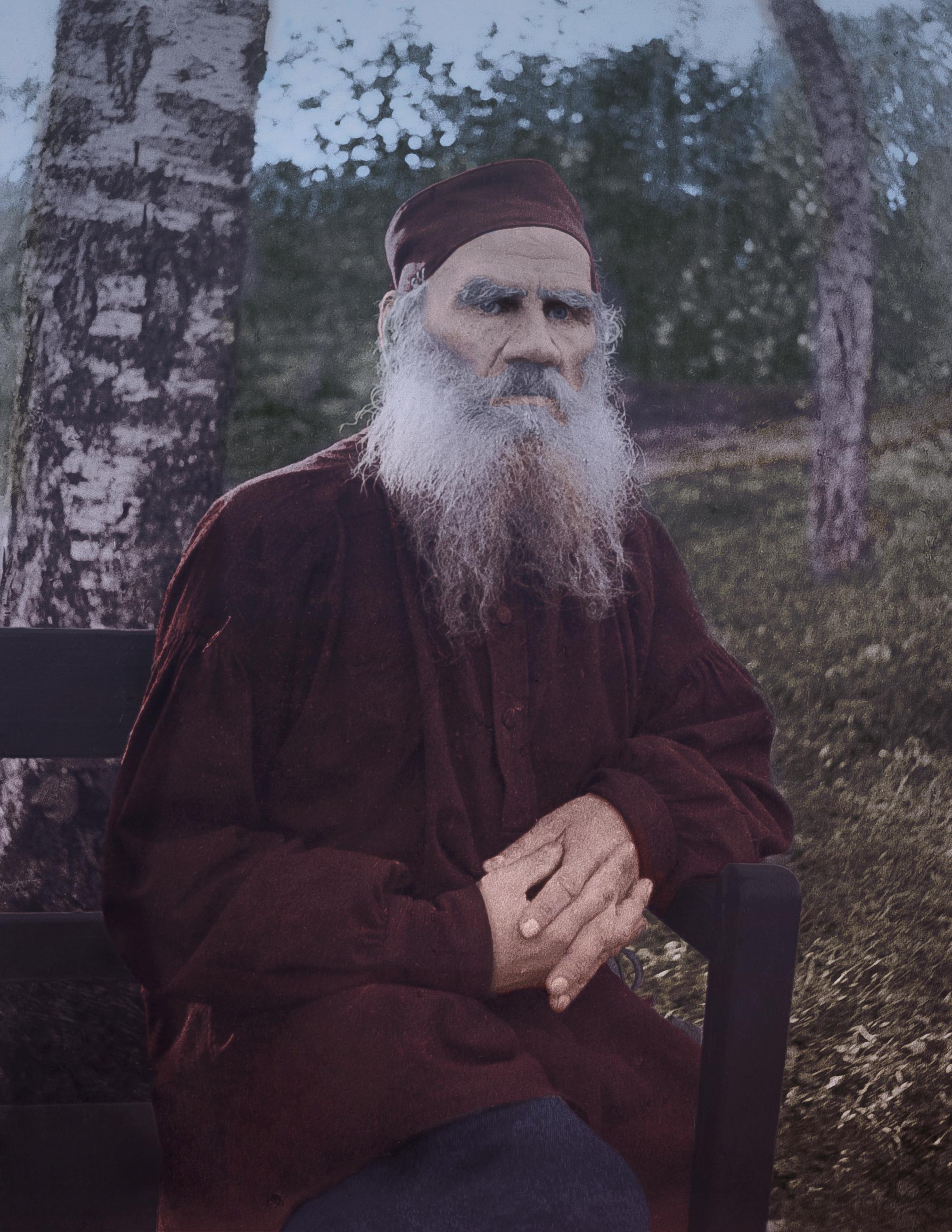


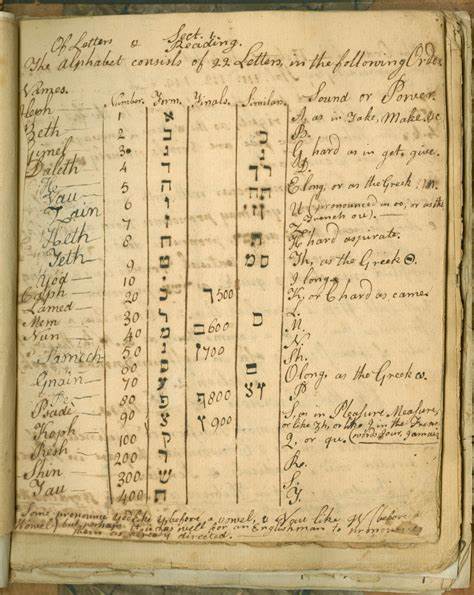


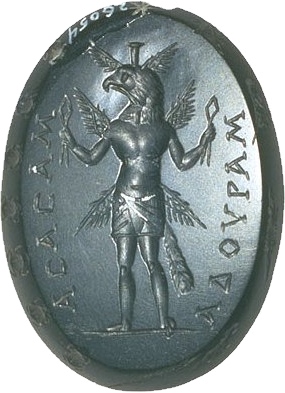


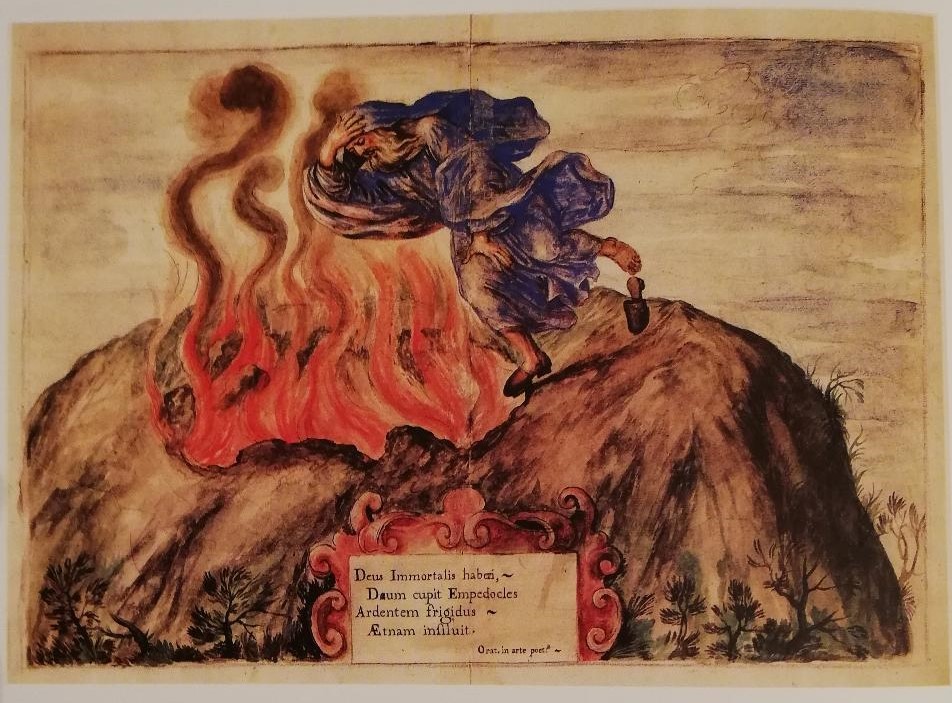
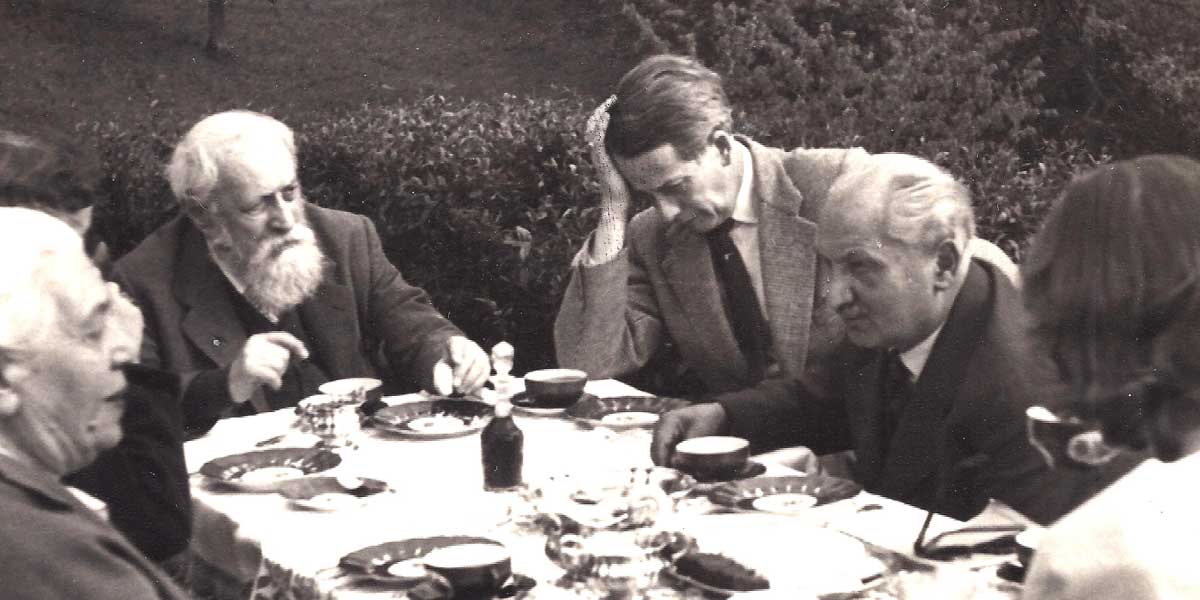


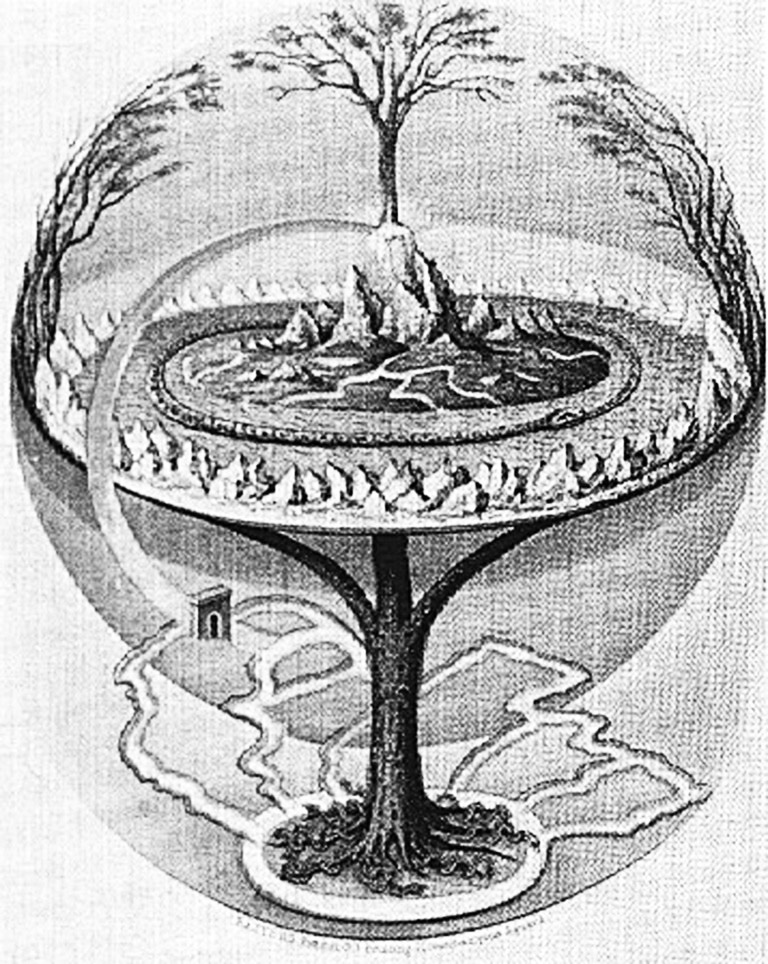


Vous devez être connecté pour poster un commentaire.