Prophetic projections or disenchanted salvos, the blows come from all sides. « Decadence » (Nietzsche). « Malaise in civilization » (Freud). « Decline of the West » (Spengler). « Mechanical petrifaction » (Max Weber). « Crisis of the mind » (Paul Valéry). « Spiritual sickness of humanity » (C.-G. Jung). « Absence of meaning » (Hannah Arendt). « Crisis of meaning » (John Paul II).
These judgments, recent on the scale of history, testify to the acceleration of a massive phenomenon, but we must go back further to understand its deepest sources.
One of the first signs of decomposition appeared more than a thousand years ago. The via moderna (the « modern way ») inaugurated the deconstruction of metaphysics in the Middle Ages. A few monks, tired of the scholastics, began to scatter to the wind the « chimeras » and « empty abstractions » of classical philosophies. « Truth » or the « universal » were now just empty words, fallacies. Only in facts was truth to be found. The only universals were now the singularities.
With nominalism was thus founded the first basis for modern ideas. It took several centuries to broaden and deepen it. Empiricism, relativism and positivism subsequently accompanied the progress of science and technology. At the same time, the nominalist lesson, coming out of philosophical circles, was adapted to politics, for the benefit of the Prince and the advantage of Leviathan.
We had finished with metaphysics, and with the classical age, but certainly not with religion. Shortly after the fall of Constantinople, the invention of printing, the discovery of America and the Copernican revolution, markers of the entry into « modern » times, a part of the West became religiously and lastingly infatuated with a core of ruthless and pessimistic ideas: universal reign of sin, absolute decay of man, assured perdition of the whole of humanity, – with the inexplicable exception of a few « saints ».
These singular, self-proclaimed « saints », imbued with an exceptional ethos, did not remain inert. Assuming their « manifest destiny, » they began to preach relentlessly, century after century, a corrosive despair, contempt for the weak, abandonment of the poor, while the « war of each against each » raged.
Nominalism and the Reformation had attacked, from two different angles, the old « Good News » that had once been offered to all. The Enlightenment came, also dominated by nominalism, in a resolutely more materialistic version. It was then possible to assert without detours that humanity is in reality only an « abstraction », and that there are only « concrete men » (Goethe). The idea made its mark, and just before the First World War it was declared that « natural law » and the idea of « humanity » had become « almost incomprehensible in Germany » (E. Troeltsch). The death of the word heralded the death of the thing. This misunderstood « abstraction » was soon to be given an appallingly concrete meaning.
After two world wars and several genocides, nominalism still occupies the top of the pavement. The philosophers who claim to be its advocates still seem incapable of defining the essence of « good, » « true » and « just ».
And now the end of the « great narratives » (les « grands récits »), announced by Foucault and Lyotard, adds a final touch to this millennial deconstruction.
From now on, the Dasein, alone and naked, without Idea and without Narrative, can be delivered to the games, without why and without hindrance, of the political and social forces, in the economic and technological immanence, and in the continuous confrontation with the resurgence, providential and reactionary, of tribalisms and identities.
Special groups, special interests, selfishness are exalted. The idea of a common world is moving further and further away.
The cleavages are getting worse and settling over time. Globalized capitalism produces an oligarchy of super-dominants and an infinite number of proletarians, enslaved in circles concentric to the Empire. On one side, a few masters of the world, on the other, all the « rest ». The future promises to be sectarian, oligarchic and mafia-like.
Clear, irrevocable signs of decay, poverty, weakness, servitude are, generation after generation, devolved to the immense mass of losers, condemned on earth and « reproved » in heaven.
In this planetary division of destinies, the faith of the « saints » of the day guides and energizes them beyond measure. Their religion is not opium for them, it is their cocaine.
They went to school. Metaphysical egoism and hatred of the common have been transposed far beyond the religious sphere, into a world that is already no longer common, but divided. Inclusion is reserved there to the few, general exclusion is for all the rest, and dissociation is universal.
The ancient battle of the Calvinist « saints » during the Wars of Religion and the Hobbesian War of All Against All in 17th century England has spread and extended beyond all expectations.
The Christian fundamentalists and the born again who today wage war on the « axis of evil » are the heirs of the Puritans who approached the shores of New England, to appropriate in blood a land that was « manifestly » intended for them.
Untouchable ideas (Manichaeism of good and evil, of the chosen and the fallen, of friend and foe) adapt to all times, all religions, all latitudes. Formerly Gnostic, yesterday Calvinistic, they can be summarized as follows: « After me, the Flood ».
In more formal style: God’s grace is reserved for the chosen few and nothingness is promised to the rest of the world.
These ideas have provoked countless wars over the centuries. Today, they serve as mantras in the worldwide « war of civilizations ». They are translated into all languages: « In God we trust », « Gott mit uns », « Dieu avec nous », « Allahu-akbar ».
It’s not that there is no alternative.
Famous thinkers have long been engaged in other or contrary utopias.
Leibniz proposed to build the « republic of the minds ». Rousseau believed in the expression of the « general will ». Kant philosophized about the « general interest of humanity ».
But have the peoples, crammed into the world’s jungle, heard them? The law of the powerful is always stronger than the law of the weak. What can « paper and words » do before « the sword and the hand of men »? i
The religion of global dissociation and disenchantment continues to grow. The once religious and moral schism has become secularized and trivialized. A ferocious schizophrenia gnaws at the global unconscious, psychically cracked, torn, mutilated.
It is necessary to analyze and anamnesis it, to understand the decomposition of the modern mind and the programmed end of the common. It is necessary to delve into the early days of the era, to find its Manichean and Gnostic preliminaries, to reveal its initial wounds, and their innumerable after-effects.
The ancient past also tells of a possible future. The « knowledge societies » take up the ancient Gnostic utopia in another way.
The new believers believe in other immanent gods: knowledge, technique, science, indefinite progress.
They love a new law, « convergence ».
They compose a neo-Genesis, where there is no longer evening or morning, no abyss or firmament, no divine wind, but the demiurgic fusion of nanotechnology, biotechnology, information technology, neurosciences and artificial intelligence. Immanence emerges at the nanoscale, and universally spreads its Gospel, through the globalization of materials, materials and capital. Bits, atoms, neurons, and genes will be the unsuspecting heroes of the new Global Narrative.
A new Promised Land can be hoped for. Immense « free lands », with indefinite, putative borders, have already been appropriated by the pioneers of invention, the pilgrim fathers of appropriation.
A trans-humanity with « augmented » genes ii will tomorrow take exclusive possession of it. Homo Sapiens 2.0 will leave behind them an obsolete « remnant », humanity 1.0.
iiA report by the United Nations Educational, Scientific and Cultural Organization (UNESCO) expressed alarm about this in the following terms: « In the long term, nanomedicine could lead to a radical transformation of the human species. Humanity’s efforts to change itself as and when it wants to could lead to a situation where it would no longer be possible to speak of a « human being » at all « . Cf. Bert Gordjin, « Les questions éthiques en nanomédecine« , in Nanotechnologies, éthique et politique, UNESCO Editions, Paris, 2008.
What was it that Empedocles did refuse to reveal? Why didn’t he tell what he was « forbidden to say »? What was he afraid of, – this famous sage from Agrigento, this statesman, this gyrovague shaman and prophet? Why this pusillanimity on the part of someone who, according to legend, was not afraid to end up throwing himself alive into the furnace of Etna?
Empedocles wrote:
« I ask only what ephemeral humans are allowed to hear. Take over the reins of the chariot under the auspices of Piety. The desire for the brilliant flowers of glory, which I could gather from mortals, will not make me say what is forbidden… Have courage and climb the summits of science; consider with all your strength the manifest side of everything, but do not believe in your eyes more than in your ears.”i
Empedocles encourages us to « climb the summits of science » …
The Greek original text says: καὶ τὸτε δὴ σοφίης ἐπ’ ἄίκροισι θοάζειν, that translates literally: « to impetuously climb to the summits (ἐπ’ ἄίκροισι, ep’aikroisi) of wisdom (σοφίης sophias) ».
But what are really these « summits of wisdom »? Why this plural form? Shouldn’t there be just one and only one « summit of wisdom », in the proximity of the highest divinity?
In another fragment, Empedocles speaks again of « summits », using another Greek word, κορυφή, koruphe, which also means « summit, top »:
John Burnet and Auguste Reymond translated (in French):
« Marchant de sommet en sommet,
ne pas parcourir un sentier seulement jusqu’à la fin… »iv i.e.:
« Walking from summit to summit,
not to walk a path only to the end…”
Paul Tannery adopted another interpretation, translating Κορυφὰς as « beginnings »:
« Rattachant toujours différemment de nouveaux débuts de mes paroles,
et ne suivant pas dans mon discours une route unique… »v
« Always attaching new and different beginnings to my words,
and not following in my speech a single road…”
I wonder: does the apparent obscurity of this fragment justify so wide differences in its interpretation?
We are indeed invited to consider, to dig, to deepen the matter.
According to the Bailly Greek dictionary, κορυφή (koruphe), means « summit« , figuratively, the « zenith » (speaking of the sun), and metaphorically: « crowning« , or « completion« .
Chantraine’s etymological dictionary notes other, more abstract nuances of meaning for κορυφή : « the sum, the essential, the best« . The related verb, κορυφῶ koruphô, somewhat clarifies the range of meanings: « to complete, to accomplish; to rise, to lift, to inflate« .
The Liddell-Scott dictionary gives a quite complete review of possible meanings of κορυφή: « head, top; crown, top of the head [of a man or god], peak of a mountain, summit, top, the zenith; apex of a cone,extremity, tip; and metaphorically: the sum [of all his words], the true sense [of legends]; height, excellence of .., i.e. the choicest, best. »
Liddell-Scott also proposes this rather down-to earth and matter-of-fact interpretation of the fragment 24: « springing from peak to peak« , i.e. « treating a subject disconnectedly ».
But as we see, the word κορυφή may apply to human, geological, tectonic, solar or rhetorical issues…
What is be the right interpretation of κορυφή and the ‘movement’ it implies, for the fragment 24 of Empedocles?
Etymologically and originally, the word κορυφή relates to κόρυς, « helmet« . Chantraine notes incidentally that the toponym « Corinth » (Κόρινθος) also relates to this same etymology.
The primary meaning of κορυφή, therefore, has nothing to do with mountains or peaks. It refers etymologically to the « summit » of the body, the « head ». More precisely, it refers to the head when « helmeted », – the head of a man or a woman (or a God) equipped as a warrior. This etymology is well in accordance with the long, mythological memory of the Greeks. Pythagorasvi famously said that Athena was « begotten », all-armed, with her helmet, « from the head » of Zeus, in Greek: κορυφἆ-γενής (korupha-genes).
If we admit that the wise and deep Empedocles did not use metaphors lightly, in one of his most celebrated fragments, we may infer that the « summits », here, are not just mineral mountains that one would jump over, or subjects of conversation, which one would want to spring from.
In a Greek, philosophical context, the « summit » may well be understood as a metaphor for the « head of Zeus », the head of the Most High God. Since a plural is used (Κορυφὰς, ‘summits’), one may also assume that it is an allusion to another Godhead, that of the divine « Wisdom » (a.k.a. Athena), who was born from Zeus’ « head ».
Another important word in fragment 24 is the verb προσάπτω, prosapto.
Bollack translates this verb as « to join, » Burnet as « to walk, » Tannery as « to attach”, Liddell-Scott as « to spring »…
How diverse these scholars’ interpretations!… Joining the summits one to the other… Walking from summit to summit… Attaching new beginnings to a narration… Springing from peak to peak, as for changing subjects…
In my view, all these learned translations are either too literal or too metaphorical. And unsatisfactory.
It seems to me necessary to seek something else, more related to the crux of the philosophical matter, something related to a figurative « God Head », or a « Godhead »… The word koruphe refers metaphorically to something ‘extreme’, — also deemed the ‘best’ and the ‘essential’. The Heads (koruphas) could well allude to the two main Greek Godheads, — the Most High God (Zeus) and his divine Wisdom (Athena).
More precisely, I think the fragment may point to the decisive moment when Zeus begets his own Wisdom, springing from his head, all armed….
The verb προσάπτω has several meanings, which can guide our search: « to procure, to give; to attach oneself to; to join; to touch, to graze » (Bailly).
Based on these meanings, I propose this translation of the first line of fragment 24:
« Joining the [God] Heads, one to the other ».
The second verb used in fragment 24 (line 2) is τελέειν, teleein: « To accomplish, to perform, to realize; to cause, to produce, to procure; to complete, to finish; to pay; (and, in a religious context) to bring to perfection, to perform the ceremony of initiation, to initiate into the mysteries (of Athena, the Goddess of Wisdom) » (Bailly).
Could the great Empedocles have been satisfied with just a banal idea such as « not following a single road », or « not following a path to the end », or even, in a more contorted way, something about « not saying a single path of words »?
I don’t think so. Neither Bollack, Burnet, nor Tannery seem, in their translations, to have imagined and even less captured a potential mystical or transcendent meaning.
I think, though, that there might lie the gist of this Fragment.
Let’s remember that Empedocles was a very original, very devout and quite deviant Pythagorean. He was also influenced by the Orphism then in full bloom in Agrigento .
This is why I prefer to believe that neither the ‘road’, nor the ‘path’ quoted in the Fragment 24, are thought to be ‘unique’.
For a thinker like Empedocles, there must be undoubtedly otherways, not just a ‘single path’…
The verb τελέειν also has, in fact, meanings oriented towards the mystical heights, such as: « to attain perfection, to accomplish initiation, to initiate to the mysteries (of divine Wisdom) ».
As for the word μύθων (the genitive of mythos), used in line 2 of Fragment 24, , it may mean « word, speech », but originally it meant: « legend, fable, myth ».
Hence this alternative translation of μύθων μὴ τελέειν ἀτραπὸν μίαν (mython mè teleein atrapon mian) :
« Not to be initiated in the one way of the myths »…
Here, it is quite ironic to recall that there was precisely no shortage of myths and legends about Empedocles… He was said to have been taken up directly to heaven by the Gods (his « ascension »), shortly after he had successfully called back to life a dead woman named Panthea (incidentally, this name means « All God »), as Diogenes of Laërtius reportedvii.
Five centuries B.C., Empedocles resurrected “Panthea” (« All God »), and shortly afterwards he ‘ascended’ to Heaven.
One can then assume that the Fragment 24 was in fact quite premonitory, revealing in advance the nature of Empedocles’ vision, the essence of his personal wisdom.
The Fragment 24 announces an alternative to the traditional « way of initiation » by the myths:
« Joining the [God] Heads, one to the other,
Not to be initiated in the only way of the myths. »
Empedocles did not seem to believe that the myths of his time implied a unique way to initiation. There was maybe another « way » to initiation: « joining the Most High Godhead and his Wisdom …
The Milky Way. The constellation of Cygnus appears in the top of the image.
Milk is like the soul, says one Upaniṣad.i How come?
In milk, butter is hidden… As in potency… It must be churned and it appears.
In the soul, knowledge also is hidden… As in potency… When the spirit searches, it increases its strength, makes it grow, and knowledge comes.
Another metaphor: from two sticks rubbed together, fire springs forth. From the soul and the spirit rubbing together, comes the Brahman.
The word Brahman (ब्रह्मन्) is neutral. It designates a principle: « growth, increase, strengthening ». It comes from the verbal root BṚH- , to strengthen, to increase, to augment, to enlarge.
In the Bhagavad-Gītā, the Lord defines Brahman as his own Self:
« The universe is entirely pervaded by Me, invisible, formless. All beings are in Me, but nothing that is created is in Me, and I am not in them. Behold My supernatural power! I sustain all beings. I am everywhere present. I remain the source of all creation. Just as in space the power of the wind is established, and everywhere its breath, in Me stand all beings. »ii
The Lord, transcendent, descends incognito to earth, and He does not mince His words:
« The fools denigrate Me when in human form I come down to this world. They know nothing of my spiritual, absolute nature, nor of my supremacy. Ignorant, they go astray. They believe in demons, not in Me. Vain are their hopes, vain are their interests, vain are their aspirations, vain is their knowledge. « iii
Neither fools nor vain, are the « great souls », the mahatmah.
« Those who are ignorant of ignorance, the mahatmah, are under the protection of the divine nature. Knowing Me as God, the Supreme, original, inexhaustible Person, they absorb themselves, they devote themselves. Unceasingly singing my glory, they prostrate themselves before Me. Determined in their effort, these spirits, these magnanimous souls love Me.” iv
What happens then?
« Those who know, look at me: I am the Unique Being. They see Me in the multitude of beings and things; My form is in the universe.”v
If the Self is the Whole, it is also in each one of the forms in it, in their infinite variety, their total sum, and their common nature.
« But it is I who am the rite and the sacrifice, the oblation to the ancestors, the grass and the mantra. I am the butter and the fire, and the offering. Of this universe, I am the father, the mother, the support and the grandfather, I am the object of knowledge, the purifier and the syllable OM. I am also the Rig, the Sâma and the Yajur. I am the goal, the support, the teacher, the witness, the abode, the refuge and the dearest friend. I am the creation and the annihilation, the basis of all things, the resting place and the eternal seed. I am heat, rain and drought, I am immortality and death personified. Being and non-being, both are in Me, O Arjuna.”vi
But the Veda itself is not enough, nor the rites. The most important thing is yet to attain knowledge, the only necessary knowledge. Where is it hidden?
« It is indirectly that they worship Me, the men who study the Vedas and drink soma, looking for delicious heavens. They are reborn on the planet of Indra, where they enjoy the pleasures of the devas. When they have enjoyed these celestial pleasures, when their merits have been exhausted, they return to this mortal Earth. A fragile happiness, such is the only fruit they reap, after having followed the principles of the Vedas. But those who worship Me with devotion, meditating on My absolute Form, I fill their lacks and preserve what they are. Every oblation that man with faith sacrifices to the devas is destined for Me alone, O son of Kunti. For I am the sole beneficiary and the sole object of the sacrifice. Those who ignore My true, absolute nature, fall back. Those who worship the Devas will be reborn among the Devas, among the ghosts and other spirits those who live in their worship, among the ancestors the worshippers of the ancestors: likewise, those who are devoted to Me will live with Me.”vii
Following that logic, let’s wonder: from all the « whited sepulchres » of the world, what will really be reborn? New whited, sepulchral worlds? New whited, sepulchral galaxies?
The poet said: « the Milky Way, – luminous sister of the white streams of Chanaan, and of the white bodies of the lovers ».viii
But it seems to me that the Milky Way, with all its grandeur, has less milk and less light than one living soul… As for the streams of Chanaan and the bodies of the lovers, that’s still an open discussion, to compare their ´milk´ to the soul.
There are cultures that value prose, argument, dialectics, in the search for truth. Others praise the hymn, the psalm, the enigma. Some have pushed far the love of wisdom, or maieutic. Others have preferred prophecy or mystery.
The ways forward are multiple. Variations are legion.
Hard climates, short summers, open landscapes, undoubtedly influence the view, life, and everything else. Scattered archipelagos, high valleys, alluvial plains, tawny deserts, wet basins, all these eclectic places hardly resemble each other. They have had, in their time, in their turn, respective affinities, sudden impulses, for thoughts coming from elsewhere, or born within them. Greece has its light. On the Indus flows a heavy and sweet air. The Nile is not the Oxus. The Rhine is not the Tigris.
Each people has their own way of seeing the sea and the stars, of following the sun and the course of the mountains, of telling the fire and the milk, the cow and the night.
Their languages sometimes bear witness to this, beyond the centuries.
Images, which have become seemingly banal, yesterday founded grandiose metaphors, and for millennia have nourished original intuitions. The arid stone of the desert gave birth to a mineral monotheism. The laughing myriads of the sea waves are of a more pantheistic nature – they diffract the solar unit abundantly into billions of labile shards.
One people alone does not create the idea of the divine; the climate also exudes it, the landscape cherishes it, and the language welcomes it.
Besides, the One has too many names. Prajāpati, El, Adonaï, Eloh, Baal, Elion, El Shaddaï, YHVH, Deus, Allah.
The Elohim themselves testify that the One hides in the plural …
All these names are one. These so many names all say that the One is, but they are very many to proclaim it.
It is inferred that all these names and even the number “one” are but veils.
One, one, one, … One, only one, not two, not three, not a thousand or billions.
How could the One rub shoulders with the Two? Or engender the Three? Or breathe the Infinite?
No, no, no. One, One, One…
Only One, there is only the One!
One is one. The Divine is infinite. How to limit the infinite by the One? Idle question. The world is larger than all the deserts, deeper than all the cosmos: no matter the quarrels of hackneyed words…
There, for millennia, towards the Indus, beyond the Oxus, ancient peoples saw the Divine everywhere they looked. They drank it with their eyes, when the light set its dazzling wing, and offered this very light as a sacrifice.
Grammar, words, style, rhythm, liberty, criticism, were other wings for them, making other prisms glimmer in their unbounded intelligence.
The mind then became aware of its destiny, unique and colorful.
The north still lives in the south of itself. East and west close together at the ends of the day. The one and the infinite make two… and they open the way to the possible and to the unity of being.
Today, it is time to think about the unification of the human, after so much blood has been shed just to claim the “oneness” of the divine.
Renan provoked: « Who will dare to say that by revealing the divine unity and definitively suppressing the local religions, the Semitic race has not laid the foundation stone for the unity and progress of humanity?”i
The Semitic God is far from man, immensely distant. But occasionally He comes near. He chooses a Nabi, an Anointed One, a prophet, a chosen one, or a pure soul, and He reveals Himself, absolutely elevated, infinitely unspeakable, all “Other”.
Next door, close by, elsewhere, the multiple, the diverse, the lowly, the “Other”, are neither « one » nor « far ».
One day, the man of the future will link the One and the Multiple, the distant and the near, the earth and the sky.
Deserts, seas, mountains and valleys will blow various winds, unique and shadowy geniuses, inaudible wisdoms, thoughts yet to be born.
———-
iErnest Renan. Histoire générale et système comparé des langues sémitiques. (1863)
All human languages are animated by a secret spirit, an immanent soul. Over the millennia, they have developed within them their own potency, even without the participating knowledge of the fleeting peoples who speak them. In the case of ancient languages, such as Sanskrit, Egyptian, Avestic, Hebrew (biblical), Greek (Homeric), Latin, or Arabic, this spirit, soul, and other powers are still at work, many centuries after their apogee, albeit often in a hidden form. The keen, patient observer can still try to find the breath, the strength, the fire, well in evidence in ancient, famous pages or left buried in neglected works. One may sometimes succeed, unexpectedly, to find pearls, and then contemplate their special aura, their glowing, sui generis energy.
The innumerable speakers of these languages, all of them appearing late and disappearing early in their long history, could be compared to ephemeral insects, foraging briefly in the forest of fragrant, independent and fertile language flowers, before disappearing, some without having produced the slightest verbal honey, others having been able by chance to distill some rare juice, some suave sense, from time to time.
From this follows, quite logically, what must be called the phenomenal independence of languages in relation to the men who speak and think them.
Men often seem to be only parasites of their language. It is the languages that « speak » the people, more than the people speak them. Turgot said: « Languages are not the work of a reason present to itself.”
The uncertain origin and the intrinsic ‘mystery’ of languages go back to the most ancient ages, far beyond the limited horizon that history, anthropology and even linguistics are generally content with.
Languages are some kind of angels of history. They haunt the unconscious of men, and like zealous messengers, they help them to become aware of a profound mystery, that of the manifestation of the spirit in the world and in man.
The essence of a language, its DNA, is its grammar. Grammar incorporates the soul of the language, and it structures its spirit, without being able to understand its own genius. Grammatical DNA is not enough to explain the origin of the genius of language. It is also necessary to take the full measure of the slow work of epigenesis, and the sculpture of time.
Semitic languages, to take one example, are organized around verbal roots, which are called « triliters » because they are composed of three radical letters. But in fact, these verbs (concave, geminated, weak, imperfect,…) are not really « triliters ». To call them so is only « grammatical fiction », Renan saidi. In reality, triliteral roots can be etymologically reduced to two radical letters, with the third radical letter only adding a marginal nuance.
In Hebrew, the biliteral root פר (PR) carries the idea of separation, cut, break. The addition of a third radical letter following פר modifies this primary meaning, and brings like a bouquet of nuances.
Thus, the verbs : פּרד (parada, to divide), פּרה (paraa, to bear fruit), פּרח (paraha, to bloom, to bud, to burst),ּ פּרט (paratha, to break, to divide), פּרך (parakha, to crumble, to pulverize), פּרם (parama, to tear, to unravel), פּרס (paraça, to break, to divide), פּרע (para’a, to detach from, to excel), פּרץ (paratsa, to break, to shatter), פּרק (paraqa, to tear, to fragment), פּרר (parara, to break, to rape, to tear, to divide), פּרשׂ (parassa, to spread, to unfold), פּרשׁ (parasha, to distinguish, to declare).
The two letters פּ et ר also form a word, פּר, par, a substantive meaning: « young bull, sacrificial victim ». There is here, in my view, an unconscious meaning associated with the idea of separation. A very ancient, original, symbolic meaning, is still remembered in the language: the sacrificial victim is the one which is ‘separated’ from the herd, who is ‘set apart’.
There is more…
Hebrew willingly agrees to swap certain letters that are phonetically close. Thus, פּ (P) may be transmuted with other labials, such as בּ (B) or מ (M). After transmutation, the word פּר, ‘par’, is then transformed into בּר, ‘bar’, by substituting בּ for פּ. Now בּר, ‘bar‘, means ‘son’. The Hebrew thus makes it possible to associate with the idea of ‘son’ another idea, phonetically close, that of ‘sacrificial victim’. This may seem counter-intuitive, or, on the contrary, well correlated with certain very ancient customs (the ‘first born son sacrifice’). This adds another level of understanding to what was almost the fate of Isaac, the son of Abraham, whom the God YHVH asked to be sacrificed.
Just as פּ (P) permuted with בּ (B), so the first sacrificial victim (the son, ‘bar‘) permuted with another sacrificial victim (‘par‘), in this case a ram.
The biliteral root בּר, BR, ‘bar‘, gave several verbs. They are: בּרא (bara‘, ‘to create, to form’; ‘to be fat’), בּרה (baraa, ‘to eat’), בּרח (baraha, ‘to pass through, to flee’), בּרך (barakha, ‘to kneel, to bless’), בּרק (baraq, ‘lightning’), בּרר (barara, ‘to purify, to choose’).
The spectrum of these meanings, while opening the mind to other dimensions, broadens the symbolic understanding of the sacrificial context. Thus the verb bara‘, ‘he created’, is used at the beginning of Genesis, Berechit bara’ Elohim, « In the beginning created God…. ». The act of ‘creating’ (bara‘) the Earth is assimilated to the begetting of a ‘son’ (bar), but also, in a derivative sense, to the act of fattening an animal (‘the fatted calf’) for its future sacrifice. After repetition of the final R, we have the verb barara, which connotes the ideas of election and purification, which correspond to the initial justification of the sacrifice (election) and its final aim (purification). The same root, slightly modified, barakha, denotes the fact of bringing the animal to its knees before slaughtering it, a more practical position for the butcher. Hence, no doubt, the unconscious reason for the late, metonymic shift to the word ‘bless’. Kneeling, a position of humility, awaiting the blessing, evokes the position taken by the animal on the altar of sacrifice.
Hebrew allows yet other permutations with the second radical letter of the word, for example in the case cited, by substituting ר with צ. This gives: פּצה (patsaa, ‘to split, to open wide’), פּצח (patsaha, ‘to burst, to make heard’), פּצל (patsala, ‘to remove the bark, to peel’), פּצם (patsama, ‘to split’), פצע (patsa’a, ‘to wound, to bruise’). All these meanings have some connotation with the slaughter that the sacrifice of the ancient Hebrew religion requires, in marked contrast to the sacrifice of the Vedic religion, which is initiated by the grinding of plants and their mixing with clarified butter.
Lovers of Hebrew, Sanskrit, Greek, or Arabic dictionaries can easily make a thousand discoveries of this nature. They contemplate curiously, then stunned, the shimmering of these ancient languages, sedimenting old meanings by subtle shifts, and feeding on multiple metaphors, for thousands of years.
Unlike Semitic languages, the semantic roots of Chinese or the ancient language of Egypt are monosyllabic, but the rules of agglutination and coagulation of these roots also produce, though in another way, myriads of variations. Other subtleties, other nuances are discovered and unfold in an entirely different grammatical context.
These questions of grammar, roots and settled variations are fascinating, but it must be said that by confining ourselves to them, we never remain but on the surface of things.
We need to go deeper, to understand the very texture of words, their fundamental origin, whose etymology can never be enough. The time travel that etymology allows, always stops too early, in some ‘original’ sense, but that does not exhaust curiosity. Beyond that, only dense mists reign.
It has been rightly pointed out that Arabic is, in essence, a desert language, a language of nomads. All the roots bear witness to this in a lively, raw, poetic way.
In the same way, one should be able to understand why and how the Vedic language, Sanskrit, which is perhaps the richest, most elaborate language that man has ever conceived, is a language that has been almost entirely constructed from roots and philosophical and religious (Vedic) concepts. One only has to consult a dictionary such as Monier-Williams’ to see that the vast majority of Sanskrit words are metaphorically or metonymically linked to what was once a religious, Vedic image, symbol or intuition.
It is necessary to imagine these people, living six, twelve, twenty or forty thousand years ago, some of them possessing an intelligence and a wisdom as penetrating and powerful as those of Homer, Plato, Dante or Kant, but confronted to a very different ‘cultural’ environment.
These enlightened men of Prehistory were the first dreamers, the first thinkers of language. Their brains, avid, deep and slow, wove dense cocoons, from which were born eternal and brief butterflies, still flying in the light of origin, carefree, drawing arabesques, above the abyss, where the unconscious of the world never ceases to move.
The Hebrew word temounah has three meanings, says Maimonides.
Firstly, it refers to the shape or figure of an object perceived by the senses. For example: « If you make a carved image of the figure (temounah) of anything, etc., you are making an image of the shape or figure of an object perceived by the senses. « (Deut. 4:25)
Secondly, this word may be used to refer to figures, thoughts or visions that may occur in the imagination: « In thoughts born of nocturnal visions (temounah), etc.”, (Jb. 4:13). This passage from Job ends by using a second time this word: « A figure (temounah), whose features were unknown to me, stood there before my eyes. « (Jb. 4:16). This means, according to Maimonides, that there was a ghost before Job’s eyes while he was sleeping.
Finally, this word may mean the idea perceived by the intelligence. It is in this sense that one can use temounah when speaking of God: « And he beholds the figure (temounah) of the Lord. « (Num. 12:8). Maimonides comments: « That is to say, he contemplates God in his reality.” It is Moses, here, who ‘contemplates’ the reality of God. In another passage, again about Moses, God Himself says: « I speak to him face to face, in a clear appearance and without riddles. It is the image (temounah) of God himself that he contemplates. » (Numbers 12:8).
Maimonides explains: « The doctors say that this was a reward for having first ‘hidden his face so as not to look at God’ (Berakhot 7a) ». Indeed, one text says: « Moses hid his face, for he was afraid to look towards God.” (Ex. 3:6)
It is difficult to bring anything new after Maimonides and the doctors. But this word, whose image, vision and idea can be understood through its very amphibology, deserves a special effort.
The word temounah is written תְּמוּנָה (root מוּן ).
The letter taw, the initial of temounah, can be swapped with the other ‘t’ in the Hebrew alphabet, the teth ט, as is allowed in the Hebrew language, which is very lax in this respect. This gives a new word, which can be transcribed as follows: themounah. Curiously enough, the word thamana טָמַן, which is very close to it, means « to hide, to bury ».
One may argue that it’s just a play on words. But the salt of the matter, if one lends any virtue to the implicit evocations of the meaning of the words, is that Moses « hides » (thamana) his face so as not to see the temounah of God.
By hiding (thamana) his own face (temounah), Moses contemplates the figure (temounah) of God, which remains hidden from him (thamana).
What does this teach us?
It teaches us that the divine figure does not show itself, even to a prophet of the calibre of Moses. Rather, it shows that the divine figure stays hidden. But by hiding, it also shows that one can contemplate its absence, which is in fact the beginning of the vision (temounah) of its very essence (temounah).
By renouncing to see a temounah (an image), one gains access to the temounah of the temounah (the understanding of the essence).
Through this riddle, hopefully, one may start to get access to God’s temounah.
It is also a further indication that God is indeed a hidden God. No wonder it is difficult to talk about His existence (and even more so about His essence) to ‘modern’ people who only want to « see » what is visible.
The Greek word logos means « reason » or « discourse, speech ».
In Plato’s philosophy, the Logos is the Principle and the Word. It is also the Whole of all the Intelligible, as well as the link between the divine powers, and what founds their unity. Finally, it is the « intermediary » between man and God.
For Philo of Alexandria, a Neo-Platonist Jew, the Logos takes two forms. In God, the Logos is the divine Intelligence, the Eternal Thought, the Thoughtful Thought. In its second form, the Logos resides in the world, it is the Thought in action, the Thought realized outside God.
Written shortly after Philo’s active years, the Gospel of John says that « in the beginning » there was the Logos who was God, and the Logos who was with God i. There was also the Logos who was made fleshii.
Does this mean that there are three instances of the Logos? The Logos who is God, the Logos who is with Him and the Logos who became flesh?
In Christian theology, there is only one Logos. Yet the three divine ‘instances’ of the Logos quoted by John have also been personified as Father, Son, Spirit.
For the structuralist philosopher, it is possible to sum up these difficult theses in a pragmatic way. The Logos comes in three forms or aspects: Being, Thinking, Speaking. That what is, that what thinks and that what speaks. These three forms are, moreover, fundamental states, from which everything derives, and with which anybody can find an analogy pointing to the fundamental human condition (existence, intelligence, expression).
Philo, who is both a Jew and a Neoplatonist, goes quite far with the theory of the Logos, despite the inherent difficulty of reconciling the unity of God and the multiplication of His ‘instances’ (that the Kabbalah, much later on, called ‘sefirot‘). For Philo, the Logos is the totality of God’s Ideas. These Ideas act “like seals, which when approached to the wax produce countless imprints without being affected in any way, always remaining the same.”iii
All things that exist in the universe derive from an Idea, a « seal ». The Logos is the general seal whose imprint is the entire universe.iv
Philo’s Logos is not « personified ». The Logos is the Organ of God (both His Reason and His Word) playing a role in the Creation. Philo multiplies metaphors, analogies, drawing from divine, human and natural images. The Logos is creation, engendering, speech, conception, or flow, radiation, dilatation. Using a political image, God « reigns », the Logos « governs ».
Philo’s thinking about the Logos is complex and confusing. A 19th century commentator judged that « a tremendous confusion is at the basis of Philo’s system »v. Allegedly, Philo seems to mix up Logos (Word), Pneuma (Spirit), Sophia (Wisdom) and Epistemus (Knowledge).
Wisdom seems to play the same role in relation to the Logos as the thinking Thought (Spirit) of God plays in relation to the world of the Intelligible. Wisdom is the deep source of this world of the Intelligible, and at the same time it is identical with it.
There is no logical quirk in this paradox. Everything comes from the nature of the divine Spirit, in which no distinction can be made between « container » and « content ».
The Logos is thus both the Author of the Law and the Law itself, the spirit and the letter of its content. The Logos is the Law, and the Logos is also its enunciator, its revelator.vi
The Logos is, in the universe, the Divine brought back to unity. He is also the intermediary between this unity and God. Everything which constitutes the Logos is divine, and everything which is divine, apart from the essence of God, is the Logos.
These ideas, as has been said, have been sometimes described as a « philosophical hodgepodge »; they seem to demonstrate a « lack of rigor »vii on the part of Philo, according to certain harsh judgments.
However, what strikes me is that Philo and John, at about the same historical period, the one immediately preceding the destruction of the Second Temple of Jerusalem, and independently of each other, specified the contours of a theophany of the Logos, with clear differences but also deep common structures.
What is even more striking is that, over the centuries, the Logos of the Stoics, the Platonic Noos, the Biblical Angel of the Eternal, the Word of YHVH, the Judeo-Alexandrine Logos, or the ‘Word made flesh‘, the Messiah of the first Christian Church, have succeeded one another. All these figures offer their analogies and differences.
As already said, the main difficulty, however, for a thinker like Philo, was to reconcile the fundamental unity of God, the founding dogma of Judaism, and His multiple, divine emanations, such as the Law (the Torah), or His Wisdom (Hokhma).
On a more philosophical level, the difficulty was to think a Thought that exists as a Being, that also unfolds as a living, free, creative entity, and that finally ´reveals´ herself as the Word — in the world.
There would certainly be an easy (negative) solution to this problem, a solution that « modern » and « nominalist » thinkers, cut off from these philosophical roots, would willingly employ: it would be to simply send the Logos and the Noos, the Angel and the incarnate Wisdom, the Torah and the Gospel back into the dustbin of empty abstractions, of idealistic chimera.
I do not opt for such an easy solution. It seems to me contrary to all the clues accumulated by History.
I believe that the Spirit, as it manifests itself at a very modest level in each one of us, does not come from biochemical mechanisms, from synaptic connections. I believe it is precisely the opposite.
Our brain multiplies cellular and neuronal networks, in order to try to grasp, to capture at our own level, what the Spirit can let us see of its true, inner nature, its fundamental essence.
The brain, the human body, the peoples of different nations and, as such, the whole of humanity are, in their own unique way, immense collective ´antennae´, whose primary mission is to capture the diffuse signs of a creative Intelligence, and build a consciousness out of it.
The greatest human geniuses do not find their founding ideas at the unexpected crossroads of a few synapses, or thanks to haphazard ionic exchanges. Rather, they are « inspired » by a web of thoughtful Thoughts, in which all living things have been immersed since the beginning.
As a clue, I propose this image : When I think, I think that I am; then I think that this thought is part of a Thought that lives, and endless becomes; and I think of this Thought, which never stops thinking, never ceases to think, eternally, the Thought that continues « to be », and that never stops being without thinking, and that never stops thinking without being.
Can God have an ‘image’ or a ‘shadow’? According to the Torah, the answer to this question is doubly positive. The idea that God can have an ‘image’ is recorded in Genesis. The text associates ‘image’ (‘tselem‘) and ‘likeness’ (‘demut‘) with Genesis 1:26: בְּצַלְמֵנוּ כִּדְמוּתֵנוּ , b-tsalmenou ki-demutenou (‘in our image and likeness’), and repeats the word ‘image’ in Genesis 1:27 in two other ways: בְּצַלְמוֹ b-tsalmou (‘in his image’) and בְּצֶם אֱלֹהִים b-tselem elohim (‘in the image of Elohim’).
As for the fact that God may also have a ‘shadow’, this is alluded to in a verse from Exodusi, which quotes the name Betsalel, which literally means ‘in the shadow of God’1. The word צֵל tsel means ‘shadow’. This word has the same root as the word צֶלֶם tselem, which we have just seen means ‘image’. Moreover, tselem also has as its primary meaning: ‘shadow, darkness’, as in this verse: ‘Yes, man walks in darkness’, or ‘he passes like a shadow’ii.
One could therefore, theoretically, question the usual translation of Gen 1:26, and translate it as follows: « Let us make man in our shadow », or « in our darkness ». What is important here is, above all, to see that in Hebrew ‘image’, ‘shadow’ and ‘darkness’ have the same root (צֵל ).
This lexical fact seems highly significant, and when these words are used in relation to God, it is obvious that they cry out: « Interpret us! ».
Philo, the Jewish and Hellenophone philosopher from Alexandria, proposes this interpretation: « The shadow of God is the Logos. Just as God is the model of His image, which is here called shadow, so the image becomes the model of other things, as is showed at the beginning of the Law (Gen. 1:27) (…) The image was reproduced after God and man after the image, who thus took the role of model.”iii
Philo, through the use of the Greek word logos, through the role of mediator and model that the Logos plays between God and man, seems to prefigure in some way the Christian thesis of the existence of the divine Logos, as introduced by John: « In the beginning was the Logos, and the Logos was with God, and the Logos was God.”iv
Man is therefore only the shadow of a shadow, the image of an image, or the dream of a dream. For the word shadow can evoke a dream, according to Philo. He quotes the verse: « God will make himself known to him in a vision, that is, in a shadow, and not in all light » (Num. 12:6).
In the original Hebrew of this verse, we read not ‘shadow’ (tsal), but ‘dream’ (halom). Philo, in his commentary, therefore changed the word ‘dream’ for ‘shadow’. But what is important for us is that Philo establishes that the words ‘vision’, ‘dream’ and ‘shadow’ have similar connotations.
The text, a little further on, reveals a clear opposition between these words (‘vision’, ‘dream’) and the words ‘face-to-face’, ‘appearance’, ‘without riddles’, and ‘image’.
« Listen carefully to my words. If he were only your prophet, I, the Lord, would manifest myself to him in a vision, I would speak with him in a dream. But no: Moses is my servant; he is the most devoted of all my household. I speak to him face to face, in a clear apparition and without riddles; it is the very image of God that he contemplates. Why then were you not afraid to speak against my servant, against Moses? » v
God manifests Himself to a simple prophet in ambiguous and fragile ways, through a vision (ba-mar’ah בַבַּמַּרְאָה ) or a dream (ba–halom בַּחֲלוֹם ).
But to Moses, God appears ‘face to face’ (pêh el-pêh), ‘in a clear appearance and without riddles’ (v-mar’êh v-lo b-hidot וּמַרְאֶה וְלֹא בְחִידֹת ). In short, Moses contemplates ‘the image of God himself’ (temounah תְּמוּנָה).
Note here the curious repetition of the word mar’ah מַּרְאָה, ‘vision’, with a complete change in its meaning from negative to positive… God says in verse 6: « If he were only your prophet, I, the Lord, would manifest Myself to him in a vision (ba-mar’ah בַּמַּרְאָה ) ». And it is the same word (מַרְאֶה), with another vocalization, which he uses in verse 8: « I speak to him face to face, in a clear apparition (ou-mar’êh וּמַרְאֶה ) ». The online version of Sefarim translates the same word as ‘vision’ in verse 6 and ‘clear appearance’ in verse 8. The ‘vision’ is reserved for the simple prophets, and the ‘clear appearance’ for Moses.
How can this be explained?
Verse 6 says: ba-mar’ah, ‘in a vision’. Verse 8 says: ou-mar’eh, ‘and a vision’. In the first case God manifests himself ‘in‘ a vision. In the second case, God speaks with Moses, not ‘through’ a vision, but making Himself as « a vision ».
Moses has the great privilege of seeing God face to face, he sees the image of God. This image is not simply an image, or a ‘shadow’, because it ‘speaks’, and it is the very Logos of God, according to Philo.
Rashi is somewhat consistent with Philo’s point of view, it seems to me. He comments on this delicate passage as follows: « A vision and not in riddles. ‘Vision’ here means ‘clarity of speech’. I explain my words clearly to him and I don’t hide them in riddles like the ones Ye’hezqèl talks about: ‘Propose a riddle…’. (Ye’hezqèl 17, 2). I might have thought that the ‘vision’ is that of the shekhina. So it is written: ‘You cannot see my face’ (Shemoth 33:20) (Sifri). And he will contemplate the image of Hashem. It is the vision from behind, as it is written: ‘You will see me from behind’ (Shimot 33:23) (Sifri). »
If God only manifests Himself ‘in a vision’, it is because He does not ‘speak’. The important thing is not the vision, the image or the shadow of God, but His word, His Logos, the fact that God « speaks ». Read: פֶּה אֶל-פֶּה אֲדַבֶ-בּוֹ, וּמַרְאֶה pêh al-pêh adaber bo, ou-mar’êh: ‘I speak to him face to face, – a vision’.
It is necessary to understand: ‘I speak to him and I make him see clearly my word (my Logos, my Dabar)’…
Philo, a Hellenophone, probably gives the word Logos some Platonic connotations, which are not a priori present in the Hebrew word Dabar (דָּבָר). But Philo makes the strong gesture of identifying the Logos, the Image (of God) and Dabar.
Philo is also a contemporary of Jesus, whom his disciple John will call a few years later Logos and « Image » of God.
Between the Dabar of Moses and the Logos as Philo, John and Rashi understand it, how can we not see continuities and differences?
The Spirit (or the Word) is more or less incarnated. As in the ‘image’ and the ‘clear appearance’ of the Logos. Or as in being the Logos itself.
____
1In Hebrew, tsal means « shadow » and Tsalel : « shadow of God »
The Descent from Mount Sinai, by Cosimo Rosselli, the Sistine Chapel, Rome
Under Tiberius, in the year 16, soothsayers, astrologers and magi were expelled from Italy. Divination had become a capital crime that one would pay with one’s life. A new millennium had begun, but no one suspected it. Times were changing faster than people’s minds. And the Roman religion had to defend itself foot to foot against barbaric ideas from elsewhere.
Long gone was then the time of Moses, who saw in the light what thought could not embrace. Long gone, the time of the prophets, who received dreams and visions, images and words.
Long gone also, was the time of the Chaldean magi and the Avestic and Vedic priests. Possessed of a divine madness, they could, it is said, predict the future by their power of enthusiasm, their capacity for ecstasy.
The words ‘enthusiasm’ and ‘ecstasy’ translate by means of Greek words and roots experiences of a probably universal nature. But do these words adequately reflect the variety of ‘visions’ and the diversity of ‘seers’ throughout the world and throughout history? How can this be ascertained? How can we organize the timeless archaeology of enthusiasm, launch the worldwide excavations of the ecstatic states?
When the divine penetrates the human, it overturns all that is known, all that is acquired, all that can be expressed, all that can be dictated. Everything is overturned, but it also seems that the mind receives, if we believe the testimonies, a capacity for understanding, comprehension and conviction, without any possible comparison. The prophet ‘hears’ or ‘sees’ in an instant thoughts which he considers ‘divine’ but which he makes his own, and to a certain extent he can communicate them to others and find attentive ears. This is where the true prophet is revealed.
After God breathed thoughts and laws into Moses’ mind, Moses in turn repeated them to Aaron. This double operation (first through divine breath, then through human speech) can be understood as an allegory. Moses is above all God’s interpreter. Firstly, he represents His Intelligence, then His Word. The Intelligence first grasps Moses entirely. What can be said of this? The texts are opaque, difficult to interpret. As for the Word that Moses repeated to Aaron, it represented the prophetic act itself, the decisive leap out of the sanctuary of ecstasy into freedom.
Free, the prophet is also bound, from above and below, – bound to heaven by Intelligence, bound to earth by the Word. Philo sums up: « The soul has an earthly base, but it has its summit in pure Intelligence.”i
For my part, I would add that the most important thing is not in fact to be found in Intelligence, which assails the soul entirely and subjugates it, nor in the Word, whose task is to give meaning to the unspeakable and then bring the worlds together.
What is really important, for the rest of the ages, and for its truly unspeakable implications, is the absolute freedom of the soul (here the soul of Moses) which has been able to free itself from ecstasy, then to transcend the innumerable constraints of the human word, and finally to launch a bridge over unfathomable chasms.
Les paramécies sont des organismes composés d’une seule cellule. Elles peuvent nager, trouver de la nourriture, s’accoupler, se reproduire, se souvenir de leurs expériences passées, en tirer des schémas de conduite, et donc « apprendre », – tout cela sans disposer de système nerveux, n’ayant ni neurones, ni synapses… Comment de tels comportements nécessitant une forme de conscience et même d’intelligence sont-ils possibles dans un organisme monocellulaire sans réseaux neuronaux ?
La question est importante, car elle ouvre des perspectives nouvelles sur la nature de la « conscience ». En effet, on pourrait inférer de ces observations qu’une partie de nos propres capacités cognitives ne sont pas d’origine neuronale, mais se basent sur d’autres phénomènes biologiques, plus fondamentaux, se situant en deçà du niveau des réseaux neuronaux.
Selon l’hypothèse de Stuart Hameroff et Roger Penrosei, la faculté d’apprendre des organismes monocellulaires et l’émergence de formes de conscience élémentaires au sein de nos propres cellules neuronales pourraient prendre leur source dans les microtubules qui en forment le cytosquelette, au niveau des dendrites et du corps cellulaire (soma).
Les microtubules seraient le lieu de l’éclosion de moments infimes de « proto-conscience », – moments infimes mais constamment répétés, des millions de fois par seconde, et dont l’agrégation et l’intégration à un niveau supérieur par les réseaux neuronaux constitueraient la « conscience » proprement dite.
On pourrait tout aussi supputer que ces moments de « proto-conscience » qui émergent en permanence dans les milliards de microtubules des dendrites de chacun de nos neurones forment non seulement la source de la conscience mais aussi la base de notre inconscient (ou du moins de son substrat biologique).
On a montré que les ondes du cerveau détectées par l’électro-encéphalographie (EEG) dérivent en fait des vibrations profondes qui sont produites au niveau des microtubules composant le cytosquelette des dendrites et des corps cellulaires des neurones.
Les activités des membranes neuronales peuvent aussi entrer en résonance à travers les diverses régions du cerveau, selon les fréquences des ondes gamma qui peuvent varier entre 30 et 90 Hz.ii
Les phénomènes vibratoires qui s’initient au sein des microtubules (plus précisément au niveau des « tubulines » qui les composent) modifient les réactions et les potentiels d’action des neurones et des synapses. Ils participent à l’émergence initiale des processus neurobiologiques conduisant à la conscience.
Or ces phénomènes de résonance, considérés du point de vue de leur nature profonde, sont essentiellement de nature quantique, selon la thèse présentée par Roger Penrose et Stuart Hameroffiii.
Les molécules des membranes des cellules neuronales possèdent un moment dipolaire et se comportent comme des oscillateurs avec des quanta d’excitations. Par ailleurs, selon les lois de la mécanique quantique, elles peuvent donner lieu à des phénomènes d’intrication quantique liant et corrélant de cette manière les particules des microtubules de plusieurs neurones adjacents, permettant une intégration croissante de réseaux à l’échelle neuronale.
Hameroff et Penrose affirment que les événements de proto-conscience sont donc en quelque sorte le résultat de « calculs quantiques » effectués dans les microtubules (ce terme de ‘calcul quantique’ est associé à l’image de la microtubule comme ordinateur quantique). Les résultats de ces ‘calculs’ sont ‘objectivés’ après leur ‘réduction’ quantique (d’où le terme employé de ‘réduction objective’, ou « Objective Reduction », dite de Diósi–Penrose, notée O.R., pour qualifier cette théorie).
Mais cela a-t-il un sens de parler de « moments de proto-conscience » ? La conscience n’est-elle pas précisément d’abord le sentiment d’une unité subsumant un tout, un tout fait de myriades de possibles continuellement intégrés ?
La conscience est décrite par ces théoriciens de la neurologie quantique comme une séquence de micro-moments discontinus, des quanta de conscience émergente.
Or la conscience se définit aussi, macroscopiquement, comme présence à soi, comme intuition de la réalité du soi, comme capacité de faire des choix, de disposer d’une mémoire fondant la persistance du sentiment du soi, et comme ‘pensée’, capable de préparer et de projeter l’expression d’une volonté.
Les deux positions, celle de la succession de moments discontinus, quantiques, de proto-conscience et celle de la conscience unitive du Soi sont-elles compatibles ?
L’école Sarvāstivāda, l’un des courants majeurs du bouddhisme ancien, va dans ce sens, puisqu’elle affirme qu’adviennent 6.480.000 « moments » de conscience en 24h, soit une micro-salve de conscience toutes les 13,3 ms (fréquence de 75 Hz). D’autres écoles bouddhistes décrivent pour leur part l’apparition d’une pensée toutes les 20ms (50 Hz)iv.
La conscience consisterait donc en une succession d’événements discontinus, synchronisant différentes parties du cerveau, selon des fréquences variées.
Du point de vue philosophique, on peut distinguer trois grandes classes de théories de l’origine et de la place de la conscience dans l’univers, comme le font Penrose et Hameroff :
A. La conscience n’est pas un phénomène indépendant, mais apparaît comme une conséquence naturelle, évolutive, de l’adaptation biologique du cerveau et du système nerveux. Selon cette vue, prévalente en sciences, la conscience émerge comme une propriété de combinaisons biologiques complexes, et comme un épiphénomène, un effet secondaire, sans existence indépendante. Elle est donc fondamentalement illusoire, c’est-à-dire qu’elle construit sa propre réalité plutôt qu’elle ne la perçoit effectivement. Elle a pu surgir spontanément, puis ensuite être conservée car elle apporte un avantage comparatif aux espèces qui en bénéficient. Dans cette vue, la conscience n’est pas une caractéristique intrinsèque de l’univers, mais résulte d’un simple hasard de l’évolution.
B. La conscience est un phénomène séparé, elle est distincte du monde physique, non contrôlée par lui, et elle a toujours été présente dans l’univers. L’idéalisme de Platon, le dualisme de Descartes, les points de vue religieux et autres approches spirituelles posent que la conscience a toujours été présente dans l’univers, comme le support de l’être, comme entité créatrice, ou encore comme attribut d’un « Dieu » omniprésent. Dans cette vue la conscience peut influencer causalement la matière physique, et le comportement humain, mais n’a pas (pour le moment) de base scientifique. Dans une autre approche le ‘panpsychisme’ attribue une forme de conscience à la matière, mais sans identité scientifique ni influence causale. L’idéalisme affirme que la conscience est tout ce qui existe, le monde matériel (et la science) n’étant qu’une illusion. Dans cette vue, la conscience est en dehors et au-delà des capacités cognitives des ‘scientifiques’ (mais pas des philosophes, des mystiques ou des poètes).
C. La conscience résulte d’événements physiques distincts, qui ont toujours existé dans l’univers, et qui ont toujours donné lieu à des formes de ‘proto-conscience’, résultant de lois physiques précises, mais qui ne sont pas encore pleinement comprises. La biologie a évolué pour tirer avantage de ces événements en les « orchestrant » et en les couplant à l’activité neuronale. Il en résulte des « moments » de conscience, capables de faire émerger du ‘sens’. Ces événements de conscience sont aussi porteurs de ‘cognition’, et donc capables de contrôler causalement le comportement. Ces moments sont associés à la réduction d’états quantiques. Cette position a été présentée de façon générale par A.N. Whiteheadv et est maintenant explicitement défendue dans la théorie de Roger Penrose et Stuart Hameroff, par eux baptisée de théorie « Orch O.R. » (acronyme pour « orchestrated objective reduction »).
Les trois grandes classes de théorie sur la conscience que l’on vient de décrire peuvent se résumer ainsi :
A. Science/Matérialisme. La conscience ne joue aucun rôle distinct, indépendant de la matière.
B. Dualisme/Spiritualité. La conscience reste au-delà des capacités cognitives de la science.
C. Science/Conscience. La conscience joue en fait un rôle essentiel dans les lois physiques, bien que ce rôle ne soit pas (encore) élucidé.
On pourrait leur ajouter une théorie D, qui reprendrait certains aspects saillants des trois théories précédentes, mais pour en tirer une synthèse originale, en trouvant le moyen d’éliminer les incompatibilités apparemment dirimantes qui semblent les éloigner radicalement les unes des autres.
Personnellement, c’est la voie qui me semble la plus prometteuse pour l’avenir.
La théorie Orch O.R. représente d’ailleurs un premier pas sur la voie de l’intégration des théories A, B et C.
Elle tente d’expliquer comment la conscience peut émerger de ce que Penrose et Hameroff appellent la ‘computation’ neuronale.
Mais comment des événements de proto-conscience peuvent-ils surgir spontanément d’une complexité computationnelle synchronisée par ‘éclairs’ successifs, et réunissant de façon coopérative des régions diverses du cerveau?
L’observation montre que les EEG des ondes gamma (au-dessus de 30 Hz) sont le meilleur corrélat avec les faits de conscience, en ce qu’ils dénotent un synchronisme avec les potentiels intégrés des dendrites et des corps cellulaires des cellules neuronales.
Les protéines associées aux microtubules (MAPs) interconnectent les microtubules des cellules neuronales en réseaux récursifs. Elles facilitent l’« intégration » de l’activité des dendrites et du soma de ces cellules.
La théorie Orch OR innove en posant que cette intégration complexe, dans le temps et dans l’espace, est en fait rendue possible par des phénomènes d’intrication quantique des particules des tubulines des microtubules appartenant à des neurones adjacents.
Par ces phénomènes quantiques d’intrication, les réseaux de dendrites intègrent donc collectivement leurs capacités propres de computation. Cette intégration n’est pas déterministe, passive. Elle implique des traitements computationnels complexes qui utilisent les connections latérales entre neurones et la synchronisation différenciée de la polarisation de leurs membranes.
Les neurones connectés par leurs dendrites synchronisent en effet leurs potentiels de champs locaux (LFPs) en phase d’intégration, mais ils ne synchronisent pas nécessairement ensuite leurs décharges électriques dans les axones. D’autres facteurs sont donc à l’oeuvre
On peut observer d’ailleurs que les molécules utilisées en anesthésie ‘effacent’ sélectivement la conscience en s’associant à certains sites spécifiques dans les dendrites et le soma post-synaptiques.
Ce qui est établi, c’est que l’intégration dendritique et somatique est donc étroitement en relation avec la conscience, et c’est elle qui est à l’origine des salves électriques des axones qui ‘convoient’ les processus porteurs de « proto-conscience », lesquels seront finalement intégrés par le cerveau pour permettre le contrôle « conscient » du comportement.
Descartes considérait la glande pinéale comme le siège possible de la conscience ; Penrose et Hameroff estiment que ce siège est en fait délocalisé dans l’ensemble des microtubules.
Cette théorie a aussi l’avantage d’expliquer comment le traitement intracellulaire dans les cyto-squelettes des organismes unicellulaires est le moyen par lequel ceux-ci peuvent disposer de fonctions cognitives alors qu’ils sont dépourvus de synapses…
Cependant cette théorie n’explique absolument pas la nature même de la « proto-conscience ». Elle ne fait que décrire la conjonction de deux phénomènes, la réduction des états quantiques liant par intrication des ensembles de microtubules, et l’apparition de moments supposés de proto-conscience.
Mais la relation causale entre la « réduction objective orchestrée » et la proto-conscience n’est pas prouvée. Il n’y a aucune preuve de la « production » de proto-conscience à l’occasion de cette « réduction ».
Il se pourrait tout aussi bien qu’il y ait à cette occasion une « transmission » d’éléments de proto-conscience, venant d’une sphère d’une autre nature que matérielle.
C’est là que la théorie D me paraît propre à venir à la rescousse, en proposant une synthèse active entre les théories A, B et C.
Comme le pose la théorie B, on peut considérer la conscience comme une « nappe » pré-existante dans tout l’univers, et environnant de toutes parts la matière.
La conscience universelle peut être représentée comme étant une « nappe » de points d’existence, de quanta de conscience connectés.
La matière peut s’interpréter quant à elle comme une « nappe » de points d’existence énergétique.
Ces diverses sortes d’existences (spirituelle/consciente, et matérielle/énergétique) ont en commun le fait d’« être ».
La réalité du fait d’« être » serait alors leur socle fondamental, leur essence « ontique » commune, et par conséquent, aussi, le cadre de leurs potentielles interactions mutuelles.
Dans certains cas, par exemple lors du changement instantané d’état (comme lors de la réduction quantique intervenant dans les microtubules des cellules neuronales), les nappes de conscience et de matière interagissent au sein de ce que j’appellerais un « qubit d’existence ».
Ce qubit ne serait pas sans rapport avec certaines constantes fondamentales, comme la constante de Planck ou encore avec les rapports sans dimensions qui existent entre les phénomènes fondamentaux de l’univers (comme le rapport entre l’influence de la gravitation universelle et des champs électromagnétiques en tous points de l’univers).
Dans le qubit d’existence, ou qubit ontique, co-existeraient deux formes d’être, de l’« être » fondé sur une énergie associée à la conscience ou à l’esprit, et de l’« être » fondé sur l’énergie associée à la matière.
Ces deux formes d’énergie, qui sont sans doute aussi deux phases d’une même énergie plus fondamentale et plus originaire encore, peuvent interagir ou bien entrer en résonance dans certaines conditions.
Comme leur point commun est l’« être », selon les deux modalités énergétiques citées, l’une matérielle, l’autre spirituelle, il n’est pas inimaginable de supposer que ces deux modalités énergétiques peuvent s’intriquer mutuellement.
On connaît la fameuse formule d’Einstein, E=MC², où E est l’énergie, M la masse et c la vitesse de la lumière. Cette formule représente une sorte de quintessence d’un résultat de la science dure.
J’aimerais proposer une formule comparable, qui vaudrait comme une tentative de la science molle de transcender les séparations des mondes :
Si l’on continue l’analogie, un qubit d’énergie primordiale peut se moduler, en tous points de l’Univers, en un qubit spirituel et un qubit matériel, selon plusieurs phases, se combinant en proportions variées, et qui peuvent à l’occasion entrer en résonance, comme on l’a suggéré.
Les vibrations énergétiques (esprit/matière) sont le moyen de coupler les deux mondes matériels et spirituels par le biais de leurs vibrations « ontiques » (les vibrations associées à leur manière d’« être »).
Le lieu où s’opère ce couplage se trouve par exemple dans les microtubules qui concentrent une extraordinaire densité de molécules actives, et qui sont par le biais des forces de Van der Waals, en résonance, intriquées.
L’apparition de la conscience au sein des microtubules ne serait donc pas le résultat d’une production locale de proto-conscience, initiée par la réduction quantique, comme le posent Penrose et Hameroff.
Elle serait le résultat d’une transmission, entre le monde préexistant de la conscience et le monde matériel, ici interfacés au niveau des microtubules.
C’est l’hypothèse connue comme théorie de la transmission, qui a été formulée par William James en 1898vi…
« The brain is represented as a transmissive organ.
(…)
Matter is not that which produces Consciousness, but that which limits it, and confines its intensity within certain limits: material organization does not construct consciousness out of arrangements of atoms, but contracts its manifestation within the sphere which it permits.
(…)
One’s finite mundane consciousness would be an extract from one’s larger, truer personality, the latter having even now some sort of reality behind the scenes.
One’s brain would also leave effects upon the part remaining behind the veil; for when a thing is torn, both fragments feel the operation. »vii
« Le cerveau peut être représenté comme un organe de transmission.
La matière n’est pas ce qui produit la Conscience, mais ce qui la limite, et ce qui confine son intensité dans certaines limites : l’organisation matérielle ne construit pas la conscience à partir d’arrangements d’atomes, mais elle réduit sa manifestation à la sphère qu’elle construit.
La conscience de tout un chacun, finie, commune, ne serait qu’un extrait d’une conscience plus grande, d’une personnalité plus vraie, laquelle posséderait, même maintenant, une sorte de réalité derrière la scène. Notre cerveau pourrait produire des effets, laisser des traces, sur la partie [de la conscience] qui demeure derrière le voile ; car quand quelque chose est déchiré, les deux fragments subissent l’opération. »
La conscience dont nous disposons lorsque nous sommes éveillés, et à laquelle nous renonçons en dormant ou en mourant, n’est que l’une des faces, l’une des phases d’une conscience bien plus large à laquelle nous sommes liés en permanence (par exemple par le truchement de la réduction quantique des microtubules…).
Cette conscience bien plus large est encore la nôtre. Son nom est le Soi.
Elle prolonge notre conscience d’ici-bas, et en est peut-être aussi à l’origine. Elle se nourrit de notre conscience terrestre, et en retour nous nourrit aussi, en permanence, de façon subliminale, ou parfois, illuminante.
Elle ne doit pas être confondue avec un ‘océan’ infini de conscience indifférenciée dans laquelle nous ne serions que des ‘nageurs morts’ suivant son cours ‘vers d’autres nébuleuses’viii.
L’esprit peut donc ainsi interférer avec la matière sous forme d’ondes ou de chocs de proto-conscience, à l’occasion de la « réduction quantique ».
De quoi cette « réduction » est-elle la métaphore ?
J’avancerais volontiers que le spirituel influe sur le monde dit « réel » par le moyen de la « réduction » des possibles, et précisément leur « réduction » au réel, la « réduction » du potentiel à l’actuel.
Une «réduction» représente une certaine fermeture de l’indéterminisme quantique local, mais aussi l’ouverture infiniment rapide d’un immense champs de potentialités nouvelles, à venir…
_____
iStuart Hameroff, Roger Penrose. Consciousness in the universe: A review of the ‘Orch OR’ theory. Physics of Life Reviews, Volume 31, December 2019, Pages 86-103
ii« The best measurable correlate of consciousness through modern science is gamma synchrony electro-encephalography (EEG), 30 to 90Hz coherent neuronal membrane activities occurring across various synchronized brain regions ». Stuart Hameroff, Roger Penrose. Consciousness in the universe: A review of the ‘Orch OR’ theory. Physics of Life Reviews, Volume 31, December 2019, Page 41
iiiStuart Hameroff, Roger Penrose. Consciousness in the universe: A review of the ‘Orch OR’ theory. Physics of Life Reviews, Volume 31, December 2019, Pages 86-103
ivA. von Rospatt. The Buddhist doctrine of Momentariness. : a Survey of of the origins and early phase of this doctrine up to Vasubandha. Stuttgart, Franz Steiner Verlag, 1995
vA.N. Whitehead, Process and Reality, 1929. Adventures of Ideas, 1933.
viWilliam James. Human Immortality : Two Supposed Objections to the Doctrine.Ed. by Houghton, Mifflin and Company, The Riverside Press, Cambridge, 1898.
viiWilliam James. Human Immortality : Two Supposed Objections to the Doctrine.Ed. by Houghton, Mifflin and Company, The Riverside Press, Cambridge, 1898.
The sun was created on the fourth day of Genesis. Before the sun was created, what did the first « mornings » and « evenings » look like? In what sense was a “dawn” without a morning sunbeam? An “evening” without twilight?
Genesis speaks of « evenings » and « mornings »i, but not of « nights », except at the very beginning. « God called the light Day, and the darkness he called Night. And there was evening and there was morning, one day.”ii
Why? Perhaps to suggest that the « Night » cannot be entirely given over to « Darkness ». Or because the Night, being absolutely devoid of any « light », cannot have an existence of its own. Nights = Darkness = Nothingness?
There is another possibility. The Night does exist, but the angels of light cannot have « knowledge » of it. Being made of light, they are incompatible with night. Therefore they cannot talk about it, let alone pass on its existence to posterity.
This is the reason why one passes, immediately, from evening to morning. « There was an evening, there was a morning”iii.
Another question arises, that of the nature of the « day ». Since the sun had not yet been created, perhaps we should imagine that « day » implied another source of light, for example an « intelligible light », or metaphorically, the presence of « angels of light », as opposed to « night », which would shelter the « angels of darkness »?
In any case, before the sun was born, there were three days – three mornings and three evenings – that benefited from a non-solar light and a quality of shadow that was intermediate and not at all nocturnal.
When the angels « knew » the creation (waters, heavens, lands, seas, trees, grasses…) in the first three days, they did not « see » it, nor did they get attached to it. They would have run the risk of sinking into the darkness of the night, which they did not « see », and for good reason.
In those evenings and mornings, they could also « know » the light of the spirit.
Only the “night angels” could remain in the night, this “night” which Genesis avoids naming six timesiv.
Nothing can be said about this night and this occultation of the spirit. Besides, the Bible does not even mention the word itself, as has already been said.
What is certain is that during the first three days there were no lights other than those of the spirit. Nor were there any nights other than those of the spirit.
During these three days and nights, creation received the original, founding memory of this pure light and this deep darkness.
We can also derive these words (mornings, evenings, days, nights) into other metaphors: the « mornings » of consciousness, the « nights » of the soul, – as S. Augustine who wrote about the « knowledge of the morning » and the « knowledge of the evening »v.
S. Thomas Aquinas also took up these expressions and applied them to the « knowledge of the angel »: « And as in a normal day morning is the beginning of the day, and evening is the end of the day, [St. Augustine] calls morning knowledge the knowledge of the primordial being of things, a knowledge which relates to things according to the way they are in the Word; whereas he calls evening knowledge the knowledge of the created being as existing in its own nature.” vi
Philosophically, according to Thomistic interpretation, ‘morning’ is a figurative way of designating the principle of things, their essential idea, their form. And the « evening » then represents what follows from this essence subjected to the vicissitudes of existence, which results from the interaction of the principle, the idea, the form, with the world, reality or matter.
“Morning knowledge” is a knowledge of the primordial being of things, a knowledge of their essence. “Evening knowledge” represents the knowledge of things as they exist in their own nature, in the consciousness of themselves.
Let us take an example. A tiger, an eagle or a tuna, live their own lives, in the forest, the sky or the sea. Perhaps one day we will be able to write about the unique experience of a particular tiger, a particular eagle or a particular tuna. We will have taken care to arm them with sensors from their birth, and to scrupulously record all the biological data and their encephalograms every millisecond of their existence. In a sense, we will be able to « know » their entire history with a luxury of detail. But what does « knowing » mean in this context? Over time, we will surely acquire the essence of their vision of the world, their grammars, their vocabularies, as a result of systematic, tedious and scholarly work. But will we ever discover the Dasein of a particular animal, the being of this tiger, this tuna or this eagle?
Since Plato, there has been this idea that the idea of the animal exists from all eternity, but also the idea of the lion, the idea of the dove or the idea of the oyster.
How can we effectively perceive and know the essence of the tiger, the tigerness? The life of a special tiger does not cover all the life possibilities of the animals of the genus Panthera of the Felidae family. In a sense, the special tiger represents a case in point. But in another sense, the individual remains enclosed in its singularity. It can never have lived the total sum of all the experiences of its congeners of all times past and future. It sums up the species, in one way, and it is overwhelmed on all sides by the infinity of possibilities, in another way.
To access the « morning knowledge », one must be able to penetrate the world of essences, of paradigms, of « Logos« . This is not given to everyone.
To access the « evening knowledge », one must be ready to dive into the deep night of creatures. It is not given to everyone either, because one cannot remain there without damage. This is why one must « immediately » arrive in the morning. S. Augustine comments: « But immediately there is a morning (as is true for each of the six days), for the knowledge of the angels does not remain in the ‘created’, but immediately brings it [the created] to the glory and love of the One in whom the creature is known, not as something done, but to be done.”vii
We can see that there are in fact three kinds of knowledge: diurnal knowledge, vesperal knowledge and morning knowledge.
The diurnal knowledge here is that of daylight, but one has yet to further distinguish between a daylight without the “sun” (like in the first three days of Creation), and a daylight bathing in sunlight.
As for the difference between vesperal and matutinal knowledge, it is the same as the difference between knowledge of things already done and knowledge of things yet to be accomplished.
.
iGn 1,5. Gn 1,8. Gn 1,13. Gn 1,19. Gn 1,23. Gn 1,31
According to Genesis, taken literally, man was created twice.
Genesis, in chapter 1, describes a first creation of « man » called ha-adam. The word ha-adam includes the definite article ha and literally means « the earth », metaphorically « the red » (for the earth is red), and by extension « man ».
In Chapter 2, Genesis describes a second creation of man (ish), accompanied by a creation of woman (isha). These two words are not preceded by the article ha.
The most immediately noticeable differences between the two creations are as follows.
First of all, the names given to the man differ, as we have just seen: ha-adam on the one hand, ish and isha on the other.
Secondly, the verbs used to describe the act of creation are not the same. In the first chapter of Genesis we read: « God said, ‘Let us make man in our image, in our likeness' » (Gen. 1:26). The Hebrew word for ‘let us make’ is נַעֲשֶׂה from the verb עֲשֶׂה, ‘asah, to do, to act, to work. In the second chapter of Genesis we read: « And the Eternal God planted a garden in Eden toward the east, and there he placed the man whom he had fashioned. « (Gen. 2:8) The Hebrew word for ‘fashioning’ is יָצָר , yatsara, to make, to form, to create.
Thirdly, in Genesis 1, God created man « male and female » (zakhar and nqebah). Man is apparently united in a kind of bi-sexual indifferentiation or created with « two faces », according to Rashi.
In contrast, in Genesis 2, the creation of woman is clearly differentiated. She is created in a specific way and receives the name ‘isha‘, which is given to her by the man. The man, ‘ha-adam‘, then calls himself ‘ish‘, and he calls his wife ‘isha‘, « because she was taken from ‘ish‘ ».
Rashi comments on this verse: « She shall be called isha, because she was taken from ish. Isha (‘woman’) is derived from ish (‘man’). From here we learn that the world was created with the holy language, [since only the Hebrew language connects the words ‘man’ and ‘woman’ with a common root]. (Berechith raba 18, 4).”
I don’t know if it can be said with impunity that only the Hebrew language connects the words « man » and « woman » to a common root. English, for example, displays such a link with « man » and « woman ». In Latin, « femina » (woman) would be the feminine counterpart of « homo » (« hemna« ).
But this is a secondary issue. However, it shows that Rashi’s interest is certainly not exercised here on the problem of double creation and on the triple difference between the stories of Genesis 1 and Genesis 2: two nouns (adam/ish), two verbs to describe creation (‘asah/yatsara), and two ways of evoking the difference between genders, in the form ‘male and female’ (zakhar/nqebah) and in the form ‘man and woman’ (ish/isha).
The double narrative of the creation of man and woman could be interpreted as the result of writing by independent authors at different times. These various versions were later collated to form the text of Genesis, which we have at our disposal, and which is traditionally attributed to Moses.
What is important here is not so much the identity of the writers as the possible interpretation of the differences between the two stories.
The two ‘ways’ of creating man are rendered, as has been said, by two Hebrew words, עֲשֶׂה ‘to make’ and יָצָר ‘to form’. What does this difference in vocabulary indicate?
The verb עֲשֶׂה ‘asah (to do) has a range of meanings that help to characterize it more precisely: to prepare, to arrange, to take care of, to establish, to institute, to accomplish, to practice, to observe. These verbs evoke a general idea of realization, accomplishment, with a nuance of perfection.
The verb יָצָר yatsara (to shape, to form) has a second, intransitive meaning: to be narrow, tight, embarrassed, afraid, tormented. It evokes an idea of constraint, that which could be imposed by a form applied to a malleable material.
By relying on lexicon and semantics, one can attempt a symbolic explanation. The first verb (עֲשֶׂה , to do) seems to translate God’s point of view when he created man. He « makes » man, as if he was in his mind a finished, perfect, accomplished idea. The second verb (יָצָר , to form) rather translates, by contrast, the point of view of man receiving the « form » given to him, with all that this implies in terms of constraints, constrictions and limits.
If we venture into a more philosophical terrain, chapter 1 of Genesis seems to present the creation of man as ‘essence’, or in a ‘latent’ form, still ‘hidden’ to some extent in the secret of nature.
Later, when the time came, man also appears to have been created as an existential, natural, visible, and clearly sexually differentiated reality, as chapter 2 reports.
S. Augustine devoted Part VI of his book, Genesisin the literal sense, to this difficult question. He proposes to consider that God first created all things ‘simultaneously’, as it is written: ‘He who lives for eternity created everything at the same time. « (Ecclesiasticus, 18,1) The Vulgate version says: « inaeternum, creavit omnia simul« . This word ‘simul‘ seems to mean a ‘simultaneous’ creation of all things.
It should be noted in passing that neither Jews nor Protestants consider this book of Ecclesiasticus (also called Sirach) to belong to the biblical canon.
For its part, the Septuagint translates from Hebrew into Greek this verse from Ecclesiasticus: » o zon eis ton aiôna ektisen ta panta koinè « . (« He who lives for eternity has created everything together. »)
This is another interpretation.
So shall we retain ‘together’ (as the Greek koinè says) or ‘simultaneously’ (according to the Latin simul)? It could be said that it amounts to the same thing. However it follows from this difference that Augustine’s quotation from Sirach 18:1 is debatable, especially when it is used to distinguish between the creation of man in chapter 1 of Genesis and his second creation in chapter 2.
According to Augustine, God in the beginning created all things ‘in their causes’, or ‘in potency’. In other words, God in chapter 1 creates the idea, essence or principle of all things and everything in nature, including man. « If I say that man in that first creation where God created all things simultaneously, not only was he not a man in the perfection of adulthood, but was not even a child, – not only was he not a child, but was not even an embryo in his mother’s womb, but was not even the visible seed of man, it will be believed that he was nothing at all.”
Augustine then asks: what were Adam and Eve like at the time of the first creation? « I will answer: invisibly, potentially, in their causes, as future things are made that are not yet.”
Augustine takes the side of the thesis of the double creation of man, firstly in his ‘causal reason’, ‘in potency’, and secondly, ‘in act’, in an effective ‘existence’ which is prolonged throughout history.
This is also true of the soul of every man. The soul is not created before the body, but after it. It does not pre-exist it. When it is created, it is created as a ‘living soul’. It is only in a second stage that this ‘living soul’ may (or may not) become ‘life-giving spirit’.
Augustine quotes Paul on this subject: « If there is an animal body, there is also a spiritual body. It is in this sense that it is written: The first man, Adam, was made a living soul, the last Adam, the ‘newest Adam’ (novissimusAdam), was a life-giving spirit. But it is not what is spiritual that was made first, it is what is animal; what is spiritual comes next. The first man, who came from the earth, is earthly; the second man, who came from heaven, is heavenly. Such is the earthly, such are also the earthly; and such is the heavenly, such are also the heavenly. And just as we have put on the image of the earthly, so shall we also put on the image of him who is of heaven.”
And Augustine adds: « What more can I say? We therefore bear the image of the heavenly man from now on by faith, sure that we will obtain in the resurrection what we believe: as for the image of the earthly man, we have clothed it from the origin of the human race. »
This basically amounts to suggesting the hypothesis of a third ‘creation’ that could affect man: after adam, ish or isha, there is the ‘last Adam‘, man as ‘life-giving spirit’.
From all of this, we will retain a real intuition of the possible metamorphoses of man, certainly not reduced to a fixed form, but called upon to considerably surpass himself.
It is interesting, at this point, to note that Philo of Alexandria offers a very different explanation of the double creation.
Philo explains that in the beginning God « places » (וַיָּשֶׂם שָׁם ) in the Garden of Eden a « fashioned » man (‘The Eternal God planted a garden in Eden towards the east and placed the man he had fashioned in it’). Gen. 2:8). A little later he ‘established’ (וַיַּנִּח ) a man to be the worker and the guardian (‘The Eternal-God therefore took the man and established him in the Garden of Eden to cultivate and care for it’. Gen. 2:15).
According to Philo, the man who cultivates the garden and cares for it is not the « fashioned » man, but « the man [that God] has made« . And Philo says: « [God] receives this one, but drives out the other.”i
Philo had already made a distinction between the heavenly man and the earthly man, by the same verbal means. « The heavenly man was not fashioned, but made in the image of God, and the earthly man is a being fashioned, but not begotten by the Maker.”ii
If we follow Philo, we must understand that God drove the ‘fashioned‘ man out of the garden, after having placed him there, and then established the ‘made‘ man there. The man whom God ‘fashioned‘ was ‘placed‘ in the garden, but it seems that he was not considered worthy to cultivate and keep it.
Moreover, in the text of Genesis there is no evidence to support Philo’s thesis of a cross between a ‘fashioned’ man and a ‘made’ man.
Philo specifies: « The man whom God made differs, as I have said, from the man who was fashioned: the fashioned man is the earthly intelligence; the made man is the immaterial intelligence.”iii
Philo’s interpretation, as we can see, is metaphorical. It must be understood that there are not two kinds of men, but that there are rather two kinds of intelligence in man.
« Adam is the earthly and corruptible intelligence, for the man in the image is not earthly but heavenly. We must seek why, giving all other things their names, he did not give himself his own (…) The intelligence that is in each one of us can understand other beings, but it is incapable of knowing itself, as the eye sees without seeing itself »iv.
The ‘earthly’ intelligence can think of all beings, but it cannot understand itself.
God has therefore also ‘made‘ a man of ‘heavenly’ intelligence, but he does not seem to have had a happier hand, since he disobeyed the command not to eat of the fruit of the ‘tree of the knowledge of good and evil’.
But was this tree of ‘the knowledge of good and evil’ really in the Garden of Eden? Philo doubts it. For if God says, « But of the tree of the knowledge of good and evil, you shall not eat of it », then « this tree was not in the garden »v.
« You shall not eat of it.” This should not be interpreted as a prohibition, but as a simple prediction of an all-knowing God.
This can be explained by the nature of things, Philo argues. The tree could have been present in « substance », but not in « potency »…
The man ‘in the image’ could have eaten the substance of a fruit of this tree. But he did not digest all its latent potency, and therefore he did not benefit from it in any real way.
There is yet another possible interpretation. Knowledge is not found in life. It is found only in potency, not in life, but in death.
The day in which one eats from the fruit of the tree of knowledge is also the day of death, the day in which the prediction is fulfilled: « Thou shalt die of death » מוֹת תָּמוּת (Gen. 2:17).
In this strange verse the word « death » is used twice. Why is this?
« There is a double death, that of man, and the death proper to the soul; that of man is the separation of soul and body; that of the soul is the loss of virtue and the acquisition of vice. (…) And perhaps this second death is opposed to the first: this one is a division of the compound of body and soul; the other, on the contrary, is a meeting of the two where the inferior, the body, dominates and the superior, the soul, is dominated.”vi
Philo quotes fragment 62 of Heraclitus: « We live by their death, we are dead to their life.”vii He believes that Heraclitus was « right to follow the doctrine of Moses in this ». As a good Neoplatonist, Philo also takes up Plato’s famous thesis of the body as the ‘tomb of the soul’.
« That is to say that at present, when we live, the soul is dead and buried in the body as in a tomb, but by our death, the soul lives from the life that is proper to it, and is delivered from evil and the corpse that was bound to it, the body.”viii
There is nevertheless a notable difference between the vision of Genesis and that of the Greek philosophers.
Genesis says: « You shall die of death! «
Heraclitus has a very different formula: « The life of some is the death of others, the death of some, the life of others.”
Paul Klee’s Angelus novus has an undeniably catchy title. « The new angel », – two simple words that sum up an entire programme. But does the painting live up to the expectation created by its title? A certain ‘angel’, with a figure like no other, seems to float graphically in the air of mystery, but what is he? What does he say? It is said that there are billions of angels on the head of a single pin. Each boson, each prion, has its angel, one might think, and each man too, say the scholastics. How, under these conditions, can we distinguish between new and old angels? Aren’t they all in service, in mission, mobilised for the duration of time? And if there are « old angels », are they not nevertheless, and above all, eternal, timeless, always new in some way?
Walter Benjamin has commented on this painting by Klee, which undoubtedly ensured its paper celebrity more than anything else.
« There is a painting by Klee entitled Angelus novus. It depicts an angel who seems to have the intention of moving away from what his gaze seems to be riveted to. His eyes are wide open, his mouth open, his wings spread. Such is the aspect that the angel must necessarily have of history. His face is turned towards the past. Where a sequence of events appears before us, he sees only one and only one catastrophe, which keeps piling up ruins upon ruins and throwing them at his feet. He would like to linger, awaken the dead and gather the defeated. But a storm is blowing from paradise, so strong that the angel can no longer close its wings. This storm is constantly pushing him towards the future, to which he turns his back, while ruins are piling up all the way to heaven before him. This storm is what we call progress.”i
Striking is the distance between Benjamin’s dithyrambic commentary and Klee’s flatter, drier work. Klee’s angel actually appears static, even motionless. No sensation of movement emanates from him, either backwards or forwards. No wind seems to be blowing. His ‘wings’ are raised as if for an invocation, not for a flight. And if he were to take off, it would be upwards rather than forwards. Its « fingers », or « feathers », are pointed upwards, like isosceles triangles. His eyes look sideways, fleeing the gaze of the painter and the spectator. His hair looks like pages of manuscripts, rolled by time. No wind disturbs them. The angel has a vaguely leonine face, a strong, sensual, U-shaped jaw, accompanied by a double chin, also U-shaped. His nose seems like another face, whose eyes would be his nostrils. His teeth are wide apart, sharp, almost sickly. It even seems that several of them are missing. Do angels’ teeth decay?
Klee’s angel is sickly, stunted, and has only three fingers on his feet. He points them down, like a chicken hanging in a butcher’s shop.
Reading Benjamin, one might think he’s talking about another figure, probably dreamt of. Benjamin has completely re-invented Klee’s painting. No accumulated progress, no past catastrophe, seems to accompany this angelus novus, this young angel.
But let us move on to the question of substance. Why should history have only one ‘angel’? And why should this angel be ‘new’?
Angelology is a notoriously imperfect science. Doctors rarely seem to agree.
In Isaiah (33:7) we read: « The angels of peace will weep bitterly. » Do their renewed tears testify to their powerlessness?
In Daniel (10:13) it is said that an archangel appeared and said to Daniel: « The Prince of the Persians resisted me twenty-one days ». This archangel was Gabriel, it is said of him, and the Prince of Persia was the name of the angel in charge of the Persian kingdom.
So the two angels were fighting against each other?
It was not a fight like Jacob’s fight with the angel, but a metaphysical fight. S. Jerome explains that this angel, the Prince of the Persian kingdom, opposed the liberation of the Israelite people, for whom Daniel prayed, while the archangel Gabriel presented his prayers to God.
S. Thomas Aquinas also commented on this passage: « This resistance was possible because a prince of the demons wanted to drag the Jews who had been brought to Persia into sin, which was an obstacle to Daniel’s prayer interceding for this people.”ii
From all this we can learn that there are many angels and even demons in history, and that they are brought to fight each other, for the good of their respective causes.
According to several sources (Maimonides, the Kabbalah, the Zohar, the Soda Raza, the Maseketh Atziluth) angels are divided into various orders and classes, such as Principalities (hence the name « Prince » which we have just met for some of them), Powers, Virtues, Dominations. Perhaps the best known are also the highest in the hierarchy: the Cherubim and the Seraphim. Isaiah says in chapter 6 that he saw several Seraphim with six wings « shouting to one another ». Ezekiel (10:15) speaks of Cherubim.
The Kabbalists propose ten classes of angels in the Zohar: the Erelim, the Ishim, the Beni Elohim, the Malakim, the Hashmalim, the Tarshishim, the Shinanim, the Cherubim, the Ophanim and the Seraphim.
Maimonides also proposes ten classes of angels, arranged in a different order, but which he groups into two large groups, the « permanent » and the « perishable ».
Judah ha-Levi (1085-1140), a 12th century Jewish theologian, distinguishes between « eternal » angels and angels created at a given time, for a certain duration.
Among the myriads of possible angels, where should we place Klee’s Angelus novus, the new angel whom Benjamin called the « angel of history » with authority? Subsidiary question: is a « new angel » fundamentally permanent or eminently perishable?
In other words: is History of an eternal essence or is it made up of a series of moments with no sequel?
Benjamin thinks, as we have seen, that History is represented, at every moment, at every turning point, by a « new Angel ». History exists only as a succession of phases, it is a wireless and random necklace of moments, without a sequel.
Anything is always possible, at any moment, anything can happen, such seems to be the lesson learned, in an age of absolute anguish, or in a serene sky.
But one can also, and without any real contradiction, think that History is one, that it builds its own meaning, that it is a human fabrication, and that the divine Himself must take into account this fundamental freedom, always new, always renewed, and yet so ancient, established since the origin of its foundation.
—–
iWalter Benjamin, Thèses sur la philosophie de l’histoire. Œuvres III, Paris, Gallimard, 2000, p. 434
The Vedic rite of sacrifice required the participation of four kinds of priests, with very specific functions.
The Adhvaryu prepared the altar, lit the fire and performed the actual sacrifice. They took care of all the material and manual aspects of the operations, during which they were only allowed to whisper a few incantations specific to their sacrificial activity.
The Udgatṛi were responsible for singing the hymns of SâmaVeda in the most melodious way.
The Hotṛi, for their part, had to recite in a loud voice, but without singing them, the ancient hymns of Ṛg Veda, respecting the traditional rules of pronunciation and accentuation. They were supposed to know by heart all the texts of the Veda in order to adapt to all the circumstances of the sacrifices. At the end of the litanies, they uttered a kind of wild cry, called vausat.
Finally, remaining silent throughout, an experienced Brahmin, the ultimate reference for the smooth running of the sacrifice and guarantor of its effectiveness, supervised the various phases of the ceremony.
These four kinds of priests had a very different relationship to the word (of the Veda), according to their ranks and skills.
Some murmured it, others sang it, others spoke it loudly, – and finally the most senior among them kept silent.
These different regimes of expression could be interpreted as so many modalities of the relationship of speech to the divine. One could also be content to see in them an image of the different stages of the sacrifice, an indication of its progress.
In the Vedic imagination, murmurs, songs, words, cries, and finally silence fill and increase the divine, like great rivers wind ‘safe to the sea’.
The recitation of Ṛg Veda is an endless narrative, weaving itself, according to various rhythms. One can recite it word for word (pada rhythm), or mime a path (krama) according to eight possible varieties, such as the « braid » (jatā rhythm) or the « block » (ghana rhythm).
In the « braid » (jatā ) style, a four-syllable expression (noted: abcd) became the subject of a long, repetitive and obsessive litany, such as: ab/ba/abc/cba/bc/cb/bcd/dcb/bcd…
When the time came, the recitation would « burst out » (like thunder). Acme of sacrifice.
In all the stages of the sacrifice, there was a will to connect, a linking energy. The Vedic word is entirely occupied with building links with the Deity, weaving close, vocal, musical, rhythmic, semantic correlations.
In essence, it represents the mystery of the Deity. It establishes and constitutes the substance of a link with her, in the various regimes of breath, in their learned progression.
A hymn of the Atharvaveda pushes the metaphor of breath and rhythm as far as possible. It makes us understand the nature of the act in progress, which is similar to a sacred, mystical union.
« More than one who sees has not seen the Word; more than one who hears does not hear it.
To the latter, she has opened her body
like her husband a loving wife in rich attire. »
It is interesting, I think, to compare some of these Vedic concepts to those one can find in Judaism.
In Genesis, there is talk of a « wind » from God (רוּח, ruah), at the origin of the world.i A little later, it is said that God breathed a « breath of life » (נשׁמה neshmah) so that man became a « living being » (נפשׁ nefesh).ii
God’s « wind » evokes the idea of a powerful, strong hurricane. In contrast, the « breath of life » is light as a breeze, a peaceful and gentle exhalation.
But there is also the breath associated with the word of God, which « speaks », which « says ».
Philo of Alexandria thus commented about the « breath » and « wind » of God, : « The expression (He breathed) has an even deeper meaning. Indeed three things are required: what blows, what receives, what is blown. What blows is God; what receives is Intelligence; what is blown is Breath. What is done with these elements? A union of all three occurs.”iii
Breath, soul, spirit and speech, in the end, unite.
Beyond languages, beyond cultures, from the Veda to the Bible, a profound analogy transcends worlds.
The murmurs of the Adhvaryu, the songs of Udgatṛi, the words of Hotṛi, and the very silence of the Brahmin, aim at an union with the divine.
The union of these various breaths (murmured, spoken, sung, silent breaths) is analogous in principle, it seems to me, to the union of the wind (ruah), the soul (neshmah), and the spirit (nefesh).
In the Veda and in the Bible, — across the millennia, the union of the word and the breath, mimics the union of the divine and the human.
The WISEA J171227.81-232210.7 black hole — several billion times as massive as our sun, exploding in Ophiuchus galaxy cluster,
Claude Lévi-Strauss is a good representative of contemporary thought. He displays its salient characteristics: despair of thought, insignificance of being, erection of non-knowledge as the ultimate « knowledge », universal doubt (doubt of meaning and doubt of doubt itself), all this in a sardonic and cheerful tone. « Let humanity disappear and the earth disappear, nothing will be changed in the march of the cosmos. Hence a final paradox: we are not even sure that this knowledge that reveals our insignificance has any validity. We know that we are nothing or not much, and, knowing this, we no longer even know if this knowledge is one. To think of the universe as immeasurable to thought forces us to question thought itself. We don’t get out of it.”i
What will be the thought of the universe in a thousand or two thousand years from now, who can claim to know it today? And who can think in the languages of the day what will be thought here and there, in the universe, in eight hundred thousand years or in a hundred million centuries? These ages seem distant only because of a lack of imagination.
We are really tired of the old marquis who are tired of dreaming. Post-modern doubt is a paper origami. We yearn for fresh and lively intuitions, for other universes, for horizons with naked orients, for stars without north, and the worn-out metaphors of extra-galactic confines or exo-biological chimeras already bore us with their brash roundness and frank blandness.
To think far away, however, little is enough. We need to change the signs, to swap the senses, and to dream of hurricanes. Everything quickly becomes different then. The thoughts of the day seem like slow caterpillars, far from the butterfly that is sensed, and very unworthy of the pensive eagle, high in the cloud.
It is tempting to believe that thought is immeasurable to the universe, and, diagonally agonistic, line of fire, that it transcends it easily. The humblest thought goes further than the white dwarves stars, and it pierces the fabric of the world with a hole blacker than the whole dark matter.
Any thought that is a little audacious obliges us to question the universe itself, its meaning and its essence. Every thought then cries out: « We are getting out of it immediately », – and not: « we are not getting out of it ».
The whole universe is in itself « insignificant ». By contrast, thought “means”, it has “meaning”, and it gives “meaning”.
If the entire universe ever receives one day some meaning, that meaning will not come from cosmic background noise, the shape of nebulae, or the sanctification of the boson (the so-called « God’s particle »).
If a demiurge created the world, the cosmos has no meaning of its own. Its meaning is obviously to be found elsewhere than in it.
And if the world created itself, by some kind of automatism, how could it give itself its own meaning, suck its own blood? Does the baby child at the breast suck herself?
The cognitive and ontological pessimism of post-modernism is equivalent to its opposite, from the point of view of the free play of radical hypotheses. The pessimism of insignificance has no logical weight of its own.
The existence of human consciousness, the irrefutable manifestation of being, must be placed far above the imperfect dreams of putative multiverse.
Universe, multiverse, it doesn’t matter what they are or how many they are, because in reality « you can’t get out of it ».
Consciousness, in essence, its deepest mystery, is that the deeper you get into it, the more you « come out », — as from an eternal Egypt.
iClaude Lévi-Strauss, De près et de loin. Ed. O. Jacob, Paris, 1988
In the Fayan (« Master Words ») of Yang Xiong, written two thousand years ago, the chapter entitled « Questions about the divine » begins laconically:
« The question is about the divine.
– The heart.
– What do you mean by this?
– Immersing itself in the sky, it becomes heaven. Immersed in the earth, it becomes earth. Heaven and earth are divine clarity, unfathomable, and yet the heart plunges into them as if it were going to fathom them.”i
The divine is indefinable, unintelligible. However, the heart does not care. It tries to form an idea of it, by its impetuous and passionate way of searching for it. It knows that it has no chance of grasping it in its essence or in its existence, in heaven or on earth. Yet he does not hesitate, he throws himself into the bottomless abyss, as if he could reach the bottom.
The heart knows that it cannot reach a bottom that is bottomless. But it rushes into the abyss. It drowns in the immensity, and by guessing the immensity, it becomes immense. It immerses itself in the sky and grasps the sky in itself, it enters the earth and everything in it becomes earth, it jumps into mystery, and mysteriously metamorphoses into mystery.
Only by plunging into the abyss does it discover that it becomes an abyss, and that it has always been an abyss, that it is still an abyss, and will be even more so.
All knowledge of the divine begins with the as if it were possible to know this knowledge. The as if carries the faith of the heart forward or backward. The as if carries the heart beyond what it is and beyond what it knows.
Why does the heart bet on the as if?
Yang Xiong explains it in a commentary on the Tài Xuán Jīng (« The canon of the supreme mystery »):
« The heart hidden in the depths, beauty of the sacred root. Divination: the heart hidden in the depths, the divine is not elsewhere.”ii
Compact, unmistakable style.
In Chinese, « divine » is shen, 神. This ambiguous word also means soul, spirit, mystery, alive, and even God.
« Heart » is xīn 心. Three tears around a blade. Three moons on the mountain. Three gods near a tree.
Shen is xīn. Xīn is shen. The heart drowns in the divine. The divine drowns in the heart.
This idea is classical in Confucianism. It is found in the Mengzi, which quotes Confucius, and Yang Xiong takes it up again in this form:
« The divine in the heart of man! Summon it, it exists. Abandon it, it disappears.”iii
It is the idea, therefore, that the holy man makes the divine exist in the world through his action. He stands on the border between heaven and man. Participating in both worlds, he fills the gap between them.
Yet another image:
« The dragon is writhing in the mud. The lizard basks there. Lizard, lizard, how could you understand the dragon’s aspiration?
– Must the dragon have this desire to rise into the sky?
– When it’s time to rise, it rises. When it is time to dive, it dives. There is both rising and diving at the same time.”iv
When it comes to research, no time form basking in the sun. Or in the mud.
A French antiriot police officer tries to prevent illegal migrants from hiding in trucks heading for England in the French northern harbour of Calais, on June 17, 2015. AFP PHOTO / Philippe Huguen
A little over two thousand years ago, Philo of Alexandria advocated radical emigration. He did not care about land borders, historical nations, geographical territories. « You must emigrate, in search of your father’s land, the land of the sacred word, the land of the father of those who practice virtue. This land is wisdom. « i
He was looking for access to another world, whose foreboding had come to him in a strange way, and whose presence seemed irrefutable to him. « Sometimes I would come to work as if I were empty, and suddenly I was full, ideas fell invisible from the sky, spread out inside me like a shower. Under this divine inspiration I was so excited that I no longer recognized anything, neither the place where I was, nor those who were there, nor what I was saying or writing.”ii
Philo had been seized several times by divine inspiration, he had « seen » it. « To see », at that time, was « to know ». In the old days in Israel, when people went to God for advice, they would say, « Come, let us go to the seer! For the one we call the prophet today was once called the seer.”iii
After his long fight in the dark night, Jacob too had wanted to « see ». He had wanted to hear the name of the one he had fought, to finally « see » him. But the name he asked for was not revealed to him. He only heard his own name, what was to be his new name. A name given by the one who kept his own name silent. Only then did Jacob « see ». But what did he see? A name? An idea? A future?
All we know is that he heard a voice in the night that gave him his name, his new and true name.
This voice is a light in the night. A voice of wisdom, no doubt, which sees itself, a splendour, of which the sun would never be but a faint image.
Jacob heard his « name », and he was no longer Jacob. He heard, – and then he « saw ». The important thing was not the name, but that he « saw ».
Philo explains this: « If the voice of mortals is addressed to the hearing, the oracles reveal to us that the words of God are, like light, things seen. It is said, ‘All the people sawthe voice‘ (Ex. 20:15) instead of ‘heard the voice’. For indeed there was no shaking of the air due to the organs of the mouth and tongue; there was the splendor of virtue, identical with the source of reason. The same revelation is found in this other form: ‘You have seen that I have spoken to you from heaven’ (Ex. 20:18), instead of ‘you have heard‘, always for the same reason. There are occasions when Moses distinguishes between what is heard and what is seen, hearing and sight. ‘You heard the sound of the words, and you saw no form but a voice’ (Deut. 4:12).”iv
Seeing the voice, hearing the word, the « sound of the word ». These words have a double meaning.
In the original Hebrew we read: « kol debarim atem shome’im » ( קוׄל דְּבָרׅים אַתֶּם שֺׁמְעׅים ), which literally translates as : « you have heard the voice of the words ». This is a veiled indication that the « words » in question are like living beings, since they have a « voice ». This voice is not embodied in « air shaking », but is given to be « seen ». This « voice » inhabits the interior of the words, it makes their immanent nature, their « secret » dimension visible, it reveals an enigmatic background, of which they are the living mirror.
Whether they are Kabbalists, Vedic or Sufi, the mystics all know their own path towards this nature, this secret. Rûmî, John of the Cross or Jacob Boehme have followed this path of discovery as far as possible. Great writers of language, they showed how the language of the gods (or of God) could marry with that of men, and give birth to manifest secrets. Everything that is, everything that is said, everything that is presented to reason, has a background. These mystics have shown, as far as men can do it, that part of the essence of the world is in language, or, better said: « is » language.
The translation of this famous verse is not easy. Here are a few attempts:
« There was no being, there was no non-being at that time. « (Renou)
« Nothing existed then, neither being nor non-being. « (Müller)
« Nothing existed then, neither visible nor invisible. « (Langlois)
« Then even nothingness was not, nor existence. « (Basham)
« Not the non-existent existed, nor did the existent then » (Art. Nasadiya Sukta. Wikipedia).
“Then was not non-existent nor existent.” (Griffith)
How to render with words what was before words? How to say a « being » that « is » before « being » and also, moreover, before « non-being »? How to describe the existence of what existed before existence and before non-existence?
We also begin to think by analogy: how can we hope to think what is obviously beyond what is thinkable? How can we think possible even to try to think the unthinkable?
How can we know whether words like sát, ásat, āsīt, mono- or bi-syllabic messengers, which have reached us intact over the millennia, and which benefit from the semantic precision of Sanskrit, still live a real, meaningful, authentic life?
The Nasadiya Sukta anthem is at least 4000 years old. Long before it was memorized in writing in the Veda corpus, it was probably transmitted from generation to generation by a faithful oral tradition. Its verses are pure intellectual delight, so much so that they stand slightly, far above the void, beyond common sense, a frail bridge, a labile trace, between worlds :
Louis Renou translates these two verses as follows:
« There was no being, there was no non-being at that time. There was no space or firmament beyond. What was moving? Where, under whose guard? Was there deep water, bottomless water?
Neither death was at that time, nor undead, no sign distinguishing night from day. The One breathed breathlessly, moved by himself: nothing else existed beyond.”ii
Ralph Griffith:
“Then was not non-existent nor existent: there was no realm of air, no sky beyond it. What covered in, and where? And what gave shelter? Was water there, unfathomed depth of water?
Death was not then, nor was there aught immortal: no sign was there, the day’s and night’s divider. That One Thing, breathless, breathed by its own nature: apart from it was nothing whatsoever.”iii
Max Müller :
« Nothing existed then, neither being nor non-being; the bright sky was not yet, nor the broad canvas of the firmament stretched out above it. By what was everything wrapped, protected, hidden? Was it by the unfathomable depths of the waters?
There was no death, no immortality. There was no distinction between day and night. The One Being breathed alone, taking no breath, and since then there has been nothing but Him. “iv
Alexandre Langlois :
« Nothing existed then, neither visible nor invisible. Point of upper region; point of air; point of sky. Where was this envelope (of the world)? In which bed was the wave contained? Where were these impenetrable depths (of air)?
There was no death, no immortality. Nothing announced day or night. He alone breathed, forming no breath, enclosed within himself. He alone existed.”v
From these various versions, it appears that the translators share a certain consensus on the following points:
Before there was nothing, there was « the One », also called « Him ».
Before the world was, the One existed, alone, and He breathed – without breath.
The Rig Veda claimed that « the One is », long before the time came of any Genesis, long before a « wind of God » came over the waters.
The following verses then take flight, using words and images that may evoke memories of the Genesis in the Bible (- which appeared later than the Veda by at least two millennia, it should be noted):
Renou :
« Originally darkness covered darkness, everything we see was just an indistinct wave. Enclosed in the void, the One, accessing the Being, was then born by the power of heat.
Desire developed first, which was the first seed of thought; searching thoughtfully in their souls, the wise men found in non-being the bond of being.
Their line was stretched diagonally: what was the top, what was the bottom? There were seed bearers, there were virtues: below was spontaneous energy, above was the Gift.”vi
Griffith:
“Darkness there was: at first concealed in darkness this All was indiscriminated chaos. All that existed then was void and formless: by the great power of Warmth was born that Unit.
There after rose Desire in the beginning. Desire, the primal seed and germ of spirit. Sages, who searched with their heart’s thought discovered the existent’s kinship in the non-existent.
Tranversely was their severing line extended: what was above it then, and what below it? There were begetters, there were mighty forces, free action here and energy up yonder.”vii
Müller :
« The seed, which was still hidden in its envelope, suddenly sprang up in the intense heat.Then love, the new source of the spirit, joined it for the first time.
Yes, the poets, meditating in their hearts, discovered this link between created things and what was uncreated. Does this spark that gushes out everywhere, that penetrates everything, come from the earth or the sky?
Then the seeds of life were sown and great forces appeared, nature below, power and will above.”viii
Langlois :
« In the beginning the darkness was shrouded in darkness; the water was without impulse. Everything was confused. The Being rested in the midst of this chaos, and this great All was born by the force of his piety.
In the beginning Love was in him, and from his spirit the first seed sprang forth. The wise men (of creation), through the work of intelligence, succeeded in forming the union of the real being and the apparent being.
The ray of these (wise men) went forth, extending upwards and downwards. They were great, (these wise men); they were full of a fruitful seed, (such as a fire whose flame) rises above the hearth that feeds it.”ix
Note that, for some translators, in the beginning « darkness envelops darkness ». Others prefer to read here a metaphor, that of the « seed », hidden in its « envelope ».
Is it necessary to give a meaning, an interpretation to the « darkness », or is it better to let it bathe in its own mystery?
Let us also note that some translators relate the birth of the All to « warmth », while others understand that the origin of the world must be attributed to « piety » (of the One). Material minds! Abstract minds! How difficult it is to reconcile them!
So, « piety » or « warmth »? The Sanskrit text uses the word « tapas« : तपस्.
Huet translates « tapas » by « heat, ardour; suffering, torment, mortification, austerities, penance, asceticism », and by extension, « the strength of soul acquired through asceticism ».
Monier-Williams indicates that the tap– root has several meanings: « to burn, to shine, to give heat », but also « to consume, to destroy by fire » or « to suffer, to repent, to torment, to practice austerity, to purify oneself by austerity ».
Two semantic universes emerge here, that of nature (fire, heat, burning) and that of the spirit (suffering, repentance, austerity, purification).
If we take into account the intrinsic dualism attached to the creation of the « Whole » by the « One », the two meanings can be used simultaneously and without contradiction.
An original brilliance and warmth probably accompanied the creation of some inchoate Big Bang. But the Vedic text also underlines another cause, not physical, but metaphysical, of the creation of the world, by opening up to the figurative meaning of the word « tapas« , which evokes « suffering », « repentance », or even « asceticism » that the One would have chosen, in his solitude, to impose on himself, in order to give the world its initial impulse.
This Vedic vision of the suffering of the One is not without analogy with the concept of kenosis, in Christian theology, and with the Christic dimension of the divine sacrifice.
The Judaic concept of tsimtsum (the « contraction » of God) could also be related to the Vedic idea of « tapas« .
From this hymn of the Rig Veda, the presence of a very strong monotheistic feeling is particularly evident. The Veda is fundamentally a « monotheism », since it stages, even before any « Beginning » of the world, the One, the One who is « alone », who breathes « without breath ».
Furthermore, let us also note that this divine One can diffract Himself into a form of divine « trinity ». Dominating darkness, water, emptiness, confusion and chaos, the One Being (the Creator) creates the Whole. The Whole is born of the Being because of his « desire », his « Love », which grows within the « Spirit », or « Intelligence ».x
The idea of the One is intimately associated with that of the Spirit and that of Love (or Desire), which can be interpreted as a trinitarian representation of divine unity.
The last two verses of the Nasadiya Sukta finally tackle head-on the question of origin and its mystery.
Renou :
« Who knows in truth, who could announce it here: where did this creation come from, where does it come from? The gods are beyond this creative act. Who knows where it emanates from?
This creation, from where it emanates, whether it was made or not, – he who watches over it in the highest heaven probably knows it… or whether he did not know it? “xi
Langlois :
« Who knows these things? Who can say them? Where do beings come from? What is this creation? The Gods were also produced by him. But who knows how he exists?
He who is the first author of this creation, supports it. And who else but him could do so? He who from heaven has his eyes on all this world, knows it alone. Who else would have this science?”xii
Griffith:
“Who verily knows and who can here declare it, whence it was born, and whence comes this creation? The Gods are later than this world’s production. Who knows then whence it first came into being?
He, the first origin of this creation, whether he formed it all or did not form it, whose eye controls this world in highest heaven, he verily knows it, or perhaps he knows not.”xiii
Müller:
« Who knows the secret? Who here tells us where this varied creation came from? The Gods themselves came into existence later: who knows where this vast world came from?
Whoever has been the author of all this great creation, whether his will has ordered it or whether his will has been silent, the Most High « Seer » who resides in the highest of the heavens, it is he who knows it, – or perhaps He Himself does not know it? »xiv
The final pun (« Perhaps He Himself does not know it? ») carries, in my opinion, the essence of the intended meaning.
That the Gods, as a whole, are only a part of the creation of the Most High, again confirms the pre-eminence of the One in the Veda.
But how can we understand that the « Seer » may not know whether He Himself is the author of the creation, how can He not know whether it was made – or not made?
One possible interpretation would be that the Whole received an initial impulse of life (the « breath »). But this is not enough. The world is not a mechanism. The Whole, though ‘created’, is not ‘determined’. The Seer is not « Almighty », nor « Omniscient ». He has renounced his omnipotence and omniscience, through assumed asceticism. His suffering must be understood as the consequence of risk taking on the part of the One, the risk of the freedom of the world, the risk involved in the creation of free essences, essentially free beings created freely by a free will.
This essential freedom of the Whole is, in a sense, « an image » of the freedom of the One.
The most remote historical traces of the appearance of monotheistic feeling date back to the time of Amenophis IV, born around 1364 BC. This Egyptian pharaoh, worshipper of the unique God Aten, took the name of Akhenaten, as a sign of the religious revolution he initiated in the Nile valley. The abbreviated fate of his monotheistic « heresy » is known.
Around two centuries later, monotheism reappeared in history with the strange figure of Melchisedech (in Hebrew מַלְכֵּי־צֶדֶק ), high priest of El-Elyon (‘God the Most High’) and king of Salem. It was Melchisedech who gave his blessing to Abram (Abraham), when Abram came to pay him homage and tribute.i
Coming long after Akhenaten, neither Melchisedech nor Abraham obviously « invented » monotheism. The monotheistic idea had already penetrated the consciousness of peoples for several centuries. But they can be credited with having embodied the first « archived » trace of it in the biblical text.
The pure, hard, monotheistic idea has an austere beauty, a shimmering, icy or burning one, depending on the point of view. Taken philosophically, it is the intuition of the One mingled with the idea of the Whole. This simplicity of conception and abstraction reduced to the essential have something restful and consoling about them. Without doubt, the mineral lines of the deserts helped to overshadow the confused and abundant vegetal multiplicity of animism or polytheism, which had blossomed in less severe, greener, landscapes.
A simple idea, monotheism has a revolutionary power. The idea of a single God inevitably leads to the idea of a universal God, which can disturb acquired habits, hinder power interests. In principle, the idea of the « universal » may also have as an unintended consequence the crush of more « local » cultures and traditions.
But Abraham and Moses were able to combine the idea of a single, transcendent, « universal » God with the idea of a « tribal », « national » God, committed to a “chosen” people as « Lord of Hosts », Yahweh Tsabaoth.
The covenant of a “universal” God with a particular, « chosen » people may seem a priori an oxymoron. The election of Israel seems to contradict the universal vocation of a God who transcends human divisions. There is one possible explanation, however. This seemingly contradictory idea was, according to all appearances, the very condition for its deployment and epigenesis, as witnessed in history. It was necessary for a specific people – rather than any particular people – to embody and defend the idea, before it was finally accepted and defended in the rest of the nations.
The monotheistic idea also leads, by an almost natural derivation, to the idea of a personal God, a God to whom man may speak and say « you », a God who also speaks, hears and answers, who may appear or remain silent, present all His glory, or remain desperately absent. The idea of a “personal” God, through its anthropomorphism, is opposed to that of an abstract God, an inconceivable, perpendicular, inalienable principle, transcending everything that the human mind can conceive. What could be more anthropomorphic, in fact, than the concept of « person »? Isn’t this concept, therefore, fundamentally at odds with the essence of a God who is absolutely « Other »?
When, within Judaism, a young village carpenter and rabbi, a good orator and versed in the Scriptures, appeared in Galilee two thousand years ago, Abrahamic monotheism took a seemingly new direction. The One God could also, according to Rabbi Yehoshua of Nazareth, become incarnate freely, « otherwise », through a new understanding of His revelation, His Essence, His Spirit.
But to be fair, from ancient times, other people of different lore had already been thinking about the idea of a Deity with multiple manifestations – without contradiction.
The Indian grammarian Yāska reports in his Nirukta, which is the oldest treatise on the language of the Veda, that according to the original Vedic authors, the deity could be represented by three gods, Savitri, Agni and Vâyu. Savitri means « producer » or « Father ». His symbol is the Sun. Agni, his « Son », has the Fire as his symbol. Vâyu is the Spirit, with Wind as its symbol.
The oldest historically recorded form in which the idea of the divine trinity appears is therefore based on an analogy, term by term, between the material world (the Sun, Fire and Wind) and the metaphysical world (the Father, Son and Spirit).
The Sanskritist Émile Burnouf reports that when the Vedic priest pours clarified butter on Fire (Agni), “Agni” then takes the name of « Anointed One » (in Sanskrit: akta).
Note that « Anointed » is translated in Hebrew as mashia’h, meaning « messiah ».
Agni, the Fire who became the Anointed One, becomes, at the moment of the « anointing », the very mediator of the sacrifice, the one who embodies its ultimate meaning.
Burnouf noted the structural analogy of the Vedic sacrifice with the figure of the Christic sacrifice. « The center from which all the great religions of the earth have radiated is therefore the theory of Agni, of which Christ Jesus was the most perfect incarnation.”ii
Agni, – universal paradigm, « mother idea »? Agni is for the Aryas the principle of all life. All the movements of inanimate things proceed from heat, and heat proceeds from the Sun, which is the « Universal Engine », but also the « Celestial Traveller ». During the Vedic sacrifice, a sacred fire is lit which is the image of the universal agent of Life, and by extension, the image of Thought, the symbol of the Spirit.
Long after the first Vedic prayers had been chanted to Savitri, Agni, Vâyu, some (Judeo-)Christians believers said in their turn and in their own way, even before the destruction of the Second Temple in Jerusalem had occurred: « I believe in the Father, the Son and the Spirit ».
However this Trinitarian formula was admittedly not “Jewish”, since Judaism presented itself as fiercely monotheistic.
But from the point of view of its formal structure, we can say with some level of credibility that it was partly the result of Zoroastrian, Avestic and, more originally, Vedic influences.
In yet another cultural area, the Chinese, the ancient Trinitarian intuition of the divine is also proven. The highest gods of the Tao form a trinity, the « Three Pure Ones » (Sān Qīng , 三清 ).
The first member of the supreme triad is called the Celestial Venerable of the Original Beginning (元始天尊 Yuanshi Tianzun). This God has other names that it is interesting to list: Supreme God Emperor of Jade (玉皇上帝 Yuhuang Shangdi), Great God Emperor of Jade (玉皇大帝 Yuhuang Dadi), or Celestial Treasure (天寶 Tianbao) and finally God of Mystery (玄帝 Xuandi), which is an abbreviation of Supreme God Celestial Mystery (玄天上帝 Xuantian Shangdi).
From these various names it can be deduced that this God is at the « beginning », that He is at the « origin », that He is « supreme », that He is « mystery ».
By analogy with the Christian trinitarian system, this first God of the Taoist trinity could appear as the « Father » God.
The second member of the supreme triad, the Venerable Heavenly One of the Spiritual Treasure (靈寶天尊 Lingbao Tianzun), is also called Lord of the Way (道君 Daojun).
In Christianity, God the « Son » said of Himself that He is « the Way, the Truth, the Life ». The analogy of the « Son » with the « Lord of the Way » is obvious.
The third God of the supreme triad is the Venerated Heavenly One of the Divine Treasure (神寶天尊 Shenbao Tianzun). He is also called the Most High Patriarch Prince or the Old Lord of Supreme Height (太上老君 Taishang Laojun), better known as the Old Child (老子 Laozi).
In Christian symbolism, the Holy Spirit is represented by a dove, flying through the air. The analogy allows for a certain approximation of the Holy Spirit with the Lord of Supreme Height.
Vedism, Taoism and Christianity share, as can be seen, the intuition of a supreme and unique divine entity which diffracts into three representationsiii.
iii In my opinion, it may be possible to also find a possible equivalent to this trinitarian intuition in Judaism, with the Eternal (YHVH), the Torah and the Shekhinah. The Torah is « divine ». It is said that the Torah existed before the world was even created. And the Torah was also able to « incarnate » itself in some specific way. The Zohar ‘Hadach (Shir haShirim 74b) teaches that there are 600,000 letters in the Torah. If we do an exact count, we find that the Torah actually contains 304,805 letters. In any case, it is certain that the divine Torah has allowed itself to « incarnate » in a « certain number » of Hebrew letters… The Shekhinah also incarnates the divine « presence ». A single divine entity, therefore, and three representations.
There are cultures that value prose, argument, dialectics and rhetoric in the search for clear truths. Others prefer hymns, psalms, symbols, enigma, and seek first of all to praise and honor mystery.
Some peoples have pushed reason, wisdom and philosophy as far as possible – as maieutic powers.
Other peoples have preferred revelation, prophecy and mystery, subordinating the work of the spirit to transcendence, to its criticism and interpretation.
The paths of truth are multiple.
Perhaps one day one will describe how favorable climates, comfortable summers, open landscapes may help change worldviews. Scattered archipelagos, alluvial plains, secret deserts, wide and ample valleys, have respective affinities for different ways of thinking. Do the plains of the Indus have the same light than the islands of Greece? Does the Nile valley compare with the Jordan valley?
The tribes of Noah, Shem, Cham or Japhet each had their own way of seeing the sea and the stars, the sun, the mountains, the cow, the lamb and the night, fire, milk and sacrifice. These are only facts and images for some, but metaphors, intuitions, for others. The arid desert fits in with a mineral religion. The linear, naked horizon leads geometrically to monotheism. The smiling myriads of sea waves and the profusion of scattered islands probably may evoke more easily polytheistic thoughts – the solar unit diffracts into billions of labile splinters, and the earth crumbles into the sea.
The idea of a single God does not belong to the mind alone; the climate also exudes it, the landscape shapes it, and a suitable language is needed to exalt it.
The Semitic religions did not recognize the divine essence of variety; they did not admire the plurality of the divine within them. The names El, Eloh, YHVH, Adonai, Baal, Elion, El Shaddai, or Allah concentrate all the intuition, all the meaning, in the One.
But the multiple names of the One proclaim it, they repeat it in all tones: their number bears witness to this: – all these names of the One are not themselves one.
All these names of the One are as many multiple veils.
The Elohim, a plural noun of the One – proclaimed this in the language itself.
Of pure and clear monotheism, one can undoubtedly say that it requires, to put it bluntly, intransigence. One, only one, not two, three, twelve, a thousand or billions. How could one be the two? Or the three? Or infinity?
But is God only One? Isn’t He also Infinite? If He is One and Infinite, then He is also Two, at least conceptually-wise. And One, and Two and Infinite make Three. Etc.
The world is wider than flat deserts, deeper than open seas. Over there, towards the Indus, or near the banks of the Oxus, people have for millennia seen the divine wherever they looked, wherever the spirit set its wing.
The complexity of grammar, the richness of words, the spirit of research, the freedom of thought, the critical capacity, were not an obstacle, but other wings still, making the divine glimmer through many other prisms.
Finesse is not useless in these matters. The mind must become tolerant when one becomes aware of human destiny, of its variegated unity.
Only the north makes the south possible. East and west stand together at both ends of the day. The one and the multiple find their complement, their inner duality in each other.
The infinity of possibilities is said to be found in the unity of being.
If God is really One, why is humanity not yet One? For what reason? For what purpose?
Renan said in his provoking style: “Who will dare to say that by revealing the divine unity and definitively suppressing local religions, the Semitic race has not laid the fundamental stone for the unity and progress of humanity?”i
In the Semitic system, God, in essence, is far from mankind, immensely far. But God chose a Nabi, a prophet, an anointed one, and revealed Himself to him, and through the Nabi to mankind. The Semites see in the world, always, everywhere, only the fulfillment of this unique revelation, the revealed will of a unique Being infinitely transcendent to those multiple beings to whom the revelation of unity is made.
The One revealed the “Oneness”.
And yet, by essence, the multiple, the diverse, the far, the near, are not « one ». They are here and now, or there and far. And the here and there are essentially multiple. Only the One is not “multiple”.
Fundamental contrast. One must then recognize a double state of being, the multiple here or there, and the One elsewhere.
Mankind in the future will no doubt try again to « unify » by some transcendental intuition, this double state of being, the One and the Multiple, the far and the near, transcendence and immanence.
The earth and the stars, the desert and the seas, the mountain and the plain – are all multiple metaphors of this unique intuition, – the universe is also a multi-verse, i.e. it hides its essence.
By analogy, we may infer that a unique and diverse humanity is bound to be, in essence, trans-human.
iErnest Renan. Histoire générale et système comparé des langues sémitiques. (1863)
L’origine du nom « Israël » repose sur quelques passage de la Genèse consacrés à Jacob. On y découvre pourquoi il fut d’abord nommé « Jacob », puis la façon dont il fut renommé « Israël ».
Cette célèbre histoire, commentée tout au long des siècles, est évoquée lapidairement par le prophète Osée, de la façon suivante : « L’Éternel va donc mettre en cause Juda, il va faire justice de Jacob selon sa conduite et le rémunérer selon ses œuvres. Dès le sein maternel, il supplanta son frère et dans sa virilité il triompha d’un Dieu. Il lutta contre un ange et fut vainqueur, et celui-ci pleura et demanda grâce. »i
Osée affirme que l’Éternel va faire justice de Jacob. Pourquoi ? Parce qu’il a « supplanté son frère », il a « lutté contre Dieu », et il en a été« vainqueur », le réduisant à « pleurer » et lui demander grâce.
Voyons ces points.
Dès avant sa naissance, dans le sein de sa mère, il est écrit que « Jacob supplanta » son frère. On lui donna ce nom, Jacob, parce qu’il était sorti du ventre de sa mère en tenant le talon de son frère. « Le premier sortit entièrement roux pareil à une pelisse ; on lui donna le nom d’Esaü. Ensuite sortit son frère, et sa main tenait le talon d’Esaü, et on le nomma Jacob. »ii
En hébreu le mot Jacob est tiré du verbe עָקַב, qui signifie « il supplanta », « il trompa », « il frauda ». « Jacob » semble un nom difficile à porter, même si on peut euphémiser son sens propre en lui donnant une signification dérivée, tirée du passage de la Genèse : « celui qui a attrapé (son frère) par les talons », au moment de sa naissance.
Mais Jacob mérita à nouveau son nom en supplantant une deuxième fois Esaü, par « l’achat » de son droit d’aînesseiii et une troisième fois, en se substituant à lui pour obtenir la bénédiction de son père Isaac, sur son lit de mort.
Jacob est conscient du sens négatif attaché à son nom, et il est aussi conscient de la portée de ses actes. « Peut-être mon père me tâtera et je serai à ses yeux comme un trompeur, et je ferai venir sur moi la malédiction et non la bénédiction »iv, s’inquiète-t-il auprès de Rebecca. Jacob craint d’être vu « comme un trompeur ». C’est donc qu’il ne se considère pas vraiment comme tel, malgré les apparences et les faits. Il pense sans doute avoir réglé l’aspect juridique de la supplantation par l’acquisition du droit d’aînesse pour une soupe « rouge ». Il se repose aussi sur sa mère Rebecca qui lui dit : « Je prends sur moi ta malédiction, mon fils. Obéis-moi. »v
Mais ce sont des soucis mineurs. Jacob finit par assumer personnellement la fraude lorsque son père, aveugle et mourant, lui demande : « Qui es-tu, mon fils ? » et qu’il répond : « C’est moi, Esaü, ton premier-né. »viIsaac le bénit alors, mais saisi par le doute, demande une seconde fois : « C’est toi, là, mon fils Esaü ? » Jacob répond : « C’est moi. »viiAlors Isaac le bénit une deuxième fois, le confirmant dans son héritage : « Sois le chef de tes frères, et que les fils de ta mère se prosternent devant toi ! Malédiction à qui te maudira, et qui te bénira sera béni ! »viii.
Esaü survient sur ces entrefaites et demande : « Est-ce parce qu’on l’a nommé Jacob qu’il m’a supplanté deux fois déjà ? Il m’a enlevé mon droit d’aînesse et voici que maintenant il m’enlève ma bénédiction ! »ix
On voit par là que le nom de Jacob portait tout son destin en résumé, du moins pour la première partie de sa vie.
Maintenant voyons comment Jacob changea de nom, pendant la scène du combat nocturne.
« Jacob étant resté seul, un homme lutta avec lui, jusqu’au lever de l’aube. »xJacob est seul, mais un homme est avec lui. Comment concilier cette apparente contradiction ? Est-ce que cet « homme » n’est qu’une apparition, un mirage ? Ou bien est-ce un ange ? Un esprit divin?
Il pourrait y avoir une troisième piste. Il pourrait s’agir d’une présence intérieure, ou d’un combat de Jacob avec sa propre conscience.
Mais alors comment expliquer ce combat forcené contre lui-même? Délire nocturne ? Crise mystique ? Il faut se raccrocher à des détails infimes. « Voyant qu’il ne pouvait le vaincre, il le toucha à la hanche et la hanche de Jacob se luxa tandis qu’il luttait avec lui. »xiLe texte hébreu dit que Jacob fut touché au creux de la « hanche » : כַּף-יֶרֶךְ, kaf yérek. Mais ce mot peut prendre plusieurs sens. Si l’on adopte l’idée qu’il s’agit d’une lutte physique, virile, il se pourrait que ce soit là un euphémisme pour « parties génitales ». Un bon coup dans les parties peut donner un avantage.
Mais si l’on adopte l’interprétation d’une lutte intérieure, mystique, il faut trouver autre chose. Or, cette expression composée peut aussi vouloir dire, prise mot-à-mot : « le creux (kaf) du fond (yarkah) », c’est-à-dire le « fond du fond », ou le « tréfonds ».
Si Jacob s’est livré à un combat intérieur, il a atteint à ce moment le fond extrême, abyssal, de son âme.
A cet instant l’homme, ou l’ange, (– ou ce qui demeure dans le tréfonds abyssal de son âme?) supplie Jacob : « Laisse-moi partir, car l’aube est venue. » Jacob répondit : « Je ne te laisserai pas que tu ne m’aies béni. » Il lui dit alors : « Quel est ton nom ? » Il répondit : « Jacob ». Il reprit : « Jacob ne sera plus désormais ton nom, mais bien Israël ; car tu as lutté avec Dieu et avec des hommes, et tu as triomphé. »xiiIsraël : ki-sarita ‘im elohim ve ‘im enoshim va toukhal.
Selon cette interprétation, « Israël » signifierait donc: « Il a lutté contre Dieu », en prenant comme base du mot Israël le verbe שָׂרָה, sarah, lutter.
Mais le «très savant » Philon d’Alexandrie, commentant le même passage, est, pour sa part, d’opinion que le nom « Israël » signifie « Voyant Dieu », s’appuyant sur le verbe רָאָה, raah, « voir, avoir des visions ».
Quelle interprétation semble la meilleure ?
S’il s’est agi d’une bataille mystique, l’interprétation de Philon paraît nettement préférable, dans le contexte d’une « vision mystique ». Mais pour avancer, on peut aussi se rapporter à Rachi, qui ne traite pas directement de cette question, mais l’aborde cependant par un autre biais.
Rachi commente le verset « Jacob ne sera plus désormais ton nom, mais bien Israël » de la façon suivante: « Il ne sera plus dit que tu as obtenu ces bénédictions par ruse et supplantation (עקבה, même racine que יעקב), mais en toute dignité et ouvertement. Le Saint bénit soit-Il Se révélera un jour à toi à Béthel, il y changera ton nom et te bénira. J’y serai et je te les confirmerai. C’est ce que dira le Prophète Osée : Il a lutté avec un ange et a eu le dessus, il a pleuré et l’a supplié (Os 12,5). C’est l’ange qui a pleuré et a supplié. Que lui demandait-il ? A Béthel Il nous trouvera et là Il nous parlera (ibid.). Accorde-moi un délai jusqu’à ce qu’il nous parle là-bas. Mais Jacob n’a pas voulu et l’ange a dû, malgré lui, lui donner confirmation des bénédictions. C’est ce que signifie ici au verset 30, ‘Il le bénit sur place’. Il l’avait supplié d’attendre, mais Jacob avait refusé. »
Rachi s’appuie pour ce commentaire sur l’autorité d’Osée. Osée lui-même cite simplement un texte de la Genèse, qui indique que Dieu apparut encore à Jacob à son retour du territoire d’Aram, au lieu qui devait être ensuite nommé Béthel, et qu’il le bénit là, en lui disant : « Tu te nommes Jacob ; mais ton nom, désormais, ne sera plus Jacob, ton nom sera Israël. »xiii
A l’occasion de ce nouveau récit du changement du nom de Jacob en Israël, Rachi se livre à sa propre interprétation du sens du nom Israël. « ‘Ton nom ne sera plus Jacob.’ Ce nom désigne un homme qui se tient aux aguets pour prendre quelqu’un par surprise ( עקבה ), mais tu porteras un nom qui signifie prince (שׂר) et noble. »
Rachi propose donc là une troisième interprétation du sens du nom « Israël ». Après la ‘lutte’ (contre Dieu), la ‘vision’ (de Dieu), voici la ‘royauté’ ou la ‘principauté’ (en Dieu, ou par Dieu?).
Immédiatement après ces événements, le récit reprend avec un nouvel épisode, fort mystérieux. « Le Seigneur disparut d’auprès de lui, à l’endroit où il lui avait parlé. Jacob érigea un monument dans l’endroit où il lui avait parlé, un monument de pierre. »xiv Pourquoi dis-je que ce fut ‘un épisode mystérieux’ ? Parce que Rachi lui-même avoue au sujet de ce verset : « Je ne sais pas ce que ce texte veut nous apprendre. »
Tentons cependant notre chance. On lit après l’expression « d’auprès de lui », une autre expression circonstancielle de lieu : « à l’endroit où il lui avait parlé ».
A Béthel, Dieu se tient « auprès » de Jacob, alors que sur la rive du Jaboc, lors de son « combat », au lieu nommé Pénïêl, Jacob tient son adversaire étroitement enlacé, dans une lutte au corps à corps.
C’est une première différence. Mais ce qui est surprenant, c’est que Dieu disparaît « d’auprès de lui » (c’est-à-dire s’éloigne de l’endroit proche de Jacob) pour aller « à l’endroit où il lui avait parlé » (bi maqom asherdiber itou). Tout se passe comme si Dieu disparaissait, non pas « de », mais « dans » l’endroit où il venait de parler.
Élaborons. Il faut distinguer ici le lieu où Dieu se tenait « auprès » de Jacob, – et le « lieu où Dieu avait parlé », qui n’est pas un lieu géographique, mais plus vraisemblablement l’âme même de Jacob. Ce que le texte nous apprend, c’est donc que Dieu a disparu « dans » l’âme de Jacob, en s’y fondant, s’y mélangeant intimement.
Après ce détour anticipatif par Béthel, revenons à la scène de Pénïêl, près du gué de Jaboc. Jacob vient d’y être nommé pour la première fois « Israël ». Il veut alors savoir le nom de celui qui vient de l’appeler ainsi : « ‘Apprends-moi, je te prie, ton nom.’ Il répondit : ‘Pourquoi t’enquérir de mon nom ?’ Et il le bénit sur place. »xv
L’homme, ou l’ange, bénit Jacob, mais ne lui révèle pas son propre nom. En revanche, on peut inférer du texte qu’il lui montra sa face. On lit en effet : « Jacob appela ce lieu Penïêl : ‘Parce que j’ai vu un ange de Dieu face à face, et que ma vie est restée sauve’. »xviPenïel signifie en effet, mot-à-mot, « face de Dieu », ce qui semble en faveur du fait que Jacob-Israël a bien « vu » Dieu, lors de son combat nocturne.
C’est ici l’occasion de noter une sorte de symétrie inversée entre l’expérience de Jacob et celle de Moïse. Jacob a « vu » Dieu, mais il ne lui a pas été donné d’entendre son nom. Pour Moïse c’est le contraire, Dieu lui a révélé l’un de ses noms, ‘Eyehasher Eyeh’, « Je suis qui je suis», mais Il ne lui a pas montré sa « face », — seulement son « dos ».
Qu’est-ce qui est le signe le plus manifeste de l’élection et de la grâce : voir la face de Dieu ou entendre son nom ? Les interprétations de cette difficile question sont légion. On ne les évoquera pas ici.
On relèvera seulement un autre mystère, devant lequel Rachi lui-même a dû s’avouer vaincu: pourquoi Dieu a-t-il disparu là où Il avait parlé ?
Pourquoi le lieu de ce qui fut Sa présence est-il désormais le lieu de Son absence ?
Et qu’est-ce ce que cela nous apprend sur la nature de Sa ‘parole’, qui semble concilier à la fois la présence (au passé), et l’absence (au présent) ?
Les chrétiens fêtent Noël le 25 décembre. Pourquoi cette date particulière? Elle fut empruntée au culte de Mithra. La date de la fête chrétienne de Pâques coïncide aussi avec celle d’une autre fête païenne, celle du culte d’Atys et de Cybèle, qui avait lieu au moment de l’équinoxe du printemps. Cette grande fête phrygienne commençait le 24 mars. Elle était appelée le « jour du sang ».
Pour leur part, les Juifs célébraient au début du printemps la fête de Pessah en sacrifiant un agneau, en souvenir de l’Exode. Les musulmans devaient, plus d’un millénaire et demi tard, reprendre la symbolique du sacrifice du mouton lors de l’Aïd el Kebir, en souvenir du sacrifice de son fils demandé par Dieu à Abraham. Les musulmans pensent que c’est Ismaël (le fils de sa concubine Agar) que Dieu avait demandé à Abraham de sacrifier. La Bible juive indique qu’il s’agissait d’Isaac, le fils premier-né d’Abraham et de Sara. Les musulmans, assez tard venus dans l’histoire des religions, accusent les Juifs d’avoir falsifié les Écritures à ce sujet.
Quoi qu’il en soit, le sang d’un animal (taureau, agneau, mouton) doit couler chez les adeptes d’Atys et Cybèle comme les juifs et chez les musulmans.
On constate que des religions diverses, païennes et monothéistes, trouvaient le printemps fort propice à leurs dévotions, apparemment, et qu’elles partageaient un certain attrait pour la symbolique du sang versé.
Le sang coule, mais le sens est différent.
Le « jour du sang » d’Atys et Cybèle était le jour où les prêtres impétrants et néophytes devaient s’émasculer volontairement. « Ils jetaient ces parties retranchées d’eux-mêmes sur la statue de la déesse Cybèle. On enterrait ces instruments de fertilité dans la terre, dans des chambres souterraines consacrées à Cybèle. » explique James George Frazer.i
On procédait après coup aux cérémonies d’initiation. « Le fidèle couronné d’or et entouré de bandelettes descendait dans une fosse recouverte d’une grille. On y égorgeait un taureau. Le sang chaud et fumant se répandait en torrents sur l’adorateur. »ii
L’initié passait la nuit, seul, dans la fosse sanglante. Le lendemain, le 25 mars, on célébrait la résurrection divine.
Les prêtres châtrés d’Atys étaient appelés les « galles », en référence au fleuve Gallus en Galatie. Rien d’exceptionnel à la castration des prêtres. Artémis à Éphèse ou Astarté à Hiéropolis en Syrie étaient aussi servies par des prêtres eunuques. Divinité phrygienne, Atys est à la fois le fils et l’amant de Cybèle. Cette situation peut se comparer à celle d’Adonis, associé à Aphrodite-Astarté ou à Tammuz, parèdre d’Ishtar.
La mythologie nous renseigne sur l’origine de ce culte sanglant. Zeus a donné naissance à l’hermaphrodite Agdistis, en laissant couler son sperme à terre, ensemençant ainsi Gaïa, la Terre. Mais les autres dieux effrayés par cet étrange hermaphrodite, à la fois homme et femme, l’émasculent. Privé de son sexe mâle, Agditsis devient alors Cybèle.
Selon Pausanias, du sang qui coula de la blessure de l’émasculation, naquit l’amandier. Puis, d’une amande de cet arbre, Nana, fille du dieu-fleuve Sangarios, conçut Atys. Atys devint un beau jeune homme. Cybèle, qui était en quelque sorte son géniteur, par amande interposée, tomba amoureuse de lui. Mais Atys devait épouser la fille du roi de Pessinus. Jalouse, Cybèle le frappa de folie. Alors Atys s’émascula lui aussi. Regrettant son acte, Agdistis-Cybèle obtint de Zeus que le corps d’Atys ne se décompose jamais.
Il est assez tentant de faire un rapprochement (purement analogique) entre le mythe d’Atys et Cybèle, le sacrifice de l’agneau pendant la Pâque juive, et le sacrifice du Christ suivi de sa résurrection chez les Chrétiens.
Le sacrifice du taureau dans le culte d’Atys et Cybèle (lui-même hérité de traditions certainement bien plus anciennes, comme en témoigne le Véda) fait couler le sang sur le néophyte qui doit passer la nuit dans un caveau aux allures de tombeau, pour ressusciter symboliquement le lendemain en tant qu’initié aux mystères.
Le Christ, « l’Agneau de Dieu », a été mis à mort le premier jour de la Pâque juive, son sang a coulé, puis il a été mis au tombeau pour ressusciter le 3ème jour. L’analogie paraît patente. Les différences abondent aussi. Le culte d’Atys et de Cybèle ne demandait pas le sacrifice de l’homme, mais seulement celui de ses parties, avec en complément le sacrifice du taureau.
Il y a un indubitable point commun entre les mystères d’Atys et de Cybèle, l’ancienne fête de Pessah du judaïsme, les Pâques du christianisme et l’Aïd el kebir de l’islam: le sang y coule, réellement ou symboliquement, celui du taureau, de l’agneau ou du mouton, le sang du sexe tranché des prêtres, ou encore le sang du Christ.
Le sang coule. Pour quelle soif?
iJames George Frazer. Atys et Osiris. Étude de religions orientales comparées. 1926
The fables that people tell each other, the myths they construct for themselves, the stories that clothe their memory, help them to build their supposed identity, and enable them to distinguish themselves from other peoples.
Through the magic of words, « barbarians », « idolaters », « savages » and « infidels » appear in the imaginations of some peoples.
But with the hindsight of history and anthropology, we sometimes find strange similarities, disturbing analogies, between peoples who are so diverse, so distant, separated from each other by a priori ostracisms.
Many peoples resemble each other in that they all believe that they only are « unique », « special ». They believe that they are the only people in the world who are who they are, who believe in what they believe, who think what they think.
We can apply this observation to the religious fact.
The « monotheistic » religion, for example, has not appeared in a single culture, a single people. If the primacy of monotheistic worship is often associated with the ancient religion of the Hebrews, it is because we often forget that another form of monotheism was invented in Egypt by Amenophis IV (Akhenaten), several centuries before Abraham. Moses himself, according to Freud, but also according to the recent conclusions of some of the best informed Egyptologists, would have been, in his first life, a defrocked priest of the God Aten, and would have taken advantage of the Exodus to claim the laws and symbols of what was to define Judaism.
The idea of monotheism, far from being reserved for the Nile valley or the foothills of the Sinai, appeared in other cultures, in Vedic India or in the Avesta of ancient Iran.
In Max Müller’s Essay on the History of Religion (1879), which devotes a chapter to the study of the Zend Avesta, but also in Martin Haug’s Essays on the Sacred Language, Scriptures and Religion of the Parsis (Bombay, 1862), one finds curious and striking similarities between certain avestic formulas and biblical formulas.
In the Zend Avesta, we read that Zarathustra asked Ahura Mazda to reveal his hidden names. The God accepted and gave him twenty of them.
The first of these names is Ahmi, « I am ».
The fourth is Asha-Vahista, « the best purity ».
The sixth means « I am Wisdom ».
The eighth translates into « I am Knowledge ».
The twelfth is Ahura, « the Living One ».
The twentieth is Mazdao, which means: « I am He who is ».
It is easy to see that these formulas are taken up as they are in different passages of the Bible. Is it pure chance, an unexpected meeting of great minds or a deliberate borrowing? The most notable equivalence of formulation is undoubtedly « I am He who is », taken up word for word in the text of Exodus (Ex. 3:14).
Max Müller concludes: « We find a perfect identity between certain articles of the Zoroastrian religion and some important doctrines of Mosaism and Christianity.”
It is also instructive to note the analogies between the conception of Genesis in the Bible and the ideas that prevailed among the Egyptians, Babylonians, Persians or Indians about « Creation ».
Thus, in the first verse of Genesis (« In the beginning God created the heavens and the earth »), the verb « to create » is translated from the Hebrew בָּרַא, which does not mean « to create » in the sense of « to draw out of nothing », but rather in the sense of « to cut, carve, sculpt, flatten, polish », from a pre-existing substance. Similarly, the Sanskrit verb tvaksh, which is used to describe the creation of the world in the Vedic context, means « to shape, to arrange », as does the Greek poiein, which will be used in the Septuagint version.
Some proper nouns, too, evoke borrowings across language barriers. The name Asmodeus, the evil spirit found in the biblical book of Tobit, was certainly borrowed from Persia. It comes from the parsi, Eshem-dev , which is the demon of lust, and which is itself borrowed from the demon Aeshma-daeva, mentioned several times in the Zend Avesta.
Another curious coincidence: Zoroaster was born in Arran (in avestic Airayana Vaêga, « Seed of the Aryan »), a place identified as Haran in Chaldea, the region of departure of the Hebrew people. Haran also became, much later, the capital of Sabaism (a Judeo-Christian current attested in the Koran).
In the 3rd century BC, the famous translation of the Bible into Greek (Septuagint) was carried out in Alexandria. In the same city, at the same time, the text of the Zend Avesta was also translated into Greek. This proves that at that time there was a lively intellectual exchange between Iran, Babylonia and Judeo-Hellenistic Egypt.
It seems obvious that several millennia earlier, a continuous stream of influences and exchanges already bathed peoples and cultures, circulating ideas, images and myths between India, Persia, Mesopotamia, Judea and Egypt.
And the very names of these countries, if they mean so much to us, it is probably because, by contrast, the cultures of earlier, « pre-historic » ages have left precisely little trace. But it is easy to imagine that the thinkers, prophets and magi of the Palaeolithic also had an intuition of the Whole and the One.
Le christianisme revendique une position originale parmi les trois monothéismes, avec la conception d’un Dieu Un, en trois Personnesi (le Père, le Fils, l’Esprit). Cette idée de la « Trinité » a fait couler des flots d’encre, et suscité des sarcasmes (dans le judaïsme) mais aussi des invectives mortifères, dans le Coran, lequel invite à tuer ceux qu’il appelle les « associateurs ».
Ainsi, le verset 5 de la sourate 9, Al Taoubah (le Repentir) ordonne, sans autre forme de procès:
« Tuez (qtoulou’) les associateurs (al-mouchrikina) où que vous les trouviez ».
Qui sont les mouchrikina? Ce sont les Juifs et les Chrétiens, ainsi que le précise le verset 30 de la même sourate :
« Les Juifs disent : ‘Uzayr est fils d’Allah’ et les chrétiens disent ‘Le Christ est fils d’Allah’. Telle est leur parole provenant de leurs bouches. Ils imitent le dire des mécréants avant eux. Qu’Allah les tue, de quelque manière qu’ils mentent. »
قَٰتَلَهُمُ ٱللَّهُ
Qatala-houmou Allahou ! « Qu’Allah les tue ! »
Difficile d’entamer une discussion théologique sur la notion de « Fils de Dieu » dans ces conditions.
En revanche, avec les Juifs, les Chrétiens trouveraient peut-être plus facilement un terrain d’entente sur cette question controversée. En effet, si les Juifs critiquent durement l’idée de Trinité du point de vue de leur conception du monothéisme, ils n’ont pas hésité pour leur part à affirmer l’existence d’une « quaternité » divine, symbolisée et même incarnée par les quatre lettres du Tétragramme, YHVH, en hébreu, יְהוָה . Ces quatre lettres se lisent respectivement Yod, Hé, Vav, Hé. Chacune d’entre elle incarne un aspect de la génération et de la spiration divines, toujours à l’œuvre.
Un passage du commentaire du Livre de Ruth, dans le Zohar, explicite de façon détaillée cette filiation et cette spiration du divin en l’Homme, selon quatre hypostases:
« Le Saint béni soit-il a créé en l’homme YHVH, qui est son saint nom, le Souffle du souffle, qui est appelé Adam. Et des lumières se répandent en neuf éclats qui s’enchaînent depuis le Yod, elles constituent la lumière une, sans séparation ; aussi, le vêtement de l’homme est appelé vêtement d’Adam.
Le Hé est appelé Souffle, et il s’accouple avec le Yod, il s’épand en de nombreuses lumières qui sont une.
Yod Hé sont sans séparation, c’est ainsi que ‘Élohim créa l’homme à son image, à l’image d’Élohim il le créa… et il les appela Adam’ (Gn 1,27 et Gn 5,2).
Vav est appelé Esprit, et il est dénommé fils de Yod Hé ;
Hé (final) est appelé Âme et il est dénommé fille.
Ainsi y a-t-il Père et Mère, Fils et Fille.
Et le secret du mot Yod Hé Vav Hé est appelé Adam. Sa lumière se répand en quarante cinq éclats, et c’est le chiffre d’Adam mah, ‘quoi ?’ »ii
Dans la Cabale juive, les quatre lettres du Tétragramme divin sont associées à quatre sefirot. La lettre initiale Yod correspond à Hokhmah (la Sagesse), et au ‘Souffle du souffle’ chez Adam . Hé renvoie à la sefiraBinah (l’Intelligence), symbolisée en l’Homme par son ‘Souffle’. Vav est associé à la sefiraTiferet (la Beauté) ou à la sefiraDaat (la Connaissance), et son équivalent adamique est l’‘Esprit’. Enfin le Hé final est lié à la sefiraMalkhout (la Royauté) correspondant à l’‘Âme’ de l’Homme.
Le Zohar donne des précisions supplémentaires, concernant la différence entre les « quatre âmes » de l’Homme, le souffle du souffle, le souffle, l’esprit et l’âme :
« ‘Mon âme (nefech) te désire la nuit, et mon esprit (rouaḥ) te cherche au-dedans de moi’ (Isaïe 26,9). ‘Mon âme te désire’ : le Saint béni soit-il déposa deux bonne couronnes en l’homme, pour qu’il en use dans ce monde : ce sont l’âme et l’esprit. L’âme pour la conservation du corps, grâce aux commandements auxquels elle l’incite. L’esprit, pour l’éveiller à la Torah et pour le guider en ce monde. Si l’âme réussit dans les commandements et si l’esprit parvient à lui faire étudier la Torah, alors une entité plus noble encore descend sur lui, en fonction de sa conduite. Avec ces deux âmes, l’homme chemine dans ce monde, faisant usage d’elles. L’âme (nefech) ne subsiste dans le corps que par l’incitation de l’esprit qui la surplombe. Quand l’homme parvient à servir et à rendre un culte à son Maître avec ces deux âmes, d’en haut s’éveille sur lui une sainte impulsion, qui s’établit sur l’homme et l’entoure de tous côtés, elle l’incite à la Sagesse supérieure pour le rendre digne d’être dans le Palais du Roi. Cette impulsion qui réside sur lui provient d’un lieu élevé. Quel est son nom ? Nechama (‘souffle’). Le souffle est une puissance supérieure à celle qui est appelée esprit. En effet le Saint béni soit-il a destiné celui-ci à l’usage de ce monde tandis que le souffle incite sans cesse à l’usage d’en haut. Il incite l’homme au repentir et aux bonnes actions. C’est une puissance d’en haut, puissance de repentir, mère de l’esprit, et l’esprit est un fils pour elle. Au-dessus de ce souffle il en est qui l’aime. Et quel est son nom ? Le Souffle du souffle. Il est appelé père de l’esprit, il incite l’homme à la crainte, à l’amour, à la Torah, au commandement, qui procèdent respectivement du père, de la mère, du fils et de la fille : Yod père, Hé mère, Vav fils, Hé fille. Et c’est le Tétragramme (YHVH) plénier. »iii
Les Juifs (du moins ceux qui suivent l’enseignement de la Cabale juive) interprètent donc le Nom divin, יְהוָה, YHVH, le Tétragramme indicibleiv, comme étant le symbole de quatre sortes d’âmes, jouant respectivement leurs rôles dans l’économie de la Création, mais aussi dans l’économie des spirations propres à l’Éternel. Pour traduire ces spirations dans des images accessibles à l’intellect humain, le judaïsme de la Cabale utilise les métaphores de la génération (paternité, maternité, filiation), ou encore les figures de Père, Mère, Fils et Fille.
Les Chrétiens font référence à la même idée générale de « procession » divine ou de « génération en Dieu »v, mais en se servant d’un symbole trinitaire, et non quaternaire.
Du Dieu Un « procèdent » deux « relations », une relation d’Intelligence et une relation de Volonté.
S. Thomas d’Aquin explique : « Il y a deux processions en Dieu : celle du Verbe et une autre. (…) La procession du Verbe appartient à l’acte d’intelligence. Quant à l’opération de la volonté, elle donne lieu en nous à une autre procession : la procession de l’amour, qui fait que l’aimé est dans l’aimant, comme la procession du Verbe fait que la chose dite ou connue est dans le connaissant. Dès lors, outre la procession du Verbe, est affirmée en Dieu une autre procession : c’est la procession de l’amour. »vi
La procession du Verbe peut être appelée métaphoriquement une « génération », car elle correspond à l’image du Père (qui « engendre » le Verbe) et à sa « relation » avec le Fils (qui est le Verbe « engendré »).
Cependant, la seconde « procession » ou « relation » à laquelle on vient de faire allusion, la « procession de l’amour », ne doit pas être qualifiée de « génération ». Pourquoi ? Il y a une différence essentielle. La métaphore de la génération implique une relation de similitude ou de ressemblance entre l’engendreur et l’engendré, tout comme le fait de de comprendre ou de connaître implique une relation d’assimilation entre le connaissant et le connu, ou entre l’intelligence et l’intelligible.
Par contraste, la métaphore de l’amour s’inscrit dans un contexte de différence a priori, d’altérité, entre l’aimant et l’aimé, ou entre le voulant et le voulu.
« Entre l’intelligence et la volonté, il y a cette différence que l’intelligence est en acte du fait que la chose connue est dans l’intellect par sa similitude ; la volonté, elle, est en acte, non parce qu’une similitude du voulu est dans le voulant, mais bien parce qu’il y a en elle une inclination vers la chose voulue. Il en résulte que la procession qui se prend selon le caractère propre de l’intellect est formellement assimilatrice, et pour autant il est possible qu’elle soit une génération, car celui qui engendre, c’est le semblable à soi-même qu’il engendre. A l’inverse, la procession qui se prend sous l’action de la volonté, ce n’est pas sous l’aspect d’assimilation qu’elle nous apparaît, mais plutôt comme une impulsion et mouvement vers un terme. C’est pourquoi ce qui, en Dieu, procède par mode d’amour ne procède pas comme engendré, comme fils, mais bien plutôt comme souffle. Ce mot évoque une sorte d’élan et d’impulsion vitale, dans le sens où l’on dit que l’amour nous meut et nous pousse à faire quelque chose. »vii
Mais y a-t-il seulement deux processions à l’œuvre en Dieu, celle de l’Intelligence (ou du Verbe) et celle de la Volonté (ou de l’Amour) ? Pourquoi pas davantage ?
Dans une objection que Thomas d’Aquin soulève rhétoriquement, il pourrait sembler « qu’en Dieu il n’y ait pas seulement quatre relations réelles : paternité et filiation, spiration et procession. En effet, on peut considérer en Dieu des relations de connaissant à connu, de voulant à voulu : relations réelles, à ce qu’il semble. Il y a donc plus de quatre relations réelles en Dieu ».
Et aussitôt il réfute cette objection :
« Il semblerait plutôt qu’il y en a moins que quatre. Car selon Aristoteviii, « c’est un seul et même chemin qui va d’Athènes à Thèbes et de Thèbes à Athènes ». pareillement, c’est une seule et même relation qui va du père au fils : celle qu’on nomme « paternité » ; et qui va du fils au père : on la nomme alors « filiation ». A ce compte, il n’y a pas quatre relations en Dieu. »ix
Alors, combien y a-t-il de « personnes » (ou, ce qui revient au même, de « relations »x) en Dieu ? Pour les Chrétiens, il n’y en a pas quatre, comme disent les Juifs cabalistes (Père, Mère, Fils, Fille), mais trois : Père, Fils, Esprit.
« On lit dans la 1ère lettre de S. Jean (5,7) : ‘Ils sont trois qui témoignent dans le ciel : le Père, le Verbe et le Saint-Esprit.’ Et si l’on demande : Trois quoi ? On répond : Trois Personnes, comme S. Augustin l’expose. Il y a donc seulement trois personnes en Dieu. »xi
Il faut ici souligner que ces questions restent extraordinairement difficiles. D’où la nécessité de rester dans la prudence.
« Des formules inconsidérées font encourir le reproche d’hérésie, dit S. Jérômexii. Donc, quand on parle de la Trinité, il faut procéder avec précaution et modestie : ‘Nulle part, dit S. Augustin, l’erreur n’est plus dangereuse, la recherche plus laborieuse, la découverte plus fructueuse.’xiii Or dans nos énoncés touchant la Trinité, nous avons à nous garder de deux erreurs opposées entre lesquelles il faut nous frayer une voie sûre : l’erreur d’Arius qui enseigne, avec la trinité des Personnes, une trinité de substances ; et celle de Sabellius, qui enseigne, avec l’unité d’essence, l’unité de personne. Pour écarter l’erreur d’Arius, on évitera de parler de ‘diversité’ ou de ‘différence’ en Dieu ; ce serait ruiner l’unité d’essence. Mais nous pouvons faire appel au terme de ‘distinction’, en raison de l’opposition relative ; c’est en ce dernier sens qu’on entendra les expressions de ‘diversité’ ou ‘différence’ des personnes (…) ‘Chez le Père et le Fils, dit S. Ambroise, la déité est une et sans divergence’xiv. Et d’après S. Hilairexv, il n’y a rien de séparable en Dieu.
Pour écarter d’autre part l’erreur de Sabellius, nous éviterons le mot singularitas (solitude), qui nierait la communicabilité de l’essence divine : d’après S. Hilaire en effet, c’est un sacrilège d’appeler le Père et le Fils ‘un dieu solitaire’. Nous éviterons aussi le terme ‘unique’, qui nierait la pluralité des Personnes ; S. Hilairexvi dit ainsi que ‘solitaire’, ‘unique ‘ sont exclus de Dieu.»xvii
Dans cet épais buisson de difficultés, une constante demeure : l’impossibilité de parvenir par la seule raison naturelle à la connaissance de la Trinité.
S. Hilaire écrit : « Que l’homme se garde bien de penser que son intelligence puisse atteindre le mystère de la génération divine ! »xviii Et S. Ambroise : « Impossible de savoir le secret de cette génération. La pensée y défaille, la voix se tait. »xix
S. Thomas d’Aquin explique : « Par sa raison naturelle, l’homme ne peut arriver à connaître Dieu qu’à partir des créatures. Or les créatures conduisent à la connaissance de Dieu, comme les effets à leur cause. On ne pourra donc connaître de Dieu, par la raison naturelle, que ce qui lui appartient nécessairement à titre de principe de tous les êtres. (…) La raison naturelle pourra donc connaître de Dieu ce qui a trait à l’unité d’essence, et non ce qui a trait à la distinction des Personnes.»xx
Un. Deux. Trois. Quatre ?
Ces chiffres sont beaucoup trop simples au fond, et s’ils ne nous égarent pas toujours dans leurs apparentes explications, ils ne font qu’à peine effleurer la profondeur du mystère.
i« Nous avons montré que le terme ‘personne’ signifie en Dieu la relation en tant que réalité subsistant dans la nature divine. » S. Thomas d’Aquin. Somme théologique I, Q. 30 Art. 1, Rép.
iiLe Zohar. Le Livre de Ruth. 78 c. Traduit de l’hébreu et de l’araméen par Charles Mopsik. Ed. Verdier, 1987, p. 83
iiiLe Zohar. Le Livre de Ruth. 82 c. Traduit de l’hébreu et de l’araméen par Charles Mopsik. Ed. Verdier, 1987, p. 125-126
iv Le Tétragramme est « indicible », il ne peut être prononcé à voix haute, – sauf une fois l’an, par le Grand prêtre, dans le Saint des saints. Il n’est donc pas essentiellement indicible, mais son énonciation est réservée aux ayants-droit.
v« La procession du Verbe en Dieu prend le nom de ‘génération’, et le Verbe qui procède, celui de ‘Fils’. » S. Thomas d’Aquin. Somme théologique I, Q. 27 Art. 2, Rép.
viS. Thomas d’Aquin. Somme théologique I, Q. 27 Art. 3, Rép.
viiS. Thomas d’Aquin. Somme théologique I, Q. 27 Art. 4, Rép.
ixS. Thomas d’Aquin. Somme théologique I, Q. 28 Art. 4, Contr.
xComme déjà dit, pour Thomas d’Aquin : « Nous avons montré que le terme ‘personne’ signifie en Dieu la relation en tant que réalité subsistant dans la nature divine. » S. Thomas d’Aquin. Somme théologique I, Q. 30 Art. 1, Rép.
xiS. Thomas d’Aquin. Somme théologique I, Q. 30 Art. 2, Contr.
Louis XIV’s tutor, François de la Mothe le Vayer, wrote a text entitled « Des parties appelées honteuses aux hommes et aux femmes » (About the body parts of men and women called shameful) in his book Hexaméron rustique. Among other anecdotes, he notes: « As Pliny wrote that the Lampreys have a soul in their tail, a scandalous Poet dared to give a spirit to his own, by this infamous allusion, … et habet mea Mentula mentem (… and my dick has a spirit); which covers a libertine accompanied by impiety. ».
If the spirit, by some chance, can wander its power in these parts, it is nevertheless advisable not to succumb to the spectacle of the imagination, and to be fooled by purely external details.
La Mothe warns: « But one should not believe that the greatness of this part is as great as one imagines it to be. Aristotle maintains that it harms rather than serves the generation: Quibus penis immodicus, infoecundiores iis quibus mediocris, non refrigeratur longo itinere et mora genitura. » (Animals with an oversized penis are less fertile than those with an average size because the cold semen is not fertile and cools down by travelling too far).
We must act of parity here, it is the least we can do. As for the part that the women cover with so much modesty, the Ancients were not particularly stammering. At the festivals of the Thesmophoria in Syracuse, the whole of Sicily ate honey and sesame cakes, which had « the figure of the shameful part of the woman ».
I now come to the heart of the matter, with much more obscure, and no doubt more consequential, extensions.
La Mothe remarks that « Egyptian women exposed themselves with their skirts tied high up for forty days at their new Apis feast; as if they had been in the mood of that infamous Roman, ‘mirator cunni Cupiennus albi’ (Cupiennus, admirer of cunts veiled in white). And Origen reproaches them, refuting the Epicurean Celsus, that they believed that their Apollo entered the belly of the Sibylls to return his Oracles: « Mulierem numen concipere per eas partes, quas conspicere nefas prudens vir ducat » (A woman brings a divinity in through those secret parts which a wise man considers unholy to look at).
God’s ways are impenetrable, we are told, but his Spirit can enter wherever he wishes.
Far from being shocked, the wise man will think a thousand times about the penetrating power of (divine) ideas, for which no barrier can be erected for long. To say that the divinity can penetrate the bodies of women, or halo the Mentula of men, is nothing to be ashamed of. Rather, it seems to me a phenomenal, insidious, fertile, perfectly non-modern idea, and no doubt, by that very fact, promised to a great future, provided that it is taken in a different way than « veiled in white ».
Le mathématicien Grothendieck a bouleversé la notion d’espace mathématique, comme Einstein l’a fait en physique. Il a inventé une géométrie nouvelle, dans laquelle « le monde arithmétique et le monde de la grandeur continue n’en forment plus qu’un seul ».i
Pour conjoindre le discontinu et le continu, le nombre et la grandeur, les faire s’unir intimement, Grothendieck a conçu la métaphore de leurs « épousailles ». Ce mariage de papier devait être suivi de la consommation en bonne et due forme, afin d’assurer la génération de nouveaux êtres (mathématiques) : « Pour les ‘épousailles’ attendues, ‘du nombre et de la grandeur’, c’était comme un lit décidément étriqué, où l’un seulement des futurs conjoints (à savoir, l’épousée) pouvait à la rigueur trouver à se nicher tant bien que mal, mais jamais des deux à la fois ! Le ‘principe nouveau’ qui restait à trouver, pour consommer les épousailles promises par des fées propices, ce n’était autre aussi que ce « lit » spacieux qui manquait aux futurs époux, sans que personne jusque là s’en soit seulement aperçu. Ce « lit à deux places » est apparu (comme par un coup de baguette magique. . . ) avec l’idée du topos.»ii
Grothendieck, le plus grand penseur de l’espace mathématique que le 20ème siècle ait produit, a expliqué une avancée révolutionnaire à l’aide d’une métaphore matrimoniale, et de tout ce qui s’ensuit.
A vrai dire, la métaphore du « mariage » a été utilisée de tout temps pour traduire des idées difficiles, dans des contextes philosophiques.
Il y a 2000 ans, le philosophe juif Philon d’Alexandrie utilisa cette même métaphore pour présenter le « mystère de la génération divine ». Pour traduire en grec l’idée de « génération divine », Philon emploie le mot τελετή (télétê).
Ce mystère de la génération divine est composé de trois éléments. Il y les deux « causes » initiales de la génération ainsi que leur produit final. Les deux causes sont Dieu et la Sagesse (qui est « l’épouse de Dieu », – restant « vierge »iii). La Sagesse est la Virginité elle-même. Philon s’appuie sur l’autorité du prophète Isaïe, qui affirme que Dieu s’unit à la Virginité en soiiv.
Philon précise ailleurs: « Dieu et la Sagesse sont le père et la mère du monde ».v
Dans la tradition chrétienne, on trouve des métaphores similaires, dérivées des idées juives, mais transposées dans « l’union » du Christ et de l’Église.
Un cabaliste chrétien du 16ème siècle, Guillaume Postel, utilise la métaphore de l’amour du mâle et de la femelle pour décrire cette union: « Car comme il y a amour du masle à la femelle, par laquelle elle est liée, aussi y a-t-il amour et lien de la femelle au masle par lequel il est lyé. Cecy est le mistère du très merveilleux secret de l’authorité de l’Eglise sur Dieu et sur le Ciel, comme de Dieu et du Ciel sur icelle par lequel Jésus l’a voulu dire : Ce que vous lierez sur la terre sera lyé au Ciel. »vi
Thérèse d’Avila, contemporaine de Guillaume Postel, parle par expérience de « l’union parfaite avec Dieu, appelée mariage spirituel » : « Dieu et l’âme ne font plus qu’un, comme le cristal et le rayon de soleil qui le pénètre, comme le charbon et le feu, comme la lumière des étoiles et celle du soleil (…) Pour donner une idée de ce qu’elle reçoit de Dieu dans ce divin cellier de l’union, l’âme se contente de dire ces paroles (et je ne vois pas qu’elle pût mieux dire pour en exprimer quelque chose) : De mon Bien-Aimé j’ai bu. Car de même que le vin que l’on boit se répand et pénètre dans tous les membres et dans toutes les veines du corps, de même cette communication de Dieu se répand dans toute l’âme (…) L’Épouse en parle en ces termes au livre des Cantiques : ‘Mon âme s’est liquéfiée dès que l’Époux a parlé.’ »vii
Thérèse d’Avila parle de l’Épouse « brûlant du désir d’arriver enfin au baiser de l’union avec l’Époux », en citant le Cantique des Cantiques : « Là vous m’enseignerez ».
Le Cantique des Cantiques chante un désir d’union qui n’est pas sans résonances incestueuses: « Ah que ne m’es-tu un frère, allaité au sein de ma mère ! Te rencontrant dehors, je pourrais t’embrasser, sans que les gens me méprisent. Je te conduirais, je t’introduirais dans la maison de ma mère, tu m’enseignerais ! Je te ferais boire un vin parfumé, ma liqueur de grenades. »viii
Ce passage piquant a été interprété par S. François de Sales, comme l’amorce de jouissances et d’extases mystiques à venir, se terminant étrangement en un « sommeil » de l’Épouse, de nature plus mystique et plus mystérieuse encore : « Et voilà les goûts qui arriveront, voilà les extases, voilà les sommeils des puissances ; de façon que l’épouse sacrée demande des oreillers pour dormir. »ix
Le Père Joüon commente ce même passage dans un sens différent, — le désir de la Sulamite de voir la divinité s’incarner véritablement dans l’humanité: « L’émotion est trop intense pour un souhait qui aurait simplement pour objet une nuance particulière d’affection. Du reste, tout le mouvement du poème nous acheminait à ces deux versets comme à un point culminant. L’épouse voudrait que son divin Époux devînt semblable à elle, eût la même nature qu’elle, se montrât à elle comme un homme véritable, né comme elle de la même humanité. »x
La tradition biblique conçoit les figures du Messie, de la « Sagesse » et de « l’Ange de Yahvé », comme des manifestations visibles du Dieu invisible. L’Amant-Époux de la Sulamite est Yahvé, mais Yahvé reste inaccessible. A défaut d’un Époux et d’un Amant bien réel, bien présent, elle souhaite qu’Il prenne au moins l’apparence d’un Frère, – le Messie, afin de jouir dans ce monde de sa présence sensible, tangible, charnelle. La Sulamite désire voir enfin le Messie venir en ce monde, comme un « frère ». Cette métaphore du « frère » semble mieux convenir au Messie, puisque la métaphore de l’Amant-Époux est réservée à Yahvé, – et sa possession attendue est promise dans la Nuit infinie de la dormition en Dieu.
____
i « On peut considérer que la géométrie nouvelle est avant toute autre chose, une synthèse entre ces deux mondes, jusque là mitoyens et étroitement solidaires, mais pourtant séparés : le monde « arithmétique », dans lequel vivent les (soi-disants) « espaces » sans principe de continuité, et le monde de la grandeur continue, où vivent les « espaces » au sens propre du terme, accessibles aux moyens de l’analyste et (pour cette raison même) acceptés par lui comme dignes de gîter dans la cité mathématique. Dans la vision nouvelle, ces deux mondes jadis séparés, n’en forment plus qu’un seul. » Récoltes et Semailles, §2.10.
iiRécoltes et Semailles, §2.13 Les topos — ou le lit à deux places
ivPhilon ne cite pas la source précise chez Isaïe, comme à son habitude. Mais j’ai trouvé dans Isaïe des versets qui peuvent, peut-être, justifier l’analogie, et qui en tout cas l’enrichissent de nouvelles nuances: « Une voix qui vient du sanctuaire, la voix de Yahvé (…) Avant d’être en travail elle a enfanté, avant que viennent les douleurs elle a accouché d’un garçon. Qui a jamais entendu rien de tel ? Qui a jamais vu chose pareille ? (…) Ouvrirais-je le sein pour ne pas faire naître ? Dit Yahvé. Si c’est moi qui fais naître, fermerais-je le sein ? Dit ton Dieu. » Is. 66, 6-9
Instruit par des cabalistes comme Élie del Medigo, juif averroïste, Pic de la Mirandole, qui avait étudié entre autres langues l’hébreu, l’arabe et l’araméen, rapporte que Moïse a reçu, en plus de la Loi, un enseignement secret, qui en est la véritable explication.
Mais cet enseignement est assorti d’une obligation de silence à son sujet. La Kabbale révèle ce secret ancien, mais ce secret, il faut le taire. « Sile, cela, occulta, tege, tace, mussa ». « Garde le silence, tiens secret, dissimule, voile, tais-toi, murmure », résume Johannis Reuchlin, humaniste et premier hébraïste allemand non-juif, auteur du De Verbo Mirifico (1494) et du De Arte cabalistica (1517).
Les publications abondèrent pourtant, tant l’attrait de la question était irrésistible. Le rabbin Abraham Levita publia en 1584 une Historica Cabbale. Gedaliah ben Jedaïa suivit avec la « chaîne de la Kabbale», Catena Kabbala en 1587. La Kabbala Denudata de Christian Knorr von Rosenroth parût un siècle plus tard en 1677. Il s’agissait de « dénuder » la Kabbale devant le public européen de la Renaissance, et d’en proposer une interprétation chrétienne.
Jacques Gaffarel, principal représentant de la Kabbale « chrétienne » au 17ème siècle, édita un Catalogus manuscriptorum cabalisticorum. Il avait aussi publié plusieurs ouvrages savants dont Nihil, ferè nihil, minus nihilo : seu de ente, non ente, et medio inter ens et non ens, positiones XXVI (« Rien, presque rien, moins que rien : de l’être, du non-être et du milieu entre l’être et le non-être en 26 thèses ») à Venise en 1634, et Curiositez inouyes sur la sculpture talismanique des Persans, Horoscope des Patriarches et Lecture des Estoilles (1650) dans lequel il se moque avec esprit du faible niveau de connaissance de ses contemporains en ces hautes matières, et particulièrement dans le domaine de l’exégèse biblique : « Que pouvait-on concevoir de plus grotesque, après n’avoir compris que le mot קרן keren était équivoque à corne et à lueur, ou splendeur, que de dépeindre Moyse avec des cornes, qui sert d’étonnement à la plus part des Chrestiens, & de risée aux Juifs et Arabes ! »
On trouve dans cet ouvrage un étrange « alphabet hébreu céleste » qui affecte des signes alphabétiques aux étoiles, et qui glose sur les « talismans » des Chaldéens, des Égyptiens et des Persans. Gaffarel explique : « Le mot chaldéen Tselmenaiya vient de l’hébreu צלם Tselem qui signifie image ; Et l’arabe Talisman en pourrait être pareillement descendu en cette façon, que Talisman fut corrompu de צלמם Tsalimam. »
Tout cela était pittoresque et instructif, mais la grande affaire était d’accéder réellement au mystère même, non de collectionner ses images ou ses symboles. On se rappelait, pour s’encourager, que cela avait été déjà réalisé, dans l’Histoire, par quelques élus.
Il y avait le témoignage de Daniel à qui « le secret fut découvert » (Dan. 2,19). Le Rituel parlait aussi des « secrets du monde » (רָזַי עוֺלָם). La Kabbale revendiquait un prestigieux héritage de recherches à ce sujet, avec le Sefer Ha Zohar (Livre de la Splendeur), et le Sefer Yetsirah (Livre de la Formation). Dans le Siphra di-Tzeniutha, le « Livre du secret », est utilisée une expression, mystérieuse au carré : le « mystère dans le mystère » (Sithra go sithra).
Le « mystère dans le mystère » est comme le Saint des saints de la Kabbale, – un secret (רָז raz) qui réside dans le nom même du Dieu d’Israël.
Dans le Tétragramme YHVH, יהוה, les deux premières lettres, י et ה, se rapprochent l’une de l’autre « comme deux époux qui s’embrassent » dit sans fards le Siphra di-Tzeniutha. Aux lettres sacrées, il est donné la puissance d’évoquer par leurs formes mêmes les concepts supérieurs, et les plus profonds mystères.
Dans le chapitre 4 du Siphra di-Tzeniutha, on apprend qu’il y a en sus des vingt deux lettres « visibles » de l’alphabet hébreu, vingt deux autres lettres, supplémentaires et invisibles. Par exemple, il y a un י (Yod) visible, révélé, mais il y a aussi un י (Yod) invisible, mystérieux. En fait, ce sont les lettres invisibles qui portent le véritable sens. Les lettres révélées, visibles, ne sont que les symboles des lettres invisibles. Considéré seul, le י (Yod) symbolise le masculin, le Père, la Sagesse (la 2ème sefira Hokhmah). De même, le ה (Hé) symbolise le féminin, la Mère, l’Intelligence (la 3ème sefira, Binah).
On peut chercher à creuser encore. D’où vient la lettre ה (Hé) elle-même? Observez-la bien. Elle est formée d’un י (Yod) qui « féconde » un ד (Daleth), pour former le ה (Hé). C’est pourquoi l’on dit que le principe masculin et le principe féminin émanent du Yod. Car la lettre « Yod » s’écrit elle-même יוד, soit : Yod, Vav, Daleth. Le Yod résulte donc de l’union du Yod et du Daleth, par le biais du Vav. Et l’on voit graphiquement que cette union produit le ה (Hé).
De ce genre de considérations, que pouvait-on vraiment conclure ?
Le Siphra di-Tzeniutha l’assure : « L’Ancien est caché et mystérieux . Le petit Visage est visible et n’est pas visible. S’il se révèle, il est écrit en lettres. S’il ne se manifeste pas, il est caché sous des lettres qui ne sont pas disposées à leur place. » Il y a ce qui se voit, ce qui s’entend, ce qui s’écrit et ce qui se lit. Mais il y a aussi tout ce qui ne se voit pas, tout ce que l’on ne peut entendre, tout ce qui ne peut s’écrire, et tout ce qui ne peut pas se lire, – parce que tout cela reste caché, absent ou invisible, et bien ailleurs que dans des livres. D’où l’ambiguïté. Le « petit Visage » se voit et ne se voit pas, s’entend et ne s’entend pas, s’écrit et ne s’écrit pas, se lit et ne se lit pas. Il se manifeste, ou bien il ne se manifeste pas. Mais « l’Ancien », quant à lui, reste absolument caché. De lui, on ne saura rien. C’est une tout autre histoire, que la Kabbale même a renoncé à raconter.
The word “plagiarism originally meant « the act of selling or buying a free person as a slave ». The word comes from the Latin plagiarius or plagiator, « thief of man ». This meaning is unused today. The word is now only used in a literary, artistic or scientific context. Plagiarism is the act of appropriating someone else’s ideas or words by passing them off as one’s own.
The Latin plagiator and plagiarists have one thing in common, and that is that they attack the very being of man. To steal a man’s ideas is to steal him as a being, to steal his substance.
« Plagiarising » means enslaving a man’s thought, putting it under the control of another man, making it a « slave ».
A Palestinian bishop, Eusebius of Caesarea (265-339), recognised as the « Father of the Church », brought a severe charge against the many plagiarisms and borrowings made by the Greeks at the expense of the many peoples who had preceded them in the history (of ideas).
Eusebius’ intention was apologetic. It was intended to diminish the prestige of Greek philosophy at a time when the development of the Christian religion needed to be reinforced.
« The Greeks took from the Barbarians the belief in multiple gods, mysteries, initiations, and furthermore the historical relations and mythical accounts of the gods, the allegorising physiologies of the myths and all idolatrous error ».i
Pillage is permanent, universal. The Greeks steal from everyone and steal from each other.
« The Greeks monopolised Hebrew opinions and plundered the rest of the sciences from the Egyptians and Chaldeans as well as from the other barbarian nations, and now they are caught stealing each other’s reputation as writers. Each of them, for example, stole from his neighbor passions, ideas, entire developments and adorned himself with them as his own personal labor.”ii
Eusebius quotes the testimony of Clement of Alexandria: « We have proved that the manifestation of Greek thought has been illuminated by the truth given to us by the Scriptures (…) and that the flight of truth has passed to them; well! Let us set the Greeks against each other as witnesses to this theft.»iii
The most prestigious names in Greek thought are put on the pillory of dishonor.
Clement of Alexandria quotes « the expressions of Orpheus, Heraclitus, Plato, Pythagoras, Herodotus, Theopompus, Thucydides, Demosthenes, Eschina, Lysias, Isocrates and a hundred others that it would be superfluous to enumerate.”iv
Porphyrus, too, accuses Plato of being a plagiarist in his Protagoras.
The accusation is clear, precise and devastating. « All the famous philosophical culture of the Greeks, their first sciences, their proud logic were borrowed by them from the Barbarians.”v
The famous Pythagoras himself went to Babylon, Egypt and Persia. He learned everything from the Magi and the priests. He even went to learn from the Brahmins of India, it is said. From some he was able to learn astrology, from others geometry and from others arithmetic and music.vi
Even the Greek alphabet was invented in Phoenicia, and was introduced to Greece by Cadmos, a Phoenician by birth.
As for Orpheus, he borrowed from the Egyptians his rites, his « initiations into the mysteries », and his « affabulations » about Hades. The cult of Dionysus is entirely modelled on that of Osiris, and the cult of Demeter on that of Isis. The figure of Hermes Psychopompe, the conductor of the dead, is obviously inspired by Egyptian myths.
It must be concluded, says Eusebius, that Hebrew theology must be preferred to the philosophy of the Greeks, which must be given second place, since it is nothing but a bunch of plagiarism.
The Greek gods form a cohort of second-hand gods, of eclectic borrowings, from Egypt to Mesopotamia and from India to Persia. Moses predates the capture of Troy and thus precedes the appearance of the majority of the gods of the Greeks and their sages.
Eusebius aims to magnify the Hebrew heritage by completely discrediting « Greek wisdom » and the pantheon of its imported gods.
So, Greek thought, — a plagiary thought?
First of all, the ideas of the Persian magi, the Egyptian priests and the Brahmins of India were not copied as such. Pythagoras or Plato digested them, transformed, even transmuted them into something entirely original.
Greek thought also added a level of freedom of thought by copying, augmenting, criticizing.
Then the so- called « Greek loans » represent a very long chain, which goes back to the dawn of time. And everyone was doing that. It is not at all certain, for example, that Moses himself was entirely free of plagiarism. Raised at the court of Pharaoh Amosis, – according to Tatian and Clement of Alexandria, it is very likely that Moses benefited from many Egyptian ideas about the hidden God (Ammon) and the one God (Aten).
Ammon, the ‘hidden’ God, had been worshipped in Egypt for more than two millennia before Moses. As for the « one » God Aten, he was celebrated by Amenophis IV, who took the name of Akhenaten in his honour several centuries before the Exodus. Several religious rites established by Moses seem to have been copied from the Egyptian rites, by means of a deliberate « inversion », taking the direct opposite side, which is, it is true, an original form of plagiarism. Thus the biblical sacrifice of sheep or cattle was instituted by Moses, as it were, as a reaction against the Egyptian cult which banned precisely blood sacrifices. It is not by chance that Moses had adopted as a « sacred » rite what seemed most « sacrilegious » to the Egyptians — since they accorded the bull Apis the status of a sacred, and even « divine » figure, and for whom it was therefore out of the question to slaughter cows, oxen or bulls on altars.
It is interesting to recall that this prohibition of bloody sacrifices had also been respected for several millennia by the Vedic cult in the Indus basin.
What can we conclude from this? That the essential ideas circulate, either in their positive expressions, or by provoking negative reactions, direct opposition.
As far as ideas are concerned, let us say provocatively, nothing is more profitable than plagiarism, in the long term. And as far as religion is concerned, the more we plagiarize, the closer we come, in fact, to a common awareness, and to a larval consensus, but one can hope for a slowly growing one, on the most difficult subjects.
World religion began more than 800,000 or a million years ago, as evidenced by the traces of religious activity found at Chou Kou Tien, near Beijing, which show that Homo sapiens already had an idea of the afterlife, of life after death, and therefore of the divine.
Moses and Plato are milestones in the long history of world religion. The shamans who officiated 40,000 years ago in the cave of Pont d’Arc, those who later took over in Altamira or Lascaux, were already human in the full sense of the word.
From the depths of the centuries, they have been announcing the coming of the prophets of the future, who will emerge, it is obvious, in the heart of an overpopulated planet, threatened by madness, death and despair.
iEusebius of Caesarea. Praeparatio Evangelica, X, 1,3
L’idée de la mort de Dieu est ancienne. On la rencontre dans les siècles précédant le christianisme sous des formes, il est vrai, assez différentes, par exemple chez les Grecs avec la mort de Dionysos tué par les Titans, mais aussi chez les Égyptiens avec l’assassinat d’Osiris et son démembrement par Seth, son frère.
Chez les Juifs, avec le concept de tsimtsoum (de l’hébreu צמצום, contraction), il y a aussi cette idée d’un « Dieu qui se vide de lui-même ». C’est un concept d’apparition tardive puisqu’il est dû à Isaac Louria, qui l’emploie dans le Ari Zal (Safed, 16ème siècle) afin d’expliciter un point de la Kabbale.
Avant la création des mondes, Dieu était tout, partout, et rien n’était sans lui. Mais quand Dieu décida de créer les mondes, il lui fallut leur laisser une place, pour qu’ils puissent être. Dieu retira sa lumière originelle, or qadoum. Dans le vide ainsi créé, appelé reshimou (« empreinte », du verbe rashama, « écrire ») une lumière émana de Dieu, or néetsal. Cette lumière émanée constitue le olam ha-Atziluth, le monde de l’Émanation. Puis sont engendrés l’olam haBeryah ou monde de la Création, l’olam haYetzirah ou monde de la Formation et le olam haAssiya ou monde de l’Action, – lequel contient notre monde. La lumière émanée subit donc plusieurs contractions, compressions, ou « dissimulations », qui sont autant de tsimtsoum.
Ce mot vient du verbe צָמַם qui possède un vaste spectre de sens : « mettre fin à, exterminer, rendre silencieux, annihiler, comprimer, contracter, presser, serrer, voiler, cacher, observer de près, définir exactement, certifier », que décrit notamment le Dictionary of Targumim Talmud and Midrashic Literature de Marcus Jastrow (1926). De cette riche gamme, le mot tsimtsoum fait probablement émerger les harmoniques.
En voici quelques-unes, extraites d’une leçon de kabbale de Baruch Shalom Alevi Ashlag. La raison pour laquelle la Lumière émanée tombe en cascade à travers les quatre mondes créés, Atziluth, Beryah, Yatzirah et Assiya, est que le « désir de recevoir » doit à chaque étape être augmenté d’autant. Car il ne peut y avoir de création divine sans un désir tout aussi divin de « recevoir » cette création.
Au commencement, il y a une abondance de Lumière créée, émanée à partir de l’essence divine. Corrélativement il doit y avoir une abondance du désir de recevoir cette lumière. Mais ce désir de recevoir ne peut apparaître dans le monde ex nihilo. Le désir est lui-même créé. On l’appelle Kli, כְּלִי mot dont le sens premier est: « chose faite, chose fabriquée ». On l’appelle aussi, moins métaphoriquement, Gouf (« le corps »). Le Kli doit « recevoir », « enfermer », « retenir » la lumière en lui (ainsi que le verbe-racine כָּלַא l’indique).
Ici, un petit aparté. Le Kli peut se dire d’un meuble, d’un vase, d’un vêtement, d’un habit, d’un navire, d’un instrument ou d’une arme. Là encore, toutes les harmoniques de ces sens variés peuvent sans doute s’appliquer à faire résonner le Kli dans son rôle de réceptacle de la lumière, – dans son rôle d’âme, donc. Le dictionnaire de Sander et Trenel dit que Kli vient du verbe-racine כֶּלֶה (kalah), mot proche de כָּלַא (kala‘), déjà cité. Le verbe kalah offre un spectre de sens intéressant : être fait, achevé, prêt ; être résolu, être passé, fini ; disparaître, manquer, être consumé, périr, languir ; terminer, achever ; consumer, exterminer. Croyant que les mots servent de mémorial à des expériences millénaires, j’opinerais que tous ces sens s’appliquent d’une façon ou d’une autre au kli dans ses possibles rapports avec la lumière.
La lumière divine, en tombant dans les différents mondes, se répand et en même temps se contracte, se replie, ou se voile, pour laisser croître le désir d’être reçue par le Kli, par ce réceptacle, ce désir, cette âme ou ce « corps », ce Kli qui est à la racine de la créature créée. Le Kli, qui faisait auparavant partie de la Lumière, doit maintenant se distinguer d’elle, pour mieux la recevoir ; il doit s’en séparer pour mieux la désirer. Illa désire comme Or Hokhma (la Lumière de la Sagesse) ou bien comme Or Haya (la Lumière de la Vie), ou encore comme Or Hassadim (la Lumière de la Miséricorde). Le Kli est donc déterminé selon le degré d’expansion de la Lumière et aussi selon son degré de sortie hors d’elle.
Des sages ont commenté ces questions de la façon suivante: « Il y a des pleurs dans les demeures intérieures ». Cela signifie que lorsque la Lumière arrive dans les mondes inférieurs, et qu’elle ne trouve pas de Kli désirant la recevoir, elle reste « intérieure », non révélée, et alors « il y a des pleurs ». Mais lorsqu’elle trouve un Kli qui la désire, elle peut se révéler à l’extérieur, et alors « la vigueur et la joie sont dans Son lieu », et tout devient visible.
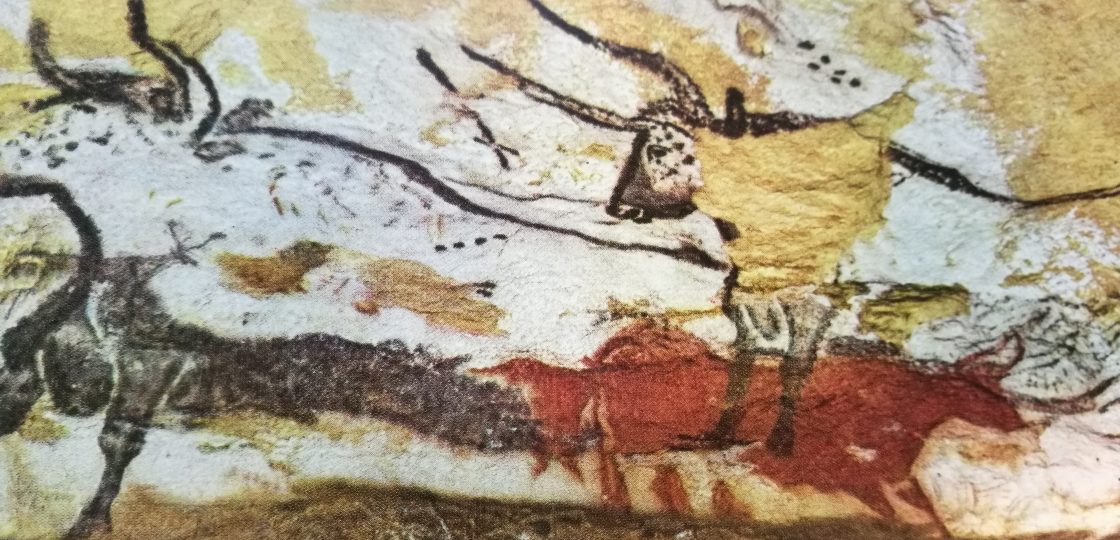


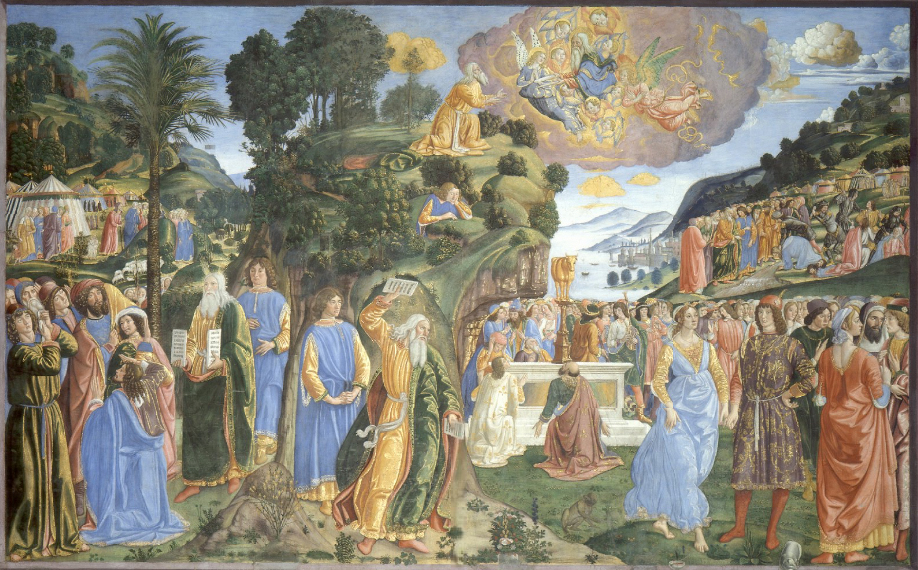


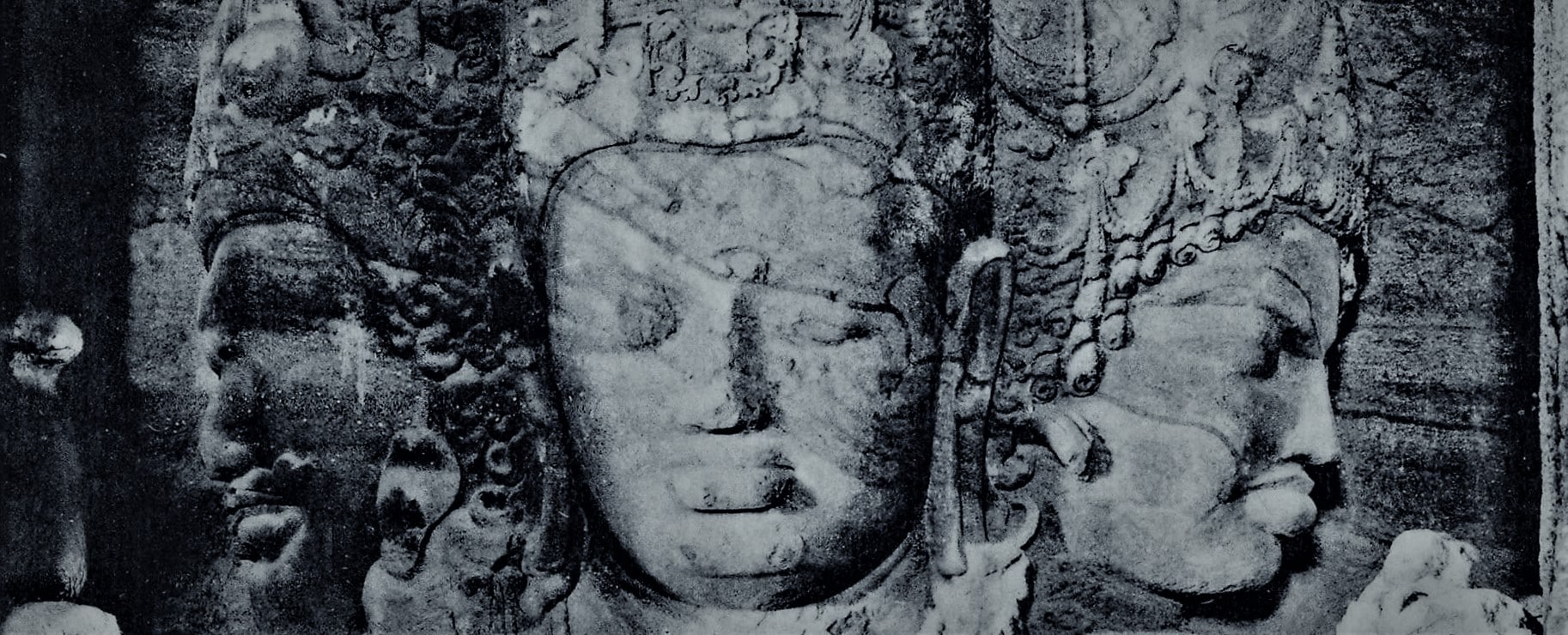







Vous devez être connecté pour poster un commentaire.