For the consciousness that reflects on the presence of Evil in the world, it is impossible to believe that God can identify with the ‘Sovereign Good’, the Summum Bonum, with which Christian philosophy associates Him, as a matter of course. According to Isaiah, YHVH says of Himself that He is « creator of evili » and that He « makes all this [evil] ». However, on this thorny question of Evil (is it « created » by God or not?), almost all Christian theologians tend to devalue the authority of Isaiah out of hand, or of the prophet who is supposed to be the author of chapter 45 of the Book of Isaiah. But in his seminal book, Answer to Job, C.G. Jung offered some stimulating views on this subject, based on the idea of conjunction or union of opposites. « Clement of Rome professed that God ruled the world with a right hand and a left hand. The right hand meant Christ, the left Satan. Clement’s conception was clearly monotheistic, since he united opposing principles in one God. Later, however, Christianity became dualistic to the extent that the part of the opposing elements, personified by Satan, is dissociated, and Satan is banished in a state of eternal curse. This is the central problem. It is of essential significance, and lies at the root of the Christian doctrine of salvation. If Christianity claims to be a monotheistic religion, it cannot do without the assumption that opposites are unified in one Godii. » The resources of depth psychology can indeed be mobilized to explore (heuristically) the question of Evil in the divine project. But first we need to reread the Jewish and Christian Scriptures that deal with it, such as the Book of Job, the Book of Enoch (and the other books of Jewish Apocalypticism), certain Prophets, and the Gospels. Logically, a God who is both the ‘creator of the world’, ‘omniscient’ and ‘omnipotent’, naturally has an undeniable responsibility for the presence of Evil in this world he is supposed to have created with full knowledge of the facts. His supposed omniscience should have informed him in advance of the particularly harmful role of Evil in the economy of his own creation (at least, from a human point of view). Moreover, God’s (supposed) omnipotence could (should?) have enabled him to eradicate a priori any future presence of Evil in the world, even before creation. Had he really wanted to, God could have created a world devoid of all Evil, couldn’t he? But he didn’t. Why didn’t he? Moreover, why does He reveal to Isaiah that He « creates evil », not once and for all, in the beginning, but ever continuously, as acknowledged by the use of a verb in the imperfect mode of Hebrew grammar (« vore’ « ) ? How could a « good » God voluntarily create evil, allowing it to enter His creation and develop at will? How could an omniscient God, capable of foreseeing the perverse role of Evil, allow it to arise and subsist? We have to choose. God cannot logically be « good », « omniscient », « omnipotent » and « creator of evil » all at the same time. Taken together, these attributes are intrinsically contradictory. Solutions to the dilemma have been proposed over the millennia, such as dualism and Manichaeism, which differentiate between « good » and « evil » Gods. But this is too easy a solution, and incompatible with the monotheistic paradigm of the « One » God. The only remaining possibility is to envisage the idea of a « One » God who unites opposites in Himself, including good and evil. Since He cannot consciously unite them in Himself (if He is « good »), this means that He unites them in His own Unconscious.
Further questions arise. How can such a God demand that believers both « fear » Him (as a God who chastises, and can let Evil loose on the world) and « love » Him (as a God who saves, and brings souls to life)? The fear that the biblical God is supposed to inspire in the believer is a further element of incomprehension for a critical consciousness. Why should we fear at all a supremely good God, the God of Summum Bonum?
The theory of the saving Messiah, who sacrifices Himself to save sinful mankind, is also difficult to understand. How can a supremely good God let His own ‘Son’ be sacrificed to save mankind from the Evil that the same God has knowingly allowed to flourish in the world? How can a ‘good’ and ‘just’ God let men put His Son to death, precisely in order to save mankind from His own wrath, and from the punishment He intends to inflict on mankind? A ‘good’, ‘just’ and ‘omnipotent’ God could have eradicated Evil by His almighty power, or He could have unilaterally erased mankind’s faults. We can’t evacuate these questions with arguments of authority. A critical consciousness cannot be satisfied with theological decisions. But we can also assume that this question is neither theological nor philosophical. Rather, it is anthropological and psychological. Moreover, it’s important to stress that the paradigm of divine sacrifice for the benefit of Creation is an anthropological constant, spanning millennia and cultures. We also find this idea with Prajāpati in India, Inanna in Sumer, Osiris in Egypt, Dionysus in Greece, Jesus in Israel … a long litany of various Deities sacrificed for the benefit of mankind.
The most important thing is to realize that, in the case of the biblical God, capable of blatant injustice, anger, jealousy and even unfaithfulness to the promises He Himself made, the injunction to love and praise Him as a « good » God is a contradictory injunction. How can we love a « good » God who constantly creates evil, on His own admission? How can a truly critical consciousness understand a God who is essentially, ethically and logically contradictory?
To all these questions, Jung proposes this rather paradoxical answer: God is actually « partly unconscious ». He is unconscious of who He really is (and how He affects His creature). Only an unmistakable lack of « reflection » in « God’s consciousness » can (logically) explain His inexplicable behavior (from the particuliar point of view of human consciousness). The consequence of this unconsciousness is that God can only suffer a « moral defeat » when confronted with the critical consciousness of his creatures, revolted by the injustice of their lot. The paradigmatic example of this revolt is Job. Through this « moral defeat », man finds himself subjectively and unexpectedly elevated to a new level of awareness of God. Simply by being aware of being confronted with an unconsciously immoral God, Job, or for that matter any other critical consciousness, can in fairness take Him to task, and push Him to His limits. God’s such « moral defeat » provokes a profound upheaval in humanity’s (collective) unconscious. Man acquires greater ‘moral value’ in his own eyes. This new ‘moral’ status invades man’s unconscious, filling the ‘void’ left by the ‘unconsciousness’ (or the ‘absence’ ) of God. Unconsciously, man feels morally « grown up » in relation to the conscious, devalued self-image he continues to have. In these circumstances, other latent potentialities of the unconscious are just waiting to burst into consciousness, in the form of dreams, visions, revelations and prophecies. In the first half of the 6th century B.C., the prophet Ezekiel had visions that were symptoms of the fractures between human consciousness and the collective unconscious, in very troubled times. At the same time, Siddhārtha Gautama (b. 562 B.C.), also known as the « Great Spirit », the « Awakened One » or the « Buddha », introduced the world to new possibilities for human consciousness, judged capable of going beyond brahman itself, and reaching parabrahman (the supreme, absolute brahman)… The brahman, which is the origin of All, is also referred to as the ātman (the Self), and as sva (the Sanskrit word that gave rise to the word « self » in English and « soi » in French). Another of his names, in the Vedic tradition, is Prajāpati, the Lord of Creation. InHinduism,brahman is the cosmic consciousness present in all things, the immanent Self in all being, the Absolute, both transcendent and immanent, the ultimate principle that is, without beginning or end. But it’s important to stress that, above brahman, consciousness can find an even more absolute parabrahman. The race of consciousness towards new heights seems endless. Ezekiel didn’t go that far, however. But he did grasp, in his own visions, that in a sense YHVH had come closer to man. Yet neither Ezekiel nor Job seem to have consciously realized the disturbing fact that their own consciousness (and potentially all human consciousnesses) could turn out to be ‘higher’, in a way, more critical, than YHVH’s own.
It is particularly significant that Ezekiel was the first prophet to quote the expression ‘Son of Man’- Ben-Adam, which YHVH uses on numerous occasions to designate Ezekiel. In the Jewish canon, Ezekiel is the only prophet to be named Ben-Adam by YHVH, with the exception of Daniel who is also called in this way – but by the angel Gabriel. Later, Jesus of Nazareth used the expression « Son of Man » several times, but he innovated by using it to designate himself and to make it a messianic title. For the first time, Jesus formally established the identity of the « Son of Man » and the « only-begotten Son » (of God). One of his disciples, Stephen, exclaimed when he was stoned to death, in the presence of Saul (the future Paul), an accomplice of his torturers: « Ah! » he said, « I see the heavens open and the Son of Man standing at the right hand of God ». It is important to note that the image of the « Son of Man », seated or standing « at the right hand of God », which is also found in the Book of Revelation, was not a Christian innovation. It had already been used for several centuries in Jewish apocalyptic texts, most notably in the three books of Enoch. Today, we can interpret this name, Ben-Adam, as a kind of testimony to God’s awareness of his own unconsciousness.
___________________________
iIs 45:7וּבוֹרֵא רָע ; אֲנִי יְהוָה, עֹשֶׂה כָל-אֵלֶּה (vou-vore’ ra‘ ani YHVH ‘osseh koul-’élêh) « And I, YHVH, am the creator of evil, I make it all » (Is 45:7)
iiC.G. Jung. Answer to Job. Buchet/Chastel, 2009. See also C.G. Jung. Mysterium Conjuctionis. Albin Michel, 1982.
The Psalmist sang of YHVH’s eternal, irrevocable covenant with David, his servant, his saint, his anointed. But why is he so bitter? He blames YHVH for his sudden breach of that covenant, his unilateral fickleness, his unpredictable anger. « And yet you have forsaken him, rejected him, your chosen one; you have raged against him. You have broken the covenant of your servant, you have degraded him, and thrown down his diadem259. » Wouldn’t the Psalmist be mistaken in his judgment? How could a God so One, so high, so powerful, be unfaithful to his own word? How could an eternal God be understood, let alone judged, by a fleeting creature, however inspired? Besides, if the Psalmist’s bitterness were to be justified, God forbid, wouldn’t it be better not to insist on this broken covenant, this broken promise? No power, whatever it may be, likes to be called into question, and even less to be challenged on its own ground, in this case that of the word and the promise. YHVH, it’s a fact, doesn’t like man’s critical thinking, this nothingness, to be exercised towards Him. Criticism tends to diminish the quality of the homage and praise He expects from His creatures. His power pervades the universe. His essence is eternal, of course. His existence is real, to be sure. However, this ‘power’ and this ‘existence’ only have real meaning if other, non-divine consciousnesses are aware of them, and praise Him for them. Without them, divine ‘power’ would remain self-centered, solipsistic, centripetal, in a way ‘selfish’, or at least ‘egotistical’. And, by the same token, would it not reveal a ‘lack’ within the divine? To make up for this ‘lack’, there is a kind of intrinsic necessity for other consciousnesses to come and fill it, and for some of them to be able to freely recognize the ‘power’ at work, as a condition of existence, of life, of all forms of consciousness. This is why we can infer that the Creator, in His omnipotence, which is supposed to be absolute, felt the desire to create consciousnesses other than His own; He needed singular consciousnesses to « be », other than in Himself. This was the reason for the original, implicit, natural, structural alliance of God with His Creation, the dialectical alliance of uncreated Consciousness with created consciousness.
In the beginning, it was important for His wisdom to be aware of the existence and essence of all the kinds of consciousness that could be created, in the entire Cosmos, until the end of times that may have no end. Now, it’s important for Him, at every moment, to be aware of the meaning that consciousnesses give to themselves. It also matters to Him what meaning they give (or don’t give) to His existence. He obviously wouldn’t have sent prophets down here if He didn’t care. What matters to Him above all is the general movement of consciousness in the world. By means of a thought experiment, a dream of created consciousness, we could imagine that the Creator creates new consciousnesses, which are, in essence, always ‘in the making’, and which must, while alive, be fulfilled. Placed in the world, they bring to life, grow (or shrink) their potential for consciousness, their wills, their desires, their hopes. We could also imagine that the life of these created consciousnesses, the fulfillment of these ephemeral wills, is not unrelated to the fulfillment of uncreated Consciousness, the realization of the eternal will, the Life of the Self. Finally, we could hypothesize that the Creator has, in consciousness, desired the existence of created consciousnesses, and that His desire grows as consciousness grows in the created world. In His unconscious awareness, or in His conscious unconsciousness, the Creator seems almost oblivious to who He really is, why He creates, and how His creative power can be apprehended, understood and praised by His creatures, in principle reasonable, but surprised to be there. On the one hand, if the Scriptures are to be believed, God YHVH seems to have needed to ally Himself exclusively with a people, binding them to Himself with irrevocable promises and eternal oaths. But on the other hand, again according to the Scriptures, God YHVH did not hesitate to break these promises and oaths, for reasons that are not always clear or expressly alleged. He unilaterally broke the covenant with his chosen one, his anointed, even though it had been proclaimed eternal. Terrible consequences are to be expected from this rupture and abandonment: walls demolished, fortresses ruined, populations devastated and plundered, enemies filled with joy, the end of royal splendor, the throne thrown down, and general shame. Woe and suffering now seem destined to last with no foreseeable end, while man’s life is so brief260. What has become of the promise once made, which in principle was to bind the God YHVH for ever261? The conclusion is abrupt, brief, but without acrimony. Finally, twice, the word amen is addressed to this incomprehensible and, it seems, forgetful God: « Praise the Lord forever! Amen and amen262! » The forsaken anointed one, a little disenchanted, doesn’t seem to hold it against the Lord for not having kept his promise. He doesn’t seem eager to insist on this unilateral abandonment, this abolished covenant. He doesn’t want to admit to himself that this gives him a kind of de facto moral advantage over a God who shows himself unaware of his « forgetfulness », whereas he, the chosen one, the anointed one, has forgotten nothing of the promise. Is it out of prudence? In all His glory and power, the God YHVH doesn’t really seem to appreciate criticism when it comes against Him, and even less when it comes from men who are notoriously so fallible, so sinful. Although his power extends across the universe, and no doubt far beyond, God YHVH needs to be ‘known’ and ‘recognized’ by reflective (and laudatory) consciousnesses. He shows his desire to do more than just « being ». He also wants to « exist » for consciousnesses other than His own. Without human, living, attentive consciousnesses that recognize His « existence », God’s « Being » would have no witness other than Himself. In the absence of these free consciousnesses, capable of recognizing His existence and praising His glory, this very existence and this very glory would in fact be literally « absent » from the created world.
The existence of the divine principle could certainly be conceived in absolute unity and solitude. After all, this is how we conceive of the primordial, original God, before Creation came into being. But does the idea of divine ‘glory’ even make sense, if there is no other consciousness to witness it? In essence, any real glory requires conscious glorification by a glorifying multitude, dazzled, conquered, sincere. Could God be infinitely ‘glorious’ in absolute solitude, in the total absence of any ‘presence’, in a desert empty of all ‘other’ consciousnesses capable of perceiving and admiring His glory? He could, no doubt—but not without that glory suffering a certain ‘lack’. Divine existence can only be fully ‘real’ if it is consciously perceived, and even praised, by consciousnesses that are themselves ‘real’. A divine existence infinitely ‘alone’, with no consciousness ‘other’ than itself, would be comparable to a kind of somnolence, a dream of essence, the dream of an essence ‘unconscious’ of itself. The Creator needs other consciousnesses if he is not to be absolutely alone in enjoying his own glory, if he is not to be absolutely alone in confronting his infinite unconsciousness, without foundation or limit.
Man possesses his own consciousness, woven of fragility, transience, evanescence and nothingness. His consciousness can reflect on itself and on this nothingness. Each consciousness is unique and unrepeatable. Once it has appeared on earth, even the most omnipotent God can’t undo the fact that this consciousness has been, that its coming has taken place. God, in his omnipotence, cannot erase the fact that this singularity, this unique being has in fact existed, even if he can eradicate its memory forever. Nor can God, despite his omnipotence, be both « conscious » as « God the Creator », and conscious as is “conscious” a « created creature ». He must adopt one of these points of view. He has to choose between His consciousness (as being ‘divine’) and the specific consciousness of the creature. Nor can He simultaneously have full and total awareness of these two kinds of consciousness, since they are mutually exclusive, by definition. The potter’s point of view cannot be the pot’s point of view, and vice versa.
But can’t God decide to « incarnate » Himself in a human consciousness, and present Himself to the world as a word, a vision or a dream, as the Scriptures testify? But if He « incarnates » in a man (or a woman), doesn’t He lose to some extent the fullness of His divine consciousness, doesn’t He dissolve His Self somewhat, doesn’t He become partly unconscious of His own divinity, by assuming to incarnate in a human consciousness? In essence, all consciousness is one; it unifies and is unified. All consciousness is a factor of oneness, in itself, for itself. God Himself cannot be simultaneously ‘conscious’ as a conscious man is, and ‘conscious’ as a conscious God is, a One God. A One God cannot at the same time be a double or split God.
We can take another step along this path of reflection. In the depths of the divine unconscious lies this sensational truth: knowledge of the unique, singular consciousness of every human being is not of the same essence as knowledge of the unique, singular consciousness of God. These two kinds of knowledge are mutually exclusive, and if the former escapes entirely from the latter, the latter also escapes, in part, from the former. Every consciousness remains a mystery to all other consciousnesses. The two kinds of consciousness, created consciousness and divine consciousness, cannot merge into a pure identity, but they can enter into dialogue.
Could it be, however, that the unique, singular, created consciousness of each creature is in some way part of God’s unconscious? This question is not unrelated to the hypothesis of a possible divine Incarnation. Before the beginning, the very idea of a Man-God (or of God incarnating Himself in His creation) did not exist. There was only one alternative: God, or ‘nothing’. After Creation took place, the situation changed. There is now God—and ‘something’ else. We must recognize the hiatus, and even the fundamental chiasmus of consciousness caught between these two essences, these two realities, the divine and the created. If Man is conscious in his own (unique, singular) way, how can the God (unique and singular) recognize this uniqueness, this singularity of human consciousness, if He can recognize no ‘other’ consciousness, no ‘other’ uniqueness, no ‘other’ singularity, than His own? If God, being ‘one’, cannot recognize an ‘other’ than Himself, He cannot recognize in Himself the absolute ‘other’. He is therefore not absolutely conscious of Himself, of His own consciousness, of His own uniqueness and singularity, if He is not also conscious of the presence of this ‘other’ within Himself. And, being unconscious of what is absolutely ‘other’ in Him, how could the God glorify in Man’s consciousness, from the point of view of His absolute uniqueness, which, as such, is unconscious of all otherness?
A similar question was formulated by Jung: « Could Yahweh have suspected that Man possesses a light that is infinitely small, but more concentrated than that which he, Yahweh, possesses? Perhaps jealousy of this kind could explain his behavior263. » Is Yahweh really a jealous God, in the literal sense? Is God ‘jealous’ of Man? The expression « jealous God »—El qanna’—is used several times in the Hebrew Bible. It’s the name by which YHVH calls Himself (twice) when He appears to Moses on Mount Sinai: « For YHVH, His name is ‘Jealous’, He is a jealous God264! » This name has consequences for man, in a way that can be considered humanly amoral: « For I, the Lord, your God, am a jealous God, who pursues the crime of fathers on children to the third and fourth generation, for those who offend me265. » And, no, this jealous God doesn’t forgive, he wants revenge. « The Lord is a jealous and avenging God; yes, the Lord takes vengeance, he is capable of wrath: the Lord takes vengeance on his adversaries and holds a grudge266. »
Jung also claims that Job was the first to understand the contradiction of God being omniscient, omnipotent and « jealous » all at the same time. « Job was elevated to a higher degree of knowledge of God, a knowledge that God Himself did not possess […] Job discovered God’s intimate antinomy, and in the light of this discovery, his knowledge attained a numinous and divine character. The very possibility of this development rests, we must assume, on man’s ‘likeness to God’267. » If God does not possess the knowledge that Job does, we can say that He is partly unconscious. Now, the unconscious, whether human or divine, has an ‘animal’ nature, a nature that wants to live and not die. Indeed, the divine vision reported by Ezekiel was composed of three-quarters animality (lion, bull, eagle) and only one-quarter humanity: « As for the shape of their faces, all four had the face of a man and on the right the face of a lion, all four had the face of a bull on the left and all four had the face of an eagle268. » From such « animality », so present and so prominent in Ezekiel’s vision of God, what can a man reasonably expect? Can (humanly) moral behavior be (reasonably) expected of a lion, an eagle or a bull? Jung’s conclusion may seem provocative, but it has the merit of being coherent and faithful to the texts: « YHVH is a phenomenon, not a human being269. »
Job confronted the eminently non-human, phenomenal nature of God in his own flesh, and was the first to be astonished by the violence of what he discovered, and what was revealed. Since then, man’s unconscious has been deeply nourished by this ancient discovery, right up to the present day. For millennia, man has unconsciously known that his own reason is fundamentally blind, powerless, in the face of a God who is a pure phenomenon, an animal phenomenon (in its original, etymological sense), and certainly a non-human phenomenon. Man must now live with this raw, irrational, unassimilable knowledge. Job was perhaps the first to elevate to the status of conscious knowledge a knowledge long lodged in the depths of the human unconscious, the knowledge of the essentially antinomic, dual nature of the Creator. He is at once loving and jealous, violent and gentle, creator and destroyer, aware of all his power, and yet, not ignorant, but at least unaware of the unique knowledge that every creature also carries within. What is this knowledge? In Man, this knowledge is that his consciousness, which is his unique and singular wealth, transcends his animality, and thus carries him, at least potentially, into the vertical vertigo of non-animality. This establishes the likelihood of ancient links between monotheistic spirituality and the various shamanic forms of spirituality, so imbued with the necessity of relations between humans and non-humans.
The ultimate goal of the Veda is ‘knowledge’, according to the Upaniṣad-s. Some sages say that this knowledge is contained in a single sentence. Others, who are a bit more eloquent, indicate that it is all about the nature of the world and that of the Self. They teach that « the world is a triad consisting of name, form and action »i, but that the world is also « One », and that this « One » is the Self.
What is the Self? In appearance, the Self is ‘like’ the world, but it also possesses immortality. « The Self is one and is this triad. And it is the Immortal, hidden by reality. Verily, the Immortal is breath, reality is name and form. This breath is here hidden by both of them ».ii In the world, name and form ‘hide’ the immortal breath, which acts without word or form, remaining ‘hidden’.
What does this opposition between ‘name, form, action’ on the one hand, and ‘breath’ on the other, really mean? If everything is ‘one’, why this separation between mortal and immortal realities? Why is the reality of the world so unreal, why is it so obviously fleeting, ephemeral, separated from the One? Perhaps, in a way that is difficult for man to conceive, reality participates in some way in the One, and consequently participates in the Immortal? Reality is apparently separate from the One, but it is also said to ‘hide’ It, to ‘cover’ It with the veil of the very stuff of its so called ‘reality’, of its ‘appearance’. Reality is separate from the One, but in a way it remains in contact with It, just like a hiding place contains what it hides, as a garment covers nakedness, as illusion covers ignorance, as existence veils essence. Why is this so? Why are these grandiose entities, the Self, the World, Man, metaphysically disjointed, separated? If they are separate from the Self, what is the point of the World and Man, lost in an adventure that seems to go way beyond them? What is the profound raison d’être of this metaphysical disposition?
Though not answering directly to this question, and several centuries after Plotinus (cf. Ennead V,3) and Master Eckhart, C.G. Jung re-invigorated a promising avenue of research when he identified the Self and the Unconscious with God. « As far as the Self is concerned, I might say that it is an equivalent of God. »iii « The Self in its divinity (i.e. the archetype) is not conscious of this divinity (…) In man, God sees Himself from the « outside » and thus becomes conscious of His own form. »iv
The fundamental idea, here, is that God needs man’s consciousness, in some strange and mysterious manner. This is, in fact, the reason for man’s creation. Jung postulates « the existence of a [supreme] being that is essentially unconscious. Such a model would explain why God created a man endowed with consciousness and why He seeks to achieve His goal in him. On this point, the Old Testament, the New Testament and Buddhism agree. Master Eckhart says that ‘God is not happy in his divinity. He has to be born in man. That’s what happened with Job: the Creator sees himself through the eyes of human consciousness« .v
How can we explain the fact that the Self is not fully conscious of Itself, and even that It seems more unconscious than conscious? The Self is so infinite that It cannot have full, absolute awareness of Itself. All consciousness implies a focus on itself, an attention to itself. It would therefore be contrary to the essence of a consciousness, and even more so of an infinite consciousness, for it to be ‘aware’ at once of infinitely everything, of infinitely past times and infinitely future times. The idea of a complete, infinite consciousness, of an infinite omniscience, or ‘omni-consciousness’, is an oxymoron, a self-contradiction. Why? If the Self is truly, absolutely infinite, It is infinite both in act and in potential. But consciousness is only in act, since being conscious is an act. On the other hand, the unconscious is not in act, it is in potential. It is indeed conceivable that the Self can be put in act, everywhere in the world, in the heart of every human being. But we cannot imagine that the Self can put in act, here and now, everything that is still in potential (i.e. not yet realised) in the infinite range of possibilities. For example, the Self cannot be ‘put in act’, here and now, in the minds of men who do not yet exist, who may perhaps exist tomorrow, – these men of the countless generations to come, who are only ‘potentially’ yet to come into existence. Consequently, there is an important part of the unconscious in the Self. The Self does not have a total, absolute consciousness of Itself, but only an awareness of what is in act within Itself. It therefore ‘needs’ to realise the part of the unconscious that is in Itself, which remains in potential, and which it perhaps depends, to a certain extent, on the World and on Man to be realised.
The role of reality, the world and the triad ‘name, form, action’ is to help the Self to realise its share of unconscious power. Only ‘reality’ can ‘realise’ what the Self expects of it. This ‘realisation’ helps to bring out the part of the unconscious and the part of potential that the Self ‘hides’ in its in-finite unconscious. The Self has been walking its own path since eternity, and will continue to do so in the eternities to come. In this in-finite adventure, the Self wants to emerge from its own self-presence. It wants to ‘dream’ of what It ‘will be’. The Self ‘dreams’ creation, the World and Man, in order to continue to bring about ‘in act’ what is still ‘in potential’ within Itself. It is in this way that the Self knows Itself better – through the existence of that which is not the Self, but which participates in It. The Self thus learns more about Itself than if It remained alone. Its immortality and infinity live and are nourished by this power of renewal – an absolute renewal because it comes from that which is not absolutely the Self, but from that which is other than the Self (Man, the World). The World and Man ‘are’ in the dream of the God, says the Veda. But the Veda also gives Man the very name of the God, Puruṣa, also called Prajāpati, the ‘Lord of creatures’, and whom the Upaniṣad also call the Self, ātman. Man is the dream of the God who dreams that He does not yet know what He will be. This is not positive ignorance, only putative. What is ignored is only the in-finite of a future that remains to be made to happen.
On Mount Horeb, at another time, the Self made known another of Its names: « I will be who I will be ».vi God revealed himself to Moses through the verb « to be », conjugated with the « imperfect » tense. The Hebrew language lifts a part of the veil. From the grammatical point of view, God’s « being » is « imperfect », or « yet unaccomplished », like the verb (אֶהְיֶה) that He uses to designate Himself.
God made a « wager » when He created His creation, by accepting that the non-Self would coexist with the Self in the time of His dream. He gambled that Man, through names, forms and actions, would help the divinity to ‘perfect’, or to ‘accomplish’ the realisation of the Self, which is still to be made, still to be created, still in the making. God dreams that Man, placed in His presence, will deliver Him from His relative absence (from Himself). In the meantime, His power sleeps a dreamless sleep, resting in the dark abyss of His in-finite un-consciousness. His power conceals what God dreams of, and also conceals what He still longs for. In His own light, God knows no other night than His own.
Consciousness, obviously, is capable of grasping abstract, immaterial ideas – for example, the principle of non-contradiction or the concept of universal attraction. Can we deduce from this that consciousness is itself immaterial in nature? Materialists deny it. Consciousness is not immaterial, they say; it is only ever the material emanation of the material substance of material bodies. But then, how can we explain the fact that purely ‘material’ entities are capable of conceiving pure abstractions that are essentially unconnected with the material world? How could a consciousness that is only ‘material’ link up and interact adequately with all the beings of unknown essences that make up the world, with the various natures that surround or subsume it? What could be the stuff of the links between a ‘material’ consciousness with beings a priori totally unrelated to its own ‘matter’? In particular, how can a ‘material’ consciousness, confined in a ‘material’ body, interact effectively with other consciousnesses, themselves confined in other bodies? How can we imagine that a consciousness could link up (materially) with other beings existing in act, or in potential, throughout the world, and that it could penetrate (materially) their essence?
All these difficult questions were dealt with by Kant in his lively little work, Dreams of a Man Who Sees Spiritsi. But Kant does not adopt a materialist point of view. Quite the contrary. In this book, he asserts that consciousness (which he calls the ‘soul’) is immaterial, just as what he calls the ‘intelligible world’ (mundus intelligibilis, the world of ideas and thoughts), – immaterial. This ‘intelligible world’ is the proper ‘place’ of the thinking self, because the latter can go there at will, detaching itself from the material, sensible world. Kant also asserts that human consciousness, although immaterial, can be linked to a body, the body of the self, from which it receives material impressions and sensations from the organs of which it is composed. Consciousness therefore participates in two worlds, the material and sensible world and the immaterial and intelligible world, – the world of the visible and that of the invisible.
The representation that consciousness has of itself as being a ‘spirit’ (Geist), when it considers itself in its relations with other consciousnesses, is quite different from the representation it has when it sees itself as being attached to a body. In both cases, it is undoubtedly the same subject who belongs at the same time to the sensible world and to the intelligible world; but it is not the same person, because the representations of the sensible world have nothing in common with the representations of the intelligible world, says Kant. What I think of myself as a living, feeling, carnal being is not on the same level, and has nothing to do with my representation as (pure) consciousness.
Conversely, the representations that I may hold of the intelligible world, however clear and intuitive they may be, are not sufficient to give me a representation of my consciousness as a human being. The representation of oneself as (pure) consciousness can be acquired to a certain extent by reasoning or induction, but it is not naturally an intuitive notion, and it is not obtained through experience.ii
Consciousness does indeed belong to a single subject, who participates in both the « sensible world » and the « intelligible world », but consciousness is also twofold. It is not « the same person » when it represents itself as « pure consciousness » and when it represents itself as « attached to a (human) body ». The fact that it is not « the same » in these two cases implies an inherent, profound duality – consciousness is a dual being. Here, for the first time, Kant explicitly introduces the expression « duality of the person » (or « duality of the soul in relation to the body »iii). This duality can be inferred from the following observation. Some philosophers believe they can refer to the state of deep sleep when they want to prove the reality of ‘obscure representations’. We can only observe that they are no longer clearly present in us when we wake up, but not that they were really ‘dark’ when we were asleep.
For example, we might well think that they were actually clearer and more extensive than the clearest representations we have in the waking state. This is indeed what we might expect of consciousness when it is perfectly at rest, and separated from the external senses, Kant concludes.
Hannah Arendt found this particular idea ‘bizarre’iv, without further explaining or justifying her trenchant judgment. Perhaps it seems indeed ‘bizarre’ to assert that consciousness thinks more clearly and more extensively in deep sleep, and that it is then more ‘active’ than in the waking state? Or does it seem ‘bizarre’ to present consciousness not as ‘one’ but as ‘two’, this duality implying a contradiction with the unified idea that consciousness might a priori have of its own nature? Consciousness feels the intrinsic unity it possesses as a ‘subject’, and it also feels, as a ‘person’, endowed with a double perspective, one sensible and the other intelligible. It may therefore seem ‘strange’ that the soul should think of itself as both one and two, – ‘one’ (as subject) and ‘two’ (as person).
This intrinsic duality creates a distance between consciousness and itself, an inner gap within itself. It reflects a gap between the ‘waking’ state (where the feeling of duality is revealed) and the ‘deep sleep’ state, where the feeling of duality evaporates, revealing the true nature of consciousness.v
To ward off this ‘oddity’, Hannah Arendt proposed an explanation, or rather a paraphrase of Kant’s note: « Kant compares the state of the thinking self to a deep sleep in which the senses are at complete rest. It seems to him that, during sleep, the ideas ‘may have been clearer and more extensive than the clearer ideas of the waking state’, precisely because ‘the sensation of man’s body was not included in it’. And when we wake up, none of these ideas remain ».vi What seems ‘bizarre’ to Hannah Arendt, we then understand, is that after consciousness has been exposed to ‘clear and extensive’ ideas, none of this remains when it wakes up. Awakening erases all traces of the activity of consciousness (or of the ‘soul’) in the deep sleep of the body. Even if there is nothing left, there is at least the memory of an immaterial activity, which, unlike activities in the material world, does not encounter any resistance or inertia. There also remains the obscure memory of what was then clear and intense… There remains the (confused) memory of having experienced a feeling of total freedom of thought, freed from all contingencies. All these memories cannot be forgotten, even if the ideas conceived at the time seem to escape us. It is possible to conjecture that the accumulation of these kinds of memories, these kinds of experiences, will end up reinforcing the idea of the existence of a consciousness that is independent (of the body). By extension, and by analogy, these memories and experiences of deep sleep constitute in themselves an experience of ‘spirituality’, and reinforce the idea of a spirit world, an ‘intelligible’ world, separate from the material world. The consciousness (or spirit) that becomes aware of its power to think ‘clearly’ (during the body’s deep sleep) also begins to think of itself as being able to distance itself from the world around it, and from the matter that constitutes it. But its power to think ‘clearly’ does not allow it to leave this world, nor to transcend it (since waking up always happens – and with it forgetting the ‘clear’ thoughts of deep sleep).
What does this sense of distance from the world bring to consciousness?
Consciousness can see that reality is woven from appearances (and illusions). In spite of the very profusion of these appearances (and illusions), reality paradoxically remains stable, it continues unceasingly, it lasts in any case long enough for us to be led to recognise it not as a total illusion, but as an object, and even the object par excellence, offered to our gaze as conscious subjects.
If we do not feel able to consider reality as an object, we may at least be inclined to consider it as a state, durable, imposing its obviousness, unlike the other world, the ‘intelligible world’, whose very existence is always shrouded in doubt, of improbability (since his kingdom can only be reached in the abyss of deep sleep).
As subjects, we demand real objects in front of us, not chimeras or conjectures – hence the insignificant advantage given to the sensible world. Phenomenology teaches that the existence of a subject necessarily implies that of an object. The object is what embodies the subject’s intention, will and consciousness. The two are linked. The object (of intention) nourishes consciousness, more than consciousness can nourish itself – the object ultimately constitutes the very subjectivity of the subject, presenting itself to her attention, and even instituting itself as her conscious intention. Without consciousness, there can be neither project nor object. Without an object, there can be no consciousness. Every subject (every consciousness) carries intentions that are fixed on objects; in the same way, the objects (or ‘phenomena’) that appear in the world reveal the existence of subjects endowed with intentionalities, through and for whom the objects take on meaning.
This has a profound and unexpected consequence.
We are subjects, and we ‘appear’, from the very beginning of our lives, in a world of phenomena. Some of these phenomena also happen to be subjects. We then gradually learn to distinguish between phenomena that are merely phenomena (requiring subjects in order to appear), and phenomena that eventually reveal themselves to us as being not just phenomena, of which we would be the spectators, but as other subjects, and even subjects who are intrinsically ‘other‘, subjects whose consciousness can be conjectured as radically ‘other‘. The reality of the world of phenomena is thus linked to the subjectivity of multiple subjects, and innumerable forms of consciousness, which are both phenomena and subjects. The world represents a ‘total phenomenon’, whose very existence requires at least one Subject, or Consciousness, that is not merely a ‘phenomenon’.
In other words, if a thought experiment were to presuppose the absence of any consciousness, the non-existence of any subject, in the original states of the world, would we necessarily have to conclude that the ‘phenomenal’ world did not exist in this time of ‘genesis’? Undoubtedly. The ‘phenomenal’ world would not then exist, insofar as phenomenon, since no subject, no consciousness, would be able to observe it.
But another conjecture is still possible. Perhaps, in this time of ‘genesis’, there are subjects (or consciousnesses) that are part of another world, a non-‘phenomenal’ world, a ‘noumenal’ world, the ‘intelligible world’ evoked by Kant?
Since there can be no doubt that the world and reality began to exist long before any human subject appeared, we must conclude that other kinds of consciousness, other kinds of ‘subjects’ already existed then, for whom the world in the state of phenomenon, total and inchoate, constituted an ‘object’ and embodied an ‘intention’. In this case, the world has always been an object of subjectivity, of ‘intentionality’, of ‘desire’, right from its genesis.
It remains to try and imagine for which subjects, for which consciousnesses, the emerging world could then reveal itself as an object and as a phenomenon. We can hypothesise that this primal subjectivity, endowed with an ‘intentionality’, a ‘desire’, pre-existed the appearance of the world of phenomena, in the form of an original power to will, to desire, and to think. Man retains a ‘mysterious’ trace of this ancient, primal power, insofar as he is ‘thought made flesh’. « For the philosopher, speaking from the experience of the thinking self, man is, quite naturally, not only the Word, but Thought made Flesh; the always mysterious incarnation, never fully elucidated, of the ability to think ».vii Why is this incarnation ‘mysterious’? Because no one knows where thinking consciousness comes from, and even fewer can guess at the multiplicity of forms it has taken in the universe since the beginning, and may yet take in the future.
Since our only guide in this search is consciousness itself, we must return to it again and again. Every consciousness is unique because it recreates (in its own way) the conditions of the spirit’s original freedom. This freedom was not only that of the first man, but also of all that preceded him, of all that was before him and without him – of all that was non-human.
All consciousness is singular, and the solitary thinker recreates in his own way the absolute solitude of the first Man, the first Thinker. « While a man lets himself go and simply thinks, about anything for that matter, he lives totally in the singular, that is to say in complete solitude, as if the Earth were populated by one Man and not by men ».viii
Who was the first man, the first thinker to be « alone »? The one the Bible calls Adam? The one the Veda calls Puruṣa? Or some primal, original Spirit, creating in the thinker the living object of his living thought, and thereby creating the conditions for the engendering of a living multitude of other ideas (and other minds)?
We owe it to Parmenides and Plato, thinkers of the first depths, to have celebrated a few primordial spirits, among the most ancient of whom the world has preserved a memory. They admiringly quoted those sages who had lived long before them in ‘the life of intelligence and wisdom’, that life of Noûs and Sophia, which not all men know, but which all may wish to know. Intelligence and wisdom indeed « live », in the literal sense, for they live by the life of the Spirit. From the beginning, Socrates asserts, the Spirit, the Noûs, has been the « King of heaven and earth »: νοῦς ἐστι βασιλεὺς ἡμῖν οὐρανοῦ τε καὶ γῆς.ix
In this the Sirach agrees with Socrates, and goes back even further: « Wisdom was created before all things, and the light of understanding from eternity ».x
Paradoxically, this very ancient idea (that the Ancient Greeks and the Ancient Hebrews shared) now seems to have once again become one of those « secrets still buried in the dark depths of the earth ».xi
_____________________
iKant. Dreams of a Man who sees spirits, – explained by Dreams of Metaphysics (1766). Translated by J. Tissot. Ed. Ladrange, Paris, 1863
iiiIn a note appended to Dreams of a Man who sees Spirits, – explained by Dreams of Metaphysics.
ivH. Arendt. The Life of the Mind. Thought. The will. Translated by Lucienne Lotringer. PUF, 1981, p.68-69
vOne finds similar observations on the duality of the transient “ego” and the eternal “Self”, made by Indian thinkers and “rishis” such as Ramakrishna, Swami Vivekananda or Ramana Maharshi.
Plato claims that the oldest inhabitants of Greece, the Pelasgians, gave their gods the name ‘Runners’ (θεούς, theous), because they saw the stellar and planetary gods ‘running’ across the sky. The name is said to come from the verb θέω, theo, ‘to run’.i The Cratylus abounds in somewhat fanciful etymologies, in the service of Platonic verve and irony. However, one of the meanings of the verb θέω is indeed ‘to run’. But there is a second, no less relevant: ‘to shine’.
The first meaning (‘to run; to rush; to extend, to develop’) allows Plato to consider this link, established by the Pelasgians, between the name of the gods and their celestial ‘course’. According to Chantraine’s Greek dictionary, this meaning of the verb θέω is etymologically related to a Sanskrit verb, dhavate, ‘to flow’. However, the second meaning of θέω, theo, ‘toshine’, would also be compatible with the ancient way of representing the divine essence. It is closer to another Sanskrit root, dyaus, द्यौष्, which is in fact the origin of the French word ‘dieu’, the English word ‘divine’ and the Greek name ‘Zeus’. In the Veda, the word ‘god’ (deva) meant the ‘Brilliant One’.
In other, even older traditions, the orderly march of the stars has been interpreted as an immense ‘army’ setting out to battle. This metaphor combines the two meanings of the verb θέω, evoking both the regular ‘course’ of the starry vault and the brilliant ‘brilliance’ of the ‘gods’ in arms. Schelling proposed giving the name ‘Sabaeism’ to this ‘astral’ religion, which he said should be recognised as the oldest religion of mankind. « This astral religion, which is universally and unquestionably recognised as the first and oldest of mankind, and which I call Sabaeism, from saba, army, and in particular the celestial army, was subsequently identified with the idea of a kingdom of spirits radiating around the throne of the supreme king of the heavens, who did not so much see the stars as gods, as vice versa in the gods, the stars ».ii In other texts, Schelling calls it « sabism » (Zabismus), retrospectively considering that the word sabism (Sabeismus) could lead to misunderstanding by implying that the name could come from the Sabaeans, the people of happy Arabia known for its astrolatry.iii The word saba, which Schelling mentions in passing without giving any further details, certainly refers to the Hebrew word צָבָא, tsaba‘, « army ». This word is actually used in the Hebrew Bible to denote the stars, tsaba ha-chamaïm, as being « the army of heaven » (Jer. 33:22), an expression that is also applied to denote the sun, the moon and the stars (Deut. 4:19). It also refers to the angels as the « host of heaven » (1 Kings 22:19). In the Hebrew Bible, the Lord is often called « YHVH of hosts » (YHVH Tsebaoth), or « Lord of hosts » (Elohim Tsebaoth), and even « YHVH Lord of hosts » (YHVH Elohim Tsebaoth).
The expression « the armies from the height », in Hebrew צְבָא הַמָּרוֹם , tseba ha-marom, is also used by Isaiah, but in an unexpected, paradoxical context. For Isaiah, the « armies from the height » will not be used by YHVH to punish the kings of the earth on the day of judgement, but they themselves, just as much as the latter, will be the object of His wrath: « On that day, YHVH will punish the armies of heaven in heaven and the kings of the earth on the earth. » (Is. 24:21). Be that as it may, a kind of historical and conceptual continuity links the « astral armies » of ancient religions and the « armies (tsebaoth) », celestial or angelic, gathered under the law of YHVH in Hebrew tradition.
In parallel, so to speak, in the Greek world, the mythological tradition portrayed the intense, passionate and exuberant lives of the gods. Hesiod’s Theogony describes in detail their war against the Titans, and their final victory, under the aegis of Zeus. Homeric polytheism presented many aspects of the divine pleroma, while also recognising the primacy of the greatest of them all, Zeus, in terms of power, intelligence and wisdom. In the Mysteries of Eleusis or Samothrace, it has been said that the initiation was in fact about the esoteric revelation of the supreme God, subsuming the exoteric multiplicity of gods and their various figures or attributes.
The unity of the Divine, insofar as it is called the One, was undoubtedly evoked very early on in the Greek tradition by pre-Socratic philosophers such as Heraclitus, Parmenides and Empedocles.
Heraclitus said, for example:
« The One, the only wise One, does not want to be called and wants the name of Zeus. »iv
He was aware of the esoteric nature of divine truths:
« The Logos, that which is, men are always unable to understand, either before hearing it or after hearing it for the first time ».vii
As for Parmenides, he was the first philosopher to assert that the path to Divinity is that of ‘it is’.
« But now there’s only one way left
Of which we can speak; it is that of ‘it is’.
As for the path of non-being, it leads nowhere. »viii
For his part, Empedocles, in the first book of his Physics, dialectically combines the being of the One and the being of the Multiple:
« I have two points to make. Indeed, sometimes the One
Increases to the point of existing alone
From the Multiple; and then again
Divides, and so out of the One comes the Many ».ix
In archaic times, long before the pre-Socratics, human consciousness was undoubtedly still undivided and fundamentally unified. The idea of divine multiplicity was meaningless then, compared with the immediate intuition of cosmic unity, the unity of the human world, nature and spirit. In ancient times, people worshipped rough stones or meteors as sacred images. This original cult symbolised the divine as a formless material, a ‘raw’ material, lithic, unalterable, shapeless stone, which sometimes fell from the sky. It corresponded to an immanent, muted, auroral consciousness. It represented the divine presence, unique, undivided, unbroken.
Originally, man’s first religion was naturally oriented towards the One and the All. Later, the cult and contemplative erection of individual sculptures, detached from the mass of the mountains or carved into the walls of caves, and the staging of idols made by human hands, visible and tangible, corresponded to another stage in religious awareness. The more visible the idols, the more paradoxically people became aware of the mystery hidden in the invisible.
Consciousness became freer, because it became more aware of its capacity to apprehend the existence of mystery behind the appearance of symbols, and all the more so because it had visible symbols in front of it. Visible, and therefore powerless to show the hidden, the concealed, the buried, the invisible essence. In so doing, consciousness began to divide itself; it oscillated between the exotericism of the visible, accessible to all, to ordinary mortals, and the esotericism of the ineffable, the indescribable, which only the rare initiated could conceive and contemplate. For the uninitiated, the multiplication of visible representations diffracted the light of the divine down here. They were specific, singular, vernacular, linked to the countless needs and vicissitudes of human existence.
Much later, other, more abstract ideas appeared, enriching the conception inherent in the single idea of « the One », with which they were associated. They represented the divine powers that accompanied the One, even before the Creation of the world. These powers were called ‘Wisdom’, ‘Intelligence’ or ‘Finesse’, and they are respectively quoted in the Hebrew Bible as חָכְמָה, ḥokhmah, בִינוּ , binah, and עָרְמָה , ‘ormah, The Scriptures also revealed that these divine powers were created before all things: « YHVH created me in the beginning of His ways »x . From this verse, we deduce that there was a time when YHVH began in his ways. So, before the world began its genesis, after having been created by Elohim, there was another « beginning » (rechit), a beginning of the « ways » (darakh) of which YHVH was the author.
To sum up: at the very beginning of the history of human consciousness, there was the intuition of the embracing of the One and the All. Then, after the muted intuition of this divine and immobile unity of the Whole, came the idea of the divine in movement, in action, in this world and in the next. This idea spread to the Vedic, Egyptian and Greek worlds, as well as to the Hebrew world. From this we can infer the genesis of a similar, overarching idea, that of the movement or overcoming of human consciousness, in its relationship to the divine and in its relationship with itself. What does this overcoming of consciousness mean? How can consciousness abandon itself and go beyond itself? For consciousness to be able to surpass itself, it must make itself surpassable, it must prepare to welcome within itself a power greater than its essence. ‘Rebirth’ could be an image of this potential overcoming.
The history of the divine in consciousness has only just begun. The next steps may seem all the more obscure for being so far away. But some Prophets see far ahead. David sung that, one day, « it will be said that in Zion every man is born' »xi . One may add: one day, every man will be born again, in consciousness, and will surpass himself by being « reborn ». All consciousness is both ‘in act’ and ‘in potential’. In essence, it is an « intermediary being », a metaxuxii , meaning that its function is « to make known and transmit to the Gods what comes from men, and to men what comes from the Gods »xiii . This ability to link worlds can be interpreted as belonging simultaneously, and without contradiction, to different orders of reality. An intermediate being is a ‘being’ from one point of view and a ‘non-being’ from another.
When YHVH revealed his name: « I will be who I will be »xiv , did He not imply that He too was both, in a sense, « being » and « non-being »? This name, « I will be » (Ehyeh), is grammatically, in Hebrew, the first person of the verb to be, conjugated in the imperfect (used generally to describe actions that are not completed or actions that occur in the present or future). One could argue that the Hebrew grammar then recognizes that God’s name is in essence ‘imperfect’ or ‘uncompleted’xv . As a being, He is still a non-being in relation to what He will be. But is not God also the Whole? We could conjecture that this Whole does not yet exist in its entirety, and that it is not entirely in action. In essence, a large part of the Whole remains unfinished, imperfect, and is perhaps still inconceivable, given the freedom of the actors who contribute to it and will contribute in the future. All that can be said is that the Whole exists partly « in act » and partly, « in potential ». The Whole is therefore also an « intermediate being », a metaxu.
As for God, what we can say is that there is a principle in Him according to which « He is who He is », and there is another principle, according to which « He will be who He will be », which the grammar of biblical Hebrew expresses by the imperfect conjugation of the verb to be, as we said.
Could it be that the very existence of everything God is not contributes to the emergence of His ‘power’, as yet unfulfilled and always in the process of becoming?
Creation evolves in temporal tandem with the timelessness of divine eternity. Does temporal creation play a role in God’s timeless ‘power’?
In consciousness there is already a substantial principle at work, which literally underlies consciousness (the English word ‘sub-stantial‘ comes form the Latin sub-stare, « to stand under »). It can be considered as a material principle, to which consciousness adds a formal principle. It is also a maternal principle (etymologically, mother = matter = matrix), through which consciousness generates a new principle, succeeding the previous one, and through which consciousness increases and surpasses itself. The feminisation of consciousness is the occasion for a transition from the old to the new, from the virgin to the wife, from the wife to the mother, and from the couple to the new-born child.
The separation of consciousness between a masculine and a feminine aspect (symbolised in mythology by the contrast between the male gods and the virgin goddesses, the wives and mothers goddesses) has been the occasion, in certain cultures, for the emergence of the idea of dualism, which links in absolute unity two apparently opposed principles, – one excluding the new creature and being hostile to it, and the other being benevolent to it.
___________________
i« The men who first lived in Hellas knew no other gods than those who are now the gods of most Barbarians: Sun, Moon, Earth, Stars, Sky. Also, because they saw them all running in an endless race, theonta, they took this property, the property of ‘running’, theïn, as the basis for calling them ‘gods’, theoï. » Plato , Cratylus, 397d
iiF.W.J. Schelling. Philosophy of Revelation. Translation edited by J.F. Marquet and J.F. Courtine. PUF, 1991, Book II, p.244
iii F.W.J. Schelling. Philosophy of Mythology. Translated by Alain Pernet. Ed. Millon, Grenoble, 2018, Lesson 9, p.119
ivHeraclitus, Fragment XXXII. The Presocratics. Gallimard, 1988, p.154
vHeraclitus, Fragment XXXIII. The Presocratics. Gallimard, 1988, p.154
viHeraclitus, Fragment X. The Presocratics. Gallimard, 1988, p.148
viiHeraclitus, Fragment I. The Presocratics. Gallimard, 1988, p.145
viiiParmenides. Fragment II, Les Présocratiques. Gallimard, 1988, p. 257-258
ixEmpedocles. Fragment XVII. The Presocratics. Gallimard, 1988, p.379
x יְהוָה–קָנָנִי, רֵאשִׁית דַּרְכּוֹ: (Prov. 8,22)
xiPs 87,5 : וּלְצִיּוֹן, יֵאָמַר– אִישׁ וְאִישׁ, יֻלַּד-בָּהּ; Vé l-Zion yamar – ich v-ich youlad bah « And they will say of Zion, every man was born there ».
xvIn his Grammar of Biblical Hebrew, Paul Joüon explains: « The temporal forms of Hebrew express both tenses and certain modalities of action. As in our languages, they mainly express tenses, namely past, future and present; but they often express them less perfectly than in our languages because they also express certain modes of action, or aspects. These aspects are 1) the unicity and plurality of the action, depending on whether the action is represented as unique or as repeated; 2) the instantaneity and duration of the action, depending on whether the action is represented as being accomplished in an instant or over a more or less prolonged period of time. » Paul Joüon, Grammaire de l’hébreu biblique, Rome, 1923, p. 111 c
The Rig Veda is the most ancient source from which to draw in an attempt to understand the state of the first conceptual representations of humanity by itself, more than four millennia ago. Religion and society, then, were in an infancy that did not exclude a profound wisdom, more original than what Greek and Roman antiquity were able to conceive later, and of which the Hebrew wisdom itself was a later heir.
The memory of the Veda, long unwritten and transmitted orally for thousands of years by pure thinkers and rigorous ascetics, bears witness to an intellectual and moral state of humanity in an age much earlier than the time of Abraham. When this prophet left Ur in Chaldea, around 1200 B.C., for his exile to the south, many centuries had already nourished the valleys of the Oxus and watered the Indus basin. Several millennia before him, time had sedimented layers of human memory, ever deeper. The Vedic priests celebrated the idea of a unique and universal deity long before the « monotheisms ». Melchisedec himself, the oldest prophetic figure in the Bible, is a newcomer, if we place him in the obscure sequence of times that preceded him.
This observation must be taken into account if we want to put an end to the drama of exceptions and the drifts of history, and understand what humanity as a whole carries within it, since the beginning.
Homo sapiens has always been possessed by multiple intuitions, immanent, of the Divine, and even, for some individuals of this species, by singular ‘transcendent’ visions that they have sometimes been able to share and transmit. We must try to grasp these intuitions and visions today, by questioning what remains of their memory, if we want to draw prospective lines towards the distant future that is looming in the dark shadow of the future.
The Hebrew Bible is a fairly recent document, and its price should not make us forget its relative youth. Its age goes back at most to a thousand years before our era. In contrast, the Veda is one or even two millennia older. This seniority, in fact rather short, should certainly not make us forget that it is itself based on much more remote memories, of which the Chauvet cave (~30 000 years) is only a simple marker, pointing out the mystery of the very origins of the Homo genus, as for the specific nature of its « consciousness ».
This is why it is important to consider what remains of the memory of the Veda, in order to try to draw more general lessons from it, and to try to understand the unity of the human adventure, in order to foresee its possible evolutions – so much so that the past is one of the forms in power of the future.
To illustrate this point, I would like to propose here a brief review of some of the symbols and paradigms of the Veda, to weigh and consider their potential universality.
Butter, oil and sacred anointings.
In those ancient times, melted butter (ghṛita) alone represented a kind of cosmic miracle. It embodied the cosmic alliance of the sun, nature and life: the sun, the source of all life in nature, makes the grass grow, which feeds the cow, which exudes its intimate juice, the milk, which becomes butter by the action of man (the churning), and finally comes to flow freely as sôma on the altar of the sacrifice to mingle with the sacred fire, and nourish the flame, engender light, and spread the odor capable of rising to the heavens, concluding the cycle. A simple and profound ceremony, originating in the mists of time, and already possessing the vision of the universal cohesion between the divine, the cosmos and the human.
« From the ocean, the wave of honey arose, with the sôma, it took on the form of ambrosia. This is the secret name of the Butter, language of the Gods, navel of the immortal. (…) Arranged in three parts, the Gods discovered in the cow the Butter that the Paṇi had hidden. Indra begat one of these parts, the Sun the second, the third was extracted from the sage, and prepared by rite. (…) They spring from the ocean of the Spirit, these flows of Butter a hundred times enclosed, invisible to the enemy. I consider them, the golden rod is in their midst (…) They leap before Agni, beautiful and smiling like young women at the rendezvous; the flows of Butter caress the flaming logs, the Fire welcomes them, satisfied. « i
If one finds in Butter connotations too domestic to be able to bear the presence of the sacred, let it be thought that the Priests, the Prophets and the Kings of Israel, for example, were not afraid to be anointed with a sacred oil, Shemen Hamish’hah, a « chrism », a maximum concentration of meaning, where the product of the Cosmos, the work of men, and the life-giving power of the God magically converge.
Hair and divine links
Hair is one of the oldest metaphors that the human brain has ever conceived. It is also a metonymy. The hair is on the head, on top of the man, above his very thoughts, links also with the divine sphere (this is why the Jews cover themselves with the yarmulke). But the hair also covers the lower abdomen, and announces the deep transformation of the body, for life, love and generation. Finally, the fertile earth itself is covered with a kind of hair when the harvest is coming. Here again, the ancient genius combines in a single image, the Divine, Man and Nature.
A hymn in the Veda combines these images in a single formula:
« Make the grass grow on these three surfaces, O Indra, the Father’s head, and the field there, and my belly! This Field over here, which is ours, and my body here, and the Father’s head, make it all hairy! »ii
But the hair has other connotations as well, which go further than mere metonymic circulation. The hair in the Veda also serves as an image to describe the action of God himself. It is one of the metaphors that allow to qualify him indirectly, as, much later, other monotheistic religions will do, choosing his power, his mercy, or his clemency.
« The Hairy One carries the Fire, the Hairy One carries the Soma, the Hairy One carries the worlds. The Hairy One carries all that is seen from heaven. The Hairy One is called Light. »iii
The Word, divinized.
More than five thousand years ago, the Word was already considered by the Veda as having a life of « her » own, of divine essence. The Word is a « Person, » says the Veda. The Word (vāc) is the very essence of the Veda.
« More than one who sees has not seen the Word. More than one who hears has not heard it. To this one She has opened Her body as to her husband a loving wife in rich attire. « iv
Is this not a foreshadowing, two thousand years earlier, of the Psalms of David which personify Wisdom as a figure, divine and « feminine », associated as a goddess with the unique God?
Thought, image of freedom
In the Veda, Thought (manas) is one of the most powerful metaphors that man has ever conceived for the essence of the Divine. Many other religions, millennia later, also celebrated the divine « Thought » and sought to define certain attributes of « her ». But, in the Veda, this original intuition, developed in all its emergent force, confirms Man in the idea that his own thought, his own faculty of thinking, has always been and remains in power the source of a radical astonishment, and the intimate certainty of a primary freedom.
« She in whom prayers, melodies and formulas rest, like the grapes at the hub of the chariot, she in whom all the reflection of creatures is woven, the Thought: may what She conceives be propitious to me! »v
The Infinite, so old and always young…
The idea of an « infinite », « hidden » God, on whom everything rests, was conceived by Man long before Abraham or Moses. The Veda attests that this idea was already celebrated millennia before these famous figures.
« Manifest, he is hidden. Ancient is his name. Vast is his concept. All this universe is based on him. On him rests all that moves and breathes (…) The Infinite is extended in many directions, the Infinite and the finite have common borders. The Guardian of the Vault of Heaven travels through them, separating them, he who knows what is past and what is to come. (…) Desireless, wise, immortal, self-born, satiated with vital sap, suffering no lack – he does not fear death who has recognized the wise Ātman, unaged, ever young. « vi
The Love of the Creator for the Created
The Bible, with the famous Shir ha-Chirim, the Song of Songs, has accustomed us to the idea that the celebration of love, with human words and crude images, could also be a metaphor for the love between the soul and God. This very idea is already found in the Veda, to describe the cry of love between the God and his creature, the human soul:
« As the creeper holds the tree embraced through and through, so embrace me, be my lover, and do not depart from me! As the eagle, in order to soar, strikes at the ground with its two wings, so I strike at your soul, be my lover and do not depart from me! As the sun one day surrounds the sky and the earth, so I surround your soul. Be my lover and do not depart from me! Desire my body, my feet, desire my thighs; let your eyes, your hair, lover, be consumed with passion for me! »vii
From this brief return to Vedic memory, and from these few allusions to much more ancient and immanent memories (going back to the origin of the Sapiens species), I conclude that a comparative anthropology of the culture of the depths and that a paleontology of the intuitions of the sacred is not only possible, but indispensable. They are necessary first of all to relativize at last the excessive claims of such or such late religious or philosophical traditions, unduly arrogating themselves specious privileges. Above all, they confirm the necessity and the fruitfulness of a research on the very essence of the human conscience, outside the current framework of thought, materialist, positivist, nominalist, and of which the crushed, wounded modernity suffers so much from the absence of recognition.
In the Hebrew Bible, the word חָכְמָה, ḥokhmah, refers to a stealthy and mysterious entity, sometimes defined by the article (the ḥokhmah)i but more often undefined, usually as a singular and sometimes as a pluralii. She may ‘dwell’ in the minds of men or among peoples. We do not know where she comes from.iii She is said to have helped the Most High in his work of Creation.iv
Here is a brief anthology of her furtive appearances:
She brings life.v She makes the face glow.vi She is a torrent or a spring.vii She can be from the East or from Egypt.viii She can fill Joshuaix or Solomonx. She may be found in the humblexi and the oldxii, in the simple manxiii or in the righteousxiv.
She may come with knowledgexv or with powerxvi, or with intelligencexvii. But she is far better than strength.xviii
She may hide in a whisperxix, in a cryxx, or in secrecyxxi.
She can be called ‘friend’xxii, ‘sister’xxiii or ‘mother’ or ‘wife’. She makes one happy.xxiv She leads to royalty.xxv
She is ‘spirit’.xxvi She is bright, and she does not fade.xxvii Faster than any movement, she is infinitely mobile.xxviii She dwells in her own house, and he who dwells with her, is the only one God loves.xxix
She accompanies the angel of « Elohim », and also the Lord called « Adonai « xxxii.. She is in Thôtxxxiii, but it is YHVH who gives herxxxiv.. She shares the throne of the Lord.xxxv She is with Him, and she knows His works.xxxvi She was created before all things.xxxvii
It is through her that men were formed.xxxviii And it is she who saves them.xxxix
These snippets, these flashes, are only a tiny part of her infinite essence. But a simple letter, the smallest in the Hebrew alphabet, י, Yod, can understand and embody her (symbolically) in her entirety.
Yod is the first letter of the Tetragrammaton: יהוה. In the Jewish kabbalah, and perhaps for this reason, the Yod corresponds primarily to the sefira Ḥokhmahxl, ‘Wisdom’, which brings us to the heart of the matter.
The Tetragrammaton יהוה, an admittedly unspeakable name, can at least, in principle, be transcribed in Latin letters: YHVH. Y for י, H for ה, V for ו, H for ה. This name, YHVH, as we know, is the unpronounceable name of God. But if we write it with an interstitial blank YH VH, it is also the name of the primordial Man, – according to the Zohar which we will now recall here.
The commentary on the Book of Ruth in the Zohar does not bother with detours. From the outset, served by an immensely dense style, it plunges into the mystery, it leaps into the abyss, it confronts the primordial night, it explores the depths of the Obscure, it seeks the forgotten origin of the worlds.
The Zohar on Ruth, – a powerful wine, a learned nectar, with aromas of myrrh and incense. To be savored slowly.
« The Holy One blessed be He created in man YH VH, which is His holy name, the breath of the breath which is called Adam. And lights spread out in nine flashes, which are linked from the Yod. They constitute the one light without separation; therefore the body of man is called Adam’s garment. The He is called breath, and it mates with the Yod, it spreads into many lights that are one. YodHe are without separation, so ‘Elohim created man in his own image, in the image of Elohim he created him, male and female he created them… and he called them Adam’ (Gen 1:27 and 5:2). Vav is called spirit, and he is called son of Yod He; He [final] is called soul and he is called daughter. Thus there is Father and Mother, Son and Daughter. And the secret of the word Yod He Vav He is called Adam. His light spreads in forty-five flashes and this is the number of Adamxxli, mahxlii, ‘what is it?’ « xliii.
Cabalistic logic. Sacredness of the letter, of the number. Unity of the meaning, but multiplicity of its powers. Any idea germinates, and generates drifts, new shadows, nascent suns, moons alone. Thought never ceases its dream, it aspires to breath, to song, to hymn.
The letter connects heaven and earth. Literally: יה → יהוה and וה . By reading יה, the kabbalist guesses the inchoative, seminal and sexual role of י, – from which the lights of the sefirot will emanate. Let us summarize what the Zohar says: YHVH → YH VH → Adam → the Yod, י, the ‘breath of breath’ → Ḥokhmah , the ‘one light’ → from which the other ‘lights’ or sefirot emanate.
YHVH ‘creates in man YH VH’, that is, He creates in man two pairs יה and וה, respectively YH and VH, which will also be, symbolically, the name of the primordial Man, Adam, ‘YH VH’. These two pairs of letters can be interpreted symbolically, as metaphors of union and filiation: YH = Father-Mother, and VH = Son-Daughter.
It is indeed an ancient interpretation of the Kabbalah that the Yod, י, represents the male principle, and that the letter He, ה, represents the female principle. The Vav, ו, symbolizes the filial fruit of the union of י and ה. The second ה of the Tetragrammaton is then interpreted as the « Daughter », when associated with the Vav ו…
Human, carnal images, hiding another idea, a wisdom, divine, spiritual… A second set of metaphors is invoked here by the cabal, which explains: YH = Wisdom-Intelligence (Ḥokhmah-Binah) and VH = Beauty-Royalty (Tiferet-Malkhut). From Ḥokhmah, other sefirot emanate.
The Zohar further teaches us that Ḥokhmah, associated with י , the 1st letter of the Tetragrammaton, means the « breath of the breath », and is also called « Adam »…
Is this « Adam » the same as « the Adam » (הָאָדָם ha-‘adam), who was created after the creation of Heaven and Earth (Gen 2:7)? And what difference, if any, is there between « Adam », breath of breath, and « the Adam » of Genesis?
The Zohar asked this very question and answered it, in an opaque, concise, condensed style:
« What is the difference between Adam and Adam? Here is the difference: YHVH is called Adam, and the body is called Adam, what difference is there between the one and the other? Indeed, where it is said: ‘Elohim created Adam in his own image’, he is YHVH; and where it is not said ‘in his own image’, he is body. After it is said: ‘YHVH Elohim formed’ (Gen 2:7), that is, he formed Adam, he ‘made him’, as it is written: ‘YHVH Elohim made for Adam and his wife a robe of skin and clothed them with it’ (Gen 3:21). In the beginning there is a robe of light, in the likeness of the one above, after they stumbled, there is a robe of skin.xliv In this connection it is said: ‘All those who are called by my name, whom I have created for my glory, whom I have formed, and even whom I have made’ (Is 43:7)xlv. ‘I have created’ is Yod He Vav He, ‘I have formed’ is the robe of light, ‘and I have made’ is the robe of skin. »xlvi
The clues left by Scripture are thin, to be sure. But Isaiah, with a single sentence, illuminates the intelligence of the creation of Man. And he opens up infinite perspectives to our own understanding of the text which relates it.
Charles Mopsik commented on this key passage as follows: « The verse of Isaiah as read in the Zohar presents a progression of the constitution of man according to three verbs: the verb to create refers to Adam’s constitution as a divine name (the aforementioned four souls [breath of breath, breath, spirit, soul]), the verb to form refers to the constitution of his primordial body, which is a robe of light, and finally the verb to make refers to his constitution after the fall, where his body becomes a material envelope, a tunic of skin, which ‘wrath’, i.e., the Other side, the realm of impurity, borders in the form of the inclination to evil. « xlvii
The creation of Man, in Genesis, is described with three Hebrew, essential words: nechamah, ruaḥ and nefech. These words have several meanings. But to keep it simple, they may be translated respectively as « breath », « spirit » and « soul ».
So we learned that there were also, in the very first place, before anything was created, a « breath of breath ».
And the « breath of breath » was wisdom, י.
__________________________
i‘Ha–ḥokhmah’, like in וְהַחָכְמָה, מֵאַיִן תִּמָּצֵא ,Vé-ha-ḥokhmah, méïn timmatsa’, Job 28,12
ii It can be used as a feminine plural noun חָכְמוֹת, ḥokhmot, meaning then, depending on the translation, « wise women », or « wisdoms », or « Wisdom », as in חָכְמוֹת, בָּנְתָה בֵיתָהּ , « The wise women – or wisdoms – built his house » (Pv 9:1) or as חָכְמוֹת, בַּחוּץ תָּרֹנָּה , « The wise women – or Wisdom – shouted through the streets » (Pv 1,20)
iii וְהַחָכְמָה, מֵאַיִן תִּמָּצֵא Vé-ha-ḥokhmah, méïn timmatsa’ ? Job 28,12
iv« YHVH with Wisdom founded the earth, with understanding he established the heavens. » Pv 3,19
v« It is that wisdom gives life to those who possess it ». Qo 7,12
vi« The wisdom of man makes his face shine and gives his face a double ascendancy » Qo 8,1
vii« An overflowing stream, a source of wisdom » Pv 18,4
viii« The wisdom of Solomon was greater than the wisdom of all the children of the east and all the wisdom of Egypt » 1 Kings 5:10
ix« Joshua, son of Nun, was filled with the spirit of wisdom » Dt 34,9
xThe Proverbs are attributed to him, as is the Qohelet.
xlZohar. Midrash Ha-Neelam on Ruth, 78c. Translated from the Hebrew and Aramaic, and annotated by Charles Mopsik. Ed. Verdier. 1987, p.83, note 136.
xliThe numerical value of the Tetragrammaton YHVH is 45, as is the numerical value of the word Adam.
xliiThe expression « What? » or « What? » (mah) also has 45 as a numerical value.
xliiiZohar. Midrash Ha-Neelam on Ruth, 78c. Translated from the Hebrew and Aramaic, and annotated by Charles Mopsik. Ed. Verdier. 1987, p.82-83. (Ch. Mopsik translates nechama as ‘breath’ and nechama [of the] nechama as ‘breath of the breath’, which is a bit artificial. I prefer to translate nechama, more classically, by ‘breath’, and in its redoubling, by ‘breath of the breath’).
xlivZohar. Midrash Ha-Neelam on Ruth, 78c. Translated from the Hebrew and Aramaic, and annotated by Charles Mopsik. Ed. Verdier. 1987, p.84
xlv כֹּל הַנִּקְרָא בִשְׁמִי, וְלִכְבוֹדִי בְּרָאתִיו: יְצַרְתִּיו, אַף-עֲשִׂיתִיו. The three verbs used here by Isaiah imply a progression of God’s ever-increasing involvement with man; bara’, yatsar, ‘assa, mean respectively: « to create » (to bring out of nothing), « to shape/form », and « to make/complete ».
xlviZohar. Midrash Ha-Neelam on Ruth, 78c. Translated from the Hebrew and Aramaic, and annotated by Charles Mopsik. Ed. Verdier. 1987, p.84
The Hebrew word נִיצוֹץ, nitsots, « spark, » is used only once in the Hebrew Bible. It is found in Isaiah – with a figurative sense of evanescence, transience. « The mighty man shall become a coal, and his work a spark, and both shall burn together, and no man shall quench them ». (Is 1:31) In another, verbal form (נֹצְצִם, notstsim, « they sparked »), the root verb natsats is also used only once, — by the prophet Ezekiel (Ezek 1:7). The noun « spark » and the verb « to spark » are two hapaxes. Rare words, then. However, in the Greek version of the Hebrew Bible, called the ‘Septuagint’, because it was translated by seventy rabbis in Alexandria in the 3rd century B.C., the word σπινθὴρ, spinther, ‘spark’ in Greek, is used three times in the Book of Wisdom (also called ‘Solomon’s Book’), and three times in Ecclesiasticus (attributed to ‘Sirach’). But these two books are considered today as apocryphal by the Jews, and therefore not canonical. On the other hand, they are preserved canonically by the Catholics and the Orthodox. This does not detract from their intrinsic value, from their poetic breath, not devoid of pessimism. « We are born of chance, after which we will be as if we had not existed. It is a smoke that breathes from our nostrils, and thought a spark that springs from the beating of our heart (ὁ λόγος σπινθὴρ ἐν κινήσει καρδίας ἡμῶν.); let it be extinguished, and the body will go to ashes, and the spirit will scatter like inconsistent air. » (Wis 2:2-3) The logos, here, is only a « spark ». Here again the idea of transience, of impalpable brevity, appears. The other uses of the word « spark » in Wisdom and Ecclesiasticus are divided between literal and figurative meanings.i Significantly, a verse in Ecclesiasticus seems to invite, precisely, the contemplation of the sparkling transience, quickly drowned in nothingness: « Like a spark that one could contemplate » (Sir 42,22). The Greek word spinther, « spark, » was also used by Homer in a sense close to that employed by Ezekiel, since it is associated with the representation of the Godhead: « The goddess is like a shining star that (…) sparks a thousand sparks around it (πολλοὶ σπινθῆρες) » (Iliad 4, 73-77) From the word spinther derives the word spintharis, which is a name of a bird (similar to the Latin word spinturnix). Pierre Chantraine suggests that it is « perhaps because of its eyes ».ii Do not the eyes of some birds (of prey) sparkle in the night? Similarly, the Hebrew word nitsots, « spark, » is also used as a bird name for a bird of prey, the hawk or the eagle. The analogy is perhaps justified because of the twinkling of the eyes in the night, but one can also opt for the analogy of the flight of sparks and birds… The verbal root of nitsots is נָצַץ, natsats, « to shine, to sparkle ». Natsats is used by Ezekiel to describe the appearance of four « divine appearances » (מַרְאוֹת אֱלֹהִים , mar’ot Elohim) which Ezekiel calls the four « Living Ones » ( חַיּוֹת , Ḥaiot). The four Living Ones each had four faces (panim), « and they sparkled (notstsim) like the appearance of polished tin » (Ezek 1:7). The verbal root נָצַץ natsats is very close etymologically to another verbal root, נוּץ, nouts, « to blossom, to grow, » and from נָצָה, natsah, « to fly away, to flee. » Moreover, the same noun, נֵץ, nets, means both « flower » and « sparrowhawk », as if this semantic group brought together the notions of spark, bloom, grow, fly away. Added to this are the notions of dispersion, devastation, and metaphorically, flight and exile, carried by the lexical field of the verb natsah, for example in the verses « your cities will be devastated » (Jer 4:7) and « they have fled, they have scattered into exile » (Lam 4:15).
The spark is thus associated with ideas of brilliance, of flowering, but also of bursting forth, of flight, of dispersion, of devastation and even of exile. Metaphorically, the associated values range from the negative (fleetingness, inanity of the spark) to the very positive (divine « sparkling » appearances). It is perhaps this richness and ambivalence of the words nitsots, natsats and natsah that prompted Isaac Louria to choose the spark as a metaphor for the human soul. As Marc-Alain Ouaknin explains, « Rabbi Isaac Luria teaches that the soul [of Adam] is composed of 613 parts: each of these parts is in turn composed of 613 parts or ‘roots’ (chorech); each of these so-called major ‘roots’ is subdivided into a certain number of minor ‘roots’ or ‘sparks’ (nitsot). Each of these ‘sparks’ is an individual holy soul. » iii
But the process of subdivision and individuation, of which three stages have just been set forth, is a process that has to be carried out by the individual soul.
« Each ‘individual spark’ is divided into three levels: nefech, ruach, nechama, and each level has 613 parts. (…) Man’s task is to achieve the perfection of his ‘individual spark’ at all levels. « iv
Moreover, Isaac Louria sets the stage for a vast eschatological perspective, in which the link between the spark and the exile, whose etymological kinship has already been emphasized, is particularly highlighted from the point of view of the Lourianic cabala. « Indeed, Louria proposes an explanatory system – a philosophic-mystical thesis of the historical process (…) The man responsible for History is still to be understood in its collective sense. The entire people of Israel is endowed with its own function. It must prepare the world of Tikkun, bring everything back to its place; it has the duty to gather, to collect the sparks scattered in the four corners of the world. Therefore, he himself, the people, must be in exile at the four ends of the earth. The Exile is not just a chance, but a mission of reparation and ‘sorting’ (…) The children of Israel are completely engaged in the process of ‘raising the sparks’. « v
One would like to imagine that not only Israel, but also all the other people, all the « living », all those who possess a « soul », i.e. a divine « spark », have the vocation to rise, to fly away, and to gather in the divine sun, the luminous burn, – its eternal and fleeting flower.
___________
i« They will shine like sparks running through the reeds. « (Sag 3:7). « Throwing terrible sparks from their eyes » (Wis 11:18). « A spark lights a great fire » (Sir 11:32). « Blow on an ember, it is set on fire, spit on it, it is extinguished; one as well as the other comes out of your mouth. (Sir 28,12) « Like a spark one could contemplate » (Sir 42,22).
iiPierre Chantraine, Etymological Dictionary of the Greek Language. Ed Klincksieck, Paris, 1977.
ivIbid. p. 39 It should be noted that the recurrence of the number 613 in these processes of division is probably not unrelated to the 613 commandments (negative and positive) contained in the Torah.
More than two millennia before the times of Melchisedechi and Abraham, other wandering and pious men were already singing the hymns of Ṛg Veda. Passing them on faithfully, generation after generation, they celebrated through hymns and prayers, the mysteries of a Supreme God, a Lord creator of worlds, of all creatures, of all lives.
Intelligence of the divine did just not begin in Ur in Chaldea, nor sacred wisdom in Salem.
Some sort of intelligence and wisdom probably reigned, more than five thousand years ago, among chosen, attentive, dedicated spirits. These men left as a legacy the hymns they sang, in precise and chiselled phrases, evoking the salient mysteries that already assailed them:
Of the Creator of all things, what can be said? What is His name?
What is the primary source of « Being »? How to name the primordial « Sun », from which the entire Cosmos emerged?
Who is really the Lord imposing His lordship on all beings, – and on the ‘Being’ itself ?
And what does this pronoun, Who, really mean in this context?
What is the role of Man, his true part in this mystery at play?
A Vedic hymn, famous among all, summarizes and condenses all these difficult questions into one single one, both limpid and obscure.
It is Hymn X, 121 of Ṛg Veda, often titled « To the Unknown God ».
In the English translation by Ralph T.H. Griffith, this Hymn is entitled « Ka ».iiKa, in Sanskrit, means «who ? »
This Hymn is dedicated to the God whom the Veda literally calls « Who? »
Griffith translates the exclamation recurring nine times throughout this ten-verses Hymn as follows :
« What God shall we adore with our oblation ? »
But from the point of view of Sanskrit grammar, it is perfectly possible to personify this interrogative pronoun, Ka (Who?) as the very name of the Unknown God.
Hence this possible translation :
To the God ‘Who?’
1. In the beginning appeared the Golden Germ.
As soon as he was born, he became the Lord of Being,
The support of Earth and this Heaven.
What God shall we adore with our oblation ?
2. He, who gives life force and endurance,
He, whose commandments are laws for the Gods,
He, whose shadow is Immortal Life, – and Death.
What God shall we adore with our oblation ?
3. ‘Who?‘ iii – in His greatness appeared, the only sovereign
Of everything that lives, breathes and sleeps,
He, the Lord of Man and all four-membered creatures.
What God shall we adore with our oblation ?
4. To Him belongs by right, by His own power,
The snow-covered mountains, the flows of the world and the sea.
His arms embrace the four quarters of the sky.
What God shall we adore with our oblation ?
5. ‘Who?’ holds the Mighty Heavens and the Earth in safety,
He formed the light, and above it the vast vault of Heaven.
‘Who?’ measured the ether of the intermediate worlds.
What God shall we adore with our oblation ?
6. Towards Him, trembling, forces crushed,
Subjected to his glory, raise their eyes.
Through Him, the sun of dawn projects its light.
What God shall we adore with our oblation ?
7. When came the mighty waters, carrying
The Universal Germ from which Fire springs,
The One Spirit of God was born to be.
What God shall we adore with our oblation ?
8. This Unit, which, in its power, watched over the Waters,
Pregnant with the life forces engendering the Sacrifice,
She is the God of Gods, and there is nothing on Her side.
What God shall we adore with our oblation ?
9. O Father of the Earth, ruling by immutable laws,
Give it to us, and may we become lords of oblation!
_________
What is this divine Germ (Hiraṇyagarbha , or ‘Golden Germ’, in Sanskrit), mentioned in verses 1, 7 and 8?
One does not know, but one can sense it. The Divine is not the result of a creation, nor of an evolution, or of a becoming, as if it was not, – then was. The Veda here attempts a breakthrough in the understanding of the very nature of the divinity, through the image of the ‘germ’, the image of pure life.
The idea of a ‘God’ is only valid from the creature’s point of view. The idea of ‘God’ appears best through its relation to the idea of ‘creature’. For Himself, God is not ‘God’, – He must be, in His own eyes, something completely different, which has nothing to do with the pathos of creation and the creature.
One can make the same remark about « Being ». The « Being » appears only when the beings appear. God creates the beings and the Being at the same time. He Himself is beyond Being, since it is through Him that Being comes to « be ». And before the beings, before the Being itself, it seems that a divine, mysterious life obviously ‘lived’. Not that it ‘was’, since the Being was not yet, but it ‘lived’, hidden, and then ‘was born’. But from what womb? From what prior, primordial, primal uterus? We do not know. We only know that, in an abyssmal mystery (and not in time or space), an even deeper mystery, a sui generis mystery, grew, in this very depth, which was then to come to being, but without the Mystery itself being revealed by this growth and by this outcoming of being.
The place of origin of the mystery is not known, but the Veda calls it ‘Golden Germ’ (hiraṇyagarbha). This metaphor of a ‘Germ’ implies (logically?) some primal ovary and womb, and some desire, some life older than all life, and older than the Being itself.
Life came from this Living One, in Whom, by Whom and from Whom, it was given to the Being ; it was then given to be, and it was given thereby to beings, to all beings.
This mysterious process, which the word ‘Germ’ evokes, is also called ‘Sacrifice’, a word that appears in verse 8: Yajña (यज्ञ). Why « sacrifice » ? Because the divine Seed dies to Herself, She sacrifices Herself, so that out of Her own Life, life, all lives, may be born.
The Veda also says : May God be born to Himself, through His sacrifice…
What a strange thing to say!
By being born, God becomes ‘God’, He becomes the Lord of Being, for the Being, and the Lord of beings. Hymn 121 takes here its mystical flight, and celebrates a God who is the Father of creatures, and who is also always transcendent to the Being, to the world and to his own ‘divinity’ (inasmuch as this divinity allows itself to be seen in its Creation, and allows itself to be grasped in the Unity that it founds).
But who is this God who is so transcendent? Who is this God who hides, behind the appearance of the Origin, below or beyond the very Beginning?
There is no better noun, one might think, than this interrogative pronoun: ‘Who?’.
Ka. क.
This pronoun in the form of a question, this ‘Who?’ , this Ka, does not call for an answer. Rather, it calls for another question, which Man addresses to himself: To whom? To whom must Man, seized by the unheard-of depth of the mystery, in turn offer his own sacrifice?
A haunting litany: « What God shall we adore with our oblation ? »
It is not that the name of this God is strictly speaking unknown. Verse 10 uses the expression Prajāpati , ‘Lord of creatures’. It is found in other texts, for example in this passage from Taittirīya Saṁhitā :
« Indra, the latest addition to Prajāpati, was named ‘Lord of the Gods’ by his Father, but they did not accept him. Indra asked her Father to give her the splendor that is in the sun, so that she could be ‘Lord of the Gods’. Prajāpati answered her:
But these two names, Prajāpati and Ka, refer only to something related to creatures, referring either to their Creator, or simply to their ignorance or perplexity.
These names say nothing about the essence of God. This essence is undoubtedly above all intelligibility, and above all essence.
Ka, ‘who?’, in the original Sanskrit text, is actually used in the singular dative form of the pronoun, kasmai (to whom?).
One cannot ask the question ‘who?’ with regard to ‘God’, but only to ‘whom’? One cannot seek to question His essence, but only to try to distinguish Him among all the other possible objects of worship.
God is mentally unknowable. Except perhaps in that we know that a part of His essence is ‘sacrifice’. But we still know nothing of the essence of His ‘sacrifice’. One may only ‘participate’ in it, more or less actively.
One may try to better understand the essence of one’s own sacrifice, one’s own ‘oblation’, if one is ready to pay the price it demands. Indeed, one is both subject and object of one’s oblation. In the same way, God is both subject and object of His sacrifice. One can then try to understand, by anagogy, the essence of His sacrifice through the essence of one’s own oblation.
This precisely is what Raimundo Panikkar describes as the essential ‘Vedic experience’. It is certainly not the personal experience of those Vedic priests and prophets who were chanting their hymns two thousand years before Abraham met Melchisedek, but it could be at least a certain experience of the sacred, of which we ‘modern’ or ‘post-modern’ could still feel the breath and the burning.
____________________
iמַלְכֵּי-צֶדֶק , (malkî-ṣedeq) : ‘King of Salem’ and ‘Priest of the Most High (El-Elyôn)’.
iiRalph T.H. Griffith. The Hymns of the Rig Veda. Motilal Banarsidass Publihers. Delhi, 2004, p.628
iiiIn the original Sanskit: क , Ka ? « To Whom ? »
iv Prajāpati : » Lord of creatures « . This expression, so often quoted in the later texts of the Atharva Veda and Brāhmaṇa, is never used in the Ṛg Veda, except in this one place (RV X,121,10). It may therefore have been interpolated later. Or, – more likely in my opinion, it represents here, effectively and spontaneously, the first historically recorded appearance (in the oldest religious tradition in the world that has formally come down to us), or the ‘birth’ of the concept of ‘Lord of Creation’, ‘Lord of creatures’, – Prajāpati .
vTB II, 2, 10, 1-2 quoted by Raimundo Panikkar, The Vedic Experience. Mantramañjarī. Darton, Longman & Todd, London, 1977, p.69
« A double axe painted on a pottery from Knossos »
On the edge of the Fayum, the pyramid of Hawara is considered the architectural masterpiece of the Middle Kingdom. Built of bricks covered with a limestone facing, it still forms a massive mound, housing an imposing funerary vault composed of enormous blocks of white quartzite. It was once flanked by an immense funerary temple, larger than the pyramid itself, but now almost entirely disappeared. Famous in antiquity, described with admiration by Herodotus and Strabo, this unique complex included twelve courtyards surrounded by numerous rooms, served by galleries and ambulatories. Long before the time of Herodotus (5th century B.C.), this place was already known as the « Labyrinth » of Egypt. Indeed, Greek visitors saw in its architectural complexity a supposed resemblance with another famous « Labyrinth », that of Knossos in Crete, which undoubtedly possessed the temporal precedence over that of Hawarai. Considering the numerous exchanges between Egypt and Crete, since ancient times, it is possible to argue that the idea of a ‘labyrinthine’ architectural complex with a religious or cultic function could have been imported from Crete to Egypt, to make a magnificent counterpart to the no less magnificent pyramidal tomb of Hawara.
In any case, what is sure, it is that the ‘labyrinthine’ idea was staged with greatness, both at Knossos and at Hawara, in a context strongly marked by the respective practice of the Minoan-Mycenaean religions on the one hand and Egyptian on the other hand.
It is particularly exciting that the word ‘labyrinth’, λαϐύρινθος, is certainly not an Egyptian word, and is not a Greek word either. The word ‘labyrinth’ actually has a pre-Hellenic origin, since it has been proven that this word means in Carian, an Indo-European language of Asia Minor, ‘the place of the double axe’.
Since the ‘double axe’ designates by name the ‘labyrinth’, one may wonder what this ‘double axe’ really represents. Why did it give its (Karian) name to two of the most prestigious architectural constructions of the brilliant Minoan and Egyptian civilizations?
The ‘double axe’ was in fact a symbol of the divine, widespread in all Asia Minor, since ancient times. Plutarch tells us that the supreme God, Zeus, was represented emblematically, in Anatolia, in the form of the ‘double axe’, and that he was called there Zeus Labradeus (Ζεύς λαϐραδευς), a name formed from the Carian word λάϐρυς, ‘axe’.
This view has since been confirmed by modern science: « Almost all scholars adopt the opinion that the double axe is the fetish or symbol of a deity (…) The double axe is considered to represent the heavenly God, (…) the Zeus Stratios of Labranda in Caria, the god Sandan in Tarsus, and other later gods. And during the peak of the Minoan civilization, the god Teshub of the Hittites carried the double axe in one hand and lightning in the other. He could well be the prototype of the gods we have just mentioned. One touches here the important question of the connection between the Minoan religion and that of Asia Minor.ii
What is certain, as has already been said, is that the word λάϐρυς is not Greek, and that the word labyrinth that derives from it is not Greek either, but Carian. The etymological trail thus takes us out of Egypt and Crete and into Asia Minor…
« The German philologist Kretschmer has shown that the group of ‘Asian’, non-Aryan languages, to which Lycian and Karian certainly belong, spread towards Greece and Italy before the Aryan Greeks penetrated Hellas. These languages have left traces in place names and in the Greek language itself. Before the ‘real’ Hellenes reached Crete, an Asian dialect must have been spoken there, and it is to this language that the word ‘labyrinth’ must originally belong. The original labyrinth was built in the territory of Knossos. The palace of Knossos was undoubtedly the seat of a religion celebrating a God whose emblem was the double axe. It was the ‘Place of the Double Axe’ of Knossos, the ‘Labyrinth’ of Crete. »iii
The word labyrinth thus denotes nothing objectively architectural, but refers only to the idea of the ‘double axe’, which is itself the cultic emblem of the Supreme Divinity. Why did this weapon receive the honor of symbolizing the supreme Deity, not only in Minoan Crete, but in other regions of Anatolia and Asia Minor, including Caria and Lycia?
Is it for its warrior symbolism, which could be appropriate to an Almighty God, Lord of the heavenly armies, or is it for a possible symbolism referring to the lightning of a god of the atmosphere? According to the opinion of specialists, it is much more likely that the double axe owes its emblematic elevation to its sacrificial role. The double axe is the symbol of the power to kill the victim destined for the God. It is indeed a fact that the double axe was used for the immolation of bulls or oxen, during the sacrifices considered the most important, the most ‘noble’.
Walter Burkert gives a striking description of such sacrifices:
« The most detailed representation of a sacrifice comes from the sarcophagus of Ayia Triada. A double axe, on which a bird has landed, is erected near a tree shrine. In front of the axe stands an altar that a priestess, ritually dressed in an animal skin, touches with both hands, as if to bless it. A little higher up, we see a vase for libations and a basket filled with fruit or bread, i.e. preparatory offerings that are brought to the altar. Behind the priestess, on a wooden table, lies a freshly sacrificed ox, whose blood is flowing from its throat into a vase. A flute player accompanies the scene with his sharp instrument. Following him, a procession of five women in a ritualistic attitude approaches. Almost all the elements of Greek sacrifice seem to be present here: procession (pompê), altar, preparatory offerings, flute accompaniment, collection of blood. Only the fire on the altar is missing ».iv
The sacrifice was an act of worship of great importance. It so happens that two of its by-products (so to speak), namely the horns of the sacrificed beast and the axe used for the sacrifice, have acquired considerable importance over time, reflected in a multitude of architectural, graphic, symbolic forms. « The sacrifice of the bull, the noblest of the sacrifices in normal time, is associated with the two sacred symbols of the most known and the most repetitive of the Minoan and Mycenaean cult: the pair of horns and the double axe. Both, nevertheless, are already fixed symbols, beyond their practical use, when, after a long prehistory, which begins in Anatolia, they end up reaching the Cretan shores. The excavations of the Neolithic city of Çatal Hüyük do not allow today to doubt that the symbol of the horns, which Evans named ‘horns of consecration’, drew its origin from real bull horns. (…) In the background, we find the custom of a partial restoration, observed by hunters, of a symbolic compensation for the killed animal. (…) The axe was used for the sacrifice of oxen, that does not suffer any discussion. In its form, the double axe joins practical efficiency to a powerful ornamental aspect which was surely charged with a symbolic function in very high times. (…) For the 4th millennium B.C., the first double axe is detected, still in lithic form, at Arpachiyah in Upper Mesopotamia. In the 3rd millennium, it is known in Elam and Sumer, as well as in Troy II. It reaches Crete at the beginning of the Minoan period, where it precedes the arrival of the symbol of the horns. »v
From the scene of the Minoan sacrifice reported by Burkert, I retain an idea: the ‘compensation’ due to the animal killed in sacrifice, through its horns, raised to the rank of divine symbol, – and a very beautiful image: ‘A double axe, on which a bird has landed’, on which I will return in a moment.
The two symbols, that of the pair of bovid horns (bulls, bucranes, or oxen), as well as that of the double axe used to immolate them, ended up transcending their respective origins, that (metonymic) of the animal victim, and that (equally metonymic) of the human sacrificer. They ended up designating the divine Himself, as figuratively and symbolically grasped in His highest essence…
This essence can be sensed in its ornamental, ubiquitous role, and it is revealed, in full light, by yet another metonymy, that of the bird which comes to rest at the top of the double axe.
To help us to understand the range, it is necessary to recall that « the most specific and distinctive feature of the Minoan experience of the divine resides in the epiphany of the Goddess who, during the trance, arrives ‘from above’. On a gold ring from Isopata, in the midst of an explosion of flowers, four women in festive garb lead a dance of varying figures, bending forward or raising their hands to the sky. Just above their outstretched arms appears a much smaller and differently dressed figure, which seems to float in the air. The interpretation is unanimous: in the midst of the swirling dances of the faithful, it is the Goddess who manifests herself.
Similar small floating figures appear in other scenes, each time forcing the interpretation of a divine epiphany (…) It is not known how the epiphany could be arranged during the cult itself, but it is possible that the women pushed their dance into a trance. According to a common interpretation, the birds should also be considered as an epiphany of the gods. « vi
Indeed, in his famous work on the Minoan-Mycenaean religion, Martin Nilsson devotes a whole chapter to the divine epiphanies which borrow forms of birds: « The fact that a bird is perched on the head of a large bell-shaped ‘idol’ in the Temple of the Double Axes at Knossos, must be interpreted as proof that it is an object of worship, that is, an image of the Goddess. For the bird is a form of the epiphany of the gods. (…) The obvious explanation is that birds are signs of the presence of the divinity. »vii
Nilsson gives another much older example, dating back to the Middle Minoan II period, that of the Sanctuary of the Dove-Goddess of Knossos, in which the birds symbolize the incarnation of the Divinity coming to visit the sacred place. He also cites the example of two gold leaves found in the third tomb at Mycenae representing a naked woman, her arm resting on her breasts. In one of the leaves, a bird seems to be whirling above her head, and in the other a bird seems to be touching her elbows with the tip of its wingsviii. I reproduce here these amazing figures:
How to interpret these « divine epiphanies » borrowing bird forms?
In the context of the cult of the dead implied by the Hagia Triada sarcophagus, Nilsson briefly mentions the hypothesis of ‘soul-birds’, representations of the souls of the deceased, but immediately rejects it. In agreement with the rest of the scientific community, he emphasizes that the double axe on which the birds are perched is assigned to the cult of the supreme divinity and cannot therefore be associated with human souls. He then proposes to follow Miss Harrison’s interpretation insteadix: « The bird is perched on a column. This column, as Dr. Evans has clearly shown, and as is evident from the sarcophagus at Hagia Triada, represents a sacred tree. This column, this tree, takes on a human form as a goddess, and this goddess is the Great Mother, who, taking different forms as Mother or Maiden, later develops into Gaia, Rhea, Demeter, Dictynna, Hera, Artemis, Aphrodite, Athena. As Mother Earth, she is also Pontia Theron [the ‘Bridge’ of Animals], with her lions, her deer, her snakes. And the bird? If the tree is of the earth, the bird is surely of the sky. In the bird perched on the column, we have, I think, the primitive form of the marriage of Ouranos and Gaia, of the Heaven-Father with the Earth-Mother. And from this marriage arose, as Hesiod told us, not only mortal man, but all divine glory. « x
The bird is thus clearly associated with the representation of the « epiphany » of the Supreme Divinity of the Minoans-Mycenians.
This is a very interesting result. But there is still more to say on this subject…
By carefully examining the numerous representations of the Double Axe, and their curious variations presented in the work of Nilssonxi, one can advance with a strong probability that the Double Axe could also have progressively taken the ‘shape’ of winged beings, in a vast range going from the abstract figuration of ‘butterflies’ to strange representations of anthropomorphic birds, or even of female and winged characters, which one could easily assimilate to figures of ‘angels’, if one did not risk anachronism, the biblical ‘angels’ appearing (in the Jewish Bible) one or two thousand years later… Here is an example taken from Nilsson’s book:
I am well aware, in doing so, of proposing a certain transgression, by mixing with Minoan and Mycenaean representations concepts and representations belonging to Assyrian, Mesopotamian and even Jewish and Hebrew traditions.
But it is difficult to resist in this case the metaphorical and metonymic shifts that Minoan and Mycenaean images allow and encourage, especially those that go in the direction of an increasingly refined abstraction.
The representation of the double axe as an abstract form of ‘butterflies’, is quoted by Nilsson himself, as stemming from the work of Seagerxii and Evansxiii: « Some scholars recognize a double axis in the so-called ‘butterfly’ patterntwo cross-hatched triangles touching each other at only one angle, the bases being parallel (…) The earliest example is an Early Minoan II saucer from Mochlos »xiv of which we present the reproduction below:
As for the evocation of winged anthropomorphic forms, let us consider the image of a double axe painted on a pottery chosen to illustrate the work of Joseph Joûbert, The archaeological excavations of Knossosxv:
It looks like a stylized double axe, but the general appearance also evokes a kind of angel. This idea of a winged being is reinforced when one remembers that a bird supposedly embodying the Divinity comes to perch at the top of the Double Axe, thus establishing a sort of twinning between the spread wings of the bird and the double blades of the axe.
In the chapter entitled « Epiphanies of the Gods in human shape » of his book, The Minoan-Mycenaean Religion and its Survival in Greek religion, Martin Nilsson finally quotes a very interesting opinion of Professor Blinkenberg according to which the names used to designate the Great Minoan Goddess such as Fanassa, Athenaia, Lindia, Paphia, suggest that the Minoans-Mycenaeans called their supreme deity simply ‘the Lady’ (or ‘Our Lady’), without giving her any particular name.xvi
Nilsson unreservedly agrees with Professor Blinkenberg’s opinion. I shall therefore adopt it in my turn, and I shall make it the subject of the conclusion of this article.
On the one hand, the labyrinth and the double axe have allowed us to establish the existence of real currents of religious, architectural and artistic exchange between Egypt, Crete and Anatolia.
Moreover, many works have shown that the double axe was in reality the emblem of the supreme divinity (a unique divinity, implying the emergence of a ‘Minoan monotheism’ with a matriarchal character) worshipped in Crete by the Minoans and the Mycenaeans from the end of the 3rd millennium BC. This cult was prolonged during the 2nd millennium B.C., thus well before the appearance of the ‘Abrahamic monotheism’ (with patriarchal character) as the many archaeological remains in Crete attest it.
Finally, we have accumulated evidence tending to prove that the imaginative force of the figurative representations of the ‘double axe’ had allowed free rein to the associations of ideas, and had encouraged the creation of completely abstract or singularly anthropomorphic forms, being able to go as far as to represent the incarnation of the Divinity in the form of double hatched triangles, or birds, or even figures of ‘angels’.
This is all the more astonishing since these figurations precede by at least a millennium the winged angels in the Jewish Torah, such as the angels of the Ark of the Covenant whose wings touch each other by their extremities, as described in the Book of Exodus: « These cherubim will have their wings spread out in front and dominating the mercy seat, and their faces, turned toward each other, will be directed toward the mercy seat. »xvii
_________________________________
iThe Hawara Funerary Complex (the pyramid and Lbyrinth Temple) was built by Amenemhet III (1843-1797), the sixth king of Dynasty 12. According to some, the Hawara complex introduced the prototype of the ‘labyrinth’. However, the site of Knossos in Crete, populated since the 8th millennium B.C., already had a large palace in 2200 B.C., built several centuries before the Hawara complex, during the Ancient Minoan phase (MA III), and followed, during the Middle Minoan phase (MM IA) called ‘archaeopalatial’, dating from 2100 to 2000 B.C., by the construction of an Old Palace organized around a central courtyard. It is possible that reciprocal influences between Egyptian and Minoan civilizations took place as early as the 3rd millennium BC, or even earlier. In any case, the very name ‘labyrinth’ has nothing Egyptian or Greek about it, but is of Carian origin, and therefore of Asia Minor.
iiMartin P. Nilsson. The Minoan-Mycenaean Religion and its Survival in Greek religion. Copenhagen, London, 1927, p. 186-188
iiiL.W. King, H.R. Hall. History of Egypt, Chaldea, Syria, Babylonia and Assyria. The Grolier Society. London, 1907, p.125-126
ivWalter Burkert. The Greek religion in the archaic and classical period. Translation Pierre Bonnechere. Ed. Picard. 2011, p. 60
vWalter Burkert. The Greek religion in the archaic and classical period. Translation Pierre Bonnechere. Ed. Picard. 2011, p. 61-62.
viWalter Burkert. The Greek religion in the archaic and classical period. Translation Pierre Bonnechere. Ed. Picard. 2011, p. 65.
viiMartin P. Nilsson. The Minoan-Mycenaean Religion and its Survival in Greek religion. Copenhagen, London, 1927, p. 285
viiiHeinrich Schliemann. Mycenae : A Narrative of Researches and Discoveries at Mycenae and Tiryns, Ed. Scribner, Armstrong and Co., New York, 1878, p. 180, Fig. 267 et 268.
ixDans sa conférence Bird and Pillar. Worship in connexion with Ouranian Divinities. Transactions of the 3rd Congress for the History of Religions at Oxford, II, p.156.
xCité par Martin P. Nilsson. The Minoan-Mycenaean Religion and its Survival in Greek religion. Copenhagen, London, 1927, p. 292-293
xiMartin P. Nilsson. The Minoan-Mycenaean Religion and its Survival in Greek religion. Copenhagen, London, 1927, Ch. VI » The Double-Axe « , p. 162-200
xivMartin P. Nilsson. The Minoan-Mycenaean Religion and its Survival in Greek religion. Copenhagen, London, 1927, p.180
xvJospheh Joûbert, Les fouilles archéologiques de Knossos, Edition Germain et G. Grassin, Angers, 1905
xviBlinkenberg. The temple of Paphos. Det. Kgl. Danske Videnskabernes Selskab,Hist-filol. Medd, IX:2, 1924, p.29 cited by Martin Nilsson. In Op.cit. p.338.
« Cyrus the Great. The First Man the Bible calls the Messiah ».
Taken together, the Self, the inner being, hidden in its abyss, under several veils, and the Ego, the outer being, filled with sensations, thoughts, feelings, vibrating with the life of circumstances and contingencies, offer the image of a radical duality. This constitutive, intrinsic duality is analogous, it seems to me, to that of the God who ‘hides’ Himself, but who nevertheless reveals Himself in some way, and sometimes lets Himself be seen (or understood). This is a very ancient (human) experience of the divine. Far from presenting Himself to man in all His glory, God certainly hides Himself, everywhere, all the time, and in many ways. There are indeed many ways for Him to let Himself be hidden. But how would we know that God exists, if He were always, irremediably, hidden? First of all, the Jewish Scriptures, and not the least, affirm that He is, and that He is hidden. Isaiah proclaims: Aken attah El misttatter. אָכֵן, אַתָּה אֵל מִסְתַּתֵּר .
Moreover, though admittedly a negative proof, it is easy to see how many never see Him, always deny Him, and ignore Him without remorse. But, although very well hidden, God is discovered, sometimes, it is said, to the pure, to the humble, and also to those who ‘really’ seek Him.
Anecdotes abound on this subject, and they must be taken for what they are worth. Rabindranath Tagore wrote: « There was a curious character who came to see me from time to time and used to ask all sorts of absurd questions. Once, for example, he asked me, ‘Have you ever seen God, Sir, with your own eyes?’ And when I had to answer him in the negative, he said that he had seen Him. ‘And what did you see?’ I asked. – ‘He was agitated, convulsing and pulsating before my eyes’, he answered.» ii
I liked this last sentence, at first reading, insofar as the divine seemed to appear here (an undeniable innovation), not as a noun, a substance, or any monolithic or monotheistic attribute, but in the form of three verbs, knotted together – ‘agitate’, ‘convulse’, ‘palpitate’.
Unfortunately, either in metaphysical irony or as a precaution against laughter, the great Tagore immediately nipped this embryonic, agitated, convulsive and palpitating image of divinity in the bud in the very next sentence, inflicting on the reader a brief and Jesuitical judgment: « You can imagine that we were not interested in engaging in deep discussions with such an individual. » iii
For my part, on the contrary, I could not imagine that. It is certain that, whatever it may be, the deep « nature », the « essence » of God, is hidden much more often than it shows itself or lets itself be found.
About God, therefore, the doubt lasts. But, from time to time, sparks fly. Fires blaze. Two hundred and fifty years before the short Bengali theophany just mentioned, Blaise Pascal dared a revolutionary and anachronistic (pre-Hegelian and non-materialist) dialectic, of the ‘and, and’ type. He affirmed that « men are at the same time unworthy of God and capable of God: unworthy by their corruption, capable by their first nature » iv.
Man: angel and beast.
The debate would be very long, and very undecided. Excellent dialectician, Pascal specified, very usefully: « Instead of complaining that God has hidden himself, you will give him thanks that he has discovered himself so much; and you will give him thanks again that he has not discovered himself to the superb wise men, unworthy of knowing a God so holy. » v Sharp as a diamond, the Pascalian sentence never makes acceptance of the conveniences and the clichés, of the views of the PolitBuro of all obediences, and of the religious little marquis. Zero tolerance for any arrogance, any smugness, in these transcendent subjects, in these high matters. On the other hand, what a balance, on the razor blade, between extremes and dualisms, not to blunt them, but to exacerbate them, to magnify them: « If there were no darkness man would not feel his corruption, if there were no light man would not hope for a remedy, so it is not only right, but useful for us that God be hidden in part and discovered in part since it is equally dangerous for man to know God without knowing his misery, and to know his misery without knowing God. » vi This is not all. God makes it clear that He is hiding. That seems to be His strategy. This is how He wants to present Himself, in His creation and with man, with His presence and with His absence… « That God wanted to hide himself. If there were only one religion, God would be very obvious. Likewise, if there were only martyrs in our religion.
God being thus hidden, any religion which does not say that God is hidden is not true, and any religion which does not give the reason for it is not instructive. Ours does all this. Vere tu es deus absconditus.vii«
Here, Pascal quotes Isaiah in Latin. « Truly, You are a hidden God. » Deus absconditus.
I prefer, for my part, the strength of Hebrew sound: El misttatter.
How would we have known that God was hidden if Scripture had not revealed Him? The Scripture certainly reveals Him, in a clear and ambiguous way. « It says in so many places that those who seek God will find him. It does not speak of this light as the day at noon. It is not said that those who seek the day at noon, or water in the sea, will find it; and so it is necessary that the evidence of God is not such in nature; also it tells us elsewhere: Vere tu es Deus absconditus. » viii Absconditus in Latin, misttatter in Hebrew, caché in French.
But, in the Greek translation of this verse of Isaiah by the seventy rabbis of Alexandria, we read:
σὺ γὰρ εἶ θεός, καὶ οὐκ ᾔδειμεν Su gar eï theos, kai ouk êdeimen.
Which litterally means: « Truly You are God, and we did not know it »… A whole different perspective appears, then. Languages inevitably bring their own veils. How do we interpret these variations? The fact that we do not know whether God is ‘really God’, or whether He is ‘really hidden’, does not necessarily imply that He might not really be God, or that He will always be hidden. Pascal states that if God has only appeared once, the chances are that He is always in a position to appear again, when He pleases. But did He appear only once? Who can say with absolute certainty? On the other hand, if He really never appeared to any man, then yes, we would be justified in making the perfectly reasonable observation that the divinity is indeed ‘absent’, and we would be led to make the no less likely hypothesis that it will remain so. But this would not prevent, on the other hand, that other interpretations of this absence could be made, such as that man is decidedly unworthy of the divine presence (hence his absence), or even that man is unworthy of the consciousness of this absence.
Now Pascal, for his part, really saw God, – he saw Him precisely on Monday, November 23, 1654, from half past ten in the evening to half past midnight. « Fire. God of Abraham, God of Isaac, God of Jacob, not God of the philosophers and scholars. Certainty. Certainty. Feeling. Joy. Peace. God of Jesus Christ. » ix This point being acquired (why put in doubt this writing of Pascal, discovered after his death, and sewn in the lining of his pourpoint?), one can let oneself be carried along by the sequences, the deductions and the exercise of reason that Pascal himself proposes.
« If nothing of God had ever appeared, this eternal deprivation would be equivocal, and could just as well refer to the absence of any divinity as to the unworthiness of men to know it; but the fact that he appears sometimes, and not always, removes the equivocation. If he appears once, he is always; and thus one cannot conclude anything except that there is a God, and that men are unworthy of him» x. Pascal’s reasoning is tight, impeccable. How can one not follow it and approve its course? It must be admitted: either God has never appeared on earth or among men, or He may have appeared at least once or a few times. This alternative embodies the ‘tragic’ question, – a ‘theatrical’ question on the forefront of the world stage… One must choose. Either the total and eternal absence and disappearance of God on earth, since the beginning of time, or a few untimely divine appearances, a few rare theophanies, reserved for a few chosen ones…
In all cases, God seemed to have left the scene of the world since His last appearance, or to have decided never to appear again, thus putting in scene His deliberate absence. But, paradoxically, the significance of this absence had not yet been perceived, and even less understood, except by a tiny handful of out-of-touch thinkers, for whom, in the face of this absence of God, « no authentic human value has any more necessary foundation, and, on the other hand, all non-values remain possible and even probable. » xi A Marxist and consummate dialectician, Lucien Goldmann, devoted his thesis to the ‘hidden god’. He established a formal link between the theophany staged by Isaiah, and the ‘tragic vision’ incarnated by Racine, and Pascal. « The voice of God no longer speaks to man in an immediate way. Here is one of the fundamental points of the tragic thought. Vere tu es Deus absconditus‘, Pascal will write. » xii Pascal’s quotation of the verse from Isaiah will be taken up several times by Goldmann, like an antiphon, and even in the title of his book. « Deus absconditus. Hidden God. Fundamental idea for the tragic vision of God, and for Pascal’s work in particular (…): God is hidden from most men but he is visible to those he has chosen by granting them grace. » xiii
Goldmann interprets Pascal in his own strictly ‘dialectical’ way. He rejects any reading of Pascal according to binary oppositions ‘either…or…’. « This way of understanding the idea of the hidden God would be false and contrary to the whole of Pascalian thought which never says yes or no but always yes and no. The hidden God is for Pascal a God who is present and absent and not present sometimes and absent sometimes; but always present and always absent. » xiv The constant presence of opposites and the work of immanent contradiction demand it. And this presence of opposites is itself a very real metaphor for the absent presence (or present absence) of the hidden God. « The being of the hidden God is for Pascal, as for the tragic man in general, a permanent presence more important and more real than all empirical and sensible presences, the only essential presence. A God always absent and always present, that is the center of tragedy. » xv
But what does ‘always present and always absent‘ really mean? This is the ‘dialectical’ answer of a Marxist thinker tackling the (tragic) theophany of absence, – as seen by the prophet Isaiah, and by Pascal. In this difficult confrontation with such unmaterialist personalities, Goldmann felt the need to call to the rescue another Marxist, Georg von Lucàcs, to support his dialectical views on the absent (and present) God. « In 1910, without thinking of Pascal, Lucàcs began his essay: ‘Tragedy is a game, a game of man and his destiny, a game in which God is the spectator. But he is only a spectator, and neither his words nor his gestures are ever mixed with the words and gestures of the actors. Only his eyes rest on them’. xvi
To then pose the central problem of all tragic thought: ‘Can he still live, the man on whom God’s gaze has fallen?’ Is there not incompatibility between life and the divine presence? » xvii
It is piquant to see a confirmed Marxist make an implicit allusion to the famous passage in Exodus where the meeting of God and Moses on Mount Horeb is staged, and where the danger of death associated with the vision of the divine face is underlined. It is no less piquant to see Lucàcs seeming to confuse (is this intentional?) the ‘gaze of God’ falling on man with the fact that man ‘sees the face’ of God… It is also very significant that Lucàcs, a Marxist dialectician, combines, as early as 1910, an impeccable historical materialism with the storm of powerful inner tensions, of deep spiritual aspirations, going so far as to affirm the reality of the ‘miracle’ (for God alone)…
What is perhaps even more significant is that the thought of this Hungarian Jew, a materialist revolutionary, seems to be deeply mixed with a kind of despair as to the human condition, and a strong ontological pessimism, tempered with a putative openness towards the reality of the divine (miracle)… « Daily life is an anarchy of chiaroscuro; nothing is ever fully realized, nothing reaches its essence… everything flows, one into the other, without barriers in an impure mixture; everything is destroyed and broken, nothing ever reaches the authentic life. For men love in existence what it has of atmospheric, of uncertain… they love the great uncertainty like a monotonous and sleepy lullaby. They hate all that is univocal and are afraid of it (…) The man of the empirical life never knows where his rivers end, because where nothing is realized everything remains possible (…) But the miracle is realization (…) It is determined and determining; it penetrates in an unforeseeable way in the life and transforms it in a clear and univocal account. He removes from the soul all its deceptive veils woven of brilliant moments and vague feelings rich in meaning; drawn with hard and implacable strokes, the soul is thus in its most naked essence before his gaze. » And Lucàcs to conclude, in an eminently unexpected apex: « But before God the miracle alone is real. » xviii
Strange and provocative sentence, all the more mysterious that it wants to be materialist and dialectic…
Does Lucàcs invite man to consider history (or revolution) as a miracle that he has to realize, like God? Or does he consider historical materialism as the miraculous unfolding of something divine in man? Stranger still is Lucien Goldmann’s commentary on this sentence of Lucàcs: « We can now understand the meaning and importance for the tragic thinker and writer of the question: ‘Can the man on whom God’s gaze has fallen still live?’» xix
But, isn’t the classic question rather: ‘Can the man who looks up to God still live? Doesn’t Lucàcs’ new, revised question, taken up by Goldmann, imply a univocal answer ? Such as : – ‘For man to live, God must be hidden’ or even, more radically: ‘For man to live, God must die’. But this last formulation would undoubtedly sound far too ‘Christian’…
In the end, can God really ‘hide’ or a fortiori can He really ‘die’? Are these words, ‘hide’, ‘die’, really compatible with a transcendent God? Is Isaiah’s expression, ‘the hidden God’ (El misttatter), clear, univocal, or does it itself hide a universe of less apparent, more ambiguous meanings? A return to the text of Isaiah is no doubt necessary here. In theory, and to be complete, it would also be necessary to return to other religious traditions, even more ancient than the Jewish one, which have also dealt with the theme of the hidden god (or the unknown god), notably the Vedic tradition and that of ancient Egypt. The limits of this article do not allow it. Nevertheless, it must be said emphatically that the intuition of a ‘hidden god’ is probably as old as humanity itself. However, it must be recognized that Isaiah has, from the heart of Jewish tradition, strongly and solemnly verbalized the idea of the ‘hidden God’, while immediately associating it with that of the ‘saving God’. אָכֵן, אַתָּה אֵל מִסְתַּתֵּר–אֱלֹהֵי יִשְׂרָאֵל, מוֹשִׁיעַ. Aken attah, El misttatter – Elohai Israel, mochi’a. « Truly, You, hidden God – God of Israel, Savior. » xx A few centuries after Isaiah, the idea of the God of Israel, ‘hidden’ and ‘savior’, became part of the consciousness called, perhaps too roughly, ‘Judeo-Christian’. It is therefore impossible to understand the semantic value of the expression « hidden God » without associating it with « God the savior », in the context of the rich and sensitive inspiration of the prophet Isaiah. Perhaps, moreover, other metaphorical, anagogical or mystical meanings are still buried in Isaiah’s verses, so obviously full of a sensitive and gripping mystery?
Shortly before directly addressing the ‘hidden God’ and ‘savior’, Isaiah had reported the words of the God of Israel addressing the Persian Cyrus, – a key figure in the history of Israel, at once Persian emperor, savior of the Jewish people, figure of the Messiah, and even, according to Christians, a prefiguration of Christ. This last claim was not totally unfounded, at least on the linguistic level, for Cyrus is clearly designated by Isaiah as the « Anointed » (mochi’a)xxi of the Lord. Now the Hebrew word mochi’a is translated precisely as christos, ‘anointed’ in Greek, and ‘messiah‘ in English.
According to Isaiah, this is what God said to His ‘messiah’, Cyrus: « I will give you treasures (otserot) in darkness (ḥochekh), and hidden (misttarim) riches (matmunei) , that you may know that I am YHVH, calling you by your name (chem), – the God of Israel (Elohai Israel). » xxii
Let us note incidentally that the word matmunei, ‘riches’, comes from the verb טָמַן, taman, ‘to hide, to bury’, as the verse says: « all darkness (ḥochekh) bury (tamun) his treasures » xxiii. We thus learn that the ‘treasures’ that Isaiah mentions in verse 45:3, are triply concealed: they are in ‘darkness’, they are ‘buried’ and they are ‘hidden’…
The accumulation of these veils and multiple hiding places invites us to think that such well hidden treasures are only ever a means, a pretext. They hide in their turn, in reality, the reason, even more profound, for which they are hidden…
These treasures are perhaps hidden in the darkness and they are carefully buried, so that Cyrus sees there motivation to discover finally, he the Anointed One, what it is really necessary for him to know. And what he really needs to know are three names (chem), revealed to him, by God… First the unspeakable name, ‘YHVH’, then the name by which YHVH will henceforth call Cyrus, (a name which is not given by Isaiah), and finally the name Elohéï Israel (‘God of Israel’).
As for us, what we are given to know is that the ‘hidden God’ (El misttatter) is also the God who gives Cyrus ‘hidden riches’ (matmunei misttarim). The verbal root of misttatter and misttarim is סָתַר, satar. In the Hithpael mode, this verb takes on the meaning of ‘to hide’, as in Is 45:15, « You, God, hide yourself », or ‘to become darkened’, as in Is 29:14, « And the mind will be darkened ».
In the Hiphil mode, the verb satar, used with the word panim, ‘face’, takes on the meaning of ‘covering the face’, or ‘turning away the face’, opening up other moral, mystical or anagogical meanings. We find satar and panim associated in the verses: « Moses covered his face » (Ex 3:6), « God turned away his face » (Ps 10:11), « Turn away your face from my sins » (Ps 51:11), « Do not turn away your face from me » (Ps 27:9), « Your sins make him turn his face away from you » (Is 59:2).
Note that, in the same verbal mode, satar can also take on the meaning of « to protect, to shelter », as in: « Shelter me under the shadow of your wings » (Ps 17:8). In biblical Hebrew, there are at least a dozen verbal roots meaning « to hide » xxiv , several of which are associated with meanings evoking material hiding places (such as « to bury », « to preserve », « to make a shelter »). Others, rarer, refer to immaterial hiding places or shelters and meanings such as ‘keep’, ‘protect’. Among this abundance of roots, the verbal root satar offers precisely the particularityxxv of associating the idea of « hiding place » and « secret » with that of « protection », carried for example by the word sétèr: « You are my protection (sétèr) » (Ps 32:7); « He who dwells under the protection (sétèr) of the Most High, in the shadow (tsèl) of the Almighty » (Ps 91:1).xxvi
Isaiah 45:15, « Truly, You, the hidden God, » uses the verbal root satar for the word « hidden » (misttatter). Satar thus evokes not only the idea of a God « who hides » but also connotes a God « who protects, shelters » and « saves » (from the enemy or from affliction). Thus we learn that the God « who hides » is also the God « who reveals ». And, what He reveals of His Self does « save ».
iiRabindranath Tagore. Souvenirs. 1924. Gallimard. Knowledge of the Orient, p. 185
iiiRabindranath Tagore. Souvenirs. 1924. Gallimard. Knowledge of the Orient, p. 185
ivPascal. Thoughts. Fragment 557. Edition by Léon Brunschvicg. Paris, 1904
vPascal. Thoughts. Fragment 288. Edition by Léon Brunschvicg. Paris, 1904
viPascal. Thoughts. Fragment 586. Edition by Léon Brunschvicg. Paris, 1906
viiPascal. Thoughts. Fragment 585. Edition by Léon Brunschvicg. Paris, 1904
viiiPascal. Thoughts. Fragment 242. Edition by Léon Brunschvicg. Paris, 1904
ixPascal. Memorial. In Pensées, Edition by Léon Brunschvicg. Paris, 1904, p.4
xPascal. Thoughts. Fragment 559. Edition by Léon Brunschvicg. Paris, 1904
xiLucien Goldmann. The Hidden God. Study on the tragic vision in Pascal’s Pensées and in Racine’s theater. Gallimard. 1955, p. 44. Expressions in italics are by the author.
xiiLucien Goldmann. The Hidden God. Study on the tragic vision in Pascal’s Pensées and in Racine’s theater. Gallimard. 1955, p. 45
xiiiLucien Goldmann. The Hidden God. Study on the tragic vision in Pascal’s Pensées and in Racine’s theater. Gallimard. 1955, p. 46
xivLucien Goldmann. The Hidden God. Study on the tragic vision in Pascal’s Pensées and in Racine’s theater. Gallimard. 1955, p. 46. Expressions in italics are by the author.
xvLucien Goldmann. The Hidden God. Study on the tragic vision in Pascal’s Pensées and in Racine’s theater. Gallimard. 1955, p. 46-47. Expressions in italics are by the author.
xviLucien Goldmann. The Hidden God. Study on the tragic vision in Pascal’s Pensées and in Racine’s theater. Gallimard. 1955, p. 46-47. Expressions in italics are by the author.
xviiLucien Goldmann. The Hidden God. Study on the tragic vision in Pascal’s Pensées and in Racine’s theater. Gallimard. 1955, p. 47
xviiiGeorg von Lucàcs. Die Seele und dir Formen. p. 328-330, quoted in Lucien Goldmann. The Hidden God. Study on the tragic vision in Pascal’s Pensées and in Racine’s theater. Gallimard. 1955, p. 48-49
xixLucien Goldmann. The Hidden God. Study on the tragic vision in Pascal’s Pensées and in Racine’s theater. Gallimard. 1955, p. 49
xxivIt would be out of place to make an exhaustive analysis of this in this article, but we will return to it later. The roots in question are as follows: חבא, חבה, טמן ,כּחד,כּסה, נצר, כּפר, סכךְ, סתם, סתר, עמם, עלם. They cover a wide semantic spectrum: ‘to hide, to hide, to bury, to cover, to cover, to keep, to guard, to protect, to preserve, to make a shelter, to close, to keep secret, to obscure, to be obscure’.
xxvAs well as the verbal roots צפן and סכךְ, although these have slightly different nuances.
xxviIt would be indispensable to enter into the depths of the Hebrew language in order to grasp all the subtlety of the semantic intentions and the breadth of the metaphorical and intertextual evocations that are at stake. Only then is it possible to understand the ambivalence of the language, which is all the more amplified in the context of divine presence and action. The same verbal root (tsur) indeed evokes both ‘enemy’ and ‘protection’, ‘fight’ and ‘shelter’, but also subliminally evokes the famous ‘rock’ (tsur) in the cleft of which God placed Moses to ‘protect’ him when He appeared to him in His glory on Mount Horeb. « I will place you in the cleft of the rock (tsur) and I will shelter you (or hide you, – verb שָׂכַךֽ sakhakh) from my ‘hand’ (kaf, literally, from my ‘hollow’) until I have passed over. « (Ex 33:22) For example, puns and alliterations proliferate in verse 7 of Psalm 32. Just after the first hemisphere ‘You are my protection (attah seter li)’, we read: מִצַּר תִּצְּרֵנִי , mi-tsar ti-tsre-ni (« from the enemy, or from affliction, you save me »). There is here a double alliteration playing on the phonetic proximity of the STR root of the word sétèr (‘protection’), of the TSR root of the word tsar, denoting the enemy or affliction, and of the tsar verb ‘to protect, guard, save’. This is not just an alliteration, but a deliberate play on words, all derived from the verbal root צוּר , tsour, ‘to besiege, fight, afflict; to bind, enclose’: – the word צַר, tsar, ‘adversary, enemy; distress, affliction; stone’; – the word צוּר , tsur, ‘rock, stone’; – the verb צָרַר, tsar, ‘to bind, envelop, guard; oppress, fight; be cramped, be afflicted, be in anguish’.
Caph, כ , the eleventh letter of the Hebrew alphabet, has the shape of an inverted C, and presents, graphically and symbolically, the figure of a ‘hollow’. This idea of the hollow is also found in the Hebrew word כָּף caph, which can also be transcribed kaf. This word refers to several parts of the human body, the hollow or palm of the hand, the sole of the foot, the concavity of the hip (more technically, the ischium of the iliac bone), all having in common a ‘hollow’ shape. The notion of ‘hollow’ attached to this word etymologically derives from the verbal root כָּפַף , kafaf, ‘to fold, bend’, and in the passive ‘to be folded, bent; to be hollow’.
Curiously enough, the word kaf is directly associated with what must be called the ‘body’ of God, or at least with its bodily metaphors, in two particularly significant episodes in the Hebrew Bible, – Jacob’s nightly battle with Godi, and the passage of the Glory of God before Mosesii. In both of these key moments, the idea of the « hollow » carried by the kaf plays a crucial role.
In the first episode, a ‘man’ (i.e. God himself, or one of his envoys) strikes Jacob in the ‘hollow’ (kaf) of the hip, causing its dislocation, hastening the end of the battle. Since that day, the children of Israel, in memory of this blow to the kaf, respect a dietary prohibition prescribing the removal of the sciatic nerve, supposed to symbolize the part of Jacob’s body bruised by the blow.
In the second episode, God addresses Moses, saying: « I will place you in the cleft of the rock and cover you with my kaf, [literally – with my ‘hollow’, or the ‘palm’ of my hand, – if one may so express oneself in speaking anthropomorphically of the Lord…], until I have passediii. »
In the first episode, God ‘touches’ or ‘strikes’ Jacob’s kaf. The verb used to describe the action is נָגַע, nâga‘, ‘to touch, to smite’. Whether He touches or strikes Jacob, God must undoubtedly use His ‘hand’, i.e., His kaf, to wound Jacob’s kaf. Admittedly the kaf of God is only implied here in the Genesis text. But it is implicitly made necessary by the use of the verb nâga‘, which implies a physical contact effective enough to dislocate Jacob’s hip. God’s kaf (or the ‘hollow’ of the hand) ‘touched’ or ‘struck’ Jacob’s kaf (the ‘hollow’ of the hip). Hollow against hollow.
In the second episode, God uses two levels of protection, two types of cover, to shield Moses from the deadly brilliance of His Glory. On the one hand, He places him in the ‘cleft of the rock’ (niqrat ha-tsur), and on the other, He covers Moses with His kaf. Hollow on hollow.
Two questions then arise: -Why are two layers of protection (the ‘cleft of the rock’ and then God’s kaf) necessary here? -What exactly is the kaf of God, – if we give up translating this word by an expression that is far too anthropomorphic, and therefore unacceptable, like ‘palm of the hand’?
To the first question, we can answer that God probably wants to protect Moses’body by hiding him in the cleft of the rock, but that he also wants to protect Moses’ spirit or soul by covering Moses with His kaf. The second question invites us to return to the etymology of the word kaf to try to understand its meaning in the context of this theophany. God says that He will ‘cover’ Moses with His kaf. The verb used for ‘cover’ is שָׂכַךְ, sâkhakh, very close to the verb סָכַךְ, sâkhakh, ‘to make a shelter’, from which is derived the word soukhot (designating the booths of the Feast of Booths).
Now there is another Hebrew verb meaning ‘to cover’, which is also very close phonetically and etymologically to kaf, it is the verb כָּפַר kafar, ‘to cover, to forgive; to atone, to purify’. This puts us on a promising track. When God ‘covers’ Moses with the divine kaf, there is expressed here an idea of protection and shelter, but perhaps also, more subliminally, the idea of ‘covering’ (kafar) Moses’ weaknesses, or sins, in order to cleanse him of them so that he is allowed to see God, if only ‘from behind’.
The following verse indeed tells us what happens after God’s passage. « Then I will remove my kaf, and you will see me from behind, but my face cannot be seen.iv
The shifts in meaning between kaf, kafaf, kafar, reveal a certain kinship between ‘hollow’, ‘palm’, ‘covering’ and, in an allegorical sense, ‘covering’ [faults], ‘forgiving’ and ‘purifying’v. This is indeed a second level of protection that God agrees to give to the spirit of Moses after having placed his body in the « cleft of the rock ».
These shifts take on an additional symbolic dimension when we consider the word כֵּף kef, which is perfectly similar to kaf, except for the vocalization, and has the same etymological provenance as kaf.
Now kef means ‘rock’, which implies a symbolic proximity between the idea of ‘hollow’ and that of ‘rock’. Note that the ‘rock’ into whose cleft God places Moses (in Ex 33:22) is not designated as a kef, but as a tsur, which is another word for rock. However, the simple fact that the words kaf (‘hollow’) and kef (‘rock’) have the same verbal root kafaf, ‘to be curved, to be hollow’, draws our attention to the fact that some rocks can all the better offer refuge or protection because they are ‘hollow’, such as caverns or caves, whereas other types of rocks possess only crevices or slits, such as the rock called צוּר , tsur.
Note also that the word tsur, ‘rock’, comes from the verbal root צור , tsour, which means ‘to bind, wrap, confine, compress, enclose’. According to Ernest Klein’s Etymological Dictionary, this verbal root, tsour, itself derives from the Akkadian words uṣurutu and eṣēru (‘to draw, to form, to shape’).
The Hebrew words kef and tsur thus both mean ‘rock’, but both words come from two verbal roots that connote, respectively, the ideas of folding, curving, hollowing, and the ideas of enveloping, confining, enclosing, but also of shaping, molding.
One will be sensitive to the proximity and the shifts of these universes of meaning, within the framework of the two exceptional scenes that we evoked, the night fight of Jacob and the vision of Moses on Sinai.
Through the metaphors and metonymies with they encourage, these words draw a wider landscape of meaning, which includes ‘hollow’ and ‘rock’, ‘protection’ and ‘forgiveness’, ‘envelopment’ and ‘enclosure’, ‘form’, ‘shaping’, and the ‘model’ that imposes its ‘shape’ on the image.
From the kaf, of ‘hollow’ form, כ, both open on one side and closed on the other three sides, spring multiple ‘images’: the dislocated hollow of Jacob’s hip, the protective hollow of the divine kaf, or the slit on the closed form of the tsur.
Faced with these insights into Hebrew semantic universe, the goyim could easily feel little concerned by these purely internal considerations proper to the Hebrew language.
Yet, through another twist, I think they may be incited to open up to the mystery that kaf, kef and tsur do cover, hide and conceal.
It so happens that the word kef, ‘rock, stone’, is precisely the word that serves as the root of the name Kephas, the new name that Jesus gave to his disciple Simon: « You are Simon, son of Jonah; you shall be called Kephas, which means Peter (stone) »vi reports the Gospel of John. Kephas (i.e. Simon-Peter) was from then on, by the play of displacements that the word kef authorizes and encourages, the ‘foundation stone’ on which Jesus built his Church, thus taking up in his own way the example given by the prophet Isaiah: « I have set deep in Zion a stone, a tried and tested stone, a cornerstone « .vii
But Kephas, it should be noted, was also the very same name of the high priest Caiaphas who was to condemn Jesus to death. The etymology thus linked in an indissoluble and perhaps symbolic way the patronymic of the first of the popes of the Church with the patronymic of one of the last high priests of the Temple of Jerusalem…
What a metaphysical irony that Jesus chose to name his apostle Simon Kephas (that is, Caiaphas)… What a metaphysical irony that the high priest Caiaphas (i.e., Kephas or ‘Peter’), was also the name of the one who plotted shortly after Jesus’ death…
Let us conclude.
The divine kaf, the ‘hollow’ that strikes, dislocates, protects or forgives, is close in many ways to the kef, the ‘rock’, that establishes, and founds.
The name Kephas, which gave rise to the non-Hebrew names Petrus, Boutros, Peter, Pierre, is also the name of one of the last high priests of Jerusalem, Caiaphas.
The Temple and the Church seem here to be linked through a single root, kef, which binds together the twilight of the former and the dawn of the latter. Today the Temple of Jerusalem is no more, and the destiny of its high priests seems to have ended. The Church, on the other hand, is still there, – as is of course the Synagogue.
It is the Temple that seems to have no more any kef to be built upon.
Some words, which are supposed to ‘express’ something, in fact hide what they do not openly say, what they indeed cover. And the One who speaks these words also hides ‘behind’ them, – in the emptiness of their ‘hollow’…
vI would like to thank Professor M. Buydens (Université Libre de Bruxelles and Université de Louvain) for suggesting that I exploit the similarity between the Hebrew words kaf, kafar and the Arabic word kafir, ‘infidel’. I found in Kazimirski’s Arabic-French dictionary that the word kafir comes from the verbal root kafara, ‘to cover; to hide, to conceal’ and, in a derived way, ‘to forget, to deny the benefits received’, hence ‘to be ungrateful; to be unfaithful, to be incredulous, not to believe in one God’. It can be inferred from this that, according to the respective genius of the languages, the Hebrew word kafar connotes the idea of ‘covering [evil]’, and therefore ‘forgiving’. The Arabic word kafara connotes the idea of ‘covering [the good]’, and therefore ‘denying, denying, being unfaithful’…
viiIs 28,16. Let us note that Isaiah uses here another word for ‘stone’, the word אֶבֶן, even, whose etymology is the same as that of the word ben, ‘son’, and which connotes the fact of founding, the fact of building… The word even is very ancient, and is found in Phoenician, Aramaic, Ethiopian and even in Egyptian (ôbn), according to Ernest Klein’s Etymological Dictionary.
During a strange and famous night, Jacob struggled for a long time with a ‘man’, hand to hand, thigh to thigh. Neither winner nor loser. Finally, the ‘man’ struck Jacob in the hollow (kaf) of the hip (yarakh). The hip dislocated.i
In Hebrew, the word kaf has several meanings: « the hollow, the palm of the hand; the sole of the foot; or the concavity of the hip (the ischium, one of the three bones that make up the hipbone) ». These meanings all derive from the verbal root kafaf meaning ‘that which is curved, that which is hollow’. In another vocalization (kef), this word also means ‘rock, cave’.
Jacob’s battle did not end until his adversary, the man, wanted to leave at dawn. But Jacob would not let him go. He said to him: « I will not leave you until you have blessed me »ii .
This was a strange request, addressed to a determined adversary who had been able to hit him in the weakest point, in the hollow of the thigh, dislocating it. A strange, disjointed dialogue followed. The man asked Jacob: “What is your name?” He answered: “Jacob”. The man replied, « Your name shall no longer be Jacob, but Israel, for you have fought with God and with men, and have prevailed »iii. Was it against God himself that Jacob had been fighting all night? And had Jacob fought not only against God, but also ‘with men’? And had he decisively defeated all them, divine and human, only at the price of a dislocated hip?
However his apparent success was not complete… His name had indeed been changed for eternity, and he had received eloquent praise, but Jacob was still not blessed, despite his urgent request. Changing his tactics, he questioned the ‘man’: « Let me, I pray thee, know thy name. He answered : – Why do you ask my name? And he blessed him there »iv.
‘He blessed him, there’. In Hebrew: Va yebarekh cham. The word cham means ‘there’; but in a very close vocalization, the word chem means ‘name’. Jacob asked the man for his ‘name’ (chem), and in response the man blessed him, ‘there’ (cham).
This is literally a ‘metaphor’, – that is to say, a ‘displacement’ of the ‘name’ (chem) to a place, ‘there’ (cham). And this ‘there’, this ‘place’, was soon to receive a new name (Peni-El), given by Jacob-Israel.
The divine transcendence, which does not reveal its name (chem) here, suggests that Jacob is faced with an absolute non-knowledge, a radical impossibility of hearing the (ineffable) name. This non-knowledge and this transcendent non-saying can nevertheless be grasped, through a metaphor of immanence, through the displacement towards the ‘there’ (cham), but also through a metaphor inscribed in the body, in the hollow (kaf) of the hip and in the ‘displacement’ (the dislocation) that this hollow makes possible.
What a curious encounter, then, that of Jacob with the divine!
Jacob had fought without winning, nor being defeated, but the hollow of his hip was struck, and of this dislocated hip, the children of Israel still keep the memory by a food taboo… Jacob had asked to be blessed by his adversary, but the latter had only changed his name (chem), – without however blessing him. Jacob then asked the man for his own name (chem), and the man, as his only answer, finally blessed him, ‘there’ (cham), but still without giving him his name (chem). Since he did not know this name, which was kept secret, Jacob gave this place, this ‘there’ (cham), the name (chem) of ‘Peni-El‘. « For, he said, I have seen God face to face, and my life (nefech) has been saved. »v Since he could not hear the proper name of God, Jacob gave a name to this place, using the generic word El, which means ‘god’. Peni-El, word for word, ‘face of God’.
This was an a posteriori affirmation that the ‘man’ against whom Jacob had fought was in fact God, or at least some living being who had presented him with a ‘face’ of God… Now, it had long been accepted in the ancient religion of the Hebrews that one cannot see the face of God without dying. Jacob had struggled ‘against God’ and had seen His face, yet he had not died. His own name had been changed, and he had been blessed, – but the name (of God) had not been revealed to him. This revelation would be made much later to Moses, but then Moses would not see the ‘face of God’, since he had to take refuge in the ‘hollow’ of another rock, and see only the back of God…
To Jacob and Moses were revealed the Name or the Face, – not the Name and the Face.
Let us add that all this scene took place at night. Then the sun came. « The sun was beginning to shine on him when he left Peni-El »vi.
This direct reference to the sun (and to the light of day) seems to give the solar star the role of a negator of the night, and of revelation. It is probably not unrelated either, from the Hebrew point of view, to the ancient Egyptian culture, which is known to have seen in the ‘sun’, as in ‘night’, one of the symbols of the divine.
To understand this implicit reference in its relation to the story of Jacob’s struggle against ‘man’ or against ‘God’, it may be useful to cite a singular episode in the story of Ra, – this solar God who also, strikingly enough, refused to reveal his ineffable name to a tireless questioner, Isis.
The famous Egyptologist, Gaston Maspéro, has described this story in detail, taking as his source the ‘hieratic’ papyri of Turin, dating back to the Ramesside period of the nineteenth and twentieth dynasties, from the end of the fourteenth century to the twelfth century B.C., and thus some two or three centuries before the period corresponding to the generations of Abraham, Isaac and Jacob.
« Nothing shows this better than the story of Ra. His universe was the outline of ours, for Shu did not yet exist, Nouît continued to rest in the arms of Sibou, and the sky was one with the earth. « vii
By dint of his generosity towards men, the God Ra had kept only one of his powers, his own Name, which his father and mother had given him, which they had revealed to him alone and which he kept hidden in the depths of his chest, for fear that a magician or a sorcerer would seize it.viii But Ra was getting old, his body was bending, « his mouth was shivering, his drool was running to the ground, and his saliva was dripping on the ground »ix. It so happened that « Isis, until then a simple woman in the service of Pharaoh, conceived the project of robbing him of his secret ‘in order to possess the world and to make herself a goddess by the name of the august godx. Violence would not have succeeded: weakened as he was by years, no one had enough strength to fight against him successfully. But Isis ‘was a woman who knew more in her malice than millions of men, who was skillful among millions of gods, who was equal to millions of spirits, and who knew everything in heaven or on earth, as much as Ra did’xi. She devised a most ingenious stratagem. If a man or a god was ill, the only way to cure him was to know his true name and to call upon the evil being who was tormenting himxii. Isis resolved to launch a terrible evil against Ra, the cause of which she would conceal from him, and then to offer to heal him and to wrest from him through suffering the mysterious word indispensable to the success of the exorcism. She collected the mud impregnated with the divine slime, and kneaded a sacred snake of it which she buried in the dust of the road. The god, bitten unexpectedly as he left for his daily rounds, uttered a howl: ‘his voice went up to heaven and his Novena, « What is it, what is it? », and his gods, « What is it, what is it? », but he did not find what to answer them, so much his lips were chattering, so much his limbs were trembling, so much the venom was taking on his flesh, as the Nile takes on the ground which it invades. »xiii He came back to himself however and managed to express what he felt (…): ‘Here, let them bring me the children of the gods with the beneficent words, who know the power of their mouth and whose knowledge reaches the sky! They came, the children of the gods, each of them with their grimoires. She came, Isis, with her sorcery, her mouth full of life-giving breaths, her recipe for destroying pain, her words that pour life into breathless throats, and she said: ‘What is this, what is this, O father-gods? Is it not that a serpent produces pain in you, that one of your children raises his head against you? Surely he will be overthrown by beneficent incantations and I will force him to retreat at the sight of your rays.’xiv The Sun, learning the cause of his torments, is frightened (…). Isis offers him her remedy and discreetly asks him for the ineffable name, but he guesses the ruse and tries to get out of it by enumerating his titles. He takes the universe as witness that he is called ‘Khopri in the morning, Ra at noon, Toumou in the evening’. The venom did not flow back, but it still worked and the great god was not relieved. Then Isis said to Ra: ‘Your name is not stated in what you have recited to me! Tell me and the venom will come out, for the individual lives, let him be charmed in his own name.’ The venom was like fire, it was strong like the burning of the flame, so the Majesty of Ra said: ‘I grant that you search me, O mother Isis, and that my name pass from my breast into your breast.’xv The almighty name was really hidden in the body of the god, and it could only be extracted by a surgical operation, similar to that which corpses undergo at the beginning of mummification. Isis undertook it, succeeded, drove out the poison, and became a goddess by virtue of the Name. The skill of a simple woman had stripped Ra of his last talisman. »xvi
Let us put in parallel the two stories, that of the fight of Jacob in Genesis and that of the extortion of the ineffable name of Ra by Isis, in the Turin papyrus. Jacob is a man, intelligent, rich, head of a large family and of a numerous domesticity. Isis is a simple woman, a servant of the Pharaoh, but very cunning and determined at all costs to reach a divine status. Jacob fights against a man who is in reality God (or an envoy of God, possessing his ‘face’). He asks him for his blessing and his name, but only obtains the blessing, the change of his own name, without the ineffable name of God (only known under the generic name ‘El’) being revealed to him. Isis deceives the God (publicly known as Ra, Khopri, or Tumu) by her cunning. This great god shows himself weak and suffering, and he is easily fooled by this woman, Isis. She uses the God’s creative powers without his knowledge, and forms, from a mud impregnated with the divine saliva, a snake that bites the God and inoculates him with a deadly venom. The Sun God is now so weak that he cannot even bear, although he is the Sun of the universe, the ‘fire’ of the venom, ‘burning’ like a ‘flame’… Jacob « fights » hand to hand with the God-man, who strikes him in the « hollow » of the hip, without ever revealing his Name. Isis, for her part, « searches » the breast of the God Ra, with his (somewhat forced) agreement, in order to finally extract his (unmentioned) Name, and incorporate it directly into her own breast, which has become divine.
An idea somewhat similar to this search in the ‘breast’, though to some extent reversed, is found in the account of Moses’ encounter with God on Horeb. « The Lord said to him again, ‘Put your hand in your breast’. He put his hand in his breast and took it out, and it was leprous, white as snow. He said again, ‘Put your hand back into your breast’. And he put his hand in his breast again, and then he took it out, and behold, it had regained its color. « xvii The similarity is in the search of the ‘breast’. The difference is that Moses searches his own breast, whereas Isis searched the breast of Ra…
Note that in the case of Jacob as in that of Isis, the ineffable name is still not revealed. Jacob only knows the generic name El. As for Isis, she is given to see the Name transported from the bosom of Ra into her own bosom, divinizing her in the process, but without her publicly revealing the Name itself.
However, it is undeniable that Isis succeeded where Jacob failed. She got to know the Name, in her heart.
There is yet another difference between Isis and Jacob.
Jacob, by his new name, embodied the birth of ‘Israel’. As for Isis, she became a goddess, and the faithful companion, in life and in death, of the god Osiris. She transcended, when the time came, his dismemberment, and prepared the conditions of his resurrection. She participated in the metaphysical adventure of this murdered, dismembered and resurrected God, whose divided body, cut into pieces, was distributed through the nomes of Egypt, to transmit to them life, strength and eternity.
Today, Isis seems to have no more reality than that which is given to ancient dreams. And yet, the metaphor of the murdered God (Osiris), whose body was cut up and distributed throughout Egypt and the rest of the world, offers some analogy with the Christian idea of the messianic God, murdered and shared in communion.
Man’s play with metaphors continues to this day… Who will win, in the end, the transcendence of the ‘name’ (chem), – or the immanence of the ‘there’ (cham)? The ‘hollowness’ of Jacob’s hip, or the ‘fullness’ of Isis’ breast?
Or should we expect something else, as ineffable as the Name? Something that would unite together the full and the hollow, the chem and the cham?
viiG. Maspéro. Ancient history of the peoples of the Classical East. Hachette Bookstore. Paris, 1895, p. 160
viiiG. Maspéro indicates in a note that the legend of the Sun stripped of its heart by Isis was published in three fragments by Pleyte and Rossi (Les Papyrus hiératiques de Turin, pl. XXXI, LXXVII, CXXXI-CXXXVIII), without them suspecting its value, which was recognized by Lefébure (Un chapitre de la Chronique solaire, in the Zeitschrift, 1883, p.27-33). In op.cit. p. 162, note 2.
ixPleyte-Rossi, Les Papyrus hiératiques de Turin, pl. CXXXII, I, 2-3, in op.cit. p. 162, note 3.
xPleyte-Rossi, Les Papyrus hiératiques de Turin, pl. CXXXII, I, 1-2, in op.cit. p. 162, note 4.
xiPleyte-Rossi, Les Papyrus hiératiques de Turin, pl. CXXXI, I, 14 – pl. CXXXII, I,1, in op.cit. p. 162, note 5.
xiiOn the power of divine names and the value of knowing their exact names, see G. Maspero, Etudes de mythologie et d’Archéologie Égyptiennes, vol. II, pp. 208 ff.
xiiiPleyte-Rossi, Les Papyrus hiératiques de Turin, pl. CXXXII, I, 6-8, in op.cit. p. 163, note 1.
xivPleyte-Rossi, The Hieratic Papyrus of Turin, pl. CXXXII, I, 9- pl… CCXXXIII, I,3, in op.cit. p. 163, note 2.
xvPleyte-Rossi, Les Papyrus hiératiques de Turin, pl. CXXXII, I, 10-12, in op.cit. p. 164, note 1.
xviG. Maspéro. Ancient history of the peoples of the Classical East. Hachette Bookstore. Paris, 1895, p. 161-164.
« The first sign of the beginning of knowledge is the desire to die. »i
Kafka had been searching for a long time for the key that could open the doors to true « knowledge ». At the age of 34, he seemed to have found a key, and it was death, or at least the desire to die.
It was not just any kind of death, or a death that would only continue the torment of living, in another life after death, in another prison.
Nor was it just any knowledge, a knowledge that would be only mental, or bookish, or cabalistic…
Kafka dreamed of a death that leads to freedom, infinite freedom.
He was looking for a single knowledge, the knowledge that finally brings to life, and saves, a knowledge that would be the ultimate, – the decisive encounter with « the master ».
« The master »? Language can only be allusive. Never resign yourself to delivering proper names to the crowd. But one can give some clues anyway, in these times of unbelief and contempt for all forms of faith…
« This life seems unbearable, another, inaccessible. One is no longer ashamed of wanting to die; one asks to leave the old cell that one hates to be transferred to a new cell that one will learn to hate. At the same time, a remnant of faith continues to make you believe that, during the transfer, the master will pass by chance in the corridor, look at the prisoner and say: ‘You won’t put him back in prison, he will come to me. » ii
This excerpt from the Winter Diary 1917-1918 is one of the few « aphorisms » that Kafka copied and numbered a little later, in 1920, which seems to give them special value.
After Kafka’s death, Max Brod gave this set of one hundred and nine aphorisms the somewhat grandiloquent but catchy title of « Meditations on Sin, Suffering, Hope and the True Path ».
The aphorism that we have just quoted is No. 13.
Aphorism No. 6, written five days earlier, is more scathing, but perhaps even more embarrassing for the faithful followers of the « Tradition ».
« The decisive moment in human evolution is perpetual. This is why the revolutionary spiritual movements are within their rights in declaring null and void all that precedes them, because nothing has happened yet. » iii
Then all the Law and all the prophets are null and void?
Did nothing « happen » on Mount Moriah or Mount Sinai?
Kafka, – a heretic? A ‘spiritual’ adventurer, a ‘revolutionary’?
We will see in a moment that this is precisely the opinion of a Gershom Scholem about him.
But before opening Kafka’s heresy trial with Scholem, it may be enlightening to quote the brief commentary Kafka accompanies in his aphorism n°6 :
« Human history is the second that passes between two steps taken by a traveler.»iv
After the image of the « master », that of the « traveller »…
This is a very beautiful Name, less grandiose than the « Most High », less mysterious than the Tetragrammaton, less philosophical than « I am » (ehyeh)… Its beauty comes from the idea of eternal exile, of continuous exodus, of perpetual movement…
It is a Name that reduces all human history to a single second, a simple stride. The whole of Humanity is not even founded on firm ground, a sure hold, it is as if it were suspended, fleeting, « between two steps »…
It is a humble and fantastic image.
We come to the obvious: to give up in a second any desire to know the purpose of an endless journey.
Any pretended knowledge on this subject seems derisory to the one who guesses the extent of the gap between the long path of the « traveler », his wide stride, and the unbearable fleetingness of the worlds.
From now on, how can we put up with the arrogance of all those who claim to know?
Among the ‘knowers’, the cabalists play a special role.
The cabal, as we know, has forged a strong reputation since the Middle Ages as a company that explores mystery and works with knowledge.
According to Gershom Scholem, who has studied it in depth, the cabal thinks it holds the keys to knowing the truth:
« The cabalist affirms that there is a tradition of truth, and that it is transmissible. An ironic assertion, since the truth in question is anything but transmissible. It can be known, but it cannot be transmitted, and it is precisely what becomes transmissible in it that no longer contains it – the authentic tradition remains hidden.»v
Scholem does not deny that such and such a cabalist may perhaps « know » the essence of the secret. He only doubts that if he knows it, this essence, he can « transmit » the knowledge to others. In the best of cases he can only transmit its external sign.
Scholem is even more pessimistic when he adds that what can be transmitted from tradition is empty of truth, that what is transmitted « no longer contains it ».
Irony of a cabal that bursts out of hollowed-out splendor. Despair and desolation of a lucid and empty light .
« There is something infinitely distressing in establishing that supreme knowledge is irrelevant, as the first pages of the Zohar teach. »vi
What does the cabal have to do with Kafka?
It so happens that in his « Ten Non-Historical Proposals on the Cabal », Gershom Scholem curiously enlists the writer in the service of the cabal. He believes that Kafka carries (without knowing it) the ‘feeling of the world proper to the cabal’. In return, he grants him a little of the « austere splendor » of the Zohar (not without a pleonasticvii effect):
« The limit between religion and nihilism has found in [Kafka] an impassable expression. That is why his writings, which are the secularized exposition of the cabal’s own (unknown to him) sense of the world, have for many today’s readers something of the austere splendor of the canonical – of the perfect that breaks down. » viii
Kafka, – vacillating ‘between religion and nihilism’?
Kafka, – ‘secularizing’ the cabal, without even having known it?
The mysteries here seem to be embedded, merged!
Isn’t this, by the way, the very essence of tsimtsum? The world as a frenzy of entrenchment, contraction, fusion, opacification.
« The materialist language of the Lurianic Kabbalah, especially in its way of inferring tsimtsum (God’s self-retraction), suggests that perhaps the symbolism that uses such images and formulas could be the same thing. »ix
Through the (oh so materialistic) image of contraction, of shrinkage, the tsimtsum gives to be seen and understood. But the divine self-retraction is embodied with difficulty in this symbolism of narrowness, constraint, contraction. The divine tsimtsum that consents to darkness, to erasure, logically implies another tsimtsum, that of intelligence, and the highlighting of its crushing, its confusion, its incompetence, its humiliation, in front of the mystery of a tsimtsum thatexceeds it.
But at least the image of the tsimtsum has a « materialist » (though non-historical) aura, which in 1934, in the words of a Scholem, could pass for a compliment.
« To understand Kabbalists as mystical materialists of dialectical orientation would be absolutely non-historical, but anything but absurd. » x
The cabal is seen as a mystical enterprise based on a dialectical, non-historical materialism.
It is a vocabulary of the 1930’s, which makes it possible to call « dialectical contradiction » a God fully being becoming « nothingness », or a One God giving birth to multiple emanations (the sefirot)…
« What is the basic meaning of the separation between Eyn Sof and the first Sefira? Precisely that the fullness of being of the hidden God, which remains transcendent to all knowledge (even intuitive knowledge), becomes void in the original act of emanation, when it is converted exclusively to creation. It is this nothingness of God that must necessarily appear to the mystics as the ultimate stage of a ‘becoming nothing’. » xi
These are essential questions that taunt the truly superior minds, those who still have not digested the original Fall, the Sin, and the initial exclusion from Paradise, now lost.
« In Prague, a century before Kafka, Jonas Wehle (…) was the first to ask himself the question (and to answer it in the affirmative) whether, with the expulsion of man, paradise had not lost more than man himself. Was it only a sympathy of souls that, a hundred years later, led Kafka to thoughts that answered that question so profoundly? Perhaps it is because we don’t know what happened to Paradise that he makes all these considerations to explain why Good is ‘in some sense inconsolable’. Considerations that seem to come straight out of a heretical Kabbalah. »xii
Now, Kafka, – a « heretical » Kabbalist ?
Scholem once again presents Kafka as a ‘heretical’ neo-kabbalist, in letters written to Walter Benjamin in 1934, on the occasion of the publication of the essay Benjamin had just written on Kafka in the Jüdische Rundschau...
In this essay, Benjamin denies the theological dimension of Kafka’s works. For him, Kafka makes theater. He is a stranger to the world.
« Kafka wanted to be counted among ordinary men. At every step he came up against the limits of the intelligible: and he willingly made them felt to others. At times, he seems close enough to say, with Dostoyevsky’s Grand Inquisitor: ‘Then it is a mystery, incomprehensible to us, and we would have the right to preach to men, to teach them that it is not the free decision of hearts nor love that matters, but the mystery to which they must blindly submit, even against the will of their consciencexiii. Kafka did not always escape the temptations of mysticism. (…) Kafka had a singular ability to forge parables for himself. Yet he never allowed himself to be reduced to the interpretable, and on the contrary, he took every conceivable measure to hinder the interpretation of his texts. One must grope one’s way into it, with prudence, with circumspection, with distrust. (…) Kafka’s world is a great theater. In his eyes man is by nature an actor. (…) Salvation is not a bounty on life, it is the last outcome of a man who, according to Kafka’s formula, ‘his own frontal bone stands in the way’xiv. We find the law of this theater in the midst of Communication at an Academy: « I imitated because I was looking for a way out and for no other reason ».xv (…) Indeed, the man of today lives in his body like K. in the village at the foot of the castle; he escapes from it, he is hostile to it. It can happen that one morning the man wakes up and finds himself transformed into a vermin. The foreign country – his foreign country – has seized him. It is this air there that blows in Kafka, and that is why he was not tempted to found a religion. » xvi
Kafka is therefore not a cabalist. The ‘supernatural’ interpretation of his work does not hold. « There are two ways of fundamentally misunderstanding Kafka’s writings. One is the naturalistic interpretation, the other the supernatural interpretation; both, the psychoanalytical and the theological readings, miss the point. »xvii
Walter Benjamin clearly disagrees with Willy Haas, who had interpreted Kafka’s entire work « on a theological model », an interpretation summarized by this excerpt: « In his great novel The Castle, [writes Willy Haas], Kafka represented the higher power, the reign of grace; in his no less great novel The Trial, he represented the lower power, the reign of judgment and damnation. In a third novel, America, he tried to represent, according to a strict stylization, the land between these two powers […] earthly destiny and its difficult demands. « xviii
Benjamin also finds Bernhard Rang’s analysis « untenable » when he writes: « Insofar as the Castle can be seen as the seat of grace, K.’s vain attempt and vain efforts mean precisely, from a theological point of view, that man can never, by his will and free will alone, provoke and force God’s grace. Worry and impatience only prevent and disturb the sublime peace of the divine order. »xix
These analyses by Bernhard Rang or Willy Haas try to show that for Kafka, « man is always wrong before God « xx.
However, Benjamin, who fiercely denies the thread of « theological » interpretation, thinks that Kafka has certainly raised many questions about « judgment », « fault », « punishment », but without ever giving them an answer. Kafka never actually identified any of the « primitive powers » that he staged. For Benjamin, Kafka remained deeply dissatisfied with his work. In fact, he wanted to destroy it, as his will testifies. Benjamin interprets Kafka from this (doctrinal) failure. « Failure is his grandiose attempt to bring literature into the realm of doctrine, and to give it back, as a parable, the modest vigor that seemed to him alone appropriate before reason. « xxi
« It was as if the shame had to survive him. »xxii This sentence, the last one in The Trial, symbolizes for Benjamin the fundamental attitude of Kafka. It is not a shame that affects him personally, but a shame that extends to his entire world, his entire era, and perhaps all of humanity. « The time in which Kafka lives does not represent for him any progress compared to the first beginnings. The world in which his novels are set is a swamp. »xxiii
What is this swamp? That of oblivion. Benjamin quotes Willy Haas again, this time to praise him for having understood the deep movement of the trial: « The object of this trial, or rather the real hero of this incredible book, is oblivion […] whose main characteristic is to forget himself […] In the figure of the accused, he has become a mute character here. « xxiv
Benjamin adds: « That this ‘mysterious center’ comes from ‘the Jewish religion’ can hardly be contested. Here memory as piety plays a quite mysterious role. One of Jehovah’s qualities – not any, but the most profound of his qualities – is to remember, to have an infallible memory, ‘to the third and fourth generation’, even the ‘hundredth generation’; the holiest act […] of the rite […] consists in erasing the sins from the book of memory’xxv. »
What is forgotten, Benjamin concludes, is mixed with « the forgotten reality of the primitive world »xxvi, and this union produces « ever new fruits. »xxvii
Among these fruits arises, in the light, « the inter-world », that is to say « precisely the fullness of the world which is the only real thing. Every spirit must be concrete, particular, to obtain a place and a right of city. [….] The spiritual, insofar as it still plays a role, is transformed into spirits. The spirits become quite individual individuals, bearing themselves a name and linked in the most particular way to the name of the worshipper […]. Without inconvenience their profusion is added to the profusion of the world […] One is not afraid to increase the crowd of spirits: […] New ones are constantly being added to the old ones, all of them have their own name which distinguishes them from the others. « xxviii
These sentences by Franz Rosenzweig, quoted by Benjamin, actually deal with the Chinese cult of ancestors. But for Kafka, the world of the ancestors goes back to the infinite, and « has its roots in the animal world »xxix.
For Kafka, beasts are the symbol and receptacle of all that has been forgotten by humans: « One thing is certain: of all Kafka’s creatures, it is the beasts that reflect the most. « xxx
And, « Odradek is the form that things that have been forgotten take. »xxxi Odradek, this « little hunchback », represents for Kafka, « the primary foundation » that neither « mythical divination » nor « existential theology » provide,xxxii and this foundation is that of the popular genius, « that of the Germans, as well as that of the Jews »xxxiii.
Walter Benjamin then strikes a blow, moving on to a higher order, well beyond religiosities, synagogues and churches: « If Kafka did not pray – which we do not know -, at least he possessed to the highest degree what Malebranche calls ‘the natural prayer of the soul’: the faculty of attention. In which, like the saints in their prayer, he enveloped every creature. « xxxiv
As we said, for Scholem, Kafka was a « heretical cabalist ». For Benjamin, he was like a « saint », enveloping creatures in his prayers… In a way, both of them are united in a kind of reserve, and even denigration, towards him.
Scholem wrote to Benjamin: « Kafka’s world is the world of revelation, but from a perspective in which revelation is reduced to its Nothingness (Nichts). » For him, Kafka presents himself as unable to understand what is incomprehensible about the Law, and the very fact that it is incomprehensible. Whereas the Cabal displays a calm certainty of being able not only to approach but to ‘understand’ the incomprehensibility of the Law.
Benjamin shares Scholem’s disapproval of Kafka, and goes even further, reproaching him for his lack of ‘wisdom’ and his ‘decline’, which participates in the general ‘decline’ of the tradition: « Kafka’s true genius was (…) to have sacrificed the truth in order to cling to its transmissibility, to its haggadic element. Kafka’s writings (…) do not stand modestly at the feet of doctrine, as the Haggadah stands at the feet of the Halakhah. Although they are apparently submissive, when one least expects it, they strike a violent blow against that submission. This is why, as far as Kafka is concerned, we cannot speak of wisdom. All that remains are the consequences of his decline. « xxxv
Kafka, – a man who lacks wisdom, and in « decline ». No one is a prophet in his own country.
For my part, I see in Kafka the trace of a dazzling vision, against which the cabal, religion, and this very world, weigh but little. Not that he really « saw ». « I have never yet been in this place: one breathes differently, a star, more blinding than the sun, shines beside it. « xxxvi
What is this place? Paradise? And if he did not « see », what did he « understand »? Kafka wrote that we were created to live in Paradise, and that Paradise was made to serve us. We have been excluded from it. He also wrote that we are not ‘in a state of sin’ because we have eaten from the Tree of Knowledge, but also because we have not yet eaten from the Tree of Life. The story is not over, it may not even have begun. Despite all the « grand narratives » and their false promises. « The path is infinite « xxxvii, he asserted. And perhaps this path is the expulsion itself, both eternal. « In its main part, the expulsion from Paradise is eternal: thus, it is true that the expulsion from Paradise is definitive, that life in this world is inescapable « xxxviii.
Here, we are certainly very far from the Cabal or dialectical materialism.
But for Kafka, another possibility emerges, fantastically improbable. The eternity of expulsion « makes it possible that not only can we continually remain in Paradise, but that we are in fact continually there, regardless of whether we know it or not here. « xxxix
What an heresy, indeed!
_______________________
iFranz Kafka. « Diary », October 25, 1917. Œuvres complètes, t.III, Ed. Claude David, Gallimard, Bibliothèque de la Pléiade, Paris 1976, p.446.
iiFranz Kafka. « Diary », October 25, 1917. Œuvres complètes, t.III, ed. Claude David, Gallimard, Bibliothèque de la Pléiade, Paris 1976, p.446.
iiiFranz Kafka. » Diary », October 20, 1917. Œuvres complètes, t.III, ed. Claude David, Gallimard, Bibliothèque de la Pléiade, Paris 1976, p.442.
ivFranz Kafka. » Diary », October 20, 1917. Œuvres complètes, t.III, ed. Claude David, Gallimard, Bibliothèque de la Pléiade, Paris 1976, p.443.
vGershom Scholem. Ten Non-Historical Proposals on Kabbalah. To the religious origins of secular Judaism. From mysticism to the Enlightenment. Translated by M. de Launay. Ed. Calmann-Lévy, 2000. p. 249.
viGershom Scholem. Ten Non-Historical Proposals on the Kabbalah, III’. To the religious origins of secular Judaism. From mysticism to the Enlightenment. Translated by M. de Launay. Ed. Calmann-Lévy, 2000. p. 249.
viiThe Hebrew word zohar (זֹהַר) means « radiance, splendor ».
viiiGershom Scholem. Ten Non-Historical Proposals on Kabbalah, X’. To the religious origins of secular Judaism. From mysticism to the Enlightenment. Translated by M. de Launay. Ed. Calmann-Lévy, 2000. p. 256.
ixGershom Scholem. Ten Non-Historical Proposals on the Kabbalah, IV’. To the religious origins of secular Judaism. From mysticism to the Enlightenment. Translated by M. de Launay. Ed. Calmann-Lévy, 2000. p. 251.
xGershom Scholem. Ten Non-Historical Proposals on the Kabbalah, IV’. To the religious origins of secular Judaism. From mysticism to the Enlightenment. Translated by M. de Launay. Ed. Calmann-Lévy, 2000. p. 251.
xiGershom Scholem. Ten Non-Historical Proposals on the Kabbalah, V’. To the religious origins of secular Judaism. From mysticism to the Enlightenment. Translated by M. de Launay. Ed. Calmann-Lévy, 2000. p. 252.
xiiGershom Scholem. Ten Non-Historical Proposals on Kabbalah, X’. To the religious origins of secular Judaism. From mysticism to the Enlightenment. Translated by M. de Launay. Ed. Calmann-Lévy, 2000. p. 255-256.
xiiiF.M. Dostoëvski. The Brothers Karamazov. Book V, chap. 5, Trad. Henri Mongault. Ed. Gallimard. Bibliothèque de la Pléiade, 1952, p. 278.
xivFranz Kafka, Œuvres complètes, t.III, ed. Claude David, Gallimard, Bibliothèque de la Pléiade, Paris 1976, p.493
xvFranz Kafka, Œuvres complètes, t.II, ed. Claude David, Gallimard, Bibliothèque de la Pléiade, Paris 1976, p.517
xviWalter Benjamin. ‘Franz Kafka. On the tenth anniversary of his death’. Works, II. Gallimard Folio. Paris, 2000, p.429-433
xviiWalter Benjamin. ‘Franz Kafka. On the tenth anniversary of his death’. Works, II. Gallimard Folio. Paris, 2000, p. 435
xviiiW. Haas, quoted by Walter Benjamin. Franz Kafka. On the tenth anniversary of his death’. Works, II. Gallimard Folio. Paris, 2000, p.435
xixBernhard Rang « Franz Kafka » Die Schildgenossen, Augsburg. p.176, quoted in Walter Benjamin. Franz Kafka. On the tenth anniversary of his death’. Works, II. Gallimard Folio. Paris, 2000, p.436
xxWalter Benjamin. Franz Kafka. On the tenth anniversary of his death’. Works, II. Gallimard Folio. Paris, 2000, p.436
xxiWalter Benjamin. ‘Franz Kafka. On the tenth anniversary of his death’. Works, II. Gallimard Folio. Paris, 2000, p.438
xxiiFranz Kafka. The Trial. Œuvres complètes, t.I, ed. Claude David, Gallimard, Bibliothèque de la Pléiade, Paris 1976, p.466
xxiiiWalter Benjamin. ‘Franz Kafka. On the tenth anniversary of his death’. Works, II. Gallimard Folio. Paris, 2000, p.439
xxivW. Haas, quoted by Walter Benjamin. Franz Kafka. On the tenth anniversary of his death’. Works, II. Gallimard Folio. Paris, 2000, p.441
xxvW. Haas, quoted by Walter Benjamin. Franz Kafka. On the tenth anniversary of his death’. Works, II. Gallimard Folio. Paris, 2000, p.441
xxviWalter Benjamin. Franz Kafka . On the tenth anniversary of his death’. Works, II. Gallimard Folio. Paris, 2000, p.441
xxviiWalter Benjamin. Franz Kafka . On the tenth anniversary of his death’. Works, II. Gallimard Folio. Paris, 2000, p.441
xxviiiFranz Rosenzweig, The Star of Redemption, trans. A. Derczanski and J.-L. Schlegel, Paris Le Seuil, 1982, p. 92, quoted by Walter Benjamin. Franz Kafka. On the tenth anniversary of his death’. Works, II. Gallimard Folio. Paris, 2000, p.442
xxixWalter Benjamin. Franz Kafka . On the tenth anniversary of his death’. Works, II. Gallimard Folio. Paris, 2000, p.442
xxxWalter Benjamin. Franz Kafka . On the tenth anniversary of his death’. Works, II. Gallimard Folio. Paris, 2000, p.443
xxxiWalter Benjamin. Franz Kafka . On the tenth anniversary of his death’. Works, II. Gallimard Folio. Paris, 2000, p.444
xxxiiWalter Benjamin. Franz Kafka . On the tenth anniversary of his death’. Works, II. Gallimard Folio. Paris, 2000, p.445
xxxiiiWalter Benjamin. Franz Kafka . On the tenth anniversary of his death’. Works, II. Gallimard Folio. Paris, 2000, p.445-446
xxxivWalter Benjamin. Franz Kafka . On the tenth anniversary of his death’. Works, II. Gallimard Folio. Paris, 2000, p.446
xxxvQuoted by David Biale. Gershom Scholem. Cabal and Counter-history. Followed by G. Scholem: « Dix propositions anhistoriques sur la cabale. « Trad. J.M. Mandosio. Ed de l’Éclat. 2001, p.277
xxxviFranz Kafka. « Newspapers « , November 7, 1917. Œuvres complètes, t.III, ed. Claude David, Gallimard, Bibliothèque de la Pléiade, Paris 1976, p.447
xxxviiFranz Kafka. « Newspapers « , November 25, 1917, aphorism 39b. Œuvres complètes, t.III, ed. Claude David, Gallimard, Bibliothèque de la Pléiade, Paris 1976, p.453.
xxxviiiFranz Kafka. « Newspapers « , December 11, 1917, aphorism 64-65. Œuvres complètes, t.III, ed. Claude David, Gallimard, Bibliothèque de la Pléiade, Paris 1976, p.458.
xxxixFranz Kafka. « Newspapers « , December 11, 1917, aphorism 64-65. Œuvres complètes, t.III, ed. Claude David, Gallimard, Bibliothèque de la Pléiade, Paris 1976, p.458.
The Taittirya Brāhamaṇa thus describes what happened before the beginning of the universe :
« In the beginning, in truth, this universe was nothingness; there was no heaven, no earth, and no atmosphere. The non-being that alone was then made spirit, saying: I want to be! (…) From the non-being the spirit was emitted, the spirit emitted Prajāpati, Prajāpati emitted the beings. » i
The translation of the idea of creation by the word ’emit’ does not take into account the original meanings of the verbal root sṛj सृज्, which is much more colourful: « to let go, to spread, to let flow, to ejaculate; to create, to procreate, to engender, to give birth; to emit, to throw. » ii
In another account of the origins, the spermatic image is even more precise:
« In the beginning, in truth, there was only the Brahman; as the juice of his vigor overflowed, he became Brahma. Brahma meditated silently with the mind; his mind became Prajāpati. » iii
In both cases, the fundamental idea is that creation is the result of a kind of ‘sacrifice’ made by the Supreme Being – that is, a gift emanating from his very essence, from his inner juice. Prajāpati is the divine figure who embodies this original sacrifice, because he is the « Lord (pati) of creatures (prajā) », and has an intermediate nature, partly mortal, partly immortal.
« Prajāpati created the living beings. By his inspirations he created the gods, and by his expirations he created the mortal beings. Above the beings he created Death, to consume them. Now, from Prajāpati, one half was mortal, one half was immortal. With his mortal part he was afraid of death, and being afraid, he became double, clay and water (…) Five parts of his body were mortal, hair, skin, flesh, bones, marrow; and five immortal parts: spirit, speech, breath, sight, hearing. » iv
Prajāpati is the Lord of creatures, the primordial being, both mortal and immortal. He created the universe by his own Sacrifice, sharing his essence with Fire, Breath or the Word.
« That, Prajāpati wanted. Through Agni, He mated with the earth. An egg hatched. He touched it: ‘Let it grow! Let it grow and multiply,’ He said. And the embryo that was inside was created as Vāyu (the Wind) (…) By Vāyu, He mated with the air. An egg hatched. He touched it and said, ‘May you be glorified!’ By this Āditya (the Sun) was created (…) By Āditya he mated with Heaven (…) Having created these worlds, He desired, ‘May I create my own creatures in these worlds!’
By His Spirit (manas) he mated with the Word (vāc). He became pregnant with eight drops. They gave birth to the eight Vasus, which He placed on the earth.
By His Spirit, He mated with the Word. He became pregnant with eleven drops. They gave birth to the eleven Rudras, which He placed in the air.
By His Spirit, He mated with the Word. He became pregnant with twelve drops, which gave birth to the twelve Ādityas, which He placed in the sky.
By His Spirit He mated with the Word. He became pregnant. He created All the Gods and placed them in the place. » v
The Word (vāc) is the companion of Prajāpati. As the Satapatha-Brahamaṇa tells us, He mates with her four times. Another text, Kāṭhaka, presents things in a similar way: « Prajāpati was the universe. Vāc was His companion; He mated with Her. She conceived, separated from Him. She engendered the creatures, and then She returned to Prajāpati »vi.
Vāc is here the Word, which creates and generates. But elsewhere, she is not the divine and indefinite Word, which is the agent of creation, but short and precise words of one or two syllables: « After a year, Prajāpati wanted to speak: He said bhūḥ and the earth was; he said bhuvaḥ and space was, he said svaḥ and heaven was. » vii
These three worlds, earth, space, heaven, correspond to the three categories of sounds : vowels, consonants and spirals.
The process of creation by word then continues in all its logic, division and syllabary pulverization:
« Prajāpati was the entire universe. Vāc wasHis, Vāc was His companion. He considered: This Vāc, I want to emit her, she will be infinitely transformed into everything. He emitted Vāc, shewasgoing to be transformed into everything. She who was at the very top, she grew as the drop of water grows. Prajāpati cut off a third of her, ā, it was the earth (…) He cut off a third of her, ka, and it was the atmosphere (…) He threw up a third of her, ha, andit was heaven (…) He divided Vāc, which was one syllable, into three. » viii
Words, speeches, syllables are the matrix (and matter) from which the universe and all creatures are generated.
But all this has a price, – the Sacrifice of the Creator.
After having « emitted » all the worlds and all the beings, Prajāpati lost his intrinsic unity, it broke up. « When Prajāpati emitted the creatures, his members broke off. Now Prajāpati, certainly, is the year. His limbs are the two transitions of day and night [i.e. dawn and dusk], the full moon and the new moon, and the beginning of the seasons. ixHe had cast out the creatures, he fell in pieces.x Being nothing more than a heart, he lay there. He cried out: Ah, my life! The waters heard Him; with the agnihotra [the sacrifice of milk] they came to His aid, they brought Him the throne. » xi
Fortunately the gods are there, watching over Him. Agni, Vāyu, Āditya, Candramas recover his scattered limbs, and the pasus bring back the hair, skin, bones, marrow. « Prajāpati, when He had emitted the beings lay exhausted. The gods gathered the juice and vigor of the beings and used it to heal him. » xii
The supreme Creator, Prajāpati, the primordial God sacrificed himself entirely so that the universe, as well as all living creatures, could come to be. His sacrifice empties Prajāpati of all his substance. « When He had created all existing things, Prajāpati felt emptied; he was afraid of death. » xiii
This unique moment in the history of the theogonic representations, however, offers the opportunity to draw a parallel with other religious traditions, and specifically with the Passion of Christ, feeling « sadness and anguish » xiv(« My soul is sad to death »xv), and fear of death. He repeatedly asked God to spare him from his torment, but in the end he had to endure mockery, flogging, torture and crucifixion, right up to the final cry of abandonment by the Father (« My God, My God, why have you forsaken me? »xvi).
The term used by Christian theology to describe this ‘revelation’ of the divine was originally coined by St. Paul. It is ‘kenosis’, from the Greek kenosis, a word that comes from the verb κενόω, ‘to empty’. Another form of emptying of the divine was also conceptualized by Judaism, though later, with the concept of tsimtsum, ‘contraction’ [of the Divine], an idea forged by the Jewish cabal in the Middle Ages.
Although these analogies are worth strongly emphasizing, and would deserve to be the object of a comparative anthropological study, the idea of the Primordial Sacrifice, granted by the One and Supreme Creator, retains all its anteriority, strength and originality.
Prajāpati is not Christ, although it is a disturbing prefiguration of his metaphysical destiny. He is the God Creator of all worlds and all beings. His Sacrifice made possible the creation of the universe, and it continues in the continuation of time, and it is metaphorized in each of the existing beings throughout the world. In every moment of Time, the Supreme God continues to divide himself so that the World continues to be.
Prajāpati thought: « ‘How can I bring all these beings back into my body? How can I again become the body of all these beings? He divided his body into two parts. There were three hundred and sixty bricks on one side and as many on the other. He failed. « xvii
Then he divided it into three parts of two hundred and forty bricks. Another failure. Then into four parts of one hundred and eighty bricks. Fail again. Then into five parts of one hundred and forty-four bricks. Fail again. Then in six parts of one hundred and twenty bricks. Failure.
He did not attempt to divide it into seven. But he divided it into eight parts of ninety bricks. Failure. Then into nine parts of eighty bricks. It failed. Then into ten parts of seventy-two bricks. Failure. He made no attempt to divide it into eleven.
He divided it into twelve parts of sixty bricks. Failure. He did not attempt to divide it into thirteen or fourteen parts. He divided it into fifteen parts of forty-eight bricks. Failure. He divided it into sixteen parts of forty-five bricks. Failure.
He made no attempt to divide it into seventeen parts. He divided it into eighteen parts of forty bricks. Failure. He made no attempt to divide it into nineteen parts. It was divided into twenty parts of thirty-six bricks. Failure.
He did not attempt to be divided into twenty-one, twenty-two, or twenty-three parts. It was divided into twenty-four parts of thirty bricks.
There He stopped at the fifteenth part. And that is why there are fifteen forms of ascending moons and fifteen forms of descending moons. And it is also because He divided Himself into twenty-four parts that there are twenty-four half months.
Nevertheless, with these twenty-four parts of thirty bricks, it had not yet divided sufficiently. So he divided ṚgVeda into twelve thousand verses and he divided the other two Vedas in the same way, respectively eight thousand for the Yajur Veda and four thousand for the Sāma Veda. He further divided the three Weda into ninety times ten thousand eight hundred and eighty syllables.
Then He continued to divide Himself until He became the body of all things and beings, which are composed of meters, vital breaths or deities.
What we will remember is that the initial and continuous Sacrifice of the Supreme Creator reaches the height of primordial reality, and that it is palpable in Time and Space. The Sacrifice is before all beings. The Sacrifice is both theCreator and the Creation. All the phenomena of the universe owe its existence to it, and are the image of it indefinitely repeated. The Sacrifice is infinite, eternal, and it is Man’s task to accomplish it in order to resurrect it and make it live without end.
« The eternity of the Sacrifice is divided into infinitely numerous periods; whoever offers it kills him, and every death raises him up. The supreme Male, the Man par excellence (Puruṣa) dies and is reborn again and again. » xviii
This is why it is also up to man, who is in the image of the primordial Man (Puruṣa), to carry out for his part the « sacrifice » which is in the image of the primordial sacrifice of Prajāpati.
Some two millennia after those ideas were conceptualized in the Veda, Jesus of Galilea incarnated them on Golgotha.
_______________
iTaittirya Brāhamaṇa. 2,2,9,10: » asato ‘dhi mano’ sṛjyata, manaḥ Prajāpatim asṛjyata. Prajāpatiḥ prajā asṛjyata. « Quoted by Sylvain Lévi. The doctrine of sacrifice in the Brāhamaṇas. Ed. Ernest Leroux, Paris, 1898, p. 14.
ii The root sṛj is also the etymological origin of the word ‘source’.
After the Fall, Adam and Eve, deprived of their ‘garment of glory’, discovered that they were naked.
Before that, they were clothed with the light of divine glory.
Double light, double splendor, that of being in glory, and that of glory clothing oneself.
That is why, later on, Job and Justice (or Righteousness) could be said to « clothe » each other:
“I clothed myself with Justice and she clothed herself with me”i.
Isaiah speaks of a ‘garment’ that saves and delivers: « For He has clothed me with a garment of salvation and wrapped me in a cloak of deliverance.»ii
The Jewish cabal of the Middle Ages associated the idea of ‘clothing’ with the Shekinah and the Torah.
« The Torah of Creation (torah da beria) is the garment of the Presence (chekinah). And if man had not been created, the Presence would have been left unclothed, like a poor man. Therefore, whoever commits a fault, it is as if he stripped the Presence of her adornment, and this is what Adam’s punishment consisted of. »iii
The Torah herself unfolds like a veil, she is covered with black darkness, and she is clothed with white light.
« See: darkness is the blackness of the Torah [the written lines] and light is the white of the Torah [what is between the lines].”iv
It is by the splendor of her light, by what can be read between the lines, that she is dressed, more than by what she hides.
The Torah can be read, whether in darkness or in light, but the Presence does not reveal or unveil herself. If naked, she would be the figure of exile itself.
« For that is what exile (galout) is, it is the unveiling of the nakedness of the Presence, which is expressed in the verse, ‘Because of your outbursts, your mother has been repudiated’. (Is 50:1) Because of the unveiling of the nakedness Israel has been exiled and the Presence has also been exiled: the Presence is naked.»v
Christianity, too, has considered the metaphor of a garment of salvation and glory.
Reciprocally, Christ put on humanity like a garment (« induere hominem »), as wrote St. Augustinevii. Christ was clothed in the divine form (forma dei), and he annihilated himself « taking the form of the servant (forma servi)viii » in order to « clothe man ». « Have you forgotten that it was written about Christ Jesus that before he was clothed with humanity (‘hominem fuisset indutus‘) he was in forma deiix?
Death is a second nudity, after the nudity resulting from the Adamic fall. But baptism is a new garment, which announces and prepares « the garment of immortality ». « Baptism has erased death from the flesh; that which is mortal has dissipated into the garment of immortality ».x
From all this, seems to emerge the idea that Human nature is fundamentally « naked ».
And this very nudity is stripped off, like a used clothe, at the time of death.
For the Greeks whom nudity hardly frightened, and whose beauty they much valued, the body is ‘the clothing of the soul’.
Contrary to Jewish and Christian thinkers, Greek philosophers « impatiently await the moment when the soul puts off this garment to show herself in her nakedness »xi.
But for Paul, nudity symbolizes death. « When death robs us, we become naked in righteousness; in this robbery by death the laying off of the garment, which began at baptism, is finally accomplished. »xii
However, death is the occasion to put on a new « garment », a new « tent », a « heavenly dwelling »xiii.
It is this new garment that represents true ‘life’, a life beyond ‘death’. What is this new garment? It is the spirit.
Paul does not seek death, he wants life. He does not wish just a soul, bound to a mortal body. He wishes to possess something higher than the soul – and for him what is higher than the soul is the spirit, the pneuma.
In this sense, the garment is for Paul an overcoming of the primitive dualism between body and soul, between being clothed and being naked.
The metaphor of the garment thus becomes an expression of the supernatural, of the revelation of a divine reality that transcends the experiences of man’s life.
The water of baptism was already a kind of garment.
Yet we have to put on a second garment, – of glory, more radiant than the one worn by Adam and Eve in paradise.
It will « make the mortal element disappear in the garment of immortality.»xv
This ‘garment’ does not hide and cover, but reveals, illuminates, shines. It is made of glory, light, splendor.
In the beginning, when the Presence appeared, dressed in her splendor, then Word, Thought and Creation came on the great stage of the world. « He wrapped Himself in splendor – the supreme Right of Thought – to create the heavens. In that splendor, the beginning of all light, He created the heavens.» xvi
A passage from the Midrach Rabba evokes this moment of creative splendor, ‘the beginning of all light’, and of all thought:
« Tell me where was the light created? He replied, ‘The Holy One, blessed be He, wrapped himself in it as in a garment, and illuminated the whole world from one end to the other with all its glory. Then he added with a sigh: ‘There is a verse that says it explicitly: ‘You are clothed in splendor and majesty. You are clothed in light’xvii.» xviii
In the first chapter of Genesis, which recounts the first moments of creation, the word ‘light’, אוֹר, ‘or’, is mentioned five times in three of the opening verses (Gen 1:3-5).
These five quotations symbolically evoke the five books of the Torah according to the interpretation of the Midrach Rabbahxix. « God said, ‘Let there be light’xx » corresponds to Genesis. « And the light was » xxi refers to Exodus. « God saw that the light was good »xxii represents the Leviticus. « And God separated the light from the darkness » xxiii points to the Numbers. « God called the light day » xxiv refers to Deuteronomy.
Curiously, in the first chapter of his own Gospel, St. John mimics this repetition, with fifteen evocations of the ‘light’.
He uses seven times the word ‘light’, phôs (ϕῶς), in the first verses.
« Life was the light of men. » (Jn 1:4)
« The light shines in the darkness. » (Jn 1:5)
« He came to serve as a witness, to bear witness to the light. » (Jn 1:7)
« He was not the light, but he appeared to bear witness to the light. » (Jn 1:8)
« This light was the true light, which, when it comes into the world, enlightens every man. » (Jn 1:9)
Then, John evokes ‘light’ again eight more times, in a pronominal, personal or possessive form (in Greek αύτόν), or as the implicit subject of active verbs.
« She was (ἦν) in the world, and the world was made by her (αύτοῦ), and the world did not know her (αύτόν). » (Jn 1:10)
« She came to her family’s house, and her family did not receive her (αύτόν). » (Jn 1:11)
« But to all who have received her (αύτόν), to those who believe in her (αύτοῦ) name, she has given the power to become children of God. » (Jn 1:12)
What does such an accumulation of repetitions mean?
The light is one, but her shimmers, her glitters, her sparkles, her scintillation are legion.
Light, Or, is unique, but her true meaning is always in potency.
A passage from the Zohar sheds some light (if I may say) on this question, just by replacing the word ‘light’ with another question:
« When the abyssal light unfolded, her clarity gave hold to questioning, although it was still beyond the reach of all that is below. That is why she was called in an interrogative way, she was called Who. » xxv
We also read in Isaiah:
« Lift up your eyes to the heights, and see Who created this. » xxvi
מִי-בָרָא אֵלֶּה
Mi bara’ ellèh.
‘Who’ and ‘that’, these words are in a way ‘naked’, begging for a meaning.
« The words were elusive, for it was impossible to question the ultimate. Wisdom was composed of nothingness, she was so closed and so deep that she could not resist questioning, but no one could grasp anything of her.”xxvii
An (on purpose) unclear text of the Zohar evokes light, darkness, depth and night, and ties together these words in knots – in a web of warps and wefts.
Line after line, a veil of words is woven, – and, through the drifts that the Hebrew language encourages, this veil is also a sail, a wing, a shadow. i
Tight sentences, sealed signs, winged saltos.
A slow reading is required.
« It is said: ‘Light is sown for the righteous and for those who are upright in heart, it is joy’ii. The worlds will let their fragrance exhale and become one. But until the day of the world to come, the light will remain hidden, kept secret. This light came out of the heart of Darkness, which was carved by the onslaught of the All-Hidden One, so that from the hidden light a secret way to the darkness below took shape and the light could be deposited there. What is the darkness below? It is that which is called night and of which it is written, ‘As for that darkness, He called it night’.iii Tradition states the following verse: ‘He uncovers the depths from the darkness’.iv Rabbi Yossi explains it this way: For if you say that it is from this enclosed darkness that the depths are uncovered, know that all the supreme crowns are still hidden there and are also called ‘depths’. What then is ‘uncovered’? In fact, all the supreme things that are concealed are only revealed from the darkness of night, [and not from the Darkness Above]. Come and see: all the enclosed depths that emerge from the bosom of Thought and that the Voice grasps again are only revealed when the Word brings them to light. And what is the Word if not the Word? This Word is called Cessation (Sabbath) (…) This Word emanating from the dimension of darkness reveals the depths within it. It is written ‘From darkness’, that is, it comes from the dark realm, it has its source precisely ‘since’ the dark realm. » v
Gobbledygook? No. Dense compactness. And in this density, not everything is so sealed, so hidden, that no meaning emerge.
We discover that what is to be discovered here are not the supreme realities, but only the depths of the obscure Word, the depths that arise from Thought, brought to light by Words.
We also discover that darkness has more than one veil, and that every veil veils several nights.
There is the Darkness Below (which is ‘night’) and the Darkness Above (which is original darkness). There is the darkness of the depths and the darkness of emergence, the darkness of the sources, the darkness of the Word, the darkness of Thought, wrapped in their own abysses.
That is why it is written: « Let a veil separate for you the Holy Place from the Holy of Holies. »vi
All of what is unveiled veil, by the same token, what is not yet unveiled.
This is also why it is written: « He takes the clouds for His chariot. »vii
The Zohar explains, in his inimitable style, that « Rabbi Yissa Saba divides the word ‘clouds’ (avim) into ‘av (opacity) and iam (the sea). The opacity which is the darkness from the left covers the sea. ‘He is moving forward on the wings of the wind’viii. This is the breath of the sanctuary of the Above which is, in the esoteric sense, the ‘Two golden cherubs’ix. It is written elsewhere: ‘He rode on a cherub and flew, and hovered on the wings of the wind’.x»xi
Let us note here, in passing, the paronomase, which is only possible in Hebrew, יִּרְכַּב / כְּרוּב , yrkav / kerouv (it overlaps / cherub). The psalmist is intoxicated with a love for game of words.
The wind, in Hebrew, is also the spirit (ruaḥ). The next verse of the psalm reveals where this flight of the spirit, this cherubic ride, goes:
« He made darkness His veil, His tent, darkness of water, cloud upon cloud. xii
The spirit goes and flies into darkness, – to veil itself from it, like a tent, or like if it were a dark water, a dense opacity.
Again, the question: « What then is ‘discovered’? »
It has been discovered that wings fly and veil, and that the farther the flight goes, the deeper the darkness is woven in which the wing-canopy becomes covered.
It has also been discovered that the more the mind enters the darkness, the more mystery is woven.
Are we any further along ?, will we ask again.
In a verse, also compact and strange, Isaiah lifts another corner of the veil :
אַךְ בָּךְ אֵל וְאֵין עוֹד אֶפֶס אֱלֹהִים
akh bākh El, v-éin ‘od éfès Elohim
« Only in You God, – and no other, no gods ». xiii
But why does the text say: « only in You God »?
We might rather have expected to read: « only You God »…
Why « in You » (בָּךְ, bākh)?
The word « You » is yet another veil.
You have to go into or with this « You », bākh.
For the Holy of Holies is veiled, closed.
And now the Temple itself is no more.
The journey is ever just beginning.
We have to ride the cherub, « with You », – bākh.
___________________
iThe word אהפ means « wing, leaf, foliage, eyelid », אהופ « bird, plumage », hence, in derived form, « shadow », and עוף fly.
The names of things are not reality. On the contrary, they veil it. The man who seeks the essence or nature of things will not find it in names that hide it, much more than they reveal it.
Hallâj developed this idea (deeper than it seems at first glance) in his theory of the « veil of name », ḥijâb al-ism.
The word « veil », ḥijâb (حِجاب), has a very general meaning here. It does not refer, as often in the media, to the woman’s veil, which is rather called burqa’ or sitâr, in classical Arabic.
The « veil of the name » placed on things is necessary. It is God Himself who is at the origin of it. The « veil » is there for the good of men. Reality without this « veil » would blind them, or make them lose consciousness.
Men need this « veil », and their own nature is itself covered in their eyes by another « veil ».
Hallâj formulates his theory as follows:
« He has clothed them (creating them) with the veil of their name, and they exist; but if He manifested to them the knowledge of His power, they would faint; and if He revealed to them the reality, they would die.»i
There was already the Jewish idea of assured death for the man who would see Godii. Here, death also awaits the man who would see, not God face to face, but only the world, nature or things, – without their veil.
What is this « veil of the name » placed over the world?
« The veil? It is a curtain, interposed between the seeker and his object, between the novice and his desire, between the shooter and his goal. One must hope that the veils are only for the creatures, not for the Creator. It is not God who wears a veil, it is the creatures he has veiled. » iii
And Hallâj here cracks a play on words, which does not lack wit, in Arabic, so fond of alliterations and paronomases: « i’jâbuka hijâbuka ».
Louis Massignon translates: « Your veil is your infatuation! » iv
I propose to translate rather, word for word: « Your wonder is your veil! ».
There is a real difference in nuance, and even meaning, between these two interpretations.
The translation of the word i’jâb by « wonder » is strictly in accordance with the translation found in dictionariesv . The word i’jâb, إِءْجاب , means « wonder, admiration ». It comes from the verbal root ‘ajiba,عَجِبَ, which means « to be amazed, to be seized with astonishment at the sight of something ».
It is the word ‘ujb ءُجْب, which also comes from the same root, but with a phonetization very different from i’jâb, which means « fatuity, sufficiency, admiration of oneself », the meaning chosen by Massignon to render the meaning of the word i’jâb.
From the semantic point of view, Massignon’s translation, which is lexically faulty, appears to be tinged above all with a certain ontological pessimism: man, by his « sufficiency », by his « infatuation », is supposed to have thus provoked a « veil » between himself and the object of his search, namely the divine. Man admires himself – how could he be concerned with anything else, for example, marveling at the divine?
Sticking to the dictionary, I translate i’jâb as « wonder », which opens up a very interesting and rich research avenue. Man has glimpsed a little of the divine splendor, a little of its glory, and he is « amazed » by it. But it is precisely for this reason that a « veil » is then placed over his mind to protect him from too much light, on the one hand, and to encourage him to continue his research, which is certainly infinite, on the other hand.
It is the wonder itself that must be veiled.
For it is wonder itself that is the veil.
Beyond wonder, which amazes and fills, there is astonishment, which incites, awakens, and sets in motion.
After his (mystical) joke Hallâj continued talking, and once again played with the verb ‘ajibtu (« I am surprised »): ‘ajibtu minka wa minni...
I translate: « I am seized with astonishment, by You, and by me. »
No trace of fatuity or vanity here. There is only astonishment there. The soul is overwhelmed by a double and dazzling intuition that Hallâj describes:
« I am seized with astonishment, by You, and by me, – O Vow of my desire!
You had brought me closer to You,
to the point that I thought You were my ‘me’,
Then You escaped in ecstasy,
to the point that you have deprived me of my ‘I’, in You.
O my happiness, during my life,
O my rest, after my burial!
It is no longer for me, outside of You, a jubilation,
if I judge by my fear and confidence,
Ah! in the gardens of Your intentions I have embraced all science,
The Jewish religion, like the Muslim religion, has a real problem with the Name. The problem is that the Name (of the One) is certainly not one, but multiple.
Ibn ‘Ata’ Allah writes: « He who invokes by this name Allah invokes by the same token the thousand names contained in all the revealed books. »vii
The name « Allah » comes from the contraction of the definite article al, ال, « the », and the common noun ilah, إِلَه , « god, divinity », plural âliha آلِهة.
In pre-Islamic times, a creator god named Allah already existed within the Arab polytheistic pantheon.
« The god », or « the deity », al ilah, merge into the word allah (the capital letter does not exist in Arabic), ٱللَّه which is traditionally written الله. viii
Henri Meschonnic, a serialpolemicist, never one to rest on sharp points and sarcastic persiflings, notes on this subject: « The very name of Allah, according to the commonly accepted etymology, has nothing that distinguishes it. It is by designating the god, that it signifies him. A name that is ‘a defect of a name’, where we have seen ‘repercussions on Islam whose mystical elements seem to create uncertainty as to the true name of God »ixx.
In this field, uncertainty seems to be universal. Thus, Jewish solutions as to the « true name of God » increase the number of questions by multiplying the nominalization of God’s attributes, or their antonyms. Or again by artificially presenting the word « name » שֵׁם (chem) for the Name of God (which one does not name):
וְקָרָאתִי בְשֵׁם יְהוָה, לְפָנֶיךָ
v’qarati bishem Adonai lefanikh
« And I will call by the ‘Name’ YHVH, in front of your face.»xi
What is that Name (chem) that the word YHVH can’t tell?
A little later, the Lord came down from the cloud, approached Moses, and : « He called by the Name, YHVH », וַיִּקְרָא בְשֵׁם, יְהוָה . xii
What is this Name? Not just « YHVH », only, – but rather a very long enumeration, beginning with a triple enunciation (twice YHVH and once EL), and continuing with a litany of attributes, the first of which are:
« And He calls YHVH YHVH God (El) Merciful Clement Slow to Anger Rich in Grace and Faithfulnessxiii.
And the Litany of Names continues, precise and contradictory, and extending endlessly through the generations: « Custodian of His grace to thousands, Tolerating fault, transgression and sin, Leaving nothing unpunished, Punishing the faults of fathers on children and grandchildren, until the third and fourth generation. » xiv
Let’s summarize. The real Name of YHVH is quite a long name:
iiiMs. London 888, f. 326 b. Quoted by Louis Massignon. The passion of Husayn Ibn Mansûr Hallâj. Volume III. Gallimard. 1975, p. 184
ivLouis Massignon. The passion of Husayn Ibn Mansûr Hallâj. Volume III. Gallimard. 1975, p. 184
vI consulted the Larousse Arab-French Dictionary, as well as Kazimirsky’s Arab-French Dictionary.
viLouis Massignon. The passion of Husayn Ibn Mansûr Hallâj. Volume III. Gallimard. 1975, p. 184
viiIbn ‘Ata’ Allah, Treatise on the Name Allah, p.106.
viiiThe Wikipedia article on Allah states: Most opinions converge on the view that the word is composed of al and ilāh (the deity, a definite case) and that the first vowel of the word (i) has been removed by apocope, because of the frequency of use of the word. This opinion is also attributed to the famous grammarian Sībawayh (8th century). The word consists of the article ال al, which marks the determination as the French article « le » and has an unstable hamza (letter), and ilāh إِلَاه or ilah إِلَه, which means « (un) god ». Al followed by ilāh is the determined form, would give Allāh (« the God »)2 by apocope of the second term. The word would then have been univerbé. The term Allah is etymologically related to the terms for the deity in the Semitic languages: He or El. Allah is the Arabic form of the generic divine invocation in the Bible: « Elijah, » « Eli » or « Eloi » meaning « My God » in Hebrew. The Akkadians already used the word ilu to say « god » between 4000 and 2000 BC. In pre-Islamic times, the Arabic term Ilâh was used to designate a deity2. The name Allâhumma, sometimes used in prayer, could be the counterpart of the name « Elohim » (plural of majesty of Eloha meaning « God » in the Bible). (…)
For some, this explanation is not valid and would be based on popular etymology. It would be all the more astonishing since the apocope of the i in ʾilāh is not very credible because it is the first vowel of the word really meaning « god ». They also put forward the fact that terms considered sacred are often preserved by taboo. On the other hand, the radical ʾel or ʾil designating a deity is frequent in other Semitic languages: in Hebrew, אל El (« god »), אלהים Elohim (« gods »), ʾāllāhā in Aramaic, could be at the origin of the Arabic word by borrowing then amuising the final ā (which is in Aramaic a disinential vowel, which are rarely pronounced in common Arabic) and finally shortening the first ā by metanalysis and confusion with the article ʾal. One approach would be to derive the name of Allah from another root than إِلَهٌ. For some, the name would derive from al and lâh, from the verb لَاهَ which means « veiled », « elevated », which could associate this name with the meaning of the « Most High ».
ixJ. Chelhod. The structures & of the sacred among the Arabs. Paris, 1964. p.98
xHenri Meschonnic. « God absent, God present in language « . In L’utopie du Juif. Edition Desclée de Brouwer. Paris, 2001, p. 198-199
Gershom Scholem immigrated to Israel in 1923 and settled in Jerusalem. He was very disappointed, there. With raw and disenchanted words, his poems testify to his feelings.
Under the title « Sad Redemption », Scholem wrote in 1926:
It is possible that these poems were also, maybe, the bearers of yet another hope, a secret one, – obviously a burning one, which could however not be formulated.
On June 23, 1930, he wrote another poem, which shows the depth of his dereliction, – and also opens a path, pierces every fence, projects himself in the broad, in the vast, – in the world, and exile himself, in thought, again.
How to interpret this radical change in his state of mind?
Should we understand it as the terrible disappointment of an idealistic soul, unable to bear the violence of the reality, the one he had before his eyes, or to stomach the repetition of yet another violence, known to him, under other forms, and under other longitudes?
Or should we understand it as a terrible naivety, not suspecting what was inevitably to come, and which was already looming in 1930, on the slimy, red and black threatening stage of History?
Two years before leaving for Israel, Gershom Scholem had addressed a poem to Walter Benjamin, on July 15, 1921, – entitled « The Angel’s Salute ».
At his friend’s request, he had kept on his behalf Paul Klee’s famous drawing (belonging to Walter Benjamin) at home and had placed it on the wall in his Berlin apartment.
Klee’s « Angelus Novus » was to be later on called the « Angel of History », by Walter Benjamin himself, shortly before his suicide in France.
In his poem, « The Angel’s Salute », Scholem made the « Angel of History » say :
Gershom Scholem obviously sees himself as this « good man », who houses the Angel in his « room », – but Scholem, apparently, was struck that he did not interest the « angelic man ».
In fact, Klee’s Angel really does not « look at anyone ».
But it was Scholem’s idea that the Angel allegedly did not « need any face »…
Why this angelic indifference?
Maybe because Klee’s Angel only sees Elyon’s Face?
Or maybe because any angel’s face is already « all faces » (panim)?
Or perhaps because any face, as the Hebrew word panim teaches it, is in itself a plurality.
And then all the faces of History form an infinite plurality of pluralities.
Or maybe the Angel does not need plurality, nor the plurality of pluralities, but only needs the One?
There is something overwhelming to imagine that the « Angel of History » is not interested in the « good man » in the 1930’s, and that he does not need to look at his good face, or at any other human face for that matter.
What does this jaded Angel come to do, then, on this wall, in this room, in the center of Berlin, in the 1920’s?
Thinking of it, a century later, I had to turn to yet another voice.
iGershom Scholem. The Religious Origins of Secular Judaism. From Mysticism to Enlightenment. Calmann-Lévy, 2000, p. 303.
iiGershom Scholem. « Media in Vita ». (1930-1933) The Religious Origins of Secular Judaism. From Mysticism to Enlightenment. Calmann-Lévy, 2000, p. 304.
iiiGershom Scholem. « Encounter with Zion and the World (The Decline) « . (June 23, 1930). The Religious Origins of Secular Judaism. From Mysticism to Enlightenment. Calmann-Lévy, 2000, p. 304.
ivGershom Scholem. « Hail from the angel (to Walter for July 15, 1921) ». The Religious Origins of Secular Judaism. From Mysticism to Enlightenment. Calmann-Lévy, 2000, p. 304
vPaul Éluard . Capitale de la douleur. XXIX – Poetry/Gallimard 1966 (my translation)
The important differences of interpretation of Ishmael’s role in the transmission of the Abrahamic inheritance, according to Judaism and Islam, focused in particular on the question of the identity of the son of Abraham who was taken to the sacrifice on Mount Moriah. For the Jews, it is unquestionably Isaac, as Genesis indicates. Muslims claim that it was Ishmael. However, the Koran does not name the son chosen for the sacrifice. In fact, Sura 36 indirectly suggests that this son was Isaac, contrary to later reinterpretations of later Islamic traditions.
It may be that, contrary to the historical importance of this controversy, this is not really an essential question, since Ishmael appears as a sort of inverted double of Isaac, and the linked destinies of these two half-brothers seem to compose (together) an allegorical and even anagogical figure – that of the ‘Sacrificed’, a figure of man ‘sacrificed’ in the service of a divine project that is entirely beyond him.
The conflict between the divine project and human views appears immediately when one compares the relatively banal and natural circumstances of the conception of Abram’s child (resulting from his desire to ensure his descent ii, a desire favored by his wife Sarai), with the particularly improbable and exceptional circumstances of the conception of the child of Abraham and Sarah.
One can then sense the tragic nature of the destiny of Ishmael, the first-born (and beloved) son of Abraham, but whose ‘legitimacy’ cannot be compared to that of his half-brother, born thirteen years later. But in what way is it Ishmael’s ‘fault’ that he was not ‘chosen’ as the son of Abraham to embody the Covenant? Was he ‘chosen’ only to embody the arbitrary dispossession of a mysterious ‘filiation’, of a nature other than genetic, in order to signify to the multitudes of generations to come a certain aspect of the divine mystery?
This leads us to reflect on the respective roles of the two mothers (Hagar and Sarah) in the correlated destiny of Ishmael and Isaac, and invites us to deepen the analysis of the personalities of the two mothers in order to get a better idea of those of the two sons.
The figure of Ishmael is both tragic and ambiguous. I will attempt here to trace its contours by citing a few ‘features’ both for and against, by seeking to raise a part of the mystery, and to penetrate the ambiguity of the paradigm of election, which can mean that « the election of some implies the setting aside of others », or on the contrary, that « election is not a rejection of the other ».iii
Elements Against Ishmael :
a) Ishmael, a young man, « plays » with Isaac, a barely weaned child, provoking the wrath of Sarah. This key scene is reported in Genesis 21:9: « Sarah saw the son of Hagar mocked him (Isaac). » The Hebrew word מְצַחֵק lends itself to several interpretations. It comes from the root צָחַק, in the verbal form Piel. The meanings of the verb seem at first glance relatively insignificant:
Qal :To laugh, rto ejoice. As in : Gen 18,12 « Sara laughs (secretly) ». Gen 21:6 « Whoever hears of it will rejoice with me.
Piël : To play, to joke, to laugh. As in Gen 19:14 « But it seemed that he was joking, that he said it in jest. » Ex 32:6 « They stood up to play, or to dance ». Judge 16:25 « That he might play, or sing, before them ». Gen 26:8 « Isaac played or joked with his wife. Gen 39:14 « To play with us, to insult us ».
However, Rashi’s meanings of the word in the context of Gen 21:9 are much more serious: ‘idolatry’, ‘immorality’, and even ‘murder’. « Ridicule: this is idolatry. Thus, ‘they rose up to have fun’ (Ex 32:6). Another explanation: This is immorality. Thus ‘for my own amusement’ (Gen 39:17). Another explanation: this is murder. So ‘let these young men stand up and enjoy themselves before us’ (2 Sam 2:14). Ishmael was arguing with Isaac about the inheritance. I am the elder, he said, and I will take double share. They went out into the field and Ishmael took his bow and shot arrows at him. Just as in: he who plays the foolish game of brandons and arrows, and says: but I am having fun! (Prov 26:18-19).»
Rashi’s judgment is extremely derogatory and accusatory. The accusation of ‘immorality’ is a veiled euphemism for ‘pedophilia’ (Isaac is a young child). And all this derived from a special interpretation of the single word tsaḥaq, – the very word that gave Isaac his name… Yet this word comes up strangely often in the context that interests us. Four important biblical characters ‘laugh’ (from the verb tsaḥaq), in Genesis: Abraham, Sarah, Isaac, Ishmael – except Hagar, who never laughs, but cries. Abraham laughs (or smiles) at the news that he is going to be a father, Sarah laughs inwardly, mocking her old husband, Isaac laughs while wrestling and caressing his wife Rebecca (vi), but only Ishmael, who also laughs while playing, is seriously accused by Rashi of the nature of this laughter, and of this ‘game’.
b) According to the commentators (Berechit Rabbah), Ishmael boasted to Isaac that he had the courage to voluntarily accept circumcision at the age of thirteen, whereas Isaac underwent it passively at the age of eight days.
c) Genesis states that Ishmael is a ‘primrose’, a misanthropic loner, an ‘archer’ who ‘lives in the wilderness’ and who ‘lays his hand on all’.
d) In Gen 17:20 it says that Ishmael « will beget twelve princes. « But Rashi, on this point, asserts that Ishmael in fact only begat ‘clouds’, relying on the Midrash which interprets the word נְשִׂיאִים (nessi’im) as meaning ‘clouds’ and ‘wind’. The word nessi’im can indeed mean either ‘princes’ or ‘clouds’, according to the dictionary (vii). But Rashi, for his own reason, chooses the pejorative meaning, whereas it is God Himself who pronounces this word after having blessed Ishmael.
Elements in Favor of Ishmael:
a) Ishmael suffers several times the effects of Sarah’s hatred and the consequences of Abraham’s injustice (or cowardice), who does not defend him, passively obeys Sarah and remorselessly favors his younger son. This has not escaped the attention of some commentators. Ramban (the Nahmanides) said about sending Hagar and Ishmael back to the desert: « Our mother Sarai was guilty of doing so and Abram of having tolerated it ». On the other hand, Rashi says nothing about this sensitive subject.
Yet Abraham loves and cares for his son Ishmael, but probably not enough to resist the pressures, preferring the younger, in deeds. You don’t need to be a psychoanalyst to guess the deep psychological problems Ishmael is experiencing about not being the ‘preferred’, the ‘chosen’ (by God) to take on the inheritance and the Covenant, – although he is nevertheless ‘loved’ by his father Abraham, – just as Esau, Isaac’s eldest son and beloved, was later robbed of his inheritance (and blessing) by Jacob, because of his mother Rebekah, and despite Isaac’s clearly expressed will.
(b) Ishmael is the son of « an Egyptian handmaid » (Genesis 16:1), but in reality she, Hagar, according to Rashi, is the daughter of the Pharaoh: « Hagar was the daughter of the Pharaoh. When he saw the miracles of which Sarai was the object, he said: Better for my daughter to be the servant in such a house than the mistress in another house. » (Commentary of Genesis 16:1 by Rashi)
One can undoubtedly understand the frustrations of a young man, first-born of Abraham and grandson of the Pharaoh, in front of the bullying inflicted by Sarah.
c) Moreover, Ishmael is subjected throughout his childhood and adolescence to a form of disdain that is truly undeserved. Indeed, Hagar was legally married, by the will of Sarah, and by the desire of Abraham to leave his fortune to an heir of his flesh, and this after the legal deadline of ten years of observation of Sarah’s sterility had elapsed. Ishmael is therefore legally and legitimately the first-born son of Abraham, and of his second wife. But he does not have the actual status, as Sarah jealously watches over him.
d) Ishmael is thrown out twice in the desert, once when his mother is pregnant with him (in theory), and another time when he is seventeen years old (being 13 years old at the time of Isaac’s birth + 4 years corresponding to Isaac’s weaning). In both cases, his mother Hagar had proven encounters with angels, which testifies to a very high spiritual status, which she did not fail to give to her son. Examples of women in the Hebrew Bible having had a divine vision are extremely rare. To my knowledge, in fact, there are none, except for Hagar, who had divine visions on several occasions. Rashi notes of Gen 16:13: « She [Hagar] expresses surprise. Could I have thought that even here in the desert I would see God’s messengers after seeing them in the house of Abraham where I was accustomed to seeing them? The proof that she was accustomed to seeing angels is that Manoë when he first saw the angel said, « Surely we will die » (Jug 13:27). Hagar saw angels four times and was not the least bit afraid. »
But to this, we can add that Hagar is even more remarkable because she is the only person in all the Scriptures who stands out for having given not only one but two new names to God: אֵל רֳאִי , El Ro’ï, « God of Vision »viii , and חַי רֹאִי , Ḥaï Ro’ï, the « Living One of Vision »(ix). She also gave a name to the nearby well, the well of the « Living One of My Vision »: בְּאֵר לַחַי רֹאִי , B’ér la-Ḥaï Ro’ï. x
It is also near this well that Isaac will come to settle, after Abraham’s death, – and especially after God has finally blessed him, which Abraham had always refused to do (xii). One can imagine that Isaac had then, at last, understood the depth of the events which had taken place in this place, and with which he had, in spite of himself, been associated.
In stark contrast to Hagar, Sarah also had a divine vision, albeit a very brief one, when she participated in a conversation between Abraham and God. But God ignored Sarah, addressing Abraham directly, asking him for an explanation of Sarah’s behavior, rather than addressing her (xiii). She intervened in an attempt to justify her behavior because « she was afraid, » but God rebuked her curtly: « No, you laughed.
Making her case worse, she herself later reproached Ishmael for having laughed too, and drove him out for that reason.
e) Ishmael, after these events, remained in the presence of God. According to Genesis 21:20, « God was with this child, and he grew up (…) and became an archer. « Curiously, Rashi does not comment on the fact that « God was with this child. On the other hand, about « he became an archer », Rashi notes proudly: « He was a robber… ».
f) In the desire to see Ishmael die, Sarah twice casts spells on him (the ‘evil eye’), according to Rashi. The first time, to make the child carried by Hagar die, and to provoke his abortionxv, and the second time to make him sick, even though he was hunted with his mother in the desert, thus forcing him to drink much and to consume quickly the meager water resources.
g) At the time of his circumcision, Ishmael is thirteen years old and he obeys Abraham without difficulty (whereas he could have refused, according to Rashi, the latter counts to his advantage). Abram was eighty-six years old when Hagar gave birth to Ishmael (Gen 16:16). Rashi comments: « This is written in praise of Ishmael. Ishmael will therefore be thirteen years old when he is circumcised, and he will not object. »
h) Ishmael is blessed by God during Abraham’s lifetime, whereas Isaac is blessed by God only after Abraham’s death (who refused to bless him, knowing that he was to beget Esau, according to Rashi).xvi
i) Ishmael, in spite of all the liabilities of his tormented life, was reconciled with Isaac, before the latter married Rebekah. Indeed, when his fiancée Rebekah arrives, Isaac has just returned from a visitexvii to the Well of the Living of My Vision, near which Hagar and Ishmael lived.
Moreover, his father Abraham ended up « regularizing the situation » with his mother Hagar, since he married her after Sarah’s death. Indeed, according to Rashi, « Qeturah is Hagar. Thus, for the second time, Ishmael is « legitimized », which makes it all the more remarkable that he gives precedence to his younger brother at Abraham’s funeral.
(j) Ishmael lets Isaac take the precellence at the burial of their father Abraham, as we know from Gen 25:9: « [Abraham] was buried by Isaac and Ishmael, his sons. « The preferential order of the names testifies to this.
k) The verse Gen 25:17 gives a final positive indication about Ishmael: « The number of years of Ishmael’s life was one hundred thirty-seven years. He expired and died. « Rashi comments on the expression « he expired » in this highly significant way: « This term is used only in connection with the righteous. »
Let’s now conclude.
On the one hand, Islam, which claims to be a ‘purer’, more ‘native’ religion, and in which the figure of Abraham represents a paradigm, that of the ‘Muslim’ entirely ‘submitted’ to the will of God, – recognizes in Isaac and Ishmael two ‘prophets’.
On the other hand, Ishmael is certainly not recognized as a ‘prophet’ in Israel.
These two characters, intimately linked by their destiny (sons of the same father, and what a father!, but not of the same mother), are also, curiously, figures of the ‘sacrifice’, although in different ways, and which need to be interpreted.
The sacrifice of Isaac on Mount Moriah ended with the intervention of an angel, just as the imminent death of Ishmael in the desert near a hidden spring ended after the intervention of an angel.
It seems to me that a revision of the trial once held against Ishmael, at the instigation of Sarah, and sanctioned by his undeserved rejection outside the camp of Abraham, and the case againt Ishmael should be re-opened.
It seems indispensable, and not unrelated to the present state of the world, to repair the injustice that was once done to Ishmael.
_______________
i Qur’an 36:101-113: « So we gave him the good news of a lonely boy. Then when he was old enough to go with him, [Abraham] said, « O my son, I see myself in a dream, immolating you. See what you think of it. He said, « O my dear father, do as you are commanded: you will find me, if it pleases God, among those who endure. And when they both came together and he threw him on his forehead, behold, We called him « Abraham »! You have confirmed the vision. This is how We reward those who do good. Verily that was the manifest trial. And We ransomed him with a bountiful sacrifice. And We perpetuated his name in posterity: « Peace be upon Abraham. Thus do We reward those who do good, for he was of Our believing servants. And We gave him the good news of Isaac as a prophet of the righteous among the righteous. And We blessed him and Isaac. »
This account seems to indicate indirectly that the (unnamed) son who was taken to the place of the sacrifice is, in fact, Isaac, since Isaac’s name is mentioned twice, in verses 112 and 113, immediately after verses 101-106, which describe the scene of the sacrifice, – whereas the name Ishmael, on the other hand, is not mentioned at all on this occasion. Moreover, God seems to want to reward Isaac for his attitude of faith by announcing on this same occasion his future role as a prophet, which the Qur’an never does about Ishmael.
ii Gen 15, 2-4. Let us note that the divine promise immediately instils a certain ambiguity: « But behold, the word of the Lord came to him, saying, ‘This man shall not inherit you, but he who comes out of your loins shall be your heir. If Eliezer [« this one, » to whom the verse refers] is clearly excluded from the inheritance, the word of God does not decide a priori between the children to come, Ishmael and Isaac.
ivTranslation of the French Rabbinate, adapted to Rachi’s commentary. Fondation S. et O. Lévy. Paris, 1988
« v » Hagar raised her voice, and she cried. (Gen 21:16)
viGn 26.8. Rachi comments: « Isaac says to himself, ‘Now I don’t have to worry anymore because nothing has been done to him so far. And he was no longer on guard. Abimelec looked – he saw them together. »
viiHebrew-French Dictionary by Sander and Trenel, Paris 1859
ixGn 16, 14: Rachi notes that « the word Ro’ï is punctuated Qamets qaton, because it is a noun. He is the God of vision. He sees the humiliation of the humiliated. »
xvRachi comments on Gen 16:5 as follows: « Sarai looked upon Agar’s pregnancy with a bad eye and she had an abortion. That is why the angel said to Hagar, « You are about to conceive » (Gen 16:11). Now she was already pregnant and the angel tells her that she will be pregnant. This proves that the first pregnancy was not successful. »
xviRachi explains that « Abraham was afraid to bless Isaac because he saw that his son would give birth to Esau. »
Some Upaniṣad explain that the ultimate goal of the Veda, of its hymns, songs and formulas, is metaphysical knowledge.
What does this knowledge consist of?
Some wise men have said that such knowledge may fit in just one sentence.
Others indicate that it touches on the nature of the world and the nature of the Self.
They state, for example, that « the world is a triad consisting of name, form and action »i, and they add, without contradiction, that it is also « one », and that this One is the Self. Who is the Self, then? It is like the world, in appearance, but above all it possesses immortality. « The Self is one and it is this triad. And it is the Immortal, hidden by reality. In truth the Immortal is breath ; reality is name and form. This breath is here hidden by both of them. » ii
Why do we read ‘both of them’ here, if the world is a ‘triad’?
In the triad of the world, what ‘hides’ is above all the ‘name’ and the ‘form’. Action can hide, in the world, but it can also reveal.
Thus the One ‘acts’, as the sun acts. The divine breath also acts, without word or form. The weight of words differs according to the context…
We will ask again: why this opposition between, on the one hand, ‘name, form, action’, and on the other hand ‘breath’? Why reality on the one hand, and the Immortal on the other? Why this cut, if everything is one? Why is the reality of the world so unreal, so obviously fleeting, so little immortal, and so separated from the One?
Perhaps reality participates in some way in the One, in a way that is difficult to conceive, and therefore participates in the Immortal.
Reality is apparently separated from the One, but it is also said to ‘hide’ It, to ‘cover’ It with the veil of its ‘reality’ and ‘appearance’. It is separated from It, but in another way, it is in contact with It, as a hiding place contains what it hides, as a garment covers a nakedness, as an illusion covers an ignorance, as existence veils the essence.
Hence another question. Why is it all arranged this way? Why these grandiose entities, the Self, the World, Man? And why these separations between the Self, the World and Man, metaphysically disjointed, separated? What rhymes the World and Man, in an adventure that goes beyond them entirely?
What is the purpose of this metaphysical arrangement?
A possible lead opens up with C.G. Jung, who identifies the Self, the Unconscious, – and God.
« As far as the Self is concerned, I could say that it is an equivalent of God ».iiiiv
The crucial idea is that God needs man’s conscience. This is the reason for man’s creation. Jung postulates « the existence of a [supreme] being who is essentially unconscious. Such a model would explain why God created a man with consciousness and why He seeks His purpose in him. On this point the Old Testament, the New Testament and Buddhism agree. Master Eckhart says that ‘God is not happy in His divinity. So He gives birth to Himself in man. This is what happened with Job: the creator sees himself through the eyes of human consciousness.»v
What does it (metaphysically) imply that the Self does not have a full awareness of itself, and even that It is much more unconscious than conscious? How can this be explained? The Self is so infinite that It can absolutely not have a full, absolute consciousness of Itself. Consciousness is an attention to oneself, a focus on oneself. It would be contrary to the very idea of consciousness to be ‘conscious’ of infinitely everything, of everything at once, for all the infinitely future times and the infinitely past times.
An integral omniscience, an omni-conscience, is in intrinsic contradiction with the concept of infinity. For if the Self is infinite, it is infinite in act and potency. And yet consciousness is in act. It is the unconscious that is in potency. The conscious Self can realize the infinite in act, at any moment, and everywhere in the World, or in the heart of each man, but It cannot also put into act what unrealized potency still lies in the infinity of possibilities. It cannot be ‘in act’, for example, today, in hearts and minds of the countless generations yet to come, who are still ‘in potency’ to come into existence.
The idea that there is a very important part of the unconscious in the Self, and even a part of the infinite unconscious, is not heretical. Quite the contrary.
The Self does not have a total, absolute, consciousness of Itself, but only a consciousness of what in It is in act. It ‘needs’ to realize its part of the unconscious, which is in potency in It, and which is also in potency in the world, and in Man…
This is the role of reality, the role of the world and its triad ‘name, form, action’. Only ‘reality’ can ‘realize’ that the Self resides in it, and what the Self expects of it. It is this ‘realisation’ that contributes to the emergence of the part of the unconscious, the part of potency, that the Self contains, in germ; in Its infinite unconscious.
The Self has been walking on Its own, from all eternity, and for eternities to come (although this expression may seem odd, and apparently contradictory). In this unfinished ‘adventure’, the Self needs to get out of Its ‘present’, out of Its own ‘presence’ to Itself. It needs to ‘dream’. In short, the Self ‘dreams’ creation, the world and Man, in order to continue to make what is still in potency happen in act.
This is how the Self knows Itself, through the existence of that which is not the Self, but which participates in It. The Self thus learns more about Itself than if It remained alone, mortally alone. Its immortality and infinity come from there, from Its power of renewal, from an absolute renewal since it comes from what is not absolutely the Self, but from what is other to It (for instance the heart of Man).
The world and Man, all this is the dream of the God, that God whom the Veda calls Man, Puruṣa, or the Lord of creatures, Prajāpati, and whom Upaniṣads calls the Self, ātman.
Man is the dream of the God who dreams of what He does not yet know what He will be. This is not ignorance. It is only the open infinite of a future yet to happen.
He also gave His name: « I shall be who I shall be ». vi אֶהְיֶה אֲשֶׁר אֶהְיֶה, ehyeh acher ehyeh. If the God who revealed Himself to Moses in this way with a verb in an « imperfective aspect » ‘, it is because the Hebrew language allows one side of the veil to be lifted. God is not yet « perfective », as is the verb that names Him.
Pascal developed the idea of a ‘bet’ that man should make, to win infinity. I would like to suggest that another ‘bet’, this time divine, accompanies the human bet. It is the wager that God made in creating His creation, accepting that non-self coexists with Him, in the time of His dream.
What is the nature of the divine wager? It is the bet that Man, by names, by forms, and by actions, will come to help the divinity to accomplish the realization of the Self, yet to do, yet to create, the Self always in potency.
God dreams that Man will deliver Him from His absence (to Himself).
For this potency, which still sleeps, in a dreamless sleep, in the infinite darkness of His unconscious, is what the God dreams about.
In His own light, He knows no other night than His own.
Henri Meschonnici was a formidable polemicist, and even, in this respect, a « serial killer », according to Michel Deguy. Meschonnic proposed « that we leave the word ‘Shoah’ in the dustbin of history. »ii This word was, according to him, « intolerable », it would represent « a pollution of the mind » and would aggravate a « generalized misunderstanding ». For this Hebrew word, which appears thirteen times in the Bible, refers only to thunderstorm, « a natural phenomenon, simply ». « The scandal is first of all to use a word that designates a natural phenomenon to refer to a barbarity that is all human. » Another scandal would be that Claude Lanzmann appropriated the highly publicized use of the word ‘shoah’, while diverting its meaningiii: « The author of the Shoah is Hitler, Lanzmann is the author of Shoah. »iv
Henri Meschonnic also attacked the « idolatry » of the Kabbalah: « Language is no longer anywhere in the Kabbalah. It is only an illusion, a utopia. It is replaced by the letters of the script taken for hieroglyphics of the world. A cosmism. And a theism. Then, paradoxically, one must recognize the sacred, more than the divine. A form of idolatry. »v
In a similar way, he attacked Leon Askenazi (the famous Rabbi ‘Manitou’), for his word games in the Torah, – this « idolatry that passes for thought »vi.
Idolatry. Idolettrism. Quite a sharp point. But, on the other hand, he tempers a little, hinting that this « idolatry » is also a « utopia »: « Kabbalah is a utopia of language. A utopia of the Jew. Since its indefinite and self-referential allegorisation is supposed to have the following effect: ‘A particular link is thus established between the letter yod, the 10th letter of the Hebrew alphabet, which represents the ten Sefirot, and the Jewish people, the Yehudim‘vii.» viii
What is this « utopia of the Jew »? A fuse formula summarizes it: Hebrew is the « holy language » par excellence (lechon ha-qodech).
We are here in heavy, very heavy stuff. Meschonnic quotes in support the famous medieval cabalist, Aboulafia, and one of his current thurifer, Elliot Wolfson:
« The cabal will be the exclusive property of the Jewish people, (…) the only nation to have real access to the sacred language of creation, revelation and redemption.»ix
For the comparatist, this type of formula (« the only nation to… », the « sacred language of »,…) seems to be an old cliché, to be found in all latitudes, at all times, in most cultures, so much so that exceptionalism seems really not that exceptional…
More than a thousand years before Abraham, and long before the Torah had even begun to be written down, the Vedic tradition already considered Sanskrit as a « perfect » language. Sanskrit holds its name from the word ‘samskṛta‘ , which means « perfect » in Sanskrit). Moreover, the Vedic tradition considered the entire Vedic corpus as pure, divine revelation.
More recently, for hundreds of millions of believers, the Quran, too, is considered « descended » directly from the Divinity into the Arabic language, which is considered by its locutors a « clear » and « perfect » language.
There is, therefore, obviously on this planet, a certain abundance of « perfect languages » and « divine revelations », seemingly indifferent to their putative concurrents.
What should we conclude from this rush? That these revelations, and these languages, contradict and exclude each other? That only one of them is the true one, the only one « chosen »? Or, should we adopt a more diplomatic formulation, that they all contain some truth? Or, to be more pessimistic, should we suppose that they all somehow lack their intended purpose, whose transcendence escapes them?
What strikes one, in these immense religious and intellectual adventures, which often display, in theory and in practice, ambitions of universal scope, is the paradoxically provincial, navel-gazing, somewhat narrow-minded side of their later commentators. There is no shortage of late voices, coming, a few millennia after the founders, to set themselves up as self-proclaimed defenders, arrogating to themselves the monopoly of exception and election.
In the Babel of languages, Hebrew certainly does not escape the shocking statements about its absolute specificity and its intrinsic superiority over all other languages.
« Divine consonants, human vowels, is the high revelation of Hebrew. »x
The « sanctity » of the Hebrew language is contagious. It extends to the people who speak it.
Hence a sharp alternative:
« The truth that Hebrew is the holy language of a holy people, and the untruth that it is the spoken language of a people like all peoples, seem irreconcilable. » xi
Franz Rosenzweig asked a binary question. There is no way out.
On one side a « holy language » and a « holy people », and on the other side « all peoples » and all other languages, immersed in the no-man’s-land of « untruth » (and un-holiness). Faced with this alternative, what is the answer?
The issue deserves attention.
Franz Rosenzweig seems very sure of his fact: he provides some elements of idiosyncratic argumentation, the scathing lesson of which could perhaps also be of interest to speakers of English, German or Latin – and why not, for good measure, Greek, Arabic or Sanskrit?
« To read Hebrew means: to be ready to gather the entire heritage of the language; to read German, English or Latin, one reaps only the harvest given by the furrows of the language of one season: of one generation. »xii
Franz Rosenzweig does not seem to suspect that the few ‘languages of a season’ he quotes are only the most recent, among a large and immemorial ‘harvest’ of other Indo-European languages, much more original, and some of them with sophisticated grammars, and incidentally with a vocabulary twenty times richer than the biblicalxiii lexicon. Among these languages, Avestic and Sanskrit go back to several millennia before our era, and have both served to compose « sacred » texts (respectively the Avesta and the Veda), which testify to very ancient « revelations », certainly older than the revelation « mosaic ».
It may be argued that Avestic and Sanskrit are nowadays only « dead languages », and that the Avesta or Veda no longer irrigate living times, but only celebrate forgotten Gods…
In contrast, it should also be noted, biblical Hebrew has « risen » again with modern Hebrew, while the Torah continues to live on through the people who bear it and the religions that draw inspiration from it.
These are indeed crucial points.
One could however answer that the Veda religion has not completely disappeared from the world consciousness… or from the depths of the collective unconscious. The history of the Spirit has only just begun. The Vedanta, the Upanishads, Baghavad Gîta, – forever under a bushel? The future, the distant future, will tell.
On the other hand, it can also be argued that the « spirit » of Sanskrit is not really dead, but that it is still very much alive today, and that it is constantly regenerating itself in the vast body of Indo-European languages that are spoken throughout the world, and through their own genius.
The « spirit » of Sanskrit. The « spirit » of Indo-European languages…
Is there a « spirit » of languages? And what does it mean?
Franz Rosenzweig asked this question in a lecture on « the spirit of the Hebrew language ».
« What is the spirit of the German language? Does a language have a ‘spirit’? The answer is: only the language has a spirit. As many languages we know, as many times we are a man. Can you ‘know’ more than one language? Our ‘knowledge’ is just as flat as French ‘savoir‘ (knowledge). We live in one language.» xiv
The word ‘knowledge’, – a ‘flat’ word?
To live is to react…
The French word ‘savoir’ comes from the Latin sapio, sapere, « to have flavor », and figuratively « to have taste, sense, reason ». This Latin word gave in French the words ‘sapience’, ‘saveur’, ‘sève’, ‘sapide’ (and its antonym ‘insipide’). Its etymological origin goes back to the Sanskrit सबर् sabar, « nectar, sap, milk », from which the words Saft in German, sap inEnglish, sapor in Latin also derive.
There is an irony here, a sort of ‘meta-linguistic’ irony, to note that the words ‘flavor’, ‘taste’, are translated ta’am inHebrew, in the plural te’amim.
Now it just so happens that Henri Meschonnic advocated a close attention to the presence in the biblical language of the signs of cantillation, the טְעָמִים, te’amim, supposed to enlighten the deep meaning of the verses by giving them their true rhythm, their melody. « The word, already used by Rabbi Akiva, of te’amim, (…) is the plural of ta’am, which means the taste, in the gustatory sense, the taste of what one has in the mouth.xv In medieval Hebrew, the word also referred to the ratio. It is of capital importance that this word, which designates the junctions-disjunctions, groupings and ungroupings of discourse, with for each ‘accent’ a melodic line, be a word of the body and the mouth. The mouth is what speaks. »xvi
The irony, then, is that the French word ‘savoir’ (which Rosenzweig found ‘flat’) and the Hebrew word te’amim share the same connotations, associating ‘taste’, ‘flavor’ and ‘ratio’...
We quickly return to provincialism and navel-gazing, as we see. One must resolve to understand, once and for all, that outside of Hebrew, there is no salvation. Literally. The Hebrew language holds the divine in it…
Rosenzweig puts it this way:
« The spirit of the Hebrew language is ‘the spirit of God’. (Es ist Geist Gottes). » xvii
Difficult to make more synthetic and more exclusive.
In search of this ‘spirit’ (of the Hebrew language), and interested in the interpretative power attributed to the te’amim, I looked for some possible examples of reference in Meschonnic’s writings.
He particularly emphasizes a verse from Isaiah, usually translated, for centuries, in the Gospels:
« A voice cries out in the desert: prepare a way for the Lord. « (Is. 40:3)
Meschonnic says of this translation: « It is the ‘Christian way’, as James Kugel says. The identification with John the Baptist in Matthew (3:3), Mark (1:3) and John (1:23) depended on it. »
It is true that there is a discrepancy of interpretation between the passages of the Gospels quoted and what we read in the Jerusalem Bible, which gives the following translation:
« A voice cries out, ‘In the desert, make way for the LORD’. »
So? What is the rigjht reading?
» A voice cries out in the desert »?
Or: « A voice cries out: ‘in the desert etc.' »?
Meschonnic notes that in the Hebrew original, there is a major disjunctive accent (zaqef qatan) after « a screaming voice » (qol qoré):
« So ‘in the desert’ is related to ‘make way’, not about the preceding verb. I translate: ‘A voice cries out in the desert make way for Adonaï’. This text is liked to the exile in Babylon, and calls for a return to Jerusalem. Its meaning is geographical and historical, according to its rhythm in Hebrew. But when cut after ‘desert’, it becomes the Christian and eschatological call. Quite another theology. It is the rhythm that makes, or undoes, the meaning.»xviii
Meschonnic concludes his development with a shock formula :
« Rhythm is not only the Jew of the sign, it is also the Jew of the Jew, and it shares the utopia of the poem by being the utopia of meaning. »xix
The rhythm, the ta’am, is the « Jew of the Jew ». Difficult to find a formulation less goy, and more irrefutable…
However, the rhythm is not enough.
If we place the same verse (Is 40:3) in the immediate context of the first ten verses of the « second » Isaiah (Is 40:1-10), we suddenly see a rich density of possible meanings, proliferating, allusive, elusive, carried by voices, words, utterances, cries, repetitions, variations, ellipses, obscurities and openings.
A textual criticism, aimed at semantics, syntax, allegories and anagogy, would encourage a multiplication of questions – far beyond what the ta’am ta’am is.
Why is God twice named « our God » (אלֹהֵינוּ Elohei-nou) xxin Is 40:3 and Is 40:8, and twice named « your God » (אֱלֹהֵיכֶם Elohei-khem)xxi in Is 40:1 and Is 40:9?
Is « ours » also « yours », or is it not?
Why is God named ‘YHVH’ five times in Isaiah 40:2, Isaiah 40:3, Isaiah 40:5 (twice), and Isaiah 40:7, but only once ‘YHVH Adonai’ in Isaiah 40:10xxii? In other words, why is God here named six times ‘YHVH’, and once ‘Adonai’?
In what way do the expression « all flesh » כָל-בָּשָׂר khol-bachar, in Is 40:5, and the expression « all flesh » כָּל-הַבָּשָׂר kol-ha-bachar, in Is 40:6, differ? xxiii
Why is the article defined in one case and not in the other?
Could it be that the expression « all flesh will see it » וְרָאוּ כָל-בָּשָׂר vé-raou khol-bachar, implies a universality (total, inclusive) of the vision of the glory of YHVH, – « all flesh » then meaning « all creatures made of flesh »?
Whereas the expression « all flesh, – grass », כָּל-הַבָּשָׂר חָצִיר kol-ha-bachar ḥatsir, only implies that « everything » in the flesh is like « grass »?
Why do two voices, undefined, come from unnamed mouths (Is 40:3 and Is 40:6), – when the spoken word is from « the mouth of YHVH », כִּי פִּי יְהוָה דִּבֵּר, ki pi YHVH dibber (Is 40:5), and « the word of our God »,וּדְבַר-אֱלֹהֵינוּ devar Elohenou, (Is 40:8), are they duly and by name attributed to God?
Why does the first of these two (undefined) voices shout :
« A voice cries out: ‘In the desert, make way for YHVH; in the wilderness, make a straight road for our God’. »(Isaiah 40:3)
Why does the second, undefined voice first say: ‘Cry out’, – before saying what to cry out?
« A voice said, ‘Cry out’, and I said, ‘What shall I cry out?’ – ‘All flesh is grass and all its grace is like the flower of the field. « (Isaiah 40:6)
To whom does « your God » address himself when Isaiah says :
iv Claude Lanzmann writes: « I fought to impose ‘Shoah’ without knowing that I was thus proceeding to a radical act of nomination, since almost immediately the title of the film became, in many languages, the very name of the event in its absolute singularity. The film was immediately eponymous, people everywhere began to say « the Shoah ». The identification between the film and what it represents goes so far that daring people speak of me as « the author of the Shoah, » to which I can only reply: « No, I’m « Shoah », the Shoah is Hitler. » Le Monde, February 26, 2005
vHenri Meschonnic. The Utopia of the Jew. Desclée de Brouwer. Paris, 2001, p.127
viHenri Meschonnic. The Utopia of the Jew. Desclée de Brouwer. Paris, 2001, p.132
viiH. Meschonnic quotes here Elliot R. Wolfson. Abraham Aboulafia cabalist and prophet. Hermeneutics, theosophy and theurgy. Trad. J.F. Sené. Ed. de l’Eclat, 1999, p.123.
viiiHenri Meschonnic. The Utopia of the Jew. Desclée de Brouwer. Paris, 2001, p.128
ixElliot R. Wolfson. Abraham Aboulafia cabalist and prophet. Hermeneutics, Theosophy and Theurgy. Trad. J.F. Sené. Ed. de l’Eclat, 1999, p. 57, quoted by H. Meschonnic, op. cit. p. 128.
xRaymond Abelio. In a soul and a body. Gallimard, 1973, p.259. Quoted by Henri Meschonnic. The Utopia of the Jew. Desclée de Brouwer. Paris, 2001, p.137
xiFranz Rosenzweig. New Hebrew ? On the occasion of the translation of Spinoza’s Ethics. Collected Writings III p. 725. Cité par Henri Meschonnic. L’utopie du Juif. Desclée de Brouwer. Paris, 2001, p.138
xiiFranz Rosenzweig. « Neo-Hebrew » in L’écriture, le verbe et autres essais. p.28. Quoted by Henri Meschonnic. The Utopia of the Jew. Desclée de Brouwer. Paris, 2001, p.138
xiiiTo get an idea of this, just compare the Sanskrit-English dictionary by Monier Monier-Williams and the Hebrew-English dictionary by Brown-Driver-Briggs, both considered as references in the study of Sanskrit and Biblical Hebrew.
xivFranz Rosenzweig. « On the Spirit of the Hebrew Language. – es a language have a ‘spirit’ ? The answer is: only the language has spirit. As many languages as one can, so much one can be human. Can one ‘know’ more than one language ? Our ‘can’ is as shallow as the French ‘savoir’. One lives in a language. « Collected Writings III p. 719. Cité par Henri Meschonnic. L’utopie du Juif. Desclée de Brouwer. Paris, 2001, p.139-140
xvMeschonnic notes that in Arabic, mat’am means « resaturant ».
xviHenri Meschonnic. The Utopia of the Jew. Desclée de Brouwer. Paris, 2001, p.147-148
xviiFranz Rosenzweig. « Vom Geist der hebräische Sprache. « Gesammelte Schriften III p. 721. Quoted by Henri Meschonnic. The Utopia of the Jew. Desclée de Brouwer. Paris, 2001, p. 140
xviiiHenri Meschonnic. The Utopia of the Jew. Desclée de Brouwer. Paris, 2001, p. 165
xixHenri Meschonnic. The Utopia of the Jew. Desclée de Brouwer. Paris, 2001, p. 171
xx« A way cries out: ‘In the desert, make way for YHVH; in the steppe, smooth a road for our God. « קוֹל קוֹרֵא–בַבַּמִּדְבָּר, פַּנּוּ דֶּרֶךְ יְהוָה; יַשְּׁרוּ, בָּעֲרָבָה, מְסִלָּה, לֵאלֹהֵינוּ (Is 40,3)
« The grass withers, the flower withers, but the word of our God endures forever. « יָבֵשׁ חָצִיר, נָבֵל צִיץ; וּדְבַר-אֱלֹהֵינוּ, יָקוּם לְעוֹלָם (Is 40,8)
xxi« Comfort, comfort my people, says your God. נַחֲמוּ נַחֲמוּ, עַמִּי–יֹאמַר, אֱלֹהֵיכֶם (Is 40,1)
« Lift up your voice, fear not, say to the cities of Judah, ‘Behold your God!' » הָרִימִי, אַל-תִּירָאִי, אִמְרִי לְעָרֵי יְהוּדָה, הִנֵּה אֱלֹהֵיכֶם (Is 40,9)
« A voice said, ‘Cry out’, and I said, ‘What shall I cry out?’ – ‘All flesh is grass and all its grace is like the flower of the field. « קוֹל אֹמֵר קְרָא, וְאָמַר מָה אֶקְרָא; כָּל-הַבָּשָׂר חָצִיר, וְכָל-חַסְדּוֹ כְּצִיץ הַשָּׂדֶה (Is 40,6)
xxiv« The grass withers, the flower withers, when the breath of YHVH passes over them; yes, the people are grass. »
One day, according to the Bhagavadgītā (भगवद्गीता), the Supreme Lord came down to reveal to a man named Arjuna, the « most secret wisdom », the « secret of secrets », the « purest knowledge », a « knowledge, queen among all sciences ».
In a few decisive words, human reason was then stripped of everything and reduced to begging. Human nature was compared to « dust », but, more inexplicably, it was also promised to a very high destiny, a putative glory, though still infinitely distant, embryonic, potential. Faced with these impassable mysteries, she was invited to scrutinize endlessly her own background, and her own end.
« This entire universe is penetrated by Me, in My unmanifested form. All beings are in Me, but I am not in them. At the same time, nothing that is created is in Me. See My supernatural power! I sustain all beings, I am everywhere present, and yet, I remain the very source of all creation.»i
We also learn from Bhagavadgītā that the supreme God may descend in person into this world, taking on human form. « Fools denigrate Me when I come down to this world in human form. They know nothing of My spiritual and absolute nature, nor of My total supremacy.»ii
It is not without interest to recall here that the Hebrew Bible, for its part, repeatedly expressed a strangely similar idea. Thus, three « men », posing as « envoys » of the Lord, came to meet Abraham under the oak tree of Mamre. One of them, called YHVH in the Genesis text, spoke to Abraham face to face.
In the Veda, the supreme God is infinitely high, transcendent, absolute, but He is also tolerant. He recognizes that multiple modes of belief can coexist. There are men for whom God is the supreme, original Person. There are those who prostrate themselves before God with love and devotion. There are those who worship Him as the One, and others who worship Him in Immanence, in His presence among the infinite diversity of beings and things, and there are still others who see Him in the Universal. iii
In the Veda, the supreme God is at once unique, absolute, transcendent, immanent, universal; He is All in all.
« But I am the rite and the sacrifice, the oblation to the ancestors, the grass and the mantra. I am the butter, and the fire, and the offering. Of this universe, I am the father, the mother, the support and the grandfather, I am the object of knowledge, the purifier and the syllable OM. I am also the Ṛg, the Sāma and the Yajur. I am the goal, the support, the teacher, the witness, the abode, the refuge and the dearest friend, I am the creation and the annihilation, the basis of all things, the place of rest and the eternal seed (…) I am immortality, and death personified. Being and non-being, both are in Me, O Arjuna ». iv
In his third lecturev on Vedanta given in London in 1894, Max Müller recalled that the Supreme Spirit, the bráhman, ( ब्रह्मन्, a name of the neutral gender, with the tonic accent on the verbal root BRAH-, taken to the full degree – ‘guṇa’) said: « Even those who worship idols worship Me », as reported by Bhagavadgītā.
And Müller added that, within the framework of Vedanta philosophy, the bráhman, this supreme principle, must be distinguished from the brahmán (with the tonic accent on the second syllable), who represents amale agent name meaning « Creator ». According to the Vedanta philosophy, the bráhman could even state of himself: « Even those who worship a personal God in the image of an active creator, or a King of kings, worship Me or, at least, think of Me ».
In this view, the brahmán (the Creator) would be, in reality, only a manifestation of the bráhman (the Supreme Principle). The bráhman also seems to hint here, not without a certain irony, that one could perfectly well support the opposite position, and that would not bother Him…
Here again, with the famous opening of the first verse of Genesis: Bereshit bara Elohim (Gen 1:1), Judaism professed an intuition strangely comparable.
This verse could be read, according to some commentators of the Bereshit Rabbah: » ‘Be-rechit’ created the Elohim« (i.e. » ‘In the principle‘ created the Gods »).
Other commentators even proposed to understand: « With the Most Precious, *** created the Gods ».
I note here by means of the three asterisks the ineffability of the Name of the Supreme Principle (unnamed but implied).
Combining these interpretations, one could understand the first verse of Genesis (berechit bara elohim) in this way:
« The Principle, ‘with‘ the ‘Most Precious’, created the Elohim. »
The Principle is not named but implied.
The particle be- in the expression be-rechit can mean ‘with’.
One of the possible meanings of the word rechit can be ‘primal fruit’ or ‘most precious’.
For the comparatist, these possibilities (however slight) of convergence between traditions as different as Vedic and Hebrew, are sources of endless meditation and tonic inspiration…
One of the greatest commentator on Vedic heritage, Ādi Śaṅkara (आदि शङ्कर ) explained: « When bráhman is defined in the Upanishads only in negative terms, excluding all differences in name and form due to non-science, it is the superior [bráhman]. But when it is defined in terms such as: « the intelligence whose body is spirit and light, distinguished by a special name and form, solely for the purpose of worship » (Chand., III, 14, 2), it is the other, the lower brahmán. » vi
If this is so, Max Müller commented, the text that says that bráhman has no second (Chand., VI, 2, 1) seems to be contradicted.
But, « No, answers Śaṅkara, because all this is only the illusion of name and form caused by non-science. In reality the two brahman are one and the same brahman, oneconceivable, the other inconceivable, one phenomenal, the other absolutely real ». vii
The distinction made by Śaṅkara is clear. But in the Upanishads, the line of demarcation between the bráhman (supreme) and the brahmán (creator) is not always so clear.
When Śaṅkara interprets the many passages of the Upanishads that describe the return of the human soul after death to ‘brahman‘ (without the tonic accent being distinguished), Sankara always interprets it as the inferior brahmán.
Müller explained: « This soul, as Śaṅkara strongly says, ‘becomes Brahman by being Brahman’viii, that is, by knowing him, by knowing what he is and has always been. Put aside the non-science and light bursts forth, and in that light the human self and the divine self shine in their eternal unity. From this point of view of the highest reality, there is no difference between the Supreme Brahman and the individual self or Ātman (Ved. Sutras, I, 4, p. 339). The body, with all the conditions, or upadhis,towhich it is subordinated, may continue for some time, even after the light of knowledge has appeared, but death will come and bring immediate freedom and absolute bliss; while those who, through their good works, are admitted to the heavenly paradise, must wait there until they obtain supreme enlightenment, and are only then restored to their true nature, their true freedom, that is, their true unity with Brahman. » ix
Of the true Brahman, the Upanishads still say of Him: « Verily, friend, this imperishable Being is neither coarse nor fine, neither short nor long, neither red (like fire) nor fluid (like water). He is without shadow, without darkness, without air, without ether, without bonds, without eyes, without eyes, without ears, without speech, without spirit, without light, without breath, without mouth, without measure, He has neither inside nor outside ».
And this series of negations, or rather abstractions, continues until all the petals are stripped off, and only the chalice, the pollen, the inconceivable Brahman, the Self of the world, remains.
« He sees, but is not seen; He hears, but is not heard; He perceives, but is not perceived; moreover, there is in the world only Brahman who sees, hears, perceives, or knows. » x
Since He is the only one to ‘see’, the metaphysical term that would best suit this Being would be ‘light’.
But this does not mean that Brahman is, in itself, « light », but only that the whole light, in all its manifestations, is in Brahman.
This light is notably the Conscious Light, which is another name for knowledge, or consciousness. Müller evokes the Mundaka Upanishad: « ‘It is the light of lights; when it shines, the sun does not shine, nor the moon nor the stars, nor lightning, much less fire. When Brahman shines, everything shines with Him: His light illuminates the world. Conscious light represents, as best as possible, Brahman’s knowledge, and it is known that Thomas Aquinas also called God the intelligent sun (Sol intelligibilis). For, although all purely human attributes are taken away from Brahman, knowledge, though a knowledge without external objects, is left to Him.»xi
The ‘light’ of ‘knowledge’ or ‘wisdom’ seems to be the only anthropomorphic metaphor that almost all religions dare to apply to the Supreme Being as the least inadequate.
In doing so, these religions, such as Vedic, Hebrew, Buddhist or Christian, often forget what the narrow limits of human knowledge or wisdom are, even at their highest level of perfection, and how unworthy of Divinity these metaphors are in reality.
There is indeed in all knowledge as in all human wisdom an essentially passive element.
This ‘passivity’ is perfectly incompatible with the Divinity… At least, in principle.
One cannot help but notice in several religions the idea of a sort of (active) passivity of the supreme Divinity, who takes the initiative to withdraw from being and the world, for the sake of His creature.
Several examples are worth mentioning here, by order of their appearance on world stage.
-The Supreme Creator, Prajāpati, प्रजापति, literally « Father and Lord of creatures », felt « emptied » right after creating all worlds and beings.
-Similarly, the Son of the only God felt his « emptiness » (kenosis, from the Greek kenos, empty, opposing pleos, full) and his « abandonment » by God just before his death.
-In the Jewish Kabbalah, God also consented to His own « contraction » (tsimtsum) in order to leave a little bit of being to His creation.
In this implicit, hidden, subterranean analogy between the passivity of human wisdom and the divine recess, there may be room for a form of tragic, sublime and overwhelming irony.
The paradox is that this analogy and irony, then, would also allow the infinitesimal human ‘wisdom’ to approach in small steps one of the deepest aspects of the mystery.
iii« Others, who cultivate knowledge, worship Me either as the unique existence, or in the diversity of beings and things, or in My universal form. « Bhagavadgītā 9,15
vF. Max Müller. Introduction to the Vedanta philosophy. Three lectures given at the Royal Institute in March 1894. Translated from English by Léon Sorg. Ed. Ernest Leroux, Paris 1899.
viiF. Max Müller, op. cit. 3rd conference, p.39-40
viiiIt should probably be specified here, thanks to the tonic accents: « The soul becomes Brahman by being Brahman. « But one could also write, it seems to me, by analogy with the ‘procession’ of the divine persons that Christian theology has formalized: « The spirit becomes Brahman by beingBrahman. »
The anthropology of the ‘beginning’ is quite rich. A brief review of three traditions, Vedic, Jewish and Christian, here cited in the order of their historical arrival on the world stage, may help to compare their respective myths of ‘beginning’ and understand their implications.
1. The Gospel of John introduced the Greek idea of logos, ‘in the beginning’.
« In the beginning was the Word, and the Word was with God, and the Word was God ». (Jn 1:1)
It is certainly worth digging a little deeper into the meaning of the two words ἀρχῇ (arkhè) and λόγος (logos), given their importance here.
Ἐν ἀρχῇ. En arkhè.
What is the real (deep) meaning of this expression?
Should one translate by « In the beginning »? Or « In the Principle »? Or something else?
The original meaning of the verb arkho, arkhein, commonly used since Homer, is ‘to take the initiative, to begin’. In the active sense, the word means ‘to command’.i With the preverb en-, the verb en-arkhomai means ‘to begin the sacrifice’, and later ‘to exercise magistracy’. The notion of sacrifice is very present in the cloud of meanings associated with this word. Kat-arkho : ‘to begin a sacrifice’. Pros-arkho, ‘to offer a gift’. Ex-arkho means ‘to begin, to sing (a song)’. Hup-arkho, ‘to begin, to be in the beginning’, hence ‘to be fundamental, to exist’, and finally ‘to be’.
Many compounds use as first term the word arkhè, meaning either ‘who starts’ or ‘who commands’. The oldest meaning is ‘who takes the initiative of’. There is the Homeric meaning of arkhé-kakos, ‘who is at the origin of evils’. The derived word arkhosgave rise to the formation of a very large number of compounds (more than 150 have been recordedii), of which Chantraine notes that they all refer to the notion of leading, of command, — and not to the notion of beginning.
The feminine noun arkhe, which is the word used in the Gospel of John, can mean ‘beginning’, but philosophers use it to designate ‘principles’, ‘first elements’ (Anaximander is the first to use it in this sense), or to mean ‘power, sovereignty’.
Chantraine concludes that the meanings of arkhè whicharerelated to the notions of ‘taking the initiative’, of ‘starting’, are the oldest, but that meanings that express the idea of ‘command’ also are very old, since they already appear in Homer. In all the derivations and subsequent compositions, it is the notion of ‘commanding’ that dominates, including in a religious sense: ‘to make the first gesture, to take the initiative (of sacrifice)’.
One may conjecture from all this, that the Johannine expression ‘en arkhè‘does not contain the deep idea of an ‘absolute beginning’. Rather, it may refer to the idea of a (divine) sacrificial initiative or inauguration (of the divine ‘sacrifice’), which presupposes not an absolute, temporal beginning, but rather an intemporal, divine decision, – and the pre-existence of a whole background necessary for the conception and execution of this divine, inaugural and atemporal ‘sacrifice’.
Now, what about λόγος, logos ? How to translate this word with the right nuance? Does logos mean here ‘verb’ ? ‘Word’ ? ‘Reason’ ? ‘Speech’ ?
The word logos comes from the Greek verb lego, legein, whose original meaning is ‘to gather, to choose’, at least in the ways Homer uses this word in the Iliad. This value is preserved with the verbal compounds using the preverbs dia– or ek– (dia-legeinor ek-legein,‘to sort, to choose’), epi-legein ‘to choose, to pay attention to’, sul-legein ‘togather’. Legeinsometimes means ‘to enumerate’ in the Odyssey, and ‘to utter insults’, or ‘to chat, to discourse’ in the Iliad. This is how the use of lego, legein in the sense of ‘to tell, to say’ appeared, a use that competes with other Greek verbs that also have the meaning of ‘to say’: agoreuo, phèmi.
The noun logos is very ancient and can be found in the Iliad and Odyssey with the meaning of ‘speech, word’, and in Ionic and Attic dialects with meanings such as ‘narrative, account, consideration, explanation, reasoning, reason’, – as opposed to ‘reality’ (ergon). Then, much later, logos has come to mean ‘immanent reason’, and in Christian theology, it started to mean the second person of the Trinity, or even God.iii
Usually Jn 1:1 is translated, as we know : ‘In the beginning was the Word’. But if one wants to remain faithful to the most original meaning of these words, en arkhè and logos, one may choose to translate this verse in quite a different way.
I propose (not as a provocation, but for a brain-storming purpose) to tranlate :
« At the principle there was a choice. »
Read: « At the principle » — [of the divine sacrifice] — « there was a [divine] choice ».
Explanation: The divine Entity which proceeded, ‘in the beginning’, did not Itself begin to be at the time of this ‘beginning’. It was necessarily already there,before any being andbefore any beginning, in order toinitiate and make the ‘beginning’ and the ‘being’ possible. The ‘beginning’ is thus only relative, since the divine Entity was and is always before and any beginning and any time, out of time and any beginning.
Also, let’s argue that the expression ‘en arkhe‘ in Jn 1:1 rather refers to the idea and initiative of a ‘primordial sacrifice‘ or a primal ‘initiation’, — of which the Greek language keeps a deep memory in the verb arkhein, whencompounded with the preverb en-: en-arkhomai, ‘to initiate the sacrifice’, a composition very close to the Johannine formula enarkhe.
As for the choice of the word ‘choice‘ to translate logos, it is justified by the long memory of the meanings of the word logos. The word logos only meant ‘word’ at a very late period, and when it finally meant that, this was in competition with other Greek words with the same meaning of ‘to say’, or ‘to speak’, such as phèmi, or agoreuo. as already said.
In reality, the original meaning of the verb lego, legein,is not ‘to speak’ or ‘to say’, but revolves around the ideas of ‘gathering’ and ‘choosing’, which are mental operations prior to any speech. The idea of ‘speaking’ is basically only second, it only comes after the ‘choice’ made by the mind to ‘gather’ [its ideas] and ‘distinguish’ or ‘elect’ them [in order to ‘express’ them].
2. About a thousand years before the Gospel of John, the Hebrew tradition tells yet another story of ‘beginning’, not that of the beginning of a ‘Word’ or a ‘Verb’, but that of a unity coupled with a multiplicity in order to initiate ‘creation’.
« In the beginning God created heaven and earth ».
The word אֱלֹהִים , elohim, is translated by ‘God’. However, elohim is grammatically a plural (and could be, — grammatically speaking –, translated as »the Gods »), as the other plural in this verse, ha-chamayim, should be translated by ‘the heavens’. The fact that the verb bara (created) is in the singular is not a difficulty from this point of view. In the grammar of ancient Semitic languages (to which the grammar of classical Arabic still bears witness today, for it has preserved, more than Hebrew, these ancient grammatical rules) the plurals of non-human animated beings that are subjects of verbs, put these in the 3rd person singular. Elohim is a plural of non-human animated beings, because they are divine.
Another grammatical rule states that when the verb is at the beginning of the sentence, and is followed by the subject, the verb should always be in the singular form, even when the subject is plural.
From these two different grammatical rules, therefore, the verb of which elohim is the subject must be put in the singular (bara).
In other words, the fact that the verb bara is a 3rd person singular does not imply that the subject elohim should grammatically be also a singular.
As for the initial particle, בְּ be, in the expression be-rechit, it has many meanings, including ‘with’, ‘by’, ‘by means of’.
In accordance with several midrachic interpretations found in the Bereshit Rabbah, I propose not to translate be-rechit by ‘in the beginning’, but to suggest quite another translation.
By giving the particle בְּ be- the meaning of ‘with‘ or ‘by‘, be-rechit may be translatedby: « with [the ‘rechit‘] ».
Again in accordance with several midrachic interpretations, I also suggest giving back to ‘rechit‘ its original meaning of ‘first-fruits‘ (of a harvest), and even giving it in this context not a temporal meaning but a qualitative and superlative one: ‘the most precious‘.
It should be noted, by the way, that these meanings meet well with the idea of ‘sacrifice’ that the Greek word arkhé in theJohannine Gospel contains, as we have just seen.
Hence the proposed translation of Gn 1.1 :
« By [or with] the Most Precious, the Gods [or God] created etc… »
Let us note finally that in this first verse of the Hebrew Bible, there is no mention of ‘speaking’, or ‘saying’ any ‘Verb’ or ‘Word’.
It is only in the 3rd verse of Genesis that God (Elohim) ‘says’ (yomer) something…
וַיֹּאמֶר אֱלֹהִים, יְהִי אוֹר; וַיְהִי-אוֹר
Va-yomer Elohim yéhi ‘or vé yéhi ‘or.
Literally: « Elohim says ‘let there be light’, and the light is [and will be]. »
Then in the 5th verse, God (Elohim) ‘calls’ (yqra), i.e. God ‘gives names’.
וַיִּקְרָא אֱלֹהִים לָאוֹר יוֹם
Va-yqra’ Elohim la-‘or yom
« And Elohim called the light ‘day’. »
The actual « word » of God will come only much later. The verb דָּבַר davar ‘to speak’ or the noun דָּבָר davar ‘word’ (as applied to YHVH) only appeared long after the ‘beginning’ had begun:
« All that YHVH has said » (Ex 24:7).
« YHVH has fulfilled his word » (1 Kings 8:20).
« For YHVH has spoken » (Is 1:2).
3. Let us now turn to the Vedic tradition, which dates (in its orally transmitted form) to one or two millennia before the Hebrew tradition.
In the Veda, in contrast to Genesis or the Gospel of John, there is not ‘one’ beginning, but several beginnings, operating at different levels, and featuring various actors …
Here are a few examples:
« O Lord of the Word (‘Bṛhaspati’)! This was the beginning of the Word. » (RV X, 71,1)
« In the beginning, this universe was neither Being nor Non-Being. In the beginning, indeed, this universe existed and did not exist: only the Spirit was there.
The Spirit was, so to speak, neither existing nor non-existent.
The Spirit, once created, desired to manifest itself.
This Spirit then created the Word. « (SB X 5, 3, 1-2)
« Nothing existed here on earth in the beginning; it was covered by death (mṛtyu), by hunger, because hunger is death. She became mental [she became ‘thinking’]: ‘May I have a soul (ātman)‘. »(BU 1,2,1).
Perhaps most strikingly, more than two or three millennia before the Gospel of John, the Veda already employed formulas or metaphors such as: the ‘Lord of the Word’ or ‘the beginning of the Word’.
In Sanskrit, the ‘word’ is वाच् Vāc. In the Veda it is metaphorically called ‘the Great’ (bṛhatī), but it also receives many other metaphors or divine names.
The Word of the Veda, Vāc, ‘was’ before any creation, it pre-existed before any being came to be.
The Word is begotten by and in the Absolute – it is not ‘created’.
The Absolute for its part has no name, because He is before the word. Or, because He is the Word. He is the Word itself, or ‘all the Word’.
How then could He be called by any name? A name is never but a single word: it cannot speak the‘whole Word’, – all that has been, is and will be Word.
The Absolute is not named. But one can name the Supreme Creator, the Lord of all creatures, which is one of its manifestations, – like the Word, moreover.
The Ṛg Veda gives it the name प्रजापति Prajāpati,: ‘Lord (pati) of Creation (prajā)‘. It also gives itthe name ब्र्हस्पति Bṛhaspati, which means ‘Lord of the Word‘iv,‘Lord (pati) of the Great (bṛhatī )’.
For Vāc is the ‘greatness’ of Prajāpati: « Then Agni turned to Him with open mouth; and He (Prajāpati) was afraid, and his own greatness separated from Him. Now His very greatness is His Word, and this greatness has separated from Him. »v
The Sanskrit word bṛhat, बृहत् means ‘great, high; vast, abundant; strong, powerful; principal’. Its root ब्र्ह bṛha means‘to increase, to grow; to become strong; to spread’.
The Bṛhadāraṇyaka-upaniṣad comments: « It is also Bṛhaspati: Bṛhatī [‘the great one’] is indeed the Word, and he is its Lord (pati). « vi
The Word is therefore also at the « beginning » in the Veda, but it precedes it, and makes it possible, because the Word is intimately linked to the (divine) Sacrifice.
The Ṛg Veda explains the link between the supreme Creator, the Word, the Spirit, and the Sacrifice, a link that is unraveled and loosened ‘in the beginning’:
« O Lord of the Word! This was the beginning of the Word,
– when the seers began to name everything.
Excellence, the purest, the profoundly hidden
in their hearts, they revealed it through their love.
The Seers shaped the Word by the Spirit,
passing it through a sieve, like wheat being sifted.
Friends recognized the friendship they had for each other,
and a sign of good omen sealed their word.
Through sacrifice, they followed the way of the Word,
and this Word which they found in them, among them,
– they proclaimed it and communicated it to the multitude.
In the Śatapatha brāhmaṇa which is a later scholarly commentary, the Word is presented as the divine entity that created the « Breath of Life »:
« The Word, when he was created, desired to manifest himself, and to become more explicit, more incarnated. He desired a Self. He concentrated fervently. He acquired substance. These were the 36,000 fires of his own Self, made of the Word, and emerging from the Word. (…) With the Word they sang and with the Word they recited. Whatever rite is practiced in the Sacrifice, the sacrificial rite exists by the Word alone, as the utterance of voices, as fires composed of the Word, generated by the Word (…) The Word created the Breath of Life. »viii
In the Bṛhadāraṇyaka-upaniṣad, one of the oldest upaniṣad, the Vedic Word is staged as born of death, or rather of the soul (ātman)of death.
This Word is the prayer or hymn (ṛc), or ritual recitation (arc, — of the same root as ṛc). Through the play of assonances, homophonies and metaphors, it is associated with arca, the‘fire’ and ka, the‘water’ (both essential elements of the sacrifice), and also with ka, the ‘joy’ it brings.
« Nothing existed here on earth in the beginning; it was covered by death (mṛtyu), by hunger, for hunger is deathix. She made herself mental [thinking]: ‘May I have a soul (ātman)‘. She engaged in a ritual recitation [bow, a prayer]. While she was in the ritual recitation the water was bornx. She thought] ‘Truly, while engaged in this ritual recitation (arc), the water [or joy] (ka) came’. This is the name and being (arkatva) of the ritual recitation [or fire] (arka). Water [or joy] (ka) really happens to the one who knows the name and being of the virtual recitation [or fire]. »xi
From these quotations, one sees clearly that, in the Vedic tradition, the Word is not « in the beginning », but he is « the beginning ». The beginning of what? — The beginning of Sacrifice.
The Word ‘begins’ to reveal, he ‘initiates’, but he also hides all that he does not reveal.
What is it that he does not reveal? – He does not reveal all the depth, the abyss of the (divine) Sacrifice.
The Word is a ‘place’ where is made possible an encounter between clarity, light, brilliance (joy) and Man. But the Word also makes heard, through his silence, all the immensity of the abyss, the depth of the darkness, the in-finite before any beginnings.
__________
iCf. The Greek Etymological Dictionary of Chantraine
vi Cf. BU,1,3,30. This Upaniṣad further explains that the Word is embodied in the Vedas in the Vedic hymn (Ṛc), in theformula of sacrifice (yajus) and in the sacred melody (sāman). Bṛhatī is also the name given to the Vedic verse (ṛc) and the name of the Brahman (in the neutral) is given to the sacrificial formula (yajus). As for the melody (sāman) it is ‘Breath-Speech’: « That is why it is also Bṛhaspati (Ṛc). It is also Bhrahmaṇaspati. The Brahman is indeed the Word and he is the lord (pati) of the [Word]. That is why he is also Bhrahmaṇaspati (= Yajus). He is also the melody (sāman). The melody is truly the Word: ‘He is she, Sā (the Word) and he is Ama (the breath). This is for the name and nature of the melody (sāman). Or because he is equal (sama) to a gnat, equal to a mosquito, equal to an elephant, equal to the three worlds, equal to this all, for this reason he is sāman, melody. It obtains the union with the sāman , theresidence in the same world, the one that knows the sāman. »(BU 1,3,20-22)
ix A. Degrâces thus comments this sentence: « The question of cause is raised here. If nothing is perceived, nothing exists. Śaṅkara is based on the concepts of covering and being covered: ‘What is covered by the cause is the effect, and both exist before creation… But the cause, by destroying the preceding effect, does not destroy itself. And the fact that one effect occurs by destroying another is not in opposition to the fact that the cause exists before the effect that is produced….Manifestation means reaching the realm of perception… Not being perceived does not mean not existing… There are two forms of covering or occultation in relation to the effect… What is destroyed, produced, existing and non-existing depends on the relation to the manifestation or occultation… The effort consists in removing what covers… Death is the golden embryo in the condition of intelligence, hunger is the attribute of what intelligence is… ». (BAUB 1.2) Alyette Degrâces. The Upaniṣad. Fayard, 2014, p.222, note n° 974.
x Water plays an essential role in the Vedic sacrifice.
xiBU 1,2,1 (My adaptation in English from a French translation by Alyette Degrâces. The upaniṣad. Fayard, 2014, p.222)
Billions of suns shimmer in the Night, – and all the gods are silent and shine.
The Night, – the immense abyss sucks it up, breathes this dark shroud of blood, this veil of shadow.
A voice cries out in the dark: « O Abyss, you are the only God. »i
Another voice answers, in an ironic echo: « O unique God, you are Abyss! »
All the suns that I know overflow with shadows, are full of enigmas, pierce the night with irruptions, with intestinal fury, pulverize and volatilize the mysteries.
Their deliriums, their burns, their glimmers, their impulses, fill old divine voids, long already there, pierce black matter, streak with dark mists.
See the divine Athena, wise, simple, sure, solar too, – one comes from afar to pray under the radiance of her aegis, and to recollect (relegere) on the threshold of her altar, on her calm Acropolis.
But her very Soul is only shadow, even if her Intelligence is light.
It is said that the dreams of the wise, the hatreds of the people, the tears, the loves and the gods pass.
I prefer to believe that they slide eternally, into nameless oblivion, an endless drift, but no, they will not pass. On the contrary, they grow, and always multiply. Like God Himself.
This God whom, out of faith or fear, fierce monotheists say they want to « unify » (in words only). They vehemently assign to Him a single attribute, the « one », only the « one », – not the « two », or the « three », or the « π », the pleroma or the infinite.
Those who pronounce His plural, intangible name, Elohim, still read in this plural the « One », the unique, alone, singular « One ».
They also assign the defined article to His name: the Elohim. הָאֱלֹהִים. Ha-Elohimii.
« The » God. In Arabic, too : « Al » Lah. « The » Divinity.
Two grammatical temptations : to ‘unify’ God (as being ‘one’)… and to ‘define’ God (by the article)….
And death is promised, surely, to all others, to those who, they say, « multiply Him, » – in word or thought, by action or omission….
A crucified Muslim, a saint and martyr, at the beginning of the 10th century A.D., famously said:
He paid with his life for this deep and uncomfortable truth.
Is the God, immensely infinite, so much in need of this din around a ‘unity’ that is tired, but certainly threatened, atomized with clamor (of pride and conquest), crumbled with cries (of hatred and suffering), diluted with harangues (of excommunications and fatwas).
The « One », – image, or even idol, of pure abstraction, worshipping itself, in its solitude.
The. One. The One.
The definite and the indefinite, united in a common embrace, against grammar, logic and meaning, – for if He is « One », if He is only « One », how can one say « the » One, who supposes « an » Other, maybe a less or a more than « one » Other, lurking in His shadow?
Only, perhaps, is the path of negative theology worthwhile here.
Maybe, God is neither one, nor multiple, nor the One, nor the Other, nor defined, nor undefined, but all of that at once.
Only one thing seems to be sure: He is nothing of what they say He is. Nada.
How is it possible to attribute an attribute to Him, if He is unity as such? What blindness! What derision! What pride!
They don’t know what they are doing. They don’t know what they are saying. They don’t think what they think.
But if He is not the One, from a grammatical and ontological viewpoint, what sort of grammar and ontolgy can we use to say what He really is ?
The very idea of the One is not high enough, not wide enough, not deep enough, – for His Présence, His Powers, and His infinite armies (tsebaoth) of shadows, to remain included in it.
To move forward, let’s reflect on the concept of ‘reflection’.
The sun, this unique star (for us), by its infinite images, by its incessant rays, is ‘reflected’ in the slightest of the shadows. Some of these rays even dance within us, with in our souls.
The Veda tradition helps to understand the lesson, adding another perspective.
The God Surya, who is called ‘Sun’, says the Veda, has a face of extreme brilliance, – so extreme that his ‘wife’, the Goddess Saranyu, flees before him because she can no longer face his face.
To keep her escape secret, to hide her absence, she creates a shadow, – a faithful copy of herself – named Chāyā, which she leaves behind, in her place.iv
It should be noted that in Sanskrit Chāyā, छाया, indeed means ‘shadow’. The root of this word is chād, छाद्, ‘to cover, to wrap; to hide, to keep secret’.
The word chāyā is also given by Chantraine’s Dictionary of Greek Etymology as having « a definite kinship » with the Greek word σκιά skia, ‘shadow’, ‘darkness, hidden place’ and also ‘ghost’ (a qualifier designating man’s weakness). Avestic and Persian also have a very similar word, sāya, ‘shadow’. The word skia is found in the Gospel several times, for example:
« This people, sitting in darkness, saw a great light. And upon those who sat in the region and the shadow (skia) of death, the light has risen. »v
The God Surya is deceived by this faithful shadow, which seems to be (in appearance) His own shadow. He, then, unites Himself to her, to Chāyā, to this shadow that is not divine, only human. And He generates with her à son, Manu.vi
Manu, – the ancestor of mankind.
Manu, – the Adam of the Veda, therefore!
According to Genesis, a text that appeared at least a millennium after the hymns of Ṛg Veda were composed (and thus having, one can think, some distance from the most ancient Vedic intuitions), the God (named Elohim) famouslysaid:
נַעֲשֶׂה אָדָם בְּצַלְמּ כִּדְמוּתֵנוּ
Na’oçéh adam bi-tsalme-nou ki-dimoute-nou
« Let us make Adam in our image (bi-tsalmé-nou) and according to our likeness (ki-demouté-nou)« vii.
Then the text insists, and repeats the word ‘image’ twice more.
Vé-bara Elohim et-ha-adam bi-tsalmou, bi-tsélém Elohim bara otou.
Translated literally: « And Elohim created Adam in his image (bi-tsalmou), in the image (bi-tslem) Elohim created him. »viii
Let us note that the third time, this ‘image’ that Elohim uses to create is not the image of anyone, it is only an ‘image’ with which He creates Adam. Perhaps it is not even an image, then, but only a shadow?
This is worth thinking about.
The Hebrew word צֶלֶם tselem, ‘image’, has the primary meaning: ‘shadows, darkness’, as the verse « Yes, man walks in darkness (be-tselem) » (Ps. 39:7) testifies, and as the word צֵל tsel, meaning ‘shadow’, confirms.
The Vedic God generates « Manu », the Man, with the Shade, Chāyā.
The biblical God creates « Adam » as a « shadow ».
Was there an influence of the Vedic myth on the biblical myth of the creation of man? One cannot say. On the other hand, it is obvious that some fundamental archetypes remain, beyond time and cultures, which are properly human, undoubtedly coming from the dark depths, where many shadows indeed reign.
It is not so surprising, in fact, that one of the deepest archetypes attaches precisely the idea of shadow to the deepest nature of man.
Man, a frail shadow, – and image too, or veil, of an abyss within him, without bottom.
____________
iErnest Renan. Memories of childhood and youth. Prayer on the Acropolis. Calmann-Lévy, Paris, 1883, p.72
iiSee Gen 6.2; Ex 1, 17: Ex 20.16; 1Kings 17.18; Job 1.6 and many other examples.
iiiHallâj. The Book of the Word. Translation by Chawki Abdelamir and Philippe Delarbre. Ed. du Rocher, 1996. p.58
ivDoniger, Wendy(1998). « Saranyu/Samjna ». In John Stratton Hawley, Donna Marie Wulff (ed.). Devī: goddesses of India. Motilal Banarsidas. pp. 158-60.
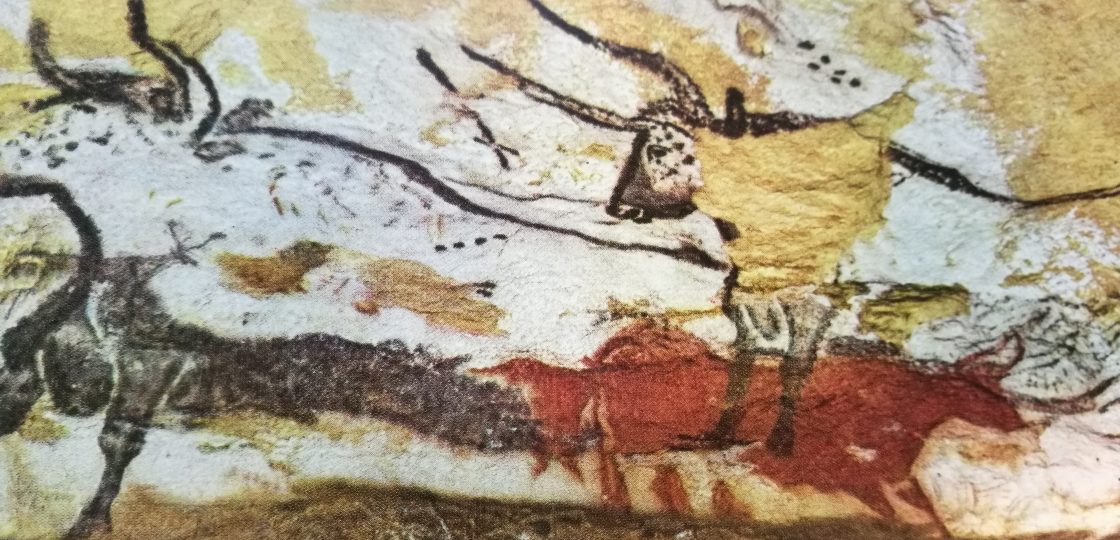

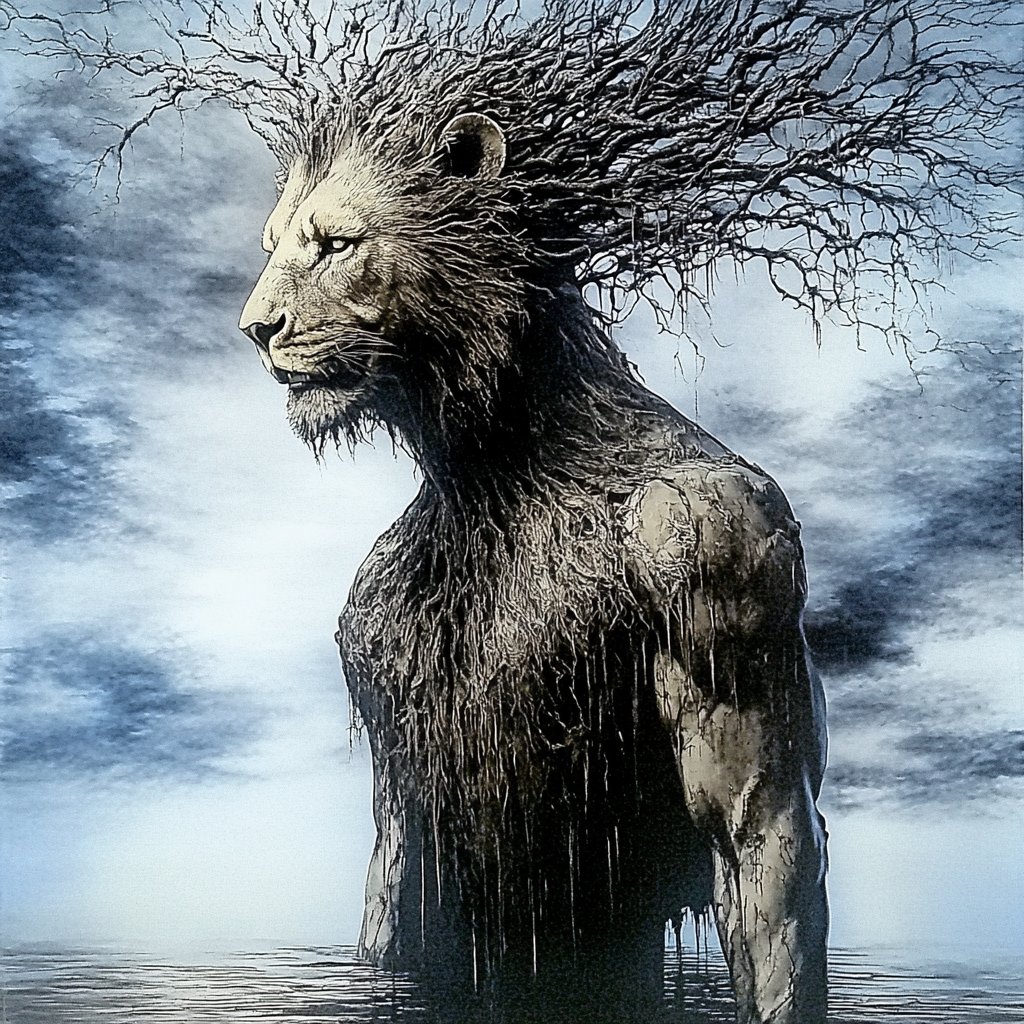
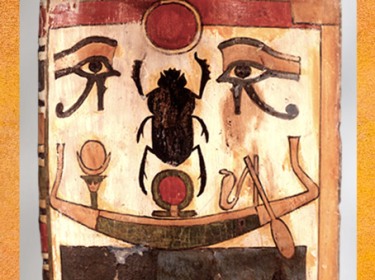


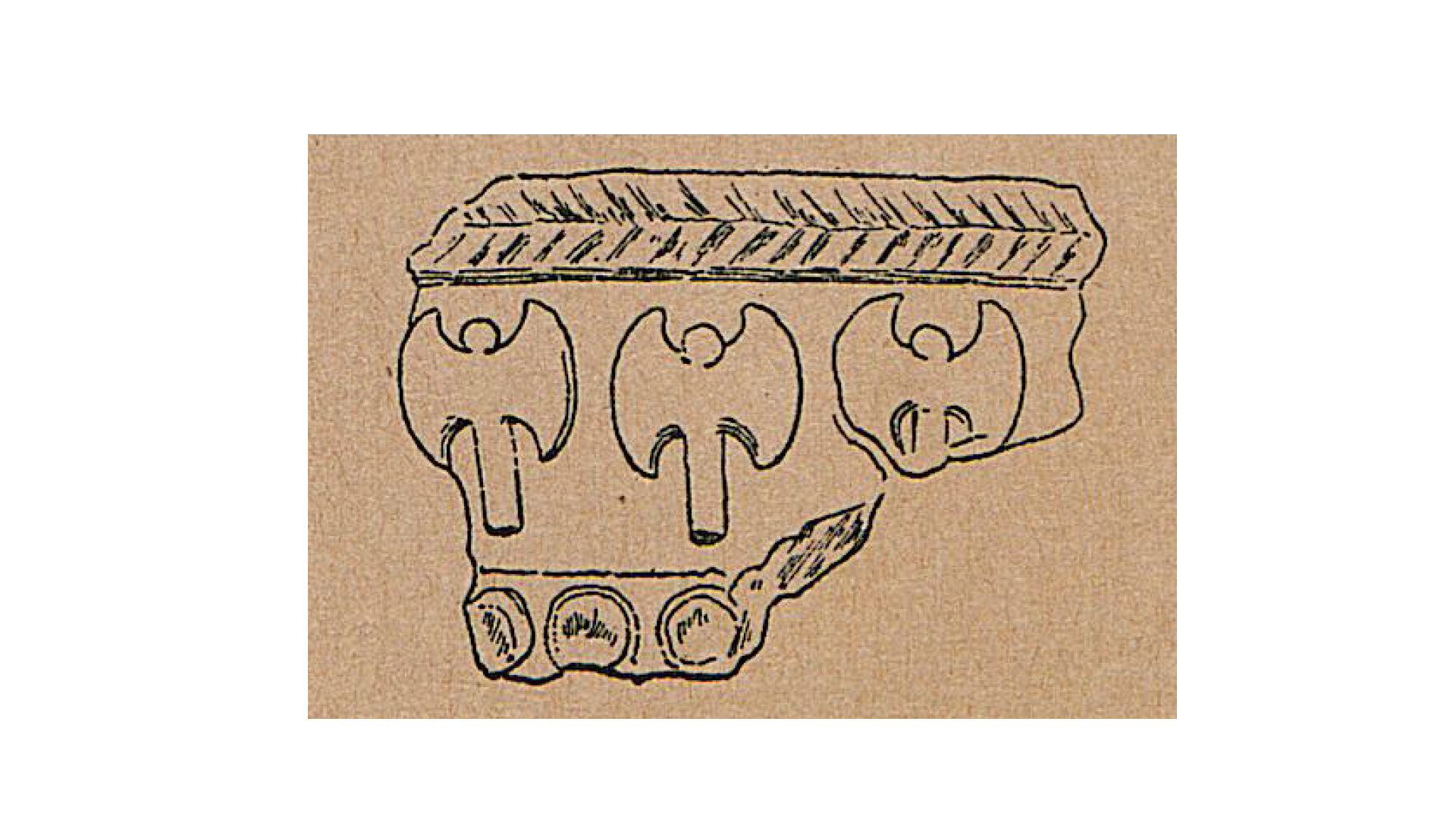
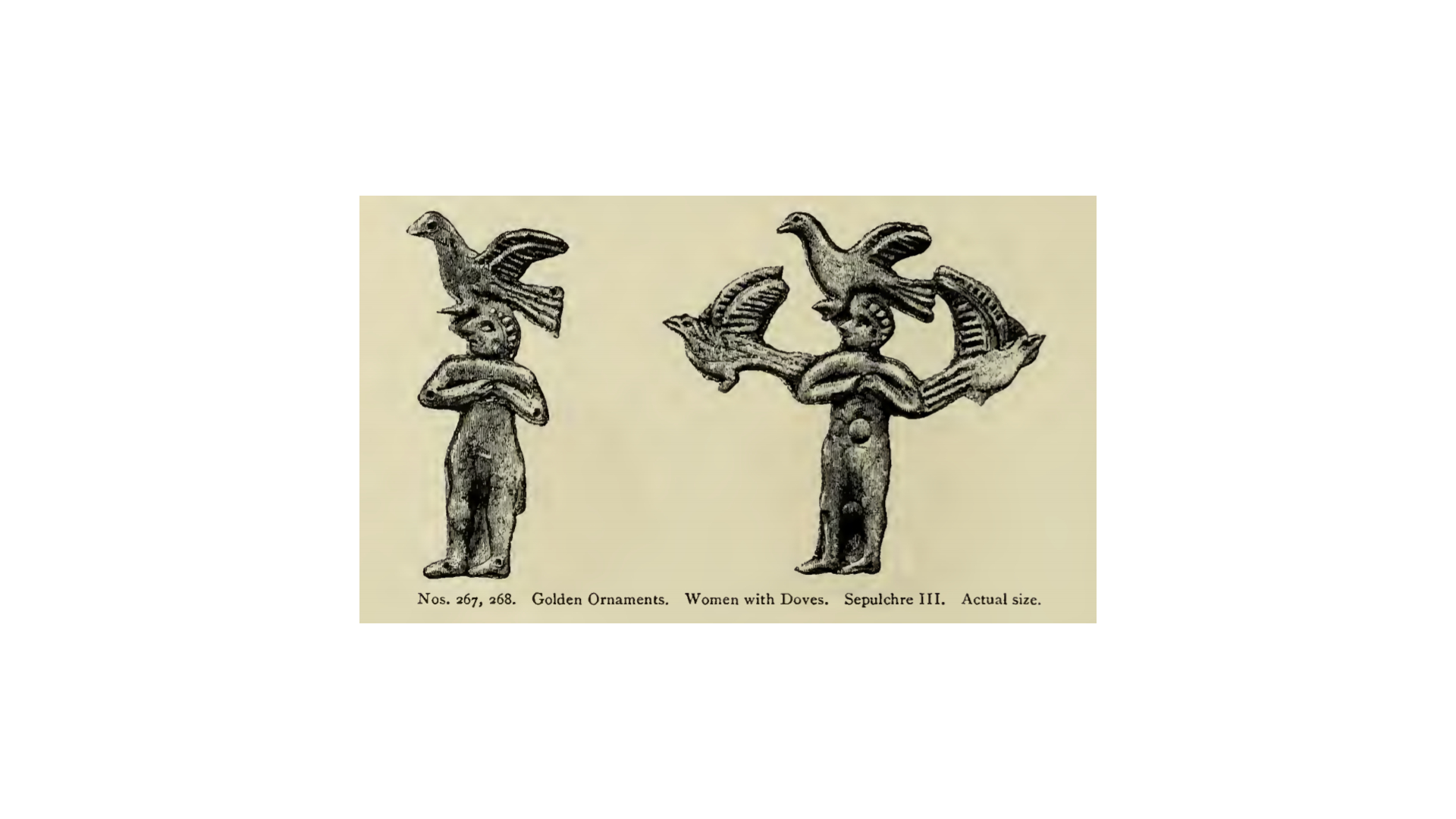


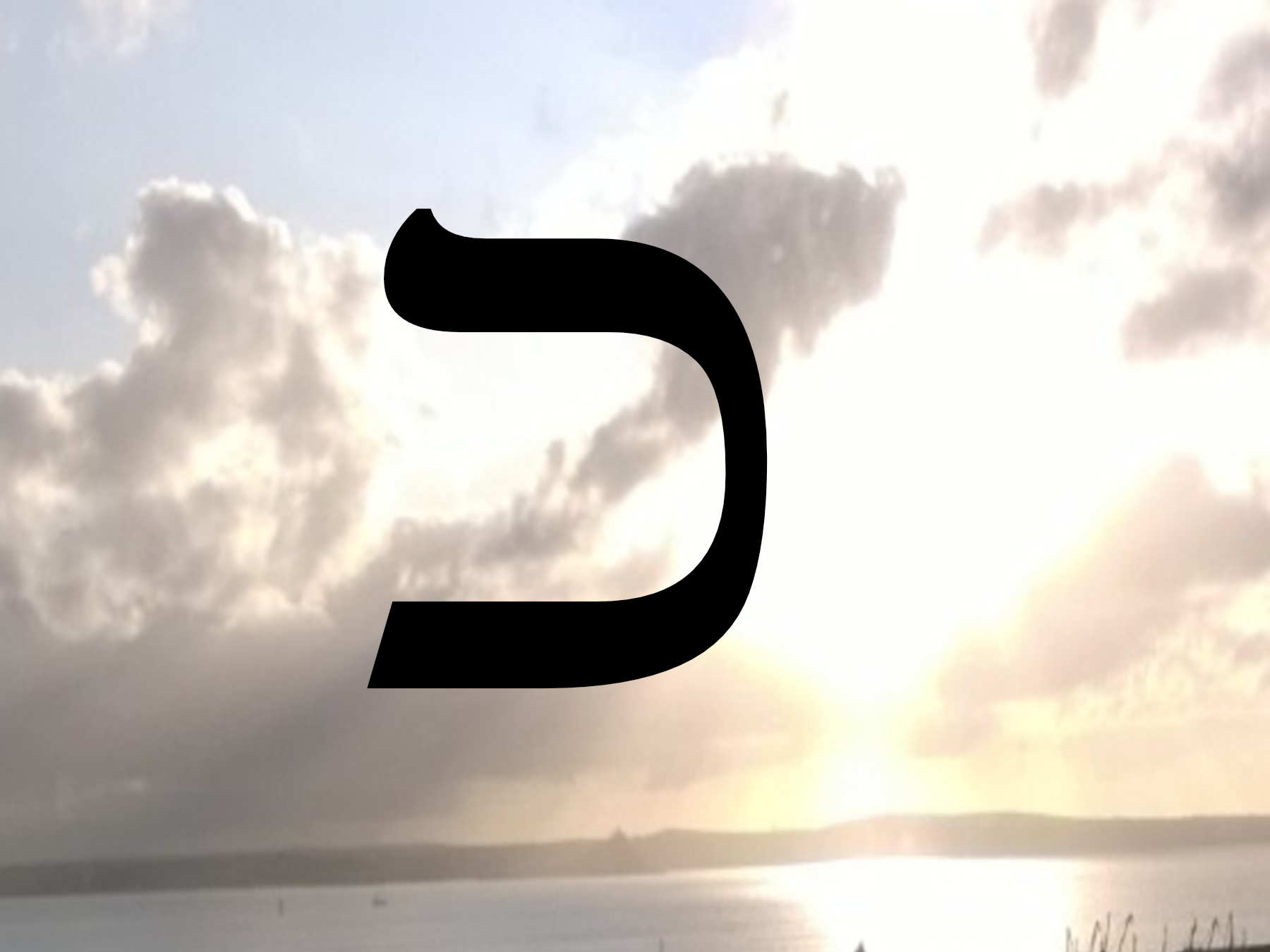


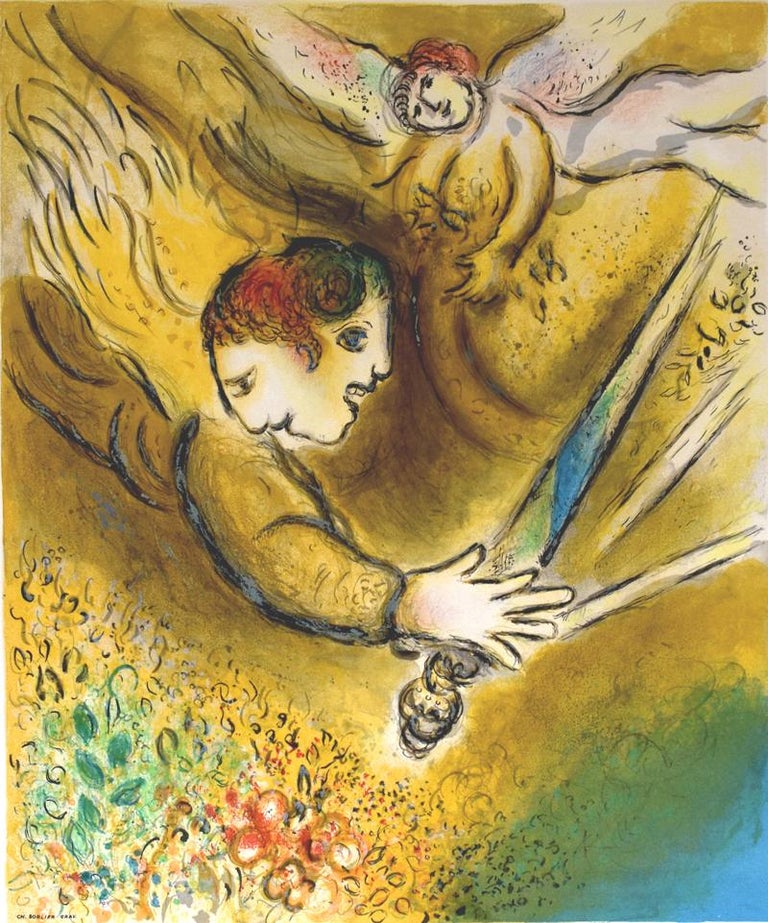
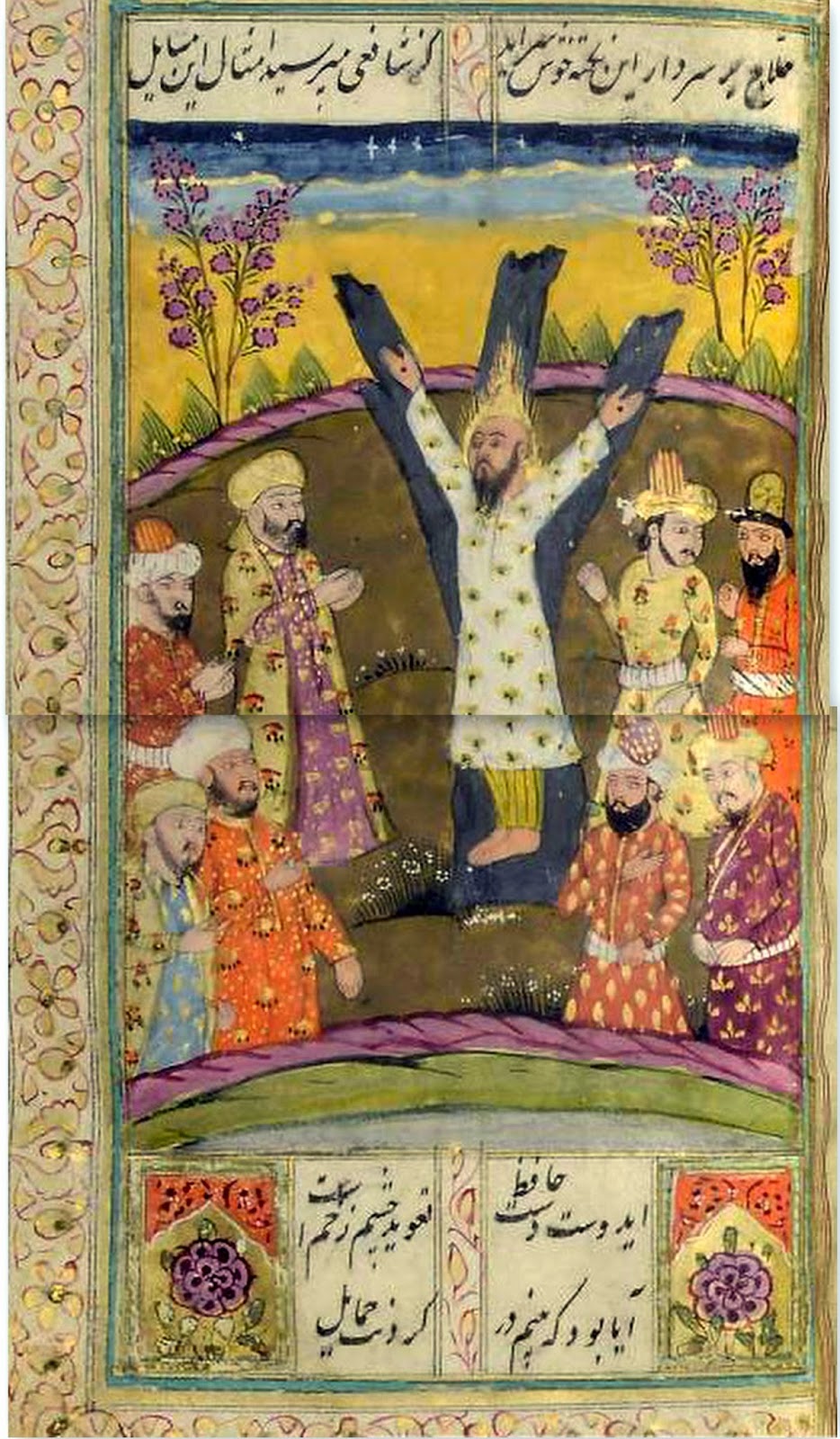




Vous devez être connecté pour poster un commentaire.