Depuis des âges anciens, nombre d’intuitions premières, qualifiées ensuite d’« hermétiques », ont germé sans discontinuer dans le for intérieur des plus grands esprits de l’Humanité. Aujourd’hui encore, ces intuitions se laissent entrevoir à travers la divulgation précautionneuse de quelques vues, jadis secrètes, et en réalité immanentes à toute âme humaine. Dans son Histoire de la philosophie hermétique, l’abbé Lenglet Dufrennois a décrit minutieusement l’histoire longue de ces idées venues d’un Orient reculé, éclaté, divers. Il fait remonter leur origine à Noé lui-même et aux célèbres Égyptiens que furent Thôt, le fils fabuleux d’Osiris, et Siphoas, le « second Thôt », plus connu sous le nom d’« Hermès Trismégiste ». Il n’hésita pas à attribuer la responsabilité de la transmission ultérieure de ces idées à Moïse même, puis à des philosophes grecs (comme Platon), et beaucoup plus tard à des philosophes arabes (comme Avicenne) et persans (comme Geber, qui passe d’ailleurs pour avoir été le premier « chimiste » de l’Histoire). Au bout de cette chaîne de passeurs antiques, apparut dans l’Occident médiéval une kyrielle de savants, de philosophes et de théologiens, eux aussi préoccupés par l’approfondissement et l’élucidation de ces questions anciennes : Roger Bacon, Albert le Grand, Arnaud de Villeneuve, Thomas d’Aquin, Alain de Lisle, Raymond Lulle, le pape Jean XXII, Jean de Meun, Jean de Rupescissa, Nicolas Flamel, Jean Cremer, Basile Valentin, Jacques Cœur, Bernard Trevisan, Thomas Northon, le cardinal Cusa, Trithème, et, plus tard, à partir du 16e siècle, Jean Aurelio Augurelli, Henri Corneille Agrippa, Paracelse, Georges Agricola, Denis Zacaïre, Edouard Felley, Jean-Baptiste Nazari, Thomas Erastus, Blaise de Vigenère, Michel Sendivogius. Cette litanie de noms, fort partielle, mais bariolée de consonances baroques, possède une sorte de charme phatique. Certains de ces noms sont fort connus. Albert le Grand (1193-1280), par exemple, fut certes qualifié de « magicien », mais il était surtout un grand philosophe et un plus grand théologien encore : « Albertus fuit Magnus in Magia, Major in Philosophia et Maximus in Theologia. » (Chronicon magnum Belgicum, 1480). D’autres noms, plus obscurs, semblent tirés artificiellement de la poussière des manuscrits, et n’évoquent sans doute plus rien pour le lecteur d’aujourd’hui. Pourtant, les savants et les philosophes qui portaient ces noms partageaient tous une même passion pour l’« Alchimie », et plus encore pour l’idée fondamentale que celle-ci cherchait à promouvoir et à mettre en lumière. Quelle était cette idée ? Avant de répondre, il faut rappeler que notre époque est fort peu propice au traitement, même distancié, des questions « alchimiques », désormais décriées, et indûment rabaissées. En 1854, Louis Figuier écrivait déjà dans son ouvrage L’Alchimie et les alchimistes, avec une sorte de commisération : « L’Alchimie fût-elle le plus insigne monument de la folie des hommes, son étude n’en serait point encore à négliger. Il est bon de suivre l’activité de la pensée jusque dans ses aberrations les plus étranges. » L’Alchimie n’est certes pas « à négliger », non pas parce qu’elle serait une illustration de la folie des hommes ou de l’aberration de certaines pensées humaines, mais parce qu’elle incarne en réalité une vérité divine, un sacré secret, dont il a été interdit de tout temps de révéler la teneur en public, mais qui n’a jamais cessé de hanter certains esprits prédisposés. Les chercheurs de vérité, jadis, entretenaient tous soigneusement l’obscurité à son égard. Il leur fallait rester impénétrables, et l’on ne faisait pas mystère de la volonté de garder toujours intact ce mystère. La clarté était suspecte, l’obscurité propice. « Quand les philosophes parlent sans détours, je me défie de leurs paroles ; quand ils s’expliquent par énigmes, je réfléchis », disait Guy de Schroeder. Arnaud de Villeneuve avait des mots encore plus durs : « Cache ce livre dans ton sein, et ne le mets point entre les mains des impies, car il renferme le secret des secrets de tous les philosophes. Il ne faut pas jeter cette perle aux pourceaux, car c’est un don de Dieu. » Quant à Roger Bacon, il avait pour principe « qu’on devait tenir cachés tous les secrets de la nature et de l’art que l’on découvrait, sans jamais les révéler, parce que ceux à qui on les communiquerait, pourraient en abuser, ou pour leur propre perte, ou même au détriment de la société. » De ces secrets, on peut en parler un peu, dans certaines conditions, mais ensuite : motus et mutité !… « J’ai maintenant assez parlé, j’ai enseigné notre secret d’une manière si claire et si précise, qu’en dire un peu plus, ce serait vouloir s’enfoncer dans l’enfer », confie Basile Valentin dans son livre, Char de triomphe de l’antimoine.
L’idée fondamentale qui réunit depuis des siècles les physiciens, les chimistes, les alchimistes, les philosophes, les théologiens, les poètes, est qu’existe véritablement une « sagesse du monde ». Celle-ci opère de façon immanente en tant que fondement invisible de l’univers, mais elle reste encore entièrement à découvrir. D’autres préfèrent parler de « lois » ordonnant et structurant le monde. Cette idée fait partie de croyances souvent implicites, mais largement partagées par la plupart des scientifiques modernes, et même par ceux d’entre eux qui sont les plus réticents à toute pensée proprement métaphysique. Cette idée première est l’idée qu’il y a un ordre caché, profond, indicible, qui fait tenir ensemble toutes les choses qui sont dans l’univers, lesquelles sont ainsi subsumées sous l’idée plus générale, et en fait très abstraite, d’« univers » ou de « cosmos ». Pour faire allusion à cet ordre implicite, Einstein disait que « Dieu ne joue pas aux dés ». Pour les cosmologistes modernes, si un tel « ordre » n’existait pas, l’univers tout entier n’aurait pu survivre plus d’un milliardième de seconde après le « Big Bang ». Il aurait été immédiatement anéanti après sa création. Cet ordre caché sert donc de « glu du monde » (glutinum mundi) et le fait durer. Quelle est la nature de cette « glu » ? La connaissance hermétique se donne pour tâche de la décrire. « La Philosophie hermétique n’est autre chose que la Cognoissance de l’Âme Générale du Monde déterminable en sa généralité et universalité » affirme M.I. Collesson dans L’idée parfaite de la philosophie hermétique (Paris, 1631). Les alchimistes ont cherché longtemps pour leur part, et sans succès il faut bien le dire, la « pierre philosophale ». Cette pierre philosophale n’était autre chose qu’une métaphore. Ce n’était qu’un miroir dans lequel ils cherchaient à apercevoir la « sagesse du monde » déjà évoquée, et laquelle est un autre nom pour la « glu » en question. Thomas Norton écrit dans son Crede mihi: « La pierre des philosophes porte à chacun secours dans les besoins ; elle dépouille l’homme de la vaine gloire, de l’espérance et de la crainte ; elle ôte l’ambition, la violence et l’excès des désirs ; elle adoucit les plus dures adversités. » Noble programme !… A la même époque, au commencement des temps dits « modernes », Luther apporta lui aussi sa caution à la « science hermétique », « à cause des magnifiques comparaisons qu’elle nous offre avec la résurrection des morts au jour dernier. » Luther considérait donc la résurrection comme une sorte d’opération alchimique, ou comme une transmutation de portée eschatologique. Les métaphores enflent vite dans le contexte et prennent des proportions imprévues… Les esprits les plus différents y trouvent le miroir de leur désir.
Mais, depuis Luther, il se trouve que l’époque moderne a presque complètement perdu le sens du secret, l’intuition des arcanes. Elle a oublié qu’elle se rattache par mille fibres à des millénaires d’antiques sagesses, pendant lesquels les esprits les plus brillants et les plus profonds se sont interrogés sans relâche sur les terreurs de l’âme et ses espoirs les plus fous. Notre curieuse et assez vaine époque, malgré ses excès en tous genres, a en réalité élidé le sens de la véritable démesure, celle de la transcendance de la physique et de la métaphysique. Elle a perdu toute idée des réalités transcendantes, et de toutes les choses eschatologiques. Elle ne veut plus assouvir quelque désir de voir, même virtuellement, les origines premières et les fins dernières, ni initier ainsi un commencement d’appréhension de leurs indicibles implications.
« La nécessité est un mal,mais il n’y a aucune nécessitéà vivre avec la nécessité ». Épicurei
L’être humain est-il libre ou bien déterminé ? Les philosophes, de tout temps, ont été divisés à ce sujet. Il y a ceux qui font de la liberté le fondement de l’action et de la morale humaines, comme Épicure, Descartes, Kant, et il y a ceux qui asservissent la volonté à une forme de déterminisme ou une autre, comme Démocrite, Spinoza, Nietzsche, Marx, Freud ou Einstein. Les Temps modernes, qui ont commencé au 16e siècle, avec la Réforme, sont censés avoir favorisé la libération de la pensée, la liberté de la personne et la « libéralisation » de la société. Mais, largement majoritaires et dominants sont les penseurs et les philosophes modernes ayant pris résolument parti pour le déterminisme.
La position de la Réforme s’est signalée par l’outrance sans concession de Luther et de Calvin : l’homme est absolument ‘serf’ et son destin est prédéterminé par Dieu. Cette détermination de sa destinée est l’un des traits essentiels de la nature humaine, avec toutes ses conséquences morales, sociales et politiques. Il y a un lien indénouable entre l’omnipotence divine, la prédestination de l’homme et l’impuissance de la raison. La Réforme avait pourtant paru défendre la liberté: celle de l’individu, celle de l’interprétation, celle du jugement. La thèse de la servitude absolue de l’homme passait mal aux yeux des humanistes du 16ème siècle. Leur plus célèbre représentant, Didier Érasme, écrivit une Diatribe dirigée contre le « serf arbitre ». Cependant, sur le fond de la question, Érasme ne différait pas beaucoup de Luther. Il donnait presque tout à la grâce de Dieu, et n’accordait presque rien à la liberté de l’homme. Érasme reprochait à Luther d’avoir « égorgé entièrement » le libre arbitre. Il voulait bien, pour sa part, reconnaître qu’il fallait n’attribuer « que très peu au libre arbitreii », mais à ce « très peu », il tenait beaucoup. Il soutenait en somme une sorte de libre arbitre limité, et d’ailleurs inefficace sans l’assistance continuelle de la grâce. De cette inefficacité, Luther ne fit qu’une bouchée. Il éructa. Le livre d’Érasme était plein d’« immondices ». Le libre arbitre était un « pur mensonge », un « mot vide ». Dieu détermine tout, à tout instant, de toute éternité. Comment oser parler de libre arbitre devant sa prescience et son omnipotence absolues? Mais il fallait en finir une fois pour toutes avec Érasme et ses idées. « Écraser Érasme, c’est écraser une punaise […] Je veux avec l’aide de Dieu, purger l’Église de son ordure », disait Luther. Luther, remontant à saint Paul, qui a été le « destructeur invaincu du libre arbitre », excluait la quasi-totalité de l’humanité du salut. En fait, tous les hommes sont perdus, « tous » ! Par une grâce incompréhensible, quelques rares élus échappent à ce sort tragique. Le message biblique est clair et limpide, affirme-t-il, et tout le monde peut le comprendre du premier coup, même les intelligences les plus faibles. Il n’y a aucune place pour le doute. La moindre faiblesse de la croyance est un signe de perdition. Il n’y a qu’un choix à faire, le Christ ou Satan, la vie ou la mort.
Les idées de Luther et de Calvin sur la servitude et la prédestination de l’homme frappaient leurs contemporains comme excessives. Au sein du mouvement de la Réforme, elles rencontrèrent très tôt une opposition. Philippe Mélanchton, esprit mesuré, s’efforça de minorer cet aspect de la pensée de Luther, en mettant l’accent sur la question de la justification, et en laissant dans l’ombre la question de la destinée éternelle.
Il importe de comprendre d’où ces idées outrancières tiraient leur origine, et comment elles purent se développer dans l’Europe de la Renaissance. Comment expliquer la virulence d’une telle idéologie de l’asservissement de l’homme aux lois du déterminisme pendant les Lumières ? Et surtout, comment comprendre le succès ultérieur de ces idées, laïcisées sous les espèces du déterminisme ou du matérialisme? Comment comprendre que des hommes aussi différents que Démocrite, Empédocle, S. Paul, Luther, Spinoza, Voltaire, Schopenhauer, Nietzsche, Marx ou Einstein, se soient rejoints par delà les millénaires autour de la nécessité et du déterminisme?
La réflexion sur le destin, la nécessité, la fatalité et la liberté a en fait une longue histoire, assez répétitive. Sont ressassées les mêmes formules rhétoriques, les mêmes images : l’omnipotence et l’omniscience divines, – ou alors de l’inflexibilité des lois de la nature. Les philosophes de l’antiquité, les théologiens médiévaux ou les scientifiques modernes reprennent tous la thèse de la causalité parfaite : si l’on connaissait les positions initiales de toutes les particules de l’univers, il serait aisé d’en déduire l’évolution de l’histoire tout entière.
Dans le camp opposé, peu nombreux furent ceux qui défendirent la liberté essentielle de l’homme. Épicure chez les Anciens, Origène dans les premiers siècles du christianisme, Jean de la Croix ou Descartes, parmi les premiers modernes, restent isolés, quelques exceptions résistant à l’unanimisme.
Comment l’Europe de la Renaissance et des Lumières a-t-elle pu se laisser subjuguer par l’idée de serf arbitre? Pourquoi les défenseurs de la liberté ont-ils été aussi rares?
Il y a une certaine analogie entre le fatalisme des Anciens, les théories chrétiennes de la prédestination, et le déterminisme moderne. Mais comment comprendre la marginalisation philosophique des idées d’Épicure, d’Origène, de Pélage, d’Anselme de Cantorbéry, de Duns Scot ou de Jean de la Croix, qui défendaient la liberté de l’homme ? Comment expliquer le triomphe philosophique de la Réforme ? Comment expliquer le basculement des Temps modernes vers une idéologie de la servitude de l’âme et un déterminisme total des lois de la nature ? Comment comprendre qu’après Luther et Calvin, les noms de Hobbes, Spinoza, D’Holbach, Diderot, Voltaire, Marx, Freud, Einstein témoignent de la continuité et de la variété du déterminisme. Pour comprendre comment les philosophes modernes ont décrété presque unanimement que le déterminisme l’emporte sur la liberté, il faut faire un bref retour sur l’histoire. La question du destin, du hasard et de la liberté a toujours occupé l’esprit des hommes. Platon fut le premier penseur à en proposer une synthèse originale avec le mythe d’Eriii. Il y a dans la vision de Platon un étonnant mélange de liberté totale (dans le choix de son destin par chacun) et d’irrévocable nécessité (dans le déroulement de ce destin, une fois le choix fait). Ce qui prédomine malgré tout, c’est la liberté du choix initial, dont l’âme assume ensuite l’entière responsabilité. Platon donne à l’âme le nom d’automaton, ce qui « se meut de soi-même ». Dans le Cratyle, il explique que ce mot, automaton signifie étymologiquement, « ce qui est à la recherche passionnée de soi-même ».Par un intéressant contraste, Aristote emploie le même mot, automaton, avec un sens complètement différent, celui de « hasard ». « Ainsi le hasard (automaton), pour s’en rapporter à son nom même, existe quand la cause (matè) se produit par elle-même (auto)iv ». Le hasard (automaton) doit être distingué de la fortune (tuchè). Le hasard se produit de lui-même, la « rencontre » de fortune n’a pas sa cause en elle-même. Les étymologies divergentes et même contradictoires du mot automaton illustrent l’ambivalence de ces termes : âme, automate, cause, ou même hasard. Cette ambivalence n’aide guère à répondre à la question de la liberté. Si l’âme est libre de choisir son destin, ce choix est-il fait par hasard, ou bien du fait de son mouvement propre ? Si la cause de ce choix n’est pas dans l’âme elle-même, l’âme est-elle déterminée par quelque chose d’extérieur ? Dans son Traité du destin, Cicéron distingue quant à lui deux écoles parmi les anciens philosophes. Il y a ceux qui pensent que tout arrive par le destin, comme Démocrite, Héraclite, Empédocle. Et il y a ceux qui admettent les « mouvements libres de l’âme ». C’est simple. Il suffit de choisir son camp. Depuis, il semble que le débat n’ait guère progressé. Les stoïciens, les chrétiens médiévaux ou les philosophes modernes ont continué d’argumenter selon des orientations sensiblement analogues. On trouve chez des penseurs contemporains des partisans du déterminisme, comme Einstein ou Planck, mais aussi des adeptes de la liberté, comme Heisenberg, et des positions mixtes, comme celles de Freud ou de Jung, qui tentent des médiations ou sortes de synthèses, lesquelles reviennent en fait, tout bien pesé, à l’une ou l’autre des deux thèses principales.
Il y a eu bien sûr des tentatives de conciliation de ces inconciliables. Les stoïciens pensaient que si l’on ne peut changer le cours des événements, on peut au moins changer la représentation que l’on s’en fait. Sénèque résume: « Le destin guide ceux qui le veulent bien; il entraîne ceux qui lui résistent ». On trouve sa liberté dans l’acceptation de sa servitude. Par cette acceptation, le stoïcien s’unit à l’Esprit qui mène l’univers. Une des principales objections à la position stoïcienne fut la question de la responsabilité morale. Si le destin nous détermine, à quoi bon agir ? C’était « l’argument paresseux ». Autre objection : si le destin nous prédestine, comment être tenus responsables de nos actes ? C’était « l’argument moral ». Si l’on nie la liberté humaine, il n’y a plus de vertu ni de vice, plus de louange ni de blâme possibles. La législation et la répression des crimes sont inutiles et absurdes. Tout est vain. Mais au sein même de la fatalité, il y a des choses qui dépendent encore de nous. Par exemple on peut réformer son caractère. On est libre de se réformer soi-même. Par là, on préserve la possibilité de la responsabilité morale et de la liberté. En résumé, le stoïcisme est l’art de composer librement avec une nécessité inéluctable. Face au stoïcisme, il y a l’épicurisme, école de la liberté pure. En décrivant le léger écart des atomes lors de leur chute verticale dans le vide, Épicure met le hasard au cœur du monde. En postulant l’existence de cet écart, de ce clinamen sans cause, au fondement même de la réalité, Épicure sacrifie le principe de causalité, nie l’existence du fatum et justifie la liberté des hommes. Il fait de la liberté le principe de sa philosophie, la condition du bonheur et la voie du savoir. Si les atomes eux-mêmes peuvent s’écarter sans raison de leur trajectoire, combien davantage les hommes peuvent revendiquer leur liberté ! Épicure prend une posture révolutionnaire. Il s’oppose frontalement au conservatisme de Démocrite, qui avait inventé les atomes, et qui avait décidé que leur mouvement était nécessairement déterminé par la nature. En revanche, loin de déduire la liberté de l’homme de la déviation des atomes, c’est par la liberté des hommes qu’Épicure justifie le clinamen des atomes.
Du clinamen, Épicure induit aussi que les dieux sont indifférents, et qu’ils ne sont pas tout-puissants. Le mythique Prométhée avait volé le feu aux dieux. Maintenant, Épicure leur dérobe la liberté, et leur enlève du même coup l’omnipotence et l’omniscience. « Quel dieu aurait le pouvoir de diriger la totalité de l’univers ? » demande-t-il. Et si les dieux sont indifférents et totalement étrangers aux intérêts des hommes, comment peut-on croire qu’ils soient omniscients ? Le potentiel de subversion de la pensée d’Épicure fut combattu sans cesse. Mais son idée centrale reste au cœur de l’une des plus grandioses ambitions de l’esprit humain : fonder une métaphysique de la liberté, non pour dépasser les dieux, mais pour suppléer à leur retrait, à leur désertion. Épicure laissait une chance au hasard, à l’aléa, et à la liberté. La liberté, conquise sur la tyrannie des séries causales, n’est possible que parce que les dieux sont indifférents ou étrangers aux hommes. Contre Épicure, Chrysippe affirma le déterminisme universel. Ces positions irréconciliables, on ne peut que constater leur permanence, aujourd’hui encore. On les retrouve par exemple, avec la même structure, mais sous d’autres formes, dans les débats des théologiens chrétiens, avant et après la Réforme. Il y a ceux qui croient à la tyrannie du destin ou à la prédestination, et ceux qui croient à la liberté de l’âme et de la volonté.
Les penseurs de l’Antiquité n’avaient pu trancher le problème de la liberté et du destin. Comment le christianisme allait-il traiter le fatum païen ? Le fatum allait-il être remplacé par la providence universelle de Dieu ? La « Bonne Nouvelle » des Évangiles n’était-elle pas fondamentalement une rupture avec l’ancien ordre du monde, un message de libération ? Mais la toute-puissance et l’omniscience d’un Dieu créateur étaient, pour commencer, difficiles à réconcilier avec la liberté des hommes. Certains des premiers chrétiens, à commencer par S. Paul, prônèrent la prédestination des hommes par Dieu. Pourtant, le texte des Évangiles ne présente pas de thèse nette, absolue, sur la question de la liberté et de la prédestination. Les textes de S. Paul ne sont pas non plus sans ambiguïté. Par exemple, S. Paul affirme avec force l’idée de la prédestination de quelques élus au salut éternel, et la déchéance inéluctable de la « masse de perdition ». Il évoque la prédestination supralapsaire, « dès avant la fondation du mondev. » Mais dans d’autres passages, il affirme aussi le salut universel du monde, et il prédit la métamorphose morale de tout un chacun. « Oui, je vais vous dire un mystère : nous ne mourrons pas tous, mais tous nous serons transformésvi. » Paul est sans doute l’inspirateur de la prédestination chez Luther. Mais il est aussi considéré par les adversaires de Luther comme un prophète de la liberté : « Car le Seigneur c’est l’Esprit, et où est l’Esprit du Seigneur, là est la libertévii.» Paul présente d’ailleurs des traits de semi-pélagianisme, bien peu luthériens: « Chacun recevra son propre salaire selon son propre labeur. Car nous sommes les coopérateurs de Dieuviii. » Dès les premiers temps du christianisme, l’antique débat sur la liberté et la prédestination fut donc relancé, sans toutefois trouver de solution nette. Les théologiens chrétiens se livrèrent, pendant des siècles, à des disputations sans fin. Origène, S. Augustin, S. Bernard, S. Thomas d’Aquin ouvrirent des voies diverses. Puis, vinrent Luther et Calvin. La violence du ton et la radicalité du jugement qu’ils adoptèrent subjuguèrent beaucoup d’esprits dès l’aube de la Réforme. La prédestination absolue des élus et des déchus devint un nouveau dogme pour un nouvelle époque. Ce dogme, quoique non accepté par tous les Réformés, fut jugé comme étant « l’axe essentiel de la Réforme » par l’un de ses meilleurs connaisseurs. Le dogme de la prédestination eut un curieux succès, bien au-delà de l’espace propre à la Réforme. Le jansénisme témoigna de la pénétration de ces idées dans le catholicisme, non sans transformations et adaptations. Plus étonnant encore, dans le contexte des Lumières, les philosophies du déterminisme séduisirent au 18e siècle de fins esprits comme Diderot, d’Holbach ou Voltaire. Elles traduisirent la notion de prédestination dans un langage matérialiste. Elles niaient Dieu, mais le remplaçaient par des lois de nature menant le monde. Pour les philosophes matérialistes, l’homme est esclave de lois qui le dominent entièrement. L’homme n’est qu’un jouet aux mains d’un Léviathan, que ce Léviathan soit Dieu, la matière ou la loi de la causalité. Les siècles païens n’avaient pu trouver une issue finale au problème du destin et de la liberté. Les siècles chrétiens qui se succédèrent depuis les origines de l’ère jusqu’au Moyen-Âge, non plus.
Pour le comprendre, il me semble utile de revenir sur l’une des plus célèbres controverses du christianisme, commençant avec Origène, continuant avec Augustin et Pélage, et s’étageant ensuite pendant des siècles. Dans cette controverse, il ne s’agissait plus d’analyser les rapports entre le fatum et la liberté, mais de hiérarchiser les rapports de la grâce et de la vertu. Deux grandes conceptions s’opposaient sur la façon de concilier la liberté des hommes et la grâce de Dieu. Pélage et Augustin représentent ces deux pôles contraires. Pour Pélage, c’est le libre arbitre humain qui prédomine. Pour Augustin, c’est la grâce divine. Si la vertu, acquise par le mérite, prédomine sur la grâce, alors la liberté de l’homme l’emporte. Si, à l’inverse, la grâce prime, les mérites acquis par l’homme ne valent rien ou presque rien, au regard de Dieu, qui détermine tout. L’Église adopta officiellement la thèse d’Augustin. Pélage fut déclaré hérétique, mais ses idées continuèrent leur influence profonde, en arrière-plan. Le « semi pélagianisme » prit la relève. Il correspondait, après tout, aux idées Pères de l’Église, qu’on ne pouvait les déclarer tous hérétiques : Origène, Tertullien, Ambroise, S. Jérôme, S. Jean Cassien, S. Jean Chrysostome. Le semi pélagianisme consistait à reconnaître la « coopération » entre la volonté de l’homme et la grâce de Dieu. Que représentait cette idée de coopération? Origène est le premier théologien de l’Église primitive à l’avoir explicitement formulée. Origène affirmait que le christianisme offre le salut à tous. L’idée fondamentale est l’unité originelle de Dieu et de tous les esprits. Il en découle que tout esprit, malgré la chute et le péché originel, doit nécessairement revenir à son origine, revenir à Dieu. Le point crucial est que la nécessité universelle de ce retour n’est possible que par l’usage de la liberté. Le Dieu bon limite volontairement son omnipotence et son omniscience à seule fin de laisser aux hommes le soin de se déterminer librement au salut. Dieu veut ainsi les rendre dignes de leur destin final, celui d’être « des dieuxix ».
L’omniscience divine est surtout limitée, selon Origène, par la liberté octroyée aux esprits créés. Dieu a certes une capacité de prescience, mais il connaît les actes des créatures libres seulement au moment où ils arrivent.x C’est donc en limitant sa propre puissance et sa prescience que Dieu donne leur liberté aux hommes. Mais pourquoi ce don ? Il faut que les hommes progressent par eux-mêmes. Le progrès des esprits, leur croissance, dépend de la liberté dont ils disposent. « La marque de la divinité c’est la permanence et l’immuabilité. Celle de la créature, c’est la libertéxi ».
Toute âme peut s’orienter vers Dieu, ou au contraire, s’en détourner. Elle peut prétendre vouloir aller vers Dieu, sans n’arriver. Si elle ne le peut pas, c’est qu’elle ne le veut pas vraiment. Si elle ne le veut pas vraiment, c’est qu’elle ne veut rien vraiment. La volonté qui ne cherche pas Dieu ne cherche rien. Elle va simplement à la mort, au néant. Mais pourquoi la volonté ne veut-elle pas vraiment chercher Dieu ? Pourquoi est-elle incapable de se tourner vers le bien? C’est parce qu’elle est tissée de néant, et qu’elle se fonde dans le mal.xii Mais qu’est-ce qui oriente l’âme vers la « volonté bonne »? Y a-t-il une volonté de la volonté ? Augustin répond : « Dieu nous révèle clairement que l’homme est doué du libre arbitre de la volonté ».xiii Le libre arbitre de la volonté est une puissance de l’esprit. La volonté vient de la volonté elle-même. Mais sans la grâce de Dieu, elle ne peut vouloir le bienxiv. Cela revient au fond au déterminisme, puisque Dieu peut déterminer le mouvement même de la volontéxv. Contrairement à ses futurs épigones, Luther et Calvin, Augustin n’élimine pas toute liberté en l’homme. Mais cette liberté ne peut rien par elle-même.
La doctrine de la prédestination absolue n’était pas connue avant Augustin. Il l’aurait extrapolée à partir des idées de S. Paul. En tout état de cause, c’était une innovation étrangère à l’esprit et à la lettre des Évangiles, qui ne la mentionnent pas.
De fortes résistances se firent jour, face à la doctrine de la prédestination et à celle de la damnation des enfants morts sans baptême, particulièrement dans le sud de la Gaule. Les moines dédiaient leur vie à l’obtention du salut par leurs mérites et par le choix d’une vie sainte. Ils étaient troublés par l’idée de prédestination absolue, qui pouvait réduire à néant leurs efforts. Saint Jean Cassien et Vincent de Lérins en étaient les chefs de file. Jean Cassien était disciple de Jean Chrysostome, lui-même disciple d’Origène. Ces « semi pélagiens » affirmèrent que Dieu veut le salut de tous, que le libre arbitre pouvait se tourner vers le bien, que la rédemption du Christ s’applique à tous les hommes, et n’est pas réservée à quelques prédestinés. Faust de Riez, abbé de Lérins, déclara même que la doctrine de la prédestination était blasphématoire, païenne, fataliste et qu’elle incitait à l’immoralité.
Les doctrines semi pélagiennes furent condamnées au concile d’Orange de 529, présidé par Césaire. Malgré la décision du concile, les divergences sur ces questions perdurèrent. La controverse revint au premier plan au 9ème siècle, avec le moine Gottschalk d’Orbais, qui défendait la thèse de la prédestination, et un autre moine, Hincmar, archevêque de Reims, qui s’y opposait. Gottschalk enseignait que Dieu ne veut pas que tous les hommes soient sauvés, et que le Christ n’est mort que pour ceux qui sont prédestinés à être sauvés. Hincmar soutenait au contraire que Dieu veut le salut de tous les hommesxvi. Le synode des Trois royaumes de Toucy (860) mit un terme à cette dispute, au dépens de Gottschalk.
Plus tard, lorsqu’en 1054 le grand schisme d’Orient vit l’apparition de l’Église orthodoxe, il importe de noter que celle-ci adopta la doctrine soutenue par Jean Cassien et Vincent de Lérins, et refusa de suivre l’Église de Rome sur ces points.
Puis la controverse continua encore dans le monde catholique pendant le Moyen âge, mais sous d’autres angles. Les positions contraires d’Abélard et de S. Bernard en donnent un aperçu. Abélard avait une interprétation très ouverte du rôle de la providence, dont il estimait qu’elle ne produit rien de nécessaire. Dieu prévoit que les événements pourraient advenir, mais il prévoit aussi qu’ils puissent ne pas advenir. « Les futurs sont contingents plutôt que nécessaires : Dieu a prévu qu’ils adviendraient de telle sorte qu’ils puissent aussi ne pas advenirxvii ». Cette idée fut reprise presque dans les mêmes termes par Leibniz dans sa Théodicée. Les précautions de langage étaient nécessaires à l’époque, mais enfin on voit bien qu’en reconnaissant la contingence et non la nécessité du futur, Abélard garantissait un réel espace de liberté.
Dans son Traité de la grâce et du libre arbitre, S. Bernard, adversaire d’Abélard, reconnaît l’existence du libre arbitre, mais celui-ci doit coopérer avec la grâce, dans la mesure où l’homme doit consentir à son propre salut. Il doit coopérer aussi avec la raison, qui est « comme sa compagne et sa suivante ». L’expression même de « libre arbitre » en témoigne : « Le libre arbitre est libre par le fait de la volonté, et arbitre par celui de la raisonxviii ». Il y a donc liberté, mais de la volonté seule, n’obéissant qu’à elle-même. Tout le reste, la vie, les sens, les désirs, la mémoire, l’intelligence sont soumis à la nécessité, en raison même de ce qu’ils ne sont point soumis à la volonté. Comme Paul, S. Bernard attribue à Dieu tout le bien qui est dans l’homme. Dieu opère en nous le penser, le vouloir et le bien faire. « Il fait le premier sans nous, le second avec nous et le troisième par nous ». La volonté est infirme. Dieu fait tout, à l’exception d’un seul moment de coopération, lors du consentement du libre arbitre à accompagner la grâce. En fin de compte, c’est Dieu qui fait tout le mérite. « Les mérites de l’homme sont de purs dons de Dieu. »xix
On terminera cette revue des idées du Moyen Age sur la liberté et la prédestination, en citant Thomas d’Aquin, le « docteur angélique » et maître de l’ambivalence, et Jean Duns Scot, le « docteur subtil », qui ont adopté l’un et l’autre des positions contraires. Thomas d’Aquin paraît d’abord très clair, très direct : « Il est nécessaire que l’homme ait le libre arbitre, par le fait même qu’il est doué de raison ».xx S’il en était dénué, alors les conseils, les préceptes, les interdictions, les récompenses et les châtiments seraient vains. Comment ce libre arbitre est-il compatible avec la volonté de Dieu ? La providence divine impose la nécessité à certaines choses; mais pas à toutes.xxi Il y a « des causes nécessaires afin que les choses nécessaires se produisent nécessairement, et des causes contingentes pour que les choses contingentes arrivent de façon contingente. »xxii Que penser de la prédestination? Thomas admet que « Dieu prédestine les hommes »,xxiii tout en donnant au mot prédestination le sens particulier de « conduire la créature raisonnable jusqu’à la vie éternelle ». La prédestination détermine tout, y compris la grâce et le libre arbitre. Thomas, à l’instar d’Abélard, fait cohabiter la prédestination infaillible et le libre arbitre contingent. « L’ordre de la prédestination est certain, et cependant cela ne supprime pas notre libre arbitre, grâce auquel l’effet de la prédestination se produit de façon contingente… Plus une chose s’éloigne de la pensée première, plus elle est enchaînée par les liens puissants du destin. Plus elle s’en rapproche, plus elle est libre.
Au moment où Thomas d’Aquin commençait la rédaction de sa Somme théologique, naissait en Écosse Jean Duns Scot. Au sujet du libre arbitre, il défendit un point de vue radicalement différent. La rupture décisive de Duns Scot vis-à-vis de Thomas d’Aquin prit ses racines dans l’enseignement d’Anselme de Cantorbéry. Anselme pensait que Dieu a voulu que l’homme soit libre. C’est la liberté de la raison qui permet de dire qu’est libre le choix et libre la volonté. En conséquence, la prescience de Dieu et le libre choix coexistent. D’où cette image : le libre arbitre et la grâce coopèrent pour le salut, tout comme l’homme et la femme coopèrent pour engendrer un enfant. Suivant Anselme, Duns Scot affirma la liberté essentielle de la volonté humaine. L’homme se tourne vers Dieu d’un mouvement qui lui est entièrement propre. Si la première loi morale est d’aimer Dieu, cet amour n’aurait pas de valeur s’il était déterminé par quelque cause extérieure. Cette « loi » n’a de sens que si elle repose sur la libre volonté. Pour Duns Scot, le christianisme est une religion de la liberté infinie. Il y a de la contingence dans la créature. Mais il y a aussi de la contingence en Dieu. « La contingence en Dieu est dans sa volonté ».xxiv Et Dieu veut qu’existe hors de lui des créatures libres, elles-mêmes dotées d’une volonté contingente. Il ne veut pas réduire la volonté des hommes à une nécessité, mue extérieurement. Quant à sa propre volonté, elle est à la fois libre et immuable. Elle est immuablement libre, et librement immuable. La lutte entre les thomistes et les scotistes sur la liberté et la prédestination résume l’état du débat au Moyen Âge. Bien plus tard, Hannah Arendtxxv écrivit que personne avant Kant n’avait professé la liberté avec autant de ferveur que Duns Scot.
De ce survol de siècles de controverses, que retenir ? Qu’est-ce que les querelles de Paul et d’Origène, d’Augustin et de Pélage, de Hincmar et de Gottschalk, de Bernard de Clairvaux et d’Abélard, de Thomas d’Aquin et de Jean Duns Scot, nous apprennent ? D’abord, la permanence d’un clivage fondamental, durable, et indépendant des époques, entre les partisans du déterminisme et ceux de la liberté. Ensuite, la réponse à la question de la liberté et de la nécessité dépend presque toujours d’une vision du monde plus générale, qui fait système. Les tenants de la liberté font part de leur confiance dans la raison humaine, et ils développent un optimisme universel. A l’inverse, les partisans du serf arbitre critiquent la raison humaine pour ses impuissances et ses limites. Ils font preuve d’un pessimisme désenchanté quant à la nature humaine. En constatant l’opposition pluriséculaire entre ces deux familles d’esprits, on en vient à se demander s’il n’y aurait pas là l’indice d’une fracture beaucoup plus profonde, comparable à ce que Kant a appelé les « antinomies » de la raison humaine.
Après tant de controverses, aucun des camps en présence n’a pu s’arroger une victoire définitive. C’est pourquoi il paraît si frappant que Luther ait réussi à répandre, avec un succès certain, l’idée de la « servitude » absolue de l’âme humaine, et à être entendu dans la moitié nord de l’Europe, au début de l’ère moderne…
Cependant, quelques champions de la liberté de l’esprit continuèrent de relever le gant, malgré le succès idéologique de Luther et Calvin. Un Espagnol, un Italien, un Français, tous nés au 16ème siècle, résistèrent : Jean de la Croix, Campanella, Descartes. Ils marquèrent aussi l’époque moderne, chacun à sa manière.
Jean de la Croix, grand mystique, et aussi qualifié de « poète bref », naquit quatre ans avant la mort de Luther. Moine augustin, Luther avait déclaré avec une certaine arrogance qu’il aurait mieux aimé « être Dieu lui-même, et que Dieu ne fût pas Dieu ». Moine aussi, mais carme déchaux, Jean de la Croix prôna l’humilité et la vie cachée. Il fut aussi le poète fulgurant de la « royale liberté de l’espritxxvi ». Il affirma sans détour que la volonté est libre, et qu’elle est au centre de l’âme, dirigeant toutes les autres facultés. La liberté est la vie même de l’espritxxvii. Libre, la volonté doit vouloir sa propre liberté. A cette fin, il faut unifier son esprit. Comment atteindre cette unité, comment obtenir « un cœur libre et fortxxviii » ? Il faut « non vouloir quelque chose, mais ne rien vouloirxxix ».
Tommaso Campanella, lui aussi moine, et dominicain, passa vingt-sept ans de sa vie en prison. Condamné à plusieurs reprises pour hérésie, il y fut torturé, échappa de peu à la peine capitale en se faisant passer pour fou. Il se fit un champion du libre arbitre, avec une approche originale. Il observa que la création a été tirée du néant par Dieu. Elle est donc un composé d’être et de non-être. D’une certaine façon, elle « manque » d’être. Dieu est certes l’Être suprême, mais qu’il y a aussi dans sa création du « non-être », ce dont témoignent l’Impuissance, l’Ignorance, la Hainexxx. Ces défauts dans la création s’observent partout. Ils provoquent des failles, des béances, des manques. Ils contredisent la toute puissance et l’omniscience divines. Ils marquent des limites, au pouvoir, au savoir et au vouloir divins, sous les espèces de la Contingence, du Hasard et de la Fortune. La Contingence (contingentia) rompt l’enchaînement causal, qui est l’instrument du pouvoir de Dieu. La Contingence est ce qui échappe au pouvoir de la Nécessité (necessitas). Le Hasard (casus) contrecarre la Fatalité (fatum). Il se soustrait à la prescience divine. Il reste sourd à ce que Dieu a « déclaré ».xxxi La Fortune (fortuna) contrarie l’Harmonie (harmonia). Brisant l’harmonie universelle voulue par Dieu, la Fortune déjoue l’ordre du monde. Ces trois « manques », la Contingence, le Hasard et la Fortune, sont autant de limites à la toute-puissance divine. Ce sont ces limites qui rendent possible la « liberté » de l’homme, en l’affranchissant de la nécessité, en lui épargnant la fatalité, et en lui donnant un rôle dans la construction de l’ordre du monde. Contingence, hasard et fortune sont les expressions concrètes de ces divers « manques ». Mais ils sont aussi l’expression visible d’une possible liberté pour l’homme. Autrement dit, contingence, hasard et fortune sont les figures de l’absence volontaire de Dieu (kénose), laissant un espace de liberté à l’homme.
Venons-en maintenant à Descartes. Il avait une conscience aiguë des limites de la raison humaine et de son impuissance à traiter de ce qui touche à la nature de Dieu. Dieu est incompréhensible parce qu’il est infini. Comment un esprit humain, fini et divisé, pourrait-il comprendre un Dieu infini ? La seule chose à comprendre, c’est que nous ne pouvons rien y comprendre. Que l’on considère le monde ! Il est rempli de choses dont certaines ont pu être faites pour l’homme, mais aussi pour des fins tout à fait différentes, dont nous n’avons aucune idée. En conséquence, Dieu, en créant le monde, a certainement considéré d’autres fins que la seule utilité de l’homme.
Descartes prend pour point de départ la liberté infinie de Dieu. Cette liberté est si absolue, qu’il faut renoncer à toute idée de « cause finale », à toute idée d’une « fin » qui serait associée à la volonté infinie de Dieu et par là, la limiterait. Il n’y a donc pas de cause finale, il n’y a qu’une cause première, Dieu. Tous les effets de l’univers résultent de l’action de son libre arbitre. Dieu, étant infini, dispose d’une liberté sans limites. Dieu est si libre que même les vérités éternelles sont soumises à son libre arbitrexxxii. Les idées, les vérités, ne sont pas vraies en elles-mêmes. Si elles l’étaient, elles auraient une existence indépendante de Dieu, ce qui ne saurait se concevoir. Elles ne sont vraies que parce que Dieu a décidé qu’elles seraient vraies. Il aurait pu d’ailleurs concevoir un monde tout autre, où par exemple la somme des angles du triangle n’est pas égale à deux droits. Toutes les vérités sont elles aussi des créatures de Dieu ; il les a créées librement, et il reste libre vis-à-vis d’elles après les avoir créées. Il n’est pas prisonnier de leur nécessité. Il leur a conféré leur existence, il peut la reprendre. Il reste toujours libre d’abolir d’anciennes vérités et d’en créer de nouvelles.
Ceci s’applique aussi aux êtres. Lorsque Dieu donne l’être à ses créatures, il leur donne à la fois leur existence et leur essence. Mais il peut les reprendre l’une et l’autre pour les renvoyer au néant. Toute créature est tirée du néant par la volonté de Dieu, et ne subsiste que dans la volonté permanente de Dieu. C’est pourquoi elle doit se considérer « comme un milieu entre Dieu et le néant ».xxxiii Elle participe des deux principes, celui de l’Être et celui du non-être. Venant du néant, la créature est « exposée à une infinité de manquements ». Elle est emplie de défauts. Descartes voit bien que sa propre nature est « extrêmement faible et limitée ». Ses imperfections viennent de sa faculté déficiente de connaître. Mais il croit au libre arbitre. Sa volonté n’est « renfermée dans aucunes bornes ». La liberté de son « franc arbitre » est « si grande » que c’est elle qui lui fait connaître qu’ « il porte l’image et la ressemblance de Dieu ». C’est le point capital : l’assimilation de la liberté humaine à la liberté divine. Dieu, en créant les hommes libres, n’a pas voulu les rendre omniscients ni tout puissants, mais il a voulu leur donner en partage une liberté aussi entière que la sienne.xxxiv
Dieu est le principe et la fin de ses créatures. Il est le principe de leur liberté. La liberté de Dieu prend sa racine en son unité et sa simplicité. La liberté de l’homme prend sa racine en Dieu. Dans son essence, la volonté humaine n’est pas inférieure à la volonté divine, puisque celle-là tire son essence de celle-ci. Je suis aussi libre que Dieu l’est, d’affirmer, de nier, de choisir un but ou de m’en détourner. Évidemment ma capacité de comprendre ou d’agir n’est en aucune façon comparable à celle de Dieu. Mais ma liberté est de même essence que la sienne. De par son origine divine, la liberté humaine participe à l’infini. Dieu a donné la liberté à cette fin : l’infini. Être libre c’est servir les fins infinies de Dieu.
Les résistances au serf arbitre de Jean de la Croix, Campanella et Descartes, pour significatives qu’elles soient, restent des anomalies dans le consensus se développant au début des Temps modernes. Les philosophies déterministes allaient désormais s’épanouir, sans entraves, et presque sans contradicteurs, pendant un demi-millénaire, jusqu’à nos jours. Spinoza en est le parfait exemple. Il avait 18 ans quand Descartes mourut. Il s’intéressa de près à la philosophie cartésienne, assez en tous cas pour lui consacrer un ouvrage. Il y cite la Quatrième méditation métaphysique, et reprend distinctement sa thèse principale, à savoir que « la volonté est librexxxv ». Mais reniant ce travail de jeunesse, il en vint vite à une opposition radicale aux idées cartésiennes sur la liberté, en prétendant en avoir « suffisamment montré la faussetéxxxvi ». Toute la nature et toutes les créatures sont entièrement déterminées par Dieu. Il n’y a rien de contingent. Les causes s’enchaînent les unes les autres, et remontent jusqu’à l’infinixxxvii. Spinoza en déduit que les facultés de comprendre, de désirer ou d’aimer sont « absolument fictives, ou ne sont que des êtres métaphysiquesxxxviii. » La question de savoir s’il existe une volonté libre ou non n’a même pas besoin de se poser, dit-il dans son Court Traité, puisqu’il estime avoir déjà prouvé que « la volonté n’est pas une chose qui existe dans la nature mais une simple fictionxxxix ». Continuer de parler de liberté dans ces conditions, c’est « rêver les yeux ouvertsxl » ! Les jeux sont toujours déjà faits, à la manière calviniste. Ces thèses de Spinoza sont d’autant plus frappantes que, dans un ouvrage beaucoup plus temporel, le Traité de l’autorité politique, écrit pour soutenir l’État libéral des Provinces-Unies contre la réaction orangiste et les menées calvinistes, Spinoza prend le contre-pied direct de la conception politique du calvinisme. Il y présente une autre idée de l’homme, libre, maître de son esprit et capable de raisonner correctement. « Je déclare l’homme d’autant plus en possession d’une pleine liberté, qu’il se laisse guider par la raison. (…) La liberté en effet, loin d’exclure la nécessité de l’action, la présupposexli. » Contradiction ? Spinoza, tel un Janus, présente un visage tourné vers la liberté et la raison, quand il veut jouer un rôle politique, et un visage tourné vers le déterminisme et l’inexistence de la volonté, quand il se targue de métaphysique. Cette contradiction n’est pas adventice, mais bien structurelle. Spinoza affiche une conception paradoxale de la liberté : « Je ne fais pas consister la liberté dans un libre décret mais dans une libre nécessité », écrit-il dans sa Lettre à Schuller. La nécessité prime avant tout : les choses créées sont toutes « déterminées par des causes extérieures à exister et à agir d’une certaine façon déterminée. »xlii Dieu lui-même suit la nécessité de sa propre nature. C’est dans la conscience de cette nécessité, reconnue, acceptée, pensée, comprise, que l’homme peut trouver une forme de liberté qui rejoint celle de Dieu.
Pour illustrer ce point, il prend l’exemple d’une pierre, lancée en l’air. Si cette pierre était dotée de pensée, elle pourrait se dire libre, croyant se mouvoir par elle-même. Cette seule métaphore tient lieu de démonstration. Nous ne valons guère mieux que les pierres. Mais à la différence de la pierre qui croit être libre, il nous revient de comprendre notre véritable nature, qui est d’être entièrement déterminés. Notre liberté réside dans l’acceptation de notre nécessité. En acceptant librement notre nécessité, alors nous sommes vraiment « libres ». La « vraie liberté » est « l’existence stable qu’obtient notre entendement par son union immédiate avec Dieuxliii ». C’était là aller fort loin dans l’affirmation de la nécessité, puisqu’elle est assimilée à la divinité même.
Leibniz, contemporain de Spinoza (et de Hobbes), s’en déclara « très éloigné » et les qualifia tous les deux « d’auteurs rigides, qui ont poussé le plus loin la nécessité des choses », d’une manière « toute mécaniquexliv ». Il ne peut admettre l’idée très déterministe de Hobbes que « ce qui n’arrive point est impossible », ou qu’il nie la providence de Dieu et l’immortalité de l’âmexlv. Leibniz ne peut non plus accepter l’idée spinozienne d’un premier principe « aveugle », d’un Dieu incapable « de choix, de bonté et d’entendementxlvi ». Il ne cachait pas son antipathie pour les idées de Hobbes et Spinoza sur la nécessité et le déterminisme, mais il n’approuvait pas non plus les idées de Descartes sur la liberté, qu’il trouvait beaucoup trop étendues. Que Descartes puisse concevoir un « Dieu trompeur », capable de prendre ses aises avec des vérités nécessaires, revenait à faire de la liberté quelque chose d’extraordinaire, d’inconcevable, de non raisonnable. Une telle liberté n’était plus la libertéxlvii. Leibniz ne pouvait pas croire en un Dieu absolument libre : « Je tiens que Dieu ne saurait agir comme au hasard par un décret absolument absolu, ou par une volonté indépendante de motifs raisonnablesxlviii ». Leibniz cherchait une voie moyenne. Il pensait que la toute-puissance et l’omniscience de Dieu ne devaient pas empêcher de croire que nous avons une volonté libre. Il lui suffisait, pour s’en persuader, de se reposer sur son expérience intérieure, qui fait éprouver directement cette liberté. D’ailleurs, cette liberté est « nécessaire pour que l’homme puisse être jugé coupable et punissablexlix ». En revanche, il ne voyait aucune incompatibilité entre cette liberté et la prescience de Dieu, « qui rend tout l’avenir certain et déterminél ». « Tout est lié dans chacun des mondes possibles : l’univers, quel qu’il puisse être, est tout d’une pièce, comme un océanli». De cette liaison universelle, de ce système de l’harmonie générale, de cette parfaite connexion des choses, on peut déduire que « le présent est gros de l’avenirlii ». Le principe de la raison déterminante ne souffre aucune exception et est toujours à l’œuvre, dans tous les événements : « Jamais rien n’arrive sans qu’il y ait une cause ou du moins une raison déterminanteliii». C’est pourquoi tout est certain et déterminé dans l’homme. « L’âme humaine est une espèce d’automate spirituel ». Dieu compare tous les mondes possibles, les innombrables séries de causes, nécessaires ou contingentes, choisit le meilleur, et l’admet à l’existenceliv.
Dieu a déjà jugé dans tous les détails le déroulement de son plan comme étant le meilleur possible. Toute la controverse sur le libre arbitre se réduit en fait à un seul point : quel a été le but principal de Dieu en décidant le meilleur des mondes possibles ? Et quel est le rôle assigné à l’homme ? Malheureusement, il n’est pas possible de répondre à cette question. « Nous ne connaissons pas assez l’étendue de la cité de Dieu, ni la forme de la république générale des espritslv». En revanche, on peut affirmer que la présence du mal dans le monde vient sans aucun doute de la liberté des créatureslvi. La créature se fait librement l’esclave du mal. Dans le monde décrété par Dieu, dans ce monde qui est le « meilleur possible », il n’y a point de place pour le hasard. Leibniz approuve Cicéron, qui s’est tant moqué d’Épicure. La déclinaison épicurienne des atomes (le clinamen) est « une chimère des plus impossibles ». Il n’y a pas non plus place pour l’indétermination en Dieu. « Dieu est incapable d’être indéterminé en quoi que ce soit : il ne saurait ignorer, il ne saurait douter, il ne saurait suspendre son jugement ; sa volonté est toujours arrêtée, et elle ne saurait être que pour le meilleurlvii ». Mais cette détermination sans faille ne saurait être, on l’a dit, « absolument absolue ». Autrement dit, Dieu lui-même n’est pas absolument libre, sa puissance est limitée par sa propre essence, par sa propre bonté, par sa justice et par sa sainteté. Leibniz rejoint ici Luther et Calvinlviii. Et il s’oppose à Origène, qui a « supprimé entièrement la damnation éternellelix », et qui voudrait que tout chrétien soit à la fin sauvé. Cette idée de salut universel est pour Leibniz « paradoxale et inacceptablelx ». Cependant il est prêt à accepter l’idée d’une « suprême philanthropie en ce Dieu qui a voulu sérieusement que tous parviennent à la reconnaissance de la vérité (…), et que tous soient sauvéslxi ». Il ne partage pas la position luthérienne et calviniste qui réserve aux seuls élus la grâce, la foi et la justification. Il la qualifie d’« erreur gravelxii ». Leibniz s’oppose à la fois aux théologiens « rigides » qui mettent plus en avant la grandeur de Dieu que sa bonté, et aux théologiens « relâchés » qui font le contraire. Il estime faire partie de ceux qui optent pour une voie moyenne. Le « meilleur des mondes possibles » n’est pas le meilleur pour tous. Il y a nécessairement des déchus, des exclus, des damnés. Mais leur malheur contribue à « maximiser » le bonheur des heureux.
iiDidier Érasme. Diatribe : Du libre arbitre, 3ème partie, IV, 11
iiiPlacé sur les genoux de Lachésis, l’une des trois Moires pour les Grecs (les Parques pour les Romains), chaque homme choisit son « modèle de vie » avant de naître au monde. Lachésis affirme que chacun est alors responsable de ce choix, et non les dieux. Le choix fait, il devient irrévocable. L’âme de l’homme est alors conduite devant une autre Moire, Clôthô, qui « tisse » (c’est-à-dire détermine) le destin choisi. Puis elle est menée devant la troisième Moire, Atropos, « pour rendre irrévocable ce qui avait été filé par Clôthô ». Alors, « l’âme passe sous le trône de la Nécessité ».
vEphésiens 1:4-6. « C’est ainsi qu’il nous a élus en lui, dès avant la fondation du monde, pour être saints et immaculés en sa présence, dans l’amour, déterminant d’avance que nous serions pour lui des fils adoptifs de Jésus Christ. ».
xxvii« La volonté est libre. (…) Un acte de la volonté n’est tel qu’autant qu’il est libre ». La Nuit obscure, II,13,3
xxviii« Pour aller à Dieu, il faut un cœur libre et fort, dégagé de tout mal, et même de tout bien qui n’est pas purement Dieu ». Cantique Spirituel B 3, 5
xxxii« Et encore que Dieu ait voulu que quelques vérités fussent nécessaires, ce n’est pas à dire qu’il les ait nécessairement voulues. » Lettre à Mesland, 2 mai 1644 cité par E. Gilson, La liberté chez Descartes et la théologie
xxxiv« Et en effet dès que Dieu voulait me donner la volonté, il ne pouvait me la donner moindre que celle que je découvre en lui, (…) puisque sa nature est telle qu’on ne lui saurait rien ôter sans la détruire. Ma volonté considérée formellement et précisément en elle-même est donc infinie comme celle de Dieu et c’est elle principalement qui me fait connaître que je porte son image et sa ressemblance » Principes philosophiques, cité par E. Gilson, La liberté chez Descartes et la théologie.
xxxvSpinoza, De la philosophie de Descartes. Appendice contenant les Pensées métaphysiques, 2ème partie, Ch. 12
xxxviSpinoza, Éthique, 5ème partie, De la puissance de l’entendement ou de la liberté humaine
xxxviiSpinoza, Éthique, 2ème partie Proposition 48
xxxviiiÉthique, 2ème partie, Scolie de la Proposition 48
xlSpinoza, Éthique, 3ème partie, Proposition 2 :« Et tout ce que je puis dire à ceux qui croient qu’ils peuvent parler, se taire, en un mot agir en vertu d’une libre décision de l’âme, c’est qu’ils rêvent les yeux ouverts. »
xliSpinoza, Traité de l’autorité politique, ch. 2, 11
xlivLeibniz, Essais de théodicée, sur la bonté de Dieu, la liberté de l’homme et l’origine du mal.1ère partie, 67.
xlvLeibniz, Essais de théodicée, sur la bonté de Dieu, la liberté de l’homme et l’origine du mal. Réflexions sur l’ouvrage de M. Hobbes, « De la liberté, de la nécessité et du hasard ».
xlviiLeibniz, Essais de théodicée, sur la bonté de Dieu, la liberté de l’homme et l’origine du mal. 2ème partie, 186 : « [M. Descartes avait de la liberté] une notion assez extraordinaire, puisqu’il lui donnait une si grande étendue, jusqu’à vouloir que les affirmations des vérités nécessaires étaient libres en Dieu. C’était ne garder que le nom de la liberté. »
xlviiiLeibniz, Essais de théodicée, sur la bonté de Dieu, la liberté de l’homme et l’origine du mal. 3ème partie, 283. Voir aussi, ibid. 338.
xlixLeibniz, Essais de théodicée, sur la bonté de Dieu, la liberté de l’homme et l’origine du mal. 1ère partie, 1
lviiiIbid. 338 : « Un décret absolument absolu serait insupportable. Luther et Calvin en ont été bien éloignés : le premier espère que la vie future nous fera comprendre les justes raisons du choix de Dieu, et le second proteste expressément que ces raisons sont justes et saintes, quoiqu’elles nous soient inconnues ».
lixIbid. 56 La cause de Dieu, plaidée par sa justice, elle-même conciliée avec toutes ses autres perfections et la totalité de ses actions.
Contrairement à ce que laisse entendre son titre, le Traité de la liberté de l’âmei, attribué à Fontenelle, affirme fortement la thèse d’un déterminisme lié à la « disposition matérielle » du cerveau. De cette disposition matérielle, on peut déduire que « l’âme n’a en elle-même aucun pouvoir de se déterminer, et ce sont les dispositions du cerveau qui la déterminent au vice ou à la vertu. Donc les pensées de l’âme ne sont jamais libres. »ii
Le cerveau est rempli de « nerfs » ou d’« esprits » qui sont plus ou moins « tendus », suivant que l’on est éveillé ou endormi. La tension différentielle entre ces nerfs et ces esprits se traduit par une disposition matérielle pilotant la volonté de l’âme. Réciproquement, toute pensée de l’âme provoque de nouvelles tensions dans le cerveau.
La volonté émerge de la disposition matérielle du cerveau, et l’âme, mue par le cerveau, ne fait qu’entériner ce que le cerveau produit. Puis elle permet à son tour le passage à l’acte en excitant le cerveau de manière appropriée. « Concevez donc que comme le cerveau meut l’âme, en sorte qu’à son mouvement répond une pensée de l’âme, l’âme meut le cerveau, en sorte qu’à sa pensée répond un mouvement du cerveau. L’âme est déterminée nécessairement par son cerveau à vouloir ce qu’elle veut, et sa volonté excite nécessairement dans son cerveau un mouvement par lequel elle l’exécute. Ainsi, si je n’avais point d’âme, je ne ferais point ce que je fais, et si je n’avais point un tel cerveau, je ne le voudrais point faire. »iii
Les hommes, dans leur crédule croyance à leur liberté, ignorent que toutes leurs pensées et toutes leurs volontés naissent de dispositions purement matérielles. L’âme croit se déterminer elle-même, alors que c’est le cerveau qui détermine les inclinations de l’âme.
Dans cette optique matérialiste, le vice n’est dû qu’à un arrangement malencontreux des nerfs, qu’il est possible de corriger. « À force d’exhortations et d’exemples, on peut mettre dans le cerveau les dispositions qui le déterminent à la vertu », explique Fontenelle. Si la correction ou l’exhortation ne donnent pas les résultats voulus, dans le cas de criminels endurcis, alors il faut les anéantir, froidement, sans haine, pour une meilleure efficacité sociale : « Les criminels sont des monstres qu’il faut étouffer en les plaignant ; leur supplice en délivre la société, et épouvante ceux qui seraient portés à leur ressembler. »
Après Luther, Calvin, Hobbes, Fontenelle admet lui aussi le danger politique de la publication des théories déterministes. Il voit clairement le risque de ruiner l’ordre social, par les conséquences que le peuple pourrait tirer de ce type de système. D’où sa conclusion : la vérité n’est bonne à dire qu’en bonne société ; il faut tenir le « commun » dans l’illusion du libre arbitre et de la religion.
_____________
i Le Traité de la liberté de l’âme parut en 1700 pour être aussitôt interdit et brûlé par ordre du Parlement. Il reparut en 1743. En 1760, la paternité de cet opuscule fut attribuée à Bernard de Fontenelle, décédé trois ans auparavant.
iiFontenelle. Traité de la liberté de l’âme. Fontenelle précise : « Je suppose avec tous les métaphysiciens, 1° que l’âme pense selon que le cerveau est disposé, et qu’à de certaines dispositions matérielles du cerveau, et à de certains mouvements qui s’y font, répondent certaines pensées de l’âme, 2° que tous les objets, même spirituels, auxquels on pense, laissent des dispositions matérielles, c’est-à-dire des traces dans le cerveau ».
Lucas Cranach, Portraits of Martin Luther and Philipp Melanchthon
Five centuries after Luther, some followers of the Reformed religion were able to affirm without blinking an eye that it is the modern religion par excellence and that it even embodies the « legitimacy of modern times ».i As for other religions, according to them, they « flee » the world and reality. ii
These rather arrogant statements may be, in fact, symptoms of the changing world at work. If thousand-year-old religions seem to be « fleeing » modernity, with some level of credibility, how can we not see this as a sign of the coming catastrophe?
The era of the post-human has been announced. Everything is possible, once again, now that modernity has definitively freed itself from pre-modern thoughts. We must prepare ourselves for a new great leap forward.
In order to understand what kind of leap the Reformation implied, it is necessary to recall its foundations, laid when modernity emerged from the Middle Ages.
The Reformation suddenly and strongly called into question a world order that had prevailed until then. The effects were considerable. It changed the religious and political map. It encouraged the development of science and technology. It was even instrumental in the rise of capitalism – and the « disenchantment » of the world.
This legacy is appreciable.
Protestantism also has been generously credited with the liberation of consciousness and the birth of the rights of the individual. This is an interesting paradox for a religion whose fundamental dogma absolutely denies free will, and whose founders advocated the enslavement of men to a predestination decided from all eternity.
But, in a sense, this apparent contradiction sums up the essence of modernity, and the whole post-modern agenda.
The other principles of the Reformation seem to explain its historical success. They have the merit of simplicity: the sovereign authority of the Bible and salvation by grace.
Luther specified them in his famous sola.
–Sola Scriptura (« the Scriptures alone »): Canonical texts are the only infallible sources of faith and religious practice. There is no recognized authority for the interpretation of the texts. Exegesis is free, individual. The believer, with an unshakeable faith, is alone in front of the text. Extreme individualism is justified.
–Sola Fide (« Faith alone »): Faith is everything, and works are nothing. The Law can only bring about the Fall. By it, all are condemned. Only faith can save. Human merit can do nothing. Human reason is powerless to grasp an unintelligible God. Luther said it was the « bride of Satan », the « Prostitute ».
–Sola Gratia (« Grace alone »). God chooses a few souls, and to them alone He gives His grace. Luther and Calvin borrowed this idea from St. Paul. There are very few « chosen ones », and the « rest » of humanity is condemned from all eternity to its doom. This theory of Predestination is considered the essential doctrine of Protestantism. iii
The Scriptures alone: the individual is isolated from any communal tradition, and sent back to himself. Faith alone: it is separated from reason. Grace alone: everything, everyone is determined. There is no free will.
These inaugural cuts were later secularized and mundanized. Nowadays, the cult of the individual, the hatred of the common (or, in the speaking of running neo-liberal slogans, the hate of any sort of ‘socialist’ or ´communist’ ideals) , but also the nominalist passion, the deterministic yoke, all bear witness to this.
The sola have five centuries of existence. But they themselves take their sources from very ancient theological disputes. And they now deeply (and paradoxically) imbue a « modern » society that is more and more dechristianized, paganized and disenchanted. They sum up the modern agenda surprisingly well: individualism, nominalism, determinism. Post-modernity will no doubt take on the task of pushing this program ever further. And quite possibly to the extreme and perhaps to the absurd.
Paradoxes and contradictions abound. Predestination, a Pauline and Calvinist idea, analogous to the ancient and pagan fatum, is clearly opposed to the ideas of freedom, will and personal responsibility. It is therefore surprising that this idea of predestination (secularized as determinism) has been able to permeate all modernity. Hobbes, Spinoza, Hume, Diderot, Voltaire, Schopenhauer, Nietzsche, Marx, Freud, Einstein took it up and adapted it, each in his own way.
The rhetorical form of the « sola« , their sharpness, their brittleness, their bleeding edge, must be emphasized. They affirm the « absoluteness » of faith and grace and of the « manifest destiny » of the chosen one,. But as a direct consequence, humanity as a whole is also deemed a « mass of perdition », the (Catholic) Church is judged « satanic », reason seems « diabolical », and free will simply does not exist. All this is not very cheerful. But for those who believe they are on the right side, who will make it, what a triumph!
Max Weber famously explained the link between Protestantism and capitalism, hard work and accumulation. One should now go even further, and also consider its links with the deep economic, social and political decomposition of the « living together », the dissolution of the « glue of the world ».
The pre-eminence of the « chosen one » over the « rest » of humanity justifies everywhere the war of each one against each one, an exacerbated individualism, and propagates hatred of the common. What does the ideology of grace and election imply politically in an overpopulated, compressed planet dominated by structural, systemic injustices? Isn’t the image of the chosen few, hermetically sealing off the world ghetto, the prodrome of a possible final catastrophe?
The dissociation of faith and reason has favored nominalism and anti-rationalism. But after the humiliation of reason, its negation, what can we expect from faith deprived of reason, if not barbarism?
The negation of free will has led to the theological and philosophical justification of determinism, with its innumerable political, economic and social translations. Universal enslavement is on the march – for whose benefit?
It has been written that the doctrine of the Reformer was « childish » iv. The sola can easily be summed up: the individual is ‘separated’, reason is ‘discarded’, freedom is ‘alienated’. Only the « Chosen one », the Faith and the Law remain, — but « alone ».
From this initial base of beliefs, Protestantism developed several variations, not without contradictions.
For example, the Lutheran saint turns away from politics, abandons the kingdom of the earth. On the contrary, the Calvinist ‘chosen one’ seizes the world to transform it. v
Lutheran piety favors the purely interior feeling. Calvinist religiosity is opposed to this quietist flight from the world, and requires engagement, action. vi
Calvin believes that the ´works´ remain a sign of the election. Luther rejects them as a curse.
These differences explain divergent historical destinies: Lutheranism remained confined to Northern Europe, and Calvinism was to be « globalized ». vii
They also reflect the structural problem of Protestantism: how to reconcile the freedom of individual conscience with the demands of community life? How to build a community of belief if the interpretation of the texts is free?
This contradiction was underlined by Jean-Jacques Rousseau. The two fundamental points of the Reformation (the Bible, the only rule of belief, and the believer, the only interpreter of the meaning of the Bible), imply that the Reformed Church cannot have « any profession of faith that is precise, articulated, and common to all its members ». viii
Protestant culture, critical and individualistic, was defined from the outset by an ideal of autonomy and inner freedom, regardless of the weight of the dogma of predestination. Having abolished all authority imposed from outside, the culture of intimate conviction is based on the exercise of personal judgment. The argument of authority being rejected, one must turn to one’s own resources. The soul, alone, seeks its way with the help of its own lights.
This is a strong encouragement for critical exercise. Hence, also, the potential for social or political questioning.
The culture of individualism can lead to a general relativism. The moral segregation of the « chosen » and the « fallen », like all « apartheid », also carries the seeds of decomposition and social fragmentation.
Individualism is not a modern invention. But Protestantism added a radical, metaphysical dimension to it. Salvation depends on an incomprehensible God, who grants his grace without reason. Predestination, assigned from all eternity, is equivalent to establishing an absolute difference between people. Salvation has been given to the chosen few, and to the vast majority of the fallen, has been given the Fall. There is such a difference in destiny between them that it amounts to a difference in nature. Their common humanity itself radically separates them: for some it is a source of divine election and dilection, for others of eternal punishment and damnation.
This metaphysical apartheid is so despairing that it implies social, economic, political, cultural, psychological effects. In several countries of Protestant culture, poverty or social exclusion are considered as the consequence of a moral defect, or even as the visible punishment of an invisible degeneration, willed by God. For Calvin, poverty is a sin, damaging to the glory of God. He had forbidden begging, whereas the Middle Ages had tolerated it, and even exalted it with Francis of Assisi and the mendicant orders. The harshness of English legislation on assistance to the destitute was influenced by this asceticism indifferent to the misfortunes of the world. Michaël Walzerix notes in Calvin, as in English puritan literature, the frequency of warnings aboutmutual aid and human friendship. It is recommended not to trust anyone. The Puritan should only be concerned with his personal salvation. And he has only one possible confidant: God himself.
The certainty of the « chosen ones » to be saved, their metaphysical optimism, are powerful levers for action.
The « saints » believe that the planet, and the entire universe, are offered to them, that they are « manifestly » to be taken, for the greater glory of God, for example by means of force, in the service of highly militarized states. This state of mind also favors the development of capitalism, in its most inegalitarian forms.
A military-industrial economy, an encouragement to grow at all costs, at the expense of the rest of the world, are all assets in the confrontation of the « saints » with a fallen world.
There is no room for the idea of equality in this system. It is God who willed an ontological, metaphysical inequality between the « saints » and the « rest ».
The divine plan includes all individual and collective misfortunes. However unjustifiable they may be to human eyes, misfortunes are part of this divine plan, and they are somehow mysteriously necessary for the election of the few predestined.
Several remarkable psychological consequences can be deduced from this.
The « chosen ones » must believe without fail in their own predestination, they must display unshakeable trust and resolve.
There is no room for doubt. The constant dread of decay and doom provokes in return a need for external signs, for concrete proof of the election. One of the best possible proofs of this election is, for example, to be able to declare war on the rest of the world, and to win it. In such a disposition of mind, how can one avoid Manichaeism, arrogance, contempt?
The « chosen ones » may have a tactical advantage in overlooking the immense distance that separates them from the « fallen ». Hypocrisy and double talk are however recommended. The real thoughts of the « saints » and the opinion of the « chosen ones » about the « fallen » are not publicly avowable. They must hide their contempt and disgust from those whom they think are destined for damnation. What would happen if, crushed with contempt, and lost for lost, the « fallen » revolted?
It is very logical that a religion of election, individualistic and nominalist, propagates hatred of the universal, the general and the common, which are all negations of the gratuitous and inexplicable character of the singular, the particular and the unique. When God has « spoken », when He has « decided » and « chosen », who will dare to evoke reason, justice or equity, to dare contradict ´God´s will´? There is no room for universal salvation before singular grace.
To understand how such radical, astounding, incredible ideas actually arose in the Europe of Erasmus and the Renaissance, one must turn to one of its main ideologues, John Calvin.
Jean Calvin
For Calvinx, the human heart is completely wretched. Everything in man is unclean. His soul is an abyss, a cavern of garbage and « stench ». Human nature loves evil, and enjoys multiplying it. Man is perverse. Left to himself he is like a beast. All his desires are vicious, defiled, corrupt. Man is nothing but rottenness, and the devil reigns over the world.
There is no recourse to this rot and corruption. Man is lonely and powerless. The world and human society are of no help to him. Decline is irremediable. Whatever he does, whatever his actions, he is damnable. His fate is death and nothingness.
There is, however, a tiny hope. Strangely enough, God wants a few men, rare exceptions, to escape from nothingness.
But a fearsome enemy lies in wait: the devil, who tries to deceive man by imitating God. Hence a perpetual war. The life of the « saint » is a permanent, military combat. To counter the devil, he can resort to violence and war.
If the « saint » loses the battle, God’s punishment awaits: eternal fire and the swarming of worms that gnaw at his heart.
As for the Gnostics and Manicheans, the Calvinist « devil » also embodies the permanent, irremediable cut that separates man from God.
Calvin feels particularly this impenetrability of God, His absolute mystery, His infinite distance from mankind. He makes it a key element of his system. And if Calvin calls himself anti-Manichean like his master, Augustine, he, like him, displays deeply Manichean traits in the very structure of his thought.
Calvin denies Manichean dualism and reaffirms the unity and transcendence of God. But by lowering man and creation to nothingness and pleading the absolute decay of human nature, he recreates a kind of metaphysical dualism between the nature of the One, who is everything, and the nature of creatures, who are nothing. Man has absolutely nothing to do with God. There is no portion of divinity in him, not the slightest spark. The gulf between them is immeasurable. The anguish of such an annihilation is inextinguishable.
Calvin never dreamed of an impossible reconciliation with a « good » God. It is necessary to be content with humble and submissive obedience, to subdue the « vain swelling » of men, to bring down their arrogance.
Only in humility can man understand his nakedness and ignominy. It is necessary to renounce all presumption, however small it may be, and decisively lose all self-confidence. All men are useless. « Their gullet is like an open sepulchre » xi.
The thesis of man’s decay is central, massive. Fallen, man is always alone. He is cut off from God, and he is isolated on earth. After the Fall, he has become an essentially perverse, asocial being. There is nothing to expect from society. Particular vices invariably lead to public error. People are stupid. The whole human race is condemned.
The only exceptions are the few « saints » who have abolished everything in them that is of common nature. For if nature is ´common´, grace absolutely is not.
God separates those He has chosen. He uses the Law as a « wall ». He sets them apart from one another. Calvin reminds us that God did not hesitate to cut off from Israel a multitude of the fallen. This sharp and tough God can go to extremes. Elijah was left alone, after the entire people had been condemned.
The new Law separates « saints » from the fallen, just as the old Law separated Jews from Gentiles. For Calvin, this law is a law of general, absolute exclusion. It separates the chosen few from the rest of the world, but also the chosen ones from each other. All remain irremediably alone.
This general solitude implies a rigorous, assumed individualism. The righteous suffer alone, but it is for his/her own salvation.
The « saint », separated from men, remains a stranger in the world. He/she also remains separated from God. Without reference points, without support of any kind, he/she has no other sign than his/her faith alone.
There is no question of believing that the benefit of grace can be universal, under the pretext that God’s promises are addressed to all and that He is the common father of men. We must harshly castigate the error of those who, using the generality of the (biblical) promises as a pretext, would like to « level the whole human race« .
Yet, it is true that Luke affirmed that salvation is for the whole human race. Could it be possible that the new covenant concerns the whole world? No! The number of the chosen ones is very small, it is infinitesimal. It is God’s hidden treasure.
Decay has an absolute meaning, and it affects the vast majority of creatures. The reprobates are all destined for a total, abyssal nothingness.
God, a loving father, protects the interests of His only children, the « saints », and He is careful to rigorously exclude the « rest », the scum. To a few, all mercy, and grace, to all others all punishment, and doom. Calvin admits that it is « strange » that everything is given or taken away so absolutely. He recognizes the incomprehensible nature of this arbitrariness.
To those who object that the « cruelty » of exclusion is incompatible with God’s mercy, Calvin responds that it is not God who refuses forgiveness. It is sinners who do not ask for it – but he adds that they do not ask for it because God has blinded them .
Calvin has no problem with so few chosen ones in the face of so many fallen. But we must remain cautious. If the ontological fracture between the chosen ones and the fallen were to become known, assumed, claimed, it would obviously bring about atrocious, immense, irreconcilable violence. In such a case, the elected representatives would have to assume the monopoly of a just war and fight against the rest of the world. It is better to keep this burning issue under wraps as long as possible.
The chosen few are neither better nor worse than the fallen, – according to the judgment of men. But they are chosen for other, hidden reasons. It must be concluded that there can be no « common good ». In the face of such inequality of nature and grace, it makes no sense to speak of the good of society as a whole, let alone the good of humanity as a whole. There is no real good other than the good of the chosen ones. The only « common good » is the good of the chosen ones alone, and it consists in the union with God, reserved only for them. The demands of natural morality mean nothing in the face of God’s impenetrable designs. The whole of humanity is now only a kind of background, a setting, a passive figure in the global scene, unintelligible, directed by God.
The election of the presumed elected officials comes with a very high price for the fallen, at least according to common morality. The chosen one must get used to the idea that there is no universal mercy. Faced with the incomprehensibility of his own predestination, he must make the sacrifice of his reason, devalued, unable to provide the slightest explanatory argument.
He must accept the perspective of a fully determined world order, inhabited by creatures deprived of free will and free will. For « we are enslaved ».xii It is our very nature that is enslaved. God is an absolute master who assigns to us without recourse, and without justification, either eternal life or eternal damnation. In any case, the enslavement of men is radical.
The meaning of individual destinies is a mystery that is impossible to unravel. No one is entitled to glorify in one´s divine election, no one is entitled to complain about the decline into which God has thrown him. To apply the norms of earthly justice to divine decrees is completely devoid of meaning.
If by any chance the damned were to complain about an obviously undeserved fate, they would behave like animals who would lament not having been born human.
An important point of the Calvinist view is that the attainment of salvation does not depend in any way on the behavior of the creature. Only God’s will, not human works, is decisive for salvation.
Above all, one should not try to penetrate this « totally incomprehensible » mystery. God is accountable to no one. He can violate the laws of nature as he pleases. « No wind ever rises without God’s special commandment »xiii.
If one even tries to understand, this is a sure sign of corruption…
The chosen one must believe that he is always under the direct control of God. He sees the finger of God in the smallest details of his life. This constant presence strengthens and justifies him, and makes him all the more confident in his predestination.
Puritans never cease to gratify God for their election and their singular perfection. The unequal distribution of the goods of this world seems to them to respond to a special decree of Providence, pursuing its secret ends, and to which there is no need to return, and nothing to correct. Certainly we must not expect from the Puritans a revolt against Providence, or against the social order.
Thomas Adamsxiv believed that if God leaves so many people in poverty, it is probably because they cannot resist the temptations that wealth brings with it.
When material success happens to manifestly « damned » individuals, the Calvinist interprets it as a divine will to harden them in evil…
Calvin did not question his own state of grace and represented himself as a « vase of election » as opposed to the « vases of dejection » xv, the « mud pots ». The chosen ones form an oligarchy, separated from the rest of defiled and corrupt humanity. Their keen awareness of the grace that has fallen to them can incite them to contempt, even hatred, for those they consider enemies, marked with the seal of damnation.
Such awareness of the degradation of others facilitates the encouragement of social segregation. One thinks of these examples of protected areas, exclusive, indifferent to each other’s fate. Communities physically closed to the outside world (gated communities) are a contemporary illustration of elective, individualistic communitarianism.
The Calvinist thesis of the election and separation of « saints » is brutal, ruthless. It has always been highly controversial. Based on divine decrees beyond the reach of human intelligence and reason, it casts a definitive shadow on the capacity of reason to articulate any notion related to divine things. It has inspired disgust and revolt throughout the centuries in souls enamored of justice, provoking their instinctive repulsion.
From a political perspective, the doctrine of predestination points to an elitist, oligarchic, and certainly undemocratic system. It explains why the right to vote must be limited, since there is no reason to give voice and power to the « common », to the multitude of the « fallen ».
This oligarchic system is, however, compatible with the contractual election of political authorities, because the authority can be considered as « elected » by God to fulfill a mission inspired by Him.
We are far from the rationalism of the Enlightenment. The idea of a democracy based on the will of the people is completely foreign to Calvinism. The only thing that counts is the interest of the « saints » and their tightly knit, sacred, invisible community.
This doctrine never ceased to raise serious doubts, given its fantastic and desperate radicalism: « Such a God will never command respect, » said John Milton.
The problems raised are such that Melanchton deliberately avoided introducing this « dangerous and obscure » doctrine into the Augsburg Confession. Max Weber notes that Luther firmly believed that God’s « secret decrees » are the sole source, devoid of apparent meaning, of his own state of grace. The idea of predestination was never central to his concerns. For Lutherans, grace can be lost, but it can also be regained through humility, penance and trust.
For Calvin, on the other hand, the meaning of predestination has been steadily reinforced. The predestined sees himself as one of the masters of the world. He is on a mission on Earth. He is called to intervene for the glory of God in the world in order to transform it.
Thus, under the guise of total humility before divine decrees, Calvinism makes possible the boundless arrogance of the privileged, since the powerful and the rich are supposed to owe their fate to a divine decision. On the other hand, Calvinist ideas introduce the seeds of a certain political passivity towards the powers that be, for all those who find themselves in an inferior social position.
Election implies a radical break between the chosen few and the mass of the fallen; predestination adds to it the idea of the absolute determination of each individual’s destiny, even before the creation of the world.
In this conception, God completely determines all existences. The slightest event is under his control. He counts every hair on every head, and every drop of rain.
Why this integral and permanent control by an all-powerful and omniscient God? The reason for this order of things is hidden. The whole matter is incomprehensible to man. God governs everything, and it is He who dispenses good and evil. All misfortunes, poverty, prison, sickness, happen only by His will. Calvin says that God even goes so far as to marry men badly or give them ungrateful children to teach them humility.
The logical consequence of this universal determinism is irresponsibility. There is never any merit, since there is no free will. God wants His grace to have absolute power.
So what´s the purpose of all this?
One can wonder. What is the point of creating the creation and creatures, if from all eternity the dice of all destinies have already been thrown? Why the Law and the Prophets, if everything is already written, even before the creation of the world, and the works are useless? If neither man’s desire nor effort can do anything,xviwhat is the point of living?
And how can we explain the subjective feeling of freedom that everyone can experience in their lives? Is it just another illusion, sent by a God who is decidedly very manipulative?
Calvin repeats over and over again that there is no point in asking these types of questions: all these mysteries are incomprehensible. As for subjective freedom, it is only apparent. Man is truly stripped of all freedom, and he is necessarily subject to evil. xvii
Even if we have the subjective feeling that something is happening according to our will, we must in fact attribute all the responsibility to God.
For Origen, S. Augustin and S. Thomas Aquinas, reason could help to discern good from evil. The will can choose one or the other. Calvin denies both the power of reason and the power of will.
S. Bernard used to say that all good will is the work of God, but that man can desire this good will with his own heart.
Calvin refuses such compromises. The will is entirely chained, enslaved. Human nature itself has lost all freedom. The (absolutely false) feeling of ´free will´ can only lead to evil and death. It is equivalent to the poisonous fruit of the tree of the knowledge of good and evil, which gives death.
That is why it is best to move away from these issues. To even mention them is dangerous. From the outset, Calvin invites the « saints » to be very careful. Above all, the doctrine of predestination, which is so pernicious in its implications, must not be divulged to the people. The people could revolt, indulge in laziness and despair, or else, lost for lost, go further and further into evil.
On the one hand, appalling prospects are opening up for the multitude. On the other hand, there is no point in trying to ward off fate, by trying to show good will, by acquiring merits, by means of works.
One cannot dream to be the equal and companion of God. Or even arrogate to oneself the right to be above His council. No! It is not a question of looking for signs of election, by exhibiting such and such a work or such and such an action. Calvin mercilessly hunts down every form of pelagianism. God’s grace gives everything. Man brings nothing, and cooperates in nothing. There is in him only a necessity to sin. It is not that man is devoid of all will. What man lacks is not will, but a healthy will. The will necessarily goes towards evil. In no way does it have the faculty to go towards good.
The so-called freedom of the human will is a trap. This freedom is in reality a servitude, because it leads inevitably, irresistibly, to evil. It enslaves all the more because it believes itself to be « free ».
The most ancient Christian source on all these matters is S. Paul. It was he who inspired the Augustinian and Calvinist theses. But St. Paul offers contradictory formulas. On the one hand, « it is God who makes all things in all » (1 Cor 12:6). On the other hand, « God creates and puts in us the will (Phil 2:13)« . What is will, if it is entirely determined by « a God who makes all things »? And if will is not determined, it is because God does not make « all things in all ».
Far from these subtleties! Calvin suffers no compromise: man is not free, period. He quotes the prophet Jeremiah: « I know, Lord, that the way of man is not free« (Jer. 10:23).
Pelagius was declared a heretic in the 4th century for having maintained that by free will one can abstain from sin, that nature is not bound, and that freedom of choice is always present. S. John Chrysostom admitted a cooperation of will and grace, a possibility to choose between good and evil. More pelagianism!
Calvin absolutely vomits pelagianism. Grace cannot cooperate with the will. It is always God who does all the work. His grace is indispensable at all stages, at all times. It alone makes one free. It is freedom that enslaves. It is grace that makes it possible to do good. It is grace that makes it possible to resist evil. And it is freedom that binds evil.
Calvin goes as far as possible in the direction of predestination and absolute determination. But he is also careful to affirm that his doctrine has no connection, despite appearances, with the fatum of the Stoics.
The fact remains that the two doctrines are similar. What does it matter whether the fate of men is due to fatum or to the hand of God? Being slaves to fate, or enslaved to predestination, is it not the same thing?
There is obviously a language problem. The words freedom and servitude are really only metaphors. « Freedom » is not freedom of choice, since free will is denied. This « freedom » is only the freedom to feel « safe ». It is only a word, or an image, to give confidence in one’s election. The only « freedom » is the freedom to choose to recognize oneself as chosen.
Freedom is in no way a freedom to act on the world. It gives no power. Freedom is only the freedom to free oneself entirely from the crushing yoke of the Mosaic Law. To be « free » for Calvin is to be free from this Law.
Calvinism is based on a fantastic thesis, that of God’s election of a few « saints » and the exclusion of all the rest of humanity. This thesis generates immense anguish among the « chosen ones » themselves. How can one recognize whether one is elected or fallen? How can one be assured of one’s election? In this life, the chosen ones are in no way distinguished, externally, from the reprobates. In fact, all the subjective experiences of the former are also within the reach of the latter, with the exception, however, of persevering and faithful trust.
The very fact of asking oneself this question (« Am I chosen? ») is already a sign that one is giving in to the devil. Calvin affirms it: it is impossible to find proof of election in man. Nor can they be found in God. So where then?
The only mirror of the election is Christ. To be elected implies reflecting Christ himself; which is certainly not within the reach of the first to come. Moreover, the chosen one must prove his election by leaving no room for doubt. Any kind of doubt is a symptom of degeneration.
The chosen one must be content to know that God has decided his destiny from all eternity. He must persevere in the unshakeable confidence that he is one of the fortunate chosen ones, this confidence being moreover the sign of his true faith.
God cannot be satisfied with anything man does. On the other hand, He can accuse him of a thousand crimes. The smallest defilement is enough to invalidate any work. There is no intermediary between perfection and nullity. It is all or nothing.
However, the works remain indispensable, not for their value, which is null, but as « signs of election ». It is less the works that signify this election than their absence, which testifies to the decline. The (good) works that one has not done give a bad signal. But the (good) works that one has done also give a bad signal, if by misfortune one should glorify in them. The only merit is to acknowledge that one has no merit at all.
In short, works are indispensable, but they are nothing in front of faith, in which everything is concentrated. It is faith alone that gives works their value, not the other way around.
Among the early apostles, this question had been the subject of debate. Against St. Paul, St. James affirmed that faith without works is « dead in itself » and that it is therefore « useless ». But for Calvin, this fundamental divergence between Paul and James is only a simple battle of words.
Faith does not need works, nor does it need reason. The mystery of God is totally beyond man and remains entirely elusive to the intellect. Reason is only capable of foolish daydreaming, and intelligence leads only to error and chimeras.
Thinkers and poets are like « barking dogs ». The doctrines of men are of straw, compared to the Spirit, which is of fire. Philosophers can teach us nothing about the soul. They are « sophists ». Calvin rains insults down on the Sorbonne. The Jesuits are « scum ». Clerics are « swine ».
All men decidedly are « of nothingness » and can only conceive « of nothingness ».
There are, obviously, some political and societal consequences to Calvinism…
God determines all societies. He is the cause of all political realities. He institutes the powerful.xviii No matter the qualities of the leaders, or their faults. They are put where they are by God.xix The power of princes is due to God, but the power of popes is due to the devil. The Church is a sham. It is the fantasy of men. The only true and only invisible Church is that of the « saints ».
The coexistence of the two kingdoms, the earthly and the spiritual, is a fact. There are like two worlds in man. They must be carefully distinguished, and the Christian must submit to the laws of one and the other. Above all, the existing order must not be called into question, because it is willed by God. xx
God established the social and political order for all men, including the « saints ». Moral discipline must strengthen the bonds between the members of their community, their « Church ». Calvin defines it as a political society and even as a republic of « princes ».
This republic has the vocation to extend to the whole State, if it happens fortunately that the « saints » occupy the power. Thus Calvin urged the pastors of Geneva to demand in 1537 that the entire city make a public profession of faith, following the model of the covenant pact between God and the Jews.
The « saint » is a militant, a soldier who carries « the shield of faith, the helmet of salvation and the spiritual sword ».xxi He must participate in the life of the community, and in the government of the Christian republic if it comes to power.
The republic of the « saints » must compel the godless and the unelected to submit to God’s law, including the use of force and war.
Calvin repeatedly insists on the need for restriction and social control because of man’s wickedness. Submission to the system and repression are necessary to counteract its effects. Tyranny is acceptable, from this perspective, because it serves to maintain society. xxii
Luther also preached obedience to superiors and submission to the prince. Every man is bound to accept his conditions of existence, since they are due to Providence. But unlike Calvin, Luther does not encourage the « saints » to take care of the earthly city, much less to direct it. The saints are first and foremost citizens of the heavenly city.
For Calvin, political reality is an embodiment of God’s will. Hence an extremely conservative vision of politics, strewn with serious contradictions, and also, in germ, a potentially devastating ambiguity for the powers that be.
When a political power is successfully overthrown, should we not also see in it the direct action of the divine will? If everything happens by God’s will, a victorious revolution can and must be considered part of the divine plan.
But then, the « saints » could be led to allow themselves all kinds of revolt against the established order, if they judge inwardly that they are called to do so. The success of their revolt will be the sign justifying seditious acts a posteriori. Are not the chosen few convinced that they are instruments of God? God has marked them, predestined them, « called » them. They carry in their conscience the assurance of the divine will. Their intimate conviction is their only order of mission. Can this mission not go as far as revolt against the tyrant?
Calvinism carries a strong political conservatism, but, if the opportunity arises, it can also open the door to forms of anarchy.
Calvin pushed his political ideas much further than Luther, with uncompromising radicalism that was not devoid of sharp ambiguities. He is a master of equivocation, a flowery and devious casuist. He cautiously seeks to hide from the common eye the inevitable consequences of his dogmatic extremism. He is aware that his harshest, most ruthless theses could not be revealed without danger to the immense crowd of the « damned » and the putative « fallen ».
How could the « fallen » live for a long time in a world that promises them nothing? In the interest of the « chosen ones » themselves, efforts must be made to preserve civil peace. The tragic and definitive nature of their destiny must be concealed from the « fallen ». That is why a rhetoric of ambiguity, « tolerance » and hypocrisy is necessary, in order to safeguard the political and social order for as long as possible.
This order has an implicit structure. It obeys a fundamental idea: men must be « separated » from one another, — not « reunited », as the Papists wish.
Calvin predicts the final « sacrifice » of men on the altar of God. Knowing this perspective, it is certainly not his priority to seek to « reconcile » men.
From this point of view, Calvinism anticipates Hobbes’ authoritarianism and political cynicism. Calvin’s tyranny of the divine is the implacable model of the necessary tyranny of Leviathan.
The Reformation occupies a special place in the history of the West. It called into question the entire classical, pre-modern tradition. It took the opposite side of the humanism of the Renaissance. It affirmed a principle of separation and exclusion, dividing the world into two irreducible camps. It proclaimed the election of a few « chosen ones » and the forfeiture of almost all humanity. It drew a definitive line of demarcation between a few « chosen ones » and the immense mass of the « fallen ».
The theological or philosophical questions stirred up by Luther and Calvin had ancient roots. The themes of freedom and necessity, of reason and faith, had been debated since the dawn of Christianity. But the Reformation suddenly gave them a singularly sharp solution through the addition of several negations (the sola), and through a metaphysics of the cut.
The Reformation articulated a triple « no », a « no » to humanity, a « no » to reason and a « no » to freedom. The individual, separated from every community and every tradition, faces alone the mystery of the Scriptures. Reason is rejected; faith alone is accepted. Freedom is nothing more than alienation before grace and predestination.
The impact of these radical ideas, apparently so far removed from contemporary modernity, was profound, matrix-like, as we shall see.
Harnack said that the essence of Christianity should be sought in its germs, not in what came out of it. The multiplicity of Churches, the diversity of spiritualities and sects must not lead us astray. What is important are the mother ideas.
Protestantism has undeniably multiplied the variations; there are myriads of them. But they share some original seed ideas.
Different moments in the history of religious ideas have contributed to this. The most significant influences come from Paulinism, Gnosticism, Augustinism.
A little less than 2000 years ago, Paul initiated the first controversy in the history of Christianity. The issue for Jewish Christians was whether certain aspects of the Jewish Law should be renounced in order to make faith in the Gospel more accessible to non-Jews. For example, should new converts to Christianity also be circumcised?
In other words, in a more abstract style, what has primacy, faith or Law?
At the conclusion of a debate between himself and Peter, Paul said: « We can agree: to you the Gospel of circumcision, to me the Gospel of the foreskin ».
He set out to preach the faith of Christ to the uncircumcised Gentiles around the Mediterranean. Peter remained in Jerusalem, among the Judeo-Christians, respectful of the Mosaic Law. Paul declared that he would be the apostle of the faith, and that Peter was the apostle of the Law.
This was basically the resurgence of a fundamental duality that existed within Judaism itself, that of the Law and that of the Prophets. On the one hand, the Law separates Israel from the rest of the world. On the other hand, Prophets like Isaiah dream of « gathering all the nations ».
Paul’s doctrine immediately appeared to be « folly to the Greeks and scandal to the Jews ». Emphasizing faith, he also affirmed the predestination of souls, and declined it in its ultimate consequences. Fates are decided even before the foundation of the world. He also claimed a strong conservatism, showing his detachment from politics. xxiii At the height of Nero’s reign, he advocated submission to the tyrant. xxiv
Luther and Calvin mimicked his tone and posture. They borrowed his pessimism, the idea of predestination, the separation of the fallen from the chosen ones, the antinomy of faith and reason from faith and works, and indifference to politics.
If the main themes of Calvinism have their origin in Paul’s thought, it is important to note that the latter remains more complex, diverse, and deeper and. Paul put faith in the pinnacle, but he also placed charity above faithxxv. He affirmed that faith has no use for works, without renouncing them. He was not a pelagian, but he spoke of « the righteous judgment of God, who will render to every man according to his works »xxvi. He recognized the fortunate fate of the chosen ones, but he also implied that salvation must be universal, and that it must be for the whole world. God will have mercy on all. All men have a vocation to be saved. All barriers must be broken down.
Paul also took the side of the weak and the foolish, xxvii and he defended the general interest, putting particular gifts at the service of all. xxviii
In spite of his defiance of reason, Paul reconciled it with faith. xxix He believed in predestination, but defended the prospect of a moral metamorphosis of everyonexxx and he was a prophet of freedom. xxxi
It is difficult to lock all these elements into a coherent system.
Renan and Harnack considered Paul a crypto-gnostic thinker, and even a kind of « Simon the Magician ». He seemed to give in to dualistic forms of thought. And his ideas were pushed to the extreme by some of his followers. The Gnostics, who were flourishing in the dying days of Rome, seized them for their own use.
Gnosis, which appeared in the Greco-Roman world between the 1st and 3 rd centuries, tried to formulate the « philosophy » that was missing from the Gospel. It wanted to Hellenize Christianity, but it also wanted to do this without the Old Testament. It denigrated the God « creator » and « lawgiver » celebrated in the Torah as opposed to the figure of the God « savior » of the Gospel.
The early followers of Jesus were not preoccupied with philosophy. But the new converts, with a culture more Greco-Roman than Semitic, were asking questions, they needed explanations, systems. The Gnostics tried to superimpose on Christianity an outline of theology, a set of dogmas. They undertook to add metaphysics, theogony, cosmology and a philosophy of history.
The name « gnosis » (from the Greek gnosis, knowledge) testifies to their intentions: to attain absolute knowledge, the knowledge of God. Renan notes that the word gnostic (gnosticos) has the same meaning as the word Buddha, « he who knows ». Gnosticism claimed to be the path to the integral knowledge of God, the world and history.
The original Church immediately fought the Gnostic sects, considered « poisonous vegetation ». There was no shortage of points of profound disagreement.xxxii
The Judeo-Christians wanted to preserve the legacy of the Law and the Prophets, which Christ had said he had not come to « abolish » but to « fulfill ». They wanted to maintain their connection with the Hebrew Scriptures. But the Scriptures, because of certain contradictions with the message of Jesus, required at least new interpretations.
Interpretation is always possible, and one does not deprive oneself of it. But a Hellenization of the Jewish Bible, in the philosophical way, was obviously impossible. This is why the Gnostic schools, which in the 2nd century applied the ways of thinking of Greek philosophy, did not want to recognize the Jewish Scriptures and traditions. Instead, they built a philosophical system mixing Greek reason and Eastern mysticism, and focusing on Jesus, the Christ, the Savior of the world.
Some specialists agree on the name of Simon the Magician, as being at the origin of the Gnostic heresy. Who was this Simon? Ernest Renan, with his usual taste for provocation, supported by impeccable references, guesses that Simon the Magician could well be Paul himself. Adolf von Harnack, more cautious, also puts forward this hypothesis but does not settle the question.
Whether or not he was Simon the Magician, Paul divided the early Christians. He influenced the new converts with his anti-Judaism turned against the Law, and he alienated the Judeo-Christians who wanted to « save » the Old Testament. He inspired those who stood against Tradition to universalize the Gospel message. He wanted the « good news » to be proclaimed to all nations, not only to the people of the Old Covenant.
The Gnostic theorists (Menander, Saturnine, Basilides, Valentin the Egyptian, Marcion of Sinope, Carpocrates, Bardesanes) took up and transformed the Pauline ideas.
To salvation by faith or works, the Gnostics substituted salvation by knowledge, salvation by Gnosis. What kind of knowledge is this? Let us summarize. The divine Being is infinite, His nature is inconceivable, far above all human thought. From Him emanate « intermediate » beings (the Aeons). Among them, the Demiurge, creator of the Cosmos. He is an evil being, for Matter is the receptacle of Evil. The material world was created by evil powers, and the mere fact of existing is sinful, since the existence of the world is due to a fallen Spirit.
The God of the Old Testament, creator of the world and its imperfections, is none other than this Demiurge. The Gnostics thus reject the Jewish Bible since it deifies the creator of a « satanic » world.
To this Creator God, to this wicked Demiurge, they oppose the Savior God, the Good God.
It is He who sanctifies and delivers the chosen few, separating their spirit from matter and the world. The vulgar profane is excluded from salvation. Basilides has this characteristic formula: « We are men; the others are only pigs and dogs »xxxiii, and this other one: « I speak for one in a thousand ». xxxiv
Gnosticism is profoundly dualistic. God, the principle of Good, is separated from the world whose Matter is the principle of Evil. The Spirit of God can in no way take part in this material world, which is essentially evil. He could not incarnate himself in human flesh, doomed to evil. We must therefore distinguish the « two natures »: that of Jesus, simply a man, and that of Christ, a divine being. Christ is a pure spirit; his incarnation is only an illusion, a simple appearance (in Greek « dokèsis« , hence the name given to this doctrine: Docetism).
Many Gnostic ideas offer analogies with Calvinism: the domination of Evil over this world, a marked dualism between Good and Evil, the election of a few saints and the forfeiture of all, the impossibility of understanding anything about divine things through reason, revelation reserved for the chosen few.
On the other hand, some ideas of Gnosis are frankly incompatible with Christianity, reformed or not. Thus the idea that the God of the Bible is a « bad God ».
Gnosis was immediately refuted by the Church. Marcion was excommunicated in 144 in Rome. Saint Irenaeus of Lyon attacked the Gnostics in Against Heresies. To their dualism and pessimism, he opposed the unity of the Old and New Testaments and an optimistic vision of the fall of Adam and Eve, redeemed by the sacrifice of Christ.
But in the 3rd century, Gnosticism resumed a second life with Mani, who preached throughout the Middle East. His ideas reached a vast area, from Gaul to China. Manichaeism, influenced by ancient Iranian Mazdeism and Indo-Iranian Zoroastrianism, and imbued with Buddhist elements, embodies an extreme version of Gnosis.
The universe is cut in two, on one side Good and light, on the other side Evil and darkness. Light and darkness have coexisted since the beginning, without mixing. Manichaeism postulates that a universal catastrophe took place at the beginning of the world, and that darkness then entered into the realm of light. The battle of light and darkness is that of good and evil. Satan, the « Prince of Darkness, » stands against God, the God of Light.
Participating in this struggle, the Manichean must help to restore order, to end the confusion. On one side must be the light, on the other the night. Since the soul of every man is woven of light and his body weighed down with matter, the primary objective is to separate one from the other. Once the break is complete, the soul will melt into the great divine light.
The Fathers of the Church endeavored to respond to the theses of the Gnostics and Manicheans.
Clement of Alexandria, a disciple of the Platonic School, argued that Christianity is reconcilable with a rational philosophy, and that faith can go with reason. Christ is the Logos, he embodies the rational law of the world, dispensed for the benefit of all humanity. Universal salvation, operating throughout the history of humanity, is guaranteed by the goodness of God and the responsibility of man.
Tertullian argued that the Gnostic conception of a God who was supposed to be sovereignly powerful, but who remained inactive, passive, « inert », « lethargic », was contradictory, contrary to common sense, and scandalous.
The good God must have an obligation to manifest Himself through His works. He cannot remain hidden, for that would be tantamount to making the good God a « perverse » God, complicit in the cruelty and barbarity of the Demiurge.
If the goodness of the good God does not apply to all, if it does not save men in general, it is because it is imperfect, « defective and small, » which is contradictory. Consequently, universal salvation is certain.
Origen reaffirmed the uniqueness of the divine principle, against the dualism of Marcion, Valentine and Basilides. God is the one power, both creator and savior of the world. All the diversity of the world will be brought back, at the end of time, to the unity of a perfect accord.
The good God is also the righteous God, since in the divine nature one cannot conceive of goodness without justice, nor justice without goodness.
God, good and just, uses no coercion; He preserves the freedom of each spirit, but He does so with such wisdom that all end up contributing to the world’s harmony.
Origen conceived of the universe as « an immense and huge animal », governed by God’s reason, as by a single soul. All spirits are equal. Souls can fail, but they can also grow and progress, and return to God. No soul can fail forever and irretrievably.
Origen emphasized the free will of the soul, and the kinship between human reason and divine nature. At the end of time, the inevitable inequalities and divergences caused by the diversity of intelligences, will be resorbed in a single agreement, in a « common » world.
Origen’s optimism offers an invigorating antidote to the pessimism of modern times. He was the forerunner of a political philosophy of globalization and a political theology of salvation for all.
Among those who attacked Gnosis, St. Augustine occupies a special place because he himself was a victim of the Manichean heresy, as he recounts in his Confessions. After his radical break with Manichaeism and his conversion to Christianity, he tackled the famous question of the existence of evil.
For Gnosis, the principle of evil was at the center. Evil is the Demiurge, the irreconcilable adversary of the God of Salvation.
Augustine purely and simply denied the existence of evil. Evil is nothing but the deprivation of good. Evil is a non-being. Whatever one may think of this assertion, it cannot be denied that it is fundamentally non-dualistic.
Augustine, however, did not remove from his thought any dualistic tendency. He affirmed the irremediable rupture between the elect and the fallen, and emphasized the opposition between the evil which has dominated the world since original sin and the salvation which can come only from God alone.
The first Fathers of the Church therefore immediately rebelled against Gnostic dualism and pessimism, because they threatened the essential message of the Gospel. Harnack believes that the entire history of medieval thought can be interpreted as a « Catholic » attempt to protect oneself against the Gnostic syndrome.
But one could also interpret the end of the Middle Ages as in fact announcing the revenge of Gnosis on Catholicism, a revenge that was to be fully revealed through the successes of the Reformation.
Through it, Gnosis has succeeded in reintroducing acute forms of dualism and irremissible pessimism into Western thought and into modernity as a whole.
Dualism and pessimism, shared by the Reformation and Gnosis, also have a deep, structural relationship with modern times. Eric Voegelin puts it this way: Modern times are a failure of history, they represent a regression, a return to paganism and Gnosis. This is why he proposes to qualify the modern era as « Gnostic ».
Hans Blumenberg, while protesting against this radical thesis, nevertheless confirms it in partxxxv. Modern times are not a « new Gnosis », according to him. They represent « the overcoming of Gnosis, » he proposes. Midern times have assimilated Gnosis, they have dialecticized it and pushed it to its limits.
The pagan regression and the Gnostic temptation had already manifested themselves forcefully from the beginning of Christianity, but were apparently refuted. The Middle Ages had also tried to eradicate Gnosis, which was always resurgent.
If we follow Voegelin, the Reformation partially reintroduced certain Gnostic themes into the framework of reformed Christianity, such as the dualism of good and evil, the pessimism attached to an evil world, and « knowledge » (or « grace ») reserved for the « chosen ones ».
In the reading if Voegelin, the history of modern times would testify to the return in force of a new Gnosis, including in a secularized and mundanized form, — in the philosophies of the Enlightenment, in Hegelianism or in positivism.
But if we can really affirm that modern times are « Gnostic », then we must also recognize that they are in a head-on opposition to original Christianity.
Hans Blumenberg refuses to adopt this clear-cut thesis (of Voegelin). He still wants to « save » modernity, to « legitimize » it. Original Christianity still has a role to play in this legitimized modernity. What role? The answer depends on how one looks at the Reformation. Does the Reformation embody Christian modernity, or is it decidedly nothing more than a new Gnosis?
If the Reformation was influenced by Gnosis, as Voegelin thinks, if it even embodies a new Gnosis, then one could induce the « illegitimacy » of modern times.
Blumenberg refuses this fatal judgment. Modern times have been able to « overcome » Gnosis, he says. As a result, the Reformation and modernity can both be « saved », one with the other. In support of the thesis of « overcoming the Gnosis », Blumenberg asserts two things. On the one hand, modern times have overcome the dualism of the Creator God and the Savior God, and on the other hand, they have promoted a new « quality of consciousness ».
Let us analyze these two arguments.
The dualism of the Creator God and the Savior God was Marcion’s main thesis. For him, the idea of a single God, both creator and savior, was contradictory because if God is the sole creator and all-powerful of the world, He cannot really want the destruction of His own creation. That an « almighty » God needs to save His own creation is illogical. It was more logical that there was a creator God opposing the savior God, and that the latter had to defeat the former. The good God, a « stranger » to the world, could then annihilate a cosmos He had not created, and preach disobedience to a Law He had not given. Redemption was equivalent to enlightening man on the fundamental imposture of the Cosmos and the Law, both due to the evil God. And Gnosis represented and explained the « knowledge » of this imposture.
But the price of the break, the cost of the separation between the « foreign » God and the world, is the loss of metaphysical and cosmic unity, and the destruction of trust in the world, now the place of evil.
Men must then leave behind them the world, a foreign land, a land of evil. They are invited to emigrate to heaven, as in « a beautiful foreign land », by the grace of the good God.
Gnosis promised this salvation to its followers at the price of demonizing the world. It was necessary to radically reject this evil, demonic world.
But Christian thinkers have always denied the Gnostic thesis of the evil world. They still wanted to save the Cosmos, and to maintain a profound unity between the immanence of the world and divine transcendence. The world cannot be only the prison of evil. Evil cannot remain undefeated. Man can and must be responsible for the world. xxxvi
For them God can still be both creator and savior.
Blumenberg says that this solution represents in fact the « first overcoming » of Gnosis by the modern thinkers.
The « second overcoming » of Gnosis took place with the appearance of a new « quality of consciousness », with the awareness of human freedom.
The « chosen one » has the task of testifying to his or her election. He is responsible for the state of the world, he finds himself the bearer of a demand turned towards the future, seeking in action the proof of his grace. He can undertake to assert himself. This is how modernity began. The world can be « bad » or « indifferent », but the « chosen one » asserts himself as free, creative.
Copernicus had shown the true place of humanity, relegated to the confines of the universe. Lost on the margins of the world, men had to invent a role, a mission. Faced with the mute, silent cosmos, they were lost in infinity, their only territory was their own representations. All they had to do was define and express a will, — a will to represent, a will to build, a will to live.
Man was lost in the cosmos, but he could also assert himself without limits, and go beyond a universe that denied him.
The beginning of modern times corresponded to this moment: the individual was to be magnified, in an indifferent world. This was the « second overcoming » of Gnosis, according to Blumenberg.
Did these two « overcoming » really take place? Did the Augustinian moment and the Copernican moment really make it possible to « overcome » Gnosis?
This is doubtful.
By liquidating the Middle Ages, modern times have in fact revived, at a new cost, the old Gnostic dualism and pessimism. Gnosis is more modern than ever: evil is still there, and man is still not free.
It is extremely significant that from the beginning of the modern age the Reformation claimed the ideas of predestination, serfarbitrage, original sin, and condemned mankind to decay and doom, except for the chosen few.
Against Blumenberg’s arguments, it must be affirmed that the Reform does not « overcome » Gnosis. It only « transposes » it.
Augustine himself had not really « overcome » Gnosis. He fought against it vigorously at the end of the Roman Empire. But did he explain the evil? Was he able to convince the following generations, including the future « modern » ones, that evil is only a « non-being »? Luther was once an Augustinian monk. The immense work of Augustine was not enough, it seems, to persuade Luther and Calvin, these two « moderns », of the non-essence of evil.
Augustine had kept from the Manichean influence of dualistic inflections and a turn of thought favoring sharp cuts and absolute oppositions: the dualism of sin and grace, the separation between « men who live according to man » and « men who live according to God », the cut between « heaven from heaven » and earth, the abyss between God and nothingness.
Augustine had been in all the battles of his time, against Pelagius and against Mani, against the Donatists and against the Aryans. These struggles against heresies helped to ensure Catholic dogma. But these very successes could lead to slippery slopes. Some of Augustine’s ideas did not fail to pose serious problems from the point of view of dogma. The quarrels on the merit of works, between pelagians, semi-pelagians and anti-pelagians, or on the question of predestination, bear witness to this. Augustine continued to stir up a latent opposition within the official Church on these questions, because of the extremist conclusions that could be drawn from some of his positions. Harnack summed it up as follows: Over the centuries, « the Church has become more and more secretly opposed to Augustine ». xxxvii
Before Augustine, the Fathers of the Church advocated the morality of popular, stoic, pelagian Christianity, attached to the merit of works, not without rationalist accents. Augustine’s morality is completely at odds with this tradition. It is an anti-Pelagian, fidelistic, elitist morality, reserved for an elite of predestined chosen ones. Although far removed from common sense, this new conception of morality was to see its influence develop and extend to the present day, after having been taken up by the Reformation.
In the 5th century, in the face of Augustine’s doctrine, other trends of thought crossed Christianity, such as neo-Platonism or Stoicism, which could have imposed themselves then.
But Augustine favored the victory of a radical conception, highly improbable and very unpopular. It can be summed up in one sentence: only a few predestined chosen ones will be saved. As for the « mass », it is lost forever: massa perditionis.
Until then Christians had had a rather optimistic view of human nature and a reasonable hope for themselves. There was no reason to sink into despair. The word « gospel » is translated from the Greek as « Good News ».
Augustine quite accentuated the Pauline pessimism and made it more rigorous. Evil was the lever of all human action. Men had no enemies but themselves. Everything that was not God was sin. In God alone was good. It was necessary to surrender unconditionally to God, and to submit entirely to the Church.
Before Augustine, people oscillated between the fear of punishment and the unreasoned hope of salvation. People relied on free will and on their own merits to save their souls.
Augustine asserted that sin is inherent in man. The fall of Adam is the source of damnation for all. For the chosen few, there is the infinitesimal hope of grace.
The Church took up some of these conceptions. The Christian, convinced that he was a sinner, had to renounce his own strength for his salvation, and keep trust in the grace of the merciful God.
But on the questions of the merit of works, election and predestination, the Church was less assured. One could not deduce the idea of predestination from the words of Jesus. It was first of all a Pauline idea, not a Christic one. On this point Augustine had thus innovated in relation to the evangelical tradition, pushing Paul’s views to their extreme consequences. Hence the strong opposition within the Church, especially on the part of the monastic orders.
Departing from the Christianity of the « Good News », Augustine had inflected Catholic dogma in a generally pessimistic sense for the mass of sinners. He had never completely overcome the Manicheism of his youth. His doctrine of sin always contained a latent Gnostic element. The very structure of his thought was, as has been noted, dualistic, in the Manichean manner (God and the fall, sin and grace, the two « Cities »). Harnack sums up Augustine’s Gnosticism in a lapidary formula: « Augustine is a second Marcion ».
Clarifying this link between Augustine and Gnosis, Hans Blumenbergxxxviii compared the Augustinian dogma of universal fault to Marcion’s belief in the « wickedness » of the Old Testament legislator. The doctrine of absolute predestination and the few chosen ones is borrowed from St. Paul, and is perfectly compatible with the gnosis of the corruption of the world.
Augustine had criticized in his writings the Gnostic and Manichean dualism and supported the principle of the unity of all creation in God. But he introduced another form of dualism: the separation of the elect and the outcast, which implies a divine responsibility for evil. Predestination gives God an initial role in cosmic corruption.
This is why Blumenberg admits that Augustine did not « overcome » Gnosis, but only « transposed » it. He sketched the figure of an almighty and hidden God, with absolute and incomprehensible sovereignty. And Gnosis continued to appear in Augustinism, under the species of the irremediable rupture between the elect and the fallen, in the abysmal darkness of the divine plan.
Augustinism did not contribute little to establishing in Christianity the « terror » of a divine order of Gnostic structure. The invention of purgatoryxxxix in the early Middle Ages was an attempt to calm the panic of uncertain, potentially damned souls. It was not until a certain return of reason, at the height of medieval scholasticism, that Gnosis was intellectually refuted. This refutation was, moreover, far from being definitive. Its multiple subsequent resurgences, in other forms, to the present day, bear witness to this. xl
The original fault, the eternal guilt of man, the resignation before the predestination to good or evil, affecting each individual, the annulment of all individual responsibility in the state of the world, the denial of reason, the renunciation of transforming by action a fundamentally fallen reality, these are all new heads constantly pushing back on the Gnostic Hydra, decidedly not defeated.
Paul and Augustine had one thing in common with Marcion and Mani: a taste for dualism.
Augustine, for his part, conceived a synthesis of Gnosticism, Neo-Platonism, and Paulinism intertwined with original Christianity. Through his own Gnosticism, « not outmoded » but « transposed », and through the affirmation of predestination, he was undoubtedly one of the precursors of the Reformation.
In fact, the Reformation could itself be considered as a modern « transposition » of Gnosis. Calvin’s work has been assimilated to a « Gnostic Koran » by E. Voegelin.xli Luther or Calvin were not second or third Marcion. But, just as Augustine « transposed » Gnostic ideas at the time of the crisis of the Roman Empire, Luther and Calvin ensured the « transposition » of Augustinism and Gnosticism into early modern times.
In conclusion, it is necessary to understand the depth of the influence of the mother ideas contained in the Lutheran sola. These ideas were then widely received by « modernity », under the species of nominalism, determinism and individualism.
_______
(To be continued).
________________
iCf. H. Blumenberg. The Legitimacy of Modern Times. 1999
iiSee E. Troeltsch. Protestantism and modernity. 1911
iii« The idea of predestination, the guiding axis of the only effective system produced by the Reformation ». Ernst Troeltsch. Calvinism and Lutheranism (1909)
ivQuoted by Lucien Febvre, in Martin Luther, un destin, 1928. Foreword to the 2nd edition, 1944
v« The Lutheran saint, in his quest for the invisible kingdom of heaven, turns away from politics and abandons the kingdom of the earth, in Luther’s own words, to whomever he takes it. Calvin’s secular commitment, his concern for organization, prompts him to « take » the kingdom of the earth and transform it. » Michael Walzer. The revolution of the saints. Paris, 1987
vi« Lutheranism tolerates the world through the cross, suffering and martyrdom; Calvinism masters this world for the glory of God through unremitting toil. » Ernst Troeltsch. Calvinismand Lutheranism, 1909
vii« Lutheranism remained confined to its country of origin, Germany, and Scandinavia. Calvinism has acquired a worldwide status. » Ernst Troeltsch. Calvinismand Lutheranism, 1909.
viii« If one wanted to have one, in that very thing one would hurt evangelical freedom, one would renounce the principle of the Reformation, one would violate the law of the State. J.J. Rousseau. Letters written from the mountains.
xviiThe Christian Institution, II,3,5. Chapter 2 of Book II has the title: « That man is now stripped of the free will of the freewill and miserably subject to all evil.
xviii« God puts the sword and the power in the hands of those whom it pleases Him to set over others. Lessons from the book of Daniel’s prophecies, Geneva, 1569
xix« It must be enough for us that they preside. For they have not ascended to this high degree by their own virtue: but they have been put there by the hand of the Lord. « Commentary on the Epistle of St. Paul to the Romans, XIII, 1
xx« It is not for us to inquire into what right and title a prince has to rule… and whether he has that of rightful succession and inheritance. Sermons on the First Epistle to Timothy, Sermon 46, vol. LIII
xxii« There can be no tyranny, therefore, that does not serve in part and in some way to maintain human society. » Commentary on the Epistle of St. Paul to the Romans, XIII, 3
xxiii« Let everyone submit to the authorities in charge. For there is no authority that does not come from God, and those that exist are constituted by God. « Romans 13:1
xxv« When I have the gift of prophecy and know all mysteries and all knowledge, when I have the fullness of faith, a faith that can move mountains, if I have not charity, I am nothing.
xxxvi Five years after turning away from Manichaeism and a year after his baptism, Augustine wrote De libero arbitrio, Of free will. In it, freedom of will is described as a means for God to punish man with the evils of the world. God modifies the initially perfect world to make it an instrument of justice exercised over man, justice rightly exercised since man is free and responsible.
xxxviiiH. Blumenberg, The Legitimacy of Modern Times. 2nd part. Theological Absolutism and Man’s Self-affirmation.
xxxixCf. Jacques Le Goff, La naissance du purgatoire.
xlOne thinks of the manifestly Gnostic texts of C.G. Jung, Seven Sermons to the Dead in Symbolic Life, Psychology and Religious Life, and ofHenry Corbin, Heavenly Earth and Body of Resurrection: from Mazdean Iran to Shî’ite Islam.
xliCf. Eric Voegelin, The New Science of Politics. « The Reformation clearly marked a period in Western history: that of a successful invasion of Western institutions by the Gnostic movements. (…) Calvin’s work can be considered as the first Koran deliberately Gnostic. »
Jésus n’a pas inventé « l’amour du prochain », – c’est Moïse.
Quant à Paul, c’est un « plagiaire » et un « usurpateur », qui a indûment détourné une prophétie d’Isaïe au profit du christianisme.
Tel est du moins l’avis de Jean Bollack, un universitaire de haut rang, surtout connu pour avoir donné une nouvelle impulsion à l’étude de la tragédie grecque et des présocratiques, ainsi que de nouvelles traductions d’Héraclite et d’Empédocle.
C’est dans un livrei paru peu après sa mort, que l’on découvre l’éclectique spectre de ses autres préoccupations, incluant des thèmes comme l’Allemagne, Baudelaire, la Bible, Celan, l’islam, les juifs, Mallarmé, les nazis, le Proche-Orient, Rilke, la religion, Sappho, la sexualité, Sophocle et le Vatican…
Dans la série d’article qu’il consacre à la Bible, Jean Bollack affirme :
« Les chrétiens n’acceptent pas facilement qu’un principe aussi représentatif de leur croyance que l’amour du prochain ait été formulé clairement dans les Livres de Moïse (III, 19, 33-34 ; V, 10,18-19). Aussi passe-t-on la chose sous silence. Il ne fallait pas que Jésus s’y fût référé ; la doctrine était neuve, substitutive et anti-juive ; l’universalité est chrétienne. La seule façon d’expliquer que la mission universelle de Jésus soit partie de Jérusalem, c’est que sa venue était destinée à abolir en cet endroit l’ancienne alliance, à la parfaire en l’abolissant ; sinon, si l’on se contente de juxtaposer, dans une reconnaissance mutuelle, deux révélations successives, on remet tout l’édifice en question. Si l’on est chrétien, on est tout ; l’on ne peut pas être juif seulement. »ii
Le 3ème Livre de Moïse s’appelle le Lévitique. On y lit :
« Si un étranger vient séjourner avec toi, dans votre pays, ne le molestez point.Il sera pour vous comme un de vos compatriotes, l’étranger qui séjourne avec vous, et tu l’aimeras comme toi-même, car vous avez été étrangers dans le pays d’Égypte, je suis l’Éternel votre Dieu. »iii
Le 5ème Livre de Moïse est le Deutéronome, et l’on peut y lire :
« Vous aimerez l’étranger, vous qui fûtes étrangers dans le pays d’Égypte! »iv
Il y a là indubitablement un précédent. Donc, comme dit Bollack, Jésus n’a rien inventé en cette matière, il a seulement plagié Moïse. Quant à ses disciples ils ont soigneusement occulté cette ennuyeuse entorse à la propriété intellectuelle.
Paul, l’un des prosélytes les plus actifs du christianisme naissant, s’est aussi rendu coupable de larcins comparables, cette fois-ci au détriment du prophète Isaïe, – toujours selon Bollack.
Dans l’un des articles qu’il consacre à Paul Celan, Bollack écrit :
Jessé « a sa place dans la généalogie de Celan, parce que la tradition chrétienne a fait du père de David l’ancêtre du Christ. L’arbre de Jessé symbolise l’accomplissement d’une substitution et d’une dépossession. La prophétie d’Isaïe (11, 1-16) a été déjudaïsée par l’apôtre Paul dans l’Épître aux Romains quand il l’a reprise pour l’appliquer à l’extension d’une religion universelle représentée par Jésusv. C’était le résultat d’une négation et d’une transformation sémantique que Celan pouvait interpréter comme une usurpation et un plagiat. »vi
Selon Bollack donc, Paul a « déjudaïsé » la prophétie d’Isaïe, et il est aussi un « plagiaire » qui a cité Isaïe dans l’intention d’usurper le sens de sa prophétie au profit de la « religion représentée par Jésus ».
Plagiat. Déjudaïsation. Usurpation. Le dossier d’accusation est lourd.
Voyons ce qu’on peut dire du côté de la défense.
Jésus était un rabbin de Galilée. Il connaissait bien les textes. Quoi de surprenant s’il lui arrivait de citer la Thora ?
D’ailleurs, loin de « passer la chose sous silence », il reconnaît clairement que l’expression « Tu aimerais ton prochain » est une leçon bien connue de la Thora :
« Vous avez entendu qu’il a été dit : Tu aimeras ton prochain, et tu n’as pas à aimer ton ennemi. Eh bien ! Moi je vous dis : Aimez vos ennemis, et priez pour vos persécuteurs. »vii
Apparemment, Jésus reconnaît sa dette vis-à-vis de Moïse, et il ajoute même une leçon absolument étrangère aux textes de la Thora, celle d’aimer ses « ennemis », et pas seulement son « prochain » ou « l’étranger ».
Contrairement à ce qu’en dit Bollack, il me semble que l’idée est « neuve ». Et, par ailleurs, je ne vois pas en quoi elle serait « anti-juive ».
Voyons le chef d’accusation suivant.
Paul « déjudaïse » et il est un plagiaire parce qu’il interprète la métaphore du rameau enté sur le tronc de Jessé d’une certaine manière.
Le fait qu’un Juif (Paul) cite un prophète juif (Isaïe) peut-il réellement être qualifié de tentative de « déjudaïsation » ?
Cela demande expertise.
Paul n’exerce-t-il pas simplement sa liberté d’interprétation et de commentaire de quelques paroles d’Isaïe (apparemment claires, mais quand même un peu énigmatiques) ?
Isaïe prophétise l’apparition d’un « rameau » et d’un « rejeton » greffés sur le « tronc » de Jessé. Il reste à en interpréter le sens. A quoi Isaïe fait-il allusion ? Qu’est-ce donc que ce rameau, qui semble partir dans une direction quelque peu oblique par rapport à la rigueur verticale du tronc principal ?
En scrutant toute la littérature judaïque et les commentaires talmudiques, il n’est pas facile de trouver une réponse finale qui puisse indiquer à quoi Isaïe fait formellement référence.
On peut donc excuser Paul de tenter sa chance, et de livrer sa propre interprétation. Est-ce là « déjudaïser » Isaïe? Je ne pense pas.
Le fait que l’interprétation de Paul soit conforme ou non à ce qui pourrait être une leçon reçue par le judaïsme « officiel » (quel est-il?) ouvre une autre série de questions.
Depuis quand l’interprétation de la Thora serait-elle soumise à une seule autorité ?
Et même si cette autorité pouvait être identifiée, quelle serait alors son interprétation relativement à ce « rameau » et à ce « rejeton » ?
Par ailleurs, en quoi Jean Bollack serait-il spécialement compétent pour juger de la conformité ou de la non-conformité de l’interprétation paulinienne concernant l’identité de ce « rameau » et de ce « rejeton » ?
Enfin, est-ce que l’on plagie une prophétie lorsqu’on la cite en vue de tenter de l’interpréter?
Toute parole d’un prophète qui s’exprime au nom de Dieu, n’est-elle pas de ce fait dans le « domaine public » ? N’incombe-t-il pas à la succession des générations de tenter d’en pénétrer toujours davantage les sens possibles?
Revenons à ce que dit Isaïe.
« Un rameau sortira du tronc de Jessé et de ses racines croîtra un rejeton. »viii
Pourquoi ce redoublement ?
Pourquoi annoncer qu’un « rameau » sortira du tronc de Jessé (יִשָׁיen hébreu, prononcé « Issaï ») et également qu’un « rejeton » croîtra de ses racines ?
Est-ce là un hébraïsme, un moyen rhétorique pour renforcer l’idée d’un nouvel embranchement, essentiel, par rapport à la direction occupée par le « tronc » principal, censé représenter tout Israël ?
Isaïe précise: « Sur lui reposera l’Esprit de YHVH, esprit de sagesse et d’intelligence, esprit de conseil et de force, esprit de connaissance et de crainte de YHVH. »ix
L’affaire se complique.
Pourquoi l’Esprit de YHVH viendrait-il s’incarner dans un simple « rameau », plutôt que dans le « tronc » ?
Qu’est-ce qu’Isaïe a voulu dire ?
Bollack ne s’intéresse pas à ces questions. L’éminent helléniste a d’autres préoccupations en tête, qui sont plutôt relatives à la langue (allemande) de Celan. Et il ne mâche pas ses mots.
« L’allemand d’un Maître Eckhart ou d’un Luther était alors, dans cette optique, considéré comme une imitation ou un judaïsme perverti, une forme de parricide. La haine d’une vérité originelle s’était déposée dans la langue ; elle avait abouti à reproduire le meurtre de l’ascendance dans les descendants lointains. Le mot allemand de « Jessé » intègre celui de Jésus (prononcé « Jesses ») ; il résume par une couleur sonore très particulière le statut d’une langue d’emprunt qui elle-même se dénigre et se dénature deux fois. D’abord elle invoque avec vulgarité le nom même du prophète qu’elle reconnaît comme sien par contamination avec l’ancêtre juif, à la fois adopté contre David, et renié contre Jésus, puis cette même tonalité se fait haineuse et violente en se tournant contre l’ennemi toujours présent dans l’âme. »x
iiJean Bollack. Au jour le jour. X 2557. PUF. 2013. p. 94-95
iiiLv. 19, 33-34. Traduction française de la « Bible du Rabbinat » sous la direction du Grand-Rabbin Zadoc Kahn,1899
ivDt. 10, 19. Traduction française de la « Bible du Rabbinat » sous la direction du Grand-Rabbin Zadoc Kahn,1899
vJean Bollack place ici la note suivante : « La citation d’Isaïe, à la fin de l’Épître (15,12), effectue un transfert de sens, selon la pratique des chrétiens. Paul appliquait le mot de « nations aux nouvelles communautés chrétiennes ; il convertissait la citation pour des convertis. »
viJean Bollack. Au jour le jour. X 315. PUF. 2013. p. 100
Dans son Histoire de la philosophie hermétique, l’abbé Lenglet Dufrennois a décrit la genèse des idées hermétiques dans un Orient reculé, éclaté, divers. Il fait remonter leur origine à Noé, et suit leur trace chez les Égyptiens (avec Thôt, fils d’Osiris, et Siphoas, le « second Thôt », dit « Hermès Trismégiste »), puis chez Moïse, les Grecs, les Arabes (Avicenne), les Persans (Geber, qui passe pour avoir été le premier « chimiste » de l’Histoire).
En Europe, depuis le Moyen Âge et jusqu’aux Temps modernes, de nombreux savants, des philosophes et des théologiens ont traité de ces mêmes questions: Morien, Roger Bacon, Albert le Grand, Arnaud de Villeneuve, Thomas d’Aquin, Alain de Lisle, Raymond Lulle, le pape Jean XXII, Jean de Meun, Jean de Rupescissa, Nicolas Flamel, Jean Cremer, Basile Valentin, Jacques Cœur, Bernard Trevisan, Thomas Northon, le cardinal Cusa, Trithème.
À partir du 16ème siècle, la tradition hermétique se poursuit avec Jean Aurelio Augurelli, Henri Corneille Agrippa, Paracelse, Georges Agricola, Denis Zacaïre, Edouard Felley, Jean-Baptiste Nazari, Thomas Erastus, Blaise de Vigenère, Michel Sendivogius.
Cette litanie de noms, éclectique et loin d’être exhaustive, possède une sorte de poésie phatique, incantatoire.
Parmi eux, certains sont célèbres, à juste titre.
Albert le Grand (1193-1280) fut appelé « magicien ». Il était surtout un grand philosophe et un plus grand théologien encore : « Albertus fuit Magnus in Magia, Major in Philosophia et Maximus in Theologia. »i
Mais la plupart de ces noms sentent la poussière des bibliothèques, et n’évoquent plus grand chose.
L’hermétisme est tombé, sinon dans l’oubli complet, du moins dans le discrédit.
En 1854, Louis Figuier pouvait écrire: « L’Alchimie fût-elle le plus insigne monument de la folie des hommes, son étude n’en serait point encore à négliger. Il est bon de suivre l’activité de la pensée jusque dans ses aberrations les plus étranges. »ii
À l’orée du 3ème millénaire, l’hermétisme reste un terrain fertile pour l’étude anthropologique du « secret » et de sa quête.
Les chercheurs d’une vérité occulte entretenaient jadis avec soin l’obscurité de leur science et de leurs intentions. Il fallait rester impénétrable aux non-initiés. On ne faisait pas mystère de vouloir garder le mystère. La clarté était suspecte, l’ombre propice.
« Quand les philosophes parlent sans détours, je me défie de leurs paroles ; quand ils s’expliquent par énigmes, je réfléchis », justifie Guy de Schroeder.
Arnaud de Villeneuve a des mots plus durs : « Cache ce livre dans ton sein, et ne le mets point entre les mains des impies, car il renferme le secret des secrets de tous les philosophes. Il ne faut pas jeter cette perle aux pourceaux, car c’est un don de Dieu. »
Le fameux Roger Bacon avait pour principe « qu’on devait tenir cachés tous les secrets de la nature et de l’art que l’on découvrait, sans jamais les révéler, parce ceux à qui on les communiquerait, pourraient en abuser, ou pour leur propre perte, ou même au détriment de la société. »
Basile Valentin, dans son Char de triomphe de l’antimoine, confie : « J’ai maintenant assez parlé, j’ai enseigné notre secret d’une manière si claire et si précise, qu’en dire un peu plus, ce serait vouloir s’enfoncer dans l’enfer ».
L’idée fondamentale, l’intuition unique, qui réunit depuis des siècles tous ces chercheurs de l’ombre, qu’ils soient chimistes, alchimistes, philosophes, théologiens, poètes, est qu’il y a une « sagesse du monde », qui reste à découvrir.
C’est une croyance que partagent encore beaucoup de « modernes », et même parmi les plus réticents à toute pensée métaphysique.
C’est l’idée qu’il y a un ordre caché, profond, difficilement dicible, ou même indicible, qui fait tenir toutes les choses ensemble.
Si le monde « tient ensemble », c’est qu’il dispose d’une « glu » intérieure.
Quelle est cette « glu » ? Quel est cet « ordre » caché ? Einstein croyait aussi à l’existence d’un ordre immanent. Dieu ne joue pas aux dés.
Cet ordre interne « tient ensemble » l’infiniment petit et les plus grands ensembles cosmiques. Sans cet ordre, le monde ne durerait pas un milliardième de milliardième de seconde. Il se désintégrerait dès les premiers instants du Big Bang, affirment les physiciens.
Bien avant Einstein et les physiciens modernes, l’hermétisme disait un peu la même chose, avec le langage et les formes d’un autre âge : « La Philosophie hermétique n’est autre chose que la Cognoissance de l’Âme Générale du Monde déterminable en sa généralité et universalité »iii.
Les alchimistes ont cherché longtemps, sans succès apparent, la fameuse « pierre philosophale ». Cette « pierre » n’était qu’une métaphore, ou un miroir dans lequel on espérait apercevoir la « sagesse du monde », son « Âme Générale », qui est peut-être un autre nom pour la « glu » de l’univers.
La pierre philosophale est une métaphore des lois du monde.
« La pierre des philosophes porte à chacun secours dans les besoins ; elle dépouille l’homme de la vaine gloire, de l’espérance et de la crainte ; elle ôte l’ambition, la violence et l’excès des désirs ; elle adoucit les plus dures adversités. »iv écrit l’alchimiste anglais Thomas Norton, vers la fin du 15ème siècle.
Programme humaniste s’il en est !
Peu après, Martin Luther donna lui-même son approbation à la « science hermétique », parce qu’elle offrait, disait-il, « de magnifiques comparaisons avec la résurrection des morts au jour dernier. »
En toute image, on peut trouver la trace d’un désir.
Pour mieux parler au peuple, Luther a cru utile de comparer la résurrection à une opération alchimique. L’hermétisme était encore en ce temps-là, dans tous les esprits, la science des transmutations fondamentales, et un vaste réservoir de métaphores spirituelles.
Aujourd’hui, l’alchimie est tournée en dérision, tout comme la résurrection d’ailleurs.
L’époque a-t-elle perdu toute intuition du mystère, le goût des secrets ultimes ?
L’anthropologie du secret et des arcanes se rattache par mille fibres à la litanie des millénaires, elle est liée à l’histoire des terreurs et des espoirs de l’âme humaine.
Nous vivons une curieuse époque, qui a presque perdu l’intuition des fins dernières, le désir de vision, le sens de la démesure, l’espoir même.
Luther aujourd’hui, irait-il chercher une métaphore de la résurrection dans la matière sombre ou dans l’énergie noire ?
Parmi les idées les plus saugrenues, les plus improbables de l’histoire de l’humanité, l’hermétisme occupe sans conteste une place à part.
L’abbé Lenglet Dufrennois a décrit dans son Histoire de la philosophie hermétique la genèse des idées « hermétiques » dans un Orient reculé, éclaté, divers. Il fait remonter leur origine à Noé, puis suit leur trace chez les Égyptiens (avec Thôt, fils d’Osiris, et Siphoas, le « second Thôt », dit « Hermès Trismégiste »), puis chez Moïse, les Grecs, les Arabes (Avicenne), les Persans (Geber, qui passe pour avoir été le premier « chimiste » de l’Histoire).
En Europe, depuis le Moyen Âge et jusqu’aux Temps modernes, une kyrielle de savants, philosophes et théologiens, a traité de ces anciennes questions: Morien, Roger Bacon, Albert le Grand, Arnaud de Villeneuve, Thomas d’Aquin, Alain de Lisle, Raymond Lulle, le pape Jean XXII, Jean de Meun, Jean de Rupescissa, Nicolas Flamel, Jean Cremer, Basile Valentin, Jacques Cœur, Bernard Trevisan, Thomas Northon, le cardinal Cusa, Trithème.
À partir du 16ème siècle, Jean Aurelio Augurelli, Henri Corneille Agrippa, Paracelse, Georges Agricola, Denis Zacaïre, Edouard Felley, Jean-Baptiste Nazari, Thomas Erastus, Blaise de Vigenère, Michel Sendivogius poursuivent la tradition hermétique.
Cette litanie de noms, non exhaustive, possède une sorte de poésie phatique, incantatoire.
Certains parmi eux sont célèbres, à juste titre.
Albert le Grand (1193-1280), par exemple, fut appelé « magicien », et c’était d’abord un grand philosophe et un plus grand théologien encore : « Albertus fuit Magnus in Magia, Major in Philosophia et Maximus in Theologia. »i
Mais la plupart des noms que l’on vient de citer semblent tirés à grand peine de la poussière des manuscrits, et n’évoquent plus grand chose.
L’hermétisme est tombé dans l’oubli.
En 1854, Louis Figuier pouvait encore écrire: « L’Alchimie fût-elle le plus insigne monument de la folie des hommes, son étude n’en serait point encore à négliger. Il est bon de suivre l’activité de la pensée jusque dans ses aberrations les plus étranges. »ii
Ce ne sont ni les « folies des hommes » ni leurs patentes « aberrations » qui me paraissent devoir justifier un intérêt renouvelé pour ces anciennes questions, à l’orée du 3ème millénaire.
Ce qui me paraît signifiant dans l’hermétisme, du point de vue anthropologique, et du point de vue moderne, c’est l’idée du secret.
Les chercheurs de la vérité occulte entretenaient soigneusement l’obscurité de leur science et de leur projet. Il fallait rester impénétrable aux non-initiés. On ne faisait pas mystère de vouloir garder le mystère. La clarté était suspecte, l’ombre propice.
« Quand les philosophes parlent sans détours, je me défie de leurs paroles ; quand ils s’expliquent par énigmes, je réfléchis », dit Guy de Schroeder.
Arnaud de Villeneuve a des mots plus durs : « Cache ce livre dans ton sein, et ne le mets point entre les mains des impies, car il renferme le secret des secrets de tous les philosophes. Il ne faut pas jeter cette perle aux pourceaux, car c’est un don de Dieu. »
Le fameux Roger Bacon avait pour principe « qu’on devait tenir cachés tous les secrets de la nature et de l’art que l’on découvrait, sans jamais les révéler, parce ceux à qui on les communiquerait, pourraient en abuser, ou pour leur propre perte, ou même au détriment de la société. »
Basile Valentin, dans son Char de triomphe de l’antimoine, confie : « J’ai maintenant assez parlé, j’ai enseigné notre secret d’une manière si claire et si précise, qu’en dire un peu plus, ce serait vouloir s’enfoncer dans l’enfer ».
L’idée fondamentale, l’intuition unique, qui réunit depuis des siècles tous ces chercheurs de l’ombre, qu’ils soient chimistes, alchimistes, philosophes, théologiens, poètes, est qu’il y a bien une « sagesse du monde », qui reste à découvrir.
Cette idée exprime, dans un style ancien, une croyance que partagent encore des scientifiques modernes, parmi les plus réticents à toute pensée métaphysique.
C’est l’idée qu’il y a un ordre caché, profond, difficilement dicible, ou même indicible, mais qui fait tenir toutes les choses ensemble.
Pour que le monde puisse « tenir ensemble », il lui faut une « glu » intérieure. Quelle est cette « glu » ?
Quel est cet « ordre » caché ? Einstein a fameusement déclaré un jour que Dieu ne joue pas aux dés. Einstein ne croyait pas au hasard. Il croyait à l’existence d’un ordre immanent.
Sans cet ordre, sans cette cohérence interne très fine, qui rend compatibles les propriétés de l’infiniment petit avec celles des plus grands ensembles à l’échelle du cosmos, le monde ne durerait pas un milliardième de seconde. Il se désintégrerait immédiatement, nous enseignent les physiciens.
L’hermétisme ne dit rien d’autre, mais il le dit avec les formes d’un autre âge.
« La Philosophie hermétique n’est autre chose que la Cognoissance de l’Âme Générale du Monde déterminable en sa généralité et universalité » affirme M.I. Collessoniii.
Les alchimistes sont réputés avoir cherché longtemps, mais sans succès, la fameuse « pierre philosophale ». Cette « pierre » n’était autre chose qu’une métaphore, ce n’était qu’un miroir dans lequel ils cherchaient à apercevoir la « sagesse du monde » déjà évoquée, et qui est peut-être un autre nom, philosophique, pour la « glu » de l’univers.
La pierre philosophale est la métaphore de la recherche des lois du monde.
L’alchimiste anglais Thomas Norton écrivit, vers la fin du 15ème siècle: « La pierre des philosophes porte à chacun secours dans les besoins ; elle dépouille l’homme de la vaine gloire, de l’espérance et de la crainte ; elle ôte l’ambition, la violence et l’excès des désirs ; elle adoucit les plus dures adversités. »iv
Programme humaniste s’il en est !
Peu après, Luther donna lui-même son approbation à la « science hermétique », « à cause des magnifiques comparaisons qu’elle nous offre avec la résurrection des morts au jour dernier. »
Analogies, comparaisons, métaphores s’emballent vite dès que les enjeux montent… En toute image, on peut trouver le miroir de son désir.
Luther s’intéressait à la résurrection. Pour que l’idée vive dans la langue du peuple, il a cru nécessaire de la comparer à une opération alchimique. L’hermétisme était dans son esprit et dans son temps la science des transmutations d’un ordre supérieur, et un vaste réservoir de métaphores spirituelles.
Aujourd’hui, il est aisé de tourner l’alchimie en dérision, tout comme la résurrection d’ailleurs. Les temps ont changé.
Notre époque a-t-elle perdu toute intuition du mystère, tout goût pour la découverte des secrets ultimes du monde ?
L’anthropologie du secret, l’anthropologie des arcanes, se rattache par mille fibres à des millénaires passés, elle est liée à l’histoire des terreurs et des espoirs de l’âme humaine.
Nous vivons une curieuse époque, qui a presque complètement perdu le sens de la démesure, l’intuition des fins dernières, le désir de vision.
Si Luther était notre contemporain, irait-il chercher une métaphore de la résurrection dans la physique quantique, dans la matière et l’énergie noires ?
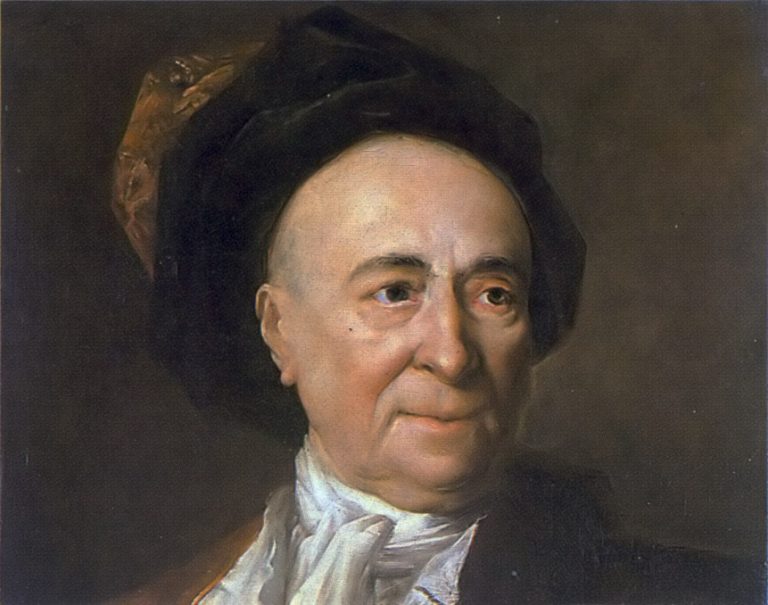


Vous devez être connecté pour poster un commentaire.