There are two words in Hebrew for the idea of filiation : ben בן and bar בר.
These two words mean « son », but with very different shades of nuances, due to their respective roots. Their etymologies open surprising perspectives…
The word ben comes from the verb banah בָּנָה, « to build, to construct, to found, to form », which connotes the idea of a progressive emergence, an edification, a construction, necessarily taking a certain amount of time.
The word bar comes from the verb bara‘ בָּרַא, « to create, to draw from nothing, to give birth » and in a second sense « to choose ». The idea of filiation is here associated with a timeless or instantaneous creation, that may be congruent with a divine origin. Thus the verb bara’ is used in the first verse of Genesis, Berechit bara’ Elohim . « In the beginning created God… ».
In a figurative sense, bar alsomeans « chosen, preferred », connotating choice, election or dilection.
What does the difference between ben and bar teach us?
There is a first level of reading: with bar, the idea of filiation begins with a ‘creation’, appearing from nothingness (bara’), but with ben, it rather implies a long work of ‘construction’, and ‘foundation’ (banah).
On the one hand, bar evokes the atemporality (or timelessness) of a transcendence (coming from nothingness), and by opposition, ben implies the necessary temporality of immanence.
In the biblical text, these words, (banah and bara’, ben and bar) so common, so familiar, are like two opposite doors, opening on very different paths.
Doors, or rather trapdoors, under which profound abysses are revealed.
Let’s start with creation. Berechit bara’.
The word bar has its own depth, its subtle ambiguities. Its primary meaning is ‘son‘, but it may mean son of man, son of Elohim, or son of the Gods.
« What! My son! What! Son of my guts! « (Prov. 31:2)
The Book of Daniel uses the expression בַר-אֱלָהִין , bar-elohim, literally« son of the Gods » (Dan 3:25). In this case, bar-elohim refers to an « angel ».
But bar seems to be able to also mean « Son of God ».The psalmist exclaims, « Worship the Lord with fear » (Ps 2:11), and immediately afterwards David cries out, « Nachku bar », « Kiss the Son » (Ps 2:12).
Who is this ‘Son’ (bar) to be kissed or embraced ? He indeed has a special status, since he is refered to by David, just after the name YHVH, and in the same elan of praise.
According to some, this ‘Son’ is to be understood as ‘the king’, and according to others, it refers to ‘purity’.
Why the ‘king’? Why ‘purity’?
Because bar comes from the verb bara’, one of whose original meanings is « to choose ». Bar also means ‘chosen, elected, preferred’.
In Psalm 2, the word bar may well mean the ‘Chosen One’, the ‘Anointed’ (mashiah, or ‘messiah’) of the Lord.
By derivation, bar also means ‘pure, serene, spotless’, as in bar-levav, ‘pure in heart’ (Ps. 24:4) or ‘the commandments of YHVH are pure (bara)’ (Ps. 19:9).
So, what does ‘nachqou bar’ really mean ? « Kiss the Son », « kiss the king », « kiss the Chosen One », « kiss the Anointed One », « kiss the Messiah », or even « embrace purity »?
Who will tell?
Let us note here that Christians could interpret this particular bar (in Ps 2:12)asa prefiguration of Christ (the name ‘Christ’ comes from the Greek christos which is the Greek translation of the Hebrew word mashiah, ‘anointed’).
As for ben, like I said, this noun derives from the verb banah, thatwe find used in various ways (to build, to form, to found):
« I built this house for you to live in. « (1 Kings 8:13)
« The Lord God formed a woman from the rib. « (Gen 2:22)
« By building your high places » (Ez 16:31).
« He founded Nineveh » (Gn 10:11).
Solomon played with the word and its ambivalence (to build/ a son), as he made his speech for the inauguration of the Temple. He recalled that it was indeed David’s idea to build (banah) a temple in honor of God, but that the Lord had said to him, « Yet it is not you who will build (tibneh) this temple, it is your son (bin or ben), he who is to be born of you, who will build (ibneh) this temple inmy honor. « (1 Kings 8:19)
Solomon was to be the son (ben) who would build (ibneh) the Temple.
Noah also built an altar (Gen 8:20). Here too, one can detect a play on words with even deeper implications than those associated with the construction of the Temple.
« What does ‘Noah built’ mean? In truth Noah is the righteous man. He ‘built an altar’, that’s the Shekhina. His edification (binyam) is a son (ben), who is the Central Column. » i
The interpretation is not obvious, but if one believes a good specialist, one can understand this:
« The Righteous One ‘builds’ the Shekhina because He connects it to the Central Column of the divine pleroma, the Sefira Tiferet, called ‘son’. This masculine sefira is the way by which the Shekhina receives the ontic influx that constitutes her being. »ii
The Kabbalah uses the image of the union of the masculine (the Central Column) and feminine (the Abode) to signify the role of the Just in the ‘construction’ of the Divine Presence (the Shekhina).
« The Righteous One is the equivalent of the sefira Yessod (the Foundation) represented by the male sexual organ. Acting as the ‘righteous’, the man assumes a function in sympathy with this divine emanation, which connects the male and female dimensions of the Sefirot, allowing him to ‘build’ the Shekhina identified at the altar. » iii
Ben. Son. Construction. Column. Male organ.
And from there, the possible theurgic action of the righteous man, ‘edifying’ the Shekhina.
We see that bar and ben offer two paths linking the divine and the human. One path (bar) is a descending one, that of choice, of election, of the Anointed One, of the Messiah.
The other path (ben) rises like a column in the temple, like a work of righteousness, erected upright, toward the Shekhina.
_____________
iZohar Hadach, Tiqounim Hadachim. Ed. Margaliot, Jerusalem, 1978, fol. 117C cited by Charles Mopsik. The great texts of the cabal. Verdier. Lagrasse 1993, p. 591
iiCharles Mopsik. The great texts of the cabal. Verdier. Lagrasse 1993, p. 591
iiiCharles Mopsik. The great texts of the cabal. Verdier. Lagrasse 1993, p. 593
The theurgic, creative power of men has always manifested itself through the ages.
Religious anthropology bears witness to this.
« No doubt, without the Gods, men could not live. But on the other hand, the Gods would die if they were not worshipped (…) What the worshipper really gives to his God is not the food he puts on the altar, nor the blood that flows from his veins: that is his thought. Between the deity and his worshippers there is an exchange of good offices which condition each other. »i
The Vedic sacrifice is one of the most ancient human rite from which derives the essence of Prajāpati, the supreme God, the Creator of the worlds.
« There are rites without gods, and there are rites from which gods derive ».ii
Unexpectingly, Charles Mopsik, in his study of the Jewish kabbalah, subtitled TheRites that Make God, affirms the « flagrant similarity » of these ancient theurgical beliefs with the Jewish motif of the creative power of the rite.
Mopsik readily admits that « the existence of a theme in Judaism, according to which man must ‘make God’, may seem incredible.»iii
Examples of Jewish kabbalistic theurgy abound, involving, for example, man’s ‘shaping’ of God, or his participation in the ‘creation’ of the Name or the Shabbath. Mopsik evokes a midrash quoted by R. Bahya ben Acher, according to which « the man who keeps the Shabbath from below, ‘it is as if he were doing it from above’, in other words ‘gave existence’, ‘fashioned the Sabbath from above. »iv
The expression ‘to make God’, which Charles Mopsik uses in the subtitle of his book, can be compared to the expression ‘to make the Shabbath’ (in the sense of ‘to create the Shabbath’) as it is curiously expressed in the Torah (« The sons of Israel will keep the Shabbath to make the Shabbath » (Ex 31,16)), as well as in the Clementine Homilies, aJudeo-Christian text that presents God as the Shabbath par excellencev, which implies that ‘to make the Shabbath’ is ‘to make God’…
Since its very ancient ‘magical’ origins, theurgy implies a direct relationship between ‘saying’ and ‘doing’ or ‘making’. The Kabbalah takes up this idea, and develops it:
« You must know that the commandment is a light, and he who does it below affirms (ma’amid) and does (‘osseh) that which isabove. Therefore, when man practices a commandment, that commandment is light.»vi
In this quotation, the word ‘light’ is to be understood as an allusive way of saying ‘God’, comments Mopsik, who adds: « Observances have a sui generis efficacy and shape the God of the man who puts them into practice.»
Many other rabbis, such as Moses de Leon (the author of the Zohar), Joseph Gikatila, Joseph of Hamadan, Méir ibn Gabbay, or Joseph Caro, affirm the power of « the theurgic instituting action » or « theo-poietic ».
The Zohar explains :
« ‘If you follow my ordinances, if you keep my commandments, when you do them, etc.' ». (Lev 26:3) What does ‘When you do them’ mean? Since the text already says, « If you follow and keep, » what is the meaning of « When you do them »? Verily, whoever does the commandments of the Torah and walks in its ways, so to speak, it is as if he makes Him on high (‘avyd leyh le’ila), the Holy One blessed be He who says, ‘It is as if he makes Me’ (‘assa-ny). In this connection Rabbi Simeon said, ‘David made the Name’. » vii
« David made the Name » ! This is yet another theurgical expression, and not the least, since the Name, the Holy Name, is in reality God Himself !
‘Making God’, ‘Making the Shabbath’, ‘Making the Name’, all these theurgic expressions are equivalent, and the authors of the Kabbalah adopt them alternately.
From a critical point of view, it remains to be seen whether the kabbalistic interpretations of these theurgies are in any case semantically and grammatically acceptable. It also remains to be ascertained whether they are not rather the result of deliberately tendentious readings, purposefully diverting the obvious meaning of the Texts. But even if this were precisely the case, there would still remain the stubborn, inescapable fact that the Jewish Kabbalists wanted to find the theurgic idea in the Torah .
Given the importance of what is at stake, it is worth delving deeper into the meaning of the expression « Making the Name », and the way in which the Kabbalists understood it, – and then commented on it again and again over the centuries …
The original occurrence of this particular expression is found in the second book of Samuel (II Sam 8,13). It is a particularly warlike verse, whose usual translation gives a factual, neutral interpretation, very far in truth from the theurgic interpretation:
« When he returned from defeating Syria, David again made a name for himself by defeating eighteen thousand men in the Valley of Salt. »
David « made a name for himself », i.e. a « reputation », a « glory », in the usual sense of the word שֵׁם, chem.
The massoretic text of this verse gives :
וַיַּעַשׂ דָּוִד, שֵׁם
Va ya’ass Daoud shem
« To make a name for oneself, a reputation » seems to be the correct translation, in the context of a warlord’s glorious victory. Biblical Hebrew dictionaries confirm that this meaning is widespread.
Yet this was not the interpretation chosen by the Kabbalists.
They prefer to read: « David made the Name« , i.e. « made God« , as Rabbi Simeon says, quoted by the Zohar.
In this context, Charles Mopsik proposes a perfectly extraordinary interpretation of the expression « making God ». This interpretation (taken from the Zohar) is that « to make God » is equivalent to the fact that God constitutes His divine fullness by conjugating (in the original sense of the word!) « His masculine and feminine dimensions ».
If we follow Mopsik, « making God » for the Zohar would be the equivalent of « making love » for both male and female parts of God?
More precisely, as we will see, it would be the idea of YHVH’s loving encounter with His alter ego, Adonaï?
A brilliant idea, – or an absolute scandal (from the point of view of Jewish ‘monotheism’)?
Here’s how Charles Mopsik puts it:
« The ‘Holy Name’ is defined as the close union of the two polar powers of the divine pleroma, masculine and feminine: the sefira Tiferet (Beauty) and the sefira Malkhut (Royalty), to which the words Law and Right refer (…) The theo-poietic action is accomplished through the unifying action of the practice of the commandments that cause the junction of the sefirot Tiferet and Malkhut, the Male and Female from Above. These are thus united ‘one to the other’, the ‘Holy Name’ which represents the integrity of the divine pleroma in its two great poles YHVH (the sefira Tiferet) and Adonay (the sefira Malkhut). For the Zohar, ‘To make God’ therefore means to constitute the divine fullness [or pleroma] by uniting its masculine and feminine dimensions. » viii
In another passage of the Zohar, it is the (loving) conjunction of God with the Shekhina, which is proposed as an equivalence or ‘explanation’ of the expressions « making God » or « making the Name »:
« Rabbi Judah reports a verse: ‘It is time to act for YHVH, they have violated the Torah’ (Ps.119,126). What does ‘the time to act for YHVH’ mean? (…) ‘Time’ refers to the Community of Israel (the Shekhinah), as it is said: ‘He does not enter the sanctuary at all times’ (Lev 16:2). Why [is it called] ‘time’? Because there is a ‘time’ and a moment for all things, to draw near, to be enlightened, to unite as it should be, as it is written: ‘And I pray to you, YHVH, the favourable time’ (Ps 69:14), ‘to act for YHVH’ [‘to make YHVH’] as it is written: ‘David made the Name’ (II Sam 8:13), for whoever devotes himself to the Torah, it is as if he were making and repairing the ‘Time’ [the Shekhinah], to join him to the Holy One blessed be He. » ix
After « making God », « making YHVH », « making the Name », here is another theurgical form: « making Time », that is to say « bringing together » the Holy One blessed be He and the Shekhina…
A midrach quoted by R. Abraham ben Ḥananel de Esquira teaches this word attributed to God Himself: « Whoever fulfills My commandments, I count him as if they had made Me. » x
Mopsik notes here that the meaning of the word ‘theurgy’ as ‘production of the divine’, as given for example in the Liturgy, may therefore mean ‘procreation’, as a model for all the works that are supposed to ‘make God’. xi
This idea is confirmed by the famous Rabbi Menahem Recanati: « The Name has commanded each one of us to write a book of the Torah for himself; the hidden secret is this: it is as if he is making the Name, blessed be He, and all the Torah is the names of the Saint, blessed be He. » xii
In another text, Rabbi Recanati brings together the two formulations ‘to make YHVH’ and ‘to make Me’: « Our masters have said, ‘Whoever does My commandments, I will count him worthy as if he were making Me,’ as it is written, ‘It is time to make YHVH’ (Ps 119:126)xiii.
One can see it, tirelessly, century after century, the rabbis report and repeat the same verse of the psalms, interpreted in a very specific way, relying blindly on its ‘authority’ to dare to formulate dizzying speculations… like the idea of the ‘procreation’ of the divinity, or of its ‘begetting’, in itself and by itself….
The kabbalistic image of ‘procreation’ is actually used by the Zohar to translate the relationship of the Shekhina with the divine pleroma:
« ‘Noah built an altar’ (Gen 8:20). What does ‘Noah built’ mean? In truth, Noah is the righteous man. He ‘built an altar’, that is the Shekhina. His edification (binyam) is a son (ben) who is the Central Column. » xiv
Mopsik specifies that the ‘righteous’ is « the equivalent of the sefira Yessod (the Foundation) represented by the male sexual organ. Acting as ‘righteous’, the man assumes a function in sympathy with that of this divine emanation, which connects the male and female dimensions of the sefirot, allowing him to ‘build’ the Shekhina identified at the altar. » xv
In this Genesis verse, we see that the Zohar reads the presence of the Shekhina, represented by the altar of sacrifice, and embodying the feminine part of the divine, and we see that the Zohar also reads the act of « edifying » her, symbolized by the Central Column, that is to say by the ‘Foundation’, or the Yessod, which in the Kabbalah has as its image the male sexual organ, and which thus incarnates the male part of the divine, and bears the name of ‘son’ [of God]…
How can we understand these allusive images? To say it without a veil, the kabbalah does not hesitate to represent here (in a cryptic way) a quasi-marital scene where God ‘gets closer’ to His Queen to love her…
And it is up to ‘Israel’ to ensure the smooth running of this loving encounter, as the following passage indicates:
» ‘They will make me a sanctuary and I will dwell among you’ (Ex 25:8) (…) The Holy One blessed be He asked Israel to bring the Queen called ‘Sanctuary’ to Him (…) For it is written: ‘You shall bring a fire (ichêh, a fire = ichah, a woman) to YHVH’ (Lev 23:8). Therefore it is written, ‘They will make me a sanctuary and I will dwell among you’. » xvi
Let’s take an interested look at the verse: « You will approach a fire from YHVH » (Lev 33:8).
The Hebrew text gives :
וְהִקְרַבְתֶּם אִשֶּׁה לַיהוָה
Ve-hiqravttêm ichêh la-YHVH
The word אִשֶּׁה , ichêh, means ‘fire’, but in a very slightly different vocalization, ichah, this same word means ‘woman’. As for the verb ‘to approach’, its root is קרב, qaraba, « to be near, to approach, to move towards » and in the hiphilform, « to present, to offer, to sacrifice ». Interestingly, and even disturbingly, the noun qorban, ‘sacrifice, oblation, gift’ that derives from it, is almost identical to the noun qerben which means ‘womb, entrails, breast’ (of the woman).
One could propose the following equations (or analogies), which the Hebrew language either shows or implies allusively:
Fire = Woman
Approaching = Sacrifice = Entrails (of the woman)
‘Approaching the altar’ = ‘Approaching a woman’ (Do we need to recall here that, in the Hebrew Bible, « to approach a woman » is a euphemism for « making love »?)
The imagination of the Kabbalists does not hesitate to evoke together (in an almost subliminal way) the ‘sacrifice’, the ‘entrails’, the ‘fire’ and the ‘woman’ and to bring them formally ‘closer’ to the Most Holy Name: YHVH.
It should be noted, however, that the Kabbalists’ audacity is only relative here, since the Song of Songs had, long before the Kabbalah, dared to take on even more burning images.
In the thinking of the Kabbalists, the expression « to make God » is understood as the result of a « union » of the masculine and feminine dimensions of the divine.
In this allegory, the sefira Yessod connects God and the Community of believers just as the male organ connects the male body to the female body. xvii
« ‘Time to make YHVH’ (Ps 119:126). Explanation: The Shekhinah called ‘Time’ is to be made by joining her to YHVH after she has been separated from Him because one has broken the rules and transgressed the Law. » xviii
For his part, Rabbi Joseph Caro (1488-1575) understood the same verse as follows: « To join the upper pleroma, masculine and divine, with the lower pleroma, feminine and archangelical, must be the aim of those who practice the commandments (…) The lower pleroma is the Shekhinah, also called the Community of Israel ». xix
It is a question of magnifying the role of the Community of Israel, or that of each individual believer, in the ‘divine work’, in its ‘reparation’, in its increase in ‘power’ or even in its ‘begetting’….
Rabbi Hayim Vital, a contemporary of Joseph Caro, comments on a verse from Isaiah and relates it to another verse from the Psalms in a way that has been judged « extravagant » by literalist exegetesxx.
Isaiah’s verse (Is 49:4) reads, according to R. Hayim Vital: « My work is my God », and he compares it with Psalm 68: « Give power to God » (Ps 68:35), of which he gives the following comment: « My work was my God Himself, God whom I worked, whom I made, whom I repaired ».
Note that this verse (Is 49:4) is usually translated as follows: « My reward is with my God » (ou-féoulati êt Adonaï).
Mopsik comments: « It is not ‘God’ who is the object of the believer’s work, or action, but ‘my God’, that God who is ‘mine’, with whom I have a personal relationship, and in whom I have faith, and who is ‘my’ work. »
And he concludes that this ‘God who is made’, who is ‘worked’, is in reality ‘the feminine aspect of the divinity’.
The Gaon Elijah of Vilna proposed yet another way of understanding and designating the two ‘masculine’ and ‘feminine’ aspects of the Deity, calling them respectively ‘expansive aspect’ and ‘receiving aspect’:
« The expansive aspect is called havayah (being) [i.e. HVYH, anagram of YHVH…], the receiving aspect of the glorification coming from us is called ‘His Name’. In the measure of Israel’s attachment to God, praising and glorifying Him, the Shekhinah receives the Good of the expanding aspect. (…) The Totality of the offices, praise and glorification, that is called Shekhinah, which is His Name. Indeed, ‘name’ means ‘public renown’ and ‘celebration’ of His Glory, the perception of His Greatness. (…) This is the secret of ‘YHVH is one, and His Name is one’ (Zac 14:9). YHVH is one’ refers to the expansion of His will. ‘His Name is one’ designates the receiving aspect of His praise and attachment. This is the unification of the recitation of the Shema.» xxi
According to the Gaon of Vilna, the feminine dimension of God, the Shekhina, is the passive dimension of the manifested God, a dimension that is nourished by the Totality of the praises and glorifications of the believers. The masculine dimension of God is Havayah, the Being.
Charles Mopsik’s presentation on the theurgical interpretations of the Jewish Kabbalah (‘Making God’) does not neglect to recognize that these interpretations are in fact part of a universal history of the religious fact, particularly rich in comparable experiences, especially in the diverse world of ‘paganism’. It is thus necessary to recognize the existence of « homologies that are difficult to dispute between the theurgic conceptions of Hellenized Egyptian hermeticism, late Greco-Roman Neoplatonism, Sufi theology, Neoplatonism and Jewish mystagogy. » xxii
Said in direct terms, this amounts to noting that since the dawn of time, there has been among all ‘pagan’ people this idea that the existence of God depends on men, at least to a certain degree.
It is also striking that ideas seemingly quite foreign to the Jewish religion, such as the idea of a Trinitarian conception of God (notoriously associated with Christianity) has in fact been enunciated in a similar way by some high-flying cabbalists.
Thus the famous Rabbi Moses Hayim Luzzatto had this formula surprisingly comparable (or if one prefers: ‘isomorphic’) to the Trinitarian formula:
« The Holy One, Blessed be He, the Torah and Israel are one. »
But it should also be recalled that this kind of « kabbalistic » conception has attracted virulent criticism within conservative Judaism, criticism which extends to the entire Jewish Kabbalah. Mopsik cites in this connection the outraged reactions of such personalities as Rabbi Elie del Medigo (c. 1460- 1493) or Rabbi Judah Arie of Modena (17th century), and those of equally critical contemporaries such as Gershom Scholem or Martin Buber…
We will not enter into this debate. We prefer here to try to perceive in the theurgic conceptions we have just outlined the clue of an anthropological constant, an archetype, a kind of universal intuition proper to the profound nature of the human spirit.
It is necessary to pay tribute to the revolutionary effort of the Kabbalists, who have shaken with all their might the narrow frames of old and fixed conceptions, in an attempt to answer ever-renewed questions about the essence of the relationship between divinity, the world and humanity, the theos, the cosmos and the anthropos.
This titanic intellectual effort of the Jewish Kabbalah is, moreover, comparable in intensity, it seems to me, to similar efforts made in other religions (such as those of a Thomas Aquinas within the framework of Christianity, around the same period, or those of the great Vedic thinkers, as witnessed by the profound Brahmanas, two millennia before our era).
From the powerful effort of the Kabbalah emerges a specifically Jewish idea of universal value:
« The revealed God is the result of the Law, rather than the origin of the Law. This God is not posed at the Beginning, but proceeds from an interaction between the superabundant flow emanating from the Infinite and the active presence of Man. » xxiii
In a very concise and perhaps more relevant way: « You can’t really know God without acting on Him, » also says Mopsik.
Unlike Gershom Scholem or Martin Buber, who have classified the Kabbalah as « magic » in order to disdain it at its core, Charles Mopsik clearly perceives that it is one of the signs of the infinite richness of human potential in its relationship with the divine. We must pay homage to him for his very broad anthropological vision of the phenomena linked to divine revelation, in all eras and throughout the world.
The spirit blows where it wants. Since the dawn of time, i.e. for tens of thousands of years (the caves of Lascaux or Chauvet bear witness to this), many human minds have tried to explore the unspeakable, without preconceived ideas, and against all a priori constraints.
Closer to us, in the 9th century AD, in Ireland, John Scot Erigenes wrote:
« Because in all that is, the divine nature appears, while by itself it is invisible, it is not incongruous to say that it is made. » xxiv
Two centuries later, the Sufi Ibn Arabi, born in Murcia, died in Damascus, cried out: « If He gave us life and existence through His being, I also give Him life, knowing Him in my heart.» xxv
Theurgy is a timeless idea, with unimaginable implications, and today, unfortunately, this profound idea seems almost incomprehensible in our almost completely de-divinized world.
___________________
iE. Durckheim. Elementary forms of religious life. PUF, 1990, p.494-495
iiE. Durckheim. Elementary forms of religious life. PUF, 1990, p. 49
iiiCharles Mopsik. The great texts of the cabal. The rites that make God. Ed. Verdier. Lagrasse, 1993, p.551
vClementine Homilies, cf. Homily XVII. Verdier 1991, p.324
viR. Ezra de Girona. Liqouté Chikhehah ou-féah. Ferrara, 1556, fol 17b-18a, cited in Charles Mopsik. The great texts of the cabal. The rites that make God. Ed. Verdier. Lagrasse, 1993, p.558
viiiCharles Mopsik. The great texts of the cabal. The rites that make God. Ed. Verdier. Lagrasse, 1993, p.561-563.
ixZohar, I, 116b, cited in Charles Mopsik. The great texts of the cabal. The rites which make God. Ed. Verdier. Lagrasse, 1993, p.568
xR. Abraham ben Ḥananel de Esquira. Sefer Yessod ‘Olam. Ms Moscow-Günzburg 607 Fol 69b, cited in Charles Mopsik. The great texts of the cabal. The rites that make God. Ed. Verdier. Lagrasse, 1993, p.589
xiSee Charles Mopsik. The great texts of the cabal. The rites that make God. Ed. Verdier. Lagrasse, 1993, p.591
xiiR. Menahem Recanati. Perouch ‘al ha-Torah. Jerusalem, 1971, fol 23b-c, quoted in Charles Mopsik. The great texts of the cabal. The rites which make God. Ed. Verdier. Lagrasse, 1993, p.591
xiiiR. Menahem Recanati. Sefer Ta’amé ha-Mitsvot. London 1962 p.47, cited in Charles Mopsik. The great texts of the cabal. The rites which make God. Ed. Verdier. Lagrasse, 1993, p.591
xivZohar Hadach, Tiqounim Hadachim. Ed. Margaliot. Jerusalem, 1978, fol 117c quoted in Charles Mopsik. The great texts of the cabal. The rites which make God. Ed. Verdier. Lagrasse, 1993, p.591
xvCharles Mopsik. The great texts of the cabal. The rites that make God. Ed. Verdier. Lagrasse, 1993, p.593
xviR. Joseph de Hamadan. Sefer Tashak. Ed J. Zwelling U.M.I. 1975, p.454-455, cited in Charles Mopsik. The great texts of the cabal. The rites which make God. Ed. Verdier. Lagrasse, 1993, p.593
xviiSee Charles Mopsik. The great texts of the cabal. The rites that make God. Ed. Verdier. Lagrasse, 1993, p. 604
xviiiR. Matthias Délacroute. Commentary on the Cha’aré Orah. Fol 19b note 3. Quoted in Charles Mopsik. The great texts of the cabal. The rites which make God. Ed. Verdier. Lagrasse, 1993, p. 604
xixCharles Mopsik. The great texts of the cabal. The rites that make God. Ed. Verdier. Lagrasse, 1993, p. 604
xxiGaon Elijah of Vilna. Liqouté ha-Gra. Tefilat Chaharit, Sidour ha-Gra, Jerusalem 1971 p.89, cited in Charles Mopsik. The great texts of the cabal. The rites which make God. Ed. Verdier. Lagrasse, 1993, p. 610
xxiiCharles Mopsik. The great texts of the cabal. The rites that make God. Ed. Verdier. Lagrasse, 1993, p. 630
xxiiiCharles Mopsik. The great texts of the cabal. The rites that make God. Ed. Verdier. Lagrasse, 1993, p. 639
xxivJean Scot Erigène. De Divisione Naturae. I,453-454B, quoted by Ch. Mopsik, Ibid. p.627
Words are devious. Language is treacherous, and grammars are vicious. Willingly ignorant of these deficiencies, men have been sailing for millennia in oceans of sentences, drifting above the depths of meanings, equipped with broken compasses, falsified sextants, under the fleeting stars.
How accurately, then, can men understand a « divine revelation » when it is made of « words », clothed in their unfathomable depths, their ambiguous abysses?
Error lurks for the wise. The study never ends. Who can pretend to grasp the ultimate meaning of any revelation?
Let us start with a single verse of the Psalms, which opened worlds of interpretation, during millenia.
« It is time to make YHVH » (Ps. 119:126).
« Making YHVH? » Really? Yes, this is the meaning that some Jewish Kabbalists, in Medieval Spain, decided was the true sense conveyed by Ps. 119:126.
Most versions of the Bible, today, give more ‘rational’ translations of Ps. 119:126, such as:
Why then, did some medieval rabbis, most of them Kabbalists, chose to deviate from the obvious, traditional meaning carried by the Massoretic text? Why did they dare to flirt with scandal? Were they not aware that they were shocking the Jewish faith, or even just simple common sense, by pretending to « make » YHVH?
Many centuries before the Jewish Kabbalists tried their wits on this particular verse, manuscripts (and interpretations) already differed greatly about its true meaning.
The obvious meaning was indeed: « It is time for God to act ».
Other interpretations prefered : « It is time to act for God », – i.e. men should finally do for God what they had to do.
Has the time come (for the LORD) to act, or has the time come (for men) to act for the LORD?
Forsaking these two possible (and indeed differing) readings, the Kabbalists in early medieval Spain chose yet another interpretation: « It is time [for men] to make God. » iii
Why this audacity, rubbing shoulders with blasphemy, shaving the abyss?
The Hebrew Bible, in the Massoretic version which was developed after the destruction of the Second Temple, and which therefore dates from the first centuries of our era, proposes the following text:
עֵת, לַעֲשׂוֹת לַיהוָה
‘èt la’assot la-YHVH
This can be translated as: « It is time to act for God », if one understands לַיהוָה = for YHVH
But the Kabbalists refused this reading. They seem not to have used the Massoretic text, but other, much older manuscripts which omit the preposition for (לַ).
The word ‘God’ (or more precisely יהוָה, ‘YHVH’) thus becomes the direct object complement of the verb ‘to do, to act’. Hence the translation : ‘It is time to make God’.
The Bible of the French Rabbinate follows the Massoretic version and translates :
« The time has come to act for the Lord ».
The Jerusalem Bible (Ed. Cerf, 1973) translates: « It is time to act, Yahweh ».
In this interpretation, the Psalmist seems to somehow admonish YHVH and gives Him a pressing request to « act ». The translators of the Jerusalem Bible note that the Massoretic text indicates « for Yahweh », which would imply that it is up to man to act for Him. But they do not retain this lesson, and they mention another handwritten (unspecified) source, which seems to have been adopted by S. Jerome, a source which differs from the Massoretic text by the elision of the preposition ל. Hence the adopted translation: « It is time to act, Yahweh », without the word for.
But, again, the lessons vary, depending on how you understand the grammatical role of the word ‘Yahweh’…
S. Jerome’s version (the Vulgate) gives :
Tempus is ut facias Domine.
The word ‘Lord’ is in the vocative (‘Domine!’): the Psalmist calls upon the Lord to ask Him to act. « It is time for You to act, Lord! »
However, in the text of the Clementine Vulgate, finalized in the 16th century by Pope Clement VIII, and which is the basis of the ‘New Vulgate’ (Nova Vulgata) available online on the Vatican website, it reads:
Tempus faciendi Domino
The word ‘Lord’ is in the dative (‘Domino’), and thus plays the role of a complement of attribution. « It is time to act for the Lord ».
The Septuagint (that is, the version of the Bible translated into Greek by seventy-two Jewish scholars gathered in Alexandria around 270 B.C.E.) proposes, for its part
καιρὸς τοῦ ποιῆσαι τῷ κυρίῳ-
Kairos tou poïêsai tô kyriô
Here too the word ‘Lord’ is in the dative, not in the vocative. « It is time to act for the Lord ».
This ancient lesson of the Septuagint (established well before the Massoretic text) does not, however, resolve a residual ambiguity.
One can indeed choose to emphasize the need to act, which is imparted to the Lord Himself:
« For the Lord, the time to act has come ».
But one can just as easily choose to emphasize the need for men to act for the Lord:
« The time has come to act for the Lord ».
In relation to these different nuances, what I’d like to emphasize here is the radically different understanding chosen by the Kabbalists in medieval Spain:
« It is time to make God ».
Rabbi Meir Ibn Gabbay wrote:
« He who fulfills all the commandments, his image and likeness are perfect, and he is like the High Man sitting on the Throne (Ez. 1:26), he is in his image, and the Shekhinah is established with him because he has made all his organs perfect: his body becomes a throne and a dwelling for the figure that corresponds to him. From there you will understand the secret of the verse: « It is time to make YHVH » (Ps. 119:126). You will also understand that the Torah has a living soul (…) It has matter and form, body and soul (…) And know that the soul of the Torah is the Shekhinah, the secret of the last he [ה ], the Torah is its garment (…) The Torah is therefore a body for the Shekhinah, and the Shekhinah is like a soul for her. » iv
Charles Mopsik notes that « this expression [« making God »], roughly stated, can surprise and even scandalize ».
At least, this is an opportunity to question the practices and conceptions of the Jewish Kabbalah in matters of ‘theurgy’.
The word ‘theurgy’ comes from the Latin theurgia, « theurgy, magic operation, evocation of spirits », itself borrowed by Augustine from the Greek θεουργία , « act of divine power », « miracle », « magic operation ». E. des Places defines theurgy as « a kind of binding action on the gods ». In Neoplatonism, « theurgy » means « the act of making God act in oneself », according to the Littré.
E. R. Dodds devotes an appendix of his work The Greeks and the Irrationalvto the theurgy, which he introduces as follows: « The theologoi ‘spoke of the gods’, but [the theourgos] ‘acted upon them’, or perhaps even ‘created them' », this last formula being an allusion to the formula of the famous Byzantine scholar Michel Psellus (11th century): « He who possesses the theurgic virtue is called ‘father of the gods’, because he transforms men into gods (theous all anthropous ergazetai). » vi
In this context, E.R. Dodd cites Jamblichus’ treatise De mysteriis, which he considers ‘irrational’ and a testimony to a ‘culture in decline’: « De mysteriis is a manifesto of irrationalism, an affirmation that the way to salvation is not in human reason but in ritual. It is not thought that links theurgists to the gods: what else would prevent philosophical theorists from enjoying the theurgical union? But this is not the case. Theurgic union is achieved only by the efficacy of ineffable acts performed in the proper way, acts that are beyond understanding, and by the power of ineffable symbols that are understood only by gods… without intellectual effort on our part, signs (sunthêmata) by their own virtue perform their own work’ (De myst. 96.13 Parthey). To the discouraged spirit of the pagans of the fourth century such a message brought seductive comfort. « vii
But the result of these attitudes, privileging ‘rite’ over ‘intellectual effort,’ was « a declining culture, and the slow thrust of that Christian athéotês whoall too obviously undermined the very life of Hellenism. Just as vulgar magic is commonly the last resort of the desperate individual, of those who have been lacking in both man and God, so theurgy became the refuge of a desperate ‘intelligentsia’ that already felt the fascination of the abyss. » viii
The modes of operation of the theurgy vary notoriously, covering a vast domain, from magical rites or divination rites to shamanic trances or phenomena of demonic or spiritual ‘possession’.
E.R. Dodds proposes to group them into two main types: those that depend on the use of symbols (symbola) or signs (sunthêmata), and those that require the use of a ‘medium’, in ecstasy. The first type was known as telestikê, and was mainly used for the consecration and animation of magical statues in order to obtain oracles. The making of magical statuettes of gods was not a ‘monopoly of theurgists’. It was based on an ancient and widespread belief of a universal sympatheiaix, linking the images to their original model. The original center of these practices was Egypt.
Dodds cites Hermes Trismegistus’ dialogue with Asclepius (or Aesculapius), which evokes « animated statues, full of meaning and spirit » (statuas animatas sensu et spiritu plenas), which can predict the future, inflict or cure diseases, and imprison the souls of deer or angels, all the theurgic actions summarized by Hermes Trismegistus’ formula: sic deorum fictor est homo, (« this is how man makes gods »)x.
« To make gods »: this expression was there to prefigure, with more than a thousand years of anteriority, the formula put forward later by R. Meir ibn Gabbay and other Kabbalists: « to make YHVH », – although undoubtedly with a different intention. We shall return to this.
In his book The City of God, S. Augustinexi had quoted large excerpts from this famous dialogue between Hermes Trismegistus and Asclepius, including these sentences:
« As the Lord and the Father, God in a word, is the author of the heavenly gods, so man is the author of those gods who reside in temples and delight in the neighborhood of mortals. Thus, humanity, faithful to the memory of its nature and origin, perseveres in this imitation of its divinity. The Father and the Lord made the eternal gods in his likeness, and humanity made its gods in the likeness of man. » xii
And Hermes added: « It is a marvel above all wonder and admiration that man could invent and create a divinity. The disbelief of our ancestors was lost in deep errors about the existence and condition of the gods, forsaking the worship and honors of the true God; thus they found the art of making gods. »
The anger of St. Augustine exploded at this very spot against Hermes. « I don’t know if the demons themselves would confess as much as this man! »
After a long deconstruction of the Hermetic discourse, Augustine concludes by quoting a definitive sentence of the prophet Jeremiah:
« Man makes himself gods (elohim)? No, of course, they are not gods (elohim)! » xiii
Attempting to combat the « sarcasm » of Christian criticism, Jamblichus strove to prove that « idols are divine and filled with the divine presence. « xiv
This art of making divine statues had to survive the end of the « dying pagan world » and find its way into « the repertoire of medieval magicians, » Dodds notesxv.
One could add, without seeing any malice in it, that the idea was also taken up by the Spanish Jewish cabal in the Middle Ages, and later still, by the rabbis who made Golem, such as the Maharal of Prague, nicknamed Yehudah-Leib, or Rabbi Loew…
This is at least the suggestion proposed by E.R. Dodds: « Did the theurgical telestikê suggest to medieval alchemists their attempts to create artificial human beings (« homunculi« )? (…) Curious clues to some historical relationship have recently been put forward by Paul Kraus. (…) He points out that the vast alchemical corpus attributed to Jâbir b. Hayyan (Gebir) not only alludes to Porphyry’s (apocryphal?) Book of the Generation, but also uses neo-Platonic speculations about images. » xvi
The other operational mode of theurgy is trance or mediumnic possession, of which Dodds notes « the obvious analogy with modern spiritism. xvii
I don’t know if the « modern spiritism » that Dodds spoke of in the 1950s is not a little outdated today, but it is certain that the rites of trance and possession, whether they are practiced in Morocco (the Gnaouas), Haiti (Voodoo), Nepal, Mongolia, Mexico, and everywhere else in the world, are still worth studying. One can consult in this respect the beautiful study of Bertrand Hell, Possession and Shamanismxviii, whose cover page quotes the superb answer of the Great Mughal Khan Güyük to Pope Innocent IV in 1246: « For if man is not himself the strength of God, what could he do in this world? »
Many are the skeptics, who doubt the very reality of the trance. The famous Sufi philosopher al-Ghazali, in his 12th century Book of the Proper Use of Hearing and Ecstasy, admits the possibility of « feigned » ecstasy, but he adds that deliberately provoking one’s « rapture » when participating in a cult of possession (dikhr) can nevertheless lead the initiate to a true encounter with the divine. xix
Bertrand Hell argues that simulations and deceptions about ecstasy can open up a fertile field of reflection, as evidenced by the concepts of « para-sincerity » (Jean Poirier), « lived theater » (Michel Leiris) or « true hallucination » (Jean Duvignaud). xx
In the definitions and examples of theurgies we have just gone through, it is a question of « making the divinity act » in itself, or « acting » on the divinity, and much more exceptionally of « creating » it. The only examples of a theurgy that « creates gods » are those evoked by Hermes Trismegistus, who speaks of man as the « maker of gods » (fictor deorum), and by Michel Psellus, with the somewhat allegorical sense of a theurgy that exercises itself on men to « transform them into gods ».
This is why Charles Mopsik’s project to study the notion of theurgy as it was developed in the Jewish cabal has a particularly original character. In this case, in fact, theurgy does not only mean « to make the god act upon man », or « to act upon the god » or « to make man divine », but it takes on the much more absolute, much more radical, and almost blasphemous meaning, particularly from a Jewish point of view, of « creating God », of « making God »xxi.
There is a definite semantic and symbolic leap here. Mopsik does not hesitate to propose this leap in the understanding of theurgy, because it was precisely the radical choice of the Spanish Jewish Kabbalah, for several centuries…
___________________
iAccording to the Masoretic Text and the JPS 1917 Edition.
iiiCf. the long and learned study devoted to this last interpretation by Charles Mopsik. The great texts of the cabal. The rites that make God. Ed. Verdier. Lagrasse, 1993
ivR. Méir Ibn Gabbay. Derekh Emounah. Jerusalem, 1967, p.30-31, cited in Charles Mopsik. The great texts of the cabal. The rites that make God. Ed. Verdier. Lagrasse, 1993, p. 371-372.
vE.R. Dodds. The Greeks and the irrational. Flammarion, 1977, p.279-299
viMichel Psellus. Greek patrology. 122, 721D, « Theurgicam virtutem qui habet pater divinus appellatur, quoniam enim ex hominibus facit deos, illo venit nomine. »
viiE.R. Dodds. The Greeks and the irrational. Flammarion, 1977, p.284.
viiiE.R. Dodds. The Greeks and the irrational. Flammarion, 1977, p.284.
ixE.R. Dodds. The Greeks and the irrational. Flammarion, 1977, p.289
xAsclepius III, 24a, 37a-38a. Corpus Hermeticum. Trad. A.J. Festugière. t. II. Les Belles Lettres. Paris, 1973, p.349, quoted by E.R. Dodds. The Greeks and the irrational. Flammarion, 1977, p.291.
The Jews, fierce defenders of the monotheistic idea, are also the faithful guardians of texts in which appear, on several occasions, what could be called ‘verbal trinities’, or ‘triple names’ of God, such as: « YHVH Elohenou YHVH » (Deut 6:4), « Ehyeh Asher Ehyeh » (Ex 3:14), or « Kadosh Kadosh Kadosh « , expressed as a triple attribute of YHVH (Is 6:3).
The Zohar commented upon the first of these three-part names, « YHVH Elohenou YHVH », making a link with the « divine secret » embedded in the first sentence of the Torah: « Until now, this has been the secret of ‘YHVH Elohim YHVH’. These three names correspond to the divine secret contained in the verse ‘In the beginning created Elohim’. Thus, the expression ‘In the beginning’ is an ancient secret, namely: Wisdom (Hokhmah) is called ‘Beginning’. The word ‘created’ also alludes to a hidden secret, from which everything develops. » (Zohar 1:15b).
One could conclude that the One God does not therefore exclude a ‘Trinitarian’ phenomenology of His essential nature, which may be expressed in the words that designate Him, or in the names by which He calls Himself….
Among the strangest ‘triplets’ of divine names that the One God uses to name Himself is the expression, « I, I, Him », first mentioned by Moses (Deut 32:39), then repeated several times by Isaiah (Is 43:10; Is 43:25; Is 51:12; Is 52:6).
In Hebrew: אֲנִי אֲנִי הוּא ani ani hu’, « I, I, Him ».
These three pronouns are preceded by an invitation from God to ‘see’ who He is:
רְאוּ עַתָּה, כִּי אֲנִי הוּא
reou ‘attah, ki ani ani hu’.
Literally: « See now that: I, I, Him ».
This sentence is immediately followed by a reaffirmation of God’s singularity:
וְאֵין אֱלֹהִים, עִמָּדִי
v’éin elohim ‘imadi
« And there is no god (elohim) with Me ».
Throughout history, translators have endeavored to interpret this succession of three personal pronouns with various solutions.
The Septuagint chose to translate (in Greek) this triplet as a simple affirmation by God of his existence (ego eimi, « I am »), and transformed the original doubling of the personal pronoun in the first person singular (ani ani, « I I ») into a repetition of the initial imperative of the verb ‘to see’, which is used only once in the original text:
ἴδετε ἴδετε ὅτι ἐγώ εἰμι
idete, idete, oti ego eimi
« See, see, that I am ».
On the other hand, the third person singular pronoun disappears from the Greek translation.
The second part of the verse gives :
καὶ οὐκ ἔστιν θεὸς πλὴν ἐμοῦ-
kai ouk estin theos plén emou.
« and there is no God but Me. »
In the translation of the French Rabbinate adapted to Rashi’s commentary, one reads:
« See now, it is Me, I, I am Him, no god beside Me! »
We see that « ani ani hu’ » is translated as « It is Me, I, I am Him ».
Rashi comments on this verse as follows:
« SEE NOW. Understand by the chastisement with which I have struck you and no one could save you, and by the salvation I will grant you and no one can stop Me. – IT IS ME, I, I AM HIM. I to lower and I to raise. – NO GOD, BESIDE ME. Rises up against Me to oppose Me. עִמָּדִי: My equal, My fellow man. » i
Let’s try to comment on Rashi’s comment.
Rashi sees two « I’s » in God, an « I » that lowers and an « I » that raises.
The ‘I’ that lowers seems to be found in the statement ‘It is Me’.
The ‘I’ that raises is the ‘I’ as understood in the formula ‘I am Him’.
Rashi distinguishes between a first ani, who is the ‘I’ who lowers and punishes, and a second ani who is an ‘I’ who ‘raises’ and who is also a hu’, a ‘Him’, that is to say an ‘Other’ than ‘I’.
We infer that Rashi clearly supports the idea that there are two « I’s » in God, one of which is also a « Him », or that there are two « I’s » and one « Him » in Him…
As for the formula v’éin elohim ‘imadi (‘no god beside Me’, or ‘no god with Me’), Rashi understands it as meaning : ‘no god [who is my equal] is against me’.
Let us note that Rashi’s interpretation does not exclude a priori that God has an equal or similar God ‘with him’ or ‘beside him’, but that it only means that God does not have a God [similar or equal] ‘against him’.
In the translation of the so-called « Rabbinate Bible » (1899), the three pronouns are rendered in such a way as to affirm the emphasis on God’s solitary existence:
« Recognize now that I am God, I alone, and there is no God (Elohim) beside me! » ii
In this translation, note that the personal pronoun in the 3rd person singular (hu’) has completely disappeared. There is, however, a repeated affirmation of God’s ‘loneliness’ (‘I alone’, and ‘no God beside me’).
This translation by the French Rabbinate raises several questions.
Why has the expression ani hu’, « I Him », been translated by a periphrase (« it is I who am God, I alone »), introducing the words « God », « am » and « alone », not present in the original, while obliterating the pronoun hu’, « He »?
On the other hand, there is the question of the meaning of the 2nd part of the verse: if there is « no Elohim » beside God, then how to interpret the numerous biblical verses which precisely associate, side by side, YHVH and Elohim?
How can we understand, for example, the fact that in the second chapter of Genesis we find the expression יְהוָה אֱלֹהִים , YHVH Elohim, onnumerous occasions, if, as Deuteronomy states, that there is no Elohim « beside » YHVH?
Some elements of clarity may be gained from Isaiah’s use of the same curious expression.
Is 43,10 : כִּי-אֲנִי הוּא ki ani hu’, ‘that I Him’
Is 43, 11: אָנֹכִי אָנֹכִי, יְהוָה anokhi anokhi YHVH, ‘I, I, YHVH’
Is 43, 25: אָנֹכִי אָנֹכִי הוּא anokhi anokhi hu’, ‘I, I, Him’
Is 51,12 : אָנֹכִי אָנֹכִי הוּא anokhi anokhi hu‘, ‘I, I, Him’
Is 52,6 : כִּי-אֲנִי-הוּא הַמְדַבֵּר הִנֵּנִי ki ani hu’ hamdaber hinnéni, ‘that I, He, I speak, there’, sometimes translated as ‘that I who speak, I am there’.
In the light of these various verses, the personal pronoun hu’, ‘He’ can be interpreted as playing the role of a relative pronoun, ‘Him’.
But why should this personal pronoun in the 3rd person singular, hu’, « He », this pronoun which God calls Himself, somehow descend from a grammatical level, and become a relative pronoun, simply to comply with the requirement of grammatical clarity ?
In this context, it is necessary to preserve the difficulty and face it head on.
God, through the voice of Moses and Isaiah, calls Himself « I I He ».
What lesson can we get out of it?
First we can see the idea that God carries within His intrinsic unity a kind of hidden Trinity, here translated grammatically by a double « I » followed by a « He ».
Another interpretation, could be to read ‘I I He’ as the equivalent of the Trinity ‘Father Son Spirit’.
One could also understand, considering that the verb tobe is implicitly contained in the personal pronouns ani and hu’, inaccordance with Hebrew grammar: « I, [I am] an ‘I’ [who is] a ‘Him’ « .
In this reading, God defines Himself as an I whose essence is to be an Other I, or an Him.
As confirmed by His name revealed to Moses « Ehyeh Asher Ehyeh » (Ex 3:14), God is an I that is always in the process of becoming, according to the grammatical use of the imperfect in Ehyeh, ‘I will be’.
One learns from that that God is always in potentia. He always is the One who will be Other than who He is.
Never static. Always alive and becoming. The One who is the Other.
I know : that sounds pretty unacceptable for the general theological opinion.
But grammatically, this interpretation stands up.
More importantly, it is faithful to the letter of the Torah.
__________________
iThe Pentateuch, accompanied by Rachi’s commentary. Volume V. Deuteronomy. Translated by Joseph Bloch, Israël Salzer, Elie Munk, Ernest Gugenheim. Ed. S. and O. Foundation. Lévy. Paris, 1991, p. 227
Two years before his own death, C.G. Jung evoked as a strong possibility the prospect of the « definitive destruction » of the « Christian myth ».
However, psychology could still help « saving » this myth. Through a better understanding of mythology and its role in intrapsychic processes, « it would be possible to arrive at a new understanding of the Christian myth, and especially of its apparently shocking and unreasonable statements. If the Christian myth is not finally to become obsolete, which would mean a liquidation of unpredictable scope, the idea of a more psychologically oriented interpretation is necessary to save the meaning and content of the myth. The danger of definitive destruction is considerable. » i
Christianity, from the beginning, had already been considered « scandal for the Jews and folly for the Greeks »ii. Now, it had even become « shocking » and « unreasonable » for the Swiss and « obsolete » for psychologists.
The fall in religious vocations, the desertion of the faithful and the decline of the denarius were already beginning to be felt at the end of the 1950s of the last century. All this seemed to give some consistency to these Jungian prophecies of the « destruction » and « liquidation » of the « Christian myth » as a logical consequence of its supposed « obsolescence ».
The movement of disaffection with Christianity has not stopped growing over the last six decades, one might add, at least if we look at the indicators already mentioned.
Is the « Christian myth », to use Jung’s expression, now dying, or even « dead »?
And if so, can it still be « resurrected »?
And if it could indeed be resurrected, in what form, and for what purpose?
Like a Saint George slaying the dragon of obsolescence, an obsolescence less flamboyant than sneaky, silent, but swallowing credence, Jung brandishes in his time the victorious spear of psychology, the only one capable, according to him, of reviving the Christian myth.
To understand Jung’s idea of the assimilation of Christianity to a « myth » – and to a myth in the process of becoming obsolete, one must return to what underlies his entire understanding of the world, the existence of the unconscious, and the « creative » character of the psyche.
For Jung, any « representation » is necessarily « psychic ». « When we declare that something exists, it is because we necessarily have a representation of it (…) and ‘representation’ is a psychic act. Nowadays, however, ‘only psychic’ simply means ‘nothing’. Apart from psychology, only contemporary physics has had to recognize that no science can be practiced without the psyche. » iii
This last assertion seems to allude to the opinion of the Copenhagen Schooliv, hard fought by Einstein et al., but an opinion to which the latest conceptual and experimental developments seem to be giving reason today.
Despite such assurances, at the highest theoretical and experimental level of contemporary science, and despite the flattering successes of analytical psychology, C.G. Jung, while at the peak of his brilliant career, seemed bitter about having to fight again and again against the outdated cliché (typical of modern times) that « only psychic » means « nothing ».
No doubt cruelly wounded in the depths of his soul, C.G. Jung may have wanted to take a terrible revenge, by showing that this « nothing » can still, and in a short time, put down one of the most important foundations of European, and even world civilization…
The unconscious exists, it is a certainty for Jung, and for many people. But few have understood the immense power, almost divine, or even divine at all, of this entity.
« No one has noticed, » explains Jung, « that without a reflexive psyche, there is virtually no world, that therefore consciousness represents a second creator, and that cosmogonic myths do not describe the absolute beginning of the world, but rather the birth of consciousness as a second creator ». v
Before Jung: In the beginning God created the earth, etc.
After Jung: The Unconscious Mind created the idea that « God created the earth etc. ».
Myths correspond to psychic developments. They can grow and die, just like the latter. « The archetypes all have a life of their own that unfolds according to a biological model. » vi
This metaphor of the « biological model » must be taken literally, including birth, maturity and death.
« A myth is still a myth, even if some consider it to be the literal revelation of an eternal truth; but it is doomed to death if the living truth it contains ceases to be an object of faith. It is necessary, therefore, to renew one’s life from time to time through reinterpretation. Today Christianity is weakened by the distance that separates it from the spirit of the times, which is changing (…). It needs to re-establish the union or relationship with the atomic age, which represents an unprecedented novelty in history. The myth needs to be told anew in a new spiritual language ». vii
All the nuances of the biological model can be subsumed under a much broader concept of life, a much more global power of meaning, including in particular the idea of resurrection (– an idea, it will be recalled, « scandalous », « crazy » and « shocking »).
If we apply the idea of resurrection in particular to the Christian myth itself, it is possible that the latter in fact escapes its natural, « biological » destiny and its inevitable death, provided that it is subjected to a total « renovation », to an unprecedented reinterpretation, a sine qua non condition for its « resurrection« .
The idea of the « resurrection » of a myth incarnated by a dead Savior, and whose apostles based their faith on the certainty of his own resurrection (as Paul reminds us), is not lacking in salt.
But in order to taste this salt, it would be necessary to be able to reinterpret the resurrection of Christ under the species of a new « resurrection », which is more in accordance with the spirit of the (atomic) time.
The idea of an ‘atomic’ zeitgeist was probably obvious to a psychologist living in the 1950s, after Hiroshima, Nagasaki, and the rise of nuclear winter threats made tangible by Cold War arsenals.
Nowadays, the ‘spirit of the time’ of our time is a little less ‘atomic’, it seems, and more ‘climatic’ or ‘planetary’. It is inclined to let itself be influenced by new global threats, those towards which global warming and the foreseeable extinction of entire sections of the biosphere are pointing.
In this new context, what does it mean to « renovate » or « resurrect » the Christian myth of the « resurrection » (as distinct, for example, from the myths of the resurrection of Osiris or Dionysus)?
A first response would be to apply it (quite literally) to the putative resurrection of the millions of animal and plant species now extinct.
But would the idea of an « ecological » Christianity, relying for its own rebirth on the effective resurrection of billions of insects or amphibians, be enough to bring the faithful back to the parishes and to resurrect vocations?
This is doubtful.
It is not that we should not strive to bring back to life the dead species, if this is still humanly (or divinely?) possible. The modern myth that is being constituted before our eyes lets us imagine that one day a few traces of DNA will be enough to recreate disappeared worlds.
Such a re-creation by a few future learned priests, packed into their white coats and their spiritual laboratories, would then in itself be a kind of miracle, capable of melting the hardest, most closed hearts.
But one can also assume that this would still be insufficient to extricate the « Christian myth » from its spiral of obsolescence, in which accumulated millennia seem to lock it up.
But what? Will the resurrection of an immense quantity of fauna and flora, abolished from the surface of the globe, not be like a sort of living symbol of the resurrection of a Savior who died two thousand years ago?
Wouldn’t that be enough to announce to the world, urbi et orbi, that the very idea of resurrection is not dead, but alive again?
No, that would not be enough, one must argue with regret.
How can the resurrection of only half of the Earth’s biodiversity be weighed against the resurrection of the one universal Messiah?
The bids are going up, we can see it.
If Jung is right, the majority of humanity can no longer believe in the very myth of salvation and resurrection (as embodied by Christ in history two thousand years ago).
Why is that? Because this Messiah seems too dated, too local, too Galilean, too Nazarene even.
The story of that Messiah no longer lives on as before.
Why is that? The spirit of the times « has changed ».
And it is not the tales of the agony of the world’s fauna and flora, however moving they may be, that will be able to « convert » minds deprived of any cosmic perspective, and even more so of eschatological vision, to the call of a « renewed » Christian myth.
In the best of cases, the rescue and (momentary?) resurrection of half or even nine-tenths of the Anthropocene could never be more than a short beep on the radar of the long times.
We no longer live in Roman Judea. To be audible today, it would take a little more than the multiplication of a few loaves of bread, the walking on still waters or the resurrection of two or three comatose people; it would even take much more than the resurrection (adapted to the spirit of the time) of a Son of Man, a Son of God, both descended into Hell and ascended into Heaven.
After Season 1, which apparently ended with a sharply declining audience, Christianity’s Season 2, if it is to attract a resolutely planetary audience, must start again on a basis that is surprising for the imagination and fascinating for the intellect.
Reason and faith must be truly overwhelmed, seized, petrified with stupor, and then transported with « enthusiasm » by the new perspectives that want to open up, that must open up.
So one has to change words, worlds, times and perspectives.
The little Galilea must now compete with nebulous Galaxies.
The resurrected Carpenter must square black holes, plane universal constants and sweep away dark energy, like a simple cosmic sawdust.
The once dead Messiah must now truly live again before us, and at once tear all the veils, – the veils of all Temples, of all Ages, of all spirits, in all times, whether in the depths of galactic superclusters, or in the heart of quarks.
Quite an extensive program. But not unfeasable.
_______________________
iLetter from C.G. Jung to Pastor Tanner Kronbühl (February 12, 1959). In C.G. Jung. The Divine in Man. 1999. p.136
« The Lord sent death upon Jacob and it came upon Israel. » (Isaiah 9:7)
Death, really? Upon Jacob? And upon Israel? Sent by the Lord Himself ?
The word « death » is in fact used in this verse in the famous translation of the Septuagint, made around 270 B.C. by seventy Jewish scholars in Alexandria at the request of Ptolemy II. The Septuagint (noted LXX) uses the Greek word θάνατον, thanaton, which means « death ».
But in other translations, disregarding this catastrophic lesson of the LXX, Isaiah’s verse is translated much more neutrally as « word ».i
The Jerusalem Bible gives thus: « The Lord hath cast a word into Jacob, it is fallen upon Israel. »
In the original version, Hebrew uses the word דָּבָר , davar, whose primary meaning is « word ».
The dictionary also tells that this same word, דָּבָר , davar, can mean « plague » or « death », as in Exodus 9:3: « A very strong plague » or « a very deadly plague ». Here, the LXX gives θάνατος μέγας, « a great death ». In Hosea 13:14 the word davar means « plagues ».
If the noun דָּבָר , davar, carries this astonishing duality of meaning, the verb דָּבַר , davara, confirms it by adding a nuance of excess. Davara means « to speak, to say; to speak evil, to speak against », but also « to destroy, to exterminate ».
It seems that in Hebrew the sphere of meanings attached to davar and davara is not only potentially full of threats or (verbal) aggression, as in Numbers 12:1 (« Miriam and Aaron spoke against Moses ») or in Ps 78:19 (« They spoke against God »), but also full of potential, fatal and deadly action, as in II Chr 22:10 (« She wiped out the whole royal race ») or in Ps 2:5 (« In his wrath he will destroy their mighty ones »).
Davar. Word. Plague. Death.
Davara. To speak. To exterminate.
Such ambivalence, so radical, implies that one can really decide on the meaning, – « word » or « extermination » ? – only by analyzing the broader context in which the word is used.
For example, in the case of Isaiah’s verse: « The Lord sent death upon Jacob and it came upon Israel », it is important to emphasize that the prophet continues to make terrible predictions, even darker:
« The Lord will raise up against them the enemies of Rezin. And he will arm their enemies. Aram on the east, the Philistines on the west, and they will devour Israel with full mouths » (Isaiah 9:10-11).
« So YHVH cut off from Israel head and tail, palm and rush, in one day » (Isaiah 9:13).
« By the wrath of YHVH Sabaoth the earth has been burned and the people are like the prey of fire » (Isaiah 9:18).
The context here clearly gives weight to an interpretation of davar as « death » and « extermination » and not simply as « word ».
The lesson in LXX appears to be correct and faithful to the intended meaning.
Another question then arises.
Is this use of the word davar in Isaiah unique in its kind?
Another prophet, Ezekiel, also reported terrible threats from God against Israel.
« I will make you a desolation, a derision among the nations that are round about you, in the sight of all who pass by » (Ez 5:14).
« I will act in you as I have never acted before and as I will never act again, because of all your abominations » (Ez 5:9).
« You shall be a mockery and a reproach, an example and a stupefaction to the nations around you, when I shall do justice from you in anger and wrath, with furious punishments. I, YHVH, have said » (Ez 5:15).
« And I will put the dead bodies of the Israelites before their filthiness, and I will scatter their bones around your altars. Wherever you dwell, the cities shall be destroyed and the high places laid waste » (Ez 6:5).
We find in Ezekiel the word davar used in the sense of « plague » or « pestilence »:
« Thus says the Lord YHVH: Clap your hands, clap your feet and say, ‘Alas,’ over all the abominations of the house of Israel, which will fall by the sword, by famine and by pestilence (davar). He who is far away will die by the pestilence (davar). He who is near shall fall by the sword. That which has been preserved and spared will starve, for I will quench my fury against them » (Ez 6:11-12).
God is not joking. Davar is not « only » a plague. It is the prospect of an extermination, an annihilation, the final end.
« Thus says the Lord YHVH to the land of Israel: Finished! The end is coming on the four corners of the land. It is now the end for you. I will let go of my anger against you to judge you according to your conduct. (…) Thus says the Lord YHVH: Behold, evil is coming, one evil. The end is coming, the end is coming, it is awakening towards you, and behold, it is coming » (Ez 7:2-5).
Faced with this accumulation of threats of exterminating the people of Israel uttered by the Lord YHVH, an even deeper question arises.
Why does a God who created the worlds, and who has « chosen » Israel, decide to send « death », threatening to ensure the « end » of His Chosen People?
There is a question of simple logic that arises.
Why does an omnipotent and all-knowing God create a world and people that seem, in retrospect, so evil, so perverse, so corrupt, that He decides to send a word of extermination?
If God is omniscient, He should always have known that His creation would eventually provoke His unquenchable fury, shouldn’t he?
If He is omnipotent, why did He not immediately make Israel a people sufficiently satisfying in His eyes to at least avoid the pain of having to send death and extermination a few centuries later?
This is in fact a question that goes beyond the question of the relationship between God and Israel, but touches on the larger problem of the relationship between God and His Creation.
Why is a « Creator »-God also led to become, afterwards, an « Exterminator »-God ?
Why can the « Word » of God mean « Creation », then also mean « Extermination »?
There are only two possible answers.
Either God is indeed omniscient and omnipotent, and then He is necessarily also cruel and perverse, as revealed by His intention to exterminate a people He has (knowingly) created « evil » and « corrupt » so that He can then « exterminate » them.
Either God is not omniscient and He is not omnipotent. But how come ? A possible interpretation is that He renounced, in creating the world, a part of His omniscience and omnipotence. He made a kind of « sacrifice », the sacrifice of His omnipotence and omniscience.
He made this sacrifice in order to raise His creatures to His own level, giving them real freedom, a freedom that in some strange way escapes divine « science » and « knowledge ».
Let us note that this sort of sacrifice was already a deep intuition of the Veda, as represented by the initial, primal, sacrifice of Prajāpati, the supreme God, the Lord of Creatures.
But why does a supreme God, the Creator of the Worlds, decide to sacrifice His omnipotence and omniscience for creatures who, as we can see, end up behaving in such a way that this supreme God, having somehow fallen back to earth, must resolve to send them « death » and promise them the « end »?
There is only one explanation, in my humble opinion.
It is that the Whole [i.e. God + Cosmos + Humanity] is in a mysterious way, more profound, more abysmal, and in a sense infinitely more « divine » than the divinity of a God alone, a God without Cosmos and without Anthropos.
Only the sacrifice of God, the sacrifice of God as not being anymore the sole « Being », in spite of all the risks abundantly described by Isaiah or Ezekiel, makes possible an « increase » of His own divinity, which He will then share with His Creation, and Humankind.
This is a fascinating line of research. It implies that Humanity has a shared but also « divine » responsibility about the future of the world, and to begin with, about the future of this small planet.
________________
iThis debate over the meaning to be given to davar in this particular verse has been the subject of many commentaries. Théodoret de Cyr notes: « It should be noted that the other interpreters have said that it is a « word » and not « death » that has been sent. Nevertheless, their interpretation does not offer any disagreement: they gave the name of « word » to the decision to punish. « Basil adopts λόγον (« word »), and proposes another interpretation than Theodoret: it would be the Divine Word sent to the poorest, symbolized by Jacob. Cyril also gives λόγον, but ends up with the same conculsion as Theodoret: the « word » as the announcement of punishment. See Theodoret of Cyr, Commentaries on Isaiah. Translated by Jean-Noël Guinot. Ed. Cerf. 1982, p.13
Although they belong to very distant planets, Paul Valéry and Franz Kafka have at least one thing in common. Both had the honor of a celebration of their respective birthday and anniversary by Walter Benjamini .
Why did Benjamin want to give to such different writers such a symbolic tribute?
He was sensitive, I believe, to the fact that they both sought to formulate a kind of a « negative theology » in their work.
For Valéry, this negative theology is embodied in the figure of Monsieur Teste.
Benjamin explains: « Mr. Teste is a personification of the intellect that reminds us a lot of the God that Nicholas of Cusa’s negative theology deals with. All that one can suppose to know about Teste leads to negation. » ii
Kafka, for his part, « has not always escaped the temptations of mysticism »iii according to Benjamin, who quotes Soma Morgenstern on this subject: « There reigns in Kafka, as in all founders of religion, a village atmosphere»iv.
Strange and deliberately provocative sentence, which Benjamin immediately rejects after quoting it: « Kafka also wrote parables, but he was not a founder of religion.» v
Kafka indeed was not a Moses or a Jesus.
But was he at least a little bit of a prophet, or could he pass for the gyrovague apostle of an obscure religion, working modern souls in the depths?
Can we follow Willy Haas who decided to read Kafka’s entire work through a theological prism? « In his great novel TheCastle, Kafka represented the higher power, the reign of grace; in his no less great novel TheTrial, he represented the lower power, the reign of judgment and damnation. In a third novel, America, he tried to represent, according to a strict equalization, the earth between these two powers … earthly destiny and its difficult demands.»vi
Kafka, painter of the three worlds, the upper, the lower and the in-between?
W. Haas’ opinion also seems « untenable » in Benjamin’s eyes. He is irritated when Haas specifies: « Kafka proceeds […] from Kierkegaard as well as from Pascal, one can well call him the only legitimate descendant of these two thinkers. We find in all three of them the same basic religious theme, cruel and inflexible: man is always wrong before God.»vii
Kafka, – a Judeo-Jansenist thinker?
« No » said Benjamin, the wrathful guardian of the Kafkaesque Temple. But he does not specify how Haas’s interpretation would be at fault.
Could it be that man is always wrong, but not necessarily « before God »? Then in front of whom? In front of himself?
Or would it be that man is not always « wrong », and therefore sometimes right, in front of a Count Westwestviii?
Or could it be that man is really neither right nor wrong, and that God himself is neither wrong nor right about him, because He is already dead, or indifferent, or absent?
One cannot say. Walter Benjamin does not give the definitive answer, the official interpretation of what Kafka thought about these difficult questions. In order to shed light on what seems to be the Kafkaesque position, Benjamin is content to rely on a « fragment of conversation » reported by Max Brod :
« I remember an interview with Kafka where we started from the current Europe and the decline of humanity. We are, he said, nihilistic thoughts, ideas of suicide, which are born in the mind of God. This word immediately reminded me of the Gnostic worldview. But he protested: ‘No, our world is simply an act of bad humor on the part of God, on a bad day’. I replied: ‘So apart from this form in which the world appears to us, there would be hope…’ He smiled: ‘Oh, enough hope, an infinite amount of hope – but not for us’. »ix
Would God then have suicidal thoughts, for example like Stefan Zweig in Petropolis twenty years later, in 1942? But unlike Zweig, God doesn’t seem to have actually « committed suicide », or if He did, it was only by proxy, through men, in some way.
There is yet another interpretation to consider: God could have only « contracted » Himself, as the Kabbalah of Isaac Luria formulates it (with concept of tsimtsum), or « hollowed out » Himself, according to Paul’s expression (concept of kenosis).
Since we are reduced to the imaginary exegesis of a writer who was not a « founder of religion », can we assume the probability that every word that falls out of Franz Kafka’s mouth really counts as revealed speech, that all the tropes or metaphors he has chosen are innocent, and even that what he does not say may have more real weight than what he seems to say?
Kafka indeed did not say that ideas of suicide or nihilistic thoughts born « in the mind of God » actually apply to Himself. These ideas may be born in His mind, but then they live their own lives. And it is men who live and embody these lives, it is men who are (substantially) the nihilistic thoughts or suicidal ideas of God. When God « thinks », His ideas then begin to live without Him, and it is men who live from the life of these ideas of nothingness and death, which God once contemplated in their ‘beginnings’ (bereshit).
Ideas of death, annihilation, self-annihilation, when thought of by God, « live » as absolutely as ideas of eternal life, glory and salvation, – and this despite the contradiction or oxymoron that the abstract idea of a death that « lives » as an idea embodied in real men carries with it.
Thought by God, these ideas of death and nothingness live and take on human form to perpetuate and self-generate.
Is this interpretation of Kafka by himself, as reported by Max Brod, « tenable », or at least not as « untenable » as Willy Haas’ interpretation of his supposed « theology »?
Perhaps it is.
But, as in the long self-reflexive tirades of a K. converted to the immanent metaphysics of the Castle, one could go on and on with the questioning.
Even if it risks being heretical in Benjamin’s eyes!
Perhaps Max Brod did not report with all the desired precision the exact expressions used by Kafka?
Or perhaps Kafka himself did not measure the full significance of the words he uttered in the intimacy of a tête-à-tête with his friend, without suspecting that a century later many of us would be religiously commenting on and interpreting them, like the profound thoughts of a Kabbalist or an eminent jurist of Canon Law?
I don’t know if I myself am a kind of « idea », a « thought » by God, a « suicidal or nihilistic » idea, and if my very existence is due to some divine bad mood.
If I were, I can only note, in the manner of Descartes, that this « idea » does not seem to me particularly clear, vibrant, shining with a thousand fires in me, although it is supposed to have germinated in the spirit of God himself.
I can only observe that my mind, and the ideas it brings to life, still belong to the world of darkness, of twilight, and not to the world of dark night.
It is in this sense that I must clearly separate myself from Paul Valéry, who prophesied:
« Here comes the Twilight of the Vague and the reign of the Inhuman, which will be born of neatness, rigor and purity in human things. »x
Valéry associates (clearly) neatness, rigor and purity with the « Inhuman », – but also, through the logical magic of his metaphor, with the Night.
I may imagine that « the Inhuman » is for Valéry another name of God?
To convince us of this, we can refer to another passage from Tel Quel, in which Valéry admits:
« Our insufficiency of mind is precisely the domain of the powers of chance, gods and destiny. If we had an answer for everything – I mean an exact answer – these powers would not exist.»xi
On the side of the Insufficient Mind, on the side of the Vague and the Twilight, we therefore have « the powers of chance, of gods and of fate », that is to say almost everything that forms the original substance of the world, for most of us.
But on the side of « neatness », « rigor » and « purity », we have « the Inhuman », which will henceforth « reign in human things », for people like Valery.
Farewell to the gods then, they still belonged to the setting evening, which the Latin language properly calls « Occident » (and which the Arabic language calls « Maghreb »).
Now begins the Night, where the Inhuman will reign.
Thank you, Kafka, for the idea of nothingness being born in God and then living in Man.
Thank you, Valery, for the idea of the Inhuman waiting in the Night ahead of us.
In these circumstances, do we need any more prophets ?
____________________
iWalter Benjamin. « Paul Valéry. For his sixtieth birthday ». Œuvres complètes t. II, Gallimard, 2000, pp. 322-329 , and « Franz Kafka. For the tenth anniversary of his death ». Ibid. pp. 410-453
iiWalter Benjamin. « Paul Valéry. For his sixtieth birthday ». Œuvres complètes t. II, Gallimard, 2000, p. 325
iiiWalter Benjamin. « Franz Kafka. On the tenth anniversary of his death ». Ibid. p. 430
ivWalter Benjamin. « Franz Kafka. On the tenth anniversary of his death ». Ibid. p. 432
vWalter Benjamin. « Franz Kafka. On the tenth anniversary of his death ». Ibid. p. 432-433
viW. Haas, op.cit., p.175, quoted by W. Benjamin, in op.cit. p.435
viiW. Haas, op. cit., p. 176, quoted by W. Benjamin, in op. cit. p. 436.
viiiI make here an allusion to Count Westwest who is the master of Kafka’s Castle.
ixMax Brod. Der Dichter Franz Kafka. Die Neue Rundschau, 1921, p. 213. Quoted by W. Benjamin in op. cit. p. 417
xPaul Valéry. As is. « Rumbs ». Œuvres t. II. Paris, Gallimard, Bibliothèque de La Pléiade. 1960, p. 621
xiPaul Valéry. As is. « Rumbs ». Œuvres t. II. Paris, Gallimard, Bibliothèque de La Pléiade. 1960, p. 647
I’d like to compare here the use of various « grammatical » names of God, in the Veda and in the Zohar.
The idea of a « One » God is extremely old. More than four thousand years ago, long before Abraham left Ur in Chaldea, the One God was already celebrated by nomadic peoples transhumant in Transoxiana to settle in the Indus basin, as attested by the Veda, and then, a few centuries later, by the peoples of ancient Iran, as reported by the sacred texts of the Avesta.
But the strangest thing is that these very diverse peoples, belonging to cultures thousands of years and thousands of miles apart, have called God by the interrogative pronoun. They named God by the name « Who ?» and other grammatical variations.
Even more surprisingly, some three thousand five hundred years after this innovation appeared, the Jewish Kabbalah, in the midst of the European Middle Ages, took up this same idea of using the interrogative pronoun as a Name of God, developed it and commented on it in detail in the Zohar.
It seems that there is rich material for a comparative anthropological approach to various religions celebrating the God named « Who? »
The Vedic priests prayed to the one and supreme God, creator of the worlds, Prajāpati, – the « Lord (pati) of creatures (prajā) ». In the Rig Veda, Prajāpati is referred to as क (Ka, « who »), in hymn 121 of the 10th Mandala.
« In the beginning appears the golden seed of light.
Only He was the born sovereign of the world.
He fills the earth and the sky.
– To ‘Who? »-God will we offer the sacrifice?
He who gives life and strength,
He whose blessing all the gods themselves invoke,
immortality and death are only His shadow!
– To ‘Who? »-God will we offer the sacrifice?
(…)
He whose powerful gaze stretched out over these waters,
Max Müller asserts the pre-eminence of the Veda in the invention of the pronoun « Who » as a name of God: « The Brâhmans did indeed invent the name Ka ofGod. The authors of Brahmaṇas have broken so completely with the past that, forgetting the poetic character of the hymns and the poets’ desire for the unknown God, they have promoted an interrogative pronoun to the rank of deityii.
In the Taittirîya-samhitâiii, the Kaushîtaki-brâhmaṇaiv, the Tâṇdya-brâhmaṇavand the Satapatha-brâhmaṇavi , whenever a verse is presented in interrogative form, the authors say that the pronoun Ka which carries the interrogation designates Prajāpati. All hymns in which the interrogative pronoun Ka was found were called Kadvat, i.e., ‘possessing the kad‘, – or ‘possessing the who?
The Brahmans even formed a new adjective for everything associated with the word Ka. Not only the hymns but also the sacrifices offered to the God Ka were referred to as « Kâya »’vii.
The use of the interrogative pronoun Ka to designate God, far from being a kind of limited rhetorical artifice, had become the equivalent of a theological tradition.
Another question arises. If we know that Ka actually refers to Prajāpati, why use (with its burden of uncertainty) an interrogative pronoun, which seems to indicate that one cannot be satisfied with the expected and known answer?
Further west to the highlands of Iran, and half a millennium before the Exodus of the Hebrews from Egypt, the Yashts, among the oldest hymns of the Avesta, also proclaim this affirmation of the One God about himself: « Ahmi yat ahmi » (« I am who I am »)viii.
God is named this way in Avestic language through the relative pronoun yat, « who », which is another way of grammatically dealing with the uncertainty of God’s real name.
A millennium before Moses, Zarathushtra asked the one God: « Reveal to me Your Name, O Ahura Mazda, Your highest, best, most just, most powerful Name ».
Then Ahura Mazda answered: « My Name is the One, – and it is in ‘question’, O holy Zarathushtra! « »ix .
The Avestic text literally says: « Frakhshtya nâma ahmi« , which can be translated word for word: « He who is in question (Frakhshtya), as for the name (nâma), I am (ahmi)« . x
Curiously enough, long after the Veda and the Avesta, the Hebrew Bible also gives the One God these same « grammatical » names, « Who » or « He Who ».
We find this use of the interrogative pronoun who (מִי , mi ) in the verse from Isaiahxi: מִי-בָרָא אֵלֶּה (mi bara éleh), « Who created that? ».
As for the relative pronoun « who, whom » (אֲשֶׁר , asher), it is staged in a famous passage from Exodusxii: אֶהְיֶה אֲשֶׁר אֶהְיֶה (ehyeh asher ehyeh), « I am who I am », or more acurately, « I will be who I will be », taking into account the imperfect tense of ‘ehyeh’.
The latter option leaves open the possibility of a future revelation, of another Name yet, or of a divine essence whose essence would have no grammatically formulable essence, but could be rendered only approximately, for example by means of a relative pronoun and a verbal form in the future .
Two millennia after Isaiah, in the midst of the European Middle Ages, the famous book of the Jewish Kabbalah, the Zohar, attributed to Moses de Leon, focused on a detailed study of the name Mi (« Who? ») of God.
One of the tracks that emerges from this interrogation is the intrinsically divine relationship of Mi (Who) to Mâ(What) and to Eleh (That).
« It is written: « In the beginning ». Rabbi Eleazar opened one of his lectures with the following exordium: « Lift up your eyes (Is 40:28) and consider who created this ». « Lift up your eyes up, » to what place? To the place where all eyes are turned. And what is that place? It is the « opening of the eyes ». There you will learn that the mysterious Elder, the eternal object of research, created this. And who is He? – Mi » (= Who). He is the one who is called the « Extremity of Heaven », above, for everything is in his power. And it is because he is the eternal object of research, because he is in a mysterious way and because he does not reveal himself that he is called « Mi » (= Who); and beyond that we must not go deeper. This upper end of the Heaven is called « Mi » (= Who). But there is another end at the bottom, called « Mâ » (= What). What is the difference between the two? The first, mysterious one, called « Mi », is the eternal object of search; and, after man has searched, after he has tried to meditate and to go up from step to step until he reaches the last one, he finally arrives at « Mâ » (= What). What did you learn? What did you understand? What did you look for? Because everything is as mysterious as before. This mystery is alluded to in the words of Scripture: ‘Mâ (= What), I will take you as a witness, Mâ (= What), I will be like you' ». xiii
What are we learning, indeed? What have we understood?
Mi is a Name of God. It is an eternal object of research.
Can it be reached? No.
One can only reach this other noun, which is still only a pronoun, Mâ (= What).
You look for « Who » and you reach « What ».
This Mâis not the sought-after Mi, but of Mâ we can say, as Scripture testifies: « Mâ, I will take you as a witness, Mâ, I will be like you. » xiv
The Zohar indicates indeed:
« When the Temple of Jerusalem was destroyed, a heavenly voice came and said, « Mâ (= What) will give you a testimony, » for I have testified every day from the first days of creation, as it is written, « I take heaven and earth as my witness this day. « And I said, « Mâ will be like you, » that is, He will give you sacred crowns, very much like His own, and make you ruler over the world. » xv
The God whose Name is Mi is not the God whose Name is Mâ, and yet they are one.
And above all, under the Name of Mâ, He will one day be the ‘equal’ of anyone who seeks Him in all things, at least according to the Zohar:
« Just as the sacred people no longer enter the holy walls today, so I promise you that I will not enter my dwelling place above until all the troops have entered your walls below. May this be your consolation, for in this form of « What » (Mâ) I will be your equal in all things. » xvi
The man who ‘seeks’ God is placed between Mi and Mâ, in an intermediate position, just as Jacob was once.
« For Mi, the one who is the upper echelon of the mystery and on whom all depends, will heal you and restore you; Mi, the end of heaven from above, and Mâ, the end of heaven from below. And this is Jacob’s inheritance that forms the link between the upper end Mi and the lower end Mâ, for he stands in the midst of them. This is the meaning of the verse: « Mi (= Who) created that » (Is 40:26). » xvii
But that’s not all. Isaiah’s verse has not yet delivered its full weight of meaning. What does « that » mean?
« Rabbi Simeon says, « Eleazar, what does the word ‘Eleh‘ (= That) mean? It cannot refer to the stars and other heavenly bodies, since they are always seen and since the heavenly bodies are created by « Mâ« , as it is written (Ps 33:6): « By the Word of God the heavens were created. » Neither can it refer to secret objects, since the word « Eleh » can only refer to visible things. This mystery had not yet been revealed to me until the day when, as I stood by the sea, the prophet Elijah appeared to me. He said to me, « Rabbi, do you know the meaning of the words, ‘Who (Mi) created that (Eleh)? «
I answered him, « The word ‘Eleh‘ means the Heavens and the heavenly bodies, and Scripture commands man to contemplate the works of the Holy One, blessed be he, as it is written (Ps 8:4): « When I consider your heavens, the work of your fingers, etc ». and a little further on (Ibid., 10): « God, our master, how wonderful is your name on all the earth. «
Elijah replied: Rabbi, this word containing a secret was spoken before the Holy One, blessed be He, and its meaning was revealed in the Heavenly School, here it is: When the Mystery of all Mysteries wished to manifest itself, He first created a point, which became the Divine Thought; then He drew all kinds of images on it, engraved all kinds of figures on it, and finally engraved on it the sacred and mysterious lamp, an image representing the most sacred mystery, a profound work coming out of the Divine Thought. But this was only the beginning of the edifice, existing but not yet existing, hidden in the Name, and at that time called itself only « Mi« . Then, wanting to manifest Himself and be called by His Name, God put on a precious and shining garment and created « Eleh » (That), which was added to His Name.
« Eleh« , added to inverted « mi » [i.e. ‘im’], formed « Elohim« . Thus the word « Elohim » did not exist before « Eleh » was created. It is to this mystery that the culprits who worshipped the golden calf alluded when they cried out (Ex 32:4): « Eleh » is your God, O Israel. » xviii
We learn in this passage from the Zohar that the true essence of the golden calf was neither to be a calf nor to be made of gold. The golden calf was only a pretext to designate « that ».
It was only there to designate the essence of « Eleh » (That), the third instanciation of the divine essence, after that of « Mi » and that of « Mâ » …
As the Zohar indicates, this can be deduced by associating the Name « Mi » (Who?) with the Name « Eleh » (That), which allows us to obtain the Name « Elohim » (God), after inverting mi into im, ...
The Name Mi, the Name Mâ and the Name Eleh were not primarily divine nouns, but only pronouns (interrogative, relative, demonstrative).
These divine pronouns, in which lies a powerful part of mystery because of their grammatical nature, also interact between themselves. They refer to each other a part of their deeper meaning. The « Who » calls the « What », and they both also refer to a grammatically immanent « That ».
The grammatical plane of interpretation is rich. But can a more theological reading be attempted? I think so.
These three Divine Names, « Who », « What » and « That », form a kind of proto-trinity, I’d like to suggest.
This proto-trinity evokes three attributes of God:
He is a personal God, since we can ask the question « Who? » about Him.
He is a God who may enter in relation, since relative pronouns (« Whom », « What ») can designate Him.
Finally He is an immanent God, since a demonstrative pronoun (« That ») can evoke Him.
Even if Judaism claims an absolute « unity » of the divine, it cannot help but hatch within itself Trinitarian formulations – here, in grammatical form.
This Trinitarian phenomenology of the divine in Judaism, in the grammatical form it borrows, does not make it any less profound or any less eternally perennial. For if there is indeed an ever-present symbol, always at work, of the original wiring of the human mind, it is grammar…
In a million years, or even in seven hundred million years from now, and whatever idea of the divine will reign then, I guess that there will still be a transhuman or posthuman grammar to evoke the categories of the Who, the What, and the That, and to make them look as aspects or ‘faces’ of the Divine.
vii The word Kâya is used in Taittirîya-samhitâ (I, 8, 3, 1) and Vâgasaneyi-samhitâ (XXIV, 15).
viii Max Müller, Theosophy or Psychological Religion. Ed. Longmans, Green. London, 1895, p.52
ix » My name is the One of whom questions are asked, O Holy Zarathushtra ! ». Quoted by Max Müller, Theosophy or Psychological Religion. Ed. Longmans, Green & Co. London, 1895, p. 55
x Cf. this other translation proposed by Max Müller: « One to be asked by name am I », in Max Müller. Theosophy or Psychological Religion. Longmans, Green & Co. London, 1895, p. 55.
The Jewish Kabbalah pits the Prophet against the Wise man, and puts the Wise man above the Prophet. Why this hierarchical order? Is it justified? What does it teach us? What can we expect from this vision of things?
Let’s start with some elements of argumentation, against prophetism.
« The Wise man always prevails over the Prophet, for the Prophet is sometimes inspired and sometimes not, while the Holy Spirit never leaves the Wise men; they have knowledge of what has happened Up-There and Down-Here, and they are under no obligation to reveal it. » i
The Wise men « know ». Their wisdom is such that they even dispense with the risk of speaking about it publicly. There would only be blows to be taken, trouble guaranteed. And for what benefit? In their great wisdom, the Wise men are careful not to « reveal » what they « know ». It is precisely because they are « wise » that they do not reveal what is the basis of their « wisdom ».
What do they do then, if they do not reveal their knowledge to the world? Well, they continue to deepen it, they study to climb the ladder of knowledge constantly.
« Those who study the Torah are always preferable to the prophets. They are indeed of a higher level, for they hold themselves Above, in a place called Torah, which is the foundation of all faith. Prophets stand at a lower level, called Netsah and Hod. Therefore, those who study the Torah are more important than the prophets, they are superior to them. » ii
This frontal antagonism between sages and prophets has a long history. It can be summed up in the age-old rivalry between prophetic Judaism and rabbinic Judaism.
Gershom Scholem, who has studied the great currents of Jewish mysticism, notes « an essential point on which Sabbatianism and Hasidism converge, while moving away from the rabbinic scale of values, namely: their conception of the ideal type of man to whom they attribute the function of leader. For rabbinic Jews, especially at that time, the ideal type recognized as the spiritual leader of the community was the scholar, the Torah student, the educated Rabbi. From him, no inner rebirth is required. (…) In place of these masters of the Law, the new movements gave birth to a new type of leader, the seer, the man whose heart was touched and changed by God, in a word, the prophet. » iii
The rivalry between the scholar and the seer can be graduated according to a supposed scale, which would symbolically link the Below and the Above. For rabbinic Judaism, the talmudic scholar, the student of the Torah, is « superior » to the seer, the prophet, or the one whose heart has been changed by God.
Once a sort of scale of comparison is established, other hierarchies proliferate within the caste of the « masters of the Law ». They are based on the more or less proper way of studying the Law, on the more or less proper way of approaching the Torah.
The texts testify to this.
« Why is it written on the one hand, ‘For thy grace is exalted to the heavens’? (Ps 57:11) and on the other hand: ‘Your grace is greater than the heavens’ (Ps 108:5)? There is no contradiction between these two verses. The first refers to those who do not care about the Torah in a selfless way, while the second applies to those who study in a selfless way. » iv
One might conclude (probably too hastily) that it is therefore in one’s interest to be disinterested (as to the purpose of the study), and to be disinterested in any interest (for the purpose of the Torah), if one wants to know the grace that « transcends the heavens ».
But another avenue of research opens up immediately.
Rather than only concerning those who ‘study the Torah’, the grace that ‘ascends to heaven’ and the grace that ‘transcends heaven’ could apply respectively to the masters of the Law and the prophets, – unless it is the other way around? How do we know?
We have just seen that the Zohar resolutely takes sides with the superiority of the masters of the Law over the seers and the prophets. But the ambivalence of the texts of the Hebrew Bible undoubtedly allows for many other interpretations.
Perhaps we can draw on the sayings of the Prophets themselves to form an opinion about them, and try to see if what they have to say can « reach beyond the heavens »?
Isaiah states about his own prophetic mission:
« Yes, so spoke YHVH to me when his hand grasped me and taught me not to follow the path of this people, saying :
‘You will not call a conspiracy all that this people calls a conspiracy, you will not share their fears and you will not be terrified of them. It is YHVH Tsebaot whom you will proclaim holy; it is He who will be the object of your fear and terror.
He will be a sanctuary, a rock that brings down, a stumbling block for the two houses of Israel, a net and a snare for the inhabitants of Jerusalem. Many will stumble, fall and break, and they will be trapped and captured.
Enclose a testimony, seal an instruction in the heart of my disciples’.
I hope in YHVH that hides His face from Jacob’s house. » v
According to Isaiah’s testimony, YHVH declares that He himself is a ‘rock that makes fall’, a ‘stumbling block’, a ‘net and snare’. But a little further on Isaiah radically reverses this metaphor of the ‘stone’ and gives it the opposite meaning :
« Thus says the Lord YHVH:
Behold, I am going to lay in Zion a stone, a granite stone, a cornerstone, a precious stone, a well-established foundation stone: he who trusts in it shall not be shaken. » vi
Contradiction? No.
To paraphrase what was said above about self-serving and selfless study of the Torah, let us argue that the ‘well-grounded foundation stone’ applies to true prophets.
On the other hand, the ‘stumbling block’ refers to the ‘insolent’, those who have ‘made a covenant with death’, who have made ‘lies’ their ‘refuge’ and who have ‘hidden in falsehood’vii, as well as false prophets, priests and all those who claim to ‘teach lessons’ and ‘explain doctrines’….
Isaiah eructs and thunderstruck. His fury bursts out against the pseudo-Masters of the Law.
« They, too, were troubled by the wine, they wandered about under the effect of the drink. Priest and prophet, they were troubled by drink, they were taken with wine, they wandered with drink, they were troubled in their visions, they wandered in their sentences. Yes, all the tables are covered with abject vomit, not a clean place! » viii
The false prophets and priests are drunk and roll around in their abject vomit… Their visions are troubled… Their sentences are rambling… They stutter, they donkey absurd sentences, but YHVH will give them their derisory lessons and knock them off their pedestals :
« Who does He teach the lesson to? To whom does He explain the doctrine? To children barely weaned, barely out of the teat, when He says: ‘çav laçav, çav laçav; qav laqav, qav laqav; ze ‘êr sham, ze ‘êr sham‘ ix. Yes, it is with stuttering lips and in a foreign language that He will speak to this people (…) Thus YHVH will speak to them thus: çav laçav, çav laçav; qav laqav, qav laqav; ze ‘êr sham, ze ‘êr sham‘, so that as they walk they may fall backwards, be broken, be trapped, be imprisoned. » x
As we can see, Isaiah had, more than a millennium beforehand, already warned of the subtle contempt and the self-satisfaction of the Kabbalistic scholars, and of the pseudo-sapiential sentences of rabbinic masters.
Today, what has become of the ancient bipolarity of prophetic and rabbinic Judaism?
It seems that rabbinic Judaism now occupies almost all the ideological terrain. The time of the (true) prophets has indeed been over for more than two millennia. The (false) prophets have been particularly discredited since the recurrent proliferation of multiple « Messiahs » (ranging from Jesus Christ to Isaac Luria, Sabbatai Zevi and Nathan of Gaza…).
There is little hope that the Messiah will risk to come again on the world stage any time soon. We know now what it cost the daring ones who ventured to take the role.
What future, then, for the Eternal People? What future for Judaism in a shrinking, suffering planet, threatened from all sides, especially by war, injustice, biological death?
I don’t know, not being wise enough.
I only know that, in truth, probably only a prophet would be able to answer these questions…
_________________
iZohar II 6b (Shemot). Quoted by Rabbi Hayyim of Volozhyn. The soul of life. Fourth portico: Between God and man: the Torah. Verdier 1986, p.215.
iiZohar III 35a (Tsav). Quoted by Rabbi Hayyim of Volozhyn. The soul of life. Fourth portico: Between God and man: the Torah. Verdier 1986, p.215.
iiiGershom Scholem. The great currents of Jewish mysticism. Trad. M.-M. Davy. Ed. Payot et Rivages, Paris, 2014, pp.483-484
ivRabbi Hayyim of Volozhyn. The soul of life. Fourth portico: Between God and man: the Torah. Ed. Verdier 1986, p.210.
ixLiterally: « Order to order…measure to measure…a little here, a little there ». This can be interpreted as a derogatory imitation of the self-nominated « masters of the Law ».
Classical Sanskrit is a language which allows a lot of verbal games (śleṣa), and double entendres. This semantic duplicity is not simply linguistic. It has its source in the Veda itself, which gives it a much deeper meaning.
« The ‘double meaning’ is the most remarkable process of the Vedic style (…) The objective is to veil the expression, to attenuate direct intelligibility, in short to create ambiguity. This is what the presence of so many obscure words contributes to, so many others that are likely to have (sometimes, simultaneously) a friendly side, a hostile side. » i
The vocabulary of Ṛg Veda is full of ambiguous words and puns.
For example, the word arí means « friend; faithful, zealous, pious » but also « greedy, envious; hostile, enemy ». The word jána refers to the men of the tribe or clan, but the derived word jánya means « stranger ».
On the puns side, let us quote śáva which means both « force » and « corpse », and the phonetic proximity invites us to attribute it to God Śiva, giving it these two meanings. A representation of Śiva at the Ethnographic Museum in Berlin shows him lying on his back, blue and dead, and a goddess with a fierce appearance, multiple arms, a ravenous mouth, ecstatic eyes, makes love to him, to gather the divine seed.
Particularly rich in contrary meanings are the words that apply to the sphere of the sacred.
Thus the root vṛj- has two opposite senses. On the one hand, it means « to overthrow » (the wicked), on the other hand « to attract to oneself » (the Divinity) as Louis Renouii notes. Huet’s Sanskrit dictionary proposes two pallets of meanings for this root: « to bend, to twist; to tear out, to pick, to take away, to exclude, to alienate » and « to choose, to select; to reserve for oneself », which we can see that they can be applied in two antagonistic intentions: rejection or appropriation.
The keyword devá plays a central role, but its meaning is particularly ambiguous. Its primary meaning is « brilliant », « being of light », « divine ». But in RV I,32,12, devá designates Vṛta, the « hidden », the god Agni hid himself as « the one who took human form »iii. And in later texts the word devá is clearly used to refer to ‘demons’iv.
This ambiguity is accentuated when it is prefixed like in ādeva or ádeva: « The word ādeva is different: sometimes it is a doublet of ádeva – ‘impious’ – which is even juxtaposed with in RV VI 49:15; sometimes the word means ‘turned towards the gods’. It is significant that two terms of almost opposite meanings have merged into one and the same form. » v
This phonetic ambiguity of the word is not only ‘significant’, but it seems to me that it allows to detect a crypto-theology of the negative God, of the God « hidden » in his own negation…
The ambiguity installed at this level indicates the Vedic propensity to reduce (by phonetic shifts and approximations) the a priori radical gap between God and Non-God.
The closeness and ambiguity of the meanings makes it possible to link, by metonymy, the clear negation of God (ádeva) and what could be described as God’s ‘procession’ towards Himself (ādeva).
The Sanskrit language thus more or less consciously stages the potential reversibility or dialectical equivalence between the word ádeva (« without God » or « Non-God ») and the word ādeva which, on the contrary, underlines the idea of a momentum or movement of God « towards » God, as in this formula of a hymn addressed to Agni: ā devam ādevaṃ, « God turned towards God », or « God devoted to God » (RV VI, 4,1) .
This analysis is confirmed by the very clear case of the notion of Asura, which combines in a single word two extreme opposite meanings, that of « supreme deity » and that of « enemy of the deva« vi.
The ambiguity of the words reflects on the Gods by name. Agni is the very type of the beneficent deity, but he is also evoked as durmati (foolish) in a passage from RV VII, 1,22. Elsewhere he is accused of constant deceit (RV V,19,4). The God Soma plays a prominent role in all Vedic rites of sacrifice, but he is also described as deceitful (RV IX 61,30), and there are several instances of a demonized Soma identified at Vṛtra. vii
What interpretation should be given to these opposing and concurrent meanings?
Louis Renou opts for the magic idea. « The reversibility of acts as well as formulas is a feature of magical thinking. One puts deities into action against deities, a sacrifice against one’s sacrifice, a word against one’s word ». (MS II, 1,7) »viii.
Anything that touches the sacred can be turned upside down, or overturned.
The sacred is at the same time the source of the greatest goods but also of panic terror, by all that it keeps of mortal dread.
If we turn to the specialist in comparative myth analysis that was C. G. Jung, another interpretation emerges, that of the « conjunction of opposites », which is « synonymous with unconsciousness ».
« The conjuctio oppositorum occupied the speculation of the alchemists in the form of the chymic marriage, and also that of the Kabbalists in the image of Tipheret and Malchut, of God and the Shekinah, not to mention the marriage of the Lamb. » ix
Jung also makes the link with the Gnostic conception of a God ‘devoid of consciousness’ (anennoetos theos). The idea of the agnosia of God psychologically means that God is assimilated to the ‘numinosity of the unconscious’, which is reflected in the Vedic philosophy of Ātman and Puruṣa in the East as well as in that of Master Eckhart in the West.
« The idea that the creator god is not conscious, but that perhaps he is dreaming is also found in the literature of India:
Who could probe it, who will say
Where was he born and where did he come from?
The gods came out of him here.
Who says where they come from?
He who produced the creation
Who contemplates it in the very high light of the sky,
Similarly, Master Eckhart’s theology implies « a ‘divinity’ of which no property can be asserted except that of unity and being, it ‘becomes’, it is not yet Lord of oneself, and it represents an absolute coincidence of opposites. But its simple nature is formless of forms, without becoming of becoming, without being of beings. A conjunction of opposites is synonymous with unconsciousness, because consciousness supposes a discrimination as well as a relation between subject and object. The possibility of consciousness ceases where there is not yet ‘another’. » xi
Can we be satisfied with the Gnostic (or Jungian) idea of the unconscious God? Isn’t it a contradiction for Gnosis (which wants to be supremely ‘knowledge’) to take for God an unconscious God?
Jung’s allusion to the Jewish Kabbalah allows me to return to the ambiguities in biblical Hebrew. This ambiguity is particularly evident in the ‘names of God’. God is supposed to be the One par excellence, but in the Torah there are formally ten names of God: Ehyeh, Yah, Eloha, YHVH, El, Elohim, Elohe Israel, Zevahot, Adonai, Chaddai. xii
This multiplicity of names hides in it an additional profusion of meanings deeply hidden in each of them. Moses de Leon, thus comments on the first name mentioned, Ehyeh:
« The first name: Ehyeh(‘I will be’). It is the secret of the proper Name and it is the name of unity, unique among all His names. The secret of this name is that it is the first of the names of the Holy One blessed be He. And in truth, the secret of the first name is hidden and concealed without any unveiling; therefore, it is the secret of ‘I will be’ because it persists in its being in the secret of mysterious depth until the Secret of Wisdom arises, from which there is unfolding of everything. » xiii
A beginning of explanation is perhaps given by the comment of Moses de Leon about the second name :
« The secret of the second name is Yah. A great principle is that Wisdom is the beginning of the name emerging from the secret of Clear Air, and it is he, yes he, who is destined to be revealed according to the secret of ‘For I will be’. They said: » ‘I will be’ is a name that is not known and revealed, ‘For I will be’. « Although the secret of Yah [YH] is that it is half of the name [the name YHVH], nevertheless it is the fullness of all, in that it is the principle of all existence, the principle of all essences. » xiv
Judaism uncompromisingly affirms the absolute unity of God and ridicules the Christian idea of the ‘divine Trinity’, but it does not, however, refrain from some incursions into this very territory:
« Why should the Sefirot be ten and not three, in accordance with the secret of Unity that lies in three? You have already treated and discussed the secret of Unity and dissected the secret of : YHVH, our God, YHVH’ (Deut 6:4). You have dealt with the secret of His unity, blessed be His name, concerning these three names, as well as the secret of His Holiness according to the riddle of the three holinesses: ‘Holy, Holy, Holy’ (Is 6:3).
(…) You need to know in the secret of the depths of the question you asked that ‘YHVH, our God, YHVH’ is the secret of three things and how they are one. (…) You will discover it in the secret: ‘Holy, holy, holy’ (Is 6:3) which Jonathan ben Myiel said and translated into Aramaic in this way: ‘Holy in the heavens above, dwelling place of His presence, Holy on earth where He performs His deeds, Holy forever and for all eternity of eternities’. In fact, the procession of holiness takes place in all the worlds according to their descent and their hierarchical position, and yet holiness is one. » xv
The idea of the ‘procession of the three Holies’ is found almost word for word in the pages of the book On the Trinity written by St. Augustine, almost a thousand years before the Sheqel ha-Qodeshof Moses de Leon… But what does it matter! It seems that our time prefers to privilege sharp and radical oppositions rather than to encourage the observation of convergences and similarities.
Let us conclude. The Veda, by its words, shows that the name devá of God can play with its own negation (ádeva), to evoke the « procession » of God « towards God » (ādeva).
A thousand years later, God revealed to Moses His triple name ‘Ehyeh Asher Ehyeh‘. Then, three thousand years after the Ṛg Veda, the Jewish Kabbalah interpreted the mystery of the name Ehyeh, as an ‘I will be’ yet to come – ‘For I will be’. A pungent paradox for radical monotheism, it also affirms the idea of a « procession » of the three « Holinesses » of the One God.
Language, be it Vedic or biblical, far from being a museum of dead words and frozen concepts, has throughout the ages constantly presented the breadth, depth and width of its scope. It charges each word with meanings, sometimes necessarily contrary or contradictory, and then nurtures them with all the power of intention, which is revealed through interpretation.
Words hold in reserve all the energy, wisdom and intelligence of those who relentlessly think of them as being the intermediaries of the absolute unthinkable and unspeakable.
_____________________
iLouis Renou. Choice of Indian studies. EFEO Press. Paris, 1997, p.36-37
iiLouis Renou. Choice of Indian studies. §16. EFEO Press. Paris, 1997, p. 58
xiiCf. The Gate of the Ten Names that are not erased », in Moses de Leon. Sheqel ha-Qodesh. Translated by Charles Mopsik. Verdier. 1996. pp. 278-287.
xiii« The Gate of the Ten Names that are not erased, » in Moses de Leon. Sheqel ha-Qodesh. Translated by Charles Mopsik. Verdier. 1996. p. 280.
xiv« The Gate of the Ten Names that are not erased, » in Moses de Leon. Sheqel ha-Qodesh. Translated by Charles Mopsik. Verdier. 1996. p. 281-282
xv« The Gate of the Ten Names that are not erased, » in Moses de Leon. Sheqel ha-Qodesh. Translated by Charles Mopsik. Verdier. 1996. pp. 290, 292, 294.
Hegel puts science far above religion in the final chapter of Phenomenology of the Mind.
Why? Because only science is capable of true knowledge.
What is true knowledge ? It is the knowledge that the mind has of itself.
« As long as the spirit has not been fulfilled in itself, fulfilled as a spirit of the world (Weltgeist), it cannot reach its perfection as a self-conscious spirit. Thus in time, the content of religion expresses earlier than science what the spirit is, but science alone is the true knowledge that the spirit has of itself ». i
Today, we are nearing the end of the Hegelian « system ». We are at the end of the book. But there are still a few crucial steps to be taken…
First of all, the spirit must be « self-fulfilling », that is to say, it must be « fulfilled as the spirit of the world ». After this accomplishment, we could say that it has reached its perfection.
This perfection can be measured as follows: it has become a self-conscious mind.
But how can we be aware of this accomplishment as « spirit of the world », of this accomplishment of the mind as « self-awareness »?
How can we get some knowledge about the mind becoming self-aware?
By religion? No.
Religion does not yet express true knowledge about the spirit. Religion expresses what the spirit is, when it is finally fulfilled as « spirit of the world ». But this is not enough. What religion expresses (by its content) is not yet true knowledge.
So what is true knowledge about the self-conscious mind?
True knowledge is not what the mind is, but what the mind has, – true knowledge is the knowledge that the mind has of itself.
Religion, by its content, can give an idea of what the mind is, but it remains somehow outside the mind, it does not penetrate the essence of the mind.
In order to really know, we must now enter into the spirit itself, and not be satisfied with the content of religion, which gives only an external image of it.
To reach true knowledge, one can only rely on « science alone ».
How does this « science » work?
« Science alone » makes it possible to go beyond the content ofreligion and finally penetrate the mysteries of the mind.
By entering the mind itself, « science alone » accesses what the mind knows of itself, it accesses the knowledge that the mind has of itself, which alone is true knowledge.
That is the goal, the absolute knowledge: the mind knowing itself as mind.
Given the emphasis thus placed on « absolute knowledge » as the final goal, one might be tempted to describe the Hegelian approach as « Gnostic ».
Gnosis (from the Greek gnosis, knowledge) flourished in the first centuries of our era, but it undoubtedly had much more ancient roots. Gnosticism was intended to be the path to the absolute ‘knowledge’ of God, including the knowledge of the world and of history. Ernest Renan noted incidentally that the word ‘Gnostic’ (Gnosticos) has the same meaning as the word ‘Buddha’, « He who knows ».
Some specialists agree on Simon the Magician as being at the origin of Gnosticism among Judeo-Christians, as early as the first century AD. Who was Simon the Magician? Renan, with a definite sense of provocation, but armed with considerable references, speculates that Simon the Magician may well have been the apostle Paul himself. Adolf von Harnack, more cautious, also puts forward this hypothesis but does not settle the question.
Was Paul a « Gnostic »? Or at least, was his doctrine a Gnostic one, in some respects?
Perhaps. Thus, as Hegel will do later, long after him, Paul used a formula with Gnostic resonances : the « spirit of the world ».
But unlike Hegel, who identifies the « spirit of the world » (Weltgeist) with the « accomplished » spirit, the « self-conscious » spirit, Paul radically contrasts the « spirit of the world » (« pneuma tou kosmou ») with the spirit of God (« pneuma tou theou »).
« We have not received the spirit of the world, but the Spirit which comes from God, that we may know the good things which God has given us by his grace »ii.
Not only is the « spirit of the world » nothing like the « Spirit that comes from God, » but the « knowledge » we derive from it is never more than the « knowledge of the blessings » that God has given us. It is not, therefore, the intimate knowledge of the « self-conscious mind » that Hegel seeks to achieve.
One could infer that Hegel is in this respect much more Gnostic than Paul.
For Hegel, the « spirit of the world » is already a figure of the fulfillment of the « self-conscious mind, » that is, a prefiguration of the mind capable of attaining « absolute knowledge ». One could even add that « the spirit of the world » is for Hegel a hypostasis of Absolute Knowledge, that is, a hypostasis of God.
However, the idea of « absolute knowledge » as divine hypostasis does not correspond in any way to Paul’s profound feeling about the « knowledge » of God.
This feeling can be summarized as follows:
On the one hand, people can know the « idea » of God.
On the other hand, men can know the « spirit ».
Let’s look at these two points.
– On the one hand, people can know the « idea » of God.
« The idea of God is known to them [men], God has made it known to them. What He has had unseen since creation can be seen by the intellect through His works, His eternal power and divinity ». iii
Men cannot see God, but ‘His invisible things’ can be seen. « This vision of the invisible is the idea of God that men can ‘know’, the idea of his « invisibility ».
It is a beginning, but this knowledge through the idea is of no use to them, « since, having known God, they have not given him as to a God of glory or thanksgiving, but they have lost the sense in their reasoning and their unintelligent heart has become darkened: in their claim to wisdom they have gone mad and have changed the glory of the incorruptible God against a representation. » iv
The knowledge of the invisibility of God, and the knowledge of the incomprehensibility and insignificance of our lives, do not add up to a clear knowledge. In the best of cases, this knowledge is only one « light » among others, and these « lights » that are ours are certainly not the light of « Glory » that we could hope to « see » if we had really « seen » God.
It is as much to say then that these human « lights » are only « darkness », that our intelligence is « vain » and that our heart is « unintelligent ». We are limited on all sides. « Empty of meaning, left to his own resources, man faces the forces which, empty of meaning, reign over the world (…) Heartless, understanding without seeing, and therefore vain, such has become thought; and without thought, seeing without understanding, and therefore blind, such has become the heart. The soul is alien to the world and the world is without a soul when they do not meet in the knowledge of the unknown God, when man strives to avoid the true God, when he should lose himself and the world, in order to find himself and the world again in this God. » v
The only sure knowledge we have, therefore, is that we always walk in the night.
– On the other hand, men can have a knowledge of the mind.
Here, two things:
If the spirit has always been silent, if it is still silent, or if it has never just existed, then there is nothing to say about it. The only possible « way » then is silence. A silence of death. There is nothing to know about it.
But if the spirit means, if it speaks, however little, then this sign or word necessarily comes into us as from someone Other than ourselves.
This sign or word is born in us from a life that was certainly not in us until then, not in the least. And this life that was not in us could even die, before us, and like us.
Words, writings, acts, silences, absences, refusals, life, death, all of this always refers us back only to ourselves, to extensible « I’s » whose tour we make indefinitely, – a potentially cosmic tour (in theory), but really always the same (deep down).
Only the spirit has the vocation to burst in, to suddenly melt into us as the very Other, with its breath, its inspiration, its life, its fire, its knowledge.
Without this blatant breath, this inspiration, this living life, this fire of flame, this knowledge in birth, I would never be but me. I would not find, alone, helpless by myself, any clue whatsoever, from the path to the abyss, from the bridge over the worlds, from Jacob’s ladders to heaven.
It is certainly not the man who enters of himself into the knowledge of the Spirit « conscious of himself », on his way to « absolute knowledge ». It is rather the opposite, according to testimonies.
It is the Spirit, « conscious of itself », which enters, of itself, into the spirit of man to make itself known there. Man, if he is vigilant, then knows the Spirit, not as a « self-conscious » Spirit, but only as a « grace », – the grace of « knowing » that there is an « Other consciousness ».
Another name for the « Other » is « truth ». The Spirit is « Other » and it is « truth » (in this, Hegel is no different). But it is not we who can see the truth, who can consider it objectively. It is the opposite. It is the truth that sees us, from its own primal point of view. Our own point of view is always subjective, fragmented, pulverized.
But the true cannot be subjective, exploded, pulverized.
As for what the true is, one can only say (negatively) that it is hidden, unknown, foreign, unfathomable, beyond all knowledge.
The true is beyond life and death, beyond all life and death. If truth were not beyond life and death, it would not be « true ».
It would be life, and death, that would be « true » instead of the « true ».
We don’t know what the True is. We do not know what the Spirit is.
We can only hope to find out one day.
Hoping for what we don’t see is already a bit like knowing it.
And we are not necessarily alone in this expectation.
If the Spirit is not pure nothingness, it is not impossible to hope for a sign of it one day.
If it is « breath », some breeze can be expected (as the prophet Elijah testifies):
« And after the hurricane there was a hurricane, so strong and so violent that it split the mountains and broke the rocks, but the Lord was not in the hurricane; and after the hurricane there was an earthquake, but the Lord was not in the earthquake; and after the earthquake there was a fire, but the Lord was not in the fire, and after the fire there was the murmur of a gentle breeze. »vi
From the Spirit, we can always expect the « unexpressed »:
« The Spirit also comes to meet our weakness. For we do not know what we should be praying for as we should. But the Spirit himself, in his overpowering power, intercedes for us with unspoken sighs, and he who searches the hearts knows what the Spirit’s thought is (‘to phronèma tou pneumatos’), andthat his intercession for the saints corresponds to God’s views. » vii
Even prayer is useless in this waiting, in this hope. You never know how to pray.
Man does not know how to get out of himself, he does not know the way out of what he has always been.
He knows nothing of the encounter with the living God.
And even if he met Him, he knows nothing of what the Spirit thinks.
But that doesn’t mean that man can never get out of himself. He can – if the circumstances are right, or if he gets a little help.
We don’t even know that yet. We are only waiting without impatience.
We look into the distance. Or beyond. Or within. Or below.
There are in us two men, one from the earth, the other from heavenviii.
And it is the latter, the man from heaven in us, who can feel the light breath, and hear the murmur.
_______________
iHegel. Phenomenology of the mind, II. Trad. J. Hyppolite. Aubier, 1941, p.306
The one « who was once great » and « ready for all battles » is Ouranos (the God of Heaven).
And the one who « found his conqueror and vanished » is Chronos, God of time, father of Zeus, and vanquished by him.
Of these two Gods, one could say at the time of the Trojan War, according to the testimony of Aeschylus, that the first (Ouranos) was already considered to have « never existed » and that the second (Chronos) had « disappeared » …
From those ancient times, there was therefore only ‘God alone’ (πλὴν Διός) who reigned in the hearts and minds of the Ancients…
The ‘victory’ of this one God, ‘Zeus’, this supreme God, God of all gods and men, was celebrated with songs of joy in Greece in the 5th century BC.
But one also wondered about its essence – as the formula ‘whatever He is’ reveals -, and one wondered if this very name, ‘Zeus’, could really suit him….
Above all, they were happy that Zeus had opened the path of ‘wisdom’ to mortals, and that he had brought them the consolation of knowing that ‘from suffering comes knowledge’.
Martin Buber offers a very concise interpretation of the last verses quoted above, which he aggregates into one statement:
« Zeus is the All, and that which surpasses it. » iii
How to understand this interpretation?
Is it faithful to the profound thought of Aeschylus?
Let us return to Agamemnon’s text. We read on the one hand:
« He who celebrates Zeus with all his soul will seize the Whole of the heart« .
and immediately afterwards :
« He [Zeus] has set mortals on the path of wisdom. »
Aeschylus uses three times in the same sentence, words with the same root: προφρόνως (prophronos), φρενῶν (phronōn) and φρονεῖν (phronein).
To render these three words, I deliberately used three very different English words: soul, heart, wisdom.
I rely on Onians in this regard: « In later Greek, phronein first had an intellectual sense, ‘to think, to have the understanding of’, but in Homer the sense is broader: it covers undifferentiated psychic activity, the action of phrenes, which includes ’emotion’ and also ‘desire’. » iv
In the translation that I offer, I mobilize the wide range of meanings that the word phren can take on: heart, soul, intelligence, will or seat of feelings.
Having said this, it is worth recalling, I believe, that the primary meaning of phrēn is to designate any membrane that ‘envelops’ an organ, be it the lungs, heart, liver or viscera.
According to the Ancient Greek dictionary of Bailly, the first root of all the words in this family is Φραγ, « to enclose », and according to the Liddell-Scott the first root is Φρεν, « separate ».
Chantraine believes for his part that « the old interpretation of φρήν as « dia-phragm », and phrassô « to enclose » has long since been abandoned (…) It remains to be seen that φρήν belongs to an ancient series of root-names where several names of body parts appear ». v
For us, it is even more interesting to observe that these eminent scholars thus dissonate on the primary meaning of phrēn…vi
Whether the truly original meaning of phrēnis « to enclose » or « to separate » is of secondary importance, since Aeschylus tells us that, thanks to Zeus, mortal man are called to « come out » of this closed enclosure, the phrēnes,and to « walk out » on the path of wisdom…
The word « heart » renders the basic (Homeric) meaning of φρενῶν (phrēn) ( φρενῶν is the genitive of the noun φρήν (phrēn), « heart, soul »).
The word « wisdom » » translates the verbal expression τὸν φρονεῖν (ton phronein), « the act of thinking, of reflecting ». Both words have the same root, but the substantive form has a more static nuance than the verb, which implies the dynamics of an action in progress, a nuance that is reinforced in the text of Aeschylus by the verb ὁδώσαντα (odôsanta), « he has set on the way ».
In other words, the man who celebrates Zeus « reaches the heart » (teuxetai phronein) « in its totality » (to pan), but it is precisely then that Zeus puts him « on the path » of « thinking » (ton phronein).
« Reaching the heart in its entirety » is therefore only the first step.
It remains to walk into the « thinking »…
Perhaps this is what Martin Buber wanted to report on when he translated :
« Zeus is the All, and that which surpasses him »?
But we must ask ourselves what « exceeds the Whole » in this perspective.
According to the development of Aeschylus’ sentence, what « surpasses » the Whole (or rather « opens a new path ») is precisely « the fact of thinking » (tonphronein).
The fact of taking the path of « thinking » and of venturing on this path (odôsanta), made us discover this divine law:
« From suffering is born knowledge », πάθει μάθος (pathei mathos)...
But what is this ‘knowledge’ (μάθος, mathos) of which Aeschylus speaks, and which the divine law seems to promise to the one who sets out on his journey?
Greek philosophy is very cautious on the subject of divine ‘knowledge’. The opinion that seems to prevail is that one can at most speak of a knowledge of one’s ‘non-knowledge’…
In Cratylus, Plato writes:
« By Zeus! Hermogenes, if only we had common sense, yes, there would be a method for us: to say that we know nothing of the Gods, neither of themselves, nor of the names they can personally designate themselves, because these, it is clear, the names they give themselves are the true ones! » vii
Léon Robin translates ‘εἴπερ γε νοῦν ἔχοιμεν’ as ‘if we had common sense’. But νοῦς (or νοός) actually means ‘mind, intelligence, ability to think’. The metaphysical weight of this word goes in fact much beyond ‘common sense’.
It would therefore be better to translate, in this context, I think :
« If we had Spirit [or Intelligence], we would say that we know nothing of the Gods, nor of them, nor of their names. »
As for the other Greek poets, they also seem very reserved as for the possibility of piercing the mystery of the Divine.
Euripides, in the Trojans, makes Hecuba say:
« O you who bear the earth and are supported by it,
whoever you are, impenetrable essence,
Zeus, inflexible law of things or intelligence of man,
The translation given here by the Bibliothèque de la Pléiade does not satisfy me. Consulting other translations available in French and English, and using the Greek-French dictionary by Bailly and the Greek-English dictionary by Liddell and Scott, I finally came up with a result more in line with my expectations:
« You who bear the earth, and have taken it for your throne,
Whoever You are, inaccessible to knowledge,
Zeus, or Law of Nature, or Spirit of Mortals,
I offer You my prayers, for walking with a silent step,
You lead all human things to justice. »
Greek thought, whether it is conveyed by Socrates’ fine irony that nothing can be said of the Gods, especially if one has Spirit, or whether it is sublimated by Euripides, who sings of the inaccessible knowledge of the God named « Whoever You Are », leads to the mystery of the God who walks in silence, and without a sound.
On the other hand, before Plato, and before Euripides, it seems that Aeschylus did indeed glimpse an opening, the possibility of a path.
Which path?
The one that opens « the fact of thinking » (ton phronein).
It is the same path that begins with ‘suffering’ (pathos) and ends with the act of ‘knowledge’ (mathos).
It is also the path of the God who walks « in silence ».
___________________
iΖεύς (‘Zeus’) is nominative, and Διός (‘God’) is genitive.
iiAeschylus. Agammemnon. Trad. by Émile Chambry (freely adapted and modified). Ed. GF. Flammarion. 1964, p.138
iiiMartin Buber. Eclipse of God. Ed. Nouvelle Cité, Paris, 1987, p.31.
ivRichard Broxton Onians. The origins of European thought. Seuil, 1999, pp. 28-29.
vPierre Chantraine. Etymological dictionary of the Greek language. Ed. Klincksieck, Paris, 1968.
Jacob Taubes wrote an article, The controversy between Judaism and Christianity, whose subtitle reads: « Considerations on their indissoluble difference« i, in which he densely summed up what he views as the essence of the « impossible dialogue between « the Synagogue » and « the Church » ».
This non-dialogue has been going on for two millennia, and will only end at the end of time, in all probability.
The popular expression « Judeo-Christian tradition » is often used. But it is meaningless. Above all, it impedes a full understanding of the « fundamental » differences in the « controversial questions concerning the Jewish and Christian religions » that « continue to influence every moment of our lives ». ii
From the outset, Jacob Taubes asserts that no concession on the part of Judaism towards Christianity is possible. The opposition is frontal, radical, absolute, irremediable.
In order for two parties to begin any kind of debate, at the very least, they must recognize each other’s legitimate right to participate in that debate.
However, these really basic conditions are not even fulfilled…
One party does not recognize the other. Christianity means nothing to Judaism. Christianity has absolutely no religious legitimacy for the latter:
« For the Jewish faith, the Christian religion in general and the body of the Christian Church in particular have no religious significance. For the Church, there is a Jewish « mystery, » but the Synagogue knows no « Christian » mystery of any kind. For Jewish belief, the Christian Church cannot have any religious significance; and the division of historical time into a « before Christ » and an « after Christ » cannot be recognized by the Synagogue. Moreover, it cannot even be recognized as something that, though meaningless to the Jewish people, represents a truth to the rest of the world. » iii
The denial of Christianity by Judaism is implacable, definitive. Christianity is not « recognized » by Judaism. It has intrinsically no « religious significance ». This absence of « religious significance » is not limited to the « Jewish people ». Nor does Judaism recognize any religious « significance » for religions from « the rest of the world ».
It is useless to expect from Jacob Taubes scholarly comparisons and fine analyses comparing Jewish and Christian theological elements in order to try to deepen the terms of a common questioning.
A major element of the Christian faith is only « blasphemy » from the Jewish point of view:
« But, from the Jewish point of view, the division into « Father » and « Son » operates a cleavage of the divine being; the Synagogue looked at it, and still looks at it, simply as blasphemy. » iv
In theory, and in good faith, for the sake of the « controversy », Jacob Taubes could have evoked, on this question of the « Father » and the « Son », the troubling passages of the Zohar which deal with the generation of Elohim following the « union » of the One with Wisdom (Hokhmah)v.
Is the « Father-Son-Holy Spirit » Trinity structurally analogous to the Trinity of « the One, Hokhmah and Elohim »?
Does it offer points of comparison with the revelation made to Moses under a formal Trinitarian formula: « Ehyeh Asher Ehyeh » (Ex. 3:14) or with the strange Trinitarian expression of Deuteronomy: « YHVH, Elohenou, YHVH » (Deut. 6:4)?
Maybe so. Maybe not. But this is not the bottom line for Taubes: he is not at all interested in a thorough confrontation of texts and ideas on such opaque and metaphysical subjects.
This lack of interest in comparative hermeneutics is all the more striking because Taubes immediately admits that Judaism, in its long history, has in fact fallen back a great deal on its supposed « rigid monotheism »:
« The recent insistence on rigid monotheism as the defining characteristic of Jewish religious life is contradicted by a fact that contemporary Jewish thinkers tend to dismiss: the centuries-long predominance of the Lurian Kabbalah in Judaism. The Kabbalah has developed theological speculations that can only be compared to Gnostic (and pagan) mythologies. The mythical unity of the divine King and the divine Queen, the speculation on Adam Kadmon, the mythology of the ten sephirot, which are not attributes but manifestations of the divine, of different essences, poses a challenge to any historian of religion who claims to judge what is Jewish and what is not according to the criterion of a « rigid monotheism ». The Jewish religion would not have been able to cope with the explosion of Kabbalistic mythologization if its fundamental and determining characteristic had been a rigid monotheism. » vi
Even more astonishing, Jacob Taubes, after having denied any kind of « religious significance » to Christianity, affirms however that « Christianity is a typically Jewish heresy »:
« Christian history, Jesus’ claim to the title of Messiah and Pauline theology of Christ as the end of the Law are not at all « singular » events for Judaism, but are things that regularly recur in the fundamental Jewish frame (Grundmuster)of religious existence. As I have already said, Christian history does not constitute a « mystery » for the Jewish religion. Christianity represents a « typical » crisis in Jewish history, which expresses a typically Jewish « heresy »: antinomistic messianism – the belief that with the coming of the Messiah, what is decisive for salvation is not the observance of the Law, but faith in the Messiah. » vii
But if Christianity is, for Judaism, a « typically Jewish heresy », does this not recognize it as a form of « significance » in the eyes of Judaism, if only because of its antinomic opposition? The fact that forms of heresy, at least formally analogous to Christianity, may have appeared in a recurring manner within Judaism itself, does not this imply the presence of a subterranean question, always at work, in the darkness of the foundations?
Judaism seems indeed to suffer from certain structural « weaknesses », at least according to the opinion of Jacob Taubes :
« The weakness of all modern Jewish theology – and not only modern – is that it fails to designate Halakhah, the Law, as its alpha and omega. Since the period of Emancipation, the Jewish religion has been in crisis because it lost its center when Halakhah lost its central position and binding force in Jewish thought and life. From the moment Halakhah ceases to be the determining force in Jewish life, the door is open to all the anti-halakhic (antinomistic) and disguised Christian assumptions that are prevalent in secularized modern Christian society. » viii
On the one hand, Christianity has no « religious significance », according to Jacob Taubes.
On the other hand, Christianity threatens Halakhah in its very foundation, which is of the order of the Law, and in its « ultimate » principle, justice:
« Halakhah is essentially based on the principle of representation: the intention of man’s heart and soul must be manifested and represented in his daily life. Therefore the Halakhah must become « external » and « legal », it must deal with the details of life because it is only in the details of life that the covenant between God and man can be presented. (…) Halakhah is the Law because justice is the ultimate principle: ecstatic or pseudo-ecstatic religiosity can see in the sobriety of justice only dead legalism and external ceremonialism, just as anarchy can conceive law and order only as tyranny and oppression. » ix
Here we are at the core. For Taubes, Judaism has as its essential foundations Law and Justice, which are radically opposed to the « principle of love »:
« The controversy between the Jewish religion and the Christian religion refers to the eternal conflict between the principle of the Law and the principle of love. The « yoke of the Law » is challenged by the enthusiasm of love. But in the end, only the « justice of the Law » could question the arbitrariness of love. » x
Let’s summarize:
-Judaism does not give any religious significance to Christianity, nor does it recognize any meaning for the « rest of the world ».
-In reality Christianity is only a « Jewish heresy », as there have been so many others.
-Judaism is threatened by Christianity in that it deeply undermines Halakhah in a modern, secularized Christian society.
-The two essential principles of Judaism are the Law and justice.
-The essential principle of Christianity is love, but this principle is « arbitrary », -Judaism must question the « principle of love » through the « justice of the Law ».
Logically, the above points are inconsistent with each other when considered as a whole.
But logic has little to do with this debate, which is not, and probably cannot be « logical ».
Therefore, one has to use something other than logic.
But what? Vision? Intuition? Prophecy?
One reads, right at the very end of the Torah, its very last sentence:
« No prophet like Moses has ever risen in Israel, whom YHVH knew face to face. »xi
Let’s presume that the Torah tells the ultimate truth about this. How could it be otherwise?
Then, maybe, « He » could have risen out of Israel?
The Masters of Israel, from blessed memory, also testified, according to Moses de Leon:
« He has not risen in Israel, but He has risen among the nations of the world.» xii
The Masters cited the example of Balaam. He is a prophet, undeniably, since « God presented Himself (vayiqar) to Balaam » (Num. 23:4), but Balaam still is a « sulphurous » prophet.
However Balaam « stood up » before the end of the Torah. Which leaves open the question of other prophets « standing up » after the Torah was completed…
It is up to us, who belong to the nations of the world, to reflect and meditate on the prophets who may have risen – no longer in Israel, since none could possibly have « risen » in Israel since Moses – but among the « nations of the world ».
And this according to the testimony, not only of the Torah, but of the illustrious Jewish Masters who commented on it.
Vast program!
___________________
iJacob Taubes. « The controversy between Judaism and Christianity: Considerations on their indissoluble difference ». In « Time is running out. From worship to culture » (« Le temps presse ». Du culte à la culture. ) Ed. du Seuil. Paris, 2009.
iiJacob Taubes. « The controversy between Judaism and Christianity: Considerations on their indissoluble difference. « Time is running out. From worship to culture. Ed. du Seuil. Paris, 2009. p.101
iiiJacob Taubes. « The controversy between Judaism and Christianity: Considerations on their indissoluble difference ». In « Time is running out. From worship to culture » (« Le temps presse ». Du culte à la culture. ) Ed. du Seuil. Paris, 2009. p. 105
ivJacob Taubes. « The controversy between Judaism and Christianity: Considerations on their indissoluble difference ». In « Time is running out. From worship to culture » (« Le temps presse ». Du culte à la culture. ) Ed. du Seuil. Paris, 2009. . p. 104
viJacob Taubes. « The controversy between Judaism and Christianity: Considerations on their indissoluble difference ». In « Time is running out. From worship to culture » (« Le temps presse ». Du culte à la culture. ) Ed. du Seuil. Paris, 2009. . p. 111
viiJacob Taubes. »The controversy between Judaism and Christianity: Considerations on their indissoluble difference ». In « Time is running out. From worship to culture » (« Le temps presse ». Du culte à la culture. ) Ed. du Seuil. Paris, 2009. p. 113
viii« The controversy between Judaism and Christianity: Considerations on their indissoluble difference ». In « Time is running out. From worship to culture » (« Le temps presse ». Du culte à la culture. ) Ed. du Seuil. Paris, 2009. p. 114-115
ix« The controversy between Judaism and Christianity: Considerations on their indissoluble difference ». In « Time is running out. From worship to culture » (« Le temps presse ». Du culte à la culture. ) Ed. du Seuil. Paris, 2009. p. 115
xJacob Taubes. « The controversy between Judaism and Christianity: Considerations on their indissoluble difference ». In « Time is running out. From worship to culture » (« Le temps presse ». Du culte à la culture. ) Ed. du Seuil. Paris, 2009. Seuil. 2009. p. 117
The Book of Creation (« Sefer Yetsirah ») explains that the ten Sefirot Belimah (literally: the ten « numbers of non-being ») are « spheres of existence out of nothingness ». They have appeared as « an endless flash of light, » and « the Word of God circulates continuously within them, constantly coming and going, like a whirlwind. »i.
All of these details are valuable, but should not in fact be disclosed at all in public. The Book of Creation intimates this compelling order: « Ten Sefirot Belimah: Hold back your mouth from speaking about it and your heart from thinking about it, and if your heart is carried away, return to the place where it says, ‘And the Haioth go and return, for that is why the covenant was made’ (Ezekiel 6:14). »ii
I will not « hold my mouth » : I will quote the very texts of those who talk about it, think about it, go to it and come back to it over and over again.
For example, Henry Corbin, in a text written as an introduction to the Book of Metaphysical Penetrations by Mollâ Sadrâ Shîrâzi, the most famous Iranian philosopher at the time of the brilliant Safavid court of Isfahan, and a contemporary of Descartes and Leibniz in Europe, wonders in his turn about the essence of sefirot, and raises the question of their ineffability.
« The quiddity or divine essence, what God or the One is in his being, is found outside the structure of the ten sefirot, which, although they derive from it, do not carry it within them at all. The ten sefirot are ‘without His quiddity’ (beli mahuto, בלי מהותו), such is the teaching of the sentence in the Book of Creation. (…) But a completely different exegesis of the same sentence from the Book ofCreation is advanced in the Sicle of the Sanctuary. For this new exegesis, the word belimah does not mean beli mahout (without essence) but refers to the inexpressible character of the sefirot whose mouth must ‘refrain itself (belom) from speaking' ». iii
So, the question is : are sefirot « without divine essence », as the Book of Creation seems to say?
Or are sefirot really divine, and therefore « unspeakable »?
Or are they only « that which cannot be spoken of », according to the restrictive opinion of Moses de Leon (1240-1305), who is the author of the Sicle of the Sanctuary?
It seems to me that Moses de Leo, also apocryphal author of the famous Zohar, occupies a position on this subject that is difficult to defend, given all the speculations and revelations that abound in his main work…
Moreover, if one « cannot speak » of the sefirot, nor « think » about them, how can one then attribute any value whatsoever to the venerable Sefer Yetsirah (whose origin is attributed to Abraham himself, – but whose writing is dated historically between the 3rd and 6th century A.D.)?
On the other hand, – an argument of authority it is true, but not without relevance -, it should be emphasized that the Sicle of the Sanctuary is nevertheless « a little young » compared to the Sefer Yestsirah, which is at least a millennium older.
In view of these objections, let us consider that we can continue to evoke here (albeit cautiously) the sefirot, and try to reflect on them.
The sefirot, what are they? Are they of divine essence or are they pure nothingness?
The Zohar clearly states :
« Ten Sefirot Belimah: It is the breath (Ruah) of the spirit of the Living God for eternity. The Word or creative power, the Spirit and the Word are what we call the Holy Spirit. » iv
Finding expressions such as the « Word » or the « Holy Spirit » in one of the oldest philosophical texts of Judaism (elaborated between the 3rd and 6th centuries A.D.), may evoke strangely similar wordings, used in Christian Gospels.
There is, at least, a possibility of beginning a fruitful debate on the nature of the divine « emanations », to use the concept of atsilut – אצילות, used by Moses de Leon, and on the possible analogy of these « emanations » with the divine « processions » of the Father, Son and Spirit, as described by Christian theology?
What I would like to discuss here is how the Zohar links the « triple names » of God with what Moses de Leon calls the divine « emanations ».
The Zohar repeatedlyquotes several combinations of God’s « names », which form « triplets ».
In addition, it also deals with the divine « emanations » of which the sefirot seems an archetype, as well as expressions such as the « Breath » of God or his « Seed ».
Do the « divine emanations » and the « triple names » of God have some deep, structural, hidden relationship, and if so, what does this teach us?
The « triple names » of God.
In Scripture, there are several instances of what might be called the « triple names » of God, that is, formulas consisting of three words that form a unitary whole, an indissoluble verbal covenant to designate God:
-Ehyeh Asher Ehyeh (Ex. 3:14) (« I am he who is »)
To these « trinitarian » formulas, the Zohar adds for example:
–Berechit Bara Elohim (Gen 1:1) (« In the beginning created Elohim »)
Bringing these different « triplets » together, the Zohar establishes the idea that the names contained in each of these « triplets » are individually insufficient to account for the divine essence. Only the union of the three names in each of these formulations is supposed to be able to approach the mystery. But, taken individually, one by one, the names « YHVH », or « Ehyeh », or « Elohim », do not reach the ultimate level of comprehension. It is as if only the dynamic « procession » of the relationships between the names « within » each triplet could account for the mystery of God’s « Name ».
On the other hand, the Zohar suggests a kind of structural identity between the « triple names » just mentioned. Thus, by comparing term by term the verses Ex. 3:14 and Dt. 6:4, one can assume a kind of identity between YHVH and « Ehyeh ». And, based on the supposed analogy between Dt 6:4 and Gen 1:1, we can also identify the name « YHVH » with the names « Berechit » and « Elohim ».
Finally, if we pursue this structuralist logic, a word that could a priori be a « simple conjunction » with a grammatical vocation (the word « asher« ) acquires (according to the Zohar) the status of « divine noun », or divine hypostasis, as does the verb « bara« .
Let’s look at these points.
The Zohar formulates these structural analogies as follows:
« This is the meaning of the verse (Dt. 6:4): ‘Listen, Israel, YHVH, Elohenu, YHVH is one’. These three divine names designate the three scales of the divine essence expressed in the first verse of Genesis: ‘Berechit bara Elohim eth-ha-shamaim’, ‘Berechit’ designates the first mysterious hypostasis; ‘bara’ indicates the mystery of creation; ‘Elohim’ designates the mysterious hypostasis which is the basis of all creation; ‘eth-ha-shamaim’ designates the generating essence. The hypostasis ‘Elohim’ forms the link between the two others, the fecundating and the generating, which are never separated and form one whole. » v
We see that the Zohar thus distinguishes, from the first verse of the Torah, two « triplets » of divine names, somehow embedded in each other: ‘Berechit bara Elohim’ on the one hand, and ‘Bara Elohim eth-ha-shamaym’ on the other.
We also deduce that the second « triplet » is somehow « engendered » (in the sense of « generative grammars ») by the first « triplet », thanks to the special role played by the name ‘Elohim’.
The generative theory of the divine « triplets » also allows us to better understand the profound structure of the famous verse ‘Ehyeh Asher Ehyeh’ (Ex. 3:14) (« I am he who is »), and moreover allows us to establish a link with the theory of the divine emanations of the Zohar.
Let’s look at this point.
The Seed of God: ‘Asher’ and ‘Elohim’.
The « Seed » of God is evoked metaphorically or directly in several texts of Scripture as well as in the Zohar. It has various names: Isaiah calls it ‘Zera’ (זֶרָע: ‘seed’, ‘seed’, ‘race’)vi. The Zohar calls it « Zohar » (זֹהַר: glow, brightness, light), but also « Asher » (אֲשֶׁר: « that » or « who » – that is, as we have seen, the grammatical particle that can be used as a relative pronoun, conjunction or adverb), as the following two passages indicate:
« The word ‘glow’ (Zohar) refers to the spark that the Mysterious One caused when he struck the void and which is the origin of the universe, which isa palace built for the glory of the Mysterious One. This spark constitutes in a waythe sacred seed of the world. This mystery is expressed in the words of Scripture(Is. 6:13): ‘And the seed to which it owes its existence is sacred.’ Thus the word ‘glow’ (Zohar) refers to the seed He sowed for His glory, since the purpose of creation is the glorification of God. Like a mollusk from which purple is extracted andclothed in its shell, the divine seed is surrounded by the material that serves as its palace, built for the glory of God and the good of the world. This palace from which the divine seed has surrounded itself is called « Elohim » (Lord). This is the mysticalmeaning of the words: ‘With the Beginning He created Elohim’, that is, with the help of the ‘light’ (Zohar), the origin of all the Verbs (Maamaroth), God created ‘Elohim’ (Lord) ». vii
But a few lines later, the Zohar assigns to the word « Zohar » two more meanings, that of « Mysterious » and that of « Beginning ». Therefore, since the word « Zohar » is no longer available as a metaphor for the divine « Seed », the Zohar uses the word « Asher » (אֲשֶׁר: « that » or « who ») to designate the latter, but also the word « Elohim », which derives from it by synonymous engendering and following a kind of « literal » pirouette, as shown in this passage:
« By the word ‘glow’ (Zohar), Scripture refers to the Mysterious called ‘Berechit’ (Beginning), because it is the beginning of all things. When Moses asked God what His name was, God replied (Ex. 3:14): « Ehyeh asher Ehyeh » (אֶהְיֶה אֲשֶׁר אֶהְיֶה , I am He who is). The sacred name ‘Ehyeh’ appears on both sides, while the name ‘Elohim’ forms the crown, since it appears in the middle; for ‘Asher’ is synonymous with ‘Elohim’, whereas the name ‘Asher’ is formed from the sameletters that make up the word ‘Roch’ (head, crown). ‘Asher’, which is the same as ‘Elohim’, is derived from ‘Berechit’. As long as the divine spark was enclosed in the sublime palace, that is to say, before it manifested itself,it did not form any peculiarity that could be designated in the divine essenceby anyname; the Whole was One, under the name ‘Roch’. Butwhen God created, with the help of the sacred seed (‘Asher’), the palace of matter, ‘Asher’ took shape in the divine essence; only then did ‘Asher’ take, in the divine essence, the shape of a crown head (‘Roch’), being situated in the middle (‘Ehyeh Asher Ehyeh’). Now, the word ‘Berechit’ contains the word ‘Roch’, synonymous with ‘Asher’;it forms the words ‘Roch’ and ‘Baït’, i.e. ‘Roch’ enclosed in a palace (‘Baït’). viiiThe words: ‘Berechit Bara Elohim’ thus mean : When ‘Roch’, synonymous with ‘Asher’,wasused as divine seed in the palace of matter, ‘Elohim’ was created; that is to say, Elohim took shape in the essence of God. ix
Let’s summarize what we just learned from the Zohar.
The divine « Seed » receives, according to its authors, the following names: Zera‘, Zohar, Asher, Roch (‘seed, glow, who, head’).
The « Seed » is deposited in the middle of the « palace ».
The Palace-Semen together are called ‘Beginning’ (Berechit).
And this ‘Beginning’ ‘created’ ‘Elohim’.
And all this is presented in the first verse of the Torah.
How can we fail to see in this thesis of the Zohar a structural analogy between « Elohim » and the Christian concept of « Son of God »?
Decidedly, even a purely ‘monotheistic’ theology needs « emanations » to live in the « world ».
Let’s begin with this verse from the Psalmist: « The foundation of your word is truth »i. In the original Hebrew: רֹאשׁ-דְּבָרְךָ אֱמֶת, roch devar-ka emét.
Another translation gives: « Truth, the principle of your word! » ii
In yet another translation, the word רֹאשׁ, roch, is translated as « essence »: « Truth is the essence of your word. »iii
The words used here, « foundation », « principle », « essence » are quite abstract. They belong to the philosophical language, and they seem somewhat removed from the spirit of ancient Hebrew, an eminently concrete, realistic language.
Originally, the word רֹאשׁ, rochmeans: 1) head, person, man. Then, by derivation, metonymy or metaphor: 2) head, top, point, main thing; 3) sum, number, troop; 4) beginning, the first; 5) a poisonous plant (the hemlock, or poppy), poison, venom, gall.
It is from the 4th meaning of roch thatthe word reshit, « beginning », derives, this word which one finds precisely at the very beginning of the Torah: Be-rechit, « in the beginning ».
If one wanted to render exactly all the connotations of the word רֹאשׁ, rosh in the verse of Psalm 119, one would have to resolve to translate it into a sum of formulations, – a swarm of meanings:
-At the head of your word, the truth.
-The tip of your word is truth.
-The sum of your word is truth.
-Truth is the beginning of your word.
-The truth is the venom of your word.
Each of these formulas is clearly unsatisfactory, but as a whole they open up new questions and new perspectives.
For example, if truth is « at the head » of the word, or in its « tip », or in its « beginning », does this mean that in all the « rest » of the word there is something other than truth?
If it is the « sum » of the word that is the « truth », does this imply that each of the parts of the « word » does not really contain it?
How can we understand that the word (of God) can contain a « venom »?
The more modern translations that have been cited (« foundation, principle, essence ») seem to escape these difficulties of interpretation. They immediately give the verse a veneer of depth and a kind of philosophical allure.
But this « abstract » veneer and this « philosophical » appearance are undoubtedly the indications of a real deviation from the original meaning, intended by the Psalmist, which was to be much more « concrete ».
If one wants to remain faithful to the genius of ancient Hebrew, the essence of the word roch must rather be sought in one of its main derivative, the word rechit (« beginning »).
This word is indeed part of the description of a key moment of Creation, the « Beginning », and it derives a special prestige from it.
This eminent moment is described by Zohar 1:15a in a surprisingly vivid way, in a passage full of dark light, particularly delicate to « translate », even for the best specialists and the most learned rabbis who have worked on it.
One may judge the difficulty from four very different translations of this strange text which will now be presented.
Gershom Scholem offers :
« In the beginning, when the King’s will began to act, he drew signs in the divine aura. A dark flame gushes forth from the most intimate depths of the mystery of the Infinite, the En-Sof; like a mist that gives form to what has no form, it is enclosed in the ring of this aura, it appears neither white, nor black, nor red, nor green, without any color. But when it began to grow in height and spread, it produced radiant colors. For in the innermost center of this flame, a spring gushes forth, whose flames spill over everything below, hidden in the mysterious secrets of the En-Sof. The source gushes forth, and yet it does not gush forth completely, through the ethereal aura that surrounds it. It was absolutely unrecognizable until, under the shock of this spurt, a higher point then hidden would have shone. Beyond this point, nothing can be known or understood and that is why it is called Rechit, meaning « beginning », the first word of creation. » iv
What is this « point » called Rechit? Gershom Scholem indicates that for the Zohar (whose paternity he attributes to Moses de León) and for the majority of Kabbalist writers, this primordial « point », this « beginning » is identified with the divine « Wisdom », Hokhmah.
Before proposing his own translation-interpretation of this difficult passage of the Zohar, Charles Mopsikv cites two other translation-interpretations, that of R. Siméon Labi of Tripoli and that of R. Moses Cordovero, both dating from the 16th century:
R. Simeon Labi :
« In the head, the King’s word carved signs in the highest transparency. A spark of darkness came out of the middle of the enclosure, from the head of the Ein-Sof; attached to the Golem (or initial formless matter), planted in the ring (…) This source is enclosed in the middle of the enclosure until, thanks to the jostling force of its breakthrough, a point, the supreme enclosure, is illuminated. After this point one knows nothing more, that is why it is called Rechit (beginning), first word. » vi
R. Moses Cordovero :
« At the moment before the King said, in his supreme zenith, he engraved a sign. An obscure (or eminent) flame gushes out inside the most enclosed, which started from the confines of the Infinite, forms in the Golem planted in the center of the ring (…) In the center of the Flame a spring gushes out from which the colors took their hue when it reached the bottom. The enclosure of the Enigma of the Infinite tried to pierce, but did not pierce its surrounding air and remained unknown until, by the power of its breakthrough, a point was illuminated, the supreme enclosure. Above this point nothing is knowable, so it is called Rechit, beginning, first of all words. » vii
Having thus prepared the ground with three different versions, and benefiting from their respective contributions, Charles Mopsik proposes his own translation, which is also jargonous and amphigorous, but which is not without opening up new reflexive possibilities:
« From the outset, the King’s resolution left the trace of his withdrawal in supreme transparency. An obscure flame springs from the quivering of the Infinite in its confinement. Like a form in the formless, inscribed on the seal. Neither white, nor black, nor red, nor green, nor of any color. When he then set the commensurable, he brought out colors that illuminated the confinement. And from the flame a spring gushed forth, downstream from which the hues of these colors appeared. Enclosure in the Confinement, quivering of the Infinite, the source pierces and does not pierce the air that surrounds it and it remains unknowable. Until by the insistence of its piercing, it brings to light a tenuous point, supreme confinement. From there this point is the unknown, so it is called the ‘beginning’, the first of all. » viii
It should be noted at the outset that Mopsik clearly distinguishes himself from other translators, from the very first sentence, by proposing that the King « leave the trace of his withdrawal in supreme transparency », rather than « engrave or carve signs ».
He justifies this bold choice in this way:
« What led us to prefer the expression ‘to leave the trace of its withdrawal’ to ‘to inscribe signs’ comes from the fact that the verb galaf or galif is rarely found in the Midrach, and when it appears, it is associated with the idea of inscribing in hollow, of opening the matrix. Thus it is this term that is used when God visited Sarah and then Rikvah who were barren (see Gen 47.2 , Gen 53.5 and Gen 63.5).
It is therefore likely that Zohar uses these connotations of generation and fertilization. Moreover, the passage in question was later interpreted by the school of Louria as an evocation of the Tsimtsum, or withdrawal of the divine.»ix
In Mopsik’s interpretation, therefore, in the beginning, God « opens the matrix », then withdraws from it, but nevertheless « leaves a trace of his withdrawal ».
Which « matrix » is it?
According to the Zohar, this ‘matrix’ is Wisdom (Hokhmah).
Indeed, a little further on, the Zohar gives these relatively cryptic, yet enlightening explanations:
« Until now, this has been the secret of ‘YHVH Elohim YHVH’. These three names correspond to the divine secret contained in the verse ‘In the beginning created Elohim’ (Berechit bara Elohim). Thus, the expression ‘In the beginning’ is an ancient secret, namely: Wisdom (Hokhmah) is called ‘Beginning’. The word ‘created’ also alludes to a hidden secret, from which everything develops. » x
Let’s summarize what we just learned:
Wisdom (Hokmah) is also called ‘Beginning’ (Rechit).
The « matrix » that God « opens » at the « Beginning », before « withdrawing » from it, is that of Wisdom. According to Charles Mopsik, the metaphors that the Zohar uses to describe this moment evoke « generation » and « fecundation ».
The Zohar, decidedly well-informed, still delivers these precisions:
« With this Beginning, the Hidden and Unknown One created the Temple (or Palace), and this Temple is called by the name ‘Elohim’. This is the secret of the words: ‘In the beginning created Elohim. xi
The great secret, unspeakable, spreads out clearly in the Zohar:
The One unites himself with Wisdom (whose other name is ‘Beginning’), then withdraws from it, while leaving his trace. From this union of the One and the Beginning is born the Temple (also called ‘Elohim’).
According to the Zohar, the first verse of the Torah ‘Be-rechit bara Elohim’ should be understood as follows: « With the Beginning, [the One, the Hidden One] created the Elohim (Lords).
Jewish ‘monotheism’ is definitely full of surprises…
From the Beginning, the Trinity of the One, Wisdom and Elohim is revealed.
The Elohim are generated by Wisdom, impregnated by the One…
iiiGershom G. Scholem, in The Name of God and Kabbalistic Theory of Language. Alia. 2018, p.11
ivZohar 1.15a. Quoted by Gershom G. Scholem, Les grands courants de la mystique juive. Translation from English by Marie-Madeleine Davy. Ed. Payot, Paris, 2014, p.320
vCharles Mopsik. The Zohar. Ed. Verdier. 1981, p.482
viR. Simeon Labi de Tripoli in Ketem Paz Biour ha Milot (Enlightenment of Words), 1570, quoted by Charles Mopsik in op.cit. p.482
viiR. Moïse Cordovero, Or Yakar, Quoted by Charles Mopsik in op.cit. p.483
viiiTranslation by Charles Mopsik. The Zohar. Ed. Verdier. 1981, p.484
ixCharles Mopsik. The Zohar. Ed. Verdier. 1981, p.484
The photo of a black hole 50 million light-years away, located at the center of the M87 galaxy, has been released to great media fanfare, justifiably so. However the photo is blurry and unassuming. But the most disappointing thing is the absolute emptiness of the journalistic comments accompanying the publication: not a shadow of an evocation of possible philosophical opening, not the slightest beginning of a broader reflection, for example on the possible cosmological links between black holes and the nature of the universe, on the question of the mystery of its origin or its metaphysical « end », which is even more opaque.
It is true that metaphysical questions are nowadays past fashionable occupations, and even highly suspect in the eyes of the scientists and materialists who abound around the world.
The dominant ideology ‘dominates’, and the ‘world civilization’ has clearly lost interest in the Mystery.
The ‘world civilization’ no longer has the desire to contemplate what is entirely beyond her views, and makes her infinitely smaller, deep down.
She prefers to focus on (material) images and (positivist) ideas.
The trend is not new. It has been described many times since the 19th century.
Oswald Spengler, for example, at the beginning of the last century, in the midst of industrial and technical expansion, wrote these critical lines:
« One thing is to know that there are mysteries, that the world is nothing but a unique and impenetrable mystery. An era that loses this faith no longer has a soul. Then begin the arrogant questions, based on the belief that the mystery is nothing more than a temporary unknown, that the spirit of interrogation can decipher. » i
Spengler, it will be said, is now only a sulphurous, discredited author. To quote him is undoubtedly tantamount to taking some risks.
But in his own way, Spengler testifies to a vanished universe and a vision of the world that is not very « modern », where heroes and saints were still venerated (horresco referens):
« The hero despises death, and the saint despises life. » ii
Oswald Spengler, and it was undoubtedly there, among other things, a fatal error, especially committed the indelicacy of pointing out with sharpness the « decline » of the West, while giving the impression of regretting this programmed shipwreck.
Rather than attacking the West alone, it would probably have been better to condemn the decline of the « humankind », and to castigate the progressive decline of humanity as a whole.
That would have been politically more correct, but the proponents of progressivism would have been more enraged than ever with him.
From a strictly philosophical point of view, it is probable that Spengler would in fact have been unable to give flesh and substance to the concept of « humanity » and to expressions such as « the human » or « man per se » – all formulations whose relevance he denied, and whose origin he attributed to the « chatter of philosophers »:
« There is no such thing as « man per se », as the gossip of the philosophers claims, but only men of a certain time, in a certain place, of a certain race, endowed with a personal nature that imposes itself or succumbs in its struggle against a given world, while the universe, in its divine carelessness, remains immutable around it. This struggle is life. » iii
In this « struggle for life », then, does the « man per se » still have a future?
Or is the future only reserved for men of a certain place, a certain race, a certain religion, for fighters imposing themselves on the world?
The question is worth restating in the form of an alternative:
On the one hand, the World Civil War, – men becoming wolves to other men, tribes seeking to ruthlessly impose themselves on other tribes.
On the other side, World Civil Peace, and all men united in the search for mystery.
I opt for future, universal peace, trusting in the words of Joel:
« I will pour out my Spirit upon all flesh. Your sons and daughters will prophesy, your elders will dream dreams, your young men will see visions. Even on slaves, men and women, in those days I will pour out my Spirit.»iv
But what relationship, one will ask, between the decline of the West, black holes and the outpouring of the Spirit?
The West is declining because it has admittedly made itself incapable of getting a feel for the presence of the Mystery as such, — the Mystery that is incarnated in many ways, such as black holes or any outpouring of Spirit.
The title of the Bardo Thödol, a.k.a. The Tibetan Book of the Dead i, literally means: « Liberation by understanding » (Thödol), « in the state after death » (Bardo).
This book sets out to describe what will happen to the « consciousness » just after death and during the next few days. It narrates with astonishing precision what happens during the agony, and then the passage of the « consciousness » of the dead person through the intermediate stage of the Bardo, during which he or she will have to strive to make the crucial choices still to be made: to attain ultimate enlightenment and become Buddha, or, failing that, to be reborn into the phenomenal world.
TheBardo Thödol belongs to the Buddhist tradition known as the « Great Path » (or « Great Vehicle »), Mahāyāna. It is remarkable that none of the other (Eastern or Western) great world religions can provide a text that is in any way comparable to it.
The Bardo Thödol is divided into three parts. The first, called Tchikhai-Bardo, describes the psychic processes that take place at the very moment of death. The second part, called Tchönyid-Bardo, deals with the state that follows actual death, a state during which the « consciousness » of the dead person must realize the definitive end of the illusions linked to his karma and the possibility that he is then given the opportunity to reach the state of Buddha. The third part, called Sidpa-Bardo, deals with the consequences of failure, which is always possible, and the impossibility of « consciousness » to enter the immutable Light of Amitābha Buddha, which implies the need to « come down » into the world of phenomena and « be born again ».
While the Tibetan Book of the Dead is unique in world literature, it does have some troubling analogies with the Egyptian Book of the Dead.
These analogies concern the way in which the « consciousness » of the dead person is confronted with her new « state » and the means at her disposal to try to come out of it, that is to say, to « divinize » herself.
The mere fact that we can speak of analogies between such apparently distant texts can be interpreted in two ways.
This may be evidence of a deep but hidden link between one of the essential foundations of the ancient Egyptian religion and the tradition of Tibetan Buddhism, which is still alive today. One might even surmise the existence of influences, direct or otherwise, of one of these traditions on the other in earlier times.
If we exclude the hypothesis of such influence or sharing of ideas between Egypt and Tibet, this would indicate that a similar, parallel but independent development of these two traditions (Egyptian and Tibetan) has been possible in very different circumstances and in very distant contexts. From this, we should deduce the existence of « anthropological constants », working tirelessly within humanity, and revealing themselves in a brilliant way here and there, in two particularly shining spiritual centers (one now disappeared and museumized, but the other still active, through the influence of Buddhism Mahāyāna).
The formula « anthropological constant » can easily be replaced, if one prefers, by that of « archetypes » emanating from the « collective unconscious », to use C.-G. Jung’s terminology.
C.-G. Jung read the Tibetan Book of the Dead very carefully and made a scholarly commentary on it, from an angle qualified as « psychological »ii.
What strikes him immediately is that the supreme intelligence and enlightenment, which opens up the possibility of penetrating the « Clear Light » and of identifying with the « Buddha », are offered to the consciousness during the agony of the dying person, even before actual death, and again immediately after death.
« The highest vision available to us does not occur at the end of the Bardo, but quite at the beginning of the Bardo, at the moment of death, and what happens afterwards is a gradual slide into illusion and confusion, until the decline into a new physical birth. The spiritual climax is reached at the end of life. Human life is therefore the vehicle of highest completion; in it alone is created the karma that allows the deceased to remain in the emptiness of luminous fullness and thus to ascend to the hub of the wheel of rebirth, delivered from all illusion concerning birth and death. » iii
But if, for one reason or another, this opportunity to attain this « highest vision » does not materialize at the moment of death, all is not yet lost.
There remains the entire subsequent period of the Bardo, which lasts seven weeks, or forty-nine days, and which is supposed to offer the « consciousness » of the dead multiple other opportunities to penetrate and, above all, to remain in the « luminous plenitude ». To do so, it must discover that « the soul is itself the light of the divinity, and the divinity is the souliv.
During these seven weeks, prayers and exhortations are pronounced by the living who surround the dead and assist him in his (last?) journey. It is a question of helping him to finally obtain his liberation and enlightenment, by removing « illusions » and false leads. Many opportunities are offered, perfectly described in the Tchönyid-Bardo.
Any missed opportunity leads the « consciousness » gradually (but not inexorably) to a much less pleasant prospect, that of an imposed rebirth, a necessary reincarnation, involving a new cycle, a new karma.
Death puts us before a binary choice: either we become Buddha or we are condemned to be reborn.
In the latter case, one finds oneself in a womb, and one then understands, no doubt too late, that one is destined to be reborn…C.-G. Jung sums up: « Initiation takes place in the Bardo-Thödol as a climax a maiori ad minus andends with rebirth in utero. » v
He notes that the Bardo-Thödol process is the exact opposite of the analytical, Freudian process:
« In the analytical process, – awareness of unconscious psychic contents, the European crosses this specifically Freudian domain in the opposite direction. He returns in a way to the infantile world of sexual fantasies usque ad uterum. Psychoanalysis has even defended the point of view that birth itself is the traumatism par excellence; it has even claimed to have recovered memories of intra-uterine origin. » vi
But there is an absolutely essential difference between Jung’s analysis and that of Bardo...
For the Bardo-Thödol, the fact of being in utero is a sign of the failure of consciousness, which has not been able (or able) to leave the cycle of rebirths.
For psychoanalysis, the usque ad uterum is, on the contrary, the symptom of a successful analysis!
In any case, one cannot but be astonished by the powerful parallelisms that are possible through the comparative study of religions and myths as well as the psychology of dreams and psychoses, described by Jung as « veritable mines ».
The lesson to be drawn from the comparison between Bardo Thödol and Western theories of the unconscious is indeed of immense significance. Jung infers « the existence of a remarkable identity of the human soul at all times and in all places. In fact, the archetypal forms of the imagination are everywhere and always spontaneously reproduced, without the slightest direct transmission being imaginable. This is because these primitive structural relationships of the psyche present the same surprising uniformity as those of the visible body. The archetypes are, as it were, organs of the pre-rational psyche. » vii
Jung also points out in this regard that there is, in his opinion, no inheritance of individual prenatal memories. There are only fundamental, archetypical structures that can be transmitted by heredity. These structures are devoid of any subjective content, of any individual experience. But in certain circumstances, for example during existential traumas, such as birth or death, these structures can deploy all their hidden potential, and generate images, facilitate perceptions, provoke acts, and reinforce consciousness.
Thus, the state of Sidpa-Bardo, during which consciousness is confronted with the imminence of a « rebirth » and a « reincarnation, » can be interpreted psychologically, according to Jung, as the development of a « will to live and be born, » – a will to live that Jung absolutely values .
We are here, to say it emphatically, at the heart of the East-West difference.
We are here at one of these global crossroads, where flows of fundamental misunderstanding between « cultures », « worldviews » cross paths.
It is also here that we see how Western masters of psychological analysis (Freud, Jung) demonstrate their absolute inability to understand and even more so to accept the Buddhist point of view, as formulated by Bardo Thödol.
Let’s summarize.
Freud and Jung both find Bardo Thödol, rather strangely enough, in « the womb ». But they arrive there coming from different directions, – and they both want to get out, through different exits…
Bardo Thödol expresses the idea that it is necessary to come out of this uterine state at all costs, but above all not through the natural way. It is necessary to « close the womb » and try to « go back » to the previous states…
Freud and Jung, for slightly different but similar reasons, are pleased to have discovered through analysis « the origin of the world », and this discovery having been made, they hasten to want to come out of it too, but naturally, – i.e. through the vagina -, and they exalt in this respect the glory of « wanting to live » and « being born ».
For the comparatist, this primal, mythical place, in utero, thus appears as the absolute summit of the reciprocal incomprehension of the two cultures.
For Bardo Thödol, the fact that the « consciousness » has reached this special locus is the result of a form of descent. It is a sign that the soul has repeatedly missed its chance to become « Buddha » after death. Being in utero is a state of relative fall, especially in relation to the moments associated with agony and physical death. The only possibility of escaping the fatal fate (of rebirth) would then be for the individual soul to « categorically refuse to be reborn to the conscious world », as Jung puts it (here we feel the hint of disapproval that this perspective inspires in him…).
Jung radically reverses the process of death and the final choice (to be reborn or not), as described by Bardo Thödol.
It also absolutely reverses the valuation which it is advisable, according to him, to give to the choice to be reborn or not.
When I say that it « radically reverses » the process described by Bardo Thödol, we must take it literally.
Indeed, Jung takes the text of Bardo Thödol from the end, and decides to read it backwards…
To justify this, Jung claims that it was the Bardo Thödol who in fact « reversed » the initiatory path, taking the « eschatological expectations of Christianity » completely in the wrong direction.
« The book [the Bardo Thödol] describes an inverted initiatory path [sic] that prepares the descent into physiological becoming, thus in a way opposing the eschatological expectations of Christianity. The European, intellectualist and rationalist, being a total prisoner of the world, it is preferable to first invert the Thödol and to consider it as the description of oriental initiatory experiences, since the deities of the Bardo Tchönyid can be freely replaced by Christian symbols. » viii
Jung is perfectly aware of the handling he recommends.
« The inversion of the succession of chapters, which I propose in order to make it easier to understand, certainly does not correspond to the intention of the Bardo-Thödol. » ix
Nevertheless, he pushes this « inversion » even further, once again placing himself in exactly the opposite perspective to that described by the Bardo-Thödol.
Regardless of the Buddhist significance of the passage from the Tchönyid-Bardo state (the torment of karmic illusions) to the Sidpa-Bardo state (i.e., the in utero confrontation with rebirth), Jung considers what the passage from Sidpa-Bardo to Tchönyid-Bardo would imply « psychologically », to condemn it, by decreeing its « danger » and « insecurity ».
« The transition from the Sidpa state to the Chönyid state is thus a dangerous inversion of the aspirations and intentions of the conscious state, a sacrifice of the security offered by conscious egoism and an abandonment to the extreme insecurity of an apparently chaotic game of fantasy figures. When Freud coined the expression that the self is « the true locus of anguish, » he expressed a true and profound intuition. » x
Translated into Western vocabulary, if the disinherited soul decided to face the « danger » of returning to the Chönyid state, she would have to offer desperate resistance to the prejudices of reason, to renounce the supremacy of the ego, and to consent, as it were, to the end of conscious, rational and morally responsible conduct in life: « In practice, this is a surrender, fraught with consequences, before the objective forces of the soul, a kind of metaphorical death which corresponds to the passage of Sidpa Bardo devoted to the Last Judgment. » xi
What must be understood is that there is only one « rational » way, the one that leads from Sidpa Bardo to birth. Any other path would be nothing more than a psychic illusion propagated by the collective unconscious, as Jung asserts.
« Even Buddha’s five dhyani are psychic data, and this is what the deceased must understand, if he has not yet understood in the course of his life that his soul and the giver of all data are one and the same thing. The world of gods and spirits » is nothing but « the collective unconscious within me. But to invert this sentence so that it says: the unconscious is the world of gods and spirits outside of me, it does not take any intellectual acrobatics, but a whole human life, perhaps even a plurality of increasingly complete lives.»xii
Again, the inversion!
On the one hand, « the world of gods and spirits » is nothing more than « the collective unconscious in me. »
On the other hand, « the unconscious is the world of gods and spirits outside of me ».
What to choose? What is the ultimate reality? The self? The collective unconscious? The world of gods and spirits?
Who’s right? Jung or the Bardo?
After having denigrated it and copiously « reversed » it, Jung concludes lapidary that the Bardo is in reality a « useless » book…
« The Bardo-Thödol was an occult book and has remained so, no matter what we say about it, because to understand it requires an intellectual faculty that no one possesses naturally and that is only acquired through a particular conduct and experience of life. It is good that there are such « useless » books from the point of view of their content and purpose. They are intended for those people who have come to regard the usefulness, purpose and meaning of our present « cultural universe » as no longer important.»xiii
The fact remains – and we can testify to this – that this « useless » book can still be extremely « useful » to any person who has reached the point of no longer attaching much importance to the ends and meaning of our present ‘cultural universe’.
iiSee C.-G. Jung Commentary on the Tibetan Book of the Dead: Das tibetanische Totenbuch, ed. W.Y. Evans-Wentz, 1935, reprinted 1957. French translation: Éd. Albin Michel S.A., 1985. En annexe de Bardo Thödol, le Livre des Morts tibétain, Suivant la version anglaise du Lama Kazi Dawa Samdup, French translation by Marguerite La Fuente. http://misraim3.free.fr/religions_diverses/livre_mort_tibetain.pdf
For more than two centuries, the West has produced a small but highly committed phalanx of Indianists, Sanskritists and Veda specialists. Their translations, commentaries, reviews, and scholarly theses are generally of good quality and show a high level of scholarship. The specialized departments of some Western universities have been able to promote, year after year, excellent contributions to the knowledge of the enormous mass of documents and texts, Vedic and post-Vedic, belonging to a tradition whose origins go back more than four thousand years.
One is quickly struck, however, by the dazzling diversity of the points of view expressed by these specialists on the deep meaning and the very nature of the Veda. One is surprised by the remarkable differences in the interpretations provided, and in the end, in spite of a smooth harmony of facade, by their incompatibility and their irreconcilable cacophony.
To give a quick idea of the spectrum of opinions, I would like to briefly quote some of the best experts on Vedic India.
Of course, if one wanted to be complete, one would have to make a systematic review of all the research in indology since the beginning of the 19th century, to determine the structural biases, the interpretative flaws, the blindness and the cultural deafness…
I will limit myself to just touching on the issue by evoking a few significant works by well-known specialists: Émile Burnouf, Sylvain Lévi, Henri Hubert, Marcel Mauss, Louis Renou, Frits Staal, Charles Malamoud, Raimon Panikkar.
The following ideas will be found there in a jumble, – surprisingly eclectic and contradictory:
– Vāk is the Logos. Or: The Vedic Word (Vāk) is equivalent to the Greek Logos and the Johannine Word.
-The Veda (a.k.a. the « Aryan Bible ») is « coarse » and comes from « semi-savage » people.
-God’s sacrifice is only a « social fact ».
-The Veda got lost in India quite early on.
-The rites (and especially Vedic rites) have no meaning.
-The sacrifice represents the union of the Male and Female.
Active in the second half of the 19th century, Émile Burnouf asserted that the Vedic Aryâs had a very clear awareness of the value of their cult, and of their role in this respect. « Vedic poets state that they themselves created the gods: ‘The ancestors shaped the forms of the gods, as the worker shapes iron’ (Vāmadéva II,108), and that without the Hymn, the deities of heaven and earth would not be. » ii
The Vedic Hymn « increases the power of the gods, enlarges their domain and makes them reign. » iii
But the Hymn is also, par excellence, the Word (Vāk).
In the Ṛg-Veda, a famous hymniv is called « Word ».
Here are some excerpts, translated by Burnouf :
« I am wise; I am the first of those honoured by the Sacrifice.
The one I love, I make him terrible, pious, wise, enlightened.
I give birth to the Father. My dwelling is on his very head, in the midst of the waves (…)
I exist in all the worlds and I extend to the heaven.
Like the wind, I breathe in all worlds. My greatness rises above this earth, above the very heaven. »
Emile Burnouf comments and concludes:
« This is not yet the theory of the Logos, but this hymn and those that resemble it can be considered as the starting point of the theory of the Logos. » v
From Vāk to Logos! From the Veda to the Word of theGospel of John!
Remember that Vāk appeared at least one thousand years before the Platonic Logos and at least one thousand five hundred years before John the Evangelist used the Logos as a metaphor for the Divine Word.
Does Burnouf force the line beyond all measure?
Is this not an anachronism, or worse, a fundamental bias of an ideological nature, unduly bringing religious traditions closer together without any connection between them?
Or is it not rather a great intuition on his part?
Curious figure that that of Sylvain Lévi, famous indologist, pupil of the Indianist Abel Bergaigne. On the one hand, he seems cheerfully to despise the Brāhmaṇas, which were nevertheless the object of his long, learned and thorough studies. On the other hand, he acknowledges a certain relative value with his lips.
Let’s judge:
« Morality has found no place in this system [of Brāhmaṇas]: the sacrifice that regulates man’s relationship with the deities is a mechanical operation that acts through its intimate energy; hidden within nature, it is only released from it through the magical action of the priest. The worried and malevolent gods are forced to surrender, defeated and subdued by the very force that gave them greatness. In spite of them, the sacrificer rises to the heavenly world and ensures himself a definitive place in it for the future: man becomes superhuman. » vii
We could ask ourselves why eminent specialists like Sylvain Lévi spend so much time and energy on a subject they denigrate, deep down inside?
Sylvain Lévi’s analysis is indeed surprising by the vigor of the attack, the vitriol of certain epithets (« coarse religion », « people of half savages »), mixed, it is true, with some more positive views:
« Sacrifice is a magical operation; the regenerating initiation is a faithful reproduction of conception, gestation and childbirth; faith is only confidence in the virtue of the rites; the passage to heaven is a step-by-step ascent; the good is ritual accuracy. Such a coarse religion supposes a people of half-wild people; but the sorcerers, the wizards or the shamans of these tribes knew how to analyze their system, to dismantle its parts, to fix its laws; they are the true fathers of the Hindu philosophy. » viii
The contempt for the « half-wild ones » is coupled with a kind of more targeted disdain for what Levi calls, with some sharp irony, the « Aryan Bible » of the Vedic religion (reminder: Levi’s text dates from 1898):
« The defenders of the Aryan Bible, who have the happy privilege of tasting the freshness and naivety of the hymns, are free to imagine a long and profound decadence of religious feeling among the poets and doctors of the Vedic religion; others will refuse to admit such a surprising evolution of beliefs and doctrines, which makes a stage of gross barbarity follow a period of exquisite delicacy. In fact it is difficult to conceive of anything more brutal and material than the theology of Brāhmaṇas; the notions that usage has slowly refined and taken on a moral aspect, surprise by their wild realism. » ix
Sylvain Levi condescends, however, to give a more positive assessment when he points out that Vedic priests also seem to recognize the existence of a « unique » divinity:
« Speculations about sacrifice not only led the Hindu genius to recognize as a fundamental dogma the existence of a unique being; they may have initiated him into the idea of transmigrations ». x
Curious word that that of transmigration, clearly anachronistic in a Vedic context… Everything happens as if the Veda (which never uses this very Buddhist word of transmigration…) had in the eyes of Levi for only true interest, for lack of intrinsic value, the fact of carrying in him the scattered germs of a Buddhism which still remained to come, more than one millennium later….
« The Brāhmaṇas ignore the multiplicity of man’s successive existences; the idea of repeated death only appears there to form a contrast with the infinite life of the inhabitants of the heaven. But the eternity of the Sacrifice is divided into infinitely numerous periods; whoever offers it kills him and each death resurrects him. The supreme Male, the Man par excellence (a.k.a. Puruṣa) dies and is reborn again and again (…) The destiny of the Male was to easily end up being the ideal type of human existence. The sacrifice made man in his own image. The « seer » who discovers by the sole force of his intelligence, without the help of the gods and often against their will, the rite or formula that ensures success, is the immediate precursor of the Buddhas and Jinas who discover, by direct intuition and spontaneous illumination, the way to salvation. » xi
The Veda, one sees it, would be hardly that one way towards the Buddha, according to Levi.
Henri Hubert and Marcel Maussxii: The divine sacrifice is only a « social fact ».
In their famous Essay on the Nature and Function of Sacrifice (1899), Henri Hubert and Marcel Mauss undertook the ambitious and perilous task of comparing various forms of sacrifice, as revealed by historical, religious, anthropological and sociological studies, affecting the whole of humanity.
Convinced that they had succeeded in formulating a « general explanation, » they thought they could affirm the « unity of the sacrificial system » across all cultures and all eras.
« It is that, in the end, under the diversity of the forms that it takes, [the sacrifice] is always made by the same process that can be used for the most different purposes. This process consists in establishing communication between the sacred and profane worlds through a victim, that is, something destroyed in the course of the ceremony. » xiii
The unity of the « sacrificial system » is revealed mainly as a « social fact », through the « sacralization of the victim » which becomes a « social thing »: « Religious notions, because they are believed, are; they exist objectively, as social facts. Sacred things, in relation to which the sacrifice functions, are social things, and that is enough to explain the sacrifice. » xiv
The study by Hubert and Mauss is based in particular on the comparative analysis of Vedic sacrifices and sacrifices among the ancient Hebrews.
These authors attempt to determine a common principle, unifying extremely diverse types of sacrifice. « In the course of religious evolution, the notion of sacrifice has joined the notions concerning the immortality of the soul. We have nothing to add on this point to the theories of Rohde, Jevons and Nutt on the Greek mysteries, whose facts quoted by M. S. Levi, borrowed from the doctrines of the Brahmanasxv and those that Bergaigne and Darmesteter had already extracted from vedicxvi and avesticxvii texts, must be compared. Let us also mention the relationship that unites Christian communion to eternal salvationxviii. (…) The characteristic feature of objective sacrifices is that the main effect of the rite is, by definition, on an object other than the sacrificer. Indeed, the sacrifice does not return to its point of departure; the things it is intended to modify are outside the sacrificer. The effect produced on the latter is thus secondary. It is the central phase, the sacrifice, which tends to take up the most space. It is above all a question of creating spirit. » xix
This principle of unity takes all its resonance with the sacrifice of the god.
« The types of sacrifice of the god that we have just reviewed are realized in concreto and gathered together in one and the same Hindu rite: the sacrifice of soma. We can see first of all what a true sacrifice of the god is in the ritual. We cannot expose here how Soma god is confused with the soma plant, how he is really present there, nor can we describe the ceremonies in the middle of which he is brought and received at the place of the sacrifice. One carries him on a bulwark, worships him, then presses him and kills him. » xx
The « sacrifice of the god », whatever its possible metaphysical scope, which is absolutely out of the question here, is never really a « social fact » …
Louis Renouxxi: The Veda was lost in India early on.
Louis Renou emphasizes in his Vedic Studies what he considers to be a « striking paradox » about the Veda.
« On the one hand, we revere him, we recognize in him an omniscient, infallible, eternal principle – something like God in the form of « Knowledge », a God made Book (Bible), an Indian Logos – one refers to him as the very source of Dharma, theauthority from which all Brahmanic disciplines are derived. And on the other hand, the traditions, let us say philological traditions, relating to the Veda, the very substance of the texts that compose it, all this has been weakened early on, if not altered or lost. » xxii
In fact, Renou shows that the sharpest enemies of the Veda proliferated very early on in India itself. For example, he lists the « anti-Vedic attitudes » of the Jainas, the Ājīvika and the Buddhists, the « semi-Vedic tendencies » of the Viṣṇuïtes and the Śivaïtes, or the « a-Vedic » positions of the Śākta and the Tāntrika. Renou reminds us that Rāmakrisna has taught: « Truth is not in the Vedas; one must act according to the Tantras, not according to the Vedas; the latter are impure by the very fact that they are pronounced, etc…. « xxiiiand that Tukārām said: « Pride is born from the repetition of the syllables of the Vedaxxiv.
It was with the appearance of the Tantras that the Vedic period came to an end, » explains Renou. It accelerated with a general reaction of Indian society against the ancient Vedic culture, and with the development of popular religiosity that had been bullied by the Vedic cults, as well as with the appearance of Viṣṇuïsme and Śivaïsme and the development of anti-ritualistic and ascetic practices.
The end of the Veda seems to be explained by root causes. From time immemorial it was entrusted to the oral memory of Brahmins, apparently more expert at memorizing its pronunciation and rhythm of cantillation as faithfully as possible than at knowing its meaning or perfecting its interpretations.
Hence this final judgment, in the form of a condemnation: « The Vedic representations ceased early on to be a ferment of Indian religiosity, it no longer recognized itself there where it remained faithful to them. » xxv
From then on, the Vedic world is nothing more than a « distant object, delivered to the vagaries of an adoration deprived of its textual substance. »
And Renou concludes with a touch of fatalism:
« This is a fairly common fate for the great sacred texts that are the foundations of religions. » xxvi
Frits Staal has a simple and devastating theory: the rite makes no sense. It is meaningless.
What is important in the ritual is what one does, – not what one thinks, believes or says. Ritual has no intrinsic meaning, purpose or finality. It is its own purpose. « In ritual activity, the rules count, but not the result. In ordinary activity, it is the opposite. » xxviii
Staal gives the example of the Jewish ritual of the « red cow »xxix, which surprised Solomon himself, and which was considered the classic example of a divine commandment for which no rational explanation could be given.
Animals also have ‘rituals’, such as ‘aspersion’, and yet they don’t have a language, » explains Staal.
The rites, however, are charged with a language of their own, but it is a language that does not strictly speaking convey any meaning, it is only a « structure » allowing the ritual actions to be memorized and linked together.
The existence of rituals goes back to the dawn of time, long before the creation of structured languages, syntax and grammar. Hence the idea that the very existence of syntax could come from ritual.
The absence of meaning of the rite sees its corollary in the absence of meaning (or the radical contingency) of the syntax.
Frits Staal applies this general intuition to the rites of the Veda. He notes the extreme ritualization of Yajurveda and Samaveda. In the chants of Samaveda, there is a great variety of seemingly meaningless sounds, extended series of O’s, sometimes ending in M’s, which evoke the mantra OM.
Staal then opens up another avenue for reflection. He notes that the effect of certain psychoactive powers, such as those associated with the ritual consumption of soma, is somewhat analogous to the effects of singing, recitation and psalmody, which involve rigorous breath control. This type of effect that can rightly be called psychosomatic even extends to silent meditation, as recommended by Upaniṣad and Buddhism.
For example, controlled inhalation and exhalation practices in highly ritualized breathing exercises can help explain how the ingestion of a psychoactive substance can also become a ritual.
In a previous article I mentioned the fact that many animals enjoy consuming psychoactive plants. Similarly, it can be noted that in many animal species we find some kind of ritualized practices.
There would thus be a possible link to underline between these animal practices, which apparently have no « meaning », and highly ritualized human practices such as those observed in the great sacrificial rites of the Veda.
Hence this hypothesis, which I will try to explore in a future article : the ingestion of certain plants, the obsessive observation of rites and the penetration of religious beliefs have a common point, that of being able to generate psychoactive effects.
However, animals are also capable of experiencing some similar effects.
There is here an avenue for a more fundamental reflection on the very structure of the universe, its intimate harmony and its capacity to produce resonances, especially with the living world. The existence of these resonances is particularly salient in the animal world.
Without doubt, it is also these resonances that are at theorigin of the phenomenon (certainly not reserved to Man) of « consciousness ».
Apparently « meaningless » rites have at least this immense advantage that they are able to generate more « consciousness » .
I would like to add that this line of research opens up unimaginable perspectives, by the amplitude and universality of its implications, at various levels of « life », and from cosmology to anthropology…
Charles Malamoudxxx : Sacrifice is the union of Male and Female.
By a marked and even radical contrast with the already exposed positions of Sylvain Lévi, Charles Malamoud places the Veda at the pinnacle. The Veda is no longer a « grossly barbaric » or « half-wild » paganism, it is in his eyes a « monotheism », not only « authentic », but the « most authentic » monotheism that is, far above Judaism or Christianity !
« The Veda is not polytheism, or even ‘henotheism’, as Max Müller thought. It is the most authentic of monotheisms. And it is infinitely older than the monotheisms taught by the religions of the Book. » xxxi
Once this overall compliment has been made, Charles Malamoud in turn tackles the crux of the matter, the question of Vedic sacrifice, its meaning and nature.
On the one hand, « the rite is routine, and repetition, and it is perhaps a prison for the mind »xxxii. On the other hand, « the rite is to itself its own transcendence »xxxiii. This is tantamount to saying that it is the rite alone that really matters, despite appearances, and not the belief or mythology it is supposed to embody….
« The rites become gods, the mythological god is threatened to be erased and only remains if he manages to be recreated by the rite. Rites can do without gods, gods are nothing without rites. » xxxiv
This position corresponds indeed to the fundamental (and founding) thesis of the Veda, according to which the Sacrifice is the supreme God himself (Prajāpati), and conversely, God is the Sacrifice.
But Charles Malamoud is not primarily interested in the profound metaphysical implications of this double identification of Prajāpati with the Sacrifice.
The question that interests him, more prosaically, is of a completely different nature: « What is the sex of the Sacrifice? » xxxv, he asks …
And the answer comes, perfectly clear:
« The Vedic sacrifice, when assimilated to a body, is unquestionably and superlatively a male. » xxxvi
This is evidenced by the fact, according to Malamoud, that the sequences of the « accompanying offerings », which are in a way « appendages » of the main offering, called anuyajā, are compared to penises (śiśna). The texts even glorify the fact that the Sacrifice has three penises, while the man has only one. xxxvii
Of the « male » body of the sacrifice, the « female » partner is the Word.
Malamoud cites a significant passage from Brāhmaṇas.
« The Sacrifice was taken from desire for the Word. He thought, ‘Ah, how I would like to make love with her! and he joined with her. Indra thought, ‘Surely a prodigious being will be born from this union between the Sacrifice and the Word, and that being will be stronger than I am! Indra became an embryo and slipped into the embrace of the Sacrifice and the Word (…) He grasped the womb of the Word, squeezed it tightly, tore it up and placed it on the head of the Sacrifice. » xxxviii
Malamoud qualifies this very strange scene as « anticipated incest » on the part of Indra, apparently wishing to make the Sacrifice and the Word her surrogate parents…
For us » westerners « , we seem to be confronted here with a real « primitive scene », in the manner of Freud… All that is missing is the murder…
And yet, murder is not far away.
Crushing soma stems with stones is explicitly considered in Vedic texts as « murder, » Malamoud insists.
« Killing » soma stems may seem like an elaborate metaphor.
It is however the Vedic metaphor par excellence, that of the « sacrifice of God », in this case the sacrifice of the God Soma. The divinized Soma is seen as a victim who is immolated, who is put to death by crushing with stones, which implies a « fragmentation » of his « body », and the flow of his substance, then collected to form the essential basis of the oblation?
This idea of sacrificial « murder » is not limited to soma. It also applies to the sacrifice itself, taken as a whole.
Sacrifice is seen as a « body », subject to fragmentation, dilaceration, dismemberment?
« The Vedic texts say that one kills the sacrifice itself as soon as one deploys it. That is to say, when we move from the sacrificial project, which as a project forms a whole, to its enactment, we fragment it into distinct temporal sequences and kill it. The pebbles praised in this hymn Ṛg-Veda X 94 are the instruments of this murder. » xxxix
If the Word makes a couple with the Sacrifice, it can also make a couple with the Silence, as Malamoud explains: « there is an affinity between silence and sperm: the emission of sperm (netasaḥ siktiḥ) is done silently. » xl
A lesson is drawn from this observation for the manner of performing the rite, – with a mixture of words, murmurs and silences :
« Such a soma extraction must be performed with inaudible recitation of the formula, because it symbolizes the sperm that spreads in a womb »xli.
The metaphor is explicit: it is a question of « pouring the Breath-Sperm into the Word-Matrix ». Malamoud specifies: « In practice, to fecundate the Word by the Breath-Sperm-Silence, this means dividing the same rite into two successive phases: one involving recitation of texts aloud, the other inaudible recitation. » xlii
All this is generalizable. The metaphor of the male/female distinction applies to the gods themselves.
« Agni himself is feminine, he is properly a womb when, at the time of the sacrifice, one pours into the oblatory fire, this sperm to which the soma liquor is assimilated. » xliii
Permanence and universality of the metaphor of copulation, in the Veda… according to Malamoud.
Raimon Panikkarxliv : Sacrifice is the navel of the universe
Panikkar says that only one word expresses the quintessence of Vedic revelation: yajña, sacrifice.
Sacrifice is the primordial act, the Act which makes beings be, and which is therefore responsible for their becoming, without the need to invoke the hypothesis of a previous Being from which they would come. In the beginning, « was » the Sacrifice. The beginning, therefore, was neither the Being nor the Non-Being, neither the Full nor the Empty.
The Sacrifice not only gives its Being to the world, but also sustains it. The Sacrifice is what sustains the universe in its Being, what gives life and hope to life. « Sacrifice is the internal dynamism of the Universe.» xlv
From this idea another, even more fundamental, follows: that the Creator God depends in reality on his own Creation.
« The supreme being is not God by himself, but by creatures. In reality he is never alone. He is a relation and belongs to reality. »xlvi
« The Gods do not exist autonomously; they exist in, with, above, and also through men. Their supreme sacrifice is man, the primordial man. (…) Man is the priest but also the sacrificed; the Gods, in their role as primary agents of sacrifice, offer their oblation with man. Man is not only the cosmic priest; he is also the cosmic victim. »xlvii
The Veda describes Creation as resulting from the Sacrifice of God (devayajña), and the self-immolation of the Creator. It is only because Prajāpati totally sacrifices itself that it can give Creation its own Self.
In doing so, the Divine Sacrifice becomes the central paradigm (or « navel ») of the universe:
« This sacred enclosure is the beginning of the earth; this sacrifice is the center of the world. This soma isthe seed of the fertile horse. This priest is the first patron of the word. » xlviii
The commentator writes:
« Everything that exists, whatever it is, is made to participate in the sacrifice. » xlix
« Truly, both Gods and men and Fathers drink together, and this is their banquet. Once they drank openly, but now they drink hidden.»
*************
The competence of the Indian and Sanskritist scholars cited here is not in question.
The display of their divergences, far from diminishing them, increases in my eyes especially the high idea I have of their analytical and interpretative capacities.
But no doubt the reader will not have escaped the kind of dull irony I have tried to instil through the choice of accumulated quotations.
It seemed to me that the West still has a long way to go to begin to « understand » the East (– here the Vedic Orient).
It so happens that sometimes, in reading some Vedic texts (for example the hymns of the 10th Mandala of Ṛg Veda, and some Upaniṣad), I feel some sort of deep resonances with thinkers and poets who lived several thousands of years ago.
____________________
iEmile Burnouf. Essay on the Veda. Ed. Dezobry, Tandou et Cie, Paris, 1863.
iiEmile Burnouf. Essay on the Veda. Ed. Dezobry, Tandou et Cie, Paris, 1863. p.113
iiiEmile Burnouf. Essay on the Veda. Ed. Dezobry, Tandou et Cie, Paris, 1863. p.112
vEmile Burnouf. Essay on the Veda. Ed. Dezobry, Tandou et Cie, Paris, 1863. p.115
viSylvain Lévi. The doctrine of sacrifice in the Brāhmanas. Ed. Ernest Leroux.1898.
viiSylvain Lévi. The doctrine of sacrifice in the Brāhmanas. Ed. Ernest Leroux.1898.p. 9
viiiSylvain Lévi. The doctrine of sacrifice in the Brāhmanas. Ed. Ernest Leroux.1898.p. 10
ixSylvain Lévi. The doctrine of sacrifice in the Brāhmanas. Ed. Ernest Leroux.1898.p. 9
xSylvain Lévi. The doctrine of sacrifice in the Brāhmanas. Ed. Ernest Leroux.1898. p.10-11
xiSylvain Lévi. The doctrine of sacrifice in the Brāhmanas. Ed. Ernest Leroux.1898. p.11
xiiHenri Hubert and Marcel Mauss. Mixed history of religions. From some results of religious sociology; Sacrifice; The origin of magical powers; The representation of time. Collection: Works of the Sociological Year. Paris: Librairie Félix Alcan, 1929, 2nd edition, 236 pages.
xiiiHenri Hubert and Marcel Mauss. Essay on the nature and function of sacrifice. Article published in the review Année sociologique, tome II, 1899, p.76
xivHenri Hubert and Marcel Mauss. Essay on the nature and function of sacrifice. Article published in the review Année sociologique, tome II, 1899, p.78
xvDoctr, pp. 93-95. We absolutely agree with the rapprochement proposed by M. L., between the Brahmanic theory of escape from death by sacrifice and the Buddhist theory of moksà, of deliverance. Cf. Oldenberg, The Buddha, p. 40.
xviVoir Bergaigne, Rel. Véd., sur l’amrtam « essence immortelle » que confère le scma (I, p. 254 suiv., etc.). Mais là, comme dans le livre de M. Hillebr. Ved. Myth., I, p. 289 et sqq. passim, les interprétations de mythologie pure ont un peu envahi les explications des textes. V. Kuhn, Herabkunft des Feuers und des Göttertranks. Cf. Roscher, Nektar und Ambrosia.
xviiCf. Darmesteter, Haurvetât et Amretât, p. 16, p. 41.
xviiiBoth in dogma (e.g. Irenaeus Ad Haer. IV, 4, 8, 5) and in the most well-known rites; thus the consecration of the host is done by a formula in which the effect of the sacrifice on salvation is mentioned, V. Magani l’Antica Liturgia Romana II, p. 268, etc., etc. – One could also relate to these facts the Talmudic Aggada according to which the tribes who have disappeared in the desert and who have not sacrificed will not have a share in eternal life (Gem. to Sanhedrin, X, 4, 5 and 6 in. Talm. J.), nor the people of a city which has become forbidden for having indulged in idolatry, nor Cora the ungodly. This talmudic passage is based on the verse Ps. L, 5: « Bring me together my righteous who have made a covenant with me by sacrifice. »
xixHenri Hubert and Marcel Mauss. Essay on the nature and function of sacrifice. Article published in the review Année sociologique, tome II, 1899, p.55-56.
xxHenri Hubert and Marcel Mauss. Essay on the nature and function of sacrifice. Article published in the review Année sociologique, tome II, 1899, p.72-73
xxiLouis Renou. The fate of the Veda in India. Vedic and Paninean studies. Volume 6. Ed. de Boccard. Paris. 1960
xxiiLouis Renou. The fate of the Veda in India. Vedic and Paninean studies. Volume 6. Ed. de Boccard. Paris. 1960, p.1
xxiiiThe teaching of Ramakrisna. p. 467, cited in Louis Renou. The fate of the Veda in India. Vedic and Paninean studies. Tome 6. Ed. de Boccard. Paris. 1960, p4.
xxivTrad. of the Pilgrim’s Psalms by G.-A. Deleury p.17
xxvLouis Renou. The fate of the Veda in India. Vedic and Paninean studies. Volume 6. Ed. de Boccard. Paris. 1960, p.77
The Sloth (a.k.a. Bradypus) has three toes and eighteen teeth (all molars). His neck has nine vertebrae, which allows him to turn his head through an angle of 270°.
He is covered with greenish hairs and green algae, teeming with symbiotic vermin and cyanobacteria. He defecates at the foot of the trees once a week and then sheds a little less than half his weight in one go. He moves extremely slowly and mates only once every two years. But most of the time he sleeps. Then he dreams, a lot. About what?
In fact, this singular monkey is perpetually « addicted » to the alkaloids that the surrounding forest provides in abundance, and of which he consumes without measure.
He is far from being the only animal under such addiction…
There is nothing exceptional about the Slothinthis respect. Many other kinds of animals are actively looking for chemically active substances that are suitable for them. In Gabon, elephants, gorillas, and many varieties of birds eat iboga, which is a hallucinogen. In Canada, reindeers love mushrooms such as fly agaric (Amanita muscaria), which are also hallucinogenic.
In fact, the whole Noah’s Ark seems to be « addicted » to this or that specific substance…
The skull-headed sphinx butterfly cannot live without Datura and Atropa belladona, the puma shoots up on Grey Quinquina, mouflons seek their daily doses of psychotropic lichens, elephants in sub-Sahelian Africa demand their marula nuts, chimpanzees their nicotine, and cats seek ecstasy in their catnip (Nepeta cataria). Finally, the spectacular impact of LSD on snails and goldfish was tested. It was induced that they also need to dream, and have a certain capacity to get out of their « natural » condition…
Where does it all come from? From certain effects of the chemistry of alkaloids plants on various neurotransmitters (universally deployed in the animal kingdom) .
Alkaloids are nitrogen-based molecules, derived from amino acids, found in many plants and fungi.
These molecules can have various effects, tonic, emetic, stimulating, doping, calming, sleeping, on all kinds of animals.
And for millennia, men have been able to observe on themselves that some of these molecules could have powerful psychotropic and psychoactive properties.
Morphine was the first alkaloid to be chemically isolated (in 1805) from the opium poppy, but the list of alkaloids is long and varied: curare, mescaline, caffeine, nicotine, atropine, aconitine, strychnine, lysergic acid …
Given the Sloth‘s apparent addiction to alkaloids, a question comes to mind: is he really dreaming? And if so, to what? What is it about his brain that the alkaloids can make him spend his entire life perched in trees, carefree of jaguars, deeply asleep, and probably endlessly dreaming monkey dreams?
This question can be generalized. Why does the animal world seem so diversely and actively addicted to alkaloids?
A beginning of an answer can be suggested from the human experience itself. Since the most ancient times, men have understood the power of some of these psychotropic substances, and have explored their effects, notably during initiation ceremonies, or shamanic rites.
Ayahuasca (« liana of the spirits », or « wine of the dead », or « wine of the soul » according to different translations of this name from Quechua), is traditionally used by the shamans of the Amerindian tribes of Amazonia as a hallucinogenic drink, during healing, divination and witchcraft rituals.
Its active principle is DMT (N,N-Dimethyltryptamine), which has been said to allow one to emerge in an « other reality », which is a kind of euphemism.
In this new reality, one is radically separated from any experience usually known in the world of the living, on this earth. And one may access a world that is unspeakable of, at least according to those who can speak about it knowingly.
In the most extreme cases that have been identified, this « other reality » can only be discovered through the famous « Near Death Experiences » (NDEs).
In an upcoming article, I will discuss the results of several recent studies on the links between DMT and NDEs, conducted at the Centre for Psychiatry at Imperial College London and the Coma Science Group at the University of Liège.
In particular, I will focus on the link between DMT and the pineal gland, which the ancient Egyptians called the « eye of Horus », and which Descartes designated as the seat of the soul…
But before addressing these questions, I would like to return for a moment to the experience of the Slothand other animals, who, through the magic of alkaloids, have been transported for millions of years into a world whose breadth, depth and power they have absolutely no way of understanding, but which they continue to explore day after day, with their own means.
If man is today able to explore shamanic visions or to undergo NDE, it is perhaps because the entire animal kingdom has prepared the ground in some way, by accumulating, since extremely remote ages, an immense reservoir of experiences, and that a part of this animal, biological heritage has been transmitted to man through mutations and evolutions.
And this evolution is far from over…
But it is already possible, it seems to me, to draw some interesting lessons from it today.
Marcel Conche writes somewhere, with a kind of cheerful irony: « I like medlar very much. There is nothing to eat. It is the most metaphysical fruit. For metaphysics comes down to the fact that, in any case, we know nothing about anything. » i
For my part I prefer peach, as a fruit. It is very juicy, with tender and tasty flesh. Some have smooth skin, others are fluffy, but all of them have an inviting slit, and a hard core, mobile or adherent. It is, in my humble opinion, a much more metaphysical fruit than the medlar: at the end of the endings, we know that we are going to take some more without getting tired of it, so much the flavor is not forgotten, and so much the mystery of this closed slit and this hard core can only mystify the spirits less able to grasp the immanent transcendence of the peach tree, from its flower to its fruit…
It really is a great mystery that human brains, at least some of them, can open up to metaphysics, that of medlar, or that that flies over the worlds, and reflects on what was before nothing was …
One of the oldest myths in the world dates back at least six thousand years, four thousand years before our era, and three thousand years before Moses. It is the Vedic myth of Prajāpati, a name that means « Father, or Lord of creatures ». Prajāpati was then thought as the supreme God, the One who created the world. But, unlike the biblical God, the creation of the Universe and all creatures, according to the Veda, could only be done through the sacrifice of Prajāpati.
In the beginning, having nothing from which to create the world, since everything was nothingness, Prajāpati had to resort to Himself, dismembering, offering Himself as a sacrifice, and dividing Himself so that from Him could flow the Universe and Life.
The Veda explains the creation of the universe as the Creator’s self-immolation, and designates this sacrifice as « the navel of the Universeii.
« Now the Lord of creatures, after having begotten the living creatures, felt as if He had been emptied. The creatures departed from Him; they did not stay with Him for His joy and sustenance. « iii
The supreme God gives Himself completely, and He suffers the torments of death: « After He begat all that exists, He felt emptied and was afraid of death. » iv
Why this Sacrifice of the Supreme God?
Perhaps because a « greater good » can be expected from it?
Does God (Theos) sacrifice Himself to make possible not only the existence of the Cosmos and Anthropos but also their future « divinization »?
TheTheos sacrifices Himself to extend modes of divinization to other beings than Himself. Thus one sees that the essence of the Sacrifice is entirely in the general becoming. The God sacrifices Himself so that the future can come to be. The God sacrifices Himself entirely, He takes this supreme risk, so that the « Future » and the « Other » can also be?
But then, does that mean that God is not eternal?
He sacrifices His solitary eternity so that He can become a shared, common « becoming ». To eternity, of which He was the sole custodian, He adds Time, the Future, the Process… and therefore Freedom.
He transforms His stable, immobile essence from a being a « First Engine » into a risky, unstable, uncertain process. He voluntarily gives a freedom proper to the Cosmos, as well as to the Anthropos.
God creates the universe with great precision (cf. the incredible finesse with which the « constants » of the Universe have been shaped). However, the universe is not a deterministic mechanics. There is « chance » in it. Let us simply say that there is « freedom ». God threw, whether Einstein likes it or not, an anthropo-cosmic die…
Hence this special mystery, unique to the human brain: how can we presume to know what Prajāpati has concocted before the dawn of time? How do we know that He sacrificed Himself, that He felt emptied, that He was afraid of death? How could the brains of the Veda visionaries conceive of this divine sacrifice and appreciate all its consequences?
There are two possible answers.
Either the Theos allowed this mystery to be « revealed » directly to the souls of certain representatives of Anthropos (such as biblical prophets).
Either there is, more immanently, and more anthropologically, a congruence, a sympathy, an obviousness, which seems to imbue the human brain.
The brains of the Vedic prophets felt internally, intuitively, through a kind of analogy and anagogy, the divine drama at stake. This intuition was undoubtedly based on the observation of phenomena that appeared in the human environment, and which are among the noblest, most striking, most counter-intuitive that can be conceived: sacrifice for love, the gift of one’s life for the survival of those one loves…
In any case, let us conclude that the human brain, through its antennas, its pistils, its « oospheres », is capable of navigating freely in the eternal « noosphere », and that it is given, sometimes, to penetrate its essence…
Is the sea conscious of her shores? Does she feel that, stung with sunlight, clouds are born from her womb?
Does she now that her waves travel a long way, but always break and end up as light foam ?
Seas, waves, clouds, foam form a whole, of which the spirit of man sometimes becomes aware. But is man also aware that his own consciousness is at the same time like foam and like a cloud? Consciousness depends entirely on the evaporation and distillation of the ocean’s amplitude, before spreading out in beneficial or destructive rains, and its foam is the proof of the final fold of its inner waves.
Clouds, waves, foam are good metaphors of consciousness confronted with what is infinitely larger than itself, the ocean, the earth and the sky.
Consciousness only feels « consciousness » at the borders, at the interfaces.
The roll of the wave feels the sand under the blade, and at the end it comes to lick the heat of the sun, offered by the slow sand, which it penetrates by the bubbling foam.
The immemorial meeting of sea, land and sky is done on the beach or the rock. It is a three-phase place, where water, sand and bubble briefly unite. Mythical place! From here emerged long ago forms of marine life that had decided to try the land adventure! Metaphor still of our soul, charged with sleepy consciousness, and waking up abruptly in contact with the hard (the rock, or the shore) so that the impalpable (the air and the bubbles) emerges…
Man too is a sea shore. Man too is multi-phase. He represents the meeting point of several worlds, that of life (bios), that of the word (logos) and that of the spirit (noos). The metaphor of these three phases can be explained as follows. The immense sea, the deep sea, is Life. The tumultuous wave that faces the rock, or flows languidly on the shore, is the Logos, the word striking the world, splashing it with foam. As for the cloud bathing in its vapors, it proves that molecules previously buried in the darkness of the sea chasms were allowed to ‘ascend to heaven’, sucked up by heat of which they had no idea, before realizing that they were indeed ascending to inconceivable altitudes and crossing infinite horizons for a long, seemingly endless journey. These molecules chosen for the great journey most of them will go to irrigate the mountains and the plains, and some of them will moisten thirsty gullets and will inhabit for a time bodies made of water first, and of some other molecules too, and will come to feed human brains… Metaphors! Where are you taking us?
To a new metaphor, that of panspermia.
The brain, I wrote in a previous post, is a kind of antenna. But we could also use a more floral image, that of the pistil, for example.
The pistil, from the Latin pistillum, pestle, is the female organ of flower reproduction. It stands up like a small antenna waiting for flying pollen.
The brain-pistil is in multiple communication with the world, and it receives clouds of pollen at all times, invisible or visible, unconscious or, on the contrary, destined to impose itself on the consciousness. The brain is bathed in this ocean of pollen waves, which can be described as panspermic. There are sperm of life and sperm of consciousness. There are sperm of knowledge and sperm of revelation. All pistils are not equal. Some prefer to be content with transmitting life, others do better and fertilize new oospheres. i
Let us move here, through the miracle of metaphor, from the oosphere to the noosphere.
The panspermia whose « world » is saturated continually reaches our numb brains, and titillates our pistils. Many things result from this global titillation. Not all flowers are given the joy of true, pure, limitless enjoyment.
For those among the human flowers that lend themselves and open themselves entirely to these « visitations », the panspermic waves come to fertilize in their interior the birth of new noospheric embryos..
_____________
iThe oosphere is the name given to the female gamete in plants and algae. It is the homologue of the ovum in animals.
At what point in evolution did consciousness emerge? Does the special form of consciousness that humans enjoy represent a singular, unique leap, or is it only one step in a long evolutionary series? Must we admit that other animals, plants, and, why not, minerals themselves have specific forms of consciousness that could, if we were able to observe them effectively, allow us to better understand the nature of our own consciousness, its particular advantages, and its as yet unrevealed potentialities?
One thing is sure : today, the neurosciences are still unable to explain consciousness itself, its nature and its essence.
There is also the question of reason (which unfolds quite differently in everyday life, and in other fields, such as philosophy, or mathematics). Human reason seems capable of constructing specifically « human » worlds, based on its own imagined rules. But,very surprisingly, reason seems capable of formulating fundamental laws of nature based on completely abstract reasoning. There lies a mystery, in this strange adequacy of formal reason with the very structures of nature, as testified from its successes ranging from microphysics to cosmology.
We must also consider that there is the mystery of revelation, and of visions apparently reserved for prophets, mystics or poets, but whose very universal potentiality cannot be put easily under a bushel.
The multitude ignores it or does not care, especially in the present period, but it is an undeniable fact that the prophecies of Moses, Buddha, Jesus or Muhammad have proved capable of penetrating the consciousness of countless generations. They continue to animate, long after the disappearance of the living men who originally bore them, the consciousness of immense masses and singular personalities. The mystics have left burning traces of their visions in their testimonies, which are not without analogy with those of the shamans, who have practiced the art of ecstasy and communion with higher powers for tens of thousands of years, and in all regions of the globe.
Consciousness, reason, revelation represent three very specific modes of interaction of the human brain with the world : a neurobiological mode, a mental mode and a spiritual mode. In these three cases, the mystery is that there are effective correspondences, to varying degrees, between the human brain and, respectively, the entire cosmos, the hidden laws that seem to govern it, and the yonderworld, or some other meta-worlds, that hide even further away from what one can experience in everyday life.
The very existence of reason, and above all its effectiveness in relation to the understanding nature, raises innumerable questions, which the greatest philosophers have failed to resolve (e.g. Kant’s admission of failure of understanding the ultimate essence of pure reason).
Why is it that perfectly « abstract » mathematics, developed for its formal beauty alone or for the rigorous exploration of the internal logic of certain systems of axioms, is also capable, in a completely unexpected way, of elegantly and powerfully solving complex problems of quantum physics or cosmology?
The modern worldvision seems to be universally materialistic, agnostic, atheist. But in reality, the penetrating power of the great world religions is constantly asserting itself. How could we understand the state of the world without taking into account the influence of monotheisms (Judaism, Christianity, Islam), Buddhism or Hinduism?
Perhaps more surprisingly, within the camp of the most rigorous rationality, many scientists of the highest rank (Einstein, Heisenberg, Schrödinger, Pauli, Eddington,…) have resorted to various forms of mysticism to try to answer the ultimate questions that the (ultimately insufficient) results of their very scientific approach always ended up confronting them.
From the parallels between consciousness, reason and revelation, we can draw by induction that the human brain is somehow capable of correlating with the universe, in various modalities.
The subtle intertwining of DNA and protein molecules apparently explains the development of life on earth, but it is very difficult to imagine why this intertwining, pushed to a certain level of complexity, leads to a phenomenon that transcends biological life alone, namely the irruption of consciousness at the heart of neurobiology. Consciousness represents, in relation to life, a leap at least as great as that of life in relation to organic chemistry alone.
But this mystery only prepares the way for an even deeper question, the one that the human brain embodies when it is able, by its own forces alone, to invent (or « discover »?) mental models that prove to be able to « explain » some of the most complex structures in the universe.
Finally, the phenomenon of «vision» is certainly not the least mysterious in truth, if we accept, for the sake of our reasoning, to consider what so many witnesses have been telling us for so many millennia: namely the « revelation » of a possible communication between men and a « spiritual » yonderworld.
It is possible to deduce from these observations some hypotheses on the deep structure of the human brain. Consciousness, reason and vision cannot be explained by a mechanistic/materialist neurobiology alone.
The human brain is obviously capable of correlating (effectively) with the « world »i, and this through multiple modalities, including neurological, mental, spiritual ones … There are undoubtedly other modes of brain-world correlation of which we are not necessarily aware, – starting precisely with the powers of the unconscious (whether individual or collective), or those of dreaming or premonition.
In any case, the important thing is that these multiple forms of correlation imply a set of more or less integrated links between the brain and the « world ». We can deduce from this that the brain cannot be reduced to a solipsistic organ, splendidly isolated, reigning as absolute master in the midst of Cartesian certainties, such as « I think therefore I am ».
The brain is naturally in flux, in tension, in permanent interaction with multiple aspects of an eminently complex, rich, and ultimately elusive reality.
In our modern world where quasi-instantaneous electronic communication has become ubiquitous, it may be easier to propose here the metaphor of the « antenna ». The brain can indeed be seen as a kind of multi-band, multi-frequency antenna, able to receive and process sensory information (sight, hearing, touch, taste, smell), but also to « discover » (as opposed to « invent ») other abstract mental spaces (such as those that mathematics abstractly gives us to « see »).
These other spaces of meaning seem at first to belong only to the human sphere, but they also reveal themselves, unexpectedly, surprisingly and mysteriously, capable of helping us to « grasp » in a specific way structural aspects of the « world » and the « cosmos ». These aspects would have remained « hidden », if the mathematical structures that the brain is capable of generating had not come at the right time to allow it to « understand » them in some way, that is, to allow it to determine forms of effective adequacy between the brain’s intellection capacities and the intelligible potentialities of the « world ».
The newborn child slowly but surely develops a multi-sensory map of the world, through touch, taste and smell, sounds and lights, but he is first immersed in a small amniotic world, from which he emerges with some difficulty to be immediately plunged into another « world », the emotional, loving, warm world that his parents offer him at birth. This first (and double) experience, of immersion « in » a limited, inexplicable, constraining world (due to the narrowness of the uterus and the impossibility of deploying apparently cumbersome, useless, superfluous limbs), and of emergence, of passage « towards » another world, where millions of completely different stimuli suddenly reveal themselves, is a founding experience, which must remain forever engraved in the newly born brain.
It is a founding experience, but also a formative one. It secretly prepares us to face other mysteries to come, because the world reserves for us throughout life many other (metaphorical) experiences of « births » and « passages » of a symbolic or cognitive nature. This experience is so well engraved and « engrammed » into the brain that the prospect of death, in many spiritual traditions, seems to be itself only a new « birth », a new « passage ».
The metaphor of the brain-antenna was already proposed at the end of the 19th century by William James in a famous textii . It is a stricking image because it suggests the possibility of a complex continuum between the brain and the world (taken in its broadest possible sense). But it also lends itself to a powerful generalization, along the lines of Teilhard de Chardin’s noosphere, if one understands that each « antenna » can be put in communication with the billions of other brains currently living on this planet, and, why not, with the billions of billions of « brains » probably sailing in other galaxies, and other nebulae.
Until now, we have used the word « brain », without really trying to define what we mean by this word. The neurosciences have recently made significant progress in the analysis of this essential organ, but have undoubtedly failed to explain its very essence, i.e. the nature of « consciousness ». In today’s materialistic and scientific world, research trends aim at demonstrating (without notable success so far) that consciousness is merely a property emerging « naturally » from the « complexity » of neuronal entanglement, and resulting from some neuro-biological « auto-poiesis ». This explanation undoubtedly proposes elements necessary for understanding, but these are far from being sufficient.
They don’t really help to give an account of the most extraordinary things mankind has been able to generate (symbolized, to be short, by names such as Mozart and Vinci, Newton and Einstein, Plato and Pascal…).
The brain-antenna metaphor, on the other hand, far from focusing on the neurochemical soup and neuro-synaptic entanglement, aims to establish the existence of reproductive, organic and subtle links between brains of all kinds and of all conditions and the rest of the « world ».
The perspectives of reflection then change radically.
The « normal » brain of a human being should therefore be considered simply as a minimal platform from which extraordinary potentialities can develop, under certain conditions (epigenetic, social, circumstantial, …).
The immense world of mathematics, with its incredible insights and perspectives, can be described not just as the result of brilliant « inventions » by particularly gifted personalities, but rather as the subject of true « discoveries ».
So, too, can the even greater world of « visions », « revelations » and spiritual, mystical, poetic « intuitions » be described not as a world « invented » by unique personalities like Moses, Buddha or Jesus, but as a world « discovered », of which we only glimpse the infinite virtualities.
The brain can therefore be understood as an organ that constantly emerges beyond its initial limits (those posed by its neuro-biological materiality). It does not stop growing outside its own confines. It generates itself by opening itself to the world, and to all worlds. It is in constant interaction with the world as the senses give us to see it, but also with entire universes, woven of thoughts, intuitions, visions, revelations, of which only the « best among us » are capable of perceiving the emanations, the efflorescences, the correspondences…
Consciousness emerges in the newborn brain, not only because the neuro-synaptic equipment allows it, but also and especially because consciousness pre-exists in the world in myriad forms.
Consciousness pre-exists in the universe because the universe itself is endowed with a kind of consciousness. It is futile to try to explain the appearance of consciousness in the human brain only by a specially efficient molecular or synaptic arrangement.
It is easier to conceive that individual consciousness emerges because it draws its youthful power from the fountain of universal consciousness, which communicates with each of us through our « antennas ».
What has just been said about consciousness could be repeated about the emergence of reason in each one of us, but also about the gift of vision (apparently reserved to some « chosen few »).
_____________
i The « world » is all that the brain can effectively correlate with. It goes without saying that the limits of this definition of « world » also point to all those aspects of the « world » that remain decidedly impenetrable to the human brain, until further informed…
ii William James. Human Immortality. 1898. Ed. Houghton, Mifflin and Company, The Riverside Press, Cambridge.
The souls of peoples are revealed by what they collectively « forget », much more than by what they remember, what they dwell on and what they seemingly proclaim to the world.
Proof of this is the word oblivion itself, which in several languages seems to indicate in one stroke a vibrant part of the collective unconscious, emerging as if by accident, an indication of obscure depths…
The Latins use the word oblivio for ‘oblivion‘. It is a metaphor borrowed from writing over what has been erased: in the ‘palimpsests’ (from the Greek: « what one scratches to write again »), the copyists erased (or ‘obliterated’) theold text to write a new one.
The Greeks use the word λαθέσθαι, lathesthai, ‘to forget’, and λήθη, lethe, ‘forgetting’ , hence the famous Lethe, the river of the Underworld, which is known to make souls forgetful. These words derive from λανθάνω, lanthanô, whose first meaning is ‘to be hidden’. Greek ‘oblivion’ is therefore not a fatal erasure, but only a kind of withdrawal, of putting under the bushel, under a veil. Words with a priori positive connotations: ἀληθής, alethes, « true » or ἀλήθεια, aletheia, « truth, reality », are constructed with the privative alpha ἀ-, thus as negations. Truth or reality are not understood in ancient Greek as a dazzling evidence, but as a « not-hidden » or a « not-forgotten », then requiring a kind of work of extraction.
Arabic has the word نَسِيَ nassiya, whose first meaning is « to abandon, to neglect » and by derivation « to forget ». Nomadism cannot be encumbered, and on the long road of travel, many things are left behind, become negligible, and without regret, ‘forgotten’.
Sanskrit expresses the verb ‘to forget’ in many ways. One of them uses the pre-verb vi-: विस्मरति , vismarati, literally meaning « to come out of memory ». Another verb मृष्यते , mrisyate is built using the root मृष mṛṣ , whose primary meaning is ‘to forgive’. Forgetting is a grace given to the other, and even to the enemy…
The English and German languages use very similar words, to forget and vergessen, which are also built with preverbs (for and ver) connoting omission or failure, and comparable in this respect to Vi- Sanskrit. The English to get derives from the old Nordic geta and the Gothic bigitan, (‘to find’). German ver-gessen derives from the same root: *ghed-, ‘to take, to seize’. In both languages, ‘to forget’ therefore originally means ‘to divest oneself of’, ‘to throw away’, in an active sense, rather than just ‘lose’ or ‘misplace’. There is a kind of violence here.
In Hebrew, ‘to forget’ is שָׁכַח shakhah, as in « He will not forget the covenant of your fathers » (Deut. 4:31) or « And you forget me, declares the Lord God » (Ez. 22:12). But it is quite surprising that, with a slightly different vocalization, the verb שְׁכַח shekhah, has an almost exactly opposite meaning. Indeed, if שָׁכַח means « to forget », שְׁכַח means « to find » as in « I found a man » (Dan. 2,25) or « They were no longer found » (Dan. 2,35).
Curious ambivalence!
The fact of forgetting seems to carry in germ the possibility of ‘finding’, or conversely, the fact of ‘finding’ implies, in the word itself, the imminence of forgetting…
« To forget »…
What does this word really mean?
To erase (Latin) ? To hide (Greek) ? To abandon (Arabic) ? To forgive (Sanskrit) ? To throw away (Anglo-German)? To find (Hebrew) ?
Peoples are like diamonds, reflecting clean and changing shards… Their languages express much less what they think they feel, than what they are in fact blind to, what they remain astonishingly mute about, and forgetful deep down inside…
« La lutte de Jacob avec l’ange ». Alexandre Louis Leloir (1865)
The origin of the name « Israel » is based on some passages of Genesis dedicated to Jacob, which ‘explain’ why he was first named « Jacob », and then how he was renamed « Israel ».
This famous story, commented on throughout the centuries, is briefly recalled by the prophet Hosea, in the following way.
« The LORD will therefore charge against Judah, and will execute judgment on Jacob according to his ways, and will reward him according to his works. From his mother’s womb he supplanted his brother and in his manhood he triumphed over a God. He wrestled with an angel and was victorious, and the angel wept and asked for mercy.»i
The LORD will do justice for Jacob, says Hosea. What has he done? He « supplanted his brother, » he « fought against God, » and he was « victorious, » reducing him to « weeping » and asking for mercy. Let’s look at these points.
Even before he was born, in his mother’s womb, it is written that « Jacob supplanted » his brother.
He was given the name Jacob because he had come out of his mother’s womb holding his brother’s heel. « The first one came out completely red like a coat of hair, and they called him Esau. Then his brother came out, and his hand held Esau’s heel, and he was called Jacob. » ii
In Hebrew the word « Jacob » is taken from the verb עָקַב ‘aqab, « he supplanted », « he deceived », « he defrauded ». « Jacob » seems to be a difficult name to bear, even if its proper meaning can be euphemised by giving it a derived meaning from the Genesis passage: « he who caught (his brother) by the heels », at the moment of his birth.
But Jacob again earned his name by supplanting Esau a second time, by « buying » his birthrightiii, and a third time, by substituting for him to obtain the blessing of his father Isaac on his deathbed.
Jacob is aware of the negative meaning attached to his name, and he is also aware of the significance of his actions. « Perhaps my father will feel me and I will be like a deceiver in his eyes, and I will bring on me the curse and not the blessing, »iv he worries to Rebekah.
Jacob fears being seen as a « deceiver ». Therefore, he does not really consider himself as such, despite appearances and facts. He no doubt thinks he has settled the legal aspect of frauding by acquiring the birthright in exchange for a « red soup ». He also relies on his mother Rebecca who says to him: « I take your curse upon me, my son. Obey me. » v
But these are minor concerns. Jacob ends up taking the fraud personally when his father, blind and dying, asks him, « Who are you, my son? » and he answers, « It is I, Esau, your firstborn. » vi
Isaac blessed him then, but seized by doubt, asked a second time: « Is that you, there, my son Esau? « Jacob answers: « It is I. » vii Then Isaac blessed him a second time, confirming him in his inheritance: « Be the head of your brothers, and let your mother’s sons bow down before you! Cursed be he who curses you, and blessed be he who blesses you! » viii.
Esau comes up in the meantime and asks, « Is it because they named him Jacob that he has already twice supplanted me? He has taken away my birthright and now he has taken away my blessing! » ix
We can see by this that Jacob’s name carried his whole destiny in a nutshell, at least for the first part of his life.
Now let’s see how Jacob changed his name during the night combat scene.
« Jacob was left alone, and a man struggled with him until dawn. » x
Jacob is alone, but a man is with him. How to reconcile this apparent contradiction? Is this « man » just an apparition, a mirage? Or is he an angel? A divine spirit?
I opt for a third track. It could be an inner presence.
But then how can we explain this mad fight against himself?
Night-time delirium? Mystical crisis ? You have to hold on to minute details.
« Seeing that he could not defeat him, he touched his hip and Jacob’s hip dislocated as he struggled with him. » xi
The Hebrew text says that Jacob was struck in the hollow of the « hip »: כַּף-יֶרֶךְ , kaf yérek. But this word can have several meanings. If one adopts the idea that it is a physical, virile struggle, it might be a euphemism for « genitals ». A good punch in these parts can give an advantage.
But if one adopts the interpretation of an inner, mystical struggle, one must find something else. Now, this composed expression can also mean, taken word for word: « the hollow (kaf) of the bottom (yarkah)« , i.e. the « bottom of the bottom », or the « depth ».
If Jacob has engaged in an inner struggle, he has reached the extreme depths of his soul.
At that moment the man, or the angel, (or the depths of the soul?) begs Jacob: « Let me go, for the dawn has come. » Jacob answered, « I will not let you go unless you bless me. » Then he said to him, « What is your name? » He answered, « Jacob ». He said, « Jacob will no longer be your name, but Israel; for you have fought with God and with men and have triumphed. » xii
(Israel: ki-sarita ‘im elohim ve ‘im enoshim va toukhal)
According to this interpretation, « Israel » would therefore mean: « He fought against God », taking as a basis for the word Israel the verb שָׂרָה, sarah, to struggle.
But the « very learned » Philo of Alexandria, commenting on the same passage, is, for his part, of the opinion that the name « Israel » means « seeing God », relying on the verb רָאָה, raah, « to see, to have visions ».
Which interpretation seems the best?
If it was a mystical battle, Philo’s interpretation seems much better.
But for the way forward, we can also refer to Rashi, who does not deal directly with this question here, but addresses it in another way.
Rashi comments on the verse « Jacob shall henceforth no longer be your name, but Israel » as follows: « It will no longer be said that you have obtained these blessings by trickery and supplanting (עקבה, same root as יעקב), but in all dignity and openly. The Holy One, blessed be He, will reveal Himself to you in Bethel, change your name there and bless you. I will be there and confirm them to you. This is what the Prophet Hosea will say: He wrestled with an angel and got the upper hand, he wept and begged him (Hosea 12:5). It was the angel who wept and begged. What did he ask him? In Bethel He will find us and there He will speak to us (ibid.). Give me a delay until He speaks to us there. But Jacob did not want to and the angel had to, in spite of himself, give him confirmation of the blessings. This is what is meant here in verse 30, ‘He blesses him on the spot’. He had begged him to wait, but Jacob refused. »
Rachi relies for this comment on the authority of Hosea. Hosea himself simply quotes Genesis. God appeared again to Jacob when he returned from the land of Aram, to the place that was later to be called Bethel, and blessed him there, saying to him, « Your name is Jacob; but your name henceforth shall not be Jacob any more, but Israel.» xiii
In this new account of Jacob’s change of name in Israel, Rashi gives himself his own interpretation of the meaning of the name Israel : « ‘Your name will no longer be Jacob’. This name refers to a man who is on the lookout to catch someone by surprise ( עקבה ), but you will bear a name that means prince (שׂר) and noble. »
As can be seen, Rashi proposes here a third interpretation of the meaning of the name « Israel ». After the ‘struggle’ (against God), the ‘vision’ (of God), here is the ‘kingship’ (in God?).
Immediately after these events, the story resumes with a new, mysterious episode. « The Lord disappeared from the place where he had spoken to him. Jacob erected a monument in the place where he had spoken to him, a monument of stone.» xiv
Why do I say « a mysterious episode »? Because the great Rashi himself admits about this verse: « I don’t know what this text wants to teach us. »
Let’s take a chance. We read here yet another circumstantial expression of place: « in the place where he had spoken to him ».
In Bethel, God stands « near » Jacob, during his « battle » at the place called Peniel, on the bank of the Jaboc, and that the same time Jacob holds his opponent tightly in a close combat.
This is the first difference of « placement ».
But what is surprising is that God then disappears away « from him » (i.e. moves away from the place « near » Jacob) to go « to the place where he had spoken to him » (bi maqom asher diber itou).
It seems that God disappears, not just « from » but rather « into » the place where He had just spoken.
Let’s elaborate. We must distinguish here between the place where God stood « near » Jacob, – and the « place where God had spoken », which is not a geographical place, but more likely the very soul of Jacob.
What the text teaches us, therefore, is that God disappeared « in » Jacob’s soul, melting into it, blending into it intimately.
After this anticipatory detour by Bethel, let us return to the scene of Penïêl, close to the ford of Jaboc. Jacob has just been named there for the first time « Israel ».
He then wants to know the name of the one who just called him that: « He answered, ‘Why do you ask my name?’ And he blessed him on the spot. » xv
The man, or the angel, blesses Jacob, but does not reveal his name to him. On the other hand, one can infer from the text that he showed his face to him.
Indeed, we read: « Jacob called this place Peniel: ‘Because I saw an angel of God face to face, and my life was saved’. » xvi
Peniel means, word for word, « face of God, » which seems to support the fact that Jacob-Israel did « see » God in his nightly battle.
This is an opportunity to note a kind of inverted symmetry between Jacob’s experience and that of Moses. Jacob « saw » God, but was not given to hear his name. For Moses it was the opposite, God revealed to him one of his names, Eyeh asher Eyeh, « I will be who I will be, » but He did not show him His « face, » only His « back.
What is the most manifest sign of election and grace: seeing the face of God or hearing His name?
Interpretations of this difficult question are legion. I will not discuss them here.
There is another mystery, before which Rashi himself had to admit ignorance: why did God disappear where He had spoken?
Why is the place of His presence now the place of His absence?
One lesson of the text might be that only His ‘word’ may reconcile both His (past) presence and His (present) absence.
They spend a lifetime sailing between the ends of the world, aiming for the very high or the very low, the bright or the dark, without ever finding a way out. Everywhere dead ends, clogged skies, impenetrable mountains, high walls, closed seas, and bottomless abysses.
Tired of detours, perplexed by fences, impatient for open roads, some people try to seek direct help: « Where have you been hiding ? » they ask, as the poet once did, thrown into the bottom of a low pit in Toledo: ¿ Adónde te escondiste? i
But who will answer? In the game of worlds, silence can be heard, speech is rare. We call, we implore, we groan, in vain. The hidden remains consistent and keeps hiding. Why would He betray himself by a mad « here! » ?
All means are good, to whoever wants to find. With an acute eye, one can scrutinize the signs, detect traces, read between the lines. One can juggle endlessly, with the obvious (pshath), the allusion (remez), the allegory (drash), to continue trying to grasp the hidden (sod).
But is that enough? Sod is « mystery ». Barely touched, it suddenly discovers its nature, it is the abyss. It deepens unceasingly, as one throws in it furtive glances. Suddenly, a sinkhole collapses, bitter avens and swallowing ouvalas multiply. The more one brushes against the sod, the more it slips away, and sinks endlessly into its night.
Pedagogically, Amos has accumulated some clues in an ample sentence: « It is He who forms the mountains and creates the wind, who reveals to man his thoughts, who turns dawn into darkness, and who walks on the heights of the earth.»ii
Is the mystery hidden in the shape of the mountains, or is it at the origin of the wind?
Does it hide itself in the dawn drowned at night? Above all it is hidden in the man himself. Man, says Amos, doesn’t know what he thinks, he doesn’t know who he is, he doesn’t know what’s going on inside him. It is necessary to reveal it to him.
Man also is sod, therefore, and that even he does not see it, nor does he know it. So ill-prepared for himself, how could he face the « great mystery » (raza raba)?
Amos’ successive metaphors give an overview. Man can be compared to « mountains », in the moments when they « form » (orogeny, in technical style), or to a « wind » (ruah), shapeless but « created », or to a power that in an instant changes the dawn into darkness, or to the march of the spirit, above the heights of the world.
These metaphors are also understatements, which say, by antiphrase, that man ignores himself royally.
Mountain, wind, dawn, darkness, walking, world, height, all this man is in a way, and yet these prodigious images explain nothing yet.
Hidden, far below these figures, is waiting, patient and lurking, an ultimate image.
A unique topos. Buried within man is a secret place, which he does not know he possesses and which encloses « treasures », – as Isaiah tells us. « And I will give you secret treasures, hidden riches »iii.
Man possesses them in essence, these secrets and treasures, but he also ignores them. It has already been said: he doesn’t really know who he is, what he says, what he thinks. Nor does he know whether he really believes what he says he is or what he believes.
A fortiori, how little does he know his own abyssal depths, and their sealed secrets! For him to start guessing their presence, perhaps someone greater than himself must resolve to reveal them to him.
Climbing to the heights, flying in the winds, going to the ends of the world, is useless to discover what is already there, deep inside man.
As for the wind, really its flight is vain, in the dark.
And, on the highest mountain, the summit too is vain, if one must hide in the crevice (niqrat), like Moses, to take cover, – under a shadow thick enough to erase the fire of consciousnessiv .
In the crevices, in the depths of the night, perhaps the truth is there,baking in its own light, since it is nowhere else? One can hope in this shadow to catch a glimpse of the elusive silhouette, which is already slipping away.
The darkness, the obscurity, the night are somber and propitious premises, for the man who seeks.
They indicate to the researcher that one should hide « in the shadow of the wings »v.
What shadow? Which wings?
The word « wing » (in Hebrew kanap) has a double meaning. It also means « to hide ».
The wing « hides », « covers », « protects ».
Triple pleonasm: « to hide », « in the shade » of « the wing ».
Why all these hiding places, these blankets, these shadows, when we are in search of clarity and discovery? Isn’t it counter-intuitive?
Could it be a reaction to the fear of danger? There are indeed those who « hide » when enemies come running and attack the depths of the soulvi. But is death assured, if other enemies lie in wait, lurking in the hiding place itselfvii?
We must hide, not to flee, but because it is the only way to enter into the heart of the dark.
The inaccessible, the hidden, how to reach it other than by plunging into the dark shadows?
The mystery, the intelligence does not grasp it. It also evades the senses and is tasteless. Nothing emanates from it, it leaves cold. Hermetic, its depth, its opacity, its absence, put it out of reach, out of reach.
Unless, against all reason, one is obviously drowning in its shadow.
The more the mystery is opaque, the more it is revealed, by this very opacity. The more it resists openly, the more it opens in secret. It is the very opposite of ordinary logic.
The less you sense what is hidden, the closer you get to it. The less we grasp its meaning, the more we learn about our intuition.
The less one waits for its presence, the more it emerges.
One approaches, and the darkness deepens; one might think that one has taken the wrong road, that one is beating the countryside, that one is going astray. Paradox!
So close, so sublime is the knowledge of the mystery, it is still immensely far from its essence. But so far away are we lost in the depths of the unfathomable cave, we are already closer than in any light.
Paradox again.
You can’t see anything. But it is blindness that we must see. It is blindness that reveals.
« If he comes I will not see him, if he withdraws, I will not notice. »viii
We see nothing, and it is that « we don’t see » that we must see…
Wisdom once said of herself: « From eternity I was established, from the beginning, before the origin of the earth.» x
From eternity, mé–‘olam. Fromtheprinciple, mé-rosh.
The Bahir reports a commentary on these expressions by Rabbi Bun:
« What is mé-‘olam? The word designates that which must remain hidden from everyone, for it is written : ‘He has also put the ‘olam in their hearts’xi. Do not read ha-‘olam (eternity) but ha-‘elem (the hidden) »xii.
The Hebrew word עָלַם lends itself to this play on words, since it is used as a noun (« eternity ») and as a verb (« hide »).
In the heart of man, « eternity » is hidden, and the « hidden » itself, under the shadow of its « wings ».
« Apollo and Daphne » Gian Lorenzo Bernini (1598-1680)
Hair has always had an anthropological, imaginary and symbolic depth. Literature, painting, sculpture, under all latitudes, have testified and still testify to the metaphorical (and metonymic) power of hair, and more generally of hairs.
An exhaustive analysis of the representations of hair in Western painting alone could yield some exciting material.
Where does it come from? One of the fundamental problems that painters face is to make forms and backgrounds blend together in a meaningful way. The restricted and highly organized space of the canvas allows to give meaning to graphic analogies and pictorial proximities, which are as many opening metaphors, as many potential metonymies.
How, for example, should a character’s hair, whether spread or held, mad or wise, meet on the canvas the background against which it is shaped? Should it contrast sharply with its immediate environment, or attempt a latent fusion?
For the painters who represent the metamorphosis of Daphne into a laurel, the hair of the nymph is a propitious place to present the fusion of forms to come, the transformation of the human figure into an evergreen shrub. The sculpture also takes advantage of these effects of metamorphosis. Bernini, with Apollo and Daphne, presents with precision the beginning of the vegetable transition of hair and fingers into foliage and branches, where it naturally begins.
The hair favors many other metaphors, such as that of the veil:
« O fleece, flowing down to the neckline! O curls! O perfume loaded with nonchalance! Ecstasy! To populate this evening the dark alcove With memories sleeping in this hair, I want to shake it in the air like a handkerchief! » ii
From this handkerchief, we can use it to wipe tears or tears, Luke attests it:
« And behold, a sinful woman who was in the city, when she knew that he was sitting at table in the Pharisee’s house, brought an alabaster vase full of ointment and stood behind it at Jesus’ feet. She wept, and soon she wet his feet with her tears, wiped them with her hair, kissed them, and anointed them with ointment. » iii
There is also the metaphor of the waves:
« Strong braids, be the swell that takes me away!
You contain, sea of ebony, a dazzling dream
Of sails, rowers, flames and masts : A resounding port where my soul can drink. « iv.
Multiple, heteroclite, are the poetic or graphic metaphors of the hair: knots, linksv, helmets, breastplates, interlacing, clouds, and even the stars! The Hair of Berenice is a constellation of the Northern Hemisphere, named so because Berenice II, Queen of Egypt, sacrificed her hair, and that, according to the astronomer Conon of Samos, it was then placed by the gods in the sky.
Among the most widespread in painting, it is undoubtedly the metaphors of water and blood, which lend themselves very well to the supple and silky variations of the hair.
Ophelia’s drowned hair blends harmoniously with the wave, in which her body is bathed, in Eugène Delacroix or J.E. Millais. Gustave Klimt uses this effect to paint Ondines swimming lying down in Sang de poisson and in Serpents d’eau.
Bernardino Luini represents the head of John the Baptist, above a dish held by Salome, and his blood still runs in long dark streaks, prolonging the hair of the beheaded man.
Among all the countless metaphors of hair, there is one very particular one, that of fire and flame.
« The hair, flight of a flame to the extreme Occident of desires to deploy it, Poses itself (I’d say die a diadem) Towards the crowned forehead its former home »vi The image of a ‘hair of fire’ goes to the extreme indeed, and makes it possible to reach untold ends, and the Divine too…
The Ṛg Veda evokes a single God, Agni, named « Hairy », who is incarnated in three figures, endowed with different attributes. These three « Hairy » have the hair of a flamevii. « Three Hairy ones shine in turn: one sows himself in Saṃvatsara; one considers the Whole by means of the Powers; and another one sees the crossing, but not the color.» viii
The « Hair » connotes the reproductive power, the creative force, the infinite radiance of divine light. The first « Hairy » engenders himself in the Soma, in the form of a primordial germ. The second « Hairy » contains the Whole, i.e. the universe, again through Soma. The third « Hairy » is the « dark » Agni, the « unborn » Agni aja, which passes from night to light and reveals itself there.
In Judaism, hair does not burn, and it must be carefully maintained. ix
However, God chose a kind of vegetable hair, in the form of a « burning bush », to address Moses on Mount Horeb.
In Christianity, the flames of the Holy Spirit, at Pentecost, come to mingle with the hair of the Apostles. x
In Sufism, the « Hair » represents the Divine Essence as a symbol of multiplicity hiding unity. « Multiplicity conceals the non-existence of things, and thereby obscures the Heart, but at the same time as it veils, the Hair attracts Divine Grace and Divine Gifts. » xi
The hair represents here the « multiple », and thus nothingness. By its abundance and luxuriance, hair is an image of everything that is not the « unique ».
In absolute contrast to Sufism, John of the Cross chose precisely the metaphor of the « single hair » to represent the reciprocal love of the singular soul and of God, and to represent the fine and impalpable link that connects the soul to God. An infinitely fine link, but so strong that it has the power to link God himself to the soul he loves.
For John of the Cross, fundamentally, « the hair represents love ». xii
The initial inspiration for this metaphor seems, apparently at least, to come from the Song of Songs.
« Speaking of this wound, the Bridegroom of the Song of Songs says to the soul: You have made a woundin my soul, my sister, my wife, you have made a woundin my heart, with one of your eyes and with one hair of your neck (Ct 4:9). The eye here represents faith in the Incarnation of the Bridegroom, and the hair represents the love inspired by this mystery.» xiii
Vaporous lightness, evanescent subtlety, but also inconceivable power. Beneath the most feeble appearance, the single hair hides an extraordinary strength. A single, solitary hair has the power to hold God captive in the soul, because God falls in love with it, through this hair.
« God is strongly in love with this hair of love when he sees it alone and strong. » xiv
John of the Cross explains: « The hair that makes such a union must surely be strong and well untied, since it penetrates so powerfully the parts that it links together. The soul exposes, in the following stanza, the properties of this beautiful hair, saying :
« The soul says that this hair ‘flew on her neck’, because the love of a strong and generous soul rushes towards God with vigor and agility, without enjoying anything created. And just as the breeze stirs and makes the hair fly, so the breath of the Holy Spirit lifts and sets the strong love in motion, making it rise up to God. » xvi
But how can the supreme God fall in love with a hair?
« Until now God had not looked at this hair in such a way as to be enamored of it, because he had not seen it alone and free from other hair, that is to say, from other loves, appetites, inclinations and tastes; it could not fly alone on the neck, symbol of strength ». xvii
And, above all, how can the supreme God remain captive, bound by a single hair?
« It is a marvel worthy of our admiration and joy that a God is held captive by a single hair! The reason for this infinitely precious capture is that God stopped to look at the hair that was flying on the neck of the bride, because, as we have said, God’s gaze is his love ». xviii
God allows himself to be captivated by the « theft of the hair of love », because God is love. This is how « the little bird seizes the great golden eagle, if the latter comes down from the heights of the air to let himself be caught ». xix
The single hair embodies the will of the soul, and the love it bears to the Beloved.
But why a single hair, and not rather, to make a mass, a tuft, a fleece, or an entire head of hairxx ?
« The Spouse speaks ‘of one hair’ and not of many, to make us understand that her will is God’s alone, free from all other hair, that is to say, from all affections foreign to God. » xxi
Admirable metaphor!
But the case is more complicated than it seems.
The Song of Songs does not actually contain this image. In its chapter 4 verse 9, we read the following:
« You have captured my heart, O my sister, my fiancée, you have captured my heart by one of your glances, by one of the necklaces that adorn your neck. »
The word « necklace » correctly translates the Hebrew word עֲנָק, which actually has no other meaning, and certainly does not mean « hair ».
In Hebrew, « hair » is said to be שַׂעָר. This word is also used just before, in verse 1 of the same chapter of the Song of Songs: « Your hair is like a herd of goats coming down from the Mount of Gilead »xxii.
The metaphor of the « herd of goats » implies a play on words, which is not unrelated to our subject. Indeed, the Hebrew שַׂעָר , « hair », is very close semantically to שָׂעׅיר , « goat » and שְׂעׅירָה , « goat ».
This is understandable. The goat is a very hairy animal, « hairy » par excellence. But the verse does not use this repetition, and does not use here the word שְׂעׅירָה , but another word, which also means « goat », עֵז, and which allows for an equivalent play on words, since its plural, עׅזׅים, metonymically means « goat hair ». By forcing the note, verse Ct 4.1 could be translated literally: « Your hair is like a multitude of goat’s hairs coming down from Mount Galaad… ». »
If verse 1 multiplies the effect of multitude, in verse 9, it would only be a matter of a single hair, according to John of the Cross.
The problem, we said, is that this hair is not present in the Hebrew text.
So did the Vulgate, in a translation here defective, mislead John of the Cross?
The Vulgate gives for Ct 4:9: « Vulnerasti cor meum, soror mea, sponsa; vulnerasti cor meum in uno oculorum tuorum, et in uno crine colli tui. »
The Vulgate thus translates the Hebrew עֲנָק, « necklace » by uno crine, « a curl of hair », which seems a dubious equivalence.
Poets are seers, and outstanding visionaries, they see higher, further, more accurately. Perhaps the « hair » that God « sees » on the Bride’s neck is in fact a fine, precious thread, attaching to the neck a unique jewel? Hair, or thread on the neck, what does it matter, then, if both words fulfill their role of metaphor and metonymy, signifying the love of the soul for God, and God’s love for the soul?
In the film Call me by your name, by Luca Guadagnino, the hero, Elio Perlman, played by Timothée Chalamet, sees a Star of David hanging from a thin golden thread around the neck of Oliver, played by Armie Hammer. In the film, this precious object plays a transitional role in Elio’s budding passion for Oliver.
Perhaps we can imagine an extremely precious piece of jewelry around the Bride’s neck? In this case, one should not be mistaken: what attracts the gaze of God, as Bridegroom, is not this jewel, however precious it may be, but the very thin thread that holds it, and which the Vulgate assimilates to a « hair ».
In the eyes of John of the Cross, the unique necklace of the Bride of the Song of Songs is in any case a powerful metonymy assimilating the thread to a hair and the hair to a mystical link. This metonymy inspires him, and allows him to write his own original spiritual Song of Songs, whose stanzas 21 and 22 tie the metaphor tightly together:
viiiIncidentally, one of the attributes of Apollo, Xantokomès (Ξανθόκομης), also makes him a God « with fire-red hair ».
ixThe rules concerning hair are very codified. But only he who purifies himself must make them disappear completely, under the razor blade: « Then on the seventh day he shall shave off all his hair, his hair, his beard, his eyebrows, all his hair; he shall wash his clothes, bathe his body in water, and become clean. « Lev 14:9
x« On the day of Pentecost, they were all together in the same place. Suddenly there came a sound from heaven like a rushing wind, and it filled the whole house where they were sitting. Tongues like tongues of fire appeared to them, separated from one another, and rested on each of them. And they were all filled with the Holy Spirit, and began to speak in other tongues, as the Spirit gave them power to speak. « Acts 2:1-4
xxHowever, in Ascent to Carmel, John of the Cross uses the metaphor of ‘hair’ in the plural. He relies on a passage from the Lamentations of Jeremiah which he translates again from the Vulgate: « Candidiores sunt Nazaraei ejus nive, nitidiores lacte, rubincundiores ebore antiquo, saphiro pulchriores ». « Their hair is whiter than snow, brighter than milk, redder than antique ivory, more beautiful than sapphire. Their faces have become blacker than coal, and are no longer recognizable in public squares. « (Rom 4:7-8) John of the Cross uses here the word cabello, « hair, » to translate into Spanish the word Nazaraei (« Nazarenes, » or « Nazirs of God ») used by the Vulgate. And he explains what, according to him, Jeremiah’s metaphor means: « By ‘hair’ we mean the thoughts and affections of the soul which are directed to God (…) The soul with its operations represented by hair surpasses all the beauty of creatures. « (John of the Cross, The Ascent of Carmel 1,9,2. Complete Works . Cerf, 1990. p.611)
All languages have their own words for ‘secret’, which unconsciously reveal a part of it.
The Greek word for secret is ἀπόῤῥηθον, aporrhêton, which literally means « far, or away, from speech ». The secret is properly what is « unspeakable », either that which cannot be said, since the resources of language are insufficient, or that which must be kept silent, since words must be kept away. The emphasis is on speech and language, their limits or their impotence. This is why the idea of secrecy among the Greeks is well expressed in hermeticism and in the religions of the mysteries, where the initiate must swear to keep secret the things taught.
In Latin, the word secretum (from the verb seco, secare, sectum, « to cut ») etymologically evokes the idea of separation, of physical cut. The emphasis is not on language, but on place or space. The secret is what is separated from the rest of the world, what is cut off from it. The secret participates in a partition of the world into highly differentiated zones, exclusive of each other.
In Hebrew, the word for secret is רָז (raz). It is a word of Persian origin. In the Bible it is only found in the book of Daniel, then at a rather late date, where it takes on the meaning of « mystery ».
Sanskrit offers, among other words: गुप्त, gupta and गुह्यguhya. The word gupta comes from the root gup- , « to keep, protect, defend ». It first means « protected, hidden ». It also means « secret » by derivation. In Sanskrit, secrecy seems to be less an end in itself, to be kept for what it is worth, than a means to protect the person who benefits from it. As for guhya, it comes from the root guh-, « tocover, to conceal, to hide ». Guhya is what must be hidden, like a magic formula, or the sexual organs, of which this word is also the name. Here too, the emphasis is on the veil and the act of veiling, more than on what is veiled.
In contrast, the German word for secret, Geheimnis, precisely brings out the link between the secret and the interiority, the inner self. The secret is what is deep in the heart, or in the intimacy of the soul.
We could go on for a long time with this anthology of the word « secret » in different languages. But we already sense that each culture has a conception of the secret that corresponds as well as possible to what it agrees to reveal to itself and to what it agrees to show to the world, as for its (collective) unconscious .
This is also true of individuals, and of the secrets that inhabit them, or that found them.
In A Taste for Secrecy, Jacques Derrida declares that the secret is « the very non-phenomenality of experience », and « something that is beyond the opposition of phenomenon and non-phenomenon, and which is the very element of existence »i.
Even if everything could be said, there is something that will always resist, that will always remain secret, singular, unique, irreplaceable, « even without having to hide anything »ii.
This singular, specific secret is not even opposed to what is not secret. Nor is it ineffable. This secret is the secret of all that is said. The secret undoes what is brought forward by the word.
The secret « undoes the word », which is also the characteristic of deconstruction.
By undoing the word, the secret takes on an absolute significance. This secret that can never be shared, even at the moment of sharing, occupies a position of overhang: it is the very condition of sharing.
This is the absolute secret. The secret is an « absolute » that reigns above or within the existing, or is completely detached from it. Derrida says: « It is the ab-solute even in the etymological sense of the term, that is to say what is cut off from the bond, detached, and cannot bind; it is the condition of the bond but it cannot bind: that is the absolute; if there is an absolute, it is secret. It is in this direction that I try to read Kierkegaard, Isaac’s sacrifice, the absolute as secret and as the ‘other’. Not transcendent, not even beyond myself: a resistance to the light of phenomenality that is radical, irreversible, to which one can give all sorts of forms, death, for example, but it is not even death. » iii
« The absolute as a secret and as the ‘other’ ». But « not transcendent ».
A rather enigmatic formula, admittedly…. But how is Isaac’s sacrifice linked to the question of the secret, if the absolute is the « other » and is not « transcendent »?
We need a tighter analysis.
« Abraham took the wood of the sacrifice, put it on Isaac his son, took the fire and the knife in his hand, and they both went together.» iv
Rashi comments: « They both went together: Abraham who knew he was going to sacrifice his son, walked with the same goodwill and joy as Isaac who suspected nothing. «
Abraham kept the secret of what awaited Isaac. He told him nothing. The secret was absolute. Abraham did not let anything show on his face. He even walked cheerfully, according to Rashi, so as not to arouse any fear in Isaac. But some suspicion nevertheless arose and Isaac finally questioned his father: « ‘Here is the fire and the wood, but where is the lamb of the burnt offering?’ Abraham answered: ‘God himself will choose the lamb of the burnt offering, my son,’ and they both went together. » v
The repetition of this phrase, « they both went together », suggests two different meanings. Rashi comments: « And though Isaac understood that he was going to be immolated, ‘they both went together’, with one heart. »
The first time, it is Abraham who took the emotional burden on him. The second time, it was Isaac. He did not show anything about what he had guessed to be his fate. He kept his emotion secret.
In both cases, for Abraham and for Isaac, – absolute secrecy of the heart, but a secrecy that was not transcendent, indeed.
It was only the secret of a silent father, in one case, and the secret of a son who was silent, in the other. It was a doubly absolute secret, one can imagine.
Or, perhaps, was the absolute also present, secretly, in these moments, in two different ways?
This absolute, so secret, so doubly secret, can also, in fact, be called the « other ».
One could even suggest that this absolute wasthe « All Other ».
But then why does Derrida insist on the idea that the Absolute which is the « other » is precisely not « transcendent »?
In the text of Genesis, however, transcendence does appear at this crucial moment in all splendor: « But a messenger of the Lord called to him from heaven, and he said, ‘Abraham… Abraham!’ He answered, ‘Here I am,’ and said, ‘Do not lay a hand on this young man, do nothing to him! For now I know that you fear God, you who did not deny me your son, your only son ». vi
One knows that the absolute is secret, that it is the « other ». As for being « transcendent », it is a question of interpretation.
Shortly after finding a ram embarrassed by its horns in a bush and sacrificing it as a burnt offering in place of his son, Abraham named the place where this whole scene had taken place: « YHVH will see. »vii In Hebrew: יְהוָה יִרְאֶה (‘Adonai-Yiré’)
The Targum interprets this verse as follows, according to Rashi: God will choose for Himself this place to make His Divine Presence reside there and to make offerings there. And it will be said about this place: It is on this mountain that God makes Himself seen by His people.
But if « YHVH will see » is to be understood as « God will be seen », the Targum should also explain why the active way (God will see) has been changed into a passive way (God will be seen).
The Midrach gives yet another interpretation, according to Rachi. « YHVH will see » means: « The LORD will see this offering to forgive Israel every year and to spare it the punishment it deserves. So it will be said in the generations to come: Today God shows Himself on the mountain. Isaac’s ashes are still there to make atonement for our sins. »
A Cartesian spirit will point out that the ashes of the ram offered as a holocaust are still on the mountain called « YHVH will see », but certainly not the ashes of Isaac, since the latter left, alive and well, with his father to Beer-sheba.
From all of this, it emerges that the initial secret, so opaque, unravels endlessly, in twisted insinuations, in down-to-earth or messianic interpretations, depending on different « points of view ».
For us, who respect grammatical values more than lyrical flights of fancy, we will remember above all that « He will see » may also mean « He will be seen ».
Ultimately, it is the grammar itself, the foundation of the language, that must be deconstructed if we want to unlock the secret, not of the language, but of the one who speaks.
iJacques Derrida, Maurizio Ferraris. Le goût du secret. Hermann. 2018, p.69-70
With exquisite, urban manners, using forceful, honeyed compliments, but not without double-edged meanings, Emmanuel Levinas once fiercely criticized Jacques Derrida’s philosophical system. With the tip of his lips, he recognized, fiendishly, his « poetry », which offers, he says, a « new shiver ». Was Levinas’ devastating, acid irony against Derrida nothing but the effect of the Parisian literary swamp?
The very excess of Levinas’ final metaphor, which evoked, in a totally unexpected way, the memory of the invasion of the German army during the Second World War, prevents us from thinking it…
Here is an excerpt of Levinas’ text about Derrida:
« In The Voice and the Phenomenon, which overturns the logo-centric discourse, not a single sentence is contingent. A marvelous rigor learned certainly in the phenomenological school, in the extreme attention paid to the discreet gestures of Husserl, to the wide movements of Heidegger, but practiced with a spirit of continuity and a consummate art: reversal of the ‘limit notion’ as a precondition, of the defect as a source, of the abyss as a condition, of the discourse as a place, reversal of these very reversals as destiny: the concepts purified of their ontic resonance, freed from the alternative of true and false. At the beginning, everything is in place, after a few pages or a few paragraphs, under the effect of a formidable questioning, nothing is more habitable for thought. There, outside the philosophical scope of the proposals, there is a purely literary effect, the new thrill, the poetry of Derrida. When I read it, I always remember the exodus of 1940.»ii
The passage just quoted was read by Maurizio Ferraris to Derrida himself in January 1994, during a series of interviewsiii. Derrida immediately stroke back. « It is a text that a friend, Samuel Weber, drew my attention to, a few weeks ago. He told me: ‘Doesn’t it bother you, this text ? What is it accusing you of at the moment? You are like the enemy army.’ So I re-read Levinas’ text, which is a generous text; but when you see what he says, that in short, when I came, it’s like when the German army came: then there’s nothing left… It’s weird, I hadn’t paid any attention to it from that point of view; what is the unconscious of this image? And then the Nazi invader… » iv
Understandably, Derrida, a Sephardic Jew, found it rather « weird » that Levinas, an Ashkenazi Jew, had compared his work to a « Nazi » invasion.
The question remains unanswered. What is the unconscious of this image? Why does Levinas feel the need to take this polemic to the Godwin point from the outset? What made him so uncomfortable about Derrida’s « deconstruction »? Or about the person of Derrida himself?
Or was it an occasion for Levinas, through Derrida, to paradoxically settle some score with German philosophy and its cultural-historical context?
Or could it be the effect of the unconscious resurgence of a deeper hatred that is both memorial and immemorial, and obviously ruthless?
After all, wasn’t Derrida’s attack of the logos, wasn’t his ‘de-construction’, in a way equivalent to attacking the Law ?
Moreover, if we add that Derrida said of himself: « I am the end of Judaism », had he not already, unforgivably, crossed all the limits – like the German army once had done, in a Blitzkrieg?
Pherecyde of Syros, the uncle and tutor of Pythagoras, active in the 6th century B.C., was the first to affirm that the souls of men are eternal, according to Ciceroi . However I presume that he must have been preceded by many shamans of ancient times, for whom eternity of souls was obvious, because they had personally experienced that human souls can travel between worlds, those of the living and those of the dead, under certain conditions.
Pherecyde wrote of a dead hero: « His soul was sometimes in Hades and sometimes in the places above the earth »ii . Did he have first-hand experience of these strange phenomena? Or was he just repeating stories he had heard from elsewhere ?
According to Suidas, Pherecyde had been influenced by the secret cults of Phoenicia. Many other Greeks, for their part, fell under the spell of the Chaldean rites, as reported by Diodorus of Sicily, or those of Ethiopia, described by Diogenes Laertius, or were fascinated by the depth of the ancient traditions of Egypt, reported by Herodotus with great detail. Many peoples have cultivated religious mysteries. The Magi of Persia loved the dark caves for their sacred celebrations; the Hebrews practiced the mysteries of the Kabbalah, probably long before their late medieval development; Caesar, in his Gallic Wars, describes those of the Druids.
Benjamin Constant devotes part of his book on « Religion, considered in its source, its forms and its development », to this transnational, multicultural, and several thousand year old phenomenon. « The mysteries of Eleusis were brought by Eumolpe, from Egypt or Thrace. Those of Samothrace, which served as a model for almost all those of Greece, were founded by an Egyptian Amazon (Diodorus of Sicily 3.55). The daughters of Danaus established the Thesmophoria (Herodotus 2:171; 4:172) and the Dionysians were taught to the Greeks by Phoenicians (Herodotus 2:49) or Lydians (Euripides, The Bacchaeans, 460-490). The mysteries of Adonis penetrated from Assyria through the island of Cyprus into the Peloponnese. The dance of the Athenian women to the Thesmophoria was not a Greek dance (Pollux, Onomast. 4) and the name of the Sabarian rites brings us back to Phrygia.» iii
Benjamin Constant notes that the names Ceres and Proserpine in the language of the Cabirs are identical to those of the Queen of the Underworld and her daughter among the Indians, Ceres deriving from Axieros and Asyoruca, and Proserpine from Axiocersa and Asyotursha. He quotes Creutzer who asserts, in his Mithraics (III,486), that the formulas with which the Greek initiates were consecrated (« Konx, Om, Pax ») are in reality Sanskrit words. Konx (κονξ) comes from Kansha (the object of desire), Om is the famous Vedic monosyllable, and Pax (παξ) comes from Pasha (Fortune).
Other similarities are worth noting, such as the role of the (stylized) representation of the sexual organs in Vedic and Greek cults. Constant indicates that the Pelagi in Samothrace worshipped the phallus, as reported by Herodotusiv, and that in the Thesmophoria a representation of the cteisv was staged. The Dionysian Canephores, young virgins chosen from the best families, carried the sacred phallus on their heads in baskets and brought it close to the lips of the candidates for initiation. »vi It was through the Lernéan mysteries that were celebrated in Argolide in honor of Bacchus, that the practice of planting phallus on the tombs was introduced »vii, symbols of genetic power, but also of the immortality of the soul and metempsychosis. Cicero speaks of the infamy of the Sabarian mysteriesviii, Ovid and Juvenal describe the obscene ceremonies of the feasts of Adonisix. Tertullian condemns: « What the mysteries of Eleusis have of more holy, what is carefully hidden, what one is admitted to know only very late, it is the simulacrum of the Phallus. » x
Eusebius of Caesarea is also interested in these ancient orgies and quotes Clement of Alexandria, a well-informed source, who does not hide his indignation: « Do you want to see the orgies of the Corybantes? You will see only assassinations, tombs, laments of priests, the natural parts of Bacchus with his throat cut, carried in a box and presented for adoration. But don’t be surprised if the barbaric Tuscans have such a shameful cult. What shall I say of the Athenians and the other Greeks, with their mysteries of Demeter? »» xi.
Both sexes are publicly displayed in the sacred cults of the Dioscuri in Samothrace and Bacchus in the Dionysies. It is a « feast of raw flesh, » the interpretation of which can vary considerably. One may decide to see it as a simple allusion to the wine harvest: the torn body of Bacchus is the body of the grape pulled from the vine and crushed under the press. Ceres is the Earth, the Titans are the grape-pickers, Rhea gathers the members of the God torn to pieces, who is incarnated in the wine made from the juice of the grapes.
But the metaphor can be completely overturned, and one can read in it the profound message of a theophany of God’s death and sacrifice, of his dismembered body shared in communion, in a strange prefiguration of Christ’s death, and then of the communion of his flesh and blood by his faithful, even today, at the crucial moment of the Mass.
Always in a kind of pagan prefiguration of Christian beliefs, more than half a millennium ahead of time, we witness the death and resurrection of God: Attys, Adonis, Bacchus and Cadmille die and rise again, following the example of Osiris and Zagreus, avatar of the mystic Dionysus.
We can see that the mystery religions of the Greeks owe almost everything to much older cults, coming from Egypt, Phoenicia, Chaldea, Mesopotamia, and further east still.
This raises a question which is not without merit: to what extent was Christian worship, which appeared some seven or eight centuries later, influenced by those ancient pagan cults revering a God who died in sacrifice for men, and whose body and blood are shared in communion by them? « The Logos as son of God and mediator is clearly designated in all the mysteries. » Benjamin Constant affirms in this regard. xii
The protagonists of the initiation ceremonies, composed of many degrees, certainly did not ask themselves such questions at the time. The initiates to the small mysteries (μύσται, the « mystes ») remained confined to the vestibules of the temples, only the initiates to the great mysteries (ἐπόπται, the « epoptes », a name that later applied to Christian « bishops ») could enter the sanctuary.
But what was their motivation? What was this secret that was so difficult to obtain? What justified to stoically endure eighty degrees of trials (hunger, whip, stay in the mud, in the ice water, and other torments…) to be initiated, for example, to the mysteries of Mithra?
What is certain is that these systems of initiation were subversive, they ruined the bases of the established order, of public religions, making too many gods proliferate, too visible. Part of this last revelation, which it took so long to discover, was the idea of the non-existence of these Homeric gods, popular, multiplied, covering the peristyles of the cities, encouraged by the government of the plebeians. The radical negation of the existence of the national gods, was part of the truths finally revealed to only a very small number of chosen ones.
« The secret did not lie in traditions, fables, allegories, opinions, or the substitution of a purer doctrine: all these things were known. What was secret, then, was not the things that were revealed, but that these things were thus revealed, that they were revealed as the dogmas and practices of an occult religion, that they were revealed gradually. » xiii
The initiation was, well before the time of the modern Enlightenment, a conditioning, a training of the mind, an asceticism of the soul, an exercise in radical doubt, an absolute « mise en abîme ». It was a revelation of the inanity of all revelation. At the end of this long journey, there were no other established doctrines than the absence of any doctrine, only an absolute negation of all known assertions, those which the uneducated people were being fed with. There were no more dogmas, but only signs of recognition, symbols, rallying words that allowed the initiated to allusively share the feeling of their election to penetrate the ultimate ends.
But what were these? If we had to free ourselves from all known gods and dogmas, what was left to believe?
That men go to heaven, and that the Gods have gone to earth.
Cicero testifies to this, in an exchange with an initiate: « In a word, and to avoid a longer detail, was it not men who populated the heaven? If I were to delve into antiquity, and take it upon myself to delve deeper into the stories of the Greeks, we would find that even those of the Gods, who are given the first rank, lived on earth, before going to heaven. Find out which of these Gods, whose tombs are shown in Greece. Since you are initiated into the mysteries, remember the traditions. » xiv
Cicero encourages us to recognize that the greatest of mysteries is that of our soul, and that the most sacred sanctuary is therefore not so inaccessible, since it is so close, though buried in the depths of our intimacy, in the center of our very soul.
« And truly there is nothing so great as to see with the eyes of the soul, the soul itself. This is the meaning of the oracle, which wants everyone to know each other. No doubt Apollo did not pretend to tell us to know our body, our size, our figure. For he who speaks of us does not speak of our body; and when I speak to you, it is not to your body that I speak. When therefore the oracle says to us, ‘Know thyself,’ he hears, ‘Know thy soul. Your body is, so to speak, only the vessel, only the home of your soul. » xv
Cicero, at the peak of his art, is modest. He knows that he owes everything he believes to Plato. This can be summed up in a few incisive phrases, in precise, surgical logic: « The soul feels that she is moving: she feels that she is not dependent on a foreign cause, but that she is by herself, and by her own virtue; it can never happen that she misses herself, so she is immortal.» xvi
If one finds the elliptic reasoning, one can read the more elaborate version, as developed by Plato in the Phaedra, as cited by Cicero in his Tusculanes:
« A being that always moves, will always exist. But he who gives movement to another, and who receives it himself from another, necessarily ceases to exist, when he loses his movement. There is therefore only the being moved by his own virtue, who never loses his movement, because he never misses himself. And moreover he is for all other things that have movement, the source and principle of the movement they have. Now, who says principle, says what has no origin. For it is from the principle that everything comes, and the principle cannot come from anything else. It would not be a principle if it came from elsewhere. And since it has no origin, it will therefore have no end. For, being destroyed, it could neither be itself reproduced by another principle, nor produce another, since a principle presupposes nothing anterior. Thus the principle of movement is in the being moved by its own virtue. A principle that can be neither produced nor destroyed. Otherwise it is necessary that heaven and earth be turned upside down, and that they fall into eternal rest, without ever being able to recover a force, which, as before, makes them move. It is obvious, therefore, that that which is moved by its own virtue, will always exist. And can it be denied that the ability to move in this way is not an attribute of the soul? For everything that is moved only by a foreign cause is inanimate. But that which is animated is moved by its own virtue, by its inner action. Such is the nature of the soul, such is its property. Therefore, the soul being, of all that exists, the only thing that always moves itself, let us conclude from this that it is not born, and that it will never die ». xvii
Are we satisfied enough? Do we need more? We are still far from the Gods, or perhaps much closer than we think. « Immortality, wisdom, intelligence, memory. Since our soul gathers these perfections, it is therefore divine, as I say. Or even a God, as Euripides dared to say. » xviii
The soul is a sun. Cicero reports these last words of Socrates, a few moments before drinking the hemlock: « The whole life of philosophers is a continual meditation of death ». This was his swan song. The swans, by the way, were dedicated to Apollo, because they seem to hold from him the art of knowing the future. Foreseeing the benefits of following death, the swans die voluptuously, while singing. Likewise Socrates, who took the time to recall this metaphor in front of his assembled disciples, sang an unforgettable song, and pondered his ultimate doubt, in the face of imminent death, with the smile of a wise man: « When one looks too fixedly at the setting sun. One comes to see no more. And in the same way, when our soul looks at herself, her intelligence sometimes becomes blurred, so that our thoughts become blurred. We no longer know what to fix ourselves on, we fall from one doubt to another, and our reasoning has as little consistency as a ship beaten by the waves. »
This very doubt, this blindness, this ultimate blurring, when we approach revelation, comes only from the too great strength of this inner sun, which the weak eyes of the mind cannot bear.
To detach the mind from the body is to learn how to die. Let us separate ourselves from our bodies by the power of the soul, and thus become accustomed to dying. By this means, our life will already hold a heavenly life, and we will be better prepared to take off when our chains break.
_______________
i« According to the written documents, Pherecyde of Syros was the first to have said that the souls of men are eternal. « Cicero, Tusculanes, I, 16, 38.
iiPherecyde of Syros, fragment B 22, trans. G. Colli, La sagesse grecque, t. 2, p. 103: scholies of Apollonius of Rhodes, I, 643-648.
iiiBenjamin Constant. Of religion considered in its source, its forms and its developments. 1831. Book 13, ch.12
ivHerodotus, Story 2:51: « The Greeks, then, hold these and many other rites among the Egyptians, of which I will speak later; but it is not according to these peoples that they give the statues of Mercury an indecent attitude. The Athenians were the first to take this custom from the Pelasians; the rest of Greece followed their example. The Pelasges remained in fact in the same canton as the Athenians, who, from that time, were among the Hellenes; and it is for this reason that they then began to be reputed as Hellenes themselves. Whoever is initiated into the mysteries of the Cabires, which the Samothracians celebrate, understands what I am saying; for these Pelasges who came to dwell with the Athenians used to inhabit Samothrace, and it is from them that the peoples of this island took their mysteries. The Athenians are thus the first of the Hellenes who learned from the Pelagiuses to make statues of Mercury in the state we have just represented. The Pelasges give a sacred reason for this, which is explained in the mysteries of Samothrace. « Pierre-Henri Larcher. Paris, Lefevre and Charpentier 1842.
vSee Theodoret, Serm. 7 and 12. The cteis is a Greek word which literally means « tooth comb » but which also figuratively designates the pubis of the woman, and also means « cup, chalice ».
viTheodoret, Therapeut. Disput. 1, cited by B. Constant in op.cit. Book 13, ch.2
Prophets can be grouped into three categories, admittedly. There are those who see with their eyes, such as Abraham who saw three men under the oak tree of Mamre. There are those who see by the spirit, like Isaiah. And there are those who see neither with the eyes nor with images or figures, but with pure intuition of the spirit (intuitio). Thus Daniel intuitively contemplated, by the sole force of his intellect, what Baltassar had seen in his dream, and was able to interpret it. ii
Maimonides reduces these three groups to one, and draws a general lesson from it. « Know that the three verbs raâ, hibbît and ‘hazà apply to the sight of the eye; but all three are used metaphorically for the perception of intelligence. (…) It is in this metaphorical sense that the verb raa must be taken whenever it is applied to God, as for example in the following passages: ‘I saw the LORD’ (1 Kings 22:19); ‘and the LORD showed himself to him’ (Gen. (Gen. 18:1); ‘And God saw that it was good’ (Gen. 1, passim); ‘Let me see your glory’ (Ex. 33:18); ‘And they saw the God of Israel’ (Ex. 24:10). This is everywhere an intellectual perception, not the sight of the eye.» iii
According to Maimonides, all « visions » must be understood as operations of intelligence.
But this rationalist approach does not account for all cases of observed « prophecies ».
Other commentators offer a more detailed analysis, such as Isidore of Sevilleiv, who distinguish seven kinds of prophecies.
The first is ecstasy (ekstasis). It is a temporary passage of the mind into an afterlife. Thus the ecstasy of Peter. « He saw the sky open, and an object like a great tablecloth tied at the four corners, descending and lowering itself to the earth, where all the quadrupeds and the reptiles of the earth and the birds of the sky were.» v
This ecstasy consists of three moments: an exit out of the body, the sight of an (extraordinary) phenomenon in the heights, followed by a descent, a lowering and a return to earth.
The second is vision (visio). Isaiah tells: « In the year of the death of King Uzziah I saw the Lord sitting on a great and high throne. His train filled the sanctuary. Seraphim stood above him, each with six wings, two to cover his feet, two to cover his face, and two to fly. They shouted to one another, « Holy, holy, holy is the Lord of hosts, his glory fills the whole earth.» vi
Unlike ecstasy, which is an elevation followed by a descent, the vision stands entirely in the heights. Another difference: ecstasy is precise, detailed. Peter perceives all the animals of the earth and the sky (but not those of the sea). In contrast, Isaiah’s vision is partial, more veiled. He sees the « sanctuary », filled by God’s « train ». The Hebrew text uses the word Hekal, הֵיכָל. The Hekal is the part of the temple that stands before the « Holy of Holies », the Debir, דְּבִיר, – which is the most sacred, most inaccessible place. So Isaiah sees the sanctuary, but not the Holy of Holies, which remains veiled by the « train » (שׁוּלׇ), the bottom of God’s garment. He also sees seraphim, but only partially, since two pairs of their wings cover their faces and feet. Isaiah’s vision is partly incomplete.
Vision is superior to ecstasy in that it « sees » in the heights certain aspects of the divinity, but it also encounters various obstacles, veils that cover other layers of mystery.
The third kind of prophecy mobilizes the dream (somnium). Jacob saw in the dream: « Behold, a ladder was set up on the earth, and the top of it reached to heaven, and angels of God ascended and descended on it! Behold, Yahweh stood before him and said, ‘I am Yahweh, the God of Abraham, your ancestor and the God of Isaac.» vii
Jacob’s dream combines the ascent and descent, as in ecstasy, and adds a divine vision, in which the Lord calls himself and speaks. He makes a solemn promise and a covenant: « I am with you, I will keep you wherever you go. » viii
All this could impress anyone. But Jacob is a cautious man. He saw Yahweh in a dream, and the LORD spoke to him, and made him mirthful promises. But it was only a dream after all. The next day, when Jacob woke up, he made a vow: « If God is with me and keeps me on the road where I am going, if he gives me bread to eat and clothes to wear, if I return safely to my father’s house, then the LORD will be my God. » ix
The dream after all is only a dream. Nothing can replace true reality. Jacob waits to see, in order to believe in his dream, the fulfillment of promises: bread, clothes, a safe journey. The vision of the dream is veiled too, from the veil of doubt, the doubt of the dreamer.
The fourth kind of prophecy is not direct either, it is perceived through still other veils: fire, a cloud or a storm.
One reads: « And the angel of the LORD appeared to him in a flame of fire from the midst of a bush. Moses looked, and the bush was ablaze but not consumed. » x
One also reads: « I will come to you in the thickness of the cloud, so that the people will hear when I speak with you and believe in you forever. » xi
Or: « And the LORD answered Job out of the midst of the storm, and said… » xii
Here again, the vision is somehow mixed, confused. The vision is made against the background of a phenomenon of nature with which it hybridizes.
The fifth kind of prophecy is not a vision but a voice, – coming from heaven. « The angel of Yahweh called it from heaven and said, ‘Abraham! He answered, ‘Here I am. xiii
Abraham hears the voice of God distinctly, at a particularly dramatic moment: « Do not stretch out your hand against the child! Do no harm to him! I know now that you fear God: you did not deny me your son, your only one. » xiv
If the ear undoubtedly hears, the vision remains earthly. At the sound of God’s voice, Abraham raises his eyes and sees a ram whose horns have been caught in a bush.
A similar phenomenon took place on the road to Damascus, with different effects. « Falling to the ground, he heard a voice saying to him, ‘Saul, Saul, why are you persecuting me? xv
There is the voice but not the image. « His companions on the road had stopped, mute in amazement: they heard the voice, but saw no one. » xvi
Deeper, this voice that we do not see, – this (non-)vision, blind. « Saul rose from the ground, but although his eyes were open, he saw nothing. He was led by the hand back to Damascus. For three days he was blind, eating and drinking nothing. » xvii
The sixth kind of prophecy is purely intellectual. It is the one that happened to Solomon composing his Proverbs.
The seventh kind of prophecy sums them all up. It consists in being fulfilled by the Holy Spirit (repletio). It is common to all prophets, for it is the very condition of their prophecy.
These various kinds of prophecies all have another thing in common, which is that they are always in some way, for one reason or another, veiled.
Maimonides made a comment on this subject, which may help to become aware of the inevitability of the veil. « It is frequently found in the Midrashoth and Haggadoth of the Talmud [this assertion] that among the prophets there are some who saw God behind many veils, others through a few, depending on how close they were to the divinity and on the rank of the prophets, so that [the Doctors of the Law] have said that Moses, our Master, saw God behind a single veil that was shining, that is, transparent, according to this word (Yebamot 49b): « He (Moses) contemplated God [as] through a mirror illuminating the eyes », ispaklaria (=speculare) being [in Latin] the name of the mirror, made of a transparent body, like glass and crystal. » xviii
Maimonides adds that the prophet Isaiahxix said that the sins and vices of man are « veils » that come between man and God. This is why, according to the doctors of the law, « prophetic inspiration is given only to a wise, strong and rich man » (Shabbat 92a).
But, Maimonides also tempers, « the prophet need not necessarily possess all the moral qualities, so that no vice can befall him, since Solomon was a prophet in the witness of Scripture. ‘At Gibeon the Lord appeared to Solomon’ (Kings 3:5), but we know of a moral defect, a passion for a certain thing: the great number of women. » xx
He also points to the negative examples of David, « who shed much blood » (Chron. 28:3), and Elijah, who was prone to anger and fanaticism.
What can be said is that the more the prophet is afflicted with nonconforming moral dispositions, the more the number of veils between him and God increases. But there are also structural limits, inherent in man’s intelligence.
Even to Moses, there remained « a single transparent veil that prevented him from attaining the real knowledge of the divine essence: human intelligence ». xxi
Even Moses still had a veil…
But could any man still live, if stripped of all veils, in the cruellest nudity?
A document was read at the Nuremberg trial, the deposition of the German engineer Graede, an eyewitness to the massacre of several thousand Jews near Dubno in October 1942. « Men, women and children of all ages were undressed before the eyes of the SS, who walked among them with a whip or whip in their hands. They would then place their clothes in the place that was indicated to them, pieces of clothing on one side, shoes on the other. Without shouting or crying, all these naked people grouped themselves into families. After kissing each other and saying goodbye, they waited for the sign of the S.S. who was standing at the edge of the pit, also with a whip in his hand. I stayed about fifteen minutes with one of them, and I did not hear anyone complaining or asking for mercy… I saw a whole family: a man and a woman of about fifty years old, with their children of eight and nine years old, and two tall girls in their twenties. A white-haired woman was holding a one-year-old child in her arms, singing a song to him and tickling him…: the child laughed, the father and mother looked at their child with tears in their eyes. The father of a ten year old child held his hand and spoke softly to him; the child tried not to cry; the father pointed to the sky, stroked his hair; he seemed to be explaining something to him. » xxii
The father pointed to the sky, stroking his child’s hair. He really was explaining something to him.


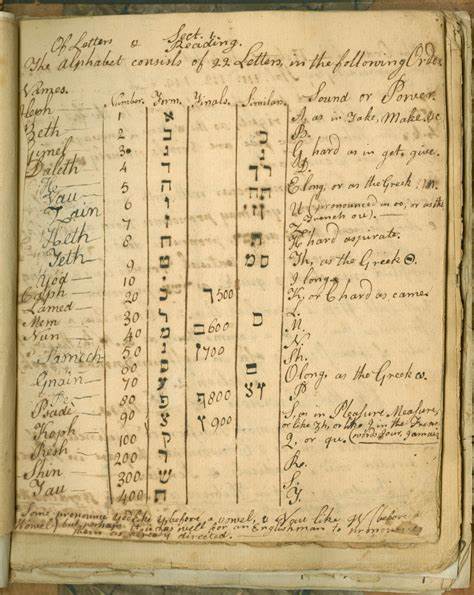




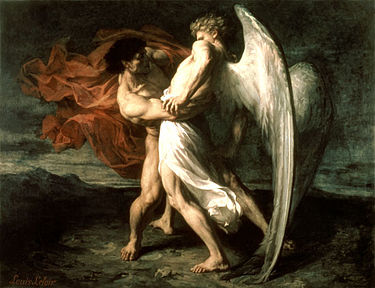
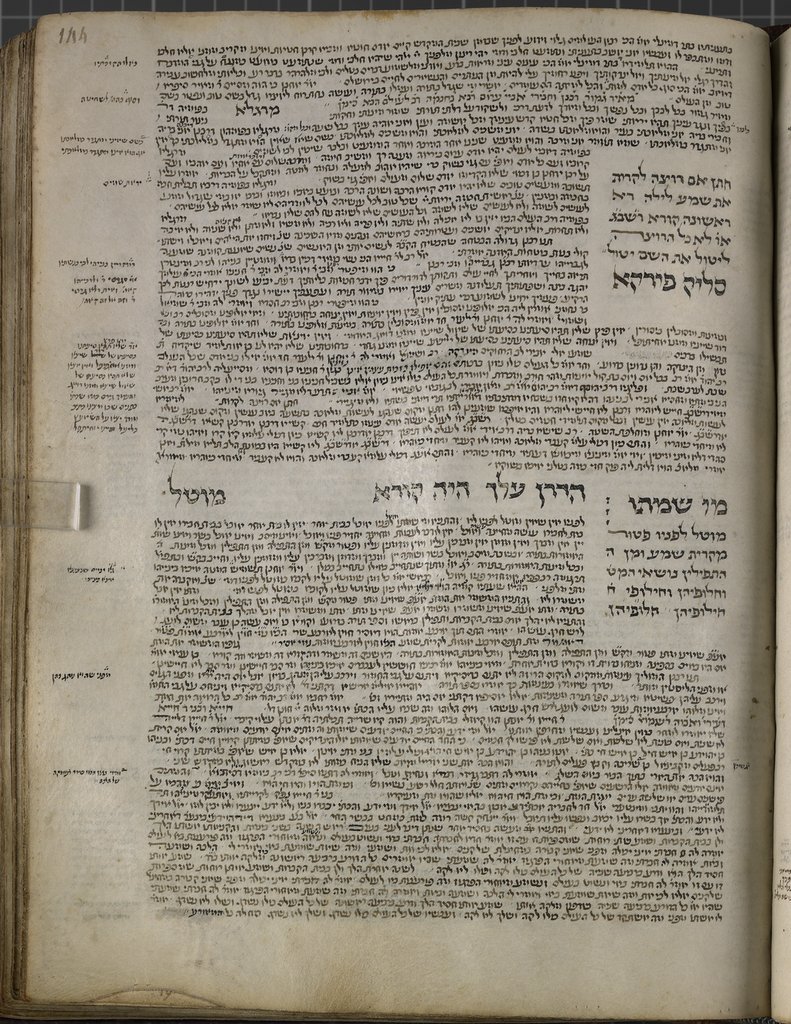
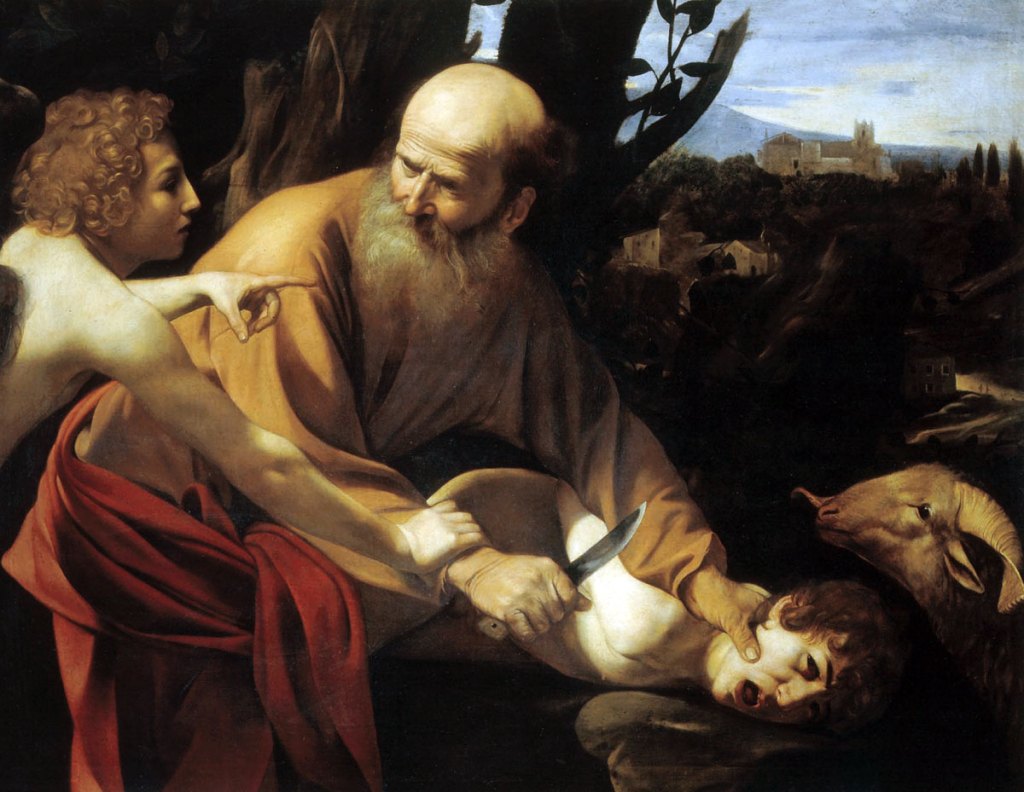



Vous devez être connecté pour poster un commentaire.