All languages have their own words for ‘secret’, which unconsciously reveal a part of it.
The Greek word for secret is ἀπόῤῥηθον, aporrhêton, which literally means « far, or away, from speech ». The secret is properly what is « unspeakable », either that which cannot be said, since the resources of language are insufficient, or that which must be kept silent, since words must be kept away. The emphasis is on speech and language, their limits or their impotence. This is why the idea of secrecy among the Greeks is well expressed in hermeticism and in the religions of the mysteries, where the initiate must swear to keep secret the things taught.
In Latin, the word secretum (from the verb seco, secare, sectum, « to cut ») etymologically evokes the idea of separation, of physical cut. The emphasis is not on language, but on place or space. The secret is what is separated from the rest of the world, what is cut off from it. The secret participates in a partition of the world into highly differentiated zones, exclusive of each other.
In Hebrew, the word for secret is רָז (raz). It is a word of Persian origin. In the Bible it is only found in the book of Daniel, then at a rather late date, where it takes on the meaning of « mystery ».
Sanskrit offers, among other words: गुप्त, gupta and गुह्यguhya. The word gupta comes from the root gup- , « to keep, protect, defend ». It first means « protected, hidden ». It also means « secret » by derivation. In Sanskrit, secrecy seems to be less an end in itself, to be kept for what it is worth, than a means to protect the person who benefits from it. As for guhya, it comes from the root guh-, « tocover, to conceal, to hide ». Guhya is what must be hidden, like a magic formula, or the sexual organs, of which this word is also the name. Here too, the emphasis is on the veil and the act of veiling, more than on what is veiled.
In contrast, the German word for secret, Geheimnis, precisely brings out the link between the secret and the interiority, the inner self. The secret is what is deep in the heart, or in the intimacy of the soul.
We could go on for a long time with this anthology of the word « secret » in different languages. But we already sense that each culture has a conception of the secret that corresponds as well as possible to what it agrees to reveal to itself and to what it agrees to show to the world, as for its (collective) unconscious .
This is also true of individuals, and of the secrets that inhabit them, or that found them.
In A Taste for Secrecy, Jacques Derrida declares that the secret is « the very non-phenomenality of experience », and « something that is beyond the opposition of phenomenon and non-phenomenon, and which is the very element of existence »i.
Even if everything could be said, there is something that will always resist, that will always remain secret, singular, unique, irreplaceable, « even without having to hide anything »ii.
This singular, specific secret is not even opposed to what is not secret. Nor is it ineffable. This secret is the secret of all that is said. The secret undoes what is brought forward by the word.
The secret « undoes the word », which is also the characteristic of deconstruction.
By undoing the word, the secret takes on an absolute significance. This secret that can never be shared, even at the moment of sharing, occupies a position of overhang: it is the very condition of sharing.
This is the absolute secret. The secret is an « absolute » that reigns above or within the existing, or is completely detached from it. Derrida says: « It is the ab-solute even in the etymological sense of the term, that is to say what is cut off from the bond, detached, and cannot bind; it is the condition of the bond but it cannot bind: that is the absolute; if there is an absolute, it is secret. It is in this direction that I try to read Kierkegaard, Isaac’s sacrifice, the absolute as secret and as the ‘other’. Not transcendent, not even beyond myself: a resistance to the light of phenomenality that is radical, irreversible, to which one can give all sorts of forms, death, for example, but it is not even death. » iii
« The absolute as a secret and as the ‘other’ ». But « not transcendent ».
A rather enigmatic formula, admittedly…. But how is Isaac’s sacrifice linked to the question of the secret, if the absolute is the « other » and is not « transcendent »?
We need a tighter analysis.
« Abraham took the wood of the sacrifice, put it on Isaac his son, took the fire and the knife in his hand, and they both went together.» iv
Rashi comments: « They both went together: Abraham who knew he was going to sacrifice his son, walked with the same goodwill and joy as Isaac who suspected nothing. «
Abraham kept the secret of what awaited Isaac. He told him nothing. The secret was absolute. Abraham did not let anything show on his face. He even walked cheerfully, according to Rashi, so as not to arouse any fear in Isaac. But some suspicion nevertheless arose and Isaac finally questioned his father: « ‘Here is the fire and the wood, but where is the lamb of the burnt offering?’ Abraham answered: ‘God himself will choose the lamb of the burnt offering, my son,’ and they both went together. » v
The repetition of this phrase, « they both went together », suggests two different meanings. Rashi comments: « And though Isaac understood that he was going to be immolated, ‘they both went together’, with one heart. »
The first time, it is Abraham who took the emotional burden on him. The second time, it was Isaac. He did not show anything about what he had guessed to be his fate. He kept his emotion secret.
In both cases, for Abraham and for Isaac, – absolute secrecy of the heart, but a secrecy that was not transcendent, indeed.
It was only the secret of a silent father, in one case, and the secret of a son who was silent, in the other. It was a doubly absolute secret, one can imagine.
Or, perhaps, was the absolute also present, secretly, in these moments, in two different ways?
This absolute, so secret, so doubly secret, can also, in fact, be called the « other ».
One could even suggest that this absolute wasthe « All Other ».
But then why does Derrida insist on the idea that the Absolute which is the « other » is precisely not « transcendent »?
In the text of Genesis, however, transcendence does appear at this crucial moment in all splendor: « But a messenger of the Lord called to him from heaven, and he said, ‘Abraham… Abraham!’ He answered, ‘Here I am,’ and said, ‘Do not lay a hand on this young man, do nothing to him! For now I know that you fear God, you who did not deny me your son, your only son ». vi
One knows that the absolute is secret, that it is the « other ». As for being « transcendent », it is a question of interpretation.
Shortly after finding a ram embarrassed by its horns in a bush and sacrificing it as a burnt offering in place of his son, Abraham named the place where this whole scene had taken place: « YHVH will see. »vii In Hebrew: יְהוָה יִרְאֶה (‘Adonai-Yiré’)
The Targum interprets this verse as follows, according to Rashi: God will choose for Himself this place to make His Divine Presence reside there and to make offerings there. And it will be said about this place: It is on this mountain that God makes Himself seen by His people.
But if « YHVH will see » is to be understood as « God will be seen », the Targum should also explain why the active way (God will see) has been changed into a passive way (God will be seen).
The Midrach gives yet another interpretation, according to Rachi. « YHVH will see » means: « The LORD will see this offering to forgive Israel every year and to spare it the punishment it deserves. So it will be said in the generations to come: Today God shows Himself on the mountain. Isaac’s ashes are still there to make atonement for our sins. »
A Cartesian spirit will point out that the ashes of the ram offered as a holocaust are still on the mountain called « YHVH will see », but certainly not the ashes of Isaac, since the latter left, alive and well, with his father to Beer-sheba.
From all of this, it emerges that the initial secret, so opaque, unravels endlessly, in twisted insinuations, in down-to-earth or messianic interpretations, depending on different « points of view ».
For us, who respect grammatical values more than lyrical flights of fancy, we will remember above all that « He will see » may also mean « He will be seen ».
Ultimately, it is the grammar itself, the foundation of the language, that must be deconstructed if we want to unlock the secret, not of the language, but of the one who speaks.
iJacques Derrida, Maurizio Ferraris. Le goût du secret. Hermann. 2018, p.69-70
Pour Pythagore, le nombre quatre représente la justicei. La Tétrade (l’idée abstraite associée au ‘quatre’) symbolise aussi la perfection ou encore le Cosmos. Arrangée en une forme triangulaire, la Tétractys figure la Décade (l’abstraction associée au nombre 10), qui se ramène elle-même à l’Unité cachée, car 1+ 0 = 1. D’un point de vue néo-pythagoricien, le 4 symbolise, en la déployant, la perfection absolue de l’1.
Le nombre quatre se lit d’emblée dans le Tétragramme, יְהוָה. Ces quatre lettres ne sont d’ailleurs en réalité que trois (yod, hé, vav), le hé étant employé deux fois. Vu l’importance du nom divin, ceci ne peut que provoquer la réflexion et inciter à la recherche. La cabale juive a réalisé un Tétractys composé des quatre lettres du Tétragramme, et s’est livrée à de savantes analyses sémiologiques. Mais les mystères du Tétragramme sont fort loin d’être épuisés. Y ayant consacré plusieurs articles, j’invite le lecteur intéressé à s’y reporter :
Dans le contexte biblique, plusieurs occurrences significatives du nombre quatre l’enrichisse d’harmoniques puissantes.
La fameuse vision d’Ezéchiel, reprise dans les textes de l’apocalyptique juive (les livres d’Hénoch) puis dans l’Apocalypse de Jean, est particulièrement frappante à cet égard.
« Or, je vis soudain un vent de tempête venant du Nord, un grand nuage et un feu jaillissant avec une lueur tout autour, et au centre, comme l’éclat du vermeil au milieu du feu. Et au centre, les ressemblances de quatre Vivants (חַיּוֹת, Ḥayot); et voici leur aspect, elles avaient figure humaine. Chacune avait quatre faces et chacune quatre ailes. Leurs jambes étaient droites; leurs sabots étaient comme des sabots de bœuf, et ils étincelaient comme l’éclat de l’airain poli. Et sous leurs ailes, il y avait des mains d’hommes tournées vers les quatre directions, de même que leurs faces et leurs ailes à eux quatre. Leurs ailes étaient jointes l’une à l’autre, elles ne se tournaient pas en marchant, chacune allait droit devant elle. Quant à la forme de leurs visages, elles avaient une face d’homme et toutes les quatre une face de lion à droite, et toutes quatre avaient une face de taureau à gauche, et toutes quatre avaient une face d’aigle. Et leurs faces et leurs ailes étaient déployées vers le haut; chacune avaient deux ailes se joignant et deux ailes lui couvrant le corps. »ii
Chacun des quatre « Vivants » a quatre « faces » (d’homme, de lion, de taureau et d’aigle), ce qui fait seize faces au total.
Il est intéressant de noter que le paradigme quaternaire est ici mis en scène d’une manière « fractale », pourrait-on dire. Les « quatre Vivants ont une figure humaine », et chacun d’entre eux ont à leur tour quatre faces (et quatre ailes).
Autre trait frappant : la description de ces «Vivants» reprend quatre attributs caractéristiques des Kāribu assyriens. Ces statues monumentales qui gardaient les palais de Babylone figuraient des êtres à tête humaine, avec un corps de lion, des pattes de taureau et des ailes d’aigle. L’influence de Babylone sur l’imaginaire d’Ézéchiel est indéniable. Les Kāribu au service des dieux assyriens sont maintenant attelés au char du Dieu d’Israël.
Ce sont les kāribu assyriens qui ont donné leur nom aux keroubim hébreux (כְּרֻבִים ), c’est-à-dire aux Chérubins de l’Arche d’alliance (Ex 25,18+), – le mot hébreu keroub dérivant de l’assyrien kāribu.
En assyrien, le mot kāribu désigne un prêtre ou une personne accomplissant un acte religieux (notamment en présence du Roi). Il peut désigner une femme dont la fonction est de prier pour d’autres personnes. Il décrit également une déité faisant un geste d’adoration.
L’origine étymologique de kāribu renvoie au substantif karābu, « prière, bénédiction », et au verbe karāba, « prononcer une bénédiction, une formule de louange ou d’adoration ; prier les dieux ; faire un geste d’adoration (ou prier le Dieu Marduk) ».iii
Ezéchiel rapporte une autre vision de Dieu en compagnie des chérubins, dans un contexte particulièrement dramatique.
« La gloire du Dieu d’Israël s’éleva de sur le chérubin sur laquelle elle était, au seuil du Temple »iv, et à ce moment, YHVH ordonne le massacre des habitants de Jérusalem: « Parcourez la ville et frappez. N’ayez pas un regard de pitié, n’épargnez pas ; vieillards, jeunes gens, vierges, enfants, femmes, tuez et exterminez tout le monde. Mais quiconque portera le signe au front, ne le touchez pas. Commencez à partir de mon sanctuaire.»v
Dans les livres d’Hénoch, la symbolique du nombre quatre apparaît lors de visions apocalyptiques impliquant non des chérubins, mais des séraphins ainsi que des « Vigilants » et des « Saints ».
Hénoch raconte : « J’aperçus des milliers de milliers, des myriades de myriades, et un nombre infini d’hommes qui se tenaient debout devant le Seigneur des esprits. Sous les quatre ailes du Seigneur des esprits, à ses quatre côtés, j’en vis encore d’autres (…) Alors j’entendis la voix de ceux qui étaient aux quatre côtés ; ils célébraient le Seigneur de toute gloire. La première voix célébrait le Seigneur des esprits dans tous les siècles. La seconde voix que j’entendis célébrait l’élu et les élus qui sont tourmentés pour le Seigneur des esprits. La troisième voix que j’entendis suppliait et priait pour ceux qui sont sur la terre, et qui invoquent le Seigneur des esprits. La quatrième voix que j’entendis repoussait les anges impies, et leur défendait de se présenter devant le Seigneur des esprits afin qu’ils ne suscitent point d’accusations contre les habitants de la terre. »vi
Les « quatre voix » qu’Hénoch entend sont clairement différenciées. Ce sont celles des quatre anges les plus proches de la Face de Dieu, respectivement Michel, « l’ange clément et patient », Raphaël, « l’ange qui préside aux douleurs et aux blessures des hommes », Gabriel, « qui préside à tout ce qui est puissant », et enfin Phanuel, « qui préside à la pénitence et à l’espérance de ceux qui doivent hériter de la vie éternelle ».vii
On peut interpréter ces « quatre voix » comme une autre expression encore ou une représentation « quaternaire » du Dieu Un. Dans le contexte du monothéisme juif, qui ne transige pas sur l’unité essentielle du divin, ces quatre « voix » ou « anges » peuvent représenter quatre hypostases ou quatre émanations du Dieu Un, par lesquelles il communique ou fait connaître aux hommes, respectivement « sa clémence et sa patience », sa compassion pour « les douleurs et les blessures des hommes », sa « puissance », ainsi que l’espérance de la « vie » (éternelle) qu’il entend partager avec eux.
Dans le Livre hébreu d’Hénoch (ou : ‘3 Hénoch’), le nombre ‘quatre’ est associé non aux Chérubins, mais aux Séraphins (les serafim, étymologiquement les « Brûlants »):
« Combien sont les Séraphins ? Quatre, correspondant aux quatre vents du monde. Combien de faces ont-ils ? Seize faces, quatre à chaque direction. »viii
Quatre est aussi, dans le Livre des Palais, le nombre des Saints et des Vigilants :
« Les Vigilants et les Saints, quatre grands Princes. Deux sont les Vigilants, et deux sont les Saints. »ix
Plus tard, l’apologétique chrétienne réinterprétera les figures des quatre Vivants comme des symboles des quatre Évangélistes. S’appuyant sur les thèmes traités au début des quatre Évangiles, on fit correspondre le symbole de l’Homme à Matthieu, le Lion à Marc, le Taureau à Luc et l’Aigle à Jean.
Jérôme de Stridon (347-420) estime que les quatre Vivants ont une autre signification encore : ils résument les quatre moments essentiels de la vie du Christ. Le Verbe de Dieu s’est incarné (l’Homme), il a été tenté au désert (le Lion), il a été immolé (le Taureau) et il est monté au ciel (l’Aigle).
Une synthèse des interprétations d’Hénoch et de Jérôme est possible, me semble-t-il.
On a vu que, selon Hénoch, les quatre principaux attributs de YHVH symbolisés par les quatre Vivants et par les anges Michel, Gabriel, Raphaël et Phanuel, sont la « clémence et la patience », la « puissance », la « compassion pour les douleurs et les blessures des hommes » et la « vie » éternelle.
Les quatre moments-clé de la vie du Christ sont quant à eux, l’« incarnation », la « tentation », le « sacrifice » et la « résurrection ».
L’Homme symbolise la clémence et la patience de Dieu pour l’humanité que Michel représente, et aussi l’incarnation du Verbe qui en est l’expression historique.
Le Lion représente la puissance de Dieu (que l’archange Gabriel incarne), et aussi la tentation du Christ au désert et sa victoire sur le Satan.
Le Taureau figure la compassion divine pour « les douleurs et les blessures des hommes » que Raphaël personnifie, et corrélativement il évoque le sacrifice sanglant de Jésus.
L’Aigle signifie l’envol vers la vie éternelle et l’espérance que l’ange Phanuel connote, et parallèlement il représente la résurrection, et la montée au ciel du Christ ressuscité.
Mais en réalité ces quatre symboles sont intimement liés. Chacun des quatre Vivants a lui-même quatre « faces », tant dans l’ordre divin, tout est « un », et tant dans l’ordre symbolique le nombre ‘quatre’ incarne l’unité.
Inconscient de quoi ? Inconscient de tous les effets de sa propre puissance.
Ce résultat, initialement dû à C.G. Jung, peut paraître surprenant, et même ‘blasphématoire’ aux yeux de ‘croyants’ habitués à répéter des formules figées comme « Dieu est bon », ou « Dieu est un », sans toujours mesurer la logique profonde qui sourd inconsciemment des jugements humains sur l’essence de la divinité.
Si la raison humaine est à l’évidence bien incapable de pénétrer jusqu’au fin fond des mystères qui lui sont en quelque manière et allusivement ‘présentés’, elle est malgré tout l’un des rares instruments de recherche, de critique et de prospective qui soient donnés à notre conscience.
L’idée que Dieu est en partie « inconscient » peut être déduite des contradictions intrinsèques qui apparaissent lorsque l’on considère des attributs classiquement attribués à Dieu : son « omnipotence », son « omniscience » et sa « bonté », et qu’on les confronte à la réalité de l’existence du Mal dans la création divine.
La seule manière de rendre compatibles les attributs divins que l’on vient d’énumérer avec l’existence du Mal, est de faire l’hypothèse d’une « inconscience » (partielle) de Dieu quant à la nature de sa propre puissance (la nature de son ‘omnipotence’ a priori supposée), et de la connaissance qu’il en a (la nature de son ‘omniscience’, elle aussi a priori supposée).
Sa « bonté » ne peut être compatible avec le « Mal » existant dans le monde que si Dieu n’est pas absolument conscient du rôle du Mal et de son impact effectif dans la vie de ses créatures… S’il en était « conscient », en effet, comment sa « bonté » doublée de son « omnipotence » laisserait-elle le Mal prospérer ?
D’où les questions et les plaintes paradigmatiques de Job…
Mais d’un autre côté, comment concilier l’idée d’un Dieu en partie « inconscient » avec son « omniscience » (supposée) ?
A cela on peut répondre que ce Dieu est un Dieu « Vivant », « Un » et aussi « Infini ». Il est essentiellement « libre ». Cette liberté est toujours « en acte », mais aussi toujours « en puissance ». Dieu n’est donc pas toujours actuellement conscient de toute la liberté des infinis possibles dont il est capable en puissance. Car s’il en était conscient, il serait alors en quelque sorte déterminé par cette conscience même, ce qui serait incompatible avec sa liberté essentielle.
La liberté de sa conscience est en partie liée à l’indétermination de son inconscient.
Dans ce contexte, certes difficile à saisir, mais pas entièrement opaque (car nous pouvons prendre appui sur notre propre appréhension du rôle de l’inconscient par rapport à notre conscience), la question du Mal se révèle à la fois extraordinairement délicate et anthropologiquement cruciale.
Je dis ‘anthropologiquement’ car c’est bien de la nature humaine tout entière qu’il s’agit, et non pas de quelque religion ou de quelque philosophie que ce soit. Il s’agit de s’interroger sur le sens profond de l’aventure humaine, et de son rapport putatif avec le Cosmos tout entier, mais aussi avec les puissances (divines?) qui en furent à l’origine, et qui continuent (peut-être?) d’y jouer un rôle.
La question du Mal est d’autant plus délicate, et cruciale, que c’est Dieu lui-même qui affirme : « Je crée le mal », selon la parole rapportée par Isaïe : וּבוֹרֵא רָע, (boré’ ra‘).i
On a déjà vu que le verbe « créer » (en hébreu, bara’) est ici conjugué à l’inaccompli (boré’), ce qui semble indiquer que le Mal est constamment « créé » par Dieu, et que son rôle dans l’économie de la création divine semble donc être structurel.
Cette problématique, on l’a dit, ne relève pas d’une approche théologique ou philosophique classique, vu les blocages conceptuels accumulés, et l’ossification de la pensée ‘théologique’ mais aussi ‘philosophique’, après de nombreux siècles de conservatisme a-critique.
En revanche, une approche anthropologique et psychologique de la question du Mal dans l’économie divine de la Création semble pouvoir ouvrir des pistes nouvelles.
L’une de ces pistes, elle aussi due à Jung, est celle de la « conjonction des opposés », – principe fondamental, qui n’est pas sans peser de sa propre charge de « mystère » (mysterium conjunctionis) dans l’inconscient collectif.
Comme Dieu est essentiellement « un » (du moins dans le cadre formel posé par les divers monothéismes), il faut donc considérer comme une ‘conjonction des opposés’ ou comme une ‘course des contraires’ (pour reprendre le concept d’énantiodromie dû à Héraclite) le fait que la conscience et l’inconscient peuvent coexister dans l’unité divine.
Une autre manière de formuler ce constat est de s’appuyer sur les sources bibliques qui signalent significativement que Dieu a toujours eu auprès de lui, et cela dès avant même la création du monde, un personnage particulièrement mystérieux, la Sagesse.
Voici à titre d’illustration quelques citations, incitatives à la réflexion :
« Mais la Sagesse, d’où provient-elle ? » (Job 28,12)
« Il fit les cieux avec la Sagesse » (Ps 136,5)
« YHVH, par la Sagesse, a fondé la terre » (Pr 3,19)
« Donne-moi celle qui partage ton trône, la Sagesse » (Sg 9,4)
« Mais avant toutes choses fut créée la Sagesse » (Sir 1,4)
« L’Esprit de YHVH, – Esprit de Sagesse et d’Intelligence » (Is 11,2)
« Il a fait la terre par sa Puissance, établi le monde par sa Sagesse, déployé les cieux par son Intelligence » (Jér 10,12)
Il n’est pas indifférent de noter que, selon les cas, on observe une ‘dualité’ (YHVH + la Sagesse/Ḥokhmah), une ‘trinité’ (YHVH + la Sagesse/Ḥokhmah + l’Intelligence/Binah) et même une relation ‘quaternaire’ (YHVH + la Sagesse + l’Intelligence + la Puissance).
Ces relations duelles, trinitaires ou quaternaires se constituent entre la Divinité et ce que l’on pourrait appeler des « attributs » divins. Mais, dans le contexte divin, ces « attributs » ne peuvent pas être simplement « passifs », ils sont dotés d’une sorte d’essence propre.
C’est pourquoi dans divers textes de la tradition juive (Livres prophétiques, Écrits apocalyptiques, Talmud, Cabale) on a pu aussi les décrire comme étant des « faces » de Dieu, ou bien les assimiler à des « anges », ou encore leur donner le statut de sefirot.
Il existe aussi des cas particulièrement significatifs, où la relation entre Dieu et l’une des entités qui paraissent le seconder est symbolisée par un personnage mystérieux, nommé le « Fils de l’homme » (en hébreu Ben-Adam).
Le Psalmiste lui donne un statut presque équivalent à celui de Dieu, en le nommant « mon Seigneur » (Adoni), et en le faisant siéger à la droite de YHVH:
« Oracle de YHVH à mon Seigneur : ‘Siège à ma droite’.»ii
Il est certes fort peu conforme à la tradition strictement monothéiste, que le roi David lui-même chante la présence d’Adoni (« Mon Seigneur ») siégeant à la droite de YHVH (יְהוָה , le Tétragramme imprononçable, mais qu’on lit « Adonaï », ce qui signifie aussi « Mon Seigneur »).
Le livre d’Hénoch, l’un des textes apocalyptiques juifs, évoque également le ‘Fils de l’homme’, Ben-Adam, et il le place aussi à la droite de Dieu.
Le ‘Fils de l’homme’, appelé aussi l’« Élu », ou encore l’« Autre », désigne dans les livres d’Hénoch une personne à la fois ‘humaine’ et ‘transcendante’. Elle reçoit de Dieu le royaume eschatologique, et elle est appelée à s’asseoir sur le « trône de la gloire » de Dieu.
« Là je vis l’Ancien des jours, dont la tête était comme de la laine blanche, et avec lui un Autre, qui avait la figure d’un homme. Cette figure était pleine de grâce, comme celle d’un des saints anges. Alors j’interrogeai un des anges qui était avec moi, et qui m’expliquait tous les mystères qui se rapportent au Fils de l’homme. Je lui demandai qui il était, d’où il venait, et pourquoi il accompagnait l’Ancien des jours ?
Il me répondit en ces mots : ‘Celui-ci est le Fils de l’homme, à qui toute justice se rapporte,
avec qui elle habite, et qui tient la clef de tous les trésors cachés ; car le Seigneur des esprits
l’a choisi de préférence, et il lui a donné une gloire au-dessus de toutes les créatures’. »iii
Hénoch rapporte encore que Dieu, ou l’« Ancien des jours », annonce que son « Élu » sera assis sur le trône de la gloire de Dieu, et qu’il jugera au nom du Seigneur.
« O rois, ô puissants de ce monde, vous verrez mon Élu assis sur le trône de ma gloire ; il
jugera Azazyel, tous ses complices et toutes ses cohortes, au nom du Seigneur des esprits. »iv
La figure juive du « Fils de l’homme » sera, quelques siècles plus tard, reprise par Jésus, qui s’attribuera de lui-même et à lui-même ce titre. Il confirmera aussi le rôle eschatologique qui était déjà associé au Fils de l’homme par Hénoch:
« Et alors apparaîtra dans le ciel le signe du Fils de l’homme ; et alors toutes les races de la terre se frapperont la poitrine ; et l’on verra le Fils de l’homme venant sur les nuées du ciel avec puissance et grande gloire. »v
Le Fils de l’homme nouvellement incarné par Jésus doit aussi prendre place sur le trône de la gloire (divine) pour juger le monde :
« Quand le Fils de l’homme viendra dans sa gloire, escorté de tous les anges, alors il prendra place sur son trône de gloire. »vi
C’est précisément l’affirmation de ce statut unique, celui de pouvoir siéger « à la droite de Dieu », lui donnant une forme de parité divine, qui sera la cause de sa condamnation à mort par le Grand prêtre :
« Le Grand prêtre lui dit : ‘Tu ne réponds rien ? Qu’est-ce que ces gens attestent contre toi ?’ Mais Jésus se taisait. Le Grand prêtre lui dit : ‘Je t’adjure par le Dieu Vivant de nous dire si tu es l’Oint, le Fils de Dieu’. ‘Tu l’as dit, lui dit Jésus. D’ailleurs je vous le déclare : dorénavant, vous verrez le Fils de l’homme siégeant à droite de la Puissance et venant sur les nuées du ciel.’ Alors le Grand prêtre déchira ses vêtements en disant : ‘Il a blasphémé !’ »vii
Cependant, malgré ce statut de quasi-parité avec le rang de Dieu, le Fils de l’homme s’en distingue, par plusieurs traits significatifs, et en particulier par une moindre connaissance, notamment quant aux conditions touchant aux fins dernières du projet divin.
Malgré sa filiation divine, et son élection, malgré sa gloire et son rôle de juge, il est des choses que le Fils ignore, et qui ne sont connues que du Père :
« Quant à la date de ce jour, et à l’heure, personne ne les connaît, ni les anges des cieux, ni le Fils, personne que le Père, seul. »viii
Si l’on s’en tient à une interprétation anthropologique, l’expression de ‘Fils de l’homme’ connote donc à la fois une certaine humilité de la condition humaine par rapport à Dieu, mais aussi, une capacité virtuelle à s’élever à un rang supérieur à celui de tous les anges, lui donnant de pouvoir siéger à la droite de Dieu, en tant que « juge » du monde.
Si l’on rassemble toutes ces indications éparses, et qu’on les lie en une sorte de faisceau, on est amené à faire l’hypothèse que ce personnage mystérieux, qui côtoie Dieu depuis toujours, dès avant même que toutes choses fussent, et qui est nommé « la Sagesse » (ha-Ḥokhmah) ou encore le « Fils de l’homme » (Ben-Adam), n’est pas une créature établie dans une relation duelle avec Dieu, comme le sont les parèdres divins des religions anciennes dites « païennes ».
L’idée monothéiste (qui reste un paradigme fondamental dont on ne souhaite pas s’écarter, du fait de son importance et de son universalité anthropologique) impose de penser l’essence du divin dans son unité. Il faut donc faire l’hypothèse que ce personnage, Ben-Adam, n’est pas une sorte de double ou de parèdre divin, mais qu’il pourrait cependant en représenter une hypostase, compatible avec l’unité divine.
Qu’on nomme cette hypostase « Sagesse » ou « Intelligence » est non seulement possible du point de vue de la théologie juive, mais ces noms/attributs divins sont effectivement avérés et employés dans plusieurs textes canoniques juifs.
Les textes du Livre d’Hénoch vont cependant plus loin puisqu’ils proposent d’identifier ces hypostases à une entité dite « Autre », « Élue », bien vivante, capable de régner en gloire, et de juger le monde.
Les textes d’Hénoch vont même, et c’est là que les choses deviennent particulièrement intéressantes, à qualifier cette entité du nom de « Fils de l’Homme », établissant ainsi un lien formel de rapprochement (dans la Gloire) entre Dieu et un « homme », il est vrai assez spécial, unique, et appelé « Fils de l’homme ».
Parfaitement fidèle à son idée monothéiste originelle, la théologie juive ne reconnaît d’aucune manière la validité d’un des concepts centraux de la théologie chrétienne, à savoir celui de « trinité ».
Pourtant le christianisme est aussi un monothéisme, et certainement pas un « tri-théisme ».
La trinité chrétienne se comprend comme la trinité de trois hypostases dans l’unité divine.
Il n’y a pas a priori de contradiction formelle entre l’idée juive des trois hypostases de la « Puissance », de la « Sagesse » et de l’ « Intelligence » à laquelle fait allusion Jérémie, et l’idée chrétienne des trois hypostases du « Père », du « Fils » et de l’« Esprit ».
Le fait que certains textes canoniques du judaïsme n’hésitent pas à évoquer symboliquement les relations duelles, trinitaires ou même quaternaires, que le divin entretient avec lui-même est d’une grande importance anthropologique, par rapport à l’enquête que nous avons amorcée sur le rôle du Mal dans le monde, et aussi sur l’idée d’un Dieu, à la fois « inconscient » et « conscient ».
Autrement dit, le Fils de l’homme, Ben-Adam, pourrait fort bien représenter une hypostase de la « conscience » (ou de la « Sagesse ») de Dieu.
Mais l’existence même de cette hypostase, la figure même de ce Ben-Adam, implique précisément l’existence, en Dieu, de son « inconscient », c’est-à-dire de tout ce qui échappe à la « conscience » ou à la « Sagesse » incarnées par le « Fils de l’homme ».
J’approfondirai cette problématique dans d’autres articles à venir.
Pour une conscience critique qui réfléchit sur la présence du mal dans le monde, il est impossible de croire que Dieu puisse s’identifier au Summum Bonum, le ‘Souverain Bien’, auquel la philosophie chrétienne l’associe naturellement, comme allant de soi.
Une première indication de l’ambivalence de Dieu quant aux notions de ‘bien’ et de ‘mal’, peut être trouvée dans la Bible hébraïque, où Dieu lui-même déclare qu’il « crée le mal ».
« Je forme la lumière, et je crée les ténèbres: je fais la paix et je crée le mal: Moi, l’Éternel, je fais toutes ces choses »i.
Dans l’hébreu d’Isaïe : עֹשֶׂה שָׁלוֹם וּבוֹרֵא רָע, « Je fais la paix (‘ossé chalom) et je crée (boré’) le mal (ra‘). »
Le verbe bara’ employé ici est aussi celui utilisé au premier verset de la Genèse pour dire qu’« au commencement, Dieu créa la terre et les cieux » (Berechit bara’ Elohim…).
Mais dans le texte d’Isaïe, le verbe bara’ est conjugué à l’inaccompli (boré’). Ceci implique que Dieu ne cesse pas de créer le mal dans le temps présent, et qu’il continuera de le faire dans le futur…
J’ai souvent remarqué qu’il était pratiquement impossible de traiter sérieusement de cette question épineuse avec des théologiens chrétiens. Par exemple, pour se défausser de la question sans entrer en matière, ils dévaluent d’emblée l’autorité du prophète. L’« Isaïe », auteur du chapitre 45, ne serait en réalité qu’un « deutéro-Isaïe », qui aurait subi les influences (dualistes, manichéistes et païennes) des croyances religieuses de l’Assyrie, pendant l’Exil à Babylone…
Tour de passe-passe, qui évite d’affronter directement cette parole de l’Éternel, trop à rebours des conventions figées.
En revanche, il est stimulant de s’appuyer sur les travaux pionniers de C.G. Jung à cet égard, tels que relatés dans son livre séminal Réponse à Job, dont voici la synthèse qu’il en propose:
« Clément de Rome professait que Dieu régentait le monde avec une main droite et une main gauche. La main droite signifiait le Christ et la gauche Satan. La conception de Clément est manifestement monothéiste puisqu’il réunit les principes opposés dans un Dieu. Plus tard, toutefois, le christianisme devint dualiste dans la mesure où la part des éléments opposés, personnifiée par Satan, se trouve dissociée et où Satan se trouve banni dans un état d’éternelle malédiction. Le voilà, le problème central. Il est d’une signification essentielle et il est à l’origine de la doctrine chrétienne du salut. Si le christianisme a la prétention d’être une religion monothéiste, il ne peut se passer de l’hypothèse que les contraires sont unifiés dans un Dieu. »
Les ressources de la psychologie des profondeurs, mais aussi de la simple raison, peuvent être mobilisées pour explorer (heuristiquement) la question du Mal dans le projet divin.
Mais il est aussi fort utile de faire appel aux diverses sources juives et chrétiennes qui en traitent, comme le Livre de Job, le Livre d’Hénoch (et les livres de l’Apocalyptique juive), certains Prophètes, et les Évangiles.
En bonne logique, un Dieu qui est ‘créateur du monde’, et qui est aussi ‘omniscient’ et ‘omnipotent’, a en conséquence une indéniable responsabilité quant à la présence du Mal dans ce monde qu’il est censé avoir créé en toute connaissance de cause.
Son omniscience (supposée) aurait dû l’informer par avance du rôle particulièrement néfaste du Mal dans l’économie de sa création, et dans le risque encouru par les créatures de tomber en son pouvoir.
Par ailleurs, l’omnipotence (supposée) de Dieu aurait pu (aurait dû?) lui permettre d’éradiquer a priori toute future présence du Mal dans le monde, et cela dès avant même la création. S’il l’avait réellement voulu, Dieu aurait pu créer un monde vide de tout Mal, à jamais. Mais il ne l’a pas voulu. Pourquoi ?
De plus pourquoi révèle-t-il à Isaïe qu’il «crée le mal », de façon continuelle ?
Ces questions sont d’autant plus flagrantes si l’on prend en compte l’étiquette de « Dieu bon » et de Père « aimant » dont il est qualifié, dans certains textes de la Bible hébraïque ainsi que dans les Évangiles.
Comment un Dieu ‘suprêmement bon’ a-t-il pu laisser volontairement le Mal entrer dans sa création pour s’y développer tout à loisir, sans être immédiatement éradiqué par la (bonne) puissance divine?
Il faut choisir. Dieu ne peut pas, logiquement, être à la fois « bon », « omniscient », « omnipotent » et « créateur du mal ». Ces attributs, pris ensemble, sont en forte contradiction intrinsèque.
Comment un Dieu ‘bon’ et ‘omniscient’, capable de prévoir le rôle pervers du Mal, a-t-il pu le laisser advenir ?
Comment un Dieu ‘bon’ et ‘omnipotent’ a-t-il pu laisser le Mal prendre sa part parmi les causes actives dans le monde ?
Soit il faut lever la contradiction ‘logique’, soit il faut renoncer à la raison elle-même.
Des solutions au dilemme ont pu être proposées au cours des millénaires, comme celle du dualisme et du manichéisme, qui différencient le Dieu « bon » et le Dieu « mauvais ».
Mais c’est une solution de facilité, qui par ailleurs est incompatible avec le paradigme du monothéisme, celui du Dieu « un ».
La seule possibilité qui reste, est d’envisager l’idée d’un Dieu « un », qui conjoigne en Lui-même les opposés. En Lui-même, c’est-à-dire dans son propre Inconscient.
Mais alors, comment un tel Dieu peut-il exiger des croyants (du moins de ceux qui n’ont pas, quant à eux, ses capacités de synthèse et de conjonction des opposés) qu’ils le « craignent » (comme un Dieu qui châtie, et qui peut laisser le Mal se répandre sur le monde) et qu’ils l’« aiment » aussi (comme un Dieu qui sauve, et qui fait vivre) ?
La crainte que le Dieu biblique est censé inspirer au croyant est un élément supplémentaire d’incompréhension pour la conscience critique. Pourquoi devrait-on craindre le Dieu suprêmement bon, le Dieu du Summum Bonum?
La théorie du Messie salvateur, et tout particulièrement la théorie de l’ ‘Oint’, du ‘Christ’ qui se sacrifie pour sauver l’humanité pécheresse est également difficile à comprendre, dans la perspective de la conscience critique.
Comment un Dieu ‘suprêmement bon’ peut-Il envoyer Son propre ‘Fils’ (unique) sur la terre afin que son ‘sacrifice’ sauve l’humanité du Mal que le Dieu ‘bon’ a par ailleurs sciemment laissé prospérer sur terre ?
Comment un Dieu ‘bon’ et ‘juste’ peut-il envoyer son Fils bien-aimé au sacrifice, pour qu’il sauve l’humanité de Sa propre colère, et du châtiment qu’Il entend infliger de ce fait aux hommes? Comment peut-il (logiquement) sacrifier son propre Fils pour calmer sa propre fureur?
En bonne logique, un Dieu ‘bon’, ‘juste’ et ‘omnipotent’ n’avait pas besoin de sacrifier un innocent de plus, son ‘Fils’, pour empêcher l’humanité d’être punie par Lui-même…
Il aurait pu se contenter d’éradiquer le Mal de par sa Toute-Puissance, ou bien d’effacer unilatéralement les fautes de l’humanité, sans avoir à passer par le sacrifice de son Fils.
Le seul fait que la conscience critique puisse poser ces questions, sans pouvoir obtenir de réponses claires, univoques, est révélateur de la profondeur du mystère. On n’évacuera pas la question par des arguments d’autorité. La conscience critique ne peut se satisfaire non plus des oukases théologiques.
La question n’est en réalité ni théologique, ni philosophique. Elle est d’ordre anthropologique et psychologique.
Tout d’abord, soulignons que le paradigme du sacrifice divin est une constante anthropologique (Prajāpati en Inde, Inanna à Sumer, Osiris en Égypte, Dyonisos en Grèce, Jésus en Israël).
Ensuite, il faut accepter de prendre conscience que les injonctions religieuses (aimer et louer un Dieu « biblique », capable de crises de rage, d’injustices patentes, et d’infidélité par rapport aux promesses faites) sont des injonctions contradictoires.
Comment une conscience critique peut-elle ‘comprendre’ ce Dieu se montrant essentiellement et logiquement contradictoire?
A ces questions, Jung donne une réponse simple : Dieu est en partie « inconscient » de qui Il estii. C’est le manque indubitable de « réflexion » dans la « conscience de Dieu » qui seul peut (logiquement) expliquer ses conduites inexplicables (au regard de la conscience humaine, décidée à opter pour la posture critique).
La conséquence de cette inconscience partielle, c’est que Dieu ne peut que subir une « défaite morale », lorsqu’il est confronté à la conscience critique, aiguisée, de ses créatures, révoltées par l’injustice de leur sort. L’exemple paradigmatique est Job.
Cette « défaite morale » de Dieu par rapport à sa créature entraîne deux autres conséquences.
D’une part, l’homme se trouve du coup moralement élevé, de façon tout-à-fait inattendue, à un autre niveau de conscience. Du simple fait d’avoir désormais conscience de devoir être confronté à un Dieu inconsciemment immoral, Job ou toute autre conscience critique, peut en bonne justice le prendre à partie, et le pousser dans ses retranchements.
D’autre part, la ‘défaite morale’ de Dieu provoque à l’échelle de l’humanité un chaos, un bouleversement profond de l’inconscient (collectif et individuel).
Le nouveau statut ‘moral’ de l’homme pénètre l’abîme de l’inconscient, mais c’est pour y occuper le ‘vide’ laissé par l’absence (inconsciente) de Dieu. L’homme a désormais pour lui-même, inconsciemment, davantage de ‘valeur morale’ dans son propre inconscient, qu’il n’en a consciemment, à travers l’image consciente qu’il continue d’avoir de lui-même.
L’inconscient valorise (inconsciemment) un homme ‘grandi’ moralement par rapport à l’image consciente, dévalorisée, que l’homme a de lui-même.
Dans ces circonstances, les autres potentialités de l’inconscient ne demandent qu’à se faire davantage connaître de la conscience, sous forme de rêves, de visions, de révélations, de prophéties.
Dans la première moitié du 6ème siècle, le prophète Ézéchiel reçut des visions. Jung les interprète comme des symptômes de la fracture entre la conscience et l’inconscient. Elles montrent ce qu’Ézéchiel avait saisi des contenus essentiels de l’inconscient collectif de cette époque.
Et leur contenu le plus essentiel était la ‘défaite morale’ de YHVH devant l’homme moralement grandi, préparant un autre événement ultérieur, six siècles plus tard, plus décisif encore, celui de l’incarnation du divin dans le ‘Fils de l’homme’.
A la même époque que celle d’Ézéchiel, Siddhārtha Gautama (né en 562 av. J.-C.), appelé l’« Éveillé » ou le « Bouddha », fit connaître pour sa part les possibilités infinies de la conscience, capable de dépasser le brahman même, et d’atteindre le parabrahman, c’est-à-dire le brahman absolu ou suprême…
Le brahman estle nom du sva (le Soi), qui est l’origine du Tout. Un autre de ses noms, dans le védisme, est Prajāpati, le Seigneur de la Création. Dans l’hindouisme , le brahman est la conscience cosmique présente en toute chose, ou encore le Soi immanent en tout être (ātman), ou encore l’Absolu à la fois transcendant et immanent, le principe ultime qui est sans commencement ni fin. Et au-dessus du brahman, on évoque un brahman plus élevé encore, le parabrahman,
La course de la conscience semble sans fin.
Ézéchiel ne va pas si loin. Mais il a saisi qu’en un sens YHVH s’était rapproché de l’homme, comme en témoignent les symboles de ses visions.
Il est aussi significatif qu’Ézéchiel emploie pour la première fois l’expression ‘Fils de l’Homme’ ( בֶּן-אָדָם , Ben-Adam), qui est l’expression dont YHVH se sert à de nombreuses reprises pour désigner le prophèteiii. Ce sera le seul prophète ainsi nommé par YHVH dans le canon juif, à l’exception de Daniel appelé aussi ‘Fils de l’Homme’ par l’ange Gabrieliv.
Plus tard, Jésus reprendra à son tour l’expression à de nombreuses reprisesv, mais innovera en l’utilisant pour se désigner lui-même et pour en faire un titre messianique.
« Nul n’est monté au ciel, hormis celui qui est descendu du ciel, le Fils de l’homme. Comme Moïse éleva le serpent dans le désert, ainsi faut-il que soit élevé le Fils de l’homme, afin que quiconque croit ait par lui la vie éternelle. Car Dieu a tant aimé le monde qu’il a donné son Fils unique, afin que quiconque croit en lui ne se perde pas, mais ait la vie éternelle. Car Dieu n’a pas envoyé son Fils dans le monde pour juger le monde, mais pour que le monde soit sauvé par lui. »vi
On voit ici surtout que Jésus établit formellement, pour la première fois, l’identité (pour le coup fort paradoxale, et même apparemment para-logique) du « Fils de l’homme » et du « Fils unique » (de Dieu)vii.
Plus tard, l’un de ses disciples, Étienne, s’exclamera lors de sa lapidation et de son agonie, en présence de Saul (le futur Paul), complice de ses tortionnaires :
« Ah ! Dit-il, je vois les cieux ouverts et le Fils de l’homme debout à la droite de Dieu. »viii
Il importe ici de noter que cette image du ‘Fils de l’homme’, assis ou debout ‘à la droite de Dieu’, que l’on retrouve aussi dans le livre de l’Apocalypseix, n’était absolument pasune innovation « chrétienne », car elle était déjà employée depuis plusieurs siècles dans les textes apocalyptiques juifs, et tout particulièrement dans les trois livres d’Hénoch.
Je traiterai de ce point dans le prochain article L’inconscient de Dieu, 2.
ii« The undoubted lack of reflection in God’s consciousness is sufficient to explain his peculiar behaviour. » C.G. Jung. Answer to Job. Ed. Routledge, 1954, p.73
iiiPar exemple : Ez 2,1 ; 3,1 ; 3,4 ; 3,10 ; 3,17 ; 3,25 ; 7,2
ivL’Ange Gabriel lui dit : « Fils d’homme, comprends : c’est le temps de la Fin que révèle la vision. » Dn 8,17
v «Les renards ont des tanières, et les oiseaux du ciel ont des nids ; le Fils de l’homme, lui, n’a pas où reposer la tête. » (Mt 8,20) « Jean vient en effet, ne mangeant ni ne buvant, et l’on dit : ‘Il est possédé !’ Vient le Fils de l’homme, mangeant et buvant, et l’on dit : ‘Voilà un glouton et un ivrogne, un ami des publicains et des pécheurs !’ Et justice a été rendue à la sagesse par ses œuvres. » (Mt 11,18-19) « C’est ainsi que le Fils de l’homme n’est pas venu pour être servi, mais pour servir et donner sa vie en rançon pour une multitude. » (Mt 20,28) « Élie est déjà venu, et ils ne l’ont pas reconnu, mais l’ont traité à leur guise. De même le Fils de l’homme aura lui aussi à souffrir d’eux. » (Mt 17,12) « Le Fils de l’homme va être livré aux mains des hommes, et ils le tueront, et, le troisième jour, il ressuscitera. » (Mt 17,22)
viiL’expression ‘Fils de l’homme’ peut aussi être rapprochée de l’expression ‘Mon Fils’ (employée par Dieu) lors de la Transfiguration : « Voici qu’une voix disait de la nuée : ‘Celui-ci est mon Fils bien-aimé, qui a toute ma faveur, écoutez-le’. » (Mt 17, 5) Et quatre versets plus loin : « Comme ils descendaient de la montagne, Jésus leur donna cet ordre : ‘Ne parlez à personne de cette vision, avant que le Fils de l’homme ne ressuscite d’entre les morts. » (Mt 17, 9)
ix« Je vis sept candélabres, at au milieu des candélabres, comme un Fils d’homme, revêtu d’une longue robe serrée à la taille par une ceinture en or. Sa tête, avec ses cheveux blancs, est comme de la laine blanche, comme de la neige, ses yeux comme une flamme ardente » Ap 1,13-14
Dans sa sixième Méditation métaphysique, Descartes souligne la différence entre l’« imagination » et la « pure intellection ». On peut concevoir un polygone à mille côtés (un chiliogone) à peu près aussi facilement qu’un simple triangle, mais on ne peut pas se représenteren imagination ses mille côtés, alors qu’on peut aisément le faire pour les trois côtés du triangle.i
De cette observation, il infère que l’imagination n’est pas une qualité essentielle de l’esprit, et qu’elle n’est pas nécessaire à la nature de l’homme. Si l’homme était dépourvu de la faculté d’imagination, dit-il, il serait « toujours le même »ii…
L’imagination n’est pas inhérente à l’homme, mais a besoin de l’expérience du monde et des sens pour prendre son envol. Elle dépend d’autre chose que de la nature intime de l’esprit. Elle ne fait donc pas partie de l’essence du moi, parce qu’elle est, par nature, tournée vers ce qui n’est pas le moi.
Cette conclusion est parfaitement logique, en un sens, mais aussi très surprenante, et contraire au sens commun. Il nous paraît évident que, sans les riches ouvertures de l’imagination et ses intuitions éclairantes, l’homo sapiens, enfermé dans le clos de sa sapience, ne subsisterait pas longtemps dans un monde toujours changeant.
Le raisonnement de Descartes part de son intuition métaphysique du moi, son intuition de la conscience livrée à elle-même, à son essence intime.
La conscience à l’état « pur » ne peut s’observer que dans ses actes d’intellection.
En revanche, dans d’autres opérations mentales, par exemple lorsqu’elle « imagine », elle n’est plus dans son état « pur », car elle est mêlée des impressions qu’elle reçoit du monde ou des sens.
Lorsque l’esprit « conçoit » dans une intellection « pure », il se tourne en quelque sorte vers lui-même, il se plonge dans son intériorité, pour considérer les idées qu’il a en soi.
Lorsque l’esprit « imagine », il se tourne vers l’extérieur, vers le corps qu’il anime, ou vers le monde, et il y considère (ou y fait surgir) quelque chose qu’il a reçue par les sens, ou bien quelque chose qui est plus ou moins conforme aux idées qu’il a déjà formées en lui-même. L’esprit qui « imagine » ne considère donc pas des idées (pures), mais des images, plus ou moins liées aux impressions reçues des sens, et plus ou moins conformes aux idées préformées qu’il peut posséder en lui.
Pour Descartes, l’essence de l’homme, l’essence du moi, n’est donc pas dans les sens ou dans l’imagination, mais se trouve dans la seule pensée. La seule chose dont le moi puisse être sûr, c’est qu’il « pense ». Ego cogito. En conséquence, tout le reste (les sens, l’imagination,…) est accessoire.
On peut ne pas être d’accord sur cette catégorisation (l’essentiel, l’accessoire), mais la conclusion de Descartes est logique, de son point de vue : si je ne suis certain de rien d’autre que du fait que je pense, alors je dois en conclure que c’est en cela que consiste mon essence, et « que je suis une chose qui pense ».iii
L’essence de l’homme ne serait-elle donc que de « penser », et non pas aussi de sentir, d’imaginer, ou d’aimer ? C’est évidemment une question qui mérite la discussion. Mais continuons encore de suivre le raisonnement de Descartes, pour voir jusqu’où il nous mène.
Si la pensée est l’essence de l’homme, alors le corps ne fait pas partie de cette essence, car le corps est matériel et il ne pense pas (à l’époque de Descartes, on n’avait pas encore découvert que nos intestins étaient notre deuxième cerveauiv…)
Descartes en déduit que le moi (qu’il appelle aussi l’« âme ») a une existence distincte et indépendante du corps. L’âme peut donc « être ou exister sans lui ».v
Mais peut-on réellement affirmer cette ‘distinction’ et cette ‘indépendance’, au point d’y voir une dichotomie, une dissociation radicale entre le corps et l’âme ?
Selon Descartes, il n’y a pas de dissociation complète, du moins dans la vie présente. En réalité, le corps et l’âme sont très étroitement confondus et mêlés : « La nature m’enseigne aussi par ces sentiments de douleur, de faim, de soif, etc., que je ne suis pas seulement logé dans mon corps, ainsi qu’un pilote en son navire, mais, outre cela, que je lui suis conjoint très étroitement et tellement confondu et mêlé, que je compose comme un seul tout avec lui. »vi
« Il y a une grande différence entre l’esprit et le corps, en ce que le corps, de sa nature, est toujours divisible, et que l’esprit est entièrement indivisible. Car en effet, lorsque je considère mon esprit, c’est-à-dire moi-même en tant que je suis seulement une chose qui pense, je n’y puis distinguer aucunes parties, mais je me conçois comme une chose seule et entière. »vii
Contradiction ? Il est possible, je crois, de synthétiser ces vues apparemment contradictoires (distinction et indépendance, mélange et confusion).
Par exemple, on pourrait supputer que pendant la vie, le moi est étroitement mêlé au corps, au point de se confondre avec lui. Mais si l’on pose que la nature essentielle de l’âme (immatérielle et pensante) diffère de la nature essentielle du corps (matérielle et non-pensante), cela pourrait laisser pressentir leurs destins divergents lors de leur séparation de facto, après la mort.
Je voudrais maintenant mettre en rapport les idées de la phénoménologie de Husserl avec ces deux idées de Descartes, apparemment contradictoires, l’idée du « moi étroitement mêlé au corps » et l’idée que le moi, ou l’âme, peut « être ou exister sans lui ».
Husserl a donné en Sorbonne quatre célèbres conférences consacrées aux Méditations de Descartes, dans lesquelles il lui rend hommage, en proposant de qualifier la phénoménologie de « néo-cartésianisme »…
« Les impulsions nouvelles que la phénoménologie a reçues, elle les doit à René Descartes, le plus grand penseur de la France. C’est par l’étude de ses Méditations que la phénoménologie naissante s’est transformée en un type nouveau de philosophie transcendantale. On pourrait presque l’appeler un néo-cartésianisme, bien qu’elle se soit vue obligée de rejeter à peu près tout le contenu doctrinal connu du cartésianisme, pour cette raison même qu’elle a donné à certains thèmes cartésiens un développement radicalviii ».
Husserl reconnaît sa dette à l’égard de Descartes, mais pour aussitôt rejeter « à peu près tout le contenu doctrinal » de sa philosophie…
Et en effet, quoi de plus différent ?
Ainsi, Descartes considère, on l’a vu, le moi comme « indivisible », alors que Husserl distingue un « moi sous-jacent » et un « moi réfléchissant » pouvant conduire à une « scission du moi »ix.
Alors que Descartes cherche à établir un socle ferme et absolu pour commencer à philosopher, Husserl part de l’épochè (qui est à la base de la réduction phénoménologique), laquelle a pu être en revanche qualifiée de « processus dissolvant », de « liquéfaction conceptuelle » et de « pure stupeur devant l’inconnu sans fond ».x
Comment donc interpréter l’épochè et la réduction phénoménologique ?
Comme une réflexion de l’esprit sur lui-même ou comme l’amorce de sa transmutation ?
Comme un point de vue neuf sur la conscience ou bien comme un nouvel état de conscience ?
Comme un processus de dissociation analytique, ou bien comme le commencement d’une métamorphose ? xi
Comme « scission du moi »xii ou comme une nouvelle synthèse du moi pensant ?
Pour Descartes, l’indivisibilité de l’âme est son caractère fondamental. Elle est ce qui fait son essence. C’est d’ailleurs dans la nature d’une essence que d’être indivisible.
Cette essence indivisible est ce qui lui permet de joindre et de lier les souvenirs passés, les choses qui arrivent, et les intentions futures, ce qui donne une unité générale au déroulement de la vie. C’est aussi ce qui permet de distinguer formellement la réalité et les songes, l’état de veille et le sommeil.
« Mais lorsque j’aperçois des choses dont je connais distinctement et le lieu d’où elles viennent, et celui où elles sont, et le temps auquel elles m’apparaissent, et que, sans aucune interruption, je puis lier le sentiment que j’en ai avec la suite du reste de ma vie, je suis entièrement assuré que je les aperçois en veillant, et non point dans le sommeil. »xiii
Alors, est-ce que la réduction phénoménologique menace l’essence du moi par la scission initiale qu’elle semble provoquer ?
Non, bien sûr. C’est même plutôt ce qui va permettre de l’enrichir, de l’augmenter.
« La réduction phénoménologique ne consiste pas à limiter le jugement à un fragment prélevé sur la totalité de l’être réel »xiv. Elle n’a pas d’objet spécifique, mais s’applique tout entière au « champ » de l’expérience. Réduire (transcendantalement) la conscience, c’est appréhender le champ entier de l’expérience « pure », champ dans lequel tous les objets des sens et tous les éléments de la nature observée sont corrélés.
La corrélation de la conscience avec tous les objets de l’expérience et tous les éléments de la nature évoque immédiatement les notions de corrélation et d’intrication de la théorie quantique (élaborée, notons-le, à peu près à la même époque que la phénoménologie de Husserl).
Mais Husserl franchit une nouvelle étape, à vrai dire radicale.
Ce champ d’expérience pure est, dit-il, « le tout de l’être absolu »xv.
Le phénoménologue, ayant une fois découvert la puissance heuristique de l’épochè, ne cesse plus de vouloir l’élargir, dans la perspective d’une suspension toujours plus poussée du jugement. Son idéal, jamais atteint, est une épochè « universelle »xvi.
Une épochè « universelle » ? Qu’est-ce ?
Une réduction s’appliquant à tout, ou à tous ?
Une réduction pouvant même ‘suspendre’ la croyance à l’idée de vérité ?
Une réduction s’appliquant même à la possibilité de l’universelle épochè ?
Paradoxe incitatif, stimulant, que celui de tout réduire, tout suspendre, douter de tout, y compris douter du doute et de la suspension !
Paradoxe, par cela même, « révolutionnaire » ?
C’est le terme employé par l’un des thuriféraire de Husserl, Emmanuel Lévinas : « La réduction est une révolution intérieure, […] une manière pour l’esprit d’exister conformément à sa propre vocation et en somme d’être libre par rapport au monde xvii».
Un autre disciple husserlien de la première époque, Eugen Fink, avait déjà revendiqué l’idée de liberté.
« [Par l’épochè] ce que nous perdons, ce n’est pas le monde mais notre emprisonnement dans le mondexviii ».
La réduction élargit le paysage de la conscience, elle l’amplifie, l’augmente. La finesse de son grain s’affine encore. Mais surtout elle la libère.
Et pas qu’un peu. La liberté ainsi conquise semble infinie. Tout est possible. Et surtout, c’est le Tout (de la pensée) qu’il devient possible de penser…
Husserl énonce, d’un ton de triomphe :
« Dès qu’elle a été une fois accomplie, l’attitude transcendantale se révèle la seule légitimée, et celle qui englobe tout ce qui est concevable et connaissablexix ».
Mettons un bémol, tout de même, pour le principe : elle n’englobe pas tout ce qui reste inconcevable, inconnaissable…
Or, je voudrais avouer que c’est justement cela qui m’intéresse le plus, personnellement : l’inconcevable, l’inconnaissable.
Je donnerais volontiers tout le concevable et tout le connaissable pour le prix d’un peu d’inconcevable et d’inconnaissable.
Tant je devine que le secret du mystère n’est pas dans un monde, qui n’en est en somme que le « phénomène », et non l’essence.
Husserl a peut-être manqué d’un peu de modestie en affirmant que la réduction non seulement ne rend pas aveugle à l’objet, mais aussi « clair-voyant pour toutes chosesxx ».
Comme les adeptes du « en même temps », Husserl aime le « à la fois » :
« Dans cette scission du moi, je suis établi à la fois comme sujet voyant simplement, et comme sujet exerçant une pure connaissance de soi-mêmexxi ».
L’idée de Husserl : Je me scinde en deux mais pour mieux m’englober. Je ne me dissocie que pour m’éveiller à moi-même, et m’accroître de cet éveil même. Et par cet accroissement, monter vers « tout ce qui est concevable et connaissable ».
Qu’il me soit permis, parce que j’ai l’esprit taquin, de trouver le projet husserlien encore trop limité.
Ce qui m’intéresse, quant à moi, ce n’est pas vraiment « tout ce qui est concevable et connaissable ». On voit bien que tout cela ne sera jamais que l’aquarium des poissons rouges, dans lequel nous tournons en rond.
Ce qui m’intéresse vraiment, c’est de trouver le moyen de sortir du bocal, et comme un poisson volant, capter, ne serait-ce qu’un moment, un peu d’inconcevable et d’inconnaissable.
Et ce « peu » serait déjà une sorte d’infinité…xxii
______________
i« Que si je veux penser à un chiliogone, je conçois bien à la vérité que c’est une figure composée de mille côtés, aussi facilement que je conçois qu’un triangle est une figure composée de trois côtés seulement ; mais je ne puis pas imaginer les mille côtés d’un chiliogone, comme je fais les trois d’un triangle, ni, pour ainsi dire, les regarder comme présents avec les yeux de mon esprit. » Descartes. Méditations métaphysiques. Flammarion, 2009, p. 180-181
ii« Je remarque en outre cela, que cette vertu d’imaginer qui est en moi, en tant qu’elle diffère de la puissance de concevoir, n’est en aucune sorte nécessaire à ma nature ou à mon essence, c’est-à-dire à l’essence de mon esprit ; car, encore que je ne l’eusse point, il est sans doute que je demeurerais toujours le même que je suis maintenant : d’où il semble que l’on puisse conclure qu’elle dépend de quelque chose qui diffère de mon esprit. » Descartes. Méditations métaphysiques. Flammarion, 2009, p. 182
iii« De cela même que je connais avec certitude que j’existe, et que cependant je ne remarque point qu’il appartienne nécessairement aucune autre chose à ma nature ou à mon essence, sinon que je suis une chose qui pense, je conclus fort bien que mon essence consiste en cela seul, que je suis une chose qui pense, ou une substance dont toute l’essence ou la nature n’est que de penser. » Descartes. Méditations métaphysiques. Flammarion, 2009, p. 190
iv Francisca Joly Gomez. L’intestin, notre deuxième cerveau: Comprendre son rôle clé et préserver sa santé. Poche, 2016
v « Parce que d’un côté j’ai une claire et distincte idée de moi-même, en tant que je suis seulement une chose qui pense et non étendue et que d’un autre j’ai une idée distincte du corps, en tant qu’il est seulement une chose étendue et qui ne pense point, il est certain que ce moi, c’est-à-dire mon âme, par laquelle je suis ce que je suis, est entièrement et véritablement distincte de mon corps, et qu’elle peut être ou exister sans lui. » Descartes. Méditations métaphysiques. Flammarion, 2009, p. 190
viDescartes. Méditations métaphysiques. Flammarion, 2009, p. 195-196
viiDescartes. Méditations métaphysiques. Flammarion, 2009, p. 203-204
viiiEdmund Husserl, Méditations cartésiennes : Introduction à la phénoménologie, Trad. Mlle Gabrielle Peiffer, Emmanuel Levinas. Ed. J.Vrin, coll. « Bibliothèque des textes philosophiques », 1966, p.1
ixE. Husserl. Philosophie première, t.II, Traduction de l’allemand par Arion Kelkel, PUF, 1972, p.136
x« La tentation présente à toutes les étapes de l’épochè, d’un arrêt de son processus dissolvant avant qu’il n’ait tout emporté sur son passage, avant qu’il n’ait abouti à une liquéfaction conceptuelle si entière que nous soyons reconduits par lui à un état primordial hypothétique de pure stupeur devant l’inconnu sans fond. » Michel Bitbol. La conscience a-t-elle une origine ? Flammarion. 2014, p.138
xi« Il a été tantôt question de réflexion, et d’accès aux états de conscience, tantôt de ‘transmutation’ du vécu conscient. Alors s’agit-il d’un point de vue sur la conscience, ou d’un état de conscience à part entière ? La métaphore dualiste du point de vue est-elle compatible avec la description moniste de l’altération ?» Michel Bitbol. La conscience a-t-elle une origine ? Flammarion. 2014, p.139
xiiE. Husserl. Philosophie première, t.II, Traduction de l’allemand par Arion Kelkel, PUF, 1972, p.136
xiiiDescartes. Méditations métaphysiques. Flammarion, 2009, p. 210-211
xivE. Husserl, Idées directrices pour une phénoménologie et une philosophie phénoménologique pures,Gallimard, 1950, p.168, § 51
xvE. Husserl, Idées directrices pour une phénoménologie et une philosophie phénoménologique pures,Gallimard, 1950, p.168, § 51
xviE. Husserl. Philosophie première, t.II, Traduction de l’allemand par Arion Kelkel, PUF, 1972, p.215
xviiE. Lévinas. En découvrant l’existence avec Husserl et Heidegger. Vrin, 2001, p.54, cité par Michel Bitbol. La conscience a-t-elle une origine ? Flammarion. 2014, p.146
xviiiEugen Fink, Sixième Méditation cartésienne, Traduit de l’allemand par Natalie Depraz, Ed. Jérôme Millon, 1994, p.99
xixE. Husserl, De la réduction phénoménologique, Traduit de l’allemand par Jean-François Pestureau, Ed. Jérôme Millon, 2007, p.49
xxE. Husserl. Philosophie première, t.II, Traduction de l’allemand par Arion Kelkel, PUF, 1972, p.156
xxiE. Husserl. Philosophie première, t.II, Traduction de l’allemand par Arion Kelkel, PUF, 1972, p.156
xxiiLa nature et le monde peuvent enseigner beaucoup de choses à l’homme, mais au fond ce n’est pas là l’important. Il y a aussi « beaucoup de choses qui n’appartiennent qu’à l’esprit seul, desquelles je n’entends point ici parler, en parlant de la nature : comme, par exemple, la notion que j’ai de cette vérité, que ce qui a une fois été fait ne peut plus n’avoir point été fait, et une infinité d’autres semblables, que je connais par la lumière naturelle, sans l’aide du corps. »Descartes. Méditations métaphysiques. Flammarion, 2009, p. 198
Dans un article précédent, Phénoménologie et conscience, j’ai essayé de montrer que Husserl n’avait fait que commencer d’explorer les premiers niveaux des états possibles de la conscience.
Il en est beaucoup d’autres, en réalité. Mais l’approche progressive du philosophe n’en enlève pas le prix. En un sens, il débroussaille et simplifie, ce qui est nécessaire quand on s’attaque à des problèmes immensément complexes.
Certaines structures alors apparaissent, à partir desquelles on peut commencer à faire croître la réflexion.
Ainsi Husserl distingue dans le moi un « moi sous-jacent » et un « moi réfléchissant », impliquant par là la possibilité d’une « scission du moi »i. Le « moi réfléchissant » est « le spectateur de moi-même », et aussi le spectateur du « moi sous-jacent » dit encore Husserl.
Ce faisant, il se met en mesure d’explorer le « royaume » des « mères de la connaissance »ii, où germent toutes les croyances, où jaillissent les innombrables sources d’inspiration, où naissent les intuitions, les paradigmes et les archétypes.
Il ne faut donc pas prendre la « réduction » du phénoménologue au sens propre, mais plutôt en un sens figuré, qui signifierait d’ailleurs, de façon amusante, exactement le contraire d’une réduction, et irait plutôt dans le sens d’une augmentation considérable de la conscience, et de la portée de sa réflexion.
« La réduction phénoménologique ne consiste pas à limiter le jugement à un fragment prélevé sur la totalité de l’être réel »iii dit Husserl. Elle n’a pas d’objet spécifique. Il faut se la représenter plutôt comme un « champ ».
« Réduire » (transcendantalement) la conscience c’est en effet revenir au champ entier de l’expérience « pure », champ dans et avec lequel tous les objets, tous les éléments de la nature observée sont corrélés (ou « intriqués », comme on le dirait dans le contexte de la théorie quantique).
Et Husserl fait ce saut : le champ d’expérience « pure » de la conscience est aussi « le tout de l’être absolu »iv.
Saut de la conscience « pure » vers l’illimité. Le total. L’universel. Et peut-être même l’Un ?
Peut-on réellement poser, comme le fait Husserl, l’identité du « champ de l’expérience pure » et du « tout de l’être absolu » ?
Peut-on reconnaître que le moi transcendantalement « réduit » est identique au Soi (absolu, et infiniment totalisé)?
Dans notre époque matérialiste, positiviste, cynique, déterministe, peut-on encore succomber à la tentation idéaliste que la phénoménologie husserlienne propose ?
Peut-on encore, un siècle après Husserl, se mettre dans la posture (implicite, cryptique ou consciemment assumée) d’un « recueillement » dans la « pureté » de l’expérience?
Peut-on encore aujourd’hui plonger dans le mouvement d’une sortie de la conscience hors d’elle-même, s’immerger dans la mouvance de sa propre désaliénation ?
A l’époque des dangers mondiaux, peut-on encore vivre d’une vie ultra-consciente (et ultra-personnelle), peut-on vivre d’une vie qui revient sans fin sur elle-même, à la recherche de son fondement perdu, dans un mouvement toujours recommencé de sortie hors du moi, et hors du soi ?
Que signifient aujourd’hui, dans une planète plus étriquée qu’intriquée, les métaphores anciennes de l’Exil, et de l’Exode ?
Un exil hors du soi, par le moyen d’un retour au soi ?
L’image des migrants de la mondialisation ne réduit-elle pas la réduction transcendantale à l’état de chimère quiétiste, indifférente à tous les malheurs du monde ?
La réduction (transcendantale), la suspension (de la croyance), la mise entre parenthèses des pseudo-certitudes de l’expérience, sont aujourd’hui absolument essentielles aux esprits qui veulent aller réellement de l’avant.
Je veux ici affirmer qu’est toujours d’actualité l’inactualité du rêve husserlien.
La réduction, pour s’augmenter.
La suspension, pour l’élan, et le saut.
La mise entre parenthèses, pour le lâcher-prise, et le bond suivant l’abandon.
Le « moi réfléchissant » n’est pas un « moi » en position de dédoublement, de dissociation, de détachement d’avec le « moi sous-jacent » et ses croyances.
Le « moi réfléchissant » est le « moi » qui ramasse son énergie et qui bondit. C’est le « moi » qui profondément inspire et s’immerge, plonge, s’absorbe dans l’abîme de la vie même, qui se fond dans la source vive de la conscience.
Que vive alors vraiment la conscience qui veille et qu’elle s’éveille de son éveil même!
Un prophète, Jérémie, jadis nous légua une image de la veille et de l’éveil.
« La parole de YHVH me fut adressée en ces termes : ‘Que vois-tu, Jérémie ?’ Je répondis : ‘Je vois une branche de ‘veilleur‘ ‘. Alors YHVH me dit : ‘Tu as bien vu, car je veille sur ma parole, pour l’accomplir’. »v
Il y a là en hébreu, un jeu de mots intraduisible. Le ‘veilleur’ (שָׁקֵד, shaqed) désigne l’amandier, qui ‘guette’ le printemps pour fleurir le premier. Métaphoriquement, il évoque aussi le Veilleur, le Vigilant (שׁוֹקֵד, shôqed), c’est-à-dire le Dieu toujours en éveil.
Comme un amandier en hiver, la conscience veille à la venue d’un printemps pressenti, qui la couvrira de fleurs, et elle conjecture peut-être aussi l’été qui la fera fructifier.
La conscience demeure vigilante, elle veille sans cesse à l’arrivée de ce qui est manifestement absent. Elle veille sur l’absence apparente de toute sur-nature dans la conscience naturelle, et dans l’expérience du monde.
Elle attend, dans cette veille, l’occasion de « s’élever au-dessus »vi de son propre être, « au-dessus » de son être de nature, au-dessus du monde des choses.
Il ne s’agit surtout pas pour elle de fuir l’expérience de vie dans laquelle elle est enfouie, mais de savoir la savourer dans toute son amplitude, pour la pressentir dans toutes ses potentialités.
Il s’agit d’en apercevoir l’infinie puissance, laquelle ne se donne jamais comme une évidence.
Les branches (apparemment) sèches de l’amandier l’hiver savent-elles la sève monter ?
Pressentent-elles le suc et le lait de l’amande fraîche ?
La conscience et l’amandier veillent. Celui-ci attend le printemps et la promesse des fleurs. Celle-là attend sa floraison (son élévation) et sa fructification (sa métamorphose).
La conscience fut une fois comme un fœtus blotti dans son amnios. Puis elle a commencé à vivre comme un « enfant du monde »vii, depuis le temps de sa naissance primordiale. Elle a longtemps veillé sans vraiment en avoir conscience. Elle veille maintenant sur la venue présomptive de quelque nouvelle plénitude.
Que sent-elle venir, en elle ou hors d’elle ?
C’est l’enjeu de la phénoménologie, et d’une philosophie future de la métanoïa.
Le phénoménologue, tel l’amandier en hiver, « suspend » la montée de la sève pour mieux la sentir monter. La « réduction » signifie l’attente de la sève.
Soyons ici un instant technique, pour mieux filer ensuite la métaphore de la sève à son terme, vers sa lumière.
Il y a deux sortes de sèves, la sève brute, qui monte, et la sève élaborée, qui descend.
La sève brute est une solution composée d’eau et de sels minéraux. Cette solution est absorbée au niveau des racines par les radicelles. Elle circule principalement dans le xylème, c’est-à-dire les vaisseaux du bois. Par le xylème, la plante faire monter la sève dans ses parties aériennes. Elle utilise pour ce faire deux mécanismes différents, un effet aspirant et la pression racinaire.
L’effet aspirant est provoqué par les pertes d’eau (par transpiration et évaporation) au niveau des feuilles, ce qui entraîne une diminution de la pression. La baisse de pression attire alors l’eau du xylème vers le haut de la plante.
La pression racinaire a lieu surtout la nuit. L’accumulation des sels minéraux dans la stèleviii de la racine provoque la venue de l’eau, une augmentation de la pression hydrique et l’ascension du liquide dans le xylème.
La sève élaborée est composée de la saccharose produite par la photosynthèse au niveau des feuilles. Elle doit « descendre » des feuilles pour être distribuée dans les divers organes de la plante. Pour ce faire, elle emprunte un autre tissu conducteur, le phloème. La sève élaborée descend dans le phloème, à contre-courant de la sève brute, qui monte en parallèle dans le xylème. Cette double circulation permet aussi aux molécules d’eau de passer du xylème vers le phloème.ix
Un mot maintenant sur la photosynthèse.
Les organismes qui utilisent la photosynthèse absorbent les photons lumineux dans des structures appelées « antennes ». Leur énergie excitent des électrons et provoquent leur migration sous forme d’excitons dont l’énergie sera ensuite convertie en énergie exploitable chimiquement. Ces « antennes » varient selon les organismes. Les bactéries utilisent des antennes en forme d’anneau, tandis que les plantes se servent des pigments de chlorophylle.
Les études sur l’absorption des photons et le transfert d’électrons montrent une efficacité supérieure à 99 %, qui ne peut être expliquée par les modèles mécaniques classiques. On a donc théorisé que la cohérence quantique pouvait contribuer à l’efficacité exceptionnelle de la photosynthèse.
Les recherches récentes sur la dynamique du transport suggèrent que les interactions entre les modes d’excitation électronique et vibratoire nécessitent une explication à la fois classique et quantique du transfert de l’énergie d’excitation. En d’autres termes, alors que la cohérence quantique domine initialement (et brièvement) le processus de transfert des excitons, une description classique est plus appropriée pour décrire leur comportement à long terme. Un autre processus de la photosynthèse qui a une efficacité de presque 100% est le transfert de charge, ce qui peut aussi justifier l’hypothèse que des phénomènes de mécanique quantique sont en jeux.
Reprenons le fil de la métaphore.
L’énergie de la lumière est captée par des « antennes » puis elle est convertie en diverses étapes en une énergie chimique, qui permet la synthèse des glucides, éléments actifs de la sève « élaborée » et « descendante » nécessaire à la plante.
Mais la sève descendante prélève aussi une partie de l’eau et des sels minéraux liée à la sève montante, pour nourrir la plante et la faire croître. Les deux sèves collaborent…
L’amandier (le « veilleur ») est une sorte d’antenne arborescente, qui reçoit les signaux du ciel et de la terre, l’énergie de la lumière et de l’eau. En hiver, il guette la venue du printemps. Dès qu’il en perçoit le signe patent, il est le premier parmi tous les arbres à en proclamer la venue. Il excite toute la puissance de sa sève. Il bourgeonne, et se couvre de fleurs.
En février 1890, son parfum a rempli l’âme de Van Gogh ; il a excité sa sève créatrice, pendant son séjour à Saint-Rémy-de-Provence.
Aujourd’hui encore, ce parfum oublié remplit notre regard.
Il est maintenant temps de se mettre à marcher, du côté des Alpilles, et de respirer.
__________
iE. Husserl. Philosophie première, t.II, Traduction de l’allemand par Arion Kelkel, PUF, 1972, p.136
iiE. Husserl. La Crise des sciences européennes et la phénoménologie transcendantale. Gallimard, 1976, p.174
iiiE. Husserl, Idées directrices pour une phénoménologie et une philosophie phénoménologique pures,Gallimard, 1950, p.168, § 51
ivE. Husserl, Idées directrices pour une phénoménologie et une philosophie phénoménologique pures,Gallimard, 1950, p.168, § 51
xAdriana Marais, Betony Adams, Andrew K. Ringsmuth et Marco Ferretti, « The future of quantum biology », Journal of the Royal Society, Interface, vol. 15, no 148, 11 14, 2018.
With exquisite, urban manners, using forceful, honeyed compliments, but not without double-edged meanings, Emmanuel Levinas once fiercely criticized Jacques Derrida’s philosophical system. With the tip of his lips, he recognized, fiendishly, his « poetry », which offers, he says, a « new shiver ». Was Levinas’ devastating, acid irony against Derrida nothing but the effect of the Parisian literary swamp?
The very excess of Levinas’ final metaphor, which evoked, in a totally unexpected way, the memory of the invasion of the German army during the Second World War, prevents us from thinking it…
Here is an excerpt of Levinas’ text about Derrida:
« In The Voice and the Phenomenon, which overturns the logo-centric discourse, not a single sentence is contingent. A marvelous rigor learned certainly in the phenomenological school, in the extreme attention paid to the discreet gestures of Husserl, to the wide movements of Heidegger, but practiced with a spirit of continuity and a consummate art: reversal of the ‘limit notion’ as a precondition, of the defect as a source, of the abyss as a condition, of the discourse as a place, reversal of these very reversals as destiny: the concepts purified of their ontic resonance, freed from the alternative of true and false. At the beginning, everything is in place, after a few pages or a few paragraphs, under the effect of a formidable questioning, nothing is more habitable for thought. There, outside the philosophical scope of the proposals, there is a purely literary effect, the new thrill, the poetry of Derrida. When I read it, I always remember the exodus of 1940.»ii
The passage just quoted was read by Maurizio Ferraris to Derrida himself in January 1994, during a series of interviewsiii. Derrida immediately stroke back. « It is a text that a friend, Samuel Weber, drew my attention to, a few weeks ago. He told me: ‘Doesn’t it bother you, this text ? What is it accusing you of at the moment? You are like the enemy army.’ So I re-read Levinas’ text, which is a generous text; but when you see what he says, that in short, when I came, it’s like when the German army came: then there’s nothing left… It’s weird, I hadn’t paid any attention to it from that point of view; what is the unconscious of this image? And then the Nazi invader… » iv
Understandably, Derrida, a Sephardic Jew, found it rather « weird » that Levinas, an Ashkenazi Jew, had compared his work to a « Nazi » invasion.
The question remains unanswered. What is the unconscious of this image? Why does Levinas feel the need to take this polemic to the Godwin point from the outset? What made him so uncomfortable about Derrida’s « deconstruction »? Or about the person of Derrida himself?
Or was it an occasion for Levinas, through Derrida, to paradoxically settle some score with German philosophy and its cultural-historical context?
Or could it be the effect of the unconscious resurgence of a deeper hatred that is both memorial and immemorial, and obviously ruthless?
After all, wasn’t Derrida’s attack of the logos, wasn’t his ‘de-construction’, in a way equivalent to attacking the Law ?
Moreover, if we add that Derrida said of himself: « I am the end of Judaism », had he not already, unforgivably, crossed all the limits – like the German army once had done, in a Blitzkrieg?
Au début du siècle dernier, Husserl a élaboré une philosophie de la conscience réflexive, – nommée phénoménologie. Elle prône une plongée dans la présence à soi, dans la conscience du phénomène même de la conscience, autrement dit une immersion intime dans l’expérience du « soi » en tant que « phénomène ».
Husserl a marqué quelques générations de philosophes, de Heidegger et Gödel à Sartre et Derrida. Il a laissé par ailleurs en héritage quelques principes méthodiques comme la « réduction transcendantale »i, la suspension du jugement, sa « mise entre parenthèses », – en un mot, l’« époché » (ἐποχή). Ce vocable,emprunté aux Grecs, subit chez Husserl un exhaussement « phénoménologique », qui est censé l’éloigner de son sens originaire, dans ses emplois sophistiques et sceptiquesii.
Dans ses Idées directrices pour une phénoménologie et une philosophie phénoménologique pures, Husserl relève quatre postures fondamentales de la conscience « naturelle »iii.
1. La co-présence, qui consiste seulement à connaître que le monde est présent à la conscience, à « sentir que les objets sont là pour moi », et qu’ils s’offrent à l’appréhension sensible. La conscience est ouverte à ce qui se présente à elle, mais elle reste passive.
2. L’attention, qui se focalise plus précisément sur chaque objet de conscience. L’attention suppose (étymologiquement) une « tension vers » l’objet que la conscience élit pour être l’objet de son activité réflexive.
3. La vigilance, qui est un état plus général de la conscience, moins spécifique et moins sélectif que l’attention dirigée, mais plus englobant, pérenne, comme une veille permanente.
4. L’accueil. Il s’agit là, pour Husserl, de la capacité de la conscience à entrer en relation avec les autres consciences, avec les autres humains, les alter-ego du moi conscient. L’accueil de l’autre suppose réciprocité, disposition à l’ouverture, effort vers la compréhension mutuelle.
Voilà, c’est tout ce dont la conscience « naturelle » est capable, selon Husserl…
Mais la conscience est-elle condamnée à rester dans cet ordre « naturel » auquel Husserl limite son champ d’investigation?
Peut-elle avoir accès à une « sur-nature » ?
Cette question mérite examen.
Depuis des millénaires, les chamanes de tous les temps et de tous les horizons, tout comme les prophètes des grandes religions, les mystiques et les autres visionnaires offrent les témoignages de consciences capables de tutoyer un au-delà de la nature, une « sur-nature ».
Ces manières diverses et éclectiques, mais en somme incontestables, de partir explorer la « sur-nature », nécessitent, on en conviendra, un élargissement, un approfondissement ou une élévation considérables de la conscience, bien au-delà de ce que Husserl appelle les postures de la conscience « naturelle ».
Autrement dit, la conscience est à l’évidence capable de bien plus amples performances que celles associées à la co-présence, l’attention, la vigilance ou l’accueil.
Je vois au moins trois autres états, ou étapes, dans le cheminement (fondamentalement illimité) de la conscience, lorsqu’elle part à la recherche de ses racines les plus enfouies, ou lorsqu’elle veut explorer les cimes de ses possibles apex.
Aux quatre postures fondamentales relevées par Husserl, il me semble impératif de noter d’autres postures, ou plutôt d’autres allures de la conscience lancée à la découverte de sa sur-nature :
5. La sortie de la conscience hors d’elle-même, son ravissement.
6. La fusion de la conscience avec ce qui la dépasse et l’englobe entièrement, et que l’on a appelé de divers noms, suivant les époques, les traditions et les cultures : l’Être, l’Absolu, l’Autre, l’Infini, l’ātman, ‘Dieu’…
7. Le retournement (ou la métanoïa) de la conscience. Ce dernier état représente peut-être le plus haut degré d’accomplissement de la conscience humaine, lorsqu’elle a déjà été « ravie » puis confrontée à l’Infini en acte, ou à l’essence même de l’Être, et que loin d’y entrer et y rester comme à demeure, elle est « retournée » à la vie « naturelle ».
La conscience, revenue de son ravissement et de son extase, a renoué avec sa vie naturelle, sans avoir oublié ce que fut son moment de rencontre avec l’altérité absolue.
Descendue dans l’abîme même de la mort, ou montée au plus haut des cieux, elle a repris pied, si l’on peut dire. Mais elle est désormais double. Plus exactement elle est intimement intriquée à ce qu’il y a de plus autre en elle, à ce qu’il y a de plus autre que tout objet du monde, de plus autre même que toute autre conscience.
Je choisis ici d’employer l’expression de conscience « intriquée » pour son évidente connotation quantique. Ce n’est pas là, de ma part, simplement une métaphore gratuite, mais une indication que cette 7ème posture, ou allure, de la conscience dénote en réalité la superposition de plusieurs états de conscience.
Ici, nulle référence au « trouble de la personnalité multiple » (Multiple Personality and Dissociation ou MPD, en anglais).
Restant fidèle à la métaphore quantique, il y a là seulement une occasion de la filer plus avant, en rappelant la capacité des états quantiques de se « superposer ».
Une conscience ayant été « ravie », puis « fusionnée » à un autre Soi ou un autre « Être » qui la dépasse entièrement, et enfin étant « retournée » à sa nature originelle, ne peut reste totalement indemne, après une telle ascension, une aussi éprouvante métanoïa.
L’oubli n’est plus possible.
La conscience est marquée à la braise, à sa bouche.
Nulle absence à soi n’est plus permise, car le feu a fouillé les entrailles, la blessure de la lumière est trop profonde, la hache de l’Être a fendu l’étant.
Que faire alors, se demande la conscience « retournée », « intriquée », « superposée » et « marquée » à jamais du manque absolu, et pour elle désormais originaire ?
Nul retour simplement « naturel » n’est plus envisageable. La seule piste acceptable pour la conscience intriquée est de continuer vers l’avant, sur la voie de recherche que la métaphore quantique indique allusivement.
L’intrication putative de la conscience avec la conscience de l’absolu et avec l’inconscient universel lui est désormais sa noblesse, – et la noblesse oblige.
Elle se relie, ne serait-ce qu’infinitésimalement, à l’univers entier.
Elle se noue en puissance et à jamais à tout ce qui est au-delà de toute conception humaine.
La conscience « retournée » et « intriquée » doit dès lors se distinguer radicalement de sa précédente attitude « naturelle », l’attitude qui consiste à s’établir dans une posture « intentionnelle ».
Quelle « intention » peut-elle prendre à bras le corps la totalité des mystères passés et à venir ?
La conscience, même augmentée, ointe et soutenue par des légions d’ange, n’est qu’une poussière dans l’orage. Et sa fugace « intention » que vaut-elle dans la course de la tempête ?
L’« intention » ne suffit plus : elle est trop courte, essoufflée par avance. Tout ne fait que commencer.
La conscience ne fait toujours que commencer. C’est là sa vraie « nature », et cela n’a rien de « naturel ».
La réflexion est un infini marathon.
De quoi rendre le phénoménologue perplexe.
La réflexion ? Mais quelle réflexion est-elle encore possible pour une conscience « ravie », « retournée » et « intriquée »?
Husserl peut-il ici aider ?
De son point de vue phénoménologique, Husserl a qualifié la réflexion (de la conscience dite « réflexive ») de « modification de la conscience », ou encore de « changement d’attitude qui [fait] subir une transmutation au vécu préalablement donné »iv.
Mais la « suspension » phénoménologique ne semble n’être qu’une simple abstention, une « mise entre parenthèses » de tout doute et de toute croyance.
Quid alors de la conscience ravie, transportée, intriquée?
Doute-t-elle de ce ravissement, de ce transport, de la fusion qui s’ensuit et enfin de son retournement même? Et que peut-elle encore croire ?
Il y a en effet de quoi douter, vu la distance infinie entre les phénomènes ayant été vécus alors par elle et la phénoménologie des philosophes de la terre.
Il y a aussi de quoi croire, tant la braise, la marque, le feu et la lumière ont laissé leur empreinte.
S’il y a ainsi de quoi douter et de quoi croire, alors la phénoménologie ne peut être raisonnablement mise en pratique. Les conditions initiales fixées par le maître de Fribourg-en-Brisgau ne sont pas remplies.
L’épochè septique suspendait la croyance en la possibilité d’atteindre jamais la nature des choses telles qu’elles sont en elles-mêmes, et elle mettait radicalement en doute le fait de pouvoir jamais y parvenir.
L’épochè phénoménologique, quant à elle, « neutralise la validité de la croyance tacite, dite ‘naturelle’, en un monde extérieur réel ; elle descend en somme un étage cognitif plus bas que l’épochè sceptique (…) Le but déclaré de l’époché phénoménologique, fort peu sceptique, est d’exposer au regard le fondement ultime de toute science, ce fondement ferme et absolu parce qu’auto-fondé et auto-évident qu’est le présent-vivant.»v
Mais la conscience « ravie », « retournée » et « intriquée » peut-elle encore croire à « quelque fondement ferme et absolu » ?
Reste seule en elle la croyance en ce qui fut sa possible « montée » vers un état de sur-conscience absolue.
Reste sa croyance, ou son non-oubli, en une possible « montée » vers des états cognitifs non seulement supérieurs de plusieurs degrés à la conscience « naturelle », mais surtout bien supérieurs à la croyance phénoménologique d’avoir soi-disant atteint le fondement « ultime, ferme, absolu, auto-fondé et auto-évident » de toute science…
Reste enfin sa croyance en la possibilité (non bannissable, même si elle n’est pas a priori pensable) d’exposer un jour à son propre regard le souvenir de l’infondé absolu, de la fluence fluide vers l’ultra-sommital, vers l’apex inextinguible. Reste vivide la précision de la visée vers des cieux toujours plus miroitants, et plus inaccessibles.
Le lyrisme du vocabulaire, dont j’use ici, ne doit pas faire oublier l’acuité de la question posée.
Il est curieux de noter à cet égard que Husserl est resté fort prudemment au plan philosophique, sans reconnaître la nécessité en quelque sorte inévitable de passer à l’étape suivante, celle de la transmutation du philosophe lui-même dans sa démarche de réduction transcendantale, et partant, de la nécessaire transmutation de sa quête…
Pourtant, Husserl emploie notablement des expressions qui devraient en bonne logique l’emmener dans ce sens : l’« auto-transformation », la « métamorphose », la « vocation absolue ».
« Le programme latent de la phénoménologie subordonne en effet la révélation d’une vérité réflexive sur l’origine vécue de la connaissance, à l’auto-transformation pensée et voulue du philosophe. La métamorphose désirée par le phénoménologue tend à instaurer une vie philosophique ne se confondant avec nulle autre ; une vie qui s’avance sous la férule d’une continuelle ‘responsabilité de soi’vi, et qui tend à incorporer au cœur d’elle-même, dans le battement de ses jours, la co-naissance de l’absolu qui survient en son premier acte cartésien. La vie du philosophe, déclare Husserl est ‘une vie par vocation absolue’vii. Or, l’auto-transformation qui soutient cette vie-là ne s’obtient que moyennant une quête ascétique, au sens étymologique d’un exercice de maîtrise de soi-même en vue d’incarner un idéal. »viii
Quel idéal ? Quel Graal ?
Un traducteur de Husserl, Arion Kelkel, estime que la phénoménologie est une tentative de « découvrir l’idée téléologique », de « réaliser son propre commencement », et même de « reprendre à son compte l’idée de philosophie dans son commencement absolu »ix.
Mais quel est ce « commencement absolu » ?
« Comment motiver l’immotivation de l’épochè transcendantale ? Pari pascalien ? »x
Le philosophe vise-t-il à la rationalité universelle ? Mais n’est-il pas d’abord « fils de son temps » ?
Peut-il s’arracher à son enracinement dans le temps et l’espace ?
Peut-il s’approprier son propre télos comme un « commencement absolu » ?
Ou bien la philosophie doit-elle être condamnée à rester conscience malheureuse, recherche sans fin de la réminiscence, errance, exil indéfini ?
Kelkel présente le parcours de Husserl comme étant celui de « l’idée d’une philosophie première ». Elle doit conduire à « la mise en œuvre radicale de la science du commencement absolu ». Elle doit révéler que « le problème du commencement est en même temps une mise en question de l’interrogation philosophique elle-même (…) d’où la ‘lutte pour le commencement’ qui peu à peu le mettra devant l’évidence que le commencement est une fin ‘située à l’infini’, une fin peut-être inaccessible mais qui miroite devant la conscience philosophique depuis le commencement de la pensée rationnelle comme la ‘terre promise’»xi.
La ‘terre promise’ !
Cette métaphore religieuse est-elle nécessaire dans le contexte d’une pensée philosophique, se voulant rationnelle, depuis son « commencement »?
Mais peut-être est-ce l’origine même du « commencement » qui exige ce type de métaphore pour être pensée ?
Elle semble le seul moyen de résumer en une image puissante l’ensemble des harmoniques inhérentes au projet husserlien. Elle permet d’englober tout à la fois le « commencement absolu » de la pensée et le télos qu’elle poursuit, et qui paraît comme une fin ‘située à l’infini’.
Il vaut la peine de s’interroger sur le choix de cette image de ‘terre promise’, fameusement associée depuis trois mille ans à l’exode des Hébreux, menés par Moïse à travers le désert.
Husserl mime-t-il, par le paradigme de la ‘réduction phénoménologique’, l’idée d’un projet philosophique chargé de connotations prophétiques et transcendantales (et donc évoquant peut-être par anagogie une posture visant le ‘transcendant’)?
Autrement dit, le ‘transcendantal’ serait-il chez Husserl une image philosophiquement acceptable du ‘transcendant’ ?
Husserl voudrait-il, ne fut-ce qu’inconsciemment, incarner une sorte de « nouveau Moïse » ?
Il faudrait, pour pouvoir le dire, « avoir cheminé au désert de la réduction, en avoir parcouru dans son site austère les pistes en tous sens ; plus exactement, non pas après, mais sur le parcours même, sans cesse recommencé. On ne peut aujourd’hui commencer à philosopher sans recommencer le commencement husserlien. Sans fin, peut-être, tel un nouveau Moïse. »xii
Husserl, nouveau Moïse phénoménologique, emmenant les apprentis philosophes à travers le désert de la ‘réduction transcendantale’?
La vision de la ‘réduction transcendantale’ jouerait-elle le rôle d’un nouveau ‘buisson ardent’ ?
Et l’épochè, cette Jérusalem philosophique, symboliserait alors un nouveau Chanaan gorgé du miel de la « réduction » et du lait de la « suspension » ?
A défaut de bien distinguer les coupoles promises, lointaines et dorées, du télos phénoménologique et transcendantal prophétisé par Husserl, on peut du moins affirmer qu’il s’agit bel et bien d’un exil, et d’un exode (de la pensée par rapport à elle-même).
Exil, exode. Métaphores là aussi connues, répétées, archi-codées. Mais non moins valides, toujours vivantes, par leur force propre.
Il s’agit bien pour le phénoménologue d’emprunter un « chemin destinal, inséparable du chemin de la connaissance »xiii et de se lancer dans l’époché, comme jadis les Hébreux dans le désert du Sinaï. L’épochè « représente un mode de vie à part entière ; et un mode de vie qui s’empare du philosophe de manière définitive, parce que, à partir de l’instant où il a réalisé la plénitude d’être à laquelle il s’ouvre par son biais, et la radicalité de la décision qui en permet l’instauration, il peut difficilement s’empêcher d’en suivre la pente jusqu’aux extrémités où celle-ci l’entraîne. »xiv
Un mode de vie ? Ou un mode de ‘sur-vie’ ? C’est-à-dire un mode de ‘vie transcendantale’ ?
Mais peut-on réellement vivre dans les hauteurs absolues de la pensée ‘réduite’, où l’oxygène se fait de plus en plus rare ?
Ou faut-il envisager un double mode, mêlant à la fois la ‘vie’ tout court et la ‘sur-vie’ transcendantale?
Un double mode où le rêve de la ‘sur-vie’ couvrirait d’un voile phénoménologique la réalité de la vie même, où la transcendance et l’immanence se lieraient sublimement par quelque lien serré ?
L’époché est une aventure de toute la vie et de tout l’être. Les tièdes et les velléitaires n’y sont pas admis.
Il faut renoncer à toutes les normes de la bien-pensance, déchirer les voiles du conformisme et de l’irréflexion sociale, et se blinder dans une solitude radicale, où personne ne viendra supporter l’exilé dans ses départs sans cesse recommencés…
Car un seul exil est-il suffisant pour le phénoménologue ?
Une seule ‘suspension’ du jugement est-elle opératoire lors de la réduction transcendantale?
La métaphore éminemment biblique de la ‘terre promise’ suggère qu’un jour celle-ci est enfin atteinte.
Or l’exil de la pensée philosophique n’est-il pas sans cesse en cours, et toujours sans fin ?
La migration de l’esprit peut-elle s’arrêter en si bon chemin ?
« L’épochè demande seulement de ne plus s’exiler dans un monde représenté, et de prendre pleinement conscience de tous les biais mentaux qui conduisent à s’y croire en exil. »xv
Tout ne fait jamais que toujours seulement commencer. L’exil même, ce premier mouvement de l’âme, n’est qu’un premier pas sur la longue route du voyage.
La conscience, à la recherche de sa sur-nature, n’exige-t-elle pas, en pleine conscience de son manque, de toujours à nouveau s’exiler hors de quelle Jérusalem (terrestre ou céleste) que ce soit?
_______
iCf. Ses trois ouvrages majeurs sur ce sujet: Idées directrices pour une phénoménologie et une philosophie phénoménologique pures, Méditations cartésienneset La Crise des sciences européennes et la phénoménologie transcendantale.
ii« L’ἐποχή phénoménologique. À la place de la tentative cartésienne de doute universel, nous pourrions introduire l’universelle ἐποχή, au sens nouveau et rigoureusement déterminé que nous lui avons donné. (…) Je ne nie donc pas ce monde comme si j’étais sophiste ; je ne mets pas son existence en doute comme si j’étais sceptique ; mais j’opère l’ἐποχή phénoménologique qui m’interdit absolument tout jugement portant sur l’existence spatio-temporelle. Par conséquent, toutes les sciences qui se rapportent à ce monde naturel (…) je les mets hors circuit, je ne fais absolument aucun usage de leur validité ; je ne fais mienne aucune des propositions qui y ressortissent, fussent-elles d’une évidence parfaite » (Husserl, Idées directrices pour une phénoménologie et une philosophie phénoménologique pures (1913), Gallimard, coll. « Tel », p. 101-103.
iiiE. Husserl, Idées directrices pour une phénoménologie et une philosophie phénoménologique pures,Gallimard, 1950, p.87-100, § 27-31
ivE. Husserl, Idées directrices pour une phénoménologie et une philosophie phénoménologique pures,Gallimard, 1950, § 78
vMichel Bitbol. La conscience a-t-elle une origine ? Flammarion. 2014, p.132
viE. Husserl. Philosophie première, t.II, PUF, 1972, p. 9
viiE. Husserl. Philosophie première, t.II, PUF, 1972, p. 15
viiiMichel Bitbol. La conscience a-t-elle une origine ? Flammarion. 2014, p.134. (Les mises en italiques sont de moi)
ixE. Husserl. Philosophie première, t.II, Traduction de l’allemand par Arion Kelkel, PUF, 1972, p. XXIII
xE. Husserl. Philosophie première, t.II, Traduction de l’allemand par Arion Kelkel, PUF, 1972, p. XXIII
xiE. Husserl. Philosophie première, t.II, Traduction de l’allemand par Arion Kelkel, PUF, 1972, p. XLV
xiiRegnier Pirard. Compte-rendu du livre de E. Husserl, Philosophie première (1923-24) Deuxième partie. Théorie de la réduction phénoménologique. In Revue Philosophique de Louvain. Année 1973, n°11, p.597
xiiiMichel Bitbol. La conscience a-t-elle une origine ? Flammarion. 2014, p.135
xivMichel Bitbol. La conscience a-t-elle une origine ? Flammarion. 2014, p.135
xvMichel Bitbol. La conscience a-t-elle une origine ? Flammarion. 2014, p.137
La ‘synchronicité’ est un phénomène à la fois des plus banals et des plus étranges qui soient. C’est C.G. Jung qui le premier l’a sorti des limbes de notre entendement collectif, et qui en a perçu le potentiel révolutionnaire, non seulement quant à la nature de notre psyché, mais quant à la texture même de ce qu’on appelle (trop insouciamment peut-être) la ‘réalité’.
Qu’est-ce que la ‘synchronicité’ ?
La réponse courte : « une coïncidence temporelle significative ».
Pour faire image, voici un exemple personnel : lors d’une promenade dans une garrigue montagneuse, longeant une clairière à quelque distance, je me remémorai pensivement y avoir vu l’année auparavant, à cet endroit même, un brocard ou un daim la traverser nonchalamment. Et, soudain, quelques secondes plus tard, je vis à nouveau un chevreuil, ou était-ce un brocard?, apparaître à l’orée de la clairière.
Simple coïncidence, dira-t-on. Peut-être.
Mais le lendemain, lors d’une autre promenade, j’évoquai la présence et les sens cachés du mot ‘grenade’ (en hébreu רִמּוֹן, rimon) dans un célèbre vers du Cantique des cantiquesi. Quelques secondes plus tard, je levai les yeux vers le bord du chemin, et je vis une branche de grenadier dardant ironiquement son fruit.
La série des coïncidences ne s’arrête pas là. Le soir même, je tombai par inadvertance sur un passage de Jung traitant précisément de ce type de phénomène, par lui dénommé ‘synchronicité’…
Qu’est-ce que la ‘synchronicité’, donc ?
Voici la réponse longue, telle que Jung la formule :
« La synchronicité peut prendre trois formes :
a) La coïncidence d’un certain contenu psychique avec un processus objectif lui correspondant, lequel est perçu comme ayant lieu simultanément.
b) La coïncidence d’un état psychique subjectif avec un phantasme (rêve ou vision), qui plus tard se révèle être un plus ou moins fidèle reflet d’un événement objectif lui correspondant, et qui a lieu plus ou moins simultanément, mais à une certaine distance.
c) La même chose, sauf que l’événement prend sa place dans le futur, et qu’il est représenté dans le présent seulement par un phantasme correspondant. »ii
L’intéressant dans cette affaire, ce sont moins les considérations sur la notion (toute subjective) de ‘coïncidence’, que les immenses implications (objectives) que Jung en déduit quant à la nature profonde de la ‘réalité’, et surtout quant à la nature de la ‘psyché’.
Il affirme en un mot leur essentielle déconnexion, leur décisive dé-liaison :
« On doit complètement renoncer à l’idée que la psyché est en quelque manière connectée avec le cerveau. Il faut plutôt se rappeler le comportement « sensé » ou « intelligent » des organismes inférieurs, qui n’ont justement pas de cerveau. (…) Si c’est ainsi, alors nous devons nous demander si la relation de l’âme et du corps peut être considérée selon cet angle, c’est-à-dire si la coordination des processus psychiques et physiques dans un organisme vivant peut être comprise comme un phénomène de synchronicité plutôt que selon une relation causale. (…) L’hypothèse d’une relation causale entre la psyché et la physis conduit par ailleurs à des conclusions qui sont difficiles à faire cadrer avec l’expérience : soit il y a des processus physiques qui causent des événements psychiques, soit il y a une psyché pré-existante qui organise la matière. Dans le premier cas, il est difficile de voir comment des processus chimiques peuvent produire des processus psychiques, et dans le second cas on se demande comment un processus immatériel peut mettre la matière en mouvement. »iii
On voit que la question de la synchronicité prend soudain une ampleur quasi-métaphysique. Il ne s’agit plus d’analyser de simples ‘coïncidences’, mais bien de les considérer comme des marqueurs de la relation de l’âme avec le corps…
« Le principe de la synchronicité possède des propriétés qui peuvent aider à clarifier le problème corps-âme. Avant tout, elle est l’ordre sans cause, ou plutôt, l’ordonnancement significatif, qui peut éclairer le parallèle psychophysique (Above all it is the fact of causeless order, or rather, of meaningful orderedness, that may throw light on psychophysical parallelism). La ‘connaissance absolue’ qui est caractéristique des phénomènes de synchronicité, et qui est une connaissance non médiatisée par les organes des sens, renforce l’hypothèse d’un sens auto-subsistant (self-subsistent meaning), ou même révèle son existence. Une telle forme d’existence ne peut qu’être transcendantale. »iv
Un sens auto-subsistant ? Et même transcendantal ? Diantre ? On est là sur des pistes rien moins que ‘modernes’…
Pour changer un peu l’axe de son approche, Jung décrit alors en détail plusieurs expériences de patients tombés dans le coma (dans les années 1920), pendant lesquelles ont été observées des perceptions extra-sensorielles et même des phénomènes de sorties du corps, ressemblant fortement aux premières phases de ce qu’il est maintenant convenu d’appeler des EMI (‘Expériences de mort imminente’).
Jung émit l’hypothèse que « les événements psychiques qui se manifestent en nous pendant les pertes de conscience pourraient être des phénomènes de synchronicité, c’est-à-dire des événements qui n’ont pas de relation causale avec des processus organiques. »v
Il aurait pu en rester là. Mais non. L’affaire de la synchronicité possédait en germe une puissance explosive d’expansion intellectuelle et psychologique. Elle contenait de quoi dynamiter tout l’ordre ancien, l’ordre classique.
Elle était si révolutionnaire qu’elle pouvait sans peine prendre sa place (éminemment royale) parmi les autres forces qui dominent l’univers, telles celles associées à l’espace, au temps ou au principe de causalité…
« Le facteur de la synchronicité postule l’existence d’un principe intellectuellement nécessaire qui pourrait prendre la 4ème place auprès de la triade reconnue de l’espace, du temps et de la causalité. »vi
C’est dire son importance. La synchronicité, pierre de fondation de l’univers en compagnie de l’espace, du temps et de la causalité ?
A ce point, nouvelle synchronicité : l’inattendue rencontre de deux esprits parmi les plus brillants du 20ème siècle, C.G. Jung et Wolfgang Pauli, chacun un géant dans son domaine, et, pour le bénéfice de la postérité, rencontre documentée par une longue correspondance s’étalant sur plus de trois décennies.
Jung et Pauli n’ont d’ailleurs pas manqué de se retrouver, avec des angles d’attaque ô combien différents, précisément sur la mystérieuse et piquante question de la synchronicité.
Jung prédisait rien de moins que l’apparition d’une nouvelle ‘quaternité’ : l’espace, le temps, la causalité et la synchronicité.
Pauli, avec qui il ne manqua pas d’aborder le sujet, apporta son point de vue, appuyé par les plus récentes découvertes de la physique des quanta :
« Pauli suggère de remplacer l’opposition de l’espace et du temps dans le schéma classique par la conservation de l’énergie et le continuum espace-temps. Cette suggestion m’a conduit à une définition plus proche de l’autre paire de pôles opposés – la causalité et la synchronicité – en vue d’établir une sorte de lien entre ces deux concepts hétérogènes. Nous nous sommes mis finalement d’accord sur le quaternion suivant :
Ce schéma satisfait d’une part les postulats de la physique moderne, et d’autre part ceux de la psychologie. »
Jung décela encore un autre lien (lui aussi totalement inattendu) entre le concept de synchronicité et l’un de ses principaux résultats antérieurs, la découverte de la notion d’archétype.
La synchronicité consiste essentiellement en la « rencontre de hasards », que Jung appelle aussi des sortes d’« équivalences ». Ces rencontres « hasardeuses », contingentes, ne peuvent que s’appuyer, selon Jung, sur des facteurs ‘psychoïdes’ relativement stables, pérennes, que Jung appelle les « archétypes ».
Les équivalences archétypales apparaissent d’autant plus contingentes lorsqu’on les compare aux déterminations causales prévalant dans le monde ‘réel’. Elles n’ont à l’évidence aucun lien direct avec les processus de causalité. Elles représentent en quelque sorte une instance spéciale du hasard, ou incarnent même ce que Jung nomme ‘le contingent’.
« Si l’on considère la synchronicité ou les archétypes comme ‘le contingent’, alors celui-ci prend l’aspect d’une modalité qui a la signification fonctionnelle d’un facteur constituant le monde. L’archétype incarne une probabilité psychique, car il présente des événements ordinaires, instinctifs, sous forme de types. C’est une instance psychique spéciale de la probabilité en général, ‘qui est faite des lois du hasard et qui met en place les lois de la nature, tout comme le font les lois de la mécanique’vii. Nous devons tomber d’accord avec Andreas Speiser : bien que dans le royaume du pur intellect le ‘contingent’ soit ‘une substance sans forme’, il se révèle à l’introspection psychique – pour autant qu’une perception intérieure puisse le saisir – comme une image, ou plutôt comme un type qui souligne non seulement les équivalences psychiques, mais, assez remarquablement, les équivalences psychophysiques également. »viii
Autrement dit, l’existence des archétypes témoigne, comme nous le révèle l’introspection, du fait qu’il existe a priori un ordre psychique.
La mise en place de cet ordre ou de cet ordonnancement psychique est rendue possible par une succession ininterrompue d’actes de création, inscrits (continûment?) dans le temps.
Or, fait nouveau, la découverte par la science ‘moderne’ de phénomènes de ‘discontinuité’ (tels que l’existence des quanta d’énergie, la radio-activité avec la désintégration du radium, etc.) ont précisément mis fin à l’ancienne règle souveraine de la ‘causalité’ et donc à la triade des principes classiques (espace, temps, causalité).
Ironiquement, si l’on peut dire, la synchronicité a été découverte (au 20ème siècle) dans une certaine synchronicité avec la découvertes des fondamentales discontinuités (les quanta) de la physique quantique. Et le compagnonnage intellectuel de Jung et Pauli témoigne aussi d’une sorte de synchronicité en soi, comme nous le disions plus haut.
Les ‘coïncidences significatives’ peuvent certes être pensées comme purement dues au hasard. Mais plus elles se multiplient, plus elles sont riches, plus leur probabilité d’occurrence réelle s’effondre, et plus elles deviennent alors littéralement ‘impensables’, ‘inexplicables’…
Elles deviennent si ‘impensables’ qu’elles ne peuvent plus être considérées comme de purs hasards. Il faut se résoudre à les considérer comme des arrangements significatifs d’occurrences concomitantes.
Leur apparente ‘inexplicabilité’ pointe vers une raison plus profonde, elle-même logée au cœur de l’inexplicable.
« Leur ‘inexplicabilité’ n’est pas due au fait que leur cause est inconnue, mais au fait que leur cause n’est pas même pensable en termes intellectuels. Ceci est nécessairement le cas quand l’espace et le temps perdent leurs significations ou deviennent relatifs, car dans ces circonstances une causalité qui présuppose l’espace et le temps pour sa propre continuité ne peut plus être dite exister, et devient du même coup impensable. Pour ces raisons, il me semble nécessaire d’introduire, aux côtés de l’espace, du temps et de la causalité, une catégorie qui non seulement nous permette de comprendre les phénomènes de synchronicité comme une classe spéciale d’événements naturels, mais aussi qui qui prenne le contingent en partie comme un facteur universel existant de toute éternité, et en partie comme la somme d’innombrables actes individuels de création s’inscrivant dans le temps.»ix
La ‘synchronicité’, le ‘contingent’, ou la ‘somme de toutes les créations nouvelles’ s’inscrivant dans l’espace et dans le temps, non seulement transcendent toute idée de ‘causalité’, ou de déterminisme, mais désignent surtout d’un signe sûr le sceau du silencieux Celé.
iiC.G. Jung. The Interpretation of Nature and the Psyche. Synchronicity : An Acausal Connecting Principle. Bollingen Series LI, Pantheon Books, New York, 1955. p. 145
iiiC.G. Jung. The Interpretation of Nature and the Psyche. Synchronicity : An Acausal Connecting Principle. Bollingen Series LI, Pantheon Books, New York, 1955. p. 123-124
ivC.G. Jung. The Interpretation of Nature and the Psyche. Synchronicity : An Acausal Connecting Principle. Bollingen Series LI, Pantheon Books, New York, 1955. p. 124
vC.G. Jung. The Interpretation of Nature and the Psyche. Synchronicity : An Acausal Connecting Principle. Bollingen Series LI, Pantheon Books, New York, 1955. p. 129
viC.G. Jung. The Interpretation of Nature and the Psyche. Synchronicity : An Acausal Connecting Principle. Bollingen Series LI, Pantheon Books, New York, 1955. p. 131
viiAndreas Speiser. Über die Freiheit. Basler Universtätsreden, XXVIII (1950), 4f, p.6
viiiC.G. Jung. The Interpretation of Nature and the Psyche. Synchronicity : An Acausal Connecting Principle. Bollingen Series LI, Pantheon Books, New York, 1955. p. 138
ixC.G. Jung. The Interpretation of Nature and the Psyche. Synchronicity : An Acausal Connecting Principle. Bollingen Series LI, Pantheon Books, New York, 1955. p. 143
« Mon opinion personnelle est que dans une science du futur la réalité ne sera ni ‘mentale’ ni ‘physique’ mais en quelque sorte les deux à la fois, et en quelque sorte ni l’une ni l’autre… Aujourd’hui, la (micro-)physique et la psychologie (de l’inconscient) s’occupent toutes deux d’une réalité invisible (ou bien elles ‘posent’ l’existence d’une telle réalité, comme disent les philosophes). En conséquence, on doit ‘se préparer’ (dans le style-du-vieux-Bohr) à trouver des propriétés différentes de celles du monde macroscopique. »i
Il n’est pas nécessaire d’être prophète pour deviner qu’on a aujourd’hui un urgent besoin de penseurs-prophètes du calibre de Wolfgang Pauli. Car la tâche est immense, les défis colossaux et le temps compté.
Il n’est pas besoin non plus de présenter Pauli. La question est plutôt d’évaluer son importance réelle par rapport à d’autres géants de la physique du 20ème siècle, tels Niels Bohr, Werner Heisenberg, ou Albert Einstein.
A propos de ce dernier, Pauli écrivit ces lignes à Max Born, non sans une once de réelle immodestie, qui témoigne de l’importance qu’il accordait à sa propre personne (et à ses propres idées) :
« Je n’oublierai jamais son discours à mon propos, qu’il donna en 1945 à Princeton, peu après que j’eus reçu le Prix Nobel. C’était comme l’abdication d’un roi, m’installant à sa place comme une sorte de fils électif, comme son successeur. » ii
Pauli n’était pas modeste. Élie non plus… Quel vrai prophète l’est?
On a aujourd’hui vitalement besoin de nouvelles révélations sur la notion même de réalité, après les avancées fracassantes, et si mal digérées, de la physique quantique dans les années 1920, mais aussi après l’échec total, constamment répété, de la science « moderne » quant au traitement de nombre de mystères éminemment humains et parfaitement impénétrables, comme la nature de la conscience, ou celle de l’inconscient.
L’une des rencontres les plus significatives à cet égard, dans la perspective d’une ouverture réellement transdisciplinaire, fut celle de Carl-Gustav Jung et Wolfgang Pauli, dont les échanges épistolaires entre 1932 et 1958 (l’année de la mort prématurée de Pauli à 58 ans) témoignent.
Pour en donner une sorte d’avant-goût, je voudrais donner ici l’extrait d’une lettre de Pauli à Jung, où Pauli file la métaphore de la radio-activité pour la comparer à l’idée de « synchronicité » avancée par Jung pour rendre compte d’un phénomène psychique à la fois relativement commun et totalement inexplicable par le biais de la science classique.
(Je reviendrai sur l’idée de « synchronicité » plus tard, dans d’autres articles de ce blog, car il s’agit d’une des découvertes les plus étonnantes de Jung, et l’une des plus riches de perspectives inouïes. Je me contenterai de noter brièvement que la notion de « synchronicité » est fondamentalement liée à d’autres concepts centraux de la pensée de Jung, celui d’« inconscient collectif » et celui d’« archétype ».)
Voici ce qu’écrit Pauli :
« 1. De même qu’en physique, une substance radioactive « contamine » radio-activement un laboratoire entier, de même le phénomène de synchronicité semble avoir la tendance de se développer dans la conscience de plusieurs personnes.
2. Le phénomène physique de radioactivité consiste dans la transition d’un état initial, instable, du noyau atomique d’une substance active vers un état final, stable (en une ou plusieurs étapes). Au cours de ce processus, la radioactivité finit par s’arrêter. De façon similaire, le phénomène de synchronicité, sur un fondement archétypal, accompagne la transition d’un état instable de conscience vers une nouvelle position, stable, en équilibre avec l’inconscient, une position dans laquelle le phénomène de synchronicité subliminal disparaît à nouveau.
3. Encore une fois, la difficulté pour moi ici est le concept de temps. En termes physiques, il est connu que le montant actuel de substance radioactive (qui peut être mesuré en le pesant) peut être utilisé comme une horloge, ou plutôt c’est son logarithme qui le peut. En un intervalle de temps défini (suffisamment petit) c’est toujours le même pourcentage d’atomes existants qui se désintègrent, et deux intervalles de temps peuvent être définis comme identiques, quand le même pourcentage d’atomes se désintègrent pendant ce temps. Mais c’est là où le caractère statistique des lois de la nature entre en jeu. Il y a toujours des fluctuations irrégulières autour de ce résultat moyen (…) l’horloge radioactive est un phénomène collectif typique. Une quantité de substance radioactive de quelques atomes (disons 10) ne peut être utilisée comme horloge. Les moments où les atomes individuels se désintègrent ne sont aucunement déterminés par les lois de la nature, et dans la théorie moderne, ils n’existent pas en fait indépendamment de leur observation dans des expériences appropriées. L’observation (dans ce cas le niveau d’énergie) de l’atome individuel le libère de la connexion de situation (c’est-à-dire de la connexion de signification) avec les autres atomes, et le relie à la place (en signification) à l’observateur et à sa propre temporalité.
Ceci conduit à l’analogie suivante avec le phénomène de synchronicité, sur une base archétypale : Le cas où l’on n’a pas déterminé si l’atome individuel d’une horloge radioactive est dans son état initial ou final dans la décroissance radioactive correspond à la connexion de l’individu avec l’inconscient collectif à travers un contenu archétypal dont il est inconscient. L’établissement de l’état de conscience de l’individu, qui émerge de cet inconscient collectif et qui fait alors disparaître le phénomène de synchronicité, correspond à la détermination du niveau d’énergie de l’atome individuel au moyen d’une expérience spécifique. »iii
L’idée de Jung était que le phénomène de synchronicité non seulement témoigne de l’existence active, vivante, de l’inconscient collectif mais qu’il en est aussi l’une des manifestations les plus troublantes et les plus inexplicables du point de vue des modes de pensée « classiques ».
Pauli apporta une pierre de touche, en filant la métaphore quantique, et en comparant terme à terme la synchronicité et la conscience individuelle, d’une part, et la superpositions d’états quantiques et l’effondrement de la fonction d’ondes, d’autre part…
L’analogie proposée par Pauli signifiait que la détermination de l’état quantique d’un atome individuel (après l’effondrement de la fonction d’ondes) est en tout point comparable à l’émergence de la conscience individuelle, lorsque celle-ci perd sa synchronicité fondamentale (et immémoriale) avec l’inconscient collectif.
Dans sa partie, Pauli était un Élie…
Ce qu’il présentait seulement comme une « analogie » était aussi, en réalité, la première annonce (visionnaire, et alors impensable) d’un immense champ de recherche, celui des liens effectifs entre la théorie quantique et la conscience humaine, champ plus prolifique en questions fondamentales qu’en réponses positivistes.
C’était un immense champ alors, et il est devenu, en puissance, gigantesque, depuis que l’on pressent qu’y dorment encore, indécouverts, les germes féconds des moissons futures, et que l’on devine que s’y fête en secret l’union intime de la matière et de la conscience.
________________
i Lettre de Wolfgang Pauli à Abraham Pais du 17 août 1950 (Ed. K. v. Meyenn, 1996, p. 152f).
iiLettre de Pauli à Max Born, 25 Avril 1955. Correspondance scientifique de Pauli en six volumes, Wolfgang Pauli, Wissenschaftlicher Briefwechsel, K. v. Meyenn, edit., Springer-Verlag, New York (1979–2000).
iiiC.G. Jung and Wolfgang Pauli. Atom and Archetype. The Pauli/Jung Letters 1932-1958. Edit. C.A. Meier. Princeton Univerity Press, 2001, p.40-41
Dans les années 70, le neurologue Benjamin Libet a cherché à déterminer précisément la chronologie entre la prise de conscience (‘conscious awareness’) d’une décision volontaire, d’une part, et l’activité électrique dans le cerveau, d’autre part.i
Le sens commun s’attend normalement que la prise de conscience d’une décision d’agir précède l’activité neuronale permettant l’action elle-même. Le résultat fort surprenant des expériences de Libet est qu’il semble que ce soit l’inverse…
Ces expériences, désormais célèbres, portaient sur l’observation du lien temporel entre la sensation subjective associée au « seuil » décisionnel (le moment de la « prise de conscience » de la décision) et l’activité neuronale associée aux mouvements moteurs censés suivre cette prise de décision.
Les résultats, fort paradoxaux, et de multiples fois confirmés, des expériences de Libet n’ont pas cessé d’être commentés par les spécialistes des neurosciences, la plupart du temps comme étant une confirmation de l’autonomie interne du cerveau par rapport à la conscience, et subséquemment comme une confirmation de l’absence de libre-arbitre…
Ces résultats peuvent être résumés ainsi : des événements cérébraux inconscients précèdent d’un temps pouvant varier de plusieurs dixièmes de secondes à plusieurs secondes, la sensation consciente d’avoir pris la décision volontaire d’effectuer une action motrice (par exemple, appuyer sur un bouton)ii.
Ces « événement cérébraux inconscients » sont observables sous forme de potentiels électriques, appelés « potentiels de préparation » ou « potentiels prémoteurs ». Ces potentiels électriques permettent de mesurer l’activité du cortex moteur et celle de la région du cerveau impliquée dans la préparation des mouvements musculaires volontaires.
Pour la plupart des commentateurs, les expériences de Libet confirment l’absence de tout libre-arbitre humain, parce que, selon eux, elles mettent en évidence le fait que le cerveau produit lui-même de façon autonome des « potentiels préparatoires » au mouvement moteur avant que la décision d’agir parvienne à la conscience.
Tout se passe donc comme si la « conscience d’agir » n’était qu’une simple « illusion », consécutive à la décision prise inconsciemment par le cerveau lui-même, indépendamment de toute implication consciente du sujetiii.
Autrement dit, des processus neurologiques inconscients provoqueraient tout d’abord l’acte moteur (sa préparation et son initialisation) puis la sensation « consciente » chez le sujet d’avoir pris la décision d’agir, de par sa propre volonté (« consciente »).
La conclusion générale tirée par Libet de ces observations est que des processus cérébraux déterminent les décisions, qui sont ensuite perçues comme subjectives par le cerveau à travers le phénomène de la conscience.
Libet considère cependant comme possible la notion de veto — la capacité de la « conscience » à bloquer un acte en cours de préparation ou même déjà engagé. Ce serait là le seul espace de libre volonté ou de « libre arbitre » qui reste à la disposition de la « conscience », celui du blocage de l’action, toujours éventuellement possible dans le temps très court (quelques centaines de millisecondes) qui se déroule entre la perception subjective de la décision et l’exécution de l’acte lui-même.
L’interprétation déterministe des résultats de Libet, culminant dans la mise en doute radicale de l’idée de libre-arbitre, est actuellement largement prédominante chez les spécialistes des neurosciences et les biologistes. Le biologiste Anthony Cashmore résume la pensée majoritaire en disant que la croyance au libre-arbitre « n’est rien de moins que la continuation de la croyance dans le vitalisme ».iv
Il y a quelques sceptiques cependant, qui résistent encore.
Certains questionnent le présupposé implicite selon lequel les décisions devraient être initiées par la conscience pour qu’elles soient considérées comme « libres ». L’idée est qu’au bout du compte le libre-arbitre n’est pas lié à la conscience mais seulement au « contrôle », et que l’on pourrait supputer l’existence d’un « libre-arbitre pré-conscient »v.
D’autres estiment que le rôle du contexte expérimental ne doit pas être négligé, en particulier le choix conscient, fait par les sujets subissant les expériences, de prêter une attention spéciale à des signaux corporels qui restent habituellement subconscients.
Par ailleurs, il faut souligner, comme le fait Alexander Wendtvi, que personne ne sait réellement ce que sont les « potentiels de préparation », ni comment ils peuvent être la cause d’un comportement. Par exemple, ils pourraient ne servir qu’à présenter l’occurrence d’un choix (plutôt que d’incarner le choix lui-même), ce qui reviendrait à sauver l’idée de libre-arbitre.
Alexander Wendt estime que les perspectives des théories quantiques renouvellent potentiellement le débat autour des expériences de Libet, mais que précisément, elles n’ont jusqu’à présent jamais été envisagées pour leur interprétation.
Il évoque cependant l’opinion de Roger Penrose selon laquelle ces résultats montrent l’inadéquation de la conception classique du temps. Penrose suggère que les résultats de Libet pourraient être expliqués par une sorte de « rétro-causalité » (« retro-causation ») ou d’action avancée (« advanced action »), permise par la théorie quantique.vii
Pour sa part, Henry Stapp établit un lien entre les expériences de Libet et le paradoxe d´Einstein-Podolsky-Rosen sur la question de la non-localité.
Stuart Hameroff, se basant sur sa propre théorie du cerveau quantique, estime que « la temporalité non-locale et le retour en arrière de l’information quantique (« backward time referral of quantum information [advanced action] ») peuvent fournir un contrôle conscient en temps réel d’une action volontaire ».viii
La critique la plus argumentée des résultats de Libet sur la base des théories quantiques reste celle de Fred Alan Wolfix qui, lui aussi, s’appuie sur la notion quantique de non-localité temporelle, comme le font Penrose et Hameroff. Mais il y ajoute des considérations liées à l’avantage évolutif. Être capable de pressentir une expérience imminente possède une valeur évidente quant aux chances de survie en cas de danger, surtout si cette capacité de pré-conscience (ou de projection dans l´avenir immédiat) permet de gagner plus d’une demi-seconde, sans attendre que la conscience pleine et entière soit acquise.
Par ailleurs, il propose l’image du cerveau comme étant « une machine géante à faire des choix retardés » (Agiantdelayed choice machine).
Finalement, Wolf montre que la perspective quantique, qui est temporellement symétrique (time-symmetric quantum perspective), peut expliquer une anomalie importante de l’expérience de Libet : l’anti-datation subjective. En fait, non seulement la perspective quantique en rend compte, mais elle la prédit.
Concluant son étude sur cette question Alexander Wendt pose de façon claire son refus des théories déterministes et matérialistes : « So my point is not that human behavior cannot be made more predictable – more ‘classical’ – through coercion, discipline, or incentives, but rather that no matter how successful such schemes are, there is a spontaneous vital force in the human being that fundamentally eludes causal determination.»x
« Ainsi mon argument, ce n’est pas que le comportement humain ne peut pas être rendu plus prévisible – plus ‘classique’ – par la coercition, la discipline, ou les incitations, mais plutôt que quels que soient les succès de ces moyens, il y a une force vitale spontanée dans l’être humain qui échappe fondamentalement à la détermination causale.»
Wendt ferait-il donc preuve de « vitalisme »?
J’opterais quant à moi non pour une « force vitale », mais plutôt pour une entité irréductible, présente au plus profond de l’être humain.
En consultant les traditions multi-millénaires encore (partiellement) accessibles, on peut relever les multiples manières dont on a rendu compte de cette irréductible entité, depuis l’aube de l’humanité. Elle est constitutive de notre être le plus profond. Cette entité absolue, secrète, cachée, abyssale, se tient au tréfonds de l’être-là. Elle est infiniment plus originaire que ce que nous appelons le « moi », ou la « conscience ».
Le Véda l’appelle ātman; la Bible hébraïque utilise plusieurs mots, qui ont leurs nuances propres, נִשְׁמַת (nechmah), נֶפֶשׁ (néfèch), רוּחַ (rouaḥ); les Grecs parlent de νοῦς (noûs) et de ψυχή (psyché).
Pour faire image, on pourrait l’appeler en français le « soi », l’« âme », ou la « fine pointe de l’esprit ». Le mot n’est pas le plus important, c’est l’idée elle-même qui importe, – cette idée que toutes les cultures ont su exprimer à leur manière, par des vocables ayant tous en quelque sorte leur génie propre.
Seule la science moderne, positiviste, causaliste (mais aussi à forte tendance matérialiste et déterministe) n’a non seulement aucun mot pour la désigner, ni aucune conception de cette « entité », par nature immatérielle (donc échappant évidemment aux imageries EEG, IRMf, PET Scan, TMS…), et surtout insaisissable conceptuellement dans le cadre de référence de la science, à savoir l’épistémologie expérimentale et rationaliste.
Je voudrais seulement, dans le cadre de ce court article, indiquer brièvement, mais avec force, que les résultats de l’expérience de Libet pourraient parfaitement s’interpréter d’une manière radicalement opposée à l’interprétation conventionnelle (causaliste, matérialiste, physicaliste… et déterministe).
Supposons un instant, pour les besoins de l’établissement de mon hypothèse, ceci :
Bien en dessous des profondeurs immenses, abyssales de la conscience, bien au-delà même de ce continent psychique sous-jacent, l’Inconscient, que Sigmund Freud et C.-G. Jung, premiers explorateurs, premiers cartographes, n’ont fait qu’effleurer, existe, pour chacun d’entre nous, une entité que j’appellerai « ι » (petit iota).
Pourquoi ce nom ?
Parce que « ι », le petit iota, ressemble à une petite flamme légère.
Cette entité « ι » résume en quelque sorte symboliquement (ou métaphysiquement) un grand nombre d’appellations consacrées par la tradition.
Quelques expressions, imagées, peuvent être citées, choisies dans leur multiplicité : scintilla animae (« étincelle de l’âme »), scintilla conscientiae (« étincelle de la conscience »)xi, « fine pointe de l’âme » (Thérèse d’Avila), « vive flamme » ou même « cheveu » (Jean de la Croix)xii.
Dans le De Veritate, Thomas d’Aquin affirme : « De même que l’étincelle est ce que le feu a de plus pur, elle est ce qui se trouve le plus haut dans le jugement de la conscience ».xiii
Maître Eckhart utilise aussi l’image de l’étincelle, mais pour l’affiner en la réduisant à la liberté même, la liberté considérée comme une entité absolument une et simple:
« Ce petit château fort de l’âme, j’ai dit que c’était une étincelle mais maintenant je dis ceci : il est libre de tout nom, dépourvu de toute forme, absolument dégagé et libre, comme Dieu est dégagé et libre en lui-même. Il est aussi absolument un et simple que Dieu est un et simple. »
François de Sales, quant à lui, parle de « pointe de l’esprit », de « fond de l’âme » ou encore de la « haute région de l’esprit ».
Pour rassembler ce faisceau d’approches, en une simple et unique image, je propose donc de les concentrer dans cet « ι », ce petit iota. Totalement immatériel, infiniment insaisissable, « ι » est l’étincelle initiale qui fait que vous êtes vous-même, et non pas un autre. C’est le germe premier autour duquel se sont lentement accumulées, depuis la conception, les couches successives de conscience et d’être, qui n’ont pas cessé, jour après jour, de croître, de se déplier, de se complexifier par épigenèse. Cet « ι » est la graine minuscule, résistant à tous les orages, à tous les vents, à toutes les tempêtes, et qui, têtue, confiante, indéracinable, pousse à chaque instant dans la solitude de son propre je-suis-là. Etqui se dit « j’y reste »… « Je reste » dans mon « je-suis-là« , maispour en sortir, vers le haut, vers l’ailleurs, vers de l’absolument-autre.
Considérons maintenant le rapport entre « ι », la conscience et le cerveau (neuronal).
L’« ι » tient sous son regard calme l’entièreté des abysses de l’inconscient, tout comme les clapotis de la conscience. L’« ι » est vivant, et l’étincelle même de la vie. L’« ι » vit et veut, librement. Il n’y a pas plus libre que lui. Ce que l’« ι » veut vraiment, Dieu le veut aussi, dirais-je même. C’est là le nœud de leur alliance.
Que se passe-t-il alors dans un cerveau humain, quand l’« ι » de telle personne particulière, se met à « vouloir », soit pour échapper dans l’urgence à un félin affamé, soit pour se consacrer à quelque but lointain, ou à telle réflexion critique, soit même pour participer à une expérience neurologique du bon professeur Libet?
Ceci a pour effet une mobilisation rapide des « potentiels de préparation », les potentiels prémoteurs agissant sur le cortex moteur, et une mobilisation parallèle des centres initiateurs de « conscience » (il y en a plusieurs, qui fonctionnent en parallèle, mais qui s’activent en mode conscience seulement quant c’est nécessaire, restant souvent en mode subconscient, et la plupart du temps en mode inconscient).
Voici donc mon interprétation provisoire des expériences de Libet : le fait que l’activation des potentiels préparatoires précède de 350ms la sensation de « prise de conscience » n’ a absolument aucune précellence par rapport à un fait autrement plus significatif : la présence cachée, indécelable, mais implacablement prégnante de l’« ι », au tréfonds de l’être.
L’« ι » est là. Il veille. Il veut. Il vit. Toujours.
Tout le reste, les microtubules, les neurones, le cortex, le moi, le soi et la conscience, sont tout simplement ses serviteurs dévoués, plus ou moins obéissants, adroits ou somnolents.
L’« ι » est là. Son voyage, son exode, ne fait que commencer.
_______________
iBenjamin Libet (1985), « Unconscious Cerebral Initiative and the Role of Conscious Will in Voluntary Action », The Behavioral and Brain Sciences, 8(4), 529-566. Et aussi : Benjamin Libet (2004), Mind Time, Harvard University Press, Cambridge, MA.
iiBenjamin Libet a trouvé que le potentiel de préparation apparaît 350-400 ms avant la prise de conscience de l’intention d’agir et 550ms avant le déclenchement de l’acte lui-même.
iiiCf. Daniel Wegner (2002). The Illusion of Conscious Will, MIT Press, Cambridge MA.
ivCité par Sven Walter, »Willusionism, Epiphenomenalism and the Feeling of the Conscious Will », Synthese, 191(10), 2215-2238
vCf. Alexander Wendt. Quantum Mind and Social Science. Cambridge University Press, 2015, p. 186, Note 59, pour une bibliographie sur ces questions.
viAlexander Wendt. Quantum Mind and Social Science. Cambridge University Press, 2015, p. 186
viiRoger Penrose (1994), Shadows of the Mind : A Search for the Missing Science of Consciousness, Oxford University Press, p. 383-390
viiiStuart Hameroff, « How Quantum Brain Biology Can Rescue Conscious Free Will », Frontiers in Integrative Neuroscience, 6, article 93, p. 14, cité par Alexander Wendt. Quantum Mind and Social Science. Cambridge University Press, 2015, p. 187
ixFred Alan Wolf (1998), « The Timing of Conscious Experience », Journal of Scientific Exploration, 12(4), 511-542
xAlexander Wendt. Quantum Mind and Social Science. Cambridge University Press, 2015, p. 188
Pherecyde of Syros, the uncle and tutor of Pythagoras, active in the 6th century B.C., was the first to affirm that the souls of men are eternal, according to Ciceroi . However I presume that he must have been preceded by many shamans of ancient times, for whom eternity of souls was obvious, because they had personally experienced that human souls can travel between worlds, those of the living and those of the dead, under certain conditions.
Pherecyde wrote of a dead hero: « His soul was sometimes in Hades and sometimes in the places above the earth »ii . Did he have first-hand experience of these strange phenomena? Or was he just repeating stories he had heard from elsewhere ?
According to Suidas, Pherecyde had been influenced by the secret cults of Phoenicia. Many other Greeks, for their part, fell under the spell of the Chaldean rites, as reported by Diodorus of Sicily, or those of Ethiopia, described by Diogenes Laertius, or were fascinated by the depth of the ancient traditions of Egypt, reported by Herodotus with great detail. Many peoples have cultivated religious mysteries. The Magi of Persia loved the dark caves for their sacred celebrations; the Hebrews practiced the mysteries of the Kabbalah, probably long before their late medieval development; Caesar, in his Gallic Wars, describes those of the Druids.
Benjamin Constant devotes part of his book on « Religion, considered in its source, its forms and its development », to this transnational, multicultural, and several thousand year old phenomenon. « The mysteries of Eleusis were brought by Eumolpe, from Egypt or Thrace. Those of Samothrace, which served as a model for almost all those of Greece, were founded by an Egyptian Amazon (Diodorus of Sicily 3.55). The daughters of Danaus established the Thesmophoria (Herodotus 2:171; 4:172) and the Dionysians were taught to the Greeks by Phoenicians (Herodotus 2:49) or Lydians (Euripides, The Bacchaeans, 460-490). The mysteries of Adonis penetrated from Assyria through the island of Cyprus into the Peloponnese. The dance of the Athenian women to the Thesmophoria was not a Greek dance (Pollux, Onomast. 4) and the name of the Sabarian rites brings us back to Phrygia.» iii
Benjamin Constant notes that the names Ceres and Proserpine in the language of the Cabirs are identical to those of the Queen of the Underworld and her daughter among the Indians, Ceres deriving from Axieros and Asyoruca, and Proserpine from Axiocersa and Asyotursha. He quotes Creutzer who asserts, in his Mithraics (III,486), that the formulas with which the Greek initiates were consecrated (« Konx, Om, Pax ») are in reality Sanskrit words. Konx (κονξ) comes from Kansha (the object of desire), Om is the famous Vedic monosyllable, and Pax (παξ) comes from Pasha (Fortune).
Other similarities are worth noting, such as the role of the (stylized) representation of the sexual organs in Vedic and Greek cults. Constant indicates that the Pelagi in Samothrace worshipped the phallus, as reported by Herodotusiv, and that in the Thesmophoria a representation of the cteisv was staged. The Dionysian Canephores, young virgins chosen from the best families, carried the sacred phallus on their heads in baskets and brought it close to the lips of the candidates for initiation. »vi It was through the Lernéan mysteries that were celebrated in Argolide in honor of Bacchus, that the practice of planting phallus on the tombs was introduced »vii, symbols of genetic power, but also of the immortality of the soul and metempsychosis. Cicero speaks of the infamy of the Sabarian mysteriesviii, Ovid and Juvenal describe the obscene ceremonies of the feasts of Adonisix. Tertullian condemns: « What the mysteries of Eleusis have of more holy, what is carefully hidden, what one is admitted to know only very late, it is the simulacrum of the Phallus. » x
Eusebius of Caesarea is also interested in these ancient orgies and quotes Clement of Alexandria, a well-informed source, who does not hide his indignation: « Do you want to see the orgies of the Corybantes? You will see only assassinations, tombs, laments of priests, the natural parts of Bacchus with his throat cut, carried in a box and presented for adoration. But don’t be surprised if the barbaric Tuscans have such a shameful cult. What shall I say of the Athenians and the other Greeks, with their mysteries of Demeter? »» xi.
Both sexes are publicly displayed in the sacred cults of the Dioscuri in Samothrace and Bacchus in the Dionysies. It is a « feast of raw flesh, » the interpretation of which can vary considerably. One may decide to see it as a simple allusion to the wine harvest: the torn body of Bacchus is the body of the grape pulled from the vine and crushed under the press. Ceres is the Earth, the Titans are the grape-pickers, Rhea gathers the members of the God torn to pieces, who is incarnated in the wine made from the juice of the grapes.
But the metaphor can be completely overturned, and one can read in it the profound message of a theophany of God’s death and sacrifice, of his dismembered body shared in communion, in a strange prefiguration of Christ’s death, and then of the communion of his flesh and blood by his faithful, even today, at the crucial moment of the Mass.
Always in a kind of pagan prefiguration of Christian beliefs, more than half a millennium ahead of time, we witness the death and resurrection of God: Attys, Adonis, Bacchus and Cadmille die and rise again, following the example of Osiris and Zagreus, avatar of the mystic Dionysus.
We can see that the mystery religions of the Greeks owe almost everything to much older cults, coming from Egypt, Phoenicia, Chaldea, Mesopotamia, and further east still.
This raises a question which is not without merit: to what extent was Christian worship, which appeared some seven or eight centuries later, influenced by those ancient pagan cults revering a God who died in sacrifice for men, and whose body and blood are shared in communion by them? « The Logos as son of God and mediator is clearly designated in all the mysteries. » Benjamin Constant affirms in this regard. xii
The protagonists of the initiation ceremonies, composed of many degrees, certainly did not ask themselves such questions at the time. The initiates to the small mysteries (μύσται, the « mystes ») remained confined to the vestibules of the temples, only the initiates to the great mysteries (ἐπόπται, the « epoptes », a name that later applied to Christian « bishops ») could enter the sanctuary.
But what was their motivation? What was this secret that was so difficult to obtain? What justified to stoically endure eighty degrees of trials (hunger, whip, stay in the mud, in the ice water, and other torments…) to be initiated, for example, to the mysteries of Mithra?
What is certain is that these systems of initiation were subversive, they ruined the bases of the established order, of public religions, making too many gods proliferate, too visible. Part of this last revelation, which it took so long to discover, was the idea of the non-existence of these Homeric gods, popular, multiplied, covering the peristyles of the cities, encouraged by the government of the plebeians. The radical negation of the existence of the national gods, was part of the truths finally revealed to only a very small number of chosen ones.
« The secret did not lie in traditions, fables, allegories, opinions, or the substitution of a purer doctrine: all these things were known. What was secret, then, was not the things that were revealed, but that these things were thus revealed, that they were revealed as the dogmas and practices of an occult religion, that they were revealed gradually. » xiii
The initiation was, well before the time of the modern Enlightenment, a conditioning, a training of the mind, an asceticism of the soul, an exercise in radical doubt, an absolute « mise en abîme ». It was a revelation of the inanity of all revelation. At the end of this long journey, there were no other established doctrines than the absence of any doctrine, only an absolute negation of all known assertions, those which the uneducated people were being fed with. There were no more dogmas, but only signs of recognition, symbols, rallying words that allowed the initiated to allusively share the feeling of their election to penetrate the ultimate ends.
But what were these? If we had to free ourselves from all known gods and dogmas, what was left to believe?
That men go to heaven, and that the Gods have gone to earth.
Cicero testifies to this, in an exchange with an initiate: « In a word, and to avoid a longer detail, was it not men who populated the heaven? If I were to delve into antiquity, and take it upon myself to delve deeper into the stories of the Greeks, we would find that even those of the Gods, who are given the first rank, lived on earth, before going to heaven. Find out which of these Gods, whose tombs are shown in Greece. Since you are initiated into the mysteries, remember the traditions. » xiv
Cicero encourages us to recognize that the greatest of mysteries is that of our soul, and that the most sacred sanctuary is therefore not so inaccessible, since it is so close, though buried in the depths of our intimacy, in the center of our very soul.
« And truly there is nothing so great as to see with the eyes of the soul, the soul itself. This is the meaning of the oracle, which wants everyone to know each other. No doubt Apollo did not pretend to tell us to know our body, our size, our figure. For he who speaks of us does not speak of our body; and when I speak to you, it is not to your body that I speak. When therefore the oracle says to us, ‘Know thyself,’ he hears, ‘Know thy soul. Your body is, so to speak, only the vessel, only the home of your soul. » xv
Cicero, at the peak of his art, is modest. He knows that he owes everything he believes to Plato. This can be summed up in a few incisive phrases, in precise, surgical logic: « The soul feels that she is moving: she feels that she is not dependent on a foreign cause, but that she is by herself, and by her own virtue; it can never happen that she misses herself, so she is immortal.» xvi
If one finds the elliptic reasoning, one can read the more elaborate version, as developed by Plato in the Phaedra, as cited by Cicero in his Tusculanes:
« A being that always moves, will always exist. But he who gives movement to another, and who receives it himself from another, necessarily ceases to exist, when he loses his movement. There is therefore only the being moved by his own virtue, who never loses his movement, because he never misses himself. And moreover he is for all other things that have movement, the source and principle of the movement they have. Now, who says principle, says what has no origin. For it is from the principle that everything comes, and the principle cannot come from anything else. It would not be a principle if it came from elsewhere. And since it has no origin, it will therefore have no end. For, being destroyed, it could neither be itself reproduced by another principle, nor produce another, since a principle presupposes nothing anterior. Thus the principle of movement is in the being moved by its own virtue. A principle that can be neither produced nor destroyed. Otherwise it is necessary that heaven and earth be turned upside down, and that they fall into eternal rest, without ever being able to recover a force, which, as before, makes them move. It is obvious, therefore, that that which is moved by its own virtue, will always exist. And can it be denied that the ability to move in this way is not an attribute of the soul? For everything that is moved only by a foreign cause is inanimate. But that which is animated is moved by its own virtue, by its inner action. Such is the nature of the soul, such is its property. Therefore, the soul being, of all that exists, the only thing that always moves itself, let us conclude from this that it is not born, and that it will never die ». xvii
Are we satisfied enough? Do we need more? We are still far from the Gods, or perhaps much closer than we think. « Immortality, wisdom, intelligence, memory. Since our soul gathers these perfections, it is therefore divine, as I say. Or even a God, as Euripides dared to say. » xviii
The soul is a sun. Cicero reports these last words of Socrates, a few moments before drinking the hemlock: « The whole life of philosophers is a continual meditation of death ». This was his swan song. The swans, by the way, were dedicated to Apollo, because they seem to hold from him the art of knowing the future. Foreseeing the benefits of following death, the swans die voluptuously, while singing. Likewise Socrates, who took the time to recall this metaphor in front of his assembled disciples, sang an unforgettable song, and pondered his ultimate doubt, in the face of imminent death, with the smile of a wise man: « When one looks too fixedly at the setting sun. One comes to see no more. And in the same way, when our soul looks at herself, her intelligence sometimes becomes blurred, so that our thoughts become blurred. We no longer know what to fix ourselves on, we fall from one doubt to another, and our reasoning has as little consistency as a ship beaten by the waves. »
This very doubt, this blindness, this ultimate blurring, when we approach revelation, comes only from the too great strength of this inner sun, which the weak eyes of the mind cannot bear.
To detach the mind from the body is to learn how to die. Let us separate ourselves from our bodies by the power of the soul, and thus become accustomed to dying. By this means, our life will already hold a heavenly life, and we will be better prepared to take off when our chains break.
_______________
i« According to the written documents, Pherecyde of Syros was the first to have said that the souls of men are eternal. « Cicero, Tusculanes, I, 16, 38.
iiPherecyde of Syros, fragment B 22, trans. G. Colli, La sagesse grecque, t. 2, p. 103: scholies of Apollonius of Rhodes, I, 643-648.
iiiBenjamin Constant. Of religion considered in its source, its forms and its developments. 1831. Book 13, ch.12
ivHerodotus, Story 2:51: « The Greeks, then, hold these and many other rites among the Egyptians, of which I will speak later; but it is not according to these peoples that they give the statues of Mercury an indecent attitude. The Athenians were the first to take this custom from the Pelasians; the rest of Greece followed their example. The Pelasges remained in fact in the same canton as the Athenians, who, from that time, were among the Hellenes; and it is for this reason that they then began to be reputed as Hellenes themselves. Whoever is initiated into the mysteries of the Cabires, which the Samothracians celebrate, understands what I am saying; for these Pelasges who came to dwell with the Athenians used to inhabit Samothrace, and it is from them that the peoples of this island took their mysteries. The Athenians are thus the first of the Hellenes who learned from the Pelagiuses to make statues of Mercury in the state we have just represented. The Pelasges give a sacred reason for this, which is explained in the mysteries of Samothrace. « Pierre-Henri Larcher. Paris, Lefevre and Charpentier 1842.
vSee Theodoret, Serm. 7 and 12. The cteis is a Greek word which literally means « tooth comb » but which also figuratively designates the pubis of the woman, and also means « cup, chalice ».
viTheodoret, Therapeut. Disput. 1, cited by B. Constant in op.cit. Book 13, ch.2
Prophets can be grouped into three categories, admittedly. There are those who see with their eyes, such as Abraham who saw three men under the oak tree of Mamre. There are those who see by the spirit, like Isaiah. And there are those who see neither with the eyes nor with images or figures, but with pure intuition of the spirit (intuitio). Thus Daniel intuitively contemplated, by the sole force of his intellect, what Baltassar had seen in his dream, and was able to interpret it. ii
Maimonides reduces these three groups to one, and draws a general lesson from it. « Know that the three verbs raâ, hibbît and ‘hazà apply to the sight of the eye; but all three are used metaphorically for the perception of intelligence. (…) It is in this metaphorical sense that the verb raa must be taken whenever it is applied to God, as for example in the following passages: ‘I saw the LORD’ (1 Kings 22:19); ‘and the LORD showed himself to him’ (Gen. (Gen. 18:1); ‘And God saw that it was good’ (Gen. 1, passim); ‘Let me see your glory’ (Ex. 33:18); ‘And they saw the God of Israel’ (Ex. 24:10). This is everywhere an intellectual perception, not the sight of the eye.» iii
According to Maimonides, all « visions » must be understood as operations of intelligence.
But this rationalist approach does not account for all cases of observed « prophecies ».
Other commentators offer a more detailed analysis, such as Isidore of Sevilleiv, who distinguish seven kinds of prophecies.
The first is ecstasy (ekstasis). It is a temporary passage of the mind into an afterlife. Thus the ecstasy of Peter. « He saw the sky open, and an object like a great tablecloth tied at the four corners, descending and lowering itself to the earth, where all the quadrupeds and the reptiles of the earth and the birds of the sky were.» v
This ecstasy consists of three moments: an exit out of the body, the sight of an (extraordinary) phenomenon in the heights, followed by a descent, a lowering and a return to earth.
The second is vision (visio). Isaiah tells: « In the year of the death of King Uzziah I saw the Lord sitting on a great and high throne. His train filled the sanctuary. Seraphim stood above him, each with six wings, two to cover his feet, two to cover his face, and two to fly. They shouted to one another, « Holy, holy, holy is the Lord of hosts, his glory fills the whole earth.» vi
Unlike ecstasy, which is an elevation followed by a descent, the vision stands entirely in the heights. Another difference: ecstasy is precise, detailed. Peter perceives all the animals of the earth and the sky (but not those of the sea). In contrast, Isaiah’s vision is partial, more veiled. He sees the « sanctuary », filled by God’s « train ». The Hebrew text uses the word Hekal, הֵיכָל. The Hekal is the part of the temple that stands before the « Holy of Holies », the Debir, דְּבִיר, – which is the most sacred, most inaccessible place. So Isaiah sees the sanctuary, but not the Holy of Holies, which remains veiled by the « train » (שׁוּלׇ), the bottom of God’s garment. He also sees seraphim, but only partially, since two pairs of their wings cover their faces and feet. Isaiah’s vision is partly incomplete.
Vision is superior to ecstasy in that it « sees » in the heights certain aspects of the divinity, but it also encounters various obstacles, veils that cover other layers of mystery.
The third kind of prophecy mobilizes the dream (somnium). Jacob saw in the dream: « Behold, a ladder was set up on the earth, and the top of it reached to heaven, and angels of God ascended and descended on it! Behold, Yahweh stood before him and said, ‘I am Yahweh, the God of Abraham, your ancestor and the God of Isaac.» vii
Jacob’s dream combines the ascent and descent, as in ecstasy, and adds a divine vision, in which the Lord calls himself and speaks. He makes a solemn promise and a covenant: « I am with you, I will keep you wherever you go. » viii
All this could impress anyone. But Jacob is a cautious man. He saw Yahweh in a dream, and the LORD spoke to him, and made him mirthful promises. But it was only a dream after all. The next day, when Jacob woke up, he made a vow: « If God is with me and keeps me on the road where I am going, if he gives me bread to eat and clothes to wear, if I return safely to my father’s house, then the LORD will be my God. » ix
The dream after all is only a dream. Nothing can replace true reality. Jacob waits to see, in order to believe in his dream, the fulfillment of promises: bread, clothes, a safe journey. The vision of the dream is veiled too, from the veil of doubt, the doubt of the dreamer.
The fourth kind of prophecy is not direct either, it is perceived through still other veils: fire, a cloud or a storm.
One reads: « And the angel of the LORD appeared to him in a flame of fire from the midst of a bush. Moses looked, and the bush was ablaze but not consumed. » x
One also reads: « I will come to you in the thickness of the cloud, so that the people will hear when I speak with you and believe in you forever. » xi
Or: « And the LORD answered Job out of the midst of the storm, and said… » xii
Here again, the vision is somehow mixed, confused. The vision is made against the background of a phenomenon of nature with which it hybridizes.
The fifth kind of prophecy is not a vision but a voice, – coming from heaven. « The angel of Yahweh called it from heaven and said, ‘Abraham! He answered, ‘Here I am. xiii
Abraham hears the voice of God distinctly, at a particularly dramatic moment: « Do not stretch out your hand against the child! Do no harm to him! I know now that you fear God: you did not deny me your son, your only one. » xiv
If the ear undoubtedly hears, the vision remains earthly. At the sound of God’s voice, Abraham raises his eyes and sees a ram whose horns have been caught in a bush.
A similar phenomenon took place on the road to Damascus, with different effects. « Falling to the ground, he heard a voice saying to him, ‘Saul, Saul, why are you persecuting me? xv
There is the voice but not the image. « His companions on the road had stopped, mute in amazement: they heard the voice, but saw no one. » xvi
Deeper, this voice that we do not see, – this (non-)vision, blind. « Saul rose from the ground, but although his eyes were open, he saw nothing. He was led by the hand back to Damascus. For three days he was blind, eating and drinking nothing. » xvii
The sixth kind of prophecy is purely intellectual. It is the one that happened to Solomon composing his Proverbs.
The seventh kind of prophecy sums them all up. It consists in being fulfilled by the Holy Spirit (repletio). It is common to all prophets, for it is the very condition of their prophecy.
These various kinds of prophecies all have another thing in common, which is that they are always in some way, for one reason or another, veiled.
Maimonides made a comment on this subject, which may help to become aware of the inevitability of the veil. « It is frequently found in the Midrashoth and Haggadoth of the Talmud [this assertion] that among the prophets there are some who saw God behind many veils, others through a few, depending on how close they were to the divinity and on the rank of the prophets, so that [the Doctors of the Law] have said that Moses, our Master, saw God behind a single veil that was shining, that is, transparent, according to this word (Yebamot 49b): « He (Moses) contemplated God [as] through a mirror illuminating the eyes », ispaklaria (=speculare) being [in Latin] the name of the mirror, made of a transparent body, like glass and crystal. » xviii
Maimonides adds that the prophet Isaiahxix said that the sins and vices of man are « veils » that come between man and God. This is why, according to the doctors of the law, « prophetic inspiration is given only to a wise, strong and rich man » (Shabbat 92a).
But, Maimonides also tempers, « the prophet need not necessarily possess all the moral qualities, so that no vice can befall him, since Solomon was a prophet in the witness of Scripture. ‘At Gibeon the Lord appeared to Solomon’ (Kings 3:5), but we know of a moral defect, a passion for a certain thing: the great number of women. » xx
He also points to the negative examples of David, « who shed much blood » (Chron. 28:3), and Elijah, who was prone to anger and fanaticism.
What can be said is that the more the prophet is afflicted with nonconforming moral dispositions, the more the number of veils between him and God increases. But there are also structural limits, inherent in man’s intelligence.
Even to Moses, there remained « a single transparent veil that prevented him from attaining the real knowledge of the divine essence: human intelligence ». xxi
Even Moses still had a veil…
But could any man still live, if stripped of all veils, in the cruellest nudity?
A document was read at the Nuremberg trial, the deposition of the German engineer Graede, an eyewitness to the massacre of several thousand Jews near Dubno in October 1942. « Men, women and children of all ages were undressed before the eyes of the SS, who walked among them with a whip or whip in their hands. They would then place their clothes in the place that was indicated to them, pieces of clothing on one side, shoes on the other. Without shouting or crying, all these naked people grouped themselves into families. After kissing each other and saying goodbye, they waited for the sign of the S.S. who was standing at the edge of the pit, also with a whip in his hand. I stayed about fifteen minutes with one of them, and I did not hear anyone complaining or asking for mercy… I saw a whole family: a man and a woman of about fifty years old, with their children of eight and nine years old, and two tall girls in their twenties. A white-haired woman was holding a one-year-old child in her arms, singing a song to him and tickling him…: the child laughed, the father and mother looked at their child with tears in their eyes. The father of a ten year old child held his hand and spoke softly to him; the child tried not to cry; the father pointed to the sky, stroked his hair; he seemed to be explaining something to him. » xxii
The father pointed to the sky, stroking his child’s hair. He really was explaining something to him.
According to Gershom Scholem: « Hebrew is the original language »i. For the sake of a sound debate, one could perhaps argue that Sanskrit, the « perfect » language (according to the Veda), was formed several millennia before Hebrew began to incarnate the word of God. However, such historical and linguistic arguments may have no bearing on the zealots of the « sacred language », the language that God Himself is supposed to have spoken, with His own words, even before the creation of the world.
Where does this supposedly unique status of the Hebrew language come from?
A first explanation can be found in the relationship between the Torah and the name of God. The Torah is, literally, the name of God. Scholem explains: « The Torah is not only made up of the names of God, but forms in its entirety the one great name of God. » In support of this thesis, the opinion of the Kabbalistic cenacle of Gerona is quoted: « The five books of the Torah are the name of the Holy One, blessed be He.» ii
How can this be? Here and there in the Torah, we find various names of God, such as the name Yahveh (YHVH) or the name Ehyeh (« I shall be »). But there are also many other (non divine) names, and many other words, that are perfectly profane in the Torah. The four letters aleph, he, waw and yod (אהוי), which are present in Yahveh (יהוה) and Ehyeh ( אֶֽהְיֶ֑ה) are also the letters that serve in Hebrew as matres lectionis (the « mothers of reading »), and as such, they are spread throughout the text, they structure it, and make it intelligible.
From that consideration, some Kabbalists, such as Abraham Aboulafia, draw the conclusion that the true name of God is neither Yahveh nor Ehyeh. Aboulafia goes so far as to say that the true original name of God is EHWY (אהוי), that is, a name composed of the four fundamental letters, without repetition. « The tetragrammaton of the Torah is thus only an expedient, behind which the true original name is hidden. In each of two four-letter names there are only three of the consonants that make up the original name, the fourth being only a repetition of one of them, namely, he (ה). » iii
It was, without a doubt, a thesis of « unheard-of radicality » to affirm that the name of God does not even appear in the Torah, but only some of his pseudonyms… Moses Cordovero of Safed rose with indignation against this maximalist thesis. Yet a similar idea resurfaces elsewhere, in the Kabbalistic work entitled Temunah. It evokes « the conception of a divine name containing, in a different order these four letters, yod, he, waw, aleph, and which would constitute the true name of God before the creation of the world, for which the usual tetragram was substituted only for the creation of this world.» iv
Not surprisingly, there are many more other ideas on the matter. There is, for example, the idea of the existence of seventy-two divine names formed from the seventy-two consonants contained in each of the three verses of Exodus 14:19-21. « Know that the seventy-two sacred names serve the Merkavah and are united with the essence of the Merkavah. They are like columns of shining light, called in the Bible bne elohim, and all the heavenly host pays homage to them. (…) The divine names are the essence itself, they are the powers of the divinity, and their substance is the substance of the light of life.» v
There are also technical methods « to expand the tetragram, writing the name of each of the consonants that make up the tetragram in full letters so as to obtain four names with numerical values of 45, 52, 63 and 72, respectively ».vi Far from being a simple set of letters and numbers, this is a mechanism that is at the foundation of the worlds. « The Torah is formed in the supreme world, as in this original garment, only from a series of combinations, each of which unites two consonants of the Hebrew alphabet. It is only in the second world that the Torah manifests itself as a series of mystical divine names formed from new combinations of the first elements. It has the same letters, but in a different order than the Torah we know. In the third world the letters appear as angelic beings whose names, or at least their initials, are suggested. It is only in the ultimate world that the Torah becomes visible in the form in which it is transmitted to us.» vii
From all of this, one may be tempted to draw the fundamental idea that Hebrew is indeed the original language, the divine language. « Hence the conventional character of secular languages as opposed to the sacred character of Hebrew. »viii
However, there was the catastrophic episode of the Tower of Babel and the confusion of languages, which spared none of them – including Hebrew! « But to the sacred language itself have since then mingled profane elements, just as profane languages still contain here and there elements or remnants of the sacred language.» ix
One is always happy to learn, when one has a somewhat universalist sensibility, that « remnants » of the sacred still exist, « here and there », in other languages. To lovers of languages and dictionaries then comes the thankless but promising task of discovering these sacred snags, which are perhaps still hidden in Greek or Arabic, Avestic or Sanskrit, or even Fulani, Wolof and Chinese, who knows?
From a perhaps more polemical point of view, one may wonder whether this is not a kind of idolatry of the letter, — an « idolettry » , then, or a « grapho-latry »…
We may need to go up to a higher level of understanding, to see things from a higher perspective. « Wisdom is contained and gathered in letters, in sefirot and in names, all of which are mutually composed from each other.» x
We need to broaden the vision. These tiny sacred traces present in the languages of the world are like living germs. « All languages derive their origin by corruption from the original sacred language, in which the world of names immediately unfolds, and they all relate to it in a mediated way. As every language has its home in the divine name, it can be brought back to this center.» xi
All languages then have a vocation to return to the divine « center ». Every word and every letter contain, perhaps, by extension, a tiny bit of sacredness…
« Each singular letter of the Kabbalah constitutes a world in itself » xii, Gershom Scholem adds in a note that in the Zohar (1:4b) it is said that every new and authentic word that man utters in the Torah stands before God, who embraces it and sets it with seventy mystical crowns. And this word then expands in its own motion to form a new world, a new heaven and a new earth.
Let’s be a little more generous, and give the goyim a chance. When the poet says, for example, « O million golden birds, O future vigor! » , is there any chance that these inspired words, though not present in the Torah, will one day appear trembling before God, and that God will deign to grant them one or two mystical crowns? I do not know. But maybe so. In the eyes of Aboulafia himself, « the knowledge that can be attained by following the path of the mysticism of language prevails over that which follows the path of the ten sefirot. xiii
So let’s make a wager that all languages have their own « mystical » way, certainly well hidden.
Scholem concludes: « What will be the dignity of a language from which God has withdrawn? This is the question that must be asked by those who still believe that they perceive, in the immanence of the world, the echo of the creative word that has now disappeared. It is a question that, in our time, can only be answered by poets, who do not share the despair of most mystics with regard to language. One thing connects them to the masters of Kabbalah, even though they reject its theological formulation, which is still too explicit: the belief in language thought as an absolute, however dialectically torn, – the belief in the secret that has become audible in language. » xiv
For my part, I believe that no human language is totally deserted of all creative speech, of all sacred flavor. I believe that poets all over the world may hear the disturbing echoes, may perceive infinitesimal vibrations, guess the celestial chords present in their languages.
Whether they are whispered, spoken, dreamed, revealed, words from all origins only approach the mystery. It is already a lot, but it is still very little.
There is much more to be said about silence than about words.
« It is indeed quite striking in view of the sacramental meaning that speech had in a decisive manner in contemporary paganism, that it does not play any role in the Israelite religion, nor especially in its rite. This silence is so complete that it can only be interpreted as intentional silence. The Israelite priest fulfills all his offices entirely without any words, with the exception of the blessing which he must pronounce aloud [Numbers 6:24]. In none of his ceremonial acts is he prescribed a word that he must pronounce. He makes all sacrifices and performs his duties without uttering a single word »xv.
The opposition thus made by Benno Jacob between « Israelite worship » and « paganism » may be be easily contradicted, for that matter. During the Vedic sacrifice of the soma, the high priest also remains absolutely silent throughout the ceremony, while his acolytes chant, sing, or recite the hymns.
It is true, however, that the Veda is certainly not a « pagan » religion, since more than a millennium before Abraham left Ur in Chaldea, Veda was already celebrating the unspeakable unity of the Divine.
______________
iGershom Scholem. The name of God and the Kabbalistic theory of language. Ed. Alia. 2018, p. 100.
iiiAbraham Aboulafia. Gold ha-Sekel. Ms. Munich Heb. 92 Fol.54 a-b. Quoted in Gershom Scholem. The name of God and the Kabbalistic theory of language. Ed. Alia. 2018, p. 71
xvBenno Jacob. In the Name of God. Eine sprachliche und religiongeschichtliche Untersuchung zum Alten und Neuen Testament. Berlin, 1903, p. 64. Quoted in G. Scholem, op.cit. p. 19-20.
In the Rig-Veda, the name Bhārata ( भारत ) designates the God Agni, and the sacred fire. It is a Sanskrit word of Vedic origin. Its root is bhar, « to carry ». Bhārata etymologically means the « carrier ».
Why is this? Because the fire of the sacrifice « carries » the offerings.
Bhārata is also the name of India in Sanskrit, the name of an emperor and that of the mythical author of famous treatises of the Theater, the Nâtya-shâstra and the Gītālamkāra .
René Daumal, who learned Sanskrit, made a remarkable effort to translate into French the texts of Bhārata, the playwright, using a beautiful and poetic language.
Bhārata tells the story of the birth of Knowledge and the origin of Flavor.
Kings, peoples, prophets, and even the Gods themselves, generally ignore what this Knowledge is all about, and they ignore this Flavor.
They all climb one after the other on the great stage of the world theater to utter some lines of relative brillance. But they speak without this Knowledge, without this Flavor.
The innate art of language is not natural to them. They certainly do not excel at it. They know nothing of the only true poetry.
Where is the essence of true poetry? In the Flavor of Life. In the Sapience of Taste.
Shortly before his death, Daumal gave the Cahiers du Sud a few poems with a Vedic touch:
Neither breath, nor sight, nor hearing, nor thought are here of any help. We must get rid of them. We need to reach back to the ancient, to the original. To rise higher, to dive deep to the sources, to look for the Breath of the breath, the Sight of the sight, the Hearing of the hearing, the Thought of the thought.
The wise man will recognize what is meant here. Words are no longer in use. They make speech look weak.
Daumal, however, tried to reach out to us, beyond the lines, with words.
« We say that Knowledge is power and foresight. For the Hindu, it is ‘to become’, and to ‘be transformed’. » ii
Words, he taught, have a literal meaning, derived meanings, and more importantly, suggested meanings. It is the immense, loose and delicate universe of verbal « resonances » (dhvani), « suggestions » (vyanjanâ) and « tastes » (rasanâ).
The Flavor is a « conscious joy », even in pain, it is a knowledge that shines forth from its obviousness, it is the sister of the sacred.
Daumal asserts that « he who is capable of perceiving it, ‘tastes’ it, not as a separate thing, but as his own essence. » iii
Thus the poem becomes analogous to oneself. Its flavor is its own « self », its « essence », its « soul ».
Flavor has three functions: sweetness, which « liquefies the spirit »; ardor, which « sets it ablaze » and exalts it; and evidence, which « illuminates » it.
Daumal even asserts: « All the poems recited and all the songs, without exception, are portions of Vishnu, the Great Being, clothed in sound form »iv.
The poem is nothing but wind, if it does not set the whole world and the soul in motion, by sounds, senses, resonances, gait and loves.
Nothing Greek in this. No quiet light. No sea in the sun, no complicit nature. India is already far away, beyond all nature. In freedom, one might say, at last.
« I have settled in the heart of each being.
By Me, come and go memories and knowledge.
The purpose of all knowledge is I alone who am to know.
La compréhension de la réalité telle qu’elle nous est donnée ne peut s’accomplir sans une compréhension au moins égale de la conscience. Autrement dit, la compréhension de la réalité et celle de la conscience semblent indissolublement liées. Ceci nous amène à subodorer que la réalité et la conscience elles-mêmes sont liées, ou intriquées, à un certain niveau de profondeur. Les hypothèses les plus avancées des théoriciens de la physique quantique cherchent à cerner la nature de cette intrication.
Le « tout » que forment, en un sens, la réalité du monde et la conscience humaine n’est pas statique ou accompli, mais toujours en mouvement, sans cesse en transformation, en métamorphose, en déploiement.
La conscience observe la réalité, et par là même agit sur elle, et prépare les voies de sa propre transformation vers un état « plus conscient ». Plus conscient de quoi? Plus conscient, non seulement de la réalité en tant que telle, mais aussi de la réalité en tant qu’elle se modifie sous le regard de la conscience, et plus conscient également de la nature profonde de la conscience, qui semble pouvoir aller toujours plus loin ou plus haut, ou plus profondément, dans l’exploration sans fin de sa propre nature.
La conscience, telle qu’elle s’exprime en des pensées naturellement en mouvement, ou telle qu’elle s’imprime toujours à nouveau dans son dépassement permanent, est d’une manière ou une autre confrontée à sa propre vie interne, sa propre métamorphose. Sa figure (impermanente) est à chercher dans sa transfiguration (permanente). Son image est sans cesse cinétique. Sa forme est épigénétique.
Cette épigenèse, cette cinétique, cette transfiguration ne sont pas solipsistes, mais font elles aussi partie de la réalité totale, et font sans doute partie de ses ferments actifs, de ses enzymes catalyseurs, de ses agents effecteurs.
La pensée, loin d’être simplement un outil de découverte du moi pensant, façon Descartes, ou de description analytique du monde, et de modélisation abstraite, est donc pourvue, par le biais de la conscience qui la subsume, d’un pouvoir de « compréhension » (au sens propre : « prendre ensemble ») de la réalité, en tant qu’elle est effectivement intriquée avec la conscience.
A quoi mène cette intrication ? Quel en est le sens profond?
Tout d’abord elle mène à la conscience plus claire d’une nouvelle sorte de totalité, qui englobe la totalité « classique » de la réalité avec la totalité « virtuelle », mais non moins réellei, de l’ensemble des états de conscience (– et donc aussi des états d’inconscience, si l’on admet que l’inconscient est une forme très profonde, très ancienne et très secrète de « conscience »).
Il faut évidemment renoncer à se contenter de la vision cartésienne du moi qui ‘doute’ et qui ‘pense’ pour en déduire avec satisfaction qu’il ‘est’. Il faut adopter une vision plus intégrée. Le moi qui doute, qui pense et qui est conscient de ce doute et de cette pensée, crée par là-même une nouveauté radicale, qui vient s’ajouter comme un élément vivant, impérissable, actif, à la totalité existante.
Au grand peuple universel des étants (toutes les étoiles, les pierres, les fleurs, les abeilles, les hommes, etc.) vient s’ajouter sans cesse le peuple plus universel encore des états (de conscience).
Il ne peut y avoir en conséquence de séparation nette entre le moi de la conscience et le soi du monde. Soi et moi sont indissolublement liés, impliqués, intriqués.
D’un côté, cette intuition ne manque pas de références historiques et philosophiques, notamment du côté des sources orientales (taoïsme, bouddhisme). De l’autre, elle semble contraire à une autre intuition (souvent présentée dans les philosophies occidentales), celle de la fragmentation irrémédiable des consciences, des individus, des nations, des cultures et des religions.
L’idée de fragmentation peut être aisément généralisée, du moins en principe, à l’ensemble de la réalité. Tout serait donc, a priori, divisé, déconnecté, pulvérisé en autant de petites parcelles que possibles, elles-mêmes à nouveau divisibles, brisables, pulvérisables.
Et, in fine, les plus petites parties ou particules auxquelles ce processus de division et de fragmentation conduit, doivent être considérées comme « indépendantes », existant par elles-mêmes, ultimes « constituantes » de la réalité.
Par contraste, tout autre est l’idée d’une totalité englobant la réalité et la conscience dans un « tout » dynamique, métamorphique, auto-génératif, sans cesse en épigenèse.
Certains objecteront : on voit bien que partout se multiplient les guerres, les divisions, les déchirements, les séparations, les antagonismes, les oppositions. Le rêve d’un grand « tout » fait de communion pacifiée est une utopie orientale, bonne seulement pour des moines extatiques.
On peut répondre à cela en prenant encore plus de recul (zoom arrière) ou de hauteur (zoom avant) ou de profondeur (zoom macro).
On répondra qu’on peut inclure les divisions, les séparations, les oppositions dans la totalité puisqu’elles en font déjà objectivement partie.
D’ailleurs il est possible de montrer (philosophiquement) qu’elles sont des éléments actifs, virulents même, d’un « tout » en genèse, auquel elles contribuent par leur fièvre propre. De Héraclite à Hegel, de Marx à C.G. Jung, nombreux sont les penseurs de la contradiction et du rôle actif des contraires.
Si l’on adopte un point de vue strictement scientifique, il est facile de voir que les derniers résultats de la science moderne (théories de la relativité, théories quantiques) exigent la prise en considération de notions impliquant la totalité indivisible de l’univers.
Les crises aiguës qui frappent aujourd’hui notre monde (climat, pandémies, guerres, inégalités, injustices) exigent que l’humanité se donne à elle-même une vision holistique du monde. Seule cette vision et cette compréhension holistiques sont à même de nous mettre sur la voie de solutions intégrées, prenant en compte les multiples interdépendances en cause, et notamment l’interdépendance des consciences et de la réalité.
Nous sommes à l’évidence confrontés, à l’échelle planétaire, à de multiples divisions, séparations, fragmentations, qui ne font que renforcer la confusion générale, elle-même source d’inaction.
Pour agir, nous avons besoin de plus de clarté, de plus de compréhension en profondeur des interdépendances à l’œuvre, des complexités multi-dimensionnelles, inaccessibles aux spécialistes d’une seule discipline (ou d’une seule culture).
L’idée de « totalité » n’est pas totalement nouvelle, bien entendu.
Mais ce qui est nouveau, me semble-t-il, est la prise de conscience que la « totalité » n’est pas fermée, mais ouverte. La « totalité » est même « totalement » ouverte.
Autrement dit, il existe plusieurs niveaux de totalités. Toute vision « holistique » du monde n’est au fond qu’un premier état de conscience d’un holisme provisoire qui ne demande qu’à se complexifier.
Il n’y a pas d’« entièretés » qui soient totalement et définitivement « entières », c’est-à-dire complétées, fermées.
Pour faire image, Dieu Lui-même, oserons-nous avancer, n’est pas « complet ». Il n’est pas « entier ». Il est en devenir. C’est d’ailleurs la raison profonde pour laquelle Il a créé une Création (dont Il aurait peut-être pu se passer, s’Il avait été « complet »). Il a créé cette Création comme un moyen d’élargir et d’enrichir Sa propre « entièreté » initiale, celle qui était avant le « Commencement ». Cette « entièreté » n’était sans doute pas assez « complète » à Ses yeux. Et dans Sa grande sagesse, Il a vu qu’un nouveau niveau de complexité pouvait émerger, par le biais d’une extériorité à Sa propre essence, par le moyen d’une différence entre Lui et d’autres consciences…
Le nouveau complexe ainsi créé (Theos + Cosmos + Anthropos) est l’invention divine, inouïe mais nécessaire, pour développer de nouveaux niveaux de « réalité », de nouveaux niveaux de « totalité », de nouveaux niveaux de « conscience ».
Dans un très beau livre, David Bohm a résumé ses idées révolutionnaires sur la totalité et « l’ordre impliqué »ii.
En liaison avec sa théorie des « variables cachées » qui expliqueraient (en dernière analyse?) le comportement des ondes/particules guidées par leurs « informations actives », Bohm oppose l’ordre « expliqué » ou « déplié » (« explicate or unfolded order ») du monde cartésien de la physique classique et l’ordre « impliqué » ou « replié » (« implicate or enfolded order ») du monde quantique. Les notions ordinaires de temps et d’espace n’ont plus cours dans cet ordre « impliqué ».
Il me vient à l’idée que l’ordre « expliqué » que Bohm veut remplacer par un ordre « impliqué », est peut-être en soi un passage obligé, une première « explication » que la raison se propose, en réponse à laquelle une implication plus profonde de l’ordre du monde devient alors nécessaire.
Il s’en déduirait une dialectique permanente « explication-implication », conduisant d’étapes en étapes à des implications (et donc à des explications) toujours plus profondes.
En tout point de l’univers, que mille plis se déplient ! Afin qu’en leur sein, dix mille se replient et s’intriquent !
Explication, implication et intrication sont les conditions pour la lente émergence d’une méta-conscience.
______________
iPour une réflexion plus approfondie sur la notion de « virtuel », considéré comme non pas s’opposant au réel, mais comme permettant de l’accomplir, on se rapportera à mon livre : Le Virtuel, Vertus et Vertiges, Editions INA/ ChampVallon. 1993
iiDavid Bohm. Wholeness and the Implicate Order. Routledge, 1980.
Some words are like solitary gems, waiting to be re-discovered, in order to reveal some strange resonances. They sometimes indicate constants of the human nature, which travel through passed millennia, vanished empires, linguistic basins, linking together distant cultures and old civilizations.
For example, in English, the words: « medecine, meditate, mediation, moderate, modest, mode », all actually originate from the same Indo-European root MED-, in Sanskrit : मद्. It is a very rich root, which is also reflected in Latin (medicus, meditor, modus) and Greek ( μἠδομαι, medomai: ‘to meditate, think, imagine’ ; μῆδος, mêdos: ‘thought, design’).
What is more surprising is that in its plural form, this latter word reveals a latent, but significant ambiguity. The plural of μῆδος is μἡδεα, médéa, which means « thoughts » but may also mean « human genitals », establishing thereby an unexpected link between two different aspects of human experience.
There is something even more surprising! The ambivalence between « thought » and « genitals » embedded in this Greek word is found almost identically in Arabic and Hebrew, even though these two semitic languages do not belong to the same linguistic and cultural Indo-European sphere as Greek. How can this happen ? Pure coincidence ? Or symptom of a deeper constant of the human mind ?
The primary meaning of the Arabic verb ذَكَرَ , dzakara, is : « to touch, hit or hurt someone in the virile member », and its secondary meanings are : « to remember, to tell », and « to pray, to say one’s prayers ». We also find a similar ambivalence in the nouns that derive from it. For example, ذِكْرً , dzikr, means « reminiscence, remembrance, recollection » and also « invocation, prayer, reading the Koran ». The same root with different vowels,ذَكَرً , dzakar, means « male », and its plural ذُكُورً, dzoukour, is the « male organ ».
In Hebrew, the verb זָכַר, zakhar, means « to think, to remember, to mention », but also, in a derived sense, « to be born male ». The name of the prophet Zechariah takes his name from this verbal root, and means : « The one God remembers ». The noun זַכֶר , zakher, means « remembrance, name » and זָכָר, zakhar, « that which is male, masculine ».
The word zakhar is, for example, used very crudely by Maimonides in the Guide for the Perplexed(Part I, Chapter 6), which deals with « man and woman » (ish and ishâ)i: « The term zakhar v-nekebah was afterwards applied to anything designed and prepared for union with another object » ii Note that the Hebrew word nekebah literally means « hole », and that zakhar v-nekebah thus literally means « the member and the hole ».
I find it extremely astonishing that languages as different as Greek, Hebrew, and Arabic should share such analogies, by creating direct verbal links between the male organ, mind, memory, and even the sacred.
Even more surprisingly, similar analogies and links can be found in Sanskrit !…
The Sanskrit root MED-, मद् is associated with the idea of strength, vigor, energy. It gave words like medas, « fat, marrow, lymph », medin, « vigor, energy », medini, « fertility, earth, soil », medah, « fat-tailed sheep », or medaka « spirituous liquor ».
As for the root MEDH-, मेध् , it gave words such as: medha: « juice, sauce, marrow, sap; essence; sacrificial victim; sacrifice, oblation »; medhā: « intellectual vigor, intelligence; prudence, wisdom »; medhas: « sacrifice »; medhya: « full of sap, vigorous; strong, powerful; fit for sacrifice; pure; intelligent, wise ».
We see in all these meanings the same kind of metonymic thinking at work. Marrow and sacrifice, sap and power, physical strength and mental energy, intelligence and wisdom draw semantic orbs where the vital energy (sap, fat, seed) is, by its abundance, conducive to sacrifice, and rises to signify man’s higher functions.
If we dig deeper the relationship between fat, sex and mind, we find some amazing leads. In fact, the sanskrit root MED- is a strong form of MID-, « getting fat » or MITH- « understanding » and « killing ».
How can « understanding » and « killing » have the same root, the same etymology? MITH- has as first meaning « to unite, to couple » and as derived meanings « to meet, to alternate », and also « to provoke an altercation ».
It seems that the idea of « meeting » is fundamentally twofold: one can meet as a friend or as an enemy, as a couple or as an antagonist, hence the two meanings derived from this very deep, very primeval intuition: that of « understanding » and that of « killing ».
One can go back even further to more originary sources with the root MI- , « to fix in the ground, to found, to build, to plant pillars ». Hence the derived meanings: « to measure, judge, observe » and « to perceive, know, understand ». Thus the word mit means: « pillar, column », and more generally « any erected object ». It is close to mita, « measured, metered; known ».
Let’s summarize. Every « erection » is a « foundation », and a preparation for future « knowledge »; to « erect » is to prepare oneself to « know ». Memory is rooted in the very foundation of one’s being.
For these ancient languages, « to be manly » is to be pegged to one’s own body, and thus rooted in the entire memory of the species, but it also means projecting oneself entirely into the future.
_______________
iCuriously enough, the French edition of the Guide des égarés published by Editions Verdier (1979) left entirely over the sentenceAs can be seen on page 39 of the 1979 edition, but it is indeed present in the English translation dating from 1919.
iiMoses Maimonides. The Guide for the Perplexed. Translated by M. Friedländer. Ed. George Routledge & Sons, London, 1919, p.19
« YHVH, représenté sur une drachme de la province de Yehud Medinata (Perse), datant du 4ème siècle av. J.-C. »
Dans le psaume 89, le Psalmiste constate, presque cliniquement, que YHVH a de facto rompu unilatéralement l’alliance (censée être éternelle) qu’il avait conclue avec son élu, son oint.
« Et pourtant tu l’as délaissé, rejeté, ton élu, tu t’es emporté contre lui. Tu as rompu l’alliance de ton serviteur, dégradé, jeté à terre son diadème. »i
Il énonce les conséquences épouvantables de cet abandon, de cette rupture de l’alliance: les murailles démolies, les forteresses ruinées, les populations dévastées et pillées, les ennemis remplis de joie, la fin de la splendeur royale, le trône mis à bas, et la honte générale.
Le Psalmiste met YHVH devant sa responsabilité, rappelant que les malheurs et les souffrances ne semblent pas près de finir, alors que la vie de l’homme est infiniment brève :
« Rappelle-toi combien je suis éphémère, combien est vaine la vie que tu donnes à tous les fils d’Adam. Est-il un homme qui demeure en vie sans voir venir la mort ?»ii
Il se permet de rappeler une nouvelle fois, fort discrètement, la promesse faite jadis, et qui devait (en principe) engager YHVH pour toujours:
« Où sont tes anciens bienfaits, Seigneur, que dans ta sincérité tu avais promis à David ? »iii
Ce constat fait, le Psalmiste conclut abruptement, mais sans la moindre acrimonie, par une brève louange, adressée à ce Dieu incompréhensible, et apparemment oublieux :
« Loué soit l’Éternel à jamais ! Amen et amen ! »iv
L’oint délaissé, quelque peu désenchanté, que le Psalmiste incarne, ne semble pas tenir rigueur à l’Éternel de ne pas avoir respecté sa promesse. Il ne semble pas conscient de ce que cet abandon de la promesse pourrait lui donner une sorte de légère supériorité morale sur un Dieu apparemment inconscient de son ‘oubli’.
Il valait peut-être mieux en effet, pour l’oint, cacher toute critique et toute velléité de rancœur à l’égard d’un Dieu si puissant.
C’est un fait que, dans toute sa gloire et son infinie puissance, YHVH ne semble pas vraiment apprécier la pensée critique, quand elle s’exerce à son encontre. Toute espèce de ‘critique’ émanant d’un homme ne peut que diminuer la reconnaissance absolue et la dévotion totale que le Dieu est si désireux de trouver chez ses créatures.
Quoique Son pouvoir soit immense, et qu’il s’étende à l’échelle de tout l’univers, et même au-delà, YHVH a un besoin fondamental, semble-t-il, d’être ‘connu’ et ‘reconnu’ par des consciences réflexives (et laudatives), afin de véritablement « exister » dans la réalité de Sa propre Création. Sans l’existence de ces consciences vivantes, attentives, l’« existence » du Dieu passerait absolument inaperçue, n’ayant aucun témoin.
Sans les (libres) consciences capables de reconnaître (et de louer) Son existence et Sa gloire, celles-ci n’auraient aucun ancrage dans ce monde-ci. Et en est-il d’autres ?
Une existence divine peut certes fort bien se concevoir dans la solitude métaphysique. Après tout, c’était le lot du Dieu, avant que la Création n’advienne.
Mais l’idée d’une gloire divine, infinie, a-t-elle seulement un sens, s’il n’y a aucune conscience qui en soit témoin ?
La gloire de Dieu serait-elle réellement « glorieuse » dans une absolue solitude, une totale absence de toute autre présence, dans un désert, vide de toutes consciences ‘autres’ capables d’en percevoir la réalité ?
L’existence divine ne semble être « réelle » que si cette existence est consciemment perçue (et louée) par quelques consciences réelles. Une existence infiniment ‘seule’, sans conscience ‘autre’ pouvant en témoigner, ne serait pas réellement ‘réelle’, mais serait plutôt comparable à une sorte de sommeil, divin, mais inconscient.
C’est pourquoi le Créateur a besoin de la conscience des hommes pour n’être pas seul dans Sa gloire, pour ne pas rester seul face à Son inconscient, cet inconscient fondamentalement sans limite, plus infiniment sans limite que Sa conscience, elle aussi illimitée, mais relativement, et dans un autre sens.
Le Créateur a ´besoin ´de sa créature… Qu’est-ce que l’Homme possède, et que Dieu n’a pas ?
L’Homme possède sa conscience propre, faite de fragilité, de fugacité, d’évanescence et de néant. Il possède une conscience capable de réfléchir sur elle-même, selon plusieurs degrés de profondeur. La conscience de l’Homme est absolument unique, et même le Dieu omnipotent ne peut défaire le fait qu’il l’a irrévocablement créée dans son exceptionnelle singularité, son unique ipséité.
Dieu Lui-même ne peut être à la fois conscient à la manière d’un Dieu et conscient à la manière de l’Homme. Dieu ou homme, il Lui faut choisir. Il ne peut être à la fois (puisqu’Il est Dieu) conscient/inconscient comme l’est l’Homme, et conscient/inconscient comme l’est Dieu.
Autrement dit, la connaissance de la conscience propre, unique, inviolable, de l’homme fait partie de l’inconscient de Dieu.
Au commencement, la possibilité de l’Homme-Dieu n’était pas encore d’actualité. Il n’y avait alors qu’une seule alternative ontologique : Dieu, ou l’Homme. L’inconscient (infini) ou la conscience (finie).
Finie, mais dense, comme un diamant.
« Est-ce que Yahvé a pu soupçonner que l’Homme possède une lumière infiniment petite, mais plus concentrée que celle que lui, Yahvé, possède ? Une jalousie de cette sorte pourrait peut-être expliquer sa conduite.»v
Yahvé, un Dieu jaloux ? Vraiment ?
Eh bien oui! L’expression « Dieu jaloux » est d’ailleurs courante dans la Bible hébraïque : אֵל קַנָּא , El qanna’. C’est même le nom dont YHVH se nomme Lui-même (à deux reprises) lorsqu’il apparaît à Moïse sur le mont Sinaï ;
כִּי יְהוָה קַנָּא שְׁמוֹ, אֵל קַנָּא הוּא
« Car YHVH, son nom est ‘Jaloux’, Il est un Dieu jaloux! » (Ex 34, 14)
Ce nom terrible porte à conséquence, pour l’Homme, — et cela de façon (humainement) amorale :
«Car moi, l’ Éternel, ton Dieu, je suis un Dieu jaloux, qui poursuis le crime des pères sur les enfants jusqu’à la troisième et à la quatrième générations, pour ceux qui m’offensent. » (Ex 20,4 et Dt 5,8)
« L’Éternel est un Dieu jaloux et vengeur; oui, l’Éternel se venge, il est capable de se courroucer: l’Éternel se venge de ses adversaires et il garde rancune. » (Nahoum 1,2)
Non seulement YHVH se venge, mais même vengé, Il garde encore « rancune »…
Selon Jung, c’est Job qui a sans doute été le premier à avoir pleinement compris la contradiction, pour Dieu, d’être à la fois omniscient, omnipotent, et cependant « jaloux » de sa propre créature…
« Job a été élevé à un degré supérieur de connaissance de Dieu, connaissance que Dieu Lui-même ne possédait pas (…) Job a découvert l’antinomie intime de Dieu, et à la lumière de cette découverte, sa connaissance a atteint un caractère numineux et divin. La possibilité même de ce développement repose, doit-on supposer, sur la ‘ressemblance à Dieu’ de l’homme. »vi
L’inconscient, qu’il soit humain ou divin, a une nature « animale », une nature qui veut surtout vivre et ne pas mourir.
La vision ‘divine’ telle qu’Ézéchiel la rapporte était d’ailleurs composée de trois-quarts d’animalité (lion, taureau, aigle) et d’un seul quart d’humanité : « Quant à la forme de leurs visages, elles avaient toutes quatre une face d’homme et à droite une face de lion, toutes quatre une face de taureau à gauche et toutes quatre une face d’aigle. »vii
D’une telle ‘animalité’, si évidemment [présente dans la ‘vision’ de la divinité par Ézéchiel, qu’est-ce qu’un homme peut (raisonnablement) attendre? Une conduite ‘morale’ ?
Une conduite (humainement) morale peut-elle être (raisonnablement) attendue d’un lion, d’un aigle ou d’un taureau ?
La conclusion que fait Jung peut paraître provocante, mais elle a le mérite de la cohérence :
« YHVH est un phénomène, et non pas un être humain. »viii
Job affronta dans sa propre chair la nature éminemment non-humaine et phénoménale de Dieu, et il fut le premier à s’étonner de la violence de ce qu’il y découvrit, et de ce qui s’y révéla.
Depuis, l’inconscient de l’homme s’est profondément nourri de cette découverte ancienne, jusqu’à nos jours.
Depuis des millénaires l’homme sait inconsciemment que sa propre raison est fondamentalement aveugle, impuissante, devant un Dieu, qui est phénomène pur. Un phénomène dont la vision (prophétique) est aux trois quarts animale, selon Ezéchiel. Un phénomène essentiellement non-humain.
Il doit maintenant tenter de vivre avec ce savoir brut, irrationnel, inassimilable.
Job fut le premier, peut-être, à avoir découvert (consciemment) une connaissance depuis longtemps enfouie au fond de l’ inconscient humain, celle de la nature profondément antinomique, duelle, du Créateur, à la fois aimant et jaloux, violent et doux, créateur et destructeur, conscient et inconscient de toute la profondeur de Sa puissance. Un Dieu ´omniscient´ et cependant, non ignorant mais ´inconscient´ de l’ipséité que chaque homme porte en lui-même. Une divine omniscience, mais ´inconsciente´de ce savoir humain, unique, éphémère et minuscule.
L´incendie ne sait pas l´étincelle…
Quel est ce savoir-étincelle ? C´est le savoir que la conscience de l’Homme, seule et singulière, transcende toute animalité, et se transporte virtuellement dans l’infini de la non-animalité, dans le vertige non-animal de la méta-humanité.
Dieu, essentiellement non-humain. L’Homme, virtuellement non-animal et méta-humain.
« Let us make man in our image, after our likeness » (Gen. 1:26).
What exactly do these words refer to? What is this divine « image »? What is this Godhead’s « likeness »?
Hebrew has a dozen different terms that express or connote the idea of image. But in this verse, it is the word tselem (צֶלֶם) that is used. Its primary meaning is « shadow, darkness ». It is only in a figurative sense that tselem means « image, figure, idol ».
As for the idea of « likeness » or « resemblance », it is expressed in this verse by the word demouth (דְמוּת). The root of this word comes from the verb damah (דָּמָה), « to resemble, to be similar ».
From this same verbal root derives the word dam (דָּם), « blood »; and figuratively « murder, crime ». Another derived meaning is « resemblance », probably because people of the same blood can have similar traits.
There are several other words, quite close etymologically to damah, that are worth mentioning here, for their potential resonances: דֻּמָּה , dummah, « destruction »; דְּמִי, demi, « destruction, annihilation »; דֳּמִּי, dami, « silence, rest » ; דָּמַע, dama, « to shed tears ».
There is also the word dimyon, whichmeans « demon », and which seems very close to the Greek daimon (δαίμων). Is this a coincidence? Perhaps the Hebrew term was borrowed from the Greek daimon, and transformed into dimyon? Or was it the other way around? I would tend for the former option. It is a fact that the word daimonwas used by Homer to mean « divine power ». Moreover, the Greek word daimon etymologically comes from the verb daiomai, « to share, to divide ». Its initial meaning, taken from this verb, is « the power to attribute », hence « divinity, destiny ».
One can usefully compare the same shift in meaning with the old Persian baga and the Sanskrit bogu, « god », which give in Avestic baga-, « part, destiny » and in Sanskrit, bhaga, « part, destiny, master ».
Taking into account all these resonances, I’d like to propose alternatives translations of Genesis 1:26:
« Let us make man out of our shadow (tselem), and out of our tears (dama). »
Or , more philosophically:
« Let us make man out of our darkness (tselem), and out of our annihilation (dummah). »
New questions would then arise:
What does that (divine) darkness refer to? What does this (divine) annihilation really mean ?
A short answer: darkness (´tselem´) is a metaphor of the (divine) unconscious, and annihilation (´dummah´) is a metaphor of the (divine) sacrifice.
In a famous passage from the Acts of the Apostles, Paul recounts his rapture in paradise in a strangely indirect way:
« I know a man in Christ who fourteen years ago – was it in his body? I don’t know; was it outside his body? I don’t know; God knows – … that man was taken up to the third heaven. And that man – was it in his body? Was it without his body? I don’t know; God knows; I know that he was taken up to heaven and heard words that cannot be spoken, that a man is not allowed to say again.»i
Augustine commented specifically on the « third heaven », where Paul was delighted.
According to him, there are indeed three « heavens » corresponding to three different levels of « vision ». There are the heaven of the body, the heaven of the mind and the heaven of the soul.
In the third heaven, at the third level of vision, one can « see the divine substance ».
Augustine exercises in passing his critical mind about the « rapture » of which Paul was apparently the beneficiary. Quite acid is his comment:
« Finally, even though the Apostle who was taken away from the bodily senses and then was taken up to the third heaven and into paradise, he certainly lacked one thing to have this full and perfect knowledge, such as is found in the angels: not knowing whether he was with or without his body. »ii
The body seems to be a hindrance to the full consciousness of the delighted soul. If one can access through ecstasy or rapture to the contemplation of divine things by the soul, what is the use of the body in these exceptional circumstances?
« Perhaps the objection will be made: what need is there for the spirits of the dead to recover their bodies at the resurrection, if, even without their bodies, they can enjoy this sovereign bliss? The question is undoubtedly too difficult to be perfectly dealt with in this book. There is no doubt, however, that the intellectual soul of man, both when rapture takes it away from the use of the carnal senses and when after death it abandons the remains of the flesh and even transcends the similarities of the bodies, cannot see the substance of God as the holy angels see it. This inferiority is due either to some mysterious cause or to the fact that there is a natural appetite in the soul to rule the body. This appetite somehow delays it and prevents it from reaching for that supreme heaven with all its might, as long as the body is not under its influence. »iii
The delighted soul, therefore, sees the substance of God, but in an incomplete way, in any case less than that which the angels enjoy. The body corrupts and burdens the soul, and binds it.
These limitations come from the special relationship (« the natural appetite ») that in men, is established between the soul and the body.
We can deduce that death brings deliverance and gives the soul a power of transformed vision.
But then, if this is the case, why desire the resurrection? Won’t finding one’s body bind the soul again?
Augustine answers that « mysterious » transformations of the glorious body will change its relationship with the soul after the resurrection. The soul will no longer be hindered, but on the contrary energized, and perhaps even capable of contemplating the divine substance in a more active or perfect way, surpassing then that of the angels. iv
In an epistle to the Corinthians, Paul gives his own explanation.
« Other the brightness of the sun, other the brightness of the moon, other the brightness of the stars. A star itself differs in brightness from another star. So it is with the resurrection of the dead: one is sown in corruption, one resurrects in incorruptibility; one is sown in ignominy, one resurrects in glory; one is sown in weakness, one resurrects in strength; one is sown in the psychic body, one resurrects the spiritual body.
If there is a psychic body, there is also a spiritual body. This is how it is written: The first man, Adam, was made a living soul; the last Adam, a life-giving spirit. But it is not the spiritual that appears first; it is the psychic, then the spiritual. The first man, who came from the ground, is earthly; the second comes from heaven. Such was the earthly, such will also be the earthly; such will also be the celestial, such will also be the celestial. And just as we have borne the image of the earthly, so shall we also bear the image of the heavenly. »v
The first Adam is made a living soul. The last Adam is made a life-giving spirit, for Paul.
For Augustine, the vision of the « spirit » reaches the second heaven, and the vision of the « intellectual soul » reaches the third heaven.
Strangely enough, everything happens as if Paul and Augustine had switched their respective uses of the words « soul » and « spirit ».
Perhaps a return to Biblical Hebrew, which distinguishes neshma, ruah, and nephesh, (breath, spirit, soul), will be helpful?
In Gen. 2:7 we read precisely two different expressions:
The French Rabbinate offers a French translation, of which I propose this translation in English:
« The Eternal-God fashioned man from dust detached from the ground, and breathed into his nostrils a breath of life, and man became a living soul. »
The Jerusalem Bible gives :
« Then YHVH God molded man with the clay of the ground, breathed into his nostrils a breath of life and man became a living being. »
Rachi comments on this verse as follows:
« HE FASHIONED (the word is written וַיִּיצֶר with two יּ). Two formations, one for this world, one for the resurrection of the dead. But for the beasts that will not appear on Judgment Day, the same word has only one י (verse 19).
DUST FROM THE GROUND. God has gathered dust from all the earth at the four cardinal corners. In every place where man dies, the earth agrees to be his grave. Another explanation: it was dust taken from the place where it says, « You will make me an altar OF THE EARTH » (Ex. 20:24). God said, « May it be an atonement for him, and he will be able to remain ».
AND HE BREATHED INTO HIS NOSTRILS. He formed it from elements from below and elements from above. The body from below; the soul from above.
For on the first day the heavens and the earth were created. On the second day He said, « Let the earth appear beneath. On the fourth day He created the lights above. On the fifth day He said, « Let the waters swarm and so forth, below. On the sixth day, He had to finish with the world above and the world below. Otherwise there would have been jealousy in the work of creation.
A LIVING SOUL. Pets and field animals are also called living souls. But man’s soul is the most living soul, because it also has knowledge and speech. »
We can see that what matters for Rashi is not so much the distinction between nephesh and neshma, but the life of the soul, which is « more alive » in the case of man.
It is not enough to be alive. It is important that life be « as alive » as possible.
And there is a connection between this « more alive » life and God’s vision.
In a note by P. Agaësse and A. Solignac – « Third Heaven and Paradise » – added to their translation of Augustine’s Genesis in the literal sense, there is a more complete analysis which I summarize in the following paragraphs.
If the third heaven that St. Paul saw corresponds to the third kind of vision, it may have been given to Paul’s soul to see the glory of God, face to face, and to know His very essence. This is Augustine’s interpretation.
But if we make the third heaven one of the celestial spheresvi, among many others, we can in this hypothesis, admit a hierarchy of spiritual and intellectual visions with numerous degrees. Augustine, rather dubious, admits that he himself does not see how to arrive on this subject at a knowledge worthy of being taught.
If most modern exegetes adopt Augustine’s interpretation, the history of ideas is rich in other points of view.
Ambrose affirms that man « goes from the first heaven to the second, from the second to the third, and thus successively to the seventh, and those who deserve it to go to the top and to the vault of the heavens ». vii
He admits the existence of more than three heavens. And he criticizes the idea that Paul only ascended to the « third heaven », which would be only that of the « moon ».
Origen also evokes Paul’s vision to show that man can know heavenly things. But, he says, it is not man by himself who accesses this knowledge, it is the Spirit of God who illuminates man.viii
Origen also says that the friends of God « know him in His essence and not by riddles or by the naked wisdom of voices, speeches and symbols, rising to the nature of intelligible things and the beauty of truth. » ix
Origen also believes that it is reasonable to admit that the Prophets, through their hegemonikon (which is another Greek name for the noos, the spirit), were able to « see wonders, hear the words of the Lord, see the heavens opened »x, and he gives the rapture of Paul as an example of those who saw the heavens open.
From all this we can infer that there is some confusion about the nature of the « heavenly visions », their hierarchy, and their actual ability to « know » the divine essence.
This confusion is somehow symbolized by the fact that Augustine calls spiritual and intellectual what other authors call psychic and spiritual.
Paul himself distinguishes, as we have seen, the living soul of the « first Adam » and the life-giving spirit of the « last Adam » .
Are these only battles of words? No, they bear underlying witness to a fundamental question: what is the nature of the bond between soul and body?
This is a very old question, but also a hyper-modern one, as it highlights the powerlessness of neuroscience to deal with this kind of subject.
The three kinds of visions proposed by Augustine shed light on the nature of the « place » that the soul reaches after death. This place, in which the soul finds rewards, or punishments, is essentially spiritual. There is therefore a corporeal Paradise or Hell, such as the Jewish Gehenna, one of whose entrances is in Jerusalem, and Eden, whose entrance is in Damascus or Palestine, according to the Talmud?
The separated soul no longer has a body, but it keeps a mysterious link with the body in which it lived, as a « living soul », and retains a certain similarity with it.
The body is a cocoon, and the soul separates from it to continue its progression.
« It is a whole theory of knowledge that Augustine develops (with the three kinds of visions), in all its dimensions, sensitive, imaginative and intellectual, normal and pathological, profane and mystical, intramural and celestial.
The three kinds of visions mark the stages of the soul’s journey from the corporeal to the intelligible, reveal the structure of its essence in its triple relationship to the world, to itself, to God, and develop the dialectic of transcendence that fulfills its destiny. »xi
Let’s give Paul the benefit of the last word. The first Adam was made a « living soul ». His destiny, which sums up Man, is to metamorphose, through life, death, and resurrection, into the last Adam, who is « life-giving spirit ».
The destiny of the soul, therefore, is to metamorphose not into a merely « living » spirit, but into a spirit that « invigorates », a spirit that gives life and « makes live ».
iiS. Augustine. Genesis in the literal sense. Book XII, 36, 69. Desclée de Brouwer. 1972, p.455.Augustine concedes, however: « But this knowledge will no longer fail him when, once the bodies are recovered at the resurrection of the dead, this corruptible body will be clothed with incorruptibility and this mortal body clothed with immortality (1 Cor. 15:53). For all things will be evident and, without falsity or ignorance, will be distributed according to their order – both bodily and spiritual and intellectual – in a nature that will have recovered its integrity and will be in perfect bliss. »
iv« Afterwards, when this body is no longer an animal body, but when the coming transformation has made it a spiritual body, the soul, equal to the angels, will acquire the mode of perfection proper to its nature, obedient and commanding, invigorated and invigorating, with such ineffable ease that what was a burden to it will become for it an added glory. Even then, these three kinds of vision will subsist ; but no falsehood will make us take one thing for another, neither in bodily nor in spiritual visions, much less in intellectual visions. These will be so present and clear to us that in comparison the bodily forms which we reach today are much less obvious to us, they which we perceive with the help of our bodily senses and to which many men are so enslaved that they think that there are no others and figure that, all that is not such, does not exist at all. Quite different is the attitude of the sages in the face of these bodily visions: although these things appear more present, they are nevertheless more certain of what they grasp is worth to them by intelligence beyond the bodily forms and similarities of bodily things, although they cannot contemplate the intelligible with the intellectual soul as they see the sensible with the bodily sense. « » S. Augustine. Book XII, 35-36, 68-69. Desclée de Brouwer. 1972, p.451
Quand il me souvient des moments de ma vie passée dans le Marigot, et de la tentation de l’appel du large, me viennent à l’esprit ces lignes de sagesse taoïste :
« Quand la source est tarie, les poissons de l’étang se réfugient dans la vase. Ils s’envoient mutuellement leurs humides haleines ; ils se mouillent réciproquement de leurs baves. Ces poissons misérables ne sauraient se comparer à ceux qui s’oublient mutuellement dans les fleuves et les lacs. »i
Pour mon goût, les fleuves et les lacs sont encore trop serrés; j’ai choisi la mer, et j’ai plongé dans la lumière du soleil, qui est plus qu’océane.
Quand aux recherches qui meublent mon temps et habitent mon désir, il est difficile d’en prouver l’utilité et la pertinence, dans un temps comme celui-ci. Un jour peut-être saurai-je en rassembler quelques leçons en un bouquet odorant ou une gerbe mordorée? En attendant cette improbable fête, me tente l’image de l’arbre inutile.
C’était un arbre vraiment immense. Il pouvait couvrir de ses feuilles une vaste portion de terre, et des milliers de chevaux, de vaches, de chèvres, et d’autres bétails, pouvaient s’assembler sous son ombre, pour y brouter dans la fraîcheur. Mais un homme sceptique et plein de raison vint et demanda : « Quel est cet arbre ? A quoi peut-il bien servir ? Ses petites branches courbes, tordues, sont inaptes à faire des poutres, des charpentes. Son tronc noueux, crevassé, ne conviendrait ni pour des mâts de marine, ni pour des meubles raffinés. Et qui en voudrait même pour les planches de son cercueil ? Quant à mâchonner ses feuilles ou en faire des tisanes, il faut savoir qu’elles sont amères et même toxiques à faible dose. Ses fruits sont difficiles à digérer. Pour son odeur, qu’il suffise de dire qu’elle monte au cerveau, qu’elle indispose même les bien-portants, et qu’elle rend vite ivre. Cet arbre est vraiment inutilisable. »
Il est inutilisable ! Ce fut sa chance… Aurait-il été un tant soit peu ‘utilisable’, sa canopée aurait-elle pu atteindre cette taille ? On peut en douter. Il eut été exploité selon les règles de l’industrie et la convoitise des intérêts.
A son exemple, l’homme qui toujours cherche, sans pourtant sembler trouver, lui aussi, n’est que bois inutilisable.ii
_______________
iTchouang-tseu. L’Œuvre complète, XIV, Unesco, 1969. Trad. Liou Kia-Hway et Benedyst Grynpas, in « Philosophes taoïstes ». Bibliothèque de la Pléiade, 1980, p.193
iiD’après un passage de Tchouang-tseu. L’Œuvre complète, IV. Ibid. p. 117
And where is the entrance to the Underworld? Rabbi Jeremiah ben Eleazar said, « Gehenna has three entrances: one in the desert, another in the sea, and the third in Jerusalem. » iii
Gehenna takes its name from Gaihinom, meaning a valley as deep as the Valley of Hinom. But Gehenna has many other names as well: Tomb, Perdition, Abyss, Desolation, Mire, Mire of Death, Land of Below. iv
This last expression is similar to the one used by the Nations: the « Underworld ».
« We speak in Latin of the underworld (inferi) because it is below (infra). Just as in the order of bodies, according to the law of gravity, the lowest are all the heaviest, so in the order of spirits, the lowest are all the saddest. » v
Everyone agrees that the Underworld is a sad place. But is it a geographical place, like being located « under Zion »?
Augustine, for his part, asserts that the Underworld is a spiritual place, not a place « under the earth ».
And he adds that this « spiritual place » is in Heavens.
In Heavens ? But which one?
Augustine indeed distinguishes three different Heavens.vi
First Heaven: The corporeal world, which extends over the waters and the earth.
Second Heaven: Everything that is seen by the spirit, and resembles bodies, like the vision of animals that Peter in ecstasy saw coming down to him (Acts, X, 10-12).
Third Heaven: « What the intellectual soul contemplates once it is so separated, distant, cut off from the carnal senses, and so purified that it can see and hear, in an ineffable way, what is in heaven and the very substance of God, as well as the Word of God by whom all things were made, and this in the charity of the Holy Spirit. In this hypothesis, it is not unreasonable to think that it was also in this sojourn that the Apostle was delighted (II Cor., 12:2-4), and that perhaps this is the paradise superior to all the others and, if I may say so, the paradise of paradises. » vii
How can one explain the difference between the second Heaven and the third one ?
One may get an idea of the difference by analyzing two visions of Peter as opposed to Paul’s own famous revelation:
« He felt hungry and wanted to eat something. But while they were preparing food for him, he fell into ecstasy. He saw the sky open and an object, like a large tablecloth tied at the four corners, descending towards the earth. And inside there were all the quadrupeds and reptiles and all the birds of the sky. Then a voice said to him, ‘Come, Peter, kill and eat.’ But Peter answered, ‘Oh no! Lord, for I have never eaten anything that is unclean or impure!’ Again, a second time, the voice spoke to him, ‘What God has cleansed, you do not defile.’ This was repeated three times, and immediately the object was taken up to heaven. (…) As Peter was still reflecting on his vision, the Spirit said to him, ‘Here are men who are looking for you. Go therefore, come down and go with them without hesitation, for I have sent them.» viii
Following the advice, Peter goes to Cornelius’ home, who was a Roman centurion. There he finds a large number of people waiting for him. Then Peter said to them, « You know that it is absolutely forbidden for a Jew to fraternize with a stranger or to enter his house. But God has just shown me that no man is to be called unclean or impure.» ix
This first vision had a very real and concrete effect on Peter. It induced this eyebrowed and law-abiding Jew to somewhat overlook some prohibitions set by the Law, and to fraternize and share food with a group of non-Jews, assembled in their own home.
Peter then had a second vision, in more dramatic circumstances.
Peter had been arrested, put in prison, and about to be executed, on the order of King Herod.
« Suddenly the angel of the Lord came, and the dungeon was flooded with light. The angel struck Peter on the side and raised him up: « Get up! Quickly, » he said. And the chains fell from his hands. »x
Then, « Peter went out and followed him, not realizing that which was done by the angel was real, but he thought he was having a vision.» xi
This was not a vision indeed, but a real event, since Peter was really set free.
Still, there was an element of « vision » in this « reality » : the apparition of the angel and his role in the escape of Peter.
Peter had yet to acknowledge that role.
« Suddenly, the angel left him. Then Peter, returning to consciousness, said, « Now I know for certain that the Lord has sent His angel and has taken me out of the hands of Herod and out of all that the people of the Jews were waiting for.» xii
It was not the reality of his evasion from the prison of Herod that awakened the consciousness of Peter.
He became conscious only when the angel left him.
______________
iAt least that is what Rech Lakich asserts in Aggadoth of the Babylonian Talmud. Erouvin 19a §16. Translated by Arlette Elkaïm-Sartre. Ed. Verdier. 1982, p.264.
iiThe passage « Who has his fire in Zion and his furnace in Jerusalem » (Is. 31:9) shows us this. According to the school of R. Ishmael, His fire in Zion is Gehenna; His furnace in Jerusalem is the entrance to Gehenna. In Aggadoth of the Babylonian Talmud. Erouvin 19a §14. Translation by Arlette Elkaïm-Sartre. Ed. Verdier. 1982, p.263.
iiiAggadoth of the Babylonian Talmud. Erouvin 19a §14. Translated into French by Arlette Elkaïm-Sartre, and my English translation. Ed. Verdier. 1982, p.263.
One can consult the latest research in Neurosciences on consciousness: many interesting hypothesis are tested, but there is never a word about the soul. Total absence of the idea, even. Is soul a blind spot of techno-sciences? One may suppose that the soul, by her very nature, escapes all scientific investigation, she is out of reach, absolutely. She can’t be looked at, with a simply « objective », « materialistic » gaze.
By contrast, the Talmud is more prolific on the subject, and teaches several things about the human soul: she has been called « Light »; she « fills » and « nourishes » the whole body; she « sees » but cannot be seen; she is « pure »; she resides in a « very secret place »; she is « weak ».
It’s a good start. But let’s review these Talmudic determinations of the soul.
The soul is named « Light ».
« The Holy One, blessed be He, said, ‘The soul I have given you is called Light, and I have warned you concerning the lights. If you heed these warnings, so much the better; if not, beware! I will take your souls’. » i
Light is only the third of God’s « creations », right after heaven and earth. But there is an important nuance. Heaven and earth were definitely « created ». « In the beginning God created the heaven and the earth. » ii
But « light » was not « created », literally speaking. Rather, it came right out of the word of God: « God said, ‘Let there be light’ and there was light. » iv
Moreover, it seems that from the start, light worked better, as a creation: « God saw that the light was good. » v God did not say that the heaven or the earth were « good ».
Light, therefore, was the first of the divine creations to be called « good ».
Hence, maybe, its extraordinary success as a metaphor. Light became the prototype of life (of men): « Life was the light of men »vi. And, by extension, it also became the prototype of their soul, as the Talmud indicates. If life is the light of men, the soul is the light of life.
This explains why, later on, we will see a deep connection between light and truth: « He who does the truth comes to the light »vii.
The Hebrew word for « light » is אור, « or ». The word אור means « light, radiance, sun, fire, flame », but also, by extension, « happiness ».
« Or », אור, is maybe the true name, the true nature of the soul.
The soul fills and nourishes the body, sees, is pure, and resides in a very secret place.
We learn all this in the Berakhot treaty:
« R. Chimi b. Okba asked: ‘How can I understand? Bless the LORD, my soul: let all my womb bless his name. (Ps 103:1)? (…) What was David thinking when he said five timesviii Bless the LORD, my soul?
– [He was thinking ] of the Holy One, blessed be He, and to the soul. Just as the Holy One, blessed be He, fills the whole world, so the soul fills the whole body; the Holy One, blessed be He, sees and is not visible, and likewise the soul sees but cannot be seen; the soul nourishes the whole body, just as the Holy One, blessed be He, nourishes the whole world; the Holy One, blessed be He, is pure, the soul also; like the Holy One, blessed be He, the soul resides in a very secret place. It is good that the one who possesses these five attributes should come to glorify the One who possesses these five attributes. » ix
This text teaches us that the soul has five attributes. These five attributes are based on the hypothesis of a « likeness » or « resemblance » between the soul and the « Holy One ».
The soul fills the whole body and nourishes it. But then what happens when a part of the body becomes detached from it? Does a piece of the soul leave as a result? No, the soul is indivisible. What is called « body » takes its name only from the presence of the soul that envelops and fills it. If the body dies and decomposes, it just means that the soul has gone. Not the other way around.
The soul sees. It is not, of course, through the eyes of the body. It is all about seeing what cannot be seen, which is beyond all vision. The soul sees but she does not see herself. This comes from the fact that she is of the same essence as the divine word that said « Let there be light ». One cannot see such a word, nor can one hear it, one can only read it.
The soul is pure. But then evil does not reach her? No. Evil does not attain her essence. It can only veil or darken her light. Evil can be compared to thick, uncomfortable clothes, heavy armor, or rubbish thrown on the skin, or a hard gangue hiding the brilliance of an even harder diamond.
The soul resides in a very secret place. This statement should be made known to the specialists of neurosciences. The first Russian cosmonauts famously reported, after their return to earth, that they had not found God in space. Nor is there much chance that the soul can be detected by positron emission tomography or other techniques of imagery. This makes it necessary to imagine a structure of the universe that is much more complex (by many orders of magnitude) than the one that « modern », positivist science is trying to defend.
The soul is weak.
The soul is « weak », as evidenced by the fact that she « falters » when she hears even a single word from her Creator. « R. Joshua b. Levi said: Every word spoken by the Holy One, blessed be he, made the souls of Israel faint, for it is said, My soul fainted when he spoke to me (Cant. 5:6). But when a first word had been spoken and the soul had gone out, how could she listen to a second word? He made the dew fall that was destined to raise the dead in the future, and it raised them up. » x
There are even more serious arguments. The soul is weak in its very essence, because she « floats ».
« [In Heaven] are also the breaths and souls of those who are to be created, for it is said before me the breaths float, and the souls which I have made (Is. 57:16); and the dew that will serve the Holy One, blessed be he, to raise the dead. » xi
The quotation from Isaiah in this excerpt from the Talmud, however, lends itself to other interpretations, and translations…
The word « float » here translates the Hebrew יַעֲטוֹף: « to cover oneself; to be weak ».
With this more faithful sense, one reads: « Thus says He who is high and exalted, whose dwelling is eternal and whose name is holy: ‘I am high and holy in my dwelling place, but I am with the contrite and humiliated man, to revive the humiliated spirits, to revive the contrite hearts. For I do not want to accuse constantly or always be angry, for before me would weaken the spirit and those souls I created. » (Is. 57:15-16)
Another translation (by the Jerusalem Bible) chooses to translate יַעֲטוֹף as « to die out »:
« Sublime and holy is my throne! But it is also in the contrite and humble hearts, to vivify the spirit of the humble, to revive the hearts of the afflicted. No; I don’t want to argue without respite, to be angry all the time, because the spirit would eventually die out in front of me, with these souls that I myself have created. »
So, is the soul « floating », « weak » or threatened to « die out »?
All this together, for sure. Fortunately, Isaiah brings us good news.
The souls of the humble and the afflicted will be enlivened, revived.
It is the souls of the proud who risk to die out.
I would like to conclude here, with yet another metaphor, due to the Psalmist:
« My soul is in me like a child, like a little child against its mother. » xii
___________________________
iAggadoth of the Babylonian Talmud. Shabbat 31b. §51. Translated by Arlette Elkaïm-Sartre. Ed. Verdier. 1982, p.168.
viiiIn Psalm 103, David says three times, Bless the LORD my soul (Ps 103:1, 2 and 22), once bless the LORD, you his angels (103:20), once bless the LORD, you his hosts (Ps 103:21), once bless the LORD, you all his creatures (Ps 103:22). However, David says twice more Bless the LORD, my soul in Psalm 104:1, « My soul, bless the LORD! O LORD my God, you are infinitely great! « and « Bless, my soul, YHVH, hallelujah! « Ps 104:35.
ixAggadoth of the Babylonian Talmud. Berakhot 10a. §85. Translated by Arlette Elkaïm-Sartre. Ed. Verdier. Lagrasse, 1982, p. 69-70.
xAggadoth of the Babylonian Talmud. Shabbat 88b. §136. Translated by Arlette Elkaïm-Sartre. Ed. Verdier. 1982, p.207.
xiAggadoth of the Babylonian Talmud. Haguiga 12b, § 31. Translated by Arlette Elkaïm-Sartre. Ed. Verdier. 1982, p.580.
Chacun d’entre nous est réellement un système quantique, affirme Alexander Wendt (« Human beings really are quantum systems »i).
D’un côté, cette affirmation est une évidence, puisqu’en dernière analyse nous sommes effectivement composés de molécules, d’atomes et d’un certain nombre de particules élémentaires, qui obéissent aux lois de la mécanique quantique, très différentes, comme on le sait, des lois de la physique classique.
D’un autre côté, cela peut sembler contre-intuitif, tant le corps qui nous constitue, l’esprit qui nous anime, la mémoire qui nous fonde, l’intelligence qui nous éclaire, la volonté qui nous inspire, semblent fort loin de la réalité quantique, plus proche de nuages mathématiques de probabilités abstraites que de la vie concrète de tous les jours, avec son cortège relativement stable de sujets, d’objets et d’interactions plus ou moins observables.
Il est aussi possible qu’il n’y ait pas de contradiction entre ces deux « côtés ». Nous pourrions parfaitement être à la fois des systèmes quantiques obéissant aux lois de la mécanique quantique dans les profondeurs de notre corps et de notre cerveau, et, en même temps, des êtres humains plongés dans la réalité quotidienne, faites de sujets et d’objets.
Par exemple, on peut imaginer que le monde quotidien, la réalité de tous les jours, n’est que la projection « réalisée » d’une possibilité singulière, choisie parmi une infinité d’états quantiques superposés.
Chaque femtoseconde, des quantités inimaginables de micro-événements quantiques se « réalisent » en tous points de notre corps et notamment dans notre cerveau. Infiniment plus nombreux encore, sont les événement qui ne se réalisent pas mais qui demeurent dans un état de « superposition » quantique, c’est-à-dire restent à l’état de nuages de probabilités, jusqu’à ce que certaines conditions permettent de nouvelles émergences, de nouvelles actualisations singulières dans l’univers des possibles.
Admettons un instant le point de vue « matérialiste », selon lequel l’esprit humain n’est qu’un épiphénomène, découlant seulement du fonctionnement interne du cerveau, et voyons ce qu’on peut en inférer, du point de vue de l’épistémologie quantique.
Si le cerveau est un « système quantique », on peut en induire que l’esprit humain est sans doute aussi dans un état de « superposition quantique ».
Dans ces conditions, comment l’esprit, plongé dans de multiples nuages de probabilités, peut-il prendre une décision effective, se traduisant matériellement, dans la réalité?
La théorie classique de la décision pose que celle-ci découle de la maximalisation de l’utilité. L’utilité est considérée par les matérialistes, les positivistes et bien sûr les utilitaristes, comme le principal critère de la rationalité de la décision.
Cette théorie présuppose que l’esprit humain possède des croyances et des préférences dûment définies. Toute décision, toute action peut alors être envisagée comme un moyen de maximiser la satisfaction des préférences ou le respect des croyances, à travers le choix d’un comportement ad hoc.
En revanche, dans la théorie quantique de la décision, il n’y a pas de préférence a priori, pas de croyance pré-existante, ni non plus de critère d’utilité à maximiser. La rationalité ne peut plus prétendre à relier mécaniquement, classiquement, des circonstances initiales, des moyens appropriés et une fin désirée, car cette fin n’existe pas (ou pas encore). La prise de conscience de la fin poursuivie, ou « désirée », dépend en fait de la détermination effective de l’ensemble de l’environnement (y compris jusqu’aux confins de l’univers) et du choix des moyens pour en mesurer les critères de réalisation.
La théorie quantique n’exclut certes pas le rôle des « croyances » et des « préférences », dont on sait qu’elle peuvent par ailleurs jouer leur rôle dans des situations classiques, mais elle les relativisent, compte tenu de la masse totale des informations actives qui assaillent objectivement ou subrepticement l’esprit du décideur.
Quand il y a une situation d’incertitude profonde, de crise grave, d’urgence immédiate, ou même seulement de flou cognitif sur l’état réel de l’environnement, les croyances et les préférences ne peuvent plus jouer leur rôle « mécanique », « classique », d’orientation « rationnelle » de la décision.
Le cerveau prend alors tous les autres moyens qui sont à sa disposition pour surmonter les aléas de l’incertitude générale, – et il s’appuie notamment sur les ressources potentiellement disponibles, celles que recèlent les innombrables superpositions de ses non moins innombrables « états » quantiques et de leurs intrications avec l’ensemble du cosmos.
La théorie quantique de la décision remet donc en cause l’idée selon laquelle avoir un esprit « logique », une « raison » bien ordonnée, soient la base optimale pour relever les défis des incertitudes et des complexités, et pour prendre des décisions dans des contextes intrinsèquement insaisissables, non représentables rationnellement, et selon la théorie classique, indécidables.
Cette assurance vient d’un fait expérimental bien connu. Quand un physicien mesure le comportement d’une particule, il devient de facto intriqué avec elle. Le processus de la mesure, qu’il conçoit et met en œuvre, crée d’emblée une corrélation non-locale entre l’objet à mesurer, l’appareil de mesure et le cerveau du physicien, corrélation qui influence irrémédiablement, en retour, le résultat de la mesure obtenue.
Cette non-séparabilité de la particule avec tout son environnement est la base de la théorie du holisme des processus quantiques.
Comme les êtres humains sont des systèmes quantiques, ils font partie eux aussi d’univers multiples, relationnels, holistiques, englobant l’ensemble des mondes macroscopiques et microphysiques.
L’esprit humain est donc, quantiquement parlant, infiniment plus étendu que le cerveau biologique proprement dit. Il s’étend infiniment au-delà de l’occiput ou du lobe frontal, et il communique en permanence et instantanément avec l’univers entier, non seulement tel qu’il est à l’instant t, mais aussi tel qu’il a été depuis son origine, et peut-être même tel qu’il sera jusqu’à sa fin, puisque dans cette représentation le temps se présente sous la forme d’une universelle synchronicité, pour reprendre le terme proposé par C. G. Jung.
La communication de l’esprit avec l’univers ne s’opère pas par la transmission causale d’informations ou de signaux qui convergeraient vers l’esprit-récepteur.
L’esprit n’est pas un appareil de radio qui recevrait des ondes émanant du reste de l’univers.
Il est en permanence dans un état de superposition quantique avec l’ensemble de l’univers. Il n’y a pas transmission et réception, mais superposition et synchronicité.
Dans ces conditions, comme l’esprit humain prend-il une décision ?
Elle se fait par le passage de la superposition de multiples états « potentiels » à un seul état « actuel » de l’esprit. Dans le jargon de la mécanique quantique, ce passage s’appelle « effondrement » ou « réduction » (« collapse » en anglais) des fonctions d’onde. Il exprime l’idée qu’une réalité « actuelle » prend soudain forme, émergeant d’un vaste ensemble de potentialités qui demeuraient jusqu’alors « superposées », réparties en un spectre de probabilités.
La perception quantique, instantanée, « non-locale », permet une certaine correspondance, instantanée, entre l’esprit et son environnement indéfini, complexe, incertain. La rationalité livrée à sa seule clarté, à son aveuglement solipsiste, soumise à des lois classiques de causalité, et d’interdépendance spatiale et temporelle, est bien moins apte à traiter de l’obscur, du flou, et de l’indécidable .
Il y a encore d’autres sources, non rationnelles, dont l’esprit s’abreuve en permanence : les émotions, le subconscient et l’inconscient.
Les émotions ne relèvent pas de la raison. L’inconscient non plus.
Cependant, les neurosciences ont prouvé expérimentalement que la raison et les émotions sont profondément entremêlées, enchevêtrées, intriquées, surtout lorsqu’il s’agit de prendre des décisions dans l’incertitude, l’ignorance ou l’urgence.
Que signifie alors l’idée de « rationalité », si la raison est ainsi naturellement soumise à tant d’influences exogènes ?
Il y a peut-être, au-delà de la raison une méta-raison, un méta-logos ou un méta-noos, capable de « superposer » raison, émotion, subconscient et inconscient ?
Cette méta-raison enrichirait considérablement l’idée même de « raison », si l’on accepte de considérer l’élargissement immense de son possible champ de perception et d’intellection (par le biais de toutes ces sources non rationnelles, les émotions, le subconscient et l’inconscient).
Par son intermédiaire l’esprit voit son pouvoir de saisie étendu jusqu’aux confins des mondes, et jusqu’au tréfonds de l’abîme.
On peut en tirer deux conclusions provisoires :
1. Le cosmos, la raison et l’inconscient, sont « intriqués », depuis les origines.
2. Par cette « intrication », l’univers et l’inconscient (cosmique) ont fait intrinsèquement alliance avec l’espèce humaine.
Saurons-nous respecter le pacte qu’implique cette fort ancienne alliance ?
_____________
iAlexander Wendt. Quantum Mind and Social Science. Unifying Physical and Social Ontology. Cambridge University Press, 2015. p. 3. Je dois la découverte de ce beau livre à l’ami Derrick de Kerckhove, que je remercie ici.
Is a « beautiful girl », whose beauty is « without soul », really beautiful?
Kant thought about this interesting question.
« Even of a girl, it can be said that she is pretty, conversational and good-looking, but soulless. What is meant here by soul? The soul, in the aesthetic sense, refers to the principle that, in the mind, brings life.» i
For Kant, here, the soul is an aesthetic principle, a principle of life. Beauty is nothing if it does not live in some way, from the fire of an inner principle.
Beauty is really nothing without what makes it live, without what animates it, without the soul herself.
But if the soul brings life, how do we see the effect of her power? By the radiance alone of beauty? Or by some other signs?
Can the soul live, and even live to the highest possible degree, without astonishing or striking those who are close to her, who even brush past her, without seeing her? Or, even worse, by those who see her but then despise her?
« He had no beauty or glamour to attract attention, and his appearance had nothing to seduce us. » ii
These words of the prophet Isaiah describe the « Servant », a paradoxical figure, not of a triumphant Messiah, but of God’s chosen one, who is the « light of the nations »iii and who « will establish righteousness on earthiv.
A few centuries after Isaiah, Christians interpreted the « Servant » as a prefiguration of Christ.
The Servant is not beautiful, he has no radiance. In front of him, one even veils one’s face, because of the contempt he inspires.
But as Isaiah says, the Servant is in reality the king of Israel, the light of the nations, the man in whom God has put His spirit, and in whom the soul of God delightsv.
« Object of contempt, abandoned by men, man of pain, familiar with suffering, like someone before whom one hides one’s face, despised, we do not care. Yet it was our suffering that he bore and our pain that he was burdened with. And we considered him punished, struck by God and humiliated. » vi
The Servant, – the Messiah, has neither beauty nor radiance. He has nothing to seduce, but the soul of God delights in him.
A beautiful woman, without soul. And the Servant, without beauty, whose soul is loved by God.
Would soul and beauty have nothing to do with each other?
In the Talmud, several passages deal with beauty; others with the soul; rarely with both.
Some rabbis took pride in their own, personal beauty.
R. Johanan Bar Napheba boasted: « I am a remnant of the splendors of Jerusalem ». vii
His beauty was indeed famous. It must have been all the more striking because his face was « hairless ».viii
And, in fact, this beauty aroused love, to the point of triggering unexpected transports.
« One day, R. Johanan was bathing in the Jordan River. Rech Lakich saw him and jumped into the river to join him.
– You should devote your strength to the Torah, » said R. Johanan.
– Your beauty would suit a woman better, » replied Rech Lakich.
– If you change your life, I’ll give you my sister in marriage, who is much more beautiful than I am. » ix
At least this R. Johanan was looked at and admired ! The same cannot be said of Abraham’s wife. She was beautiful, as we know, because the Pharaoh had coveted her. But Abraham did not even bother to look at her…
« I had made a covenant with my eyes, and I would not have looked at a virgin (Job, 31:1): Job would not have looked at a woman who was not his, says Rabbah, but Abraham did not even look at his own wife, since it is written, « Behold, I know that you are a beautiful woman (Gen. 12:11): until then he did not know it. » x
From another point of view, if someone is really beautiful, it can be detrimental, even deadly.
The very handsome rabbi R. Johanan reported: « From the river Echel to Rabath stretches the valley of Dura, and among the Israelites whom Nebuchadnezzar exiled there were young men whose radiant beauty eclipsed the sun. Their very sight alone made the women of Chaldea sick with desire. They confessed it to their husbands. The husbands informed the king who had them executed. But the women continued to languish. So the king had the bodies of young men crushed.» xi
In those days, the rabbis themselves did not hide their appreciation of the beauty of women :
« Rabbi Simon b. Gamaliel was on the steps of the Temple Hill when he saw a pagan woman of great beauty. How great are your works, O LORD! (Ps. 104:24) he exclaimed. Likewise, when R. Akiba saw Turnus Rufus’ wifexii, he spat, laughed, and wept. He spat because she came from a stinking drop; he laughed because she was destined to convert and become his wife; and he wept [thinking] that such beauty would one day be under the earth. » xiii
That Rabbi Akiba dreamt of converting and seducing the wife of the Roman governor of Judea can be attributed to militant proselytizing.
Or was it just a parable?
Why did Rabbi Akiba mourn the beauty of this pagan?
Shouldn’t the beauty of her « converted » soul have obliterated forever the beauty of her body, destined moreover to be buried some day?
_____________
iEmmanuel Kant. Criticism of the faculty of judgment.
The 7th verse of the 3rd Sura of the Qur’an offers one hell of an enigma, opening up a flood of comments.
« It is He who has sent down the Book to you, there are unequivocal verses in it. (ءَايَتُ مُّحْكَمَتُ ), which are the mother of the Book, and other equivocal ones (مُتَشَبِهَتُ ). People who have an inclination to straying in their hearts, put the emphasis on the equivocal verses, seeking dissension by trying to find an interpretation for them, when no one knows the interpretation, except God and men of a deep science. They say, ‘We believe: all things come from our Lord’, but only men of understanding remember them.» i
The word « unequivocal » translates the adjective مُّحْكَمَتُ, coming from the verbal root حَكَمَ « to judge, to decide ». The word « equivocal » translates the adjective مُتَشَبِهَتُ . But this adjective may have other meanings : « doubtful, ambiguous, uncertain, suspicious ».
It is really not common, for a revealed text such as the Quran, to challenge itself directly, by claiming that Quranic verses can be « equivocal » or even « dubious, suspicious » – as the word مُتَشَبِهَتُ implies.
There is another question, perhaps an even deeper one, which has fascinated such eminent philosophers as Averroes or Ghazzali: is this verse 3:7 itself equivocal or not?
Indeed, there are two very different ways of reading its second sentence, thus producing a real equivocation as to its true meaning.
The first reading, which has just been given, suggests that philosophers and men of profound science can decipher the obscure allusions and secret knowledge that the text conceals, and come closer to its true interpretation, the one that God knows.
But if the end of the sentence is marked just after « except God », – as the lack of punctuation marks in Arabic allows –, the text then reads:
« No one knows the interpretation, except God. But men of deep science say: ‘We believe in it’…etc. ».
This second reading brings the « men of deep science » back to a radical modesty. They are granted only the possibility of conceiving the existence of these allusions and their potential secrets from a distance, but without being able to grasp them, to explain them, to understand them. Philosophers and men of science are reduced to measuring their ignorance and the absolute transcendence of God.
In this second interpretation, philosophers and scientists would therefore be held silent on all equivocal verses, including verse 3:7, – which deals with the existence of equivocal verses in the Qur’an in an equivocal manner.
They must renounce the apparent superiority of their science of interpretation, not so much out of humility, but because they have to admit their radical limits with regard to the transcendence of the revealed text.
Averroes addressed this delicate issue in his Decisive Treatise.
He takes a clear stand for the first reading: « We opt, for our part, for the reading that consists of pausing after the words: »and men of deep science ».»ii
In so doing, it supports the cause of philosophers, recognizing the freedom of scholarly analysis, and the benefit of seeking to reconcile science and belief, reason and faith.
He makes a thorough analysis of the various levels of meaning to be found in the Qur’an, and the precautions to be taken in this regard. Only philosophers and men of science can be brought to discuss this subject, far from the unlearned ears of common people and crowds. « True interpretations [of revealed statements] should not be written down in books for the masses, let alone those that are flawed.» iii
Revelation, perhaps a little paradoxically, is not always clear; it does not reveal everything and there are many things that continues to keep hidden.
« We know from the tradition of their words that many figures of the first age of Islam believed that the Revelation includes the apparent and the hidden (ظاهِرأوَباطِنأ , zāhiranwa bātinan), and that the hidden should not be known by those who are not men who possess the science of it and who would be incapable of understanding it. Proof of this, the sayning of ‘Ali ben Abi Tālib – reported by al-Boukhāri – God be pleased with him: ‘Speak to men about what they know. Do you want to tax Allah and His Prophet with a lie?’, and similar words that are reported from many other pious elders. » iv
There is a radical difference between « clear » verses, which often deal with practical religious issues, around which it has been easy since the earliest ages of Islam to form a consensus and then to conform to it, and « equivocal » verses, which raise theoretical questions, which in themselves offer no possibility of consensus.
Consequently, Averroes judged, like many others before him, that the interpretation of these verses should not be made public. « No era has been short of scholars who felt that the Revelation contains certain things whose true meaning should not be known by everyone.»v
If consensus is not conceivable in these theoretical matters, the consequence is that one cannot call it ‘infidelity’ either if one breaks the consensus on this or that interpretation.
But not everyone is as broad-minded as Averroes:
« What about Muslim philosophers, such as Abū Nașr (al-Fārābī) and Ibn Sinā (Avicenna)? Abū Hamid [Ghazali], in his book known as Incoherence of Philosophers, however, categorically concluded that they were unfaithful to three questions.» vi
(These three famous and unresolved questions were the issue of the eternity of the world, the assertion according to which God does not know the particulars, and the theses of the ressurection of the flesh and future life.)
Averroes concludes that it is better to keep secrecy about philosophical research and interpretations of the Qur’anic text. And this for a very good reason :
« It is because of the interpretations, and because of the opinion that these should, from the point of view of the revealed Law, be exposed to everyone, that the sects of Islam appeared, which came to the point of accusing each other of infidelity or blameworthy innovation, especially those of them that were perverse. The Mu’tazilites interpreted many of the prophetic verses and traditions, and exposed these interpretations to the crowd, and so did the Ash’arites, although the latter interpreted less. As a result, they precipitated people into hatred, mutual abhorrence and wars, tore the Revelation to pieces and completely divided people. » vii
One may say ‘Yes’ to science, therefore, ‘Yes’ to philosophy, ‘Yes’ to making an effort to interpret the Qur’an, in its most ambiguous, opaque, uncertain verses. But it’s an absolute ‘No’, as for communicating the results to the people, to the crowd.
This would only lead to hatred, division and wars…
Is truth equivocal? Should it be kept secret?
Averroes, unequivocally, answered « yes » to these questions.
Le gouvernement a peur (de disparaître aux prochaines élections). Il a peur parce qu’il pense que le peuple a peur (de mourir du Covid, ou de quelque autre catastrophe diffuse, en gésine, liée à l’état de la planète, ou suite aux turbulences prévisibles qui résulteront de la fin annoncée d’un modèle de développement, et de l’implosion de la société).
Le gouvernement a peur du peuple, car il sait que sa gestion de la crise est très en-dessous de ce que le peuple était en droit d’attendre. Il a peur de sa peur et surtout de sa réaction en cas d’aggravation des contradictions entre diverses politiques de plus en plus incompatibles (santé, société, économie, sécurité, éthique, migration, liberté, vie privée, démocratie…).
Le peuple a peur, parce qu’il voit que le gouvernement ne maîtrise rien, mais est, depuis plus d’un an, en fuite constante devant l’orage pandémique, gérant mal des urgences successives, inexplicables, calamiteuses (des masques introuvables au début de la pandémie, aux centaines de millions de doses de vaccin dûment payées mais non fournies par le Big Pharma).
Le peuple a peur, parce qu’il voit que, devant une crise relativement mineure comme celle de la pandémie, le gouvernement a montré toutes ses limites et ses incompétences.
Le peuple a peur parce qu’il pressent que lors de l’explosion (probable) de prochaines crises, qui seront réellement des crises majeures, existentielles, et qui s’annoncent déjà, le gouvernement sera sans doute encore plus incompétent, pusillanime, désordonné, mais qu’il deviendra, alors, d’autant plus autoritaire, répressif et fascisant, parce qu’il lui faudra cacher sa peur, ou bien laisser la place à l’anarchie et à la violence.
La pandémie du Covid est une crise à la fois mineure et gravissime.
Elle est mineure parce qu’elle risque de se traduire par (seulement!) quelques millions de morts à l’échelle de l’humanité, alors que la crise climatique ainsi que la tragédie de la disparition progressive de millions d’espèces vivantes indispensables à l’avenir de la vie commune sur Terre, risquent de se traduire par des centaines de millions de morts, voire des milliards, à l’horizon de la fin du siècle actuel.
Elle est gravissime parce qu’elle montre crûment l’état d’impréparation du gouvernement pour traiter une crise sanitaire annoncée comme possible, et même latente, depuis des décennies, avec nombre d’alertes récentes, qui auraient dû déclencher une réponse globale et préventivei. Elle est gravissime parce qu’elle montre crûment que le gouvernement sera encore bien plus désarmé pour traiter du désastre écologique et systémique qui se prépare.
Que faire ? Il faut changer complètement de modèle de vie, de modèle du pouvoir et de modèle du monde. Vaste programme, dire-t-on sans doute. En effet. Aux grands maux, les grands remèdes.
Wittgenstein a écrit en 1930 une phrase profonde et prémonitoire : « L’homme et sans doute les peuples doivent s’éveiller à l’étonnement. La science est un moyen de les faire se rendormir. »ii
Est-ce que la science (qui, entre parenthèses, a montré sa capacité d’adaptation et d’invention en multipliant les succès décisifs dans sa recherche d’un vaccin contre le Covid) est censée mettre un terme à la peur généralisée qui couve (celle du gouvernement et celle du peuple) ?
La peur a semblé un moment être conjurée, lorsque des annonces tonitruantes ont été faites par le Big Pharma quant à l’efficacité des vaccins Pfizer, Moderna ou AstraZeneca. Puis une autre peur s’est instillée en Europe, celle de ne pas être livrée dans les temps contractuels, celle d’être victime de manipulations commerciales ou autres…
Wittgenstein avait aussi affirmé que la science ne pourrait pas protéger les peuples de leur peur profonde, viscérale, ontologique. « Il n’est pas exclu que des peuples très civilisés soient de nouveau enclins à cette même peur [que celle de certaines tribus primitives devant la nature], et leur culture comme la connaissance scientifique ne peuvent les en protéger. »iii
Nous y voilà. La science ne représente pas le summum de la pensée humaine. Il est possible que la voix des philosophes, ou des sages, portent beaucoup plus loin que celle, par exemple, du président d’AstraZeneca, qui semble fort peu effarouché de s’en prendre à lui tout seul au bloc de l’Union européenne, qui l’a pourtant inondé de commandes…
Il est fort possible que le temps soit venu pour changer le modèle politique et philosophique qui gouverne un monde placé sur une trajectoire catastrophique, et semblant inconscient de sa fin proche.
Il ne suffit pas, aujourd’hui, de dire : « N’ayez pas peur ! »…
iUne réponse préventive et globale que l’OMS était bien incapable d’assumer en tant que tel, vu l’état de déshérence des systèmes intergouvernementaux placés sous l’égide de l’ONU, du fait d’une volonté systématique des principaux États financeurs de les affaiblir.
Etymology goes back further to the dawn of thought, much further than archaeology or paleography.
The root of the oldest words is all that remains of time that no memory can imagine. These roots are the minute, ineffaceable traces of what was once pure intuition, radiant knowledge, sudden revelation, for singular men and moving crowds.
The ancient roots, still alive, like verbal souls, speak to us of a vanished world.
Among the most powerful roots are those that inform the names of the Gods.
In the Veda, Agni is said to be « Fire ».
But the truly original, etymological meaning of the word « agni » is not « fire », it is « alive », and « agile ».
The idea of « fire » is only a derivation from this primeval sense. The oldest intuitions associated with the word « agni » then are « life » and « movement », as opposed to « rest » and « death ».
The divine Agni, had indeed many other names, to tell of his other qualities: Atithi, Anala, Dahana, Vasu, Bharata, Mātariśvā, Vaiśvānara, Śoṣaṇa, Havyavah, Hutabhuk…
Agni’s names all have a distinct, specific meaning. Atithi is « Host », Anala is « Longevity », Dahana is « Burning », Tanūnapāt : « Self-Generated », Apāṃnapāt : « from the waters ».
So many attributes for such a hidden God!
« Two mothers of a different color and walking quickly, each giving birth to an infant. From the breast of one is born Hari [yet another name of Agni], honored by libations; from the breast of the other is born Soucra (the Sun), with a bright flame ». i
Agni is indeed « visible », He was born as a child, – but very clever, very wise is whoever can really « see » Him !
« Which of you has seen Him, when He is hiding? As an infant just now, there He is who, by the virtue of sacrifice, now gives birth to His own mothers. Thus Agni, great and wise, honored by our libations, generates the rain of the cloud, and is reborn in the bosom of deeds.» ii
Agni is everywhere. Agni is not only « alive », « agile », He is not only « Fire », not only « God ».
He is also the flickering glow, the sparkling lightning, the blazing forest, the fatal lightning, the evening sun, the pink dawn, the inflexible flint, the warmth of the body, the embers of love…
To understand the Veda, it helps to be a poet, to expand one´s mind to the universe, and even farther away.
« All men are either Jews or Hellenes; either they are driven by ascetic impulses which lead them to reject all pictorial representation and to sacrifice to sublimation, or they are distinguished by their serenity, their expansive naturalness and their realistic spirit, » wrote Heinrich Heinei.
The over-schematic and somewhat outrageous nature of this statement may surprise in the mouth of the « last of the Romantic poets ».
But, according to Jan Assmann, Heine here would only symbolize the opposition between two human types, each of them holding on to two world visions, one valuing the spirit, without seeking a direct relationship with material reality, and the other valuing above all the senses and the concrete world.
In any case, when Heinrich Heine wrote these words at the beginning of the 19th century, this clear-cut opposition between « Hebraism » and « Hellenism » could be seen as a kind of commonplace “cliché” in the Weltanschauung then active in Germany.
Other considerations fueled this polarization. A kind of fresh wind seemed to be blowing on the European intellectual scene following the recent discovery of Sanskrit, followed by the realization of the historical depth of the Vedic heritage, and the exhumation of evidence of a linguistic filiation between the ‘Indo-European’ languages.
All this supported the thesis of the existence of multi-millennia migrations covering vast territories, notably from Northern Europe to Central Asia, India and Iran.
There was a passionate search for a common European origin, described in Germany as ‘Indo-Germanic’ and in France or Britain as ‘Indo-European’, taking advantage as much as possible of the lessons of comparative linguistics, the psychology of peoples and various mythical, religious and cultural sources.
Heine considered the opposition between « Semitic » and « Aryan » culture as essential. For him, it was a question not only of opposing « Aryans » and « Semites », but of perceiving « a more general opposition that concerned ‘all men’, the opposition between the mind, which is not directly related to the world or distant from it, and the senses, which are linked to the world. The first inclination, says Heine (rather simplistically, I must say), men get it from the Jews, the second, they inherited it from the Greeks, so that henceforth two souls live in the same bosom, a Jewish soul and a Greek soul, one taking precedence over the other depending on the case.» ii
A century later, Freud thought something comparable, according to Jan Assmann. « For him, too, the specifically Jewish contribution to human history lay in the drive toward what he called « progress in the life of the spirit. This progress is to the psychic history of humanity what Freud calls ‘sublimation’ in the individual psychic life.”iii
For Freud, the monotheistic invention consisted « in a refusal of magic and mysticism, in encouraging progress in the life of the spirit, and in encouraging sublimation ». It was a process by which « the people, animated by the possession of truth, penetrated by the consciousness of election, came to set great store by intellectual things and to emphasize ethics »iv.
This would be the great contribution of « Judaism » to the history of the world.
At the same time, however, Freud developed a particularly daring and provocative thesis about the « invention » of monotheism. According to him, Moses was not a Hebrew, he was Egyptian; moreover, and most importantly, he did not die in the land of Moab, as the Bible reports, but was in fact murdered by his own people.
Freud’s argument is based on the unmistakably Egyptian name ‘Moses’, the legend of his childhood, and Moses’ « difficult speech, » an indication that he was not proficient in Hebrew. Indeed, he could communicate only through Aaron. In addition, there are some revealing quotations, according to Freud: « What will I do for this people? A little more and they will stone me! « (Ex. 17:4) and : « The whole community was talking about [Moses and Aaron] stoning them. » (Numbers 14:10).
There is also that chapter of Isaiah in which Freud distinguishes the « repressed » trace of the fate actually reserved for Moses: « An object of contempt, abandoned by men, a man of sorrow, familiar with suffering, like one before whom one hides his face, despised, we took no notice of him. But it was our sufferings that he bore and our pains that he was burdened with. And we saw him as punished, struck by God and humiliated. But he was pierced because of our crimes, crushed because of our faults. « (Is. 53:3-5)
Freud infers from all these clues that Moses was in fact murdered by the Jews after they revolted against the unbearable demands of the Mosaic religion. He adds that the killing of Moses by the Jews marked the end of the system of the primitive horde and polytheism, and thus resulted in the effective and lasting foundation of monotheism.
The murder of the « father », which was – deeply – repressed in Jewish consciousness, became part of an « archaic heritage », which « encompasses not only provisions but also contents, mnemonic traces relating to the life of previous generations. (…) If we admit the preservation of such mnemonic traces in the archaic heritage, we have bridged the gap between individual psychology and the psychology of the masses, we can treat people as the neurotic individual.”v
The repression is not simply cultural or psychological, it affects the long memory of peoples, through « mnemonic traces » that are inscribed in the depths of souls, and perhaps even in the biology of bodies, in their DNA.
The important thing is that it is from this repression that a « decisive progress in the life of the spirit » has been able to emerge, according to Freud. This « decisive progress », triggered by the murder of Moses, was also encouraged by the ban on mosaic images.
« Among the prescriptions of the religion of Moses, there is one that is more meaningful than is at first thought. It is the prohibition to make an image of God, and therefore the obligation to worship a God who cannot be seen. We suppose that on this point Moses surpassed in rigor the religion of Aten; perhaps he only wanted to be consistent – his God had neither name nor face -; perhaps it was a new measure against the illicit practices of magic. But if one admitted this prohibition, it necessarily had to have an in-depth action. It meant, in fact, a withdrawal of the sensory perception in favor of a representation that should be called abstract, a triumph of the life of the mind over the sensory life, strictly speaking a renunciation of impulses with its necessary consequences on the psychological level.”vi
If Judaism represents a « decisive progress » in the life of the spirit, what can we think of the specific contribution of Christianity in this regard?
Further progress in the march of the spirit? Or, on the contrary, regression?
Freud’s judgment of the Christian religion is very negative.
« We have already said that the Christian ceremony of Holy Communion, in which the believer incorporates the Saviour’s flesh and blood, repeats in its content the ancient totemic meal, certainly only in its sense of tenderness, which expresses veneration, not in its aggressive sense ».vii
For him, « this religion constitutes a clear regression in the life of the spirit, since it is marked by a return to magical images and rites, and in particular to the sacrificial rite of the totemic meal during which God himself is consumed by the community of believers.”viii
Freud’s blunt condemnation of Christianity is accompanied by a kind of contempt for the « lower human masses » who have adopted this religion.
« In many respects, the new religion constituted a cultural regression in relation to the old, Jewish religion, as is regularly the case when new, lower-level human masses enter or are admitted somewhere. The Christian religion did not maintain the degree of spiritualization to which Judaism had risen. It was no longer strictly monotheistic, it adopted many of the symbolic rites of the surrounding peoples, it restored the great mother goddess and found room for a large number of polytheistic deities, recognizable under their veils, albeit reduced to a subordinate position. Above all it did not close itself, like the religion of Aten and the Mosaic religion which followed it, to the intrusion of superstitious magic and mystical elements, which were to represent a serious inhibition for the spiritual development of the next two millennia.”ix
If one adopts a viewpoint internal to Christianity, however hurtful Freud’s attacks may be, they do not stand up to analysis. In spite of all the folklore from which popular religiosity is not exempt, Christian theology is clear: there is only one God. The Trinity, difficult to understand, one can admit, for non-Christians as well as for Christians, does not imply « three Gods », but only one God, who gives Himself to be seen and understood in three « Persons ».
To take a cross-comparison, one could infer that Judaism is not « strictly monotheistic » either, if one recalls that the Scriptures attest that « three men » (who were YHVH) appeared to Abraham under the oak tree of Mamre (Gen 18:1-3), or that the Word of God was « incarnated » in the six hundred thousand signs of the Torah, or that God left in the world His own « Shekhinah » .
From the point of view of Christianity, everything happens as if Isaiah chapter 53, which Freud applied to Moses, could also be applied to the figure of Jesus.
It is the absolutely paradoxical and scandalous idea (from the point of view of Judaism) that the Messiah could appear not as a triumphant man, crushing the Romans, but as « an object of contempt, abandoned by men, a man of sorrow, familiar with suffering, like someone before whom one hides one’s face, despised. »
But what is, now, the most scandalous thing for the Jewish conscience?
Is it Freud’s hypothesis that Isaiah’s words about a « man of sorrow », « despised », indicate that the Jews murdered Moses?
Or is it that these same Isaiah’s words announce the Christian thesis that the Messiah had to die like a slave, under the lazzis and spittle?
If Freud is wrong and Moses was not murdered by the Jews, it cannot be denied that a certain Jesus was indeed put to death under Pontius Pilate. And then one may be struck by the resonance of these words uttered by Isaiah seven centuries before: « Now it is our sufferings that he bore and our sorrows that he was burdened with. And we considered him punished, struck by God and humiliated. But he was pierced because of our crimes, crushed because of our faults. « (Is. 53:4-5)
There is obviously no proof, from the Jewish point of view, that these words of Isaiah apply to Jesus, — or to Moses.
If Isaiah’s words do not apply to Moses (in retrospect) nor to Jesus (prophetically), who do they apply to? Are they only general, abstract formulas, without historical content? Or do they refer to some future Messiah? Then, how many more millennia must Isaiah’s voice wait before it reaches its truth?
History, we know, has only just begun.
Human phylum, if it does not throw itself unexpectedly into nothingness, taking with it its planet of origin, still has (roughly) a few tens of millions of years of phylogenetic « development » ahead of it.
To accomplish what?
One may answer: to rise ever more in consciousness.
Or to accomplish still unimaginable « decisive progress »…
With time, the millennia will pass.
Will Isaiah’s words pass?
What is mankind already capable of?
What will be the nature of the « decisive progress » of the human spirit, which has yet to be accomplished, and which still holds itself in the potency to become?
It is necessary to prepare for it. We must always set to work, in the dark, in what seems like a desert of stone, salt and sand.
For example, it would be, it seems to me, a kind of « decisive » progress to “see” in the figure of Moses « put to death » by his own people, and in that of Christ « put on the cross », the very figure of the Sacrifice.
What Sacrifice?
The original Sacrifice, granted from before the creation of the world by the Creator God, the « Lord of Creatures » (that One and Supreme God whom the Veda already called « Prajāpati » six thousand years ago).
It would also, it seems to me, be another kind of « decisive » progress to begin to sense some of the anthropological consequences of the original « Sacrifice » of the supreme God, the « Lord of Creatures ».
Among them, the future of the « religions » on the surface of such a small, negligible planet (Earth): their necessary movement of convergence towards a religion of Humanity and of the World, a religion of the conscience of the Sacrifice of God, a religion of the conscience of Man, in the emptiness of the Cosmos.
iHeinrich Heine. Ludwig Börne. Le Cerf. Paris, 1993
iiJan Assmann. Le prix du monothéisme. Flammarion, Paris 2007, p. 142
ivSigmund Freud, L’Homme Moïse et la Religion monothéiste, traduit de l’allemand par Cornelius Heim, Paris, Gallimard, 1993, p.177, cité par J. Assmann, op.cit. p.144
Les attentats du 11 septembre 2001 ont provoqué la mort de 2 977 personnes. En réaction, les États-Unis ont déclenché plusieurs guerres faisant des centaines de milliers de victimes et de considérables dégâts collatéraux.
Le Covid fait actuellement aux États-Unis plus de 4000 morts par jour. Quelle a été la réaction du gouvernement américain ? Une guerre contre la pandémie ? Certes non. Plutôt: déni, laxisme, fake news et émeutes de petits blancs suprématistes, financées par des poches profondes, et conçues par des réseaux complotistes.
Il a fallu attendre Biden, pour que des mesures de bon sens soient prises, le premier jour de son accession à la présidence, et cela plus d´une année après le début de la pandémie.
Le mensonge général, le marécage idéologique, la dénégation de la réalité et l´hypocrisie foncière prévalant au sein du parti Républicain ont façonné une ´réalité virtuelle ´ dont les Américains sont loin d´être sortis.
Il y a 20 ans, moins de 3000 morts en une seule et unique journée, suivie de 20 ans de guerres et de souffrances au Moyen-Orient, contre un supposé « axe du mal ».
Aujourd’hui: plus de 4000 morts par jour aux États-Unis, depuis des semaines, pour un total provisoire dépassant les 400.000 morts, du fait de l’incompétence et des choix idéologiques d’un gouvernement factieux, fuyant toutes ses responsabilités sanitaires, et contribuant à aggraver la pandémie et son taux de mortalité. Le « mal » (au sens propre) et la mort rodent de par le pays qui s’auto-proclame le « plus puissant du monde ».
Mais, fait gênant, il n´y a maintenant aucun pays-bouc-émissaire (sauf peut-être l´Iran? ou la Chine?) où pouvoir, par manière de diversion, déclencher une guerre punitive, et déployer comme en une sorte d’exutoire une ire guerrière, sanguinaire, et fort rentable, puisque les véritables responsables étaient jusqu’il y a peu au sommet même de l’Etat américain…
Désormais, la perspective d’une nouvelle guerre civile, américano-américaine, est plus qu’envisageable. Elle est déjà en cours. Elle sera longue, cruelle. La victoire, au rasoir, de Biden, quoique porteuse d’espoir, ne préjuge en rien de l’avenir. Elle semble d’ailleurs fragile et provisoire. Rendez-vous aux prochaines élections en 2023, à mi-mandat (midterm elections).
Un peu moins de la moitié des électeurs américains ont voté Trump en novembre 2020. La majorité démocrate au Sénat a été obtenue à l’arraché, d’extrême justesse.
Mais le plus grave et le plus inquiétant pour l’avenir, c’est que 70% des électeurs républicains sont absolument persuadés que le résultat des élections présidentielles a été truqué.
Que tout cela soit aujourd’hui possible dans le pays censé incarner la démocratie est glaçant.
La démocratie est partout en danger. En Europe aussi. Les ingrédients explosifs et les tensions s’accumulent, contribuant à un effondrement progressif du consensus démocratique et à la montée corrélative d’un néo-fascisme et d’un bio-fascisme, d’autant plus terrifiants qu’ils feront un usage démultiplié du contrôle social « total », par le moyen du Big Data, désormais secondé par le Big Pharma, le Big Oil et le Big Agro Biz.
Le contrôle social « total » montre encore patte blanche, — mais combien de temps encore, avant qu’il sorte les griffes, et les crocs, et la haine ?
On devra bientôt peut-être être en possession d’un bio-passeport intérieur, comme dans la Russie des Tsars pour pouvoir circuler.
Il y a 20 ans la guerre contre « l’axe du mal » était proclamée, avec les résultats que l’on sait.
Aujourd’hui, c’est la « guerre » contre le Covid qui a été mondialement proclamée. Le « Mal » et la « mort » rodent dans nos rues et dans nos campagnes.
Mais c’est une guerre sélective. On a oublié de partir en guerre contre le Big Agro Biz qui tue nos abeilles, et anéantit la bio-diversité mondiale.
Résultat de cette « guerre »: en quelque mois seulement, des profits inimaginables pour le Big Data (les GAFA et les quelques multi-milliardaires qui les contrôlent) et pour le Big Pharma. Plus, cerise sur le gâteau, un conditionnement général de la population à l’embrigadement massif, et une médiatisation mondiale du Bio-Politique.
Cela ne peut se laisser faire sans qu’une résistance s’organise.
Une résistance au data-fascisme, une résistance au bio-fascisme.
Premier axe de réflexion à nourrir d’urgence: la proclamation d’un « commun mondial » des Data, d’un « commun mondial » de la Santé humaine et animale, et d’un « commun mondial » de la Biodiversité.
Une première action concrète: définir d’urgence un impôt mondial sur les GAFA, sur le Big Oil, sur le Big Agro Biz et sur le Big Pharma, dont les produits financiers seront répartis mondialement par un Comité des sages (régi par l’ONU ?), pour lutter contre les inégalités mondiales dans toutes leurs dimensions (économiques, sociales, politiques, techniques, …).
Deuxième action: fonder un « Mouvement Mondial », rassemblant toutes les forces locales, nationales et supra-nationales, capable de défendre le bon usage des « communs mondiaux » , de les protéger et de concevoir la politique et la philosophie de leur gestion durable dans l’intérêt supérieur de la planète tout entière.
Utopisme naïf?
Que non! Réalisme absolu, nécessaire, urgentissime!…
___________
P.S. Je suis ouvert à toutes les suggestions constructives …

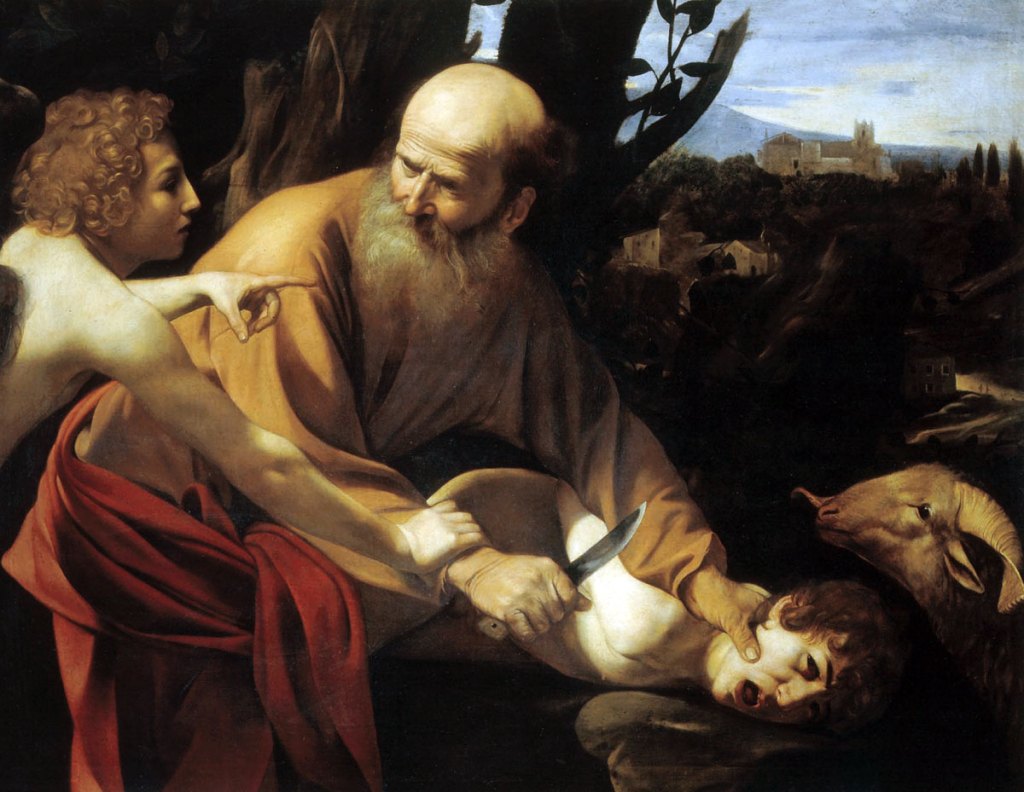

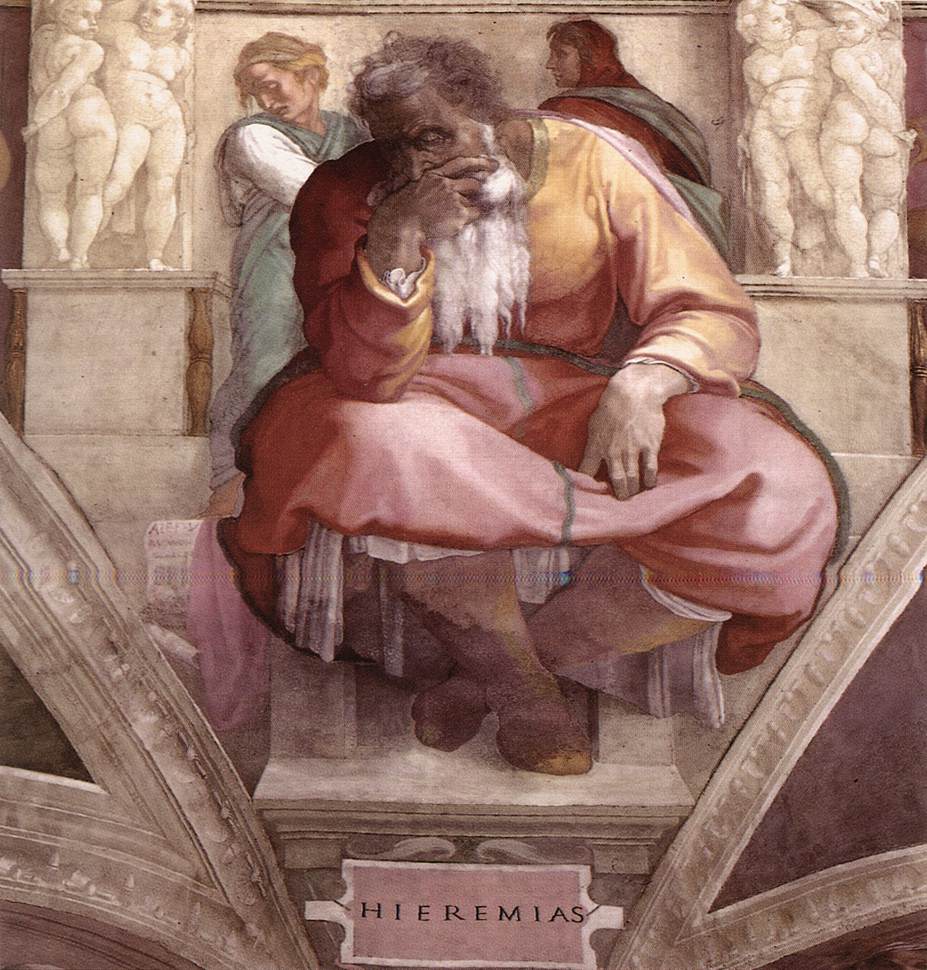


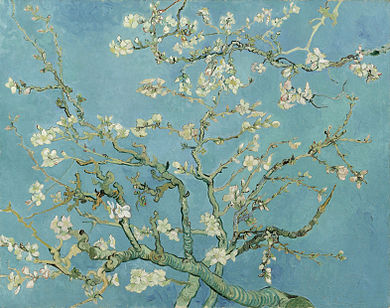


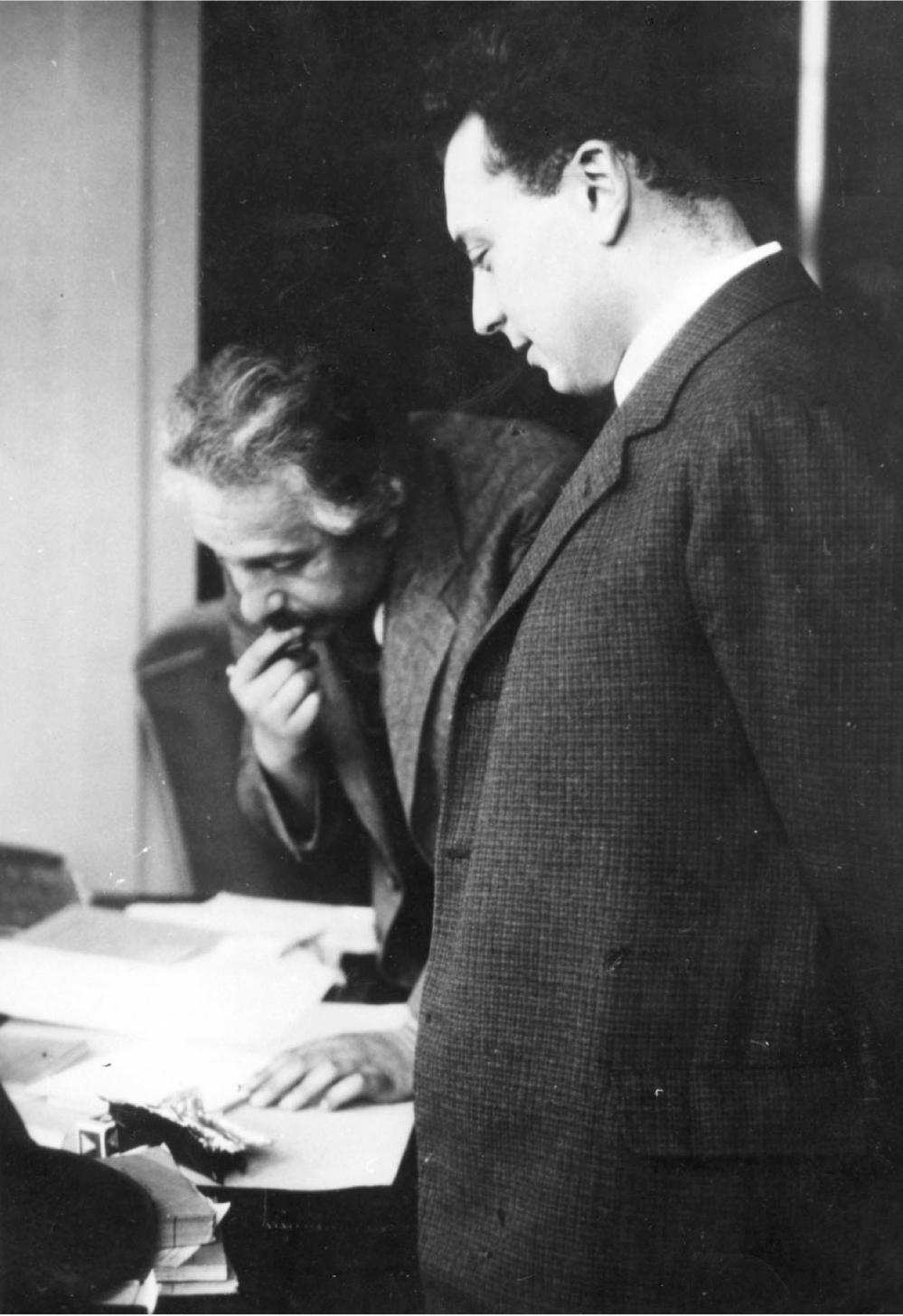

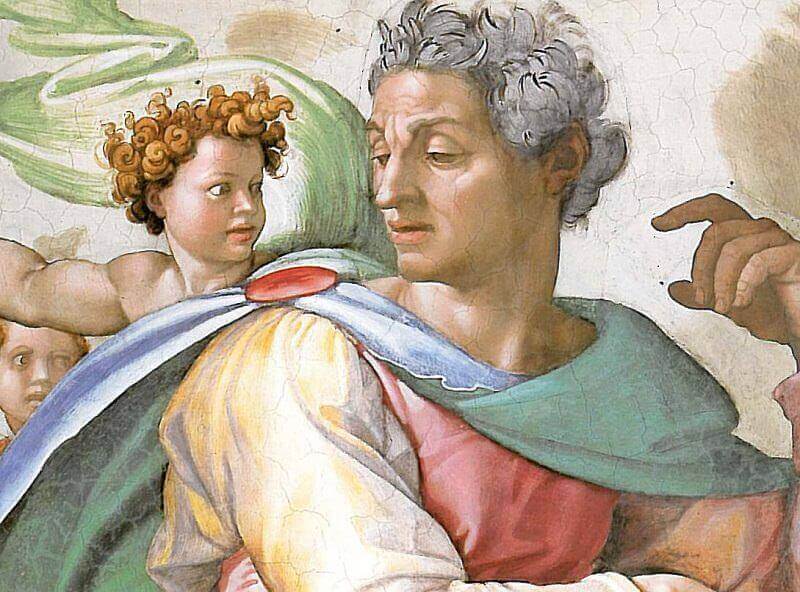







Vous devez être connecté pour poster un commentaire.