Surpassing the Sibyl


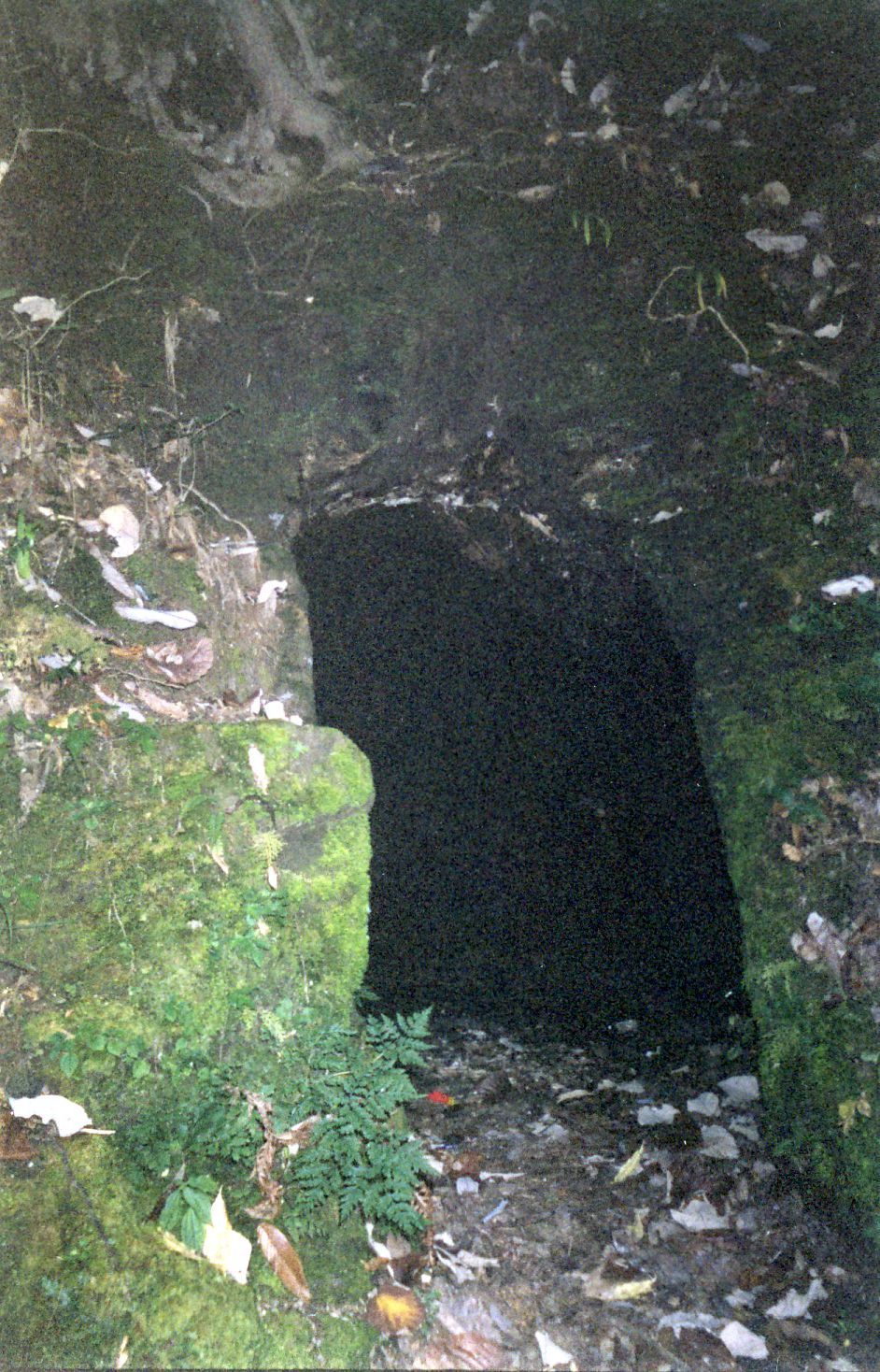
« The Cumaean Sibyl »

There were no ‘prophets’ in archaic and classical Greece, at least if we take this term in the sense of the nebîîm of Israel. On the other hand, there was a profusion of soothsayers, magicians, bacchae, pythias, sibyls and, more generally, a multitude of enthusiasts and initiates into the Mysteriesi … Auguste Bouché-Leclercq, author of a Histoire de la divination dans l’antiquité, emphasises the underlying unity of the sensibilities expressed through these various names: « The mystical effervescence which, with elements borrowed from the cult of the Nymphs, the religion of Dionysus and that of Apollo, had created prophetic enthusiasm, spread in all directions: it gave rise, wherever the cults generating divinatory intuition met, to the desire to inscribe in local traditions, as far back in time as possible and sheltered from any control, memories similar to those adorned by the oracle of Pytho. We can therefore consider these three instruments of the revealed word – pythias, chresmologists and sibyls – as having been created at the same time and as stemming from the same religious movement ».ii

However, it is important to appreciate the significant differences between these « three instruments of the revealed word ». For example, unlike the Pythia of Delphi, the sibyls were not linked to a particular sanctuary or a specific population. They were wanderers, individualists, free women. The character that best defined the sibyl, in comparison with the regular, appointed priestesses, was her « sombre, melancholy temperament, for she was dispossessed of her human and feminine nature, while possessed by the God ».iii The state of divine possession seemed to be a constant part of her nature, whereas the Pythia was visited only occasionally by inspiration.

Heraclitus was the first classical author to mention the Sibyl and the Bacchanalia. He left behind a few fragments that were clearly hostile to Dionysian orgies. He condemns the exaltation and exultation of excess because, as a philosopher of the balance of opposites, he knows that they multiply the deleterious effects and ultimately lead to destruction and death. However, two of his fragments exude a curious ambiguity, a kind of hidden, latent sympathy for the figure of the Sibyl. « The Sibyl, neither smiling, nor adorned, nor perfumed, with her delirious mouth, making herself heard, crossed a thousand years with her voice, thanks to the God ».iv The Sibyl does not smile because she is constantly in the grip of the God. This « possession » is an unbearable burden for her. Her innermost consciousness is crushed by the divine presence. A totally passive instrument of the God who controls and dominates her, she has neither the desire nor even the strength to wear make-up or perfume. In contrast, the priestesses of the temples and official sanctuaries, fully aware of their role and social rank, were obliged to make an effort to represent themselves and put on a show.

The Sibyl belongs entirely to God, even if she denies it. She is surrendered to him, in a trance, body and soul. She has broken all ties with the world, except that of publicly delivering the divine word. It is because she has surrendered herself entirely to the divine spirit that it can command her voice, her language, and make her utter the unheard of, say the unforeseeable, explore the depths of the distant future. In the time of an oracle, the Sibyl can cross a thousand years in spirit, by the grace of God. All the divine power, present or future, is revealed in her. We know, or we sense, that her words will prove far wiser in their ‘madness’ than all human wisdom, though perhaps only in the distant future.

The Pythia of Delphi was devoted to Apollo. But the Sibyl, in her fierce independence, had no exclusive divine allegiance. She might be in contact with other gods, Dionysus, Hades or Zeus himself. According to Pausaniasv , the Sibyl, Herophilia, prophesied to the Delphians to reveal to them the « mind of Zeus », without worrying about Apollo, the tutelary god of Delphi, towards whom she harboured an old grudge.

In fact, we already knew that these different names for the God covered the same mystery. Dionysus, Hades or Zeus are « the same », because everything divine is « the same ». « If it wasn’t for Dionysus that they were doing the procession and sing the hymn to the shameful parts, they would do the most shameless things. But he is the same as Hades and Dionysus, the one for whom they rave and lead the bacchanal. »vi

Heraclitus knows and affirms that Hades and Dionysus are « the same » God, because in their profound convergence, and despite their apparent opposition (Hades, god of death / Dionysus, god of life), their intrinsic unity and common essence emerge, and their true transcendence reveals itself. Those who live only in Dionysian enthusiasm, in bloody bacchanals, are inevitably doomed to death. On the other hand, those who know how to dominate and ride ecstasy can go far beyond the loss of self-consciousness. They can surpass even the initiated consciousness of the mystics, reach a transcendent level of revelation, and finally surpass the Mystery as such.

The Dionysian bacchanals, enthusiastic and ecstatic, ended wit the death of the victims, who were torn apart, butchered and devoured. Heraclitus recognises In ‘Dionysus/Hades’, a dual essence, two ‘opposites’ that are also ‘the same’, enabling us to transcend death through a genuine ecstasy that is not corporeal or sensual, but intuitive and spiritual. Heraclitus rejects the excesses of Dionysian ecstasy and the death that puts an end to them. He is fascinated by the Sibyl, for she alone, and singularly alone, stands alive and ecstatic at the crossroads of life and death. While she is awake, the Sibyl sees death still at work: « Death is all we see, awake… ».vii Made a Sibyl by the God, and possessed by him against her will, she is, in a way, dead to herself and her femininity. She allows herself to be passively « taken » by God, she abandons herself, to allow the life of God to live in her. Living in God by dying to herself, she also dies of this divine life, by giving life to his words. Heraclitus seems to have drawn inspiration from the Sibyl in this fragment: « Immortals, mortals, mortals, immortals; living from those death, dying from those life ».viii Given its unique position as an intermediary between the living and the dead, between the divine and the human, it has been said that the Sibylline type was « one of the most original and noble creations of religious sentiment in Greece ».ix In ancient Greece, the Sibyl certainly represented a new state of consciousness, which it is important to highlight.

Isidore of Seville reports that, according to the best-informed authors, there were historically ten sibyls. The first appeared in Persia, or Chaldeax , the second in Libya, the third in Delphi, the fourth was Cimmerian from Italy. The fifth, « the noblest and most honoured of them all », was Eritrean and called Herophilia, and is thought to be of Babylonian origin. The sixth lived on the island of Samos, the seventh in the city of Cumae in Campania. The eighth came from the plains of Troy and radiated out over the Hellespont, the ninth was Phrygian and the tenth Tiburtine [i.e. operating in Tivoli, the ancient name of Tibur, in the province of Rome].xi Isidore also points out that, in the Aeolian dialect, God was said to be Σιός (Sios) and the word βουλή meant ‘spirit’. From this he deduced that sibyl, in Greek Σιϐυλλα, would be the Greek name for a function, not a proper name, and would be equivalent to Διὸς βουλή or θεοϐουλή (‘the spirit of God’). This etymology was also adopted by several Ancients (Varron, Lactantius,…). But this was not the opinion of everyone. Pausanias, noting that the prophetess Herophilia, cited by Plutarchxii and, as we have just seen, by Isidore, was called ‘Sibyl’ by the Libyansxiii , suggests that Σιϐυλλα, Sibyl, would be the metathesis or anagram of Λίϐυσσα, Libyssa, ‘the Libyan’, which would be an indication of the Libyan origin of the word sibyl. This name was later altered to Elyssa, which became the proper name of the Libyan sibylxiv . There have been many other etymologies in the past, more or less far-fetched or contrived, which preferred to turn to Semitic, Hebrew or Arabic roots, without winning conviction. In short, the problem of the etymology of sibyl is « for the moment a hopeless problem »xv . The history of the sibyl’s name, and the variety of places where it has been used around the Mediterranean and in the Middle East, bear witness to its influence on people’s minds, and to the strength of its personality.

But who was she really?

The Sibyl was first and foremost a woman’s voice in a trance, a voice that seemed to emanate from an abstract, invisible being of divine origin. Witnesses on the lookout wrote down everything that came out of this ‘delirious mouth’. Collections of Sibylline oracles were produced, free from any priestly intervention or established political or religious interests, at least at the origin of the Sibylline phenomenon. Much later, because of its centuries-long success, it was used to serve specific or apologetic interests.xvi In essence, the Sibyl manifested a pure prophetic spirit, contrasting with the conventional, regulated techniques of divination emanating from priestly guilds duly supervised by the powers of the day. It highlighted the structural antagonism between free inspiration, expressing the words of God himself without mediation or pretense, and the deductive divinatory practices of clerical oracles, taking advantage of the privileges of the priests attached to the Temples. Sibylline manticism could also be interpreted as a reaction against the monopoly of the Apollonian clergy, the lucrative privileges of professional diviners and competition from other ‘chresmologists’, whether Dionysian or Orphic.

The latent hostility between the Sibyl and Apollo can be explained by the constant efforts of the Sibyl to take away from the Apollonian priests the monopoly of intuitive and ceremonial divination and replace it with the testimony of direct revelation.

But there is another, more fundamental, and more psychological reading. The Sibyl is a nymph enslaved, submissive to the God. Her intelligence is literally « possessed » by Apollo, she is « furious » about it, but her heart is not takenxvii . In her trance, the Sibyl is dominated by what I would call her « unhappy consciousness ». We know that Hegel defines unhappy consciousness as consciousness that is at once « unique, undivided » and « double »xviii .

The Sibyl is ‘unhappy’ because she is aware that a consciousness other than her own is present within her, in this case that of God. What’s worse, it’s a God she doesn’t love, and who has taken complete possession of her consciousness. And her consciousness is as aware as she is of these two consciousnesses at once.

If you feel that referring to Hegel is too anachronistic, you can turn to authors from the 3rd century BC: Arctinos of Miletus, Lesches of Lesbos, Stasinos, or Hegesinos of Cyprusxix who portrayed Cassandra as the type of unhappy, sad, abandoned sibyl who was thought to be mad. Cassandra became the archetypal model of the sibyl, both messenger and victim of Apollo. According to the myth, Cassandra (or ‘Alexandra’, a name which means « she who drives men away or repels them »xx ) was given the gift of divination and foreknowledge by the grace of Apollo, who fell in love with her and wished to possess her. However, having accepted this gift, Cassandra was unwilling to give him her virginity in return, and « repulsed » him. Dejected by this refusal, he spat in her mouth, condemning her to an inability to express herself intelligibly and never to be believed. Lycophron, in his poem Alexandra, describes Cassandra as « the Sibyl’s interpreter », speaking in « confused, muddled, unintelligible words »xxi . The expression « the Sibyl’s interpreter » found in several translations is itself an interpretation… In Lycophron’s original text, we read: ἢ Μελαγκραίρας κόπις, literally « the sacrificial knife (κόπις) of Melankraira (Μελαγκραίρα) ». The sacrificial knife, as an instrument of divination, can be interpreted metonymically as ‘interpretation’ of the divine message, or as ‘the interpreter’ herself. Melankraira is one of the Sibyl’s nicknames. It literally means « black head ». This nickname is no doubt explained by the obscurity of her oracles or the unintelligibility of her words. A. Bouché-Leclercq hypothesises that Lycophron, in using this nickname, had been reminded of Aristotle’s doctrine associating the prophetic faculty with « melancholy », i.e. the « black bile », the melancholikè krasis xxii, whose role in visionaries, prophets and other « enthusiasts » has already been mentioned.

We could perhaps also see here, more than two millennia ahead of time, a sort of anticipation of the idea of the unconscious, as the « black head » could be associated by metonymy with the idea of « black » thought, i.e. « obscure » thought, and thus with the psychology of the depths.

In any case, Cassandra’s confusion of expression and her inability to make herself understood were a consequence of Apollo’s vengeance, as was her condemnation to being able to predict the future only in terms of misfortune, death and ruin.xxiii

Cassandra, the « knife » of the Melankraira, sung by Lycophron (320 BC – 280 BC) had then become the poetic reincarnation of a much older archetype. When the religious current of Orphism, which emerged in the 6th century BC, began to gain momentum in the 5th century BC, authors opposed to the Orphics were already saying that the Sibyl was « older than Orpheus » to refute the latter’s claims. It was even possible to trace the Sibyl back to before the birth of Zeus himself, and therefore before all the Olympian gods… The Sibyl was identified with Amalthea, a nymph who, according to Cretan and Pelasgian traditions, had been Zeus’ nurse. The choice of Amalthea was very fortunate, because it gave the Sibyl an age that exceeded that of the Olympian gods themselves. Secondly, it did not prevent us from recognising the Ionian origin of the Sibyl, Amalthea being linked indirectly, through the Cretan Ida, to the Trojan « Ida », where Rhea, the mother of Zeus, also dwelled. In other words, Amalthea was linked to the Phrygian Kybele or the Hellenised Great Mother.xxiv I think it is essential to emphasise that this ascent to the origins of the gods reveals that gods as lofty as Apollo and even Zeus also had a ‘mother’ and a ‘nurse’. Their mothers or nurses were, therefore, before them, because they gave them lifexxv .

The awareness of a pre-existing anteriority to the divine (in its mythical aspect) can also be interpreted as a radical advance in consciousness : i.e. as the symptom of a surpassing of mythological thought by itself, – as a surpassing by human consciousness of any prior representation on what constitutes the essence of the Gods.

This surpassing highlights an essential characteristic of consciousness, that of being an obscure power, or a power emanating from the Obscure, as the Sibyl’s name Melankraira explicitly indicates. Sibyl’s consciousness discovers that she must confront at once both the pervasive, dominant presence of the God, and her own, obscure, abyssmal depth. She discovers that she can free herself from the former, and that she can also surpass herself, and all her own profound darkness.

____________

iHeraclitus, Fragment 14: « Wanderers in the night: magi, bacchants, bacchantes, initiates. In things considered by men as Mysteries, they are initiated into impiety. »

iiA. Bouché-Leclercq, Histoire de la divination dans l’antiquité, Tome II, Ed. Ernest Leroux, Paris, 1880, p.142

iiiMarcel Conche, in Heraclitus, Fragments, PUF, 1987, p. 154, note 1

ivHeraclitus. Fragment 92

vPausanias, X,12,6

viHeraclitus. Fragment 15

viiHeraclitus. Fragment 21

viiiHeraclitus. Fragment 62

ixA. Bouché-Leclercq, Histoire de la divination dans l’antiquité, Tome II, Ed. Ernest Leroux, Paris, 1880, p.133

xIt should be noted that three centuries after Isidore of Seville (~565-636), the Encyclopaedia Souda (10th century), while repeating the rest of the information provided by Isidore, nevertheless states that the first Sibyl was among the Hebrews and that she bore the name Sambethe, according to certain sources: « She is called Hebrew by some, also Persian, and she is called by the proper name Sambethe from the race of the most blessed Noah; she prophesied about those things said with regard to Alexander [sc. the Great] of Macedon; Nikanor, who wrote a Life of Alexander, mentions her;[1] she also prophesied countless things about the lord Christ and his advent. But the other [Sibyls] agree with her, except that there are 24 books of hers, covering every race and region. As for the fact that her verses are unfinished and unmetrical, the fault is not that of the prophetess but of the shorthand-writers, unable to keep up with the rush of her speech or else uneducated and illiterate; for her remembrance of what she had said faded along with the inspiration. And on account of this the verses appear incomplete and the train of thought clumsy — even if this happened by divine management, so that her oracles would not be understood by the unworthy masses.
[Note] that there were Sibyls in different places and times and they numbered ten.[2] First then was the Chaldaean Sibyl, also [known as] Persian, who was called Sambethe by name. Second was the Libyan. Third was the Delphian, the one born in Delphi. Fourth was the Italian, born in Italian Kimmeria. Fifth was the Erythraian, who prophesied about the Trojan war. Sixth was the Samian, whose proper name was Phyto; Eratosthenes wrote about her.[3] Seventh was the Cumaean, also [called] Amalthia and also Hierophile. Eighth was the Hellespontian, born in the village of Marmissos near the town of Gergition — which were once in the territory of the Troad — in the time of Solon and Cyrus. Ninth was the Phrygian. Tenth was the Tiburtine, Abounaia by name. They say that the Cumaean brought nine books of her own oracles to Tarquinus Priscus, then the king of the Romans; and when he did not approve, she burned two books. [Note] that Sibylla is a Roman word, interpreted as « prophetess », or rather « seer »; hence female seers were called by this one name. Sibyls, therefore, as many have written, were born in different times and places and numbered ten. »

xiIsidore of Seville. The Etymologies. VIII,viii. Cambridge University Press, 2006, p. 181

xiiPlutarch. « Why the Pythia no longer renders her oracles in verse ». Moral works. Translation from the Greek by Ricard. Tome II , Paris, 1844, p.268

xiiiPausanias, X, 12, 1

xivIt is also another name of Queen Dido.

xvA. Bouché-Leclercq, Histoire de la divination dans l’antiquité, Tome II, Publisher Ernest Leroux, Paris, 1880, p.139, Note 1.

xviThe article « sibyl » in the Thesaurus of the Encyclopaedia Universalis (Paris, 1985) states, for example, on page 2048: « The Jewish sibyl corresponds to the literature of the Sibylline Oracles. The Hellenistic Jews, like the Christians, reworked the existing Sibylline Books, and then composed their own. As early as the 2nd century, the Jews of Alexandria used the sibylline genre as a means of propaganda. Twelve books of these collections of oracles are in our possession (…) The third book of the Sibylline Oracles is the most important of the collection, from which it is the source and model; it is also the most typically Jewish. A pure Homeric pastiche, it reflects Greek traditions, beliefs and ideas (Hesiod’s myth of the races) and Eastern ones (the ancient Babylonian doctrine of the cosmic year). Despite this cultural gap, it remains a Jewish work of apocalypse. It is similar to the Ethiopian Book of Enoch and the Book of Jubilees. Israel’s monotheistic credo runs throughout.

xviiPausanias, X,12,2-3 : « [ the sibyl] Herophilus flourished before the siege of Troy, for she announced in her oracles that Helen would be born and brought up in Sparta to the misfortune of Asia and Europe, and that Troy would be taken by the Greeks because of her. The Delians recall a hymn by this woman about Apollo; in her verses she calls herself not only Herophilus but also Diana; in one place she claims to be Apollo’s lawful wife, in another her sister and then her daughter; she says all this as if she were furious and possessed by the god. In another part of her oracles, she claims that she was born of an immortal mother, one of the nymphs of Mount Ida, and of a mortal father. Here are her expressions: I was born of a race half mortal, half divine; my mother is immortal, my father lived on coarse food. Through my mother I come from Mount Ida; my homeland is the red Marpesse, consecrated to the mother of the gods and watered by the river Aïdonéus« .

xviiiThe unhappy consciousness remains « as an undivided, unique consciousness, and it is at the same time a doubled consciousness; itself is the act of one self-consciousness looking into another, and itself is both; and the unity of the two is also its own essence; but for itself it is not yet this very essence, it is not yet the unity of the two self-consciousnesses… ». G.W.F. Hegel. The Phenomenology of Spirit. Translated by Jean Hyppolite. Aubier. 1941, p.177

xixQuoted in A. Bouché-Leclercq, Histoire de la divination dans l’antiquité, Tome II, Éditeur Ernest Leroux, Paris, 1880, p.148.

xxThe name Alexandra (Alex-andra) can be interpreted as meaning « she who repels or pushes aside men » from the verb άλεξω, to push aside, to repel, and from ἀνήρ, man (as opposed to woman). Cf. Pa ul Wathelet, Les Troyens de l’Iliade. Mythe et Histoire, Paris, les Belles lettres, 1989.

xxi« From the interior of her prison there still escaped a last Siren song which, from her groaning heart, like a maenad of Claros, like the interpreter of the Sibyl, daughter of Neso, like another Sphinx, she exhaled in confused, muddled, unintelligible words. And I have come, O my king, to repeat to you the words of the young prophetess ». Lycophron. Alexandra. Translation by F.D. Dehèque. Ed. A. Durand and F. Klincksieck. Paris, 1853

xxiiRobert Burton, The Anatomy of Melancholy, Oxford, 1621 (Original title: The Anatomy of Melancholy, What it is: With all the Kinds, Causes, Symptoms, Prognostickes, and Several Cures of it. In Three Maine Partitions with their several Sections, Members, and Subsections. Philosophically, Medicinally, Historically, Opened and Cut Up)

xxiii« In Cassandra, the prototype of the sibyls, mantic inspiration, while deriving from Apollo, bears the mark of a fierce and unequal struggle between the god and his interpreter. What’s more, not only was Cassandra pursued by Apollo’s vengeance, but she could only foretell misfortune. All she could see in the future was the ruin of her homeland, the bloody demise of her people and, at the end of her horizon, the tragic conclusion of her own destiny. Hence the sombre character and harshness of the Sibylline prophecies, which hardly foretold anything but calamities, and which undoubtedly owed to this pessimistic spirit the faith with which Heraclitus honoured them ». A. Bouché-Leclercq, Histoire de la divination dans l’antiquité, Tome II, Éditeur Ernest Leroux, Paris, 1880, p.149

xxivA. Bouché-Leclercq, Histoire de la divination dans l’antiquité, Tome II, Éditeur Ernest Leroux, Paris, 1880, p.160

xxvZeus is begotten by his mother and nourished by the milk of his nurse, which can be represented by this diagram: (Cybèle) = Rhéa → Zeus ← Sibylle = (Almathéa)

La conscience à la puissance n


« Pierre Teilhard de Chardin »

L’espèce Homo sapiens, seule représentante actuelle du genre Homo, appartient à la famille des Hominidés, qui comprennent aussi les orangs-outans, les gorilles et les chimpanzés. C’est une famille de Primates, lesquels constituent eux-même un ordre au sein des mammifères placentaires. Ces distinctions d’espèce, de genre, de famille et d’ordre répondent au génie classificatoire des taxonomistes. Mais en tant que telle, l’espèce Homo sapiens reste une sorte d’abstraction, à laquelle il est évidemment possible de donner toujours plus de chair et d’âme, en la considérant dans la multiplicité des individus qui la composent, et aussi, plus conceptuellement, comme la totalité historique, passée, présente et à venir, des myriades de « personnes » qui l’incarnent dans ce monde, aujourd’hui, et qui l’incarneront dans le futur, ici ou ailleurs.

Du point de vue de sa possible destinée à très long terme, tant sur le plan historique que métaphysique, l’espèce Homo sapiens pourrait aussi être vue comme la somme (sans cesse recalculée) de toutes les âmes humaines, l’addition mouvante de leurs espoirs et de leurs effrois, de leurs savoirs et de leurs ignorances, de leurs vertus et de leurs manques. Les individus Homo sapiens offrent telles ou telles combinaisons singulières, au cours d’une vie brève, mais pris dans leur totalité, ils ajoutent ces singularités au fonds commun de l’espèce, laquelle, dans la durée longue, en fait un tout autre usage et poursuit de tout autres fins que celles poursuivies par des individus si fugaces.

L’espèce humaine, prise comme ce tout, cet ensemble à la fois totalisé et toujours à totaliser, compose de ce fait une entité fort étrange, que l’on pourrait voir comme étant elle-même dotée d’une âme et d’une destinée propres, n’apparaissant pas clairement à ceux-là mêmes qui en font objectivement partie.

Autrement dit, les hommes et les femmes, les individus de l’espèce Homo sapiens ne savent pas vraiment qui ils sont en réalité (au-delà de ce que leur laissent voir leurs propres personnalités), ni quelle est l’essence de leur espèce.

Génération après génération, ils y contribuent pourtant, comme des lucioles à la nuit, ou des étoiles au jour. Leurs lumières vacillantes n’éclairent pas les confins de l’espace, ni la fin des temps. Ils sont tissés d’obscur et d’absence. Ils se voient égarés dans un monde beaucoup plus grand que leur petitesse, plus indifférent que leurs désirs, plus inflexible que leur indolence. Ils sont de plus en plus piégés par leur ombre, cernés par leur propre nombre, l’épuisement des ressources et la torpeur des volontés. De leurs fourmillements actifs, de leurs mobilités contingentes, n’émergent en fin de compte qu’inertie, exténuation. Leurs consciences isolées, séparées, limitées, et même « terrorisées », ont renoncé à la montée de la Conscience. Ils se savent enfermés dans un monde clos, serré, muré, et ils s’y découvrent plus séquestrés que leur CO2.

Malgré tout, les hommes et les femmes ont des soifs. Soif d’être distingués (dans leur foule), d’être accomplis (dans leur inachèvement), d’être justifiés (dans leur infirmité). Ils et elles ont aussi des puissances. Puissance de réfléchir, de s’allier, et point critique, puissance de se dépasser, de franchir par la pensée ou le rêve des limites censées indépassables. Jadis, l’Homme, déjà « moderne » en un sens, aimait encore se croire, cosmiquement et ontologiquement, au centre de l’Univers… Aujourd’hui, l’Humanité dessoûlée se sait reléguée dans un coin reculé d’une galaxie insignifiante, elle-même perdue dans quelque superamas. Que signifie cette insignifiance? Est-elle relative ou absolue ? Mais, peut-être, la notion de « place », dans un univers sans centre, n’a-t-elle pas de sens ? Peut-être faudrait-il la remplacer par une autre idée, une autre métaphore, comme celle de mouvement intérieur? Peut-être aurions-nous besoin d’un anthropocentrisme du mouvement de l’esprit plutôt que d’une cosmologie des lieux et des corps?

Dans cette vue, l’Homme peut se considérer comme un éternel migrant, s’orientant par quelque étoile interne, vers d’autres centres de l’être, d’autres géographies ignorées du cosmos même. Cette émigration perpétuelle s’explique par l’élan même de l’âme. L’âme se meut toujours, et l’un de ces mouvements est celui de la critique. Il y a aussi l’effervescence biologique et sociale résultant de la compression accrue, par le resserrement, la contraction, l’écrasement dus au nombre.

D’ailleurs, sans même recourir à quelque anthropocentrisme que ce soit, ce chauvinisme et ce provincialisme de l’espèce, parfaitement déplacés pour quiconque jette son regard au-delà des horizons, on pourrait dès maintenant faire l’hypothèse que les forces actives derrière le processus de l’hominisation sont en réalité de nature « universelle ». En effet, quoi de plus universels que le mouvement, la totalisation, la compression? De cela, on peut inférer qu’il y a sans doute, de par les vastes mondes, d’innombrables formes d’évolution, fort différentes peut-être, mais aussi analogues dans leur principe même à celles qui façonnent l’Anthropocène : accroissement, complexité, conscience – qui toutes en somme tendent à la convergence. De cette idée de convergence découle peut-être la capacité de l’Univers à fabriquer son propre sens.

Or aujourd’hui, la science moderne, ainsi que les philosophies bien trop complaisantes qu’elle entretient dans sa cour, traitent l’Homme comme une simple machine, aux rouages neuronaux et biochimiques certes complexes. Une machine complexe, mais une machine.

Dans la mode du jour, dans les laboratoires, dans les universités et dans les centres du conformisme épistémologique, sont méprisées ou ignorées comme non pertinentes les leçons des grandes traditions spirituelles (par exemple la chamanique, la védique, l’égyptienne, la juive, la bouddhiste, la chrétienne, pour n’en citer que quelques-unes des plus saillantes). Sont royalement ignorées les intuitions visionnaires des poètes, des philosophes et des mystiques.Tout cela n’est que chimères fumeuses, bavardages futiles, disent les « modernes ». Que représentent ces rêveries, comparées aux certitudes tangibles apportées par des nombres, des images, des théories, des équations ?

Du point de vue de la doxa moderne, le « phénomène humain » n’aurait pas de Grand Récit justifiant sa fondation et sa Genèse. L’Homme ne serait rien de plus que le résultat d’une suite de hasards convergents, entièrement explicables par la logique du matérialisme et le mors du déterminisme. On ne voit plus la singularité de l’espèce humaine, sa particularité, son exception. On « démontre » seulement sa banalité supposée, sa trivialité relative dans le monde bariolé de la Biosphère. On ne préfère lire que sa ressemblance avec les autres êtres vivants, dont il partage nombre de gènes, et tant de traits comportementaux, liés à la structure fondamentale des vivants : à savoir la génération, la croissance, le dépérissement, la mort. On se rappelle volontiers quelques-unes des dernières étapes de l’évolution du vivant, dont notre planète garde la trace. Dès la fin du Tertiaire apparurent sur la Terre des animaux « pensants », c’est-à-dire doté d’une proto-conscience, préparant la voie des premiers Primates puis des Hominidés et des Hominiens.

La conscience est sans doute, sous ses différentes formes, les plus modestes, comme les plus aiguës, chose universellement partagée. Mais il faut aussi voir en chaque homme sa spécificité, son essence propre, qui est à l’affût dans son esprit invisible, dans sa conscience tapie. Toutes ces consciences peuvent en puissance s’agréger comme une Toile mentale, un Web mondial. La Noosphère commence à recouvrir la Biosphère de son voile de conscience…

Je fais partie de ceux qu’obsède une autre évidence : l’Homme représente l’un des infimes résultats de forces immenses, à l’échelle cosmologique ; il est le produit de fins mécanismes de transformation énergétique et de mutations continues, à l’œuvre au cœur de la matière, depuis des milliards d’années, à des échelles que nous ne soupçonnons pas, et à des fins dont nous n’avons aucune idée… Parmi ces « mécanismes » fondateurs, qui sont pourtant rien moins que mécaniques, il y eut d’abord la quantification de l’énergie. Depuis l’aube du monde , l’énergie primordiale, celle qui devait irradier l’ensemble de l’existant, prit des formes granulaires, corpusculaires, photoniques, atomiques. Des premiers états quantiques, produisant particules, corpuscules , atomes, devaient découler dans la suite des temps une infinie variété de combinaisons et de recombinaisons, une valse sans fin de ré-arrangements, une danse continue d’ultra-mixtions.

D’autre part, les forces de la Gravité, d’une autre nature que quantique, jouèrent leur partition sur d’immenses nuages de gaz. La Matière s’agrégea progressivement en galaxies, en étoiles, en planètes. Les forces électro-magnétiques, quant à elles, agirent sans relâche dans les soupes chimiques. S’y formèrent des molécules toujours plus longues, plus entortillées, plus enveloppantes, comme si elles cherchaient à se faire le nid souple, vibrant, de leur propre couvaison. S’ouvrit le riche royaume de la chimie organique, où se complurent à l’association et à l’interaction des myriades d’atomes et de molécules, se liant organiquement en gigantesques macromolécules et en protéines de plus en plus protéiformes (c’est le cas de le dire). De celles-ci, inévitablement, comme disent les déterministes, surgirent les premières sortes de proto-vie, et les composants nécessaires de ce qui devait alimenter d’autres formes de vie naissantes, dans une inépuisable variété, du ciron au potiron, de la phalène à la baleine. On a mis en parallèle la complexification propre au vivant, à l’échelle biologique, et la complexité propre à l’univers, à l’échelle cosmologique. On a constaté que les ordres de grandeur qui interviennent dans la gamme des entités biologiques, depuis les plus simples (les virus) jusqu’aux plus complexes (le cerveau humain), est en quelque sorte analogue aux ordres de grandeur qui séparent les particules élémentaires des superamas galactiques. Autrement dit, on a découvert que la « complexité » d’un cerveau humain par rapport à un simple virus est analogue à celle de l’univers entier par rapport à un seul électroni… De là, il est aisé de supposer que les phénomènes de la vie et de la conscience observés ici-bas dépendent de forces qui intéressent le cosmos tout entier, dans une sorte d’intégration totale, – des forces universelles (et non pas accidentelles), capables de porter la matière à de très hauts degrés de concentration et d’arrangement internes.

Il est également aisé de supposer que, partout dans l’univers où de tels degrés de concentration pourraient apparaître, il faudrait légitimement s’attendre qu’existent des formes de vie et de conscience semblables, ou plus vraisemblablement encore, pour une forte proportion d’entre elles, très supérieures à celles que nous connaissons sur cette Terre. Il ressort également de tout ceci que le niveau de conscience est en quelque sorte le marqueur principal du niveau de complexité atteint par son substrat provisoire, dans le système nerveux et cérébral. La compression générale, que la Gravité rend possible et entretient, est un moyen de garder à l’intérieur d’un monde ainsi de facto refermé, gravitationnellement clos, un nombre astronomique d’éléments constamment réorganisés, pendant des temporalités immenses, leur permettant d’innombrables arrangements et recombinaisons, comme on l’a dit. Mais comment expliquer que les combinaisons les plus complexes et, de ce fait, les plus prometteuses pour d’autres combinaisons à venir, puissent se conserver, perdurer et continuer d’évoluer dans un monde soumis à tant de forces et à tant de pressions, en dépit de leur rareté et de leur fragilité intrinsèques ? Les expressions de « gravité de deuxième espèce » et de « gravité de complexité » ont été proposées pour dénommer cette ténacité à survivre et à subsister de molécules puis de cellules et d’organismes toujours plus complexes, nonobstant leur fragilité intrinsèque.

La science moderne vit encore sous le signe trop exclusif de l’entropie, de l’usure et de la désintégration universelle. Il serait temps de reconnaître que, perpendiculairement (en quelque sorte) à cette immanence de l’entropie, s’élève toujours plus un courant irrésistible de complexification et de conscience croissantes. Ce courant, cet axe de « complexité-conscience », se traduit dans l’espèce humaine par les phénomènes de croissance des capacités neuronales et cognitives, mises en évidence par le cerveau humain, et plus généralement par toutes les autres formes de conscience que les systèmes nerveux présents dans la Nature rendent conjecturables.

Avant que la vie n’apparaisse, les plus grosses molécules que l’on pouvait rencontrer dans les eaux ou dans la terre, n’étaient encore que des amas, des agglomérats, des assemblages physico-chimiques. Sinon inertes, du moins plutôt inactives par elles-mêmes, ces grosses molécules étaient livrées aux lois de la physique et de la chimie. Elles n’étaient encore que matière anonyme, substance répétée, soumise à ces lois inflexibles. Par contraste, dès que la vie est apparue, ces molécules standards, jusqu’alors constamment réitérées, se mettent à muter et à se reproduire toujours plus efficacement, multipliant les individualités et formant des groupes, des familles, et des bassins d’espèces zoologiques, faisant croître par là leurs possibilités de tâtonnements, d’essais et d’erreurs, de regroupements et de clivages, de mutations et d’apparitions de nouvelles spéciations.

La complexification du vivant, cette ruée vers l’avenir, se fait désormais en réseau, selon plusieurs axes simultanés, et elle est d’autant plus exponentielle. Ainsi se constituent de nouveaux phyla, de nouvelles « unités zoologiques », chacune comprenant une « population » composée d’espèces proches, à la fois légèrement différentes, et aussi potentiellement divergentes. Toutes ces formes, dans leur bouillonnement, continuent de se développer en faisceau, par des successions de mutations s’additionnant les unes aux autres toujours dans le même sens, comme s’il s’agissait de confirmer une percée dans les murailles du possible, ou de confirmer une sorte de « préférence » de l’évolution pour une direction privilégiée, à l’échelle de durées dépassant le million d’années. Cette « préférence » pourrait s’interpréter comme une force fondamentale, orientant « toute Matière vers le plus compliqué et le plus conscient »ii. La forêt de la Vie sur terre semble une jungle, impénétrable à l’analyse. La place de notre espèce ne peut s’y trouver aisément du point de vue morphologique, même si du point de vie comportemental, elle semble la forme qui se sera révélée la plus mortifère et la plus délétère pour toutes les autres formes de vie. N’y a-t-il pas cependant un moyen de démêler dans ce fouillis inextricable de phyla une sorte de principe majeur d’évolution, d’axe explicatif? La loi de « complexité-conscience » déjà évoquée pourrait aider à formuler une hypothèse à ce sujet.

Chez les vivants supérieurs, le système nerveux a tendance à se regrouper ici et là en ganglions de plus en plus importants, qui ne sont pas sans rapports avec la tendance à la céphalisation et la cérébralisation. D’âge en âge la masse de matière « cérébralisée » n’a pas cessé d’augmenter au sein de la Biosphère. Cela s’observe dans le cas des Primates, d’abord apparus au Tertiaire inférieur sous la forme de très petits animaux, puis séparés en deux groupes au Tertiaire moyen, dont l’un, centré sur l’Afrique, devait connaître un destin mondial. A partir du Miocène, la culmination des Primates de type anthropoïde se confirma, avec l’Afrique pour foyer principal. Après plus de deux milliards d’années d’exploration dans toutes sortes de direction, et bien avant l’apparition du genre Homo, la singularité fondamentale du groupe des Primates éclata : elle fut de diriger toujours son évolution selon l’axe d’une « complexité-conscience » croissante.

Pendant le dernier million d’années de l’évolution sur Terre, a été crevé le plafond nocturne qui empêchait encore d’atteindre le vrai soleil de la conscience. A la fin du Pliocène, la Terre était encore entièrement « sauvage », sans trace de civilisation ou de culture. Aujourd’hui, c’est la nature sauvage qui a presque disparu, remplacée par la « civilisation humaine » qui occupe intégralement la Terre. Tout cela en un temps très court à l’échelle du Cosmos : un seul petit million d’années. Quelque chose de majeur, d’inouï a donc dû se passer au début du Quaternaire dans le domaine de la vie. Mais quoi ? Où ? Au sein de quelle espèce? Chez les Australopithèques, ces Singes à petites canines, se tenant debout ? Chez les Pithécanthropes, déjà des Hommes, mais au crâne aplati et simiesque ? La différence entre les pré- ou para-hominiens et les proto-hominiens peut être difficile à objectiver, tant elle ne semble pas plus significative qu’entre deux familles hominoïdes voisines. Il faut se résoudre à ce constat. Le facteur-clé qui a permis l’explosion du phylum hominien, lui donnant la souveraineté de la Terre, reste encore inconnu, invisible, inexplicable en essence. C’est pourquoi nombre de paléontologues soutiennent encore qu’entre Hominiens et Anthropoïdes, il n’y a aucune différence de « nature », mais seulement une différence de « degré ». Dans cette explication qui n’explique rien, l’Homme ne serait qu’un Singe se tenant plus souvent debout, mais peut-être un peu plus malin que les autres…

Pierre Teilhard de Chardin s’est élevé avec véhémence contre cette lecture de l’évolution. Il a supposé qu’eut lieu en ce début du Quaternaire un moment capital. L’Anthropoïde que l’on devait plus tard appeler l’Homme, soudain n’a plus été seulement « un être qui sait », mais il est devenu « un être qui sait qu’il sait ». Il s’est découvert « une conscience à la deuxième puissance »iii. Par cette « conscience au carré », l’Hominidé accéda d’un seul coup, et non par « degrés », à un monde totalement nouveau, son monde intérieur, le monde de la pensée, qui faisait de l’Univers, un Univers pensé. Ce n’était plus là seulement le monde de l’espace et du temps soudainement accessible à la pensée et à la conscience. C’était surtout les premières itérations du tissage, jamais cessées depuis, d’un nuage de conscience pensante, enveloppant la Terre, mais aussi s’élevant vers le Ciel, et s’enfonçant, par la puissance des mythes, dans les antres du lointain passé et dans les cavernes de la mort. La « conscience au carré », phénomène inouï, imprévisible, livrait d’un seul coup à l’Homme ainsi oint, le monde terrestre tout entier, mais aussi l’Univers total, comme un butin nouveau. La suite a montré que l’au-delà même de l’Univers, et ce qui était avant sa Genèse, n’étaient plus dès lors hors des limites de son intelligence. Son intelligence s’est doublement éveillée, elle s’est éveillée à elle-même par la lumière de la conscience, et éveillée à tout ce qui n’est pas elle-même, par le truchement de tout ce que la conscience peut pressentir en elle d’inconscient. L’apparition de la conscience, ce savoir du fait que l’on sait, a été l’élément déclencheur. Et les ondes réverbérantes de cette explosion initiale ne font jamais que commencer à s’étendre de par l’univers…

Mais accrochez-vous. On n’a encore rien vu. Tout reste à accomplir. « Un être qui sait » ne peut s’arrêter en si bon chemin. Il peut se mettre illico à réfléchir sur le fait qu’il est aussi « un être qui sait qu’il ne sait pas » (ce qui fut le privilège de Socrate de l’avoir formulé en langue claire). Il peut se mettre à se douter qu’il est aussi « un être qui ne sait pas qu’il ne sait pas », ignorance fatale, que l’on peut cependant quelque peu corriger en méditant sur l’essence de l’infinité des choses dont on sait qu’on les ignore, et plus encore sur l’infinité des choses dont on ignore absolument le fait même qu’on les ignore… Mais comment expliquer que cette rupture décisive, ce saut de l’ange de l’Homme dans l’immense univers de la pensée et de la conscience ne se soit pas traduit également par une rupture analogue du point de vue morphologique ? Quelque artifice génial de connexion et d’arrangements de neurones (que les bons professeurs de neurosciences décèleront un jour peut-être dans leurs imageries?) a-t-il permis de faire le pas crucial séparant le cerveau « réfléchissant » de l’Homme de celui « non réfléchissant » du Chimpanzé ? Il est fascinant, me semble-t-il, que l’apparition d’une précieuse mutation neuronale, peut-être apparemment minimale, ait permis une telle explosion macro-évolutive de la « pensée se pensant », de « la conscience consciente de soi ».

Il ne faut pas cesser de marteler ce point sensible, ce point S : celui du soi. Il y a seulement quelques centaines de milliers d’années, l’Homme est apparu soudainement au milieu des Pongidés, ces Primates hominoïdes aujourd’hui en voie de disparition terminale. Cela fut un événement comparable à l’émergence, il y a deux ou trois milliards d’années, des premières molécules « vivantes » au milieu de la soupe primordiale des protéines « mortes », ou du moins inertes. La conscience au carré, cette conscience de la conscience, n’est pas simplement un nouvel attribut permettant plus tard à Homo de se nommer (fort improprement) Sapiens. Il s’agit de beaucoup plus que cela. Dans le sein bouillonnant de la vie, est apparue une autre espèce de Vie. Ce sera la gloire ineffaçable du Pliocène d’avoir vu naître cette nouvelle espèce de vie, la Vie de la Conscience. On n’a pas fini de mesurer les implications de cette révolution, non copernicienne, mais sapientiale. L’Homme, inexplicablement, s’est ouvert la voie vers les étoiles, dont les plus brillantes brillent dans des cieux inaccessibles à la simple vision. Avec l’Homme, a donc été révélé un nouvel élément fondamentale quant à la nature même de ce monde. L’Homme n’est objectivement qu’une sorte de bref néant, face à l’amplitude de l’univers et à la radicalité des mystères. Mais s’il peut, d’un seul coup, atteindre à la conscience même de son propre néant, sans renoncer à la puissance de son esprit, alors cela incite à penser que, statistiquement, de par le monde, de vastes esprits, sages comme des millions de Messies, moins provinciaux que nos prophètes des âges passés, sont déjà à l’œuvre, ailleurs, loin d’ici, en termes de parsecs, mais pas si loin, si toutes les consciences ont vocation à s’intriquer.

Comment s’assurer de la validité de cette hypothèse de recherche? Il faut faire confiance en la puissance future de la conscience, de la pensée et de l’intuition, pour progresser sur cette voie (royale). L’Homme n’est sans doute qu’un pion minuscule dans l’échiquier d’infinies dimensions qu’est l’Évolution. Mais il a déjà su mettre sa conscience au carré. Le temps se rapproche où il saura l’élever à la puissance n.

_________

iCf.P. Teilhard de Chardin. L’Apparition de l’Homme. Ed. du Seuil, Paris, 1956, p. 301

iiP. Teilhard de Chardin. L’Apparition de l’Homme. « Les trois peurs de l’espèce humaine et leur remède ». Ed. du Seuil, Paris, 1956, p. 308

iiiP. Teilhard de Chardin. L’Apparition de l’Homme. « Les trois peurs de l’espèce humaine et leur remède ». Ed. du Seuil, Paris, 1956, p. 314

About Secrets still Buried in the Dark Depths of the Earth


« Immanuel Kant »

Consciousness, obviously, is capable of grasping abstract, immaterial ideas – for example, the principle of non-contradiction or the concept of universal attraction. Can we deduce from this that consciousness is itself immaterial in nature? Materialists deny it. Consciousness is not immaterial, they say; it is only ever the material emanation of the material substance of material bodies. But then, how can we explain the fact that purely ‘material’ entities are capable of conceiving pure abstractions that are essentially unconnected with the material world? How could a consciousness that is only ‘material’ link up and interact adequately with all the beings of unknown essences that make up the world, with the various natures that surround or subsume it? What could be the stuff of the links between a ‘material’ consciousness with beings a priori totally unrelated to its own ‘matter’? In particular, how can a ‘material’ consciousness, confined in a ‘material’ body, interact effectively with other consciousnesses, themselves confined in other bodies? How can we imagine that a consciousness could link up (materially) with other beings existing in act, or in potential, throughout the world, and that it could penetrate (materially) their essence?

All these difficult questions were dealt with by Kant in his lively little work, Dreams of a Man Who Sees Spiritsi. But Kant does not adopt a materialist point of view. Quite the contrary. In this book, he asserts that consciousness (which he calls the ‘soul’) is immaterial, just as what he calls the ‘intelligible world’ (mundus intelligibilis, the world of ideas and thoughts), – immaterial. This ‘intelligible world’ is the proper ‘place’ of the thinking self, because the latter can go there at will, detaching itself from the material, sensible world. Kant also asserts that human consciousness, although immaterial, can be linked to a body, the body of the self, from which it receives material impressions and sensations from the organs of which it is composed. Consciousness therefore participates in two worlds, the material and sensible world and the immaterial and intelligible world, – the world of the visible and that of the invisible.

The representation that consciousness has of itself as being a ‘spirit’ (Geist), when it considers itself in its relations with other consciousnesses, is quite different from the representation it has when it sees itself as being attached to a body. In both cases, it is undoubtedly the same subject who belongs at the same time to the sensible world and to the intelligible world; but it is not the same person, because the representations of the sensible world have nothing in common with the representations of the intelligible world, says Kant. What I think of myself as a living, feeling, carnal being is not on the same level, and has nothing to do with my representation as (pure) consciousness.

Conversely, the representations that I may hold of the intelligible world, however clear and intuitive they may be, are not sufficient to give me a representation of my consciousness as a human being. The representation of oneself as (pure) consciousness can be acquired to a certain extent by reasoning or induction, but it is not naturally an intuitive notion, and it is not obtained through experience.ii

Consciousness does indeed belong to a single subject, who participates in both the « sensible world » and the « intelligible world », but consciousness is also twofold. It is not « the same person » when it represents itself as « pure consciousness » and when it represents itself as « attached to a (human) body ». The fact that it is not « the same » in these two cases implies an inherent, profound duality – consciousness is a dual being. Here, for the first time, Kant explicitly introduces the expression « duality of the person » (or « duality of the soul in relation to the body »iii). This duality can be inferred from the following observation. Some philosophers believe they can refer to the state of deep sleep when they want to prove the reality of ‘obscure representations’. We can only observe that they are no longer clearly present in us when we wake up, but not that they were really ‘dark’ when we were asleep.

For example, we might well think that they were actually clearer and more extensive than the clearest representations we have in the waking state. This is indeed what we might expect of consciousness when it is perfectly at rest, and separated from the external senses, Kant concludes.

Hannah Arendt found this particular idea ‘bizarre’iv, without further explaining or justifying her trenchant judgment. Perhaps it seems indeed ‘bizarre’ to assert that consciousness thinks more clearly and more extensively in deep sleep, and that it is then more ‘active’ than in the waking state? Or does it seem ‘bizarre’ to present consciousness not as ‘one’ but as ‘two’, this duality implying a contradiction with the unified idea that consciousness might a priori have of its own nature? Consciousness feels the intrinsic unity it possesses as a ‘subject’, and it also feels, as a ‘person’, endowed with a double perspective, one sensible and the other intelligible. It may therefore seem ‘strange’ that the soul should think of itself as both one and two, – ‘one’ (as subject) and ‘two’ (as person).

This intrinsic duality creates a distance between consciousness and itself, an inner gap within itself. It reflects a gap between the ‘waking’ state (where the feeling of duality is revealed) and the ‘deep sleep’ state, where the feeling of duality evaporates, revealing the true nature of consciousness.v

To ward off this ‘oddity’, Hannah Arendt proposed an explanation, or rather a paraphrase of Kant’s note: « Kant compares the state of the thinking self to a deep sleep in which the senses are at complete rest. It seems to him that, during sleep, the ideas ‘may have been clearer and more extensive than the clearer ideas of the waking state’, precisely because ‘the sensation of man’s body was not included in it’. And when we wake up, none of these ideas remain ».vi What seems ‘bizarre’ to Hannah Arendt, we then understand, is that after consciousness has been exposed to ‘clear and extensive’ ideas, none of this remains when it wakes up. Awakening erases all traces of the activity of consciousness (or of the ‘soul’) in the deep sleep of the body. Even if there is nothing left, there is at least the memory of an immaterial activity, which, unlike activities in the material world, does not encounter any resistance or inertia. There also remains the obscure memory of what was then clear and intense… There remains the (confused) memory of having experienced a feeling of total freedom of thought, freed from all contingencies. All these memories cannot be forgotten, even if the ideas conceived at the time seem to escape us. It is possible to conjecture that the accumulation of these kinds of memories, these kinds of experiences, will end up reinforcing the idea of the existence of a consciousness that is independent (of the body). By extension, and by analogy, these memories and experiences of deep sleep constitute in themselves an experience of ‘spirituality’, and reinforce the idea of a spirit world, an ‘intelligible’ world, separate from the material world. The consciousness (or spirit) that becomes aware of its power to think ‘clearly’ (during the body’s deep sleep) also begins to think of itself as being able to distance itself from the world around it, and from the matter that constitutes it. But its power to think ‘clearly’ does not allow it to leave this world, nor to transcend it (since waking up always happens – and with it forgetting the ‘clear’ thoughts of deep sleep).

What does this sense of distance from the world bring to consciousness?

Consciousness can see that reality is woven from appearances (and illusions). In spite of the very profusion of these appearances (and illusions), reality paradoxically remains stable, it continues unceasingly, it lasts in any case long enough for us to be led to recognise it not as a total illusion, but as an object, and even the object par excellence, offered to our gaze as conscious subjects.

If we do not feel able to consider reality as an object, we may at least be inclined to consider it as a state, durable, imposing its obviousness, unlike the other world, the ‘intelligible world’, whose very existence is always shrouded in doubt, of improbability (since his kingdom can only be reached in the abyss of deep sleep).

As subjects, we demand real objects in front of us, not chimeras or conjectures – hence the insignificant advantage given to the sensible world. Phenomenology teaches that the existence of a subject necessarily implies that of an object. The object is what embodies the subject’s intention, will and consciousness. The two are linked. The object (of intention) nourishes consciousness, more than consciousness can nourish itself – the object ultimately constitutes the very subjectivity of the subject, presenting itself to her attention, and even instituting itself as her conscious intention. Without consciousness, there can be neither project nor object. Without an object, there can be no consciousness. Every subject (every consciousness) carries intentions that are fixed on objects; in the same way, the objects (or ‘phenomena’) that appear in the world reveal the existence of subjects endowed with intentionalities, through and for whom the objects take on meaning.

This has a profound and unexpected consequence.

We are subjects, and we ‘appear’, from the very beginning of our lives, in a world of phenomena. Some of these phenomena also happen to be subjects. We then gradually learn to distinguish between phenomena that are merely phenomena (requiring subjects in order to appear), and phenomena that eventually reveal themselves to us as being not just phenomena, of which we would be the spectators, but as other subjects, and even subjects who are intrinsically ‘other‘, subjects whose consciousness can be conjectured as radically ‘other‘. The reality of the world of phenomena is thus linked to the subjectivity of multiple subjects, and innumerable forms of consciousness, which are both phenomena and subjects. The world represents a ‘total phenomenon’, whose very existence requires at least one Subject, or Consciousness, that is not merely a ‘phenomenon’.

In other words, if a thought experiment were to presuppose the absence of any consciousness, the non-existence of any subject, in the original states of the world, would we necessarily have to conclude that the ‘phenomenal’ world did not exist in this time of ‘genesis’? Undoubtedly. The ‘phenomenal’ world would not then exist, insofar as phenomenon, since no subject, no consciousness, would be able to observe it.

But another conjecture is still possible. Perhaps, in this time of ‘genesis’, there are subjects (or consciousnesses) that are part of another world, a non-‘phenomenal’ world, a ‘noumenal’ world, the ‘intelligible world’ evoked by Kant?

Since there can be no doubt that the world and reality began to exist long before any human subject appeared, we must conclude that other kinds of consciousness, other kinds of ‘subjects’ already existed then, for whom the world in the state of phenomenon, total and inchoate, constituted an ‘object’ and embodied an ‘intention’. In this case, the world has always been an object of subjectivity, of ‘intentionality’, of ‘desire’, right from its genesis.

It remains to try and imagine for which subjects, for which consciousnesses, the emerging world could then reveal itself as an object and as a phenomenon. We can hypothesise that this primal subjectivity, endowed with an ‘intentionality’, a ‘desire’, pre-existed the appearance of the world of phenomena, in the form of an original power to will, to desire, and to think. Man retains a ‘mysterious’ trace of this ancient, primal power, insofar as he is ‘thought made flesh’. « For the philosopher, speaking from the experience of the thinking self, man is, quite naturally, not only the Word, but Thought made Flesh; the always mysterious incarnation, never fully elucidated, of the ability to think ».vii Why is this incarnation ‘mysterious’? Because no one knows where thinking consciousness comes from, and even fewer can guess at the multiplicity of forms it has taken in the universe since the beginning, and may yet take in the future.

Since our only guide in this search is consciousness itself, we must return to it again and again. Every consciousness is unique because it recreates (in its own way) the conditions of the spirit’s original freedom. This freedom was not only that of the first man, but also of all that preceded him, of all that was before him and without him – of all that was non-human.

All consciousness is singular, and the solitary thinker recreates in his own way the absolute solitude of the first Man, the first Thinker. « While a man lets himself go and simply thinks, about anything for that matter, he lives totally in the singular, that is to say in complete solitude, as if the Earth were populated by one Man and not by men ».viii

Who was the first man, the first thinker to be « alone »? The one the Bible calls Adam? The one the Veda calls Puruṣa? Or some primal, original Spirit, creating in the thinker the living object of his living thought, and thereby creating the conditions for the engendering of a living multitude of other ideas (and other minds)?

We owe it to Parmenides and Plato, thinkers of the first depths, to have celebrated a few primordial spirits, among the most ancient of whom the world has preserved a memory. They admiringly quoted those sages who had lived long before them in ‘the life of intelligence and wisdom’, that life of Noûs and Sophia, which not all men know, but which all may wish to know. Intelligence and wisdom indeed « live », in the literal sense, for they live by the life of the Spirit. From the beginning, Socrates asserts, the Spirit, the Noûs, has been the « King of heaven and earth »: νοῦς ἐστι βασιλεὺς ἡμῖν οὐρανοῦ τε καὶ γῆς.ix

In this the Sirach agrees with Socrates, and goes back even further: « Wisdom was created before all things, and the light of understanding from eternity ».x

Paradoxically, this very ancient idea (that the Ancient Greeks and the Ancient Hebrews shared) now seems to have once again become one of those « secrets still buried in the dark depths of the earth ».xi

_____________________

iKant. Dreams of a Man who sees spirits, – explained by Dreams of Metaphysics (1766). Translated by J. Tissot. Ed. Ladrange, Paris, 1863

iiIbid. p.27

iiiIn a note appended to Dreams of a Man who sees Spirits, – explained by Dreams of Metaphysics.

ivH. Arendt. The Life of the Mind. Thought. The will. Translated by Lucienne Lotringer. PUF, 1981, p.68-69

vOne finds similar observations on the duality of the transient “ego” and the eternal “Self”, made by Indian thinkers and “rishis” such as Ramakrishna, Swami Vivekananda or Ramana Maharshi.

viIbid.

viiIbid. p.72

viiiIbid.

ixPlato, Philebus, 28c

xSir. 1.4

xi « Gods, whose empire is that of souls, silent shadows,

And Chaos, and Phlegethon, silent in the night and the limitless places,

May I have permission to say what I have heard,

May I, with your permission, reveal the secrets

buried in the dark depths of the earth.”

Di, quibus imperium est animarum, umbraeque silentes

et Chaos et Phlegethon, loca nocte tacentia late,

Sit mihi fas audita loqui, sit numine vestro,

pandere res alta terra et caligine mersas.

Virgil, Aeneid VI, 264-7

Doubt and I


« Descartes »

Conceptions of the ‘I’, the ‘ego’, the ‘person’, the ‘subject’, the ‘individual’ or the ‘self’ have become increasingly important in Western philosophy since Descartes and his cogito. By asserting « I think », and even more so « I doubt », Descartes placed the singular existence of the « I » and the pre-eminence of the « ego » at the centre of his philosophy. Before him, no doubt, other philosophers had an idea of the ‘self’, but they did not have the idea of basing this idea on the assurance of a doubt about it.

Take Montaigne, for example. Pascal described, with a kind of light-hearted irony, the nature of the doubt that assailed the author of the Essays, a doubt so doubtful that it made him doubt even his own doubt: « Montaigne places all things in such universal and general doubt that this doubt carries itself away, that is to say, if he doubts, and doubting even this last proposition, his uncertainty rolls over itself in a perpetual circle without rest; opposing equally those who assure that everything is uncertain and those who assure that everything is not, because he does not want to assure anything. The essence of his opinion, which he has not been able to express by any positive term, is to be found in this self-doubting and self-ignoring ignorance, which he calls his master form. For if he says he doubts, he betrays himself, by at least assuring that he doubts; which being formally against his intention, he could only explain by interrogation; so that, not wanting to say ‘I don’t know’ he says ‘What do I know?’ of which he makes his motto. »i

After Descartes, the so-called ‘modern’ philosophical systems that followed, and especially the German idealist philosophies, amplified interest in the figures of ‘I’, ‘ego’ and ‘self’. These personal pronouns, in their deceptive simplicity, embodied various attempts, literally semantic and grammatical, to denote what human beings ‘are’, or rather appear to be, and thus more conveniently designate, at least in appearance, ‘what makes each of us what we are’ii .

But there is nothing less timeless than ‘modernity’. Modern philosophies, as the latest arrivals in the history of thought, are predictably doomed to have to pass the baton in their turn at some point in the future. In their passing glitter, their assertive arrogance, their piecemeal questioning, their contrived theses, they can never make us forget that the conceptions on which they are based are not in themselves universal or absolutely necessary. Other thinkers, of whom we have no idea, will perhaps, in the centuries to come, come up with other points of view. There is no doubt that, on a subject as obscure, profound and abysmal as that of the subject or consciousness, alternative views will flourish and bear new fruit.

If we look briefly at the past, neither the Hebrews nor the ancient Greeks, to take these two examples, attached to the personal pronouns in use in the grammars of their languages, Semitic and Indo-European respectively, an ontological weight comparable to that which they took on in modern philosophies of the ‘subject’, such as those of Descartes, Kant, Fichte or Hegel. But in the absence of ontological weight, their pronouns possessed other qualities, more evanescent, intangible or implicit, perhaps, but nonetheless highly significant, allusive and challenging.

As far as the ancient Hebrews are concerned, several grammatical treatises would not exhaust the subject of ‘subject’. To give an idea of the resources of Hebrew grammatical forms, I will limit myself here to the example of the three personal pronouns juxtaposed one after the other, אֲנִי אֲנִי הוּא , ani, ani, hu’, (« me, me, him »), when God (YHVH) used them to name himself in Deuteronomy, 32,39. This Trinitarian and strange combination of two ‘me’ and one ‘him’ seems designed to reveal a kind of latent, abysmal power in these pronouns intended to define the essence of God.

As for the ancient Greeks, the role of the ‘self’ is nothing less than simple or elusive in Hesiod, Homer, the pre-Socratic philosophers and Plato. But it is not ‘modern’. Frédérique Ildefonse, in her book Le multiple dans l’âme. Sur l’intériorité comme problème, makes a point of expressing her reluctance in principle to use the very word ‘self’ in the context of Greek mythology or philosophy. She considers that the philosophical use of the word ‘I’ is inadvisable, because it is tantamount to « reproducing grammatical categories in the order of the concept, in this case transforming a personal pronoun into a concept »iv . In her view, the ‘I’ has the character of a ‘false end’. It fixes or freezes reflection prematurely. « Rather, the concept of the self artificially blocks the analysis, when it could be developed further ».v

She refers to Lacan, who does not believe in the ‘I’ either. Lacan refers to it in a curiously Anglo-Latin phrase, ‘autonomous ego’, and believes that belief in its existence is ‘a rather common folly’…

« What inner necessity does it serve to say that somewhere there must be an autonomous ego? This conviction goes beyond the individual naivety of the subject who believes in himself, who believes that he is himself – a fairly common folly, and not a complete folly, because it is part of the order of beliefs. Obviously we all tend to believe that we are us. But we’re not as sure as that, if you look closely enough. In many very specific circumstances, we doubt it, without undergoing any depersonalisation ».vi

The Latin word ego comes from the Greek ἐγώ whose Indo-European root is *aghamvii , which gave rise to several other derivatives in various Indo-European languages, including the Gothic ik, the German ich and, most originally, the Sanskrit अहम्, aham. The latter form is also, it should be noted, the origin of the pronouns moi in French and me in English. Notwithstanding the existence of the word ἐγώ, ‘me’, it remains a matter of debate how the ancient Greeks conceptualised the nature of what it covered. For example, the Athenian states in Plato’s Laws, according to the translation by Auguste Diès: ‘The soul is entirely superior to the body, and, in this very life, what constitutes our self is nothing other than the soul: the body is, for each of us, only the concomitant image; thus we are quite right to say that the lifeless body is only the image of the dead, and that the real self of each of us, what we call the immortal soul, goes to give account before other gods, as our ancestral law declares. »viii In this translation, we see that the word ‘me’ appears twice, although the Greek word ἐγώ is in fact completely absent from the Greek original… On this ground, F. Ildefonse criticises the classical translations of Platoix , which render the expression ‘τὸ παρεχόμενον ἡμῶν ἕκαστον τοῦτ’εἶναι’ (to parekhomenon hèmôn hékaston toût’eïnai) by: « the real self of each of us », or by: « what constitutes our self ». She recommends sticking to a more literal version, and suggests translating ‘τὸ παρεχόμενον ἡμῶν ἕκαστον τοῦτ’εἶναι μηδὲν ἀλλ’ᾒ τὴν ψυχήν’ by « what makes each of us what we are, it is nothing other than our soul ». In doing so, she is moreover in full agreement with Léon Robin’s translation, published in 1950 in the Bibliothèque de la Pléiade, and which is almost identical: « ce qui fait de chacun de nous ce qu’il est, n’est rien d’autre que son âme ».x F. Ildefonse also quotes Michel Narcyxi who also questions the translation of ἡμῶν ἕκαστον (hèmôn hékaston) as « self ». In fact, there is nothing in the original Greek text to suggest that for Plato ‘the true self is the soul’. Without using the word ἐγώ, ‘I, self’, Plato invites us to explore other avenues, such as that of the ‘immortal principle of the soul’ (arkhen psukhès athanaton) or that of the inner ‘demon’ (daimon) supposed to inhabit the soul.

By way of comparison with these resolutely non-modern Platonic ideas, Michel Narcy refers to the definition of the self as given by Adolphe Franck’s Dictionnaire des sciences philosophiques: « The self is the name by which modern philosophers are accustomed to designate the soul insofar as it is aware of itself and conceives of its own operations, or that it is both the subject and the object of its thought ».xii This definition establishes a link between the concept of self and that of consciousness, a link notoriously absent in Plato. Adolphe Franck’s article reinforces the idea of an identity equation between the self, the soul and consciousness. In Kantian philosophy, this identity takes on a more abstract meaning, that of the pure self or self-reflective consciousness. For Fichte, the abstract self will even identify with the idea of the absolute, insofar as it thinks itself. For Schelling and Hegel, it embodies the particular form or manifestation of the absolute insofar as this form reveals it to itself. « When Descartes defined himself as something that thinks, res cogitans, or enunciated the famous proposition: I think, therefore I am, he was really putting the self in the place of the soul; and this substitution or, to put it more accurately, this equation, he did not content himself with establishing it in the substance of things, he also made it pass into language. Because, ‘on the one hand’, he says (Sixth Meditation, § 8), ‘I have a clear and distinct idea of myself in so far as I am only a thing that thinks and is not extended, and because, on the other hand, I have a distinct idea of the body in so far as it is only an extended thing and does not think, it is certain that this self, that is to say my soul, through which I am what I am, is entirely and truly distinct from my body, and that it can be or exist without it. »xiii However, we do not see that this expression ever took on the rigorous and absolute meaning that was later attached to it, either by him or by any of his disciples. He does intentionally say ‘I’ instead of ‘my soul’, but he does not use theword ‘I’ to designate the soul or the spirit in general. It is only in the German school of thought that we come across this expression for the first time, and it is also there that it reaches a degree of abstraction that the psychological or experimental method, brought in by Descartes, cannot authorise. The self, in Kant’s system, is not the soul or the human person, but consciousness only, thought insofar as it reflects itself, i.e. its own acts, and the phenomena on which it is exercised. Hence, for the founder of critical philosophy, two kinds of self: the pure self (das reine ich) and the empirical self. The first, as we have just said, is the consciousness that thought has of itself and of the functions that are entirely its own; the second is the consciousness applied to the phenomena of sensibility and experience. Fichte makes the ego the absolute being itself, thought substituted for the creative power and drawing everything from its own bosom, mind and matter, soul and body, humanity and nature, after it has made itself, or posited its own existence. Finally, in the doctrine of Schelling and Hegel, the self isneither the human soul, nor human consciousness, nor thought taken in its absolute unity and placed in the place of God; it is only one of the forms or manifestations of the absolute, that which reveals it to itself, when, after having spread out as it were in nature, it returns to itself or collects itself in humanity. » xiv

If we were to undertake a general history of the word « I » and of the conceptions attached to it, we could undoubtedly determine that the « I » has never been considered to be perfectly identical with what is called the soul or consciousness. The self can certainly represent the soul, but only when it has reached a state of development where it is truly aware of itself and its various ways of being. But the « I » doesnot embody the very essence of the soul, nor the whole range of its manifestations. It does not show it to us in all its possible states and in all the putative forms of its existence. There are certainly states in which the soul does not yet know itself. Thus the soul in infancy, and before that during the uterine life that precedes birth. There are also states in which it ceases to know itself, as in the time of dreams, deep sleep, and the various states of unconsciousness that can affect life, without the soul necessarily being aware of being a self. If we wish to affirm that the notion of self is formally linked to that of consciousness, what then becomes of the identity of the human person in cases where this consciousness is not complete, or is more or less obscured? Is not the soul then distinct from the self, when it is immersed in the obscure sensations of a relative or absolute unconsciousness, or when it is dominated by instinctive faculties, in which consciousness plays no assured role?

The modern preeminence of the ego over the notion of the soul, – downgraded to the status of a Platonic essence, and as such discredited –, is now apparently predominant. But for how much longer? Neuroscience research has not found the slightest trace of soul in synaptic microtubules. Is this the end of the story? It’s doubtful.

It is certain, on the other hand, that the dominance of the ego leads moderns to dismiss any role for the soul in thought, and to postulate that thought is in some way identical to the ego. The ego becomes the ultimate symbol of the human person who has reached the full development of her ‘consciousness’. This eminent role of ‘consciousness’ was also undoubtedly one of the main reasons for the emergence of the ego, the reason why the human person could be considered by the idealist philosophies already mentioned as a simple ‘mode’ of divine thought, becoming aware of itself.

But there are many other avenues open to us if we are prepared to stray from the beaten track. Firstly, consciousness could be considered as pure energy, and not as a state. From this point of view, it would not be a mode of being of the ego or the subject. Its own movement could be conceptualised as essentially incessant, autonomous, and therefore essentially infinite. The essence of consciousness-energy would be that it always surpasses and increases itself, from its own point of view, in its own world, different from the material world, that ontologically static world where, it is said, ‘nothing is lost, nothing is created’.

Secondly, we cannot exclude a priori the idea that the soul does exist, as a substance, as an irreducible monad. The conceptual annihilation of the soul by modernists could itself be conceptually annihilated in the coming centuries, or millennia, as a result of discoveries that are unimaginable today.

If we follow these lines of thought, we may find that the conceptions of the German idealists (Fichte, Hegel, Schelling), who see in the human soul a kind of incarnate figure of the Absolute, are too simple. Their conclusions are too hasty, too premature. Nothing has yet been absolutely finalised in the great metaphysical and pan-cosmic drama that continues to unfold. Everything remains to be done.

The question of the self isproving to be a thorny one – much more so than a bush of burning thorns.

_____________

iPascal. L’entretien avec M. de Saci sur Épictète et Montaigne. Delagrave, Paris, 1875, p.25

iiTo use Plato’s expression, Laws XII, 959 a, in Léon Robin’s translation.

ivFrédérique Ildefonse The multiple in the soul. On interiority as a problem. Vrin. Paris, 2022, p. 32

vFrédérique Ildefonse The multiple in the soul. On interiority as a problem. Vrin. Paris, 2022, p. 32

viJ. Lacan. The Seminar, Book II. The ego in Freud’s theory and in the technique of psychoanalysis. Paris, Seuil, 1978, p.24

viiMichel Bréal and Anatole Bailly. Latin etymological dictionary. Latin words, grouped according to meaning and etymology. Hachette, Paris, 1918, s.v. « ego ».

viiiPlato, Laws XII, 959 a-b, in the translation by Auguste Diès, quoted by F. Ildefonse.

ixLike those of Joseph de Maistre and Auguste Diès.

x« Between the soul and the body there is a radical difference, and in life precisely what makes each of us what we are is nothing other than our soul, whereas the body is a semblance with which each of us is individually accompanied ; and it is rightly said of the body of a dead man that it is a simulacrum of that man, whereas what each of us really is, that imperishable thing to which we give the name of soul, goes off to other Gods to give account to them, as our national traditions state.  » Plato, Laws XII, 959 a-b. Translated by Léon Robin, Bibliothèque de la Pléiade, Paris, 1950, p.1114.

xiM. Narcy, « En quête du moi chez Platon », in Le moi et l’intériorité, p.58.

xiiDictionnaire des sciences philosophiques by a society of professors and scholars under the direction of M. Adolphe Franck, Paris, Hachette, 1875, p.1122

xiiiDescartes. Méditations métaphysiques. GF Flammarion, Paris, 2009, p.190

xivDictionnaire des sciences philosophiques by a society of professors and scholars under the direction of M. Adolphe Franck, Paris, Hachette, 1875, p.1122

Une extase à la brune (une brève prosaïque)


« Une Guha (grotte) dans l’Himalaya ».

Ce soir, ma pensée s’éteint comme une chandelle s’endort. Mon esprit se sépare, se retire sans bruit dans sa cave. Cueva. Guha. Ma conscience maintenant, doucement s’éploie, sans l’ombre d’une idée. Je vois qu’elle s’élève en silence, elle monte, infime, infinie, calcinée, transie. Mon cerveau, un peu immobile, se suspend à son vide impalpable ; mon hippocampe se cabre, se rétracte, se défait, se dénoue, se détache de son sommeil mémoriel. Le cortex lourd, dense, peuplé d’aptes synapses, ne daigne me concéder la plus minime diminution de conscience. Je me compose d’un calme galactique. Il semble que je sache qui je suis, où je vais et pourquoi. Ma conscience continue de s’élever bien au-dessus de qui elle fut, au-delà de ce qu’elle fut. Ce ‘qui’ et ce ‘ce que’ se fondent. Ego et soi aussi se mêlent. Tout se lie. Tout s’intrique, tout se tient, par des fils infinis d’hyphes affamés, glissants. Mon ‘je’ n’est ici ni ‘lui’, ni ‘tu’, ni ‘nous’, ni ‘eux’, il est sans sujet, ni objet. Pure transparence. Complètement noumène. Quelque entité, — serait-ce une divine stance, un ineffable silence, une sacrée science ? — sourd de ce moi mou, brisé, et prend mollement sa place, comme si le Sommeil en personne, ce Dieu vraiment védique, s’emparait nuitamment de mes rêves, pour les affranchir de l’obscur.

Je me trouve sans transition au bord de la conscience du monde, — ce monde-ci seulement, bien sûr. Cette planète de boue et de bleu, je la vois, de plus en plus loin, s’amenuiser dans la nuit. Une sorte de lumière, un océan de sens, des soleils saignants, une forêt de voies verticales, des plaines de vues amples, prennent sa place, offrent une alternative à la masse, ouvrent une lente issue à la matière. Je pense alors, en un sens, commencer de comprendre autrement, d’un autre point de vue, l’essence du théâtre universel, le principe osmotique du cosmos, ‒ et les puissances despotes, magnétiques, magmatiques, mathématiques.

Je m’agrippe aux moindres parcelles de la mémoire. Je refuse le Léthé et ses léthargies. Je désire l’éveil, et l’été de la lumière, cette souveraine du midi. J’aspire à la liberté infinie des dieux, à la félicité des flux. J’embrasse l’univers tout entier, et aussi tout ce qui est au-delà de son orbe. Je suis ravi, Rabbi ! Comment me retiendrais-je, à quoi m’arrimerais-je, en ce plein vol ?

Cette nuit, je fis vœu de ne rien fuir. Affronter le vide, défier le plein, devint un exercice vital. Je me fis immensément petit devant l’infiniment grand. Je me fis aussi un peu plus grand que mon espoir, un peu plus vaste que mes rêves. Je vis, et je sus que je n’avais rien vu. Je tus aussi tout ce que je sus.

La nature du divin se révèle dans chaque vie, la plus humble et la plus glorieuse, la plus courte et la plus ténue. Personne n’est jamais condamné à s’en abstraire toujours. Nos vies se tissent intensément, jour après jour, dans la chaîne des songes et la trame des actes. Quelle délicate Pénélope saurait détisser des nœuds aussi serrés ? Tout en Ulysse est Odyssée. Toute lumière bat des sols noirs, de ses photons saints. Toute étoile un jour éclabousse de gouttes blanches des tonnes de livres sombres. Il n’y a pas d’autre vérité que ce Soi. Il est divin, disent-ils. Il est la somme de toutes les âmes. Il est donc le Tout, ‒ il est tout ce qui se tient au-delà du Tout, dans l’attente. Il s’ouvre toujours plus qu’il ne se donne, il suffit de lever la tête, d’ouvrir la main.

Origins of Consciousness


« Jason and the Golden Fleece »

Long before the Cambrian explosion, the world’s genetic heritage had already begun its long, slow genesis. It was being built up, as it continues to be, through all forms of life, experiences and unfathomable memories, including the double embrace of DNA.

For more than four billion years, tenuous, repeated, tenacious and resilient genetic achievements and countless mutations have increased the common treasure, modified and transformed it, condemning dead-ends and rushing off in new directions.

All living things have contributed, to a greater or lesser extent, – fungi and oomycetes, amoebas and sea urchins, corals and earthworms, pterodactyls and stegosaurids, buzzards and bison, bonobos and aïsi , hominids and hominins…

Planet Earth, a tiny drop of mud and fire in the cosmic night, shelters and transports these lives, like a noetic ark.

An ark, because it is facing the flood of millennia and the threat of mass extinctions (five since the end of the Cambrian, and a sixth underway since the start of the Anthropocene).

Noetic, because all biological life ultimately boils down to information, in terms of its transmission. This information carries a meaning that needs to be heard. DNA molecules are therefore more than just a series of nucleotides. They convey ‘meaning’, they ‘signify’ living forms, past and future, – plant essences or animal ways of existing. Each gene embodies a ‘mode’ of existence, and each gamete potentially contains a certain ‘idea’ of being. The global noetic ark takes with it all sorts of ideas about living beings, those whose memory has been preserved and transmitted. But it has no awareness of this. It continues, impassive, its journey through time, a wandering vessel, without end or reason, given over to unconsciousness. It is the fragile, floating symbol of life thrown into the cosmic void in order to survive.

It is not alone. The ark of life here below is the local, earthly figure of a vaster, universal, cosmic life. We know neither its origin nor its end. We only know that this total, unconscious life must have preceded the appearance of all the proto-conscious forms of life in the cosmos, because it contained them all in potential.

The arch is a very general idea, representing a paradigm, an image of the self, a figure of separation between the interior and the vast, dangerous and stimulating exterior. The smallest paramecium is already a kind of arch, enveloping the cytoplasm, macronucleus, micronuclei, vacuoles, peristome, cytostome, cytopharynx and cytoprotect with its plasma membrane… But this protective envelope is not watertight. The cell absorbs water by osmosis and evacuates it through the pulsatile vacuoles. It feeds on bacteria that it ingests through the peristome and cytostome.

Let’s use a metaphor. Yet another arch, made of iron and fire, occupies the centre of the Earthii.The enormous mass of molten metal in the outer core is continually stirred by convection; it interacts with the Earth’s rotation and influences its precessional movement.

In the same way, the arch of life, like a telluric power, but of noetic and even psychoid essence, metamorphoses in its depths and is constantly renewed over millions of millennia. In this living orogeny, life forms emerge in slow, subconscious extrusions. Since the dawn of time, deep, chthonic layers of subterranean life have been set in motion. They erupt in crustal flows; their subductions never cease to melt and remelt; they bring to light, as the case may be, gneisses or migmatites, nuggets of native gold or diamonds in their gangue – all poor metaphors for the infinite variety of proto-consciousness.

Perhaps it would take a Hesiod or a Homer to evoke the cosmogonic, original power of these forms of subconsciousness or proto-consciousness, criss-crossed by hadal strata, riddled with dykes and intrusions, cut by sills…

We imagine them populated by mental plutons, shrouded in strange dreams, half-liquid half-solid intuitions, slowly traversing metamorphic abysses, with no imaginable depth or origin.

Floating lightly on the ocean of these consciousnesses in gestation, like a wind or a vapour, we could call ‘spirit’ that which, in them, blindly seeks the light, that which always precedes them, that which comes from below and from the depths, that which wants the distant and the wide, that which binds itself to the future, that which dislaces itself from the past without tiring of it.

The ark is a local metaphor for the self. But we can of course assume that there are other consciousnesses scattered throughout the universe, proto-, para- or even supra-consciousnesses, of which exo- or xeno-biology gives us an initial idea.

These elusive, exotic, exogenous consciousnesses undoubtedly traverse worlds and universes, infusing them, spying on them, watching them, feeding on them or brooding over them, wounding them or healing them, and who knows? enlivening them, elevating them and transcending them. We begin to dream that, higher up, far above the cosmological horizon, unheard-of nebulae of supra-consciousness, sapiential layers, seraphic ethers, impalpable flashes of light, swirl silently like goshawks or pilgrims. From such a considerable pile of ontic leaps, from heavy magmas to starry gases, from DNA to the soul, from flint to cherubim, how can we convey in words the dynamics of the thrills, the power of the transformations?

The use of ellipsis, allusion and trope is an expedient. We form the hypothesis that throughout the cosmos all sorts of levels of consciousness and subconsciousness fold endlessly, rise or fall, disjoin or rejoin. As they lower, sink or rise, they bind together forgotten places. By unfolding or folding, by compressing their cores, made of dreamy granites or dreamy gabbros, the most stratospheric layers of supra-consciousness envelop all the intermediate strata like swaddling clothes; these celestial entities encompass within them chthonic fires, which pulsate far below, as well as centres of the void.

Or, conversely, according to the topological archetypes of the ball, the sphere and the ‘whole’, it is the deep layers that fold in on themselves, that give birth to shreds of emerging consciousness, and at their heart give rise to the fire that engenders the subsequent spheres, which are difficult to decipher. In other words, whether the Self is at the centre of the sphere it has unified, at the heart of the total One, or whether it is itself the Encompassing, the Totalising, topologically amounts to the same thing. Like the mystical serpent, the Ouroboros, the Self (or the God who is its symbol) sacrifices itself by devouring itself through its end, and through its beginning. It feeds its centre from its periphery.

We need to see this process in its totality and understand it in its essence, and not just consider its local forms, be they fleeting, stacked, spherical, serpentine, metamorphic, spiral or perforated. This totality of consciousnesses in motion is clearly animated by an original, primal energy, albeit a conjectural one.

It can be represented as follows. All consciousness, the highest and most significant, as well as the smallest and most humble, is only the local, singular manifestation of a total, common energy. Human consciousness, for its part, is neither the highest nor the humblest consciousness in the universe. It is of an intermediate nature, combining a biological heritage (genetic, bodily and sensory memory) and the psychic, archetypal forms of the general unconscious, in the making since the time of Prehumansiii.

In every human consciousness there coexists the ‘conscious’ self and an ancient, deep memory, that of the Self. This memory comes partly from the proto-consciousness of generations of hominids and hominins. Added to this are memories of more assertive, more recent consciousnesses, for example those of generations of individuals of the genus Paranthropus, or Australopithecus, which preceded the genus Homo. This accumulated, additive, recapitulative memory is added to the body of unconscious representations, archetypes and symbolic forms that dot the consciousness of Homo sapiens. Symbolic, archetypal and ‘instinctual’ forms constantly mold the human psyche. The psyche is an immaterial substance that exists separately from the body. It even appears to be one of its organizing principles, a driving force for movement and metamorphosis. Other archetypal forms, known as ‘instinctive’, remain linked to the biological substratum, and derive their nature from living matter, insofar as it is more organized and teleological than non-living matter.

Tradition has bequeathed to us a great principle, that of the continuous transformation of psychic forms, analogous in a sense to the less perennial transformation of bodies. Ovid once sang of these metamorphoses:

I mean shapes changed into new bodies.

Gods, you who make changes, inspire my project.iv

In its multi-millennial movement, human consciousness does not know the nature of its own matter, its intimate substance, even though it is constantly experiencing its effects. It does not know the nature and essence of the psychic archetypes that structure and orient it. It is trapped in its own reality, which links the biological and the psychic. It does not have the means to represent them clearly, since all its representations are obscurely based on them, induced by them, and not the other way round. It comes from a psychic mold whose nature escapes it entirely. How could a form taken from a mold conceive the essence of that mold, and the conditions of the molding? How could a ‘moving’ thing conceive of the essence of the ‘motor’ that moves and animates it?

Human consciousness can represent ideas, images, symbols and forms. But it cannot represent where these ideas, images, symbols and forms emerge from. It only perceives the effects of the psychic energy in which it is immersed. It cannot conceive of the nature of what nourishes it, or its origin, let alone its purpose. Can we draw comparisons between instincts (linked to the biological substratum) and archetypes (which belong to a sphere that encompasses the psychic, but is not necessarily limited to it)?

Is there any analogy between instinctive, biological forms and symbolic, archetypal, psychological representations?

There are two very different hypotheses on this subject. The first is that instincts and archetypes are energetic phenomena, and are basically of the same nature. Although of distinct origin, they could represent modulations, at very different frequencies, of the same primal, fundamental energy.

In contrast, the second hypothesis draws a radical dividing line between instincts and archetypes, between matter and spirit. In the first case, we can conjecture that an intimate fusion or partial entanglement is possible between instincts and archetypes, between the biosphere and the ‘noosphere’, within the Whole. They would only represent different aspects of the same reality, the same substance.

In the second case, the Whole would contain an internal rupture, a break in continuity, an ontological cut between, on the one hand, what belongs to matter and biology and, on the other, what belongs to spirit and psychology.

In both cases, the archetype of the Whole is not called into question. Its presence in the psyche is obvious. What is open to conjecture is its very nature: is the essence of the Whole entangled or broken?

In the first hypothesis, the Whole is presented as an entity in fusion, apparently inwardly mobile, but basically totally unified. The essence of the Whole, insofar as it is also the One, the only One, is a fine entanglement of the One and the Whole.

In the second hypothesis, the Whole is constantly renewed by an interplay of contradictory forces and partial, provisional, open syntheses. Nothing about its power, its metamorphoses or its end is known or knowable. Everything is always possible, and the surest hypothesis is that something new eternally transfigures the Whole into the Very Other…

Two ideas of the Whole, then: a unified (and globally perennial, self-sufficient) fusion, or a living, agonistic and dialogical polarization.

These two models of the Whole also present two archetypal models of the divine: the oceanic model (final fusion), and the dual or bipolar model (the internal, ever-creative dialogue of the Theos with the Cosmos and the Anthropos). In the oceanic, fusion model, we need to be able to explain the irreducible presence of evil as a neighbor of good. We need to understand whether evil can ultimately be ‘reabsorbed’ or metabolized by the ultimate victory of unity-totality. In the dual model, we might consider that the dialectics of good/evil or God/man are only provisional representations of a dialectic of a much higher order: that of the Divine with Itself.

The very existence of such a dialectic, internal and proper to the Divinity, would imply that it is neither perfect nor complete (in its own eyes, if not in ours). It would always be in the process of becoming, in the act of self-fulfillment and always progressing in the illumination of its own night, in the exploration of its abysses and its heavens.

We could then add that the Divine eternally includes in itself, in its source, in its depth, in its very origin, entities such as ‘nothingness’ or ‘evil’.

From this we can deduce that It draws from this nothingness or evil in Itself the reasons for Its becoming – in other words, the means to exercise Its ‘will’ again and again in order to consolidate Its ‘reign’.

Since Jung, we have known that the psyche lives essentially through and in theexpression of the will. It is the will that is the essence of consciousness, the essence of the mind. If we suppose that the Divinity is ‘Spirit’, then is the essence of this Spirit its will? Let’s look at human consciousness. It cannot take an external view of itself. It can only observe itself from its own point of view. If we analyze our own consciousness scrupulously, we quickly realize that its nature changes at the very moment it becomes aware that it is observing itself. Like the instant, it cannot grasp itself as such; it can only grasp itself insofar as it is withdrawn from itself. It is difficult for consciousness to see its limits, its scope. Where does its power of elucidation end? Will it be able to move freely, carrying its light to the highest summits and to the depths of the abyss? It doesn’t know. Will it be able to determine whether this very bottom, this abyssal goal, actually exists, or whether it is in fact endless? It doesn’t know. As it explores itself, will the psyche reveal itself as ultimately ‘infinite’, ‘in the image’ and ‘likeness’ of the creative divinity who created it, according to Tradition? The answer is unknown.

It is equally difficult for consciousness to determine the conditions of its anchorage in living matter, which forms its biological substratum. To do so, it would have to be capable of placing itself outside itself, in order to consider objectively what, within it, makes possible the articulation between the biological and the psychic, between living matter and living consciousness. Are their respective ‘lives’ of the same nature? Or are they two distinct forms of life, similar in appearance but in reality distinct in essence?

The psyche does not clearly represent itself; it does not clearly represent the blurring of its boundary with matter, with the world of instinct, with the realm of archetypes, nor its ambiguous interface with the realm of spirit. It has no clear idea of who it is, what drives it, or the nature of its will.

The will that unfolds in consciousness would need to reach a supra-consciousness in order to ‘see’ itself at work, to become aware of itself, to consider itself in its choices, and if necessary, to be able to modify or confirm them.

The conscious will must have within itself, and for itself, a representation of what it ‘wants’ but also a representation of what it ‘does not want’, or of what it ‘no longer wants’, representations that it must keep subconsciously in its memory, in the flower of its consciousness, to give itself the means to regain its freedom at any moment, if the urge takes it. But where would this desire come from, from what source would it arise?

How does self-awareness, this higher supervision of consciousness, this conscious ‘knowledge’, emerge? How does it forge a purpose other than instinctual? How does some ‘desire’ for freedom actually take over again? Consciousness appears as a kind of continuous flow of energy, flowing upwards, downwards, in all directions. An endless flow of waves and ripples. Magma folds and unfolds. Consciousness twists and turns around itself, curls up, folds up, unfolds, and its deep levels, kneaded, mingle in new ways, knot into new forms, from which psychic potentials are suddenly discharged, unexpected sparks dazzle, instantaneous flashes of light illuminate, rapid conflagrations erupt…

Every consciousness lives its own Odyssey – it weaves and unweaves its desires, its dreams. Consciousness is at once a wanderer and a voyage; it is a ship made of light and obscurity, both an Argo and a Jason, constantly inventing its bearings, its brilliant constellations, its shadowy abysses and its golden fleece.

_________________

i Aï: Three-toed sloth. South American quadruped, mammal of the toothless family, of the genus Bradypus, which moves extremely slowly.

iiWe know that the Earth’s core, which is liquid on the outside and solid on the inside (called the « seed »), is separated from the Earth’s mantle by the « Gutenberg discontinuity ».

iii« The lineage of the Prechimpanzees and that of the Prehumans separated some ten million years ago, the latter settling in a less wooded environment than the former. Here we see these prehumans standing up, walking and even climbing. Six genera and a dozen species illustrate this extraordinary radiation that flourished between 7 and 2 million years ago in the intertropical arc, from Chad to South Africa, via Ethiopia, Kenya, Tanzania and Malawi. » Yves Coppens and Amélie Vialet (eds.). Un bouquet d’ancêtres. Premiers humains: qui était qui, qui a fait quoi, où et quand? Pontifical Academy of Sciences and CNRS Éditions. Paris, 2021

ivOvid. The Metamorphoses. Book I, 1-2. Translated from the Latin by Marie Cosnay. Ed. de l’Ogre, 2017

Reclus, le requin et le Basque, – petit poème sur l’être et l’avoir


« Elisée Reclus. »

Lisant Élisée Reclus, je visualise des paysages d’idées, des images incises, variées. Dans la rade de Rio-Hacha, la mer est « jaune de méduses », de nombreuses tortues franches y « naviguent de concert », des cormorans (appelés busos) « plongent gauchement », tandis que des bandes de tangatangas, « se perchant sur le dos d’oiseaux massifs attendent qu’ils aient saisi une proie pour la leur ravir ». Souvent dans l’eau de la rade, apparaît le monstre marin. « Donnez-moi dix sous, pour que j’aille saluer le requin » disent les gamins aux spectateurs sur le bord de la plage. « Puis ils nagent jusqu’auprès de l’animal, se glissent sous son ventre et lui appliquent un coup de pied : le monstre s’enfuit avec toute la rapidité de ses nageoires.»i

Puis, sans transition, c’est là le génie de l’anthologie, je passe au basque, non pas le pays, ou la pelote, mais la langue, l’Eskuara, telle que Reclus la voit (par les yeux de Chaho): « La grammaire euskarienne se distingue entre toutes par une admirable simplicité et par une régularité invariable qui n’admet aucune exception à ses règles ; on peut dire qu’elle réalise l’idéal de la perfection philosophique du langage. Tous les noms euskariens sont conjugables, ce qui revient à dire qu’il y a en euskarien autant de verbes que de mots, richesse qu’aucune langue connue ne partage avec cet idiome. En outre, tous les mots, quels qu’ils soient, peuvent être conjugués synthétiquement de la manière la plus régulière et la plus complète. La langue euskarienne conjugue tous ses noms avec le verbe être-avoir, et non seulement les noms, mais les adverbes de lieu ; et non seulement ces adverbes, mais leurs diminutifs, approximatifs, augmentatifs, et, comme on compte ceux-ci par douzaines, cela fait pour chaque adverbe une douzaine de conjugaisons différentes. Dans cette langue, toute lettre, toute syllabe, est comme les touches sonores d’un clavier : chacune d’elles rend un son intellectuel, une note, et joue son rôle dans l’harmonie de la pensée. Les combinaisons entre les verbes, leurs sujets et leurs régimes, sont presque innombrables ; mais leur parfaite régularité rend ces formes multiples très faciles à apprendre. Ainsi, on compte 1045 formes pour le présent de l’indicatif du verbe être-avoir, ce qui donne plus de 10 000 formes pour le verbe entier, et cependant pas un enfant basque ne commet d’erreur dans son langage. Le mécanisme de la langue basque, ses inversions, ses désinences grammaticales, facilitent singulièrement la versification. »ii

Plus de mille formes pour le seul présent de l’indicatif d’un seul verbe ! Un verbe qui, d’ailleurs, semble n’être ni ‘être’ ni ‘avoir’, mais les deux, et qui en fusionne souverainement, mystérieusement, les doubles (et apparemment compatibles) profondeurs. Enfin une langue qui ne se contente pas seulement d’être ou d’avoir, mais qui, ne voulant manquer de rien, les additionne, les réunit, les conjoint et les conjugue !

Piqué de curiosité, je lâche mon Reclus pour me précipiter sur deux ou trois grammaires basques, réunies à la hâte.

J’apprends que parmi les traits caractéristiques de l’Eskuara, il y a ses racines, qui sont le plus souvent monosyllabiques, et présentent rarement plus de deux syllabes. Elles sont tellement simples, ces racines, qu’elles épuisent toutes les combinaisons de lettres entre un petit nombre de syllabes. Ainsi : jan, manger ; jin, venir ; jun, aller ; jo, frapper ; jos, lier… Il y a aussi son système extrêmement élaboré de suffixes et de terminaisons, modifiant souplement la signification des mots. Ainsi l’idée exprimée par le mot handi, ‘grand’, se modifie de près de soixante manières différentes.

Ainsi ce mot ‘gigantesque’ : Handicheghiňituarenekoarenareki, « avec celui de celui, qui appartient à celui qui a été fait tant soit petit peu trop grand » (mot, il est vrai un peu charabia, forgé par A.Th. d’Abadie et J. Augustin Chaho, Études grammaticales sur la langue euskarienne, Paris, Arthus Bertrand Libraire, 1836, p.178).

L’Eskuara appartient à la famille des idiomes polysynthétiques, si riche et si variée, et dont on trouve des exemples remarquables chez les peuples d’Amérique. Pour s’en faire une idée on pourra lire un article de ce Blog, consacré à la langue et à la grammaire ojibwé, « Des personnes ‘autres qu’humaines’ ».

En langue Eskuara, l’article est aussi un suffixe qui particularise et s’ajoute au verbe comme au nom. Ainsi, l’Eskualdun (le locuteur basque) dira seme, fils ; semea, le fils ; hor, là ; horra, voilà ; ez, non ; eza, est-ce que non ? ; bai, oui ; baia, oui interrogatif. Notons que ce mot baiane peut s’écrire dans aucune autre langue sans un signe de ponctuation, mais que le basque se passe de ce signe interrogatif.

Niz, je suis ; niza, suis-je ?; nizana, ‘le qui suis’, ou suivant la phraséologie française, ‘celui qui suis’. On voit que cet a final joue toujours le même rôle, celui d’isoler ou de préciser l’idée.

Moïse, sur le mont Horeb, si YHVH eût été basque, eut entendu « nizana niz »…

L’Eskuara n’admet pas de pronom, à moins qu’on ne veuille consacrer toute une partie du discours pour déterminer les rapports entre les interlocuteurs, en utilisant alors un petit nombre de noms de relation. Les pronoms possessifs en Eskuara seraient, en latin, des génitifs. Ni, moi ; nere, de moi ou mien ; nerea, le mien, etc. Le ‘qui’ et le ‘que’ relatifs s’expriment dans le verbe, soit par une modification totale, soit par affixe en postposition. « Je suis celui qui suis », nizana niz ; « que je suis », nizala ; « que je sois », nadin, etc.

La langue Eskuara possède deux mots qui résument tout particulièrement le génie de son système verbal et doublent son domaine.

Le premier, ari, exprime la modification active dans ce qu’elle peut avoir de plus général, de plus vague et de plus indéterminéiii. Il fait office de participe présent ou de gérondif :

Ari nadin, que je sois étant ou faisant

Ari niz, je suis étant ou faisant

Arikoniz, je serai étant ou faisant

Ariren niz, je serai étant ou faisant

Aritzearekin tout en étant faisant

Le second, eraz, est un factitif (‘faire que’) ; il exprime l’impulsion communiquée vers toute espèce de modification active.

Ces deux mots, ari et eraz, peuvent se combiner :

Ari eraz dezadan, que je fasse être faisant

Ari erasten dut, je le fais être faisant

Ari erasi dut, je l’ai fait être faisant

Ari erasiko dut, je le ferai être faisant

Cette puissance de nuances me fait soudainement rêver à de tout autres métaphysiques que celle de Descartes ! Non plus simplement « je pense donc je suis », mais des formes infiniment plus complexes comme : « Que je me fasse pensant que je sois étant en pensée de me faire être étant… » !

Il y a surtout ce verbe « être-avoir » qui m’intrigue. Les grammaires basques disent que le verbe se rend de deux manières, 1° par des verbes conjugués, par ex. det, j’ai ; dezu, tu as, etc ; et 2° par des noms verbaux accompagnés d’un auxiliaire. On ne dit pas ‘je vois, je marche’, mais : ‘je l’ai en vue, je suis dans le marcher, ou, dans l’action de marcher’. Ainsi ikusten det, je le vois (je l’ai en vue) s’analyse de la manière suivante : ikuste, substantif verbal, voir ; n, suffixe correspondant à : en, dans ; ikusten, ‘dans le voir’ (en vue) ; det, auxiliaire, je l’ai.

Des grammaires distinguent deux verbes auxiliaires, le verbe euki, ‘eu’ (avoir) et le verbe izan, ‘été’ (être). Le verbe izan est très irrégulier. L’impératif contient quatre radicaux, zaren, ‘sois’ ; den ou biz, ‘qu’il soit’ ; izan adi, ‘qu’il soit’. Cependant, selon un grammairien, l’Abbé Inchauspe, en réalité « il n’y a qu’un verbe et une conjugaison ». Pour d’autres grammairiens, les verbes euki, ‘eu’ et izan, ‘été’, sont essentiellement différents, par leur radical, par leur conjugaison, et par leur signification. Mais l’Abbé Inchauspe diffère: « il n’y a qu’un verbe ; ce verbe a deux voix ; la voix intransitive et la voix transitive. » Cela signifierait qu’il n’y a qu’un seul radical, modifié de manière à exprimer respectivement l’ être et l’avoir. Mais ses contradicteurs, mettant en regard les deux présents de l’indicatif, estiment que ce n’est pas la bonne interprétation: dut, j’ai naiz, je suis, puis les autres personnes: duk / aiz; du / da; dugu / gera; duzute / zerate; dute / dira

A qui donner raison ? Il faudrait aller plus avant, plus profondément. Chaque lettre compte. C’est toute une architecture de nuances précisées, empilées, lettre par lettre… Dut est formé de d, qui est la caractéristique du pronom accusatif ‘le’ ; u, est le radical ; t, est la caractéristique du pronom nominatif ‘je’ (quand il est suffixé). Naiz est formé de n, caractéristique du pronom nominatif ‘je’ (quand il est préfixé), et ai est ici le radical.

J’avoue que j’en perds mon latin.

Parmi les partisans de l’existence de ce mot valise ‘avoir-être’ , n’appartenant qu’à l’Eskuara, il y a M. Archu qui traduit le nom verbal izatea par « avoir et être » et det par « j’ai, et je suis »iv. Selon lui, « j’ai » est la traduction littérale ; « je suis » est la traduction mot à mot de izatea… Mais quelle est la différence entre ‘traduction littérale’ et ‘traduction mot à mot’ ? De plus comment peut-on traduire ‘mot à mot’ un seul mot, – izatea ?

Tous ces mystères me dépassent et me ravissent…

_____________________

iElisée Reclus, in Libre nature. Ed. Héros-Limite, 2022, p.38-39

iiAugustin Chaho, cité par Elisée Reclus, in Libre nature. Ed. Héros-Limite, 2022, p.43-44

iiiA.Th. d’Abadie et J. Augustin Chaho, Études grammaticales sur la langue euskarienne, Paris, Arthus Bertrand Libraire, 1836, p.179

ivCité in W.J. Van Eys. Essai de grammaire de la langue basque. Amsterdam, 1867, p.56-57, Note 1

Vivre et l’à-venir


« Plotin »

Aristote dit que Dieu est la ‘cause première’ ; Platon le désigne comme étant ‘l’Intelligible’ ; pour Descartes, il est ‘l’Infini’, et pour Hegel, il est ‘l’Absolu’. Plotin, pour sa part, dit qu’il faudrait ‘aller au-delà de l’être même’, pour exprimer qui il est, ou ce qu’il est. Cette formule, ‘aller au-delà de l’être même’, excite mon imagination. J’y trouve une immense incitation à penser, une puissante stimulation neuronale. Je la relie à cette idée de l’essence de la conscience humaine : ce qui a vocation à se dépasser sans cesse.

Ce qui est curieux, dans le cas de Plotin, c’est qu’il a des formules d’une force percutante, capable d’ébranler les mondes, mais qu’il ne sort pas de son monde, le néo-platonisme, monde brillant, excellent même, mais pas suffisant. Il habille toute sa pensée d’une sorte de voile un peu statique, de facture classique, empêtrée dans l’Antique. Dans ses Ennéades, par exemple, Plotin écrit, parlant de Dieu : « Rien n’est pour Lui dans le futur. Car dire qu’une chose est pour Lui dans le futur, c’est dire qu’elle Lui manque, donc qu’Il n’est pas le tout »i. Je diffère de Plotin sur ce point. Mon intuition inamovible est qu’Il est, bien au contraire, essentiellement dans le futur. Le Dieu des Hébreux n’a-t-il pas dit à Moïse : אֶהְיֶה אֲשֶׁר אֶהְיֶה , ehyeh acher ehyeh, « Je serai qui Je serai »ii. Le mot hébreu ehyeh est la première personne du verbe être, conjugué à l’inaccompli. Il s’agit donc d’un processus continuel, qui, grammaticalement, n’a pas de fin. Il n’est pas possible de traduire ehyeh par « je suis ». C’est un contresens grammatical.

Plotin affirme encore: « Il n’y a pour Lui ni futur, ni passé. » Donc, Il n’y aurait pour Lui que le ‘présent’ ? Mais, de nos jours du moins, ‘Il’ semble briller, non par sa ‘présence’, mais plutôt par son absence. On doit donc éviter dans ces difficiles matières le ton assertorique. La recherche n’est pas finie, elle ne fait que commencer. Tentons d’ajouter modestement, humblement, nous qui ne sommes que des fétus futiles, une petite et putative contribution aux pensées des géants qui nous ont précédés. Essayons, à notre tour, et avant de nous enfoncer dans l’ombre, de faire briller quelque étincelle dans l’obscurité profonde qui nous submerge…

Commençons par considérer notre être même, et comparons-le à toutes les formes possibles, ou concevables, de l’être, telles qu’elles pourraient exister dans ce monde, ou au-delà. « Si vous enleviez l’avenir aux choses engendrées, vous les priveriez immédiatement de leur être, puisqu’elles acquièrent à chaque instant un état nouveau ; mais si vous donniez un avenir aux choses non engendrées, vous les verriez déchoir de leur rang d’êtres véritables ; l’être ne leur était pas inhérent, c’est clair, puisque de l’être leur est advenu dans le passé et doit leur advenir plus tard. L’être des choses engendrées part du premier moment de leur génération et va jusqu’à leur dernier moment, où elles cessent d’être ; il y a donc pour elles un futur, et, si on le leur retranchait, leur vie, et par conséquent leur être en seraient amoindris. L’univers sensible a aussi un avenir vers lequel il se dirige. Il court vers cet avenir, sans vouloir s’arrêter ; il attire à lui sa propre existence, en faisant un acte, puis un autre, et en se mouvant d’un mouvement circulaire, parce qu’il aspire à l’être ; nous avons ainsi découvert la cause de ce mouvement qui tend, chez les êtres qui ont un avenir, à une existence sans cesse renouvelée. Mais les êtres premiers et bienheureux n’aspirent pas à l’avenir ; ils sont déjà la totalité de l’être, et ils possèdent la vie totale qui est due en quelque sorte à leur nature ; aussi ils ne recherchent rien parce qu’il n’y a pour eux ni avenir ni temps, dont l’avenir est une partie.»iii

Je propose de différer radicalement de Plotin, quant à son opinion sur « les êtres premiers et bienheureux ». D’abord, ces êtres ne sont pas « la totalité de l’être ». L’être n’a pas de fin, donc il ne peut jamais être « total », car il est sans cesse appelé à se totaliser toujours de nouvelle manière, par adjonction de nouvelles formes d’être, par fusion et perfusion de vies neuves, d’esprits vivants. Les « êtres premiers et bienheureux » ne possèdent pas non plus « la vie totale ». En effet, il n’y a pas de « vie totale », parce que vivre, pour les mortels comme pour les immortels, – vivre c’est sans cesse aller de l’avant, que ce soit dans le temps ou au-delà du temps. Vivre, c’est sans cesse créer de l’être. Vivre, c’est « attirer à soi sa propre existence », c’est arracher au néant cette existence, qui n’existe pas encore, et lui donner souffle, chair et sang. Enfin, dire comme Plotin que ces êtres (premiers et bienheureux) « ne recherchent rien parce qu’il n’y a pour eux ni avenir ni temps » est parfaitement discutable. En admettant même qu’il n’y ait pas d’avenir chez des êtres éternels (point sur lequel on va revenir dans un instant), qu’est-ce qui permet de dire que des êtres éternels « ne recherchent rien » ? Seraient-il complètement amorphes, tellement gavés de leur éternité qu’ils n’aient plus aucun désir, aucune pulsion, aucune aspiration ? Comme imaginer des « esprits » qui n’auraient aucune ‘spiration’ ou ‘inspiration’ ? Cela n’est pas crédible.

Plotin affirme encore que « l’être éternel ou l’être qui est toujours, c’est celui qui n’a absolument aucune tendance à changer de nature, celui qui possède en entier sa propre vie, sans y rien ajouter ni dans le passé, ni dans le présent, ni dans l’avenir. Un tel être possède la perpétuité. »iv Cela ressemble furieusement à la prison. Ou à la mort. Là encore, Plotin fait fausse route, me semble-t-il. D’ailleurs, il donne un peu plus loin des signes de la nécessité pour l’être « éternel » de s’ouvrir à une véritable diversité interne, de s’ouvrir à sa propre multiplicité intérieure et intrinsèque. « L’éternité est Dieu lui-même se montrant et se manifestant tel qu’Il est ; elle est encore l’être, en tant qu’immuable, identique à lui-même, et ainsi doué d’une vie constante. Et si nous disions que cet être est pourtant fait de plusieurs, il ne faut pas s’en étonner, chaque être intelligible est multiple, parce qu’il a une puissance infinie ; infinie, dis-je, parce que rien ne lui manque ; et il est par excellence l’être à qui rien ne manque, parce qu’il ne perd rien de lui-même. On peut donc dire que l’Éternité est la vie infinie, ce qui veut dire qu’elle est une vie totale.»v

Il y a une espèce de contradiction, me semble-t-il, entre les expressions : « l’être est identique à lui-même » et « l’être intelligible est multiple ». Mais cette contradiction peut se lever assez facilement si l’on note que le mot ‘être’ s’entend à différents niveaux. L’être, au niveau ontologique, est égal à lui-même, c’est d’ailleurs là une tautologie ; mais on conçoit aussi que l’être, au niveau phénoménologique, pris dans la vaste puissance de tous ses possibles, est aussi infiniment infiniment divers, infiniment multiple. De cela on déduit qu’il n’y a pas de contradiction ici, mais seulement une intrication intime de niveaux de sens. Cependant, je n’accepte pas l’équation finale de Plotin : « l’Éternité est la vie infinie, ce qui veut dire qu’elle est une vie totale ». Il me paraît évident que le propre de l’Infini est précisément d’être « sans fin », et par conséquent de ne pouvoir jamais être « totalisé ». L’expression « vie totale » est intrinsèquement contradictoire, puisque l’essence de la vie est une aspiration infinie à vivre sans fin. Pour moi, la vie peut se comprendre comme un processus, un mouvement qui tend à ajouter de la vie à la vie, de l’existence à l’existence, et ce processus ne peut jamais être finalisé, totalisé, il est en soi sans cesse en devenir.

Mais quid des « êtres premiers et bienheureux » dont on peut penser qu’ils sont éternels et donc hors du temps ? Eh bien, justement, il faut distinguer, même dans les êtres « premiers », ce qui, en eux, ne change pas, et ce qui, en eux, se meut. Là encore, il faut se séparer de Plotin quand il dit : « Car ce qui est n’est pas différent de ce qui est toujours, non plus que le philosophe n’est différent du vrai philosophe ; mais comme on peut usurper l’habit du philosophe, on ajoute l’épithète vrai. Ainsi à ce qui est on ajoute toujours, et à toujours on ajoute ce qui est en disant ‘ce qui est toujours’. Ce qui est toujours doit se prendre dans le sens de : ce qui est véritablement. »vi Tout cela est bel et bon, mais le véritable point à éclaircir, c’est l’essence même de l’être « véritable ». J’ose affirmer qu’être « véritablement » ne peut pas équivaloir à « être de façon statique, immuable ». De même que l’esprit est un ‘vent’, et que l’âme est un ‘souffle’, l’être est essentiellement ‘un devenir’ et il est ‘en devenir’. Plotin lui-même le reconnaît implicitement, quoiqu’il emploie le mot ‘avenir’ plutôt que le mot ‘devenir’ : « Un être qui dure, même s’il est achevé, par exemple un corps qui se suffit parce qu’il est achevé par une âme, a encore besoin de l’avenir ; il a donc du défaut, puisqu’il a besoin du temps. Lié au temps et durant avec le temps, il est donc en réalité inachevé et ne peut être appelé ‘achevé’ que par une équivoque. »vii

Là où Plotin voit dans l’avenir quelque chose qu’il appelle « du défaut », un manque, ou un « besoin », je pense qu’il y faut voir du désir, et partant, une infinie richesse, une profuse puissance, une infinie aspiration à ‘être autre’, tout en restant ‘en’ l’être, en cet être même qui aspire à l’autre.

_______________

iPlotin. Ennéades III, 7,4. Trad. Émile Bréhier. Les Belles Lettres, 1989, p.131

iiEx. 3,14

iiiPlotin. Ennéades III, 7,4. Trad. Émile Bréhier. Les Belles Lettres, 1989, p.131

ivPlotin. Ennéades III, 7,5. Trad. Émile Bréhier. Les Belles Lettres, 1989, p.132

vPlotin. Ennéades III, 7,5. Trad. Émile Bréhier. Les Belles Lettres, 1989, p.132

viPlotin. Ennéades III, 7,6. Trad. Émile Bréhier. Les Belles Lettres, 1989, p.134

viiIbid.

God’s Imperfect Consciousness


« F.W.J. Schelling »

Plato claims that the oldest inhabitants of Greece, the Pelasgians, gave their gods the name ‘Runners’ (θεούς, theous), because they saw the stellar and planetary gods ‘running’ across the sky. The name is said to come from the verb θέω, theo, ‘to run’.i The Cratylus abounds in somewhat fanciful etymologies, in the service of Platonic verve and irony. However, one of the meanings of the verb θέω is indeed ‘to run’. But there is a second, no less relevant: ‘to shine’.

The first meaning (‘to run; to rush; to extend, to develop’) allows Plato to consider this link, established by the Pelasgians, between the name of the gods and their celestial ‘course’. According to Chantraine’s Greek dictionary, this meaning of the verb θέω is etymologically related to a Sanskrit verb, dhavate, ‘to flow’. However, the second meaning of θέω, theo, ‘to shine’, would also be compatible with the ancient way of representing the divine essence. It is closer to another Sanskrit root, dyaus, द्यौष्, which is in fact the origin of the French word ‘dieu’, the English word ‘divine’ and the Greek name ‘Zeus’. In the Veda, the word ‘god’ (deva) meant the ‘Brilliant One’.

In other, even older traditions, the orderly march of the stars has been interpreted as an immense ‘army’ setting out to battle. This metaphor combines the two meanings of the verb θέω, evoking both the regular ‘course’ of the starry vault and the brilliant ‘brilliance’ of the ‘gods’ in arms. Schelling proposed giving the name ‘Sabaeism’ to this ‘astral’ religion, which he said should be recognised as the oldest religion of mankind. « This astral religion, which is universally and unquestionably recognised as the first and oldest of mankind, and which I call Sabaeism, from saba, army, and in particular the celestial army, was subsequently identified with the idea of a kingdom of spirits radiating around the throne of the supreme king of the heavens, who did not so much see the stars as gods, as vice versa in the gods, the stars ».ii In other texts, Schelling calls it « sabism » (Zabismus), retrospectively considering that the word sabism (Sabeismus) could lead to misunderstanding by implying that the name could come from the Sabaeans, the people of happy Arabia known for its astrolatry.iii The word saba, which Schelling mentions in passing without giving any further details, certainly refers to the Hebrew word צָבָא, tsaba‘, « army ». This word is actually used in the Hebrew Bible to denote the stars, tsaba ha-chamaïm, as being « the army of heaven » (Jer. 33:22), an expression that is also applied to denote the sun, the moon and the stars (Deut. 4:19). It also refers to the angels as the « host of heaven » (1 Kings 22:19). In the Hebrew Bible, the Lord is often called « YHVH of hosts » (YHVH Tsebaoth), or « Lord of hosts » (Elohim Tsebaoth), and even « YHVH Lord of hosts » (YHVH Elohim Tsebaoth).

The expression « the armies from the height », in Hebrew צְבָא הַמָּרוֹם , tseba ha-marom, is also used by Isaiah, but in an unexpected, paradoxical context. For Isaiah, the « armies from the height » will not be used by YHVH to punish the kings of the earth on the day of judgement, but they themselves, just as much as the latter, will be the object of His wrath: « On that day, YHVH will punish the armies of heaven in heaven and the kings of the earth on the earth. » (Is. 24:21). Be that as it may, a kind of historical and conceptual continuity links the « astral armies » of ancient religions and the « armies (tsebaoth) », celestial or angelic, gathered under the law of YHVH in Hebrew tradition.

In parallel, so to speak, in the Greek world, the mythological tradition portrayed the intense, passionate and exuberant lives of the gods. Hesiod’s Theogony describes in detail their war against the Titans, and their final victory, under the aegis of Zeus. Homeric polytheism presented many aspects of the divine pleroma, while also recognising the primacy of the greatest of them all, Zeus, in terms of power, intelligence and wisdom. In the Mysteries of Eleusis or Samothrace, it has been said that the initiation was in fact about the esoteric revelation of the supreme God, subsuming the exoteric multiplicity of gods and their various figures or attributes.

The unity of the Divine, insofar as it is called the One, was undoubtedly evoked very early on in the Greek tradition by pre-Socratic philosophers such as Heraclitus, Parmenides and Empedocles.

Heraclitus said, for example:

« The One, the only wise One, does not want to be called and wants the name of Zeus. »iv

« Law too, obey the will of the One.v

He wrote these lines, which earned him the epithet Obscure:

« Embracing all and not all

In tune and out of tune

Consonant and dissonant

And of all things the One

And from the One all things ».vi

He was aware of the esoteric nature of divine truths:

« The Logos, that which is, men are always unable to understand, either before hearing it or after hearing it for the first time ».vii

As for Parmenides, he was the first philosopher to assert that the path to Divinity is that of ‘it is’.

« But now there’s only one way left

Of which we can speak; it is that of ‘it is’.

As for the path of non-being, it leads nowhere. »viii

For his part, Empedocles, in the first book of his Physics, dialectically combines the being of the One and the being of the Multiple:

« I have two points to make. Indeed, sometimes the One

Increases to the point of existing alone

From the Multiple; and then again

Divides, and so out of the One comes the Many ».ix

In archaic times, long before the pre-Socratics, human consciousness was undoubtedly still undivided and fundamentally unified. The idea of divine multiplicity was meaningless then, compared with the immediate intuition of cosmic unity, the unity of the human world, nature and spirit. In ancient times, people worshipped rough stones or meteors as sacred images. This original cult symbolised the divine as a formless material, a ‘raw’ material, lithic, unalterable, shapeless stone, which sometimes fell from the sky. It corresponded to an immanent, muted, auroral consciousness. It represented the divine presence, unique, undivided, unbroken.

Originally, man’s first religion was naturally oriented towards the One and the All. Later, the cult and contemplative erection of individual sculptures, detached from the mass of the mountains or carved into the walls of caves, and the staging of idols made by human hands, visible and tangible, corresponded to another stage in religious awareness. The more visible the idols, the more paradoxically people became aware of the mystery hidden in the invisible.

Consciousness became freer, because it became more aware of its capacity to apprehend the existence of mystery behind the appearance of symbols, and all the more so because it had visible symbols in front of it. Visible, and therefore powerless to show the hidden, the concealed, the buried, the invisible essence. In so doing, consciousness began to divide itself; it oscillated between the exotericism of the visible, accessible to all, to ordinary mortals, and the esotericism of the ineffable, the indescribable, which only the rare initiated could conceive and contemplate. For the uninitiated, the multiplication of visible representations diffracted the light of the divine down here. They were specific, singular, vernacular, linked to the countless needs and vicissitudes of human existence.

Much later, other, more abstract ideas appeared, enriching the conception inherent in the single idea of « the One », with which they were associated. They represented the divine powers that accompanied the One, even before the Creation of the world. These powers were called ‘Wisdom’, ‘Intelligence’ or ‘Finesse’, and they are respectively quoted in the Hebrew Bible as חָכְמָה, ḥokhmah, בִינוּ , binah, and עָרְמָה , ‘ormah, The Scriptures also revealed that these divine powers were created before all things: « YHVH created me in the beginning of His ways »x . From this verse, we deduce that there was a time when YHVH began in his ways. So, before the world began its genesis, after having been created by Elohim, there was another « beginning » (rechit), a beginning of the « ways » (darakh) of which YHVH was the author.

To sum up: at the very beginning of the history of human consciousness, there was the intuition of the embracing of the One and the All. Then, after the muted intuition of this divine and immobile unity of the Whole, came the idea of the divine in movement, in action, in this world and in the next. This idea spread to the Vedic, Egyptian and Greek worlds, as well as to the Hebrew world. From this we can infer the genesis of a similar, overarching idea, that of the movement or overcoming of human consciousness, in its relationship to the divine and in its relationship with itself. What does this overcoming of consciousness mean? How can consciousness abandon itself and go beyond itself? For consciousness to be able to surpass itself, it must make itself surpassable, it must prepare to welcome within itself a power greater than its essence. ‘Rebirth’ could be an image of this potential overcoming.

The history of the divine in consciousness has only just begun. The next steps may seem all the more obscure for being so far away. But some Prophets see far ahead. David sung that, one day, « it will be said that in Zion every man is born' »xi . One may add: one day, every man will be born again, in consciousness, and will surpass himself by being « reborn ». All consciousness is both ‘in act’ and ‘in potential’. In essence, it is an « intermediary being », a metaxuxii , meaning that its function is « to make known and transmit to the Gods what comes from men, and to men what comes from the Gods »xiii . This ability to link worlds can be interpreted as belonging simultaneously, and without contradiction, to different orders of reality. An intermediate being is a ‘being’ from one point of view and a ‘non-being’ from another.

When YHVH revealed his name: « I will be who I will be »xiv , did He not imply that He too was both, in a sense, « being » and « non-being »? This name, « I will be » (Ehyeh), is grammatically, in Hebrew, the first person of the verb to be, conjugated in the imperfect (used generally to describe actions that are not completed or actions that occur in the present or future). One could argue that the Hebrew grammar then recognizes that God’s name is in essence ‘imperfect’ or ‘uncompleted’xv . As a being, He is still a non-being in relation to what He will be. But is not God also the Whole? We could conjecture that this Whole does not yet exist in its entirety, and that it is not entirely in action. In essence, a large part of the Whole remains unfinished, imperfect, and is perhaps still inconceivable, given the freedom of the actors who contribute to it and will contribute in the future. All that can be said is that the Whole exists partly « in act » and partly, « in potential ». The Whole is therefore also an « intermediate being », a metaxu.

As for God, what we can say is that there is a principle in Him according to which « He is who He is », and there is another principle, according to which « He will be who He will be », which the grammar of biblical Hebrew expresses by the imperfect conjugation of the verb to be, as we said.

Could it be that the very existence of everything God is not contributes to the emergence of His ‘power’, as yet unfulfilled and always in the process of becoming?

Creation evolves in temporal tandem with the timelessness of divine eternity. Does temporal creation play a role in God’s timeless ‘power’?

In consciousness there is already a substantial principle at work, which literally underlies consciousness (the English word ‘sub-stantial‘ comes form the Latin sub-stare, « to stand under »). It can be considered as a material principle, to which consciousness adds a formal principle. It is also a maternal principle (etymologically, mother = matter = matrix), through which consciousness generates a new principle, succeeding the previous one, and through which consciousness increases and surpasses itself. The feminisation of consciousness is the occasion for a transition from the old to the new, from the virgin to the wife, from the wife to the mother, and from the couple to the new-born child.

The separation of consciousness between a masculine and a feminine aspect (symbolised in mythology by the contrast between the male gods and the virgin goddesses, the wives and mothers goddesses) has been the occasion, in certain cultures, for the emergence of the idea of dualism, which links in absolute unity two apparently opposed principles, – one excluding the new creature and being hostile to it, and the other being benevolent to it.

___________________

i« The men who first lived in Hellas knew no other gods than those who are now the gods of most Barbarians: Sun, Moon, Earth, Stars, Sky. Also, because they saw them all running in an endless race, theonta, they took this property, the property of ‘running’, theïn, as the basis for calling them ‘gods’, theoï. » Plato , Cratylus, 397d

iiF.W.J. Schelling. Philosophy of Revelation. Translation edited by J.F. Marquet and J.F. Courtine. PUF, 1991, Book II, p.244

iii F.W.J. Schelling. Philosophy of Mythology. Translated by Alain Pernet. Ed. Millon, Grenoble, 2018, Lesson 9, p.119

ivHeraclitus, Fragment XXXII. The Presocratics. Gallimard, 1988, p.154

vHeraclitus, Fragment XXXIII. The Presocratics. Gallimard, 1988, p.154

viHeraclitus, Fragment X. The Presocratics. Gallimard, 1988, p.148

viiHeraclitus, Fragment I. The Presocratics. Gallimard, 1988, p.145

viiiParmenides. Fragment II, Les Présocratiques. Gallimard, 1988, p. 257-258

ixEmpedocles. Fragment XVII. The Presocratics. Gallimard, 1988, p.379

x יְהוָה–קָנָנִי, רֵאשִׁית דַּרְכּוֹ: (Prov. 8,22)

xiPs 87,5 : וּלְצִיּוֹן, יֵאָמַר– אִישׁ וְאִישׁ, יֻלַּד-בָּהּ; Vé l-Zion yamar – ich v-ich youlad bah « And they will say of Zion, every man was born there ».

xiiPlato, The Symposium, 201d-212c

xiiiPlato. The Symposium, 202nd

xivEx. 3,14

xvIn his Grammar of Biblical Hebrew, Paul Joüon explains: « The temporal forms of Hebrew express both tenses and certain modalities of action. As in our languages, they mainly express tenses, namely past, future and present; but they often express them less perfectly than in our languages because they also express certain modes of action, or aspects. These aspects are 1) the unicity and plurality of the action, depending on whether the action is represented as unique or as repeated; 2) the instantaneity and duration of the action, depending on whether the action is represented as being accomplished in an instant or over a more or less prolonged period of time. » Paul Joüon, Grammaire de l’hébreu biblique, Rome, 1923, p. 111 c

Le problème des trois corps – d’un point de vue métaphysique


« Isaac Newton »

La loi d’attraction universelle de Newton est simple, limpide : dans l’espace deux masses s’attirent selon une force inversement proportionnelle au carré de la distance qui les sépare. Cette formule est très facile à appliquer lorsque seulement deux corps célestes sont en interaction, – par exemple la Terre et le Soleil, ou bien la Terre et la Lune. On peut alors aisément prédire les évolutions respectives des deux corps avec une grande précision, et sur de longues périodes de temps. Cependant, et c’est là le hic, dès qu’un troisième corps entre en scène, la modélisation à partir de la loi de Newton devient rapidement ‘chaotique’, et il n’existe alors aucune solution pouvant prédire mathématiquement le comportement du système que forment les trois corps. Dans un système à trois corps (et a fortiori dans un système à n corps), une modification minime de la distance qui sépare le premier corps du second corps induit nécessairement une modification corrélative et différentielle des distances respectives de ces deux corps avec le troisième, et l’évolution ultérieure de ces trois distances (et des forces d’attractions qui leur sont liées) devient totalement imprévisible.

Autrement dit, la loi de Newton permet de prédire de façon déterministe l’évolution de deux corps célestes en interaction. Mais, dès que le nombre des corps en interaction est supérieur à deux, le système formé par trois (ou plusieurs) corps devient ‘chaotique’, au sens mathématique du mot, même si la loi gouvernant les positions respectives de ces corps reste déterministe. Cette apparition d’une sorte de ‘chaos’ mathématique dans un système régi par des lois déterministes est un phénomène qui a été étudiée dans le cadre de la « théorie du chaos »i.

On ne soulignera pas assez qu’il est a priori fort étonnant que deux corps liés par la loi d’attraction de Newton aient des trajectoires précisément déterminées et prédictibles, mais que trois corps liés par la même loi suivent des trajectoires qui deviennent très vite imprévisibles (quoique censément soumises à la même loi déterministe). Il est aussi en soi fort surprenant que la théorie du chaos se révèle en fait d’une portée extrêmement générale, et qu’elle ait des applications dans de très nombreux domaines, en météorologie, climatologie, physique, informatique, mais aussi en sociologie, économie, biologie…

Je voudrais pour ma part considérer une autre application encore du problème des trois corps : comme une source de métaphores pour l’élucidation de certains problèmes philosophiques et métaphysiques. Il existe en effet dans les champs philosophiques et métaphysiques de nombreuses représentations conceptuelles basées sur des tripartitions ou des systèmes à trois pôles, – plutôt que sur des dualismes, et selon des dialectiques basées sur deux entités, censées s’opposer de façon binaire, comme esprit/matière, être/devenir, bien/mal.

On trouve des représentations à base ternaire dans toutes les cultures. Par exemple, la Trimūrti (la Trinité hindoue) est représentée par Brahmā, Viṣṇu et Śiva. Dans la philosophie du vedanta, est célébrée l’unité du saccidananda qui représente l’union de trois concepts : Sat, Chit et Ananda (« Être, Conscience, Joie »). Le vedanta conceptualise Brahman, Ātman, et Māyā, comme une triade unie dans l’extase du voyant. Le vedanta distingue également en tout homme le corps (śarīra), le ‘mental’ (manas) et l’âme individuelle (jīva). En Occident, le concept de Trinité a été théorisé par la théologie chrétienne, et symbolisé par la figure ‘trine’ du Père, du Fils et de l’Esprit, les trois « Personnes » qui constituent l’Un divin. Au 20e siècle, un philosophe et théologien, Raimon Panikkar, fortement influencé par sa double culture européenne et indienne, a forgé le concept de « cosmothéandrie », mot-valise représentant également un système ternaire, fondé sur le Theos, l’Anthropos et le Cosmos (ou Dieu, l’Homme et le Cosmos)ii. Des idées analogues à cette triade du « divin », de l’« humain » et de la « nature », avaient déjà été explorées au 19e siècle par F.W.J. Schelling dans sa Philosophie de la mythologie, mais aussi au début du 20e siècle par C.-G. Jung qui y voyait, quant à lui, une intrication profonde entre l’Inconscient (le pôle divin), la Conscience (le pôle humain) et la Matière (le pôle de la nature universelle).

En une expérience de pensée, comparons maintenant les implications d’une représentation ‘duelle’ de la relation entre la Divinité et sa Création, et, par contraste, une représentation ‘trinitaire’ de cette même relation, impliquant donc trois entités en interaction mutuelle.

Dans le premier cas, symbolisé par le problème à deux corps (Divinité/Création), des lois peuvent être promulguées, et une forme de déterminisme peut s’établir. Mais dans le deuxième cas, illustré par le problème à trois corps (Theos, Anthropos et Cosmos), le système ternaire ainsi formé devient nécessairement chaotique, imprévisible, même si la « loi » censée le gouverner reste essentiellement et simplement déterminée.

Il est parfaitement possible, et même nécessaire d’accorder à ces trois entités, Theos, Anthropos et Cosmos (ou encore, Inconscient, Conscience, Matière), un poids ontologique et conceptuel nettement différencié. Cependant, le seul fait que ces trois entités puissent ‘librement’ entrer en interactions mutuelles, rend le système ainsi formé intrinsèquement imprévisible dans son évolution ultérieure, du moins si l’on accepte les conséquences, évoquées plus haut, de l’évolution générale des systèmes « à trois corps ».

C’est un résultat fort intéressant, dans des contextes métaphysique, philosophique ou théologique. Il implique notamment que le concept d’un Dieu « omniscient » n’est plus soutenable, dès lors que ce Dieu a décidé de ne plus rester « seul », mais qu’il a volontairement « sacrifié » son « unicité » et sa « solitude » pour donner existence à d’autres entités ontologiques, comme celles d’une Création matérielle (Cosmos) ou d’une Créature consciente (Anthropos). On doit se résoudre à imaginer ce Dieu comme étant désormais « dépassé », en quelque sorte, par la dynamique intrinsèquement chaotique du système à trois corps qu’Il a Lui-même décidé de créer.

Une autre conséquence de la nature des systèmes métaphysiques à trois corps est que ceux-ci ont désormais vocation à rester systémiquement « intriqués ». La métaphore de l’intrication quantique peut venir à l’esprit. Elle est d’ailleurs elle-même d’essence ternaire : elle suppose trois entités qui sont en interaction fondamentale : le phénomène quantique à observer, le dispositif expérimental permettant les mesures, et l’observateur.

De l’intrication d’entités aussi nettement différenciables, a priori, que le divin, l’humain et la nature, l’on peut induire des conséquences philosophiques et métaphysiques bouleversantes. J’ y reviendrai.

__________

i Selon Wikipédia, la théorie du chaos est une théorie scientifique rattachée aux mathématiques et à la physique qui étudie le comportement des systèmes dynamiques sensibles aux conditions initiales, un phénomène généralement illustré par l’effet papillon. Dans de nombreux systèmes dynamiques, des modifications infimes des conditions initiales entraînent des évolutions rapidement divergentes, rendant toute prédiction impossible à long terme. Bien que ce soient des systèmes déterministes, dont le comportement futur est déterminé par les conditions initiales, sans aucune intervention du hasard, ils sont imprévisibles (au moins dans le détail) car on ne peut pas connaître les conditions initiales avec une précision infinie

iiCf. Raimon Panikkar. Vision trinitaire et cosmothéandrique: Dieu-Homme-Cosmos. Cerf, 2012

Something has to break…


« Jean-Paul Sartre »

In his Carnets de la drôle de guerre (1939-1940), Sartre wrote, day after day, that consciousness is « captive », « naked », « inhuman », « absurd », « poisoned », « duplicitous », « lying » and « non-thetic ». He also wrote that consciousness is « infinite » (because it envelops the infinite) and « transcendental » (because it transcends itself).

Finally, perhaps as a high point of consciousness’ transcendence, he wrote that it is « absolute ». In Being and Nothingness, Sartre’s masterpiece, published four years later, in 1943, the question of consciousness is dealt with in some seven hundred pages, rough, dry and chiselled. One gleans in it that consciousness is « pure appearance », « total emptiness », « reflection », « exhaustive », « lack », « slippery slope », « interrogative », « awareness of being other ». Consciousness also is « bad faith ». But it is also ‘revelation-revealed’, and even ‘ontico-ontological’ (i.e. it is in movement, it moves from ‘being’ towards ‘knowledge about being’). It is the « self », it is an « infinite », and also the « neantisation in itself »; it is « presence to oneself » and it is also « at a distance from oneself as presence to oneself ». A strong formula sums up all these apparent contradictions: « consciousness is what it is not and it is not what it is », — which is another way of saying that it is « bad faith ».

This is not to say that consciousness is, since it is not (what it is). Nor is it to say that consciousness is not, since it is what it is not. So what is it? To try to answer, let us analyse some of the qualifiers Sarte attributes to it.

« Captive »

Consciousness is ‘captive’ to the body, but it is also ‘captive’ to the finitude imposed on it by death. It is captive to the nonsense that death imposes on its present. However, this captivity is only relative, because consciousness also knows itself to be infinitely transcendent, and therefore infinitely capable of breaking all the ties that death or finitude seem to bind it.

« Now the man I am is at once consciousness captive in the body and the body itself and the acts-objects of consciousness and the culture-object and creative spontaneity of its acts. As such, he is both abandoned in the infinite world and the creator of his own infinite transcendence (…) It is through transcendental consciousness that man is abandoned in the world. »i

« On the subject of what I have just written: one factor is missing, and that is death. If consciousness exists only through its transcendence, it refers to the infinity of itself. But it is precisely the fact of death that brings this infinite reference to a halt. At every moment, consciousness has meaning only through this infinity, but the fact of death cuts off this infinity and deprives consciousness of its very meaning. However, the fact of death is not learned in the same way as the infinite transcendence of consciousness. The latter is experienced; the fact of death is learned. We know only the death of others, and therefore our death is an object of belief. In the end, therefore, it is transcendence that triumphs. »ii

If, in the end, it is « transcendence that triumphs », does that mean that in the end (i.e. in death?) we must find transcendence, and the infinite triumphant?

But isn’t Sartre an atheist? Of course he is, but he is an ambiguous atheist, who likes to make ‘transcendence’ triumph in the end, against all odds.

Could it be an atheistic transcendence? Undoubtedly, yes. But what is atheistic transcendence? Undoubtedly a non-theistic transcendence, unencumbered by all the theological baggage that millennia have weighed down our beliefs. In any case, this transcendence transcends consciousness, but also constitutes it.

« Naked »

Naked consciousness is a consciousness that demands the greatest possible ‘purity’ of itself. But this search is endless, or tragic. As the behaviour of a friend of Sartre and Beauvoir reveals, consciousness « entangled in itself » ends up becoming « mad », in other words « poisoned ». It goes round in circles, wants to get out of itself, then gives up, because it sees at the same time that it would be a false exit, a ‘comedy’. And then the trap closes. Consciousness is only ever laid bare in appearance; it always remains clothed in some clinging garment, or rather a Nessus tunic, a poisoned and burning gift that it has clothed itself in, on the pretext of saving itself. « That’s what strikes me about Dostoyevsky: I always get the impression that I’m dealing not with the ‘heart’ or the ‘deep unconscious’ of his characters, but with their naked conscience, entangled in itself and struggling against itself. In this sense, R.B., a madwoman, was unwittingly doing Dostoyevsky at his best. She would say to us, very simply: « Well, I’ll put on my hat and come downstairs with you, I’ll buy the newspapers to read the small ads » (she had just told us that she had resigned and was looking for a new job). She took a few steps and then threw her hat on the sofa: « No, I’m not going out, it’s an act. Then, lost and with both hands to her face: « But what I’ve just said is also an act! My God, how can I get out of this? » But it wasn’t because she was mad that she was « doing » Dostoyevsky – but because her madness had temporarily taken the form of a great demand for purity, which revealed to her the necessary poisoning of conscience ».iii

« Poisoned »

Conscience is poisoned by its own passion, which tears it apart and drives it to fight ever harder against itself. It is a poison that does not come from some external vial poured by an assassin. Poison, like any pharmakon, is at first seen only as a medicine, supposed to cure consciousness of itself. But as soon as it begins to act, it reveals its true, deadly nature. Consciousness in search of purity and nakedness poisons itself. « About Nastasia Philippovna, a character in The Idiot: I think: what could be greater than what she does? What place would she have in the Holy Russia he dreams of? And isn’t she better this way, passionate, torn apart, fighting against her passion, against her poisoned conscience, poisoning herself at every level of the struggle and finally dying victorious over herself? »iv

« Inhuman and absurd »

War fills all consciousness with its own « fullness », in order to deny it. It organises the world and human beings according to its laws, turning them into inert objects. « To destroy is not to annihilate, it is to dehumanise man and mankind. world. Man and the world become, or rather make themselves, inert objects in the face of transcendental consciousness. We now find the absurd fullness of inhuman existence in the face of inhuman and absurd consciousness ».v War adds to the « absurd » side of existence, by « making things » of human reality. But the more this reality becomes « reified » (chosifiée), the more transcendental consciousness becomes « purified ». « The man of war is to reify himself in the face of transcendental consciousness, in the midst of a world to be disorganised ».vi The man of war reifies himself and the world, everything becomes a thing-for-war, everything becomes disorganised, with a view to organising war. But in the face of this reified world, transcendental consciousness takes flight all the more.

« Duplicitous and lying »

The expression ‘duplicitous and lying’ is found in a note written by Juliette Simont about a text by Sartre on his mescaline injection in February 1935 at the Hôpital Sainte-Anne. « For Sartre, the ‘lies’ of the madman mean: all consciousness is in some way duplicitous and lying, but the madman [lies] to himself in a specific way — which is also a mode of consciousness and not an absolutely opaque night. »vii Juliette Simont explains that, according to Sartre, « ‘normal’ consciousness is already in itself depersonalised, duplicitous, insubstantial, elusive, conducive to the lies to oneself for which Being and Nothingness will elaborate the concept: that of ‘bad faith’. »

The expression ‘bad faith’ is used 172 times in L’Être et le Néant, but the word ‘duplicity’ is used only twice, first in connection with a coquettish woman who flirts with a suitor, without really wanting to give in to him, but without wanting to break the spell of the ‘first approaches’ either.viii It is also used to refer to the type of homosexual who has difficulty admitting his condition.ix

Duplicity is not a Sartrean concept. Bad faith is.

« Non-thetical »

In a note, Arlette Elkaïm-Sartre explains that the non-thetical(or non-positional) consciousness of something is « a consciousness that does not return on itself to posit the existence of what it is aware of. »x This consciousness « which does not return on itself » is therefore partly unaware of itself, or at least partly unaware of what it is aware of.

Sartre says more briefly that it does not know itself. « If [consciousness] has only a non-thetical consciousness of itself, it does not know itself. What remains is recourse to a reflexive consciousness directed at the mobile consciousness ».xi

Non-thetical consciousness « does not know itself », it has no « position » as to what it is or knows of itself. It does not return to itself to « posit » (or weigh) its own existence, its origin or its end.

On the other hand, of a consciousness that is « positional », we could say that it « poses » itself, at the same time as it « poses » what it is aware of, that is, what it perceives as external to itself.

When it ‘poses’ itself, it certainly returns to itself, but it does not yet know itself; it only ‘poses’ what it perceives and what it believes it knows. The true essence of consciousness is precisely to be able not to pose itself, to be able to remain outside the world, apart from its immediate presence in the world. In short, its essence is to be ‘non-thetical’.

« Infinite »

Consciousness envelops the infinite, since it transcends itself, and never ceases to transcend itself. xii

But how do we know this? We cannot know it directly, only indirectly. What we do know is that the essence of consciousness is to transcend itself, because if it ceases to transcend itself, then it is no longer ‘consciousness’, it is a ‘thing’, it is reified. And if it always transcends itself, then, mathematically, if I may say so, because it is a reasoning by recurrence, it can only go on to infinity, unless of course it is stopped by death. But who can say what happens to consciousness after death? Materialists claim that at death the brain stops, and that the flow of consciousness ceases incontinently. But there are other theories that are difficult to refute a priori. It is perfectly possible, in theory, that the consciousness we possess results from the interaction of a material substrate (the neurons in our brain) with an immaterial principle (the soul). At death, the material support dissolves, but the immaterial principle may fly off into some ether, who knows? Perhaps it will then interact with other types of substrate, of which we have no idea? But how can such an immaterial principle interact with a material substrate? One might reply that matter is only ‘material’ for materialists. Matter itself could possess an immaterial essence, but simply lacking the specific form with which the soul is endowed. The union of form with matter is a general and generic principle, once defined by Aristotle. The existence of this principle explains the plausibility and possibility of the specific union of a singular soul with matter (cerebral matter, for example), in which it is called upon to immerse itself, for a time.

« Transcendental »

Consciousness needs a finite point of view, » says Sartre. That is the body. But consciousness cannot be satisfied with a finite object, because that would be a death sentence for it. It needs to be open to the infinite. Bringing these two needs together is the role of ‘transcendental’ consciousness. It ‘completes’ one with the other. « It is not possible to conceive of any finite object, because that would be a halt for consciousness. Any object that is finite in its size will be infinite in its smallness, and so on. But in this infinite world,consciousness needs a finite point of view. This point of view is the body. Infinite if it is taken as an object by others, finite if it is my body felt as mine. We therefore find this antithesis of the finite and the infinite at the level of things, but here it is no longer created but suffered; it is the antithesis between things and the thing in itself. In other words, here the finite and the infinite oppose and repel each other instead of complementing each other as they do at the level of transcendental consciousness. » xiii

Transcendental consciousness is not static or contemplative. It must become, it must make itself human-reality. « Wisdom is immortal. Authenticity, on the other hand, can only be achieved in and through historicity. That’s more or less what Heidegger says. But where does this ever-present hesitation between wisdom and authenticity, between timelessness and history, come from? It is because we are not only, as Heidegger believes, human-reality. We are transcendental consciousness that becomes human-reality ».xiv Sartre can therefore be considered neither a materialist nor an idealist. Transcendental consciousness hovers far above matter. So out with materialism. But it is not a pure or ideal abstraction, so out with idealism. On the other hand, consciousness must become a « human reality ». It’s as if we were reading a rewriting of the Christian dogma of the Incarnation in Sartre’s pen. Consciousness is like a god who must become incarnate in « human reality ».

« Absolute »

Sartre does more than claim genius for himself. He claims an « absolute awareness » of the world. « Sometimes I even have the impression that by attributing genius to myself I am falling short of my standards. To be content with that is to fall short. This pride, in fact, is nothing other than the pride of having an absolute conscience in the face of the world. Sometimes I marvel at being a consciousness and sometimes at knowing an entire world. A consciousness supporting the world, that is what I pride myself on being and, finally, when I condemn myself harshly and without emotion, it is to a primitive state of supporting the world that I return. But, it will be said, this state of supporting the world is common to all men. Precisely so. So this pride oscillates between the singularity of each consciousness and the generality of the human condition. I am proud to be a consciousness that assumes its condition of human consciousness; I am proud to be an absolute.xv

This statement (« I am proud to be an absolute ») opens the way to all freedoms of thought and being. It implies that every human being is also an absolute. Each of the billions of humans crammed into our drop of blue water and dry mud is entitled to be seen as an ‘absolute’, as an absolutely singular, singularly absolute being.

From this idea, which is itself absolute, we have only just begun to perceive the distant, unimaginable implications, and the close, imperative consequences, which require action hic et nunc.

There is nothing materialist or idealist about the idea of ‘the absolute’, whether it be Sartrean or metaphysical, or whatever form we are given to conceive or perceive it in. The absolute is beyond the perceptible and the conceivable. But it is not beyond intuition and feeling. It is no pleonasm to say that the absolute abolishes absolutely everything that is relative. It challenges the singular. It forces all singular consciousness to measure itself against the very yardstick of its absolute transcendence…

How can a simple consciousness, alone and singular, look the absolute light of absolute transcendence in the face without dying? In absolute terms, it has to be said, there is nothing to ‘see’ straight away. All you need is silence. To take a breath. And then begin to move slowly, in its infinite infinity.

In Sartre’s pride in being « an absolute », I am tempted to detect a deliberately emphatic exaggeration, or a tragi-comic provocation, intended to impress the « bourgeois », — whether this « bourgeois » corresponds to the intimate part of Sartre which was perfectly aware of his intrinsic « bad faith » (to which we shall return in another blog), or that this ‘bourgeois’ represents his readership in the broadest sense, — a public eager for soft thrills, ephemeral disdain, pusillanimous impulses, soft revolts against the masters of thought under whose yoke, dazed, they have an irremissible tendency to masochistically place themselves.

But Sartre, this ‘genius’, this ‘proud’ and ‘absolute’ mind, had more than one trick up his sleeve. He knew that no matter how full of absolutes he was, he had to tone it down, lose his superbness, crack the shell of his considerable ego.

« With Gauguin, Van Gogh and Rimbaud, I have a clear inferiority complex because they knew how to lose themselves. Gauguin by his exile, Van Gogh by his madness, and Rimbaud, more than all of them, because he knew how to give up even writing. I think more and more that, to achieve authenticity, something has to break. »xvi

________________

iJuliette Simont notes that « Sartre here sketches out an attempt at conciliation between Husserl and Heidegger on the relationship between man and the world ». She also notes that « the word ‘infinite’ does not appear in Heidegger’s writings, or only to be challenged. The ‘abandonment’ — ‘dereliction’ in Corbin’s translation — is experienced not in the presence of the infinite, but of ustensility, where human reality ‘is assigned to a ‘world’ and […] actually exists with others’ (Being and Time, p.187). In other words, the abandonment is not due to that which infinitely transcends consciousness, but to that which prevents it from being permanently face to face with its most proper possibility, death. » Ibid. note 181, p.1411-1412

iiJean-Paul Sartre, Carnets de la drôle de guerre, Notebook 1, Tuesday 10 October 1939, in Les Mots et autres écrits autobiographiques, Gallimard, 2010, p.223-225

iiiJean-Paul Sartre, Carnets de la drôle de guerre, Notebook 1, Monday 16 October 1939, in Les Mots et autres écrits autobiographiques, Gallimard, 2010, p.238-239

ivJean-Paul Sartre, Carnets de la drôle de guerre, Notebook 1, Monday 16 October 1939, in Les Mots et autres écrits autobiographiques, Gallimard, 2010, p.239

vJean-Paul Sartre, Carnets de la drôle de guerre, Notebook 1, Wednesday 18 October 1939, in Les Mots et autres écrits autobiographiques, Gallimard, 2010, p.250

viJean-Paul Sartre, Carnets de la drôle de guerre, Notebook 1, Wednesday 18 October 1939, in Les Mots et autres écrits autobiographiques, Gallimard, 2010, p.251

viiNote on ‘Notes sur la prise de mescaline’. In Jean-Paul Sartre, Les Mots et autres écrits autobiographiques, Gallimard, 2010, p.1609

viiiJean-Paul Sartre, L’Être et le Néant, Gallimard, Paris, 1943, p.92

ix« This is certainly a man of bad faith that borders on the comical, since, while acknowledging all the facts imputed to him, he refuses to draw the necessary conclusions. His friend, who is his most severe censor, is annoyed by this duplicity: the censor asks only one thing – and perhaps then he will show himself indulgent: that the guilty party admit his guilt, that the homosexual declare openly – in humility or claim, it doesn’t matter – « I am a pederast ». We ask here: who is acting in bad faith? The homosexual or the champion of sincerity? » Jean-Paul Sartre, L’Être et le Néant, Gallimard, p.98

xNote 259, p. 1418, in op.cit.

xiJean-Paul Sartre, Carnets de la drôle de guerre, Notebook 1, Monday 16 October 1939, in Les Mots et autres écrits autobiographiques, Gallimard, 2010, p.275

xii« Indeed consciousness, as we intuitively conceive it, after phenomenological reduction, envelops the infinite by nature. This is what we must first understand. Consciousness, at every moment, can only exist insofar as it refers to itself (intentionality: to perceive this ashtray is to refer to subsequent consciousnesses of this ashtray) and insofar as it refers to itself, it transcends itself. In this way, each consciousness envelops the infinite insofar as it transcends itself. It can only exist by transcending itself, and it can only transcend itself through the infinite. Jean-Paul Sartre, Carnets de la drôle de guerre, Notebook 1, Tuesday 10 October 1939, in Les Mots et autres écrits autobiographiques, Gallimard, 2010, p.222-223

xiiiJean-Paul Sartre, Carnets de la drôle de guerre, Notebook 1, Tuesday 10 October 1939, in Les Mots et autres écrits autobiographiques, Gallimard, 2010, p.223

xivJean-Paul Sartre, Carnets de la drôle de guerre, Notebook 1, Tuesday 17 October 1939, in Les Mots et autres écrits autobiographiques, Gallimard, 2010, p.244

xvJean-Paul Sartre, Carnets de la drôle de guerre, Carnet 1, Vendredi 13 octobre 1939, in Les Mots et autres écrits autobiographiques, Gallimard, 2010, p.235-236

xviJean-Paul Sartre, Carnets de la drôle de guerre, Notebook III, Wednesday 22 November 1939, in Les Mots et autres écrits autobiographiques, Gallimard, 2010, p.307

The Absolute, the Abyss and Persephone


Persephone and Hades

« The Absolute hovers eternally around us, but as Fichte put it so well, it is only there when we don’t have it, and as soon as we have it it disappears ».i

(F.W.J. Schelling)

« An immense river of oblivion drags us into a nameless abyss. O Abyss, you are the only God. The tears of all peoples are true tears; the dreams of all wise men contain a measure of truth. Everything here below is but a symbol and a dream. The gods pass away like men, and it would not be good if they were eternal. Faith should never be a chain. One is even with it when one has carefully rolled it up in the purple shroud where the dead gods sleep. »ii

(Ernest Renan)

The sum total of the mythologies invented by man can be compared to a sort of immense theatre, in which a multitude of cases of consciousness, divine or human, are presented in the face of their gaps, their rises, their falls or their metamorphoses. In their profuse richness and unexpected turns, mythologies bear witness to the ongoing evolution of consciousness, its attempts to represent what it cannot fully and clearly imagine. It doesn’t know what it’s looking for, but it knows it has to keep looking. Once it has started, all it wants to do is go further and further. For consciousness to continue to surpass itself, until it reaches what we might call a ‘completely different consciousness’, it must become aware of this desire, which is in its nature. It must understand what this desire to surpass implies, and what requires this demand for flight. He needs to penetrate the essence of surpassing himself.

Philosophy, both ancient and modern, generally assumes that human consciousness is the only valid, the only conceivable, the only reasonable, that it is the universal reference, and that there is no other. Under these conditions, it seems clear that philosophy is ill-equipped to understand what, in theory or in practice, could go entirely beyond it. It seems obvious that it cannot even imagine the putative nature of some radical overcoming that would transcend the present condition of consciousness, or rather that would go beyond the way in which it is usually conceived.

However, ‘philosophical’ reflection on the birth of ancient mythology, the contemplation of its history and the observation of its decadence can teach us a great deal about what other human consciousnesses were once capable of. By inference, it can point to other paths for the future of a philosophy of consciousness. For mythological discourse to exist, and then to be transmitted, from ancient times onwards, consciousness had to look back on itself, and thereby distance itself from the origins of beliefs and the nature of the aspirations or fears to which they responded. Today’s analysis of mythology allows us to consider not only the reason for the multiplicity of gods, or the thousands of names of the One Divinity, but the way in which they were invented, the motivations of their creators (the Poets or Prophets), and the orientation of their consciousness in their acts of mythological creation.

Hesiod and Homer recounted the genesis of the gods, their battles and their loves, but above all they helped to establish a critical, poetic, literary and even literal distance between their object and their subject.

Never losing sight of the ancient gods, remembered, feared or revered, the poets dared to create new gods; they conceptualised their new essence, highlighting it in contrast to that of the first gods. The creation of mythology by poets belongs to a ‘completely different consciousness’ from philosophy – not to deny it, but to accompany it. The sustained, free invention of a Heraclitus or a Plato went beyond poetry in a sense, but was not completely freed from it. Unlike philosophy, true creation, poetic creation, creates worlds that are truly alive. Through this truly living life, imagination liberates thought, frees it from all hindrance, gives it movement, leaves the field entirely open to invention, and breathes into the mind an essentially demiurgic impulse.

There are several levels or strata of consciousness that are active in a consciousness that creates and, in so doing, questions its nature, either striving to move forward or sinking into its night. When we speak of the Poet’s ‘other consciousness’, what exactly do we mean? Is it a subliminal consciousness, a latent preconsciousness, an underlying subconsciousness – all symptomatic forms of the unconscious’s own life? Is it an intuition of other states of consciousness, which might be defined as ‘non-human’, far removed from the usual condition of human consciousness? Or is it a supra-consciousness, a meta-noesis?

If we needed a classical term to fix ideas, we could call all ‘non-human’ states of consciousness ‘demonic’ (I mean the word ‘demonic’ in the sense of the ‘daimon’, the Demon or the ‘Genius’ of Socrates)iii .

Following in the footsteps of Hesiod and Homer, we could also describe these states as ‘divine’, giving this term the meaning of a projection of everything in the human being that tends towards the supra-human. Mythologies take it for granted that there are other types of consciousness than simply human. They also show that man is not in reality only what he appears to be. In theory at least, he could potentially be ‘something else’. The mythologies suggest that the (provisional) awareness that human consciousness attains of itself and of the world in general is still far from being aware of all the potential that it actually possesses. Human consciousness sets before it and develops the destiny of ‘divine’ entities that serve as models, or rather paradigms. The gods it imagines are avatars of consciousness itself, figures of its potential states. These imagined divine entities project consciousness into a world beyond its grasp, but of which it is, if not the very author (since it is the poet who creates it), at least the fervent spectator – or sometimes, which amounts to almost the same thing, the fierce critic. Mythology and its colourful fictions show the human conscience that it can be entirely other than what it is, that it can continue its journey indefinitely, and that, by mobilising its intelligence and its will, it will be able to go beyond all the places and all the heavens, which are within it in potential, but not yet in deed.

From the very beginning of the history of mythology, and throughout its development, consciousness has been the willing prey of the power that inhabits it in secret, a power that is blind and incomprehensible, but whose potentialities the myths gradually reveal to it.

Mythological awareness, that is to say, man’s awareness of the essence of the mythology he constructs for himself, his awareness of what it can teach him about the deepest nature of human consciousness, his awareness that it can give him a glimpse of the abyss of his origins and make him guess at some unimaginable peaks yet to be reached, is not, as far as the beginnings are concerned, very clear. It is, in fact, intrinsically obscure, even when illuminated by the violent, crude construction of poets like Hesiod or Homer, or under the veil of the thunderous flashes of inspired texts (like the Veda, Genesis or the Prophets).

Mythological consciousness will understand itself better at the end of the mythological era, when the gods appear more as literary or spiritual fictions than as flesh-and-blood realities. It will understand itself better when the blind power that has long inspired it in singular souls, diverse peoples and specific cultures is finally itself surpassed by the awareness of a new era, a new ‘genesis’, more philosophical and more critical than Genesis. When the inevitable death of the myths and the gods that have sustained them occurs, a powerful fire and breath will spring forth. This new fire, this fresh breath, will bring to light in the awareness of all that mythology concealed beneath its lukewarm ashes and the phoenixes that begged to be born.

So human consciousness is never merely in an ‘original’ state. Mythology shows that it never ceases to constitute its own future. The original essence of human consciousness is to appear to be master of itself, master of the self. It seems to possess itself, to reign undivided over the inner self. It reigns over itself. It is both this inner self (noted A) and the consciousness (noted B) that it has of this A. Consciousness is this B which has this A in itself, as a kind of matter of its own, open to all kinds of possibilities, and in particular to the possibilities of being-other, to the perspectives of not ‘being-only-A’, but ‘being-B-considering-A’, or even ‘being-B-considering-that-not-A’, or ‘being-anything-other-than-A-or-not-A’, and which we could call C, or X or Z.

It would be tempting to use the metaphor of gender here, to create an image. Consciousness B of the inner self A could be compared to the detached, controlled, controlling consciousness of the masculine being, whereas the consciousness of ‘being able to be-other’ (C, X or Z) could be compared to that intuition and that specifically feminine power of desiring, conceiving and really carrying within oneself a being-other, for a time, before giving it a life of its own. It is undoubtedly artificial to make a clear distinction between the masculine being of consciousness (consciousness B that says it is and sees itself as conscious of A) and the feminine consciousness of ‘being-other’ (the feminine possibility of conceiving and carrying within itself a being-other). The masculine and feminine are not only separable, they are also united in consciousness, which is fundamentally androgynous in nature, both animus and anima, to use Jung’s terms.iv

In all mythology, there are inflection points, key moments, caesuras, where meaning opens up and unfolds. For example, the sudden appearance of the character of Persephone forces Zeus himself to come out of his Olympus and forge a compromise between Demeter, the grieving mother, and the captor God, « the miserly Hades ».

From another point of view, not mythological but poetic, Persephone symbolises the light soul, seduced only by the scent of saffron, iris and narcissus, whose sweet perfume makes heaven, earth and sea smile.v … According to Simone Weil’s frankly metaphysical interpretation of the myth of Persephone, « beauty is the most frequent trap used by God to open the soul to the breath from above. » vi

But how can we explain the universal silence that responded to the cries of distress of the raped and kidnapped virgin? Could it be that there are some « falls » from which there is no coming back, for they are the kind that elevate and unite the soul to the « living God » himself, and bind it to him like a bride to her husband: « The fragrance of the narcissus made the whole sky above smile, and the whole earth, and all the swelling of the sea. No sooner had the poor girl stretched out her hand than she was trapped. She had fallen into the hands of the living God. When she came out, she had eaten the pomegranate seed that bound her forever. She was no longer a virgin. She was the bride of God »vii . For S. Weil, the subterranean world into which Persephone was dragged symbolises suffering, the pain of the soul, its atonement for an incomprehensible sin. The pomegranate seed is the seed of her renewed life and the promise of future metamorphoses, according to some invisible grace. For Schelling, on the other hand, Persephone represents the power of original consciousness. She is pure consciousness, virgin consciousness, but ravished, placed naked in the Divinity, hidden in a safe place. She is the consciousness on which God rests, the consciousness that founds him in the underworld of the Underworld. It embodies the subterranean interior, the innermost depths of divinity, its first hollow, its ancient crypt, above which cathedrals exult and harvests germinate.

It is consciousness sent to the world of the dead. There it withdraws, hides, merges and marries not the ‘living God’ invoked by Weil, but the God of the dead, the God of Hell, Hades, the taciturn brother of Zeus.

With the appearance of the pure virgin Persephone in the Underworld, the great story of mythology suddenly becomes aware of man’s still obscure impulses, his unfulfilled desires, his unacknowledged fears. The poet who sings of the love of the God of Death and the pure Persephone also realises that the mythology he invents can silence terrors and transport spirits. What dominated pre-mythological consciousness before him was the reign of the single, jealous, exclusive God – the God who, in order to remain unique, denied divinity to all the other gods. other « powers ». All these powers, including Wisdom or Intelligence, for example, or other Sefirot (to use a vocabulary that is more cabalistic than Hellenic), are not in themselves the true God, since only the one God is the true God. However, they are not ‘non-divine’ either, since they are admitted into His presence, and since they constitute avatars of that very Presence, the Shekhina, as the Jewish cabal alleges.

He is accompanied not only by his own Presence (Shekhina), as we have just said, but also by his Wisdom (Hokhmah) and his Spirit (Ruaḥ), according to Jewish Tradition, which, as we know, claims to be strictly monotheistic.

We could venture to assign a more abstract, more ‘structural’ role, signified by the conceptual triad of founding, separating and suturing, to the three divine powers just mentioned, which are apparently the most original, the most essential.viii

The Presence of the divine corresponds to its immanent power, its capacity for foundation, which, after Creation, is embodied in a primordial, original foundation – Matter.

Divine Wisdom, whose primary image is that of the Wind (or also the Breath), can be compared to a power of spiration, aspiration or inspiration, whose structural role is that of Separation, or Tearing (between the Divine and the non-Divine, or between Spirit and Matter, allowing in both cases the advent of the Other).

Finally, the divine Spirit represents the power of the Suture. The age of the Spirit, yet to come, could be conceptualised as that of the great cosmic Repair (Tikkun ‘olam).

These powers, and perhaps others, have undoubtedly inhabited human consciousness for thousands of years. They can be interpreted as avatars or representations of the one God.

What dominates in the consciousness of the One is very different from what dominated in the consciousness of the God Pan, which the Greeks conceived in their time. Pan is the God who excludes nothing, who encompasses everything, and who is All, who is also in essence the true πᾶν, of philosophical and cosmological essence. It could be argued that the consciousness of the one God is in fact conscious only of a partial πᾶν, a πᾶν of circumstances, a divine πᾶν, certainly, but an exclusive πᾶν, a non-inclusive πᾶν, a ‘whole’ that is far from containing within itself everything that is not divine, still less everything that is anti-divine. In the absolute exclusivity of the God of origins, there is not much room for an Other Being, who would have absolute freedom to be other, to live a truly other life, that is, one that would not be woven from the very substance of the origin.

The exclusive situation given to the one God could not last forever, at least if we consider the poles of the Cosmos and the Anthropos, and their proper roles. The God of origins cannot remain unique and alone in origin. Nor can he remain unique and alone in consciousness or in nature. He must abandon himself, and allow himself to be surpassed by the creation of the World that he himself initiated; he must also abandon himself by allowing the consciousnesses that emerge from it to be, whatever their forms.

The question is, what are we really saying when we say that God abandons himself and allows himself to be surpassed?

Before being effectively surpassed, the Almighty God must have allowed himself to be made surpassable by some power, hidden within himself, but only asking to be raised to consciousness. He must have had the power to surpass himself, before being brought into the presence of this surpassing.

What was this power to surpass hidden in God? To answer that question, we would have to invent a myth that could evoke what came before the myths. Here’s a suggestion: the life of mankind before myth, before history, before the Law, was undoubtedly fleeting, wandering, nomadic, ephemeral. Man was always running, from near to far, in search of the open sea, within the limits of the limitless. The absence of any place in his consciousness was his ‘place’. He inhabited this wandering. Nomadism was his sojourn. A stranger to himself, he had no idea where he had come from or where he was going. On the run, he was always a migrant on the earth, moving endlessly and without consciousness, like a shooting star that soon disappeared. When consciousness finally began to make its movement felt in Man, he conceived the existence of a possible relationship between the wandering of his race and the movement of his thought, between his wandering and the race of his consciousness. He saw a link between movement, transport, wandering, and crossing, overcoming, emancipation. In other words, he saw a resemblance between movement on the earth and the movement of the spirit in consciousness. This image never left him. The myths that his consciousness began to invent, for example, were based not on the near, but on the far, the intangible, the Sky. In the immense heavens, whether at night or during the day, movements seem to obey determined laws. For the conscience, agitated by constant mobility and anxiety at all times, the regular movement of the stars contrasted with the irregular wanderings of the planets and the random fall of meteors. For a long time, the conscience pondered this dual mode of movement, one in accordance with the rules, the other without them.

Mythology also appropriated this double movement. The orderly, regular movement of the stars and constellations in a fixed sky was the image of the One God. But the erratic movement of the planets and meteors also revealed another, hidden power of which the One God was seemingly unaware.

_______

iF.W.J. Schelling. Essays. Philosophy and Religion (1804). Translated by S. Jankélévitch, Aubier, 1946, p.180

iiE. Renan. « Prayer on the Acropolis ». Souvenirs of Childhood and Youth. Calmann-Lévy, 1883, p.72

iiiCf. Plutarch. « On the Demon of Socrates », Moral Works. Translation from the Greek by Ricard. Tome III , Paris, 1844, p.73

iv « Consciousness is a kind of androgynous nature, » says Schelling, who, more than a century before C.-G. Jung, prefigured the dual nature of consciousness as animus and anima. Cf. F.-W. Schelling. Philosophy of Mythology. Translated from the German by Alain Pernet. Ed. Jérôme Millon. Grenoble. 2018, Lesson IX, p.104.

vThe Homeric Hymn to Demeter gives this image:

« First I’ll sing of Demeter with her beautiful hair, venerable goddess, and of her light-footed daughter, once taken by Hades. Zeus, king of lightning, granted her this when, far from her mother with the golden sword, goddess of yellow harvests, playing with the maidens of the ocean, dressed in flowing tunics, she was looking for flowers in a soft meadow and picking the rose, the saffron, the sweet violets, the iris, the hyacinth and the narcissus. By the advice of Zeus, to seduce this lovable virgin, the earth, favourable to the avaricious Hades, gave birth to the narcissus, that charming plant admired equally by men and immortals: from its root rise a hundred flowers; the vast sky, the fertile earth and the waves of the sea smile at its sweet perfumes. The enchanted Goddess snatches this precious ornament from her two hands; immediately the earth opens up in the Nysian field, and the son of Cronos, King Hades, rides forth on his immortal horses. Despite her groans, the god seizes the young virgin and carries her away in a chariot glittering with gold. But she cried out loudly to her father, Zeus, the first and most powerful of the gods: no immortal, no man, none of her companions could hear her voice ».

viSimone Weil, Attente de Dieu, Fayard, 1977, p. 152-153.

viiSimone Weil, Attente de Dieu, Fayard, 1977, p. 152-153.

viiiThis triad is reminiscent of the Indo-European tripartite functions famously suggested by G. Dumézil, and can be found in the organisation of medieval society, which distinguished between oratores, bellatores and laboratores, those who prayed, those who fought and those who worked.

Glue and consciousness


« G.W.F. Hegel »

To describe the journey of consciousness through the stages of its development, Hegel likens it to a kind of hunt – the hunt for ‘absolute’ knowledge, – absolute knowledge about oneself and absolute knowledge about the Absolute.i In this hunt, knowledge is merely a means, a « ruse », to « seize the absolute essence », to capture it « like a bird caught in glue« ii . But why should the absolute, this ‘bird’ that we can imagine as free and wild, allow itself to be so easily trapped? Why shouldn’t it soar high, far from the wiles of reason and the clutches of knowledge?

Moreover, is the metaphor of consciousness chasing the absolute with some kind of ‘glue’ relevant? To want to capture the « absolute » by a « means » (the « ruse ») is in itself contradictory, and self-defeating. « To win to consciousness what is in itself, by the mediation of knowledge, is a counter-sense ».iii Isn’t any knowledge obtained by such a « means » necessarily partial? The hunt for the absolute will yield only relative game. Moreover, any knowledge aimed at the absolute can only lead to a relative truth, because « the absolute alone is true or the true alone is absolute ».iv

Consciousness nevertheless follows its impulse, seeking knowledge that it believes will lead it to true knowledge. In so doing, « it rises to the spirit and, through the complete experience of itself, comes to the knowledge of what it is in itself ».v It believes itself capable of real knowledge. But along the way, it gradually discovers that it is only capable of a « concept of knowledge »vi .

As it advances along the path of ‘knowledge’, consciousness begins to lose itself. It is gripped by a growing doubt, which can go as far as despair. It doubts its own truth. It moves forward, but it also becomes aware of the non-truth of its phenomenal knowledge. The ‘supreme reality’ itself no longer appears as anything more than ‘an unrealized concept’vii . To grasp this (as yet unrealized) concept is the whole ‘science’ that consciousness eventually acquires. The journey of consciousness, studded with doubts, reaches only an intermediate goal: the realisation of the need to train itself in the pursuit of the ‘science’ …viii

What is this ‘science’? It is the ‘science’ of the very path of consciousness. It results from the « effectively real development » of consciousness, of which each of the stages along the way, each of the moments of development, is only a passing figure.

All these stages, these figures, must be ‘experienced’ and then ‘surpassed’. Consciousness must not cease to surpass itself in the knowledge it has of itself. Consciousness is constituted in the act of going beyond itself. « Consciousness is for itself its own concept; it is therefore immediately the act of going beyond the limited, and, when this limited belongs to it, the act of going beyond itself ».ix For consciousness that goes beyond itself, there is no longer any object or subject to examine. Consciousness goes beyond itself because it is aware that the true is always beyond what it is aware of.x

Consciousness splits into two. It becomes aware of what it knows, of what it takes to be true, then it measures its relativity, and then, of its own accord, it wants to go beyond this relativised knowledge, and thereby also wants to go beyond itself.xi At each moment, the knowledge that consciousness acquires about new objects changes, and changes it too. From such and such an object, it obtains knowledge about what that object is ‘in itself’, and it integrates this knowledge as knowledge ‘in itself for itself’, knowledge that it considers to be ‘the true’, to be the very essence of the object. This ‘true’ essence is what consciousness really ‘experiences’, in the face of the object.

The essence of the object comes to be known as an object of ‘experience’, but only at the price of a ‘conversion of consciousness’ itself (ümkehrung des Bewußtseins)xii .

It is ‘converted’, metamorphosed, by the new assimilation of a new object. The ‘conversion of consciousness’ is continually at work. It fills consciousness with new essences and new births.

Let’s recap. A new object appears before consciousness. It transforms this object into a certain knowledge of what it appears to be ‘in itself’. This knowledge itself becomes a living, autonomous part of consciousness, a being-for-consciousness of this in-itselfxiii . It is a new being-for-consciousness, a new ‘figure of consciousness’xiv . This figure has a different essence from all the other figures that preceded it. At the moment when consciousness grasps this new figure, it situates it in « the whole succession of figures » that it carries within itself. The birth of a new figure in consciousness occurs « without its knowing how it came about ». For, being immersed in the world, how could it foresee everything that happens to it? This birth is what « happens behind its back, so to speak »xv .

Consciousness is, as it were, relatively unaware that this new birth has taken place. The « moment » of birth is not glimpsed by consciousness, which remains « immersed in experience ». The content of what ‘we’ see being born is indeed acquired by consciousness, but not its concept, nor its essence. We do not yet conceive this content that is being born; we see it being born, but we do not conceive what is being born, we conceive only its pure movement of being bornxvi . At this point, then, there is a clear differentiation between « us » (« uns« ) and « it », the « consciousness » (« Bewußtsein« ).xvii

What is the ‘we’ in us that distinguishes itself from ‘consciousness’ and puts us in a position to observe it as it ‘moves’ and ‘becomes’?

Hegel says nothing about this.

Let’s try an explanation, however. We are undoubtedly made up of the sum total of all the moments of ‘consciousness’, past and future. We ‘constitute’ ourselves through the entire succession of figures born in consciousness.

It is up to ‘us’ to bring together all these moments, all these ‘figures’, and to gradually aggregate them into knowledge, in order to finally subsume them under an absolute knowledge, or perhaps even under a knowledge of the absolute. We observe consciousness giving birth to new ‘objects’ and new ‘figures’, and ‘we’ are aware of the continuous becoming of ‘consciousness’. We embody, as it were, a higher level of consciousness: the awareness that ‘consciousness’ is essentially in movement, in becoming, and that it must keep the memory of this becoming, in its progression towards the absolute. At each ‘moment’, ‘consciousness’ experiences new objects, and it is ‘up to us’ to transform these experiences into a ‘science’ – the ‘science of the experience of consciousness’xviii . It is « up to us » to compare the successive moments of consciousness with all the other moments already experienced, to add each experience to the totality of all the experiences that consciousness has already had, in order to « lead us » towards the « realm of the truth of the mind ».xix Consciousness hunts, it seeks to seize this essence of its own, and only then will it be able to « designate the nature of absolute knowledge itself ».xx

Pointing to the nature of absolute knowledge? Sketching it in one swift stroke? Or just glimpsing it from a distance, following its silhouette for a moment, like that of the divine bird, decidedly subtle, that has decided not to get caught up in our human glue?

________________

iIn his Introduction to the Phenomenology of Spirit.

iiG.W.F. Hegel. The Phenomenology of Spirit. Translated by Jean Hyppolite. Aubier. 1941, p.66

iiiG.W.F. Hegel. The Phenomenology of Spirit. Translated by Jean Hyppolite. Aubier. 1941, p.65

ivIbid. p.67

vIbid. p.69

viIbid. p.69

viiIbid. p.69

viii« The series of figures that consciousness traverses on this path is rather the detailed history of the formation of consciousness itself in science. » I bid. p.70

ix« Das Bewußtsein aber ist für sich selbst sein Begriff, dadurch unmittelbar das Hinausgehen über das Beschränkte und, da ihm dies Beschränkte angehört, über sich selbst. » G.W.F. Hegel. Phänomenologie des Geistes. Leipzig, 1907, p.55

x« When consciousness examines itself, we are left with the pure act of seeing what is happening. For consciousness is on the one hand consciousness of the object, on the other hand consciousness of itself; it is consciousness of what is true for it and consciousness of its knowledge of this truth. Since both are for it, it is itself their comparison: it is for it that its knowledge of the object corresponds to this object or does not correspond to it. The object seems, to tell the truth, to be only for her as she knows it; she seems incapable of going behind the object, so to speak, to see it as it is not for her, and therefore as it is in itself. » G.W.F. Hegel. The Phenomenology of Spirit. Translated by Jean Hyppolite. Aubier. 1941, p.74

xi« Consciousness knows something; this object is the essence or the in-itself; but it is also the in-itself for consciousness; with this comes into play the ambiguity of this truth. We see that consciousness now has two objects, one, the first-in-itself, the second, the being-for-itself of this in-itself. The latter appears to be only first the reflection of consciousness in itself, a representation not of an object, but only of its knowledge of the first object. » G.W.F. Hegel. The Phenomenology of Spirit. Translated by Jean Hyppolite. Aubier. 1941, p.75

xiiCf. G.W.F. Hegel. The Phenomenology of Spirit. Translated by Jean Hyppolite. Aubier. 1941, p.76

xiii« Das Ansich zu einem Für-das-Bewußtsein-Sein des Ansich wird » Ibid.

xiv« Eine neue Gestalt des Bewußtseins auftritt« . « When the in-itself becomes a being-for-the-consciousness-of-the-in-itself, this is then the new object by means of which a new figure of consciousness arises; and this figure has an essence different from the essence of the preceding figure ». Ibid. p.76

xv« Die Entstehung (…) ist es, was für uns gleichsam hinter seinem Rücken » G.W.F. Hegel. Phänomenologie des Geistes. Leipzig, 1907, p.60. The Phenomenology of Spirit. Translated by Jean Hyppolite. Aubier. 1941, p.77

xvi« For it [for consciousness] what is born is only as an object, for us it is at the same time as movement and becoming ». The Phenomenology of Spirit. Translated by Jean Hyppolite. Aubier. 1941, p.77

xviiJean Hyppolite notes in this regard: « In the Phenomenology there will therefore be two dialectics, one is that of consciousness immersed in experience, the other, which is only for us, is the necessary development of all the figures of consciousness. The philosopher sees the birth of that which only presents itself to consciousness as a ‘found’ content ». Ibid. p.77, Note 27

xviii Wissenschaft der Erfahrung des Bewußtseins » (« Wissenschaft of the Experience of the Bewußtseins »)

xix« The experience that consciousness makes of itself cannot, according to the concept of experience itself, include anything less in it than the total system of consciousness or the total realm of the truth of spirit. « G.W.F. Hegel. The Phenomenology of Spirit. Translated by Jean Hyppolite. Aubier. 1941, p.77. « Die Erfahrung, welche das Bewußtsein über sich macht. kann ihrem Begriffe nach nichts weniger in sich begreifen als das ganze System desselben, oder das ganze Reich der Wahrheit des Geistes, » Phänomenologie des Geistes. Leipzig, 1907, p.60-61

xx« Und endlich, indem es selbst dies sein Wesen erfaßt, wird es die Natur des absoluten Wissens selbst bezeichnen. » Phänomenologie des Geistes. Leipzig, 1907, p.61

Une partie de tric-trac après un bon dîner


« David Hume ».

Le salon du baron D’Holbach à Paris fut un haut lieu du siècle des Lumières. Diderot, D’Alembert, Helvétius, Buffon, Adam Smith, Hume, Galiani, Beccaria, Priestley, Horace Walpole le fréquentèrent. D’Holbach affichait un athéisme et un matérialisme sans concessioni. Dans son Système de la Nature (1770) il défendit une conception résolument fataliste et déterministe du monde : « En un mot la nature n’est qu’une chaîne immense de causes et d’effets qui découlent sans cesse les uns des autres. Les mouvements des êtres particuliers dépendent du mouvement général, qui lui-même est entretenu par les mouvements des êtres particuliers ».ii

Son déterminisme le poussa jusqu’au « nécessitarisme » : « Il faut en conclure, dis-je, que tous les phénomènes sont nécessaires, et que chaque être de la nature dans des circonstances et d’après des propriétés données ne peut agir autrement qu’il le fait. La nécessité est la liaison infaillible et constante des causes avec leurs effets ».iii

Comme tant d’autres déterministes avant lui, D’Holbach reprit le fantasme et le cliché d’un géomètre d’exception capable de prévoir la marche du monde à partir de la position et du mouvement de toutes les molécules qui le composent. iv

D’Holbach fit la chasse aux « chimères », aux « abstractions », et à tout ce qui n’est pas matériel.v Comme Hobbes, il associa au matérialisme un nominalisme prononcé: « Les mots que nous employons tels que ceux de bonté, de beauté, d’ordre, d’intelligence, de vertu, etc. ne nous offrent aucun sens, si nous ne les rapportons ou si nous ne les expliquons à des objets. »

Comme Hobbes encore, il tourna en dérision l’idée d’un souverain bien.vi En suite de quoi, il nia fort logiquement toute liberté à l’homme, totalement asservi à la nécessité de la loi de la cause et des effets. L’idée du libre arbitre n’est qu’une illusion, une chimère. Elle vient du fait que l’homme ne se rend pas compte que sa volonté n’est qu’« une modification dans le cerveau par laquelle il est disposé à l’action ou préparé à mettre en jeu les organes qu’il peut mouvoir (…) L’homme n’est donc libre dans aucun instant de sa vie ».vii

L’homme doit réaliser que sa pensée dépend entièrement de causes extérieures à lui-même.viii Pour être libre, il eût fallu que l’homme ne fût plus une simple partie de la nature, mais qu’il fût à l’extérieur de celle-ci, et qu’il occupât une position comparable à celle d’un Dieu.

Partageant les idées anglaises, D’Holbach adopte une vision empirique et utilitariste du monde. L’utilité doit être l’unique mesure des jugements de l’homme.ix

Le déterminisme et l’utilitarisme l’incitent à l’« indulgence » et la « tolérance universelle », puisque « tout est nécessaire ». Les déviances et les crimes obéissent à la nécessité, il faut donc les traiter sans haine, avec une efficacité toute mécanique. « En décernant des gibets, des supplices, des châtimens quelconques aux crimes, [le législateur] ne fait autre chose que ce que fait celui qui, en bâtissant une maison, y place des gouttières pour empêcher les eaux de la pluie de dégrader les fondemens de sa demeure ».x

Admirateur de Spinoza et de Hobbes, D’Holbach méprisait ouvertement la « métaphysique » de Descartes, de Leibniz ou de Malebranche. S’appuyant sur le fait que des religions prônent la prédestination divine ou un déterminisme providentiel, il les réduisit à son propre fatalisme: « Toute religion est visiblement et incontestablement fondée sur le fatalisme (…) La religion, en tout pays, n’a d’autres fondements que les décrets fatals d’un être irrésistible qui décide arbitrairement du destin de ses créatures ».xi

D’Holbach contribua à la volte-face de Voltaire, et à sa conversion finale au fatalisme et au déterminisme.

Tous ne furent pas sensibles à ce système. L’abbé Galiani, plein d’ironie à l’égard de la lourde mécanique de la fatalité, évoqua la « grande machine » du monde dans sa correspondance avec Mme d’Épinay, pour en souligner l’infinie complexité, et partant, l’impossibilité à en connaître « tous les ressorts ».xii Mais il reste que les Lumières, avec d’Holbach, Diderot, Voltaire, ont pris résolument parti pour le fatalisme et le déterminisme.

Marx qualifia plus tard ce mouvement d’idées de « matérialisme français », qu’il distinguait du « matérialisme anglais ». Engels avait renchéri en appelant l’Angleterre le « berceau du matérialisme moderne » : « Il n’en reste pas moins indéniable que Bacon, Hobbes et Locke sont les pères de cette brillante pléiade de matérialistes français qui, en dépit des victoires sur terre et sur mer remportées sur la France par les Anglais et les Allemands, firent du XVIIIe siècle le siècle français par excellence, même avant son couronnement par la Révolution française, dont nous essayons encore en Allemagne et en Angleterre d’acclimater les résultats. »xiii

Parmi les matérialistes anglais, Hume est un cas emblématique. Son matérialisme s’accompagne d’un scepticisme extrême. Il affirme un déterminisme rigoureux, tout en critiquant dans le même temps la notion même de causalité, apparemment sans y voir de contradiction.

Hume ne croit que ce qu’il voit, ce qu’il sent, ce qu’il expérimente, et ne croit à rien d’autre. En particulier, il ne croit pas à la causalité. Plus précisément, il ne croit pas l’intelligence capable de pénétrer a priori la chaîne causale. Il est impossible de reconnaître une liaison nécessaire entre une chose et une autre, si l’expérience n’est pas là pour la montrer.xiv

Kant dira de la méthode de Hume qu’elle équivaut à la « censure de la raison », en ce qu’elle conduit inévitablement au doute par rapport à tout usage de ses principes. Le concept même de cause devient trompeur, mensonger, illusoire. Hume « tient pour imaginaires les prétendus principes a priori de la raison ».xv

Ce scepticisme radical est dans la suite logique des philosophies de Hobbes, Locke et Berkeley. Après le pessimisme anti-rationaliste et nominaliste de Hobbes, la critique de la notion de substance par Locke et celle de causalité physique par Berkeley, Hume va toujours plus loin dans la « voie moderne », et jette désormais aux orties la notion de causalité en général. 

Hume ne croit pas que nous puissions comprendre ce qui se met en jeu dans les chaînes de la causalité, et que nous puissions réellement analyser le rôle de la « cause » sur « l’effet ». On ne peut que constater leur juxtaposition temporelle, ou leur contiguïté phénoménale. Mais il ne nous est pas donné d’éclairer le mystère des liens causaux: on ne peut que les observer, et tout au plus « percevoir » et « sentir leur influence ».xvi

Nous ne pouvons pas non plus avoir de véritable idée, de véritable compréhension de ce que sont les « objets » eux-mêmes. Au mieux, on ne peut que les « percevoir », sans pouvoir les « pénétrer ». « ‘Tis impossible for the mind to penetrate farther ».

Le fait qu’on ne puisse comprendre la notion même de causalité est assez logique : si on pouvait réellement la comprendre, on pourrait intervenir dans la chaîne causale, ce qui n’est pas possible. Le voile d’ignorance qui nous est imposé sur la causalité explique pourquoi on ne peut jamais se libérer des liens de la nécessité. Hume, à son tour, reprend le cliché déterministe bien connu, archi-rebattu, selon lequel un hypothétique observateur qui disposerait d’une connaissance étendue de notre caractère et des circonstances, ainsi que des « plus secrets ressorts de notre complexion », pourrait en déduire toutes nos actions.xvii

Ce déterminisme s’applique au monde moral rigoureusement de la même manière qu’au monde de la nature. C’est pourquoi faire l’hypothèse de la liberté est absurde. On peut s’imaginer porter en soi un principe de liberté, mais ce n’est qu’une illusion. Par définition, la liberté ne peut s’expliquer par aucune détermination causale, et partant, la liberté équivaut au hasard. Or le concept de hasard est une « contradiction » dans un monde où l’expérience nous apprend la loi inflexible de la nécessité. Donc la liberté ou le libre arbitre sont en eux-mêmes contradictoires.xviii

L’impossibilité de connaître l’essence de la causalité n’empêche pas l’existence de la nécessité. Hume la met au pinacle, et la juge essentielle à la religion et à la moralité. Sans la nécessité, toutes les lois, qu’elles soient divines ou humaines s’en trouveraient profondément subverties.xix

Il reprend l’antique argument moral : s’il n’y avait pas de connexion nécessaire entre les causes et l’action, comme l’affirme la doctrine de la liberté ou du hasard, alors on ne pourrait être tenu responsable pour ses actions.xx

En fin de compte, Hume estime que la question longuement discutée de la liberté et de la nécessité est complètement réglée. « Toute la controverse a jusqu’ici roulé simplement sur des mots ». Désormais, « tout le monde reconnaît que la matière est animée par une force nécessaire et que tout effet naturel est si précisément déterminé par l’énergie de sa cause qu’aucun autre effet n’aurait pu en résulter ».xxi L’affaire est claire. Tous les hommes doivent reconnaître que la connexion entre toutes les causes et tous les effets est absolument nécessaire. Les incertitudes apparentes qui peuvent subsister dans certains cas procèdent simplement de « l’opposition secrète de causes contraires » qu’il ne nous appartient pas de dévoiler, mais qui sont manifestement à l’œuvre.

Ainsi, il faut reconnaître que « le corps humain est une machine prodigieusement compliquée ; que de nombreux pouvoirs secrets y sont cachés, qui échappent complètement à notre compréhension ». Mais si l’on pouvait démêler tous ses rouages et ses ressorts, alors nous pourrions prédire assurément son comportement.

Le philosophe, s’il est conséquent, doit appliquer le même raisonnement aux actions et aux volontés des agents intelligents.xxii

La doctrine de la nécessité est donc universelle, et s’applique aux motifs des actions volontaires, aux caractères et aux conduites morales. La nécessité naturelle et la nécessité morale « sont de même nature » et « dérivent des mêmes principes ».

La liberté, comme le hasard, martèle-t-il, n’existent pas. « La liberté, qu’on oppose à la nécessité, mais non à la contrainte, est la même chose que le hasard qui, de l’aveu unanime, n’existe nullement. » En dernière analyse, toutes nos volontés sont produites par Dieu : « Le dernier auteur de toutes nos volontés est le créateur du monde qui le premier imprima le mouvement à cette immense machine. »xxiii

Dieu est l’auteur de toute chose et détermine entièrement toutes les chaînes causales : « Nulle contingence, nulle part, dans l’univers ; nulle indifférence, nulle liberté. Alors que nous agissons, au même moment nous sommes agis. L’auteur dernier de toutes nos volontés est le Créateur du monde qui, au début, donna le branle à cette immense machine. »xxiv

Mais si Dieu a tout prévu, tout décidé, il a donc voulu toutes les actions humaines, y compris les criminelles. Cette affirmation est évidemment « absurde et impie ». S’ensuit-il que la doctrine déterministe dont on la déduit pourrait être remise en cause ?

A cela Hume répond, évasivement, que ce genre de questions dépasse le pouvoir de la philosophie, laquelle devrait se contenter d’examiner la vie courante.xxv Après tant d’autres, Hume nous renvoie à son tour au constat d’impuissance de la raison vis-à-vis de ces hauts mystères.

Finalement, à méditer la thèse d’un matérialisme sans hasard et d’un empirisme sans causalité, où toute tentative d’intelligibilité est condamnée à simplement juxtaposer des faits et des événements et à les observer sans pouvoir jamais les comprendre, on est en droit de se poser une question plus incisive. Quelle crédibilité accorder à une pensée « philosophique » qui doute à ce point de la puissance de la pensée, et qui remet en cause toute possibilité d’intelligence des causes, tout en proclamant un déterminisme universel ?

Peut-on, de surcroît, se laisser séduire par une pensée qui désespère son zélateur même? « Je suis effrayé et confondu de cette solitude désespérée où je me trouve placé dans ma philosophie (…) Quand je tourne mes regards vers moi-même, je ne trouve rien que doute et ignorance (…) Puis-je être sûr qu’en abandonnant toutes les opinions établies je sois en mesure de poursuivre la vérité ? Et quel critère me permettra de la distinguer ? (…) Après le plus soigneux et le plus précis de mes raisonnements (…) Je me trouve enveloppé de l’obscurité la plus profonde. (…) Très heureusement, il se produit que, puisque la raison est incapable de chasser ces nuages, la nature elle-même suffit à y parvenir : elle me guérit de cette mélancolie philosophique et de ce délire, soit par relâchement de la tendance de l’esprit, soit par quelque divertissement et par une vive impression sensible qui effacent toutes ces chimères. Je dîne, je joue au tric-trac, je parle et me réjouis avec mes amis ».xxvi

Contrairement aux philosophes qui cherchent habituellement dans la philosophie un refuge contre les misères du monde, Hume trouva dans les plaisirs de la vie les consolations que la philosophie lui refusait. En cela, il donna sans aucun doute sa plus profonde leçon : le tric-trac après un bon dîner ne peut que nous aider à oublier une raison fondamentalement déchue, et son absurde monceau de ressorts dépareillés.

____________

i« La matière ne peut point s’anéantir totalement ou cesser d’exister ; or comment comprendra-t-on que ce qui ne peut cesser d’être ait pu jamais commencer ? Ainsi lorsqu’on demandera d’où est venu la matière ? Nous dirons qu’elle a toujours existé. » et cf. Système de la nature, ch.2: « L’univers, ce vaste assemblage de tout ce qui existe, ne nous offre partout que de la matière et du mouvement : son ensemble ne nous montre qu’une chaîne immense et non interrompue de causes et d’effets. » D’Holbach. Système de la nature, ch.1

iiSystème de la nature, ch.2

iiiSystème de la nature, ch.4

iv« Dans un tourbillon de poussière qu’élève un vent impétueux, quelque confus qu’il paroisse à nos yeux, dans la plus affreuse tempête excitée par des vents opposés qui soulèvent les flots, il n’ y a pas une seule molécule de poussière ou d’eau qui soit placée au hazard, qui n’ait sa cause suffisante pour occuper le lieu où elle se trouve, et qui n’agisse rigoureusement de la manière dont elle doit agir. Un géomètre, qui connoîtroit exactement les différentes forces qui agissent dans ces deux cas, et les propriétés des molécules qui sont mues, démontreroit que, d’après des causes données, chaque molécule agit précisément comme elle doit agir, et ne peut agir autrement qu’ elle ne fait ». Généralisant, D’Holbach passe de la poussière aux « tourbillons moraux » : « Dans les convulsions terribles qui agitent quelquefois les sociétés politiques, et qui produisent souvent le renversement d’un empire, il n’y a pas une seule action, une seule parole, une seule pensée, une seule volonté, une seule passion dans les agents qui concourent à la révolution comme destructeurs ou comme victimes, qui ne soit nécessaire, qui n’agisse comme elle doit agir, qui n’opère infailliblement les effets qu’elle doit opérer, suivant la place qu’occupent ces agents dans ce tourbillon moral. » Système de la nature, ch.4

v« Concluons donc que le mot dieu, ainsi que le mot créer, ne présentant à l’esprit aucune idée véritable, devroient être bannis de la langue de tous ceux qui veulent parler pour s’entendre. Ce sont des mots abstraits, inventés par l’ignorance (…) Enfin ces mots ne sont utiles qu’ à ceux dont l’unique profession est de repaître les oreilles du vulgaire de mots pompeux qu’ils n’entendent point eux-mêmes, et sur le sens desquels ils ne sont jamais d’accord. L’homme est un être matériel; il ne peut avoir des idées quelconques que de ce qui est matériel comme lui ».Système de la nature, 2ème partie, ch.6

vi« Le souverain bien, tant cherché par quelques sages, et par d’autres annoncé avec tant d’emphase, ne peut être regardé que comme une chimère, semblable à cette panacée merveilleuse que quelques adeptes ont voulu faire passer pour le remède universel ».Système de la nature, ch.15

vii« Ils ont prétendu que l’homme étoit libre. Nous avons déjà suffisamment prouvé que [l’]âme n’étoit que le corps (…) Tout ce qui se passe en nous ou ce qui se fait par nous, ainsi que tout ce qui arrive dans la nature, est dû à des causes nécessaires, qui agissent d’après des loix nécessaires, et qui produisent des effets nécessaires ». Système de la nature, ch.11

viii« Je ne suis pas le maître de la pensée qui vient à mon esprit et qui détermine ma volonté; cette pensée s’est excitée en moi à l’occasion de quelque cause indépendante de moi-même »Ibid.

ix« L’utilité est donc la pierre de touche des systêmes, des opinions et des actions des hommes; elle est la mesure de l’estime et de l’amour que nous devons à la vérité même : les vérités les plus utiles sont les plus estimables » Système de la nature, ch.12 et ch.15

xLe fatalisme matérialiste permet de théoriser une mécanique de l’utilité et de définir les conditions sociales, politiques et économiques d’une  »physiocratie du bonheur ». La raison et la science peuvent servir les intérêts de l’humanité et rendre les hommes heureux. « L’homme de bien est une machine dont les ressorts sont adaptés de manière à remplir leurs fonctions d’une façon qui doit plaire. Non, je ne rougirai pas d’être une machine de ce genre » conclut D’Holbach. Système de la nature, ch.12

xiSystème de la nature, ch.11

xii« Parlons du fatalisme. Il y a une erreur de raisonnement dans ces grands systèmes, qui dure depuis qu’on en fait. L’erreur est que tout le monde est d’accord sans qu’on s’en aperçoive. Oui sans doute ce monde est une grande machine, qui se remue, et va nécessairement, mais de combien de roues est composée cette machine? Voilà ce que personne ne cherche, personne ne définit, personne ne se doute de questionner. Y a-t-il d’autre roue principale outre les lois physiques du mouvement de la grosse matière, et les lois physiques des mouvements de cette matière subtile que nous appelons esprit ? Ces matières et ces lois nous sont-elles toutes connues? Bref, y a-t-il d’autres esprits que l’esprit humain que nous connaissons? Les dés pipés tombent nécessairement autant que les dés non pipés; mais ils tombent différemment. Il en est de même de tous les autres événements. Il faudrait connaître tous les ressorts ».

Galiani assimila le système de la fatalité à une sorte de « barbarie », faite d’ignorance et de paresse. « Ah qu’il est vrai que le fatalisme est le seul système convenable aux sauvages; et si on entendait bien le langage des animaux on verrait qu’il est le seul de toutes les bêtes. Le fatalisme est le père, et le fils de la barbarie; il en est enfanté, et il la nourrit ensuite. Et savez-vous pourquoi? C’est qu’il est le système le plus paresseux, et par conséquence le plus convenable à l’homme ».Abbé Galiani – Correspondance avec Mme d’Epinay -1770, Cité in  Le problème du fatalisme au siècle des Lumières. Christophe Paillard.

xiiiFriedrich Engels, Socialisme utopique et socialisme scientifique (1880). Engels ne manqua pas de faire remonter l’origine du matérialisme plus loin encore en évoquant le nominalisme comme source ancienne, originelle, du matérialisme. Il rappela que Duns Scot se demandait « si la matière pouvait penser », et il montra qu’il y avait du nominalisme à tous les étages dans la pensée anglaise, chez Bacon, et chez Hobbes pour qui « l’intuition, l’idée, la représentation, etc., ne sont que les fantômes du monde corporel plus ou moins dépouillé de sa forme sensible. Tout ce que la science peut faire, c’est donner un nom à ces fantômes. »

xiv« Si nous raisonnons a priori, n’importe quoi peut paraître capable de produire n’importe quoi. La chute d’un galet, peut, pour autant que nous le sachions, éteindre le soleil ; ou le désir d’un homme gouverner les planètes dans leurs orbites. C’est seulement l’expérience qui nous apprend la nature et les limites de la cause et de l’effet ». D. Hume, Enquête sur l’entendement humain.

xvE. Kant, Critique de la raison pure

xviTraité de la nature humaine (1739) Livre II, 3ème partie, section 1, « De la liberté et de la nécessité » : « We must not here be content with saying, that the idea of cause and effect arises from objects constantly united ; but must affirm, that ‘tis the very same with the idea of these objects, and that the necessary connexion is not discovered by a conclusion of the understanding, but is merely a perception of the mind. (…) From this constant union it forms the idea of cause and effect, and by its influence feels the necessity.”

xviiIbid. section 2 : “We can never free ourselves from the bonds of necessity. We may imagine we feel a liberty within ourselves, but a spectator can commonly infer our actions from our motives and character; and even where he cannot, he concludes in general he might, were he perfectly acquainted with every circumstances of our situation and temper, and the most secret springs of our complexion and disposition.”

xviiiIbid. « According to my definitions, necessity makes an essential part of causation ; and consequently liberty, by removing necessity, removes also causes, an is the very same thing with chance. As chance is commonly thought to imply a contradiction, and is at least directly contrary to experience, there are always the same arguments against liberty or freewill.”

xixIbid. “This kind of necessity is so essential to religion and morality, that without it there must ensue an absolute subversion of both, and that every other supposition is entirely destructive to all laws, both divine and human.”

xxIbid. « According to the hypothesis of liberty, therefore, a man is as pure and untainted after having committed the most horrid crimes, as at the first moment of his birth”. “’Tis only upon the principles of necessity, that a person acquires any merit or demerit from his actions, however the common opinion may incline to the contrary”.

xxiD.Hume, Enquête sur l’entendement humain, Section VIII Liberté et nécessité

xxii« On peut fréquemment expliquer les résolutions humaines les plus irrégulières et les plus inattendues si l’on connaît toutes les circonstances particulières de caractère et de situation ». Ibid.

xxiiiD.Hume, Essai sur la liberté et la nécessité

xxivD.Hume, Essai sur la liberté et la nécessité

xxvIbid. « Il n’est pas possible d’expliquer distinctement comment Dieu peut être la cause médiate de toutes les actions humaines sans être l’auteur du péché et de la dépravation morale. Ce sont des mystères que la raison naturelle, seule et sans aide, est tout à fait incapable de discuter ; quelque système qu’elle embrasse, il faut qu’elle se trouve enveloppée dans des difficultés inextricables, et même en des contradictions, à chaque pas qu’elle fait en de tels sujets. Concilier l’indifférence et la contingence des actions humaines avec la prescience, défendre les décrets absolus et pourtant délivrer Dieu d’être l’auteur du péché, ces tâches, on a jusqu’aujourd’hui trouvé qu’elles surpassaient tout le pouvoir de la philosophie ; qui est bien heureuse, si elle a le sentiment de sa témérité quand elle scrute aventureusement ces sublimes mystères ; et si, délaissant une scène si pleine d’obscurités et de perplexités, elle retourne avec la modestie convenable, à son véritable domaine propre, l’examen de la vie courante, où elle trouvera assez de difficultés pour occuper ses recherches sans se lancer sur un océan infini de doutes, d’incertitudes et de contradictions ! »

xxviHume. Traité de la nature humaine (1739) Livre I, 4ème partie (cité par Ferdinand Alquié, art. Hume , Encycl. Universalis)

Le cerveau asservissant


« Fontenelle ».

Contrairement à ce que laisse entendre son titre, le Traité de la liberté de l’âmei, attribué à Fontenelle, affirme fortement la thèse d’un déterminisme lié à la « disposition matérielle » du cerveau. De cette disposition matérielle, on peut déduire que « l’âme n’a en elle-même aucun pouvoir de se déterminer, et ce sont les dispositions du cerveau qui la déterminent au vice ou à la vertu. Donc les pensées de l’âme ne sont jamais libres. »ii

Le cerveau est rempli de « nerfs » ou d’« esprits » qui sont plus ou moins « tendus », suivant que l’on est éveillé ou endormi. La tension différentielle entre ces nerfs et ces esprits se traduit par une disposition matérielle pilotant la volonté de l’âme. Réciproquement, toute pensée de l’âme provoque de nouvelles tensions dans le cerveau.

La volonté émerge de la disposition matérielle du cerveau, et l’âme, mue par le cerveau, ne fait qu’entériner ce que le cerveau produit. Puis elle permet à son tour le passage à l’acte en excitant le cerveau de manière appropriée. « Concevez donc que comme le cerveau meut l’âme, en sorte qu’à son mouvement répond une pensée de l’âme, l’âme meut le cerveau, en sorte qu’à sa pensée répond un mouvement du cerveau. L’âme est déterminée nécessairement par son cerveau à vouloir ce qu’elle veut, et sa volonté excite nécessairement dans son cerveau un mouvement par lequel elle l’exécute. Ainsi, si je n’avais point d’âme, je ne ferais point ce que je fais, et si je n’avais point un tel cerveau, je ne le voudrais point faire. »iii

Les hommes, dans leur crédule croyance à leur liberté, ignorent que toutes leurs pensées et toutes leurs volontés naissent de dispositions purement matérielles. L’âme croit se déterminer elle-même, alors que c’est le cerveau qui détermine les inclinations de l’âme.

Dans cette optique matérialiste, le vice n’est dû qu’à un arrangement malencontreux des nerfs, qu’il est possible de corriger. « À force d’exhortations et d’exemples, on peut mettre dans le cerveau les dispositions qui le déterminent à la vertu », explique Fontenelle. Si la correction ou l’exhortation ne donnent pas les résultats voulus, dans le cas de criminels endurcis, alors il faut les anéantir, froidement, sans haine, pour une meilleure efficacité sociale : « Les criminels sont des monstres qu’il faut étouffer en les plaignant ; leur supplice en délivre la société, et épouvante ceux qui seraient portés à leur ressembler. »

Après Luther, Calvin, Hobbes, Fontenelle admet lui aussi le danger politique de la publication des théories déterministes. Il voit clairement le risque de ruiner l’ordre social, par les conséquences que le peuple pourrait tirer de ce type de système. D’où sa conclusion : la vérité n’est bonne à dire qu’en bonne société ; il faut tenir le « commun » dans l’illusion du libre arbitre et de la religion.

_____________

i Le Traité de la liberté de l’âme parut en 1700 pour être aussitôt interdit et brûlé par ordre du Parlement. Il reparut en 1743. En 1760, la paternité de cet opuscule fut attribuée à Bernard de Fontenelle, décédé trois ans auparavant.

iiFontenelle. Traité de la liberté de l’âme. Fontenelle précise : « Je suppose avec tous les métaphysiciens, 1° que l’âme pense selon que le cerveau est disposé, et qu’à de certaines dispositions matérielles du cerveau, et à de certains mouvements qui s’y font, répondent certaines pensées de l’âme, 2° que tous les objets, même spirituels, auxquels on pense, laissent des dispositions matérielles, c’est-à-dire des traces dans le cerveau ».

iiiIbid.