More than two millennia before the times of Melchisedechi and Abraham, other wandering and pious men were already singing the hymns of Ṛg Veda. Passing them on faithfully, generation after generation, they celebrated through hymns and prayers, the mysteries of a Supreme God, a Lord creator of worlds, of all creatures, of all lives.
Intelligence of the divine did just not begin in Ur in Chaldea, nor sacred wisdom in Salem.
They probably already reigned, more than five thousand years ago, among chosen, attentive, dedicated spirits. These men left as a legacy the hymns they sang, in precise and chiselled phrases, evoking the salient mysteries that constantly assailed them:
Of the Creator of all things, what can be said? What is his name?
What is the primary source of « Being »? How to name the primordial « Sun », from which the entire Cosmos emerged?
‘Who’ is the Lord imposing his lordship on all beings, – and on the ‘Being’ itself ? But who is ‘Who’?
What is the role of Man, what is his true part in this Mystery play?
A Vedic hymn, famous among all, summarizes and condenses all these difficult questions into one single one, both limpid and obscure.
It is Hymn X, 121 of Ṛg Veda, often titled « To the Unknown God ».
In the English translation by Ralph T.H. Griffith, this Hymn is entitled « Ka ».iiKa, in Sanskrit, means « who ? »
This Hymn is dedicated to the God whom the Veda literally calls « Who? »
Griffith translates the exclamation recurring nine times throughout this ten-verses Hymn as follows :
« What God shall we adore with our oblation ? »
But from the point of view of Sanskrit grammar, it is perfectly possible to personify this interrogative pronoun, Ka, as the very name of the Unknown God.
Hence this possible translation :
To the God ‘Who?’
1. In the beginning appeared the Golden Germ.
As soon as he was born, he became the Lord of Being,
The support of Earth and this Heaven.
What God shall we adore with our oblation ?
2. He, who gives life force and endurance,
He, whose commandments are laws for the Gods,
He, whose shadow is Immortal Life, – and Death.
What God shall we adore with our oblation ?
3. ‘Who?‘ iii – in His greatness appeared, the only sovereign
Of everything that lives, breathes and sleeps,
He, the Lord of Man and all four-membered creatures.
What God shall we adore with our oblation ?
4. To Him belongs by right, by His own power,
The snow-covered mountains, the flows of the world and the sea.
His arms embrace the four quarters of the sky.
What God shall we adore with our oblation ?
5. ‘Who?’ holds the Mighty Heavens and the Earth in safety,
He formed the light, and above it the vast vault of Heaven.
‘Who?’ measured the ether of the intermediate worlds.
What God shall we adore with our oblation ?
6. Towards Him, trembling, forces crushed,
Subjected to his glory, raise their eyes.
Through Him, the sun of dawn projects its light.
What God shall we adore with our oblation ?
7. When came the mighty waters, carrying
The Universal Germ from which Fire springs,
The One Spirit of God was born to be.
What God shall we adore with our oblation ?
8. This Unit, which, in its power, watched over the Waters,
Pregnant with the life forces engendering the Sacrifice,
She is the God of Gods, and there is nothing on Her side.
What God shall we adore with our oblation ?
9. O Father of the Earth, ruling by immutable laws,
Give it to us, and may we become lords of oblation!
_________
What is this divine Germ (Hiraṇyagarbha , or ‘Golden Germ’, in Sanskrit), mentioned in verses 1, 7 and 8?
One does not know, but one can sense it. The Divine is not the result of a creation, nor of an evolution, or of a becoming, as if it was not, – then was. The Veda here attempts a breakthrough in the very nature of the divinity, through the image of the ‘germ’, the image of pure life. The idea of a ‘God’ is only valid from the creature’s point of view. The idea of ‘God’ appears only through its relation to the idea of ‘creature’. For Himself, God is not ‘God’, – He must be, in His own eyes, something completely different, which has nothing to do with the pathos of creation and the creature.
One can make the same remark about « Being ». The « Being » appears only when the beings appear. God creates the beings and the Being at the same time. He Himself is beyond Being, since it is through Him that Being comes. And before the beings, before the Being itself, it seems that a divine, mysterious life ‘took place’. Not that it ‘was’, since the Being was not yet, but it ‘lived’, hidden, and then ‘was born’. But from what womb? From what prior, primordial uterus? We do not know. We only know that, in an abyssmal mystery (and not in time or space), an even deeper mystery, a sui generis mystery, grew, in this very depth, which was then to come to being, but without the Mystery itself being revealed by this growth and by this outcoming of being.
The place of origin of the mystery is not known, but the Veda calls it ‘Golden Germ’ (hiraṇyagarbha). This metaphor of a ‘Germ’ implies (logically?) some ovary, some womb, some desire, some life older than all life, and older than the Being itself.
Life came from this Living One, in Whom, by Whom and from Whom, it was given to the Being ; it was then given to be, and it was given thereby to beings, to all beings.
This mysterious process, which the word ‘Germ’ evokes, is also called ‘Sacrifice’, a word that appears in verse 8: Yajña (यज्ञ). The Seed dies to Himself, He sacrifices Himself, so that out of His own Life, life, all lives, may be born.
May God be born to Himself, through His sacrifice… What a strange thing!
By being born, God becomes ‘God’, He becomes the Lord of Being, for the Being, and the Lord of beings. Hymn 121 takes here its mystical flight, and celebrates a God who is the Father of creatures, and who is also always transcendent to the Being, to the world and to his own ‘divinity’ (inasmuch as this divinity allows itself to be seen in its Creation, and allows itself to be grasped in the Unity that it founds).
But who is this God who is so transcendent? Who is this God who hides, behind the appearance of the Origin, below or beyond the very Beginning?
There is no better noun, one might think, than this interrogative pronoun: ‘Who?’. Ka.
This ‘Who?’ , this Ka, does not call for an answer. Rather, it calls for another question, which Man addresses to himself: To whom? To whom must Man, seized by the unheard-of depth of the mystery, in turn offer his own sacrifice?
A haunting litany: « What God shall we adore with our oblation ? »
It is not that the name of this God is strictly speaking unknown. Verse 10 uses the expression Prajāpati , ‘Lord of creatures’. It is found in other texts, for example in this passage from Taittirīya Saṁhitā :
« Indra, the latest addition to Prajāpati, was named ‘Lord of the Gods’ by his Father, but they did not accept him. Indra asked his Father to give him the splendor that is in the sun, so that he could be ‘Lord of the Gods’. Prajāpati answered him:
But these two names, Prajāpati , and Ka, refer only to something related to creatures, referring either to their Creator, or simply to their ignorance or perplexity. These names say nothing about the essence of God. This essence is undoubtedly above all intelligibility, and above all essence. This ka, ‘who?’, in the original Sanskrit text, is actually used in the singular dative form of the pronoun, kasmai (to whom?). One cannot ask the question ‘who?’ with regard to God, but only « to whom? » One cannot seek to question his essence, but only to distinguish it among all the other possible objects of worship.
God is mentally unknowable. Except perhaps in that we know that His essence is ‘sacrifice’. But we know nothing of the essence of His ‘sacrifice’. We can only ‘participate’ in the essence of this divine sacrifice (but not know it), more or less actively, — and this from a better understanding of the essence of our own sacrifice, of our own ‘oblation’. Indeed, we are both subject and object of our oblation. In the same way, God is both subject and object of His sacrifice. We can then try to understand, by analogu and anagogy, the essence of His sacrifice through the essence of our oblation.
This is what Raimundo Panikkar describes as the ‘Vedic experience’. It is certainly not comparable to the personal experience of those Vedic priests and prophets who were chanting their hymns two thousand years before Abraham, but it could be at least a certain experience of the sacred, of which we ‘modern’ or ‘post-modern’ could still feel the breath and the burning.
____________________
iמַלְכֵּי-צֶדֶק , (malkî-ṣedeq) : ‘King of Salem’ and ‘Priest of the Most High (El-Elyôn)’.
iiRalph T.H. Griffith. The Hymns of the Rig Veda. Motilal Banarsidass Publihers. Delhi, 2004, p.628
iiiIn the original Sanskit: क , Ka ? « To Whom ? »
iv Prajāpati : » Lord of creatures « . This expression, so often quoted in the later texts of the Atharva Veda and Brāhmaṇa, is never used in the Ṛg Veda, except in this one place (RV X,121,10). It may therefore have been interpolated later. Or, – more likely in my opinion, it represents here, effectively and spontaneously, the first historically recorded appearance (in the oldest religious tradition in the world that has formally come down to us), or the ‘birth’ of the concept of ‘Lord of Creation’, ‘Lord of creatures’, – Prajāpati .
vTB II, 2, 10, 1-2 quoted by Raimundo Panikkar, The Vedic Experience. Mantramañjarī. Darton, Longman & Todd, London, 1977, p.69
When you are alone in winter, when night has fallen, when everything is dark and quiet, sometimes all you can see within yourself are scattered, disconnected thoughts. You add up or subtract the years, we weigh up the long series of events that mercilessly remind us how much time has passed, we measure the slow and irresistible approach of the final darkness, which we may think will engulf everything we love, everything we possess, everything we desire and hope for, everything towards which our life’s efforts have tended. Our consciousness takes on the appearance of a dark cave, undetectable from the surface of the world, in which all kinds of thoughts, fleeting or profound, seem to huddle together, as if they wanted to flee the light of day. Then this insidious fear can arise, the fear of having failed, of not having understood anything, of having missed the truth. It envelops the soul in a heavy, sticky, clinging cloud. The soul then rebels, wanting to rise towards the sky, towards the sun, towards summer, and fly in the crisp, rare air of the peaks. Life is a movement, an energetic process. It consumes energy (material and spiritual) and also produces it (without us knowing according to what equations of equivalence or transformation). The important question for any individual consciousness is to assess what the ultimate outcome will be, i.e. over the long and even very long term. Like any energetic process, life follows a course that is in principle irreversible; but if we assume that infinity cannot exist in a finite world, all life is necessarily oriented towards its « end », in both senses of the term – the end as a « terminus », precisely, and the end as « meaning ». These two meanings, it should be noted, are in fact potentially contradictory, insofar as an ‘end’ puts an end to ‘meaning’ (of what preceded the ‘end’, on the one hand, and, conversely, any realisation of ‘meaning’ potentially opens up other paths that were previously unthought of and even unthinkable. The « end » of life, according to materialist analyses, would represent a « state of rest », to use a euphemism, or a state of maximum entropy (to borrow a concept from thermodynamics). In the long term, according to the thermodynamic point of view, everything that happens over time is the result of an initial disturbance arising within a state of rest that is a priori perpetual, but which, in this case, gives way to a disturbed state, and then constantly attempts to re-establish a new, more or less definitive state of rest. From a more philosophical point of view, life is teleological par excellence; its telos, or « end », is the intrinsic search for its end (no pun intended), the immanent effort towards its goal, whatever that may be. All living organisms are constantly organising themselves according to objectives that are supposed to enable them to achieve this telos, this very immanent goal. But this definition of life obviously has the disadvantage of being self-referential. If the end of the process is its goal, and if its goal is its end, what place is there for a transcendent telos, which would be above or outside these categories, that of finitude or even that of « finality »? Natural life is fertile ground for the soul; it is the very humus of the human soul. The soul follows the course of life to grow at its own pace, to learn all its movements, and, having assimilated them in part, to finally begin to dance to its own rhythm, in all the moments when it flows quickly, or more slowly but with amplitude, to accompany the symphony to its conclusion. This is why age does not measure a real, unique state of consciousness. Only the entire score of a life could give an idea of the movements of transformation of consciousness that, at any age, are yet to come. But does this score even exist? Isn’t it constantly being developed? This is why consciousness, caught up in the flow of the music of existence, must not look back and cling to notes already played and chords already struck. It must continue to play its part without fear. From the middle of life onwards, only those who become aware of their finitude, only those who are ready to die with life, remain truly alive. At this strange hour in the middle of life, a turning point is reached, the curve is reversed, and death comes into clearer perspective. The second half of life does not mean ascension, fulfilment, growth, exuberance, but slowdown, decline, detachment and finally death, since the end is its goal. The denial of the fulfilment of life is synonymous with the refusal to accept its end. Both are equivalent to not wanting to die, and therefore not wanting to live. Growth and decline are part of the same curve. And as Taylor’s series teach us, it should be possible to derive the curve at a single point, but with all its derivatives to infinity, in order to be able to calculate its future inflections, which would otherwise be inconceivable. A young-at-heart septuagenarian, isn’t that wonderful? And yet, that is not enough. He must also know how to listen to the secret murmurs of streams, imagine the slopes he has descended, the glaciers left up there near the peaks, but also the bubbling of the tributaries in the valleys, the slow, riverine pace of the basins, and finally the mystery of ocean immersions. In fact, regardless of age, no one really knows what their own « soul » is. We know just as little about how it manifests itself in nature. And we know absolutely nothing about its origin or its true « end ». The facts and « truths » that can be drawn from physical reality are limited to matter and nature. But is the soul physical and material in nature, or metaphysical and spiritual? All we can say, reasoning by analogy, is that a psychic or spiritual ‘truth’ is in principle just as valid and respectable as a physical ‘truth’. All that remains is to identify the world in which this type of psychic truth could exercise its validity. Is it in this world, the world of matter and nature? Or are other worlds possible? The question is obviously open. The key point is that only death can provide an answer (or a non-answer) to this question.
Thoughts of death become increasingly pressing as the years go by. Whether we like it or not, ageing means preparing for death. Nature itself shows us every day that we must prepare for the end. Objectively speaking, what each individual consciousness may think about death is irrelevant. Death is an invariant. It introduces a symmetry break between two states, life and ‘death’. To use the notation bra < | and ket | > introduced by Paul Dirac in quantum mechanics, and if we denote « life » by φ, the formula <φ|…> differs intrinsically from <…|φ> or even from <φ|…|φ>, and it differs even more from <φ|… |ϠΛΦ |…| ΞϔΘϪ>. The … here symbolise our ignorance of what follows death and the break it introduces, symbolised by |. As for the capital letters Ϡ Λ Φ Ξ ϔ Θ Ϫ i, they symbolise other concepts to which I will return later i. Subjectively, there is a huge difference between a consciousness that willingly and sincerely accompanies the rhythm of life until death and a consciousness that clings to artificial opinions about the meaning of life and its supposed opposite, death. It is just as neurotic in old age not to focus on the approaching prospect of death as it is in youth not to let oneself be overwhelmed by the intoxication of possibilities and the future. Jung says somewhere that he was surprised to see how little importance the « unconscious psyche » attaches to death. It would seem that death represents something relatively insignificant for it. Perhaps the psyche does not care what happens to the individual? It would essentially be linked to the collective unconscious, and therefore to the future and the « end » of the total, collective psyche. It also seems that the « psyche » specific to a particular person is interested in how that person feels about the prospect of death: it is more concerned with whether the attitude of consciousness is appropriate to the reality of death than with death itself. From this point of view, the fact that a singular consciousness is totally incapable of imagining another form of existence, in a world devoid of space and time, in no way proves that such an existence is impossible in itself. We cannot draw any absolute conclusions about the reality or unreality of forms of existence outside this space-time (in Riemann’s sense), i.e. outside this world. We are not entitled to deduce, based on the quality of our perceptions and our spatio-temporal intuitions in this life, that no other forms of existence exist, for example in types of space that are no longer spatio-temporal, but in spaces that could be described as « noetic » or « spiritual ». Drawing inspiration from models commonly used in quantum chromodynamics, and from metaphors such as that of the « quantum vacuum » discussed in my article The Void and the Soul, it is not only permissible to doubt the absolute validity of the spatio-temporal perceptions associated with this world, but it is even imperative to do so, given the available facts and advances in science. In other words, the quantum world, which is very much part of « reality », also reveals all the limitations of the spatio-temporal conceptions of Riemannian space-time. The hypothesis that the psyche is linked to forms of existence outside Riemannian space-time raises scientific questions that deserve serious consideration. The conceptual apparatus of quantum chromodynamics would allow this to be done within a rigorous framework, which has been validated by numerous empirical experiments. I do not mean to say that quantum chromodynamics itself holds the answer to philosophical or spiritual questions. I simply wish to express the idea that it offers an excellent learning tool for the development of more general, broader and perhaps more universal frameworks of thought, and that this movement towards greater generality and universality could also be put to good use in more creative and inventive philosophical and spiritual questioning. From a philosophical point of view, the existence and unity of a particular Riemannian space-time structure, with its singularity but also its « limits », means that the very concept of space-time must be relativised. If I wish to take advantage of the creative freedom offered by this « relativity », I could then imagine that death in this world, in this Riemannian space-time called « cosmos », actually allows us to translate ourselves into another world, no longer composed of lengths, widths and depths (x, y, z), but endowed with transcendental dimensions denoted by Ϡ, Λ, Φ, or, even more surprisingly, of dimensions without dimensions, denoted by Ξ, ϔ, Θ, Ϫ. This world could also be seen as a chaos-cosmos-noos-theos, whose virtualities, intricately intertwined to the fourth power, would be essentially and eternally « unaccomplished » (in the sense of the « unaccomplished » or « imperfect » mode of Hebrew grammar, as particularly highlighted in Ex. 3:14).
The nature of the psyche extends into areas of darkness that are far beyond our understanding. It conceals more enigmas than the universe with its nebulae, galactic clusters and black holes. This extreme weakness of human understanding regarding the nature of the psyche makes the materialistic, positivist and intellectualist hubbub not only ridiculous, but also deplorably boring. So, in accordance with the impulses of the ancient lessons of human wisdom, and taking into account the psychological fact that religious ‘revelations’, brilliant ‘intuitions’ and ‘telepathic’ perceptions have already occurred and been observed in reality, one would be perfectly justified in concluding that the psyche, in its most unfathomable depths, also participates in a form of existence beyond space and time, within a chaos-cosmos-noos-theos quaternion, to which critical reason could not oppose any a priori argument, any more than it can deny the emergence, within the quantum vacuum, of « virtual » particles with nevertheless very « real » effects.
____________________
iThey are read respectively as Ϡ sampi, Λ lambda, Φ phi, Ξ xi, ϔ upsilon (with diaeresis), Θ theta and Ϫ gangia (the first six are Greek, the last is Coptic). They symbolise consciousness, ecstasy, love, sacrifice, ecstasy, the divine, and transcendence.
The Pythia or the Sibyl, the Bacchae or the Maenads give themselves over entirely to trance. When they are « possessed », they enter into communication with a divine entity. The God will come to « dwell » within them. Plato compares « this divine power that sets things in motion » to the « stone that was called ‘magnetic’ by Euripides », and sees its effect on artistic creation. « It is thus that the Muse, by herself, makes Divinity in certain men, and that, through the intermediary of these beings in whom a God resides, a line of other people is suspended from her, whom the Divinity then inhabits. » He affirms that « all epic poets, the good ones that is, » and lyrical authors compose their poems and songs, « not by an effect of art, but because a God is in them and possesses themi. » It is precisely because they no longer have all their wits about them that they are able to createii. « The poet is indeed a light thing, a winged thing, a holy thing, and he is not yet able to create until he has become the man inhabited by a God, until he has lost his head, until his own spirit is no longer in himiii! » Indeed, it is the Divinity itself that speaks through the poet. « The Divinity, having taken away their spirit, employs these men at his service to vaticinate and to be diviners inspired by God; so that we who listen to them may understand that it is not they who say these things whose value is so great, they from whom the spirit is absent, but that it is the Divinity himself who speaks, who through them makes us hear his voiceiv ! ». Several words were used to designate the various kinds of « possession » experienced in ancient Greece, such as entheatho, enthousiastikos, enthousiasmos, entheastikos.The most direct term is entheos, meaning literally « the one in whom God is ». The prefix en– emphasizes that the Divinity inhabits the interiority of the human spirit. It’s tempting to draw a parallel with the modes of possession by the Spirit of God described in the Hebrew Bible. For example, the Spirit of Elohim, rûaḥ elohim, comes not « into » but « upon » Saul, ‘alChaoul, to inflame him, burn him with anger and drive him to victory over the Ammonitesv. Isaiah, speaking of the Messiah to come, the scion of the stock of Jesse, uses the expression rûaḥyhwh, the Spirit of YHVHviwho will « rest » not in him, but « upon himvii« . The Spirit of YHVH is a « spirit of wisdom and understanding, spirit of counsel and strength, spirit of knowledge and fear of Godviii« , and it seems to be of a more peaceful nature, wiser even, than the Spirit of Elohim. Just after the disappearance of Elijah (whom God raised to heavenix), it is neither the Spirit of Elohim nor that of YHVH, but the spirit of Elijah that comes to rest on Elisha,according to the testimony of the young prophets observing the scenex. Unlike the Spirit of YHVH, who is all « wisdom and intelligence », Dionysus, the God entheos, the God within, is not a « wise » God, he is a μαινόμενος Διόνυσος, a mainomenos Dionysus, a « crazy God », a Dionysus agitated with bachic transports, a Bacchos(Βάκχος). There are many forms of divine possession. It’s difficult to be exhaustive. Socrates, for example, declared that he himself could suddenly become « possessed by nymphs », νυμφόληπτος, nympholeptos. « This place has something divine about it, » he said to Phaedrus, « and if the nymphs who inhabit it were to cause me in the course of my discourse some frenzied transport, you should not be surprised. Already I’ve risen to the tone of a dithyrambxi. » The chresmologist Bakis, who influenced general Epaminondas regarding the outcome of the Messenian-Lacedemonian war, was also described by Pausanias as « mad by nymphsxii« , μανέντι ἐκ Νυμφῶν. The existence of adjectives such as nympholeptos, « taken by the nymphs », theoleptos, « taken by a god », or even phoiboleptos, « taken by Apollo », seem to indicate specific experiences of divine possession. These possessions are structurally different from ecstasyxiii. The latter, by its etymology, implies a change of place, and possibly a wandering. During ecstasy, soul and body separate. The soul can then travel freely around the world, or wander through time, alone or in the company of the God… Herodotus tells us that Aristaeus suddenly disappeared in the city of Proconnesus. He was thought dead, but was seen shortly afterwards in Cyzicus. He disappeared again, but three hundred and forty years later, he reappeared in Metapontum, accompanying Apollo in the form of a ravenxiv. Pliny quotes this anecdote briefly, without giving it much weight: « It is even said that the soul of Aristaeus was seen in Proconnesus, flying out of his mouth, in the form of a crow; a singularly fabulous talexv. » But he also relates that the soul of Hermotime of Clazomenes left his body to wander in distant lands, and that on its return it indicated things that could only have been known by someone present at the scenexvi. The idea of the soul’s wandering in the world leads to a comparison with the race of Apollo, named Liber Pater (« the free Father ») by the Romans, because he is « free and wandering (vagus)xvii« .Aristotle alsoasserted, in the Theologumens, that Apollo and Liber Pater are one and the same Godxviii. Macrobius says that « Orpheus calls the sun Phanes ‘ἀπὸ τοῦ φῶτος καὶ φανεροῦ’, i.e. light and illumination; because indeed, seeing all, he is seen everywhere. Orpheus still calls him Dionysosxix. » In his verses, Orpheus identifies Apollo with Dios and Dionysus with Apollo: « Dios, having liquefied the Aether, which was previously solid, made visible to the gods the most beautiful phenomenon that can be seen. He was called Phanes Dionysus, Lord, Wise Counselor (Εὐβουλῆα), dazzling procreator of self; finally, men give him various names. He was the first who showed himself with light; and advanced under the name of Dionysus, to traverse the boundless contour of Olympus. But he changes his names and forms according to the times and seasonsxx. » God has many names, but he is one. The oracle of the Apollo of Claros says of him: « Εἷς Ζεὺς, εἷς Ἅιδης, εἷς Ἥλιος, εἷς Διόνυσος. One Zeus, one Hades, one Sun, one Dionysus. » According to the same oracle, the « one » God is also called Ἰαὼ, « Iaô », a name strangely analogous to that of the Hebrew God, Yahwé or Yah. Consulted to find out who this God was « Iaô », the oracle replied, « After being initiated into the mysteries, you must keep them hidden and tell no one about them; for (man’s) intelligence is narrow, prone to error, and his mind is weak. I declare that the greatest of all gods is Iao, who is Aïdès (Hades), in winter; at the beginning of spring, Dia (Jupiter); in summer, Hélios (the sun); and in autumn, the glorious Iaô« . Dios, Dia, Zeus, Dionysos, Iaô are the same, unique God. This God, through his breath, his pneuma, animates the living, and gives humans a share in his creative power. The pneuma represents the essence of divinity. Only when this sacred breath (hieron pneuma) takes possession of him, can the poet create with « enthusiasm », as Plato explains in the Ion. The pneuma is both creator and procreator. By the breath of Zeus, ek epipnoias Zènos, Io conceives Epaphos. And it is again a « breath in god », an atmon entheon, that makes Pythia « fat » with divine logos. The pneuma is as fertile as the logos spermatikos, spermatic reason, or seminal speech, which sustains the existence of the world. « The words God, intelligence, destiny, Jupiter and many others like them refer to one and the same being. God exists absolutely by himself. In the beginning, he changed into water all the substance that filled the air, and just as in generation the germs of beings are enveloped, so too God, who is the seminal reason of the world (σπερματικὸν λόγον ὄντα τοῦ κόσμου)xxi. » But possession by the divine breath does not produce the same effects, depending on whether it comes from Zeus, or Apollo or Dionysus, although these various names are those of the same God, ‘one’. For example, Dionysus drives mad those who don’t believe in him. He made his mother Semele’s sisters delirious, because they didn’t recognize that Dionysus was born of Zeusxxii. Pentheus, son of Cadmus’ daughter, also denied Dionysus’ divinity. « He fights against my divinity, excludes me from the libations, and does not mention my name in prayer. So I intend to prove my divine birth »says Dionysus. He will be driven mad. If Dionysian delirium can drive people mad, it can also inspire prophetic power. « Know that Bacchos is a soothsayer. The fury he inspires has prophetic power like dementia. When he penetrates us with all his power, he urges us, by panicking us, to tell the future. » Prophetic power inhabits the conscience, which identifies with it. Pythia spoke as if she were God himself. But what had become of her will, her own intelligence? Had they dissolved into the divine? Or was the abolition of Pythia’s personal consciousness a necessary condition for the truth of revelation?
ii« Just as those who fall prey to the delirium of the Corybantes do not indulge in their dances when they have their spirits, so too the authors of lyrical songs do not have their spirits when they compose these magnificent songs; on the contrary, as often as they have embarked on harmony and rhythm, then seizes them the bachic transport, and, possessed, they resemble the Bacchae who draw honey and milk from the rivers when they are in a state of possession, but not when they have their spirits. » Plato, Ion, 533 e -534 a
xiiiThe Greek word ἒκστασις, ekstasis, means « wandering of the mind », with, by its etymology, the idea of a change of place (ek-stasis), a departure from one’s natural place. The adjective ἐκστατικός, ekstatikoshas two meanings, transitive and intransitive: « 1. Transitive. Which makes one change places, which disturbs; which makes one leave oneself, which leads the mind astray. 2. Intrans. One who is out of one’s way, one whose mind has wandered. »
xivHerodotus IV, 14-15: « Aristaeus was from one of the best families in his country; it is said that he died in Proconnesus, in the store of a fuller, where he had entered by chance; that the fuller, having closed his store, went at once to warn the relatives of the dead man; that this rumor having soon spread through the whole city, a Cyzicene, who came from Artace, disputed this news, and assured that he had met Aristaeus going to Cyzicus, and that he had spoken to him ; that, while he was holding him up, the dead man’s relatives went to the fuller’s store, with all they needed to carry him to his burial place; but that, when they opened the house, they found neither Aristaeus dead nor alive; that, seven years later, he appeared again in Proconnese, wrote the epic poem that the Greeks now call Arimaspies, and that he disappeared for the second time. This is what the cities of Proconnese and Cyzic say about Aristaeus. (…) The Metapontines report that Aristaeus appeared to them and commanded them to erect an altar to Apollo, and to erect a statue near this altar, to be given the name of Aristaeus of Proconnesus; that he told them they were the only people of the Italiotes whom Apollo had visited; that he himself, who was now Aristaeus, accompanied the god in the form of a raven; and that after this speech he disappeared. The Metapontines add that, having sent to Delphi to ask the god what this specter might be, the Pythia ordered them to do as he told them, and that they would be better off for it; and that, on this reply, they complied with the orders given to them. Even now, in the public square of Metapontum, next to the statue of Apollo, you can see another statue bearing the name of Aristaeus, and the laurel trees that surround them
xviPliny. Natural History. VII, 52, 1: « Such is the condition of mortals: we are born for these whims of fate, and in man we must not even believe in death. We find in the books that the soul of Hermotime the Clazomenian, leaving his body, went wandering in distant lands, and that it indicated things that could only have been known by someone present on the spot; meanwhile: the body was half dead: but his enemies, who called themselves Cantharides, seizing this moment to burn his body, removed, as it were, the case to the soul that was returning. »
A « Deep Dive » Podcast in English about my Blog’s articles: « Inanna and Dumuzi . Their Sacred Marriage and How It Ended » and, in French, « Inanna et Dumuzi: la Fin de leur Sacré Mariage ».
In archaic and classical Greece, the art of divination, the art that deals with everything « that is, that will be and that was »,i was considered knowledge par excellence. In Plutarch’s On the E of Delphi,ii Ammonios says that this knowledge belongs to the domain of the gods, and particularly to Apollo, the master of Delphi, the God called ‘philosophos’. The sun, reputed to see and know everything and illuminate whoever it wished, was merely his symbol, and Apollo, son of Zeus, was really the mantic God in essence. However, at Delphi, another son of Zeus, Dionysus, was also involved in the art of mantics, competing with Apollo in this field.iii Dionysus, ever-changing, multi-faceted and ecstatic, was the opposite and complementary type of Apollo, who was the image of the One, equal to himself, serene and immobile.
In Homeric Greece, an augur like Calchas tried to hear divine messages by distinguishing and interpreting signs and clues in the flight of birds or the entrails of sacrificial animals. He sought to discover and interpret what the Gods were willing to reveal about their plans and intentions. But, at Delphi, the divinatory art of Dionysus and Apollo was of a very different nature. It was no longer a question of looking for signs, but of listening to the very words of the God. Superhuman powers, divine or demonic, could reveal the future in the words of the Greek language, in cadenced hexameters. These powers could also act without intermediaries in the souls of certain men with special dispositions, enabling them to articulate the divine will in their own language. These individuals, chosen to be the spokespersons of the Gods, could be diviners, sibyls, the « inspired » (entheoi), but also heroes, illustrious figures, poets, philosophers, kings and military leaders. All these inspired people shared one physiological characteristic, the presence in their organs of a mixture of black bile, melancholikè krasisiv .
In Timaeus, Plato distinguished in the body a « kind of soul » which is « like a wild beast » and which must be « kept tied to its trough » in « the intermediate space between the diaphragm and the border of the navel »v. This « wild » soul, placed as far as possible from the rational, intelligent soul, the one that deliberates and judges free from passions, is covered by the liver. The ‘children of God’, entrusted by God ‘the Father’‘viwith thetask of begetting living mortals,vii had also installed the ‘organ of divination’ in the liver, as a form of compensation for the weakness of human reason. « A sufficient proof that it is indeed to the infirmity of human reason that God has given the gift of divination: no man in his right mind can achieve inspired and truthful divination, but the activity of his judgement must be impeded by sleep or illness, or diverted by some kind of enthusiasm. On the contrary, it is up to the man of sound mind, after recalling them, to gather together in his mind the words uttered in the dream or in the waking hours by the divinatory power that fills with enthusiasm, as well as the visions that it has caused to be seen; to discuss them all by reasoning in order to bring out what they may mean and for whom, in the future, the past or the present, bad or good. As for the person who is in the state of ‘trance’ and who still remains there, it is not his role to judge what has appeared to him or been spoken by him (…). It is for this reason, moreover, that the class of prophets, who are the superior judges of inspired oracles, has been instituted by custom; these people are themselves sometimes called diviners; but this is to completely ignore the fact that, of enigmatic words and visions, they are only interpreters, and in no way diviners, and that ‘prophets of divinatory revelations’ is what would best suit their name. »viii
Human reason may be « infirm », but it is nonetheless capable of receiving divine revelation. Soothsayers, oracles, prophets or visionaries are all in the same boat: they must submit to the divine will, which may give them the grace of a revelation, or deny it to them.
Plutarch refers to the fundamental distinction Homer makes between soothsayers, augurs, priests and other aruspices on the one hand, and on the other, the chosen few who are allowed to speak directly with the gods. « Homer seems to me to have been aware of the difference between men in this respect. Among the soothsayers, he calls some augurs, others priests or aruspices; there are others who, according to him, receive knowledge of the future from the gods themselves. It is in this sense that he says:
« The soothsayer Helenus, inspired by the gods,
Had their wishes before his eyes.
Then Helenus said: ‘Their voice was heard by me’. »
Kings and army generals pass on their orders to strangers by signals of fire, by heralds or by the sound of trumpets; but they communicate them themselves to their friends and to those who have their confidence. In the same way, the divinity himself speaks to only a small number of men, and even then only very rarely; for all the others, he makes his wishes known to them by signs that have given rise to the art of divination. There are very few men whom the gods honour with such a favour, whom they make perfectly happy and truly divine. Souls freed from the bonds of the body and the desires of generation become genies charged, according to Hesiod, with watching over mankind ».ix
How did the divinity reveal itself? There is a detailed description of how Socrates received the revelation. According to Plutarch, Socrates’ demon was not a ‘vision’, but the sensation of a voice, or the understanding of some words that struck him in an extraordinary way; as in sleep, one does not hear a distinct voice, but only believes one hears words that strike only the inner senses. These kinds of perceptions form dreams, because of the tranquillity and calm that sleep gives the body. But during the day, it is very difficult to keep the soul attentive to divine warnings. The tumult of the passions that agitate us, the multiplied needs that we experience, render us deaf or inattentive to the advice that the gods give us. But Socrates, whose soul was pure and free from passions and had little to do with the body except for indispensable needs, easily grasped their signs. They were probably produced, not by a voice or a sound, but by the word of his genius, which, without producing any external sound, struck the intelligent part of his soul by the very thing it was making known to him.x So there was no need for images or voices. It was thought alone that received knowledge directly from God, and fed it into Socrates’ consciousness and will.xi
The encounter between God and the man chosen for revelation takes the form of an immaterial colloquy between divine intelligence and human understanding. Divine thoughts illuminate the human soul, without the need for voice or words. God’s spirit reaches the human spirit as light reflects on an object, and his thoughts shine in the souls of those who catch a glimpse of that light.xii Revelation passes from soul to soul, from spirit to spirit, and in this case, from God to Socrates: it came from within the very heart of Socrates’ consciousness.
iiiMacrobius, Sat. 1, 18, quoted by Ileana Chirassi Colombo, in Le Dionysos oraculaire, Kernos, 4 (1991), p. 205-217.
ivRobert Burton, The Anatomy of Melancholy, Oxford, 1621 (Original title: The Anatomy of Melancholy, What it is: With all the Kinds, Causes, Symptoms, Prognostickes, and Several Cures of it. In Three Maine Partitions with their several Sections, Members, and Subsections. Philosophically, Medicinally, Historically, Opened and Cut Up)
xi« But the divine understanding directs a well-born soul, reaching it by thought alone, without needing an external voice to strike it. The soul yields to this impression, whether God restrains or excites its will; and far from feeling constrained by the resistance of the passions, it shows itself supple and manageable, like a rein in the hands of a squire. » Plutarch. « On the Demon of Socrates », Moral Works. Translation from the Greek by Ricard. Tome III , Paris, 1844, p.105
xii« This movement by which the soul becomes tense, animated, and, through the impulse of desires, draws the body towards the objects that have struck the intelligence, is not difficult to understand: the thought conceived by the understanding makes it act easily, without needing an external sound to strike it. In the same way it is easy, it seems to me, for a superior and divine intelligence to direct our understanding, and to strike it with an external voice, in the same way that one mind can reach another, in much the same way as light is reflected on objects. We communicate our thoughts to each other by means of speech, as if groping in the dark. But the thoughts of demons, which are naturally luminous, shine on the souls of those who are capable of perceiving their light, without the use of sound or words ». Ibid, p.106
The ultimate goal of the Veda is ‘knowledge’, according to the Upaniṣad-s. Some sages say that this knowledge is contained in a single sentence. Others, who are a bit more eloquent, indicate that it is all about the nature of the world and that of the Self. They teach that « the world is a triad consisting of name, form and action »i, but that the world is also « One », and that this « One » is the Self.
What is the Self? In appearance, the Self is ‘like’ the world, but it also possesses immortality. « The Self is one and is this triad. And it is the Immortal, hidden by reality. Verily, the Immortal is breath, reality is name and form. This breath is here hidden by both of them ».ii In the world, name and form ‘hide’ the immortal breath, which acts without word or form, remaining ‘hidden’.
What does this opposition between ‘name, form, action’ on the one hand, and ‘breath’ on the other, really mean? If everything is ‘one’, why this separation between mortal and immortal realities? Why is the reality of the world so unreal, why is it so obviously fleeting, ephemeral, separated from the One? Perhaps, in a way that is difficult for man to conceive, reality participates in some way in the One, and consequently participates in the Immortal? Reality is apparently separate from the One, but it is also said to ‘hide’ It, to ‘cover’ It with the veil of the very stuff of its so called ‘reality’, of its ‘appearance’. Reality is separate from the One, but in a way it remains in contact with It, just like a hiding place contains what it hides, as a garment covers nakedness, as illusion covers ignorance, as existence veils essence. Why is this so? Why are these grandiose entities, the Self, the World, Man, metaphysically disjointed, separated? If they are separate from the Self, what is the point of the World and Man, lost in an adventure that seems to go way beyond them? What is the profound raison d’être of this metaphysical disposition?
Though not answering directly to this question, and several centuries after Plotinus (cf. Ennead V,3) and Master Eckhart, C.G. Jung re-invigorated a promising avenue of research when he identified the Self and the Unconscious with God. « As far as the Self is concerned, I might say that it is an equivalent of God. »iii « The Self in its divinity (i.e. the archetype) is not conscious of this divinity (…) In man, God sees Himself from the « outside » and thus becomes conscious of His own form. »iv
The fundamental idea, here, is that God needs man’s consciousness, in some strange and mysterious manner. This is, in fact, the reason for man’s creation. Jung postulates « the existence of a [supreme] being that is essentially unconscious. Such a model would explain why God created a man endowed with consciousness and why He seeks to achieve His goal in him. On this point, the Old Testament, the New Testament and Buddhism agree. Master Eckhart says that ‘God is not happy in his divinity. He has to be born in man. That’s what happened with Job: the Creator sees himself through the eyes of human consciousness« .v
How can we explain the fact that the Self is not fully conscious of Itself, and even that It seems more unconscious than conscious? The Self is so infinite that It cannot have full, absolute awareness of Itself. All consciousness implies a focus on itself, an attention to itself. It would therefore be contrary to the essence of a consciousness, and even more so of an infinite consciousness, for it to be ‘aware’ at once of infinitely everything, of infinitely past times and infinitely future times. The idea of a complete, infinite consciousness, of an infinite omniscience, or ‘omni-consciousness’, is an oxymoron, a self-contradiction. Why? If the Self is truly, absolutely infinite, It is infinite both in act and in potential. But consciousness is only in act, since being conscious is an act. On the other hand, the unconscious is not in act, it is in potential. It is indeed conceivable that the Self can be put in act, everywhere in the world, in the heart of every human being. But we cannot imagine that the Self can put in act, here and now, everything that is still in potential (i.e. not yet realised) in the infinite range of possibilities. For example, the Self cannot be ‘put in act’, here and now, in the minds of men who do not yet exist, who may perhaps exist tomorrow, – these men of the countless generations to come, who are only ‘potentially’ yet to come into existence. Consequently, there is an important part of the unconscious in the Self. The Self does not have a total, absolute consciousness of Itself, but only an awareness of what is in act within Itself. It therefore ‘needs’ to realise the part of the unconscious that is in Itself, which remains in potential, and which it perhaps depends, to a certain extent, on the World and on Man to be realised.
The role of reality, the world and the triad ‘name, form, action’ is to help the Self to realise its share of unconscious power. Only ‘reality’ can ‘realise’ what the Self expects of it. This ‘realisation’ helps to bring out the part of the unconscious and the part of potential that the Self ‘hides’ in its in-finite unconscious. The Self has been walking its own path since eternity, and will continue to do so in the eternities to come. In this in-finite adventure, the Self wants to emerge from its own self-presence. It wants to ‘dream’ of what It ‘will be’. The Self ‘dreams’ creation, the World and Man, in order to continue to bring about ‘in act’ what is still ‘in potential’ within Itself. It is in this way that the Self knows Itself better – through the existence of that which is not the Self, but which participates in It. The Self thus learns more about Itself than if It remained alone. Its immortality and infinity live and are nourished by this power of renewal – an absolute renewal because it comes from that which is not absolutely the Self, but from that which is other than the Self (Man, the World). The World and Man ‘are’ in the dream of the God, says the Veda. But the Veda also gives Man the very name of the God, Puruṣa, also called Prajāpati, the ‘Lord of creatures’, and whom the Upaniṣad also call the Self, ātman. Man is the dream of the God who dreams that He does not yet know what He will be. This is not positive ignorance, only putative. What is ignored is only the in-finite of a future that remains to be made to happen.
On Mount Horeb, at another time, the Self made known another of Its names: « I will be who I will be ».vi God revealed himself to Moses through the verb « to be », conjugated with the « imperfect » tense. The Hebrew language lifts a part of the veil. From the grammatical point of view, God’s « being » is « imperfect », or « yet unaccomplished », like the verb (אֶהְיֶה) that He uses to designate Himself.
God made a « wager » when He created His creation, by accepting that the non-Self would coexist with the Self in the time of His dream. He gambled that Man, through names, forms and actions, would help the divinity to ‘perfect’, or to ‘accomplish’ the realisation of the Self, which is still to be made, still to be created, still in the making. God dreams that Man, placed in His presence, will deliver Him from His relative absence (from Himself). In the meantime, His power sleeps a dreamless sleep, resting in the dark abyss of His in-finite un-consciousness. His power conceals what God dreams of, and also conceals what He still longs for. In His own light, God knows no other night than His own.
There were no ‘prophets’ in archaic and classical Greece, at least if we take this term in the sense of the nebîîm of Israel. On the other hand, there was a profusion of soothsayers, magicians, bacchae, pythias, sibyls and, more generally, a multitude of enthusiasts and initiates into the Mysteriesi … Auguste Bouché-Leclercq, author of a Histoire de la divination dans l’antiquité, emphasises the underlying unity of the sensibilities expressed through these various names: « The mystical effervescence which, with elements borrowed from the cult of the Nymphs, the religion of Dionysus and that of Apollo, had created prophetic enthusiasm, spread in all directions: it gave rise, wherever the cults generating divinatory intuition met, to the desire to inscribe in local traditions, as far back in time as possible and sheltered from any control, memories similar to those adorned by the oracle of Pytho. We can therefore consider these three instruments of the revealed word – pythias, chresmologists and sibyls – as having been created at the same time and as stemming from the same religious movement ».ii
However, it is important to appreciate the significant differences between these « three instruments of the revealed word ». For example, unlike the Pythia of Delphi, the sibyls were not linked to a particular sanctuary or a specific population. They were wanderers, individualists, free women. The character that best defined the sibyl, in comparison with the regular, appointed priestesses, was her « sombre, melancholy temperament, for she was dispossessed of her human and feminine nature, while possessed by the God ».iii The state of divine possession seemed to be a constant part of her nature, whereas the Pythia was visited only occasionally by inspiration.
Heraclitus was the first classical author to mention the Sibyl and the Bacchanalia. He left behind a few fragments that were clearly hostile to Dionysian orgies. He condemns the exaltation and exultation of excess because, as a philosopher of the balance of opposites, he knows that they multiply the deleterious effects and ultimately lead to destruction and death. However, two of his fragments exude a curious ambiguity, a kind of hidden, latent sympathy for the figure of the Sibyl. « The Sibyl, neither smiling, nor adorned, nor perfumed, with her delirious mouth, making herself heard, crossed a thousand years with her voice, thanks to the God ».iv The Sibyl does not smile because she is constantly in the grip of the God. This « possession » is an unbearable burden for her. Her innermost consciousness is crushed by the divine presence. A totally passive instrument of the God who controls and dominates her, she has neither the desire nor even the strength to wear make-up or perfume. In contrast, the priestesses of the temples and official sanctuaries, fully aware of their role and social rank, were obliged to make an effort to represent themselves and put on a show.
The Sibyl belongs entirely to God, even if she denies it. She is surrendered to him, in a trance, body and soul. She has broken all ties with the world, except that of publicly delivering the divine word. It is because she has surrendered herself entirely to the divine spirit that it can command her voice, her language, and make her utter the unheard of, say the unforeseeable, explore the depths of the distant future. In the time of an oracle, the Sibyl can cross a thousand years in spirit, by the grace of God. All the divine power, present or future, is revealed in her. We know, or we sense, that her words will prove far wiser in their ‘madness’ than all human wisdom, though perhaps only in the distant future.
The Pythia of Delphi was devoted to Apollo. But the Sibyl, in her fierce independence, had no exclusive divine allegiance. She might be in contact with other gods, Dionysus, Hades or Zeus himself. According to Pausaniasv , the Sibyl, Herophilia, prophesied to the Delphians to reveal to them the « mind of Zeus », without worrying about Apollo, the tutelary god of Delphi, towards whom she harboured an old grudge.
In fact, we already knew that these different names for the God covered the same mystery. Dionysus, Hades or Zeus are « the same », because everything divine is « the same ». « If it wasn’t for Dionysus that they were doing the procession and sing the hymn to the shameful parts, they would do the most shameless things. But he is the same as Hades and Dionysus, the one for whom they rave and lead the bacchanal. »vi
Heraclitus knows and affirms that Hades and Dionysus are « the same » God, because in their profound convergence, and despite their apparent opposition (Hades, god of death / Dionysus, god of life), their intrinsic unity and common essence emerge, and their true transcendence reveals itself. Those who live only in Dionysian enthusiasm, in bloody bacchanals, are inevitably doomed to death. On the other hand, those who know how to dominate and ride ecstasy can go far beyond the loss of self-consciousness. They can surpass even the initiated consciousness of the mystics, reach a transcendent level of revelation, and finally surpass the Mystery as such.
The Dionysian bacchanals, enthusiastic and ecstatic, ended wit the death of the victims, who were torn apart, butchered and devoured. Heraclitus recognises In ‘Dionysus/Hades’, a dual essence, two ‘opposites’ that are also ‘the same’, enabling us to transcend death through a genuine ecstasy that is not corporeal or sensual, but intuitive and spiritual. Heraclitus rejects the excesses of Dionysian ecstasy and the death that puts an end to them. He is fascinated by the Sibyl, for she alone, and singularly alone, stands alive and ecstatic at the crossroads of life and death. While she is awake, the Sibyl sees death still at work: « Death is all we see, awake… ».vii Made a Sibyl by the God, and possessed by him against her will, she is, in a way, dead to herself and her femininity. She allows herself to be passively « taken » by God, she abandons herself, to allow the life of God to live in her. Living in God by dying to herself, she also dies of this divine life, by giving life to his words. Heraclitus seems to have drawn inspiration from the Sibyl in this fragment: « Immortals, mortals, mortals, immortals; living from those death, dying from those life ».viii Given its unique position as an intermediary between the living and the dead, between the divine and the human, it has been said that the Sibylline type was « one of the most original and noble creations of religious sentiment in Greece ».ix In ancient Greece, the Sibyl certainly represented a new state of consciousness, which it is important to highlight.
Isidore of Seville reports that, according to the best-informed authors, there were historically ten sibyls. The first appeared in Persia, or Chaldeax , the second in Libya, the third in Delphi, the fourth was Cimmerian from Italy. The fifth, « the noblest and most honoured of them all », was Eritrean and called Herophilia, and is thought to be of Babylonian origin. The sixth lived on the island of Samos, the seventh in the city of Cumae in Campania. The eighth came from the plains of Troy and radiated out over the Hellespont, the ninth was Phrygian and the tenth Tiburtine [i.e. operating in Tivoli, the ancient name of Tibur, in the province of Rome].xi Isidore also points out that, in the Aeolian dialect, God was said to be Σιός (Sios) and the word βουλή meant ‘spirit’. From this he deduced that sibyl, in Greek Σιϐυλλα, would be the Greek name for a function, not a proper name, and would be equivalent to Διὸς βουλή or θεοϐουλή (‘the spirit of God’). This etymology was also adopted by several Ancients (Varron, Lactantius,…). But this was not the opinion of everyone. Pausanias, noting that the prophetess Herophilia, cited by Plutarchxii and, as we have just seen, by Isidore, was called ‘Sibyl’ by the Libyansxiii , suggests that Σιϐυλλα, Sibyl, would be the metathesis or anagram of Λίϐυσσα, Libyssa, ‘the Libyan’, which would be an indication of the Libyan origin of the word sibyl. This name was later altered to Elyssa, which became the proper name of the Libyan sibylxiv . There have been many other etymologies in the past, more or less far-fetched or contrived, which preferred to turn to Semitic, Hebrew or Arabic roots, without winning conviction. In short, the problem of the etymology of sibyl is « for the moment a hopeless problem »xv . The history of the sibyl’s name, and the variety of places where it has been used around the Mediterranean and in the Middle East, bear witness to its influence on people’s minds, and to the strength of its personality.
But who was she really?
The Sibyl was first and foremost a woman’s voice in a trance, a voice that seemed to emanate from an abstract, invisible being of divine origin. Witnesses on the lookout wrote down everything that came out of this ‘delirious mouth’. Collections of Sibylline oracles were produced, free from any priestly intervention or established political or religious interests, at least at the origin of the Sibylline phenomenon. Much later, because of its centuries-long success, it was used to serve specific or apologetic interests.xvi In essence, the Sibyl manifested a pure prophetic spirit, contrasting with the conventional, regulated techniques of divination emanating from priestly guilds duly supervised by the powers of the day. It highlighted the structural antagonism between free inspiration, expressing the words of God himself without mediation or pretense, and the deductive divinatory practices of clerical oracles, taking advantage of the privileges of the priests attached to the Temples. Sibylline manticism could also be interpreted as a reaction against the monopoly of the Apollonian clergy, the lucrative privileges of professional diviners and competition from other ‘chresmologists’, whether Dionysian or Orphic.
The latent hostility between the Sibyl and Apollo can be explained by the constant efforts of the Sibyl to take away from the Apollonian priests the monopoly of intuitive and ceremonial divination and replace it with the testimony of direct revelation.
But there is another, more fundamental, and more psychological reading. The Sibyl is a nymph enslaved, submissive to the God. Her intelligence is literally « possessed » by Apollo, she is « furious » about it, but her heart is not takenxvii . In her trance, the Sibyl is dominated by what I would call her « unhappy consciousness ». We know that Hegel defines unhappy consciousness as consciousness that is at once « unique, undivided » and « double »xviii .
The Sibyl is ‘unhappy’ because she is aware that a consciousness other than her own is present within her, in this case that of God. What’s worse, it’s a God she doesn’t love, and who has taken complete possession of her consciousness. And her consciousness is as aware as she is ofthese two consciousnesses atonce.
If you feel that referring to Hegel is too anachronistic, you can turn to authors from the 3rd century BC: Arctinos of Miletus, Lesches of Lesbos, Stasinos, or Hegesinos of Cyprusxix who portrayed Cassandra as the type of unhappy, sad, abandoned sibyl who was thought to be mad. Cassandra became the archetypal model of the sibyl, both messenger and victim of Apollo. According to the myth, Cassandra (or ‘Alexandra’, a name which means « she who drives men away or repels them »xx ) was given the gift of divination and foreknowledge by the grace of Apollo, who fell in love with her and wished to possess her. However, having accepted this gift, Cassandra was unwilling to give him her virginity in return, and « repulsed » him. Dejected by this refusal, he spat in her mouth, condemning her to an inability to express herself intelligibly and never to be believed. Lycophron, in his poem Alexandra, describes Cassandra as « the Sibyl’s interpreter », speaking in « confused, muddled, unintelligible words »xxi . The expression « the Sibyl’s interpreter » found in several translations is itself an interpretation… In Lycophron’s original text, we read: ἢ Μελαγκραίρας κόπις, literally « the sacrificial knife (κόπις) of Melankraira (Μελαγκραίρα) ». The sacrificial knife, as an instrument of divination, can be interpreted metonymically as ‘interpretation’ of the divine message, or as ‘the interpreter’ herself. Melankraira is one of the Sibyl’s nicknames. It literally means « black head ». This nickname is no doubt explained by the obscurity of her oracles or the unintelligibility of her words. A. Bouché-Leclercq hypothesises that Lycophron, in using this nickname, had been reminded of Aristotle’s doctrine associating the prophetic faculty with « melancholy », i.e. the « black bile », the melancholikè krasis xxii, whose role in visionaries, prophets and other « enthusiasts » has already beenmentioned.
We could perhaps also see here, more than two millennia ahead of time, a sort of anticipation of the idea of the unconscious, as the « black head » could be associated by metonymy with the idea of « black » thought, i.e. « obscure » thought, and thus with the psychology of the depths.
In any case, Cassandra’s confusion of expression and her inability to make herself understood were a consequence of Apollo’s vengeance, as was her condemnation to being able to predict the future only in terms of misfortune, death and ruin.xxiii
Cassandra, the « knife » of the Melankraira, sung by Lycophron (320 BC – 280 BC) had then become the poetic reincarnation of a much older archetype. When the religious current of Orphism, which emerged in the 6th century BC, began to gain momentum in the 5th century BC, authors opposed to the Orphics were already saying that the Sibyl was « older than Orpheus » to refute the latter’s claims. It was even possible to trace the Sibyl back to before the birth of Zeus himself, and therefore before all the Olympian gods… The Sibyl was identified with Amalthea, a nymph who, according to Cretan and Pelasgian traditions, had been Zeus’ nurse. The choice of Amalthea was very fortunate, because it gave the Sibyl an age that exceeded that of the Olympian gods themselves. Secondly, it did not prevent us from recognising the Ionian origin of the Sibyl, Amalthea being linked indirectly, through the Cretan Ida, to the Trojan « Ida », where Rhea, the mother of Zeus, also dwelled. In other words, Amalthea was linked to the Phrygian Kybele or the Hellenised Great Mother.xxiv I think it is essential to emphasise that this ascent to the origins of the gods reveals that gods as lofty as Apollo and even Zeus also had a ‘mother’ and a ‘nurse’. Their mothers or nurses were, therefore, before them, because they gave them lifexxv .
The awareness of a pre-existing anteriority to the divine (in its mythical aspect) can also be interpreted as a radical advance in consciousness : i.e. as the symptom of a surpassing of mythological thought by itself, – as a surpassing by human consciousness of any prior representation on what constitutes the essence of the Gods.
This surpassing highlights an essential characteristic of consciousness, that of being an obscure power, or a power emanating from the Obscure, as the Sibyl’s name Melankraira explicitly indicates. Sibyl’s consciousness discovers that she must confront at once both the pervasive, dominant presence of the God, and her own, obscure, abyssmal depth. She discovers that she can free herself from the former, and that she can also surpass herself, and all her own profound darkness.
____________
iHeraclitus, Fragment 14: « Wanderers in the night: magi, bacchants, bacchantes, initiates. In things considered by men as Mysteries, they are initiated into impiety. »
iiA. Bouché-Leclercq, Histoire de la divination dans l’antiquité, Tome II, Ed. Ernest Leroux, Paris, 1880, p.142
iiiMarcel Conche, in Heraclitus, Fragments, PUF, 1987, p. 154, note 1
ixA. Bouché-Leclercq, Histoire de la divination dans l’antiquité, Tome II, Ed. Ernest Leroux, Paris, 1880, p.133
xIt should be noted that three centuries after Isidore of Seville (~565-636), the Encyclopaedia Souda (10th century), while repeating the rest of the information provided by Isidore, nevertheless states that the first Sibyl was among the Hebrews and that she bore the name Sambethe, according to certain sources: « She is called Hebrew by some, also Persian, and she is called by the proper name Sambethe from the race of the most blessed Noah; she prophesied about those things said with regard to Alexander [sc. the Great] of Macedon; Nikanor, who wrote a Life of Alexander, mentions her;[1] she also prophesied countless things about the lord Christ and his advent. But the other [Sibyls] agree with her, except that there are 24 books of hers, covering every race and region. As for the fact that her verses are unfinished and unmetrical, the fault is not that of the prophetess but of the shorthand-writers, unable to keep up with the rush of her speech or else uneducated and illiterate; for her remembrance of what she had said faded along with the inspiration. And on account of this the verses appear incomplete and the train of thought clumsy — even if this happened by divine management, so that her oracles would not be understood by the unworthy masses. [Note] that there were Sibyls in different places and times and they numbered ten.[2] First then was the Chaldaean Sibyl, also [known as] Persian, who was called Sambethe by name. Second was the Libyan. Third was the Delphian, the one born in Delphi. Fourth was the Italian, born in Italian Kimmeria. Fifth was the Erythraian, who prophesied about the Trojan war. Sixth was the Samian, whose proper name was Phyto; Eratosthenes wrote about her.[3] Seventh was the Cumaean, also [called] Amalthia and also Hierophile. Eighth was the Hellespontian, born in the village of Marmissos near the town of Gergition — which were once in the territory of the Troad — in the time of Solon and Cyrus. Ninth was the Phrygian. Tenth was the Tiburtine, Abounaia by name. They say that the Cumaean brought nine books of her own oracles to Tarquinus Priscus, then the king of the Romans; and when he did not approve, she burned two books. [Note] that Sibylla is a Roman word, interpreted as « prophetess », or rather « seer »; hence female seers were called by this one name. Sibyls, therefore, as many have written, were born in different times and places and numbered ten. »
xiIsidore of Seville. The Etymologies. VIII,viii. Cambridge University Press, 2006, p. 181
xiiPlutarch. « Why the Pythia no longer renders her oracles in verse ». Moral works. Translation from the Greek by Ricard. Tome II , Paris, 1844, p.268
xvA. Bouché-Leclercq, Histoire de la divination dans l’antiquité, Tome II, Publisher Ernest Leroux, Paris, 1880, p.139, Note 1.
xviThe article « sibyl » in the Thesaurus of the Encyclopaedia Universalis (Paris, 1985) states, for example, on page 2048: « The Jewish sibyl corresponds to the literature of the Sibylline Oracles. The Hellenistic Jews, like the Christians, reworked the existing Sibylline Books, and then composed their own. As early as the 2nd century, the Jews of Alexandria used the sibylline genre as a means of propaganda. Twelve books of these collections of oracles are in our possession (…) The third book of the Sibylline Oracles is the most important of the collection, from which it is the source and model; it is also the most typically Jewish. A pure Homeric pastiche, it reflects Greek traditions, beliefs and ideas (Hesiod’s myth of the races) and Eastern ones (the ancient Babylonian doctrine of the cosmic year). Despite this cultural gap, it remains a Jewish work of apocalypse. It is similar to the Ethiopian Book of Enoch and the Book of Jubilees. Israel’s monotheistic credo runs throughout.
xviiPausanias, X,12,2-3 : « [ the sibyl] Herophilus flourished before the siege of Troy, for she announced in her oracles that Helen would be born and brought up in Sparta to the misfortune of Asia and Europe, and that Troy would be taken by the Greeks because of her. The Delians recall a hymn by this woman about Apollo; in her verses she calls herself not only Herophilus but also Diana; in one place she claims to be Apollo’s lawful wife, in another her sister and then her daughter; she says all this as if she were furious and possessed by the god. In another part of her oracles, she claims that she was born of an immortal mother, one of the nymphs of Mount Ida, and of a mortal father. Here are her expressions: I was born of a race half mortal, half divine; my mother is immortal, my father lived on coarse food. Through my mother I come from Mount Ida; my homeland is the red Marpesse, consecrated to the mother of the gods and watered by the river Aïdonéus« .
xviiiThe unhappy consciousness remains « as an undivided, unique consciousness, and it is at the same time a doubled consciousness; itself is the act of one self-consciousness looking into another, and itself is both; and the unity of the two is also its own essence; but for itself it is not yet this very essence, it is not yet the unity of the two self-consciousnesses… ». G.W.F. Hegel. The Phenomenology of Spirit. Translated by Jean Hyppolite. Aubier. 1941, p.177
xixQuoted in A. Bouché-Leclercq, Histoire de la divination dans l’antiquité, Tome II, Éditeur Ernest Leroux, Paris, 1880, p.148.
xxThe name Alexandra (Alex-andra) can be interpreted as meaning « she who repels or pushes aside men » from the verb άλεξω, to push aside, to repel, and from ἀνήρ, man (as opposed to woman). Cf. Pa ul Wathelet, Les Troyens de l’Iliade. Mythe et Histoire, Paris, les Belles lettres, 1989.
xxi« From the interior of her prison there still escaped a last Siren song which, from her groaning heart, like a maenad of Claros, like the interpreter of the Sibyl, daughter of Neso, like another Sphinx, she exhaled in confused, muddled, unintelligible words. And I have come, O my king, to repeat to you the words of the young prophetess ». Lycophron. Alexandra. Translation by F.D. Dehèque. Ed. A. Durand and F. Klincksieck. Paris, 1853
xxiiRobert Burton, The Anatomy of Melancholy, Oxford, 1621 (Original title: The Anatomy of Melancholy, What it is: With all the Kinds, Causes, Symptoms, Prognostickes, and Several Cures of it. In Three Maine Partitions with their several Sections, Members, and Subsections. Philosophically, Medicinally, Historically, Opened and Cut Up)
xxiii« In Cassandra, the prototype of the sibyls, mantic inspiration, while deriving from Apollo, bears the mark of a fierce and unequal struggle between the god and his interpreter. What’s more, not only was Cassandra pursued by Apollo’s vengeance, but she could only foretell misfortune. All she could see in the future was the ruin of her homeland, the bloody demise of her people and, at the end of her horizon, the tragic conclusion of her own destiny. Hence the sombre character and harshness of the Sibylline prophecies, which hardly foretold anything but calamities, and which undoubtedly owed to this pessimistic spirit the faith with which Heraclitus honoured them ». A. Bouché-Leclercq, Histoire de la divination dans l’antiquité, Tome II, Éditeur Ernest Leroux, Paris, 1880, p.149
xxivA. Bouché-Leclercq, Histoire de la divination dans l’antiquité, Tome II, Éditeur Ernest Leroux, Paris, 1880, p.160
xxvZeus is begotten by his mother and nourished by the milk of his nurse, which can be represented by this diagram: (Cybèle) = Rhéa → Zeus ← Sibylle = (Almathéa)
Long before the Cambrian explosion, the world’s genetic heritage had already begun its long, slow genesis. It was being built up, as it continues to be, through all forms of life, experiences and unfathomable memories, including the double embrace of DNA.
For more than four billion years, tenuous, repeated, tenacious and resilient genetic achievements and countless mutations have increased the common treasure, modified and transformed it, condemning dead-ends and rushing off in new directions.
All living things have contributed, to a greater or lesser extent, – fungi and oomycetes, amoebas and sea urchins, corals and earthworms, pterodactyls and stegosaurids, buzzards and bison, bonobos and aïsi , hominids and hominins…
Planet Earth, a tiny drop of mud and fire in the cosmic night, shelters and transports these lives, like a noetic ark.
An ark, because it is facing the flood of millennia and the threat of mass extinctions (five since the end of the Cambrian, and a sixth underway since the start of the Anthropocene).
Noetic, because all biological life ultimately boils down to information, in terms of its transmission. This information carries a meaning that needs to be heard. DNA molecules are therefore more than just a series of nucleotides. They convey ‘meaning’, they ‘signify’ living forms, past and future, – plant essences or animal ways of existing. Each gene embodies a ‘mode’ of existence, and each gamete potentially contains a certain ‘idea’ of being. The global noetic ark takes with it all sorts of ideas about living beings, those whose memory has been preserved and transmitted. But it has no awareness of this. It continues, impassive, its journey through time, a wandering vessel, without end or reason, given over to unconsciousness. It is the fragile, floating symbol of life thrown into the cosmic void in order to survive.
It is not alone. The ark of life here below is the local, earthly figure of a vaster, universal, cosmic life. We know neither its origin nor its end. We only know that this total, unconscious life must have preceded the appearance of all the proto-conscious forms of life in the cosmos, because it contained them all in potential.
The arch is a very general idea, representing a paradigm, an image of the self, a figure of separation between the interior and the vast, dangerous and stimulating exterior. The smallest paramecium is already a kind of arch, enveloping the cytoplasm, macronucleus, micronuclei, vacuoles, peristome, cytostome, cytopharynx and cytoprotect with its plasma membrane… But this protective envelope is not watertight. The cell absorbs water by osmosis and evacuates it through the pulsatile vacuoles. It feeds on bacteria that it ingests through the peristome and cytostome.
Let’s use a metaphor. Yet another arch, made of iron and fire, occupies the centre of the Earthii.The enormous mass of molten metal in the outer core is continually stirred by convection; it interacts with the Earth’s rotation and influences its precessional movement.
In the same way, the arch of life, like a telluric power, but of noetic and even psychoid essence, metamorphoses in its depths and is constantly renewed over millions of millennia. In this living orogeny, life forms emerge in slow, subconscious extrusions. Since the dawn of time, deep, chthonic layers of subterranean life have been set in motion. They erupt in crustal flows; their subductions never cease to melt and remelt; they bring to light, as the case may be, gneisses or migmatites, nuggets of native gold or diamonds in their gangue – all poor metaphors for the infinite variety of proto-consciousness.
Perhaps it would take a Hesiod or a Homer to evoke the cosmogonic, original power of these forms of subconsciousness or proto-consciousness, criss-crossed by hadal strata, riddled with dykes and intrusions, cut by sills…
We imagine them populated by mental plutons, shrouded in strange dreams, half-liquid half-solid intuitions, slowly traversing metamorphic abysses, with no imaginable depth or origin.
Floating lightly on the ocean of these consciousnesses in gestation, like a wind or a vapour, we could call ‘spirit’ that which, in them, blindly seeks the light, that which always precedes them, that which comes from below and from the depths, that which wants the distant and the wide, that which binds itself to the future, that which dislaces itself from the past without tiring of it.
The ark is a local metaphor for the self. But we can of course assume that there are other consciousnesses scattered throughout the universe, proto-, para- or even supra-consciousnesses, of which exo- or xeno-biology gives us an initial idea.
These elusive, exotic, exogenous consciousnesses undoubtedly traverse worlds and universes, infusing them, spying on them, watching them, feeding on them or brooding over them, wounding them or healing them, and who knows? enlivening them, elevating them and transcending them. We begin to dream that, higher up, far above the cosmological horizon, unheard-of nebulae of supra-consciousness, sapiential layers, seraphic ethers, impalpable flashes of light, swirl silently like goshawks or pilgrims. From such a considerable pile of ontic leaps, from heavy magmas to starry gases, from DNA to the soul, from flint to cherubim, how can we convey in words the dynamics of the thrills, the power of the transformations?
The use of ellipsis, allusion and trope is an expedient. We form the hypothesis that throughout the cosmos all sorts of levels of consciousness and subconsciousness fold endlessly, rise or fall, disjoin or rejoin. As they lower, sink or rise, they bind together forgotten places. By unfolding or folding, by compressing their cores, made of dreamy granites or dreamy gabbros, the most stratospheric layers of supra-consciousness envelop all the intermediate strata like swaddling clothes; these celestial entities encompass within them chthonic fires, which pulsate far below, as well as centres of the void.
Or, conversely, according to the topological archetypes of the ball, the sphere and the ‘whole’, it is the deep layers that fold in on themselves, that give birth to shreds of emerging consciousness, and at their heart give rise to the fire that engenders the subsequent spheres, which are difficult to decipher. In other words, whether the Self is at the centre of the sphere it has unified, at the heart of the total One, or whether it is itself the Encompassing, the Totalising, topologically amounts to the same thing. Like the mystical serpent, the Ouroboros, the Self (or the God who is its symbol) sacrifices itself by devouring itself through its end, and through its beginning. It feeds its centre from its periphery.
We need to see this process in its totality and understand it in its essence, and not just consider its local forms, be they fleeting, stacked, spherical, serpentine, metamorphic, spiral or perforated. This totality of consciousnesses in motion is clearly animated by an original, primal energy, albeit a conjectural one.
It can be represented as follows. All consciousness, the highest and most significant, as well as the smallest and most humble, is only the local, singular manifestation of a total, common energy. Human consciousness, for its part, is neither the highest nor the humblest consciousness in the universe. It is of an intermediate nature, combining a biological heritage (genetic, bodily and sensory memory) and the psychic, archetypal forms of the general unconscious, in the making since the time of Prehumansiii.
In every human consciousness there coexists the ‘conscious’ self and an ancient, deep memory, that of the Self. This memory comes partly from the proto-consciousness of generations of hominids and hominins. Added to this are memories of more assertive, more recent consciousnesses, for example those of generations of individuals of the genus Paranthropus, or Australopithecus, which preceded the genus Homo. This accumulated, additive, recapitulative memory is added to the body of unconscious representations, archetypes and symbolic forms that dot the consciousness of Homo sapiens. Symbolic, archetypal and ‘instinctual’ forms constantly mold the human psyche. The psyche is an immaterial substance that exists separately from the body. It even appears to be one of its organizing principles, a driving force for movement and metamorphosis. Other archetypal forms, known as ‘instinctive’, remain linked to the biological substratum, and derive their nature from living matter, insofar as it is more organized and teleological than non-living matter.
Tradition has bequeathed to us a great principle, that of the continuous transformation of psychic forms, analogous in a sense to the less perennial transformation of bodies. Ovid once sang of these metamorphoses:
In its multi-millennial movement, human consciousness does not know the nature of its own matter, its intimate substance, even though it is constantly experiencing its effects. It does not know the nature and essence of the psychic archetypes that structure and orient it. It is trapped in its own reality, which links the biological and the psychic. It does not have the means to represent them clearly, since all its representations are obscurely based on them, induced by them, and not the other way round. It comes from a psychic mold whose nature escapes it entirely. How could a form taken from a mold conceive the essence of that mold, and the conditions of the molding? How could a ‘moving’ thing conceive of the essence of the ‘motor’ that moves and animates it?
Human consciousness can represent ideas, images, symbols and forms. But it cannot represent where these ideas, images, symbols and forms emerge from. It only perceives the effects of the psychic energy in which it is immersed. It cannot conceive of the nature of what nourishes it, or its origin, let alone its purpose. Can we draw comparisons between instincts (linked to the biological substratum) and archetypes (which belong to a sphere that encompasses the psychic, but is not necessarily limited to it)?
Is there any analogy between instinctive, biological forms and symbolic, archetypal, psychological representations?
There are two very different hypotheses on this subject. The first is that instincts and archetypes are energetic phenomena, and are basically of the same nature. Although of distinct origin, they could represent modulations, at very different frequencies, of the same primal, fundamental energy.
In contrast, the second hypothesis draws a radical dividing line between instincts and archetypes, between matter and spirit. In the first case, we can conjecture that an intimate fusion or partial entanglement is possible between instincts and archetypes, between the biosphere and the ‘noosphere’, within the Whole. They would only represent different aspects of the same reality, the same substance.
In the second case, the Whole would contain an internal rupture, a break in continuity, an ontological cut between, on the one hand, what belongs to matter and biology and, on the other, what belongs to spirit and psychology.
In both cases, the archetype of the Whole is not called into question. Its presence in the psyche is obvious. What is open to conjecture is its very nature: is the essence of the Whole entangled or broken?
In the first hypothesis, the Whole is presented as an entity in fusion, apparently inwardly mobile, but basically totally unified. The essence of the Whole, insofar as it is also the One, the only One, is a fine entanglement of the One and the Whole.
In the second hypothesis, the Whole is constantly renewed by an interplay of contradictory forces and partial, provisional, open syntheses. Nothing about its power, its metamorphoses or its end is known or knowable. Everything is always possible, and the surest hypothesis is that something new eternally transfigures the Whole into the Very Other…
Two ideas of the Whole, then: a unified (and globally perennial, self-sufficient) fusion, or a living, agonistic and dialogical polarization.
These two models of the Whole also present two archetypal models of the divine: the oceanic model (final fusion), and the dual or bipolar model (the internal, ever-creative dialogue of the Theos with the Cosmos and the Anthropos). In the oceanic, fusion model, we need to be able to explain the irreducible presence of evil as a neighbor of good. We need to understand whether evil can ultimately be ‘reabsorbed’ or metabolized by the ultimate victory of unity-totality. In the dual model, we might consider that the dialectics of good/evil or God/man are only provisional representations of a dialectic of a much higher order: that of the Divine with Itself.
The very existence of such a dialectic, internal and proper to the Divinity, would imply that it is neither perfect nor complete (in its own eyes, if not in ours). It would always be in the process of becoming, in the act of self-fulfillment and always progressing in the illumination of its own night, in the exploration of its abysses and its heavens.
We could then add that the Divine eternally includes in itself, in its source, in its depth, in its very origin, entities such as ‘nothingness’ or ‘evil’.
From this we can deduce that It draws from this nothingness or evil in Itself the reasons for Its becoming – in other words, the means to exercise Its ‘will’ again and again in order to consolidate Its ‘reign’.
Since Jung, we have known that the psyche lives essentially through and in theexpression of the will. It is the will that is the essence of consciousness, the essence of the mind. If we suppose that the Divinity is ‘Spirit’, then is the essence of this Spirit its will? Let’s look at human consciousness. It cannot take an external view of itself. It can only observe itself from its own point of view. If we analyze our own consciousness scrupulously, we quickly realize that its nature changes at the very moment it becomes aware that it is observing itself. Like the instant, it cannot grasp itself as such; it can only grasp itself insofar as it is withdrawn from itself. It is difficult for consciousness to see its limits, its scope. Where does its power of elucidation end? Will it be able to move freely, carrying its light to the highest summits and to the depths of the abyss? It doesn’t know. Will it be able to determine whether this very bottom, this abyssal goal, actually exists, or whether it is in fact endless? It doesn’t know. As it explores itself, will the psyche reveal itself as ultimately ‘infinite’, ‘in the image’ and ‘likeness’ of the creative divinity who created it, according to Tradition? The answer is unknown.
It is equally difficult for consciousness to determine the conditions of its anchorage in living matter, which forms its biological substratum. To do so, it would have to be capable of placing itself outside itself, in order to consider objectively what, within it, makes possible the articulation between the biological and the psychic, between living matter and living consciousness. Are their respective ‘lives’ of the same nature? Or are they two distinct forms of life, similar in appearance but in reality distinct in essence?
The psyche does not clearly represent itself; it does not clearly represent the blurring of its boundary with matter, with the world of instinct, with the realm of archetypes, nor its ambiguous interface with the realm of spirit. It has no clear idea of who it is, what drives it, or the nature of its will.
The will that unfolds in consciousness would need to reach a supra-consciousness in order to ‘see’ itself at work, to become aware of itself, to consider itself in its choices, and if necessary, to be able to modify or confirm them.
The conscious will must have within itself, and for itself, a representation of what it ‘wants’ but also a representation of what it ‘does not want’, or of what it ‘no longer wants’, representations that it must keep subconsciously in its memory, in the flower of its consciousness, to give itself the means to regain its freedom at any moment, if the urge takes it. But where would this desire come from, from what source would it arise?
How does self-awareness, this higher supervision of consciousness, this conscious ‘knowledge’, emerge? How does it forge a purpose other than instinctual? How does some ‘desire’ for freedom actually take over again? Consciousness appears as a kind of continuous flow of energy, flowing upwards, downwards, in all directions. An endless flow of waves and ripples. Magma folds and unfolds. Consciousness twists and turns around itself, curls up, folds up, unfolds, and its deep levels, kneaded, mingle in new ways, knot into new forms, from which psychic potentials are suddenly discharged, unexpected sparks dazzle, instantaneous flashes of light illuminate, rapid conflagrations erupt…
Every consciousness lives its own Odyssey – it weaves and unweaves its desires, its dreams. Consciousness is at once a wanderer and a voyage; it is a ship made of light and obscurity, both an Argo and a Jason, constantly inventing its bearings, its brilliant constellations, its shadowy abysses and its golden fleece.
_________________
i Aï: Three-toed sloth. South American quadruped, mammal of the toothless family, of the genus Bradypus, which moves extremely slowly.
iiWe know that the Earth’s core, which is liquid on the outside and solid on the inside (called the « seed »), is separated from the Earth’s mantle by the « Gutenberg discontinuity ».
iii« The lineage of the Prechimpanzees and that of the Prehumans separated some ten million years ago, the latter settling in a less wooded environment than the former. Here we see these prehumans standing up, walking and even climbing. Six genera and a dozen species illustrate this extraordinary radiation that flourished between 7 and 2 million years ago in the intertropical arc, from Chad to South Africa, via Ethiopia, Kenya, Tanzania and Malawi. » Yves Coppens and Amélie Vialet (eds.). Un bouquet d’ancêtres. Premiers humains: qui était qui, qui a fait quoi, où et quand? Pontifical Academy of Sciences and CNRS Éditions. Paris, 2021
ivOvid. The Metamorphoses. Book I, 1-2. Translated from the Latin by Marie Cosnay. Ed. de l’Ogre, 2017
Plato claims that the oldest inhabitants of Greece, the Pelasgians, gave their gods the name ‘Runners’ (θεούς, theous), because they saw the stellar and planetary gods ‘running’ across the sky. The name is said to come from the verb θέω, theo, ‘to run’.i The Cratylus abounds in somewhat fanciful etymologies, in the service of Platonic verve and irony. However, one of the meanings of the verb θέω is indeed ‘to run’. But there is a second, no less relevant: ‘to shine’.
The first meaning (‘to run; to rush; to extend, to develop’) allows Plato to consider this link, established by the Pelasgians, between the name of the gods and their celestial ‘course’. According to Chantraine’s Greek dictionary, this meaning of the verb θέω is etymologically related to a Sanskrit verb, dhavate, ‘to flow’. However, the second meaning of θέω, theo, ‘toshine’, would also be compatible with the ancient way of representing the divine essence. It is closer to another Sanskrit root, dyaus, द्यौष्, which is in fact the origin of the French word ‘dieu’, the English word ‘divine’ and the Greek name ‘Zeus’. In the Veda, the word ‘god’ (deva) meant the ‘Brilliant One’.
In other, even older traditions, the orderly march of the stars has been interpreted as an immense ‘army’ setting out to battle. This metaphor combines the two meanings of the verb θέω, evoking both the regular ‘course’ of the starry vault and the brilliant ‘brilliance’ of the ‘gods’ in arms. Schelling proposed giving the name ‘Sabaeism’ to this ‘astral’ religion, which he said should be recognised as the oldest religion of mankind. « This astral religion, which is universally and unquestionably recognised as the first and oldest of mankind, and which I call Sabaeism, from saba, army, and in particular the celestial army, was subsequently identified with the idea of a kingdom of spirits radiating around the throne of the supreme king of the heavens, who did not so much see the stars as gods, as vice versa in the gods, the stars ».ii In other texts, Schelling calls it « sabism » (Zabismus), retrospectively considering that the word sabism (Sabeismus) could lead to misunderstanding by implying that the name could come from the Sabaeans, the people of happy Arabia known for its astrolatry.iii The word saba, which Schelling mentions in passing without giving any further details, certainly refers to the Hebrew word צָבָא, tsaba‘, « army ». This word is actually used in the Hebrew Bible to denote the stars, tsaba ha-chamaïm, as being « the army of heaven » (Jer. 33:22), an expression that is also applied to denote the sun, the moon and the stars (Deut. 4:19). It also refers to the angels as the « host of heaven » (1 Kings 22:19). In the Hebrew Bible, the Lord is often called « YHVH of hosts » (YHVH Tsebaoth), or « Lord of hosts » (Elohim Tsebaoth), and even « YHVH Lord of hosts » (YHVH Elohim Tsebaoth).
The expression « the armies from the height », in Hebrew צְבָא הַמָּרוֹם , tseba ha-marom, is also used by Isaiah, but in an unexpected, paradoxical context. For Isaiah, the « armies from the height » will not be used by YHVH to punish the kings of the earth on the day of judgement, but they themselves, just as much as the latter, will be the object of His wrath: « On that day, YHVH will punish the armies of heaven in heaven and the kings of the earth on the earth. » (Is. 24:21). Be that as it may, a kind of historical and conceptual continuity links the « astral armies » of ancient religions and the « armies (tsebaoth) », celestial or angelic, gathered under the law of YHVH in Hebrew tradition.
In parallel, so to speak, in the Greek world, the mythological tradition portrayed the intense, passionate and exuberant lives of the gods. Hesiod’s Theogony describes in detail their war against the Titans, and their final victory, under the aegis of Zeus. Homeric polytheism presented many aspects of the divine pleroma, while also recognising the primacy of the greatest of them all, Zeus, in terms of power, intelligence and wisdom. In the Mysteries of Eleusis or Samothrace, it has been said that the initiation was in fact about the esoteric revelation of the supreme God, subsuming the exoteric multiplicity of gods and their various figures or attributes.
The unity of the Divine, insofar as it is called the One, was undoubtedly evoked very early on in the Greek tradition by pre-Socratic philosophers such as Heraclitus, Parmenides and Empedocles.
Heraclitus said, for example:
« The One, the only wise One, does not want to be called and wants the name of Zeus. »iv
He was aware of the esoteric nature of divine truths:
« The Logos, that which is, men are always unable to understand, either before hearing it or after hearing it for the first time ».vii
As for Parmenides, he was the first philosopher to assert that the path to Divinity is that of ‘it is’.
« But now there’s only one way left
Of which we can speak; it is that of ‘it is’.
As for the path of non-being, it leads nowhere. »viii
For his part, Empedocles, in the first book of his Physics, dialectically combines the being of the One and the being of the Multiple:
« I have two points to make. Indeed, sometimes the One
Increases to the point of existing alone
From the Multiple; and then again
Divides, and so out of the One comes the Many ».ix
In archaic times, long before the pre-Socratics, human consciousness was undoubtedly still undivided and fundamentally unified. The idea of divine multiplicity was meaningless then, compared with the immediate intuition of cosmic unity, the unity of the human world, nature and spirit. In ancient times, people worshipped rough stones or meteors as sacred images. This original cult symbolised the divine as a formless material, a ‘raw’ material, lithic, unalterable, shapeless stone, which sometimes fell from the sky. It corresponded to an immanent, muted, auroral consciousness. It represented the divine presence, unique, undivided, unbroken.
Originally, man’s first religion was naturally oriented towards the One and the All. Later, the cult and contemplative erection of individual sculptures, detached from the mass of the mountains or carved into the walls of caves, and the staging of idols made by human hands, visible and tangible, corresponded to another stage in religious awareness. The more visible the idols, the more paradoxically people became aware of the mystery hidden in the invisible.
Consciousness became freer, because it became more aware of its capacity to apprehend the existence of mystery behind the appearance of symbols, and all the more so because it had visible symbols in front of it. Visible, and therefore powerless to show the hidden, the concealed, the buried, the invisible essence. In so doing, consciousness began to divide itself; it oscillated between the exotericism of the visible, accessible to all, to ordinary mortals, and the esotericism of the ineffable, the indescribable, which only the rare initiated could conceive and contemplate. For the uninitiated, the multiplication of visible representations diffracted the light of the divine down here. They were specific, singular, vernacular, linked to the countless needs and vicissitudes of human existence.
Much later, other, more abstract ideas appeared, enriching the conception inherent in the single idea of « the One », with which they were associated. They represented the divine powers that accompanied the One, even before the Creation of the world. These powers were called ‘Wisdom’, ‘Intelligence’ or ‘Finesse’, and they are respectively quoted in the Hebrew Bible as חָכְמָה, ḥokhmah, בִינוּ , binah, and עָרְמָה , ‘ormah, The Scriptures also revealed that these divine powers were created before all things: « YHVH created me in the beginning of His ways »x . From this verse, we deduce that there was a time when YHVH began in his ways. So, before the world began its genesis, after having been created by Elohim, there was another « beginning » (rechit), a beginning of the « ways » (darakh) of which YHVH was the author.
To sum up: at the very beginning of the history of human consciousness, there was the intuition of the embracing of the One and the All. Then, after the muted intuition of this divine and immobile unity of the Whole, came the idea of the divine in movement, in action, in this world and in the next. This idea spread to the Vedic, Egyptian and Greek worlds, as well as to the Hebrew world. From this we can infer the genesis of a similar, overarching idea, that of the movement or overcoming of human consciousness, in its relationship to the divine and in its relationship with itself. What does this overcoming of consciousness mean? How can consciousness abandon itself and go beyond itself? For consciousness to be able to surpass itself, it must make itself surpassable, it must prepare to welcome within itself a power greater than its essence. ‘Rebirth’ could be an image of this potential overcoming.
The history of the divine in consciousness has only just begun. The next steps may seem all the more obscure for being so far away. But some Prophets see far ahead. David sung that, one day, « it will be said that in Zion every man is born' »xi . One may add: one day, every man will be born again, in consciousness, and will surpass himself by being « reborn ». All consciousness is both ‘in act’ and ‘in potential’. In essence, it is an « intermediary being », a metaxuxii , meaning that its function is « to make known and transmit to the Gods what comes from men, and to men what comes from the Gods »xiii . This ability to link worlds can be interpreted as belonging simultaneously, and without contradiction, to different orders of reality. An intermediate being is a ‘being’ from one point of view and a ‘non-being’ from another.
When YHVH revealed his name: « I will be who I will be »xiv , did He not imply that He too was both, in a sense, « being » and « non-being »? This name, « I will be » (Ehyeh), is grammatically, in Hebrew, the first person of the verb to be, conjugated in the imperfect (used generally to describe actions that are not completed or actions that occur in the present or future). One could argue that the Hebrew grammar then recognizes that God’s name is in essence ‘imperfect’ or ‘uncompleted’xv . As a being, He is still a non-being in relation to what He will be. But is not God also the Whole? We could conjecture that this Whole does not yet exist in its entirety, and that it is not entirely in action. In essence, a large part of the Whole remains unfinished, imperfect, and is perhaps still inconceivable, given the freedom of the actors who contribute to it and will contribute in the future. All that can be said is that the Whole exists partly « in act » and partly, « in potential ». The Whole is therefore also an « intermediate being », a metaxu.
As for God, what we can say is that there is a principle in Him according to which « He is who He is », and there is another principle, according to which « He will be who He will be », which the grammar of biblical Hebrew expresses by the imperfect conjugation of the verb to be, as we said.
Could it be that the very existence of everything God is not contributes to the emergence of His ‘power’, as yet unfulfilled and always in the process of becoming?
Creation evolves in temporal tandem with the timelessness of divine eternity. Does temporal creation play a role in God’s timeless ‘power’?
In consciousness there is already a substantial principle at work, which literally underlies consciousness (the English word ‘sub-stantial‘ comes form the Latin sub-stare, « to stand under »). It can be considered as a material principle, to which consciousness adds a formal principle. It is also a maternal principle (etymologically, mother = matter = matrix), through which consciousness generates a new principle, succeeding the previous one, and through which consciousness increases and surpasses itself. The feminisation of consciousness is the occasion for a transition from the old to the new, from the virgin to the wife, from the wife to the mother, and from the couple to the new-born child.
The separation of consciousness between a masculine and a feminine aspect (symbolised in mythology by the contrast between the male gods and the virgin goddesses, the wives and mothers goddesses) has been the occasion, in certain cultures, for the emergence of the idea of dualism, which links in absolute unity two apparently opposed principles, – one excluding the new creature and being hostile to it, and the other being benevolent to it.
___________________
i« The men who first lived in Hellas knew no other gods than those who are now the gods of most Barbarians: Sun, Moon, Earth, Stars, Sky. Also, because they saw them all running in an endless race, theonta, they took this property, the property of ‘running’, theïn, as the basis for calling them ‘gods’, theoï. » Plato , Cratylus, 397d
iiF.W.J. Schelling. Philosophy of Revelation. Translation edited by J.F. Marquet and J.F. Courtine. PUF, 1991, Book II, p.244
iii F.W.J. Schelling. Philosophy of Mythology. Translated by Alain Pernet. Ed. Millon, Grenoble, 2018, Lesson 9, p.119
ivHeraclitus, Fragment XXXII. The Presocratics. Gallimard, 1988, p.154
vHeraclitus, Fragment XXXIII. The Presocratics. Gallimard, 1988, p.154
viHeraclitus, Fragment X. The Presocratics. Gallimard, 1988, p.148
viiHeraclitus, Fragment I. The Presocratics. Gallimard, 1988, p.145
viiiParmenides. Fragment II, Les Présocratiques. Gallimard, 1988, p. 257-258
ixEmpedocles. Fragment XVII. The Presocratics. Gallimard, 1988, p.379
x יְהוָה–קָנָנִי, רֵאשִׁית דַּרְכּוֹ: (Prov. 8,22)
xiPs 87,5 : וּלְצִיּוֹן, יֵאָמַר– אִישׁ וְאִישׁ, יֻלַּד-בָּהּ; Vé l-Zion yamar – ich v-ich youlad bah « And they will say of Zion, every man was born there ».
xvIn his Grammar of Biblical Hebrew, Paul Joüon explains: « The temporal forms of Hebrew express both tenses and certain modalities of action. As in our languages, they mainly express tenses, namely past, future and present; but they often express them less perfectly than in our languages because they also express certain modes of action, or aspects. These aspects are 1) the unicity and plurality of the action, depending on whether the action is represented as unique or as repeated; 2) the instantaneity and duration of the action, depending on whether the action is represented as being accomplished in an instant or over a more or less prolonged period of time. » Paul Joüon, Grammaire de l’hébreu biblique, Rome, 1923, p. 111 c
In his Carnets de la drôle de guerre (1939-1940), Sartre wrote, day after day, that consciousness is « captive », « naked », « inhuman », « absurd », « poisoned », « duplicitous », « lying » and « non-thetic ». He also wrote that consciousness is « infinite » (because it envelops the infinite) and « transcendental » (because it transcends itself).
Finally, perhaps as a high point of consciousness’ transcendence, he wrote that it is « absolute ». In Being and Nothingness, Sartre’s masterpiece, published four years later, in 1943, the question of consciousness is dealt with in some seven hundred pages, rough, dry and chiselled. One gleans in it that consciousness is « pure appearance », « total emptiness », « reflection », « exhaustive », « lack », « slippery slope », « interrogative », « awareness of being other ». Consciousness also is « bad faith ». But it is also ‘revelation-revealed’, and even ‘ontico-ontological’ (i.e. it is in movement, it moves from ‘being’ towards ‘knowledge about being’). It is the « self », it is an « infinite », and also the « neantisation in itself »; it is « presence to oneself » and it is also « at a distance from oneself as presence to oneself ». A strong formula sums up all these apparent contradictions: « consciousness is what it is not and it is not what it is », — which is another way of saying that it is « bad faith ».
This is not to say that consciousness is, since it is not (what it is). Nor is it to say that consciousness is not, since it is what it is not. So what is it? To try to answer, let us analyse some of the qualifiers Sarte attributes to it.
« Captive »
Consciousness is ‘captive’ to the body, but it is also ‘captive’ to the finitude imposed on it by death. It is captive to the nonsense that death imposes on its present. However, this captivity is only relative, because consciousness also knows itself to be infinitely transcendent, and therefore infinitely capable of breaking all the ties that death or finitude seem to bind it.
« Now the man I am is at once consciousness captive in the body and the body itself and the acts-objects of consciousness and the culture-object and creative spontaneity of its acts. As such, he is both abandoned in the infinite world and the creator of his own infinite transcendence (…) It is through transcendental consciousness that man is abandoned in the world. »i
« On the subject of what I have just written: one factor is missing, and that is death. If consciousness exists only through its transcendence, it refers to the infinity of itself. But it is precisely the fact of death that brings this infinite reference to a halt. At every moment, consciousness has meaning only through this infinity, but the fact of death cuts off this infinity and deprives consciousness of its very meaning. However, the fact of death is not learned in the same way as the infinite transcendence of consciousness. The latter is experienced; the fact of death is learned. We know only the death of others, and therefore our death is an object of belief. In the end, therefore, it is transcendence that triumphs. »ii
If, in the end, it is « transcendence that triumphs », does that mean that in the end (i.e. in death?) we must find transcendence, and the infinite triumphant?
But isn’t Sartre an atheist? Of course he is, but he is an ambiguous atheist, who likes to make ‘transcendence’ triumph in the end, against all odds.
Could it be an atheistic transcendence? Undoubtedly, yes. But what is atheistic transcendence? Undoubtedly a non-theistic transcendence, unencumbered by all the theological baggage that millennia have weighed down our beliefs. In any case, this transcendence transcends consciousness, but also constitutes it.
« Naked »
Naked consciousness is a consciousness that demands the greatest possible ‘purity’ of itself. But this search is endless, or tragic. As the behaviour of a friend of Sartre and Beauvoir reveals, consciousness « entangled in itself » ends up becoming « mad », in other words « poisoned ». It goes round in circles, wants to get out of itself, then gives up, because it sees at the same time that it would be a false exit, a ‘comedy’. And then the trap closes. Consciousness is only ever laid bare in appearance; it always remains clothed in some clinging garment, or rather a Nessus tunic, a poisoned and burning gift that it has clothed itself in, on the pretext of saving itself. « That’s what strikes me about Dostoyevsky: I always get the impression that I’m dealing not with the ‘heart’ or the ‘deep unconscious’ of his characters, but with their naked conscience, entangled in itself and struggling against itself. In this sense, R.B., a madwoman, was unwittingly doing Dostoyevsky at his best. She would say to us, very simply: « Well, I’ll put on my hat and come downstairs with you, I’ll buy the newspapers to read the small ads » (she had just told us that she had resigned and was looking for a new job). She took a few steps and then threw her hat on the sofa: « No, I’m not going out, it’s an act. Then, lost and with both hands to her face: « But what I’ve just said is also an act! My God, how can I get out of this? » But it wasn’t because she was mad that she was « doing » Dostoyevsky – but because her madness had temporarily taken the form of a great demand for purity, which revealed to her the necessary poisoning of conscience ».iii
« Poisoned »
Conscience is poisoned by its own passion, which tears it apart and drives it to fight ever harder against itself. It is a poison that does not come from some external vial poured by an assassin. Poison, like any pharmakon, is at first seen only as a medicine, supposed to cure consciousness of itself. But as soon as it begins to act, it reveals its true, deadly nature. Consciousness in search of purity and nakedness poisons itself. « About Nastasia Philippovna, a character in The Idiot: I think: what could be greater than what she does? What place would she have in the Holy Russia he dreams of? And isn’t she better this way, passionate, torn apart, fighting against her passion, against her poisoned conscience, poisoning herself at every level of the struggle and finally dying victorious over herself? »iv
« Inhuman and absurd »
War fills all consciousness with its own « fullness », in order to deny it. It organises the world and human beings according to its laws, turning them into inert objects. « To destroy is not to annihilate, it is to dehumanise man and mankind. world. Man and the world become, or rather make themselves, inert objects in the face of transcendental consciousness. We now find the absurd fullness of inhuman existence in the face of inhuman and absurd consciousness ».v War adds to the « absurd » side of existence, by « making things » of human reality. But the more this reality becomes « reified » (chosifiée), the more transcendental consciousness becomes « purified ». « The man of war is to reify himself in the face of transcendental consciousness, in the midst of a world to be disorganised ».vi The man of war reifies himself and the world, everything becomes a thing-for-war, everything becomes disorganised, with a view to organising war. But in the face of this reified world, transcendental consciousness takes flight all the more.
« Duplicitous and lying »
The expression ‘duplicitous and lying’ is found in a note written by Juliette Simont about a text by Sartre on his mescaline injection in February 1935 at the Hôpital Sainte-Anne. « For Sartre, the ‘lies’ of the madman mean: all consciousness is in some way duplicitous and lying, but the madman [lies] to himself in a specific way — which is also a mode of consciousness and not an absolutely opaque night. »vii Juliette Simont explains that, according to Sartre, « ‘normal’ consciousness is already in itself depersonalised, duplicitous, insubstantial, elusive, conducive to the lies to oneself for which Being and Nothingness will elaborate the concept: that of ‘bad faith’. »
The expression ‘bad faith’ is used 172 times in L’Être et le Néant, but the word ‘duplicity’ is used only twice, first in connection with a coquettish woman who flirts with a suitor, without really wanting to give in to him, but without wanting to break the spell of the ‘first approaches’ either.viii It is also used to refer to the type of homosexual who has difficulty admitting his condition.ix
Duplicity is not a Sartrean concept. Bad faith is.
« Non-thetical »
In a note, Arlette Elkaïm-Sartre explains that the non-thetical(or non-positional) consciousness of something is « a consciousness that does not return on itself to posit the existence of what it is aware of. »x This consciousness « which does not return on itself » is therefore partly unaware of itself, or at least partly unaware of what it is aware of.
Sartre says more briefly that it does not know itself. « If [consciousness] has only a non-thetical consciousness of itself, it does not know itself. What remains is recourse to a reflexive consciousness directed at the mobile consciousness ».xi
Non-thetical consciousness « does not know itself », it has no « position » as to what it is or knows of itself. It does not return to itself to « posit » (or weigh) its own existence, its origin or its end.
On the other hand, of a consciousness that is « positional », we could say that it « poses » itself, at the same time as it « poses » what it is aware of, that is, what it perceives as external to itself.
When it ‘poses’ itself, it certainly returns to itself, but it does not yet know itself; it only ‘poses’ what it perceives and what it believes it knows. The true essence of consciousness is precisely to be able not to pose itself, to be able to remain outside the world, apart from its immediate presence in the world. In short, its essence is to be ‘non-thetical’.
« Infinite »
Consciousness envelops the infinite, since it transcends itself, and never ceases to transcend itself. xii
But how do we know this? We cannot know it directly, only indirectly. What we do know is that the essence of consciousness is to transcend itself, because if it ceases to transcend itself, then it is no longer ‘consciousness’, it is a ‘thing’, it is reified. And if it always transcends itself, then, mathematically, if I may say so, because it is a reasoning by recurrence, it can only go on to infinity, unless of course it is stopped by death. But who can say what happens to consciousness after death? Materialists claim that at death the brain stops, and that the flow of consciousness ceases incontinently. But there are other theories that are difficult to refute a priori. It is perfectly possible, in theory, that the consciousness we possess results from the interaction of a material substrate (the neurons in our brain) with an immaterial principle (the soul). At death, the material support dissolves, but the immaterial principle may fly off into some ether, who knows? Perhaps it will then interact with other types of substrate, of which we have no idea? But how can such an immaterial principle interact with a material substrate? One might reply that matter is only ‘material’ for materialists. Matter itself could possess an immaterial essence, but simply lacking the specific form with which the soul is endowed. The union of form with matter is a general and generic principle, once defined by Aristotle. The existence of this principle explains the plausibility and possibility of the specific union of a singular soul with matter (cerebral matter, for example), in which it is called upon to immerse itself, for a time.
« Transcendental »
Consciousness needs a finite point of view, » says Sartre. That is the body. But consciousness cannot be satisfied with a finite object, because that would be a death sentence for it. It needs to be open to the infinite. Bringing these two needs together is the role of ‘transcendental’ consciousness. It ‘completes’ one with the other. « It is not possible to conceive of any finite object, because that would be a halt for consciousness. Any object that is finite in its size will be infinite in its smallness, and so on. But in this infinite world,consciousness needs a finite point of view. This point of view is the body. Infinite if it is taken as an object by others, finite if it is my body felt as mine. We therefore find this antithesis of the finite and the infinite at the level of things, but here it is no longer created but suffered; it is the antithesis between things and the thing in itself. In other words, here the finite and the infinite oppose and repel each other instead of complementing each other as they do at the level of transcendental consciousness. » xiii
Transcendental consciousness is not static or contemplative. It must become, it must make itself human-reality. « Wisdom is immortal. Authenticity, on the other hand, can only be achieved in and through historicity. That’s more or less what Heidegger says. But where does this ever-present hesitation between wisdom and authenticity, between timelessness and history, come from? It is because we are not only, as Heidegger believes, human-reality. We are transcendental consciousness that becomes human-reality ».xiv Sartre can therefore be considered neither a materialist nor an idealist. Transcendental consciousness hovers far above matter. So out with materialism. But it is not a pure or ideal abstraction, so out with idealism. On the other hand, consciousness must become a « human reality ». It’s as if we were reading a rewriting of the Christian dogma of the Incarnation in Sartre’s pen. Consciousness is like a god who must become incarnate in « human reality ».
« Absolute »
Sartre does more than claim genius for himself. He claims an « absolute awareness » of the world. « Sometimes I even have the impression that by attributing genius to myself I am falling short of my standards. To be content with that is to fall short. This pride, in fact, is nothing other than the pride of having an absolute conscience in the face of the world. Sometimes I marvel at being a consciousness and sometimes at knowing an entire world. A consciousness supporting the world, that is what I pride myself on being and, finally, when I condemn myself harshly and without emotion, it is to a primitive state of supporting the world that I return. But, it will be said, this state of supporting the world is common to all men. Precisely so. So this pride oscillates between the singularity of each consciousness and the generality of the human condition. I am proud to be a consciousness that assumes its condition of human consciousness; I am proud to be an absolute.xv
This statement (« I am proud to be an absolute ») opens the way to all freedoms of thought and being. It implies that every human being is also an absolute. Each of the billions of humans crammed into our drop of blue water and dry mud is entitled to be seen as an ‘absolute’, as an absolutely singular, singularly absolute being.
From this idea, which is itself absolute, we have only just begun to perceive the distant, unimaginable implications, and the close, imperative consequences, which require action hic et nunc.
There is nothing materialist or idealist about the idea of ‘the absolute’, whether it be Sartrean or metaphysical, or whatever form we are given to conceive or perceive it in. The absolute is beyond the perceptible and the conceivable. But it is not beyond intuition and feeling. It is no pleonasm to say that the absolute abolishes absolutely everything that is relative. It challenges the singular. It forces all singular consciousness to measure itself against the very yardstick of its absolute transcendence…
How can a simple consciousness, alone and singular, look the absolute light of absolute transcendence in the face without dying? In absolute terms, it has to be said, there is nothing to ‘see’ straight away. All you need is silence. To take a breath. And then begin to move slowly, in its infinite infinity.
In Sartre’s pride in being « an absolute », I am tempted to detect a deliberately emphatic exaggeration, or a tragi-comic provocation, intended to impress the « bourgeois », — whether this « bourgeois » corresponds to the intimate part of Sartre which was perfectly aware of his intrinsic « bad faith » (to which we shall return in another blog), or that this ‘bourgeois’ represents his readership in the broadest sense, — a public eager for soft thrills, ephemeral disdain, pusillanimous impulses, soft revolts against the masters of thought under whose yoke, dazed, they have an irremissible tendency to masochistically place themselves.
But Sartre, this ‘genius’, this ‘proud’ and ‘absolute’ mind, had more than one trick up his sleeve. He knew that no matter how full of absolutes he was, he had to tone it down, lose his superbness, crack the shell of his considerable ego.
« With Gauguin, Van Gogh and Rimbaud, I have a clear inferiority complex because they knew how to lose themselves. Gauguin by his exile, Van Gogh by his madness, and Rimbaud, more than all of them, because he knew how to give up even writing. I think more and more that, to achieve authenticity, something has to break. »xvi
________________
iJuliette Simont notes that « Sartre here sketches out an attempt at conciliation between Husserl and Heidegger on the relationship between man and the world ». She also notes that « the word ‘infinite’ does not appear in Heidegger’s writings, or only to be challenged. The ‘abandonment’ — ‘dereliction’ in Corbin’s translation — is experienced not in the presence of the infinite, but of ustensility, where human reality ‘is assigned to a ‘world’ and […] actually exists with others’ (Being and Time, p.187). In other words, the abandonment is not due to that which infinitely transcends consciousness, but to that which prevents it from being permanently face to face with its most proper possibility, death. » Ibid. note 181, p.1411-1412
iiJean-Paul Sartre, Carnets de la drôle de guerre, Notebook 1, Tuesday 10 October 1939, in Les Mots et autres écrits autobiographiques, Gallimard, 2010, p.223-225
iiiJean-Paul Sartre, Carnets de la drôle de guerre, Notebook 1, Monday 16 October 1939, in Les Mots et autres écrits autobiographiques, Gallimard, 2010, p.238-239
ivJean-Paul Sartre, Carnets de la drôle de guerre, Notebook 1, Monday 16 October 1939, in Les Mots et autres écrits autobiographiques, Gallimard, 2010, p.239
vJean-Paul Sartre, Carnets de la drôle de guerre, Notebook 1, Wednesday 18 October 1939, in Les Mots et autres écrits autobiographiques, Gallimard, 2010, p.250
viJean-Paul Sartre, Carnets de la drôle de guerre, Notebook 1, Wednesday 18 October 1939, in Les Mots et autres écrits autobiographiques, Gallimard, 2010, p.251
viiNote on ‘Notes sur la prise de mescaline’. In Jean-Paul Sartre, Les Mots et autres écrits autobiographiques, Gallimard, 2010, p.1609
viiiJean-Paul Sartre, L’Être et le Néant, Gallimard, Paris, 1943, p.92
ix« This is certainly a man of bad faith that borders on the comical, since, while acknowledging all the facts imputed to him, he refuses to draw the necessary conclusions. His friend, who is his most severe censor, is annoyed by this duplicity: the censor asks only one thing – and perhaps then he will show himself indulgent: that the guilty party admit his guilt, that the homosexual declare openly – in humility or claim, it doesn’t matter – « I am a pederast ». We ask here: who is acting in bad faith? The homosexual or the champion of sincerity? » Jean-Paul Sartre, L’Être et le Néant, Gallimard, p.98
xiJean-Paul Sartre, Carnets de la drôle de guerre, Notebook 1, Monday 16 October 1939, in Les Mots et autres écrits autobiographiques, Gallimard, 2010, p.275
xii« Indeed consciousness, as we intuitively conceive it, after phenomenological reduction, envelops the infinite by nature. This is what we must first understand. Consciousness, at every moment, can only exist insofar as it refers to itself (intentionality: to perceive this ashtray is to refer to subsequent consciousnesses of this ashtray) and insofar as it refers to itself, it transcends itself. In this way, each consciousness envelops the infinite insofar as it transcends itself. It can only exist by transcending itself, and it can only transcend itself through the infinite. Jean-Paul Sartre, Carnets de la drôle de guerre, Notebook 1, Tuesday 10 October 1939, in Les Mots et autres écrits autobiographiques, Gallimard, 2010, p.222-223
xiiiJean-Paul Sartre, Carnets de la drôle de guerre, Notebook 1, Tuesday 10 October 1939, in Les Mots et autres écrits autobiographiques, Gallimard, 2010, p.223
xivJean-Paul Sartre, Carnets de la drôle de guerre, Notebook 1, Tuesday 17 October 1939, in Les Mots et autres écrits autobiographiques, Gallimard, 2010, p.244
xvJean-Paul Sartre, Carnets de la drôle de guerre, Carnet 1, Vendredi 13 octobre 1939, in Les Mots et autres écrits autobiographiques, Gallimard, 2010, p.235-236
xviJean-Paul Sartre, Carnets de la drôle de guerre, Notebook III, Wednesday 22 November 1939, in Les Mots et autres écrits autobiographiques, Gallimard, 2010, p.307
« The Absolute hovers eternally around us, but as Fichte put it so well, it is only there when we don’t have it, and as soon as we have it it disappears ».i
(F.W.J. Schelling)
« An immense river of oblivion drags us into a nameless abyss. O Abyss, you are the only God. The tears of all peoples are true tears; the dreams of all wise men contain a measure of truth. Everything here below is but a symbol and a dream. The gods pass away like men, and it would not be good if they were eternal. Faith should never be a chain. One is even with it when one has carefully rolled it up in the purple shroud where the dead gods sleep. »ii
(Ernest Renan)
The sum total of the mythologies invented by man can be compared to a sort of immense theatre, in which a multitude of cases of consciousness, divine or human, are presented in the face of their gaps, their rises, their falls or their metamorphoses. In their profuse richness and unexpected turns, mythologies bear witness to the ongoing evolution of consciousness, its attempts to represent what it cannot fully and clearly imagine. It doesn’t know what it’s looking for, but it knows it has to keep looking. Once it has started, all it wants to do is go further and further. For consciousness to continue to surpass itself, until it reaches what we might call a ‘completely different consciousness’, it must become aware of this desire, which is in its nature. It must understand what this desire to surpass implies, and what requires this demand for flight. He needs to penetrate the essence of surpassing himself.
Philosophy, both ancient and modern, generally assumes that human consciousness is the only valid, the only conceivable, the only reasonable, that it is the universal reference, and that there is no other. Under these conditions, it seems clear that philosophy is ill-equipped to understand what, in theory or in practice, could go entirely beyond it. It seems obvious that it cannot even imagine the putative nature of some radical overcoming that would transcend the present condition of consciousness, or rather that would go beyond the way in which it is usually conceived.
However, ‘philosophical’ reflection on the birth of ancient mythology, the contemplation of its history and the observation of its decadence can teach us a great deal about what other human consciousnesses were once capable of. By inference, it can point to other paths for the future of a philosophy of consciousness. For mythological discourse to exist, and then to be transmitted, from ancient times onwards, consciousness had to look back on itself, and thereby distance itself from the origins of beliefs and the nature of the aspirations or fears to which they responded. Today’s analysis of mythology allows us to consider not only the reason for the multiplicity of gods, or the thousands of names of the One Divinity, but the way in which they were invented, the motivations of their creators (the Poets or Prophets), and the orientation of their consciousness in their acts of mythological creation.
Hesiod and Homer recounted the genesis of the gods, their battles and their loves, but above all they helped to establish a critical, poetic, literary and even literal distance between their object and their subject.
Never losing sight of the ancient gods, remembered, feared or revered, the poets dared to create new gods; they conceptualised their new essence, highlighting it in contrast to that of the first gods. The creation of mythology by poets belongs to a ‘completely different consciousness’ from philosophy – not to deny it, but to accompany it. The sustained, free invention of a Heraclitus or a Plato went beyond poetry in a sense, but was not completely freed from it. Unlike philosophy, true creation, poetic creation, creates worlds that are truly alive. Through this truly living life, imagination liberates thought, frees it from all hindrance, gives it movement, leaves the field entirely open to invention, and breathes into the mind an essentially demiurgic impulse.
There are several levels or strata of consciousness that are active in a consciousness that creates and, in so doing, questions its nature, either striving to move forward or sinking into its night. When we speak of the Poet’s ‘other consciousness’, what exactly do we mean? Is it a subliminal consciousness, a latent preconsciousness, an underlying subconsciousness – all symptomatic forms of the unconscious’s own life? Is it an intuition of other states of consciousness, which might be defined as ‘non-human’, far removed from the usual condition of human consciousness? Or is it a supra-consciousness, a meta-noesis?
If we needed a classical term to fix ideas, we could call all ‘non-human’ states of consciousness ‘demonic’ (I mean the word ‘demonic’ in the sense of the ‘daimon’, the Demon or the ‘Genius’ of Socrates)iii .
Following in the footsteps of Hesiod and Homer, we could also describe these states as ‘divine’, giving this term the meaning of a projection of everything in the human being that tends towards the supra-human. Mythologies take it for granted that there are other types of consciousness than simply human. They also show that man is not in reality only what he appears to be. In theory at least, he could potentially be ‘something else’. The mythologies suggest that the (provisional) awareness that human consciousness attains of itself and of the world in general is still far from being aware of all the potential that it actually possesses. Human consciousness sets before it and develops the destiny of ‘divine’ entities that serve as models, or rather paradigms. The gods it imagines are avatars of consciousness itself, figures of its potential states. These imagined divine entities project consciousness into a world beyond its grasp, but of which it is, if not the very author (since it is the poet who creates it), at least the fervent spectator – or sometimes, which amounts to almost the same thing, the fierce critic. Mythology and its colourful fictions show the human conscience that it can be entirely other than what it is, that it can continue its journey indefinitely, and that, by mobilising its intelligence and its will, it will be able to go beyond all the places and all the heavens, which are within it in potential, but not yet in deed.
From the very beginning of the history of mythology, and throughout its development, consciousness has been the willing prey of the power that inhabits it in secret, a power that is blind and incomprehensible, but whose potentialities the myths gradually reveal to it.
Mythological awareness, that is to say, man’s awareness of the essence of the mythology he constructs for himself, his awareness of what it can teach him about the deepest nature of human consciousness, his awareness that it can give him a glimpse of the abyss of his origins and make him guess at some unimaginable peaks yet to be reached, is not, as far as the beginnings are concerned, very clear. It is, in fact, intrinsically obscure, even when illuminated by the violent, crude construction of poets like Hesiod or Homer, or under the veil of the thunderous flashes of inspired texts (like the Veda, Genesis or the Prophets).
Mythological consciousness will understand itself better at the end of the mythological era, when the gods appear more as literary or spiritual fictions than as flesh-and-blood realities. It will understand itself better when the blind power that has long inspired it in singular souls, diverse peoples and specific cultures is finally itself surpassed by the awareness of a new era, a new ‘genesis’, more philosophical and more critical than Genesis. When the inevitable death of the myths and the gods that have sustained them occurs, a powerful fire and breath will spring forth. This new fire, this fresh breath, will bring to light in the awareness of all that mythology concealed beneath its lukewarm ashes and the phoenixes that begged to be born.
So human consciousness is never merely in an ‘original’ state. Mythology shows that it never ceases to constitute its own future. The original essence of human consciousness is to appear to be master of itself, master of the self. It seems to possess itself, to reign undivided over the inner self. It reigns over itself. It is both this inner self (noted A) and the consciousness (noted B) that it has of this A. Consciousness is this B which has this A in itself, as a kind of matter of its own, open to all kinds of possibilities, and in particular to the possibilities of being-other, to the perspectives of not ‘being-only-A’, but ‘being-B-considering-A’, or even ‘being-B-considering-that-not-A’, or ‘being-anything-other-than-A-or-not-A’, and which we could call C, or X or Z.
It would be tempting to use the metaphor of gender here, to create an image. Consciousness B of the inner self A could be compared to the detached, controlled, controlling consciousness of the masculine being, whereas the consciousness of ‘being able to be-other’ (C, X or Z) could be compared to that intuition and that specifically feminine power of desiring, conceiving and really carrying within oneself a being-other, for a time, before giving it a life of its own. It is undoubtedly artificial to make a clear distinction between the masculine being of consciousness (consciousness B that says it is and sees itself as conscious of A) and the feminine consciousness of ‘being-other’ (the feminine possibility of conceiving and carrying within itself a being-other). The masculine and feminine are not only separable, they are also united in consciousness, which is fundamentally androgynous in nature, both animus and anima, to use Jung’s terms.iv
In all mythology, there are inflection points, key moments, caesuras, where meaning opens up and unfolds. For example, the sudden appearance of the character of Persephone forces Zeus himself to come out of his Olympus and forge a compromise between Demeter, the grieving mother, and the captor God, « the miserly Hades ».
From another point of view, not mythological but poetic, Persephone symbolises the light soul, seduced only by the scent of saffron, iris and narcissus, whose sweet perfume makes heaven, earth and sea smile.v … According to Simone Weil’s frankly metaphysical interpretation of the myth of Persephone, « beauty is the most frequent trap used by God to open the soul to the breath from above. » vi
But how can we explain the universal silence that responded to the cries of distress of the raped and kidnapped virgin? Could it be that there are some « falls » from which there is no coming back, for they are the kind that elevate and unite the soul to the « living God » himself, and bind it to him like a bride to her husband: « The fragrance of the narcissus made the whole sky above smile, and the whole earth, and all the swelling of the sea. No sooner had the poor girl stretched out her hand than she was trapped. She had fallen into the hands of the living God. When she came out, she had eaten the pomegranate seed that bound her forever. She was no longer a virgin. She was the bride of God »vii . For S. Weil, the subterranean world into which Persephone was dragged symbolises suffering, the pain of the soul, its atonement for an incomprehensible sin. The pomegranate seed is the seed of her renewed life and the promise of future metamorphoses, according to some invisible grace. For Schelling, on the other hand, Persephone represents the power of original consciousness. She is pure consciousness, virgin consciousness, but ravished, placed naked in the Divinity, hidden in a safe place. She is the consciousness on which God rests, the consciousness that founds him in the underworld of the Underworld. It embodies the subterranean interior, the innermost depths of divinity, its first hollow, its ancient crypt, above which cathedrals exult and harvests germinate.
It is consciousness sent to the world of the dead. There it withdraws, hides, merges and marries not the ‘living God’ invoked by Weil, but the God of the dead, the God of Hell, Hades, the taciturn brother of Zeus.
With the appearance of the pure virgin Persephone in the Underworld, the great story of mythology suddenly becomes aware of man’s still obscure impulses, his unfulfilled desires, his unacknowledged fears. The poet who sings of the love of the God of Death and the pure Persephone also realises that the mythology he invents can silence terrors and transport spirits. What dominated pre-mythological consciousness before him was the reign of the single, jealous, exclusive God – the God who, in order to remain unique, denied divinity to all the other gods. other « powers ». All these powers, including Wisdom or Intelligence, for example, or other Sefirot (to use a vocabulary that is more cabalistic than Hellenic), are not in themselves the true God, since only the one God is the true God. However, they are not ‘non-divine’ either, since they are admitted into His presence, and since they constitute avatars of that very Presence, the Shekhina, as the Jewish cabal alleges.
He is accompanied not only by his own Presence (Shekhina), as we have just said, but also by his Wisdom (Hokhmah) and his Spirit (Ruaḥ), according to Jewish Tradition, which, as we know, claims to be strictly monotheistic.
We could venture to assign a more abstract, more ‘structural’ role, signified by the conceptual triad of founding, separating and suturing, to the three divine powers just mentioned, which are apparently the most original, the most essential.viii
The Presence of the divine corresponds to its immanent power, its capacity for foundation, which, after Creation, is embodied in a primordial, original foundation – Matter.
Divine Wisdom, whose primary image is that of the Wind (or also the Breath), can be compared to a power of spiration, aspiration or inspiration, whose structural role is that of Separation, or Tearing (between the Divine and the non-Divine, or between Spirit and Matter, allowing in both cases the advent of the Other).
Finally, the divine Spirit represents the power of the Suture. The age of the Spirit, yet to come, could be conceptualised as that of the great cosmic Repair (Tikkun ‘olam).
These powers, and perhaps others, have undoubtedly inhabited human consciousness for thousands of years. They can be interpreted as avatars or representations of the one God.
What dominates in the consciousness of the One is very different from what dominated in the consciousness of the God Pan, which the Greeks conceived in their time. Pan is the God who excludes nothing, who encompasses everything, and who is All, who is also in essence the true πᾶν, of philosophical and cosmological essence. It could be argued that the consciousness of the one God is in fact conscious only of a partial πᾶν, a πᾶν of circumstances, a divine πᾶν, certainly, but an exclusive πᾶν, a non-inclusive πᾶν, a ‘whole’ that is far from containing within itself everything that is not divine, still less everything that is anti-divine. In the absolute exclusivity of the God of origins, there is not much room for an Other Being, who would have absolute freedom to be other, to live a truly other life, that is, one that would not be woven from the very substance of the origin.
The exclusive situation given to the one God could not last forever, at least if we consider the poles of the Cosmos and the Anthropos, and their proper roles. The God of origins cannot remain unique and alone in origin. Nor can he remain unique and alone in consciousness or in nature. He must abandon himself, and allow himself to be surpassed by the creation of the World that he himself initiated; he must also abandon himself by allowing the consciousnesses that emerge from it to be, whatever their forms.
The question is, what are we really saying when we say that God abandons himself and allows himself to be surpassed?
Before being effectively surpassed, the Almighty God must have allowed himself to be made surpassable by some power, hidden within himself, but only asking to be raised to consciousness. He must have had the power to surpass himself, before being brought into the presence of this surpassing.
What was this power to surpass hidden in God? To answer that question, we would have to invent a myth that could evoke what came before the myths. Here’s a suggestion: the life of mankind before myth, before history, before the Law, was undoubtedly fleeting, wandering, nomadic, ephemeral. Man was always running, from near to far, in search of the open sea, within the limits of the limitless. The absence of any place in his consciousness was his ‘place’. He inhabited this wandering. Nomadism was his sojourn. A stranger to himself, he had no idea where he had come from or where he was going. On the run, he was always a migrant on the earth, moving endlessly and without consciousness, like a shooting star that soon disappeared. When consciousness finally began to make its movement felt in Man, he conceived the existence of a possible relationship between the wandering of his race and the movement of his thought, between his wandering and the race of his consciousness. He saw a link between movement, transport, wandering, and crossing, overcoming, emancipation. In other words, he saw a resemblance between movement on the earth and the movement of the spirit in consciousness. This image never left him. The myths that his consciousness began to invent, for example, were based not on the near, but on the far, the intangible, the Sky. In the immense heavens, whether at night or during the day, movements seem to obey determined laws. For the conscience, agitated by constant mobility and anxiety at all times, the regular movement of the stars contrasted with the irregular wanderings of the planets and the random fall of meteors. For a long time, the conscience pondered this dual mode of movement, one in accordance with the rules, the other without them.
Mythology also appropriated this double movement. The orderly, regular movement of the stars and constellations in a fixed sky was the image of the One God. But the erratic movement of the planets and meteors also revealed another, hidden power of which the One God was seemingly unaware.
_______
iF.W.J. Schelling. Essays. Philosophy and Religion (1804). Translated by S. Jankélévitch, Aubier, 1946, p.180
iiE. Renan. « Prayer on the Acropolis ». Souvenirs of Childhood and Youth. Calmann-Lévy, 1883, p.72
iiiCf. Plutarch. « On the Demon of Socrates », Moral Works. Translation from the Greek by Ricard. Tome III , Paris, 1844, p.73
iv « Consciousness is a kind of androgynous nature, » says Schelling, who, more than a century before C.-G. Jung, prefigured the dual nature of consciousness as animus and anima. Cf. F.-W. Schelling. Philosophy of Mythology. Translated from the German by Alain Pernet. Ed. Jérôme Millon. Grenoble. 2018, Lesson IX, p.104.
« First I’ll sing of Demeter with her beautiful hair, venerable goddess, and of her light-footed daughter, once taken by Hades. Zeus, king of lightning, granted her this when, far from her mother with the golden sword, goddess of yellow harvests, playing with the maidens of the ocean, dressed in flowing tunics, she was looking for flowers in a soft meadow and picking the rose, the saffron, the sweet violets, the iris, the hyacinth and the narcissus. By the advice of Zeus, to seduce this lovable virgin, the earth, favourable to the avaricious Hades, gave birth to the narcissus, that charming plant admired equally by men and immortals: from its root rise a hundred flowers; the vast sky, the fertile earth and the waves of the sea smile at its sweet perfumes. The enchanted Goddess snatches this precious ornament from her two hands; immediately the earth opens up in the Nysian field, and the son of Cronos, King Hades, rides forth on his immortal horses. Despite her groans, the god seizes the young virgin and carries her away in a chariot glittering with gold. But she cried out loudly to her father, Zeus, the first and most powerful of the gods: no immortal, no man, none of her companions could hear her voice ».
viSimone Weil, Attente de Dieu, Fayard, 1977, p. 152-153.
viiSimone Weil, Attente de Dieu, Fayard, 1977, p. 152-153.
viiiThis triad is reminiscent of the Indo-European tripartite functions famously suggested by G. Dumézil, and can be found in the organisation of medieval society, which distinguished between oratores, bellatores and laboratores, those who prayed, those who fought and those who worked.
The Rig Veda is the most ancient source from which to draw in an attempt to understand the state of the first conceptual representations of humanity by itself, more than four millennia ago. Religion and society, then, were in an infancy that did not exclude a profound wisdom, more original than what Greek and Roman antiquity were able to conceive later, and of which the Hebrew wisdom itself was a later heir.
The memory of the Veda, long unwritten and transmitted orally for thousands of years by pure thinkers and rigorous ascetics, bears witness to an intellectual and moral state of humanity in an age much earlier than the time of Abraham. When this prophet left Ur in Chaldea, around 1200 B.C., for his exile to the south, many centuries had already nourished the valleys of the Oxus and watered the Indus basin. Several millennia before him, time had sedimented layers of human memory, ever deeper. The Vedic priests celebrated the idea of a unique and universal deity long before the « monotheisms ». Melchisedec himself, the oldest prophetic figure in the Bible, is a newcomer, if we place him in the obscure sequence of times that preceded him.
This observation must be taken into account if we want to put an end to the drama of exceptions and the drifts of history, and understand what humanity as a whole carries within it, since the beginning.
Homo sapiens has always been possessed by multiple intuitions, immanent, of the Divine, and even, for some individuals of this species, by singular ‘transcendent’ visions that they have sometimes been able to share and transmit. We must try to grasp these intuitions and visions today, by questioning what remains of their memory, if we want to draw prospective lines towards the distant future that is looming in the dark shadow of the future.
The Hebrew Bible is a fairly recent document, and its price should not make us forget its relative youth. Its age goes back at most to a thousand years before our era. In contrast, the Veda is one or even two millennia older. This seniority, in fact rather short, should certainly not make us forget that it is itself based on much more remote memories, of which the Chauvet cave (~30 000 years) is only a simple marker, pointing out the mystery of the very origins of the Homo genus, as for the specific nature of its « consciousness ».
This is why it is important to consider what remains of the memory of the Veda, in order to try to draw more general lessons from it, and to try to understand the unity of the human adventure, in order to foresee its possible evolutions – so much so that the past is one of the forms in power of the future.
To illustrate this point, I would like to propose here a brief review of some of the symbols and paradigms of the Veda, to weigh and consider their potential universality.
Butter, oil and sacred anointings.
In those ancient times, melted butter (ghṛita) alone represented a kind of cosmic miracle. It embodied the cosmic alliance of the sun, nature and life: the sun, the source of all life in nature, makes the grass grow, which feeds the cow, which exudes its intimate juice, the milk, which becomes butter by the action of man (the churning), and finally comes to flow freely as sôma on the altar of the sacrifice to mingle with the sacred fire, and nourish the flame, engender light, and spread the odor capable of rising to the heavens, concluding the cycle. A simple and profound ceremony, originating in the mists of time, and already possessing the vision of the universal cohesion between the divine, the cosmos and the human.
« From the ocean, the wave of honey arose, with the sôma, it took on the form of ambrosia. This is the secret name of the Butter, language of the Gods, navel of the immortal. (…) Arranged in three parts, the Gods discovered in the cow the Butter that the Paṇi had hidden. Indra begat one of these parts, the Sun the second, the third was extracted from the sage, and prepared by rite. (…) They spring from the ocean of the Spirit, these flows of Butter a hundred times enclosed, invisible to the enemy. I consider them, the golden rod is in their midst (…) They leap before Agni, beautiful and smiling like young women at the rendezvous; the flows of Butter caress the flaming logs, the Fire welcomes them, satisfied. « i
If one finds in Butter connotations too domestic to be able to bear the presence of the sacred, let it be thought that the Priests, the Prophets and the Kings of Israel, for example, were not afraid to be anointed with a sacred oil, Shemen Hamish’hah, a « chrism », a maximum concentration of meaning, where the product of the Cosmos, the work of men, and the life-giving power of the God magically converge.
Hair and divine links
Hair is one of the oldest metaphors that the human brain has ever conceived. It is also a metonymy. The hair is on the head, on top of the man, above his very thoughts, links also with the divine sphere (this is why the Jews cover themselves with the yarmulke). But the hair also covers the lower abdomen, and announces the deep transformation of the body, for life, love and generation. Finally, the fertile earth itself is covered with a kind of hair when the harvest is coming. Here again, the ancient genius combines in a single image, the Divine, Man and Nature.
A hymn in the Veda combines these images in a single formula:
« Make the grass grow on these three surfaces, O Indra, the Father’s head, and the field there, and my belly! This Field over here, which is ours, and my body here, and the Father’s head, make it all hairy! »ii
But the hair has other connotations as well, which go further than mere metonymic circulation. The hair in the Veda also serves as an image to describe the action of God himself. It is one of the metaphors that allow to qualify him indirectly, as, much later, other monotheistic religions will do, choosing his power, his mercy, or his clemency.
« The Hairy One carries the Fire, the Hairy One carries the Soma, the Hairy One carries the worlds. The Hairy One carries all that is seen from heaven. The Hairy One is called Light. »iii
The Word, divinized.
More than five thousand years ago, the Word was already considered by the Veda as having a life of « her » own, of divine essence. The Word is a « Person, » says the Veda. The Word (vāc) is the very essence of the Veda.
« More than one who sees has not seen the Word. More than one who hears has not heard it. To this one She has opened Her body as to her husband a loving wife in rich attire. « iv
Is this not a foreshadowing, two thousand years earlier, of the Psalms of David which personify Wisdom as a figure, divine and « feminine », associated as a goddess with the unique God?
Thought, image of freedom
In the Veda, Thought (manas) is one of the most powerful metaphors that man has ever conceived for the essence of the Divine. Many other religions, millennia later, also celebrated the divine « Thought » and sought to define certain attributes of « her ». But, in the Veda, this original intuition, developed in all its emergent force, confirms Man in the idea that his own thought, his own faculty of thinking, has always been and remains in power the source of a radical astonishment, and the intimate certainty of a primary freedom.
« She in whom prayers, melodies and formulas rest, like the grapes at the hub of the chariot, she in whom all the reflection of creatures is woven, the Thought: may what She conceives be propitious to me! »v
The Infinite, so old and always young…
The idea of an « infinite », « hidden » God, on whom everything rests, was conceived by Man long before Abraham or Moses. The Veda attests that this idea was already celebrated millennia before these famous figures.
« Manifest, he is hidden. Ancient is his name. Vast is his concept. All this universe is based on him. On him rests all that moves and breathes (…) The Infinite is extended in many directions, the Infinite and the finite have common borders. The Guardian of the Vault of Heaven travels through them, separating them, he who knows what is past and what is to come. (…) Desireless, wise, immortal, self-born, satiated with vital sap, suffering no lack – he does not fear death who has recognized the wise Ātman, unaged, ever young. « vi
The Love of the Creator for the Created
The Bible, with the famous Shir ha-Chirim, the Song of Songs, has accustomed us to the idea that the celebration of love, with human words and crude images, could also be a metaphor for the love between the soul and God. This very idea is already found in the Veda, to describe the cry of love between the God and his creature, the human soul:
« As the creeper holds the tree embraced through and through, so embrace me, be my lover, and do not depart from me! As the eagle, in order to soar, strikes at the ground with its two wings, so I strike at your soul, be my lover and do not depart from me! As the sun one day surrounds the sky and the earth, so I surround your soul. Be my lover and do not depart from me! Desire my body, my feet, desire my thighs; let your eyes, your hair, lover, be consumed with passion for me! »vii
From this brief return to Vedic memory, and from these few allusions to much more ancient and immanent memories (going back to the origin of the Sapiens species), I conclude that a comparative anthropology of the culture of the depths and that a paleontology of the intuitions of the sacred is not only possible, but indispensable. They are necessary first of all to relativize at last the excessive claims of such or such late religious or philosophical traditions, unduly arrogating themselves specious privileges. Above all, they confirm the necessity and the fruitfulness of a research on the very essence of the human conscience, outside the current framework of thought, materialist, positivist, nominalist, and of which the crushed, wounded modernity suffers so much from the absence of recognition.
In the Hebrew Bible, the word חָכְמָה, ḥokhmah, refers to a stealthy and mysterious entity, sometimes defined by the article (the ḥokhmah)i but more often undefined, usually as a singular and sometimes as a pluralii. She may ‘dwell’ in the minds of men or among peoples. We do not know where she comes from.iii She is said to have helped the Most High in his work of Creation.iv
Here is a brief anthology of her furtive appearances:
She brings life.v She makes the face glow.vi She is a torrent or a spring.vii She can be from the East or from Egypt.viii She can fill Joshuaix or Solomonx. She may be found in the humblexi and the oldxii, in the simple manxiii or in the righteousxiv.
She may come with knowledgexv or with powerxvi, or with intelligencexvii. But she is far better than strength.xviii
She may hide in a whisperxix, in a cryxx, or in secrecyxxi.
She can be called ‘friend’xxii, ‘sister’xxiii or ‘mother’ or ‘wife’. She makes one happy.xxiv She leads to royalty.xxv
She is ‘spirit’.xxvi She is bright, and she does not fade.xxvii Faster than any movement, she is infinitely mobile.xxviii She dwells in her own house, and he who dwells with her, is the only one God loves.xxix
She accompanies the angel of « Elohim », and also the Lord called « Adonai « xxxii.. She is in Thôtxxxiii, but it is YHVH who gives herxxxiv.. She shares the throne of the Lord.xxxv She is with Him, and she knows His works.xxxvi She was created before all things.xxxvii
It is through her that men were formed.xxxviii And it is she who saves them.xxxix
These snippets, these flashes, are only a tiny part of her infinite essence. But a simple letter, the smallest in the Hebrew alphabet, י, Yod, can understand and embody her (symbolically) in her entirety.
Yod is the first letter of the Tetragrammaton: יהוה. In the Jewish kabbalah, and perhaps for this reason, the Yod corresponds primarily to the sefira Ḥokhmahxl, ‘Wisdom’, which brings us to the heart of the matter.
The Tetragrammaton יהוה, an admittedly unspeakable name, can at least, in principle, be transcribed in Latin letters: YHVH. Y for י, H for ה, V for ו, H for ה. This name, YHVH, as we know, is the unpronounceable name of God. But if we write it with an interstitial blank YH VH, it is also the name of the primordial Man, – according to the Zohar which we will now recall here.
The commentary on the Book of Ruth in the Zohar does not bother with detours. From the outset, served by an immensely dense style, it plunges into the mystery, it leaps into the abyss, it confronts the primordial night, it explores the depths of the Obscure, it seeks the forgotten origin of the worlds.
The Zohar on Ruth, – a powerful wine, a learned nectar, with aromas of myrrh and incense. To be savored slowly.
« The Holy One blessed be He created in man YH VH, which is His holy name, the breath of the breath which is called Adam. And lights spread out in nine flashes, which are linked from the Yod. They constitute the one light without separation; therefore the body of man is called Adam’s garment. The He is called breath, and it mates with the Yod, it spreads into many lights that are one. YodHe are without separation, so ‘Elohim created man in his own image, in the image of Elohim he created him, male and female he created them… and he called them Adam’ (Gen 1:27 and 5:2). Vav is called spirit, and he is called son of Yod He; He [final] is called soul and he is called daughter. Thus there is Father and Mother, Son and Daughter. And the secret of the word Yod He Vav He is called Adam. His light spreads in forty-five flashes and this is the number of Adamxxli, mahxlii, ‘what is it?’ « xliii.
Cabalistic logic. Sacredness of the letter, of the number. Unity of the meaning, but multiplicity of its powers. Any idea germinates, and generates drifts, new shadows, nascent suns, moons alone. Thought never ceases its dream, it aspires to breath, to song, to hymn.
The letter connects heaven and earth. Literally: יה → יהוה and וה . By reading יה, the kabbalist guesses the inchoative, seminal and sexual role of י, – from which the lights of the sefirot will emanate. Let us summarize what the Zohar says: YHVH → YH VH → Adam → the Yod, י, the ‘breath of breath’ → Ḥokhmah , the ‘one light’ → from which the other ‘lights’ or sefirot emanate.
YHVH ‘creates in man YH VH’, that is, He creates in man two pairs יה and וה, respectively YH and VH, which will also be, symbolically, the name of the primordial Man, Adam, ‘YH VH’. These two pairs of letters can be interpreted symbolically, as metaphors of union and filiation: YH = Father-Mother, and VH = Son-Daughter.
It is indeed an ancient interpretation of the Kabbalah that the Yod, י, represents the male principle, and that the letter He, ה, represents the female principle. The Vav, ו, symbolizes the filial fruit of the union of י and ה. The second ה of the Tetragrammaton is then interpreted as the « Daughter », when associated with the Vav ו…
Human, carnal images, hiding another idea, a wisdom, divine, spiritual… A second set of metaphors is invoked here by the cabal, which explains: YH = Wisdom-Intelligence (Ḥokhmah-Binah) and VH = Beauty-Royalty (Tiferet-Malkhut). From Ḥokhmah, other sefirot emanate.
The Zohar further teaches us that Ḥokhmah, associated with י , the 1st letter of the Tetragrammaton, means the « breath of the breath », and is also called « Adam »…
Is this « Adam » the same as « the Adam » (הָאָדָם ha-‘adam), who was created after the creation of Heaven and Earth (Gen 2:7)? And what difference, if any, is there between « Adam », breath of breath, and « the Adam » of Genesis?
The Zohar asked this very question and answered it, in an opaque, concise, condensed style:
« What is the difference between Adam and Adam? Here is the difference: YHVH is called Adam, and the body is called Adam, what difference is there between the one and the other? Indeed, where it is said: ‘Elohim created Adam in his own image’, he is YHVH; and where it is not said ‘in his own image’, he is body. After it is said: ‘YHVH Elohim formed’ (Gen 2:7), that is, he formed Adam, he ‘made him’, as it is written: ‘YHVH Elohim made for Adam and his wife a robe of skin and clothed them with it’ (Gen 3:21). In the beginning there is a robe of light, in the likeness of the one above, after they stumbled, there is a robe of skin.xliv In this connection it is said: ‘All those who are called by my name, whom I have created for my glory, whom I have formed, and even whom I have made’ (Is 43:7)xlv. ‘I have created’ is Yod He Vav He, ‘I have formed’ is the robe of light, ‘and I have made’ is the robe of skin. »xlvi
The clues left by Scripture are thin, to be sure. But Isaiah, with a single sentence, illuminates the intelligence of the creation of Man. And he opens up infinite perspectives to our own understanding of the text which relates it.
Charles Mopsik commented on this key passage as follows: « The verse of Isaiah as read in the Zohar presents a progression of the constitution of man according to three verbs: the verb to create refers to Adam’s constitution as a divine name (the aforementioned four souls [breath of breath, breath, spirit, soul]), the verb to form refers to the constitution of his primordial body, which is a robe of light, and finally the verb to make refers to his constitution after the fall, where his body becomes a material envelope, a tunic of skin, which ‘wrath’, i.e., the Other side, the realm of impurity, borders in the form of the inclination to evil. « xlvii
The creation of Man, in Genesis, is described with three Hebrew, essential words: nechamah, ruaḥ and nefech. These words have several meanings. But to keep it simple, they may be translated respectively as « breath », « spirit » and « soul ».
So we learned that there were also, in the very first place, before anything was created, a « breath of breath ».
And the « breath of breath » was wisdom, י.
__________________________
i‘Ha–ḥokhmah’, like in וְהַחָכְמָה, מֵאַיִן תִּמָּצֵא ,Vé-ha-ḥokhmah, méïn timmatsa’, Job 28,12
ii It can be used as a feminine plural noun חָכְמוֹת, ḥokhmot, meaning then, depending on the translation, « wise women », or « wisdoms », or « Wisdom », as in חָכְמוֹת, בָּנְתָה בֵיתָהּ , « The wise women – or wisdoms – built his house » (Pv 9:1) or as חָכְמוֹת, בַּחוּץ תָּרֹנָּה , « The wise women – or Wisdom – shouted through the streets » (Pv 1,20)
iii וְהַחָכְמָה, מֵאַיִן תִּמָּצֵא Vé-ha-ḥokhmah, méïn timmatsa’ ? Job 28,12
iv« YHVH with Wisdom founded the earth, with understanding he established the heavens. » Pv 3,19
v« It is that wisdom gives life to those who possess it ». Qo 7,12
vi« The wisdom of man makes his face shine and gives his face a double ascendancy » Qo 8,1
vii« An overflowing stream, a source of wisdom » Pv 18,4
viii« The wisdom of Solomon was greater than the wisdom of all the children of the east and all the wisdom of Egypt » 1 Kings 5:10
ix« Joshua, son of Nun, was filled with the spirit of wisdom » Dt 34,9
xThe Proverbs are attributed to him, as is the Qohelet.
xlZohar. Midrash Ha-Neelam on Ruth, 78c. Translated from the Hebrew and Aramaic, and annotated by Charles Mopsik. Ed. Verdier. 1987, p.83, note 136.
xliThe numerical value of the Tetragrammaton YHVH is 45, as is the numerical value of the word Adam.
xliiThe expression « What? » or « What? » (mah) also has 45 as a numerical value.
xliiiZohar. Midrash Ha-Neelam on Ruth, 78c. Translated from the Hebrew and Aramaic, and annotated by Charles Mopsik. Ed. Verdier. 1987, p.82-83. (Ch. Mopsik translates nechama as ‘breath’ and nechama [of the] nechama as ‘breath of the breath’, which is a bit artificial. I prefer to translate nechama, more classically, by ‘breath’, and in its redoubling, by ‘breath of the breath’).
xlivZohar. Midrash Ha-Neelam on Ruth, 78c. Translated from the Hebrew and Aramaic, and annotated by Charles Mopsik. Ed. Verdier. 1987, p.84
xlv כֹּל הַנִּקְרָא בִשְׁמִי, וְלִכְבוֹדִי בְּרָאתִיו: יְצַרְתִּיו, אַף-עֲשִׂיתִיו. The three verbs used here by Isaiah imply a progression of God’s ever-increasing involvement with man; bara’, yatsar, ‘assa, mean respectively: « to create » (to bring out of nothing), « to shape/form », and « to make/complete ».
xlviZohar. Midrash Ha-Neelam on Ruth, 78c. Translated from the Hebrew and Aramaic, and annotated by Charles Mopsik. Ed. Verdier. 1987, p.84
In Sumer, six thousand years ago, hymns of joy were sung in honor of Inanna, the ‘Lady of Heaven’, the greatest of deities, the Goddess of love and war, of fertility and justice, of wisdom and sex, of counsel and comfort, of decision and triumph. the supreme Goddess, the Sovereign of peoples. Then for more than four millennia, in Sumer and elsewhere, people have prayed and celebrated Inanna, « joyful and clothed in love », under her other names, Ishtar or Astarte, Venus or Aphrodite, in all the languages of the time, from Akkad to Hellad, from Chaldea to Phoenicia, from Assyria to Phrygia, from Babylon to Rome… And during all these millenia, the holy marriage, the sacred union of Inanna and Dumuzii, was also sung on earth, with hymns and prayers.
The following sacred verses, testify to this, not without a strong charge of eroticism:
« The king goes with lifted head to the holy lap, Goes with lifted head to the holy lap of Inanna, [Dumuzi] beds with her, He delights in her pure lap. »ii
Or again, with this song, no less crude, and no less sacred: « Inana praises … her genitals in song: « These genitals, (…) this high well-watered field of mine: my own genitals, the maiden’s, a well-watered opened-up mound — who will be their ploughman? My genitals, the lady’s, the moist and well-watered ground — who will put a bull there? » « Lady, the king shall plough them for you; Dumuzid the king shall plough them for you. » « Plough in my sex, man of my heart! »…bathed her holy hips, …holy …, the holy basin ». »iii
The name of the god Dumuzi (or Dumuzid) is written 𒌉 𒍣 in the ancient Babylonian cuneiform characters. In Sumerian, these characters are read Dû-zi , Dum-zi, Dumuzi or Dumuzid, and in Akkadian Tammuz, a name that appears in the Bible, in the book of Ezekieliv. The character 𒌉, du or dum, means « son ». The character 𒍣, zi, means « life », « breath », « spirit ».
The Sumerian cuneiform « Zi«
Dû-zi or Dumuzid thus means ‘Son of Life’ – but given the ambivalence of the sign zi, it could also mean ‘Son of the Breath’, ‘Son of the Spirit’.
This interpretation of the name Dumuzi as ‘Son of Life’ is « confirmed, according to the Assyriologist François Lenormant, by the fragment of a bilingual hymn, in Accadian with an Assyrian translation, contained in tablet K 4950 of the British Museum, which begins as follows ‘Abyss where descends the lord Son of life, burning passion of Ishtar, lord of the abode of the dead, lord of the hill of the abyss.’v
Thus, from the etymology and if we are to believe the songs that celebrated them, the wedding of Inanna and Dumuzi was both divinely erotic and spiritual, – it was, in essence, very crudely and very holily, that of the Goddess « Lady of Heaven » and the God « Son of Life ».
But the love, even mystical, of Dumuzi, was not enough to satisfy the divine Inanna… One day she wished to leave the heights of Heaven, and to descend into that ‘unchanging land’, called Kur, or Irkalla, which for Sumer is the world below, the world of the dead.
To do this, he had to sacrifice everything.
The original Sumerian text which relates the descent of Inanna into the Underworld is available on the ETCSL website.
Here is a slightly modified version of the first verses, which have a repetitive, insistent, hypnotic form, and evoke, like a litany, all the elements of the loss, and the immensity of the sacrifice made by the Goddess to undertake her katabasis:
« From the heights of Heaven, she fixed her mind on the great Below. From the heights of Heaven, the Goddess fixed her mind on the great Below. From the heights of Heaven, Inanna fixed her mind on the great Below. My Lady left Heaven, she left Earth, she went down to the world Below. She gave up the en [priesthood], she gave up the lagar [another religious office], and she went down to the world Below. She gave up the E-ana of Unug [a temple, like the other sacred places that will follow], and went down to the world Below. She abandoned the E-muš-kalama of Bad-tibira, and descended into the world Below. She left the Giguna of Zabalam and went down to the world Below. She left the E-šara of Adab and went down to the world Below. She abandoned the Barag-dur-ĝara of Nibru, and descended into the world Below. She abandoned the Ḫursaĝ-kalama of Kiš, and descended into the world Below. She abandoned the E-Ulmaš of Agade, and descended into the world Below. She left the Ibgal of Umma and went down to the world Below. She left the E-Dilmuna of Urim, and went down to the world of Below. It abandoned the Amaš-e-kug of Kisiga, and descended into the world Below. She abandoned the E-ešdam-kug of Ĝirsu, and descended into the world Below. She abandoned the E-šeg-meše-du of Isin, and descended into the world Below. She abandoned the Anzagar of Akšak, and descended into the world Below. She abandoned the Niĝin-ĝar-kugde Šuruppag, and descended into the world Below. She abandoned the E-šag-ḫula in Kazallu, and descended into the world Below (…) »
Another Akkadian, shorter, version, of the descent of Inanna / Ishtar in this Underworld was translated into French for the first time by François Lenormantvi, in the 19th century.
The Babylonians and Assyrians represented the world Below as divided into seven successive circles, like, and as if by symmetry, the seven celestial spheresvii [revealed by the trajectories of the seven planets], which their astronomical science, multisecular and highly advanced, had been able to observe with acuity.
So Inanna passed through the gates of the seven circles of Hell one by one, and at each of these gates the infernal guardian stripped her, one after the other, of the precious ornaments with which she was adorned. Finally, at the seventh gate, she was also stripped of her great ceremonial robe, the pala, so that she was completely naked when she was finally placed in the presence of the queen of the funereal and chthonic realm, – who was also her elder sister, named Ereshkigal in Sumerian, and Belit in Akkadian, ‘the Lady of the Earth’.
Lenormant notes that to this name Belit, a mythological tablet corresponds the Semitic name of Allat, which is found later in Arab paganism. He points out that Herodotus also mentions the forms Alilat and Alitta of the name Allat. He deduces that this name served as the principal appellation of the divinity of the ‘feminine principle’, or rather, I might add, as the designation of the feminine principle of the Divinity, in several regions of Mesopotamia and Asia Minor.viii
The word allat is in fact the feminine form of the Arabic word ilah, ‘god, divinity’, which later gave the name of the God of monotheism, Allah, literally ‘the God’.
But let us return to the depths of Hell.
Ereshkigal, or Belit/Allat, on seeing Inanna/Ishtar arrive, was both very jealous and immediately suspicious. She was inflamed with anger and struck her with ailments and leprosy which seriously affected all parts of her body. According to another Sumerian account, Ereshkigal condemned Inanna to death, and killed her with a triple imprecation, casting a « death gaze », uttering a « word of fury » and uttering a « cry of damnation »:
« She gave Inanna a look: a murderous look! She pronounced against her a word; a furious word! She uttered a cry against her: a cry of damnation! »ix
Inanna’s death followed. Her corpse was hung on a nail.
But meanwhile, An, the god of heaven, and the gods of air and water, Enlil and Enki, were concerned about Inanna’s absence. They intervened and sent two ambiguous beings, Kalatur and Kurgara, to the depths of Hell to save her from death. By pouring ‘food of life’ and ‘water of life’ on Inanna, they resurrected her and brought her out of the realm of the dead, going backwards through the seven infernal gates. But there is an inflexible, unchangeable rule of the « Unchangeable Land »: every resurrection must be paid for with the life of a living person. So the demons who were pursuing Inanna tried to seize, for the price of her life, several of Inanna’s followers, first her faithful servant Ninšubur, then Šara, her servant, musician and psalmist, and finally Lulal, her bodyguard.
But Inanna absolutely refused to let the demons take hold of them. So the infernal beings went with her to the plain of Kul’aba, where her husband, the Shepherd-King and God Dumuzi, was.
« So they escorted her to the great Apple Tree Of the plain of Kul’aba. There Dumuzi was comfortably seated On a majestic throne! The demons seized him by the legs, Seven of them spilled the milk from the churn, While some shook their heads, Like the mother of a sick man, And the shepherds, not far away, Continued to play the flute and the pipe! Inanna looked at him with a murderous glance She pronounced a word against him; a furious word She shouted at him: a cry of damnation! « It’s him! Take him away! Thus she delivered to them the shepherd [king] Dumuzi. »x
As Ershkigal had done for her, Inanna looked upon Dumuzi with a deathly glance, she uttered a word of fury against him, she uttered a cry of damnation against him, but with a different result. While she herself had been « turned into a corpse » by Ereshkigal’s imprecations, Dumuzi is not « turned into a corpse » but only taken away, alive, into Kur’s Hell by the infernal judges. What interpretation can be given to the fact that Inanna delivers her love Dumuzi to the infernal demons, in exchange for her own life? Why this look of death, these words of fury, these cries of damnation against her? I propose three hypotheses: 1. During Inanna’s stay in Hell, and doubting that she would ever return, Dumuzi betrayed Inanna with other women or with other goddesses, or else, he renounced the ‘spiritual’ life for a ‘material’ one symbolized by the ‘majestic and comfortable throne’… Inanna, seeing him lounging around, listening to the flute and the pipe, seeming indifferent to his fate, gets angry and hands him over to the demons to let him know what she has experienced, in the Underworld. After all, is it not worthy of a God-King, named « Son of Life », to learn about death?
2. Inanna believed herself to be an ‘immortal goddess’, and divinely in love with the ‘Son of Life’. But after her experience in the hell of Irkalla, she discovered that she was a ‘mortal goddess’, and she realized that her love had died too : Dumuzi had done nothing for her, he had disappointed her by his indifference… It is indeed the God of water, Ea (or Enki) who saved her, and not Dumuzi. How could she not be furious against a god « Son of Life » who loved her, certainly, but with a love less strong than her own death, since he did not resist her? She also discovers that « love is as strong as death »xi. If not Dumuzi’s, at least her own. And perhaps sending Dumuzi to the Kingdom of the Dead will teach her a lesson?
3. Inanna represents here a figure of the fallen soul. Her revolt is that of the soul that knows itself to be mortal, that has fallen into Hell, and that revolts against the god Dumuzi. She is rebelling against a God who is truly a savior, for he is called the God of Life, but she has lost all confidence in him, because she believed that he had apparently not been able to overcome death, or at least that he had « rested » while another God (Enki) was busy sending Inanna « water and food of life ». In her revolt, Inanna delivers him to the infernal judges and condemns him to certain death, thinking no doubt: « Save yourself if you are a saving god! », mimicking with 3000 years in advance on the passion of Christ, those who mocked the God on the cross, at Golgotha. Inanna reveals, without knowing it, the true nature and divine destiny of Dumuzi, – that of being a misunderstood god, betrayed, mocked, « handed over » to be put to death and locked up in the hell of Irkalla, waiting for a hypothetical resurrection… The God ‘Son of Life’, this God who is ‘only Son’xii, ‘taken away before the end of his days’ and over whom funeral laments are pronounced, is none other than the luminous god, harvested in the flower of his youth, who was called Adonis in Byblos and Cyprus, and Tammuz in Babylon.
Dumuzi in Sumer, Tammuz in Akkad and Babylonia, Osiris in Egypt, Attis in Syria, Adonis in Phoenicia, Dionysus in Greece, are figures of the same archetype, that of the dead God, descended into the underworld and resurrected.
There is clearly a Christ-like aspect to this archetype. Hippolytus of Rome (170-235), a Christian author, proposes an interpretation that goes in this direction. For him, the pagan figure of Dumuzi, this sacrificial God, also known as Adonis, Endymion or Attis, can be interpreted as an abstract and universal principle, that of « the aspiration to life », or « the aspiration to the soul ».
« All beings in heaven, on earth and in the underworld yearn for a soul. This universal aspiration, the Assyrians call it Adonis, or Endymion, or Attis. When they call it Adonis, it is for the soul in reality that, under this name, Aphrodite [i.e. originally Inanna] burns with love. For them, Aphrodite is generation. Is Persephone or Korah [i.e. in the Sumerian myth, Ereshkigal] in love with Adonis: it is, he says, the soul exposed to death, because it is separated from Aphrodite, i.e. deprived of generation. Does the Moon become in love with Endymion and his beauty: it is, he says, that the beings superior (to the earth) also need the soul. Has the mother of the gods [Cybele] mutilated Attis, although she had him for a lover, it is because up there, the blessed nature of the beings superior to the world and eternal wants to make the masculine virtue of the soul rise towards her, because the man, he says, is androgynous. « xiii
Inanna (or Aphrodite) symbolically represents the very principle of « generation », or « creation », which animates all matter, and runs through every being and thing, – in heaven, on earth and in hell. Dumuzi (or Adonis), on the other hand, is the figure of the « spiration of the spirit », the spiration of the divine, which is present in the « aspirations of the soul », or in the « aspiration to the soul », and which can also be called the « desire for love ».
______________________
iSamuel Noah Kramer, The Sacred Marriage: Aspects of Faith, Myth and Ritual in Ancient Sumer. Bloomington, Indiana: Indiana University. 1969, p.49
iiYitschak Sefati, Love Songs in Sumerian Literature: Critical Edition of the Dumuzi-Inanna Songs. Ramat Gan, Israel, Bar-Ilan University. 1998, p.105, cité par Johanna Stuckey inInanna and the Sacred Marriage.
v François Lenormant. Les premières civilisations. Tome II. Chaldée, Assyrie, Phénicie. Paris. Ed. Maisonneuve, 1874, pp. 93-95
vi François Lenormant. Textes cunéiformes inédits n°30, traduction de la tablette K 162 du British Museum, citée in François Lenormant. Les premières civilisations. Tome II. Chaldée, Assyrie, Phénicie. Paris. Ed. Maisonneuve, 1874, pp. 84-93
viiHippolytus of Rome, in his book Philosophumena, writes that Isis, when mourning Osiris, or Astarte/Venus, when mourning Adonis, « is clothed in seven black robes … [just as] nature is clothed in seven ethereal robes (these are the orbits of the planets to which the Assyrians give the allegorical name of ethereal robes). This nature is represented by them as the changing generation and the creation transformed by the inexpressible, formless being, which cannot be represented by any image, nor conceived by the understanding. » Hippolytus of Rome. Philosophumena, Or Refutation of all Heresies. Translated by A. Siouville. Editions Rieder. Paris, 1928, p.132-133
viii Cf. François Lenormant. Les premières civilisations. Tome II. Chaldée, Assyrie, Phénicie. Paris. Ed. Maisonneuve, 1874, p.84
ixJean Bottéro, Samuel, Noah Kramer. Lorsque les dieux faisaient l’homme. Éditions Gallimard, Paris, 1989, p. 276-290.
x Jean Bottéro, Samuel, Noah Kramer. Lorsque les dieux faisaient l’homme. Éditions Gallimard, Paris, 1989, p. 276-290.
In the 4th millennium B.C., in Sumer, Inanna embodied life, fertility, love, sex, war, justice and royal power, – but also the essence of femininity, the subversion of the forbidden, and the conjugation of opposites. Originally a local deity of Uruk, she gradually imposed herself throughout Mesopotamia, and as far as Assyria and Phoenicia, as the supreme deity, the Goddess par excellence. Over the millennia, her importance continued to grow in relation to the other divinities, transcending their specificities and particularities. In the 1st millennium BC, from the reign of Assurbanipal, the supremacy of Inanna, under her Akkadian name Ishtar, was such that she even took pre-eminence over the national god Ashur.
The etymological origin of the name Inanna can be explained phonetically by the Sumerian words nin, ‘lady’, and an ‘sky’, – ‘the Lady of Heaven’. Yet the name Inanna is never written using the cuneiform signs that represent the words nin, 𒊩𒌆 (SAL.TUG2), and an, 𒀭(AN). Inanna’s name is written using the single ideogram 𒈹, preceded by the generic sign 𒀭which was always attached in Sumer to the names of deities to designate their divine status. The cuneiform sign 𒈹 is in reality the later, and ‘horizontal’ transposition of the vertical symbol of the goddess, which figures a kind of totem pole in the most ancient representations of her name :
This symbol represents in a stylized way a pole decorated at its top with a woven crown of reeds, and wrapped with banners. These poles were placed on either side of the entrance to the temples dedicated to Inanna, and marked the limit between the profane and the sacred.
Curiously, around the same time, ancient Egypt used the hieroglyph nṯr to mean the word ‘God’, and this hieroglyph also graphically symbolizes a temple banner :
This hieroglyph obviously derives from the various forms of totem poles used near the entrance of Egyptian temples:
We can assume that the Sumerian symbol of Inanna and this Egyptian hieroglyph come from much more ancient sources, not without connection with the immemorial symbolism of the shamanic masts floating fabrics, foliage or feathers, and whose use is still observed today, throughout the world, in Asia, America, Europe and Africa…
« Shamanic posts in Dolgan. Katanga region. Photo by V.N. Vasiliev (1910) »
It seems to me that in this convergence of symbols of the divine, in Sumer, in ancient Egypt and even in contemporary shamanism, there is the living trace of a mode of representation of the divine, whose origin is to be found in the first confrontations of Homo Sapiens with the ‘mystery’, from the depths of the Paleolithic. The poles bearing crowns of reeds, garlands or banners, symbolized since ancient times the subliminal perception of the Divine, whose ‘presence’ they revealed by the aerial breaths of which they were animated.
In Akkadian, Inanna took the Semitic name of Ishtar, of which one finds already the trace in Akkad, in Babylonia and in Assyria, even before the reign of Sargon of Akkad, known as « Sargon the Great », (-2300 BC). Scholars have linked the name Ishtar with the name of another Semitic god, Attar, mentioned in later inscriptions in Ugarit, Syria, and southern Arabia.
The famous vase from the Uruk civilization (4000 to 300 B.C.), which was found among other cult objects from the Uruk III period, depicts a column of naked men carrying baskets, vessels, and various dishes, as well as a ram and goats, to a female figure facing a man holding a box and a stack of bowls (which represent the cuneiform sign EN, meaning « high priest. The female figure, on the other hand, is next to two symbols of Inanna, two poles with reed crowns. The main center of the cult of Inanna was the temple of E-anna, in Uruk. E-anna means ‘the House of Heaven’, E- An, 𒂍𒀭. The cult of Inanna was observed over a period of more than four millennia, first in Uruk and Sumer, then in Babylon, Akkad and Assyria, as Ishtar, and in Phoenicia, as Astarte, and finally later in Greece, as Aphrodite, and in Rome, as Venus…
Her influence declined irreparably between the 1st and 5th centuries of our era, following the progression of Christianity, but she was still venerated in the Assyrian communities of upper Mesopotamia until the 18th century…
In many mythical stories, Inanna is inclined to take over the domains of competence of other deities, stealing for example from Enki, the God of Wisdom, the ‘me’, that is to say all the inventions and achievements, abstract and concrete, of ‘civilization’, as we will see in a moment, or dislodging the God of Heaven, An, to take his place in the temple of E-anna, or exercising a superior form of divine justice, by destroying Mount Ebih, which had not wanted, in its arrogance as a mountain sure of its strength and durability, to prostrate itself at his feet.
Inanna was certainly not felt by the Mesopotamians to be a « Mother » goddess, a divine figure supposed to embody the maternal woman or the idea of motherhood. So who was she?
To give a first idea, it is not uninteresting to return to the original texts. The text Inanna and Enki published in the Sumerian Textual Corpus of Literature (ETCSL) collated by the University of Oxford i begins to describe the personality of Inanna by an allusion to the beauty of her genitals:
« She put the šu-gura, the desert crown, on her head. …… when she went out to the shepherd, to the sheepfold, …… her genitals were remarkable. She praised herself, full of delight at her genitals, she praised herself, full of delight at her genitals « ii .
Inanna has no complex about her sex. She proudly shows it off and claims her desires and needs explicitly:
» Inana praises … her genitals in song: « These genitals, …, like a horn, … a great waggon, this moored Boat of Heaven … of mine, clothed in beauty like the new crescent moon, this waste land abandoned in the desert …, this field of ducks where my ducks sit, this high well-watered field of mine: my own genitals, the maiden’s, a well-watered opened-up mound — who will be their ploughman? My genitals, the lady’s, the moist and well-watered ground — who will put an ox there? » « Lady, the king shall plough them for you; Dumuzid the king shall plough them for you. » « Plough in my genitals, man of my heart! »…bathed her holy hips, …holy …, the holy basin « .iii
Another fragment of the Oxford ETCSL text Inanna and Enki clarifies Inanna’s ambiguou intentions and feelings about Enki, who also happens to be her ‘father:
« I, Inana, personally intend to go to the abzu, I shall utter a plea to Lord Enki. Like the sweet oil of the cedar, who will … for my holy … perfume? It shall never escape me that I have been neglected by him who has had sex. » iv
Enki receives her very well, and invites her to drink beer. An improvised part of underground drinking follows, between the God and the Goddess.
« So it came about that Enki and Inana were drinking beer together in the abzu, and enjoying the taste of sweet wine. The bronze aga vessels were filled to the brim, and the two of them started a competition, drinking from the bronze vessels of Uraš. « v
The real goal of Inanna was to win this competition, to make Enki drunk and to see him collapse into ethylic sleep, so that she could at her leisure rob him of the most precious goods of civilization, the ‘me’. The ‘me’, whose cuneiform sign 𒈨 combines the verticality of the divine gift and the horizontality of its sharing among men, these me are very numerous. The text gives a detailed sample:
« I will give them to holy Inana, my daughter; may …not … » Holy Inana received heroism, power, wickedness, righteousness, the plundering of cities, making lamentations, rejoicing. « In the name of my power, in the name of my abzu, I will give them to holy Inana, my daughter; may …not … »
Holy Inana received deceit, the rebel lands, kindness, being on the move, being sedentary. « In the name of my power, in the name of my abzu, I will give them to holy Inana, my daughter; may …not … »
Holy Inana received the craft of the carpenter, the craft of the coppersmith, the craft of the scribe, the craft of the smith, the craft of the leather-worker, the craft of the fuller, the craft of the builder, the craft of the reed-worker. « In the name of my power, in the name of my abzu, I will give them to holy Inana, my daughter; may not .…… »
Holy Inana received wisdom, attentiveness, holy purification rites, the shepherd’s hut, piling up glowing charcoals, the sheepfold, respect, awe, reverent silence. « In the name of my power, in the name of my abzu, I will give them to holy Inana, my daughter; may not . »vi
Inanna in turn recites and recapitulates the entire list of these attributes obtained through cunning, and she adds, for good measure:
« He has given me deceit. He has given me the rebel lands. He has given me kindness. He has given me being on the move. He has given me being sedentary. »vii
Rich basket, conquered of high fight, after force sips of beer, for an ambitious goddess, plunged in the darkness of the abzu…
Reading these texts, imbued with a jubilant force, to which is added the astonishing variety of archaeological and documentary materials concerning Inanna, one can hardly be surprised at the multitude of interpretations that contemporary Sumer specialists make about her.
The great Sumer scholar Samuel Noah Kramer describes Inanna, rather soberly, as « the deity of love, – ambitious, aggressive and demanding ».viii
Thorkild Jacobsen, a scholar of Mesopotamian religions, writes: « She is depicted in all the roles that a woman can fill, except those that require maturity and a sense of responsibility: she is never described as a wife and helper, let alone as a mother.ix Sylvia Brinton-Perera adds: « Although she has two sons and the kings and people of Sumer are called her offspring, she is not a mother figure in the sense we understand. Like the goddess Artemis, she belongs to that « intermediate region, halfway between the state of a mother and that of a virgin, a region full of joie de vivre and an appetite for murder, fecundity and animality ». She represents the quintessence of the young girl in what she has of positive, sensual, ferocious, dynamic, eternally young virgin (…). She is never a peaceful housewife nor a mother subjected to the law of the father. She keeps her independence and her magnetism, whether she is in love, newly married or a widow « x. Tikva Frymer-Kensky adopts a point of view with resolutely feminist and gendered perspectives, – without fear of anachronism, more than five millennia later: « Inanna represents the undomesticated woman, she embodies all the fear and fascination that such a woman arouses (…) Inanna is a woman in a man’s life, which makes her fundamentally different from other women, and which places her on the borderline that marks the differences between men and women. Inanna transcends gender polarities, it is said that she transforms men into women and vice versa. The cult of Inanna attests to her role as the one who blurs the gender boundary (and therefore protects it).xi
Johanna Stuckey, a specialist in religious studies and women’s studies, takes up this point of view and, like Tikva Frymer-Kensky, uses the same word ‘frontier’ to describe her ambivalence: « Inanna is on the frontier of full femininity (…) Inanna was a woman who behaved like a man and basically lived the same existence as young men, exulting in combat and constantly seeking new sexual experiences.xii Moreover, Mesopotamian texts usually refer to her as ‘the woman’, and even when she ‘warriors’ she always remains ‘the woman’.xiii
From all this a curious image emerges, rich, complex, transcending all norms, all clichés. Inanna is unique and incomparable, she is the « wonder of Sumer », she is « the » Goddess par excellence, – one of her symbols is the famous eight-pointed starxiv 𒀭, which is supposed to represent originally the star of the morning and the one of the evening, Venus, but which will end up representing in the Sumerian language the very concept of ‘divinity’. Inanna is at the same time the daughter of the God of Heaven, An, or, according to other traditions, that of the Moon God, Nanna (or Sin, in Akkadian), the sister of the Sun God, Utu (or Shamash in Akkadian), and the very ambiguous wife of the God ‘Son of Life’ (Dumuzi, in Akkadian Tammuz) whom she will send to death in his place, but she is above all totally free, in love and fickle, aggressive and wise, warrior and benefactress, provocative and seeking justice, taking all risks, including that of confronting her father, the supreme God, the God of Heaven, An, to take his place. She is a feminine and unclassifiable divinity, going far beyond the patterns of the patriarchal societies of then and now.
She is both the goddess of prostitutes and the goddess of marital sexuality, but above all she embodies the (divine) essence of pure desire, she is the goddess of passion that leads unrestrainedly to sexual union and ecstasy, detached from any link with any socially recognized value.
Quite late, in the 17th century B.C., the Babylonian king Ammi-ditana composed a hymn celebrating Inanna/Ishtar, which is one of the most beautiful in all the literature of ancient Mesopotamia:
« Celebrate the Goddess, the most august of Goddesses! Honored be the Lady of the peoples, the greatest of the gods! Celebrate Ishtar, the most august of goddesses, Honored be the Sovereign of women, the greatest of the gods! – She is joyful and clothed in love. Full of seduction, venality, voluptuousness! Ishtar-joyous clothed with love, Full of seduction, of venality, of voluptuousness! – Her lips are all honey! Her mouth is alive! At Her aspect, joy bursts! She is majestic, head covered with jewels: Splendid are Her forms; Her eyes, piercing and vigilant! – She is the goddess to whom one can ask advice She holds the fate of all things in her hands! From her contemplation is born joy, Joy of life, glory, luck, success! – She loves good understanding, mutual love, happiness, She holds benevolence! The girl she calls has found a mother in her: She points to her in the crowd, She articulates her name! – Who is it? Who then can equal Her greatness?xv
The most famous myth that has established the reputation of Inanna, in the past and still today, is undoubtedly the story of her descent to Kur xvi, the underground and dark domain, the world below, to try to take possession of this kingdom beyond the grave at the expense of her elder sister Ereshkigal. We have two versions, one Sumerian, the other Akkadian.
Here is the beginning of the Sumerian version:
« One day, from heaven, she wanted to leave for Hell, From heaven, the goddess wanted to go to Hell, From heaven, Inanna wanted to go to Hell. My Lady left heaven and earth to descend to the world below, Inanna left heaven and earth to descend to the world below. She gave up her advantages to go down to the world below! To descend to the world below, she left the E-Anna of Uruk (…) She equipped herself with the Seven Powers, After having gathered them and held them in her hand And having taken them all, in full, to leave! So she wore the Turban, Crown-of-the-steppe ; Attached to her forehead the Heart-Catchers; Grabbed the Module of lazulite; Adjusted to the neck the lazulite Necklace; Elegantly placed the Pearl Couplings on her throat; Passed on his hands the golden Bracelets; Stretched on his chest the Breast-Cover [called] ‘Man! come! come!’ ; Wrapped his body with the pala, the royal Cloak, And made up his eyes with the Blush [called] ‘Let him come! Let him come’. » xvii
The Akkadian version is much darker, and Ishtar, much less coquettish than Inanna…
« In the Land of No Return, the domain of Ereshkigal, Ishtar, the daughter of Sin, decided to surrender! She decided to surrender, the daughter of Sin, To the Dark Abode, the residence of Irkalla, In the Abode from which never come out those who have entered it, By the way there is no return, In the Abode where the arrivals are deprived of light, subsisting only on humus, fed by earth, Slumped in darkness, never seeing the day, Clothed, like birds, in a garment of feathers, While dust piles up on locks and sashes. At the sovereign divinity of the Immense Earth, the goddess who sits in the Irkalla, In Ereshkigal, ruler of the Immense Earth, The goddess who dwells in the Irkalla, in this very house of Irkalla From which those who go there no longer return, This place where there is no light for anyone, This place where the dead are covered with dust, This dark abode where the stars never rise. « xviii
The affair turned into a disaster for Inanna/Ishtar (in the true, etymological, sense of the word disaster, the ‘fall of the star’…). Ereshkigal did not take kindly to his sister’s initiative in usurping his kingdom.
« When Ereshkigal heard this address, His face turned pale like a branch cut from a tamarisk tree, And, like a splinter of reed, her lips were darkened! What does she want from me? What else has she imagined? I want to banquet in person with the Annunaki (She must say to herself); To feed myself like them with murky water. »xix
Following Ereshkigal’s injunctions, Inanna/Ishatar is sentenced to death by the seven chthonic gods, the Anunnaki. She is executed, and Ereshkigal hangs her corpse on a nail.
But the God Enki, God of Water, (in Akkadian, Ea), mobilizes, and sends to her rescue two creatures explicitly presented as ‘inverts’, who will go and resurrect her with the water of life.
Some have seen this as an opportunity for a Christ-like interpretation.
« The soul, represented by Inanna, paid for its arrogance in claiming to conquer the netherworld. It ‘died’ in the material world, represented by the netherworld, but was purified and born again. The kurgarra and galaturra (…) correspond to the Gnostic ‛adjuvant’ (helper), or ‛appeal’ sent by the Father (…) to awaken the ‘sleeping’ soul. These adjutants console Ereshkigal in the midst of suffering, which, in reality, is the guilty face of Ishtar (= the fallen soul) who, at that moment, moans ‘like a woman about to give birth’. One of the adjutants pours on the body « the plant that gives life », and the other does the same with « the water that gives life ». The sprinkling of the water of life on Inanna’s body corresponds to the baptism which, in the Exegesis of the Soul, which deals with the Soul, is indispensable for the rebirth and purification of the soul. (…) Inanna, the impure soul, was saved and was able to return to her original state, thus showing the others the way to salvation. In other words, after being « awakened » by the « helpers », she could begin her gradual ascent from death to life, from impurity to purity. And yet, her rescue and resurrection could not have taken place without a savior, someone who could take her place. It is the duty of the good shepherd/king Dumuzi, Inanna’s husband, to play the role of this savior. According to Parpola, Dumuzi’s sacrifice explains why the king, the son of a god and therefore a god himself, had to die. He was sent to earth to be the perfect man, the shepherd, to set an example for his people and guide them on the right path. The king, like Dumuzi, died for the redemption of innocent souls, represented by Inanna. But as Inanna/Ishtar herself was resurrected from death, so too was her savior, Dumuzi the king and perfect man, promised resurrection. « xx
In a forthcoming article, I propose to study the relationship between Inanna and Dumuzi in greater detail by developing this allegory, – elaborated in Sumer over six thousand years ago, this allegory of the fallen soul, wanting to come out of death and seeking resurrection, begging the savior God, Dumuzi, 𒌉𒍣, the God « son of Life (𒌉 from or dumu, ‘son’ and 𒍣 zi, ‘life’ or ‘spirit’) to sacrifice himself for her. ..
viiiKramer, Samuel N. The Sumerians: Their History, Culture, and Character. University of Chicago, 1963, p. 153
ixThorkild Jacobsen. The Treasures of Darkness: A History of Mesopotamian Religion, 1976, p.141 , quoted by F. Vandendorpe, Inanna : analyse de l’efficacité symbolique du mythe, Univ. de Louvain 2010.
xSylvia Brinton Perera, Retour vers la déesse, Ed.Séveyrat, 1990, p. 30, quoted by F. Vandendorpe, Inanna: analysis of the symbolic effectiveness of the myth. Univ. of Leuven 2010
xiFrymer-Kensky,Tikva. In the Wake of the Goddesses: Women, Culture and the Biblical Transformation of Pagan Myth. NY, Free Press, 1992, p.25
xiiFrymer-Kensky,Tikva. In the Wake of the Goddesses: Women, Culture and the Biblical Transformation of Pagan Myth. NY, Free Press, 1992, p.29
xivNote that this star of Inanna is sometimes represented with only six branches, thus prefiguring, by more than two millennia, the Jewish symbol, the ‘Magen David’ or ‘Star of David’, which imposed itself late as a symbol of the Zionist movement at the end of the 19th century of our era.
xvHymn of Ammi-ditana from Babylon to Ishtar, My translation in English from the French translation by J. Bottéro, The oldest religion in the world, in Mesopotamia, Paris, 1998, p.282-285.
xviThe Mesopotamian netherworld had several Sumerian names: Kur, Irkalla, Kukku, Arali, Kigal and in Akkadian, Erṣetu.
xviiJean Bottéro and Samuel Noah Kramer. When the gods made man: Mesopotamian mythology. Gallimard, 1989, p.276-277
xviiiJean Bottéro and Samuel Noah Kramer. When the gods made man: Mesopotamian mythology. Gallimard, 1989, p. 319-325.
xixJean Bottéro and Samuel Noah Kramer. When the gods made man: Mesopotamian mythology. Gallimard, 1989, p. 320
xx Pirjo Lapinkivi, The Sumerian Sacred Marriage in the Light of Comparative Evidence, State Archives of Assyria Studies XV, Helsinki, University Press, 2004, p.192. Text quoted by F. Vandendorpe, Inanna: analysis of the symbolic effectiveness of the myth. Univ. of Leuven 2010
More than two millennia before the times of Melchisedechi and Abraham, other wandering and pious men were already singing the hymns of Ṛg Veda. Passing them on faithfully, generation after generation, they celebrated through hymns and prayers, the mysteries of a Supreme God, a Lord creator of worlds, of all creatures, of all lives.
Intelligence of the divine did just not begin in Ur in Chaldea, nor sacred wisdom in Salem.
Some sort of intelligence and wisdom probably reigned, more than five thousand years ago, among chosen, attentive, dedicated spirits. These men left as a legacy the hymns they sang, in precise and chiselled phrases, evoking the salient mysteries that already assailed them:
Of the Creator of all things, what can be said? What is His name?
What is the primary source of « Being »? How to name the primordial « Sun », from which the entire Cosmos emerged?
Who is really the Lord imposing His lordship on all beings, – and on the ‘Being’ itself ?
And what does this pronoun, Who, really mean in this context?
What is the role of Man, his true part in this mystery at play?
A Vedic hymn, famous among all, summarizes and condenses all these difficult questions into one single one, both limpid and obscure.
It is Hymn X, 121 of Ṛg Veda, often titled « To the Unknown God ».
In the English translation by Ralph T.H. Griffith, this Hymn is entitled « Ka ».iiKa, in Sanskrit, means «who ? »
This Hymn is dedicated to the God whom the Veda literally calls « Who? »
Griffith translates the exclamation recurring nine times throughout this ten-verses Hymn as follows :
« What God shall we adore with our oblation ? »
But from the point of view of Sanskrit grammar, it is perfectly possible to personify this interrogative pronoun, Ka (Who?) as the very name of the Unknown God.
Hence this possible translation :
To the God ‘Who?’
1. In the beginning appeared the Golden Germ.
As soon as he was born, he became the Lord of Being,
The support of Earth and this Heaven.
What God shall we adore with our oblation ?
2. He, who gives life force and endurance,
He, whose commandments are laws for the Gods,
He, whose shadow is Immortal Life, – and Death.
What God shall we adore with our oblation ?
3. ‘Who?‘ iii – in His greatness appeared, the only sovereign
Of everything that lives, breathes and sleeps,
He, the Lord of Man and all four-membered creatures.
What God shall we adore with our oblation ?
4. To Him belongs by right, by His own power,
The snow-covered mountains, the flows of the world and the sea.
His arms embrace the four quarters of the sky.
What God shall we adore with our oblation ?
5. ‘Who?’ holds the Mighty Heavens and the Earth in safety,
He formed the light, and above it the vast vault of Heaven.
‘Who?’ measured the ether of the intermediate worlds.
What God shall we adore with our oblation ?
6. Towards Him, trembling, forces crushed,
Subjected to his glory, raise their eyes.
Through Him, the sun of dawn projects its light.
What God shall we adore with our oblation ?
7. When came the mighty waters, carrying
The Universal Germ from which Fire springs,
The One Spirit of God was born to be.
What God shall we adore with our oblation ?
8. This Unit, which, in its power, watched over the Waters,
Pregnant with the life forces engendering the Sacrifice,
She is the God of Gods, and there is nothing on Her side.
What God shall we adore with our oblation ?
9. O Father of the Earth, ruling by immutable laws,
Give it to us, and may we become lords of oblation!
_________
What is this divine Germ (Hiraṇyagarbha , or ‘Golden Germ’, in Sanskrit), mentioned in verses 1, 7 and 8?
One does not know, but one can sense it. The Divine is not the result of a creation, nor of an evolution, or of a becoming, as if it was not, – then was. The Veda here attempts a breakthrough in the understanding of the very nature of the divinity, through the image of the ‘germ’, the image of pure life.
The idea of a ‘God’ is only valid from the creature’s point of view. The idea of ‘God’ appears best through its relation to the idea of ‘creature’. For Himself, God is not ‘God’, – He must be, in His own eyes, something completely different, which has nothing to do with the pathos of creation and the creature.
One can make the same remark about « Being ». The « Being » appears only when the beings appear. God creates the beings and the Being at the same time. He Himself is beyond Being, since it is through Him that Being comes to « be ». And before the beings, before the Being itself, it seems that a divine, mysterious life obviously ‘lived’. Not that it ‘was’, since the Being was not yet, but it ‘lived’, hidden, and then ‘was born’. But from what womb? From what prior, primordial, primal uterus? We do not know. We only know that, in an abyssmal mystery (and not in time or space), an even deeper mystery, a sui generis mystery, grew, in this very depth, which was then to come to being, but without the Mystery itself being revealed by this growth and by this outcoming of being.
The place of origin of the mystery is not known, but the Veda calls it ‘Golden Germ’ (hiraṇyagarbha). This metaphor of a ‘Germ’ implies (logically?) some primal ovary and womb, and some desire, some life older than all life, and older than the Being itself.
Life came from this Living One, in Whom, by Whom and from Whom, it was given to the Being ; it was then given to be, and it was given thereby to beings, to all beings.
This mysterious process, which the word ‘Germ’ evokes, is also called ‘Sacrifice’, a word that appears in verse 8: Yajña (यज्ञ). Why « sacrifice » ? Because the divine Seed dies to Herself, She sacrifices Herself, so that out of Her own Life, life, all lives, may be born.
The Veda also says : May God be born to Himself, through His sacrifice…
What a strange thing to say!
By being born, God becomes ‘God’, He becomes the Lord of Being, for the Being, and the Lord of beings. Hymn 121 takes here its mystical flight, and celebrates a God who is the Father of creatures, and who is also always transcendent to the Being, to the world and to his own ‘divinity’ (inasmuch as this divinity allows itself to be seen in its Creation, and allows itself to be grasped in the Unity that it founds).
But who is this God who is so transcendent? Who is this God who hides, behind the appearance of the Origin, below or beyond the very Beginning?
There is no better noun, one might think, than this interrogative pronoun: ‘Who?’.
Ka. क.
This pronoun in the form of a question, this ‘Who?’ , this Ka, does not call for an answer. Rather, it calls for another question, which Man addresses to himself: To whom? To whom must Man, seized by the unheard-of depth of the mystery, in turn offer his own sacrifice?
A haunting litany: « What God shall we adore with our oblation ? »
It is not that the name of this God is strictly speaking unknown. Verse 10 uses the expression Prajāpati , ‘Lord of creatures’. It is found in other texts, for example in this passage from Taittirīya Saṁhitā :
« Indra, the latest addition to Prajāpati, was named ‘Lord of the Gods’ by his Father, but they did not accept him. Indra asked her Father to give her the splendor that is in the sun, so that she could be ‘Lord of the Gods’. Prajāpati answered her:
But these two names, Prajāpati and Ka, refer only to something related to creatures, referring either to their Creator, or simply to their ignorance or perplexity.
These names say nothing about the essence of God. This essence is undoubtedly above all intelligibility, and above all essence.
Ka, ‘who?’, in the original Sanskrit text, is actually used in the singular dative form of the pronoun, kasmai (to whom?).
One cannot ask the question ‘who?’ with regard to ‘God’, but only to ‘whom’? One cannot seek to question His essence, but only to try to distinguish Him among all the other possible objects of worship.
God is mentally unknowable. Except perhaps in that we know that a part of His essence is ‘sacrifice’. But we still know nothing of the essence of His ‘sacrifice’. One may only ‘participate’ in it, more or less actively.
One may try to better understand the essence of one’s own sacrifice, one’s own ‘oblation’, if one is ready to pay the price it demands. Indeed, one is both subject and object of one’s oblation. In the same way, God is both subject and object of His sacrifice. One can then try to understand, by anagogy, the essence of His sacrifice through the essence of one’s own oblation.
This precisely is what Raimundo Panikkar describes as the essential ‘Vedic experience’. It is certainly not the personal experience of those Vedic priests and prophets who were chanting their hymns two thousand years before Abraham met Melchisedek, but it could be at least a certain experience of the sacred, of which we ‘modern’ or ‘post-modern’ could still feel the breath and the burning.
____________________
iמַלְכֵּי-צֶדֶק , (malkî-ṣedeq) : ‘King of Salem’ and ‘Priest of the Most High (El-Elyôn)’.
iiRalph T.H. Griffith. The Hymns of the Rig Veda. Motilal Banarsidass Publihers. Delhi, 2004, p.628
iiiIn the original Sanskit: क , Ka ? « To Whom ? »
iv Prajāpati : » Lord of creatures « . This expression, so often quoted in the later texts of the Atharva Veda and Brāhmaṇa, is never used in the Ṛg Veda, except in this one place (RV X,121,10). It may therefore have been interpolated later. Or, – more likely in my opinion, it represents here, effectively and spontaneously, the first historically recorded appearance (in the oldest religious tradition in the world that has formally come down to us), or the ‘birth’ of the concept of ‘Lord of Creation’, ‘Lord of creatures’, – Prajāpati .
vTB II, 2, 10, 1-2 quoted by Raimundo Panikkar, The Vedic Experience. Mantramañjarī. Darton, Longman & Todd, London, 1977, p.69
After an absolute, mystical experience of the end, or an NDE, one’s existence may then, probably, be focused on the fact that one has witnessed the indescribable as such, the non-separation of the whole, an imminence of actual death, and yet the survival of consciousness, and the possibility of its super-life. The miracle of which one has been the dumbfounded and almost impotent witness, destroys forever the face value of ideas, forms, sensations, human realities, which all have become too ‘provincial’.
The mystical experience has no essence. For some it represents the destruction of the individual, of the self. For others it prefigures a change of paradigm. For still others, there is nothing to say, nothing to prove, everything is beyond imagination, and expression.
It is quite inexplicable that one’s unassuming self can somewhat unexpectedly absorb and sustain the entire mystical experience, though it effectively destroys any idea of the Divine, of the Cosmos, and even the Self.
It is equally incomprehensible that the (human) self remains capable of resisting the ecstatic impact of the (divine) Self. Face to Face. Panim.
How can it be that the human self suddenly gets out of itself and ecstatically merges with the divine Self, disappears into it, remains conscious and aware of this assimilation, this disintegration, throughout the cancellation of itself?
The individual, the self, is to be swallowed up in the Whole, the Godhead. The paradox is that this small self, swallowed up by the divine ocean, never loses its consciousness of still being this particular self, a small but effective point of consciousness tossed about in an unheard-of ecstatic storm, a wind of infinite strength. This weak self remains irresistibly invincible, unbreakable, it does not dissolve, ever, whatever infinitely powerful is the Self that invades and overcomes it…
Mysticism and tragedy have this in common that they transform into close neighbors, death and life, the nothing and the whole, the freedom and the dissolution of the self. The mystic experience melts, allows oneself to be absorbed, in and by these superior powers ; the tragic experience confronts the self with them and shatters it. In the first case, the self escapes any personal interpretation of what led it there, free to rush without restraint in an indescribable ecstasy. In the second case, the tragic self loses its individuality at the very moment when it makes the supreme choice, the one that is supposed to confirm it in the purity of the Self, the one in which it discovers the proper power of exaltation. Who can say then what is alive and what is dead, in the mystical self and in the tragic self, so much death now seems a super-life, and life a kind of mild death.
Heraclitus famously said: “The immortals are mortal and the mortals, immortal; the life of some is the death of others, the death of some is the life of others.”i
Super-life, or its miracle, is not something you see every day, admittedly. There are some people who laugh about any sort of miracle. The passage of the Red Sea, the pillars of fire and the clouds, the resurrection of Lazarus, the multiplication of the loaves, they just laugh about it. And how old-fashioned it all seems to them, how useless, how forever devoid of any (modern) meaning!
But for the witnesses who see with their own eyes, there is no doubt, only the miracle is real, really real, resplendent with surreality. But this glitter and splash is also a door to death. The miracle in reality announces an after-world, a meta-reality, for which nothing prepares us, except what the miracle precisely lets us glimpse.
Death then, for those who accept to learn the lesson, is only an obligatory passage, like the Red Sea once was, towards a desert traversed by columns and clouds, towards some putative Promised Land, or some resurrection, in another universe where one will be satiated with ‘super-essential’ bread (in Greek epiousion, – as in τὸν ἄρτον τὸν ἐπιούσιον).
When death approaches with its velvet steps the eyes open. The soul becomes more conscious of itself, not of its victories or defeats, which then matter little, but of its irresistible inner drive for life. Life wants to live. But the border is there, tangible, the soul approaches it, is it a wall, a door, a bottomless abyss?
Until the last moment the enigma remains. Only a few souls have seen in advance what was beyond the experience. By what miracle? They see what awaits them behind death, something like a thousand suns, or rather a zillion suns, as words fail them. And they see their very self melting away, a drop of pure fire in the infinite ocean.
No, no, that is just illusion, assert the skeptics, simple chemistry of the brain during its initial necrosis, derisory neurochemical whirlwind, panic of asphyxiated synapses.
What does the polemic matter at this hour? One moment more and one will be fixed for ever, in a direction or another. One cannot, by the sole force of reasoning, exclude one or the other way, the one leading to nothingness and the one opening on the ocean of possibilities. After all, was not birth, if one remembers, like a red and very narrow passage, leaving a first world behind?
It is in the last moments, oh paradox, that life takes on all its meaning, takes on all its weight, fills itself with all the emotions, regrets, hopes, laughter and happiness. All this melts into a single point, hyper-dense, heavy with all the experience, an over-concentrated center, and which is, however, no more than a light baggage, a meager bundle, suddenly, for the eternal migrant that the living being discovers to be in the vicinity of death.
The essence of the man lies in this unique point, made of a nebula of myriads of moments, this total sum of existence and oblivion. This is another way of solving the hackneyed question of essence and existence. Neither one nor the other precedes. It is this single dense point, gravitating from a whole life, which is only real, miraculously real, and which allows to add a little to the oceanic immensity.
The surreal ocean that aggregates, and agrees, all that has lived, and will live.
« Cyrus the Great. The First Man the Bible calls the Messiah ».
Taken together, the Self, the inner being, hidden in its abyss, under several veils, and the Ego, the outer being, filled with sensations, thoughts, feelings, vibrating with the life of circumstances and contingencies, offer the image of a radical duality. This constitutive, intrinsic duality is analogous, it seems to me, to that of the God who ‘hides’ Himself, but who nevertheless reveals Himself in some way, and sometimes lets Himself be seen (or understood). This is a very ancient (human) experience of the divine. Far from presenting Himself to man in all His glory, God certainly hides Himself, everywhere, all the time, and in many ways. There are indeed many ways for Him to let Himself be hidden. But how would we know that God exists, if He were always, irremediably, hidden? First of all, the Jewish Scriptures, and not the least, affirm that He is, and that He is hidden. Isaiah proclaims: Aken attah El misttatter. אָכֵן, אַתָּה אֵל מִסְתַּתֵּר .
Moreover, though admittedly a negative proof, it is easy to see how many never see Him, always deny Him, and ignore Him without remorse. But, although very well hidden, God is discovered, sometimes, it is said, to the pure, to the humble, and also to those who ‘really’ seek Him.
Anecdotes abound on this subject, and they must be taken for what they are worth. Rabindranath Tagore wrote: « There was a curious character who came to see me from time to time and used to ask all sorts of absurd questions. Once, for example, he asked me, ‘Have you ever seen God, Sir, with your own eyes?’ And when I had to answer him in the negative, he said that he had seen Him. ‘And what did you see?’ I asked. – ‘He was agitated, convulsing and pulsating before my eyes’, he answered.» ii
I liked this last sentence, at first reading, insofar as the divine seemed to appear here (an undeniable innovation), not as a noun, a substance, or any monolithic or monotheistic attribute, but in the form of three verbs, knotted together – ‘agitate’, ‘convulse’, ‘palpitate’.
Unfortunately, either in metaphysical irony or as a precaution against laughter, the great Tagore immediately nipped this embryonic, agitated, convulsive and palpitating image of divinity in the bud in the very next sentence, inflicting on the reader a brief and Jesuitical judgment: « You can imagine that we were not interested in engaging in deep discussions with such an individual. » iii
For my part, on the contrary, I could not imagine that. It is certain that, whatever it may be, the deep « nature », the « essence » of God, is hidden much more often than it shows itself or lets itself be found.
About God, therefore, the doubt lasts. But, from time to time, sparks fly. Fires blaze. Two hundred and fifty years before the short Bengali theophany just mentioned, Blaise Pascal dared a revolutionary and anachronistic (pre-Hegelian and non-materialist) dialectic, of the ‘and, and’ type. He affirmed that « men are at the same time unworthy of God and capable of God: unworthy by their corruption, capable by their first nature » iv.
Man: angel and beast.
The debate would be very long, and very undecided. Excellent dialectician, Pascal specified, very usefully: « Instead of complaining that God has hidden himself, you will give him thanks that he has discovered himself so much; and you will give him thanks again that he has not discovered himself to the superb wise men, unworthy of knowing a God so holy. » v Sharp as a diamond, the Pascalian sentence never makes acceptance of the conveniences and the clichés, of the views of the PolitBuro of all obediences, and of the religious little marquis. Zero tolerance for any arrogance, any smugness, in these transcendent subjects, in these high matters. On the other hand, what a balance, on the razor blade, between extremes and dualisms, not to blunt them, but to exacerbate them, to magnify them: « If there were no darkness man would not feel his corruption, if there were no light man would not hope for a remedy, so it is not only right, but useful for us that God be hidden in part and discovered in part since it is equally dangerous for man to know God without knowing his misery, and to know his misery without knowing God. » vi This is not all. God makes it clear that He is hiding. That seems to be His strategy. This is how He wants to present Himself, in His creation and with man, with His presence and with His absence… « That God wanted to hide himself. If there were only one religion, God would be very obvious. Likewise, if there were only martyrs in our religion.
God being thus hidden, any religion which does not say that God is hidden is not true, and any religion which does not give the reason for it is not instructive. Ours does all this. Vere tu es deus absconditus.vii«
Here, Pascal quotes Isaiah in Latin. « Truly, You are a hidden God. » Deus absconditus.
I prefer, for my part, the strength of Hebrew sound: El misttatter.
How would we have known that God was hidden if Scripture had not revealed Him? The Scripture certainly reveals Him, in a clear and ambiguous way. « It says in so many places that those who seek God will find him. It does not speak of this light as the day at noon. It is not said that those who seek the day at noon, or water in the sea, will find it; and so it is necessary that the evidence of God is not such in nature; also it tells us elsewhere: Vere tu es Deus absconditus. » viii Absconditus in Latin, misttatter in Hebrew, caché in French.
But, in the Greek translation of this verse of Isaiah by the seventy rabbis of Alexandria, we read:
σὺ γὰρ εἶ θεός, καὶ οὐκ ᾔδειμεν Su gar eï theos, kai ouk êdeimen.
Which litterally means: « Truly You are God, and we did not know it »… A whole different perspective appears, then. Languages inevitably bring their own veils. How do we interpret these variations? The fact that we do not know whether God is ‘really God’, or whether He is ‘really hidden’, does not necessarily imply that He might not really be God, or that He will always be hidden. Pascal states that if God has only appeared once, the chances are that He is always in a position to appear again, when He pleases. But did He appear only once? Who can say with absolute certainty? On the other hand, if He really never appeared to any man, then yes, we would be justified in making the perfectly reasonable observation that the divinity is indeed ‘absent’, and we would be led to make the no less likely hypothesis that it will remain so. But this would not prevent, on the other hand, that other interpretations of this absence could be made, such as that man is decidedly unworthy of the divine presence (hence his absence), or even that man is unworthy of the consciousness of this absence.
Now Pascal, for his part, really saw God, – he saw Him precisely on Monday, November 23, 1654, from half past ten in the evening to half past midnight. « Fire. God of Abraham, God of Isaac, God of Jacob, not God of the philosophers and scholars. Certainty. Certainty. Feeling. Joy. Peace. God of Jesus Christ. » ix This point being acquired (why put in doubt this writing of Pascal, discovered after his death, and sewn in the lining of his pourpoint?), one can let oneself be carried along by the sequences, the deductions and the exercise of reason that Pascal himself proposes.
« If nothing of God had ever appeared, this eternal deprivation would be equivocal, and could just as well refer to the absence of any divinity as to the unworthiness of men to know it; but the fact that he appears sometimes, and not always, removes the equivocation. If he appears once, he is always; and thus one cannot conclude anything except that there is a God, and that men are unworthy of him» x. Pascal’s reasoning is tight, impeccable. How can one not follow it and approve its course? It must be admitted: either God has never appeared on earth or among men, or He may have appeared at least once or a few times. This alternative embodies the ‘tragic’ question, – a ‘theatrical’ question on the forefront of the world stage… One must choose. Either the total and eternal absence and disappearance of God on earth, since the beginning of time, or a few untimely divine appearances, a few rare theophanies, reserved for a few chosen ones…
In all cases, God seemed to have left the scene of the world since His last appearance, or to have decided never to appear again, thus putting in scene His deliberate absence. But, paradoxically, the significance of this absence had not yet been perceived, and even less understood, except by a tiny handful of out-of-touch thinkers, for whom, in the face of this absence of God, « no authentic human value has any more necessary foundation, and, on the other hand, all non-values remain possible and even probable. » xi A Marxist and consummate dialectician, Lucien Goldmann, devoted his thesis to the ‘hidden god’. He established a formal link between the theophany staged by Isaiah, and the ‘tragic vision’ incarnated by Racine, and Pascal. « The voice of God no longer speaks to man in an immediate way. Here is one of the fundamental points of the tragic thought. Vere tu es Deus absconditus‘, Pascal will write. » xii Pascal’s quotation of the verse from Isaiah will be taken up several times by Goldmann, like an antiphon, and even in the title of his book. « Deus absconditus. Hidden God. Fundamental idea for the tragic vision of God, and for Pascal’s work in particular (…): God is hidden from most men but he is visible to those he has chosen by granting them grace. » xiii
Goldmann interprets Pascal in his own strictly ‘dialectical’ way. He rejects any reading of Pascal according to binary oppositions ‘either…or…’. « This way of understanding the idea of the hidden God would be false and contrary to the whole of Pascalian thought which never says yes or no but always yes and no. The hidden God is for Pascal a God who is present and absent and not present sometimes and absent sometimes; but always present and always absent. » xiv The constant presence of opposites and the work of immanent contradiction demand it. And this presence of opposites is itself a very real metaphor for the absent presence (or present absence) of the hidden God. « The being of the hidden God is for Pascal, as for the tragic man in general, a permanent presence more important and more real than all empirical and sensible presences, the only essential presence. A God always absent and always present, that is the center of tragedy. » xv
But what does ‘always present and always absent‘ really mean? This is the ‘dialectical’ answer of a Marxist thinker tackling the (tragic) theophany of absence, – as seen by the prophet Isaiah, and by Pascal. In this difficult confrontation with such unmaterialist personalities, Goldmann felt the need to call to the rescue another Marxist, Georg von Lucàcs, to support his dialectical views on the absent (and present) God. « In 1910, without thinking of Pascal, Lucàcs began his essay: ‘Tragedy is a game, a game of man and his destiny, a game in which God is the spectator. But he is only a spectator, and neither his words nor his gestures are ever mixed with the words and gestures of the actors. Only his eyes rest on them’. xvi
To then pose the central problem of all tragic thought: ‘Can he still live, the man on whom God’s gaze has fallen?’ Is there not incompatibility between life and the divine presence? » xvii
It is piquant to see a confirmed Marxist make an implicit allusion to the famous passage in Exodus where the meeting of God and Moses on Mount Horeb is staged, and where the danger of death associated with the vision of the divine face is underlined. It is no less piquant to see Lucàcs seeming to confuse (is this intentional?) the ‘gaze of God’ falling on man with the fact that man ‘sees the face’ of God… It is also very significant that Lucàcs, a Marxist dialectician, combines, as early as 1910, an impeccable historical materialism with the storm of powerful inner tensions, of deep spiritual aspirations, going so far as to affirm the reality of the ‘miracle’ (for God alone)…
What is perhaps even more significant is that the thought of this Hungarian Jew, a materialist revolutionary, seems to be deeply mixed with a kind of despair as to the human condition, and a strong ontological pessimism, tempered with a putative openness towards the reality of the divine (miracle)… « Daily life is an anarchy of chiaroscuro; nothing is ever fully realized, nothing reaches its essence… everything flows, one into the other, without barriers in an impure mixture; everything is destroyed and broken, nothing ever reaches the authentic life. For men love in existence what it has of atmospheric, of uncertain… they love the great uncertainty like a monotonous and sleepy lullaby. They hate all that is univocal and are afraid of it (…) The man of the empirical life never knows where his rivers end, because where nothing is realized everything remains possible (…) But the miracle is realization (…) It is determined and determining; it penetrates in an unforeseeable way in the life and transforms it in a clear and univocal account. He removes from the soul all its deceptive veils woven of brilliant moments and vague feelings rich in meaning; drawn with hard and implacable strokes, the soul is thus in its most naked essence before his gaze. » And Lucàcs to conclude, in an eminently unexpected apex: « But before God the miracle alone is real. » xviii
Strange and provocative sentence, all the more mysterious that it wants to be materialist and dialectic…
Does Lucàcs invite man to consider history (or revolution) as a miracle that he has to realize, like God? Or does he consider historical materialism as the miraculous unfolding of something divine in man? Stranger still is Lucien Goldmann’s commentary on this sentence of Lucàcs: « We can now understand the meaning and importance for the tragic thinker and writer of the question: ‘Can the man on whom God’s gaze has fallen still live?’» xix
But, isn’t the classic question rather: ‘Can the man who looks up to God still live? Doesn’t Lucàcs’ new, revised question, taken up by Goldmann, imply a univocal answer ? Such as : – ‘For man to live, God must be hidden’ or even, more radically: ‘For man to live, God must die’. But this last formulation would undoubtedly sound far too ‘Christian’…
In the end, can God really ‘hide’ or a fortiori can He really ‘die’? Are these words, ‘hide’, ‘die’, really compatible with a transcendent God? Is Isaiah’s expression, ‘the hidden God’ (El misttatter), clear, univocal, or does it itself hide a universe of less apparent, more ambiguous meanings? A return to the text of Isaiah is no doubt necessary here. In theory, and to be complete, it would also be necessary to return to other religious traditions, even more ancient than the Jewish one, which have also dealt with the theme of the hidden god (or the unknown god), notably the Vedic tradition and that of ancient Egypt. The limits of this article do not allow it. Nevertheless, it must be said emphatically that the intuition of a ‘hidden god’ is probably as old as humanity itself. However, it must be recognized that Isaiah has, from the heart of Jewish tradition, strongly and solemnly verbalized the idea of the ‘hidden God’, while immediately associating it with that of the ‘saving God’. אָכֵן, אַתָּה אֵל מִסְתַּתֵּר–אֱלֹהֵי יִשְׂרָאֵל, מוֹשִׁיעַ. Aken attah, El misttatter – Elohai Israel, mochi’a. « Truly, You, hidden God – God of Israel, Savior. » xx A few centuries after Isaiah, the idea of the God of Israel, ‘hidden’ and ‘savior’, became part of the consciousness called, perhaps too roughly, ‘Judeo-Christian’. It is therefore impossible to understand the semantic value of the expression « hidden God » without associating it with « God the savior », in the context of the rich and sensitive inspiration of the prophet Isaiah. Perhaps, moreover, other metaphorical, anagogical or mystical meanings are still buried in Isaiah’s verses, so obviously full of a sensitive and gripping mystery?
Shortly before directly addressing the ‘hidden God’ and ‘savior’, Isaiah had reported the words of the God of Israel addressing the Persian Cyrus, – a key figure in the history of Israel, at once Persian emperor, savior of the Jewish people, figure of the Messiah, and even, according to Christians, a prefiguration of Christ. This last claim was not totally unfounded, at least on the linguistic level, for Cyrus is clearly designated by Isaiah as the « Anointed » (mochi’a)xxi of the Lord. Now the Hebrew word mochi’a is translated precisely as christos, ‘anointed’ in Greek, and ‘messiah‘ in English.
According to Isaiah, this is what God said to His ‘messiah’, Cyrus: « I will give you treasures (otserot) in darkness (ḥochekh), and hidden (misttarim) riches (matmunei) , that you may know that I am YHVH, calling you by your name (chem), – the God of Israel (Elohai Israel). » xxii
Let us note incidentally that the word matmunei, ‘riches’, comes from the verb טָמַן, taman, ‘to hide, to bury’, as the verse says: « all darkness (ḥochekh) bury (tamun) his treasures » xxiii. We thus learn that the ‘treasures’ that Isaiah mentions in verse 45:3, are triply concealed: they are in ‘darkness’, they are ‘buried’ and they are ‘hidden’…
The accumulation of these veils and multiple hiding places invites us to think that such well hidden treasures are only ever a means, a pretext. They hide in their turn, in reality, the reason, even more profound, for which they are hidden…
These treasures are perhaps hidden in the darkness and they are carefully buried, so that Cyrus sees there motivation to discover finally, he the Anointed One, what it is really necessary for him to know. And what he really needs to know are three names (chem), revealed to him, by God… First the unspeakable name, ‘YHVH’, then the name by which YHVH will henceforth call Cyrus, (a name which is not given by Isaiah), and finally the name Elohéï Israel (‘God of Israel’).
As for us, what we are given to know is that the ‘hidden God’ (El misttatter) is also the God who gives Cyrus ‘hidden riches’ (matmunei misttarim). The verbal root of misttatter and misttarim is סָתַר, satar. In the Hithpael mode, this verb takes on the meaning of ‘to hide’, as in Is 45:15, « You, God, hide yourself », or ‘to become darkened’, as in Is 29:14, « And the mind will be darkened ».
In the Hiphil mode, the verb satar, used with the word panim, ‘face’, takes on the meaning of ‘covering the face’, or ‘turning away the face’, opening up other moral, mystical or anagogical meanings. We find satar and panim associated in the verses: « Moses covered his face » (Ex 3:6), « God turned away his face » (Ps 10:11), « Turn away your face from my sins » (Ps 51:11), « Do not turn away your face from me » (Ps 27:9), « Your sins make him turn his face away from you » (Is 59:2).
Note that, in the same verbal mode, satar can also take on the meaning of « to protect, to shelter », as in: « Shelter me under the shadow of your wings » (Ps 17:8). In biblical Hebrew, there are at least a dozen verbal roots meaning « to hide » xxiv , several of which are associated with meanings evoking material hiding places (such as « to bury », « to preserve », « to make a shelter »). Others, rarer, refer to immaterial hiding places or shelters and meanings such as ‘keep’, ‘protect’. Among this abundance of roots, the verbal root satar offers precisely the particularityxxv of associating the idea of « hiding place » and « secret » with that of « protection », carried for example by the word sétèr: « You are my protection (sétèr) » (Ps 32:7); « He who dwells under the protection (sétèr) of the Most High, in the shadow (tsèl) of the Almighty » (Ps 91:1).xxvi
Isaiah 45:15, « Truly, You, the hidden God, » uses the verbal root satar for the word « hidden » (misttatter). Satar thus evokes not only the idea of a God « who hides » but also connotes a God « who protects, shelters » and « saves » (from the enemy or from affliction). Thus we learn that the God « who hides » is also the God « who reveals ». And, what He reveals of His Self does « save ».
iiRabindranath Tagore. Souvenirs. 1924. Gallimard. Knowledge of the Orient, p. 185
iiiRabindranath Tagore. Souvenirs. 1924. Gallimard. Knowledge of the Orient, p. 185
ivPascal. Thoughts. Fragment 557. Edition by Léon Brunschvicg. Paris, 1904
vPascal. Thoughts. Fragment 288. Edition by Léon Brunschvicg. Paris, 1904
viPascal. Thoughts. Fragment 586. Edition by Léon Brunschvicg. Paris, 1906
viiPascal. Thoughts. Fragment 585. Edition by Léon Brunschvicg. Paris, 1904
viiiPascal. Thoughts. Fragment 242. Edition by Léon Brunschvicg. Paris, 1904
ixPascal. Memorial. In Pensées, Edition by Léon Brunschvicg. Paris, 1904, p.4
xPascal. Thoughts. Fragment 559. Edition by Léon Brunschvicg. Paris, 1904
xiLucien Goldmann. The Hidden God. Study on the tragic vision in Pascal’s Pensées and in Racine’s theater. Gallimard. 1955, p. 44. Expressions in italics are by the author.
xiiLucien Goldmann. The Hidden God. Study on the tragic vision in Pascal’s Pensées and in Racine’s theater. Gallimard. 1955, p. 45
xiiiLucien Goldmann. The Hidden God. Study on the tragic vision in Pascal’s Pensées and in Racine’s theater. Gallimard. 1955, p. 46
xivLucien Goldmann. The Hidden God. Study on the tragic vision in Pascal’s Pensées and in Racine’s theater. Gallimard. 1955, p. 46. Expressions in italics are by the author.
xvLucien Goldmann. The Hidden God. Study on the tragic vision in Pascal’s Pensées and in Racine’s theater. Gallimard. 1955, p. 46-47. Expressions in italics are by the author.
xviLucien Goldmann. The Hidden God. Study on the tragic vision in Pascal’s Pensées and in Racine’s theater. Gallimard. 1955, p. 46-47. Expressions in italics are by the author.
xviiLucien Goldmann. The Hidden God. Study on the tragic vision in Pascal’s Pensées and in Racine’s theater. Gallimard. 1955, p. 47
xviiiGeorg von Lucàcs. Die Seele und dir Formen. p. 328-330, quoted in Lucien Goldmann. The Hidden God. Study on the tragic vision in Pascal’s Pensées and in Racine’s theater. Gallimard. 1955, p. 48-49
xixLucien Goldmann. The Hidden God. Study on the tragic vision in Pascal’s Pensées and in Racine’s theater. Gallimard. 1955, p. 49
xxivIt would be out of place to make an exhaustive analysis of this in this article, but we will return to it later. The roots in question are as follows: חבא, חבה, טמן ,כּחד,כּסה, נצר, כּפר, סכךְ, סתם, סתר, עמם, עלם. They cover a wide semantic spectrum: ‘to hide, to hide, to bury, to cover, to cover, to keep, to guard, to protect, to preserve, to make a shelter, to close, to keep secret, to obscure, to be obscure’.
xxvAs well as the verbal roots צפן and סכךְ, although these have slightly different nuances.
xxviIt would be indispensable to enter into the depths of the Hebrew language in order to grasp all the subtlety of the semantic intentions and the breadth of the metaphorical and intertextual evocations that are at stake. Only then is it possible to understand the ambivalence of the language, which is all the more amplified in the context of divine presence and action. The same verbal root (tsur) indeed evokes both ‘enemy’ and ‘protection’, ‘fight’ and ‘shelter’, but also subliminally evokes the famous ‘rock’ (tsur) in the cleft of which God placed Moses to ‘protect’ him when He appeared to him in His glory on Mount Horeb. « I will place you in the cleft of the rock (tsur) and I will shelter you (or hide you, – verb שָׂכַךֽ sakhakh) from my ‘hand’ (kaf, literally, from my ‘hollow’) until I have passed over. « (Ex 33:22) For example, puns and alliterations proliferate in verse 7 of Psalm 32. Just after the first hemisphere ‘You are my protection (attah seter li)’, we read: מִצַּר תִּצְּרֵנִי , mi-tsar ti-tsre-ni (« from the enemy, or from affliction, you save me »). There is here a double alliteration playing on the phonetic proximity of the STR root of the word sétèr (‘protection’), of the TSR root of the word tsar, denoting the enemy or affliction, and of the tsar verb ‘to protect, guard, save’. This is not just an alliteration, but a deliberate play on words, all derived from the verbal root צוּר , tsour, ‘to besiege, fight, afflict; to bind, enclose’: – the word צַר, tsar, ‘adversary, enemy; distress, affliction; stone’; – the word צוּר , tsur, ‘rock, stone’; – the verb צָרַר, tsar, ‘to bind, envelop, guard; oppress, fight; be cramped, be afflicted, be in anguish’.
During a strange and famous night, Jacob struggled for a long time with a ‘man’, hand to hand, thigh to thigh. Neither winner nor loser. Finally, the ‘man’ struck Jacob in the hollow (kaf) of the hip (yarakh). The hip dislocated.i
In Hebrew, the word kaf has several meanings: « the hollow, the palm of the hand; the sole of the foot; or the concavity of the hip (the ischium, one of the three bones that make up the hipbone) ». These meanings all derive from the verbal root kafaf meaning ‘that which is curved, that which is hollow’. In another vocalization (kef), this word also means ‘rock, cave’.
Jacob’s battle did not end until his adversary, the man, wanted to leave at dawn. But Jacob would not let him go. He said to him: « I will not leave you until you have blessed me »ii .
This was a strange request, addressed to a determined adversary who had been able to hit him in the weakest point, in the hollow of the thigh, dislocating it. A strange, disjointed dialogue followed. The man asked Jacob: “What is your name?” He answered: “Jacob”. The man replied, « Your name shall no longer be Jacob, but Israel, for you have fought with God and with men, and have prevailed »iii. Was it against God himself that Jacob had been fighting all night? And had Jacob fought not only against God, but also ‘with men’? And had he decisively defeated all them, divine and human, only at the price of a dislocated hip?
However his apparent success was not complete… His name had indeed been changed for eternity, and he had received eloquent praise, but Jacob was still not blessed, despite his urgent request. Changing his tactics, he questioned the ‘man’: « Let me, I pray thee, know thy name. He answered : – Why do you ask my name? And he blessed him there »iv.
‘He blessed him, there’. In Hebrew: Va yebarekh cham. The word cham means ‘there’; but in a very close vocalization, the word chem means ‘name’. Jacob asked the man for his ‘name’ (chem), and in response the man blessed him, ‘there’ (cham).
This is literally a ‘metaphor’, – that is to say, a ‘displacement’ of the ‘name’ (chem) to a place, ‘there’ (cham). And this ‘there’, this ‘place’, was soon to receive a new name (Peni-El), given by Jacob-Israel.
The divine transcendence, which does not reveal its name (chem) here, suggests that Jacob is faced with an absolute non-knowledge, a radical impossibility of hearing the (ineffable) name. This non-knowledge and this transcendent non-saying can nevertheless be grasped, through a metaphor of immanence, through the displacement towards the ‘there’ (cham), but also through a metaphor inscribed in the body, in the hollow (kaf) of the hip and in the ‘displacement’ (the dislocation) that this hollow makes possible.
What a curious encounter, then, that of Jacob with the divine!
Jacob had fought without winning, nor being defeated, but the hollow of his hip was struck, and of this dislocated hip, the children of Israel still keep the memory by a food taboo… Jacob had asked to be blessed by his adversary, but the latter had only changed his name (chem), – without however blessing him. Jacob then asked the man for his own name (chem), and the man, as his only answer, finally blessed him, ‘there’ (cham), but still without giving him his name (chem). Since he did not know this name, which was kept secret, Jacob gave this place, this ‘there’ (cham), the name (chem) of ‘Peni-El‘. « For, he said, I have seen God face to face, and my life (nefech) has been saved. »v Since he could not hear the proper name of God, Jacob gave a name to this place, using the generic word El, which means ‘god’. Peni-El, word for word, ‘face of God’.
This was an a posteriori affirmation that the ‘man’ against whom Jacob had fought was in fact God, or at least some living being who had presented him with a ‘face’ of God… Now, it had long been accepted in the ancient religion of the Hebrews that one cannot see the face of God without dying. Jacob had struggled ‘against God’ and had seen His face, yet he had not died. His own name had been changed, and he had been blessed, – but the name (of God) had not been revealed to him. This revelation would be made much later to Moses, but then Moses would not see the ‘face of God’, since he had to take refuge in the ‘hollow’ of another rock, and see only the back of God…
To Jacob and Moses were revealed the Name or the Face, – not the Name and the Face.
Let us add that all this scene took place at night. Then the sun came. « The sun was beginning to shine on him when he left Peni-El »vi.
This direct reference to the sun (and to the light of day) seems to give the solar star the role of a negator of the night, and of revelation. It is probably not unrelated either, from the Hebrew point of view, to the ancient Egyptian culture, which is known to have seen in the ‘sun’, as in ‘night’, one of the symbols of the divine.
To understand this implicit reference in its relation to the story of Jacob’s struggle against ‘man’ or against ‘God’, it may be useful to cite a singular episode in the story of Ra, – this solar God who also, strikingly enough, refused to reveal his ineffable name to a tireless questioner, Isis.
The famous Egyptologist, Gaston Maspéro, has described this story in detail, taking as his source the ‘hieratic’ papyri of Turin, dating back to the Ramesside period of the nineteenth and twentieth dynasties, from the end of the fourteenth century to the twelfth century B.C., and thus some two or three centuries before the period corresponding to the generations of Abraham, Isaac and Jacob.
« Nothing shows this better than the story of Ra. His universe was the outline of ours, for Shu did not yet exist, Nouît continued to rest in the arms of Sibou, and the sky was one with the earth. « vii
By dint of his generosity towards men, the God Ra had kept only one of his powers, his own Name, which his father and mother had given him, which they had revealed to him alone and which he kept hidden in the depths of his chest, for fear that a magician or a sorcerer would seize it.viii But Ra was getting old, his body was bending, « his mouth was shivering, his drool was running to the ground, and his saliva was dripping on the ground »ix. It so happened that « Isis, until then a simple woman in the service of Pharaoh, conceived the project of robbing him of his secret ‘in order to possess the world and to make herself a goddess by the name of the august godx. Violence would not have succeeded: weakened as he was by years, no one had enough strength to fight against him successfully. But Isis ‘was a woman who knew more in her malice than millions of men, who was skillful among millions of gods, who was equal to millions of spirits, and who knew everything in heaven or on earth, as much as Ra did’xi. She devised a most ingenious stratagem. If a man or a god was ill, the only way to cure him was to know his true name and to call upon the evil being who was tormenting himxii. Isis resolved to launch a terrible evil against Ra, the cause of which she would conceal from him, and then to offer to heal him and to wrest from him through suffering the mysterious word indispensable to the success of the exorcism. She collected the mud impregnated with the divine slime, and kneaded a sacred snake of it which she buried in the dust of the road. The god, bitten unexpectedly as he left for his daily rounds, uttered a howl: ‘his voice went up to heaven and his Novena, « What is it, what is it? », and his gods, « What is it, what is it? », but he did not find what to answer them, so much his lips were chattering, so much his limbs were trembling, so much the venom was taking on his flesh, as the Nile takes on the ground which it invades. »xiii He came back to himself however and managed to express what he felt (…): ‘Here, let them bring me the children of the gods with the beneficent words, who know the power of their mouth and whose knowledge reaches the sky! They came, the children of the gods, each of them with their grimoires. She came, Isis, with her sorcery, her mouth full of life-giving breaths, her recipe for destroying pain, her words that pour life into breathless throats, and she said: ‘What is this, what is this, O father-gods? Is it not that a serpent produces pain in you, that one of your children raises his head against you? Surely he will be overthrown by beneficent incantations and I will force him to retreat at the sight of your rays.’xiv The Sun, learning the cause of his torments, is frightened (…). Isis offers him her remedy and discreetly asks him for the ineffable name, but he guesses the ruse and tries to get out of it by enumerating his titles. He takes the universe as witness that he is called ‘Khopri in the morning, Ra at noon, Toumou in the evening’. The venom did not flow back, but it still worked and the great god was not relieved. Then Isis said to Ra: ‘Your name is not stated in what you have recited to me! Tell me and the venom will come out, for the individual lives, let him be charmed in his own name.’ The venom was like fire, it was strong like the burning of the flame, so the Majesty of Ra said: ‘I grant that you search me, O mother Isis, and that my name pass from my breast into your breast.’xv The almighty name was really hidden in the body of the god, and it could only be extracted by a surgical operation, similar to that which corpses undergo at the beginning of mummification. Isis undertook it, succeeded, drove out the poison, and became a goddess by virtue of the Name. The skill of a simple woman had stripped Ra of his last talisman. »xvi
Let us put in parallel the two stories, that of the fight of Jacob in Genesis and that of the extortion of the ineffable name of Ra by Isis, in the Turin papyrus. Jacob is a man, intelligent, rich, head of a large family and of a numerous domesticity. Isis is a simple woman, a servant of the Pharaoh, but very cunning and determined at all costs to reach a divine status. Jacob fights against a man who is in reality God (or an envoy of God, possessing his ‘face’). He asks him for his blessing and his name, but only obtains the blessing, the change of his own name, without the ineffable name of God (only known under the generic name ‘El’) being revealed to him. Isis deceives the God (publicly known as Ra, Khopri, or Tumu) by her cunning. This great god shows himself weak and suffering, and he is easily fooled by this woman, Isis. She uses the God’s creative powers without his knowledge, and forms, from a mud impregnated with the divine saliva, a snake that bites the God and inoculates him with a deadly venom. The Sun God is now so weak that he cannot even bear, although he is the Sun of the universe, the ‘fire’ of the venom, ‘burning’ like a ‘flame’… Jacob « fights » hand to hand with the God-man, who strikes him in the « hollow » of the hip, without ever revealing his Name. Isis, for her part, « searches » the breast of the God Ra, with his (somewhat forced) agreement, in order to finally extract his (unmentioned) Name, and incorporate it directly into her own breast, which has become divine.
An idea somewhat similar to this search in the ‘breast’, though to some extent reversed, is found in the account of Moses’ encounter with God on Horeb. « The Lord said to him again, ‘Put your hand in your breast’. He put his hand in his breast and took it out, and it was leprous, white as snow. He said again, ‘Put your hand back into your breast’. And he put his hand in his breast again, and then he took it out, and behold, it had regained its color. « xvii The similarity is in the search of the ‘breast’. The difference is that Moses searches his own breast, whereas Isis searched the breast of Ra…
Note that in the case of Jacob as in that of Isis, the ineffable name is still not revealed. Jacob only knows the generic name El. As for Isis, she is given to see the Name transported from the bosom of Ra into her own bosom, divinizing her in the process, but without her publicly revealing the Name itself.
However, it is undeniable that Isis succeeded where Jacob failed. She got to know the Name, in her heart.
There is yet another difference between Isis and Jacob.
Jacob, by his new name, embodied the birth of ‘Israel’. As for Isis, she became a goddess, and the faithful companion, in life and in death, of the god Osiris. She transcended, when the time came, his dismemberment, and prepared the conditions of his resurrection. She participated in the metaphysical adventure of this murdered, dismembered and resurrected God, whose divided body, cut into pieces, was distributed through the nomes of Egypt, to transmit to them life, strength and eternity.
Today, Isis seems to have no more reality than that which is given to ancient dreams. And yet, the metaphor of the murdered God (Osiris), whose body was cut up and distributed throughout Egypt and the rest of the world, offers some analogy with the Christian idea of the messianic God, murdered and shared in communion.
Man’s play with metaphors continues to this day… Who will win, in the end, the transcendence of the ‘name’ (chem), – or the immanence of the ‘there’ (cham)? The ‘hollowness’ of Jacob’s hip, or the ‘fullness’ of Isis’ breast?
Or should we expect something else, as ineffable as the Name? Something that would unite together the full and the hollow, the chem and the cham?
viiG. Maspéro. Ancient history of the peoples of the Classical East. Hachette Bookstore. Paris, 1895, p. 160
viiiG. Maspéro indicates in a note that the legend of the Sun stripped of its heart by Isis was published in three fragments by Pleyte and Rossi (Les Papyrus hiératiques de Turin, pl. XXXI, LXXVII, CXXXI-CXXXVIII), without them suspecting its value, which was recognized by Lefébure (Un chapitre de la Chronique solaire, in the Zeitschrift, 1883, p.27-33). In op.cit. p. 162, note 2.
ixPleyte-Rossi, Les Papyrus hiératiques de Turin, pl. CXXXII, I, 2-3, in op.cit. p. 162, note 3.
xPleyte-Rossi, Les Papyrus hiératiques de Turin, pl. CXXXII, I, 1-2, in op.cit. p. 162, note 4.
xiPleyte-Rossi, Les Papyrus hiératiques de Turin, pl. CXXXI, I, 14 – pl. CXXXII, I,1, in op.cit. p. 162, note 5.
xiiOn the power of divine names and the value of knowing their exact names, see G. Maspero, Etudes de mythologie et d’Archéologie Égyptiennes, vol. II, pp. 208 ff.
xiiiPleyte-Rossi, Les Papyrus hiératiques de Turin, pl. CXXXII, I, 6-8, in op.cit. p. 163, note 1.
xivPleyte-Rossi, The Hieratic Papyrus of Turin, pl. CXXXII, I, 9- pl… CCXXXIII, I,3, in op.cit. p. 163, note 2.
xvPleyte-Rossi, Les Papyrus hiératiques de Turin, pl. CXXXII, I, 10-12, in op.cit. p. 164, note 1.
xviG. Maspéro. Ancient history of the peoples of the Classical East. Hachette Bookstore. Paris, 1895, p. 161-164.
Languages offer many surprises. Their words, their origins and their derivations, as long as one undertakes to follow them in their genesis, show the way to Heaven, – or to Hell.
In Hebrew, the word meaning ‘Arab’ ערב (‘RB) is the exact anagram of the word meaning ‘Hebrew’ עבר (‘BR). But this word, ערב , which denotes ‘Arab’ in Hebrew, actually has a rich range of meanings that go far beyond this single ethnic designation. Pulling the thread of the ball of yarn, a whole ancient world emerges, covering a very vast territory, both geographical and semantic, from Europe to India via Akkad and Mesopotamia, and simmering a magic of subtle, brilliant and dark relationships.
The word עָרַב (‘arab) is also a verb that basically means ‘to set’ (referring to the sun or moon)i. This Hebrew word is etymologically related to the ancient Akkadian erēbu, ‘to enter, to descend’, as in the expression erēb shamshi, the ‘sunset’ii. Ernest Klein’s great etymological dictionary notes the kinship of the Hebrew word עָרַב (‘arab) with the Arabic gharb, غرب (‘west, the place of sunset’), with the Ethiopian ‘areba (‘he descended’), and also notes that the Greek word ‘Europe’ derives from this same etymological basis. The Greek word ‘Ἔρεβος, Érebos , which personifies Hell in mythology, also comes from the same base. So we have the following etymological equation: Erebos=Arab=Europe
Erebos is certainly a very old word, and its deep origin reveals other surprises, as we shall see. The god Erebos (Ἔρεϐοϛ) was born from the primordial Chaos, he is the brother and husband of Nyx, the Night, with whom he begat Ether (Heaven) and Hemera (Day), but also Eleos (Pity), Epiphron (Prudence) and Charon, the ferryman of the Underworld. Hesiod tells us: « Then from the void were born Erebus and the black Night. From the Night came the Aether and the Day, two brothers and sisters whom she had conceived by uniting with Erebus »iii. Homer tells of Odysseus’ descent into the Underworld and his encounter with the shadows: « After addressing my prayers and wishes to the crowd of the dead, I take the victims, slit their throats in the pit, where black blood flows; suddenly the souls of the males escape from Erebus ».iv
Odysseus carefully observed the souls of the dead in Erebus: « I spoke in this way; but Ajax did not answer me and fled into Erebus with the crowd of shadows. There, no doubt, in spite of his anger, he would have spoken to me if I had pressed him; but all my desire then was to observe the souls of the other deadv « . A good connoisseur of Greek myths, Moreau de Jonnès explains: « The third region of the Underworld was Erebus. This term has the meaning of « setting » in Genesis as well as in Homer and must have applied to the whole of the infernal region located in the west of Asia. According to Greek mythology, the part of Hades closest to the world of the living was so called. It is there that the spirits waited for their turn to appear before the court. Erebus, close to the Caucasus, was probably the island of Temruk, where the coffins containing the embalmed dead were first deposited. « vi
The old Greek word erebos (Ἔρεϐοϛ) refers to ‘darkness’, ‘the darkness of the underworld’ according to Pierre Chantraine’s etymological dictionaryvii, which observes that this word was also preserved in Sanskrit, Armenian and Germanic. The equivalent of erebos in Sanskrit is रजस्, rájas, ‘dark region of the air, vapor, dust’. In Armenian it is erek, ‘evening’, in Gotic, riquiz and in Norse rekkr, ‘darkness, twilight’. Sanskrit dictionaries give the range of meanings of rájas: ‘atmosphere, cloud’ but also ‘passion, instinct, desire’, and this word allows to denote the abstraction of ‘Passion’, of the active essence of power and desire. If we dig even deeper into the origin of the word , we find that it comes from the word rajanī, which literally means ‘the colored one’, from the verb rañj रञ्ज् ‘to be colored, to become colored’. The word rajanī denotes the color indigo, a powerful dark blue. But the root verb rañj also means ‘to blush, to flame’, like the setting sun, or like the blood of sacrifice, which incidentally is found in the ancient Greek words ῥῆγοϛ and ῥἐζω, carrying the idea of ‘to make a sacrifice’ and ‘to dye’.
Thus we see that the Hebrew word ‘arab actually comes from an ancient Sanskrit word via Akkadian, and has some connection to the blue of the night (which deepens) and the red of the sacrifice, which is ritually performed at sunset, – what the Hebrews actually called ‘the evening burnt offering’. Indeed, the Hebrew word ערב vocalized עֶרֶב, ‘érèb, means ‘evening’ as in the verse ‘from morning until evening’ (Ex 18:14). It is also the word ‘evening’ in the famous verse ‘There was evening, there was morning’ (Gen 1:5).
Idiomatically used in the duel, it means ‘between the two evenings’, that is to say, between the day that ends and the evening that begins, in that very particular time of the day when one no longer distinguishes the limits, in that in-between time when one offers the evening sacrifice.viii But this word also has, perhaps by a kind of metaphor based on the indistinction of twilight and evening, the meanings of ‘mixture’, ‘association’ and ‘alliance’. Hence the expression in the first Book of Kings, kol-malkhei ha-‘erebix, which can be translated word for word as ‘all the allied kings’, or ‘all the kings of Arabia’, or ‘all the kings of the West’, – since the word ‘ereb‘ is so ambiguous.
The Hebrew verb עָרַב (‘arab) has, moreover, a series of meanings, some related to the ideas of mixing or association, others related to the falling of the day, to darkening. Either: ‘to exchange goods, to deal; to be a guarantor; to be gentle, pleasant, good company; to mingle with’ but also ‘to make evening, to make dark’, as in ‘The day fades and the evening approaches’ (Jdg 19:9). This last meaning can have a moral sense: « All joy has faded away » (Is 24:11).
The idea of ‘mixture’, which has been assumed to derive its original intuition from the meeting of day and night, is found in other words attached to the same root עָרַב (‘arab), such as עָרֹב , ‘arob: ‘mixture of evil insects; species of flies’ word used to refer to the fourth plague of Egypt, עֵרֶב , ‘érèb: ‘links of the weft and warp of a cloth; mixture of people of all kinds, association of strangers’, as in the verse that contrasts the ‘mixed’ people and the Israelites: ‘they eliminated from Israel all the mixed ones’, kol-‘erèbx…
In the vocalization עֹרֵב, ‘oreb, the same root gives the word ‘raven’, that black, ominous bird that flies away at dusk, or the name of Oreb, a prince of Midian executed on the bank of the Jordan by the people of Ephraimxi. Feminized into עֲרָבָה, ‘arabah, the word means ‘desert, arid place’, ‘wilderness’, but in the plural (‘arabot) it means the heavens. Masculinized into עֲרָבִי, ‘arabi, it means ‘arab’…
The word ereb, which is thus found in Hebrew, Arabic, Greek, Akkadian, and many other languages, originally comes from Sanskrit. Originally, it carries the essential idea of ‘mixture’, and more particularly of the symbolic mixture of two ‘colors’ (night blue and blood red). From this original intuition it radiates, in Hebrew and Arabic, a whole set of semes, combining the ideas of evening, West, desert, heaven and Hell. By extension, in Hebrew, it is used to denote the Arab, the fabric, the trade, the pests or the bird of misfortune, — the crow.
Let us add that in Arabic, curiously enough, the spelling of the word عرب, transcribed ‘arab, is very close visually to that of the word غرب, transcribed gharb or ġarb, depending on the dictionaries, as in maghreb or maġreb. The former has the sound laryngeal fricative ع (‘aïn) as its initial and the latter has the sound velar fricative غ (ġaïn) as its initial. The two letters are almost visually identical, and the semantic clouds of the words عرب and غرب may have undergone reciprocal contamination, or at least promoted metaphorical or metonymic shifts.
The word عرب means ‘Arabic‘, but etymologically the root verb عَرَب, ‘araba, has the meaning ‘to eat’, which seems to have no obvious connection with Arabness. In another vocalization عَرِب, ‘ariba, the word means ‘to be cheerful, lively, agile’. In yet another vocalization, عَرُب,’arouba, we have the meaning ‘to be essentially Arab, to be a good-natured Arab, to assimilate to the Arabs of the desert, to go and live in the desert’xii. Finally, in a vocalization enriched with some supplementary letters (عُرُوباءَ, ‘ouroûbâ’a) the word means ‘the 7th heaven’.
The spelling غرب is so close to عرب, that biblical Hebrew seems to confuse them both phonetically, when it transcribes or adapts these two Arabic words into Hebrew. From the semantic point of view, it is the second spelling that carries the basic meaning already found in the Hebrew ‘arab, and which is associated with the ideas of ‘setting’ and ‘evening’. The verb غرب means ‘to go away, to leave, to move away; to set (sun, moon)’ but also ‘to arrive from abroad’ or ‘to go to the west’. It is with this verb that the name of Morocco is formed, ma-ghrib, literally ‘the place of the sunset’. A whole series of verbs and words based on this root denote the ideas of setting, darkness, west, western, occident, travel, foreign, strange, extraordinary, emigration, end, point, end.
For the Hebrews, ‘arab is the « foreign », the « mixed ». For the Arabs, their own name etymologically assimilates them to the ‘pure Arabic language’. The name ‘Arab’ therefore essentially means in Arabic, either the man of the desert, or (rather tautologically) ‘the one who knows how to handle the Arabic language perfectly’. But with a slight variation, by the passage from عرب to غرب, the same slightly modified word means no longer ‘Arab’, but ‘foreigner’, or even ‘Westerner’. This invites meditation.
From all this, it emerges as has already been said that Ereb, Europe, Arab are of the same origin. Hell, and the West too. This ‘same origin’, this deeper root, the one that makes all these meanings possible, is still found in Sanskrit, in the word rañj रञ्ज्, which means the ‘mixing’ or ‘blending’ of colors, the blending of night and day, of shadow and light, of indigo and purple.
This fundamental idea of ‘blending’ is transcended, and celebrated, both in the Vedic religion and in the ancient Hebrew religion, by the ‘evening sacrifice’.
The sacrifice is to be made at the time of the ‘blending’ of light and shadow, and perhaps, of the human and the divine.
_______________
iErnest Klein. A Comprehensive Etymological Dictionary of the Hebrew Language. The University of Haifa. 1987
iiErnest Klein. A Comprehensive Etymological Dictionary of the Hebrew Language. The University of Haifa. 1987
iiiHesiod. Theogony. 123-125. Translation by Ph. Brunet, Le Livre de poche, 1999.
« The first sign of the beginning of knowledge is the desire to die. »i
Kafka had been searching for a long time for the key that could open the doors to true « knowledge ». At the age of 34, he seemed to have found a key, and it was death, or at least the desire to die.
It was not just any kind of death, or a death that would only continue the torment of living, in another life after death, in another prison.
Nor was it just any knowledge, a knowledge that would be only mental, or bookish, or cabalistic…
Kafka dreamed of a death that leads to freedom, infinite freedom.
He was looking for a single knowledge, the knowledge that finally brings to life, and saves, a knowledge that would be the ultimate, – the decisive encounter with « the master ».
« The master »? Language can only be allusive. Never resign yourself to delivering proper names to the crowd. But one can give some clues anyway, in these times of unbelief and contempt for all forms of faith…
« This life seems unbearable, another, inaccessible. One is no longer ashamed of wanting to die; one asks to leave the old cell that one hates to be transferred to a new cell that one will learn to hate. At the same time, a remnant of faith continues to make you believe that, during the transfer, the master will pass by chance in the corridor, look at the prisoner and say: ‘You won’t put him back in prison, he will come to me. » ii
This excerpt from the Winter Diary 1917-1918 is one of the few « aphorisms » that Kafka copied and numbered a little later, in 1920, which seems to give them special value.
After Kafka’s death, Max Brod gave this set of one hundred and nine aphorisms the somewhat grandiloquent but catchy title of « Meditations on Sin, Suffering, Hope and the True Path ».
The aphorism that we have just quoted is No. 13.
Aphorism No. 6, written five days earlier, is more scathing, but perhaps even more embarrassing for the faithful followers of the « Tradition ».
« The decisive moment in human evolution is perpetual. This is why the revolutionary spiritual movements are within their rights in declaring null and void all that precedes them, because nothing has happened yet. » iii
Then all the Law and all the prophets are null and void?
Did nothing « happen » on Mount Moriah or Mount Sinai?
Kafka, – a heretic? A ‘spiritual’ adventurer, a ‘revolutionary’?
We will see in a moment that this is precisely the opinion of a Gershom Scholem about him.
But before opening Kafka’s heresy trial with Scholem, it may be enlightening to quote the brief commentary Kafka accompanies in his aphorism n°6 :
« Human history is the second that passes between two steps taken by a traveler.»iv
After the image of the « master », that of the « traveller »…
This is a very beautiful Name, less grandiose than the « Most High », less mysterious than the Tetragrammaton, less philosophical than « I am » (ehyeh)… Its beauty comes from the idea of eternal exile, of continuous exodus, of perpetual movement…
It is a Name that reduces all human history to a single second, a simple stride. The whole of Humanity is not even founded on firm ground, a sure hold, it is as if it were suspended, fleeting, « between two steps »…
It is a humble and fantastic image.
We come to the obvious: to give up in a second any desire to know the purpose of an endless journey.
Any pretended knowledge on this subject seems derisory to the one who guesses the extent of the gap between the long path of the « traveler », his wide stride, and the unbearable fleetingness of the worlds.
From now on, how can we put up with the arrogance of all those who claim to know?
Among the ‘knowers’, the cabalists play a special role.
The cabal, as we know, has forged a strong reputation since the Middle Ages as a company that explores mystery and works with knowledge.
According to Gershom Scholem, who has studied it in depth, the cabal thinks it holds the keys to knowing the truth:
« The cabalist affirms that there is a tradition of truth, and that it is transmissible. An ironic assertion, since the truth in question is anything but transmissible. It can be known, but it cannot be transmitted, and it is precisely what becomes transmissible in it that no longer contains it – the authentic tradition remains hidden.»v
Scholem does not deny that such and such a cabalist may perhaps « know » the essence of the secret. He only doubts that if he knows it, this essence, he can « transmit » the knowledge to others. In the best of cases he can only transmit its external sign.
Scholem is even more pessimistic when he adds that what can be transmitted from tradition is empty of truth, that what is transmitted « no longer contains it ».
Irony of a cabal that bursts out of hollowed-out splendor. Despair and desolation of a lucid and empty light .
« There is something infinitely distressing in establishing that supreme knowledge is irrelevant, as the first pages of the Zohar teach. »vi
What does the cabal have to do with Kafka?
It so happens that in his « Ten Non-Historical Proposals on the Cabal », Gershom Scholem curiously enlists the writer in the service of the cabal. He believes that Kafka carries (without knowing it) the ‘feeling of the world proper to the cabal’. In return, he grants him a little of the « austere splendor » of the Zohar (not without a pleonasticvii effect):
« The limit between religion and nihilism has found in [Kafka] an impassable expression. That is why his writings, which are the secularized exposition of the cabal’s own (unknown to him) sense of the world, have for many today’s readers something of the austere splendor of the canonical – of the perfect that breaks down. » viii
Kafka, – vacillating ‘between religion and nihilism’?
Kafka, – ‘secularizing’ the cabal, without even having known it?
The mysteries here seem to be embedded, merged!
Isn’t this, by the way, the very essence of tsimtsum? The world as a frenzy of entrenchment, contraction, fusion, opacification.
« The materialist language of the Lurianic Kabbalah, especially in its way of inferring tsimtsum (God’s self-retraction), suggests that perhaps the symbolism that uses such images and formulas could be the same thing. »ix
Through the (oh so materialistic) image of contraction, of shrinkage, the tsimtsum gives to be seen and understood. But the divine self-retraction is embodied with difficulty in this symbolism of narrowness, constraint, contraction. The divine tsimtsum that consents to darkness, to erasure, logically implies another tsimtsum, that of intelligence, and the highlighting of its crushing, its confusion, its incompetence, its humiliation, in front of the mystery of a tsimtsum thatexceeds it.
But at least the image of the tsimtsum has a « materialist » (though non-historical) aura, which in 1934, in the words of a Scholem, could pass for a compliment.
« To understand Kabbalists as mystical materialists of dialectical orientation would be absolutely non-historical, but anything but absurd. » x
The cabal is seen as a mystical enterprise based on a dialectical, non-historical materialism.
It is a vocabulary of the 1930’s, which makes it possible to call « dialectical contradiction » a God fully being becoming « nothingness », or a One God giving birth to multiple emanations (the sefirot)…
« What is the basic meaning of the separation between Eyn Sof and the first Sefira? Precisely that the fullness of being of the hidden God, which remains transcendent to all knowledge (even intuitive knowledge), becomes void in the original act of emanation, when it is converted exclusively to creation. It is this nothingness of God that must necessarily appear to the mystics as the ultimate stage of a ‘becoming nothing’. » xi
These are essential questions that taunt the truly superior minds, those who still have not digested the original Fall, the Sin, and the initial exclusion from Paradise, now lost.
« In Prague, a century before Kafka, Jonas Wehle (…) was the first to ask himself the question (and to answer it in the affirmative) whether, with the expulsion of man, paradise had not lost more than man himself. Was it only a sympathy of souls that, a hundred years later, led Kafka to thoughts that answered that question so profoundly? Perhaps it is because we don’t know what happened to Paradise that he makes all these considerations to explain why Good is ‘in some sense inconsolable’. Considerations that seem to come straight out of a heretical Kabbalah. »xii
Now, Kafka, – a « heretical » Kabbalist ?
Scholem once again presents Kafka as a ‘heretical’ neo-kabbalist, in letters written to Walter Benjamin in 1934, on the occasion of the publication of the essay Benjamin had just written on Kafka in the Jüdische Rundschau...
In this essay, Benjamin denies the theological dimension of Kafka’s works. For him, Kafka makes theater. He is a stranger to the world.
« Kafka wanted to be counted among ordinary men. At every step he came up against the limits of the intelligible: and he willingly made them felt to others. At times, he seems close enough to say, with Dostoyevsky’s Grand Inquisitor: ‘Then it is a mystery, incomprehensible to us, and we would have the right to preach to men, to teach them that it is not the free decision of hearts nor love that matters, but the mystery to which they must blindly submit, even against the will of their consciencexiii. Kafka did not always escape the temptations of mysticism. (…) Kafka had a singular ability to forge parables for himself. Yet he never allowed himself to be reduced to the interpretable, and on the contrary, he took every conceivable measure to hinder the interpretation of his texts. One must grope one’s way into it, with prudence, with circumspection, with distrust. (…) Kafka’s world is a great theater. In his eyes man is by nature an actor. (…) Salvation is not a bounty on life, it is the last outcome of a man who, according to Kafka’s formula, ‘his own frontal bone stands in the way’xiv. We find the law of this theater in the midst of Communication at an Academy: « I imitated because I was looking for a way out and for no other reason ».xv (…) Indeed, the man of today lives in his body like K. in the village at the foot of the castle; he escapes from it, he is hostile to it. It can happen that one morning the man wakes up and finds himself transformed into a vermin. The foreign country – his foreign country – has seized him. It is this air there that blows in Kafka, and that is why he was not tempted to found a religion. » xvi
Kafka is therefore not a cabalist. The ‘supernatural’ interpretation of his work does not hold. « There are two ways of fundamentally misunderstanding Kafka’s writings. One is the naturalistic interpretation, the other the supernatural interpretation; both, the psychoanalytical and the theological readings, miss the point. »xvii
Walter Benjamin clearly disagrees with Willy Haas, who had interpreted Kafka’s entire work « on a theological model », an interpretation summarized by this excerpt: « In his great novel The Castle, [writes Willy Haas], Kafka represented the higher power, the reign of grace; in his no less great novel The Trial, he represented the lower power, the reign of judgment and damnation. In a third novel, America, he tried to represent, according to a strict stylization, the land between these two powers […] earthly destiny and its difficult demands. « xviii
Benjamin also finds Bernhard Rang’s analysis « untenable » when he writes: « Insofar as the Castle can be seen as the seat of grace, K.’s vain attempt and vain efforts mean precisely, from a theological point of view, that man can never, by his will and free will alone, provoke and force God’s grace. Worry and impatience only prevent and disturb the sublime peace of the divine order. »xix
These analyses by Bernhard Rang or Willy Haas try to show that for Kafka, « man is always wrong before God « xx.
However, Benjamin, who fiercely denies the thread of « theological » interpretation, thinks that Kafka has certainly raised many questions about « judgment », « fault », « punishment », but without ever giving them an answer. Kafka never actually identified any of the « primitive powers » that he staged. For Benjamin, Kafka remained deeply dissatisfied with his work. In fact, he wanted to destroy it, as his will testifies. Benjamin interprets Kafka from this (doctrinal) failure. « Failure is his grandiose attempt to bring literature into the realm of doctrine, and to give it back, as a parable, the modest vigor that seemed to him alone appropriate before reason. « xxi
« It was as if the shame had to survive him. »xxii This sentence, the last one in The Trial, symbolizes for Benjamin the fundamental attitude of Kafka. It is not a shame that affects him personally, but a shame that extends to his entire world, his entire era, and perhaps all of humanity. « The time in which Kafka lives does not represent for him any progress compared to the first beginnings. The world in which his novels are set is a swamp. »xxiii
What is this swamp? That of oblivion. Benjamin quotes Willy Haas again, this time to praise him for having understood the deep movement of the trial: « The object of this trial, or rather the real hero of this incredible book, is oblivion […] whose main characteristic is to forget himself […] In the figure of the accused, he has become a mute character here. « xxiv
Benjamin adds: « That this ‘mysterious center’ comes from ‘the Jewish religion’ can hardly be contested. Here memory as piety plays a quite mysterious role. One of Jehovah’s qualities – not any, but the most profound of his qualities – is to remember, to have an infallible memory, ‘to the third and fourth generation’, even the ‘hundredth generation’; the holiest act […] of the rite […] consists in erasing the sins from the book of memory’xxv. »
What is forgotten, Benjamin concludes, is mixed with « the forgotten reality of the primitive world »xxvi, and this union produces « ever new fruits. »xxvii
Among these fruits arises, in the light, « the inter-world », that is to say « precisely the fullness of the world which is the only real thing. Every spirit must be concrete, particular, to obtain a place and a right of city. [….] The spiritual, insofar as it still plays a role, is transformed into spirits. The spirits become quite individual individuals, bearing themselves a name and linked in the most particular way to the name of the worshipper […]. Without inconvenience their profusion is added to the profusion of the world […] One is not afraid to increase the crowd of spirits: […] New ones are constantly being added to the old ones, all of them have their own name which distinguishes them from the others. « xxviii
These sentences by Franz Rosenzweig, quoted by Benjamin, actually deal with the Chinese cult of ancestors. But for Kafka, the world of the ancestors goes back to the infinite, and « has its roots in the animal world »xxix.
For Kafka, beasts are the symbol and receptacle of all that has been forgotten by humans: « One thing is certain: of all Kafka’s creatures, it is the beasts that reflect the most. « xxx
And, « Odradek is the form that things that have been forgotten take. »xxxi Odradek, this « little hunchback », represents for Kafka, « the primary foundation » that neither « mythical divination » nor « existential theology » provide,xxxii and this foundation is that of the popular genius, « that of the Germans, as well as that of the Jews »xxxiii.
Walter Benjamin then strikes a blow, moving on to a higher order, well beyond religiosities, synagogues and churches: « If Kafka did not pray – which we do not know -, at least he possessed to the highest degree what Malebranche calls ‘the natural prayer of the soul’: the faculty of attention. In which, like the saints in their prayer, he enveloped every creature. « xxxiv
As we said, for Scholem, Kafka was a « heretical cabalist ». For Benjamin, he was like a « saint », enveloping creatures in his prayers… In a way, both of them are united in a kind of reserve, and even denigration, towards him.
Scholem wrote to Benjamin: « Kafka’s world is the world of revelation, but from a perspective in which revelation is reduced to its Nothingness (Nichts). » For him, Kafka presents himself as unable to understand what is incomprehensible about the Law, and the very fact that it is incomprehensible. Whereas the Cabal displays a calm certainty of being able not only to approach but to ‘understand’ the incomprehensibility of the Law.
Benjamin shares Scholem’s disapproval of Kafka, and goes even further, reproaching him for his lack of ‘wisdom’ and his ‘decline’, which participates in the general ‘decline’ of the tradition: « Kafka’s true genius was (…) to have sacrificed the truth in order to cling to its transmissibility, to its haggadic element. Kafka’s writings (…) do not stand modestly at the feet of doctrine, as the Haggadah stands at the feet of the Halakhah. Although they are apparently submissive, when one least expects it, they strike a violent blow against that submission. This is why, as far as Kafka is concerned, we cannot speak of wisdom. All that remains are the consequences of his decline. « xxxv
Kafka, – a man who lacks wisdom, and in « decline ». No one is a prophet in his own country.
For my part, I see in Kafka the trace of a dazzling vision, against which the cabal, religion, and this very world, weigh but little. Not that he really « saw ». « I have never yet been in this place: one breathes differently, a star, more blinding than the sun, shines beside it. « xxxvi
What is this place? Paradise? And if he did not « see », what did he « understand »? Kafka wrote that we were created to live in Paradise, and that Paradise was made to serve us. We have been excluded from it. He also wrote that we are not ‘in a state of sin’ because we have eaten from the Tree of Knowledge, but also because we have not yet eaten from the Tree of Life. The story is not over, it may not even have begun. Despite all the « grand narratives » and their false promises. « The path is infinite « xxxvii, he asserted. And perhaps this path is the expulsion itself, both eternal. « In its main part, the expulsion from Paradise is eternal: thus, it is true that the expulsion from Paradise is definitive, that life in this world is inescapable « xxxviii.
Here, we are certainly very far from the Cabal or dialectical materialism.
But for Kafka, another possibility emerges, fantastically improbable. The eternity of expulsion « makes it possible that not only can we continually remain in Paradise, but that we are in fact continually there, regardless of whether we know it or not here. « xxxix
What an heresy, indeed!
_______________________
iFranz Kafka. « Diary », October 25, 1917. Œuvres complètes, t.III, Ed. Claude David, Gallimard, Bibliothèque de la Pléiade, Paris 1976, p.446.
iiFranz Kafka. « Diary », October 25, 1917. Œuvres complètes, t.III, ed. Claude David, Gallimard, Bibliothèque de la Pléiade, Paris 1976, p.446.
iiiFranz Kafka. » Diary », October 20, 1917. Œuvres complètes, t.III, ed. Claude David, Gallimard, Bibliothèque de la Pléiade, Paris 1976, p.442.
ivFranz Kafka. » Diary », October 20, 1917. Œuvres complètes, t.III, ed. Claude David, Gallimard, Bibliothèque de la Pléiade, Paris 1976, p.443.
vGershom Scholem. Ten Non-Historical Proposals on Kabbalah. To the religious origins of secular Judaism. From mysticism to the Enlightenment. Translated by M. de Launay. Ed. Calmann-Lévy, 2000. p. 249.
viGershom Scholem. Ten Non-Historical Proposals on the Kabbalah, III’. To the religious origins of secular Judaism. From mysticism to the Enlightenment. Translated by M. de Launay. Ed. Calmann-Lévy, 2000. p. 249.
viiThe Hebrew word zohar (זֹהַר) means « radiance, splendor ».
viiiGershom Scholem. Ten Non-Historical Proposals on Kabbalah, X’. To the religious origins of secular Judaism. From mysticism to the Enlightenment. Translated by M. de Launay. Ed. Calmann-Lévy, 2000. p. 256.
ixGershom Scholem. Ten Non-Historical Proposals on the Kabbalah, IV’. To the religious origins of secular Judaism. From mysticism to the Enlightenment. Translated by M. de Launay. Ed. Calmann-Lévy, 2000. p. 251.
xGershom Scholem. Ten Non-Historical Proposals on the Kabbalah, IV’. To the religious origins of secular Judaism. From mysticism to the Enlightenment. Translated by M. de Launay. Ed. Calmann-Lévy, 2000. p. 251.
xiGershom Scholem. Ten Non-Historical Proposals on the Kabbalah, V’. To the religious origins of secular Judaism. From mysticism to the Enlightenment. Translated by M. de Launay. Ed. Calmann-Lévy, 2000. p. 252.
xiiGershom Scholem. Ten Non-Historical Proposals on Kabbalah, X’. To the religious origins of secular Judaism. From mysticism to the Enlightenment. Translated by M. de Launay. Ed. Calmann-Lévy, 2000. p. 255-256.
xiiiF.M. Dostoëvski. The Brothers Karamazov. Book V, chap. 5, Trad. Henri Mongault. Ed. Gallimard. Bibliothèque de la Pléiade, 1952, p. 278.
xivFranz Kafka, Œuvres complètes, t.III, ed. Claude David, Gallimard, Bibliothèque de la Pléiade, Paris 1976, p.493
xvFranz Kafka, Œuvres complètes, t.II, ed. Claude David, Gallimard, Bibliothèque de la Pléiade, Paris 1976, p.517
xviWalter Benjamin. ‘Franz Kafka. On the tenth anniversary of his death’. Works, II. Gallimard Folio. Paris, 2000, p.429-433
xviiWalter Benjamin. ‘Franz Kafka. On the tenth anniversary of his death’. Works, II. Gallimard Folio. Paris, 2000, p. 435
xviiiW. Haas, quoted by Walter Benjamin. Franz Kafka. On the tenth anniversary of his death’. Works, II. Gallimard Folio. Paris, 2000, p.435
xixBernhard Rang « Franz Kafka » Die Schildgenossen, Augsburg. p.176, quoted in Walter Benjamin. Franz Kafka. On the tenth anniversary of his death’. Works, II. Gallimard Folio. Paris, 2000, p.436
xxWalter Benjamin. Franz Kafka. On the tenth anniversary of his death’. Works, II. Gallimard Folio. Paris, 2000, p.436
xxiWalter Benjamin. ‘Franz Kafka. On the tenth anniversary of his death’. Works, II. Gallimard Folio. Paris, 2000, p.438
xxiiFranz Kafka. The Trial. Œuvres complètes, t.I, ed. Claude David, Gallimard, Bibliothèque de la Pléiade, Paris 1976, p.466
xxiiiWalter Benjamin. ‘Franz Kafka. On the tenth anniversary of his death’. Works, II. Gallimard Folio. Paris, 2000, p.439
xxivW. Haas, quoted by Walter Benjamin. Franz Kafka. On the tenth anniversary of his death’. Works, II. Gallimard Folio. Paris, 2000, p.441
xxvW. Haas, quoted by Walter Benjamin. Franz Kafka. On the tenth anniversary of his death’. Works, II. Gallimard Folio. Paris, 2000, p.441
xxviWalter Benjamin. Franz Kafka . On the tenth anniversary of his death’. Works, II. Gallimard Folio. Paris, 2000, p.441
xxviiWalter Benjamin. Franz Kafka . On the tenth anniversary of his death’. Works, II. Gallimard Folio. Paris, 2000, p.441
xxviiiFranz Rosenzweig, The Star of Redemption, trans. A. Derczanski and J.-L. Schlegel, Paris Le Seuil, 1982, p. 92, quoted by Walter Benjamin. Franz Kafka. On the tenth anniversary of his death’. Works, II. Gallimard Folio. Paris, 2000, p.442
xxixWalter Benjamin. Franz Kafka . On the tenth anniversary of his death’. Works, II. Gallimard Folio. Paris, 2000, p.442
xxxWalter Benjamin. Franz Kafka . On the tenth anniversary of his death’. Works, II. Gallimard Folio. Paris, 2000, p.443
xxxiWalter Benjamin. Franz Kafka . On the tenth anniversary of his death’. Works, II. Gallimard Folio. Paris, 2000, p.444
xxxiiWalter Benjamin. Franz Kafka . On the tenth anniversary of his death’. Works, II. Gallimard Folio. Paris, 2000, p.445
xxxiiiWalter Benjamin. Franz Kafka . On the tenth anniversary of his death’. Works, II. Gallimard Folio. Paris, 2000, p.445-446
xxxivWalter Benjamin. Franz Kafka . On the tenth anniversary of his death’. Works, II. Gallimard Folio. Paris, 2000, p.446
xxxvQuoted by David Biale. Gershom Scholem. Cabal and Counter-history. Followed by G. Scholem: « Dix propositions anhistoriques sur la cabale. « Trad. J.M. Mandosio. Ed de l’Éclat. 2001, p.277
xxxviFranz Kafka. « Newspapers « , November 7, 1917. Œuvres complètes, t.III, ed. Claude David, Gallimard, Bibliothèque de la Pléiade, Paris 1976, p.447
xxxviiFranz Kafka. « Newspapers « , November 25, 1917, aphorism 39b. Œuvres complètes, t.III, ed. Claude David, Gallimard, Bibliothèque de la Pléiade, Paris 1976, p.453.
xxxviiiFranz Kafka. « Newspapers « , December 11, 1917, aphorism 64-65. Œuvres complètes, t.III, ed. Claude David, Gallimard, Bibliothèque de la Pléiade, Paris 1976, p.458.
xxxixFranz Kafka. « Newspapers « , December 11, 1917, aphorism 64-65. Œuvres complètes, t.III, ed. Claude David, Gallimard, Bibliothèque de la Pléiade, Paris 1976, p.458.
The Taittirya Brāhamaṇa thus describes what happened before the beginning of the universe :
« In the beginning, in truth, this universe was nothingness; there was no heaven, no earth, and no atmosphere. The non-being that alone was then made spirit, saying: I want to be! (…) From the non-being the spirit was emitted, the spirit emitted Prajāpati, Prajāpati emitted the beings. » i
The translation of the idea of creation by the word ’emit’ does not take into account the original meanings of the verbal root sṛj सृज्, which is much more colourful: « to let go, to spread, to let flow, to ejaculate; to create, to procreate, to engender, to give birth; to emit, to throw. » ii
In another account of the origins, the spermatic image is even more precise:
« In the beginning, in truth, there was only the Brahman; as the juice of his vigor overflowed, he became Brahma. Brahma meditated silently with the mind; his mind became Prajāpati. » iii
In both cases, the fundamental idea is that creation is the result of a kind of ‘sacrifice’ made by the Supreme Being – that is, a gift emanating from his very essence, from his inner juice. Prajāpati is the divine figure who embodies this original sacrifice, because he is the « Lord (pati) of creatures (prajā) », and has an intermediate nature, partly mortal, partly immortal.
« Prajāpati created the living beings. By his inspirations he created the gods, and by his expirations he created the mortal beings. Above the beings he created Death, to consume them. Now, from Prajāpati, one half was mortal, one half was immortal. With his mortal part he was afraid of death, and being afraid, he became double, clay and water (…) Five parts of his body were mortal, hair, skin, flesh, bones, marrow; and five immortal parts: spirit, speech, breath, sight, hearing. » iv
Prajāpati is the Lord of creatures, the primordial being, both mortal and immortal. He created the universe by his own Sacrifice, sharing his essence with Fire, Breath or the Word.
« That, Prajāpati wanted. Through Agni, He mated with the earth. An egg hatched. He touched it: ‘Let it grow! Let it grow and multiply,’ He said. And the embryo that was inside was created as Vāyu (the Wind) (…) By Vāyu, He mated with the air. An egg hatched. He touched it and said, ‘May you be glorified!’ By this Āditya (the Sun) was created (…) By Āditya he mated with Heaven (…) Having created these worlds, He desired, ‘May I create my own creatures in these worlds!’
By His Spirit (manas) he mated with the Word (vāc). He became pregnant with eight drops. They gave birth to the eight Vasus, which He placed on the earth.
By His Spirit, He mated with the Word. He became pregnant with eleven drops. They gave birth to the eleven Rudras, which He placed in the air.
By His Spirit, He mated with the Word. He became pregnant with twelve drops, which gave birth to the twelve Ādityas, which He placed in the sky.
By His Spirit He mated with the Word. He became pregnant. He created All the Gods and placed them in the place. » v
The Word (vāc) is the companion of Prajāpati. As the Satapatha-Brahamaṇa tells us, He mates with her four times. Another text, Kāṭhaka, presents things in a similar way: « Prajāpati was the universe. Vāc was His companion; He mated with Her. She conceived, separated from Him. She engendered the creatures, and then She returned to Prajāpati »vi.
Vāc is here the Word, which creates and generates. But elsewhere, she is not the divine and indefinite Word, which is the agent of creation, but short and precise words of one or two syllables: « After a year, Prajāpati wanted to speak: He said bhūḥ and the earth was; he said bhuvaḥ and space was, he said svaḥ and heaven was. » vii
These three worlds, earth, space, heaven, correspond to the three categories of sounds : vowels, consonants and spirals.
The process of creation by word then continues in all its logic, division and syllabary pulverization:
« Prajāpati was the entire universe. Vāc wasHis, Vāc was His companion. He considered: This Vāc, I want to emit her, she will be infinitely transformed into everything. He emitted Vāc, shewasgoing to be transformed into everything. She who was at the very top, she grew as the drop of water grows. Prajāpati cut off a third of her, ā, it was the earth (…) He cut off a third of her, ka, and it was the atmosphere (…) He threw up a third of her, ha, andit was heaven (…) He divided Vāc, which was one syllable, into three. » viii
Words, speeches, syllables are the matrix (and matter) from which the universe and all creatures are generated.
But all this has a price, – the Sacrifice of the Creator.
After having « emitted » all the worlds and all the beings, Prajāpati lost his intrinsic unity, it broke up. « When Prajāpati emitted the creatures, his members broke off. Now Prajāpati, certainly, is the year. His limbs are the two transitions of day and night [i.e. dawn and dusk], the full moon and the new moon, and the beginning of the seasons. ixHe had cast out the creatures, he fell in pieces.x Being nothing more than a heart, he lay there. He cried out: Ah, my life! The waters heard Him; with the agnihotra [the sacrifice of milk] they came to His aid, they brought Him the throne. » xi
Fortunately the gods are there, watching over Him. Agni, Vāyu, Āditya, Candramas recover his scattered limbs, and the pasus bring back the hair, skin, bones, marrow. « Prajāpati, when He had emitted the beings lay exhausted. The gods gathered the juice and vigor of the beings and used it to heal him. » xii
The supreme Creator, Prajāpati, the primordial God sacrificed himself entirely so that the universe, as well as all living creatures, could come to be. His sacrifice empties Prajāpati of all his substance. « When He had created all existing things, Prajāpati felt emptied; he was afraid of death. » xiii
This unique moment in the history of the theogonic representations, however, offers the opportunity to draw a parallel with other religious traditions, and specifically with the Passion of Christ, feeling « sadness and anguish » xiv(« My soul is sad to death »xv), and fear of death. He repeatedly asked God to spare him from his torment, but in the end he had to endure mockery, flogging, torture and crucifixion, right up to the final cry of abandonment by the Father (« My God, My God, why have you forsaken me? »xvi).
The term used by Christian theology to describe this ‘revelation’ of the divine was originally coined by St. Paul. It is ‘kenosis’, from the Greek kenosis, a word that comes from the verb κενόω, ‘to empty’. Another form of emptying of the divine was also conceptualized by Judaism, though later, with the concept of tsimtsum, ‘contraction’ [of the Divine], an idea forged by the Jewish cabal in the Middle Ages.
Although these analogies are worth strongly emphasizing, and would deserve to be the object of a comparative anthropological study, the idea of the Primordial Sacrifice, granted by the One and Supreme Creator, retains all its anteriority, strength and originality.
Prajāpati is not Christ, although it is a disturbing prefiguration of his metaphysical destiny. He is the God Creator of all worlds and all beings. His Sacrifice made possible the creation of the universe, and it continues in the continuation of time, and it is metaphorized in each of the existing beings throughout the world. In every moment of Time, the Supreme God continues to divide himself so that the World continues to be.
Prajāpati thought: « ‘How can I bring all these beings back into my body? How can I again become the body of all these beings? He divided his body into two parts. There were three hundred and sixty bricks on one side and as many on the other. He failed. « xvii
Then he divided it into three parts of two hundred and forty bricks. Another failure. Then into four parts of one hundred and eighty bricks. Fail again. Then into five parts of one hundred and forty-four bricks. Fail again. Then in six parts of one hundred and twenty bricks. Failure.
He did not attempt to divide it into seven. But he divided it into eight parts of ninety bricks. Failure. Then into nine parts of eighty bricks. It failed. Then into ten parts of seventy-two bricks. Failure. He made no attempt to divide it into eleven.
He divided it into twelve parts of sixty bricks. Failure. He did not attempt to divide it into thirteen or fourteen parts. He divided it into fifteen parts of forty-eight bricks. Failure. He divided it into sixteen parts of forty-five bricks. Failure.
He made no attempt to divide it into seventeen parts. He divided it into eighteen parts of forty bricks. Failure. He made no attempt to divide it into nineteen parts. It was divided into twenty parts of thirty-six bricks. Failure.
He did not attempt to be divided into twenty-one, twenty-two, or twenty-three parts. It was divided into twenty-four parts of thirty bricks.
There He stopped at the fifteenth part. And that is why there are fifteen forms of ascending moons and fifteen forms of descending moons. And it is also because He divided Himself into twenty-four parts that there are twenty-four half months.
Nevertheless, with these twenty-four parts of thirty bricks, it had not yet divided sufficiently. So he divided ṚgVeda into twelve thousand verses and he divided the other two Vedas in the same way, respectively eight thousand for the Yajur Veda and four thousand for the Sāma Veda. He further divided the three Weda into ninety times ten thousand eight hundred and eighty syllables.
Then He continued to divide Himself until He became the body of all things and beings, which are composed of meters, vital breaths or deities.
What we will remember is that the initial and continuous Sacrifice of the Supreme Creator reaches the height of primordial reality, and that it is palpable in Time and Space. The Sacrifice is before all beings. The Sacrifice is both theCreator and the Creation. All the phenomena of the universe owe its existence to it, and are the image of it indefinitely repeated. The Sacrifice is infinite, eternal, and it is Man’s task to accomplish it in order to resurrect it and make it live without end.
« The eternity of the Sacrifice is divided into infinitely numerous periods; whoever offers it kills him, and every death raises him up. The supreme Male, the Man par excellence (Puruṣa) dies and is reborn again and again. » xviii
This is why it is also up to man, who is in the image of the primordial Man (Puruṣa), to carry out for his part the « sacrifice » which is in the image of the primordial sacrifice of Prajāpati.
Some two millennia after those ideas were conceptualized in the Veda, Jesus of Galilea incarnated them on Golgotha.
_______________
iTaittirya Brāhamaṇa. 2,2,9,10: » asato ‘dhi mano’ sṛjyata, manaḥ Prajāpatim asṛjyata. Prajāpatiḥ prajā asṛjyata. « Quoted by Sylvain Lévi. The doctrine of sacrifice in the Brāhamaṇas. Ed. Ernest Leroux, Paris, 1898, p. 14.
ii The root sṛj is also the etymological origin of the word ‘source’.
There are many kinds of beings, divine, human, natural, artificial, material, without forgetting the beings of reason and language, the ideal, symbolic and modal beings, etc.. From this multiplicity of types of beings, one can conjecture the existence of a rich assortment of possible ontologies. In the crowd of all these beings, man may have a special role. He does not know who he really is, and he knows that he does not; he also knows that he is not only what he knows he is. So there is still a lot of room for research. He becomes more what he is in particular when the question of being in general within him is revealed. He begins to understand his own nature when he understands that it is entirely within this questioning, that of its origin and that of its end.
How does he know all this? Considering the opaque mystery from which he emerges, and the even darker abyss into which death projects him, he draws inductions, builds hypotheses, formulates theories.
This is why it is said that man is a metaphysical animal, more apt than the sea urchin, the fly, the monkey or the angel, to ask himself the question of his specific being, and thus to attack without respite the question of being in general, the ontological question.
It was no small intuition to come to think of the passage from the particular to the general, that is to say, to conceive the abstraction of being, as emanating from the innumerable cohorts of concrete beings.
This intuition establishes a community of essence between all that « is », without setting aside a radical variation between the « levels of being » of the various beings. Some of them bathe in the super-luminous consciousness of their Self, others grope in twilight limbo, and still others crawl endlessly in the night of dead dreams.
Man is a being placed in a world that is also a being, and in the midst of other, different kinds of beings. These different kinds of beings manifest themselves in one way or another, but without ever revealing themselves completely. It is difficult, if not impossible, for man to penetrate the mystery of being in others beings than himself, since he already fails to penetrate this mystery in himself.
His consciousness manifests itself to him, too, and never ceases to reveal itself, always again, without ever being exhausted, by his questioning, except, of course, in death. And there, can we presume that the questions that the consciousness asks finally find an answer, final, complete, terminal? Doesn’t death lead either to a nothingness with no room for questions or answers, or is it only a passage towards a state where the Self continues, in other forms, to ask itself still other questions?
There is in the being of man a mixture of infinity (in potency) and finitude (in act). Forwards, backwards, upwards, downwards, and on all other sides, man is objectively surrounded by the finite, he is ‘confined’. His perspectives are quickly crushed. His ‘self’ is only a point, without dimension, and the unlimited that surrounds it in theory is only a conjecture, a phantasm, a representation without explicit content.
This point, this limit point, is a self without dictable content, but it is the basis of all metaphysics, the most laconic or the most talkative. Without this point, this raft of the being, everything dissolves quickly into a dreamless nothingness. But with it, we can begin to found, paradoxically, an ontology of unveiling. On this point, this single point, can we build worlds, chasms, firmaments, empyreas? We don’t really know, it is the human spirit that works, that weaves on its loom canvases and veils.
Why is the mind inclined to always weave? Because the point of consciousness is essentially naked. It needs linen, wool and words to dress its nudity, which is also solitude.
When man thinks that he is finished, that he is alone, he also thinks that he might not be, in theory.
When he believes in reality, dense and low, he also believes in mirages, ethereal, elevated, which the crowd and its time propagate.
Man is an infinitely finite and ultimately infinite being.
Penetrated by a finitude and solitude that surrounds him on all sides, man turns towards transcendence as a way out. But this does not give him any guarantee, any certainty. It is necessary to continue without assurance the search, a source of anguish, a fountain of worry. Afflictions of not knowing where one is going.
Anxiety is perhaps too strong a word, too dramatic. Faced with nothingness, the strong soul is not moved: if the great hole is an empty place, what does she have to fear, the soul that finds without a blow the blackness and the unconscious in which she has slept in non-existence, before appearing briefly on the scene of a world without meaning.
The alternative is much more stimulating naturally. This is why for thousands and thousands of generations man has continued to ask himself the metaphysical question without worrying about the laziness of the materialists, the sneers of the strong minds.
Anxiety is also called transcendental curiosity.
What can be the nature of a world whose meaning is neither given nor said?
It is the act of looking nothingness in the face that is the first victory of the mind. It is laid bare by its very question. And if he does not hasten to dress his metaphysical nakedness with some hasty veil, if he does not hurry to put an end to this skinning, then he can seize himself as such, naked, skinned, raw, between life and death, without knowing what will prevail.
This non-knowledge, this ignorance, this suffering, one may want to put an end to it. Religions such as Vedic, Buddhist, but also Jewish and Christian, theorize in their own way how to escape from it.
Religions don’t do metaphysics. They propose coded answers, forged over millennia. But every man is newly born: in a completely new way, he in turn asks himself very old questions.
He may adopt the lesson of the ancient masters, but he may also notice their metaphysical vanity, noting that their answers are based on unfounded assertions.
All things considered, a well-born man is worthy of a prophet or a sage of old, if he has intuitions of comparable strength or even visions superior to this or that ancient one.
For all these past geniuses also had to walk a narrow path. They all had to feel the precariousness, the fragility of their certainties.
Their faith has always been in a state of wavering.
Doubt founds man and gives him his irrefutable nobility.
It is this doubt that gives man’s time its eternal varnish. Because its truth is not in what it shows, but in what it hides. Behind the veil of time probably lies the great mystery of all times, – but perhaps there is nothing but the sneers of the disheveled matter.
Ontology of the doubt, ontology of the bet, ontology of the die and the Rubicon, royal and prophetic, which the well-born soul adopts as its only homeland, its only religion, its only metaphysics.
If time is the only real wealth, eminently limited, why do we spend our time wasting it, in nothingness?
It is only if it is not the only wealth, the only reality, that it is reasonable to waste time thinking about it, this time that veils the future, and everything that is above it, or after it.
It is there, in thought, that the well-born man, and reborn, pierces the wall of the presence to oneself. The horizon of time, so low, so blurred, so close, he rolls it up like a canvas, and sets out on his way to the stars.
For the being (of man) is not made of time. Once the tent is taken down, he migrates out of time. He opens, and discovers what is no longer time, what is above and outside of time, a timeless, a meta-time.
There is no more time. Does everything stop then?
No, the flow continues. Other dimensions are emerging. The world with three dimensions of space and one of time is replaced by a world with 17 or 256 dimensions of space and as much time.
The time is no longer temporal, but… gustatory or tactile.
Time is a strong and hollow intuition. It is constantly occupying the mind, and it is an empty form.
And man seeks the full, not the empty.
He has the intuition that only emptiness can come out of emptiness. There is no future in sight in the void. The man full of himself cannot imagine living his own emptiness. He continues to search for more fullness, which fills all the emptiness he experiences.
But does man have a full intuition? One can think so. Fetuses and lovers experience a relative fullness, which leaves unforgettable marks, working tirelessly in the unconscious, and giving hope for other plenitudes to come, less relative, more absolute perhaps.
Reason is of little use in the face of this mystery; it is incapable of discerning any path. It is too embarrassed by its weight of rules and logic.
Intuition here is more flexible, to guess the future and the potency not yet revealed. Less formal, but more founded, – in a sense.
Where does intuition come from? If it has the slightest validity, even if it is only that of a mustard seed, intuition comes from elsewhere, from the beyond and the unthinkable. It is a kind of antenna sensitive to all the noises, all the rumors that reason does not hear.
Of two things one.
Either intuition is actually in contact, in some unspeakable way, with the after-world, the beyond, the universe of the possible, the spheres of the unthinkable, and then the precious drops of meta-temporal elixir that it captures and exudes are more valuable than all the riches of the world.
Either intuition is not in contact with any of this, and then what is it worth? Not even the fabric from which dreams are made, aborted before they fly. And then, decidedly, man is a beast seized with torpor.
We must imagine a world where thought takes the form of pure intuition. Their immediacy, their sharpness is unparalleled. Time is suddenly abolished before the force of these intuitions. A fountain of understanding flows in great waves, it drowns the dazed mind, covers it with revelations, opens new paths, unveils worlds. Far behind intuition, the spirit takes flight, heavily but surely.
The mind is heavy, clayey. Intuition is burning, cherubic. Its light warms the distant ones, that thought, for its part, cools and freezes.
Not that thinking is not useful. It has its utility, at the back, in support, with the train. But not in the front, looking forward.
Above all, intuition has this generous, gushing, crackling character. Source or flare. Each drop, each spark, is the promise of an infinity to come, of which they are the humble and brilliant messengers.
It is a strange phenomenon that intuition, from the moment we see it, is not only for what it suggests, but what it implies. Its « beyond » signs the end of the narrow. It reveals doors opening onto myriads. It unveils worlds where the thin is loaded with thickness. The pollen announces the forest, the smell makes the forgotten Orients shimmer, the grain promises the premises.
Intuition is not a phenomenon. On the contrary, it is more real than the real.
Human knowledge comes from two sources: the ability to receive impressions, and the ability to represent forms. It is by associating these impressions (coming from the world) and these forms (coming from the mind) that the faculty of ‘knowing’ can blossom.
What are these forms that come from the mind, these concepts pre-positioned to interpret impressions?
They do not result from the activity of thought, but from the fullness of intuition. Intuition already inhabits the gaze of the newborn child, and sows its virgin brain.
Intuition reigns supreme in the most crucial, sublime, transcendental moments.
Intuition reveals in a tenuous and tenacious way what we are not yet conscious of being.
By a sparkle of intuition, man, being finite, surrounded on all sides, without vision, without perspective, suddendly discovers that he is infinitely more than he had ever imagined.

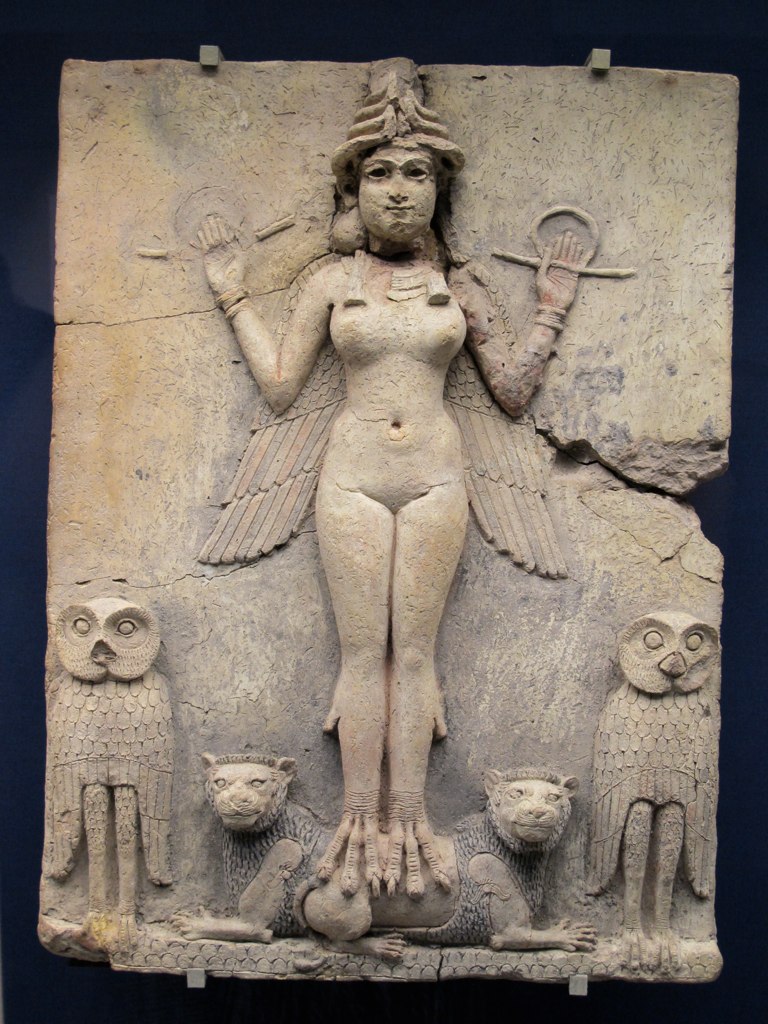




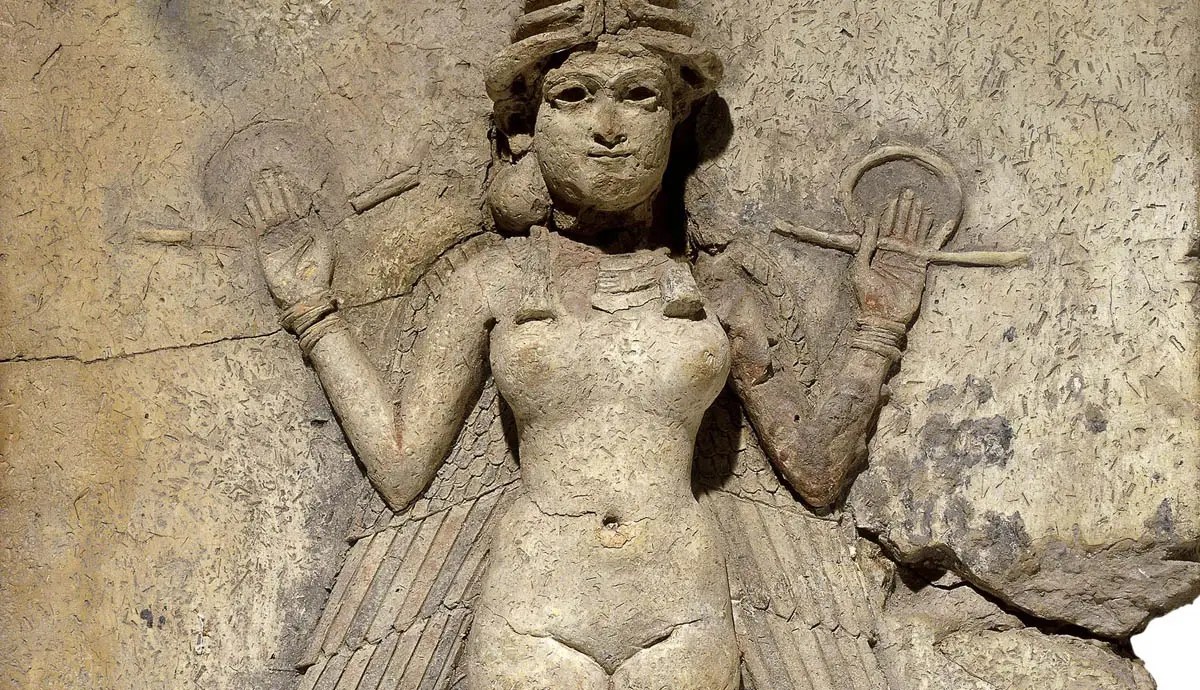


Vous devez être connecté pour poster un commentaire.