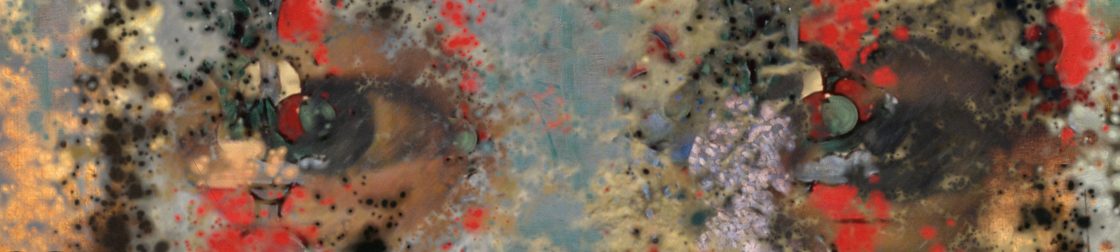
The Trans-Human Essence of Humanity


Trans-human a22©Philippe Quéau 2020

There are cultures that value prose, argument, dialectics and rhetoric in the search for clear truths. Others prefer hymns, psalms, symbols, enigma, and seek first of all to praise and honor mystery.

Some peoples have pushed reason, wisdom and philosophy as far as possible – as maieutic powers.

Other peoples have preferred revelation, prophecy and mystery, subordinating the work of the spirit to transcendence, to its criticism and interpretation.

The paths of truth are multiple.

Perhaps one day one will describe how favorable climates, comfortable summers, open landscapes may help change worldviews. Scattered archipelagos, alluvial plains, secret deserts, wide and ample valleys, have respective affinities for different ways of thinking. Do the plains of the Indus have the same light than the islands of Greece? Does the Nile valley compare with the Jordan valley?

The tribes of Noah, Shem, Cham or Japhet each had their own way of seeing the sea and the stars, the sun, the mountains, the cow, the lamb and the night, fire, milk and sacrifice. These are only facts and images for some, but metaphors, intuitions, for others. The arid desert fits in with a mineral religion. The linear, naked horizon leads geometrically to monotheism. The smiling myriads of sea waves and the profusion of scattered islands probably may evoke more easily polytheistic thoughts – the solar unit diffracts into billions of labile splinters, and the earth crumbles into the sea.

The idea of a single God does not belong to the mind alone; the climate also exudes it, the landscape shapes it, and a suitable language is needed to exalt it.

The Semitic religions did not recognize the divine essence of variety; they did not admire the plurality of the divine within them. The names El, Eloh, YHVH, Adonai, Baal, Elion, El Shaddai, or Allah concentrate all the intuition, all the meaning, in the One.

But the multiple names of the One proclaim it, they repeat it in all tones: their number bears witness to this: – all these names of the One are not themselves one.

All these names of the One are as many multiple veils.

The Elohim, a plural noun of the One – proclaimed this in the language itself.

Of pure and clear monotheism, one can undoubtedly say that it requires, to put it bluntly, intransigence. One, only one, not two, three, twelve, a thousand or billions. How could one be the two? Or the three? Or infinity?

But is God only One? Isn’t He also Infinite? If He is One and Infinite, then He is also Two, at least conceptually-wise. And One, and Two and Infinite make Three. Etc.

The world is wider than flat deserts, deeper than open seas. Over there, towards the Indus, or near the banks of the Oxus, people have for millennia seen the divine wherever they looked, wherever the spirit set its wing.

The complexity of grammar, the richness of words, the spirit of research, the freedom of thought, the critical capacity, were not an obstacle, but other wings still, making the divine glimmer through many other prisms.

Finesse is not useless in these matters. The mind must become tolerant when one becomes aware of human destiny, of its variegated unity.

Only the north makes the south possible. East and west stand together at both ends of the day. The one and the multiple find their complement, their inner duality in each other.

The infinity of possibilities is said to be found in the unity of being.

If God is really One, why is humanity not yet One? For what reason? For what purpose?

Renan said in his provoking style: “Who will dare to say that by revealing the divine unity and definitively suppressing local religions, the Semitic race has not laid the fundamental stone for the unity and progress of humanity?”i

In the Semitic system, God, in essence, is far from mankind, immensely far. But God chose a Nabi, a prophet, an anointed one, and revealed Himself to him, and through the Nabi to mankind. The Semites see in the world, always, everywhere, only the fulfillment of this unique revelation, the revealed will of a unique Being infinitely transcendent to those multiple beings to whom the revelation of unity is made.

The One revealed the “Oneness”.

And yet, by essence, the multiple, the diverse, the far, the near, are not « one ». They are here and now, or there and far. And the here and there are essentially multiple. Only the One is not “multiple”.

Fundamental contrast. One must then recognize a double state of being, the multiple here or there, and the One elsewhere.

Mankind in the future will no doubt try again to « unify » by some transcendental intuition, this double state of being, the One and the Multiple, the far and the near, transcendence and immanence.

The earth and the stars, the desert and the seas, the mountain and the plain – are all multiple metaphors of this unique intuition, – the universe is also a multi-verse, i.e. it hides its essence.

By analogy, we may infer that a unique and diverse humanity is bound to be, in essence, trans-human.

iErnest Renan. Histoire générale et système comparé des langues sémitiques. (1863)

A Unique Universe


The most committed followers of super-string theory support the existence of ‘multiverses’. There would be 10500 ‘multiverses’, they say, if we take into account all the universes corresponding to all the possible varieties of Calabi-Yau, each one of them sailing in parallel branches.

In fact there could be even more, – if we take into account the multiverses that are totally disconnected, undetectable, unpredictable, pure creations of the mind, but which are necessary to guarantee the coherence of the supersymmetry defined by the mathematics of the super strings.

On the other hand, more conservative physicists consider that the theory of super-strings is not science but fairy tale. The theory of multiverses would come from the delirium of researchers who are so fond of the abstract power of mathematics that they consider it « real », whereas it is only an intellectual construction, and has no other reality than mental.

Plato already believed that mathematics has a form of reality, full of mystery. But he also believed that there were other, deeper mysteries beyond mathematics. As for the hypothesis of an infinity of parallel worlds, happily postulated by the physicists of the super-strings, he had also considered it by means of the metaphysical approach, and had clearly invalidated it:

« So that this world, in terms of uniqueness, may be similar to the Absolute Living, for this reason, it is neither two nor an infinite number of worlds that have been made by the Author, but it is on a unique basis, alone of its kind, that this world has come to be so, and that from now on it will be. »i

The alternative is simple: either there is only one universe (which Plato presents as « similar to the absolute Living Being »), or there is an almost infinite number of multiverses… What is the most likely hypothesis?

If there is an almost infinite number of universes, 99.9999…% of them (we must imagine here a sequence of millions of 9s, after the comma) are absurdly unstable, structurally deleterious – with the extremely rare exception of a handful of them.

And among this handful, infinitely rarer still those who would be able to generate the conditions for the emergence of human thought.

Now human thought has appeared. It therefore becomes a factor to be taken into account from the point of view of cosmological theory. Its very existence, and its extreme rarity on the scale of the large numbers of possible multiverses, are indicators of the exceptional nature (both statistical and conceptual) of the particular universe in which it has emerged.

Its existence and rarity have a cosmological significance. And this meaning inevitably interacts with the definition of the cosmos it seeks to conceive, – through the application of the Ockham principle and the anthropic principle.

Ockham’s principle states that it is futile to multiply beings without necessity. It is absurd to multiply them meaninglessly. A single universe with meaning and coherence (from the cosmological point of view) is preferable to a multiplication of non-viable, absurd and senseless universes (always from the cosmological point of view).

According to the anthropic principle, the mere fact of humanity’s existence requires us to affirm that the universe in which it was born is « special » and even « unique » (again from a cosmological point of view). Among the myriads of possible multiverses, which have no anthropic significance, the mere fact that the universe in which humanity exists implies an immeasurable cosmological chance, – if we just stick to the multiverses theory.

This « incommensurable » chance can be approximated. It can be measured by the hallucinating improbability of the « cosmological constant » essential for human life and thought to be possible.

Chance as it unfolds under the draconian constraints of cosmology can generally only produce ordinary (unstable or incapable of generating ‘human minds’) universes. However, this universe, ours, is not ordinary: it owes the very principle of its existence to the miraculously adequate precision of an infinitely hazardous cosmological constant to be implemented.

This universe is unique because it is special. Why so special? Because of the incredible and disconcerting improbability of the physical constants that govern its structure, and which are necessary for its existence.

These improbably « fine » constants, which physics detects and which mathematics theorizes, make possible the balance of cosmic forces, the existence of galactic clusters and life itself.

The cosmological constant, as deduced by observation and calculation, must be of a mind-blowing precision: a 0, followed by a comma, then 123 zeros, then a long series of numbers. The slightest variation in this sequence of figures would make the universe totally unstable, from the very first moments of the Big Bang, or would make it totally unfit for life.

Multiverses are, in theory, in almost infinite number. But only a very small number of multiverses are compatible with the anthropogenic principle.

The total improbability of the cosmological constants required by life implies that man had no chance of appearing in the infinity of possibly conceivable multiverses.

Yet humanity exists in this universe, and it is even possible to calculate approximately the minute probability of its existence.

The lower the probability, the lower the probability of validating the multiverses theory itself becomes.

As a result, the extreme probability of Plato’s thesis of the unique universe grows even greater.

This result gives us, probably, some nourishing food for thought…

i Plato,Timaeus, 31b