Raw Light (A Tactical Psalm)


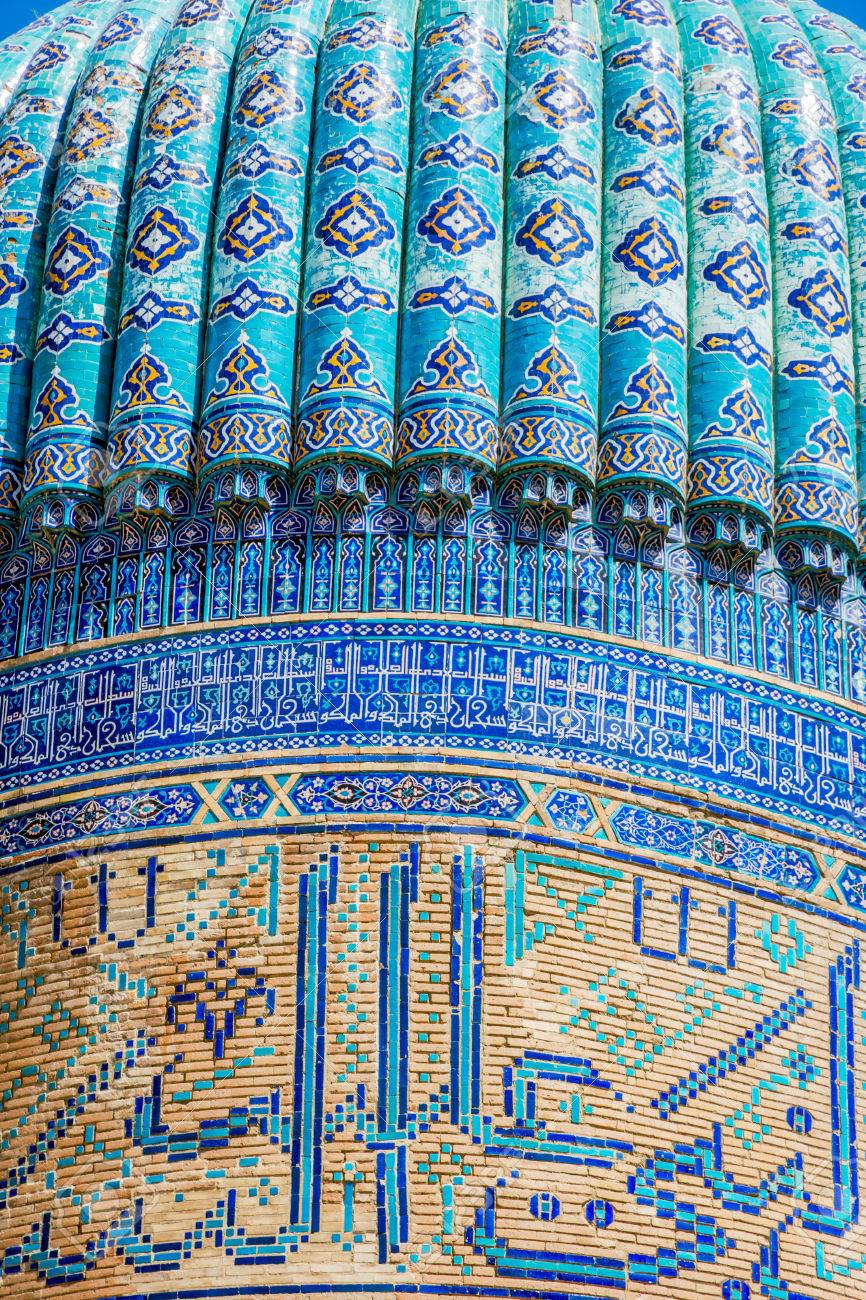
Detail of blue mosaic at Bibi-Khanym (Bibi-Xonum) Mosque, Samarkand, Uzbekistan

In Samarkand, I picked the green fruits of an old tree.

All of them had given their juice, as every soul has its taste.

Who has seen in himself the moons, the cracks, the lava?

The grounded boats, the slumped sails, the hoped-for capes?

Like a dung beetle rising in the dune, I am a mirage.

You spread your absence everywhere.

What would I know of your presence?

You empty everything from your sky.

Today I love bread and salt.

Tomorrow I will be a friend of millet and wine.

I will lap up dreams and drink open waters.

Everything comes back one day, what use is time, for what memory?

Tonight I am ruin, dust, grave, gas, shard of earth, sandy port, blind worm, logical continuation.

Spastic heart, knotted throat, living soul.

I neither hide nor do I show. I wait for the slow one.

Already game, promised prey, drunk with nothing, I sing the shadow of a pean, the echo of an hallali.

Streams and rivers, horizontal leaks. On the horizon, the sea is so vertical.

On the pebble, water flows, far from thirst.

I don’t know the existence and the essence. I don’t know the weight of the mountains to come.

Of the possible heaps, the future number is very large.

My hands form a cup, filtering drunkenness, and the caress is a pain.

I didn’t believe in the flood, at the top of the hill, but it came, without words.

Beauty, joy, life: moons, curves, teeth, breaths, shadows.

Drink it all, and forget all that is missing and forgotten.

See: they see, and they do not see.

Give the pain a name of sweetness, a sure sign.

Cherish your peace. Hate that which kills.

Find the thread, and the eye of the needle, in the raw light.

In Memoriam Kenji Goto’s Sacrifice


Kenji Goto’s throat was slit and then he was beheaded by ISIS on 30 January 2015. This Japanese man converted to Christianity in 1997, at the age of 30. As a war journalist, he had covered many conflicts in Africa and the Middle East, including investigations into « blood diamonds » and « child soldiers ». He focused on reporting on the lives of ordinary people in exceptional situations.

He returned to Syria in October 2014, despite numerous warnings from the Japanese government, and despite his wife having just given birth to a second child. He had decided, through his knowledge of the field, to do everything possible to help his friend, Haruna Yukawa, who was already a prisoner of ISIS.

Kenji Goto was kidnapped the day after his arrival in Syria. We know the rest.

About his Christian faith, he told the Japanese publication Christian Today: « I saw horrible places and risked my life, but I know that somehow God will always save me.  » He then added that he never undertook anything dangerous, however, quoting a verse from the Bible: « You shall not tempt the Lord your God. »

Looking at the photos of Kenji Goto and Haruna Yukawa, dressed in the fatal orange tunic, one is struck by Goto’s emaciated face, cut with a serpent’s knife (metaphorically speaking), and his firm, intense, open look.

There are several possible angles of analysis of this case. The courage of a man who is trying one last chance to help a friend in danger of death.

The naivety to believe that Japan offers its nationals a passport of neutrality in the Middle East, because it does not bombard the belligerents, as some Western countries do.

The abyss of the professional journalist who always stands somehow outside the event to be able to grasp and comment on it, and forgets to see how much his own tortured body can do the whole desirable event for purposes he does not suspect.

One of Kenji Goto’s Twitter messages, published in September 2010, gives an idea of what was driving this man:

« Close your eyes and be patient. If you get angry and scream, it’s over. It’s almost like praying. Hating is not the domain of men, judging is the domain of God. My Arab brothers taught me that. »

The Japanese public was particularly affected by the double beheading of its two nationals. I am struck by the limited relative response elsewhere, and by a complete lack of analysis and perspective on this subject.

This is one more symptom of the frightening misunderstanding of what is really at stake.